Fernando Pessoa

Fernando Pessoa

1888–1935 · viveu 47 anos PT PT

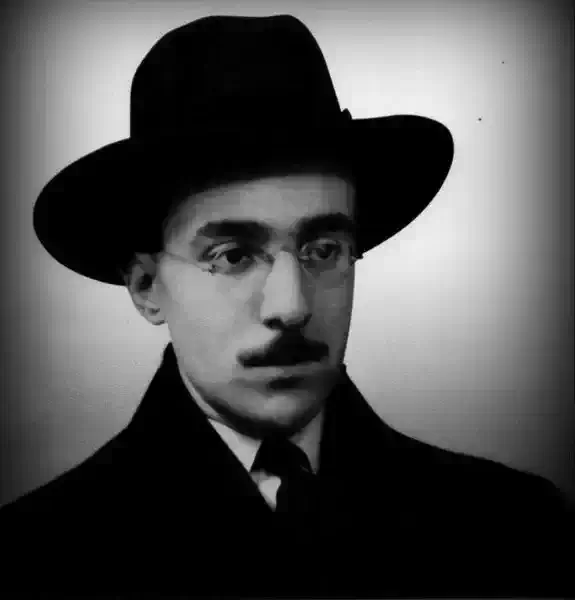
Fernando Pessoa foi um poeta, escritor, crítico literário, tradutor e filósofo português, considerado um dos maiores expoentes da literatura em língua portuguesa e um dos mais relevantes poetas do século XX. A sua vasta obra, marcada pela criação de múltiplos heterónimos com personalidades e estilos distintos, explora temas como a identidade, a angústia existencial, a saudade e a busca por significado num mundo em constante transformação. Pessoa deixou um legado literário complexo e multifacetado, que continua a fascinar e a desafiar leitores e críticos.

n. 1888-06-13, Lisboa · m. 1935-11-30, Lisboa

5 659 444 Visualizações

Para ser grande, sê inteiro: nada

Para ser grande, sê inteiro: nada
Teu exagera ou exclui.
Sê todo em cada coisa. Põe quanto és
No mínimo que fazes.
Assim em cada lago a lua toda
Brilha, porque alta vive.
Ler poema completo
Biografia

Identificação e contexto básico

Fernando António Nogueira Pessoa é amplamente conhecido como Fernando Pessoa. Nasceu em Lisboa, Portugal, a 13 de junho de 1888, e faleceu na mesma cidade a 30 de novembro de 1935. Veio de uma família de classe média. O seu pai, D. Luís Vaz de Jesus Correia de Sá, era funcionário público e crítico musical no jornal 'A Civilização', e a sua mãe, D. Maria Madalena Pinheiro Nogueira, era filha do Coronel Pinheiro Nogueira, que administrava a Typographia da 'A Civilização'. A morte prematura do pai, quando Pessoa tinha cinco anos, e a subsequente viuvez da mãe, que se casou com o cônsul português em Durban, África do Sul, João Miguel dos Reis Quimby, influenciaram profundamente a sua infância e o seu desenvolvimento. Pessoa era português e escrevia primariamente em português, mas também demonstrava proficiência em inglês e francês, línguas que utilizou em algumas das suas obras, especialmente nas fases iniciais. Viveu num período de grandes transformações sociais, políticas e culturais em Portugal e na Europa, marcado pelo fim da Monarquia e o início da República em Portugal, e pelas I e II Guerras Mundiais.

Infância e formação

A infância de Pessoa foi marcada pela perda precoce do pai e pela mudança para a África do Sul, onde viveu até aos dezassete anos. Esta experiência transcultural proporcionou-lhe um contacto precoce com a língua e a cultura inglesas, que moldaram a sua formação intelectual e literária. Foi educado na St. Joseph's Academy e, mais tarde, no Durban High School, onde se destacou em línguas e literatura. A leitura de autores clássicos e contemporâneos em inglês, como Shakespeare, Milton, Byron, e Edgar Allan Poe, foi fundamental. O ambiente de Durban, com a sua diversidade cultural, também pode ter contribuído para o desenvolvimento da sua imaginação e da sua sensibilidade para as diferentes identidades.

Percurso literário

O início da escrita de Pessoa remonta à sua adolescência, com poemas em inglês. A transição para o português e o desenvolvimento dos seus heterónimos marcaram o seu percurso literário. A sua obra é vasta e complexa, com diferentes fases que refletem a sua evolução estilística e temática. Publicou em diversas revistas literárias portuguesas, como a 'Orpheu', que foi marco do Modernismo português, e participou em antologias. Foi também crítico literário e tradutor, demonstrando a sua versatilidade.

Obra, estilo e características literárias

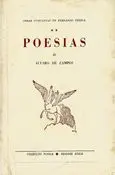
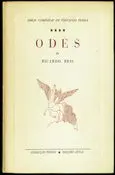
Obra, estilo e características literárias A obra de Fernando Pessoa é dominada pela exploração da fragmentação do eu, da identidade e da realidade. Temas como a dor de pensar, a saudade, a busca pela transcendência, a efemeridade do tempo e a condição humana são centrais. O seu estilo varia imensamente entre os seus heterónimos (Alberto Caeiro, Ricardo Reis, Álvaro de Campos, Bernardo Soares, entre outros), cada um com a sua própria métrica, vocabulário e visão do mundo. Caeiro representa o poeta da natureza, da simplicidade e da negação da metafísica; Reis, o neoclássico estoico, que busca a serenidade e a medida; Campos, o futurista, o poeta da modernidade, da máquina e da exaltação das sensações. Pessoa utilizou diversas formas poéticas, do soneto à forma fixa e ao verso livre, experimentando constantemente com a métrica e a estrutura. A sua linguagem é rica e complexa, com uma densidade imagética notável e um uso frequente de metáforas e símbolos. A voz poética pode ser lírica, confessional, satírica, filosófica e irónica, refletindo a multiplicidade de consciências que habitavam o seu ser.

Obra, estilo e características literárias

Contexto cultural e histórico Pessoa viveu numa época de grande efervescência cultural e de profundas mudanças em Portugal. Foi um dos principais impulsionadores do Modernismo português, através da revista 'Orpheu' (1915), que propunha uma ruptura com a tradição e a introdução de novas linguagens e estéticas. A sua obra dialoga com as correntes filosóficas e literárias da sua época, como o simbolismo, o futurismo, o dadaísmo e o surrealismo, embora tenha desenvolvido uma estética singular. A sua posição perante a sociedade e a política era complexa, marcada por uma certa desilusão e distanciamento, embora tenha manifestado interesse por questões nacionais.

Obra, estilo e características literárias

Vida pessoal A vida pessoal de Pessoa foi marcada por uma certa reclusão e uma intensa vida interior. As suas relações afetivas foram complexas, com destaque para a sua relação com Ofélia Queiroz, que inspirou parte da sua obra. A sua amizade com Mário de Sá-Carneiro foi crucial para o seu percurso literário. Profissionalmente, trabalhou como correspondente comercial, profissão que lhe permitiu manter a sua independência e dedicar-se à escrita.

Obra, estilo e características literárias

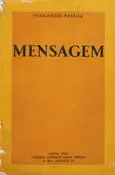
Reconhecimento e receção Em vida, Pessoa teve um reconhecimento limitado, publicando apenas alguns poemas e o livro 'Mensagem'. A sua obra mais vasta e complexa, especialmente a escrita em português e a dos seus heterónimos, só foi amplamente descoberta e publicada postumamente, graças ao trabalho de investigadores e editores. Atualmente, é considerado um dos maiores poetas de língua portuguesa e uma figura incontornável da literatura mundial, com a sua obra a ser objeto de estudo e admiração em todo o mundo.

Obra, estilo e características literárias

Influências e legado Pessoa foi influenciado por autores clássicos e modernos, como Shakespeare, Camões, Edgar Allan Poe, Walt Whitman e Nietzsche. O seu legado é imenso, tendo influenciado gerações de poetas e escritores em Portugal e no Brasil. A sua exploração da identidade e da multiplicidade do eu revolucionou a poesia moderna e continua a ser uma referência para a literatura contemporânea. A sua obra tem sido amplamente traduzida e estudada.

Obra, estilo e características literárias

Interpretação e análise crítica A obra de Pessoa é objeto de inúmeras interpretações. A questão da identidade, da fragmentação do eu, da relação entre o real e o aparente, e a busca por um sentido para a existência são temas recorrentes. Críticos debatem a sua relação com o nacionalismo, o misticismo e a psicanálise. A genialidade na criação dos heterónimos e a sua capacidade de dar voz a diferentes consciências são pontos centrais na análise crítica.

Obra, estilo e características literárias

Curiosidades e aspetos menos conhecidos Pessoa era conhecido pelo seu comportamento reservado e pela sua vida aparentemente discreta. No entanto, a sua intensa vida interior e a multiplicidade de personalidades que habitavam o seu ser são um dos aspetos mais fascinantes. Há relatos sobre os seus hábitos de escrita, a sua caligrafia peculiar e a sua relação com os manuscritos e a organização da sua vasta obra.

Obra, estilo e características literárias

Morte e memória Fernando Pessoa faleceu aos 47 anos, no Hospital de Santa Maria, em Lisboa, vítima de uma indisposição intestinal, possivelmente apendicite, deixando um legado literário colossal e amplamente inexplorado em vida. A publicação póstuma da sua obra, iniciada nas décadas seguintes à sua morte, desvendou a dimensão total do seu génio e consolidou o seu lugar na história da literatura mundial.

Poemas

2232

When shall we rest?

When shall we rest?
The ceaseless waves
They have no quest.
The trees peace-ripe.
Their lifeless life
From sorrow saves.

When shall we go?
Wither? We care
Nothing to know.
Sorrow is here.
Aught may us cheer
Now of dim there.

What in us shall
Cease and leave peace?
Life holds in thrall
Our joy like pain,
Our loss-like gain,
Our stayed release.

Love cannot bless.
Bliss cannot live.
Joy's short caress
Passes like wind
Suddenly thinned
We dream and grieve.

Outward from us
There lies the land
Less luminous,
Where we may rest,
Leaving all quest,
Wishing no strand.

Ready the bark
For our repose.
Let us embark.
The sea is lone?
We are alone,
Pain but pain shows.

Remember nought.
Cease like a light
Suddenly not.
Merge like a dream
Into the stream
Of its own night.


25/04/1917
4 466

30 - L'INCONNUE

L'INCONNUE

Let thy hand set
My hair back. Look
Into mine eyes.
There runs a brook
Right through the heat
Of my hushed cries.

Let thy hand rest
Upon my brow.
Let thine eyes smile
Into the unrest
Of mine eyes now
Thine for a while.

Ay, forget not
To let that touch
Be felt by me,
Light like a thought
Of it, and such
As hope can be.

Let thy hand sweep
Over my hair
One little while.
I seem asleep
But cannot bear
To feel me smile.

All things have failed.
All hopes are dead.
All joys are brief.
Ay, let thy hand,

As if it quailed
From feeling sad,
Give me relief!
No matter if
None understand.

Ay, on my brow
Let thy hand be.
What life is now
Is worth so little
That pain seems brittle
And thought a slough.

Put my hair back
From my brow's pain.
There runs a track
Of lightness through
My heavy brain.

What does this mean?
These are words set
To an idle tune.
What I regret
Hath never been.
Lest my rest fret,
True rest, come soon!
4 402

Wake with the Sun, wake with the morn

Wake with the Sun, wake with the morn
Wake with the coming day,
Be with the dew and the flush new born,
But, unlike them, stay.

Mists fall of from what thou art
They are what we see.
Come and enter into our heart
And let life be.

The morn belongs to the empty world
Men are later here.
Come and let life be slowly unfurled
Off thee like fear.

And in thy terrible being but thou
Sans body nor soul
Pour all thy balm on my saddened brow,
And make my hope whole!


04/07/1917
4 360

28 - ISIS

In the cool pillared portico
That gives white entrance to her moods
Start-lovely stand in a mule row
The statues of her pulchritudes.

Twelve are they and the mind doth gather
Their separate seen lives to one sense;
The thirteenth, which is all together,
Means her soul and its confluence.

Five statues mean the senses five,
Seven are her mysteries of Thought.
The thirteenth seems somehow to live
Beside her life and know it not.

The summer lies outside her shades,
The breezes creep into her halls,
And from her windowed loss the glades
Are something that the soul recalls.

She built her house with heavenly types
Of building in her inner seeing.
The sun makes the long pillars stripes
On the cold hard floors of her being.

Yet she is absent and despairing,
Her statues await her New Hour,
And from the shadows of her hearing
The whisper of the drones doth flower.

This was not anyhow nor when.
All was as cool as dreams are cool
When breezes creep up to our pain
And we are laid beside a pool,

And a far larger pool arises
In our restored imagining,
And all our body's sense despises
Our innate lack of fin and wing.

Still by her portico I stopped.
The shadows there were clear and fast.
Slightly, as with a kiss, I hoped,
And Having, like a swallow passed.
4 615

SEPARATED FROM THEE...

POEMAS VÁRIOS EM INGLÊS


SEPARATED FROM THEE...

Separated from thee, treasure of my heart,
By earth despised, from sympathy free,
Yet winds may quaver and hearts may waver,
I'll never forget thee.

Soft seem the chimes of boyhood sweet
To one who is no more free,
But let winds quaver and men's hearts waver,
I'll never forget thee.

In a dim vision, from school hailing
Myself a boyish form, I see,
And winds have quavered and men's hearts wavered,
But I'll not forgotten thee.

Since first thy form divine I saw,
While from school I came with glee,
Winds have quavered and men's hearts wavered,
But I've forgotten thee.

Since a simple boyish passion
I entertained for thee
Though winds have quavered and men's hearts wavered,
I've forgotten thee.

The stars shine bright, the moon looks love,
From over the moonlit sea.
Winds have quavered and men's hearts wavered
And thou hast forgotten me.

Separated from thee, treasure of my heart,
By earth despised, from sympathy free,
Yet may quaver and hearts may waver,
But I'll never forget thee.


May 12, 1901
5 272

TO A HAND

TO A HAND

Give me thy hand. With my wounded eyes
I would see what this hand contains:
Ah, what a world of hopes here lies!
What a world of feelings and doubts and pains!
Oh to thing that this hand in itself contains
The mystery of mysteries.

This hand has a meaning thou dost not know,
A meaning deeper than human fears;
This hand perchance in times long ago
Wiped off strange and unnatural tears;
Perhaps its gesture was full of snears
Perchance its clenching was full of woe.

There is that in thy hand my soul doth dream
And the shades that haunt my mind;
The howl of the wind and the flow of the stream,
The flow of the stream and the howl of the wind,
All that is horrible and undefined
Of the things that are in the things that seem.

As I look at thy hand my mind is rife
Of thoughts and memories deeper than rhyme;
Thy hand is a part af my soul's deep life,
And I knew thy hand ere the birth of time,
And in ages past it led me to crime,
(...)

A world of woes and of fears and sighs
And love that better had been hate,
And crimes and wars and victories,
And the painful fall of many a state –
All these and more that the heart abate
My raving soul in thy hand descries.

No painter mad, not a fetichist
O'er thy hand would be thus held blind.
At mere blank thought of its being kissed
By my lips I thrill with a fear none find
In the waking thoughts-of a human mind
Save when reason by its own self is missed.

Thy hand has a meaning thou dost not know,
A meaning deeper than human fears;
It has aught of the sea and of the sun's glow
And the seasons too and the months and years,
And the colour hidden in human tears
And the form and number in human woe.

Thy hand was a lofty and empty home,
A collar of pearls and a castle keep;
Thy hand knows well all the thoughts that roam,
Thy hand is the music eternal and deep
That long ere birth held my soul asleep
In a palace quaint with a curious dome.

How finely made is this hand of thine
With its fingers tapering and white,
Soft and palely warm and fine;
There is something in it of day and night.
Ah, dearest child, could I read aright
The text before me deep and divine.

There's a kind of Fact that persists and hangs
O'er thy hand, as on a scratched scroll:
Tis as if some thought had buried its fangs
In a unknown part of my soul.
In a land far in me a bell doth toll,
And my heart aches wild as it shrinks or clangs.

There is aught of new and wild and unreal
In thy hand where my look is pained:
Tis as if hand in itself could see all
Horrible thought, where fear is gained
By a drollness mad and dimly sustained
As of some wide hint out of the Ideal.

There is aught of Personal, of It, of Such
In thy hand o'er me there steals
A sense of dread like a murder's clutch;
I know not how, my hand in thine feels
An eternal thing hand my mad brain reels
As if eternity we could touch.

I see that hand not a hand, but whence
This horrible Fact that creeps in me!
Ah, I have of thy hand the seeing intense
But aught more than hand in that place I see
That abrupt elusion did make to be
Between thought of things and what we call sense.

My thought doth look at thy hand direct
Without eyes or sense or aught of this,
And my reason at such a thing is wrecked
Into such a fear that both pain hand bliss
Are plunged in conscious unconsciousness
For that is no hand that my dreams detect.

And I gaze yet more hand I shake from me
The dream of time and the dream of space,
And as a drowner who sinks in the sea
I dream of the wonders of all we trace
In everything and I plunge full-face
In the sense of what more than seems to be.

There is aught of lovely, wild and unbrute
In thy hand, and I love it well;

In fearing more than pain thoughts of hell
By a sudden portal in the Visible
I have a glimpse of the Absolute.

The sight of thy hand of a horrible heaven
The portals mute throws open again

Thy hand is like music, in it I again
Passing a wild fear and a bitter pain
Weird things more weird than the sense of Seven.

All things stare mystery at my mind,
But thy hand most, to oblivion conn'd
Thrilled with a mute life not all defined,
What is thy hand in itself beyond
The scope of sense where the heart is fond,
The realm of thought where the soul is blind?

Where is the soul that thy hand reveals
In its own there-self till its thought affrights?
What bells are those that say HAND in peals
That traverse impossible infinites?
What fills with lightnings of hands the nights
Where the sense of dread into thoughts congeals?

Take thy hand away; for I now shall dream
Of strange and grotesque and unnatural lands
Watered by many a painful stream
Whose waves are hands, whose banks of hands
Of gardens with trees whose leaves are hands
And a white stiff hand covering the sun's gleam.

(...)

Then, oh horror worst, they begin to live
With a vital life, and to grasp and clutch,
And to twitch and squirm till my thoughts unweave,
And like worms and snails that my throat should touch
My soul qualms and retches at horror such
At fear's transcendent superlative.

And what more doth follow I cannot say,
But it seems that madly I traverse, lone,
Tracts of hells where a hand doth stay
In such a manner that if a groan
Of a madman could in its soul be known
It would be to it as to night is day.

And my thoughts drag on in their weary strain;
Wild and grotesque, or quick or slow,
Uncouth and unseemly they reel in my brain,
Startingly mad as they go,
As a sudden laugh in the midst of woe
Or a clown in a funeral train.


Alexander Search

January, 1906
4 519

The master said you must not heed

The Master said you must not heed
What others talk of at their need.

Under the happy trees they sit
That talk of nothing and of wit.
Under the silent trees they stand
That talk of mist and no man's land.
Under the sulky trees they lie
That wonder of the earth and sky.

This was the matter of the song
No one could sing or well or long.
This was the substance of the tale
No one could tell unless it fail.
This was the subject of the verse
The last one made, lest earth be worse.

So that the collateral nightingale
Forgot its music and its tale.
So the lark rose and found but air
And false dominion everywhere.
So the dropt eagle, loosing prey,
Swept by and owned but the void day.

Yet what the secret of all this
May be or was none now can guess.
Perhaps beyond what thought defines,
Like wine some chance that some one may
Make shade and sleep of yesterday.

But wether this be sense or nought,
Surely it was a careful thought
To have the lawn so nicely laid
Out and the critics all gainsaid,
It was the reason and the home.
The rest is why tis right to roam.


02/02/1917
4 253

HEART-MUSIC

HEART-MUSIC

Learning almost upon thy breast
I heard thy heart's life – made unrest...

And thy heart's beating has a sound
that reminds me of aught I heard long ago,
Long before this life, but what
I do not know, I do not know...
'Twas something going round and round
Something of terrible and of strange
That even now doth shake my soul.
I strive to remember – I fail, I fail
The unmemoried memory doth shake my soul.
'Twas something terrible and strange,
Going round and going round,
And it had a sound like thy heart's beat...
The memory hangs on my soul's darkness
But notion from my mind went round and round
And now thy heart – hath such a sound.


Alexander Search

December 1905
4 357

32 - HER FINGERS TOYED ABSENTLY WITH HER RINGS

A SENSATIONIST POEM

Her fingers toyed absently with her rings

There are fallen angels in the way you look
And great bridges over silent streams in your smile.
Your gestures are a lonely princess dreaming over a book
At a windows over a lake, on some distant isle.

If I were to stretch my hand and touch your that would be
Dawn behind the turrets of a city in some East.
The words hidden in my gesture would be moon light on the sea
Of your being something in my soul like gaiety in a feast

Let your silence tell me of the numberless dreams that are you,
Let the drooping of your eyelids veil landscapes that are you,
I ask no more than that you should come into my dreams and be true
To the wider seas within me and my inner eternal day.

Blossoms, blossoms, blossoms along the road of your going to speak.
Eighteenth century gardens, so sad in the middle of our dreaming them now,
Are the way you are conscious of yourself on your eyelids, by your lips, through your cheek.
O the road to Nowhere all for us and we there and a new God this to allow!

Do not scatter the silence that is the palace where our consciousness
Is now living at unity our duplicate lives of one soul.
What are we, in our dream of each other, but a picture which is
The masterpiece of a painter that never painted at all?


1916
8 513

THE STORY OF SALOMON WASTE

THE STORY OF SALOMON WASTE

This is all the story of Salomon Waste.
Always hurrying yet never in haste
He fussed and worked and toiled all frothing
And at the end of all did nothing
This is all of Salomon Waste.

He lived in wishing and in striving,
And nothing came of all his living;
He worked and toiled in pain and sweat,
And nothing came out of all that.
This is all the story of Salomon Waste.
..............

Each day new projects did betray,
Yet each day was like every day.
He was born and died and between these
He worried himself himself to tease.

He bustled, worried, moved and cried
But in his life no more’s descried
Than two clear facts: he lived and died.
This is all the story of Salomon Waste.

Alexander Search, 11/08/1907
4 513

Citações

40

Obras

12

Videos

66

Comentários (14)

Partilhar
Iniciar sessão para publicar um comentário.

Simplesmente um pensador ( tão grande) pois todos nós temos máscaras, nossos sentimentos são todos ocultos na nossa eterna alma. fantástico este texto para sua época vivida.

Luis Rodrigues

cmt

Tomás Lopes

O maior e mais pensador poeta para a sua antiga época. O maior e mais revolucionista da literatura portuguesa, com os seus poemas e textos que enchem a alma de pensamentos. Tem um forma única de se expressar e ditar o que vem da sua alma, como ele dizia " Quem tem alma não tem calma".

mcegonha

O profeta dos poetas!

o tal
o tal

ignorante