
Poems List
Explore poems from our collection

Siegfried Sassoon
Daybreak In a Garden
Daybreak In a Garden
I heard the farm cocks crowing, loud, and faint, and thin,
When hooded night was going and one clear planet winked:
I heard shrill notes begin down the spired wood distinct,
When cloudy shoals were chinked and gilt with fires of day.
White-misted was the weald; the lawns were silver-grey;
The lark his lonely field for heaven had forsaken;
And the wind upon its way whispered the boughs of may,
And touched the nodding peony-flowers to bid them waken.
I heard the farm cocks crowing, loud, and faint, and thin,
When hooded night was going and one clear planet winked:
I heard shrill notes begin down the spired wood distinct,
When cloudy shoals were chinked and gilt with fires of day.
White-misted was the weald; the lawns were silver-grey;
The lark his lonely field for heaven had forsaken;
And the wind upon its way whispered the boughs of may,
And touched the nodding peony-flowers to bid them waken.
93
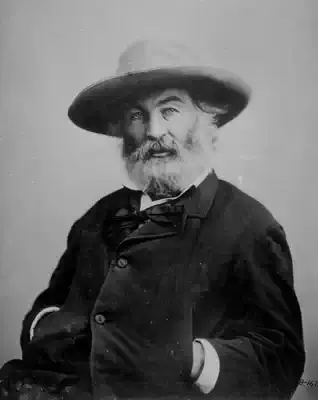
Walt Whitman
The Untold Want
The Untold Want
THE untold want, by life and land ne'er granted,
Now, Voyager, sail thou forth, to seek and find.
THE untold want, by life and land ne'er granted,
Now, Voyager, sail thou forth, to seek and find.
418
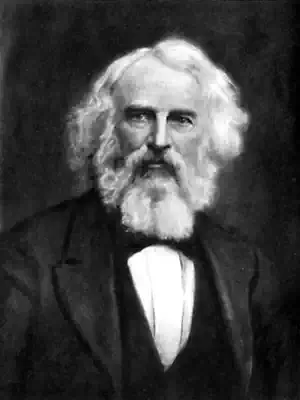
Henry Wadsworth Longfellow
The Two Angels. (Birds Of Passage. Flight The First)
The Two Angels. (Birds Of Passage. Flight The First)
Two angels, one of Life and one of Death,
Passed o'er our village as the morning broke;
The dawn was on their faces, and beneath,
The sombre houses hearsed with plumes of smoke.
Their attitude and aspect were the same,
Alike their features and their robes of white;
But one was crowned with amaranth, as with flame,
And one with asphodels, like flakes of light.
I saw them pause on their celestial way;
Then said I, with deep fear and doubt oppressed,
'Beat not so loud, my heart, lest thou betray
The place where thy beloved are at rest!'
And he who wore the crown of asphodels,
Descending, at my door began to knock,
And my soul sank within me, as in wells
The waters sink before an earthquake's shock.
I recognized the nameless agony,
The terror and the tremor and the pain,
That oft before had filled or haunted me,
And now returned with threefold strength again.
The door I opened to my heavenly guest,
And listened, for I thought I heard God's voice;
And, knowing whatsoe'er he sent was best,
Dared neither to lament nor to rejoice.
Then with a smile, that filled the house with light,
'My errand is not Death, but Life,' he said;
And ere I answered, passing out of sight,
On his celestial embassy he sped.
'T was at thy door, O friend! and not at mine,
The angel with the amaranthine wreath,
Pausing, descended, and with voice divine,
Whispered a word that had a sound like Death.
Then fell upon the house a sudden gloom,
A shadow on those features fair and thin;
And softly, from that hushed and darkened room,
Two angels issued, where but one went in.
All is of God! If he but wave his hand,
The mists collect, the rain falls thick and loud,
Till, with a smile of light on sea and land,
Lo! he looks back from the departing cloud.
Angels of Life and Death alike are his;
Without his leave they pass no threshold o'er;
Who, then, would wish or dare, believing this,
Against his messengers to shut the door?
Two angels, one of Life and one of Death,
Passed o'er our village as the morning broke;
The dawn was on their faces, and beneath,
The sombre houses hearsed with plumes of smoke.
Their attitude and aspect were the same,
Alike their features and their robes of white;
But one was crowned with amaranth, as with flame,
And one with asphodels, like flakes of light.
I saw them pause on their celestial way;
Then said I, with deep fear and doubt oppressed,
'Beat not so loud, my heart, lest thou betray
The place where thy beloved are at rest!'
And he who wore the crown of asphodels,
Descending, at my door began to knock,
And my soul sank within me, as in wells
The waters sink before an earthquake's shock.
I recognized the nameless agony,
The terror and the tremor and the pain,
That oft before had filled or haunted me,
And now returned with threefold strength again.
The door I opened to my heavenly guest,
And listened, for I thought I heard God's voice;
And, knowing whatsoe'er he sent was best,
Dared neither to lament nor to rejoice.
Then with a smile, that filled the house with light,
'My errand is not Death, but Life,' he said;
And ere I answered, passing out of sight,
On his celestial embassy he sped.
'T was at thy door, O friend! and not at mine,
The angel with the amaranthine wreath,
Pausing, descended, and with voice divine,
Whispered a word that had a sound like Death.
Then fell upon the house a sudden gloom,
A shadow on those features fair and thin;
And softly, from that hushed and darkened room,
Two angels issued, where but one went in.
All is of God! If he but wave his hand,
The mists collect, the rain falls thick and loud,
Till, with a smile of light on sea and land,
Lo! he looks back from the departing cloud.
Angels of Life and Death alike are his;
Without his leave they pass no threshold o'er;
Who, then, would wish or dare, believing this,
Against his messengers to shut the door?
223
Siegfried Sassoon
Counter-Attack
Counter-Attack
We’d gained our first objective hours before
While dawn broke like a face with blinking eyes,
Pallid, unshaved and thirsty, blind with smoke.
Things seemed all right at first. We held their line,
With bombers posted, Lewis guns well placed,
And clink of shovels deepening the shallow trench.
The place was rotten with dead; green clumsy legs
High-booted, sprawled and grovelled along the saps
And trunks, face downward, in the sucking mud,
Wallowed like trodden sand-bags loosely filled;
And naked sodden buttocks, mats of hair,
Bulged, clotted heads slept in the plastering slime.
And then the rain began,—the jolly old rain!
A yawning soldier knelt against the bank,
Staring across the morning blear with fog;
He wondered when the Allemands would get busy;
And then, of course, they started with five-nines
Traversing, sure as fate, and never a dud.
Mute in the clamour of shells he watched them burst
Spouting dark earth and wire with gusts from hell,
While posturing giants dissolved in drifts of smoke.
He crouched and flinched, dizzy with galloping fear,
Sick for escape,—loathing the strangled horror
And butchered, frantic gestures of the dead.
An officer came blundering down the trench:
‘Stand-to and man the fire-step!’ On he went...
Gasping and bawling, ‘Fire-step ... counter-attack!’
Then the haze lifted. Bombing on the right
Down the old sap: machine-guns on the left;
And stumbling figures looming out in front.
‘O Christ, they’re coming at us!’ Bullets spat,
And he remembered his rifle ... rapid fire...
And started blazing wildly ... then a bang
Crumpled and spun him sideways, knocked him out
To grunt and wriggle: none heeded him; he choked
And fought the flapping veils of smothering gloom,
Lost in a blurred confusion of yells and groans...
Down, and down, and down, he sank and drowned,
Bleeding to death. The counter-attack had failed.
We’d gained our first objective hours before
While dawn broke like a face with blinking eyes,
Pallid, unshaved and thirsty, blind with smoke.
Things seemed all right at first. We held their line,
With bombers posted, Lewis guns well placed,
And clink of shovels deepening the shallow trench.
The place was rotten with dead; green clumsy legs
High-booted, sprawled and grovelled along the saps
And trunks, face downward, in the sucking mud,
Wallowed like trodden sand-bags loosely filled;
And naked sodden buttocks, mats of hair,
Bulged, clotted heads slept in the plastering slime.
And then the rain began,—the jolly old rain!
A yawning soldier knelt against the bank,
Staring across the morning blear with fog;
He wondered when the Allemands would get busy;
And then, of course, they started with five-nines
Traversing, sure as fate, and never a dud.
Mute in the clamour of shells he watched them burst
Spouting dark earth and wire with gusts from hell,
While posturing giants dissolved in drifts of smoke.
He crouched and flinched, dizzy with galloping fear,
Sick for escape,—loathing the strangled horror
And butchered, frantic gestures of the dead.
An officer came blundering down the trench:
‘Stand-to and man the fire-step!’ On he went...
Gasping and bawling, ‘Fire-step ... counter-attack!’
Then the haze lifted. Bombing on the right
Down the old sap: machine-guns on the left;
And stumbling figures looming out in front.
‘O Christ, they’re coming at us!’ Bullets spat,
And he remembered his rifle ... rapid fire...
And started blazing wildly ... then a bang
Crumpled and spun him sideways, knocked him out
To grunt and wriggle: none heeded him; he choked
And fought the flapping veils of smothering gloom,
Lost in a blurred confusion of yells and groans...
Down, and down, and down, he sank and drowned,
Bleeding to death. The counter-attack had failed.
86
Walt Whitman
The Torch
The Torch
ON my northwest coast in the midst of the night, a fishermen's group
stands watching;
Out on the lake, that expands before them, others are spearing
salmon;
The canoe, a dim shadowy thing, moves across the black water,
Bearing a Torch a-blaze at the prow.
ON my northwest coast in the midst of the night, a fishermen's group
stands watching;
Out on the lake, that expands before them, others are spearing
salmon;
The canoe, a dim shadowy thing, moves across the black water,
Bearing a Torch a-blaze at the prow.
368

Robert W. Service
The Dauber
The Dauber
In stilly grove beside the sea
He mingles colours, measures space;
A bronze and breezy man is he,
Yet peace is in his face.
Behold him stand and longly stare,
Till deft of hand and deep of eye
He captures on a canvas square
The joy of earth and sky.
Aloof from servitude and strife,
From carking care and greed apart,
Beneath the blue he lives his life
Of Nature and of Art.
He grieves his pictures must be sold,
Aye, even when his funds are low,
And fat men pay a purse of gold
He sighs to see them go.
My loving toil is of the pen,
Yet while my verse is not unread,
His pictures will be living when
My tropes are dim and dead.
God gives us talents great and small,
And though my rhymes I'll never rue,
Sometimes I wish that after all
I were a dauber too.
In stilly grove beside the sea
He mingles colours, measures space;
A bronze and breezy man is he,
Yet peace is in his face.
Behold him stand and longly stare,
Till deft of hand and deep of eye
He captures on a canvas square
The joy of earth and sky.
Aloof from servitude and strife,
From carking care and greed apart,
Beneath the blue he lives his life
Of Nature and of Art.
He grieves his pictures must be sold,
Aye, even when his funds are low,
And fat men pay a purse of gold
He sighs to see them go.
My loving toil is of the pen,
Yet while my verse is not unread,
His pictures will be living when
My tropes are dim and dead.
God gives us talents great and small,
And though my rhymes I'll never rue,
Sometimes I wish that after all
I were a dauber too.
165
Siegfried Sassoon
Concert Party
Concert Party
(EGYPTIAN BASE CAMP)
They are gathering round....
Out of the twilight; over the grey-blue sand,
Shoals of low-jargoning men drift inward to the sound—
The jangle and throb of a piano ... tum-ti-tum...
Drawn by a lamp, they come
Out of the glimmering lines of their tents, over the shuffling sand.
O sing us the songs, the songs of our own land,
You warbling ladies in white.
Dimness conceals the hunger in our faces,
This wall of faces risen out of the night,
These eyes that keep their memories of the places
So long beyond their sight.
Jaded and gay, the ladies sing; and the chap in brown
Tilts his grey hat; jaunty and lean and pale,
He rattles the keys ... some actor-bloke from town...
God send you home; and then A long, long trail;
I hear you calling me; and Dixieland....
Sing slowly ... now the chorus ... one by one
We hear them, drink them; till the concert’s done.
Silent, I watch the shadowy mass of soldiers stand.
Silent, they drift away, over the glimmering sand.
Kantara, April .
(EGYPTIAN BASE CAMP)
They are gathering round....
Out of the twilight; over the grey-blue sand,
Shoals of low-jargoning men drift inward to the sound—
The jangle and throb of a piano ... tum-ti-tum...
Drawn by a lamp, they come
Out of the glimmering lines of their tents, over the shuffling sand.
O sing us the songs, the songs of our own land,
You warbling ladies in white.
Dimness conceals the hunger in our faces,
This wall of faces risen out of the night,
These eyes that keep their memories of the places
So long beyond their sight.
Jaded and gay, the ladies sing; and the chap in brown
Tilts his grey hat; jaunty and lean and pale,
He rattles the keys ... some actor-bloke from town...
God send you home; and then A long, long trail;
I hear you calling me; and Dixieland....
Sing slowly ... now the chorus ... one by one
We hear them, drink them; till the concert’s done.
Silent, I watch the shadowy mass of soldiers stand.
Silent, they drift away, over the glimmering sand.
Kantara, April .
79
Walt Whitman
The Sleepers
The Sleepers
I WANDER all night in my vision,
Stepping with light feet, swiftly and noiselessly stepping and
stopping,
Bending with open eyes over the shut eyes of sleepers,
Wandering and confused, lost to myself, ill-assorted, contradictory,
Pausing, gazing, bending, and stopping.
How solemn they look there, stretch'd and still!
How quiet they breathe, the little children in their cradles!
The wretched features of ennuyés, the white features of
corpses, the livid faces of drunkards, the sick-gray faces of
onanists,
The gash'd bodies on battle-fields, the insane in their strong-door'd
rooms, the sacred idiots, the new-born emerging from gates, and
the dying emerging from gates,
The night pervades them and infolds them. 10
The married couple sleep calmly in their bed--he with his palm on the
hip of the wife, and she with her palm on the hip of the
husband,
The sisters sleep lovingly side by side in their bed,
The men sleep lovingly side by side in theirs,
And the mother sleeps, with her little child carefully wrapt.
The blind sleep, and the deaf and dumb sleep,
The prisoner sleeps well in the prison--the run-away son sleeps;
The murderer that is to be hung next day--how does he sleep?
And the murder'd person--how does he sleep?
The female that loves unrequited sleeps,
And the male that loves unrequited sleeps, 20
The head of the money-maker that plotted all day sleeps,
And the enraged and treacherous dispositions--all, all sleep.
I stand in the dark with drooping eyes by the worst-suffering and the
most restless,
I pass my hands soothingly to and fro a few inches from them,
The restless sink in their beds--they fitfully sleep.
Now I pierce the darkness--new beings appear,
The earth recedes from me into the night,
I saw that it was beautiful, and I see that what is not the earth is
beautiful.
I go from bedside to bedside--I sleep close with the other sleepers,
each in turn,
I dream in my dream all the dreams of the other dreamers, 30
And I become the other dreamers.
I am a dance--Play up, there! the fit is whirling me fast!
I am the ever-laughing--it is new moon and twilight,
I see the hiding of douceurs--I see nimble ghosts whichever way I
look,
Cache, and cache again, deep in the ground and sea, and where it is
neither ground or sea.
Well do they do their jobs, those journeymen divine,
Only from me can they hide nothing, and would not if they could,
I reckon I am their boss, and they make me a pet besides,
And surround me and lead me, and run ahead when I walk,
To lift their cunning covers, to signify me with stretch'd arms, and
resume the way; 40
Onward we move! a gay gang of blackguards! with mirth-shouting music,
and wild-flapping pennants of joy!
I am the actor, the actress, the voter, the politician;
The emigrant and the exile, the criminal that stood in the box,
He who has been famous, and he who shall be famous after to-day,
The stammerer, the well-form'd person, the wasted or feeble person.
I am she who adorn'd herself and folded her hair expectantly,
My truant lover has come, and it is dark.
Double yourself and receive me, darkness!
Receive me and my lover too--he will not let me go without him.
I roll myself upon you, as upon a bed--I resign myself to the
dusk. 50
He whom I call answers me, and takes the place of my lover,
He rises with me silently from the bed.
Darkness! you are gentler than my lover--his flesh was sweaty and
panting,
I feel the hot moisture yet that he left me.
My hands are spread forth, I pass them in all directions,
I would sound up the shadowy shore to which you are journeying.
Be careful, darkness! already, what was it touch'd me?
I thought my lover had gone, else darkness and he are one,
I hear the heart-beat--I follow, I fade away.
O hot-cheek'd and blushing! O foolish hectic! 60
O for pity's sake, no one must see me now! my clothes were stolen
while I was abed,
Now I am thrust forth, where shall I run?
Pier that I saw dimly last night, when I look'd from the windows!
Pier out from the main, let me catch myself with you, and stay--I
will not chafe you,
I feel ashamed to go naked about the world.
I am curious to know where my feet stand--and what this is flooding
me, childhood or manhood--and the hunger that crosses the
bridge between.
The cloth laps a first sweet eating and drinking,
Laps life-swelling yolks--laps ear of rose-corn, milky and just
ripen'd;
The white teeth stay, and the boss-tooth advances in darkness,
And liquor is spill'd on lips and bosoms by touching glasses, and the
best liquor afterward. 70
I descend my western course, my sinews are flaccid,
Perfume and youth course through me, and I am their wake.
It is my face yellow and wrinkled, instead of the old woman's,
I sit low in a straw-bottom chair, and carefully darn my grandson's
stockings.
It is I too, the sleepless widow, looking out on the winter midnight,
I see the sparkles of starshine on the icy and pallid earth.
A shroud I see, and I am the shroud--I wrap a body, and lie in the
coffin,
It is dark here under ground--it is not evil or pain here--it is
blank here, for reasons.
It seems to me that everything in the light and air ought to be
happy,
Whoever is not in his coffin and the dark grave, let him know he has
enough. 80
I see a beautiful gigantic swimmer, swimming naked through the eddies
of the sea,
His brown hair lies close and even to his head--he strikes out with
courageous arms--he urges himself with his legs,
I see his white body--I see his undaunted eyes,
I hate the swift-running eddies that would dash him head-foremost on
the rocks.
What are you doing, you ruffianly red-trickled waves?
Will you kill the courageous giant? Will you kill him in the prime of
his middle age?
Steady and long he struggles,
He is baffled, bang'd, bruis'd--he holds out while his strength holds
out,
The slapping eddies are spotted with his blood--they bear him away-they
roll him, swing him, turn him,
His beautiful body is borne in the circling eddies, it is continually
bruis'd on rocks, 90
Swiftly and out of sight is borne the brave corpse.
I turn, but do not extricate myself,
Confused, a past-reading, another, but with darkness yet.
The beach is cut by the razory ice-wind--the wreck-guns sound,
The tempest lulls--the moon comes floundering through the drifts.
I look where the ship helplessly heads end on--I hear the burst as
she strikes--I hear the howls of dismay--they grow fainter and
fainter.
I cannot aid with my wringing fingers,
I can but rush to the surf, and let it drench me and freeze upon me.
I search with the crowd--not one of the company is wash'd to us
alive;
In the morning I help pick up the dead and lay them in rows in a
barn. 100
Now of the older war-days, the defeat at Brooklyn,
Washington stands inside the lines--he stands on the intrench'd
hills, amid a crowd of officers,
His face is cold and damp--he cannot repress the weeping drops,
He lifts the glass perpetually to his eyes--the color is blanch'd
from his cheeks,
He sees the slaughter of the southern braves confided to him by their
parents.
The same, at last and at last, when peace is declared,
He stands in the room of the old tavern--the well-belov'd soldiers
all pass through,
The officers speechless and slow draw near in their turns,
The chief encircles their necks with his arm, and kisses them on the
cheek,
He kisses lightly the wet cheeks one after another--he shakes hands,
and bids good-by to the army. 110
Now I tell what my mother told me to-day as we sat at dinner
together,
Of when she was a nearly grown girl, living home with her parents on
the old homestead.
A red squaw came one breakfast time to the old homestead,
On her back she carried a bundle of rushes for rush-bottoming chairs,
Her hair, straight, shiny, coarse, black, profuse, half-envelop'd her
face,
Her step was free and elastic, and her voice sounded exquisitely as
she spoke.
My mother look'd in delight and amazement at the stranger,
She look'd at the freshness of her tall-borne face, and full and
pliant limbs,
The more she look'd upon her, she loved her,
Never before had she seen such wonderful beauty and purity, 120
She made her sit on a bench by the jamb of the fireplace--she cook'd
food for her,
She had no work to give her, but she gave her remembrance and
fondness.
The red squaw staid all the forenoon, and toward the middle of the
afternoon she went away,
O my mother was loth to have her go away!
All the week she thought of her--she watch'd for her many a month,
She remember'd her many a winter and many a summer,
But the red squaw never came, nor was heard of there again.
Now Lucifer was not dead--or if he was, I am his sorrowful terrible
heir;
I have been wrong'd--I am oppress'd--I hate him that oppresses me,
I will either destroy him, or he shall release me. 130
Damn him! how he does defile me!
How he informs against my brother and sister, and takes pay for their
blood!
How he laughs when I look down the bend, after the steamboat that
carries away my woman!
Now the vast dusk bulk that is the whale's bulk, it seems mine;
Warily, sportsman! though I lie so sleepy and sluggish, the tap of my
flukes is death.
A show of the summer softness! a contact of something unseen! an
amour of the light and air!
I am jealous, and overwhelm'd with friendliness,
And will go gallivant with the light and air myself,
And have an unseen something to be in contact with them also.
O love and summer! you are in the dreams, and in me! 140
Autumn and winter are in the dreams--the farmer goes with his thrift,
The droves and crops increase, and the barns are well-fill'd.
Elements merge in the night--ships make tacks in the dreams,
The sailor sails--the exile returns home,
The fugitive returns unharm'd--the immigrant is back beyond months
and years,
The poor Irishman lives in the simple house of his childhood, with
the well-known neighbors and faces,
They warmly welcome him--he is barefoot again, he forgets he is well
off;
The Dutchman voyages home, and the Scotchman and Welshman voyage
home, and the native of the Mediterranean voyages home,
To every port of England, France, Spain, enter well-fill'd ships,
The Swiss foots it toward his hills--the Prussian goes his way, the
Hungarian his way, and the Pole his way, 150
The Swede returns, and the Dane and Norwegian return.
The homeward bound, and the outward bound,
The beautiful lost swimmer, the ennuyé, the onanist, the
female that loves unrequited, the money-maker,
The actor and actress, those through with their parts, and those
waiting to commence,
The affectionate boy, the husband and wife, the voter, the nominee
that is chosen, and the nominee that has fail'd,
The great already known, and the great any time after to-day,
The stammerer, the sick, the perfect-form'd, the homely,
The criminal that stood in the box, the judge that sat and sentenced
him, the fluent lawyers, the jury, the audience,
The laugher and weeper, the dancer, the midnight widow, the red
squaw,
The consumptive, the erysipelite, the idiot, he that is wrong'd, 160
The antipodes, and every one between this and them in the dark,
I swear they are averaged now--one is no better than the other,
The night and sleep have liken'd them and restored them.
I swear they are all beautiful;
Every one that sleeps is beautiful--everything in the dim light is
beautiful,
The wildest and bloodiest is over, and all is peace.
Peace is always beautiful, The myth of heaven indicates peace and
night.
The myth of heaven indicates the Soul;
The Soul is always beautiful--it appears more or it appears less--it
comes, or it lags behind, 170
It comes from its embower'd garden, and looks pleasantly on itself,
and encloses the world,
Perfect and clean the genitals previously jetting, and perfect and
clean the womb cohering,
The head well-grown, proportion'd and plumb, and the bowels and
joints proportion'd and plumb.
The Soul is always beautiful,
The universe is duly in order, everything is in its place,
What has arrived is in its place, and what waits is in its place;
The twisted skull waits, the watery or rotten blood waits,
The child of the glutton or venerealee waits long, and the child of
the drunkard waits long, and the drunkard himself waits long,
The sleepers that lived and died wait--the far advanced are to go on
in their turns, and the far behind are to come on in their
turns,
The diverse shall be no less diverse, but they shall flow and unite-they
unite now. 180
The sleepers are very beautiful as they lie unclothed,
They flow hand in hand over the whole earth, from east to west, as
they lie unclothed,
The Asiatic and African are hand in hand--the European and American
are hand in hand,
Learn'd and unlearn'd are hand in hand, and male and female are hand
in hand,
The bare arm of the girl crosses the bare breast of her lover--they
press close without lust--his lips press her neck,
The father holds his grown or ungrown son in his arms with
measureless love, and the son holds the father in his arms with
measureless love,
The white hair of the mother shines on the white wrist of the
daughter,
The breath of the boy goes with the breath of the man, friend is
inarm'd by friend,
The scholar kisses the teacher, and the teacher kisses the scholar-the
wrong'd is made right,
The call of the slave is one with the master's call, and the master
salutes the slave, 190
The felon steps forth from the prison--the insane becomes sane--the
suffering of sick persons is reliev'd,
The sweatings and fevers stop--the throat that was unsound is sound-the
lungs of the consumptive are resumed--the poor distress'd
head is free,
The joints of the rheumatic move as smoothly as ever, and smoother
than ever,
Stiflings and passages open--the paralyzed become supple,
The swell'd and convuls'd and congested awake to themselves in
condition,
They pass the invigoration of the night, and the chemistry of the
night, and awake.
I too pass from the night,
I stay a while away, O night, but I return to you again, and love
you.
Why should I be afraid to trust myself to you?
I am not afraid--I have been well brought forward by you; 200
I love the rich running day, but I do not desert her in whom I lay so
long,
I know not how I came of you, and I know not where I go with you--but
I know I came well, and shall go well.
I will stop only a time with the night, and rise betimes;
I will duly pass the day, O my mother, and duly return to you.
I WANDER all night in my vision,
Stepping with light feet, swiftly and noiselessly stepping and
stopping,
Bending with open eyes over the shut eyes of sleepers,
Wandering and confused, lost to myself, ill-assorted, contradictory,
Pausing, gazing, bending, and stopping.
How solemn they look there, stretch'd and still!
How quiet they breathe, the little children in their cradles!
The wretched features of ennuyés, the white features of
corpses, the livid faces of drunkards, the sick-gray faces of
onanists,
The gash'd bodies on battle-fields, the insane in their strong-door'd
rooms, the sacred idiots, the new-born emerging from gates, and
the dying emerging from gates,
The night pervades them and infolds them. 10
The married couple sleep calmly in their bed--he with his palm on the
hip of the wife, and she with her palm on the hip of the
husband,
The sisters sleep lovingly side by side in their bed,
The men sleep lovingly side by side in theirs,
And the mother sleeps, with her little child carefully wrapt.
The blind sleep, and the deaf and dumb sleep,
The prisoner sleeps well in the prison--the run-away son sleeps;
The murderer that is to be hung next day--how does he sleep?
And the murder'd person--how does he sleep?
The female that loves unrequited sleeps,
And the male that loves unrequited sleeps, 20
The head of the money-maker that plotted all day sleeps,
And the enraged and treacherous dispositions--all, all sleep.
I stand in the dark with drooping eyes by the worst-suffering and the
most restless,
I pass my hands soothingly to and fro a few inches from them,
The restless sink in their beds--they fitfully sleep.
Now I pierce the darkness--new beings appear,
The earth recedes from me into the night,
I saw that it was beautiful, and I see that what is not the earth is
beautiful.
I go from bedside to bedside--I sleep close with the other sleepers,
each in turn,
I dream in my dream all the dreams of the other dreamers, 30
And I become the other dreamers.
I am a dance--Play up, there! the fit is whirling me fast!
I am the ever-laughing--it is new moon and twilight,
I see the hiding of douceurs--I see nimble ghosts whichever way I
look,
Cache, and cache again, deep in the ground and sea, and where it is
neither ground or sea.
Well do they do their jobs, those journeymen divine,
Only from me can they hide nothing, and would not if they could,
I reckon I am their boss, and they make me a pet besides,
And surround me and lead me, and run ahead when I walk,
To lift their cunning covers, to signify me with stretch'd arms, and
resume the way; 40
Onward we move! a gay gang of blackguards! with mirth-shouting music,
and wild-flapping pennants of joy!
I am the actor, the actress, the voter, the politician;
The emigrant and the exile, the criminal that stood in the box,
He who has been famous, and he who shall be famous after to-day,
The stammerer, the well-form'd person, the wasted or feeble person.
I am she who adorn'd herself and folded her hair expectantly,
My truant lover has come, and it is dark.
Double yourself and receive me, darkness!
Receive me and my lover too--he will not let me go without him.
I roll myself upon you, as upon a bed--I resign myself to the
dusk. 50
He whom I call answers me, and takes the place of my lover,
He rises with me silently from the bed.
Darkness! you are gentler than my lover--his flesh was sweaty and
panting,
I feel the hot moisture yet that he left me.
My hands are spread forth, I pass them in all directions,
I would sound up the shadowy shore to which you are journeying.
Be careful, darkness! already, what was it touch'd me?
I thought my lover had gone, else darkness and he are one,
I hear the heart-beat--I follow, I fade away.
O hot-cheek'd and blushing! O foolish hectic! 60
O for pity's sake, no one must see me now! my clothes were stolen
while I was abed,
Now I am thrust forth, where shall I run?
Pier that I saw dimly last night, when I look'd from the windows!
Pier out from the main, let me catch myself with you, and stay--I
will not chafe you,
I feel ashamed to go naked about the world.
I am curious to know where my feet stand--and what this is flooding
me, childhood or manhood--and the hunger that crosses the
bridge between.
The cloth laps a first sweet eating and drinking,
Laps life-swelling yolks--laps ear of rose-corn, milky and just
ripen'd;
The white teeth stay, and the boss-tooth advances in darkness,
And liquor is spill'd on lips and bosoms by touching glasses, and the
best liquor afterward. 70
I descend my western course, my sinews are flaccid,
Perfume and youth course through me, and I am their wake.
It is my face yellow and wrinkled, instead of the old woman's,
I sit low in a straw-bottom chair, and carefully darn my grandson's
stockings.
It is I too, the sleepless widow, looking out on the winter midnight,
I see the sparkles of starshine on the icy and pallid earth.
A shroud I see, and I am the shroud--I wrap a body, and lie in the
coffin,
It is dark here under ground--it is not evil or pain here--it is
blank here, for reasons.
It seems to me that everything in the light and air ought to be
happy,
Whoever is not in his coffin and the dark grave, let him know he has
enough. 80
I see a beautiful gigantic swimmer, swimming naked through the eddies
of the sea,
His brown hair lies close and even to his head--he strikes out with
courageous arms--he urges himself with his legs,
I see his white body--I see his undaunted eyes,
I hate the swift-running eddies that would dash him head-foremost on
the rocks.
What are you doing, you ruffianly red-trickled waves?
Will you kill the courageous giant? Will you kill him in the prime of
his middle age?
Steady and long he struggles,
He is baffled, bang'd, bruis'd--he holds out while his strength holds
out,
The slapping eddies are spotted with his blood--they bear him away-they
roll him, swing him, turn him,
His beautiful body is borne in the circling eddies, it is continually
bruis'd on rocks, 90
Swiftly and out of sight is borne the brave corpse.
I turn, but do not extricate myself,
Confused, a past-reading, another, but with darkness yet.
The beach is cut by the razory ice-wind--the wreck-guns sound,
The tempest lulls--the moon comes floundering through the drifts.
I look where the ship helplessly heads end on--I hear the burst as
she strikes--I hear the howls of dismay--they grow fainter and
fainter.
I cannot aid with my wringing fingers,
I can but rush to the surf, and let it drench me and freeze upon me.
I search with the crowd--not one of the company is wash'd to us
alive;
In the morning I help pick up the dead and lay them in rows in a
barn. 100
Now of the older war-days, the defeat at Brooklyn,
Washington stands inside the lines--he stands on the intrench'd
hills, amid a crowd of officers,
His face is cold and damp--he cannot repress the weeping drops,
He lifts the glass perpetually to his eyes--the color is blanch'd
from his cheeks,
He sees the slaughter of the southern braves confided to him by their
parents.
The same, at last and at last, when peace is declared,
He stands in the room of the old tavern--the well-belov'd soldiers
all pass through,
The officers speechless and slow draw near in their turns,
The chief encircles their necks with his arm, and kisses them on the
cheek,
He kisses lightly the wet cheeks one after another--he shakes hands,
and bids good-by to the army. 110
Now I tell what my mother told me to-day as we sat at dinner
together,
Of when she was a nearly grown girl, living home with her parents on
the old homestead.
A red squaw came one breakfast time to the old homestead,
On her back she carried a bundle of rushes for rush-bottoming chairs,
Her hair, straight, shiny, coarse, black, profuse, half-envelop'd her
face,
Her step was free and elastic, and her voice sounded exquisitely as
she spoke.
My mother look'd in delight and amazement at the stranger,
She look'd at the freshness of her tall-borne face, and full and
pliant limbs,
The more she look'd upon her, she loved her,
Never before had she seen such wonderful beauty and purity, 120
She made her sit on a bench by the jamb of the fireplace--she cook'd
food for her,
She had no work to give her, but she gave her remembrance and
fondness.
The red squaw staid all the forenoon, and toward the middle of the
afternoon she went away,
O my mother was loth to have her go away!
All the week she thought of her--she watch'd for her many a month,
She remember'd her many a winter and many a summer,
But the red squaw never came, nor was heard of there again.
Now Lucifer was not dead--or if he was, I am his sorrowful terrible
heir;
I have been wrong'd--I am oppress'd--I hate him that oppresses me,
I will either destroy him, or he shall release me. 130
Damn him! how he does defile me!
How he informs against my brother and sister, and takes pay for their
blood!
How he laughs when I look down the bend, after the steamboat that
carries away my woman!
Now the vast dusk bulk that is the whale's bulk, it seems mine;
Warily, sportsman! though I lie so sleepy and sluggish, the tap of my
flukes is death.
A show of the summer softness! a contact of something unseen! an
amour of the light and air!
I am jealous, and overwhelm'd with friendliness,
And will go gallivant with the light and air myself,
And have an unseen something to be in contact with them also.
O love and summer! you are in the dreams, and in me! 140
Autumn and winter are in the dreams--the farmer goes with his thrift,
The droves and crops increase, and the barns are well-fill'd.
Elements merge in the night--ships make tacks in the dreams,
The sailor sails--the exile returns home,
The fugitive returns unharm'd--the immigrant is back beyond months
and years,
The poor Irishman lives in the simple house of his childhood, with
the well-known neighbors and faces,
They warmly welcome him--he is barefoot again, he forgets he is well
off;
The Dutchman voyages home, and the Scotchman and Welshman voyage
home, and the native of the Mediterranean voyages home,
To every port of England, France, Spain, enter well-fill'd ships,
The Swiss foots it toward his hills--the Prussian goes his way, the
Hungarian his way, and the Pole his way, 150
The Swede returns, and the Dane and Norwegian return.
The homeward bound, and the outward bound,
The beautiful lost swimmer, the ennuyé, the onanist, the
female that loves unrequited, the money-maker,
The actor and actress, those through with their parts, and those
waiting to commence,
The affectionate boy, the husband and wife, the voter, the nominee
that is chosen, and the nominee that has fail'd,
The great already known, and the great any time after to-day,
The stammerer, the sick, the perfect-form'd, the homely,
The criminal that stood in the box, the judge that sat and sentenced
him, the fluent lawyers, the jury, the audience,
The laugher and weeper, the dancer, the midnight widow, the red
squaw,
The consumptive, the erysipelite, the idiot, he that is wrong'd, 160
The antipodes, and every one between this and them in the dark,
I swear they are averaged now--one is no better than the other,
The night and sleep have liken'd them and restored them.
I swear they are all beautiful;
Every one that sleeps is beautiful--everything in the dim light is
beautiful,
The wildest and bloodiest is over, and all is peace.
Peace is always beautiful, The myth of heaven indicates peace and
night.
The myth of heaven indicates the Soul;
The Soul is always beautiful--it appears more or it appears less--it
comes, or it lags behind, 170
It comes from its embower'd garden, and looks pleasantly on itself,
and encloses the world,
Perfect and clean the genitals previously jetting, and perfect and
clean the womb cohering,
The head well-grown, proportion'd and plumb, and the bowels and
joints proportion'd and plumb.
The Soul is always beautiful,
The universe is duly in order, everything is in its place,
What has arrived is in its place, and what waits is in its place;
The twisted skull waits, the watery or rotten blood waits,
The child of the glutton or venerealee waits long, and the child of
the drunkard waits long, and the drunkard himself waits long,
The sleepers that lived and died wait--the far advanced are to go on
in their turns, and the far behind are to come on in their
turns,
The diverse shall be no less diverse, but they shall flow and unite-they
unite now. 180
The sleepers are very beautiful as they lie unclothed,
They flow hand in hand over the whole earth, from east to west, as
they lie unclothed,
The Asiatic and African are hand in hand--the European and American
are hand in hand,
Learn'd and unlearn'd are hand in hand, and male and female are hand
in hand,
The bare arm of the girl crosses the bare breast of her lover--they
press close without lust--his lips press her neck,
The father holds his grown or ungrown son in his arms with
measureless love, and the son holds the father in his arms with
measureless love,
The white hair of the mother shines on the white wrist of the
daughter,
The breath of the boy goes with the breath of the man, friend is
inarm'd by friend,
The scholar kisses the teacher, and the teacher kisses the scholar-the
wrong'd is made right,
The call of the slave is one with the master's call, and the master
salutes the slave, 190
The felon steps forth from the prison--the insane becomes sane--the
suffering of sick persons is reliev'd,
The sweatings and fevers stop--the throat that was unsound is sound-the
lungs of the consumptive are resumed--the poor distress'd
head is free,
The joints of the rheumatic move as smoothly as ever, and smoother
than ever,
Stiflings and passages open--the paralyzed become supple,
The swell'd and convuls'd and congested awake to themselves in
condition,
They pass the invigoration of the night, and the chemistry of the
night, and awake.
I too pass from the night,
I stay a while away, O night, but I return to you again, and love
you.
Why should I be afraid to trust myself to you?
I am not afraid--I have been well brought forward by you; 200
I love the rich running day, but I do not desert her in whom I lay so
long,
I know not how I came of you, and I know not where I go with you--but
I know I came well, and shall go well.
I will stop only a time with the night, and rise betimes;
I will duly pass the day, O my mother, and duly return to you.
510
Henry Wadsworth Longfellow
The Three Silences Of Molinos
The Three Silences Of Molinos
Three Silences there are: the first of speech,
The second of desire, the third of thought;
This is the lore a Spanish monk, distraught
With dreams and visions, was the first to teach.
These Silences, commingling each with each,
Made up the perfect Silence, that he sought
And prayed for, and wherein at times he caught
Mysterious sounds from realms beyond our reach.
O thou, whose daily life anticipates
The life to come, and in whose thought and word
The spiritual world preponderates.
Hermit of Amesbury! thou too hast heard
Voices and melodies from beyond the gates,
And speakest only when thy soul is stirred!
Three Silences there are: the first of speech,
The second of desire, the third of thought;
This is the lore a Spanish monk, distraught
With dreams and visions, was the first to teach.
These Silences, commingling each with each,
Made up the perfect Silence, that he sought
And prayed for, and wherein at times he caught
Mysterious sounds from realms beyond our reach.
O thou, whose daily life anticipates
The life to come, and in whose thought and word
The spiritual world preponderates.
Hermit of Amesbury! thou too hast heard
Voices and melodies from beyond the gates,
And speakest only when thy soul is stirred!
278
Siegfried Sassoon
Butterflies
Butterflies
Frail Travellers, deftly flickering over the flowers;
O living flowers against the heedless blue
Of summer days, what sends them dancing through
This fiery-blossom’d revel of the hours?
Theirs are the musing silences between
The enraptured crying of shrill birds that make
Heaven in the wood while summer dawns awake;
And theirs the faintest winds that hush the green.
And they are as my soul that wings its way
Out of the starlit dimness into morn:
And they are as my tremulous being—born
To know but this, the phantom glare of day.
Frail Travellers, deftly flickering over the flowers;
O living flowers against the heedless blue
Of summer days, what sends them dancing through
This fiery-blossom’d revel of the hours?
Theirs are the musing silences between
The enraptured crying of shrill birds that make
Heaven in the wood while summer dawns awake;
And theirs the faintest winds that hush the green.
And they are as my soul that wings its way
Out of the starlit dimness into morn:
And they are as my tremulous being—born
To know but this, the phantom glare of day.
82
Walt Whitman
The Ship Starting
The Ship Starting
LO! THE unbounded sea!
On its breast a Ship starting, spreading all her sails--an ample
Ship, carrying even her moonsails;
The pennant is flying aloft, as she speeds, she speeds so stately-below,
emulous waves press forward,
They surround the Ship, with shining curving motions, and foam.
LO! THE unbounded sea!
On its breast a Ship starting, spreading all her sails--an ample
Ship, carrying even her moonsails;
The pennant is flying aloft, as she speeds, she speeds so stately-below,
emulous waves press forward,
They surround the Ship, with shining curving motions, and foam.
317
Robert W. Service
The Cuckoo
The Cuckoo
No lyric line I ever penned
The praise this parasitic bird;
And what is more, I don't intend
To write a laudatory word,
Since in my garden robins made
A nest with eggs of dainty spot,
And then a callous cuckoo laid
A lone on on the lot.
Of course the sillies hatched it out
Along with their two tiny chicks,
And there it threw its weight about,
But with the others would not mix.
In fact, it seemed their guts to hate,
And crossly kicked them to the ground,
So that next morning, sorry fate!
Two babes stone dead I found.
These stupid robins, how they strove
To gluttonize that young cuckoo!
And like a prodigy it throve,
And daily greedier it grew.
How it would snap and glup and spit!
Till finally it came to pass,
Growing too big the nest to fit,
It fell out on the grass.
So for a week they fed it there,
As in a nook of turf it lay;
But it was scornful of their care,
for it was twice as big as they.
When lo! one afternoon I heard
A flutelike call: Cuckoo! Cuckoo!
Then suddenly that foulsome bird
Flapped to its feet and flew.
I'm sure it never said goodbye
To its fond foster Pa and Ma,
Though to their desolated sigh
It might have chirruped: "Au revoir."
But no, it went in wanton mood,
Flying the coop for climates new
And so I say: "Ingratitude,
They name's Cuckoo."
No lyric line I ever penned
The praise this parasitic bird;
And what is more, I don't intend
To write a laudatory word,
Since in my garden robins made
A nest with eggs of dainty spot,
And then a callous cuckoo laid
A lone on on the lot.
Of course the sillies hatched it out
Along with their two tiny chicks,
And there it threw its weight about,
But with the others would not mix.
In fact, it seemed their guts to hate,
And crossly kicked them to the ground,
So that next morning, sorry fate!
Two babes stone dead I found.
These stupid robins, how they strove
To gluttonize that young cuckoo!
And like a prodigy it throve,
And daily greedier it grew.
How it would snap and glup and spit!
Till finally it came to pass,
Growing too big the nest to fit,
It fell out on the grass.
So for a week they fed it there,
As in a nook of turf it lay;
But it was scornful of their care,
for it was twice as big as they.
When lo! one afternoon I heard
A flutelike call: Cuckoo! Cuckoo!
Then suddenly that foulsome bird
Flapped to its feet and flew.
I'm sure it never said goodbye
To its fond foster Pa and Ma,
Though to their desolated sigh
It might have chirruped: "Au revoir."
But no, it went in wanton mood,
Flying the coop for climates new
And so I say: "Ingratitude,
They name's Cuckoo."
222
Walt Whitman
The Prairie-Grass Dividing
The Prairie-Grass Dividing
THE prairie-grass dividing--its special odor breathing,
I demand of it the spiritual corresponding,
Demand the most copious and close companionship of men,
Demand the blades to rise of words, acts, beings,
Those of the open atmosphere, coarse, sunlit, fresh, nutritious,
Those that go their own gait, erect, stepping with freedom and
command--leading, not following,
Those with a never-quell'd audacity--those with sweet and lusty
flesh, clear of taint,
Those that look carelessly in the faces of Presidents and Governors,
as to say, Who are you?
Those of earth-born passion, simple, never-constrain'd, never
obedient,
Those of inland America. 10
THE prairie-grass dividing--its special odor breathing,
I demand of it the spiritual corresponding,
Demand the most copious and close companionship of men,
Demand the blades to rise of words, acts, beings,
Those of the open atmosphere, coarse, sunlit, fresh, nutritious,
Those that go their own gait, erect, stepping with freedom and
command--leading, not following,
Those with a never-quell'd audacity--those with sweet and lusty
flesh, clear of taint,
Those that look carelessly in the faces of Presidents and Governors,
as to say, Who are you?
Those of earth-born passion, simple, never-constrain'd, never
obedient,
Those of inland America. 10
375
Siegfried Sassoon
Bombardment
Bombardment
Four days the earth was rent and torn
By bursting steel,
The houses fell about us;
Three nights we dared not sleep,
Sweating, and listening for the imminent crash
Which meant our death.
The fourth night every man,
Nerve-tortured, racked to exhaustion,
Slept, muttering and twitching,
While the shells crashed overhead.
The fifth day there came a hush;
We left our holes
And looked above the wreckage of the earth
To where the white clouds moved in silent lines
Across the untroubled blue.
Four days the earth was rent and torn
By bursting steel,
The houses fell about us;
Three nights we dared not sleep,
Sweating, and listening for the imminent crash
Which meant our death.
The fourth night every man,
Nerve-tortured, racked to exhaustion,
Slept, muttering and twitching,
While the shells crashed overhead.
The fifth day there came a hush;
We left our holes
And looked above the wreckage of the earth
To where the white clouds moved in silent lines
Across the untroubled blue.
68
Henry Wadsworth Longfellow
The Terrestrial Paradise. (From Dante. Purgatorio, XXVIII.)
The Terrestrial Paradise. (From Dante. Purgatorio, XXVIII.)
Longing already to search in and round
The heavenly forest, dense and living-green,
Which tempered to the eyes the newborn day,
Withouten more delay I left the bank,
Crossing the level country slowly, slowly,
Over the soil, that everywhere breathed fragrance.
A gently-breathing air, that no mutation
Had in itself, smote me upon the forehead,
No heavier blow, than of a pleasant breeze,
Whereat the tremulous branches readily
Did all of them bow downward towards that side
Where its first shadow casts the Holy Mountain;
Yet not from their upright direction bent
So that the little birds upon their tops
Should cease the practice of their tuneful art;
But with full-throated joy, the hours of prime
Singing received they in the midst of foliage
That made monotonous burden to their rhymes,
Even as from branch to branch it gathering swells,
Through the pine forests on the shore of Chiassi,
When Aeolus unlooses the Sirocco.
Already my slow steps had led me on
Into the ancient wood so far, that I
Could see no more the place where I had entered.
And lo! my further course cut off a river,
Which, tow'rds the left hand, with its little waves,
Bent down the grass, that on its margin sprang.
All waters that on earth most limpid are,
Would seem to have within themselves some mixture,
Compared with that, which nothing doth conceal,
Although it moves on with a brown, brown current,
Under the shade perpetual, that never
Ray of the sun lets in, nor of the moon.
Longing already to search in and round
The heavenly forest, dense and living-green,
Which tempered to the eyes the newborn day,
Withouten more delay I left the bank,
Crossing the level country slowly, slowly,
Over the soil, that everywhere breathed fragrance.
A gently-breathing air, that no mutation
Had in itself, smote me upon the forehead,
No heavier blow, than of a pleasant breeze,
Whereat the tremulous branches readily
Did all of them bow downward towards that side
Where its first shadow casts the Holy Mountain;
Yet not from their upright direction bent
So that the little birds upon their tops
Should cease the practice of their tuneful art;
But with full-throated joy, the hours of prime
Singing received they in the midst of foliage
That made monotonous burden to their rhymes,
Even as from branch to branch it gathering swells,
Through the pine forests on the shore of Chiassi,
When Aeolus unlooses the Sirocco.
Already my slow steps had led me on
Into the ancient wood so far, that I
Could see no more the place where I had entered.
And lo! my further course cut off a river,
Which, tow'rds the left hand, with its little waves,
Bent down the grass, that on its margin sprang.
All waters that on earth most limpid are,
Would seem to have within themselves some mixture,
Compared with that, which nothing doth conceal,
Although it moves on with a brown, brown current,
Under the shade perpetual, that never
Ray of the sun lets in, nor of the moon.
290
Walt Whitman
The Ox tamer
The Ox tamer
IN a faraway northern county, in the placid, pastoral region,
Lives my farmer friend, the theme of my recitative, a famous Tamer of
Oxen:
There they bring him the three-year-olds and the four-year-olds, to
break them;
He will take the wildest steer in the world, and break him and tame
him;
He will go, fearless, without any whip, where the young bullock
chafes up and down the yard;
The bullock's head tosses restless high in the air, with raging eyes;
Yet, see you! how soon his rage subsides--how soon this Tamer tames
him:
See you! on the farms hereabout, a hundred oxen, young and old--and
he is the man who has tamed them;
They all know him--all are affectionate to him;
See you! some are such beautiful animals--so lofty looking! 10
Some are buff color'd--some mottled--one has a white line running
along his back--some are brindled,
Some have wide flaring horns (a good sign)--See you! the bright
hides;
See, the two with stars on their foreheads--See, the round bodies and
broad backs;
See, how straight and square they stand on their legs--See, what
fine, sagacious eyes;
See, how they watch their Tamer--they wish him near them--how they
turn to look after him!
What yearning expression! how uneasy they are when he moves away from
them:
--Now I marvel what it can be he appears to them, (books, politics,
poems depart--all else departs;)
I confess I envy only his fascination--my silent, illiterate friend,
Whom a hundred oxen love, there in his life on farms,
In the northern county far, in the placid, pastoral region.
IN a faraway northern county, in the placid, pastoral region,
Lives my farmer friend, the theme of my recitative, a famous Tamer of
Oxen:
There they bring him the three-year-olds and the four-year-olds, to
break them;
He will take the wildest steer in the world, and break him and tame
him;
He will go, fearless, without any whip, where the young bullock
chafes up and down the yard;
The bullock's head tosses restless high in the air, with raging eyes;
Yet, see you! how soon his rage subsides--how soon this Tamer tames
him:
See you! on the farms hereabout, a hundred oxen, young and old--and
he is the man who has tamed them;
They all know him--all are affectionate to him;
See you! some are such beautiful animals--so lofty looking! 10
Some are buff color'd--some mottled--one has a white line running
along his back--some are brindled,
Some have wide flaring horns (a good sign)--See you! the bright
hides;
See, the two with stars on their foreheads--See, the round bodies and
broad backs;
See, how straight and square they stand on their legs--See, what
fine, sagacious eyes;
See, how they watch their Tamer--they wish him near them--how they
turn to look after him!
What yearning expression! how uneasy they are when he moves away from
them:
--Now I marvel what it can be he appears to them, (books, politics,
poems depart--all else departs;)
I confess I envy only his fascination--my silent, illiterate friend,
Whom a hundred oxen love, there in his life on farms,
In the northern county far, in the placid, pastoral region.
431
Siegfried Sassoon
Blighters
Blighters
The House is crammed: tier beyond tier they grin
And cackle at the Show, while prancing ranks
Of harlots shrill the chorus, drunk with din;
‘We’re sure the Kaiser loves our dear old Tanks!’
I’d like to see a Tank come down the stalls,
Lurching to rag-time tunes, or ‘Home, sweet Home’,
And there’d be no more jokes in Music-halls
To mock the riddled corpses round Bapaume.
The House is crammed: tier beyond tier they grin
And cackle at the Show, while prancing ranks
Of harlots shrill the chorus, drunk with din;
‘We’re sure the Kaiser loves our dear old Tanks!’
I’d like to see a Tank come down the stalls,
Lurching to rag-time tunes, or ‘Home, sweet Home’,
And there’d be no more jokes in Music-halls
To mock the riddled corpses round Bapaume.
91
Robert W. Service
The Cow-Juice Cure
The Cow-Juice Cure
The clover was in blossom, an' the year was at the June,
When Flap-jack Billy hit the town, likewise O'Flynn's saloon.
The frost was on the fodder an' the wind was growin' keen,
When Billy got to seein' snakes in Sullivan's shebeen.
Then in meandered Deep-hole Dan, once comrade of the cup:
"Oh Billy, for the love of Mike, why don't ye sober up?
I've got the gorgus recipay, 'tis smooth an' slick as silk --
Jest quit yer strangle-holt on hooch, an' irrigate with milk.
Lackteeal flooid is the lubrication you require;
Yer nervus frame-up's like a bunch of snarled piano wire.
You want to get it coated up with addypose tishoo,
So's it will work elastic-like, an' milk's the dope for you."
Well, Billy was complyable, an' in a month it's strange,
That cow-juice seemed to oppyrate a most amazin' change.
"Call up the water-wagon, Dan, an' book my seat," sez he.
"'Tis mighty queer," sez Deep-hole Dan, "'twas just the same with
me."
They shanghaied little Tim O'Shane, they cached him safe away,
An' though he objurgated some, they "cured" him night an' day;
An' pretty soon there came the change amazin' to explain:
"I'll never take another drink," sez Timothy O'Shane.
They tried it out on Spike Muldoon, that toper of renown;
They put it over Grouch McGraw, the terror of the town.
They roped in "tanks" from far and near, an' every test was sure,
An' like a flame there ran the fame of Deep-hole's Cow-juice Cure.
"It's mighty queer," sez Deep-hole Dan, "I'm puzzled through and through;
It's only milk from Riley's ranch, no other milk will do."
An' it jest happened on that night with no predictive plan,
He left some milk from Riley's ranch a-settin' in a pan;
An' picture his amazement when he poured that milk next day --
There in the bottom of the pan a dozen "colours" lay.
"Well, what d'ye know 'bout that," sez Dan; "Gosh ding my dasted eyes,
We've been an' had the Gold Cure, Bill, an' none of us was wise.
The milk's free-millin' that's a cinch; there's colours everywhere.
Now, let us figger this thing out -- how does the dust git there?
`Gold from the grass-roots down', they say -- why, Bill! we've got it cold --
Them cows what nibbles up the grass, jest nibbles up the gold.
We're blasted, bloomin' millionaires; dissemble an' lie low:
We'll follow them gold-bearin' cows, an' prospect where they go."
An' so it came to pass, fer weeks them miners might be found
A-sneakin' round on Riley's ranch, an' snipin' at the ground;
Till even Riley stops an' stares, an' presently allows:
"Them boys appear to take a mighty interest in cows."
An' night an' day they shadowed each auriferous bovine,
An' panned the grass-roots on their trail, yet nivver gold they seen.
An' all that season, secret-like, they worked an' nothin' found;
An' there was colours in the milk, but none was in the ground.
An' mighty desperate was they, an' down upon their luck,
When sudden, inspirationlike, the source of it they struck.
An' where d'ye think they traced it to? it grieves my heart to tell --
In the black sand at the bottom of that wicked milkman's well.
The clover was in blossom, an' the year was at the June,
When Flap-jack Billy hit the town, likewise O'Flynn's saloon.
The frost was on the fodder an' the wind was growin' keen,
When Billy got to seein' snakes in Sullivan's shebeen.
Then in meandered Deep-hole Dan, once comrade of the cup:
"Oh Billy, for the love of Mike, why don't ye sober up?
I've got the gorgus recipay, 'tis smooth an' slick as silk --
Jest quit yer strangle-holt on hooch, an' irrigate with milk.
Lackteeal flooid is the lubrication you require;
Yer nervus frame-up's like a bunch of snarled piano wire.
You want to get it coated up with addypose tishoo,
So's it will work elastic-like, an' milk's the dope for you."
Well, Billy was complyable, an' in a month it's strange,
That cow-juice seemed to oppyrate a most amazin' change.
"Call up the water-wagon, Dan, an' book my seat," sez he.
"'Tis mighty queer," sez Deep-hole Dan, "'twas just the same with
me."
They shanghaied little Tim O'Shane, they cached him safe away,
An' though he objurgated some, they "cured" him night an' day;
An' pretty soon there came the change amazin' to explain:
"I'll never take another drink," sez Timothy O'Shane.
They tried it out on Spike Muldoon, that toper of renown;
They put it over Grouch McGraw, the terror of the town.
They roped in "tanks" from far and near, an' every test was sure,
An' like a flame there ran the fame of Deep-hole's Cow-juice Cure.
"It's mighty queer," sez Deep-hole Dan, "I'm puzzled through and through;
It's only milk from Riley's ranch, no other milk will do."
An' it jest happened on that night with no predictive plan,
He left some milk from Riley's ranch a-settin' in a pan;
An' picture his amazement when he poured that milk next day --
There in the bottom of the pan a dozen "colours" lay.
"Well, what d'ye know 'bout that," sez Dan; "Gosh ding my dasted eyes,
We've been an' had the Gold Cure, Bill, an' none of us was wise.
The milk's free-millin' that's a cinch; there's colours everywhere.
Now, let us figger this thing out -- how does the dust git there?
`Gold from the grass-roots down', they say -- why, Bill! we've got it cold --
Them cows what nibbles up the grass, jest nibbles up the gold.
We're blasted, bloomin' millionaires; dissemble an' lie low:
We'll follow them gold-bearin' cows, an' prospect where they go."
An' so it came to pass, fer weeks them miners might be found
A-sneakin' round on Riley's ranch, an' snipin' at the ground;
Till even Riley stops an' stares, an' presently allows:
"Them boys appear to take a mighty interest in cows."
An' night an' day they shadowed each auriferous bovine,
An' panned the grass-roots on their trail, yet nivver gold they seen.
An' all that season, secret-like, they worked an' nothin' found;
An' there was colours in the milk, but none was in the ground.
An' mighty desperate was they, an' down upon their luck,
When sudden, inspirationlike, the source of it they struck.
An' where d'ye think they traced it to? it grieves my heart to tell --
In the black sand at the bottom of that wicked milkman's well.
204
Siegfried Sassoon
Before Day
Before Day
Come in this hour to set my spirit free
When earth is no more mine though night goes out,
And stretching forth these arms I cannot be
Lord of winged sunrise and dim Arcady:
When fieldward boys far off with clack and shout
From orchards scare the birds in sudden rout,
Come, ere my heart grows cold and full of doubt,
In the still summer dawns that waken me.
When the first lark goes up to look for day
And morning glimmers out of dreams, come then
Out of the songless valleys, over grey
Wide misty lands to bring me on my way:
For I am lone, a dweller among men
Hungered for what my heart shall never say.
Come in this hour to set my spirit free
When earth is no more mine though night goes out,
And stretching forth these arms I cannot be
Lord of winged sunrise and dim Arcady:
When fieldward boys far off with clack and shout
From orchards scare the birds in sudden rout,
Come, ere my heart grows cold and full of doubt,
In the still summer dawns that waken me.
When the first lark goes up to look for day
And morning glimmers out of dreams, come then
Out of the songless valleys, over grey
Wide misty lands to bring me on my way:
For I am lone, a dweller among men
Hungered for what my heart shall never say.
83
Walt Whitman
The Last Invocation
The Last Invocation
At the last, tenderly,
From the walls of the powerful fortress'd house,
From the clasp of the knitted locks, from the keep of the well-closed doors,
Let me be wafted.
Let me glide noiselessly forth;
With the key of softness unlock the locks--with a whisper,
Set open the doors O soul.
Tenderly--be not impatient,
(Strong is your hold, O mortal flesh,
Strong is your hold O love.)
At the last, tenderly,
From the walls of the powerful fortress'd house,
From the clasp of the knitted locks, from the keep of the well-closed doors,
Let me be wafted.
Let me glide noiselessly forth;
With the key of softness unlock the locks--with a whisper,
Set open the doors O soul.
Tenderly--be not impatient,
(Strong is your hold, O mortal flesh,
Strong is your hold O love.)
358
Henry Wadsworth Longfellow
The Sound of the Sea
The Sound of the Sea
The sea awoke at midnight from its sleep,
And round the pebbly beaches far and wide
I heard the first wave of the rising tide
Rush onward with uninterrupted sweep;
A voice out of the silence of the deep,
A sound mysteriously multiplied
As of a cataract from the mountain's side,
Or roar of winds upon a wooded steep.
So comes to us at times, from the unknown
And inaccessible solitudes of being,
The rushing of the sea-tides of the soul;
And inspirations, that we deem our own,
Are some divine of foreshadowing and foreseeing
Of things beyond our reason or control.
The sea awoke at midnight from its sleep,
And round the pebbly beaches far and wide
I heard the first wave of the rising tide
Rush onward with uninterrupted sweep;
A voice out of the silence of the deep,
A sound mysteriously multiplied
As of a cataract from the mountain's side,
Or roar of winds upon a wooded steep.
So comes to us at times, from the unknown
And inaccessible solitudes of being,
The rushing of the sea-tides of the soul;
And inspirations, that we deem our own,
Are some divine of foreshadowing and foreseeing
Of things beyond our reason or control.
401
Walt Whitman
The Imprisoned Soul
The Imprisoned Soul
AT the last, tenderly,
From the walls of the powerful, fortress'd house,
From the clasp of the knitted locks--from the keep of the well-closed
doors,
Let me be wafted.
Let me glide noiselessly forth;
With the key of softness unlock the locks--with a whisper
Set ope the doors, O soul!
Tenderly! be not impatient!
(Strong is your hold, O mortal flesh!
Strong is your hold, O love!)
AT the last, tenderly,
From the walls of the powerful, fortress'd house,
From the clasp of the knitted locks--from the keep of the well-closed
doors,
Let me be wafted.
Let me glide noiselessly forth;
With the key of softness unlock the locks--with a whisper
Set ope the doors, O soul!
Tenderly! be not impatient!
(Strong is your hold, O mortal flesh!
Strong is your hold, O love!)
385
Siegfried Sassoon
Base Details
Base Details
If I were fierce, and bald, and short of breath
I'd live with scarlet Majors at the Base,
And speed glum heroes up the line to death.
You'd see me with my puffy petulant face,
Guzzling and gulping in the best hotel,
Reading the Roll of Honour. "Poor young chap,"
I'd say -- "I used to know his father well;
Yes, we've lost heavily in this last scrap."
And when the war is done and youth stone dead,
I'd toddle safely home and die -- in bed.
If I were fierce, and bald, and short of breath
I'd live with scarlet Majors at the Base,
And speed glum heroes up the line to death.
You'd see me with my puffy petulant face,
Guzzling and gulping in the best hotel,
Reading the Roll of Honour. "Poor young chap,"
I'd say -- "I used to know his father well;
Yes, we've lost heavily in this last scrap."
And when the war is done and youth stone dead,
I'd toddle safely home and die -- in bed.
116
Robert W. Service
The Convalescent
The Convalescent
. . . So I walked among the willows very quietly all night;
There was no moon at all, at all; no timid star alight;
There was no light at all, at all; I wint from tree to tree,
And I called him as his mother called, but he nivver answered me.
Oh I called him all the night-time, as I walked the wood alone;
And I listened and I listened, but I nivver heard a moan;
Then I found him at the dawnin', when the sorry sky was red:
I was lookin' for the livin', but I only found the dead.
Sure I know that it was Shamus by the silver cross he wore;
But the bugles they were callin', and I heard the cannon roar.
Oh I had no time to tarry, so I said a little prayer,
And I clasped his hands together, and I left him lyin' there.
Now the birds are singin', singin', and I'm home in Donegal,
And it's Springtime, and I'm thinkin' that I only dreamed it all;
I dreamed about that evil wood, all crowded with its dead,
Where I knelt beside me brother when the battle-dawn was red.
Where I prayed beside me brother ere I wint to fight anew:
Such dreams as these are evil dreams; I can't believe it's true.
Where all is love and laughter, sure it's hard to think of loss . . .
But mother's sayin' nothin', and she clasps -- a silver cross.
. . . So I walked among the willows very quietly all night;
There was no moon at all, at all; no timid star alight;
There was no light at all, at all; I wint from tree to tree,
And I called him as his mother called, but he nivver answered me.
Oh I called him all the night-time, as I walked the wood alone;
And I listened and I listened, but I nivver heard a moan;
Then I found him at the dawnin', when the sorry sky was red:
I was lookin' for the livin', but I only found the dead.
Sure I know that it was Shamus by the silver cross he wore;
But the bugles they were callin', and I heard the cannon roar.
Oh I had no time to tarry, so I said a little prayer,
And I clasped his hands together, and I left him lyin' there.
Now the birds are singin', singin', and I'm home in Donegal,
And it's Springtime, and I'm thinkin' that I only dreamed it all;
I dreamed about that evil wood, all crowded with its dead,
Where I knelt beside me brother when the battle-dawn was red.
Where I prayed beside me brother ere I wint to fight anew:
Such dreams as these are evil dreams; I can't believe it's true.
Where all is love and laughter, sure it's hard to think of loss . . .
But mother's sayin' nothin', and she clasps -- a silver cross.
203