
Poems List
Explore poems from our collection

Siegfried Sassoon
Autumn
Autumn
October's bellowing anger breaks and cleaves
The bronzed battalions of the stricken wood
In whose lament I hear a voice that grieves
For battle’s fruitless harvest, and the feud
Of outraged men. Their lives are like the leaves
Scattered in flocks of ruin, tossed and blown
Along the westering furnace flaring red.
O martyred youth and manhood overthrown,
The burden of your wrongs is on my head.
October's bellowing anger breaks and cleaves
The bronzed battalions of the stricken wood
In whose lament I hear a voice that grieves
For battle’s fruitless harvest, and the feud
Of outraged men. Their lives are like the leaves
Scattered in flocks of ruin, tossed and blown
Along the westering furnace flaring red.
O martyred youth and manhood overthrown,
The burden of your wrongs is on my head.
77
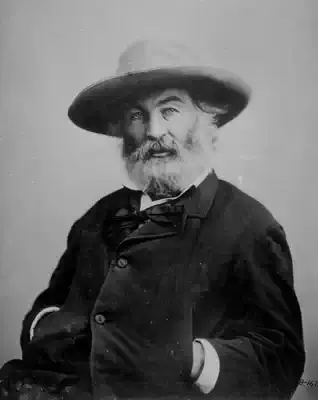
Walt Whitman
The Dalliance Of The Eagles
The Dalliance Of The Eagles
SKIRTING the river road, (my forenoon walk, my rest,)
Skyward in air a sudden muffled sound, the dalliance of the eagles,
The rushing amorous contact high in space together,
The clinching interlocking claws, a living, fierce, gyrating wheel,
Four beating wings, two beaks, a swirling mass tight grappling,
In tumbling turning clustering loops, straight downward falling,
Till o'er the river pois'd, the twain yet one, a moment's lull,
A motionless still balance in the air, then parting, talons loosing,
Upward again on slow-firm pinions slanting, their separate diverse
flight,
She hers, he his, pursuing. 10
SKIRTING the river road, (my forenoon walk, my rest,)
Skyward in air a sudden muffled sound, the dalliance of the eagles,
The rushing amorous contact high in space together,
The clinching interlocking claws, a living, fierce, gyrating wheel,
Four beating wings, two beaks, a swirling mass tight grappling,
In tumbling turning clustering loops, straight downward falling,
Till o'er the river pois'd, the twain yet one, a moment's lull,
A motionless still balance in the air, then parting, talons loosing,
Upward again on slow-firm pinions slanting, their separate diverse
flight,
She hers, he his, pursuing. 10
414
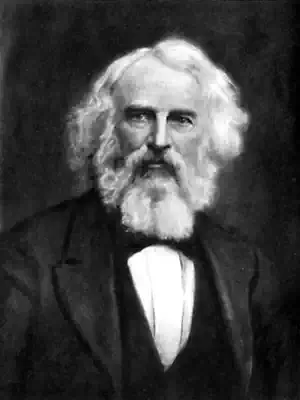
Henry Wadsworth Longfellow
The Song of Hiawatha: X
The Song of Hiawatha: X
X. Hiawatha's Wooing
"As unto the bow the cord is,
So unto the man is woman,
Though she bends him, she obeys him,
Though she draws him, yet she follows,
Useless each without the other!"
Thus the youthful Hiawatha
Said within himself and pondered,
Much perplexed by various feelings,
Listless, longing, hoping, fearing,
Dreaming still of Minnehaha,
Of the lovely Laughing Water,
In the land of the Dacotahs.
"Wed a maiden of your people,"
Warning said the old Nokomis;
"Go not eastward, go not westward,
For a stranger, whom we know not!
Like a fire upon the hearth-stone
Is a neighbor's homely daughter,
Like the starlight or the moonlight
Is the handsomest of strangers!"
Thus dissuading spake Nokomis,
And my Hiawatha answered
Only this: "Dear old Nokomis,
Very pleasant is the firelight,
But I like the starlight better,
Better do I like the moonlight!"
Gravely then said old Nokomis:
"Bring not here an idle maiden,
Bring not here a useless woman,
Hands unskilful, feet unwilling;
Bring a wife with nimble fingers,
Heart and hand that move together,
Feet that run on willing errands!"
Smiling answered Hiawatha:
"In the land of the Dacotahs
Lives the Arrow-maker's daughter,
Minnehaha, Laughing Water,
Handsomest of all the women.
I will bring her to your wigwam,
She shall run upon your errands,
Be your starlight, moonlight, firelight,
Be the sunlight of my people!"
Still dissuading said Nokomis:
"Bring not to my lodge a stranger
From the land of the Dacotahs!
Very fierce are the Dacotahs,
Often is there war between us,
There are feuds yet unforgotten,
Wounds that ache and still may open!
Laughing answered Hiawatha:
"For that reason, if no other,
Would I wed the fair Dacotah,
That our tribes might be united,
That old feuds might be forgotten,
And old wounds be healed forever!"
Thus departed Hiawatha
To the land of the Dacotahs,
To the land of handsome women;
Striding over moor and meadow,
Through interminable forests,
Through uninterrupted silence.
With his moccasins of magic,
At each stride a mile he measured;
Yet the way seemed long before him,
And his heart outran his footsteps;
And he journeyed without resting,
Till he heard the cataract's laughter,
Heard the Falls of Minnehaha
Calling to him through the silence.
"Pleasant is the sound!" he murmured,
"Pleasant is the voice that calls me!"
On the outskirts of the forests,
'Twixt the shadow and the sunshine,
Herds of fallow deer were feeding,
But they saw not Hiawatha;
To his bow be whispered, "Fail not!"
To his arrow whispered, "Swerve not!"
Sent it singing on its errand,
To the red heart of the roebuck;
Threw the deer across his shoulder,
And sped forward without pausing.
At the doorway of his wigwam
Sat his ancient Arrow-maker,
In the land of the Dacotahs,
Making arrow-heads of jasper,
Arrow-heads of chalcedony.
At his side, in all her beauty,
Sat the lovely Minnehaha,
Sat his daughter, Laughing Water,
Plaiting mats of flags and rushes;
Of the past the old man's thoughts were,
And the maiden's of the future.
He was thinking, as he sat there,
Of the days when with such arrows
He had struck the deer and bison,
On the Muskoday, the meadow;
Shot the wild goose, flying southward,
On the wing, the clamorous Wawa;
Thinking of the great war-parties,
How they came to buy his arrows,
Could not fight without his arrows.
Ah, no more such noble warriors
Could be found on earth as they were!
Now the men were all like women,
Only used their tongues for weapons!
She was thinking of a hunter,
From another tribe and country,
Young and tall and very handsome,
Who one morning, in the Spring-time,
Came to buy her father's arrows,
Lingered long about the doorway,
Sat and rested in the wigwam,
Looking back as he departed.
She had heard her father praise him,
Praise his courage and his wisdom;
Would he come again for arrows
To the Falls of Minnehaha?
On the mat her hands lay idle,
And her eyes were very dreamy.
Through their thoughts they heard a footstep,
Heard a rustling in the branches,
And with glowing cheek and forehead,
With the deer upon his shoulders,
Suddenly from out the woodlands
Hiawatha stood before them.
Straight the ancient Arrow-maker
Looked up gravely from his labor,
Laid aside the unfinished arrow,
Bade him enter at the doorway,
Saying, as he rose to meet him,
"Hiawatha, you are welcome!"
At the feet of Laughing Water
Hiawatha laid his burden,
Threw the red deer from his shoulders;
And the maiden looked up at him,
Looked up from her mat of rushes,
Said with gentle look and accent,
"You are welcome, Hiawatha!"
Very spacious was the wigwam,
Made of deer-skins dressed and whitened,
With the Gods of the Dacotahs
Drawn and painted on its curtains,
And so tall the doorway, hardly
Hiawatha stooped to enter,
Hardly touched his eagle-feathers
As he entered at the doorway.
Then uprose the Laughing Water,
From the ground fair Minnehaha,
Laid aside her mat unfinished,
Brought forth food and set before them,
Water brought them from the brooklet,
Gave them food in earthen vessels,
Gave them drink in bowls of bass-wood,
Listened while the guest was speaking,
Listened while her father answered,
But not once her lips she opened,
Not a single word she uttered.
Yes, as in a dream she listened
To the words of Hiawatha,
As he talked of old Nokomis,
Who had nursed him in his childhood,
As he told of his companions,
Chibiabos, the musician,
And the very strong man, Kwasind,
And of happiness and plenty
In the land of the Ojibways,
In the pleasant land and peaceful.
"After many years of warfare,
Many years of strife and bloodshed,
There is peace between the Ojibways
And the tribe of the Dacotahs."
Thus continued Hiawatha,
And then added, speaking slowly,
'That this peace may last forever,
And our hands be clasped more closely,
And our hearts be more united,
Give me as my wife this maiden,
Minnehaha, Laughing Water,
Loveliest of Dacotah women!
And the ancient Arrow-maker
Paused a moment ere he answered,
Smoked a little while in silence,
Looked at Hiawatha proudly,
Fondly looked at Laughing Water,
And made answer very gravely:
"Yes, if Minnehaha wishes;
Let your heart speak, Minnehaha!"
And the lovely Laughing Water
Seemed more lovely as she stood there,
Neither willing nor reluctant,
As she went to Hiawatha,
Softly took the seat beside him,
While she said, and blushed to say it,
"I will follow you, my husband!"
This was Hiawatha's wooing!
Thus it was he won the daughter
Of the ancient Arrow-maker,
In the land of the Dacotahs!
From the wigwam he departed,
Leading with him Laughing Water;
Hand in hand they went together,
Through the woodland and the meadow,
Left the old man standing lonely
At the doorway of his wigwam,
Heard the Falls of Minnehaha
Calling to them from the distance,
Crying to them from afar off,
"Fare thee well, O Minnehaha!"
And the ancient Arrow-maker
Turned again unto his labor,
Sat down by his sunny doorway,
Murmuring to himself, and saying:
"Thus it is our daughters leave us,
Those we love, and those who love us!
Just when they have learned to help us,
When we are old and lean upon them,
Comes a youth with flaunting feathers,
With his flute of reeds, a stranger
Wanders piping through the village,
Beckons to the fairest maiden,
And she follows where he leads her,
Leaving all things for the stranger!"
Pleasant was the journey homeward,
Through interminable forests,
Over meadow, over mountain,
Over river, hill, and hollow.
Short it seemed to Hiawatha,
Though they journeyed very slowly,
Though his pace he checked and slackened
To the steps of Laughing Water.
Over wide and rushing rivers
In his arms he bore the maiden;
Light he thought her as a feather,
As the plume upon his head-gear;
Cleared the tangled pathway for her,
Bent aside the swaying branches,
Made at night a lodge of branches,
And a bed with boughs of hemlock,
And a fire before the doorway
With the dry cones of the pine-tree.
All the travelling winds went with them,
O'er the meadows, through the forest;
All the stars of night looked at them,
Watched with sleepless eyes their slumber;
From his ambush in the oak-tree
Peeped the squirrel, Adjidaumo,
Watched with eager eyes the lovers;
And the rabbit, the Wabasso,
Scampered from the path before them,
Peering, peeping from his burrow,
Sat erect upon his haunches,
Watched with curious eyes the lovers.
Pleasant was the journey homeward!
All the birds sang loud and sweetly
Songs of happiness and heart's-ease;
Sang the bluebird, the Owaissa,
"Happy are you, Hiawatha,
Having such a wife to love you!"
Sang the robin, the Opechee,
"Happy are you, Laughing Water,
Having such a noble husband!"
From the sky the sun benignant
Looked upon them through the branches,
Saying to them, "O my children,
Love is sunshine, hate is shadow,
Life is checkered shade and sunshine,
Rule by love, O Hiawatha!"
From the sky the moon looked at them,
Filled the lodge with mystic splendors,
Whispered to them, "O my children,
Day is restless, night is quiet,
Man imperious, woman feeble;
Half is mine, although I follow;
Rule by patience, Laughing Water!"
Thus it was they journeyed homeward;
Thus it was that Hiawatha
To the lodge of old Nokomis
Brought the moonlight, starlight, firelight,
Brought the sunshine of his people,
Minnehaha, Laughing Water,
Handsomest of all the women
In the land of the Dacotahs,
In the land of handsome women.
X. Hiawatha's Wooing
"As unto the bow the cord is,
So unto the man is woman,
Though she bends him, she obeys him,
Though she draws him, yet she follows,
Useless each without the other!"
Thus the youthful Hiawatha
Said within himself and pondered,
Much perplexed by various feelings,
Listless, longing, hoping, fearing,
Dreaming still of Minnehaha,
Of the lovely Laughing Water,
In the land of the Dacotahs.
"Wed a maiden of your people,"
Warning said the old Nokomis;
"Go not eastward, go not westward,
For a stranger, whom we know not!
Like a fire upon the hearth-stone
Is a neighbor's homely daughter,
Like the starlight or the moonlight
Is the handsomest of strangers!"
Thus dissuading spake Nokomis,
And my Hiawatha answered
Only this: "Dear old Nokomis,
Very pleasant is the firelight,
But I like the starlight better,
Better do I like the moonlight!"
Gravely then said old Nokomis:
"Bring not here an idle maiden,
Bring not here a useless woman,
Hands unskilful, feet unwilling;
Bring a wife with nimble fingers,
Heart and hand that move together,
Feet that run on willing errands!"
Smiling answered Hiawatha:
"In the land of the Dacotahs
Lives the Arrow-maker's daughter,
Minnehaha, Laughing Water,
Handsomest of all the women.
I will bring her to your wigwam,
She shall run upon your errands,
Be your starlight, moonlight, firelight,
Be the sunlight of my people!"
Still dissuading said Nokomis:
"Bring not to my lodge a stranger
From the land of the Dacotahs!
Very fierce are the Dacotahs,
Often is there war between us,
There are feuds yet unforgotten,
Wounds that ache and still may open!
Laughing answered Hiawatha:
"For that reason, if no other,
Would I wed the fair Dacotah,
That our tribes might be united,
That old feuds might be forgotten,
And old wounds be healed forever!"
Thus departed Hiawatha
To the land of the Dacotahs,
To the land of handsome women;
Striding over moor and meadow,
Through interminable forests,
Through uninterrupted silence.
With his moccasins of magic,
At each stride a mile he measured;
Yet the way seemed long before him,
And his heart outran his footsteps;
And he journeyed without resting,
Till he heard the cataract's laughter,
Heard the Falls of Minnehaha
Calling to him through the silence.
"Pleasant is the sound!" he murmured,
"Pleasant is the voice that calls me!"
On the outskirts of the forests,
'Twixt the shadow and the sunshine,
Herds of fallow deer were feeding,
But they saw not Hiawatha;
To his bow be whispered, "Fail not!"
To his arrow whispered, "Swerve not!"
Sent it singing on its errand,
To the red heart of the roebuck;
Threw the deer across his shoulder,
And sped forward without pausing.
At the doorway of his wigwam
Sat his ancient Arrow-maker,
In the land of the Dacotahs,
Making arrow-heads of jasper,
Arrow-heads of chalcedony.
At his side, in all her beauty,
Sat the lovely Minnehaha,
Sat his daughter, Laughing Water,
Plaiting mats of flags and rushes;
Of the past the old man's thoughts were,
And the maiden's of the future.
He was thinking, as he sat there,
Of the days when with such arrows
He had struck the deer and bison,
On the Muskoday, the meadow;
Shot the wild goose, flying southward,
On the wing, the clamorous Wawa;
Thinking of the great war-parties,
How they came to buy his arrows,
Could not fight without his arrows.
Ah, no more such noble warriors
Could be found on earth as they were!
Now the men were all like women,
Only used their tongues for weapons!
She was thinking of a hunter,
From another tribe and country,
Young and tall and very handsome,
Who one morning, in the Spring-time,
Came to buy her father's arrows,
Lingered long about the doorway,
Sat and rested in the wigwam,
Looking back as he departed.
She had heard her father praise him,
Praise his courage and his wisdom;
Would he come again for arrows
To the Falls of Minnehaha?
On the mat her hands lay idle,
And her eyes were very dreamy.
Through their thoughts they heard a footstep,
Heard a rustling in the branches,
And with glowing cheek and forehead,
With the deer upon his shoulders,
Suddenly from out the woodlands
Hiawatha stood before them.
Straight the ancient Arrow-maker
Looked up gravely from his labor,
Laid aside the unfinished arrow,
Bade him enter at the doorway,
Saying, as he rose to meet him,
"Hiawatha, you are welcome!"
At the feet of Laughing Water
Hiawatha laid his burden,
Threw the red deer from his shoulders;
And the maiden looked up at him,
Looked up from her mat of rushes,
Said with gentle look and accent,
"You are welcome, Hiawatha!"
Very spacious was the wigwam,
Made of deer-skins dressed and whitened,
With the Gods of the Dacotahs
Drawn and painted on its curtains,
And so tall the doorway, hardly
Hiawatha stooped to enter,
Hardly touched his eagle-feathers
As he entered at the doorway.
Then uprose the Laughing Water,
From the ground fair Minnehaha,
Laid aside her mat unfinished,
Brought forth food and set before them,
Water brought them from the brooklet,
Gave them food in earthen vessels,
Gave them drink in bowls of bass-wood,
Listened while the guest was speaking,
Listened while her father answered,
But not once her lips she opened,
Not a single word she uttered.
Yes, as in a dream she listened
To the words of Hiawatha,
As he talked of old Nokomis,
Who had nursed him in his childhood,
As he told of his companions,
Chibiabos, the musician,
And the very strong man, Kwasind,
And of happiness and plenty
In the land of the Ojibways,
In the pleasant land and peaceful.
"After many years of warfare,
Many years of strife and bloodshed,
There is peace between the Ojibways
And the tribe of the Dacotahs."
Thus continued Hiawatha,
And then added, speaking slowly,
'That this peace may last forever,
And our hands be clasped more closely,
And our hearts be more united,
Give me as my wife this maiden,
Minnehaha, Laughing Water,
Loveliest of Dacotah women!
And the ancient Arrow-maker
Paused a moment ere he answered,
Smoked a little while in silence,
Looked at Hiawatha proudly,
Fondly looked at Laughing Water,
And made answer very gravely:
"Yes, if Minnehaha wishes;
Let your heart speak, Minnehaha!"
And the lovely Laughing Water
Seemed more lovely as she stood there,
Neither willing nor reluctant,
As she went to Hiawatha,
Softly took the seat beside him,
While she said, and blushed to say it,
"I will follow you, my husband!"
This was Hiawatha's wooing!
Thus it was he won the daughter
Of the ancient Arrow-maker,
In the land of the Dacotahs!
From the wigwam he departed,
Leading with him Laughing Water;
Hand in hand they went together,
Through the woodland and the meadow,
Left the old man standing lonely
At the doorway of his wigwam,
Heard the Falls of Minnehaha
Calling to them from the distance,
Crying to them from afar off,
"Fare thee well, O Minnehaha!"
And the ancient Arrow-maker
Turned again unto his labor,
Sat down by his sunny doorway,
Murmuring to himself, and saying:
"Thus it is our daughters leave us,
Those we love, and those who love us!
Just when they have learned to help us,
When we are old and lean upon them,
Comes a youth with flaunting feathers,
With his flute of reeds, a stranger
Wanders piping through the village,
Beckons to the fairest maiden,
And she follows where he leads her,
Leaving all things for the stranger!"
Pleasant was the journey homeward,
Through interminable forests,
Over meadow, over mountain,
Over river, hill, and hollow.
Short it seemed to Hiawatha,
Though they journeyed very slowly,
Though his pace he checked and slackened
To the steps of Laughing Water.
Over wide and rushing rivers
In his arms he bore the maiden;
Light he thought her as a feather,
As the plume upon his head-gear;
Cleared the tangled pathway for her,
Bent aside the swaying branches,
Made at night a lodge of branches,
And a bed with boughs of hemlock,
And a fire before the doorway
With the dry cones of the pine-tree.
All the travelling winds went with them,
O'er the meadows, through the forest;
All the stars of night looked at them,
Watched with sleepless eyes their slumber;
From his ambush in the oak-tree
Peeped the squirrel, Adjidaumo,
Watched with eager eyes the lovers;
And the rabbit, the Wabasso,
Scampered from the path before them,
Peering, peeping from his burrow,
Sat erect upon his haunches,
Watched with curious eyes the lovers.
Pleasant was the journey homeward!
All the birds sang loud and sweetly
Songs of happiness and heart's-ease;
Sang the bluebird, the Owaissa,
"Happy are you, Hiawatha,
Having such a wife to love you!"
Sang the robin, the Opechee,
"Happy are you, Laughing Water,
Having such a noble husband!"
From the sky the sun benignant
Looked upon them through the branches,
Saying to them, "O my children,
Love is sunshine, hate is shadow,
Life is checkered shade and sunshine,
Rule by love, O Hiawatha!"
From the sky the moon looked at them,
Filled the lodge with mystic splendors,
Whispered to them, "O my children,
Day is restless, night is quiet,
Man imperious, woman feeble;
Half is mine, although I follow;
Rule by patience, Laughing Water!"
Thus it was they journeyed homeward;
Thus it was that Hiawatha
To the lodge of old Nokomis
Brought the moonlight, starlight, firelight,
Brought the sunshine of his people,
Minnehaha, Laughing Water,
Handsomest of all the women
In the land of the Dacotahs,
In the land of handsome women.
371
Siegfried Sassoon
At Daybreak
At Daybreak
I listen for him through the rain,
And in the dusk of starless hours
I know that he will come again;
Loth was he ever to forsake me:
He comes with glimmering of flowers
And stir of music to awake me.
Spirit of purity, he stands
As once he lived in charm and grace:
I may not hold him with my hands,
Nor bid him stay to heal my sorrow;
Only his fair, unshadowed face
Abides with me until to-morrow.
I listen for him through the rain,
And in the dusk of starless hours
I know that he will come again;
Loth was he ever to forsake me:
He comes with glimmering of flowers
And stir of music to awake me.
Spirit of purity, he stands
As once he lived in charm and grace:
I may not hold him with my hands,
Nor bid him stay to heal my sorrow;
Only his fair, unshadowed face
Abides with me until to-morrow.
72
Walt Whitman
The Centerarian's Story
The Centerarian's Story
GIVE me your hand, old Revolutionary;
The hill-top is nigh--but a few steps, (make room, gentlemen;)
Up the path you have follow'd me well, spite of your hundred and
extra years;
You can walk, old man, though your eyes are almost done;
Your faculties serve you, and presently I must have them serve me.
Rest, while I tell what the crowd around us means;
On the plain below, recruits are drilling and exercising;
There is the camp--one regiment departs to-morrow;
Do you hear the officers giving the orders?
Do you hear the clank of the muskets? 10
Why, what comes over you now, old man?
Why do you tremble, and clutch my hand so convulsively?
The troops are but drilling--they are yet surrounded with smiles;
Around them, at hand, the well-drest friends, and the women;
While splendid and warm the afternoon sun shines down;
Green the midsummer verdure, and fresh blows the dallying breeze,
O'er proud and peaceful cities, and arm of the sea between.
But drill and parade are over--they march back to quarters;
Only hear that approval of hands! hear what a clapping!
As wending, the crowds now part and disperse--but we, old man, 20
Not for nothing have I brought you hither--we must remain;
You to speak in your turn, and I to listen and tell.
THE CENTENARIAN.
When I clutch'd your hand, it was not with terror;
But suddenly, pouring about me here, on every side,
And below there where the boys were drilling, and up the slopes they
ran,
And where tents are pitch'd, and wherever you see, south and south
east and south-west,
Over hills, across lowlands, and in the skirts of woods,
And along the shores, in mire (now fill'd over), came again, and
suddenly raged,
As eighty-five years agone, no mere parade receiv'd with applause of
friends,
But a battle, which I took part in myself--aye, long ago as it is, I
took part in it, 30
Walking then this hill-top, this same ground.
Aye, this is the ground;
My blind eyes, even as I speak, behold it re-peopled from graves;
The years recede, pavements and stately houses disappear;
Rude forts appear again, the old hoop'd guns are mounted;
I see the lines of rais'd earth stretching from river to bay;
I mark the vista of waters, I mark the uplands and slopes:
Here we lay encamp'd--it was this time in summer also.
As I talk, I remember all--I remember the Declaration;
It was read here--the whole army paraded--it was read to us here; 40
By his staff surrounded, the General stood in the middle--he held up
his unsheath'd sword,
It glitter'd in the sun in full sight of the army.
'Twas a bold act then;
The English war-ships had just arrived--the king had sent them from
over the sea;
We could watch down the lower bay where they lay at anchor,
And the transports, swarming with soldiers.
A few days more, and they landed--and then the battle.
Twenty thousand were brought against us,
A veteran force, furnish'd with good artillery.
I tell not now the whole of the battle; 50
But one brigade, early in the forenoon, order'd forward to engage the
red-coats;
Of that brigade I tell, and how steadily it march'd,
And how long and how well it stood, confronting death.
Who do you think that was, marching steadily, sternly confronting
death?
It was the brigade of the youngest men, two thousand strong,
Rais'd in Virginia and Maryland, and many of them known personally to
the General.
Jauntily forward they went with quick step toward Gowanus' waters;
Till of a sudden, unlook'd for, by defiles through the woods, gain'd
at night,
The British advancing, wedging in from the east, fiercely playing
their guns,
That brigade of the youngest was cut off, and at the enemy's
mercy. 60
The General watch'd them from this hill;
They made repeated desperate attempts to burst their environment;
Then drew close together, very compact, their flag flying in the
middle;
But O from the hills how the cannon were thinning and thinning them!
It sickens me yet, that slaughter!
I saw the moisture gather in drops on the face of the General;
I saw how he wrung his hands in anguish.
Meanwhile the British maneuver'd to draw us out for a pitch'd battle;
But we dared not trust the chances of a pitch'd battle.
We fought the fight in detachments; 70
Sallying forth, we fought at several points--but in each the luck was
against us;
Our foe advancing, steadily getting the best of it, push'd us back to
the works on this hill;
Till we turn'd, menacing, here, and then he left us.
That was the going out of the brigade of the youngest men, two
thousand strong;
Few return'd--nearly all remain in Brooklyn.
That, and here, my General's first battle;
No women looking on, nor sunshine to bask in--it did not conclude
with applause;
Nobody clapp'd hands here then.
But in darkness, in mist, on the ground, under a chill rain,
Wearied that night we lay, foil'd and sullen; 80
While scornfully laugh'd many an arrogant lord, off against us
encamp'd,
Quite within hearing, feasting, klinking wine-glasses together over
their victory.
So, dull and damp, and another day;
But the night of that, mist lifting, rain ceasing,
Silent as a ghost, while they thought they were sure of him, my
General retreated.
I saw him at the river-side,
Down by the ferry, lit by torches, hastening the embarcation;
My General waited till the soldiers and wounded were all pass'd over;
And then, (it was just ere sunrise,) these eyes rested on him for the
last time.
Every one else seem'd fill'd with gloom; 90
Many no doubt thought of capitulation.
But when my General pass'd me,
As he stood in his boat, and look'd toward the coming sun,
I saw something different from capitulation.
TERMINUS.
Enough--the Centenarian's story ends;
The two, the past and present, have interchanged;
I myself, as connecter, as chansonnier of a great future, am now
speaking.
And is this the ground Washington trod?
And these waters I listlessly daily cross, are these the waters he
cross'd,
As resolute in defeat, as other generals in their proudest
triumphs? 100
It is well--a lesson like that, always comes good;
I must copy the story, and send it eastward and westward;
I must preserve that look, as it beam'd on you, rivers of Brooklyn.
See! as the annual round returns, the phantoms return;
It is the 27th of August, and the British have landed;
The battle begins, and goes against us--behold! through the smoke,
Washington's face;
The brigade of Virginia and Maryland have march'd forth to intercept
the enemy;
They are cut off--murderous artillery from the hills plays upon them;
Rank after rank falls, while over them silently droops the flag,
Baptized that day in many a young man's bloody wounds, 110
In death, defeat, and sisters', mothers' tears.
Ah, hills and slopes of Brooklyn! I perceive you are more valuable
than your owners supposed;
Ah, river! henceforth you will be illumin'd to me at sunrise with
something besides the sun.
Encampments new! in the midst of you stands an encampment very old;
Stands forever the camp of the dead brigade.
GIVE me your hand, old Revolutionary;
The hill-top is nigh--but a few steps, (make room, gentlemen;)
Up the path you have follow'd me well, spite of your hundred and
extra years;
You can walk, old man, though your eyes are almost done;
Your faculties serve you, and presently I must have them serve me.
Rest, while I tell what the crowd around us means;
On the plain below, recruits are drilling and exercising;
There is the camp--one regiment departs to-morrow;
Do you hear the officers giving the orders?
Do you hear the clank of the muskets? 10
Why, what comes over you now, old man?
Why do you tremble, and clutch my hand so convulsively?
The troops are but drilling--they are yet surrounded with smiles;
Around them, at hand, the well-drest friends, and the women;
While splendid and warm the afternoon sun shines down;
Green the midsummer verdure, and fresh blows the dallying breeze,
O'er proud and peaceful cities, and arm of the sea between.
But drill and parade are over--they march back to quarters;
Only hear that approval of hands! hear what a clapping!
As wending, the crowds now part and disperse--but we, old man, 20
Not for nothing have I brought you hither--we must remain;
You to speak in your turn, and I to listen and tell.
THE CENTENARIAN.
When I clutch'd your hand, it was not with terror;
But suddenly, pouring about me here, on every side,
And below there where the boys were drilling, and up the slopes they
ran,
And where tents are pitch'd, and wherever you see, south and south
east and south-west,
Over hills, across lowlands, and in the skirts of woods,
And along the shores, in mire (now fill'd over), came again, and
suddenly raged,
As eighty-five years agone, no mere parade receiv'd with applause of
friends,
But a battle, which I took part in myself--aye, long ago as it is, I
took part in it, 30
Walking then this hill-top, this same ground.
Aye, this is the ground;
My blind eyes, even as I speak, behold it re-peopled from graves;
The years recede, pavements and stately houses disappear;
Rude forts appear again, the old hoop'd guns are mounted;
I see the lines of rais'd earth stretching from river to bay;
I mark the vista of waters, I mark the uplands and slopes:
Here we lay encamp'd--it was this time in summer also.
As I talk, I remember all--I remember the Declaration;
It was read here--the whole army paraded--it was read to us here; 40
By his staff surrounded, the General stood in the middle--he held up
his unsheath'd sword,
It glitter'd in the sun in full sight of the army.
'Twas a bold act then;
The English war-ships had just arrived--the king had sent them from
over the sea;
We could watch down the lower bay where they lay at anchor,
And the transports, swarming with soldiers.
A few days more, and they landed--and then the battle.
Twenty thousand were brought against us,
A veteran force, furnish'd with good artillery.
I tell not now the whole of the battle; 50
But one brigade, early in the forenoon, order'd forward to engage the
red-coats;
Of that brigade I tell, and how steadily it march'd,
And how long and how well it stood, confronting death.
Who do you think that was, marching steadily, sternly confronting
death?
It was the brigade of the youngest men, two thousand strong,
Rais'd in Virginia and Maryland, and many of them known personally to
the General.
Jauntily forward they went with quick step toward Gowanus' waters;
Till of a sudden, unlook'd for, by defiles through the woods, gain'd
at night,
The British advancing, wedging in from the east, fiercely playing
their guns,
That brigade of the youngest was cut off, and at the enemy's
mercy. 60
The General watch'd them from this hill;
They made repeated desperate attempts to burst their environment;
Then drew close together, very compact, their flag flying in the
middle;
But O from the hills how the cannon were thinning and thinning them!
It sickens me yet, that slaughter!
I saw the moisture gather in drops on the face of the General;
I saw how he wrung his hands in anguish.
Meanwhile the British maneuver'd to draw us out for a pitch'd battle;
But we dared not trust the chances of a pitch'd battle.
We fought the fight in detachments; 70
Sallying forth, we fought at several points--but in each the luck was
against us;
Our foe advancing, steadily getting the best of it, push'd us back to
the works on this hill;
Till we turn'd, menacing, here, and then he left us.
That was the going out of the brigade of the youngest men, two
thousand strong;
Few return'd--nearly all remain in Brooklyn.
That, and here, my General's first battle;
No women looking on, nor sunshine to bask in--it did not conclude
with applause;
Nobody clapp'd hands here then.
But in darkness, in mist, on the ground, under a chill rain,
Wearied that night we lay, foil'd and sullen; 80
While scornfully laugh'd many an arrogant lord, off against us
encamp'd,
Quite within hearing, feasting, klinking wine-glasses together over
their victory.
So, dull and damp, and another day;
But the night of that, mist lifting, rain ceasing,
Silent as a ghost, while they thought they were sure of him, my
General retreated.
I saw him at the river-side,
Down by the ferry, lit by torches, hastening the embarcation;
My General waited till the soldiers and wounded were all pass'd over;
And then, (it was just ere sunrise,) these eyes rested on him for the
last time.
Every one else seem'd fill'd with gloom; 90
Many no doubt thought of capitulation.
But when my General pass'd me,
As he stood in his boat, and look'd toward the coming sun,
I saw something different from capitulation.
TERMINUS.
Enough--the Centenarian's story ends;
The two, the past and present, have interchanged;
I myself, as connecter, as chansonnier of a great future, am now
speaking.
And is this the ground Washington trod?
And these waters I listlessly daily cross, are these the waters he
cross'd,
As resolute in defeat, as other generals in their proudest
triumphs? 100
It is well--a lesson like that, always comes good;
I must copy the story, and send it eastward and westward;
I must preserve that look, as it beam'd on you, rivers of Brooklyn.
See! as the annual round returns, the phantoms return;
It is the 27th of August, and the British have landed;
The battle begins, and goes against us--behold! through the smoke,
Washington's face;
The brigade of Virginia and Maryland have march'd forth to intercept
the enemy;
They are cut off--murderous artillery from the hills plays upon them;
Rank after rank falls, while over them silently droops the flag,
Baptized that day in many a young man's bloody wounds, 110
In death, defeat, and sisters', mothers' tears.
Ah, hills and slopes of Brooklyn! I perceive you are more valuable
than your owners supposed;
Ah, river! henceforth you will be illumin'd to me at sunrise with
something besides the sun.
Encampments new! in the midst of you stands an encampment very old;
Stands forever the camp of the dead brigade.
437

Robert W. Service
The Contented Man
The Contented Man
"How good God is to me," he said;
"For have I not a mansion tall,
With trees and lawns of velvet tread,
And happy helpers at my call?
With beauty is my life abrim,
With tranquil hours and dreams apart;
You wonder that I yield to Him
That best of prayers, a grateful heart?"
"How good God is to me," he said;
"For look! though gone is all my wealth,
How sweet it is to earn one's bread
With brawny arms and brimming health.
Oh, now I know the joy of strife!
To sleep so sound, to wake so fit.
Ah yes, how glorious is life!
I thank Him for each day of it."
"How good God is to me," he said;
"Though health and wealth are gone, it's true;
Things might be worse, I might be dead,
And here I'm living, laughing too.
Serene beneath the evening sky
I wait, and every man's my friend;
God's most contented man am I . . .
He keeps me smiling to the End."
"How good God is to me," he said;
"For have I not a mansion tall,
With trees and lawns of velvet tread,
And happy helpers at my call?
With beauty is my life abrim,
With tranquil hours and dreams apart;
You wonder that I yield to Him
That best of prayers, a grateful heart?"
"How good God is to me," he said;
"For look! though gone is all my wealth,
How sweet it is to earn one's bread
With brawny arms and brimming health.
Oh, now I know the joy of strife!
To sleep so sound, to wake so fit.
Ah yes, how glorious is life!
I thank Him for each day of it."
"How good God is to me," he said;
"Though health and wealth are gone, it's true;
Things might be worse, I might be dead,
And here I'm living, laughing too.
Serene beneath the evening sky
I wait, and every man's my friend;
God's most contented man am I . . .
He keeps me smiling to the End."
185
Siegfried Sassoon
Arms and the Man
Arms and the Man
Young Croesus went to pay his call
On Colonel Sawbones, Caxton Hall:
And, though his wound was healed and mended,
He hoped he’d get his leave extended.
The waiting-room was dark and bare.
He eyed a neat-framed notice there
Above the fireplace hung to show
Disabled heroes where to go
For arms and legs; with scale of price,
And words of dignified advice
How officers could get them free.
Elbow or shoulder, hip or knee,
Two arms, two legs, though all were lost,
They’d be restored him free of cost.
Then a Girl Guide looked to say,
‘Will Captain Croesus come this way?’
Young Croesus went to pay his call
On Colonel Sawbones, Caxton Hall:
And, though his wound was healed and mended,
He hoped he’d get his leave extended.
The waiting-room was dark and bare.
He eyed a neat-framed notice there
Above the fireplace hung to show
Disabled heroes where to go
For arms and legs; with scale of price,
And words of dignified advice
How officers could get them free.
Elbow or shoulder, hip or knee,
Two arms, two legs, though all were lost,
They’d be restored him free of cost.
Then a Girl Guide looked to say,
‘Will Captain Croesus come this way?’
90
Walt Whitman
The Artilleryman's Vision
The Artilleryman's Vision
WHILE my wife at my side lies slumbering, and the wars are over long,
And my head on the pillow rests at home, and the vacant midnight
passes,
And through the stillness, through the dark, I hear, just hear, the
breath of my infant,
There in the room, as I wake from sleep, this vision presses upon me:
The engagement opens there and then, in fantasy unreal;
The skirmishers begin--they crawl cautiously ahead--I hear the
irregular snap! snap!
I hear the sounds of the different missiles--the short t-h-t! t-h-t!
of the rifle balls;
I see the shells exploding, leaving small white clouds--I hear the
great shells shrieking as they pass;
The grape, like the hum and whirr of wind through the trees, (quick,
tumultuous, now the contest rages!)
All the scenes at the batteries themselves rise in detail before me
again; 10
The crashing and smoking--the pride of the men in their pieces;
The chief gunner ranges and sights his piece, and selects a fuse of
the right time;
After firing, I see him lean aside, and look eagerly off to note the
effect;
--Elsewhere I hear the cry of a regiment charging--(the young colonel
leads himself this time, with brandish'd sword;)
I see the gaps cut by the enemy's volleys, (quickly fill'd up, no
delay;)
I breathe the suffocating smoke--then the flat clouds hover low,
concealing all;
Now a strange lull comes for a few seconds, not a shot fired on
either side;
Then resumed, the chaos louder than ever, with eager calls, and
orders of officers;
While from some distant part of the field the wind wafts to my ears a
shout of applause, (some special success;)
And ever the sound of the cannon, far or near, (rousing, even in
dreams, a devilish exultation, and all the old mad joy, in the
depths of my soul;) 20
And ever the hastening of infantry shifting positions--batteries,
cavalry, moving hither and thither;
(The falling, dying, I heed not--the wounded, dripping and red, I
heed not--some to the rear are hobbling;)
Grime, heat, rush--aid-de-camps galloping by, or on a full run;
With the patter of small arms, the warning s-s-t of the rifles,
(these in my vision I hear or see,)
And bombs busting in air, and at night the vari-color'd rockets.
WHILE my wife at my side lies slumbering, and the wars are over long,
And my head on the pillow rests at home, and the vacant midnight
passes,
And through the stillness, through the dark, I hear, just hear, the
breath of my infant,
There in the room, as I wake from sleep, this vision presses upon me:
The engagement opens there and then, in fantasy unreal;
The skirmishers begin--they crawl cautiously ahead--I hear the
irregular snap! snap!
I hear the sounds of the different missiles--the short t-h-t! t-h-t!
of the rifle balls;
I see the shells exploding, leaving small white clouds--I hear the
great shells shrieking as they pass;
The grape, like the hum and whirr of wind through the trees, (quick,
tumultuous, now the contest rages!)
All the scenes at the batteries themselves rise in detail before me
again; 10
The crashing and smoking--the pride of the men in their pieces;
The chief gunner ranges and sights his piece, and selects a fuse of
the right time;
After firing, I see him lean aside, and look eagerly off to note the
effect;
--Elsewhere I hear the cry of a regiment charging--(the young colonel
leads himself this time, with brandish'd sword;)
I see the gaps cut by the enemy's volleys, (quickly fill'd up, no
delay;)
I breathe the suffocating smoke--then the flat clouds hover low,
concealing all;
Now a strange lull comes for a few seconds, not a shot fired on
either side;
Then resumed, the chaos louder than ever, with eager calls, and
orders of officers;
While from some distant part of the field the wind wafts to my ears a
shout of applause, (some special success;)
And ever the sound of the cannon, far or near, (rousing, even in
dreams, a devilish exultation, and all the old mad joy, in the
depths of my soul;) 20
And ever the hastening of infantry shifting positions--batteries,
cavalry, moving hither and thither;
(The falling, dying, I heed not--the wounded, dripping and red, I
heed not--some to the rear are hobbling;)
Grime, heat, rush--aid-de-camps galloping by, or on a full run;
With the patter of small arms, the warning s-s-t of the rifles,
(these in my vision I hear or see,)
And bombs busting in air, and at night the vari-color'd rockets.
425
Henry Wadsworth Longfellow
The Song Of Hiawatha XXII: Hiawatha's Departure
The Song Of Hiawatha XXII: Hiawatha's Departure
By the shore of Gitche Gumee,
By the shining Big-Sea-Water,
At the doorway of his wigwam,
In the pleasant Summer morning,
Hiawatha stood and waited.
All the air was full of freshness,
All the earth was bright and joyous,
And before him, through the sunshine,
Westward toward the neighboring forest
Passed in golden swarms the Ahmo,
Passed the bees, the honey-makers,
Burning, singing In the sunshine.
Bright above him shone the heavens,
Level spread the lake before him;
From its bosom leaped the sturgeon,
Sparkling, flashing in the sunshine;
On its margin the great forest
Stood reflected in the water,
Every tree-top had its shadow,
Motionless beneath the water.
From the brow of Hiawatha
Gone was every trace of sorrow,
As the fog from off the water,
As the mist from off the meadow.
With a smile of joy and triumph,
With a look of exultation,
As of one who in a vision
Sees what is to be, but is not,
Stood and waited Hiawatha.
Toward the sun his hands were lifted,
Both the palms spread out against it,
And between the parted fingers
Fell the sunshine on his features,
Flecked with light his naked shoulders,
As it falls and flecks an oak-tree
Through the rifted leaves and branches.
O'er the water floating, flying,
Something in the hazy distance,
Something in the mists of morning,
Loomed and lifted from the water,
Now seemed floating, now seemed flying,
Coming nearer, nearer, nearer.
Was it Shingebis the diver?
Or the pelican, the Shada?
Or the heron, the Shuh-shuh-gah?
Or the white goose, Waw-be-wawa,
With the water dripping, flashing,
From its glossy neck and feathers?
It was neither goose nor diver,
Neither pelican nor heron,
O'er the water floating, flying,
Through the shining mist of morning,
But a birch canoe with paddles,
Rising, sinking on the water,
Dripping, flashing in the sunshine;
And within it came a people
From the distant land of Wabun,
From the farthest realms of morning
Came the Black-Robe chief, the Prophet,
He the Priest of Prayer, the Pale-face,
With his guides and his companions.
And the noble Hiawatha,
With his hands aloft extended,
Held aloft in sign of welcome,
Waited, full of exultation,
Till the birch canoe with paddles
Grated on the shining pebbles,
Stranded on the sandy margin,
Till the Black-Robe chief, the Pale-face,
With the cross upon his bosom,
Landed on the sandy margin.
Then the joyous Hiawatha
Cried aloud and spake in this wise:
'Beautiful is the sun, O strangers,
When you come so far to see us!
All our town in peace awaits you,
All our doors stand open for you;
You shall enter all our wigwams,
For the heart's right hand we give you.
'Never bloomed the earth so gayly,
Never shone the sun so brightly,
As to-day they shine and blossom
When you come so far to see us!
Never was our lake so tranquil,
Nor so free from rocks, and sand-bars;
For your birch canoe in passing
Has removed both rock and sand-bar.
'Never before had our tobacco
Such a sweet and pleasant flavor,
Never the broad leaves of our cornfields
Were so beautiful to look on,
As they seem to us this morning,
When you come so far to see us!'
And the Black-Robe chief made answer,
Stammered In his speech a little,
Speaking words yet unfamiliar:
'Peace be with you, Hiawatha,
Peace be with you and your people,
Peace of prayer, and peace of pardon,
Peace of Christ, and joy of Mary!'
Then the generous Hiawatha
Led the strangers to his wigwam,
Seated them on skins of bison,
Seated them on skins of ermine,
And the careful old Nokomis
Brought them food in bowls of basswood,
Water brought in birchen dippers,
And the calumet, the peace-pipe,
Filled and lighted for their smoking.
All the old men of the village,
All the warriors of the nation,
All the Jossakeeds, the Prophets,
The magicians, the Wabenos,
And the Medicine-men, the Medas,
Came to bid the strangers welcome;
'It is well', they said, 'O brothers,
That you come so far to see us!'
In a circle round the doorway,
With their pipes they sat In silence,
Waiting to behold the strangers,
Waiting to receive their message;
Till the Black-Robe chief, the Pale-face,
From the wigwam came to greet them,
Stammering in his speech a little,
Speaking words yet unfamiliar;
'It Is well,' they said, 'O brother,
That you come so far to see us!'
Then the Black-Robe chief, the Prophet,
Told his message to the people,
Told the purport of his mission,
Told them of the Virgin Mary,
And her blessed Son, the Saviour,
How in distant lands and ages
He had lived on earth as we do;
How he fasted, prayed, and labored;
How the Jews, the tribe accursed,
Mocked him, scourged him, crucified him;
How he rose from where they laid him,
Walked again with his disciples,
And ascended into heaven.
And the chiefs made answer, saying:
'We have listened to your message,
We have heard your words of wisdom,
We will think on what you tell us.
It is well for us, O brothers,
That you come so far to see us!'
Then they rose up and departed
Each one homeward to his wigwam,
To the young men and the women
Told the story of the strangers
Whom the Master of Life had sent them
From the shining land of Wabun.
Heavy with the heat and silence
Grew the afternoon of Summer;
With a drowsy sound the forest
Whispered round the sultry wigwam,
With a sound of sleep the water
Rippled on the beach below it;
From the cornfields shrill and ceaseless
Sang the grasshopper, Pah-puk-keena;
And the guests of Hiawatha,
Weary with the heat of Summer,
Slumbered in the sultry wigwam.
Slowly o'er the simmering landscape
Fell the evening's dusk and coolness,
And the long and level sunbeams
Shot their spears into the forest,
Breaking through its shields of shadow,
Rushed into each secret ambush,
Searched each thicket, dingle, hollow;
Still the guests of Hiawatha
Slumbered In the silent wigwam.
From his place rose Hiawatha,
Bade farewell to old Nokomis,
Spake in whispers, spake in this wise,
Did not wake the guests, that slumbered.
'I am going, O Nokomis,
On a long and distant journey,
To the portals of the Sunset.
To the regions of the home-wind,
Of the Northwest-Wind, Keewaydin.
But these guests I leave behind me,
In your watch and ward I leave them;
See that never harm comes near them,
See that never fear molests them,
Never danger nor suspicion,
Never want of food or shelter,
In the lodge of Hiawatha!'
Forth into the village went he,
Bade farewell to all the warriors,
Bade farewell to all the young men,
Spake persuading, spake in this wise:
I am going, O my people,
On a long and distant journey;
Many moons and many winters
Will have come, and will have vanished,
Ere I come again to see you.
But my guests I leave behind me;
Listen to their words of wisdom,
Listen to the truth they tell you,
For the Master of Life has sent them
From the land of light and morning!'
On the shore stood Hiawatha,
Turned and waved his hand at parting;
On the clear and luminous water
Launched his birch canoe for sailing,
From the pebbles of the margin
Shoved it forth into the water;
Whispered to it, 'Westward! westward!'
And with speed it darted forward.
And the evening sun descending
Set the clouds on fire with redness,
Burned the broad sky, like a prairie,
Left upon the level water
One long track and trail of splendor,
Down whose stream, as down a river,
Westward, westward Hiawatha
Sailed into the fiery sunset,
Sailed into the purple vapors,
Sailed into the dusk of evening:
And the people from the margin
Watched him floating, rising, sinking,
Till the birch canoe seemed lifted
High into that sea of splendor,
Till it sank into the vapors
Like the new moon slowly, slowly
Sinking in the purple distance.
And they said, 'Farewell forever!'
Said, 'Farewell, O Hiawatha!'
And the forests, dark and lonely,
Moved through all their depths of darkness,
Sighed, 'Farewell, O Hiawatha!'
And the waves upon the margin
Rising, rippling on the pebbles,
Sobbed, 'Farewell, O Hiawatha!'
And the heron, the Shuh-shuh-gah,
From her haunts among the fen-lands,
Screamed, 'Farewell, O Hiawatha!'
Thus departed Hiawatha,
Hiawatha the Beloved,
In the glory of the sunset,.
In the purple mists of evening,
To the regions of the home-wind,
Of the Northwest-Wind, Keewaydin,
To the Islands of the Blessed,
To the Kingdom of Ponemah,
To the Land of the Hereafter!
By the shore of Gitche Gumee,
By the shining Big-Sea-Water,
At the doorway of his wigwam,
In the pleasant Summer morning,
Hiawatha stood and waited.
All the air was full of freshness,
All the earth was bright and joyous,
And before him, through the sunshine,
Westward toward the neighboring forest
Passed in golden swarms the Ahmo,
Passed the bees, the honey-makers,
Burning, singing In the sunshine.
Bright above him shone the heavens,
Level spread the lake before him;
From its bosom leaped the sturgeon,
Sparkling, flashing in the sunshine;
On its margin the great forest
Stood reflected in the water,
Every tree-top had its shadow,
Motionless beneath the water.
From the brow of Hiawatha
Gone was every trace of sorrow,
As the fog from off the water,
As the mist from off the meadow.
With a smile of joy and triumph,
With a look of exultation,
As of one who in a vision
Sees what is to be, but is not,
Stood and waited Hiawatha.
Toward the sun his hands were lifted,
Both the palms spread out against it,
And between the parted fingers
Fell the sunshine on his features,
Flecked with light his naked shoulders,
As it falls and flecks an oak-tree
Through the rifted leaves and branches.
O'er the water floating, flying,
Something in the hazy distance,
Something in the mists of morning,
Loomed and lifted from the water,
Now seemed floating, now seemed flying,
Coming nearer, nearer, nearer.
Was it Shingebis the diver?
Or the pelican, the Shada?
Or the heron, the Shuh-shuh-gah?
Or the white goose, Waw-be-wawa,
With the water dripping, flashing,
From its glossy neck and feathers?
It was neither goose nor diver,
Neither pelican nor heron,
O'er the water floating, flying,
Through the shining mist of morning,
But a birch canoe with paddles,
Rising, sinking on the water,
Dripping, flashing in the sunshine;
And within it came a people
From the distant land of Wabun,
From the farthest realms of morning
Came the Black-Robe chief, the Prophet,
He the Priest of Prayer, the Pale-face,
With his guides and his companions.
And the noble Hiawatha,
With his hands aloft extended,
Held aloft in sign of welcome,
Waited, full of exultation,
Till the birch canoe with paddles
Grated on the shining pebbles,
Stranded on the sandy margin,
Till the Black-Robe chief, the Pale-face,
With the cross upon his bosom,
Landed on the sandy margin.
Then the joyous Hiawatha
Cried aloud and spake in this wise:
'Beautiful is the sun, O strangers,
When you come so far to see us!
All our town in peace awaits you,
All our doors stand open for you;
You shall enter all our wigwams,
For the heart's right hand we give you.
'Never bloomed the earth so gayly,
Never shone the sun so brightly,
As to-day they shine and blossom
When you come so far to see us!
Never was our lake so tranquil,
Nor so free from rocks, and sand-bars;
For your birch canoe in passing
Has removed both rock and sand-bar.
'Never before had our tobacco
Such a sweet and pleasant flavor,
Never the broad leaves of our cornfields
Were so beautiful to look on,
As they seem to us this morning,
When you come so far to see us!'
And the Black-Robe chief made answer,
Stammered In his speech a little,
Speaking words yet unfamiliar:
'Peace be with you, Hiawatha,
Peace be with you and your people,
Peace of prayer, and peace of pardon,
Peace of Christ, and joy of Mary!'
Then the generous Hiawatha
Led the strangers to his wigwam,
Seated them on skins of bison,
Seated them on skins of ermine,
And the careful old Nokomis
Brought them food in bowls of basswood,
Water brought in birchen dippers,
And the calumet, the peace-pipe,
Filled and lighted for their smoking.
All the old men of the village,
All the warriors of the nation,
All the Jossakeeds, the Prophets,
The magicians, the Wabenos,
And the Medicine-men, the Medas,
Came to bid the strangers welcome;
'It is well', they said, 'O brothers,
That you come so far to see us!'
In a circle round the doorway,
With their pipes they sat In silence,
Waiting to behold the strangers,
Waiting to receive their message;
Till the Black-Robe chief, the Pale-face,
From the wigwam came to greet them,
Stammering in his speech a little,
Speaking words yet unfamiliar;
'It Is well,' they said, 'O brother,
That you come so far to see us!'
Then the Black-Robe chief, the Prophet,
Told his message to the people,
Told the purport of his mission,
Told them of the Virgin Mary,
And her blessed Son, the Saviour,
How in distant lands and ages
He had lived on earth as we do;
How he fasted, prayed, and labored;
How the Jews, the tribe accursed,
Mocked him, scourged him, crucified him;
How he rose from where they laid him,
Walked again with his disciples,
And ascended into heaven.
And the chiefs made answer, saying:
'We have listened to your message,
We have heard your words of wisdom,
We will think on what you tell us.
It is well for us, O brothers,
That you come so far to see us!'
Then they rose up and departed
Each one homeward to his wigwam,
To the young men and the women
Told the story of the strangers
Whom the Master of Life had sent them
From the shining land of Wabun.
Heavy with the heat and silence
Grew the afternoon of Summer;
With a drowsy sound the forest
Whispered round the sultry wigwam,
With a sound of sleep the water
Rippled on the beach below it;
From the cornfields shrill and ceaseless
Sang the grasshopper, Pah-puk-keena;
And the guests of Hiawatha,
Weary with the heat of Summer,
Slumbered in the sultry wigwam.
Slowly o'er the simmering landscape
Fell the evening's dusk and coolness,
And the long and level sunbeams
Shot their spears into the forest,
Breaking through its shields of shadow,
Rushed into each secret ambush,
Searched each thicket, dingle, hollow;
Still the guests of Hiawatha
Slumbered In the silent wigwam.
From his place rose Hiawatha,
Bade farewell to old Nokomis,
Spake in whispers, spake in this wise,
Did not wake the guests, that slumbered.
'I am going, O Nokomis,
On a long and distant journey,
To the portals of the Sunset.
To the regions of the home-wind,
Of the Northwest-Wind, Keewaydin.
But these guests I leave behind me,
In your watch and ward I leave them;
See that never harm comes near them,
See that never fear molests them,
Never danger nor suspicion,
Never want of food or shelter,
In the lodge of Hiawatha!'
Forth into the village went he,
Bade farewell to all the warriors,
Bade farewell to all the young men,
Spake persuading, spake in this wise:
I am going, O my people,
On a long and distant journey;
Many moons and many winters
Will have come, and will have vanished,
Ere I come again to see you.
But my guests I leave behind me;
Listen to their words of wisdom,
Listen to the truth they tell you,
For the Master of Life has sent them
From the land of light and morning!'
On the shore stood Hiawatha,
Turned and waved his hand at parting;
On the clear and luminous water
Launched his birch canoe for sailing,
From the pebbles of the margin
Shoved it forth into the water;
Whispered to it, 'Westward! westward!'
And with speed it darted forward.
And the evening sun descending
Set the clouds on fire with redness,
Burned the broad sky, like a prairie,
Left upon the level water
One long track and trail of splendor,
Down whose stream, as down a river,
Westward, westward Hiawatha
Sailed into the fiery sunset,
Sailed into the purple vapors,
Sailed into the dusk of evening:
And the people from the margin
Watched him floating, rising, sinking,
Till the birch canoe seemed lifted
High into that sea of splendor,
Till it sank into the vapors
Like the new moon slowly, slowly
Sinking in the purple distance.
And they said, 'Farewell forever!'
Said, 'Farewell, O Hiawatha!'
And the forests, dark and lonely,
Moved through all their depths of darkness,
Sighed, 'Farewell, O Hiawatha!'
And the waves upon the margin
Rising, rippling on the pebbles,
Sobbed, 'Farewell, O Hiawatha!'
And the heron, the Shuh-shuh-gah,
From her haunts among the fen-lands,
Screamed, 'Farewell, O Hiawatha!'
Thus departed Hiawatha,
Hiawatha the Beloved,
In the glory of the sunset,.
In the purple mists of evening,
To the regions of the home-wind,
Of the Northwest-Wind, Keewaydin,
To the Islands of the Blessed,
To the Kingdom of Ponemah,
To the Land of the Hereafter!
289
Walt Whitman
That Music Always Round Me
That Music Always Round Me
THAT music always round me, unceasing, unbeginning--yet long untaught
I did not hear;
But now the chorus I hear, and am elated;
A tenor, strong, ascending, with power and health, with glad notes of
day-break I hear,
A soprano, at intervals, sailing buoyantly over the tops of immense
waves,
A transparent bass, shuddering lusciously under and through the
universe,
The triumphant tutti--the funeral wailings, with sweet flutes and
violins--all these I fill myself with;
I hear not the volumes of sound merely--I am moved by the exquisite
meanings,
I listen to the different voices winding in and out, striving,
contending with fiery vehemence to excel each other in emotion;
I do not think the performers know themselves--but now I think I
begin to know them.
THAT music always round me, unceasing, unbeginning--yet long untaught
I did not hear;
But now the chorus I hear, and am elated;
A tenor, strong, ascending, with power and health, with glad notes of
day-break I hear,
A soprano, at intervals, sailing buoyantly over the tops of immense
waves,
A transparent bass, shuddering lusciously under and through the
universe,
The triumphant tutti--the funeral wailings, with sweet flutes and
violins--all these I fill myself with;
I hear not the volumes of sound merely--I am moved by the exquisite
meanings,
I listen to the different voices winding in and out, striving,
contending with fiery vehemence to excel each other in emotion;
I do not think the performers know themselves--but now I think I
begin to know them.
428
Siegfried Sassoon
Ancient History
Ancient History
Adam, a brown old vulture in the rain,
Shivered below his wind-whipped olive-trees;
Huddling sharp chin on scarred and scraggy knees,
He moaned and mumbled to his darkening brain;
‘He was the grandest of them all was Cain!
‘A lion laired in the hills, that none could tire:
‘Swift as a stag: a stallion of the plain,
‘Hungry and fierce with deeds of huge desire.’
Grimly he thought of Abel, soft and fair
A lover with disaster in his face,
And scarlet blossom twisted in bright hair.
‘Afraid to fight; was murder more disgrace?’
‘God always hated Cain’ He bowed his head
The gaunt wild man whose lovely sons were dead.
Adam, a brown old vulture in the rain,
Shivered below his wind-whipped olive-trees;
Huddling sharp chin on scarred and scraggy knees,
He moaned and mumbled to his darkening brain;
‘He was the grandest of them all was Cain!
‘A lion laired in the hills, that none could tire:
‘Swift as a stag: a stallion of the plain,
‘Hungry and fierce with deeds of huge desire.’
Grimly he thought of Abel, soft and fair
A lover with disaster in his face,
And scarlet blossom twisted in bright hair.
‘Afraid to fight; was murder more disgrace?’
‘God always hated Cain’ He bowed his head
The gaunt wild man whose lovely sons were dead.
78
Robert W. Service
The Christmas Tree
The Christmas Tree
In the dark and damp of the alley cold,
Lay the Christmas tree that hadn't been sold;
By a shopman dourly thrown outside;
With the ruck and rubble of Christmas-tide;
Trodden deep in the muck and mire,
Unworthy even to feed a fire...
So I stopped and salvaged that tarnished tree,
And thus is the story it told to me:
"My Mother was Queen of the forest glade,
And proudly I prospered in her shade;
For she said to me: 'When I am dead,
You will be monarch in my stead,
And reign, as I, for a hundred years,
A tower of triumph amid your peers,
When I crash in storm I will yield you space;
Son, you will worthily take my place.'
"So I grew in grace like a happy child,
In the heart of the forest free and wild;
And the moss and the ferns were all about,
And the craintive mice crept in and out;
And a wood-dove swung on my highest twig,
And a chipmunk chattered: 'So big! So big!'
And a shy fawn nibbled a tender shoot,
And a rabbit nibbled under my root...
Oh, I was happy in rain and shine
As I thought of the destiny that was mine!
Then a man with an axe came cruising by
And I knew that my fate was to fall and die.
"With a hundred others he packed me tight,
And we drove to a magic city of light,
To an avenue lined with Christmas trees,
And I thought: may be I'll be one of these,
Tinselled with silver and tricked with gold,
A lovely sight for a child to behold;
A-glitter with lights of every hue,
Ruby and emerald, orange and blue,
And kiddies dancing, with shrieks of glee -
One might fare worse than a Christmas tree.
"So they stood me up with a hundred more
In the blaze of a big department store;
But I thought of the forest dark and still,
And the dew and the snow and the heat and the chill,
And the soft chinook and the summer breeze,
And the dappled deer and the birds and the bees...
I was so homesick I wanted to cry,
But patient I waited for someone to buy.
And some said 'Too big,' and some 'Too small,'
And some passed on saying nothing at all.
Then a little boy cried: Ma, buy that one,'
But she shook her head: 'Too dear, my son."
So the evening came, when they closed the store,
And I was left on the littered floor,
A tree unwanted, despised, unsold,
Thrown out at last in the alley cold."
Then I said: "Don't sorrow; at least you'll be
A bright and beautiful New Year's tree,
All shimmer and glimmer and glow and gleam,
A radiant sight like a fairy dream.
For there is a little child I know,
Who lives in poverty, want and woe;
Who lies abed from morn to night,
And never has known an hour's delight..."
So I stood the tree at the foot of her bed:
"Santa's a little late," I said.
"Poor old chap! Snowbound on the way,
But he's here at last, so let's be gay."
Then she woke from sleep and she saw you there,
And her eyes were love and her lips were prayer.
And her thin little arms were stretched to you
With a yearning joy that they never knew.
She woke from the darkest dark to see
Like a heavenly vision, that Christmas Tree.
Her mother despaired and feared the end,
But from that day she began to mend,
To play, to sing, to laugh with glee...
Bless you, O little Christmas Tree!
You died, but your life was not in vain:
You helped a child to forget her pain,
And let hope live in our hearts again.
In the dark and damp of the alley cold,
Lay the Christmas tree that hadn't been sold;
By a shopman dourly thrown outside;
With the ruck and rubble of Christmas-tide;
Trodden deep in the muck and mire,
Unworthy even to feed a fire...
So I stopped and salvaged that tarnished tree,
And thus is the story it told to me:
"My Mother was Queen of the forest glade,
And proudly I prospered in her shade;
For she said to me: 'When I am dead,
You will be monarch in my stead,
And reign, as I, for a hundred years,
A tower of triumph amid your peers,
When I crash in storm I will yield you space;
Son, you will worthily take my place.'
"So I grew in grace like a happy child,
In the heart of the forest free and wild;
And the moss and the ferns were all about,
And the craintive mice crept in and out;
And a wood-dove swung on my highest twig,
And a chipmunk chattered: 'So big! So big!'
And a shy fawn nibbled a tender shoot,
And a rabbit nibbled under my root...
Oh, I was happy in rain and shine
As I thought of the destiny that was mine!
Then a man with an axe came cruising by
And I knew that my fate was to fall and die.
"With a hundred others he packed me tight,
And we drove to a magic city of light,
To an avenue lined with Christmas trees,
And I thought: may be I'll be one of these,
Tinselled with silver and tricked with gold,
A lovely sight for a child to behold;
A-glitter with lights of every hue,
Ruby and emerald, orange and blue,
And kiddies dancing, with shrieks of glee -
One might fare worse than a Christmas tree.
"So they stood me up with a hundred more
In the blaze of a big department store;
But I thought of the forest dark and still,
And the dew and the snow and the heat and the chill,
And the soft chinook and the summer breeze,
And the dappled deer and the birds and the bees...
I was so homesick I wanted to cry,
But patient I waited for someone to buy.
And some said 'Too big,' and some 'Too small,'
And some passed on saying nothing at all.
Then a little boy cried: Ma, buy that one,'
But she shook her head: 'Too dear, my son."
So the evening came, when they closed the store,
And I was left on the littered floor,
A tree unwanted, despised, unsold,
Thrown out at last in the alley cold."
Then I said: "Don't sorrow; at least you'll be
A bright and beautiful New Year's tree,
All shimmer and glimmer and glow and gleam,
A radiant sight like a fairy dream.
For there is a little child I know,
Who lives in poverty, want and woe;
Who lies abed from morn to night,
And never has known an hour's delight..."
So I stood the tree at the foot of her bed:
"Santa's a little late," I said.
"Poor old chap! Snowbound on the way,
But he's here at last, so let's be gay."
Then she woke from sleep and she saw you there,
And her eyes were love and her lips were prayer.
And her thin little arms were stretched to you
With a yearning joy that they never knew.
She woke from the darkest dark to see
Like a heavenly vision, that Christmas Tree.
Her mother despaired and feared the end,
But from that day she began to mend,
To play, to sing, to laugh with glee...
Bless you, O little Christmas Tree!
You died, but your life was not in vain:
You helped a child to forget her pain,
And let hope live in our hearts again.
211
Siegfried Sassoon
An Old French Poet
An Old French Poet
When in your sober mood my body have ye laid
In sight and sound of things beloved, woodland and stream,
And the green turf has hidden the poor bones ye deem
No more a close companion with those rhymes we made;
Then, if some bird should pipe, or breezes stir the glade,
Thinking them for the while my voice, so let them seem
A fading message from the misty shores of dream,
Or wheresoever, following Death, my feet have strayed.
When in your sober mood my body have ye laid
In sight and sound of things beloved, woodland and stream,
And the green turf has hidden the poor bones ye deem
No more a close companion with those rhymes we made;
Then, if some bird should pipe, or breezes stir the glade,
Thinking them for the while my voice, so let them seem
A fading message from the misty shores of dream,
Or wheresoever, following Death, my feet have strayed.
91
Walt Whitman
Tests
Tests
ALL submit to them, where they sit, inner, secure, unapproachable to
analysis, in the Soul;
Not traditions--not the outer authorities are the judges--they are
the judges of outer authorities, and of all traditions;
They corroborate as they go, only whatever corroborates themselves,
and touches themselves;
For all that, they have it forever in themselves to corroborate far
and near, without one exception.
ALL submit to them, where they sit, inner, secure, unapproachable to
analysis, in the Soul;
Not traditions--not the outer authorities are the judges--they are
the judges of outer authorities, and of all traditions;
They corroborate as they go, only whatever corroborates themselves,
and touches themselves;
For all that, they have it forever in themselves to corroborate far
and near, without one exception.
338
Henry Wadsworth Longfellow
The Song Of Hiawatha XX: The Famine
The Song Of Hiawatha XX: The Famine
Oh the long and dreary Winter!
Oh the cold and cruel Winter!
Ever thicker, thicker, thicker
Froze the ice on lake and river,
Ever deeper, deeper, deeper
Fell the snow o'er all the landscape,
Fell the covering snow, and drifted
Through the forest, round the village.
Hardly from his buried wigwam
Could the hunter force a passage;
With his mittens and his snow-shoes
Vainly walked he through the forest,
Sought for bird or beast and found none,
Saw no track of deer or rabbit,
In the snow beheld no footprints,
In the ghastly, gleaming forest
Fell, and could not rise from weakness,
Perished there from cold and hunger.
Oh the famine and the fever!
Oh the wasting of the famine!
Oh the blasting of the fever!
Oh the wailing of the children!
Oh the anguish of the women!
All the earth was sick and famished;
Hungry was the air around them,
Hungry was the sky above them,
And the hungry stars in heaven
Like the eyes of wolves glared at them!
Into Hiawatha's wigwam
Came two other guests, as silent
As the ghosts were, and as gloomy,
Waited not to be invited
Did not parley at the doorway
Sat there without word of welcome
In the seat of Laughing Water;
Looked with haggard eyes and hollow
At the face of Laughing Water.
And the foremost said: 'Behold me!
I am Famine, Bukadawin!'
And the other said: 'Behold me!
I am Fever, Ahkosewin!'
And the lovely Minnehaha
Shuddered as they looked upon her,
Shuddered at the words they uttered,
Lay down on her bed in silence,
Hid her face, but made no answer;
Lay there trembling, freezing, burning
At the looks they cast upon her,
At the fearful words they uttered.
Forth into the empty forest
Rushed the maddened Hiawatha;
In his heart was deadly sorrow,
In his face a stony firmness;
On his brow the sweat of anguish
Started, but it froze and fell not.
Wrapped in furs and armed for hunting,
With his mighty bow of ash-tree,
With his quiver full of arrows,
With his mittens, Minjekahwun,
Into the vast and vacant forest
On his snow-shoes strode he forward.
'Gitche Manito, the Mighty!'
Cried he with his face uplifted
In that bitter hour of anguish,
'Give your children food, O father!
Give us food, or we must perish!
Give me food for Minnehaha,
For my dying Minnehaha!'
Through the far-resounding forest,
Through the forest vast and vacant
Rang that cry of desolation,
But there came no other answer
Than the echo of his crying,
Than the echo of the woodlands,
'Minnehaha! Minnehaha!'
All day long roved Hiawatha
In that melancholy forest,
Through the shadow of whose thickets,
In the pleasant days of Summer,
Of that ne'er forgotten Summer,
He had brought his young wife homeward
From the land of the Dacotahs;
When the birds sang in the thickets,
And the streamlets laughed and glistened,
And the air was full of fragrance,
And the lovely Laughing Water
Said with voice that did not tremble,
'I will follow you, my husband!'
In the wigwam with Nokomis,
With those gloomy guests that watched her,
With the Famine and the Fever,
She was lying, the Beloved,
She, the dying Minnehaha.
'Hark!' she said; 'I hear a rushing,
Hear a roaring and a rushing,
Hear the Falls of Minnehaha
Calling to me from a distance!'
'No, my child!' said old Nokomis,
'`T is the night-wind in the pine-trees!'
'Look!' she said; 'I see my father
Standing lonely at his doorway,
Beckoning to me from his wigwam
In the land of the Dacotahs!'
'No, my child!' said old Nokomis.
'`T is the smoke, that waves and beckons!'
'Ah!' said she, 'the eyes of Pauguk
Glare upon me in the darkness,
I can feel his icy fingers
Clasping mine amid the darkness!
Hiawatha! Hiawatha!'
And the desolate Hiawatha,
Far away amid the forest,
Miles away among the mountains,
Heard that sudden cry of anguish,
Heard the voice of Minnehaha
Calling to him in the darkness,
'Hiawatha! Hiawatha!'
Over snow-fields waste and pathless,
Under snow-encumbered branches,
Homeward hurried Hiawatha,
Empty-handed, heavy-hearted,
Heard Nokomis moaning, wailing:
'Wahonowin! Wahonowin!
Would that I had perished for you,
Would that I were dead as you are!
Wahonowin!. Wahonowin!'
And he rushed into the wigwam,
Saw the old Nokomis slowly
Rocking to and fro and moaning,
Saw his lovely Minnehaha
Lying dead and cold before him,
And his bursting heart within him
Uttered such a cry of anguish,
That the forest moaned and shuddered,
That the very stars in heaven
Shook and trembled with his anguish.
Then he sat down, still and speechless,
On the bed of Minnehaha,
At the feet of Laughing Water,
At those willing feet, that never
More would lightly run to meet him,
Never more would lightly follow.
With both hands his face he covered,
Seven long days and nights he sat there,
As if in a swoon he sat there,
Speechless, motionless, unconscious
Of the daylight or the darkness.
Then they buried Minnehaha;
In the snow a grave they made her
In the forest deep and darksome
Underneath the moaning hemlocks;
Clothed her in her richest garments
Wrapped her in her robes of ermine,
Covered her with snow, like ermine;
Thus they buried Minnehaha.
And at night a fire was lighted,
On her grave four times was kindled,
For her soul upon its journey
To the Islands of the Blessed.
From his doorway Hiawatha
Saw it burning In the forest,
Lighting up the gloomy hemlocks;
From his sleepless bed uprising,
From the bed of Minnehaha,
Stood and watched it at the doorway,
That it might not be extinguished,
Might not leave her in the darkness.
'Farewell!' said he, 'Minnehaha!
Farewell, O my Laughing Water!
All my heart is buried with you,
All my thoughts go onward with you!
Come not back again to labor,
Come not back again to suffer,
Where the Famine and the Fever
Wear the heart and waste the body.
Soon my task will be completed,
Soon your footsteps I shall follow
To the Islands of the Blessed,
To the Kingdom of Ponemah,
To the Land of the Hereafter!'
Oh the long and dreary Winter!
Oh the cold and cruel Winter!
Ever thicker, thicker, thicker
Froze the ice on lake and river,
Ever deeper, deeper, deeper
Fell the snow o'er all the landscape,
Fell the covering snow, and drifted
Through the forest, round the village.
Hardly from his buried wigwam
Could the hunter force a passage;
With his mittens and his snow-shoes
Vainly walked he through the forest,
Sought for bird or beast and found none,
Saw no track of deer or rabbit,
In the snow beheld no footprints,
In the ghastly, gleaming forest
Fell, and could not rise from weakness,
Perished there from cold and hunger.
Oh the famine and the fever!
Oh the wasting of the famine!
Oh the blasting of the fever!
Oh the wailing of the children!
Oh the anguish of the women!
All the earth was sick and famished;
Hungry was the air around them,
Hungry was the sky above them,
And the hungry stars in heaven
Like the eyes of wolves glared at them!
Into Hiawatha's wigwam
Came two other guests, as silent
As the ghosts were, and as gloomy,
Waited not to be invited
Did not parley at the doorway
Sat there without word of welcome
In the seat of Laughing Water;
Looked with haggard eyes and hollow
At the face of Laughing Water.
And the foremost said: 'Behold me!
I am Famine, Bukadawin!'
And the other said: 'Behold me!
I am Fever, Ahkosewin!'
And the lovely Minnehaha
Shuddered as they looked upon her,
Shuddered at the words they uttered,
Lay down on her bed in silence,
Hid her face, but made no answer;
Lay there trembling, freezing, burning
At the looks they cast upon her,
At the fearful words they uttered.
Forth into the empty forest
Rushed the maddened Hiawatha;
In his heart was deadly sorrow,
In his face a stony firmness;
On his brow the sweat of anguish
Started, but it froze and fell not.
Wrapped in furs and armed for hunting,
With his mighty bow of ash-tree,
With his quiver full of arrows,
With his mittens, Minjekahwun,
Into the vast and vacant forest
On his snow-shoes strode he forward.
'Gitche Manito, the Mighty!'
Cried he with his face uplifted
In that bitter hour of anguish,
'Give your children food, O father!
Give us food, or we must perish!
Give me food for Minnehaha,
For my dying Minnehaha!'
Through the far-resounding forest,
Through the forest vast and vacant
Rang that cry of desolation,
But there came no other answer
Than the echo of his crying,
Than the echo of the woodlands,
'Minnehaha! Minnehaha!'
All day long roved Hiawatha
In that melancholy forest,
Through the shadow of whose thickets,
In the pleasant days of Summer,
Of that ne'er forgotten Summer,
He had brought his young wife homeward
From the land of the Dacotahs;
When the birds sang in the thickets,
And the streamlets laughed and glistened,
And the air was full of fragrance,
And the lovely Laughing Water
Said with voice that did not tremble,
'I will follow you, my husband!'
In the wigwam with Nokomis,
With those gloomy guests that watched her,
With the Famine and the Fever,
She was lying, the Beloved,
She, the dying Minnehaha.
'Hark!' she said; 'I hear a rushing,
Hear a roaring and a rushing,
Hear the Falls of Minnehaha
Calling to me from a distance!'
'No, my child!' said old Nokomis,
'`T is the night-wind in the pine-trees!'
'Look!' she said; 'I see my father
Standing lonely at his doorway,
Beckoning to me from his wigwam
In the land of the Dacotahs!'
'No, my child!' said old Nokomis.
'`T is the smoke, that waves and beckons!'
'Ah!' said she, 'the eyes of Pauguk
Glare upon me in the darkness,
I can feel his icy fingers
Clasping mine amid the darkness!
Hiawatha! Hiawatha!'
And the desolate Hiawatha,
Far away amid the forest,
Miles away among the mountains,
Heard that sudden cry of anguish,
Heard the voice of Minnehaha
Calling to him in the darkness,
'Hiawatha! Hiawatha!'
Over snow-fields waste and pathless,
Under snow-encumbered branches,
Homeward hurried Hiawatha,
Empty-handed, heavy-hearted,
Heard Nokomis moaning, wailing:
'Wahonowin! Wahonowin!
Would that I had perished for you,
Would that I were dead as you are!
Wahonowin!. Wahonowin!'
And he rushed into the wigwam,
Saw the old Nokomis slowly
Rocking to and fro and moaning,
Saw his lovely Minnehaha
Lying dead and cold before him,
And his bursting heart within him
Uttered such a cry of anguish,
That the forest moaned and shuddered,
That the very stars in heaven
Shook and trembled with his anguish.
Then he sat down, still and speechless,
On the bed of Minnehaha,
At the feet of Laughing Water,
At those willing feet, that never
More would lightly run to meet him,
Never more would lightly follow.
With both hands his face he covered,
Seven long days and nights he sat there,
As if in a swoon he sat there,
Speechless, motionless, unconscious
Of the daylight or the darkness.
Then they buried Minnehaha;
In the snow a grave they made her
In the forest deep and darksome
Underneath the moaning hemlocks;
Clothed her in her richest garments
Wrapped her in her robes of ermine,
Covered her with snow, like ermine;
Thus they buried Minnehaha.
And at night a fire was lighted,
On her grave four times was kindled,
For her soul upon its journey
To the Islands of the Blessed.
From his doorway Hiawatha
Saw it burning In the forest,
Lighting up the gloomy hemlocks;
From his sleepless bed uprising,
From the bed of Minnehaha,
Stood and watched it at the doorway,
That it might not be extinguished,
Might not leave her in the darkness.
'Farewell!' said he, 'Minnehaha!
Farewell, O my Laughing Water!
All my heart is buried with you,
All my thoughts go onward with you!
Come not back again to labor,
Come not back again to suffer,
Where the Famine and the Fever
Wear the heart and waste the body.
Soon my task will be completed,
Soon your footsteps I shall follow
To the Islands of the Blessed,
To the Kingdom of Ponemah,
To the Land of the Hereafter!'
316
Walt Whitman
Still, Though The One I Sing
Still, Though The One I Sing
STILL, though the one I sing,
(One, yet of contradictions made,) I dedicate to Nationality,
I leave in him Revolt, (O latent right of insurrection! O quenchless,
indispensable fire!)
STILL, though the one I sing,
(One, yet of contradictions made,) I dedicate to Nationality,
I leave in him Revolt, (O latent right of insurrection! O quenchless,
indispensable fire!)
343
Siegfried Sassoon
Aftermath
Aftermath
Have you forgotten yet?...
For the world's events have rumbled on since those gagged days,
Like traffic checked while at the crossing of city-ways:
And the haunted gap in your mind has filled with thoughts that flow
Like clouds in the lit heaven of life; and you're a man reprieved to go,
Taking your peaceful share of Time, with joy to spare.
But the past is just the same--and War's a bloody game...
Have you forgotten yet?...
Look down, and swear by the slain of the War that you'll never forget.
Do you remember the dark months you held the sector at Mametz--
The nights you watched and wired and dug and piled sandbags on parapets?
Do you remember the rats; and the stench
Of corpses rotting in front of the front-line trench--
And dawn coming, dirty-white, and chill with a hopeless rain?
Do you ever stop and ask, 'Is it all going to happen again?'
Do you remember that hour of din before the attack--
And the anger, the blind compassion that seized and shook you then
As you peered at the doomed and haggard faces of your men?
Do you remember the stretcher-cases lurching back
With dying eyes and lolling heads--those ashen-grey
Masks of the lads who once were keen and kind and gay?
Have you forgotten yet?...
Look up, and swear by the green of the spring that you'll never forget.
Have you forgotten yet?...
For the world's events have rumbled on since those gagged days,
Like traffic checked while at the crossing of city-ways:
And the haunted gap in your mind has filled with thoughts that flow
Like clouds in the lit heaven of life; and you're a man reprieved to go,
Taking your peaceful share of Time, with joy to spare.
But the past is just the same--and War's a bloody game...
Have you forgotten yet?...
Look down, and swear by the slain of the War that you'll never forget.
Do you remember the dark months you held the sector at Mametz--
The nights you watched and wired and dug and piled sandbags on parapets?
Do you remember the rats; and the stench
Of corpses rotting in front of the front-line trench--
And dawn coming, dirty-white, and chill with a hopeless rain?
Do you ever stop and ask, 'Is it all going to happen again?'
Do you remember that hour of din before the attack--
And the anger, the blind compassion that seized and shook you then
As you peered at the doomed and haggard faces of your men?
Do you remember the stretcher-cases lurching back
With dying eyes and lolling heads--those ashen-grey
Masks of the lads who once were keen and kind and gay?
Have you forgotten yet?...
Look up, and swear by the green of the spring that you'll never forget.
77
Robert W. Service
The Centenarians
The Centenarians
I asked of ancient gaffers three
The way of their ripe living,
And this is what they told to me
Without Misgiving.
The First: 'The why I've lived so long,
To my fond recollection
Is that for women, wine and song
I've had a predilection.
Full many a bawdy stave I've sung
With wenches of my choosing,
But of the joys that kept me young
The best was boozing.'
The Second: 'I'm a sage revered
Because I was a fool
And with the bourgeon of my beard
I kept my ardour cool.
On health I have conserved my hold
By never dissipating:
And that is why a hundred old
I'm celebrating.'
The Third: 'The explanation I
Have been so long a-olding,
Is that to wash I never try,
Despite conjugal scolding.
I hate the sight of soap and so
I seldom change my shirt:
Believe me, Brother, there is no
Preservative like dirt.'
So there you have the reasons three
Why age may you rejoice:
Booze, squalour and temerity,-Well,
you may take your choice.
Yet let me say, although it may
Your egoism hurt,
Of all the three it seems to me
The best is DIRT.
I asked of ancient gaffers three
The way of their ripe living,
And this is what they told to me
Without Misgiving.
The First: 'The why I've lived so long,
To my fond recollection
Is that for women, wine and song
I've had a predilection.
Full many a bawdy stave I've sung
With wenches of my choosing,
But of the joys that kept me young
The best was boozing.'
The Second: 'I'm a sage revered
Because I was a fool
And with the bourgeon of my beard
I kept my ardour cool.
On health I have conserved my hold
By never dissipating:
And that is why a hundred old
I'm celebrating.'
The Third: 'The explanation I
Have been so long a-olding,
Is that to wash I never try,
Despite conjugal scolding.
I hate the sight of soap and so
I seldom change my shirt:
Believe me, Brother, there is no
Preservative like dirt.'
So there you have the reasons three
Why age may you rejoice:
Booze, squalour and temerity,-Well,
you may take your choice.
Yet let me say, although it may
Your egoism hurt,
Of all the three it seems to me
The best is DIRT.
241
Siegfried Sassoon
A Working Party
A Working Party
Three hours ago he blundered up the trench,
Sliding and poising, groping with his boots;
Sometimes he tripped and lurched against the walls
With hands that pawed the sodden bags of chalk.
He couldn't see the man who walked in front;
Only he heard the drum and rattle of feet
Stepping along barred trench boards, often splashing
Wretchedly where the sludge was ankle-deep.
Voices would grunt `Keep to your right -- make way!'
When squeezing past some men from the front-line:
White faces peered, puffing a point of red;
Candles and braziers glinted through the chinks
And curtain-flaps of dug-outs; then the gloom
Swallowed his sense of sight; he stooped and swore
Because a sagging wire had caught his neck.
A flare went up; the shining whiteness spread
And flickered upward, showing nimble rats
And mounds of glimmering sand-bags, bleached with rain;
Then the slow silver moment died in dark.
The wind came posting by with chilly gusts
And buffeting at the corners, piping thin.
And dreary through the crannies; rifle-shots
Would split and crack and sing along the night,
And shells came calmly through the drizzling air
To burst with hollow bang below the hill.
Three hours ago, he stumbled up the trench;
Now he will never walk that road again:
He must be carried back, a jolting lump
Beyond all needs of tenderness and care.
He was a young man with a meagre wife
And two small children in a Midland town,
He showed their photographs to all his mates,
And they considered him a decent chap
Who did his work and hadn't much to say,
And always laughed at other people's jokes
Because he hadn't any of his own.
That night when he was busy at his job
Of piling bags along the parapet,
He thought how slow time went, stamping his feet
And blowing on his fingers, pinched with cold.
He thought of getting back by half-past twelve,
And tot of rum to send him warm to sleep
In draughty dug-out frowsty with the fumes
Of coke, and full of snoring weary men.
He pushed another bag along the top,
Craning his body outward; then a flare
Gave one white glimpse of No Man's Land and wire;
And as he dropped his head the instant split
His startled life with lead, and all went out.
Three hours ago he blundered up the trench,
Sliding and poising, groping with his boots;
Sometimes he tripped and lurched against the walls
With hands that pawed the sodden bags of chalk.
He couldn't see the man who walked in front;
Only he heard the drum and rattle of feet
Stepping along barred trench boards, often splashing
Wretchedly where the sludge was ankle-deep.
Voices would grunt `Keep to your right -- make way!'
When squeezing past some men from the front-line:
White faces peered, puffing a point of red;
Candles and braziers glinted through the chinks
And curtain-flaps of dug-outs; then the gloom
Swallowed his sense of sight; he stooped and swore
Because a sagging wire had caught his neck.
A flare went up; the shining whiteness spread
And flickered upward, showing nimble rats
And mounds of glimmering sand-bags, bleached with rain;
Then the slow silver moment died in dark.
The wind came posting by with chilly gusts
And buffeting at the corners, piping thin.
And dreary through the crannies; rifle-shots
Would split and crack and sing along the night,
And shells came calmly through the drizzling air
To burst with hollow bang below the hill.
Three hours ago, he stumbled up the trench;
Now he will never walk that road again:
He must be carried back, a jolting lump
Beyond all needs of tenderness and care.
He was a young man with a meagre wife
And two small children in a Midland town,
He showed their photographs to all his mates,
And they considered him a decent chap
Who did his work and hadn't much to say,
And always laughed at other people's jokes
Because he hadn't any of his own.
That night when he was busy at his job
Of piling bags along the parapet,
He thought how slow time went, stamping his feet
And blowing on his fingers, pinched with cold.
He thought of getting back by half-past twelve,
And tot of rum to send him warm to sleep
In draughty dug-out frowsty with the fumes
Of coke, and full of snoring weary men.
He pushed another bag along the top,
Craning his body outward; then a flare
Gave one white glimpse of No Man's Land and wire;
And as he dropped his head the instant split
His startled life with lead, and all went out.
116
Walt Whitman
Starting From Paumanok
Starting From Paumanok
STARTING from fish-shape Paumanok, where I was born,
Well-begotten, and rais'd by a perfect mother;
After roaming many lands--lover of populous pavements;
Dweller in Mannahatta, my city--or on
southern savannas;
Or a soldier camp'd, or carrying my knapsack and gun--or a miner in
California;
Or rude in my home in Dakota's woods, my diet meat, my drink from the
spring;
Or withdrawn to muse and meditate in some deep recess,
Far from the clank of crowds, intervals passing, rapt and happy;
Aware of the fresh free giver, the flowing Missouri--aware of mighty
Niagara;
Aware of the buffalo herds, grazing the plains--the hirsute and
strong-breasted bull; 10
Of earth, rocks, Fifth-month flowers, experienced--stars, rain, snow,
my amaze;
Having studied the mocking-bird's tones, and the mountainhawk's,
And heard at dusk the unrival'd one, the hermit thrush from the
swamp-cedars,
Solitary, singing in the West, I strike up for a New World.
Victory, union, faith, identity, time,
The indissoluble compacts, riches, mystery,
Eternal progress, the kosmos, and the modern reports.
This, then, is life;
Here is what has come to the surface after so many throes and
convulsions.
How curious! how real! 20
Underfoot the divine soil--overhead the sun.
See, revolving, the globe;
The ancestor-continents, away, group'd together;
The present and future continents, north and south, with the isthmus
between.
See, vast, trackless spaces;
As in a dream, they change, they swiftly fill;
Countless masses debouch upon them;
They are now cover'd with the foremost people, arts, institutions,
known.
See, projected, through time,
For me, an audience interminable. 30
With firm and regular step they wend--they never stop,
Successions of men, Americanos, a hundred millions;
One generation playing its part, and passing on;
Another generation playing its part, and passing on in its turn,
With faces turn'd sideways or backward towards me, to listen,
With eyes retrospective towards me,
Americanos! conquerors! marches humanitarian;
Foremost! century marches! Libertad! masses!
For you a programme of chants.
Chants of the prairies; 40
Chants of the long-running Mississippi, and down to the Mexican sea;
Chants of Ohio, Indiana, Illinois, Iowa, Wisconsin and Minnesota;
Chants going forth from the centre, from Kansas, and thence, equi
distant,
Shooting in pulses of fire, ceaseless, to vivify all.
In the Year 80 of The States,
My tongue, every atom of my blood, form'd from this soil, this air,
Born here of parents born here, from parents the same, and their
parents the same,
I, now thirty-six years old, in perfect health, begin,
Hoping to cease not till death.
Creeds and schools in abeyance, 50
(Retiring back a while, sufficed at what they are, but never
forgotten,)
I harbor, for good or bad--I permit to speak, at every hazard,
Nature now without check, with original energy.
Take my leaves, America! take them, South, and take them, North!
Make welcome for them everywhere, for they are your own offspring;
Surround them, East and West! for they would surround you;
And you precedents! connect lovingly with them, for they connect
lovingly with you.
I conn'd old times;
I sat studying at the feet of the great masters:
Now, if eligible, O that the great masters might return and study
me! 60
In the name of These States, shall I scorn the antique?
Why These are the children of the antique, to justify it.
Dead poets, philosophs, priests,
Martyrs, artists, inventors, governments long since,
Language-shapers, on other shores,
Nations once powerful, now reduced, withdrawn, or desolate,
I dare not proceed till I respectfully credit what you have left,
wafted hither:
I have perused it--own it is admirable,
(moving awhile among it;)
Think nothing can ever be greater--nothing can ever deserve more than
it deserves;
Regarding it all intently a long while--then dismissing it, 70
I stand in my place, with my own day, here.
Here lands female and male;
Here the heir-ship and heiress-ship of the world--here the flame of
materials;
Here Spirituality, the translatress, the openly-avow'd,
The ever-tending, the finale of visible forms;
The satisfier, after due long-waiting, now advancing,
Yes, here comes my mistress, the Soul.
The SOUL:
Forever and forever--longer than soil is brown and solid--longer than
water ebbs and flows.
I will make the poems of materials, for I think they are to be the
most spiritual poems; 80
And I will make the poems of my body and of mortality,
For I think I shall then supply myself with the poems of my Soul, and
of immortality.
I will make a song for These States, that no-one State may under any
circumstances be subjected to another State;
And I will make a song that there shall be comity by day and by night
between all The States, and between any two of them:
And I will make a song for the ears of the President, full of weapons
with menacing points,
And behind the weapons countless dissatisfied faces:
--And a song make I, of the One form'd out of all;
The fang'd and glittering One whose head is over all;
Resolute, warlike One, including and over all;
(However high the head of any else, that head is over all.) 90
I will acknowledge contemporary lands;
I will trail the whole geography of the globe, and salute courteously
every city large and small;
And employments! I will put in my poems, that with you is heroism,
upon land and sea;
And I will report all heroism from an American point of view.
I will sing the song of companionship;
I will show what alone must finally compact These;
I believe These are to found their own ideal of manly love,
indicating it in me;
I will therefore let flame from me the burning fires that were
threatening to consume me;
I will lift what has too long kept down those smouldering fires;
I will give them complete abandonment; 100
I will write the evangel-poem of comrades, and of love;
(For who but I should understand love, with all its sorrow and joy?
And who but I should be the poet of comrades?)
I am the credulous man of qualities, ages, races;
I advance from the people in their own spirit;
Here is what sings unrestricted faith.
Omnes! Omnes! let others ignore what they may;
I make the poem of evil also--I commemorate that part also;
I am myself just as much evil as good, and my nation is--And I say
there is in fact no evil;
(Or if there is, I say it is just as important to you, to the land,
or to me, as anything else.) 110
I too, following many, and follow'd by many, inaugurate a Religion--I
descend into the arena;
(It may be I am destin'd to utter the loudest cries there, the
winner's pealing shouts;
Who knows? they may rise from me yet, and soar above every thing.)
Each is not for its own sake;
I say the whole earth, and all the stars in the sky, are for
Religion's sake.
I say no man has ever yet been half devout enough;
None has ever yet adored or worship'd half enough;
None has begun to think how divine he himself is, and how certain the
future is.
I say that the real and permanent grandeur of These States must be
their Religion;
Otherwise there is no real and permanent grandeur: 120
(Nor character, nor life worthy the name, without Religion;
Nor land, nor man or woman, without Religion.)
What are you doing, young man?
Are you so earnest--so given up to literature, science, art, amours?
These ostensible realities, politics, points?
Your ambition or business, whatever it may be?
It is well--Against such I say not a word--I am their poet also;
But behold! such swiftly subside--burnt up for Religion's sake;
For not all matter is fuel to heat, impalpable flame, the essential
life of the earth,
Any more than such are to Religion. 130
What do you seek, so pensive and silent?
What do you need, Camerado?
Dear son! do you think it is love?
Listen, dear son--listen, America, daughter or son!
It is a painful thing to love a man or woman to excess--and yet it
satisfies--it is great;
But there is something else very great--it makes the whole coincide;
It, magnificent, beyond materials, with continuous hands, sweeps and
provides for all.
Know you! solely to drop in the earth the germs of a greater
Religion,
The following chants, each for its kind, I sing.
My comrade! 140
For you, to share with me, two greatnesses--and a third one, rising
inclusive and more resplendent,
The greatness of Love and Democracy--and the greatness of Religion.
Melange mine own! the unseen and the seen;
Mysterious ocean where the streams empty;
Prophetic spirit of materials shifting and flickering around me;
Living beings, identities, now doubtless near us, in the air, that we
know not of;
Contact daily and hourly that will not release me;
These selecting--these, in hints, demanded of me.
Not he, with a daily kiss, onward from childhood kissing me,
Has winded and twisted around me that which holds me to him, 150
Any more than I am held to the heavens, to the spiritual world,
And to the identities of the Gods, my lovers, faithful and true,
After what they have done to me, suggesting themes.
O such themes! Equalities!
O amazement of things! O divine average!
O warblings under the sun--usher'd, as now, or at noon, or setting!
O strain, musical, flowing through ages--now reaching hither!
I take to your reckless and composite chords--I add to them, and
cheerfully pass them forward.
As I have walk'd in Alabama my morning walk,
I have seen where the she-bird, the mocking-bird, sat on her nest in
the briers, hatching her brood. 160
I have seen the he-bird also;
I have paused to hear him, near at hand, inflating his throat, and
joyfully singing.
And while I paused, it came to me that what he really sang for was
not there only,
Nor for his mate, nor himself only, nor all sent back by the echoes;
But subtle, clandestine, away beyond,
A charge transmitted, and gift occult, for those being born.
Democracy!
Near at hand to you a throat is now inflating itself and joyfully
singing.
Ma femme!
For the brood beyond us and of us, 170
For those who belong here, and those to come,
I, exultant, to be ready for them, will now shake out carols stronger
and haughtier than have ever yet been heard upon earth.
I will make the songs of passion, to give them their way,
And your songs, outlaw'd offenders--for I scan you with kindred eyes,
and carry you with me the same as any.
I will make the true poem of riches,
To earn for the body and the mind whatever adheres, and goes forward,
and is not dropt by death.
I will effuse egotism, and show it underlying all--and I will be the
bard of personality;
And I will show of male and female that either is but the equal of
the other;
And sexual organs and acts! do you concentrate in me--for I am
determin'd to tell you with courageous clear voice, to prove
you illustrious;
And I will show that there is no imperfection in the present--and can
be none in the future; 180
And I will show that whatever happens to anybody, it may be turn'd to
beautiful results--and I will show that nothing can happen more
beautiful than death;
And I will thread a thread through my poems that time and events are
compact,
And that all the things of the universe are perfect miracles, each as
profound as any.
I will not make poems with reference to parts;
But I will make leaves, poems, poemets, songs, says, thoughts with
reference to ensemble:
And I will not sing with reference to a day, but with reference to
all days;
And I will not make a poem, nor the least part of a poem, but has
reference to the Soul;
(Because, having look'd at the objects of the universe, I find there
is no one, nor any particle of one, but has reference to the
Soul.)
Was somebody asking to see the Soul? 190
See! your own shape and countenance--persons, substances, beasts, the
trees, the running rivers, the rocks and sands.
All hold spiritual joys, and afterwards loosen them:
How can the real body ever die, and be buried?
Of your real body, and any man's or woman's real body,
Item for item, it will elude the hands of the corpse-cleaners, and
pass to fitting spheres,
Carrying what has accrued to it from the moment of birth to the
moment of death.
Not the types set up by the printer return their impression, the
meaning, the main concern,
Any more than a man's substance and life, or a woman's substance and
life, return in the body and the Soul,
Indifferently before death and after death.
Behold! the body includes and is the meaning, the main concern--and
includes and is the Soul; 200
Whoever you are! how superb and how divine is your body, or any part
of it.
Whoever you are! to you endless announcements.
Daughter of the lands, did you wait for your poet?
Did you wait for one with a flowing mouth and indicative hand?
Toward the male of The States, and toward the female of The States,
Live words--words to the lands.
O the lands! interlink'd, food-yielding lands!
Land of coal and iron! Land of gold! Lands of cotton, sugar, rice!
Land of wheat, beef, pork! Land of wool and hemp! Land of the apple
and grape!
Land of the pastoral plains, the grass-fields of the world! Land of
those sweet-air'd interminable plateaus! 210
Land of the herd, the garden, the healthy house of adobie!
Lands where the northwest Columbia winds, and where the southwest
Colorado winds!
Land of the eastern Chesapeake! Land of the Delaware!
Land of Ontario, Erie, Huron, Michigan!
Land of the Old Thirteen! Massachusetts land! Land of Vermont and
Connecticut!
Land of the ocean shores! Land of sierras and peaks!
Land of boatmen and sailors! Fishermen's land!
Inextricable lands! the clutch'd together! the passionate ones!
The side by side! the elder and younger brothers! the bony-limb'd!
The great women's land! the feminine! the experienced sisters and the
inexperienced sisters! 220
Far breath'd land! Arctic braced! Mexican breez'd! the diverse! the
compact!
The Pennsylvanian! the Virginian! the double Carolinian!
O all and each well-loved by me! my intrepid nations! O I at any rate
include you all with perfect love!
I cannot be discharged from you! not from one, any sooner than
another!
O Death! O for all that, I am yet of you, unseen, this hour, with
irrepressible love,
Walking New England, a friend, a traveler,
Splashing my bare feet in the edge of the summer ripples, on
Paumanok's sands,
Crossing the prairies--dwelling again in Chicago--dwelling in every
town,
Observing shows, births, improvements, structures, arts,
Listening to the orators and the oratresses in public halls, 230
Of and through The States, as during life--each man and woman my
neighbor,
The Louisianian, the Georgian, as near to me, and I as near to him
and her,
The Mississippian and Arkansian yet with me--and I yet with any of
them;
Yet upon the plains west of the spinal river--yet in my house of
adobie,
Yet returning eastward--yet in the Sea-Side State, or in Maryland,
Yet Kanadian, cheerily braving the winter--the snow and ice welcome
to me,
Yet a true son either of Maine, or of the Granite State, or of the
Narragansett Bay State, or of the Empire State;
Yet sailing to other shores to annex the same--yet welcoming every
new brother;
Hereby applying these leaves to the new ones, from the hour they
unite with the old ones;
Coming among the new ones myself, to be their companion and equal-coming
personally to you now; 240
Enjoining you to acts, characters, spectacles, with me.
With me, with firm holding--yet haste, haste on.
For your life, adhere to me!
Of all the men of the earth, I only can unloose you and toughen you;
I may have to be persuaded many times before I consent to give myself
really to you--but what of that?
Must not Nature be persuaded many times?
No dainty dolce affettuoso I;
Bearded, sun-burnt, gray-neck'd, forbidding, I have arrived,
To be wrestled with as I pass, for the solid prizes of the universe;
For such I afford whoever can persevere to win them. 250
On my way a moment I pause;
Here for you! and here for America!
Still the Present I raise aloft--Still the Future of The States I
harbinge, glad and sublime;
And for the Past, I pronounce what the air holds of the red
aborigines.
The red aborigines!
Leaving natural breaths, sounds of rain and winds, calls as of birds
and animals in the woods, syllabled to us for names;
Okonee, Koosa, Ottawa, Monongahela, Sauk, Natchez, Chattahoochee,
Kaqueta, Oronoco,
Wabash, Miami, Saginaw, Chippewa, Oshkosh, Walla-Walla;
Leaving such to The States, they melt, they depart, charging the
water and the land with names.
O expanding and swift! O henceforth, 260
Elements, breeds, adjustments, turbulent, quick, and audacious;
A world primal again--Vistas of glory, incessant and branching;
A new race, dominating previous ones, and grander far--with new
contests,
New politics, new literatures and religions, new inventions and arts.
These! my voice announcing--I will sleep no more, but arise;
You oceans that have been calm within me! how I feel you, fathomless,
stirring, preparing unprecedented waves and storms.
See! steamers steaming through my poems!
See, in my poems immigrants continually coming and landing;
See, in arriere, the wigwam, the trail, the hunter's hut, the
flatboat, the maize-leaf, the claim, the rude fence, and the
backwoods village;
See, on the one side the Western Sea, and on the other the Eastern
Sea, how they advance and retreat upon my poems, as upon their
own shores. 270
See, pastures and forests in my poems--See, animals, wild and tame-See,
beyond the Kanzas, countless herds of buffalo, feeding on
short curly grass;
See, in my poems, cities, solid, vast, inland, with paved streets,
with iron and stone edifices, ceaseless vehicles, and commerce;
See, the many-cylinder'd steam printing-press--See, the electric
telegraph, stretching across the Continent, from the Western
Sea to Manhattan;
See, through Atlantica's depths, pulses American, Europe reaching-pulses
of Europe, duly return'd;
See, the strong and quick locomotive, as it departs, panting, blowing
the steam-whistle;
See, ploughmen, ploughing farms--See, miners, digging mines--See, the
numberless factories;
See, mechanics, busy at their benches, with tools--See from among
them, superior judges, philosophs, Presidents, emerge, drest in
working dresses;
See, lounging through the shops and fields of The States, me, wellbelov'd,
close-held by day and night;
Hear the loud echoes of my songs there! Read the hints come at last.
O Camerado close! 280
O you and me at last--and us two only.
O a word to clear one's path ahead endlessly!
O something extatic and undemonstrable! O music wild!
O now I triumph--and you shall also;
O hand in hand--O wholesome pleasure--O one more desirer and lover!
O to haste, firm holding--to haste, haste on with me.
STARTING from fish-shape Paumanok, where I was born,
Well-begotten, and rais'd by a perfect mother;
After roaming many lands--lover of populous pavements;
Dweller in Mannahatta, my city--or on
southern savannas;
Or a soldier camp'd, or carrying my knapsack and gun--or a miner in
California;
Or rude in my home in Dakota's woods, my diet meat, my drink from the
spring;
Or withdrawn to muse and meditate in some deep recess,
Far from the clank of crowds, intervals passing, rapt and happy;
Aware of the fresh free giver, the flowing Missouri--aware of mighty
Niagara;
Aware of the buffalo herds, grazing the plains--the hirsute and
strong-breasted bull; 10
Of earth, rocks, Fifth-month flowers, experienced--stars, rain, snow,
my amaze;
Having studied the mocking-bird's tones, and the mountainhawk's,
And heard at dusk the unrival'd one, the hermit thrush from the
swamp-cedars,
Solitary, singing in the West, I strike up for a New World.
Victory, union, faith, identity, time,
The indissoluble compacts, riches, mystery,
Eternal progress, the kosmos, and the modern reports.
This, then, is life;
Here is what has come to the surface after so many throes and
convulsions.
How curious! how real! 20
Underfoot the divine soil--overhead the sun.
See, revolving, the globe;
The ancestor-continents, away, group'd together;
The present and future continents, north and south, with the isthmus
between.
See, vast, trackless spaces;
As in a dream, they change, they swiftly fill;
Countless masses debouch upon them;
They are now cover'd with the foremost people, arts, institutions,
known.
See, projected, through time,
For me, an audience interminable. 30
With firm and regular step they wend--they never stop,
Successions of men, Americanos, a hundred millions;
One generation playing its part, and passing on;
Another generation playing its part, and passing on in its turn,
With faces turn'd sideways or backward towards me, to listen,
With eyes retrospective towards me,
Americanos! conquerors! marches humanitarian;
Foremost! century marches! Libertad! masses!
For you a programme of chants.
Chants of the prairies; 40
Chants of the long-running Mississippi, and down to the Mexican sea;
Chants of Ohio, Indiana, Illinois, Iowa, Wisconsin and Minnesota;
Chants going forth from the centre, from Kansas, and thence, equi
distant,
Shooting in pulses of fire, ceaseless, to vivify all.
In the Year 80 of The States,
My tongue, every atom of my blood, form'd from this soil, this air,
Born here of parents born here, from parents the same, and their
parents the same,
I, now thirty-six years old, in perfect health, begin,
Hoping to cease not till death.
Creeds and schools in abeyance, 50
(Retiring back a while, sufficed at what they are, but never
forgotten,)
I harbor, for good or bad--I permit to speak, at every hazard,
Nature now without check, with original energy.
Take my leaves, America! take them, South, and take them, North!
Make welcome for them everywhere, for they are your own offspring;
Surround them, East and West! for they would surround you;
And you precedents! connect lovingly with them, for they connect
lovingly with you.
I conn'd old times;
I sat studying at the feet of the great masters:
Now, if eligible, O that the great masters might return and study
me! 60
In the name of These States, shall I scorn the antique?
Why These are the children of the antique, to justify it.
Dead poets, philosophs, priests,
Martyrs, artists, inventors, governments long since,
Language-shapers, on other shores,
Nations once powerful, now reduced, withdrawn, or desolate,
I dare not proceed till I respectfully credit what you have left,
wafted hither:
I have perused it--own it is admirable,
(moving awhile among it;)
Think nothing can ever be greater--nothing can ever deserve more than
it deserves;
Regarding it all intently a long while--then dismissing it, 70
I stand in my place, with my own day, here.
Here lands female and male;
Here the heir-ship and heiress-ship of the world--here the flame of
materials;
Here Spirituality, the translatress, the openly-avow'd,
The ever-tending, the finale of visible forms;
The satisfier, after due long-waiting, now advancing,
Yes, here comes my mistress, the Soul.
The SOUL:
Forever and forever--longer than soil is brown and solid--longer than
water ebbs and flows.
I will make the poems of materials, for I think they are to be the
most spiritual poems; 80
And I will make the poems of my body and of mortality,
For I think I shall then supply myself with the poems of my Soul, and
of immortality.
I will make a song for These States, that no-one State may under any
circumstances be subjected to another State;
And I will make a song that there shall be comity by day and by night
between all The States, and between any two of them:
And I will make a song for the ears of the President, full of weapons
with menacing points,
And behind the weapons countless dissatisfied faces:
--And a song make I, of the One form'd out of all;
The fang'd and glittering One whose head is over all;
Resolute, warlike One, including and over all;
(However high the head of any else, that head is over all.) 90
I will acknowledge contemporary lands;
I will trail the whole geography of the globe, and salute courteously
every city large and small;
And employments! I will put in my poems, that with you is heroism,
upon land and sea;
And I will report all heroism from an American point of view.
I will sing the song of companionship;
I will show what alone must finally compact These;
I believe These are to found their own ideal of manly love,
indicating it in me;
I will therefore let flame from me the burning fires that were
threatening to consume me;
I will lift what has too long kept down those smouldering fires;
I will give them complete abandonment; 100
I will write the evangel-poem of comrades, and of love;
(For who but I should understand love, with all its sorrow and joy?
And who but I should be the poet of comrades?)
I am the credulous man of qualities, ages, races;
I advance from the people in their own spirit;
Here is what sings unrestricted faith.
Omnes! Omnes! let others ignore what they may;
I make the poem of evil also--I commemorate that part also;
I am myself just as much evil as good, and my nation is--And I say
there is in fact no evil;
(Or if there is, I say it is just as important to you, to the land,
or to me, as anything else.) 110
I too, following many, and follow'd by many, inaugurate a Religion--I
descend into the arena;
(It may be I am destin'd to utter the loudest cries there, the
winner's pealing shouts;
Who knows? they may rise from me yet, and soar above every thing.)
Each is not for its own sake;
I say the whole earth, and all the stars in the sky, are for
Religion's sake.
I say no man has ever yet been half devout enough;
None has ever yet adored or worship'd half enough;
None has begun to think how divine he himself is, and how certain the
future is.
I say that the real and permanent grandeur of These States must be
their Religion;
Otherwise there is no real and permanent grandeur: 120
(Nor character, nor life worthy the name, without Religion;
Nor land, nor man or woman, without Religion.)
What are you doing, young man?
Are you so earnest--so given up to literature, science, art, amours?
These ostensible realities, politics, points?
Your ambition or business, whatever it may be?
It is well--Against such I say not a word--I am their poet also;
But behold! such swiftly subside--burnt up for Religion's sake;
For not all matter is fuel to heat, impalpable flame, the essential
life of the earth,
Any more than such are to Religion. 130
What do you seek, so pensive and silent?
What do you need, Camerado?
Dear son! do you think it is love?
Listen, dear son--listen, America, daughter or son!
It is a painful thing to love a man or woman to excess--and yet it
satisfies--it is great;
But there is something else very great--it makes the whole coincide;
It, magnificent, beyond materials, with continuous hands, sweeps and
provides for all.
Know you! solely to drop in the earth the germs of a greater
Religion,
The following chants, each for its kind, I sing.
My comrade! 140
For you, to share with me, two greatnesses--and a third one, rising
inclusive and more resplendent,
The greatness of Love and Democracy--and the greatness of Religion.
Melange mine own! the unseen and the seen;
Mysterious ocean where the streams empty;
Prophetic spirit of materials shifting and flickering around me;
Living beings, identities, now doubtless near us, in the air, that we
know not of;
Contact daily and hourly that will not release me;
These selecting--these, in hints, demanded of me.
Not he, with a daily kiss, onward from childhood kissing me,
Has winded and twisted around me that which holds me to him, 150
Any more than I am held to the heavens, to the spiritual world,
And to the identities of the Gods, my lovers, faithful and true,
After what they have done to me, suggesting themes.
O such themes! Equalities!
O amazement of things! O divine average!
O warblings under the sun--usher'd, as now, or at noon, or setting!
O strain, musical, flowing through ages--now reaching hither!
I take to your reckless and composite chords--I add to them, and
cheerfully pass them forward.
As I have walk'd in Alabama my morning walk,
I have seen where the she-bird, the mocking-bird, sat on her nest in
the briers, hatching her brood. 160
I have seen the he-bird also;
I have paused to hear him, near at hand, inflating his throat, and
joyfully singing.
And while I paused, it came to me that what he really sang for was
not there only,
Nor for his mate, nor himself only, nor all sent back by the echoes;
But subtle, clandestine, away beyond,
A charge transmitted, and gift occult, for those being born.
Democracy!
Near at hand to you a throat is now inflating itself and joyfully
singing.
Ma femme!
For the brood beyond us and of us, 170
For those who belong here, and those to come,
I, exultant, to be ready for them, will now shake out carols stronger
and haughtier than have ever yet been heard upon earth.
I will make the songs of passion, to give them their way,
And your songs, outlaw'd offenders--for I scan you with kindred eyes,
and carry you with me the same as any.
I will make the true poem of riches,
To earn for the body and the mind whatever adheres, and goes forward,
and is not dropt by death.
I will effuse egotism, and show it underlying all--and I will be the
bard of personality;
And I will show of male and female that either is but the equal of
the other;
And sexual organs and acts! do you concentrate in me--for I am
determin'd to tell you with courageous clear voice, to prove
you illustrious;
And I will show that there is no imperfection in the present--and can
be none in the future; 180
And I will show that whatever happens to anybody, it may be turn'd to
beautiful results--and I will show that nothing can happen more
beautiful than death;
And I will thread a thread through my poems that time and events are
compact,
And that all the things of the universe are perfect miracles, each as
profound as any.
I will not make poems with reference to parts;
But I will make leaves, poems, poemets, songs, says, thoughts with
reference to ensemble:
And I will not sing with reference to a day, but with reference to
all days;
And I will not make a poem, nor the least part of a poem, but has
reference to the Soul;
(Because, having look'd at the objects of the universe, I find there
is no one, nor any particle of one, but has reference to the
Soul.)
Was somebody asking to see the Soul? 190
See! your own shape and countenance--persons, substances, beasts, the
trees, the running rivers, the rocks and sands.
All hold spiritual joys, and afterwards loosen them:
How can the real body ever die, and be buried?
Of your real body, and any man's or woman's real body,
Item for item, it will elude the hands of the corpse-cleaners, and
pass to fitting spheres,
Carrying what has accrued to it from the moment of birth to the
moment of death.
Not the types set up by the printer return their impression, the
meaning, the main concern,
Any more than a man's substance and life, or a woman's substance and
life, return in the body and the Soul,
Indifferently before death and after death.
Behold! the body includes and is the meaning, the main concern--and
includes and is the Soul; 200
Whoever you are! how superb and how divine is your body, or any part
of it.
Whoever you are! to you endless announcements.
Daughter of the lands, did you wait for your poet?
Did you wait for one with a flowing mouth and indicative hand?
Toward the male of The States, and toward the female of The States,
Live words--words to the lands.
O the lands! interlink'd, food-yielding lands!
Land of coal and iron! Land of gold! Lands of cotton, sugar, rice!
Land of wheat, beef, pork! Land of wool and hemp! Land of the apple
and grape!
Land of the pastoral plains, the grass-fields of the world! Land of
those sweet-air'd interminable plateaus! 210
Land of the herd, the garden, the healthy house of adobie!
Lands where the northwest Columbia winds, and where the southwest
Colorado winds!
Land of the eastern Chesapeake! Land of the Delaware!
Land of Ontario, Erie, Huron, Michigan!
Land of the Old Thirteen! Massachusetts land! Land of Vermont and
Connecticut!
Land of the ocean shores! Land of sierras and peaks!
Land of boatmen and sailors! Fishermen's land!
Inextricable lands! the clutch'd together! the passionate ones!
The side by side! the elder and younger brothers! the bony-limb'd!
The great women's land! the feminine! the experienced sisters and the
inexperienced sisters! 220
Far breath'd land! Arctic braced! Mexican breez'd! the diverse! the
compact!
The Pennsylvanian! the Virginian! the double Carolinian!
O all and each well-loved by me! my intrepid nations! O I at any rate
include you all with perfect love!
I cannot be discharged from you! not from one, any sooner than
another!
O Death! O for all that, I am yet of you, unseen, this hour, with
irrepressible love,
Walking New England, a friend, a traveler,
Splashing my bare feet in the edge of the summer ripples, on
Paumanok's sands,
Crossing the prairies--dwelling again in Chicago--dwelling in every
town,
Observing shows, births, improvements, structures, arts,
Listening to the orators and the oratresses in public halls, 230
Of and through The States, as during life--each man and woman my
neighbor,
The Louisianian, the Georgian, as near to me, and I as near to him
and her,
The Mississippian and Arkansian yet with me--and I yet with any of
them;
Yet upon the plains west of the spinal river--yet in my house of
adobie,
Yet returning eastward--yet in the Sea-Side State, or in Maryland,
Yet Kanadian, cheerily braving the winter--the snow and ice welcome
to me,
Yet a true son either of Maine, or of the Granite State, or of the
Narragansett Bay State, or of the Empire State;
Yet sailing to other shores to annex the same--yet welcoming every
new brother;
Hereby applying these leaves to the new ones, from the hour they
unite with the old ones;
Coming among the new ones myself, to be their companion and equal-coming
personally to you now; 240
Enjoining you to acts, characters, spectacles, with me.
With me, with firm holding--yet haste, haste on.
For your life, adhere to me!
Of all the men of the earth, I only can unloose you and toughen you;
I may have to be persuaded many times before I consent to give myself
really to you--but what of that?
Must not Nature be persuaded many times?
No dainty dolce affettuoso I;
Bearded, sun-burnt, gray-neck'd, forbidding, I have arrived,
To be wrestled with as I pass, for the solid prizes of the universe;
For such I afford whoever can persevere to win them. 250
On my way a moment I pause;
Here for you! and here for America!
Still the Present I raise aloft--Still the Future of The States I
harbinge, glad and sublime;
And for the Past, I pronounce what the air holds of the red
aborigines.
The red aborigines!
Leaving natural breaths, sounds of rain and winds, calls as of birds
and animals in the woods, syllabled to us for names;
Okonee, Koosa, Ottawa, Monongahela, Sauk, Natchez, Chattahoochee,
Kaqueta, Oronoco,
Wabash, Miami, Saginaw, Chippewa, Oshkosh, Walla-Walla;
Leaving such to The States, they melt, they depart, charging the
water and the land with names.
O expanding and swift! O henceforth, 260
Elements, breeds, adjustments, turbulent, quick, and audacious;
A world primal again--Vistas of glory, incessant and branching;
A new race, dominating previous ones, and grander far--with new
contests,
New politics, new literatures and religions, new inventions and arts.
These! my voice announcing--I will sleep no more, but arise;
You oceans that have been calm within me! how I feel you, fathomless,
stirring, preparing unprecedented waves and storms.
See! steamers steaming through my poems!
See, in my poems immigrants continually coming and landing;
See, in arriere, the wigwam, the trail, the hunter's hut, the
flatboat, the maize-leaf, the claim, the rude fence, and the
backwoods village;
See, on the one side the Western Sea, and on the other the Eastern
Sea, how they advance and retreat upon my poems, as upon their
own shores. 270
See, pastures and forests in my poems--See, animals, wild and tame-See,
beyond the Kanzas, countless herds of buffalo, feeding on
short curly grass;
See, in my poems, cities, solid, vast, inland, with paved streets,
with iron and stone edifices, ceaseless vehicles, and commerce;
See, the many-cylinder'd steam printing-press--See, the electric
telegraph, stretching across the Continent, from the Western
Sea to Manhattan;
See, through Atlantica's depths, pulses American, Europe reaching-pulses
of Europe, duly return'd;
See, the strong and quick locomotive, as it departs, panting, blowing
the steam-whistle;
See, ploughmen, ploughing farms--See, miners, digging mines--See, the
numberless factories;
See, mechanics, busy at their benches, with tools--See from among
them, superior judges, philosophs, Presidents, emerge, drest in
working dresses;
See, lounging through the shops and fields of The States, me, wellbelov'd,
close-held by day and night;
Hear the loud echoes of my songs there! Read the hints come at last.
O Camerado close! 280
O you and me at last--and us two only.
O a word to clear one's path ahead endlessly!
O something extatic and undemonstrable! O music wild!
O now I triumph--and you shall also;
O hand in hand--O wholesome pleasure--O one more desirer and lover!
O to haste, firm holding--to haste, haste on with me.
471
Henry Wadsworth Longfellow
The Song Of Hiawatha XVII: The Hunting Of Pau-Puk Keewis
The Song Of Hiawatha XVII: The Hunting Of Pau-Puk Keewis
Full of wrath was Hiawatha
When he came into the village,
Found the people in confusion,
Heard of all the misdemeanors,
All the malice and the mischief,
Of the cunning Pau-Puk-Keewis.
Hard his breath came through his nostrils,
Through his teeth he buzzed and muttered
Words of anger and resentment,
Hot and humming, like a hornet.
'I will slay this Pau-Puk-Keewis,
Slay this mischief-maker!' said he.
'Not so long and wide the world is,
Not so rude and rough the way is,
That my wrath shall not attain him,
That my vengeance shall not reach him!'
Then in swift pursuit departed
Hiawatha and the hunters
On the trail of Pau-Puk-Keewis,
Through the forest, where he passed it,
To the headlands where he rested;
But they found not Pau-Puk-Keewis,
Only in the trampled grasses,
In the whortleberry-bushes,
Found the couch where he had rested,
Found the impress of his body.
From the lowlands far beneath them,
From the Muskoday, the meadow,
Pau-Puk-Keewis, turning backward,
Made a gesture of defiance,
Made a gesture of derision;
And aloud cried Hiawatha,
From the summit of the mountains:
'Not so long and wide the world is,
Not so rude and rough the way is,
But my wrath shall overtake you,
And my vengeance shall attain you!'
Over rock and over river,
Through bush, and brake, and forest,
Ran the cunning Pau-Puk-Keewis;
Like an antelope he bounded,
Till he came unto a streamlet
In the middle of the forest,
To a streamlet still and tranquil,
That had overflowed its margin,
To a dam made by the beavers,
To a pond of quiet water,
Where knee-deep the trees were standing,
Where the water lilies floated,
Where the rushes waved and whispered.
On the dam stood Pau-Puk-Keewis,
On the dam of trunks and branches,
Through whose chinks the water spouted,
O'er whose summit flowed the streamlet.
From the bottom rose the beaver,
Looked with two great eyes of wonder,
Eyes that seemed to ask a question,
At the stranger, Pau-Puk-Keewis.
On the dam stood Pau-Puk-Keewis,
O'er his ankles flowed the streamlet,
Flowed the bright and silvery water,
And he spake unto the beaver,
With a smile he spake in this wise:
'O my friend Ahmeek, the beaver,
Cool and pleasant Is the water;
Let me dive into the water,
Let me rest there in your lodges;
Change me, too, into a beaver!'
Cautiously replied the beaver,
With reserve he thus made answer:
'Let me first consult the others,
Let me ask the other beavers.'
Down he sank into the water,
Heavily sank he, as a stone sinks,
Down among the leaves and branches,
Brown and matted at the bottom.
On the dam stood Pau-Puk-Keewis,
O'er his ankles flowed the streamlet,
Spouted through the chinks below him,
Dashed upon the stones beneath him,
Spread serene and calm before him,
And the sunshine and the shadows
Fell in flecks and gleams upon him,
Fell in little shining patches,
Through the waving, rustling branches.
From the bottom rose the beavers,
Silently above the surface
Rose one head and then another,
Till the pond seemed full of beavers,
Full of black and shining faces.
To the beavers Pau-Puk-Keewis
Spake entreating, said in this wise:
'Very pleasant Is your dwelling,
O my friends! and safe from danger;
Can you not, with all your cunning,
All your wisdom and contrivance,
Change me, too, into a beaver?'
'Yes!' replied Ahmeek, the beaver,
He the King of all the beavers,
'Let yourself slide down among us,
Down into the tranquil water.'
Down into the pond among them
Silently sank Pau-Puk-Keewis;
Black became his shirt of deer-skin,
Black his moccasins and leggings,
In a broad black tail behind him
Spread his fox-tails and his fringes;
He was changed into a beaver.
'Make me large,' said Pau-Puk-Keewis,
'Make me large and make me larger,
Larger than the other beavers.'
'Yes,' the beaver chief responded,
'When our lodge below you enter,
In our wigwam we will make you
Ten times larger than the others.'
Thus into the clear, brown water
Silently sank Pau-Puk-Keewis:
Found the bottom covered over
With the trunks of trees and branches,
Hoards of food against the winter,
Piles and heaps against the famine;
Found the lodge with arching doorway,
Leading into spacious chambers.
Here they made him large and larger,
Made him largest of the beavers,
Ten times larger than the others.
'You shall be our ruler,' said they;
'Chief and King of all the beavers.'
But not long had Pau-Puk-Keewis
Sat in state among the beavers,
When there came a voice, of warning
From the watchman at his station
In the water-flags and lilies,
Saying, 'Here Is Hiawatha!
Hiawatha with his hunters!'
Then they heard a cry above them,
Heard a shouting and a tramping,
Heard a crashing and a rushing,
And the water round and o'er them
Sank and sucked away in eddies,
And they knew their dam was broken.
On the lodge's roof the hunters
Leaped, and broke it all asunder;
Streamed the sunshine through the crevice,
Sprang the beavers through the doorway,
Hid themselves in deeper water,
In the channel of the streamlet;
But the mighty Pau-Puk-Keewis
Could not pass beneath the doorway;
He was puffed with pride and feeding,
He was swollen like a bladder.
Through the roof looked Hiawatha,
Cried aloud, 'O Pau-Puk-Keewis
Vain are all your craft and cunning,
Vain your manifold disguises!
Well I know you, Pau-Puk-Keewis!'
With their clubs they beat and bruised him,
Beat to death poor Pau-Puk-Keewis,
Pounded him as maize is pounded,
Till his skull was crushed to pieces.
Six tall hunters, lithe and limber,
Bore him home on poles and branches,
Bore the body of the beaver;
But the ghost, the Jeebi in him,
Thought and felt as Pau-Puk-Keewis,
Still lived on as Pau-Puk-Keewis.
And it fluttered, strove, and struggled,
Waving hither, waving thither,
As the curtains of a wigwam
Struggle with their thongs of deer-skin,
When the wintry wind is blowing;
Till it drew itself together,
Till it rose up from the body,
Till it took the form and features
Of the cunning Pau-Puk-Keewis
Vanishing into the forest.
But the wary Hiawatha
Saw the figure ere it vanished,
Saw the form of Pau-Puk-Keewis
Glide into the soft blue shadow
Of the pine-trees of the forest;
Toward the squares of white beyond it,
Toward an opening in the forest.
Like a wind it rushed and panted,
Bending all the boughs before it,
And behind it, as the rain comes,
Came the steps of Hiawatha.
To a lake with many islands
Came the breathless Pau-Puk-Keewis,
Where among the water-lilies
Pishnekuh, the brant, were sailing;
Through the tufts of rushes floating,
Steering through the reedy Islands.
Now their broad black beaks they lifted,
Now they plunged beneath the water,
Now they darkened in the shadow,
Now they brightened in the sunshine.
'Pishnekuh!' cried Pau-Puk-Keewis,
'Pishnekuh! my brothers!' said he,
'Change me to a brant with plumage,
With a shining neck and feathers,
Make me large, and make me larger,
Ten times larger than the others.'
Straightway to a brant they changed him,
With two huge and dusky pinions,
With a bosom smooth and rounded,
With a bill like two great paddles,
Made him larger than the others,
Ten times larger than the largest,
Just as, shouting from the forest,
On the shore stood Hiawatha.
Up they rose with cry and clamor,
With a whir and beat of pinions,
Rose up from the reedy Islands,
From the water-flags and lilies.
And they said to Pau-Puk-Keewis:
'In your flying, look not downward,
Take good heed and look not downward,
Lest some strange mischance should happen,
Lest some great mishap befall you!'
Fast and far they fled to northward,
Fast and far through mist and sunshine,
Fed among the moors and fen-lands,
Slept among the reeds and rushes.
On the morrow as they journeyed,
Buoyed and lifted by the South-wind,
Wafted onward by the South-wind,
Blowing fresh and strong behind them,
Rose a sound of human voices,
Rose a clamor from beneath them,
From the lodges of a village,
From the people miles beneath them.
For the people of the village
Saw the flock of brant with wonder,
Saw the wings of Pau-Puk-Keewis
Flapping far up in the ether,
Broader than two doorway curtains.
Pau-Puk-Keewis heard the shouting,
Knew the voice of Hiawatha,
Knew the outcry of Iagoo,
And, forgetful of the warning,
Drew his neck in, and looked downward,
And the wind that blew behind him
Caught his mighty fan of feathers,
Sent him wheeling, whirling downward!
All in vain did Pau-Puk-Keewis
Struggle to regain his balance!
Whirling round and round and downward,
He beheld in turn the village
And in turn the flock above him,
Saw the village coming nearer,
And the flock receding farther,
Heard the voices growing louder,
Heard the shouting and the laughter;
Saw no more the flocks above him,
Only saw the earth beneath him;
Dead out of the empty heaven,
Dead among the shouting people,
With a heavy sound and sullen,
Fell the brant with broken pinions.
But his soul, his ghost, his shadow,
Still survived as Pau-Puk-Keewis,
Took again the form and features
Of the handsome Yenadizze,
And again went rushing onward,
Followed fast by Hiawatha,
Crying: 'Not so wide the world is,
Not so long and rough the way Is,
But my wrath shall overtake you,
But my vengeance shall attain you!'
And so near he came, so near him,
That his hand was stretched to seize him,
His right hand to seize and hold him,
When the cunning Pau-Puk-Keewis
Whirled and spun about in circles,
Fanned the air into a whirlwind,
Danced the dust and leaves about him,
And amid the whirling eddies
Sprang into a hollow oak-tree,
Changed himself into a serpent,
Gliding out through root and rubbish.
With his right hand Hiawatha
Smote amain the hollow oak-tree,
Rent it into shreds and splinters,
Left it lying there in fragments.
But in vain; for Pau-Puk-Keewis,
Once again in human figure,
Full in sight ran on before him,
Sped away in gust and whirlwind,
On the shores of Gitche Gumee,
Westward by the Big-Sea-Water,
Came unto the rocky headlands,
To the Pictured Rocks of sandstone,
Looking over lake and landscape.
And the Old Man of the Mountain,
He the Manito of Mountains,
Opened wide his rocky doorways,
Opened wide his deep abysses,
Giving Pau-Puk-Keewis shelter
In his caverns dark and dreary,
Bidding Pau-Puk-Keewis welcome
To his gloomy lodge of sandstone.
There without stood Hiawatha,
Found the doorways closed against him,
With his mittens, Minjekahwun,
Smote great caverns in the sandstone,
Cried aloud in tones of thunder,
'Open! I am Hiawatha!'
But the Old Man of the Mountain
Opened not, and made no answer
From the silent crags of sandstone,
From the gloomy rock abysses.
Then he raised his hands to heaven,
Called imploring on the tempest,
Called Waywassimo, the lightning,
And the thunder, Annemeekee;
And they came with night and darkness,
Sweeping down the Big-Sea-Water
From the distant Thunder Mountains;
And the trembling Pau-Puk-Keewis
Heard the footsteps of the thunder,
Saw the red eyes of the lightning,
Was afraid, and crouched and trembled.
Then Waywassimo, the lightning,
Smote the doorways of the caverns,
With his war-club smote the doorways,
Smote the jutting crags of sandstone,
And the thunder, Annemeekee,
Shouted down into the caverns,
Saying, 'Where is Pau-Puk-Keewis!'
And the crags fell, and beneath them
Dead among the rocky ruins
Lay the cunning Pau-Puk-Keewis,
Lay the handsome Yenadizze,
Slain in his own human figure.
Ended were his wild adventures,
Ended were his tricks and gambols,
Ended all his craft and cunning,
Ended all his mischief-making,
All his gambling and his dancing,
All his wooing of the maidens.
Then the noble Hiawatha
Took his soul, his ghost, his shadow,
Spake and said: 'O Pau-Puk-Keewis,
Never more in human figure
Shall you search for new adventures'
Never more with jest and laughter
Dance the dust and leaves in whirlwinds;
But above there in the heavens
You shall soar and sail in circles;
I will change you to an eagle,
To Keneu, the great war-eagle,
Chief of all the fowls with feathers,
Chief of Hiawatha's chickens.'
And the name of Pau-Puk-Keewis
Lingers still among the people,
Lingers still among the singers,
And among the story-tellers;
And in Winter, when the snow-flakes
Whirl in eddies round the lodges,
When the wind in gusty tumult
O'er the smoke-flue pipes and whistles,
'There,' they cry, 'comes Pau-Puk-Keewis,
He is dancing through the village,
He is gathering in his harvest!'
Full of wrath was Hiawatha
When he came into the village,
Found the people in confusion,
Heard of all the misdemeanors,
All the malice and the mischief,
Of the cunning Pau-Puk-Keewis.
Hard his breath came through his nostrils,
Through his teeth he buzzed and muttered
Words of anger and resentment,
Hot and humming, like a hornet.
'I will slay this Pau-Puk-Keewis,
Slay this mischief-maker!' said he.
'Not so long and wide the world is,
Not so rude and rough the way is,
That my wrath shall not attain him,
That my vengeance shall not reach him!'
Then in swift pursuit departed
Hiawatha and the hunters
On the trail of Pau-Puk-Keewis,
Through the forest, where he passed it,
To the headlands where he rested;
But they found not Pau-Puk-Keewis,
Only in the trampled grasses,
In the whortleberry-bushes,
Found the couch where he had rested,
Found the impress of his body.
From the lowlands far beneath them,
From the Muskoday, the meadow,
Pau-Puk-Keewis, turning backward,
Made a gesture of defiance,
Made a gesture of derision;
And aloud cried Hiawatha,
From the summit of the mountains:
'Not so long and wide the world is,
Not so rude and rough the way is,
But my wrath shall overtake you,
And my vengeance shall attain you!'
Over rock and over river,
Through bush, and brake, and forest,
Ran the cunning Pau-Puk-Keewis;
Like an antelope he bounded,
Till he came unto a streamlet
In the middle of the forest,
To a streamlet still and tranquil,
That had overflowed its margin,
To a dam made by the beavers,
To a pond of quiet water,
Where knee-deep the trees were standing,
Where the water lilies floated,
Where the rushes waved and whispered.
On the dam stood Pau-Puk-Keewis,
On the dam of trunks and branches,
Through whose chinks the water spouted,
O'er whose summit flowed the streamlet.
From the bottom rose the beaver,
Looked with two great eyes of wonder,
Eyes that seemed to ask a question,
At the stranger, Pau-Puk-Keewis.
On the dam stood Pau-Puk-Keewis,
O'er his ankles flowed the streamlet,
Flowed the bright and silvery water,
And he spake unto the beaver,
With a smile he spake in this wise:
'O my friend Ahmeek, the beaver,
Cool and pleasant Is the water;
Let me dive into the water,
Let me rest there in your lodges;
Change me, too, into a beaver!'
Cautiously replied the beaver,
With reserve he thus made answer:
'Let me first consult the others,
Let me ask the other beavers.'
Down he sank into the water,
Heavily sank he, as a stone sinks,
Down among the leaves and branches,
Brown and matted at the bottom.
On the dam stood Pau-Puk-Keewis,
O'er his ankles flowed the streamlet,
Spouted through the chinks below him,
Dashed upon the stones beneath him,
Spread serene and calm before him,
And the sunshine and the shadows
Fell in flecks and gleams upon him,
Fell in little shining patches,
Through the waving, rustling branches.
From the bottom rose the beavers,
Silently above the surface
Rose one head and then another,
Till the pond seemed full of beavers,
Full of black and shining faces.
To the beavers Pau-Puk-Keewis
Spake entreating, said in this wise:
'Very pleasant Is your dwelling,
O my friends! and safe from danger;
Can you not, with all your cunning,
All your wisdom and contrivance,
Change me, too, into a beaver?'
'Yes!' replied Ahmeek, the beaver,
He the King of all the beavers,
'Let yourself slide down among us,
Down into the tranquil water.'
Down into the pond among them
Silently sank Pau-Puk-Keewis;
Black became his shirt of deer-skin,
Black his moccasins and leggings,
In a broad black tail behind him
Spread his fox-tails and his fringes;
He was changed into a beaver.
'Make me large,' said Pau-Puk-Keewis,
'Make me large and make me larger,
Larger than the other beavers.'
'Yes,' the beaver chief responded,
'When our lodge below you enter,
In our wigwam we will make you
Ten times larger than the others.'
Thus into the clear, brown water
Silently sank Pau-Puk-Keewis:
Found the bottom covered over
With the trunks of trees and branches,
Hoards of food against the winter,
Piles and heaps against the famine;
Found the lodge with arching doorway,
Leading into spacious chambers.
Here they made him large and larger,
Made him largest of the beavers,
Ten times larger than the others.
'You shall be our ruler,' said they;
'Chief and King of all the beavers.'
But not long had Pau-Puk-Keewis
Sat in state among the beavers,
When there came a voice, of warning
From the watchman at his station
In the water-flags and lilies,
Saying, 'Here Is Hiawatha!
Hiawatha with his hunters!'
Then they heard a cry above them,
Heard a shouting and a tramping,
Heard a crashing and a rushing,
And the water round and o'er them
Sank and sucked away in eddies,
And they knew their dam was broken.
On the lodge's roof the hunters
Leaped, and broke it all asunder;
Streamed the sunshine through the crevice,
Sprang the beavers through the doorway,
Hid themselves in deeper water,
In the channel of the streamlet;
But the mighty Pau-Puk-Keewis
Could not pass beneath the doorway;
He was puffed with pride and feeding,
He was swollen like a bladder.
Through the roof looked Hiawatha,
Cried aloud, 'O Pau-Puk-Keewis
Vain are all your craft and cunning,
Vain your manifold disguises!
Well I know you, Pau-Puk-Keewis!'
With their clubs they beat and bruised him,
Beat to death poor Pau-Puk-Keewis,
Pounded him as maize is pounded,
Till his skull was crushed to pieces.
Six tall hunters, lithe and limber,
Bore him home on poles and branches,
Bore the body of the beaver;
But the ghost, the Jeebi in him,
Thought and felt as Pau-Puk-Keewis,
Still lived on as Pau-Puk-Keewis.
And it fluttered, strove, and struggled,
Waving hither, waving thither,
As the curtains of a wigwam
Struggle with their thongs of deer-skin,
When the wintry wind is blowing;
Till it drew itself together,
Till it rose up from the body,
Till it took the form and features
Of the cunning Pau-Puk-Keewis
Vanishing into the forest.
But the wary Hiawatha
Saw the figure ere it vanished,
Saw the form of Pau-Puk-Keewis
Glide into the soft blue shadow
Of the pine-trees of the forest;
Toward the squares of white beyond it,
Toward an opening in the forest.
Like a wind it rushed and panted,
Bending all the boughs before it,
And behind it, as the rain comes,
Came the steps of Hiawatha.
To a lake with many islands
Came the breathless Pau-Puk-Keewis,
Where among the water-lilies
Pishnekuh, the brant, were sailing;
Through the tufts of rushes floating,
Steering through the reedy Islands.
Now their broad black beaks they lifted,
Now they plunged beneath the water,
Now they darkened in the shadow,
Now they brightened in the sunshine.
'Pishnekuh!' cried Pau-Puk-Keewis,
'Pishnekuh! my brothers!' said he,
'Change me to a brant with plumage,
With a shining neck and feathers,
Make me large, and make me larger,
Ten times larger than the others.'
Straightway to a brant they changed him,
With two huge and dusky pinions,
With a bosom smooth and rounded,
With a bill like two great paddles,
Made him larger than the others,
Ten times larger than the largest,
Just as, shouting from the forest,
On the shore stood Hiawatha.
Up they rose with cry and clamor,
With a whir and beat of pinions,
Rose up from the reedy Islands,
From the water-flags and lilies.
And they said to Pau-Puk-Keewis:
'In your flying, look not downward,
Take good heed and look not downward,
Lest some strange mischance should happen,
Lest some great mishap befall you!'
Fast and far they fled to northward,
Fast and far through mist and sunshine,
Fed among the moors and fen-lands,
Slept among the reeds and rushes.
On the morrow as they journeyed,
Buoyed and lifted by the South-wind,
Wafted onward by the South-wind,
Blowing fresh and strong behind them,
Rose a sound of human voices,
Rose a clamor from beneath them,
From the lodges of a village,
From the people miles beneath them.
For the people of the village
Saw the flock of brant with wonder,
Saw the wings of Pau-Puk-Keewis
Flapping far up in the ether,
Broader than two doorway curtains.
Pau-Puk-Keewis heard the shouting,
Knew the voice of Hiawatha,
Knew the outcry of Iagoo,
And, forgetful of the warning,
Drew his neck in, and looked downward,
And the wind that blew behind him
Caught his mighty fan of feathers,
Sent him wheeling, whirling downward!
All in vain did Pau-Puk-Keewis
Struggle to regain his balance!
Whirling round and round and downward,
He beheld in turn the village
And in turn the flock above him,
Saw the village coming nearer,
And the flock receding farther,
Heard the voices growing louder,
Heard the shouting and the laughter;
Saw no more the flocks above him,
Only saw the earth beneath him;
Dead out of the empty heaven,
Dead among the shouting people,
With a heavy sound and sullen,
Fell the brant with broken pinions.
But his soul, his ghost, his shadow,
Still survived as Pau-Puk-Keewis,
Took again the form and features
Of the handsome Yenadizze,
And again went rushing onward,
Followed fast by Hiawatha,
Crying: 'Not so wide the world is,
Not so long and rough the way Is,
But my wrath shall overtake you,
But my vengeance shall attain you!'
And so near he came, so near him,
That his hand was stretched to seize him,
His right hand to seize and hold him,
When the cunning Pau-Puk-Keewis
Whirled and spun about in circles,
Fanned the air into a whirlwind,
Danced the dust and leaves about him,
And amid the whirling eddies
Sprang into a hollow oak-tree,
Changed himself into a serpent,
Gliding out through root and rubbish.
With his right hand Hiawatha
Smote amain the hollow oak-tree,
Rent it into shreds and splinters,
Left it lying there in fragments.
But in vain; for Pau-Puk-Keewis,
Once again in human figure,
Full in sight ran on before him,
Sped away in gust and whirlwind,
On the shores of Gitche Gumee,
Westward by the Big-Sea-Water,
Came unto the rocky headlands,
To the Pictured Rocks of sandstone,
Looking over lake and landscape.
And the Old Man of the Mountain,
He the Manito of Mountains,
Opened wide his rocky doorways,
Opened wide his deep abysses,
Giving Pau-Puk-Keewis shelter
In his caverns dark and dreary,
Bidding Pau-Puk-Keewis welcome
To his gloomy lodge of sandstone.
There without stood Hiawatha,
Found the doorways closed against him,
With his mittens, Minjekahwun,
Smote great caverns in the sandstone,
Cried aloud in tones of thunder,
'Open! I am Hiawatha!'
But the Old Man of the Mountain
Opened not, and made no answer
From the silent crags of sandstone,
From the gloomy rock abysses.
Then he raised his hands to heaven,
Called imploring on the tempest,
Called Waywassimo, the lightning,
And the thunder, Annemeekee;
And they came with night and darkness,
Sweeping down the Big-Sea-Water
From the distant Thunder Mountains;
And the trembling Pau-Puk-Keewis
Heard the footsteps of the thunder,
Saw the red eyes of the lightning,
Was afraid, and crouched and trembled.
Then Waywassimo, the lightning,
Smote the doorways of the caverns,
With his war-club smote the doorways,
Smote the jutting crags of sandstone,
And the thunder, Annemeekee,
Shouted down into the caverns,
Saying, 'Where is Pau-Puk-Keewis!'
And the crags fell, and beneath them
Dead among the rocky ruins
Lay the cunning Pau-Puk-Keewis,
Lay the handsome Yenadizze,
Slain in his own human figure.
Ended were his wild adventures,
Ended were his tricks and gambols,
Ended all his craft and cunning,
Ended all his mischief-making,
All his gambling and his dancing,
All his wooing of the maidens.
Then the noble Hiawatha
Took his soul, his ghost, his shadow,
Spake and said: 'O Pau-Puk-Keewis,
Never more in human figure
Shall you search for new adventures'
Never more with jest and laughter
Dance the dust and leaves in whirlwinds;
But above there in the heavens
You shall soar and sail in circles;
I will change you to an eagle,
To Keneu, the great war-eagle,
Chief of all the fowls with feathers,
Chief of Hiawatha's chickens.'
And the name of Pau-Puk-Keewis
Lingers still among the people,
Lingers still among the singers,
And among the story-tellers;
And in Winter, when the snow-flakes
Whirl in eddies round the lodges,
When the wind in gusty tumult
O'er the smoke-flue pipes and whistles,
'There,' they cry, 'comes Pau-Puk-Keewis,
He is dancing through the village,
He is gathering in his harvest!'
178
Siegfried Sassoon
A Wanderer
A Wanderer
When Watkin shifts the burden of his cares
And all that irked him in his bound employ,
Once more become a vagrom-hearted boy,
He moves to roundelays and jocund airs;
Loitering with dusty harvestmen, he shares
Old ale and sunshine; or, with maids half-coy,
Pays court to shadows; fools himself with joy,
Shaking a leg at junketings and fairs.
Sometimes, returning down his breezy miles,
A snatch of wayward April he will bring,
Piping the daffodilly that beguiles
Foolhardy lovers in the surge of spring.
And then once more by lanes and field-path stiles
Up the green world he wanders like a king.
When Watkin shifts the burden of his cares
And all that irked him in his bound employ,
Once more become a vagrom-hearted boy,
He moves to roundelays and jocund airs;
Loitering with dusty harvestmen, he shares
Old ale and sunshine; or, with maids half-coy,
Pays court to shadows; fools himself with joy,
Shaking a leg at junketings and fairs.
Sometimes, returning down his breezy miles,
A snatch of wayward April he will bring,
Piping the daffodilly that beguiles
Foolhardy lovers in the surge of spring.
And then once more by lanes and field-path stiles
Up the green world he wanders like a king.
60
Walt Whitman
Spirit Whose Work Is Done
Spirit Whose Work Is Done
SPIRIT whose work is done! spirit of dreadful hours!
Ere, departing, fade from my eyes your forests of bayonets;
Spirit of gloomiest fears and doubts, (yet onward ever unfaltering
pressing;)
Spirit of many a solemn day, and many a savage scene! Electric
spirit!
That with muttering voice, through the war now closed, like a
tireless phantom flitted,
Rousing the land with breath of flame, while you beat and beat the
drum;
--Now, as the sound of the drum, hollow and harsh to the last,
reverberates round me;
As your ranks, your immortal ranks, return, return from the battles;
While the muskets of the young men yet lean over their shoulders; 10
While I look on the bayonets bristling over their shoulders;
While those slanted bayonets, whole forests of them, appearing in the
distance, approach and pass on, returning homeward,
Moving with steady motion, swaying to and fro, to the right and left,
Evenly, lightly rising and falling, as the steps keep time;
--Spirit of hours I knew, all hectic red one day, but pale as death
next day;
Touch my mouth, ere you depart--press my lips close!
Leave me your pulses of rage! bequeath them to me! fill me with
currents convulsive!
Let them scorch and blister out of my chants, when you are gone;
Let them identify you to the future, in these songs.
SPIRIT whose work is done! spirit of dreadful hours!
Ere, departing, fade from my eyes your forests of bayonets;
Spirit of gloomiest fears and doubts, (yet onward ever unfaltering
pressing;)
Spirit of many a solemn day, and many a savage scene! Electric
spirit!
That with muttering voice, through the war now closed, like a
tireless phantom flitted,
Rousing the land with breath of flame, while you beat and beat the
drum;
--Now, as the sound of the drum, hollow and harsh to the last,
reverberates round me;
As your ranks, your immortal ranks, return, return from the battles;
While the muskets of the young men yet lean over their shoulders; 10
While I look on the bayonets bristling over their shoulders;
While those slanted bayonets, whole forests of them, appearing in the
distance, approach and pass on, returning homeward,
Moving with steady motion, swaying to and fro, to the right and left,
Evenly, lightly rising and falling, as the steps keep time;
--Spirit of hours I knew, all hectic red one day, but pale as death
next day;
Touch my mouth, ere you depart--press my lips close!
Leave me your pulses of rage! bequeath them to me! fill me with
currents convulsive!
Let them scorch and blister out of my chants, when you are gone;
Let them identify you to the future, in these songs.
415
Robert W. Service
The Cat With Wings
The Cat With Wings
You never saw a cat with wings,
I'll bet a dollar -- well, I did;
'Twas one of those fantastic things
One runs across in old Madrid.
A walloping big tom it was,
(Maybe of the Angora line),
With silken ears and velvet paws,
And silver hair, superbly fine.
It sprawled upon a crimson mat,
Yet though crowds came to gaze on it,
It was a supercilious cat,
And didn't seem to mind a bit.
It looked at us with dim disdain,
And indolently seemed to sigh:
"There's not another cat in Spain
One half so marvelous as I."
Its owner gently stroked its head,
And tickled it with fingers light.
"Ah no, it cannot fly," he said;
"But see - it has the wings all right."
Then tenderly from off its back
He raised, despite its feline fears,
Appendages that seemed to lack
Vitality - like rabbit's ears.
And then the vision that I had
Of Tabbie soaring through the night,
Quick vanished, and I felt so sad
For that poor pussy's piteous plight.
For though frustration has it stings,
Its mockeries in Hope's despite,
The hell of hells is to have wings
Yet be denied the bliss of flight.
You never saw a cat with wings,
I'll bet a dollar -- well, I did;
'Twas one of those fantastic things
One runs across in old Madrid.
A walloping big tom it was,
(Maybe of the Angora line),
With silken ears and velvet paws,
And silver hair, superbly fine.
It sprawled upon a crimson mat,
Yet though crowds came to gaze on it,
It was a supercilious cat,
And didn't seem to mind a bit.
It looked at us with dim disdain,
And indolently seemed to sigh:
"There's not another cat in Spain
One half so marvelous as I."
Its owner gently stroked its head,
And tickled it with fingers light.
"Ah no, it cannot fly," he said;
"But see - it has the wings all right."
Then tenderly from off its back
He raised, despite its feline fears,
Appendages that seemed to lack
Vitality - like rabbit's ears.
And then the vision that I had
Of Tabbie soaring through the night,
Quick vanished, and I felt so sad
For that poor pussy's piteous plight.
For though frustration has it stings,
Its mockeries in Hope's despite,
The hell of hells is to have wings
Yet be denied the bliss of flight.
214