
Poems List
Explore poems from our collection

Emily Dickinson
The Robin for the Crumb
The Robin for the Crumb
864
The Robin for the Crumb
Returns no syllable
But long records the Lady's name
In Silver Chronicle.
864
The Robin for the Crumb
Returns no syllable
But long records the Lady's name
In Silver Chronicle.
247

Ella Wheeler Wilcox
When Love Is Lost
When Love Is Lost
When love is lost, the day sets towards the night,
Albeit the morning sun may still be bright,
And not one cloud-ship sails across the sky.
Yet from the places where it used to lie
Gone is the lustrous glory of the light.
No splendour rests in any mountain height,
No scene spreads fair and beauteous to the sight;
All, all seems dull and dreary to the eye
When love is lost.
Love lends to life its grandeur and its might;
Love goes, and leaves behind it gloom and blight;
Like ghosts of time the pallid hours drag by,
And grief's one happy thought is that we die.
Ah, what can recompense us for its flight
When love is lost?
When love is lost, the day sets towards the night,
Albeit the morning sun may still be bright,
And not one cloud-ship sails across the sky.
Yet from the places where it used to lie
Gone is the lustrous glory of the light.
No splendour rests in any mountain height,
No scene spreads fair and beauteous to the sight;
All, all seems dull and dreary to the eye
When love is lost.
Love lends to life its grandeur and its might;
Love goes, and leaves behind it gloom and blight;
Like ghosts of time the pallid hours drag by,
And grief's one happy thought is that we die.
Ah, what can recompense us for its flight
When love is lost?
399

William Shakespeare
Sonnet 7: Lo, in the orient when the gracious light
Sonnet 7: Lo, in the orient when the gracious light
Lo, in the orient when the gracious light
Lifts up his burning head, each under eye
Doth homage to his new-appearing sight,
Serving with looks his sacred majesty;
And having climbed the steep-up heavenly hill,
Resembling strong youth in his middle age,
Yet mortal looks adore his beauty still,
Attending on his golden pilgrimage;
But when from highmost pitch, with weary car,
Like feeble age, he reeleth from the day,
The eyes, 'fore duteous, now converted are
From his low tract and look another way.
So thou, thyself outgoing in thy noon,
Unlooked on diest, unless thou get a son.
Lo, in the orient when the gracious light
Lifts up his burning head, each under eye
Doth homage to his new-appearing sight,
Serving with looks his sacred majesty;
And having climbed the steep-up heavenly hill,
Resembling strong youth in his middle age,
Yet mortal looks adore his beauty still,
Attending on his golden pilgrimage;
But when from highmost pitch, with weary car,
Like feeble age, he reeleth from the day,
The eyes, 'fore duteous, now converted are
From his low tract and look another way.
So thou, thyself outgoing in thy noon,
Unlooked on diest, unless thou get a son.
331
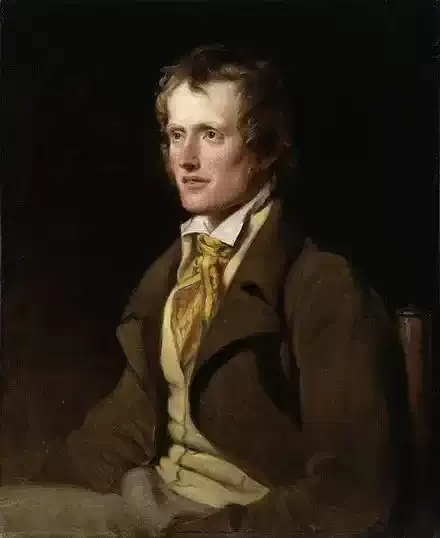
John Clare
Young Lambs
Young Lambs
The spring is coming by a many signs;
The trays are up, the hedges broken down,
That fenced the haystack, and the remnant shines
Like some old antique fragment weathered brown.
And where suns peep, in every sheltered place,
The little early buttercups unfold
A glittering star or two--till many trace
The edges of the blackthorn clumps in gold.
And then a little lamb bolts up behind
The hill and wags his tail to meet the yoe,
And then another, sheltered from the wind,
Lies all his length as dead--and lets me go
Close bye and never stirs but baking lies,
With legs stretched out as though he could not rise.
The spring is coming by a many signs;
The trays are up, the hedges broken down,
That fenced the haystack, and the remnant shines
Like some old antique fragment weathered brown.
And where suns peep, in every sheltered place,
The little early buttercups unfold
A glittering star or two--till many trace
The edges of the blackthorn clumps in gold.
And then a little lamb bolts up behind
The hill and wags his tail to meet the yoe,
And then another, sheltered from the wind,
Lies all his length as dead--and lets me go
Close bye and never stirs but baking lies,
With legs stretched out as though he could not rise.
607
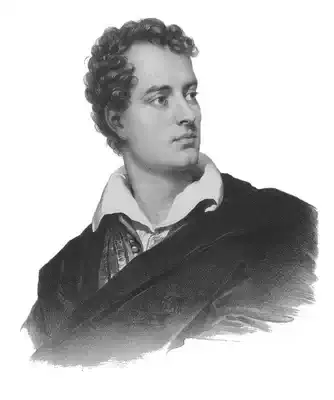
Lord Byron
Translation Of The Romaic Song
Translation Of The Romaic Song
I enter thy garden of roses,
Beloved and fair Haidée,
Each morning where Flora reposes,
For surely I see her in thee.
Oh, Lovely! thus low I implore thee,
Receive this fond truth from my tongue,
Which utters its song to adore thee,
Yet trembles for what it has sung;
As the branch, at the bidding of Nature,
Adds fragrance and fruit to the tree,
Through her eyes, through her every feature,
Shines the soul of the young Haidée.
But the loveliest garden grows hateful
When Love has abandon'd the bowers;
Bring me hemlock since
mine is ungrateful,
That herb is more fragrant than flowers.
The poison, when pour 'd from the chalice,
Will deeply embitter the bowl;
But when drunk to escape from thy malice,
The draught shall be sweet to my soul.
Too cruel! in vain I implore thee
My heart from these horrors to save:
Will nought to my bosom restore thee?
Then open the gates of the grave.
As the chief who to combat advances
Secure of his conquest before,
Thus thou, with those eyes for thy lances,
Halt pierced through my heart to its core.
Ah, tell me, my soul! must I perish
By pangs which a smile would dispel?
Would the hope, which thou once bad'st me cherish,
For torture repay me too well?
Now sad is the garden of roses,
Beloved but false Haidée!
There Flora all wither'd reposes,
And mourns o'er thing absence with me.
I enter thy garden of roses,
Beloved and fair Haidée,
Each morning where Flora reposes,
For surely I see her in thee.
Oh, Lovely! thus low I implore thee,
Receive this fond truth from my tongue,
Which utters its song to adore thee,
Yet trembles for what it has sung;
As the branch, at the bidding of Nature,
Adds fragrance and fruit to the tree,
Through her eyes, through her every feature,
Shines the soul of the young Haidée.
But the loveliest garden grows hateful
When Love has abandon'd the bowers;
Bring me hemlock since
mine is ungrateful,
That herb is more fragrant than flowers.
The poison, when pour 'd from the chalice,
Will deeply embitter the bowl;
But when drunk to escape from thy malice,
The draught shall be sweet to my soul.
Too cruel! in vain I implore thee
My heart from these horrors to save:
Will nought to my bosom restore thee?
Then open the gates of the grave.
As the chief who to combat advances
Secure of his conquest before,
Thus thou, with those eyes for thy lances,
Halt pierced through my heart to its core.
Ah, tell me, my soul! must I perish
By pangs which a smile would dispel?
Would the hope, which thou once bad'st me cherish,
For torture repay me too well?
Now sad is the garden of roses,
Beloved but false Haidée!
There Flora all wither'd reposes,
And mourns o'er thing absence with me.
468
Emily Dickinson
The rainbow never tells me
The rainbow never tells me
97
The rainbow never tells me
That gust and storm are by,
Yet is she more convincing
Than Philosophy.
My flowers turn from Forums-
Yet eloquent declare
What Cato couldn't prove me
Except the birds were here!
97
The rainbow never tells me
That gust and storm are by,
Yet is she more convincing
Than Philosophy.
My flowers turn from Forums-
Yet eloquent declare
What Cato couldn't prove me
Except the birds were here!
280
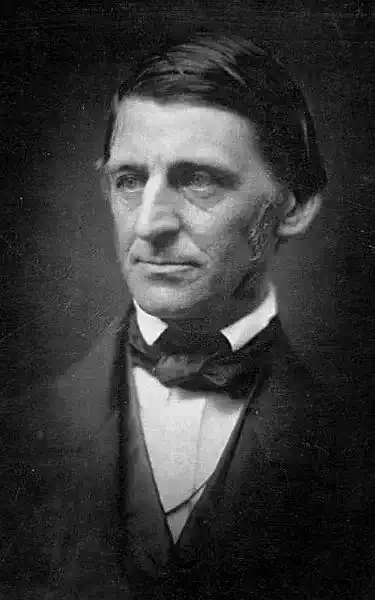
Ralph Waldo Emerson
Dæmonic Love
Dæmonic Love
Man was made of social earth,
Child and brother from his birth;
Tethered by a liquid cord
Of blood through veins of kindred poured,
Next his heart the fireside band
Of mother, father, sister, stand;
Names from awful childhood heard,
Throbs of a wild religion stirred,
Their good was heaven, their harm was vice,
Till Beauty came to snap all ties,
The maid, abolishing the past,
With lotus-wine obliterates
Dear memory's stone-incarved traits,
And by herself supplants alone
Friends year by year more inly known.
When her calm eyes opened bright,
All were foreign in their light.
It was ever the self-same tale,
The old experience will not fail,—
Only two in the garden walked,
And with snake and seraph talked.
But God said;
I will have a purer gift,
There is smoke in the flame;
New flowerets bring, new prayers uplift,
And love without a name.
Fond children, ye desire
To please each other well;
Another round, a higher,
Ye shall climb on the heavenly stair,
And selfish preference forbear;
And in right deserving,
And without a swerving
Each from your proper state,
Weave roses for your mate.
Deep, deep are loving eyes,
Flowed with naphtha fiery sweet,
And the point is Paradise
Where their glances meet:
Their reach shall yet be more profound,
And a vision without bound:
The axis of those eyes sun-clear
Be the axis of the sphere;
Then shall the lights ye pour amain
Go without check or intervals,
Through from the empyrean walls,
Unto the same again.
Close, close to men,
Like undulating layer of air,
Right above their heads,
The potent plain of Dæmons spreads.
Stands to each human soul its own,
For watch, and ward, and furtherance
In the snares of nature's dance;
And the lustre and the grace
Which fascinate each human heart,
Beaming from another part,
Translucent through the mortal covers,
Is the Dæmon's form and face.
To and fro the Genius hies,
A gleam which plays and hovers
Over the maiden's head,
And dips sometimes as low as to her eyes.
Unknown, — albeit lying near, —
To men the path to the Dæmon sphere,
And they that swiftly come and go,
Leave no track on the heavenly snow.
Sometimes the airy synod bends,
And the mighty choir descends,
And the brains of men thenceforth,
In crowded and in still resorts,
Teem with unwonted thoughts.
As when a shower of meteors
Cross the orbit of the earth,
And, lit by fringent air,
Blaze near and far.
Mortals deem the planets bright
Have slipped their sacred bars,
And the lone seaman all the night
Sails astonished amid stars.
Beauty of a richer vein,
Graces of a subtler strain,
Unto men these moon-men lend,
And our shrinking sky extend.
So is man's narrow path
By strength and terror skirted,
Also (from the song the wrath
Of the Genii be averted!
The Muse the truth uncolored speaking),
The Dæmons are self-seeking;
Their fierce and limitary will
Draws men to their likeness still.
The erring painter made Love blind,
Highest Love who shines on all;
Him radiant, sharpest-sighted god
None can bewilder;
Whose eyes pierce
The Universe,
Path-finder, road-builder,
Mediator, royal giver,
Rightly-seeing, rightly-seen,
Of joyful and transparent mien.
'Tis a sparkle passing
From each to each, from me to thee,
Perpetually,
Sharing all, daring all,
Levelling, misplacing
Each obstruction, it unites
Equals remote, and seeming opposites.
And ever and forever Love
Delights to build a road;
Unheeded Danger near him strides,
Love laughs, and on a lion rides.
But Cupid wears another face
Born into Dæmons less divine,
His roses bleach apace,
His nectar smacks of wine.
The Dæmon ever builds a wall,
Himself incloses and includes,
Solitude in solitudes:
In like sort his love doth fall.
He is an oligarch,
He prizes wonder, fame, and mark,
He loveth crowns,
He scorneth drones;
He doth elect
The beautiful and fortunate,
And the sons of intellect,
And the souls of ample fate,
Who the Future's gates unbar,
Minions of the Morning Star.
In his prowess he exults,
And the multitude insults.
His impatient looks devour
Oft the humble and the poor,
And, seeing his eye glare,
They drop their few pale flowers
Gathered with hope to please
Along the mountain towers,
Lose courage, and despair.
He will never be gainsaid,
Pitiless, will not be stayed.
His hot tyranny
Burns up every other tie;
Therefore comes an hour from Jove
Which his ruthless will defies,
And the dogs of Fate unties.
Shiver the palaces of glass,
Shrivel the rainbow-colored walls
Where in bright art each god and sibyl dwelt
Secure as in the Zodiack's belt;
And the galleries and halls
Wherein every Siren sung,
Like a meteor pass.
For this fortune wanted root
In the core of God's abysm,
Was a weed of self and schism:
And ever the Dæmonic Love
Is the ancestor of wars,
And the parent of remorse.
Man was made of social earth,
Child and brother from his birth;
Tethered by a liquid cord
Of blood through veins of kindred poured,
Next his heart the fireside band
Of mother, father, sister, stand;
Names from awful childhood heard,
Throbs of a wild religion stirred,
Their good was heaven, their harm was vice,
Till Beauty came to snap all ties,
The maid, abolishing the past,
With lotus-wine obliterates
Dear memory's stone-incarved traits,
And by herself supplants alone
Friends year by year more inly known.
When her calm eyes opened bright,
All were foreign in their light.
It was ever the self-same tale,
The old experience will not fail,—
Only two in the garden walked,
And with snake and seraph talked.
But God said;
I will have a purer gift,
There is smoke in the flame;
New flowerets bring, new prayers uplift,
And love without a name.
Fond children, ye desire
To please each other well;
Another round, a higher,
Ye shall climb on the heavenly stair,
And selfish preference forbear;
And in right deserving,
And without a swerving
Each from your proper state,
Weave roses for your mate.
Deep, deep are loving eyes,
Flowed with naphtha fiery sweet,
And the point is Paradise
Where their glances meet:
Their reach shall yet be more profound,
And a vision without bound:
The axis of those eyes sun-clear
Be the axis of the sphere;
Then shall the lights ye pour amain
Go without check or intervals,
Through from the empyrean walls,
Unto the same again.
Close, close to men,
Like undulating layer of air,
Right above their heads,
The potent plain of Dæmons spreads.
Stands to each human soul its own,
For watch, and ward, and furtherance
In the snares of nature's dance;
And the lustre and the grace
Which fascinate each human heart,
Beaming from another part,
Translucent through the mortal covers,
Is the Dæmon's form and face.
To and fro the Genius hies,
A gleam which plays and hovers
Over the maiden's head,
And dips sometimes as low as to her eyes.
Unknown, — albeit lying near, —
To men the path to the Dæmon sphere,
And they that swiftly come and go,
Leave no track on the heavenly snow.
Sometimes the airy synod bends,
And the mighty choir descends,
And the brains of men thenceforth,
In crowded and in still resorts,
Teem with unwonted thoughts.
As when a shower of meteors
Cross the orbit of the earth,
And, lit by fringent air,
Blaze near and far.
Mortals deem the planets bright
Have slipped their sacred bars,
And the lone seaman all the night
Sails astonished amid stars.
Beauty of a richer vein,
Graces of a subtler strain,
Unto men these moon-men lend,
And our shrinking sky extend.
So is man's narrow path
By strength and terror skirted,
Also (from the song the wrath
Of the Genii be averted!
The Muse the truth uncolored speaking),
The Dæmons are self-seeking;
Their fierce and limitary will
Draws men to their likeness still.
The erring painter made Love blind,
Highest Love who shines on all;
Him radiant, sharpest-sighted god
None can bewilder;
Whose eyes pierce
The Universe,
Path-finder, road-builder,
Mediator, royal giver,
Rightly-seeing, rightly-seen,
Of joyful and transparent mien.
'Tis a sparkle passing
From each to each, from me to thee,
Perpetually,
Sharing all, daring all,
Levelling, misplacing
Each obstruction, it unites
Equals remote, and seeming opposites.
And ever and forever Love
Delights to build a road;
Unheeded Danger near him strides,
Love laughs, and on a lion rides.
But Cupid wears another face
Born into Dæmons less divine,
His roses bleach apace,
His nectar smacks of wine.
The Dæmon ever builds a wall,
Himself incloses and includes,
Solitude in solitudes:
In like sort his love doth fall.
He is an oligarch,
He prizes wonder, fame, and mark,
He loveth crowns,
He scorneth drones;
He doth elect
The beautiful and fortunate,
And the sons of intellect,
And the souls of ample fate,
Who the Future's gates unbar,
Minions of the Morning Star.
In his prowess he exults,
And the multitude insults.
His impatient looks devour
Oft the humble and the poor,
And, seeing his eye glare,
They drop their few pale flowers
Gathered with hope to please
Along the mountain towers,
Lose courage, and despair.
He will never be gainsaid,
Pitiless, will not be stayed.
His hot tyranny
Burns up every other tie;
Therefore comes an hour from Jove
Which his ruthless will defies,
And the dogs of Fate unties.
Shiver the palaces of glass,
Shrivel the rainbow-colored walls
Where in bright art each god and sibyl dwelt
Secure as in the Zodiack's belt;
And the galleries and halls
Wherein every Siren sung,
Like a meteor pass.
For this fortune wanted root
In the core of God's abysm,
Was a weed of self and schism:
And ever the Dæmonic Love
Is the ancestor of wars,
And the parent of remorse.
308
William Shakespeare
Sonnet 69: Those parts of thee that the world's eye doth view
Sonnet 69: Those parts of thee that the world's eye doth view
Those parts of thee that the world's eye doth view
Want nothing that the thought of hearts can mend;
All tongues, the voice of souls, give thee that due,
Utt'ring bare truth, even so as foes commend.
Thy outward thus with outward praise is crowned,
But those same tongues that give thee so thine own
In other accents do this praise confound
By seeing farther than the eye hath shown.
They look into the beauty of thy mind,
And that, in guess, they measure by thy deeds;
Then churls their thoughts, although their eyes were kind,
To thy fair flower add the rank smell of weeds.
But why thy odour matcheth not thy show,
The soil is this, that thou dost common grow.
Those parts of thee that the world's eye doth view
Want nothing that the thought of hearts can mend;
All tongues, the voice of souls, give thee that due,
Utt'ring bare truth, even so as foes commend.
Thy outward thus with outward praise is crowned,
But those same tongues that give thee so thine own
In other accents do this praise confound
By seeing farther than the eye hath shown.
They look into the beauty of thy mind,
And that, in guess, they measure by thy deeds;
Then churls their thoughts, although their eyes were kind,
To thy fair flower add the rank smell of weeds.
But why thy odour matcheth not thy show,
The soil is this, that thou dost common grow.
303

Edward Lear
Limerick: There was an Old Person of Leeds
Limerick: There was an Old Person of Leeds
There was an Old Person of Leeds,
Whose head was infested with beads;
She sat on a stool,
And ate gooseberry fool,
Which agreed with that person of Leeds.
There was an Old Person of Leeds,
Whose head was infested with beads;
She sat on a stool,
And ate gooseberry fool,
Which agreed with that person of Leeds.
149
Emily Dickinson
The Province of the Saved
The Province of the Saved
539
The Province of the Saved
Should be the Art-To save-
Through Skill obtained in Themselves-
The Science of the Grave
No Man can understand
But He that hath endured
The Dissolution-in Himself-
That Man-be qualified
To qualify Despair
To Those who failing new-
Mistake Defeat for Death-Each time-
Till acclimated-to-
539
The Province of the Saved
Should be the Art-To save-
Through Skill obtained in Themselves-
The Science of the Grave
No Man can understand
But He that hath endured
The Dissolution-in Himself-
That Man-be qualified
To qualify Despair
To Those who failing new-
Mistake Defeat for Death-Each time-
Till acclimated-to-
270
Lord Byron
Translation Of The Famous Greek War Song
Translation Of The Famous Greek War Song
Sons of the Greeks, arise!
The glorious hour's gone forth,
And, worthy of such ties,
Display who gave us birth.
CHORUS.
Sons of Greeks! let us go
In arms against the foe,
Till their hated blood shall flow
In a river past our feet.
Then manfully despising
The Turkish tyrant's yoke,
Let your country see you rising,
And all her chains are broke.
Brave shades of chiefs and sages,
Behold the coming strife!
Hellenes of past ages,
Oh, start again to life!
At the sound of my trumpet, breaking
Your sleep, oh, loin with me!
And the sevenhill'd
city seeking,
Fight, conquer, till we're free.
Sons of Greeks, &c.
Sparta, Sparta, why in slumbers
Lethargic dolt thou lie?
Awake, and join thy numbers
With Athens, old ally!
Leonidas recalling,
That chief of ancient song,
Who saved ye once from falling,
The terrible! the strong!
Who made that bold diversion
In old Thermopylæ
And warring with the Persian
To keep his country free;
With his three hundred waging
The battle, long he stood,
And like a lion raging,
Expired in seas of blood.
Sons of Greeks, &c.
Sons of the Greeks, arise!
The glorious hour's gone forth,
And, worthy of such ties,
Display who gave us birth.
CHORUS.
Sons of Greeks! let us go
In arms against the foe,
Till their hated blood shall flow
In a river past our feet.
Then manfully despising
The Turkish tyrant's yoke,
Let your country see you rising,
And all her chains are broke.
Brave shades of chiefs and sages,
Behold the coming strife!
Hellenes of past ages,
Oh, start again to life!
At the sound of my trumpet, breaking
Your sleep, oh, loin with me!
And the sevenhill'd
city seeking,
Fight, conquer, till we're free.
Sons of Greeks, &c.
Sparta, Sparta, why in slumbers
Lethargic dolt thou lie?
Awake, and join thy numbers
With Athens, old ally!
Leonidas recalling,
That chief of ancient song,
Who saved ye once from falling,
The terrible! the strong!
Who made that bold diversion
In old Thermopylæ
And warring with the Persian
To keep his country free;
With his three hundred waging
The battle, long he stood,
And like a lion raging,
Expired in seas of blood.
Sons of Greeks, &c.
539
Ella Wheeler Wilcox
When
When
I dwell in the western inland,
Afar from the sounding sea,
But I seem to hear it sobbing
And calling aloud to me,
And my heart cries out for the ocean
As a child for its mother's breast,
And I long to lie on its waters
And be lulled in its arms to rest.
I can close my eyes and fancy
That I hear its mighty roar,
And I see its blue waves splashing
And plunging against the shore;
And the white foam caps the billow,
And the sea-gulls wheel and cry,
And the cool wild wind is blowing,
And the ships go sailing by.
Oh, wonderful, mighty ocean!
When shall I ever stand,
Where my heart has gone already,
There on thy gleaming strand!
When shall I ever wander
Away from the inland west,
And strand by thy side, dear ocean,
And rock on thy heaving breast?
I dwell in the western inland,
Afar from the sounding sea,
But I seem to hear it sobbing
And calling aloud to me,
And my heart cries out for the ocean
As a child for its mother's breast,
And I long to lie on its waters
And be lulled in its arms to rest.
I can close my eyes and fancy
That I hear its mighty roar,
And I see its blue waves splashing
And plunging against the shore;
And the white foam caps the billow,
And the sea-gulls wheel and cry,
And the cool wild wind is blowing,
And the ships go sailing by.
Oh, wonderful, mighty ocean!
When shall I ever stand,
Where my heart has gone already,
There on thy gleaming strand!
When shall I ever wander
Away from the inland west,
And strand by thy side, dear ocean,
And rock on thy heaving breast?
300
William Shakespeare
Sonnet 66: Tired with all these, for restful death I cry
Sonnet 66: Tired with all these, for restful death I cry
Tired with all these, for restful death I cry,
As to behold desert a beggar born,
And needy nothing trimmed in jollity,
And purest faith unhappily forsworn,
And gilded honour shamefully misplaced,
And maiden virtue rudely strumpeted,
And right perfection wrongfully disgraced,
And strength by limping sway disablèd
And art made tongue-tied by authority,
And folly doctor-like controlling skill,
And simple truth miscalled simplicity,
And captive good attending captain ill.
Tired with all these, from these would I be gone,
Save that to die, I leave my love alone.
Tired with all these, for restful death I cry,
As to behold desert a beggar born,
And needy nothing trimmed in jollity,
And purest faith unhappily forsworn,
And gilded honour shamefully misplaced,
And maiden virtue rudely strumpeted,
And right perfection wrongfully disgraced,
And strength by limping sway disablèd
And art made tongue-tied by authority,
And folly doctor-like controlling skill,
And simple truth miscalled simplicity,
And captive good attending captain ill.
Tired with all these, from these would I be gone,
Save that to die, I leave my love alone.
332
John Clare
Wood Rides
Wood Rides
Who hath not felt the influence that so calms
The weary mind in summers sultry hours
When wandering thickest woods beneath the arms
Of ancient oaks and brushing nameless flowers
That verge the little ride who hath not made
A minutes waste of time and sat him down
Upon a pleasant swell to gaze awhile
On crowding ferns bluebells and hazel leaves
And showers of lady smocks so called by toil
When boys sprote gathering sit on stulps and weave
Garlands while barkmen pill the fallen tree
-Then mid the green variety to start
Who hath (not) met that mood from turmoil free
And felt a placid joy refreshed at heart
Who hath not felt the influence that so calms
The weary mind in summers sultry hours
When wandering thickest woods beneath the arms
Of ancient oaks and brushing nameless flowers
That verge the little ride who hath not made
A minutes waste of time and sat him down
Upon a pleasant swell to gaze awhile
On crowding ferns bluebells and hazel leaves
And showers of lady smocks so called by toil
When boys sprote gathering sit on stulps and weave
Garlands while barkmen pill the fallen tree
-Then mid the green variety to start
Who hath (not) met that mood from turmoil free
And felt a placid joy refreshed at heart
379
Emily Dickinson
The Poets light but Lamps
The Poets light but Lamps
883
The Poets light but LampsThemselves-
go out-
The Wicks they stimulate-
If vital Light
Inhere as do the Suns-
Each Age a Lens
Disseminating their
Circumference-
883
The Poets light but LampsThemselves-
go out-
The Wicks they stimulate-
If vital Light
Inhere as do the Suns-
Each Age a Lens
Disseminating their
Circumference-
341
Lord Byron
Translation Of A Romaic Love Song
Translation Of A Romaic Love Song
Ah! Love was never yet without
The pang, the agony, the doubt,
Which rends my heart with ceaseless sigh,
While day and night roll darkling by.
Without one friend to hear my woe,
I faint, I die beneath the blow.
That Love had arrows well I knew;
Alas! I find them poison'd too.
Birds, yet in freedom, shun the net
Which Love around your haunts hath set;
Or, circled by his fatal fire,
Your hearts shall burn, your hopes expire.
A bird of free and careless wing
Was I through many a smiling spring;
But caught within the subtle snare,
I burn, and feebly flutter there.
Who ne'er have loved, and loved in vain,
Can neither feel nor pity pain,
The cold repulse, the look askance,
The lightning of Love's angry glance.
In flattering dreams I deem'd thee mine;
Now hope, and he who hoped, decline'
Like melting wax, or withering flower,
I feel my passion, and thy power.
My light of life! ah, tell me why
That pouting lip, and alter'd eye?
My bird of love! my beauteous mate!
And art thou changed, and canst thou hate?
Mine eyes like wintry streams o'erflow:
What wretch with me would barter woe?
My bird! relent: one note could give
A charm to bid thy lover live.
My curdling blood, my madd'ning brain,
In silent anguish I sustain
And still thy heart, without partaking
One pang, exults while
mine is breaking.
Pour me the poison; fear not thou!
Thou canst not murder more than now:
I've lived to curse my natal day,
And Love, that thus can lingering slay.
My wounded soul, my bleeding breast,
Can patience preach thee into rest?
Alas! too late, I dearly know
That joy is harbinger of woe.
Ah! Love was never yet without
The pang, the agony, the doubt,
Which rends my heart with ceaseless sigh,
While day and night roll darkling by.
Without one friend to hear my woe,
I faint, I die beneath the blow.
That Love had arrows well I knew;
Alas! I find them poison'd too.
Birds, yet in freedom, shun the net
Which Love around your haunts hath set;
Or, circled by his fatal fire,
Your hearts shall burn, your hopes expire.
A bird of free and careless wing
Was I through many a smiling spring;
But caught within the subtle snare,
I burn, and feebly flutter there.
Who ne'er have loved, and loved in vain,
Can neither feel nor pity pain,
The cold repulse, the look askance,
The lightning of Love's angry glance.
In flattering dreams I deem'd thee mine;
Now hope, and he who hoped, decline'
Like melting wax, or withering flower,
I feel my passion, and thy power.
My light of life! ah, tell me why
That pouting lip, and alter'd eye?
My bird of love! my beauteous mate!
And art thou changed, and canst thou hate?
Mine eyes like wintry streams o'erflow:
What wretch with me would barter woe?
My bird! relent: one note could give
A charm to bid thy lover live.
My curdling blood, my madd'ning brain,
In silent anguish I sustain
And still thy heart, without partaking
One pang, exults while
mine is breaking.
Pour me the poison; fear not thou!
Thou canst not murder more than now:
I've lived to curse my natal day,
And Love, that thus can lingering slay.
My wounded soul, my bleeding breast,
Can patience preach thee into rest?
Alas! too late, I dearly know
That joy is harbinger of woe.
589
Ralph Waldo Emerson
Compensation
Compensation
Why should I keep holiday,
When other men have none?
Why but because when these are gay,
I sit and mourn alone.
And why when mirth unseals all tongues
Should mine alone be dumb?
Ah! late I spoke to silent throngs,
And now their hour is come.
Why should I keep holiday,
When other men have none?
Why but because when these are gay,
I sit and mourn alone.
And why when mirth unseals all tongues
Should mine alone be dumb?
Ah! late I spoke to silent throngs,
And now their hour is come.
259
William Shakespeare
Sonnet 64: When I have seen by Time's fell hand defaced
Sonnet 64: When I have seen by Time's fell hand defaced
When I have seen by Time's fell hand defaced
The rich-proud cost of outworn buried age;
When sometime lofty towers I see down-razed
And brass eternal slave to mortal rage;
When I have seen the hungry ocean gain
Advantage on the kingdom of the shore,
And the firm soil win of the watery main,
Increasing store with loss, and loss with store;
When I have seen such interchange of state,
Or state it self confounded to decay,
Ruin hath taught me thus to ruminate
That Time will come and take my love away.
This thought is as a death which cannot choose
But weep to have that which it fears to lose.
When I have seen by Time's fell hand defaced
The rich-proud cost of outworn buried age;
When sometime lofty towers I see down-razed
And brass eternal slave to mortal rage;
When I have seen the hungry ocean gain
Advantage on the kingdom of the shore,
And the firm soil win of the watery main,
Increasing store with loss, and loss with store;
When I have seen such interchange of state,
Or state it self confounded to decay,
Ruin hath taught me thus to ruminate
That Time will come and take my love away.
This thought is as a death which cannot choose
But weep to have that which it fears to lose.
275
Edward Lear
Limerick: There was an Old Person of Dover
Limerick: There was an Old Person of Dover
There was an Old Person of Dover,
Who rushed through a field of blue Clover;
But some very large bees,
Stung his nose and his knees,
So he very soon went back to Dover.
There was an Old Person of Dover,
Who rushed through a field of blue Clover;
But some very large bees,
Stung his nose and his knees,
So he very soon went back to Dover.
159
Emily Dickinson
The Outer—from the Inner
The Outer—from the Inner
451
The Outer—from the Inner
Derives its Magnitude—
'Tis Duke, or Dwarf, according
As is the Central Mood—
The fine—unvarying Axis
That regulates the Wheel—
Though Spokes—spin—more conspicuous
And fling a dust—the while.
The Inner—paints the Outer—
The Brush without the Hand—
Its Picture publishes—precise—
As is the inner Brand—
On fine—Arterial Canvas—
A Cheek—perchance a Brow—
The Star's whole Secret—in the Lake—
Eyes were not meant to know.
451
The Outer—from the Inner
Derives its Magnitude—
'Tis Duke, or Dwarf, according
As is the Central Mood—
The fine—unvarying Axis
That regulates the Wheel—
Though Spokes—spin—more conspicuous
And fling a dust—the while.
The Inner—paints the Outer—
The Brush without the Hand—
Its Picture publishes—precise—
As is the inner Brand—
On fine—Arterial Canvas—
A Cheek—perchance a Brow—
The Star's whole Secret—in the Lake—
Eyes were not meant to know.
297
Lord Byron
Translation From Horace
Translation From Horace
[Justum et tenacem propositi virum, &c.]
The man of firm and noble soul
No factious clamours can control;
No threat'ning tyrant's darkling brow
Can swerve him from his just intent:
Gales the warring waves which plough,
By Auster on the billows spent,
To curb the Adriatic main,
Would awe his fix'd, determined mind in vain.
Ay, and the red right arm of Jove,
Hurtling his lightnings from above,
With all his terrors, there unfurl'd,
He would unmoved, unawed, behold.
The flames of an expiring world,
Again in crashing chaos roll'd,
In vast promiscuous ruin hurl'd,
Might light his glorious funeral pile:
Still dauntless 'midst the wreck of earth he'd smile
[Justum et tenacem propositi virum, &c.]
The man of firm and noble soul
No factious clamours can control;
No threat'ning tyrant's darkling brow
Can swerve him from his just intent:
Gales the warring waves which plough,
By Auster on the billows spent,
To curb the Adriatic main,
Would awe his fix'd, determined mind in vain.
Ay, and the red right arm of Jove,
Hurtling his lightnings from above,
With all his terrors, there unfurl'd,
He would unmoved, unawed, behold.
The flames of an expiring world,
Again in crashing chaos roll'd,
In vast promiscuous ruin hurl'd,
Might light his glorious funeral pile:
Still dauntless 'midst the wreck of earth he'd smile
672
Ella Wheeler Wilcox
What Would It Be?
What Would It Be?
Now what were the words of Jesus,
And what would He pause and say,
If we were to meet in home or street,
The Lord of the world to-day?
Oh, I think He would pause and say:
'Go on with your chosen labour;
Speak only good of your neighbour;
Widen your farms, and lay down your arms,
Or dig up the soil with each sabre.'
Now what were the answer of Jesus
If we should ask for a creed,
To carry us straight to the wonderful gate
When soul from body is freed?
Oh, I think He would give us this creed:
'Praise God whatever betide you;
Cast joy on the lives beside you;
Better the earth, by growing in worth,
With love as the law to guide you.'
Now what were the answer of Jesus
If we should ask Him to tell
Of the last great goal of the homing soul
Where each of us hopes to dwell?
Oh, I think it is this He would tell:
'The soul is the builder-then wake it;
The mind is the kingdom-then take it;
And thought upon thought let Eden be wrought,
For heaven will be what you make it.'
Now what were the words of Jesus,
And what would He pause and say,
If we were to meet in home or street,
The Lord of the world to-day?
Oh, I think He would pause and say:
'Go on with your chosen labour;
Speak only good of your neighbour;
Widen your farms, and lay down your arms,
Or dig up the soil with each sabre.'
Now what were the answer of Jesus
If we should ask for a creed,
To carry us straight to the wonderful gate
When soul from body is freed?
Oh, I think He would give us this creed:
'Praise God whatever betide you;
Cast joy on the lives beside you;
Better the earth, by growing in worth,
With love as the law to guide you.'
Now what were the answer of Jesus
If we should ask Him to tell
Of the last great goal of the homing soul
Where each of us hopes to dwell?
Oh, I think it is this He would tell:
'The soul is the builder-then wake it;
The mind is the kingdom-then take it;
And thought upon thought let Eden be wrought,
For heaven will be what you make it.'
324
William Shakespeare
Sonnet 63: Against my love shall be, as I am now
Sonnet 63: Against my love shall be, as I am now
Against my love shall be, as I am now,
With Time's injurious hand crushed and o'erworn;
When hours have drained his blood and filled his brow
With lines and wrinkles; when his youthful morn
Hath travelled on to age's steepy night,
And all those beauties whereof now he's king
Are vanishing, or vanished out of sight,
Stealing away the treasure of his spring;
For such a time do I now fortify
Against confounding age's cruel knife,
That he shall never cut from memory
My sweet love's beauty, though my lover's life.
His beauty shall in these black lines be seen,
And they shall live, and he in them still green.
Against my love shall be, as I am now,
With Time's injurious hand crushed and o'erworn;
When hours have drained his blood and filled his brow
With lines and wrinkles; when his youthful morn
Hath travelled on to age's steepy night,
And all those beauties whereof now he's king
Are vanishing, or vanished out of sight,
Stealing away the treasure of his spring;
For such a time do I now fortify
Against confounding age's cruel knife,
That he shall never cut from memory
My sweet love's beauty, though my lover's life.
His beauty shall in these black lines be seen,
And they shall live, and he in them still green.
245
John Clare
Wild Bees
Wild Bees
These children of the sun which summer brings
As pastoral minstrels in her merry train
Pipe rustic ballads upon busy wings
And glad the cotters' quiet toils again.
The white-nosed bee that bores its little hole
In mortared walls and pipes its symphonies,
And never absent couzen, black as coal,
That Indian-like bepaints its little thighs,
With white and red bedight for holiday,
Right earlily a-morn do pipe and play
And with their legs stroke slumber from their eyes.
And aye so fond they of their singing seem
That in their holes abed at close of day
They still keep piping in their honey dreams,
And larger ones that thrum on ruder pipe
Round the sweet smelling closen and rich woods
Where tawny white and red flush clover buds
Shine bonnily and bean fields blossom ripe,
Shed dainty perfumes and give honey food
To these sweet poets of the summer fields;
Me much delighting as I stroll along
The narrow path that hay laid meadow yields,
Catching the windings of their wandering song.
The black and yellow bumble first on wing
To buzz among the sallow's early flowers,
Hiding its nest in holes from fickle spring
Who stints his rambles with her frequent showers;
And one that may for wiser piper pass,
In livery dress half sables and half red,
Who laps a moss ball in the meadow grass
And hoards her stores when April showers have fled;
And russet commoner who knows the face
Of every blossom that the meadow brings,
Starting the traveller to a quicker pace
By threatening round his head in many rings:
These sweeten summer in their happy glee
By giving for her honey melody.
These children of the sun which summer brings
As pastoral minstrels in her merry train
Pipe rustic ballads upon busy wings
And glad the cotters' quiet toils again.
The white-nosed bee that bores its little hole
In mortared walls and pipes its symphonies,
And never absent couzen, black as coal,
That Indian-like bepaints its little thighs,
With white and red bedight for holiday,
Right earlily a-morn do pipe and play
And with their legs stroke slumber from their eyes.
And aye so fond they of their singing seem
That in their holes abed at close of day
They still keep piping in their honey dreams,
And larger ones that thrum on ruder pipe
Round the sweet smelling closen and rich woods
Where tawny white and red flush clover buds
Shine bonnily and bean fields blossom ripe,
Shed dainty perfumes and give honey food
To these sweet poets of the summer fields;
Me much delighting as I stroll along
The narrow path that hay laid meadow yields,
Catching the windings of their wandering song.
The black and yellow bumble first on wing
To buzz among the sallow's early flowers,
Hiding its nest in holes from fickle spring
Who stints his rambles with her frequent showers;
And one that may for wiser piper pass,
In livery dress half sables and half red,
Who laps a moss ball in the meadow grass
And hoards her stores when April showers have fled;
And russet commoner who knows the face
Of every blossom that the meadow brings,
Starting the traveller to a quicker pace
By threatening round his head in many rings:
These sweeten summer in their happy glee
By giving for her honey melody.
406