
Poems List
Explore poems from our collection

Emily Dickinson
The World-stands-solemner-to me
The World-stands-solemner-to me
493
The World-stands-solemner-to me-
Since I was wed-to Him-
A modesty befits the soul
That bears another's-name-
A doubt-if it be fair-indeed-
To wear that perfect-pearl-
The Man-upon the Woman-binds-
To clasp her soul-for all-
A prayer, that it more angel-prove-
A whiter Gift-within-
To that munificence, that chose-
So unadorned-a Queen-
A Gratitude-that such be true-
It had esteemed the Dream-
Too beautiful-for Shape to prove-
Or posture-to redeem!
493
The World-stands-solemner-to me-
Since I was wed-to Him-
A modesty befits the soul
That bears another's-name-
A doubt-if it be fair-indeed-
To wear that perfect-pearl-
The Man-upon the Woman-binds-
To clasp her soul-for all-
A prayer, that it more angel-prove-
A whiter Gift-within-
To that munificence, that chose-
So unadorned-a Queen-
A Gratitude-that such be true-
It had esteemed the Dream-
Too beautiful-for Shape to prove-
Or posture-to redeem!
199
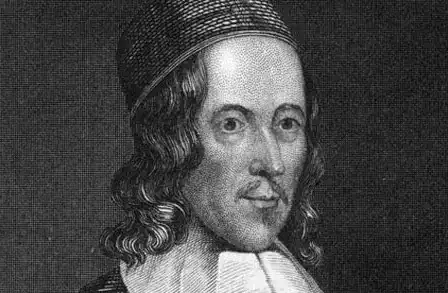
George Herbert
H. Baptism
H. Baptism
As he that sees a dark and shady grove,
Stays not, but looks beyond it on the sky;
So when I view my sins, mine eyes remove
More backward still, and to that water fly,
Which is above the heav'ns, whose spring and rest
Is in my dear Redeemer's pierced side.
O blessed streams! either ye do prevent
And stop our sins from growing thick and wide,
Or else give tears to drown them, as they grow.
In you Redemption measures all my time,
And spreads the plaster equal to the crime;
You taught the book of life my name, that so
What ever future sins should me miscall,
Your first acquaintance might discredit all.
As he that sees a dark and shady grove,
Stays not, but looks beyond it on the sky;
So when I view my sins, mine eyes remove
More backward still, and to that water fly,
Which is above the heav'ns, whose spring and rest
Is in my dear Redeemer's pierced side.
O blessed streams! either ye do prevent
And stop our sins from growing thick and wide,
Or else give tears to drown them, as they grow.
In you Redemption measures all my time,
And spreads the plaster equal to the crime;
You taught the book of life my name, that so
What ever future sins should me miscall,
Your first acquaintance might discredit all.
225
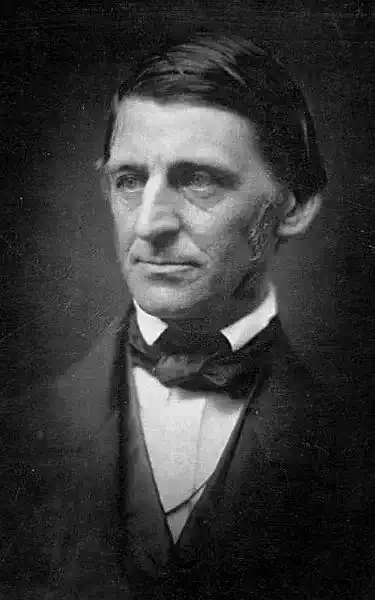
Ralph Waldo Emerson
Monadnoc
Monadnoc
Thousand minstrels woke within me,
"Our music's in the hills; "—
Gayest pictures rose to win me,
Leopard-colored rills.
Up!—If thou knew'st who calls
To twilight parks of beech and pine,
High over the river intervals,
Above the ploughman's highest line,
Over the owner's farthest walls;—
Up!—where the airy citadel
O'erlooks the purging landscape's swell.
Let not unto the stones the day
Her lily and rose, her sea and land display;
Read the celestial sign!
Lo! the South answers to the North;
Bookworm, break this sloth urbane;
A greater Spirit bids thee forth,
Than the gray dreams which thee detain.
Mark how the climbing Oreads
Beckon thee to their arcades;
Youth, for a moment free as they,
Teach thy feet to feel the ground,
Ere yet arrive the wintry day
When Time thy feet has bound.
Accept the bounty of thy birth;
Taste the lordship of the earth.
I heard and I obeyed,
Assured that he who pressed the claim,
Well-known, but loving not a name,
Was not to be gainsaid.
Ere yet the summoning voice was still,
I turned to Cheshire's haughty hill.
From the fixed cone the cloud-rack flowed
Like ample banner flung abroad
Round about, a hundred miles,
With invitation to the sea, and to the bordering isles.
In his own loom's garment drest,
By his own bounty blest,
Fast abides this constant giver,
Pouring many a cheerful river;
To far eyes, an aërial isle,
Unploughed, which finer spirits pile,
Which morn and crimson evening paint
For bard, for lover, and for saint;
The country's core,
Inspirer, prophet evermore,
Pillar which God aloft had set
So that men might it not forget,
It should be their life's ornament,
And mix itself with each event;
Their calendar and dial,
Barometer, and chemic phial,
Garden of berries, perch of birds,
Pasture of pool-haunting herds,
Graced by each change of sum untold,
Earth-baking heat, stone-cleaving cold.
The Titan minds his sky-affairs,
Rich rents and wide alliance shares;
Mysteries of color daily laid
By the great sun in light and shade,
And, sweet varieties of chance,
And the mystic seasons' dance,
And thief-like step of liberal hours
Which thawed the snow-drift into flowers.
O wondrous craft of plant and stone
By eldest science done and shown!
Happy, I said, whose home is here,
Fair fortunes to the mountaineer!
Boon nature to his poorest shed
Has royal pleasure-grounds outspread.
Intent I searched the region round,
And in low hut my monarch found.
He was no eagle and no earl,
Alas! my foundling was a churl,
With heart of cat, and eyes of bug,
Dull victim of his pipe and mug;
Woe is me for my hopes' downfall!
Lord! is yon squalid peasant all
That this proud nursery could breed
For God's vicegerency and stead?
Time out of mind this forge of ores,
Quarry of spars in mountain pores,
Old cradle, hunting ground, and bier
Of wolf and otter, bear, and deer;
Well-built abode of many a race;
Tower of observance searching space;
Factory of river, and of rain;
Link in the alps' globe-girding chain;
By million changes skilled to tell
What in the Eternal standeth well,
And what obedient nature can,—
Is this colossal talisman
Kindly to creature, blood, and kind,
And speechless to the master's mind?
I thought to find the patriots
In whom the stock of freedom roots.
To myself I oft recount
Tales of many a famous mount.—
Wales, Scotland, Uri, Hungary's dells,
Roys, and Scanderbegs, and Tells.
Here now shall nature crowd her powers,
Her music, and her meteors,
And, lifting man to the blue deep
Where stars their perfect courses keep,
Like wise preceptor lure his eye
To sound the science of the sky,
And carry learning to its height
Of untried power and sane delight;
The Indian cheer, the frosty skies
Breed purer wits, inventive eyes,
Eyes that frame cities where none be,
And hands that stablish what these see:
And, by the moral of his place,
Hint summits of heroic grace;
Man in these crags a fastness find
To fight pollution of the mind;
In the wide thaw and ooze of wrong,
Adhere like this foundation strong,
The insanity of towns to stem
With simpleness for stratagem.
But if the brave old mould is broke,
And end in clowns the mountain-folk,
In tavern cheer and tavern joke,—
Sink, O mountain! in the swamp,
Hide in thy skies, O sovereign lap!
Perish like leaves the highland breed!
No sire survive, no son succeed!
Soft! let not the offended muse
Toil's hard hap with scorn accuse.
Many hamlets sought I then,
Many farms of mountain men;—
Found I not a minstrel seed,
But men of bone, and good at need.
Rallying round a parish steeple
Nestle warm the highland people,
Coarse and boisterous, yet mild,
Strong as giant, slow as child,
Smoking in a squalid room,
Where yet the westland breezes come.
Close hid in those rough guises lurk
Western magians, here they work;
Sweat and season are their arts,
Their talismans are ploughs and carts;
And well the youngest can command
Honey from the frozen land,
With sweet hay the swamp adorn,
Change the running sand to corn,
For wolves and foxes, lowing herds,
And for cold mosses, cream and curds;
Weave wood to canisters and mats,
Drain sweet maple-juice in vats.
No bird is safe that cuts the air,
From their rifle or their snare;
No fish in river or in lake,
But their long hands it thence will take;
And the country's iron face
Like wax their fashioning skill betrays,
To fill the hollows, sink the hills,
Bridge gulfs, drain swamps, build dams and mills,
And fit the bleak and howling place
For gardens of a finer race,
The world-soul knows his own affair,
Fore-looking when his hands prepare
For the next ages men of mould,
Well embodied, well ensouled,
He cools the present's fiery glow,
Sets the life pulse strong, but slow.
Bitter winds and fasts austere.
His quarantines and grottos, where
He slowly cures decrepit flesh,
And brings it infantile and fresh.
These exercises are the toys
And games with which he breathes his boys.
They bide their time, and well can prove,
If need were, their line from Jove,
Of the same stuff, and so allayed,
As that whereof the sun is made;
And of that fibre quick and strong
Whose throbs are love, whose thrills are song.
Now in sordid weeds they sleep,
Their secret now in dulness keep.
Yet, will you learn our ancient speech,
These the masters who can teach,
Fourscore or a hundred words
All their vocal muse affords,
These they turn in other fashion
Than the writer or the parson.
I can spare the college-bell,
And the learned lecture well.
Spare the clergy and libraries,
Institutes and dictionaries,
For the hardy English root
Thrives here unvalued underfoot.
Rude poets of the tavern hearth,
Squandering your unquoted mirth,
Which keeps the ground and never soars,
While Jake retorts and Reuben roars,
Tough and screaming as birch-bark,
Goes like bullet to its mark,
While the solid curse and jeer
Never balk the waiting ear:
To student ears keen-relished jokes
On truck, and stock, and farming-folks,—
Nought the mountain yields thereof
But savage health and sinews tough.
On the summit as I stood,
O'er the wide floor of plain and flood,
Seemed to me the towering hill
Was not altogether still,
But a quiet sense conveyed;
If I err not, thus it said:
Many feet in summer seek
Betimes my far-appearing peak;
In the dreaded winter-time,
None save dappling shadows climb
Under clouds my lonely head,
Old as the sun, old almost as the shade.
And comest thou
To see strange forests and new snow,
And tread uplifted land?
And leavest thou thy lowland race,
Here amid clouds to stand,
And would'st be my companion,
Where I gaze
And shall gaze
When forests fall, and man is gone,
Over tribes and over times
As the burning Lyre
Nearing me,
With its stars of northern fire,
In many a thousand years.
Ah! welcome, if thou bring
My secret in thy brain;
To mountain-top may muse's wing
With good allowance strain.
Gentle pilgrim, if thou know
The gamut old of Pan,
And how the hills began,
The frank blessings of the hill
Fall on thee, as fall they will.
'Tis the law of bush and stone—
Each can only take his own.
Let him heed who can and will,—
Enchantment fixed me here
To stand the hurts of time, until
In mightier chant I disappear.
If thou trowest
How the chemic eddies play
Pole to pole, and what they say,
And that these gray crags
Not on crags are hung,
But beads are of a rosary
On prayer and music strung;
And, credulous, through the granite seeming
Seest the smile of Reason beaming;
Can thy style-discerning eye
The hidden-working Builder spy,
Who builds, yet makes no chips, no din,
With hammer soft as snow-flake's flight;
Knowest thou this?
O pilgrim, wandering not amiss!
Already my rocks lie light,
And soon my cone will spin.
For the world was built in order,
And the atoms march in tune,
Rhyme the pipe, and time the warder,
Cannot forget the sun, the moon.
Orb and atom forth they prance,
When they hear from far the rune,
None so backward in the troop,
When the music and the dance
Reach his place and circumstance,
But knows the sun-creating sound,
And, though a pyramid, will bound.
Monadnoc is a mountain strong,
Tall and good my kind among,
But well I know, no mountain can
Measure with a perfect man;
For it is on Zodiack's writ,
Adamant is soft to wit;
And when the greater comes again,
With my music in his brain,
I shall pass as glides my shadow
Daily over hill and meadow.
Through all time
I hear the approaching feet
Along the flinty pathway beat
Of him that cometh, and shall come,—
Of him who shall as lightly bear
My daily load of woods and streams,
As now the round sky-cleaving boat
Which never strains its rocky beams,
Whose timbers, as they silent float,
Alps and Caucasus uprear,
And the long Alleghanies here,
And all town-sprinkled lands that be,
Sailing through stars with all their history.
Every morn I lift my head,
Gaze o'er New England underspread
South from Saint Lawrence to the Sound,
From Katshill east to the sea-bound.
Anchored fast for many an age,
I await the bard and sage,
Who in large thoughts, like fair pearl-seed,
Shall string Monadnoc like a bead.
Comes that cheerful troubadour,
This mound shall throb his face before,
As when with inward fires and pain
It rose a bubble from the plain.
When he cometh, I shall shed
From this well-spring in my head
Fountain drop of spicier worth
Than all vintage of the earth.
There's fruit upon my barren soil
Costlier far than wine or oil;
There's a berry blue and gold,—
Autumn-ripe its juices hold,
Sparta's stoutness, Bethlehem's heart,
Asia's rancor, Athens' art,
Slowsure Britain's secular might,
And the German's inward sight;
I will give my son to eat
Best of Pan's immortal meat,
Bread to eat and juice to drink,
So the thoughts that he shall think
Shall not be forms of stars, but stars,
Nor pictures pale, but Jove and Mars.
He comes, but not of that race bred
Who daily climb my specular head.
Oft as morning wreathes my scarf,
Fled the last plumule of the dark,
Pants up hither the spruce clerk
From South-Cove and City-wharf;
I take him up my rugged sides,
Half-repentant, scant of breath,—
Bead-eyes my granite chaos show,
And my midsummer snow;
Open the daunting map beneath,—
All his county, sea and land,
Dwarfed to measure of his hand;
His day's ride is a furlong space,
His city tops a glimmering haze:
I plant his eyes on the sky-hoop bounding;—
See there the grim gray rounding
Of the bullet of the earth
Whereon ye sail,
Tumbling steep
In the uncontinented deep;—
He looks on that, and he turns pale:
'Tis even so, this treacherous kite,
Farm-furrowed, town-incrusted sphere,
Thoughtless of its anxious freight,
Plunges eyeless on for ever,
And he, poor parasite,—
Cooped in a ship he cannot steer,
Who is the captain he knows not,
Port or pilot trows not,—
Risk or ruin he must share.
I scowl on him with my cloud,
With my north wind chill his blood,
I lame him clattering down the rocks,
And to live he is in fear.
Then, at last, I let him down
Once more into his dapper town,
To chatter frightened to his clan,
And forget me, if he can.
As in the old poetic fame
The gods are blind and lame,
And the simular despite
Betrays the more abounding might,
So call not waste that barren cone
Above the floral zone,
Where forests starve:
It is pure use;
What sheaves like those which here we glean and bind,
Of a celestial Ceres, and the Muse?
Ages are thy days,
Thou grand expressor of the present tense,
And type of permanence,
Firm ensign of the fatal Being,
Amid these coward shapes of joy and grief
That will not bide the seeing.
Hither we bring
Our insect miseries to the rocks,
And the whole flight with pestering wing
Vanish and end their murmuring,
Vanish beside these dedicated blocks,
Which, who can tell what mason laid?
Spoils of a front none need restore,
Replacing frieze and architrave;
Yet flowers each stone rosette and metope brave,
Still is the haughty pile erect
Of the old building Intellect.
Complement of human kind,
Having us at vantage still,
Our sumptuous indigence,
O barren mound! thy plenties fill.
We fool and prate,—
Thou art silent and sedate.
To million kinds and times one sense
The constant mountain doth dispense,
Shedding on all its snows and leaves,
One joy it joys, one grief it grieves.
Thou seest, O watchman tall!
Our towns and races grow and fall,
And imagest the stable Good
For which we all our lifetime grope,
In shifting form the formless mind;
And though the substance us elude,
We in thee the shadow find.
Thou in our astronomy
An opaker star,
Seen, haply, from afar,
Above the horizon's hoop.
A moment by the railway troop,
As o'er some bolder height they speed,—
By circumspect ambition,
By errant Gain,
By feasters, and the frivolous,—
Recallest us,
And makest sane.
Mute orator! well-skilled to plead,
And send conviction without phrase,
Thou dost supply
The shortness of our days,
And promise, on thy Founder's truth,
Long morrow to this mortal youth.
Thousand minstrels woke within me,
"Our music's in the hills; "—
Gayest pictures rose to win me,
Leopard-colored rills.
Up!—If thou knew'st who calls
To twilight parks of beech and pine,
High over the river intervals,
Above the ploughman's highest line,
Over the owner's farthest walls;—
Up!—where the airy citadel
O'erlooks the purging landscape's swell.
Let not unto the stones the day
Her lily and rose, her sea and land display;
Read the celestial sign!
Lo! the South answers to the North;
Bookworm, break this sloth urbane;
A greater Spirit bids thee forth,
Than the gray dreams which thee detain.
Mark how the climbing Oreads
Beckon thee to their arcades;
Youth, for a moment free as they,
Teach thy feet to feel the ground,
Ere yet arrive the wintry day
When Time thy feet has bound.
Accept the bounty of thy birth;
Taste the lordship of the earth.
I heard and I obeyed,
Assured that he who pressed the claim,
Well-known, but loving not a name,
Was not to be gainsaid.
Ere yet the summoning voice was still,
I turned to Cheshire's haughty hill.
From the fixed cone the cloud-rack flowed
Like ample banner flung abroad
Round about, a hundred miles,
With invitation to the sea, and to the bordering isles.
In his own loom's garment drest,
By his own bounty blest,
Fast abides this constant giver,
Pouring many a cheerful river;
To far eyes, an aërial isle,
Unploughed, which finer spirits pile,
Which morn and crimson evening paint
For bard, for lover, and for saint;
The country's core,
Inspirer, prophet evermore,
Pillar which God aloft had set
So that men might it not forget,
It should be their life's ornament,
And mix itself with each event;
Their calendar and dial,
Barometer, and chemic phial,
Garden of berries, perch of birds,
Pasture of pool-haunting herds,
Graced by each change of sum untold,
Earth-baking heat, stone-cleaving cold.
The Titan minds his sky-affairs,
Rich rents and wide alliance shares;
Mysteries of color daily laid
By the great sun in light and shade,
And, sweet varieties of chance,
And the mystic seasons' dance,
And thief-like step of liberal hours
Which thawed the snow-drift into flowers.
O wondrous craft of plant and stone
By eldest science done and shown!
Happy, I said, whose home is here,
Fair fortunes to the mountaineer!
Boon nature to his poorest shed
Has royal pleasure-grounds outspread.
Intent I searched the region round,
And in low hut my monarch found.
He was no eagle and no earl,
Alas! my foundling was a churl,
With heart of cat, and eyes of bug,
Dull victim of his pipe and mug;
Woe is me for my hopes' downfall!
Lord! is yon squalid peasant all
That this proud nursery could breed
For God's vicegerency and stead?
Time out of mind this forge of ores,
Quarry of spars in mountain pores,
Old cradle, hunting ground, and bier
Of wolf and otter, bear, and deer;
Well-built abode of many a race;
Tower of observance searching space;
Factory of river, and of rain;
Link in the alps' globe-girding chain;
By million changes skilled to tell
What in the Eternal standeth well,
And what obedient nature can,—
Is this colossal talisman
Kindly to creature, blood, and kind,
And speechless to the master's mind?
I thought to find the patriots
In whom the stock of freedom roots.
To myself I oft recount
Tales of many a famous mount.—
Wales, Scotland, Uri, Hungary's dells,
Roys, and Scanderbegs, and Tells.
Here now shall nature crowd her powers,
Her music, and her meteors,
And, lifting man to the blue deep
Where stars their perfect courses keep,
Like wise preceptor lure his eye
To sound the science of the sky,
And carry learning to its height
Of untried power and sane delight;
The Indian cheer, the frosty skies
Breed purer wits, inventive eyes,
Eyes that frame cities where none be,
And hands that stablish what these see:
And, by the moral of his place,
Hint summits of heroic grace;
Man in these crags a fastness find
To fight pollution of the mind;
In the wide thaw and ooze of wrong,
Adhere like this foundation strong,
The insanity of towns to stem
With simpleness for stratagem.
But if the brave old mould is broke,
And end in clowns the mountain-folk,
In tavern cheer and tavern joke,—
Sink, O mountain! in the swamp,
Hide in thy skies, O sovereign lap!
Perish like leaves the highland breed!
No sire survive, no son succeed!
Soft! let not the offended muse
Toil's hard hap with scorn accuse.
Many hamlets sought I then,
Many farms of mountain men;—
Found I not a minstrel seed,
But men of bone, and good at need.
Rallying round a parish steeple
Nestle warm the highland people,
Coarse and boisterous, yet mild,
Strong as giant, slow as child,
Smoking in a squalid room,
Where yet the westland breezes come.
Close hid in those rough guises lurk
Western magians, here they work;
Sweat and season are their arts,
Their talismans are ploughs and carts;
And well the youngest can command
Honey from the frozen land,
With sweet hay the swamp adorn,
Change the running sand to corn,
For wolves and foxes, lowing herds,
And for cold mosses, cream and curds;
Weave wood to canisters and mats,
Drain sweet maple-juice in vats.
No bird is safe that cuts the air,
From their rifle or their snare;
No fish in river or in lake,
But their long hands it thence will take;
And the country's iron face
Like wax their fashioning skill betrays,
To fill the hollows, sink the hills,
Bridge gulfs, drain swamps, build dams and mills,
And fit the bleak and howling place
For gardens of a finer race,
The world-soul knows his own affair,
Fore-looking when his hands prepare
For the next ages men of mould,
Well embodied, well ensouled,
He cools the present's fiery glow,
Sets the life pulse strong, but slow.
Bitter winds and fasts austere.
His quarantines and grottos, where
He slowly cures decrepit flesh,
And brings it infantile and fresh.
These exercises are the toys
And games with which he breathes his boys.
They bide their time, and well can prove,
If need were, their line from Jove,
Of the same stuff, and so allayed,
As that whereof the sun is made;
And of that fibre quick and strong
Whose throbs are love, whose thrills are song.
Now in sordid weeds they sleep,
Their secret now in dulness keep.
Yet, will you learn our ancient speech,
These the masters who can teach,
Fourscore or a hundred words
All their vocal muse affords,
These they turn in other fashion
Than the writer or the parson.
I can spare the college-bell,
And the learned lecture well.
Spare the clergy and libraries,
Institutes and dictionaries,
For the hardy English root
Thrives here unvalued underfoot.
Rude poets of the tavern hearth,
Squandering your unquoted mirth,
Which keeps the ground and never soars,
While Jake retorts and Reuben roars,
Tough and screaming as birch-bark,
Goes like bullet to its mark,
While the solid curse and jeer
Never balk the waiting ear:
To student ears keen-relished jokes
On truck, and stock, and farming-folks,—
Nought the mountain yields thereof
But savage health and sinews tough.
On the summit as I stood,
O'er the wide floor of plain and flood,
Seemed to me the towering hill
Was not altogether still,
But a quiet sense conveyed;
If I err not, thus it said:
Many feet in summer seek
Betimes my far-appearing peak;
In the dreaded winter-time,
None save dappling shadows climb
Under clouds my lonely head,
Old as the sun, old almost as the shade.
And comest thou
To see strange forests and new snow,
And tread uplifted land?
And leavest thou thy lowland race,
Here amid clouds to stand,
And would'st be my companion,
Where I gaze
And shall gaze
When forests fall, and man is gone,
Over tribes and over times
As the burning Lyre
Nearing me,
With its stars of northern fire,
In many a thousand years.
Ah! welcome, if thou bring
My secret in thy brain;
To mountain-top may muse's wing
With good allowance strain.
Gentle pilgrim, if thou know
The gamut old of Pan,
And how the hills began,
The frank blessings of the hill
Fall on thee, as fall they will.
'Tis the law of bush and stone—
Each can only take his own.
Let him heed who can and will,—
Enchantment fixed me here
To stand the hurts of time, until
In mightier chant I disappear.
If thou trowest
How the chemic eddies play
Pole to pole, and what they say,
And that these gray crags
Not on crags are hung,
But beads are of a rosary
On prayer and music strung;
And, credulous, through the granite seeming
Seest the smile of Reason beaming;
Can thy style-discerning eye
The hidden-working Builder spy,
Who builds, yet makes no chips, no din,
With hammer soft as snow-flake's flight;
Knowest thou this?
O pilgrim, wandering not amiss!
Already my rocks lie light,
And soon my cone will spin.
For the world was built in order,
And the atoms march in tune,
Rhyme the pipe, and time the warder,
Cannot forget the sun, the moon.
Orb and atom forth they prance,
When they hear from far the rune,
None so backward in the troop,
When the music and the dance
Reach his place and circumstance,
But knows the sun-creating sound,
And, though a pyramid, will bound.
Monadnoc is a mountain strong,
Tall and good my kind among,
But well I know, no mountain can
Measure with a perfect man;
For it is on Zodiack's writ,
Adamant is soft to wit;
And when the greater comes again,
With my music in his brain,
I shall pass as glides my shadow
Daily over hill and meadow.
Through all time
I hear the approaching feet
Along the flinty pathway beat
Of him that cometh, and shall come,—
Of him who shall as lightly bear
My daily load of woods and streams,
As now the round sky-cleaving boat
Which never strains its rocky beams,
Whose timbers, as they silent float,
Alps and Caucasus uprear,
And the long Alleghanies here,
And all town-sprinkled lands that be,
Sailing through stars with all their history.
Every morn I lift my head,
Gaze o'er New England underspread
South from Saint Lawrence to the Sound,
From Katshill east to the sea-bound.
Anchored fast for many an age,
I await the bard and sage,
Who in large thoughts, like fair pearl-seed,
Shall string Monadnoc like a bead.
Comes that cheerful troubadour,
This mound shall throb his face before,
As when with inward fires and pain
It rose a bubble from the plain.
When he cometh, I shall shed
From this well-spring in my head
Fountain drop of spicier worth
Than all vintage of the earth.
There's fruit upon my barren soil
Costlier far than wine or oil;
There's a berry blue and gold,—
Autumn-ripe its juices hold,
Sparta's stoutness, Bethlehem's heart,
Asia's rancor, Athens' art,
Slowsure Britain's secular might,
And the German's inward sight;
I will give my son to eat
Best of Pan's immortal meat,
Bread to eat and juice to drink,
So the thoughts that he shall think
Shall not be forms of stars, but stars,
Nor pictures pale, but Jove and Mars.
He comes, but not of that race bred
Who daily climb my specular head.
Oft as morning wreathes my scarf,
Fled the last plumule of the dark,
Pants up hither the spruce clerk
From South-Cove and City-wharf;
I take him up my rugged sides,
Half-repentant, scant of breath,—
Bead-eyes my granite chaos show,
And my midsummer snow;
Open the daunting map beneath,—
All his county, sea and land,
Dwarfed to measure of his hand;
His day's ride is a furlong space,
His city tops a glimmering haze:
I plant his eyes on the sky-hoop bounding;—
See there the grim gray rounding
Of the bullet of the earth
Whereon ye sail,
Tumbling steep
In the uncontinented deep;—
He looks on that, and he turns pale:
'Tis even so, this treacherous kite,
Farm-furrowed, town-incrusted sphere,
Thoughtless of its anxious freight,
Plunges eyeless on for ever,
And he, poor parasite,—
Cooped in a ship he cannot steer,
Who is the captain he knows not,
Port or pilot trows not,—
Risk or ruin he must share.
I scowl on him with my cloud,
With my north wind chill his blood,
I lame him clattering down the rocks,
And to live he is in fear.
Then, at last, I let him down
Once more into his dapper town,
To chatter frightened to his clan,
And forget me, if he can.
As in the old poetic fame
The gods are blind and lame,
And the simular despite
Betrays the more abounding might,
So call not waste that barren cone
Above the floral zone,
Where forests starve:
It is pure use;
What sheaves like those which here we glean and bind,
Of a celestial Ceres, and the Muse?
Ages are thy days,
Thou grand expressor of the present tense,
And type of permanence,
Firm ensign of the fatal Being,
Amid these coward shapes of joy and grief
That will not bide the seeing.
Hither we bring
Our insect miseries to the rocks,
And the whole flight with pestering wing
Vanish and end their murmuring,
Vanish beside these dedicated blocks,
Which, who can tell what mason laid?
Spoils of a front none need restore,
Replacing frieze and architrave;
Yet flowers each stone rosette and metope brave,
Still is the haughty pile erect
Of the old building Intellect.
Complement of human kind,
Having us at vantage still,
Our sumptuous indigence,
O barren mound! thy plenties fill.
We fool and prate,—
Thou art silent and sedate.
To million kinds and times one sense
The constant mountain doth dispense,
Shedding on all its snows and leaves,
One joy it joys, one grief it grieves.
Thou seest, O watchman tall!
Our towns and races grow and fall,
And imagest the stable Good
For which we all our lifetime grope,
In shifting form the formless mind;
And though the substance us elude,
We in thee the shadow find.
Thou in our astronomy
An opaker star,
Seen, haply, from afar,
Above the horizon's hoop.
A moment by the railway troop,
As o'er some bolder height they speed,—
By circumspect ambition,
By errant Gain,
By feasters, and the frivolous,—
Recallest us,
And makest sane.
Mute orator! well-skilled to plead,
And send conviction without phrase,
Thou dost supply
The shortness of our days,
And promise, on thy Founder's truth,
Long morrow to this mortal youth.
450

William Shakespeare
Sonnet C
Sonnet C
Where art thou, Muse, that thou forget'st so long
To speak of that which gives thee all thy might?
Spend'st thou thy fury on some worthless song,
Darkening thy power to lend base subjects light?
Return, forgetful Muse, and straight redeem
In gentle numbers time so idly spent;
Sing to the ear that doth thy lays esteem
And gives thy pen both skill and argument.
Rise, resty Muse, my love's sweet face survey,
If Time have any wrinkle graven there;
If any, be a satire to decay,
And make Time's spoils despised every where.
Give my love fame faster than Time wastes life;
So thou prevent'st his scythe and crooked knife.
Where art thou, Muse, that thou forget'st so long
To speak of that which gives thee all thy might?
Spend'st thou thy fury on some worthless song,
Darkening thy power to lend base subjects light?
Return, forgetful Muse, and straight redeem
In gentle numbers time so idly spent;
Sing to the ear that doth thy lays esteem
And gives thy pen both skill and argument.
Rise, resty Muse, my love's sweet face survey,
If Time have any wrinkle graven there;
If any, be a satire to decay,
And make Time's spoils despised every where.
Give my love fame faster than Time wastes life;
So thou prevent'st his scythe and crooked knife.
267

Edward Lear
Limerick:There was a Young Lady of Wales
Limerick:There was a Young Lady of Wales
There was a Young Lady of Wales,
Who caught a large fish without scales;
When she lifted her hook
She exclaimed, 'Only look!'
That ecstatic Young Lady of Wales.
There was a Young Lady of Wales,
Who caught a large fish without scales;
When she lifted her hook
She exclaimed, 'Only look!'
That ecstatic Young Lady of Wales.
163
George Herbert
Grace
Grace
My stock lies dead and no increase
Doth my dull husbandry improve:
O let thy graces without cease
Drop from above!
If still the sun should hide his face,
Thy house would but a dungeon prove,
Thy works, night's captives: O let grace
Drop from above!
The dew doth ev'ry morning fall;
And shall the dew outstrip thy dove?
The dew, for which grass cannot call,
Drop from above.
Death is still working like a mole,
And digs my grave at each remove:
Let grace work too, and on my soul
Drop from above.
Sin is still hammering my heart
Unto a hardness, void of love:
Let suppling grace, to cross his art,
Drop from above.
O come! for thou dost know the way.
Or if to me thou wilt not move,
Remove me, where I need not say,
'Drop from above.'
My stock lies dead and no increase
Doth my dull husbandry improve:
O let thy graces without cease
Drop from above!
If still the sun should hide his face,
Thy house would but a dungeon prove,
Thy works, night's captives: O let grace
Drop from above!
The dew doth ev'ry morning fall;
And shall the dew outstrip thy dove?
The dew, for which grass cannot call,
Drop from above.
Death is still working like a mole,
And digs my grave at each remove:
Let grace work too, and on my soul
Drop from above.
Sin is still hammering my heart
Unto a hardness, void of love:
Let suppling grace, to cross his art,
Drop from above.
O come! for thou dost know the way.
Or if to me thou wilt not move,
Remove me, where I need not say,
'Drop from above.'
243
Emily Dickinson
The Woodpecker
The Woodpecker
His bill an auger is,
His head, a cap and frill.
He laboreth at every tree,--
A worm his utmost goal.
His bill an auger is,
His head, a cap and frill.
He laboreth at every tree,--
A worm his utmost goal.
404

Ella Wheeler Wilcox
Words From The Wind
Words From The Wind
I called to the wind of the Winter,
As he sped like a steed on his way,
'Oh! rest for awhile on thy journey,
And answer these questions, I pray.
'Who is the foe to all virtue,
Who is the chieftain of crime?
Who blackens the forehead of beauty,
And cheateth the finger of time?
Who maketh the heart to be aged,
In the beautiful morning of youth?
Who is the herald of sorrow,
And who the assassin of Truth?
Who is the help-meet of Satan,
The agent of regions below?
Who the promoter of vices?
Who loadeth the bosom with woe?
Who stealeth the strength of the mighty?
Who stealeth the wits of the wise?
Who maketh the good and the noble
A thing that the meanest despise?'
And the wind of the wild Winter answered,
In a voice like a clarion call:
''Tis a beast legion-headed, a demon
Whom men christened 'King Alcohol.'
This is the help-meet that Satan
Sends out from the kingdom of hell,
A many-faced demon, who doeth
The work of the master right well;
For he weaveth his web round the noble,
And slayeth the soul with his breath.
Ah! this is the foe to all virtue,
And this is the agent of death.'
I called to the wind of the Winter,
As he sped like a steed on his way,
'Oh! rest for awhile on thy journey,
And answer these questions, I pray.
'Who is the foe to all virtue,
Who is the chieftain of crime?
Who blackens the forehead of beauty,
And cheateth the finger of time?
Who maketh the heart to be aged,
In the beautiful morning of youth?
Who is the herald of sorrow,
And who the assassin of Truth?
Who is the help-meet of Satan,
The agent of regions below?
Who the promoter of vices?
Who loadeth the bosom with woe?
Who stealeth the strength of the mighty?
Who stealeth the wits of the wise?
Who maketh the good and the noble
A thing that the meanest despise?'
And the wind of the wild Winter answered,
In a voice like a clarion call:
''Tis a beast legion-headed, a demon
Whom men christened 'King Alcohol.'
This is the help-meet that Satan
Sends out from the kingdom of hell,
A many-faced demon, who doeth
The work of the master right well;
For he weaveth his web round the noble,
And slayeth the soul with his breath.
Ah! this is the foe to all virtue,
And this is the agent of death.'
402
William Shakespeare
Sonnet 98: From you have I been absent in the spring
Sonnet 98: From you have I been absent in the spring
From you have I been absent in the spring,
When proud-pied April, dressed in all his trim,
Hath put a spirit of youth in every thing,
That heavy Saturn laughed and leaped with him.
Yet nor the lays of birds, nor the sweet smell
Of different flowers in odour and in hue
Could make me any summer's story tell,
Or from their proud lap pluck them where they grew.
Nor did I wonder at the lily's white,
Nor praise the deep vermilion in the rose;
They were but sweet, but figures of delight
Drawn after you, you pattern of all those.
Yet seemed it winter still, and you away,
As with your shadow I with these did play.
From you have I been absent in the spring,
When proud-pied April, dressed in all his trim,
Hath put a spirit of youth in every thing,
That heavy Saturn laughed and leaped with him.
Yet nor the lays of birds, nor the sweet smell
Of different flowers in odour and in hue
Could make me any summer's story tell,
Or from their proud lap pluck them where they grew.
Nor did I wonder at the lily's white,
Nor praise the deep vermilion in the rose;
They were but sweet, but figures of delight
Drawn after you, you pattern of all those.
Yet seemed it winter still, and you away,
As with your shadow I with these did play.
283
John Donne
A Valediction: of Weeping
A Valediction: of Weeping
Let me pour forth
My tears before thy face, whil'st I stay here,
For thy face coins them, and thy stamp they bear,
And by this Mintage they are something worth,
For thus they be
Pregnant of thee;
Fruits of much grief they are, emblems of more,
When a tear falls, that thou falls which it bore,
So thou and I are nothing then, when on a divers shore.
On a round ball
A workman that hath copies by, can lay
An Europe, Afrique, and an Asia,
And quickly make that, which was nothing, All,
So doth each tear,
Which thee doth wear,
A globe, yea world by that impression grow,
Till thy tears mixt with mine do overflow
This world, by waters sent from thee, my heaven dissolved so.
O more than Moon,
Draw not up seas to drown me in thy sphere,
Weep me not dead, in thine arms, but forbear
To teach the sea, what it may do too soon;
Let not the wind
Example find,
To do me more harm, than it purposeth;
Since thou and I sigh one another's breath,
Who e'r sighs most, is cruellest, and hastes the other's death.
Let me pour forth
My tears before thy face, whil'st I stay here,
For thy face coins them, and thy stamp they bear,
And by this Mintage they are something worth,
For thus they be
Pregnant of thee;
Fruits of much grief they are, emblems of more,
When a tear falls, that thou falls which it bore,
So thou and I are nothing then, when on a divers shore.
On a round ball
A workman that hath copies by, can lay
An Europe, Afrique, and an Asia,
And quickly make that, which was nothing, All,
So doth each tear,
Which thee doth wear,
A globe, yea world by that impression grow,
Till thy tears mixt with mine do overflow
This world, by waters sent from thee, my heaven dissolved so.
O more than Moon,
Draw not up seas to drown me in thy sphere,
Weep me not dead, in thine arms, but forbear
To teach the sea, what it may do too soon;
Let not the wind
Example find,
To do me more harm, than it purposeth;
Since thou and I sigh one another's breath,
Who e'r sighs most, is cruellest, and hastes the other's death.
332
Emily Dickinson
The wind trapped like a tired man,
The wind trapped like a tired man,
The wind tapped like a tired man,
And like a host, 'Come in,'
I boldly answered; entered then
My residence within
A rapid, footless guest,
To offer whom a chair
Were as impossible as hand
A sofa to the air.
No bone had he to bind him,
His speech was like the push
Of numerous humming-birds at once
From a superior bush.
His countenance a billow,
His fingers, if he pass,
Let go a music, as of tunes
Blown tremulous in glass.
He visited, still flitting;
Then, like a timid man,
Again he tapped--'t was flurriedly--
And I became alone.
The wind tapped like a tired man,
And like a host, 'Come in,'
I boldly answered; entered then
My residence within
A rapid, footless guest,
To offer whom a chair
Were as impossible as hand
A sofa to the air.
No bone had he to bind him,
His speech was like the push
Of numerous humming-birds at once
From a superior bush.
His countenance a billow,
His fingers, if he pass,
Let go a music, as of tunes
Blown tremulous in glass.
He visited, still flitting;
Then, like a timid man,
Again he tapped--'t was flurriedly--
And I became alone.
307
George Herbert
Faith
Faith
Lord, how couldst thou so much appease
Thy wrath for sin, as when man's sight was dim,
And could see little, to regard his ease,
And bring by Faith all things to him?
Hungry I was, and had no meat:
I did conceit a most delicious feast;
I had it straight, and did as truly eat,
As ever did a welcome guest.
There is a rare outlandish root,
Which when I could not get, I thought it here:
That apprehension cur'd so well my foot,
That I can walk to heav'n well near.
I owed thousands and much more.
I did believe that I did nothing owe,
And liv'd accordingly; my creditor
Believes so too, and lets me go.
Faith makes me any thing, or all
That I believe is in the sacred story:
And where sin placeth me in Adam's fall,
Faith sets me higher in his glory.
If I go lower in the book,
What can be lower than the common manger?
Faith puts me there with him, who sweetly took
Our flesh and frailty, death and danger.
If bliss had lien in art or strength,
None but the wise or strong had gained it:
Where now by Faith all arms are of a length;
One size doth all conditions fit.
A peasant may believe as much
As a great Clerk, and reach the highest stature.
Thus dost thou make proud knowledge bend and crouch
While grace fills up uneven nature.
When creatures had no real light
Inherent in them, thou didst make the sun
Impute a lustre, and allow them bright;
And in this show what Christ hath done.
That which before was darkned clean
With bushy groves, pricking the looker's eye,
Vanisht away, when Faith did change the scene:
And then appear'd a glorious sky.
What though my body run to dust?
Faith cleaves unto it, counting ev'ry grain
With an exact and most particular trust,
Reserving all for flesh again.
Lord, how couldst thou so much appease
Thy wrath for sin, as when man's sight was dim,
And could see little, to regard his ease,
And bring by Faith all things to him?
Hungry I was, and had no meat:
I did conceit a most delicious feast;
I had it straight, and did as truly eat,
As ever did a welcome guest.
There is a rare outlandish root,
Which when I could not get, I thought it here:
That apprehension cur'd so well my foot,
That I can walk to heav'n well near.
I owed thousands and much more.
I did believe that I did nothing owe,
And liv'd accordingly; my creditor
Believes so too, and lets me go.
Faith makes me any thing, or all
That I believe is in the sacred story:
And where sin placeth me in Adam's fall,
Faith sets me higher in his glory.
If I go lower in the book,
What can be lower than the common manger?
Faith puts me there with him, who sweetly took
Our flesh and frailty, death and danger.
If bliss had lien in art or strength,
None but the wise or strong had gained it:
Where now by Faith all arms are of a length;
One size doth all conditions fit.
A peasant may believe as much
As a great Clerk, and reach the highest stature.
Thus dost thou make proud knowledge bend and crouch
While grace fills up uneven nature.
When creatures had no real light
Inherent in them, thou didst make the sun
Impute a lustre, and allow them bright;
And in this show what Christ hath done.
That which before was darkned clean
With bushy groves, pricking the looker's eye,
Vanisht away, when Faith did change the scene:
And then appear'd a glorious sky.
What though my body run to dust?
Faith cleaves unto it, counting ev'ry grain
With an exact and most particular trust,
Reserving all for flesh again.
325
Ralph Waldo Emerson
Merops
Merops
What care I, so they stand the same,—
Things of the heavenly mind,—
How long the power to give them fame
Tarries yet behind?
Thus far to-day your favors reach,
O fair, appeasing Presences!
Ye taught my lips a single speech,
And a thousand silences.
Space grants beyond his fated road
No inch to the god of day,
And copious language still bestowed
One word, no more, to say.
What care I, so they stand the same,—
Things of the heavenly mind,—
How long the power to give them fame
Tarries yet behind?
Thus far to-day your favors reach,
O fair, appeasing Presences!
Ye taught my lips a single speech,
And a thousand silences.
Space grants beyond his fated road
No inch to the god of day,
And copious language still bestowed
One word, no more, to say.
332
William Shakespeare
Sonnet 96: Some say thy fault is youth, some wantonness
Sonnet 96: Some say thy fault is youth, some wantonness
Some say thy fault is youth, some wantonness;
Some say thy grace is youth and gentle sport;
Both grace and faults are loved of more and less;
Thou mak'st faults graces that to thee resort.
As on the finger of a thronèd queen,
The basest jewel will be well esteemed.
So are those errors that in thee are seen
To truths translated, and for true things deemed.
How many lambs might the stern wolf betray,
If like a lamb he could his looks translate!
How many gazers mightst thou lead away,
if thou wouldst use the strength of all thy state!
But do not so; I love thee in such sort
As thou being mine, mine is thy good report.
Some say thy fault is youth, some wantonness;
Some say thy grace is youth and gentle sport;
Both grace and faults are loved of more and less;
Thou mak'st faults graces that to thee resort.
As on the finger of a thronèd queen,
The basest jewel will be well esteemed.
So are those errors that in thee are seen
To truths translated, and for true things deemed.
How many lambs might the stern wolf betray,
If like a lamb he could his looks translate!
How many gazers mightst thou lead away,
if thou wouldst use the strength of all thy state!
But do not so; I love thee in such sort
As thou being mine, mine is thy good report.
266
Edward Lear
Limerick:There was a Young Lady of Sweden
Limerick:There was a Young Lady of Sweden
There was a Young Lady of Sweden,
Who went by the slow rain to Weedon;
When they cried, 'Weedon Station!'
She made no observation
But thought she should go back to Sweden.
There was a Young Lady of Sweden,
Who went by the slow rain to Weedon;
When they cried, 'Weedon Station!'
She made no observation
But thought she should go back to Sweden.
159
George Herbert
Employment (I)
Employment (I)
If as a flower doth spread and die,
Thou wouldst extend me to some good,
Before I were by frost's extremity
Nipt in the bud;
The sweetness and the praise were thine;
But the extension and the room,
Which in thy garland I should fill, were mine
At thy great doom.
For as thou dost impart thy grace,
The greater shall our glory be.
The measure of our joys is in this place,
The stuff with thee.
Let me not languish then, and spend
A life as barren to thy praise,
As is the dust, to which that life doth tend,
But with delays.
All things are busy; only I
Neither bring honey with the bees,
Nor flowers to make that, nor the husbandry
To water these.
I am no link of thy great chain,
But all my company is a weed.
Lord place me in thy consort; give one strain
To my poor reed.
If as a flower doth spread and die,
Thou wouldst extend me to some good,
Before I were by frost's extremity
Nipt in the bud;
The sweetness and the praise were thine;
But the extension and the room,
Which in thy garland I should fill, were mine
At thy great doom.
For as thou dost impart thy grace,
The greater shall our glory be.
The measure of our joys is in this place,
The stuff with thee.
Let me not languish then, and spend
A life as barren to thy praise,
As is the dust, to which that life doth tend,
But with delays.
All things are busy; only I
Neither bring honey with the bees,
Nor flowers to make that, nor the husbandry
To water these.
I am no link of thy great chain,
But all my company is a weed.
Lord place me in thy consort; give one strain
To my poor reed.
239
Emily Dickinson
The wind begun to rock the grass
The wind begun to rock the grass
The wind begun to rock the grass
With threatening tunes and low,--
He flung a menace at the earth,
A menace at the sky.
The leaves unhooked themselves from trees
And started all abroad;
The dust did scoop itself like hands
And throw away the road.
The wagons quickened on the streets,
The thunder hurried slow;
The lightning showed a yellow beak,
And then a livid claw.
The birds put up the bars to nests,
The cattle fled to barns;
There came one drop of giant rain,
And then, as if the hands
That held the dams had parted hold,
The waters wrecked the sky
But overlooked my father's house,
lust quartering a tree.
The wind begun to rock the grass
With threatening tunes and low,--
He flung a menace at the earth,
A menace at the sky.
The leaves unhooked themselves from trees
And started all abroad;
The dust did scoop itself like hands
And throw away the road.
The wagons quickened on the streets,
The thunder hurried slow;
The lightning showed a yellow beak,
And then a livid claw.
The birds put up the bars to nests,
The cattle fled to barns;
There came one drop of giant rain,
And then, as if the hands
That held the dams had parted hold,
The waters wrecked the sky
But overlooked my father's house,
lust quartering a tree.
270
Ella Wheeler Wilcox
Woman To Man
Woman To Man
You do but jest, sir, and you jest not well,
How could the hand be enemy of the arm,
Or seed and sod be rivals! How could light
Feel jealousy of heat, plant of the leaf
Or competition dwell 'twixt lip and smile?
Are we not part and parcel of yourselves?
Like strands in one great braid we intertwine
And make the perfect whole. You could not be,
Unless we gave you birth; we are the soil
From which you sprang, yet sterile were that soil
Save as you planted. (Though in the Book we read
One woman bore a child with no man's aid
We find no record of a man-child born
Without the aid of woman! Fatherhood
Is but a small achievement at the best
While motherhood comprises heaven and hell.)
This ever-growing argument of sex
Is most unseemly, and devoid of sense.
Why waste more time in controversy, when
There is not time enough for all of love,
Our rightful occupation in this life.
Why prate of our defects, of where we fail
When just the story of our worth would need
Eternity for telling, and our best
Development comes ever thro' your praise,
As through our praise you reach your highest self.
Oh! had you not been miser of your praise
And let our virtues be their own reward
The old established, order of the world
Would never have been changed. Small blame is ours
For this unsexing of ourselves, and worse
Effeminizing of the male. We were
Content, sir, till you starved us, heart and brain.
All we have done, or wise, or otherwise
Traced to the root, was done for love of you.
Let us taboo all vain comparisons,
And go forth as God meant us, hand in hand,
Companions, mates and comrades evermore;
Two parts of one divinely ordained whole.
You do but jest, sir, and you jest not well,
How could the hand be enemy of the arm,
Or seed and sod be rivals! How could light
Feel jealousy of heat, plant of the leaf
Or competition dwell 'twixt lip and smile?
Are we not part and parcel of yourselves?
Like strands in one great braid we intertwine
And make the perfect whole. You could not be,
Unless we gave you birth; we are the soil
From which you sprang, yet sterile were that soil
Save as you planted. (Though in the Book we read
One woman bore a child with no man's aid
We find no record of a man-child born
Without the aid of woman! Fatherhood
Is but a small achievement at the best
While motherhood comprises heaven and hell.)
This ever-growing argument of sex
Is most unseemly, and devoid of sense.
Why waste more time in controversy, when
There is not time enough for all of love,
Our rightful occupation in this life.
Why prate of our defects, of where we fail
When just the story of our worth would need
Eternity for telling, and our best
Development comes ever thro' your praise,
As through our praise you reach your highest self.
Oh! had you not been miser of your praise
And let our virtues be their own reward
The old established, order of the world
Would never have been changed. Small blame is ours
For this unsexing of ourselves, and worse
Effeminizing of the male. We were
Content, sir, till you starved us, heart and brain.
All we have done, or wise, or otherwise
Traced to the root, was done for love of you.
Let us taboo all vain comparisons,
And go forth as God meant us, hand in hand,
Companions, mates and comrades evermore;
Two parts of one divinely ordained whole.
329
William Shakespeare
Sonnet 94: They that have power to hurt and will do none
Sonnet 94: They that have power to hurt and will do none
They that have power to hurt and will do none,
That do not do the thing, they most do show,
Who, moving others, are themselves as stone,
Unmovèd, cold, and to temptation slow,
They rightly do inherit heaven's graces,
And husband nature's riches from expense;
They are the lords and owners of their faces,
Others, but stewards of their excellence.
The summer's flower is to the summer sweet,
Though to itself, it only live and die,
But if that flower with base infection meet,
The basest weed outbraves his dignity.
For sweetest things turn sourest by their deeds;
Lilies that fester smell far worse than weeds.
They that have power to hurt and will do none,
That do not do the thing, they most do show,
Who, moving others, are themselves as stone,
Unmovèd, cold, and to temptation slow,
They rightly do inherit heaven's graces,
And husband nature's riches from expense;
They are the lords and owners of their faces,
Others, but stewards of their excellence.
The summer's flower is to the summer sweet,
Though to itself, it only live and die,
But if that flower with base infection meet,
The basest weed outbraves his dignity.
For sweetest things turn sourest by their deeds;
Lilies that fester smell far worse than weeds.
282
John Donne
A Valediction Of Weeping
A Valediction Of Weeping
Let me pour forth
My tears before thy face, whilst I stay here,
For thy face coins them, and thy stamp they bear,
And by this mintage they are something worth,
For thus they be
Pregnant of thee;
Fruits of much grief they are, emblems of more,
When a tear falls, that thou falls which it bore,
So thou and I are nothing then, when on a diverse shore.
On a round ball
A workman that hath copies by, can lay
An Europe, Afric, and an Asia,
And quickly make that, which was nothing, all;
So doth each tear
Which thee doth wear,
A globe, yea world, by that impression grow,
Till thy tears mix'd with mine do overflow
This world; by waters sent from thee, my heaven dissolved so.
O more than moon,
Draw not up seas to drown me in thy sphere,
Weep me not dead, in thine arms, but forbear
To teach the sea what it may do too soon;
Let not the wind
Example find,
To do me more harm than it purposeth;
Since thou and I sigh one another's breath,
Whoe'er sighs most is cruellest, and hastes the other's death.
Let me pour forth
My tears before thy face, whilst I stay here,
For thy face coins them, and thy stamp they bear,
And by this mintage they are something worth,
For thus they be
Pregnant of thee;
Fruits of much grief they are, emblems of more,
When a tear falls, that thou falls which it bore,
So thou and I are nothing then, when on a diverse shore.
On a round ball
A workman that hath copies by, can lay
An Europe, Afric, and an Asia,
And quickly make that, which was nothing, all;
So doth each tear
Which thee doth wear,
A globe, yea world, by that impression grow,
Till thy tears mix'd with mine do overflow
This world; by waters sent from thee, my heaven dissolved so.
O more than moon,
Draw not up seas to drown me in thy sphere,
Weep me not dead, in thine arms, but forbear
To teach the sea what it may do too soon;
Let not the wind
Example find,
To do me more harm than it purposeth;
Since thou and I sigh one another's breath,
Whoe'er sighs most is cruellest, and hastes the other's death.
403
George Herbert
Easter Song
Easter Song
I Got me flowers to straw Thy way,
I got me boughs off many a tree;
But Thou wast up by break of day,
And brought’st Thy sweets along with Thee.
The sunne arising in the East,
Though he give light, and th’ East perfume,
If they should offer to contest
With Thy arising, they presume.
Can there be any day but this,
Though many sunnes to shine endeavour?
We count three hundred, but we misse:
There is but one, and that one ever.
I Got me flowers to straw Thy way,
I got me boughs off many a tree;
But Thou wast up by break of day,
And brought’st Thy sweets along with Thee.
The sunne arising in the East,
Though he give light, and th’ East perfume,
If they should offer to contest
With Thy arising, they presume.
Can there be any day but this,
Though many sunnes to shine endeavour?
We count three hundred, but we misse:
There is but one, and that one ever.
228
Emily Dickinson
The Whole of it came not at once
The Whole of it came not at once
762
The Whole of it came not at once'
Twas Murder by degrees-
A Thrust-and then for Life a chance-
The Bliss to cauterize-
The Cat reprieves the Mouse
She eases from her teeth
Just long enough for Hope to tease-
Then mashes it to death
'Tis Life's award-to die-
Contenteder if once-
Than dying half-then rallying
For consciouser Eclipse-
762
The Whole of it came not at once'
Twas Murder by degrees-
A Thrust-and then for Life a chance-
The Bliss to cauterize-
The Cat reprieves the Mouse
She eases from her teeth
Just long enough for Hope to tease-
Then mashes it to death
'Tis Life's award-to die-
Contenteder if once-
Than dying half-then rallying
For consciouser Eclipse-
337
Ralph Waldo Emerson
Merlin I
Merlin I
Thy trivial harp will never please
Or fill my craving ear;
Its chords should ring as blows the breeze,
Free, peremptory, clear.
No jingling serenader's art,
Nor tinkle of piano strings,
Can make the wild blood start
In its mystic springs.
The kingly bard
Must smite the chords rudely and hard,
As with hammer or with mace,
That they may render back
Artful thunder that conveys
Secrets of the solar track,
Sparks of the supersolar blaze.
Merlin's blows are strokes of fate,
Chiming with the forest-tone,
When boughs buffet boughs in the wood;
Chiming with the gasp and moan
Of the ice-imprisoned flood;
With the pulse of manly hearts,
With the voice of orators,
With the din of city arts,
With the cannonade of wars.
With the marches of the brave,
And prayers of might from martyrs' cave.
Great is the art,
Great be the manners of the bard!
He shall not his brain encumber
With the coil of rhythm and number,
But, leaving rule and pale forethought,
He shall aye climb
For his rhyme:
Pass in, pass in, the angels say,
In to the upper doors;
Nor count compartments of the floors,
But mount to Paradise
By the stairway of surprise.
Blameless master of the games,
King of sport that never shames;
He shall daily joy dispense
Hid in song's sweet influence.
Things more cheerly live and go,
What time the subtle mind
Plays aloud the tune whereto
Their pulses beat,
And march their feet,
And their members are combined.
By Sybarites beguiled
He shall no task decline;
Merlin's mighty line,
Extremes of nature reconciled,
Bereaved a tyrant of his will,
And made the lion mild.
Songs can the tempest still,
Scattered on the stormy air,
Mould the year to fair increase,
And bring in poetic peace.
He shall not seek to weave,
In weak unhappy times,
Efficacious rhymes;
Wait his returning strength,
Bird, that from the nadir's floor,
To the zenith's top could soar,
The soaring orbit of the muse exceeds that journey's length!
Nor, profane, affect to hit
Or compass that by meddling wit,
Which only the propitious mind
Publishes when 'tis inclined.
There are open hours
When the god's will sallies free,
And the dull idiot might see
The flowing fortunes of a thousand years;
Sudden, at unawares,
Self-moved fly-to the doors,
Nor sword of angels could reveal
What they conceal.
Thy trivial harp will never please
Or fill my craving ear;
Its chords should ring as blows the breeze,
Free, peremptory, clear.
No jingling serenader's art,
Nor tinkle of piano strings,
Can make the wild blood start
In its mystic springs.
The kingly bard
Must smite the chords rudely and hard,
As with hammer or with mace,
That they may render back
Artful thunder that conveys
Secrets of the solar track,
Sparks of the supersolar blaze.
Merlin's blows are strokes of fate,
Chiming with the forest-tone,
When boughs buffet boughs in the wood;
Chiming with the gasp and moan
Of the ice-imprisoned flood;
With the pulse of manly hearts,
With the voice of orators,
With the din of city arts,
With the cannonade of wars.
With the marches of the brave,
And prayers of might from martyrs' cave.
Great is the art,
Great be the manners of the bard!
He shall not his brain encumber
With the coil of rhythm and number,
But, leaving rule and pale forethought,
He shall aye climb
For his rhyme:
Pass in, pass in, the angels say,
In to the upper doors;
Nor count compartments of the floors,
But mount to Paradise
By the stairway of surprise.
Blameless master of the games,
King of sport that never shames;
He shall daily joy dispense
Hid in song's sweet influence.
Things more cheerly live and go,
What time the subtle mind
Plays aloud the tune whereto
Their pulses beat,
And march their feet,
And their members are combined.
By Sybarites beguiled
He shall no task decline;
Merlin's mighty line,
Extremes of nature reconciled,
Bereaved a tyrant of his will,
And made the lion mild.
Songs can the tempest still,
Scattered on the stormy air,
Mould the year to fair increase,
And bring in poetic peace.
He shall not seek to weave,
In weak unhappy times,
Efficacious rhymes;
Wait his returning strength,
Bird, that from the nadir's floor,
To the zenith's top could soar,
The soaring orbit of the muse exceeds that journey's length!
Nor, profane, affect to hit
Or compass that by meddling wit,
Which only the propitious mind
Publishes when 'tis inclined.
There are open hours
When the god's will sallies free,
And the dull idiot might see
The flowing fortunes of a thousand years;
Sudden, at unawares,
Self-moved fly-to the doors,
Nor sword of angels could reveal
What they conceal.
357
William Shakespeare
Sonnet 93: So shall I live, supposing thou art true
Sonnet 93: So shall I live, supposing thou art true
So shall I live, supposing thou art true,
Like a deceived husband; so love's face
May still seem love to me, though altered new;
Thy looks with me, thy heart in other place:
For there can live no hatred in thine eye,
Therefore in that I cannot know thy change.
In many's looks, the false heart's history
Is writ in moods, and frowns, and wrinkles strange.
But heaven in thy creation did decree
That in thy face sweet love should ever dwell;
Whate'er thy thoughts, or thy heart's workings be,
Thy looks should nothing thence, but sweetness tell.
How like Eve's apple doth thy beauty grow,
If thy sweet virtue answer not thy show!
So shall I live, supposing thou art true,
Like a deceived husband; so love's face
May still seem love to me, though altered new;
Thy looks with me, thy heart in other place:
For there can live no hatred in thine eye,
Therefore in that I cannot know thy change.
In many's looks, the false heart's history
Is writ in moods, and frowns, and wrinkles strange.
But heaven in thy creation did decree
That in thy face sweet love should ever dwell;
Whate'er thy thoughts, or thy heart's workings be,
Thy looks should nothing thence, but sweetness tell.
How like Eve's apple doth thy beauty grow,
If thy sweet virtue answer not thy show!
311