
Poems List
Explore poems from our collection
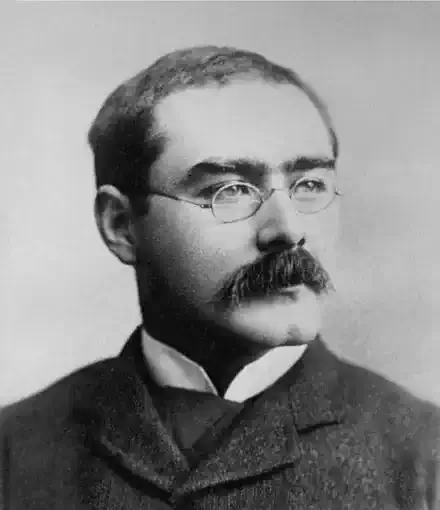
Rudyard Kipling
The Law of the Jungle
The Law of the Jungle
Now this is the Law of the Jungle -- as old and as true as the sky; And the Wolf
that shall keep it may prosper, but the Wolf that shall break it must die. AAs the
creeper that girdles the tree-trunk the Law runneth forward and back --
For the strength of the Pack is the Wolf, and the strength of the Wolf is the Pack.
Wash daily from nose-tip to tail-tip; drink deeply, but never too deep;
And remember the night is for hunting, and forget not the day is for sleep.
The Jackal may follow the Tiger, but, Cub, when thy whiskers are grown,
Remember the Wolf is a Hunter -- go forth and get food of thine own.
Keep peace withe Lords of the Jungle -- the Tiger, the Panther, and Bear.
And trouble not Hathi the Silent, and mock not the Boar in his lair.
When Pack meets with Pack in the Jungle, and neither will go from the trail,
Lie down till the leaders have spoken -- it may be fair words shall prevail.
When ye fight with a Wolf of the Pack, ye must fight him alone and afar,
Lest others take part in the quarrel, and the Pack be diminished by war.
The Lair of the Wolf is his refuge, and where he has made him his home,
Not even the Head Wolf may enter, not even the Council may come.
The Lair of the Wolf is his refuge, but where he has digged it too plain,
The Council shall send him a message, and so he shall change it again.
If ye kill before midnight, be silent, and wake not the woods with your bay,
Lest ye frighten the deer from the crop, and your brothers go empty away.
Ye may kill for yourselves, and your mates, and your cubs as they need, and ye can;
But kill not for pleasure of killing, and seven times never kill Man!
If ye plunder his Kill from a weaker, devour not all in thy pride;
Pack-Right is the right of the meanest; so leave him the head and the hide.
The Kill of the Pack is the meat of the Pack. Ye must eat where it lies;
And no one may carry away of that meat to his lair, or he dies.
The Kill of the Wolf is the meat of the Wolf. He may do what he will;
But, till he has given permission, the Pack may not eat of that Kill.
Cub-Right is the right of the Yearling. From all of his Pack he may claim
Full-gorge when the killer has eaten; and none may refuse him the same.
Lair-Right is the right of the Mother. From all of her year she may claim
One haunch of each kill for her litter, and none may deny her the same.
Cave-Right is the right of the Father -- to hunt by himself for his own:
He is freed of all calls to the Pack; he is judged by the Council alone.
Because of his age and his cunning, because of his gripe and his paw,
In all that the Law leaveth open, the word of your Head Wolf is Law.
Now these are the Laws of the Jungle, and many and mighty are they;
But the head and the hoof of the Law and the haunch and the hump is -- Obey!
Now this is the Law of the Jungle -- as old and as true as the sky; And the Wolf
that shall keep it may prosper, but the Wolf that shall break it must die. AAs the
creeper that girdles the tree-trunk the Law runneth forward and back --
For the strength of the Pack is the Wolf, and the strength of the Wolf is the Pack.
Wash daily from nose-tip to tail-tip; drink deeply, but never too deep;
And remember the night is for hunting, and forget not the day is for sleep.
The Jackal may follow the Tiger, but, Cub, when thy whiskers are grown,
Remember the Wolf is a Hunter -- go forth and get food of thine own.
Keep peace withe Lords of the Jungle -- the Tiger, the Panther, and Bear.
And trouble not Hathi the Silent, and mock not the Boar in his lair.
When Pack meets with Pack in the Jungle, and neither will go from the trail,
Lie down till the leaders have spoken -- it may be fair words shall prevail.
When ye fight with a Wolf of the Pack, ye must fight him alone and afar,
Lest others take part in the quarrel, and the Pack be diminished by war.
The Lair of the Wolf is his refuge, and where he has made him his home,
Not even the Head Wolf may enter, not even the Council may come.
The Lair of the Wolf is his refuge, but where he has digged it too plain,
The Council shall send him a message, and so he shall change it again.
If ye kill before midnight, be silent, and wake not the woods with your bay,
Lest ye frighten the deer from the crop, and your brothers go empty away.
Ye may kill for yourselves, and your mates, and your cubs as they need, and ye can;
But kill not for pleasure of killing, and seven times never kill Man!
If ye plunder his Kill from a weaker, devour not all in thy pride;
Pack-Right is the right of the meanest; so leave him the head and the hide.
The Kill of the Pack is the meat of the Pack. Ye must eat where it lies;
And no one may carry away of that meat to his lair, or he dies.
The Kill of the Wolf is the meat of the Wolf. He may do what he will;
But, till he has given permission, the Pack may not eat of that Kill.
Cub-Right is the right of the Yearling. From all of his Pack he may claim
Full-gorge when the killer has eaten; and none may refuse him the same.
Lair-Right is the right of the Mother. From all of her year she may claim
One haunch of each kill for her litter, and none may deny her the same.
Cave-Right is the right of the Father -- to hunt by himself for his own:
He is freed of all calls to the Pack; he is judged by the Council alone.
Because of his age and his cunning, because of his gripe and his paw,
In all that the Law leaveth open, the word of your Head Wolf is Law.
Now these are the Laws of the Jungle, and many and mighty are they;
But the head and the hoof of the Law and the haunch and the hump is -- Obey!
760
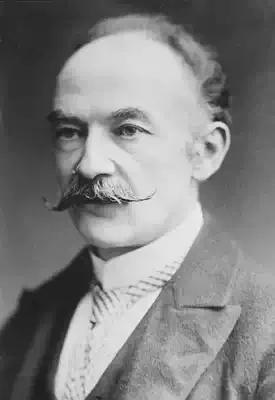
Thomas Hardy
Satires of Circumstance in Fifteen Glimpses VIII: In the St
Satires of Circumstance in Fifteen Glimpses VIII: In the St
He enters, and mute on the edge of a chair
Sits a thin-faced lady, a stranger there,
A type of decayed gentility;
And by some small signs he well can guess
That she comes to him almost breakfastless.
"I have called -- I hope I do not err --
I am looking for a purchaser
Of some score volumes of the works
Of eminent divines I own, --
Left by my father -- though it irks
My patience to offer them." And she smiles
As if necessity were unknown;
"But the truth of it is that oftenwhiles
I have wished, as I am fond of art,
To make my rooms a little smart,
And these old books are so in the way."
And lightly still she laughs to him,
As if to sell were a mere gay whim,
And that, to be frank, Life were indeed
To her not vinegar and gall,
But fresh and honey-like; and Need
No household skeleton at all.
He enters, and mute on the edge of a chair
Sits a thin-faced lady, a stranger there,
A type of decayed gentility;
And by some small signs he well can guess
That she comes to him almost breakfastless.
"I have called -- I hope I do not err --
I am looking for a purchaser
Of some score volumes of the works
Of eminent divines I own, --
Left by my father -- though it irks
My patience to offer them." And she smiles
As if necessity were unknown;
"But the truth of it is that oftenwhiles
I have wished, as I am fond of art,
To make my rooms a little smart,
And these old books are so in the way."
And lightly still she laughs to him,
As if to sell were a mere gay whim,
And that, to be frank, Life were indeed
To her not vinegar and gall,
But fresh and honey-like; and Need
No household skeleton at all.
185
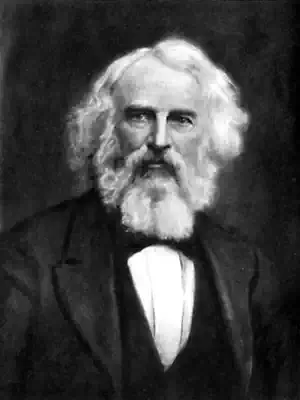
Henry Wadsworth Longfellow
In The Harbour: From The French
In The Harbour: From The French
Will ever the dear days come back again,
Those days of June, when lilacs were in bloom,
And bluebirds sang their sonnets in the gloom
Of leaves that roofed them in from sun or rain?
I know not; but a presence will remain
For ever and for ever in this room,
Formless, diffused in air, like a perfume,--
A phantom of the heart, and not the brain.
Delicious days! when every spoken word
Was like a foot-fall nearer and more near
And a mysterious knocking at the gate
Of the heart's secret places, and we heard
In the sweet tumult of delight and fear
A voice that whispered, 'Open, I cannot wait!'
Will ever the dear days come back again,
Those days of June, when lilacs were in bloom,
And bluebirds sang their sonnets in the gloom
Of leaves that roofed them in from sun or rain?
I know not; but a presence will remain
For ever and for ever in this room,
Formless, diffused in air, like a perfume,--
A phantom of the heart, and not the brain.
Delicious days! when every spoken word
Was like a foot-fall nearer and more near
And a mysterious knocking at the gate
Of the heart's secret places, and we heard
In the sweet tumult of delight and fear
A voice that whispered, 'Open, I cannot wait!'
290
Rudyard Kipling
The Last Shuttee
The Last Shuttee
Not many years ago a King died in one of the Rajpoot States.
His wives, disregarding the orders of the English against Suttee,
would have broken out of the palace had not the gates been barred.
But one of them, disguised as the King's favourite dancing-girl,
passed through the line of guards and reached the pyre. There,
her courage failing, she prayed her cousin, a baron of the court,
to kill her. This he did, not knowing who she was.
Udai Chand lay sick to death
In his hold by Gungra hill.
All night we heard the death-gongs ring
For the soul of the dying Rajpoot King,
All night beat up from the women's wing
A cry that we could not still.
All night the barons came and went,
The lords of the outer guard:
All night the cressets glimmered pale
On Ulwar sabre and Tonk jezail,
Mewar headstall and Marwar mail,
That clinked in the palace yard.
In the Golden room on the palace roof
All night he fought for air:
And there was sobbing behind the screen,
Rustle and whisper of women unseen,
And the hungry eyes of the Boondi Queen
On the death she might not share.
He passed at dawn -- the death-fire leaped
From ridge to river-head,
From the Malwa plains to the Abu scars:
And wail upon wail went up to the stars
Behind the grim zenana-bars,
When they knew that the King was dead.
The dumb priest knelt to tie his mouth
And robe him for the pyre.
The Boondi Queen beneath us cried:
"See, now, that we die as our mothers died
In the bridal-bed by our master's side!
Out, women! -- to the fire!"
We drove the great gates home apace:
White hands were on the sill:
But ere the rush of the unseen feet
Had reached the turn to the open street,
The bars shot down, the guard-drum beat --
We held the dovecot still.
A face looked down in the gathering day,
And laughing spoke from the wall:
"Oh]/e, they mourn here: let me by --
Azizun, the Lucknow nautch-girl, I!
When the house is rotten, the rats must fly,
And I seek another thrall.
"For I ruled the King as ne'er did Queen, --
To-night the Queens rule me!
Guard them safely, but let me go,
Or ever they pay the debt they owe
In scourge and torture!" She leaped below,
And the grim guard watched her flee.
They knew that the King had spent his soul
On a North-bred dancing-girl:
That he prayed to a flat-nosed Lucknow god,
And kissed the ground where her feet had trod,
And doomed to death at her drunken nod,
And swore by her lightest curl.
We bore the King to his fathers' place,
Where the tombs of the Sun-born stand:
Where the gray apes swing, and the peacocks preen
On fretted pillar and jewelled screen,
And the wild boar couch in the house of the Queen
On the drift of the desert sand.
The herald read his titles forth,
We set the logs aglow:
"Friend of the English, free from fear,
Baron of Luni to Jeysulmeer,
Lord of the Desert of Bikaneer,
King of the Jungle, -- go!"
All night the red flame stabbed the sky
With wavering wind-tossed spears:
And out of a shattered temple crept
A woman who veiled her head and wept,
And called on the King -- but the great King slept,
And turned not for her tears.
Small thought had he to mark the strife --
Cold fear with hot desire --
When thrice she leaped from the leaping flame,
And thrice she beat her breast for shame,
And thrice like a wounded dove she came
And moaned about the fire.
One watched, a bow-shot from the blaze,
The silent streets between,
Who had stood by the King in sport and fray,
To blade in ambush or boar at bay,
And he was a baron old and gray,
And kin to the Boondi Queen.
He said: "O shameless, put aside
The veil upon thy brow!
Who held the King and all his land
To the wanton will of a harlot's hand!
Will the white ash rise from the blistered brand?
Stoop down, and call him now!"
Then she: "By the faith of my tarnished soul,
All things I did not well,
I had hoped to clear ere the fire died,
And lay me down by my master's side
To rule in Heaven his only bride,
While the others howl in Hell.
"But I have felt the fire's breath,
And hard it is to die!
Yet if I may pray a Rajpoot lord
To sully the steel of a Thakur's sword
With base-born blood of a trade abhorred," --
And the Thakur answered, "Ay."
He drew and struck: the straight blade drank
The life beneath the breast.
"I had looked for the Queen to face the flame,
But the harlot dies for the Rajpoot dame --
Sister of mine, pass, free from shame,
Pass with thy King to rest!"
The black log crashed above the white:
The little flames and lean,
Red as slaughter and blue as steel,
That whistled and fluttered from head to heel,
Leaped up anew, for they found their meal
On the heart of -- the Boondi Queen!
Not many years ago a King died in one of the Rajpoot States.
His wives, disregarding the orders of the English against Suttee,
would have broken out of the palace had not the gates been barred.
But one of them, disguised as the King's favourite dancing-girl,
passed through the line of guards and reached the pyre. There,
her courage failing, she prayed her cousin, a baron of the court,
to kill her. This he did, not knowing who she was.
Udai Chand lay sick to death
In his hold by Gungra hill.
All night we heard the death-gongs ring
For the soul of the dying Rajpoot King,
All night beat up from the women's wing
A cry that we could not still.
All night the barons came and went,
The lords of the outer guard:
All night the cressets glimmered pale
On Ulwar sabre and Tonk jezail,
Mewar headstall and Marwar mail,
That clinked in the palace yard.
In the Golden room on the palace roof
All night he fought for air:
And there was sobbing behind the screen,
Rustle and whisper of women unseen,
And the hungry eyes of the Boondi Queen
On the death she might not share.
He passed at dawn -- the death-fire leaped
From ridge to river-head,
From the Malwa plains to the Abu scars:
And wail upon wail went up to the stars
Behind the grim zenana-bars,
When they knew that the King was dead.
The dumb priest knelt to tie his mouth
And robe him for the pyre.
The Boondi Queen beneath us cried:
"See, now, that we die as our mothers died
In the bridal-bed by our master's side!
Out, women! -- to the fire!"
We drove the great gates home apace:
White hands were on the sill:
But ere the rush of the unseen feet
Had reached the turn to the open street,
The bars shot down, the guard-drum beat --
We held the dovecot still.
A face looked down in the gathering day,
And laughing spoke from the wall:
"Oh]/e, they mourn here: let me by --
Azizun, the Lucknow nautch-girl, I!
When the house is rotten, the rats must fly,
And I seek another thrall.
"For I ruled the King as ne'er did Queen, --
To-night the Queens rule me!
Guard them safely, but let me go,
Or ever they pay the debt they owe
In scourge and torture!" She leaped below,
And the grim guard watched her flee.
They knew that the King had spent his soul
On a North-bred dancing-girl:
That he prayed to a flat-nosed Lucknow god,
And kissed the ground where her feet had trod,
And doomed to death at her drunken nod,
And swore by her lightest curl.
We bore the King to his fathers' place,
Where the tombs of the Sun-born stand:
Where the gray apes swing, and the peacocks preen
On fretted pillar and jewelled screen,
And the wild boar couch in the house of the Queen
On the drift of the desert sand.
The herald read his titles forth,
We set the logs aglow:
"Friend of the English, free from fear,
Baron of Luni to Jeysulmeer,
Lord of the Desert of Bikaneer,
King of the Jungle, -- go!"
All night the red flame stabbed the sky
With wavering wind-tossed spears:
And out of a shattered temple crept
A woman who veiled her head and wept,
And called on the King -- but the great King slept,
And turned not for her tears.
Small thought had he to mark the strife --
Cold fear with hot desire --
When thrice she leaped from the leaping flame,
And thrice she beat her breast for shame,
And thrice like a wounded dove she came
And moaned about the fire.
One watched, a bow-shot from the blaze,
The silent streets between,
Who had stood by the King in sport and fray,
To blade in ambush or boar at bay,
And he was a baron old and gray,
And kin to the Boondi Queen.
He said: "O shameless, put aside
The veil upon thy brow!
Who held the King and all his land
To the wanton will of a harlot's hand!
Will the white ash rise from the blistered brand?
Stoop down, and call him now!"
Then she: "By the faith of my tarnished soul,
All things I did not well,
I had hoped to clear ere the fire died,
And lay me down by my master's side
To rule in Heaven his only bride,
While the others howl in Hell.
"But I have felt the fire's breath,
And hard it is to die!
Yet if I may pray a Rajpoot lord
To sully the steel of a Thakur's sword
With base-born blood of a trade abhorred," --
And the Thakur answered, "Ay."
He drew and struck: the straight blade drank
The life beneath the breast.
"I had looked for the Queen to face the flame,
But the harlot dies for the Rajpoot dame --
Sister of mine, pass, free from shame,
Pass with thy King to rest!"
The black log crashed above the white:
The little flames and lean,
Red as slaughter and blue as steel,
That whistled and fluttered from head to heel,
Leaped up anew, for they found their meal
On the heart of -- the Boondi Queen!
745
Thomas Hardy
San Sebastian
San Sebastian
With Thoughts of Sergeant M---- (Pensioner), who died -
"WHY, Sergeant, stray on the Ivel Way,
As though at home there were spectres rife?
From first to last 'twas a proud career!
And your sunny years with a gracious wife
Have brought you a daughter dear.
"I watched her to-day; a more comely maid,
As she danced in her muslin bowed with blue,
Round a Hintock maypole never gayed."
--"Aye, aye; I watched her this day, too,
As it happens," the Sergeant said.
"My daughter is now," he again began,
"Of just such an age as one I knew
When we of the Line, in the Foot-Guard van,
On an August morning--a chosen few--
Stormed San Sebastian.
"She's a score less three; so about was she--
The maiden I wronged in Peninsular days....
You may prate of your prowess in lusty times,
But as years gnaw inward you blink your bays,
And see too well your crimes!
"We'd stormed it at night, by the vlanker-light
Of burning towers, and the mortar's boom:
We'd topped the breach but had failed to stay,
For our files were misled by the baffling gloom;
And we said we'd storm by day.
"So, out of the trenches, with features set,
On that hot, still morning, in measured pace,
Our column climbed; climbed higher yet,
Past the fauss'bray, scarp, up the curtain-face,
And along the parapet.
"From the batteried hornwork the cannoneers
Hove crashing balls of iron fire;
On the shaking gap mount the volunteers
In files, and as they mount expire
Amid curses, groans, and cheers.
"Five hours did we storm, five hours re-form,
As Death cooled those hot blood pricked on;
Till our cause was helped by a woe within;
They swayed from the summit we'd leapt upon,
And madly we entered in.
"On end for plunder, 'mid rain and thunder
That burst with the lull of our cannonade,
We vamped the streets in the stifling air--
Our hunger unsoothed, our thirst unstayed--
And ransacked the buildings there.
"Down the stony steps of the house-fronts white
We rolled rich puncheons of Spanish grape,
Till at length, with the fire of the wine alight,
I saw at a doorway a fair fresh shape--
A woman, a sylph, or sprite.
"Afeard she fled, and with heated head
I pursued to the chamber she called her own;
--When might is right no qualms deter,
And having her helpless and alone
I wreaked my lust on her.
"She raised her beseeching eyes to me,
And I heard the words of prayer she sent
In her own soft language.... Seemingly
I copied those eyes for my punishment
In begetting the girl you see!
"So, to-day I stand with a God-set brand
Like Cain's, when he wandered from kindred's ken....
I served through the war that made Europe free;
I wived me in peace-year. But, hid from men,
I bear that mark on me.
"And I nightly stray on the Ivel Way
As though at home there were spectres rife;
I delight me not in my proud career;
And 'tis coals of fire that a gracious wife
Should have brought me a daughter dear!"
With Thoughts of Sergeant M---- (Pensioner), who died -
"WHY, Sergeant, stray on the Ivel Way,
As though at home there were spectres rife?
From first to last 'twas a proud career!
And your sunny years with a gracious wife
Have brought you a daughter dear.
"I watched her to-day; a more comely maid,
As she danced in her muslin bowed with blue,
Round a Hintock maypole never gayed."
--"Aye, aye; I watched her this day, too,
As it happens," the Sergeant said.
"My daughter is now," he again began,
"Of just such an age as one I knew
When we of the Line, in the Foot-Guard van,
On an August morning--a chosen few--
Stormed San Sebastian.
"She's a score less three; so about was she--
The maiden I wronged in Peninsular days....
You may prate of your prowess in lusty times,
But as years gnaw inward you blink your bays,
And see too well your crimes!
"We'd stormed it at night, by the vlanker-light
Of burning towers, and the mortar's boom:
We'd topped the breach but had failed to stay,
For our files were misled by the baffling gloom;
And we said we'd storm by day.
"So, out of the trenches, with features set,
On that hot, still morning, in measured pace,
Our column climbed; climbed higher yet,
Past the fauss'bray, scarp, up the curtain-face,
And along the parapet.
"From the batteried hornwork the cannoneers
Hove crashing balls of iron fire;
On the shaking gap mount the volunteers
In files, and as they mount expire
Amid curses, groans, and cheers.
"Five hours did we storm, five hours re-form,
As Death cooled those hot blood pricked on;
Till our cause was helped by a woe within;
They swayed from the summit we'd leapt upon,
And madly we entered in.
"On end for plunder, 'mid rain and thunder
That burst with the lull of our cannonade,
We vamped the streets in the stifling air--
Our hunger unsoothed, our thirst unstayed--
And ransacked the buildings there.
"Down the stony steps of the house-fronts white
We rolled rich puncheons of Spanish grape,
Till at length, with the fire of the wine alight,
I saw at a doorway a fair fresh shape--
A woman, a sylph, or sprite.
"Afeard she fled, and with heated head
I pursued to the chamber she called her own;
--When might is right no qualms deter,
And having her helpless and alone
I wreaked my lust on her.
"She raised her beseeching eyes to me,
And I heard the words of prayer she sent
In her own soft language.... Seemingly
I copied those eyes for my punishment
In begetting the girl you see!
"So, to-day I stand with a God-set brand
Like Cain's, when he wandered from kindred's ken....
I served through the war that made Europe free;
I wived me in peace-year. But, hid from men,
I bear that mark on me.
"And I nightly stray on the Ivel Way
As though at home there were spectres rife;
I delight me not in my proud career;
And 'tis coals of fire that a gracious wife
Should have brought me a daughter dear!"
169

Robert W. Service
Lucindy Jane
Lucindy Jane
When I was young I was too proud
To wheel my daughter in her pram.
"It's infra dig," I said aloud,-Bot
now I'm old, behold I am
Perambulating up and down
Grand-daughter through the town.
And when I come into the Square,
Beside the fountain I will stop;
And as to rest I linger there,
The dames will say: "How do, Grand-pop!
Lucindy Jane with eyes so blue
Looks more and more like you."
And sure it's pleased as Punch I get,
And take Lucindy on my knee;
Aye, at the risk of getting wet,
I blether to the girls a wee:
Then as we have a bottle date
Home we perambulate.
Gosh! That's the joy of all my day;
And as I play the part of nurse:
"She's got your nose," I hear them say.
Thinks I: "Well now, she might have worse."
And how I dream I'll live to see
A great-grandchild upon my knee,
Whom folks say looks like me!
When I was young I was too proud
To wheel my daughter in her pram.
"It's infra dig," I said aloud,-Bot
now I'm old, behold I am
Perambulating up and down
Grand-daughter through the town.
And when I come into the Square,
Beside the fountain I will stop;
And as to rest I linger there,
The dames will say: "How do, Grand-pop!
Lucindy Jane with eyes so blue
Looks more and more like you."
And sure it's pleased as Punch I get,
And take Lucindy on my knee;
Aye, at the risk of getting wet,
I blether to the girls a wee:
Then as we have a bottle date
Home we perambulate.
Gosh! That's the joy of all my day;
And as I play the part of nurse:
"She's got your nose," I hear them say.
Thinks I: "Well now, she might have worse."
And how I dream I'll live to see
A great-grandchild upon my knee,
Whom folks say looks like me!
237
Rudyard Kipling
The Last of the Light Brigade
The Last of the Light Brigade
There were thirty million English who talked of England's might,
There were twenty broken troopers who lacked a bed for the night.
They had neither food nor money, they had neither service nor trade;
They were only shiftless soldiers, the last of the Light Brigade.
They felt that life was fleeting; they knew not that art was long,
That though they were dying of famine, they lived in deathless song.
They asked for a little money to keep the wolf from the door;
And the thirty million English sent twenty pounds and four!
They laid their heads together that were scarred and lined and grey;
Keen were the Russian sabres, but want was keener than they;
And an old Troop-Sergeant muttered, "Let us go to the man who writes
The things on Balaclava the kiddies at school recites."
They went without bands or colours, a regiment ten-file strong,
To look for the Master-singer who had crowned them all in his song;
And, waiting his servant's order, by the garden gate they stayed,
A desolate little cluster, the last of the Light Brigade.
They strove to stand to attention, to straighten the toil-bowed back;
They drilled on an empty stomach, the loose-knit files fell slack;
With stooping of weary shoulders, in garments tattered and frayed,
They shambled into his presence, the last of the Light Brigade.
The old Troop-Sergeant was spokesman, and "Beggin' your pardon," he said,
"You wrote o' the Light Brigade, sir. Here's all that isn't dead.
An' it's all come true what you wrote, sir, regardin' the mouth of hell;
For we're all of us nigh to the workhouse, an, we thought we'd call an' tell.
"No, thank you, we don't want food, sir; but couldn't you take an' write
A sort of 'to be continued' and 'see next page' o' the fight?
We think that someone has blundered, an' couldn't you tell 'em how?
You wrote we were heroes once, sir. Please, write we are starving now."
The poor little army departed, limping and lean and forlorn.
And the heart of the Master-singer grew hot with "the scorn of scorn."
And he wrote for them wonderful verses that swept the land like flame,
Till the fatted souls of the English were scourged with the thing called Shame.
O thirty million English that babble of England's might,
Behold there are twenty heroes who lack their food to-night;
Our children's children are lisping to "honour the charge they made-"
And we leave to the streets and the workhouse the charge of the Light Brigade!
There were thirty million English who talked of England's might,
There were twenty broken troopers who lacked a bed for the night.
They had neither food nor money, they had neither service nor trade;
They were only shiftless soldiers, the last of the Light Brigade.
They felt that life was fleeting; they knew not that art was long,
That though they were dying of famine, they lived in deathless song.
They asked for a little money to keep the wolf from the door;
And the thirty million English sent twenty pounds and four!
They laid their heads together that were scarred and lined and grey;
Keen were the Russian sabres, but want was keener than they;
And an old Troop-Sergeant muttered, "Let us go to the man who writes
The things on Balaclava the kiddies at school recites."
They went without bands or colours, a regiment ten-file strong,
To look for the Master-singer who had crowned them all in his song;
And, waiting his servant's order, by the garden gate they stayed,
A desolate little cluster, the last of the Light Brigade.
They strove to stand to attention, to straighten the toil-bowed back;
They drilled on an empty stomach, the loose-knit files fell slack;
With stooping of weary shoulders, in garments tattered and frayed,
They shambled into his presence, the last of the Light Brigade.
The old Troop-Sergeant was spokesman, and "Beggin' your pardon," he said,
"You wrote o' the Light Brigade, sir. Here's all that isn't dead.
An' it's all come true what you wrote, sir, regardin' the mouth of hell;
For we're all of us nigh to the workhouse, an, we thought we'd call an' tell.
"No, thank you, we don't want food, sir; but couldn't you take an' write
A sort of 'to be continued' and 'see next page' o' the fight?
We think that someone has blundered, an' couldn't you tell 'em how?
You wrote we were heroes once, sir. Please, write we are starving now."
The poor little army departed, limping and lean and forlorn.
And the heart of the Master-singer grew hot with "the scorn of scorn."
And he wrote for them wonderful verses that swept the land like flame,
Till the fatted souls of the English were scourged with the thing called Shame.
O thirty million English that babble of England's might,
Behold there are twenty heroes who lack their food to-night;
Our children's children are lisping to "honour the charge they made-"
And we leave to the streets and the workhouse the charge of the Light Brigade!
497
Thomas Hardy
Rome: The Vatican--Sala Delle Muse ()
Rome: The Vatican--Sala Delle Muse ()
I sat in the Muses' Hall at the mid of the day,
And it seemed to grow still, and the people to pass away,
And the chiselled shapes to combine in a haze of sun,
Till beside a Carrara column there gleamed forth One.
She was nor this nor that of those beings divine,
But each and the whole--an essence of all the Nine;
With tentative foot she neared to my halting-place,
A pensive smile on her sweet, small, marvellous face.
"Regarded so long, we render thee sad?" said she.
"Not you," sighed I, "but my own inconstancy!
I worship each and each; in the morning one,
And then, alas! another at sink of sun.
"To-day my soul clasps Form; but where is my troth
Of yesternight with Tune: can one cleave to both?"
- "Be not perturbed," said she. "Though apart in fame,
As I and my sisters are one, those, too, are the same.
- "But my loves go further--to Story, and Dance, and Hymn,
The lover of all in a sun-sweep is fool to whim -
Is swayed like a river-weed as the ripples run!"
- "Nay, wight, thou sway'st not. These are but phases of one;
"And that one is I; and I am projected from thee,
One that out of thy brain and heart thou causest to be -
Extern to thee nothing. Grieve not, nor thyself becall,
Woo where thou wilt; and rejoice thou canst love at all!
I sat in the Muses' Hall at the mid of the day,
And it seemed to grow still, and the people to pass away,
And the chiselled shapes to combine in a haze of sun,
Till beside a Carrara column there gleamed forth One.
She was nor this nor that of those beings divine,
But each and the whole--an essence of all the Nine;
With tentative foot she neared to my halting-place,
A pensive smile on her sweet, small, marvellous face.
"Regarded so long, we render thee sad?" said she.
"Not you," sighed I, "but my own inconstancy!
I worship each and each; in the morning one,
And then, alas! another at sink of sun.
"To-day my soul clasps Form; but where is my troth
Of yesternight with Tune: can one cleave to both?"
- "Be not perturbed," said she. "Though apart in fame,
As I and my sisters are one, those, too, are the same.
- "But my loves go further--to Story, and Dance, and Hymn,
The lover of all in a sun-sweep is fool to whim -
Is swayed like a river-weed as the ripples run!"
- "Nay, wight, thou sway'st not. These are but phases of one;
"And that one is I; and I am projected from thee,
One that out of thy brain and heart thou causest to be -
Extern to thee nothing. Grieve not, nor thyself becall,
Woo where thou wilt; and rejoice thou canst love at all!
188
Henry Wadsworth Longfellow
In The Harbour: Elegiac Verse
In The Harbour: Elegiac Verse
I.
Peradventure of old, some bard in Ionian Islands,
Walking alone by the sea, hearing the wash of the waves,
Learned the secret from them of the beautiful verse elegiac,
Breathing into his song motion and sound of the sea.
For as the wave of the sea, upheaving in long undulations,
Plunges loud on the sands, pauses, and turns, and retreats,
So the Hexameter, rising and singing, with cadence sonorous,
Falls; and in refluent rhythm back the Pentameter flows.
II.
Not in his youth alone, but in age, may the heart of the poet
Bloom into song, as the gorse blossoms in autumn and spring.
III.
Not in tenderness wanting, yet rough are the rhymes of our poet;
Though it be Jacob's voice, Esau's, alas! are the hands.
IV.
Let us be grateful to writers for what is left in the inkstand;
When to leave off is an art only attained by the few.
V.
How can the Three be One? you ask me; I answer by asking,
Hail and snow and rain, are they not three, and yet one?
VI.
By the mirage uplifted, the land floats vague in the ether,
Ships and the shadows of ships hang in the motionless air;
So by the art of the poet our common life is uplifted,
So, transfigured, the world floats in a luminous haze.
VII.
Like a French poem is Life; being only perfect in structure
When with the masculine rhymes mingled the feminine are.
VIII.
Down from the mountain descends the brooklet, rejoicing in
freedom;
Little it dreams of the mill hid in the valley below;
Glad with the joy of existence, the child goes singing and
laughing,
Little dreaming what toils lie in the future concealed.
IX.
As the ink from our pen, so flow our thoughts and our feelings
When we begin to write, however sluggish before.
X.
Like the Kingdom of Heaven, the Fountain of Youth is within us;
If we seek it elsewhere, old shall we grow in the search.
XI.
If you would hit the mark, you must aim a little above it;
Every arrow that flies feels the attraction of earth.
XII.
Wisely the Hebrews admit no Present tense in their language;
While we are speaking the word, it is is already the Past.
XIII.
In the twilight of age all things seem strange and phantasmal,
As between daylight and dark ghost-like the landscape appears.
XIV.
Great is the art of beginning, but greater the art is of ending;
Many a poem is marred by a superfluous verse.
I.
Peradventure of old, some bard in Ionian Islands,
Walking alone by the sea, hearing the wash of the waves,
Learned the secret from them of the beautiful verse elegiac,
Breathing into his song motion and sound of the sea.
For as the wave of the sea, upheaving in long undulations,
Plunges loud on the sands, pauses, and turns, and retreats,
So the Hexameter, rising and singing, with cadence sonorous,
Falls; and in refluent rhythm back the Pentameter flows.
II.
Not in his youth alone, but in age, may the heart of the poet
Bloom into song, as the gorse blossoms in autumn and spring.
III.
Not in tenderness wanting, yet rough are the rhymes of our poet;
Though it be Jacob's voice, Esau's, alas! are the hands.
IV.
Let us be grateful to writers for what is left in the inkstand;
When to leave off is an art only attained by the few.
V.
How can the Three be One? you ask me; I answer by asking,
Hail and snow and rain, are they not three, and yet one?
VI.
By the mirage uplifted, the land floats vague in the ether,
Ships and the shadows of ships hang in the motionless air;
So by the art of the poet our common life is uplifted,
So, transfigured, the world floats in a luminous haze.
VII.
Like a French poem is Life; being only perfect in structure
When with the masculine rhymes mingled the feminine are.
VIII.
Down from the mountain descends the brooklet, rejoicing in
freedom;
Little it dreams of the mill hid in the valley below;
Glad with the joy of existence, the child goes singing and
laughing,
Little dreaming what toils lie in the future concealed.
IX.
As the ink from our pen, so flow our thoughts and our feelings
When we begin to write, however sluggish before.
X.
Like the Kingdom of Heaven, the Fountain of Youth is within us;
If we seek it elsewhere, old shall we grow in the search.
XI.
If you would hit the mark, you must aim a little above it;
Every arrow that flies feels the attraction of earth.
XII.
Wisely the Hebrews admit no Present tense in their language;
While we are speaking the word, it is is already the Past.
XIII.
In the twilight of age all things seem strange and phantasmal,
As between daylight and dark ghost-like the landscape appears.
XIV.
Great is the art of beginning, but greater the art is of ending;
Many a poem is marred by a superfluous verse.
380
Thomas Hardy
Rome: Building a New Street in the Ancient Quarter.
Rome: Building a New Street in the Ancient Quarter.
These numbered cliffs and gnarls of masonry
Outskeleton Time's central city, Rome;
Whereof each arch, entablature, and dome
Lies bare in all its gaunt anatomy.
And cracking frieze and rotten metope
Express, as though they were an open tome
Top-lined with caustic monitory gnome;
"Dunces, Learn here to spell Humanity!"
And yet within these ruins' very shade
The singing workmen shape and set and join
Their frail new mansion's stuccoed cove and quoin
With no apparent sense that years abrade,
Though each rent wall their feeble works invade
Once shamed all such in power of pier and groin.
These numbered cliffs and gnarls of masonry
Outskeleton Time's central city, Rome;
Whereof each arch, entablature, and dome
Lies bare in all its gaunt anatomy.
And cracking frieze and rotten metope
Express, as though they were an open tome
Top-lined with caustic monitory gnome;
"Dunces, Learn here to spell Humanity!"
And yet within these ruins' very shade
The singing workmen shape and set and join
Their frail new mansion's stuccoed cove and quoin
With no apparent sense that years abrade,
Though each rent wall their feeble works invade
Once shamed all such in power of pier and groin.
182
Rudyard Kipling
The Last Lap
The Last Lap
How do we know, by the bank-high river,
Where the mired and sulky oxen wait,
And it looks as though we might wait for ever,
How do we know that the floods abate?
There is no change in the current's brawling--
Louder and harsher the freshet scolds;
Yet we can feel she is falling, falling
And the more she threatens the less she holds,
Down to the drift, with no word spoken,
The wheel-chained wagons slither and slue....
Achtung! The back of the worst is broken!
And--lash your leaders!--we're through--we're through!
How do we know, when the port-fog holds us
Moored and helpless, a mile from the pier,
And the week-long summer smother enfolds us--
How do we know it is going to clear?
There is no break in the blindfold weather,
But, one and another, about the bay,
The unseen capstans clink together,
Getting ready to up and away.
A pennon whimpers--the breeze has found us--
A headsail jumps through the thinning haze.
The whole hull follows, till--broad around us--
The clean-swept ocean says: "Go your ways!"
How do we know, when the long fight rages,
On the old, stale front that we cannot shake,
And it looks as though we were locked for ages,
How do we know they are going to break?
There is no lull in the level firing,
Nothing has shifted except the sun.
Yet we can feel they are tiring, tiring--
Yet we can tell they are ripe to run.
Something wavers, and, while we wonder,
Their centre-trenches are emptying out,
And, before their useless flanks go under,
Our guns have pounded retreat to rout!
How do we know, by the bank-high river,
Where the mired and sulky oxen wait,
And it looks as though we might wait for ever,
How do we know that the floods abate?
There is no change in the current's brawling--
Louder and harsher the freshet scolds;
Yet we can feel she is falling, falling
And the more she threatens the less she holds,
Down to the drift, with no word spoken,
The wheel-chained wagons slither and slue....
Achtung! The back of the worst is broken!
And--lash your leaders!--we're through--we're through!
How do we know, when the port-fog holds us
Moored and helpless, a mile from the pier,
And the week-long summer smother enfolds us--
How do we know it is going to clear?
There is no break in the blindfold weather,
But, one and another, about the bay,
The unseen capstans clink together,
Getting ready to up and away.
A pennon whimpers--the breeze has found us--
A headsail jumps through the thinning haze.
The whole hull follows, till--broad around us--
The clean-swept ocean says: "Go your ways!"
How do we know, when the long fight rages,
On the old, stale front that we cannot shake,
And it looks as though we were locked for ages,
How do we know they are going to break?
There is no lull in the level firing,
Nothing has shifted except the sun.
Yet we can feel they are tiring, tiring--
Yet we can tell they are ripe to run.
Something wavers, and, while we wonder,
Their centre-trenches are emptying out,
And, before their useless flanks go under,
Our guns have pounded retreat to rout!
433
Robert W. Service
Lowly Laureate
Lowly Laureate
O Sacred Muse, my lyre excuse! -
My verse is vagrant singing;
Rhyme I invoke for simple folk
Of penny-wise upbringing:
For Grannies grey to paste away
Within an album cover;
For maids in class to primly pass,
And lads to linger over.
I take the clay of every day
And mould it in my fashion;
I seek to trace the commonplace
With humor and compassion.
Of earth am I, and meekly try
To be supremely human:
To please, I plan, the little man,
And win the little women.
No evil theme shall daunt my dream
Of fellow-love and pity;
I tune my lute to prostitute,
To priest I pipe my ditty.
Through gutter-grime be in my rhyme,
I bow to altars holy. . . .
Lord, humble me, so I may be
A Laureate of the Lowly.
O Sacred Muse, my lyre excuse! -
My verse is vagrant singing;
Rhyme I invoke for simple folk
Of penny-wise upbringing:
For Grannies grey to paste away
Within an album cover;
For maids in class to primly pass,
And lads to linger over.
I take the clay of every day
And mould it in my fashion;
I seek to trace the commonplace
With humor and compassion.
Of earth am I, and meekly try
To be supremely human:
To please, I plan, the little man,
And win the little women.
No evil theme shall daunt my dream
Of fellow-love and pity;
I tune my lute to prostitute,
To priest I pipe my ditty.
Through gutter-grime be in my rhyme,
I bow to altars holy. . . .
Lord, humble me, so I may be
A Laureate of the Lowly.
203
Rudyard Kipling
The Last Chantey
The Last Chantey
"~And there was no more sea.~"
Thus said The Lord in the Vault above the Cherubim
Calling to the Angels and the Souls in their degree:
"Lo! Earth has passed away
On the smoke of Judgment Day.
That Our word may be established shall We gather up the sea?"
Loud sang the souls of the jolly, jolly mariners:
"Plague upon the hurricane that made us furl and flee!
But the war is done between us,
In the deep the Lord hath seen us --
Our bones we'll leave the barracout', and God may sink the sea!"
Then said the soul of Judas that betray]\ed Him:
"Lord, hast Thou forgotten Thy covenant with me?
How once a year I go
To cool me on the floe?
And Ye take my day of mercy if Ye take away the sea!"
Then said the soul of the Angel of the Off-shore Wind:
(He that bits the thunder when the bull-mouthed breakers flee):
"I have watch and ward to keep
O'er Thy wonders on the deep,
And Ye take mine honour from me if Ye take away the sea!"
Loud sang the souls of the jolly, jolly mariners:
"Nay, but we were angry, and a hasty folk are we!
If we worked the ship together
Till she foundered in foul weather,
Are we babes that we should clamour for a vengeance on the sea?"
Then said the souls of the slaves that men threw overboard:
"Kennelled in the picaroon a weary band were we;
But Thy arm was strong to save,
And it touched us on the wave,
And we drowsed the long tides idle till Thy Trumpets tore the sea."
Then cried the soul of the stout Apostle Paul to God:
"Once we frapped a ship, and she laboured woundily.
There were fourteen score of these,
And they blessed Thee on their knees,
When they learned Thy Grace and Glory under Malta by the sea!"
Loud sang the souls of the jolly, jolly mariners,
Plucking at their harps, and they plucked unhandily:
"Our thumbs are rough and tarred,
And the tune is something hard --
May we lift a Deep-sea Chantey such as seamen use at sea?"
Then said the souls of the gentlemen-adventurers --
Fettered wrist to bar all for red iniquity:
"Ho, we revel in our chains
O'er the sorrow that was Spain's;
Heave or sink it, leave or drink it, we were masters of the sea!"
Up spake the soul of a gray Gothavn 'speckshioner --
(He that led the flinching in the fleets of fair Dundee):
"Oh, the ice-blink white and near,
And the bowhead breaching clear!
Will Ye whelm them all for wantonness that wallow in the sea?"
Loud sang the souls of the jolly, jolly mariners,
Crying: "Under Heaven, here is neither lead nor lee!
Must we sing for evermore
On the windless, glassy floor?
Take back your golden fiddles and we'll beat to open sea!"
Then stooped the Lord, and He called the good sea up to Him,
And 'stablished his borders unto all eternity,
That such as have no pleasure
For to praise the Lord by measure,
They may enter into galleons and serve Him on the sea.
Sun, wind, and cloud shall fail not from the face of it,
Stinging, ringing spindrift, nor the fulmar flying free;
And the ships shall go abroad
To the Glory of the Lord
Who heard the silly sailor-folk and gave them back their sea!
"~And there was no more sea.~"
Thus said The Lord in the Vault above the Cherubim
Calling to the Angels and the Souls in their degree:
"Lo! Earth has passed away
On the smoke of Judgment Day.
That Our word may be established shall We gather up the sea?"
Loud sang the souls of the jolly, jolly mariners:
"Plague upon the hurricane that made us furl and flee!
But the war is done between us,
In the deep the Lord hath seen us --
Our bones we'll leave the barracout', and God may sink the sea!"
Then said the soul of Judas that betray]\ed Him:
"Lord, hast Thou forgotten Thy covenant with me?
How once a year I go
To cool me on the floe?
And Ye take my day of mercy if Ye take away the sea!"
Then said the soul of the Angel of the Off-shore Wind:
(He that bits the thunder when the bull-mouthed breakers flee):
"I have watch and ward to keep
O'er Thy wonders on the deep,
And Ye take mine honour from me if Ye take away the sea!"
Loud sang the souls of the jolly, jolly mariners:
"Nay, but we were angry, and a hasty folk are we!
If we worked the ship together
Till she foundered in foul weather,
Are we babes that we should clamour for a vengeance on the sea?"
Then said the souls of the slaves that men threw overboard:
"Kennelled in the picaroon a weary band were we;
But Thy arm was strong to save,
And it touched us on the wave,
And we drowsed the long tides idle till Thy Trumpets tore the sea."
Then cried the soul of the stout Apostle Paul to God:
"Once we frapped a ship, and she laboured woundily.
There were fourteen score of these,
And they blessed Thee on their knees,
When they learned Thy Grace and Glory under Malta by the sea!"
Loud sang the souls of the jolly, jolly mariners,
Plucking at their harps, and they plucked unhandily:
"Our thumbs are rough and tarred,
And the tune is something hard --
May we lift a Deep-sea Chantey such as seamen use at sea?"
Then said the souls of the gentlemen-adventurers --
Fettered wrist to bar all for red iniquity:
"Ho, we revel in our chains
O'er the sorrow that was Spain's;
Heave or sink it, leave or drink it, we were masters of the sea!"
Up spake the soul of a gray Gothavn 'speckshioner --
(He that led the flinching in the fleets of fair Dundee):
"Oh, the ice-blink white and near,
And the bowhead breaching clear!
Will Ye whelm them all for wantonness that wallow in the sea?"
Loud sang the souls of the jolly, jolly mariners,
Crying: "Under Heaven, here is neither lead nor lee!
Must we sing for evermore
On the windless, glassy floor?
Take back your golden fiddles and we'll beat to open sea!"
Then stooped the Lord, and He called the good sea up to Him,
And 'stablished his borders unto all eternity,
That such as have no pleasure
For to praise the Lord by measure,
They may enter into galleons and serve Him on the sea.
Sun, wind, and cloud shall fail not from the face of it,
Stinging, ringing spindrift, nor the fulmar flying free;
And the ships shall go abroad
To the Glory of the Lord
Who heard the silly sailor-folk and gave them back their sea!
406
Thomas Hardy
Rome: At the Pyramid of Cestius. (Near the graves of Shelley & Keats)
Rome: At the Pyramid of Cestius. (Near the graves of Shelley & Keats)
Who, then, was Cestius,
And what is he to me? -
Amid thick thoughts and memories multitudinous
One thought alone brings he.
I can recall no word
Of anything he did;
For me he is a man who died and was interred
To leave a pyramid
Whose purpose was exprest
Not with its first design,
Nor till, far down in Time, beside it found their rest
Two countrymen of mine.
Cestius in life, maybe,
Slew, breathed out threatening;
I know not. This I know: in death all silently
He does a kindlier thing,
In beckoning pilgrim feet
With marble finger high
To where, by shadowy wall and history-haunted street,
Those matchless singers lie . . .
--Say, then, he lived and died
That stones which bear his name
Should mark, through Time, where two immortal Shades abide;
It is an ample fame.
Who, then, was Cestius,
And what is he to me? -
Amid thick thoughts and memories multitudinous
One thought alone brings he.
I can recall no word
Of anything he did;
For me he is a man who died and was interred
To leave a pyramid
Whose purpose was exprest
Not with its first design,
Nor till, far down in Time, beside it found their rest
Two countrymen of mine.
Cestius in life, maybe,
Slew, breathed out threatening;
I know not. This I know: in death all silently
He does a kindlier thing,
In beckoning pilgrim feet
With marble finger high
To where, by shadowy wall and history-haunted street,
Those matchless singers lie . . .
--Say, then, he lived and died
That stones which bear his name
Should mark, through Time, where two immortal Shades abide;
It is an ample fame.
193
Henry Wadsworth Longfellow
In The Harbour: Chimes
In The Harbour: Chimes
Sweet chimes! that in the loneliness of night
Salute the passing hour, and in the dark
And silent chambers of the household mark
The movements of the myriad orbs of light!
Through my closed eyelids, by the inner sight,
I see the constellations in the arc
Of their great circles moving on, and hark!
I almost hear them singing in their flight.
Better than sleep it is to lie awake,
O'er-canopied by the vast starry dome
Of the immeasurable sky; to feel
The slumbering world sink under us, and make
Hardly an eddy,--a mere rush of foam
On the great sea beneath a sinking keel.
Sweet chimes! that in the loneliness of night
Salute the passing hour, and in the dark
And silent chambers of the household mark
The movements of the myriad orbs of light!
Through my closed eyelids, by the inner sight,
I see the constellations in the arc
Of their great circles moving on, and hark!
I almost hear them singing in their flight.
Better than sleep it is to lie awake,
O'er-canopied by the vast starry dome
Of the immeasurable sky; to feel
The slumbering world sink under us, and make
Hardly an eddy,--a mere rush of foam
On the great sea beneath a sinking keel.
253
Thomas Hardy
Rom: On the Palatine (April, )
Rom: On the Palatine (April, )
We walked where Victor Jove was shrined awhile,
And passed to Livia's rich red mural show,
Whence, thridding cave and Criptoportico,
We gained Caligula's dissolving pile.
And each ranked ruin tended to beguile
The outer sense, and shape itself as though
It wore its marble hues, its pristine glow
Of scenic frieze and pompous peristyle.
When lo, swift hands, on strings nigh over-head,
Began to melodize a waltz by Strauss:
It stirred me as I stood, in Caesar's house,
Raised the old routs Imperial lyres had led,
And blended pulsing life with lives long done,
Till Time seemed fiction, Past and Present one.
We walked where Victor Jove was shrined awhile,
And passed to Livia's rich red mural show,
Whence, thridding cave and Criptoportico,
We gained Caligula's dissolving pile.
And each ranked ruin tended to beguile
The outer sense, and shape itself as though
It wore its marble hues, its pristine glow
Of scenic frieze and pompous peristyle.
When lo, swift hands, on strings nigh over-head,
Began to melodize a waltz by Strauss:
It stirred me as I stood, in Caesar's house,
Raised the old routs Imperial lyres had led,
And blended pulsing life with lives long done,
Till Time seemed fiction, Past and Present one.
180
Rudyard Kipling
The Land
The Land
When Julius Fabricius, Sub-Prefect of the Weald,
In the days of Diocletian owned our Lower River-field,
He called to him Hobdenius-a Briton of the Clay,
Saying: "What about that River-piece for layin' in to hay?"
And the aged Hobden answered: "I remember as a lad
My father told your father that she wanted dreenin' bad.
An' the more that you neeglect her the less you'll get her clean.
Have it jest as you've a mind to, but, if I was you, I'd dreen."
So they drained it long and crossways in the lavish Roman style--
Still we find among the river-drift their flakes of ancient tile,
And in drouthy middle August, when the bones of meadows show,
We can trace the lines they followed sixteen hundred years ago.
Then Julius Fabricius died as even Prefects do,
And after certain centuries, Imperial Rome died too.
Then did robbers enter Britain from across the Northern main
And our Lower River-field was won by Ogier the Dane.
Well could Ogier work his war-boat --well could Ogier wield his brand--
Much he knew of foaming waters--not so much of farming land.
So he called to him a Hobden of the old unaltered blood,
Saying: "What about that River-piece; she doesn't look no good?"
And that aged Hobden answered "'Tain't for me not interfere.
But I've known that bit o' meadow now for five and fifty year.
Have it jest as you've a mind to, but I've proved it time on ' time,
If you want to change her nature you have got to give her lime!"
Ogier sent his wains to Lewes, twenty hours' solemn walk,
And drew back great abundance of the cool, grey, healing chalk.
And old Hobden spread it broadcast, never heeding what was in't.--
Which is why in cleaning ditches, now and then we find a flint.
Ogier died. His sons grew English -- Anglo-Saxon was their name--
Till out of blossomed Normandy another pirate came;
For Duke William conquered England and divided with his men,
And our Lower River-field he gave to William of Warenne.
But the Brook (you know her habit) rose one rainy autumn night
And tore down sodden flitches of the bank to left and right.
So, said William to his Bailiff as they rode their dripping rounds:
"Hob, what about that River-bit--the Brook's got up no bounds? "
And that aged Hobden answered: "'Tain't my business to advise,
But ye might ha' known 'twould happen from the way the valley lies.
Where ye can't hold back the water you must try and save the sile.
Hev it jest as you've a mind to, but, if I was you, I'd spile!"
They spiled along the water-course with trunks of willow-trees,
And planks of elms behind 'em and immortal oaken knees.
And when the spates of Autumn whirl the gravel-beds away
You can see their faithful fragments, iron-hard in iron clay.
. . . . . . . . . .
Georgii Quinti Anno Sexto, I, who own the River-field,
Am fortified with title-deeds, attested, signed and sealed,
Guaranteeing me, my assigns, my executors and heirs
All sorts of powers and profits which-are neither mine nor theirs,
I have rights of chase and warren, as my dignity requires.
I can fish-but Hobden tickles--I can shoot--but Hobden wires.
I repair, but he reopens, certain gaps which, men allege,
Have been used by every Hobden since a Hobden swapped a hedge.
Shall I dog his morning progress o'er the track-betraying dew?
Demand his dinner-basket into which my pheasant flew?
Confiscate his evening faggot under which my conies ran,
And summons him to judgment? I would sooner summons Pan.
His dead are in the churchyard--thirty generations laid.
Their names were old in history when Domesday Book was made;
And the passion and the piety and prowess of his line
Have seeded, rooted, fruited in some land the Law calls mine.
Not for any beast that burrows, not for any bird that flies,
Would I lose his large sound council, miss his keen amending eyes.
He is bailiff, woodman, wheelwright, field-surveyor, engineer,
And if flagrantly a poacher--'tain't for me to interfere.
"Hob, what about that River-bit?" I turn to him again,
With Fabricius and Ogier and William of Warenne.
"Hev it jest as you've a mind to, but"-and here he takes command.
For whoever pays the taxes old Mus' Hobden owns the land.
When Julius Fabricius, Sub-Prefect of the Weald,
In the days of Diocletian owned our Lower River-field,
He called to him Hobdenius-a Briton of the Clay,
Saying: "What about that River-piece for layin' in to hay?"
And the aged Hobden answered: "I remember as a lad
My father told your father that she wanted dreenin' bad.
An' the more that you neeglect her the less you'll get her clean.
Have it jest as you've a mind to, but, if I was you, I'd dreen."
So they drained it long and crossways in the lavish Roman style--
Still we find among the river-drift their flakes of ancient tile,
And in drouthy middle August, when the bones of meadows show,
We can trace the lines they followed sixteen hundred years ago.
Then Julius Fabricius died as even Prefects do,
And after certain centuries, Imperial Rome died too.
Then did robbers enter Britain from across the Northern main
And our Lower River-field was won by Ogier the Dane.
Well could Ogier work his war-boat --well could Ogier wield his brand--
Much he knew of foaming waters--not so much of farming land.
So he called to him a Hobden of the old unaltered blood,
Saying: "What about that River-piece; she doesn't look no good?"
And that aged Hobden answered "'Tain't for me not interfere.
But I've known that bit o' meadow now for five and fifty year.
Have it jest as you've a mind to, but I've proved it time on ' time,
If you want to change her nature you have got to give her lime!"
Ogier sent his wains to Lewes, twenty hours' solemn walk,
And drew back great abundance of the cool, grey, healing chalk.
And old Hobden spread it broadcast, never heeding what was in't.--
Which is why in cleaning ditches, now and then we find a flint.
Ogier died. His sons grew English -- Anglo-Saxon was their name--
Till out of blossomed Normandy another pirate came;
For Duke William conquered England and divided with his men,
And our Lower River-field he gave to William of Warenne.
But the Brook (you know her habit) rose one rainy autumn night
And tore down sodden flitches of the bank to left and right.
So, said William to his Bailiff as they rode their dripping rounds:
"Hob, what about that River-bit--the Brook's got up no bounds? "
And that aged Hobden answered: "'Tain't my business to advise,
But ye might ha' known 'twould happen from the way the valley lies.
Where ye can't hold back the water you must try and save the sile.
Hev it jest as you've a mind to, but, if I was you, I'd spile!"
They spiled along the water-course with trunks of willow-trees,
And planks of elms behind 'em and immortal oaken knees.
And when the spates of Autumn whirl the gravel-beds away
You can see their faithful fragments, iron-hard in iron clay.
. . . . . . . . . .
Georgii Quinti Anno Sexto, I, who own the River-field,
Am fortified with title-deeds, attested, signed and sealed,
Guaranteeing me, my assigns, my executors and heirs
All sorts of powers and profits which-are neither mine nor theirs,
I have rights of chase and warren, as my dignity requires.
I can fish-but Hobden tickles--I can shoot--but Hobden wires.
I repair, but he reopens, certain gaps which, men allege,
Have been used by every Hobden since a Hobden swapped a hedge.
Shall I dog his morning progress o'er the track-betraying dew?
Demand his dinner-basket into which my pheasant flew?
Confiscate his evening faggot under which my conies ran,
And summons him to judgment? I would sooner summons Pan.
His dead are in the churchyard--thirty generations laid.
Their names were old in history when Domesday Book was made;
And the passion and the piety and prowess of his line
Have seeded, rooted, fruited in some land the Law calls mine.
Not for any beast that burrows, not for any bird that flies,
Would I lose his large sound council, miss his keen amending eyes.
He is bailiff, woodman, wheelwright, field-surveyor, engineer,
And if flagrantly a poacher--'tain't for me to interfere.
"Hob, what about that River-bit?" I turn to him again,
With Fabricius and Ogier and William of Warenne.
"Hev it jest as you've a mind to, but"-and here he takes command.
For whoever pays the taxes old Mus' Hobden owns the land.
459
Robert W. Service
Lost Shepherd
Lost Shepherd
Ah me! How hard is destiny!
If we could only know. . . .
I bought my son from Sicily
A score of years ago;
I haled him from our sunny vale
To streets of din and squalor,
And left it to professors pale
To make of him a scholar.
Had he remained a peasant lad,
A shepherd on the hill,
like golden faun in goatskin clad
He might be singing still;
He would have made the flock his care
And lept with gay reliance
On thymy heights, unwitting there
Was such a thing as science.
He would have crooned to his guitar,
Draughts of chianti drinking;
A better destiny by far
Than reading, writing, thinking.
So bent above his books was he,
His thirst for knowledge slaking,
He did not realize that we
Are worm-food in the making.
Ambition got him in its grip
And inched him to his doom;
Fate granted him a fellowship,
Then graved for him a tomb.
"Beneath my feet I can't allow
The grass to grow," he said;
And toiled so tirelessly that now
It grows above his head.
His honour scrolls shall feed the flame,
They mean no more to me;
His ashes I with bitter blame
Will take to Sicily.
And there I'll weep with heart bereft,
By groves and sunny rills,
And wish my laughing boy I'd left
A shepherd on the hills.
Ah me! How hard is destiny!
If we could only know. . . .
I bought my son from Sicily
A score of years ago;
I haled him from our sunny vale
To streets of din and squalor,
And left it to professors pale
To make of him a scholar.
Had he remained a peasant lad,
A shepherd on the hill,
like golden faun in goatskin clad
He might be singing still;
He would have made the flock his care
And lept with gay reliance
On thymy heights, unwitting there
Was such a thing as science.
He would have crooned to his guitar,
Draughts of chianti drinking;
A better destiny by far
Than reading, writing, thinking.
So bent above his books was he,
His thirst for knowledge slaking,
He did not realize that we
Are worm-food in the making.
Ambition got him in its grip
And inched him to his doom;
Fate granted him a fellowship,
Then graved for him a tomb.
"Beneath my feet I can't allow
The grass to grow," he said;
And toiled so tirelessly that now
It grows above his head.
His honour scrolls shall feed the flame,
They mean no more to me;
His ashes I with bitter blame
Will take to Sicily.
And there I'll weep with heart bereft,
By groves and sunny rills,
And wish my laughing boy I'd left
A shepherd on the hills.
229
Thomas Hardy
Postponement
Postponement
SNOW-BOUND in woodland, a mournful word,
Dropt now and then from the bill of a bird,
Reached me on wind-wafts; and thus I heard,
Wearily waiting:--
"I planned her a nest in a leafless tree,
But the passers eyed and twitted me,
And said: 'How reckless a bird is he,
Cheerily mating!'
"Fear-filled, I stayed me till summer-tide,
In lewth of leaves to throne her bride;
But alas! her love for me waned and died,
Wearily waiting.
"Ah, had I been like some I see,
Born to an evergreen nesting-tree,
None had eyed and twitted me,
Cheerily mating!"
SNOW-BOUND in woodland, a mournful word,
Dropt now and then from the bill of a bird,
Reached me on wind-wafts; and thus I heard,
Wearily waiting:--
"I planned her a nest in a leafless tree,
But the passers eyed and twitted me,
And said: 'How reckless a bird is he,
Cheerily mating!'
"Fear-filled, I stayed me till summer-tide,
In lewth of leaves to throne her bride;
But alas! her love for me waned and died,
Wearily waiting.
"Ah, had I been like some I see,
Born to an evergreen nesting-tree,
None had eyed and twitted me,
Cheerily mating!"
209
Rudyard Kipling
The Ladies
The Ladies
I've taken my fun where I've found it;
I've rogued an' I've ranged in my time;
I've 'ad my pickin' o' sweet'earts,
An' four o' the lot was prime.
One was an 'arf-caste widow,
One was a woman at Prome,
One was the wife of a ~jemadar-sais~, [Head-groom.]
An' one is a girl at 'ome.
Now I aren't no 'and with the ladies,
For, takin' 'em all along,
You never can say till you've tried 'em,
An' then you are like to be wrong.
There's times when you'll think that you mightn't,
There's times when you'll know that you might;
But the things you will learn from the Yellow an' Brown,
They'll 'elp you a lot with the White!
I was a young un at 'Oogli,
Shy as a girl to begin;
Aggie de Castrer she made me,
An' Aggie was clever as sin;
Older than me, but my first un --
More like a mother she were --
Showed me the way to promotion an' pay,
An' I learned about women from 'er!
Then I was ordered to Burma,
Actin' in charge o' Bazar,
An' I got me a tiddy live 'eathen
Through buyin' supplies off 'er pa.
Funny an' yellow an' faithful --
Doll in a teacup she were,
But we lived on the square, like a true-married pair,
An' I learned about women from 'er!
Then we was shifted to Neemuch
(Or I might ha' been keepin' 'er now),
An' I took with a shiny she-devil,
The wife of a nigger at Mhow;
'Taught me the gipsy-folks' ~bolee~; [Slang.]
Kind o' volcano she were,
For she knifed me one night 'cause I wished she was white,
And I learned about women from 'er!
Then I come 'ome in the trooper,
'Long of a kid o' sixteen --
Girl from a convent at Meerut,
The straightest I ever 'ave seen.
Love at first sight was 'er trouble,
~She~ didn't know what it were;
An' I wouldn't do such, 'cause I liked 'er too much,
But -- I learned about women from 'er!
I've taken my fun where I've found it,
An' now I must pay for my fun,
For the more you 'ave known o' the others
The less will you settle to one;
An' the end of it's sittin' and thinkin',
An' dreamin' Hell-fires to see;
So be warned by my lot (which I know you will not),
An' learn about women from me!
What did the Colonel's Lady think?
Nobody never knew.
Somebody asked the Sergeant's wife,
~An'~ she told 'em true!
When you get to a man in the case,
They're like as a row of pins --
For the Colonel's Lady an' Judy O'Grady
Are sisters under their skins!
I've taken my fun where I've found it;
I've rogued an' I've ranged in my time;
I've 'ad my pickin' o' sweet'earts,
An' four o' the lot was prime.
One was an 'arf-caste widow,
One was a woman at Prome,
One was the wife of a ~jemadar-sais~, [Head-groom.]
An' one is a girl at 'ome.
Now I aren't no 'and with the ladies,
For, takin' 'em all along,
You never can say till you've tried 'em,
An' then you are like to be wrong.
There's times when you'll think that you mightn't,
There's times when you'll know that you might;
But the things you will learn from the Yellow an' Brown,
They'll 'elp you a lot with the White!
I was a young un at 'Oogli,
Shy as a girl to begin;
Aggie de Castrer she made me,
An' Aggie was clever as sin;
Older than me, but my first un --
More like a mother she were --
Showed me the way to promotion an' pay,
An' I learned about women from 'er!
Then I was ordered to Burma,
Actin' in charge o' Bazar,
An' I got me a tiddy live 'eathen
Through buyin' supplies off 'er pa.
Funny an' yellow an' faithful --
Doll in a teacup she were,
But we lived on the square, like a true-married pair,
An' I learned about women from 'er!
Then we was shifted to Neemuch
(Or I might ha' been keepin' 'er now),
An' I took with a shiny she-devil,
The wife of a nigger at Mhow;
'Taught me the gipsy-folks' ~bolee~; [Slang.]
Kind o' volcano she were,
For she knifed me one night 'cause I wished she was white,
And I learned about women from 'er!
Then I come 'ome in the trooper,
'Long of a kid o' sixteen --
Girl from a convent at Meerut,
The straightest I ever 'ave seen.
Love at first sight was 'er trouble,
~She~ didn't know what it were;
An' I wouldn't do such, 'cause I liked 'er too much,
But -- I learned about women from 'er!
I've taken my fun where I've found it,
An' now I must pay for my fun,
For the more you 'ave known o' the others
The less will you settle to one;
An' the end of it's sittin' and thinkin',
An' dreamin' Hell-fires to see;
So be warned by my lot (which I know you will not),
An' learn about women from me!
What did the Colonel's Lady think?
Nobody never knew.
Somebody asked the Sergeant's wife,
~An'~ she told 'em true!
When you get to a man in the case,
They're like as a row of pins --
For the Colonel's Lady an' Judy O'Grady
Are sisters under their skins!
462
Henry Wadsworth Longfellow
In The Harbour: Autumn Within
In The Harbour: Autumn Within
It is autumn; not without
But within me is the cold.
Youth and spring are all about;
It is I that have grown old.
Birds are darting through the air,
Singing, building without rest;
Life is stirring everywhere,
Save within my lonely breast.
There is silence: the dead leaves
Fall and rustle and are still;
Beats no flail upon the sheaves,
Comes no murmur from the mill.
It is autumn; not without
But within me is the cold.
Youth and spring are all about;
It is I that have grown old.
Birds are darting through the air,
Singing, building without rest;
Life is stirring everywhere,
Save within my lonely breast.
There is silence: the dead leaves
Fall and rustle and are still;
Beats no flail upon the sheaves,
Comes no murmur from the mill.
359
Thomas Hardy
On an Invitation to the United States
On an Invitation to the United States
I
My ardours for emprize nigh lost
Since Life has bared its bones to me,
I shrink to seek a modern coast
Whose riper times have yet to be;
Where the new regions claim them free
From that long drip of human tears
Which peoples old in tragedy
Have left upon the centuried years.
II
For, wonning in these ancient lands,
Enchased and lettered as a tomb,
And scored with prints of perished hands,
And chronicled with dates of doom,
Though my own Being bear no bloom
I trace the lives such scenes enshrine,
Give past exemplars present room,
And their experience count as mine.
I
My ardours for emprize nigh lost
Since Life has bared its bones to me,
I shrink to seek a modern coast
Whose riper times have yet to be;
Where the new regions claim them free
From that long drip of human tears
Which peoples old in tragedy
Have left upon the centuried years.
II
For, wonning in these ancient lands,
Enchased and lettered as a tomb,
And scored with prints of perished hands,
And chronicled with dates of doom,
Though my own Being bear no bloom
I trace the lives such scenes enshrine,
Give past exemplars present room,
And their experience count as mine.
192
Rudyard Kipling
The King's Job
The King's Job
The Tudor Monarchy
Once on a time was a King anxious to understand
What was the wisest thing a man could do for his land.
Most of his population hurried to answer the question,
Each with a long oration, each with a new suggestion.
They interrupted his meals--he wasn't safe in his bed from 'em--
They hung round his neck and heels, and at last His Majesty fled
from 'em.
He put on a leper's cloak (people leave lepers alone),
Out of the window he broke, and abdicated his throne.
All that rapturous day, while his Court and his ministers mourn
him,
He danced on his own highway till his own Policeman warned
him.
Gay and cheerful he ran (lepers don't cheer as a rule)
Till he found a philosopher-man teaching an infant-school.
The windows were open wide, the King sat down on the grass,
And heard the children inside reciting "Our King is an ass."
The King popped in his head: "Some people would call this
treason,
But I think you are right," he said; "Will you kindly give me your
reason?"
Lepers in school are as rare as kings with a leper's dress on,
But the class didn't stop or stare; it calmly went on with the
lesson:
"The wisest thing, we suppose, that a man can do for his land.
Is the work that lies under his nose, with the tools that lie under
his hand."
The King whipped off his cloak, and stood in his crown before
'em.
He said: "My dear little folk, Ex ore parvulorum--."
(Which is Latin for "Children know more than grown-ups would
credit")
You have shown me the road to go, and I propose to tread it."
Back to his Kingdom he ran, and issued a Proclamation,
"Let every living man return to his occupation!"
Then he explained to the mob who cheered in his palace and round it,
"I've been to look for a job, and Heaven be praised I've found it!"
The Tudor Monarchy
Once on a time was a King anxious to understand
What was the wisest thing a man could do for his land.
Most of his population hurried to answer the question,
Each with a long oration, each with a new suggestion.
They interrupted his meals--he wasn't safe in his bed from 'em--
They hung round his neck and heels, and at last His Majesty fled
from 'em.
He put on a leper's cloak (people leave lepers alone),
Out of the window he broke, and abdicated his throne.
All that rapturous day, while his Court and his ministers mourn
him,
He danced on his own highway till his own Policeman warned
him.
Gay and cheerful he ran (lepers don't cheer as a rule)
Till he found a philosopher-man teaching an infant-school.
The windows were open wide, the King sat down on the grass,
And heard the children inside reciting "Our King is an ass."
The King popped in his head: "Some people would call this
treason,
But I think you are right," he said; "Will you kindly give me your
reason?"
Lepers in school are as rare as kings with a leper's dress on,
But the class didn't stop or stare; it calmly went on with the
lesson:
"The wisest thing, we suppose, that a man can do for his land.
Is the work that lies under his nose, with the tools that lie under
his hand."
The King whipped off his cloak, and stood in his crown before
'em.
He said: "My dear little folk, Ex ore parvulorum--."
(Which is Latin for "Children know more than grown-ups would
credit")
You have shown me the road to go, and I propose to tread it."
Back to his Kingdom he ran, and issued a Proclamation,
"Let every living man return to his occupation!"
Then he explained to the mob who cheered in his palace and round it,
"I've been to look for a job, and Heaven be praised I've found it!"
514
Robert W. Service
Lost
Lost
"Black is the sky, but the land is white-(
O the wind, the snow and the storm!)-Father,
where is our boy to-night?
Pray to God he is safe and warm."
"Mother, mother, why should you fear?
Safe is he, and the Arctic moon
Over his cabin shines so clear-Rest
and sleep, 'twill be morning soon."
"It's getting dark awful sudden. Say, this is mighty queer!
Where in the world have I got to? It's still and black as a tomb.
I reckoned the camp was yonder, I figured the trail was here-Nothing!
Just draw and valley packed with quiet and gloom;
Snow that comes down like feathers, thick and gobby and gray;
Night that looks spiteful ugly--seems that I've lost my way.
"The cold's got an edge like a jackknife--it must be forty below;
Leastways that's what it seems like--it cuts so fierce to the bone.
The wind's getting real ferocious; it's heaving and whirling the snow;
It shrieks with a howl of fury, it dies away to a moan;
Its arms sweep round like a banshee's, swift and icily white,
And buffet and blind and beat me. Lord! it's a hell of a night.
"I'm all tangled up in a blizzard. There's only one thing to do-Keep
on moving and moving; it's death, it's death if I rest.
Oh, God! if I see the morning, if only I struggle through,
I'll say the prayers I've forgotten since I lay on my mother's breast.
I seem going round in a circle; maybe the camp is near.
Say! did somebody holler? Was it a light I saw?
Or was it only a notion? I'll shout, and maybe they'll hear-No!
the wind only drowns me--shout till my throat is raw.
"The boys are all round the camp-fire wondering when I'll be back.
They'll soon be starting to seek me; they'll scarcely wait for the light.
What will they find, I wonder, when they come to the end of my track-A
hand stuck out of a snowdrift, frozen and stiff and white.
That's what they'll strike, I reckon; that's how they'll find their pard,
A pie-faced corpse in a snowbank--curse you, don't be a fool!
Play the game to the finish; bet on your very last card;
Nerve yourself for the struggle. Oh, you coward, keep cool!
I'm going to lick this blizzard; I'm going to live the night.
It can't down me with its bluster--I'm not the kind to be beat.
On hands and knees will I buck it; with every breath will I fight;
It's life, it's life that I fight for--never it seemed so sweet.
I know that my face is frozen; my hands are numblike and dead;
But oh, my feet keep a-moving, heavy and hard and slow;
They're trying to kill me, kill me, the night that's black overhead,
The wind that cuts like a razor, the whipcord lash of the snow.
Keep a-moving, a-moving; don't, don't stumble, you fool!
Curse this snow that's a-piling a-purpose to block my way.
It's heavy as gold in the rocker, it's white and fleecy as wool;
It's soft as a bed of feathers, it's warm as a stack of hay.
Curse on my feet that slip so, my poor tired, stumbling feet;
I guess they're a job for the surgeon, they feel so queerlike to lift-I'll
rest them just for a moment--oh, but to rest is sweet!
The awful wind cannot get me, deep, deep down in the drift."
"Father, a bitter cry I heard,
Out of the night so dark and wild.
Why is my heart so strangely stirred?
'Twas like the voice of our erring child."
"Mother, mother, you only heard
A waterfowl in the locked lagoon-Out
of the night a wounded bird-Rest
and sleep, 'twill be morning soon."
Who is it talks of sleeping? I'll swear that somebody shook
Me hard by the arm for a moment, but how on earth could it be?
See how my feet are moving--awfully funny they look-Moving
as if they belonged to a someone that wasn't me.
The wind down the night's long alley bowls me down like a pin;
I stagger and fall and stagger, crawl arm-deep in the snow.
Beaten back to my corner, how can I hope to win?
And there is the blizzard waiting to give me the knockout blow.
Oh, I'm so warm and sleepy! No more hunger and pain.
Just to rest for a moment; was ever rest such a joy?
Ha! what was that? I'll swear it, somebody shook me again;
Somebody seemed to whisper: "Fight to the last, my boy."
Fight! That's right, I must struggle. I know that to rest means death;
Death, but then what does death mean? --ease from a world of strife.
Life has been none too pleasant; yet with my failing breath
Still and still must I struggle, fight for the gift of life.
* * * * *
Seems that I must be dreaming! Here is the old home trail;
Yonder a light is gleaming; oh, I know it so well!
The air is scented with clover; the cattle wait by the rail;
Father is through with the milking; there goes the supper-bell.
* * * * *
Mother, your boy is crying, out in the night and cold;
Let me in and forgive me, I'll never be bad any more:
I'm, oh, so sick and so sorry: please, dear mother, don't scold-It's
just your boy, and he wants you. . . . Mother, open the door. . . .
"Father, father, I saw a face
Pressed just now to the window-pane!
Oh, it gazed for a moment's space,
Wild and wan, and was gone again!"
"Mother, mother, you saw the snow
Drifted down from the maple tree
(Oh, the wind that is sobbing so!
Weary and worn and old are we)-Only
the snow and a wounded loon-Rest
and sleep, 'twill be morning soon."
"Black is the sky, but the land is white-(
O the wind, the snow and the storm!)-Father,
where is our boy to-night?
Pray to God he is safe and warm."
"Mother, mother, why should you fear?
Safe is he, and the Arctic moon
Over his cabin shines so clear-Rest
and sleep, 'twill be morning soon."
"It's getting dark awful sudden. Say, this is mighty queer!
Where in the world have I got to? It's still and black as a tomb.
I reckoned the camp was yonder, I figured the trail was here-Nothing!
Just draw and valley packed with quiet and gloom;
Snow that comes down like feathers, thick and gobby and gray;
Night that looks spiteful ugly--seems that I've lost my way.
"The cold's got an edge like a jackknife--it must be forty below;
Leastways that's what it seems like--it cuts so fierce to the bone.
The wind's getting real ferocious; it's heaving and whirling the snow;
It shrieks with a howl of fury, it dies away to a moan;
Its arms sweep round like a banshee's, swift and icily white,
And buffet and blind and beat me. Lord! it's a hell of a night.
"I'm all tangled up in a blizzard. There's only one thing to do-Keep
on moving and moving; it's death, it's death if I rest.
Oh, God! if I see the morning, if only I struggle through,
I'll say the prayers I've forgotten since I lay on my mother's breast.
I seem going round in a circle; maybe the camp is near.
Say! did somebody holler? Was it a light I saw?
Or was it only a notion? I'll shout, and maybe they'll hear-No!
the wind only drowns me--shout till my throat is raw.
"The boys are all round the camp-fire wondering when I'll be back.
They'll soon be starting to seek me; they'll scarcely wait for the light.
What will they find, I wonder, when they come to the end of my track-A
hand stuck out of a snowdrift, frozen and stiff and white.
That's what they'll strike, I reckon; that's how they'll find their pard,
A pie-faced corpse in a snowbank--curse you, don't be a fool!
Play the game to the finish; bet on your very last card;
Nerve yourself for the struggle. Oh, you coward, keep cool!
I'm going to lick this blizzard; I'm going to live the night.
It can't down me with its bluster--I'm not the kind to be beat.
On hands and knees will I buck it; with every breath will I fight;
It's life, it's life that I fight for--never it seemed so sweet.
I know that my face is frozen; my hands are numblike and dead;
But oh, my feet keep a-moving, heavy and hard and slow;
They're trying to kill me, kill me, the night that's black overhead,
The wind that cuts like a razor, the whipcord lash of the snow.
Keep a-moving, a-moving; don't, don't stumble, you fool!
Curse this snow that's a-piling a-purpose to block my way.
It's heavy as gold in the rocker, it's white and fleecy as wool;
It's soft as a bed of feathers, it's warm as a stack of hay.
Curse on my feet that slip so, my poor tired, stumbling feet;
I guess they're a job for the surgeon, they feel so queerlike to lift-I'll
rest them just for a moment--oh, but to rest is sweet!
The awful wind cannot get me, deep, deep down in the drift."
"Father, a bitter cry I heard,
Out of the night so dark and wild.
Why is my heart so strangely stirred?
'Twas like the voice of our erring child."
"Mother, mother, you only heard
A waterfowl in the locked lagoon-Out
of the night a wounded bird-Rest
and sleep, 'twill be morning soon."
Who is it talks of sleeping? I'll swear that somebody shook
Me hard by the arm for a moment, but how on earth could it be?
See how my feet are moving--awfully funny they look-Moving
as if they belonged to a someone that wasn't me.
The wind down the night's long alley bowls me down like a pin;
I stagger and fall and stagger, crawl arm-deep in the snow.
Beaten back to my corner, how can I hope to win?
And there is the blizzard waiting to give me the knockout blow.
Oh, I'm so warm and sleepy! No more hunger and pain.
Just to rest for a moment; was ever rest such a joy?
Ha! what was that? I'll swear it, somebody shook me again;
Somebody seemed to whisper: "Fight to the last, my boy."
Fight! That's right, I must struggle. I know that to rest means death;
Death, but then what does death mean? --ease from a world of strife.
Life has been none too pleasant; yet with my failing breath
Still and still must I struggle, fight for the gift of life.
* * * * *
Seems that I must be dreaming! Here is the old home trail;
Yonder a light is gleaming; oh, I know it so well!
The air is scented with clover; the cattle wait by the rail;
Father is through with the milking; there goes the supper-bell.
* * * * *
Mother, your boy is crying, out in the night and cold;
Let me in and forgive me, I'll never be bad any more:
I'm, oh, so sick and so sorry: please, dear mother, don't scold-It's
just your boy, and he wants you. . . . Mother, open the door. . . .
"Father, father, I saw a face
Pressed just now to the window-pane!
Oh, it gazed for a moment's space,
Wild and wan, and was gone again!"
"Mother, mother, you saw the snow
Drifted down from the maple tree
(Oh, the wind that is sobbing so!
Weary and worn and old are we)-Only
the snow and a wounded loon-Rest
and sleep, 'twill be morning soon."
175