
Poems List
Explore poems from our collection
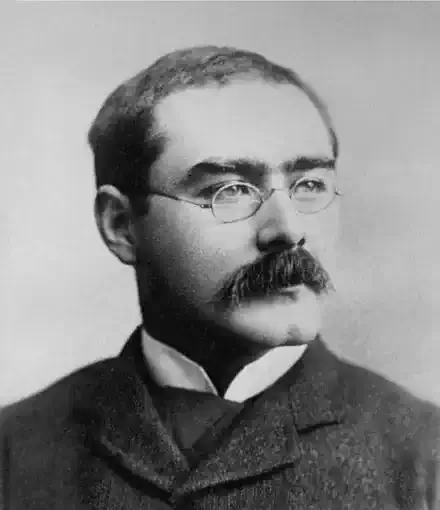
Rudyard Kipling
The Kingdom
The Kingdom
Now we are come to our Kingdom,
And the State is thus and thus;
Our legions wait at the Palace gate—
Little it profits us.
Now we are come to our Kingdom!
Now we are come to our Kingdom,
And the Crown is ours to take—
With a naked sword at the Council board,
And under the throne the snake.
Now we are come to our Kingdom !
Now we are come to our Kingdom,
And the Realm is ours by right,
With shame and fear for our daily cheer,
And heaviness at night.
Now we are come to our Kingdom !
Now we are come to our Kingdom,
But my love's eyelids fall.
All that I wrought for, all that I fought for,
Delight her nothing at all.
My crown is of withered leaves,
For she sits in the dust and grieves.
Now we are come to our Kingdom !
Now we are come to our Kingdom,
And the State is thus and thus;
Our legions wait at the Palace gate—
Little it profits us.
Now we are come to our Kingdom!
Now we are come to our Kingdom,
And the Crown is ours to take—
With a naked sword at the Council board,
And under the throne the snake.
Now we are come to our Kingdom !
Now we are come to our Kingdom,
And the Realm is ours by right,
With shame and fear for our daily cheer,
And heaviness at night.
Now we are come to our Kingdom !
Now we are come to our Kingdom,
But my love's eyelids fall.
All that I wrought for, all that I fought for,
Delight her nothing at all.
My crown is of withered leaves,
For she sits in the dust and grieves.
Now we are come to our Kingdom !
406
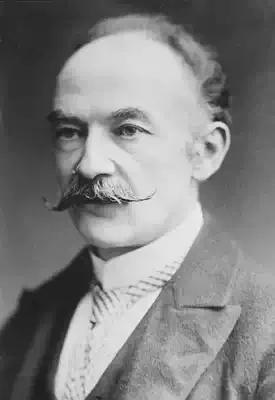
Thomas Hardy
No Buyers
No Buyers
A Load of brushes and baskets and cradles and chairs
Labours along the street in the rain:
With it a man, a woman, a pony with whiteybrown hairs. --
The man foots in front of the horse with a shambling sway
At a slower tread than a funeral train,
While to a dirge-like tune he chants his wares,
Swinging a Turk's-head brush (in a drum-major's way
When the bandsmen march and play).
A yard from the back of the man is the whiteybrown pony's nose:
He mirrors his master in every item of pace and pose:
He stops when the man stops, without being told,
And seems to be eased by a pause; too plainly he's old,
Indeed, not strength enough shows
To steer the disjointed waggon straight,
Which wriggles left and right in a rambling line,
Deflected thus by its own warp and weight,
And pushing the pony with it in each incline.
The woman walks on the pavement verge,
Parallel to the man:
She wears an apron white and wide in span,
And carries a like Turk's-head, but more in nursing-wise:
Now and then she joins in his dirge,
But as if her thoughts were on distant things,
The rain clams her apron till it clings. --
So, step by step, they move with their merchandize,
And nobody buys.
A Load of brushes and baskets and cradles and chairs
Labours along the street in the rain:
With it a man, a woman, a pony with whiteybrown hairs. --
The man foots in front of the horse with a shambling sway
At a slower tread than a funeral train,
While to a dirge-like tune he chants his wares,
Swinging a Turk's-head brush (in a drum-major's way
When the bandsmen march and play).
A yard from the back of the man is the whiteybrown pony's nose:
He mirrors his master in every item of pace and pose:
He stops when the man stops, without being told,
And seems to be eased by a pause; too plainly he's old,
Indeed, not strength enough shows
To steer the disjointed waggon straight,
Which wriggles left and right in a rambling line,
Deflected thus by its own warp and weight,
And pushing the pony with it in each incline.
The woman walks on the pavement verge,
Parallel to the man:
She wears an apron white and wide in span,
And carries a like Turk's-head, but more in nursing-wise:
Now and then she joins in his dirge,
But as if her thoughts were on distant things,
The rain clams her apron till it clings. --
So, step by step, they move with their merchandize,
And nobody buys.
213
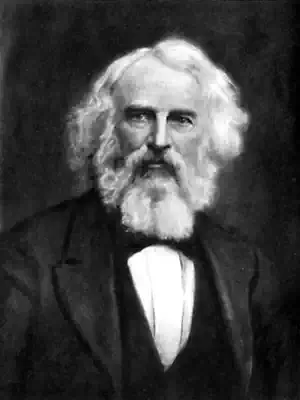
Henry Wadsworth Longfellow
In The Harbour: At La Chaudeau. (From The French Of Charles Coran)
In The Harbour: At La Chaudeau. (From The French Of Charles Coran)
At La Chaudeau,--'tis long since then:
I was young,--my years twice ten;
All things smiled on the happy boy,
Dreams of love and songs of joy,
Azure of heaven and wave below,
At La Chaudeau.
At La Chaudeau I come back old:
My head is gray, my blood is cold;
Seeking along the meadow ooze,
Seeking beside the river Seymouse,
The days of my spring-time of long ago
At La Chaudeau.
At La Chaudeau nor heart nor brain
Ever grows old with grief and pain;
A sweet remembrance keeps off age;
A tender friendship doth still assuage
The burden of sorrow that one may know
At La Chaudeau.
At La Chaudeau, had fate decreed
To limit the wandering life I lead,
Peradventure I still, forsooth,
Should have preserved my fresh green youth,
Under the shadows the hill-tops throw
At La Chaudeau.
At La Chaudeau, live on, my friends,
Happy to be where God intends;
And sometimes, by the evening fire,
Think of him whose sole desire
Is again to sit in the old chateau
At La Chaudeau.
At La Chaudeau,--'tis long since then:
I was young,--my years twice ten;
All things smiled on the happy boy,
Dreams of love and songs of joy,
Azure of heaven and wave below,
At La Chaudeau.
At La Chaudeau I come back old:
My head is gray, my blood is cold;
Seeking along the meadow ooze,
Seeking beside the river Seymouse,
The days of my spring-time of long ago
At La Chaudeau.
At La Chaudeau nor heart nor brain
Ever grows old with grief and pain;
A sweet remembrance keeps off age;
A tender friendship doth still assuage
The burden of sorrow that one may know
At La Chaudeau.
At La Chaudeau, had fate decreed
To limit the wandering life I lead,
Peradventure I still, forsooth,
Should have preserved my fresh green youth,
Under the shadows the hill-tops throw
At La Chaudeau.
At La Chaudeau, live on, my friends,
Happy to be where God intends;
And sometimes, by the evening fire,
Think of him whose sole desire
Is again to sit in the old chateau
At La Chaudeau.
321
Rudyard Kipling
The Justice's Tale
The Justice's Tale
Chauser
With them there rode a lustie Engineere
Wel skilled to handel everich waie her geere,
Hee was soe wise ne man colde showe him naught
And out of Paris was hys learning brought.
Frontlings mid brazen wheeles and wandes he sat,
And on hys heade he bare an leathern hat.
Hee was soe certaine of his gouvermance,
That, by the Road, he tooke everie chaunce.
For simple people and for lordlings eke
Hee wolde not bate a del but onlie squeeke
Behinde their backes on an horne hie
Until they crope into a piggestie.
He was more wood than bull in china-shoppe,
And yet for cowes and dogges wolde hee stop,
Not our of Marcie but for Preudence-sake--
Than hys dependaunce ever was hys brake.
Chauser
With them there rode a lustie Engineere
Wel skilled to handel everich waie her geere,
Hee was soe wise ne man colde showe him naught
And out of Paris was hys learning brought.
Frontlings mid brazen wheeles and wandes he sat,
And on hys heade he bare an leathern hat.
Hee was soe certaine of his gouvermance,
That, by the Road, he tooke everie chaunce.
For simple people and for lordlings eke
Hee wolde not bate a del but onlie squeeke
Behinde their backes on an horne hie
Until they crope into a piggestie.
He was more wood than bull in china-shoppe,
And yet for cowes and dogges wolde hee stop,
Not our of Marcie but for Preudence-sake--
Than hys dependaunce ever was hys brake.
385
Thomas Hardy
Neutral Tones
Neutral Tones
WE stood by a pond that winter day,
And the sun was white, as though chidden of God,
And a few leaves lay on the starving sod,
--They had fallen from an ash, and were gray.
Your eyes on me were as eyes that rove
Over tedious riddles solved years ago;
And some words played between us to and fro--
On which lost the more by our love.
The smile on your mouth was the deadest thing
Alive enough to have strength to die;
And a grin of bitterness swept thereby
Like an ominous bird a-wing....
Since then, keen lessons that love deceives,
And wrings with wrong, have shaped to me
Your face, and the God-curst sun, and a tree,
And a pond edged with grayish leaves.
WE stood by a pond that winter day,
And the sun was white, as though chidden of God,
And a few leaves lay on the starving sod,
--They had fallen from an ash, and were gray.
Your eyes on me were as eyes that rove
Over tedious riddles solved years ago;
And some words played between us to and fro--
On which lost the more by our love.
The smile on your mouth was the deadest thing
Alive enough to have strength to die;
And a grin of bitterness swept thereby
Like an ominous bird a-wing....
Since then, keen lessons that love deceives,
And wrings with wrong, have shaped to me
Your face, and the God-curst sun, and a tree,
And a pond edged with grayish leaves.
193

Robert W. Service
Longevity
Longevity
I watched one day a parrot grey - 'twas in a barber shop.
"Cuckold!" he cried, until I sighed: "You feathered devil, stop!"
Then balefully he looked at me, and slid along his perch,
With sneering eye that seemed to pry me very soul to search.
So fierce, so bold, so grim, so cold, so agate was his stare:
And then that bird I thought I heard this sentiment declare:
"As it appears, a hundred years a parrot may survive,
When you are gone I'll sit upon this perch and be alive.
In this same spot I'll drop my crot, and crack my sunflower seeds,
And cackle loud when in a shroud you rot beneath the weeds.
I'll carry on when carrion you lie beneath the yew;
With claw and beak my grub I'll seek when grubs are seeking you."
"Foul fowl! said I, "don't prophesy, I'll jolly well contrive
That when I rot in bone-yard lot you cease to be alive."
So I bespoke that barber bloke: "Joe, here's a five pound note.
It's crisp and new, and yours if you will slice that parrot's throat."
"In part," says he, "I must agree, for poor I be in pelf,
With right good will I'll take your bill, but - cut his throat yourself."
So it occurred I took that bird to my ancestral hall,
And there he sat and sniggered at the portraits on the wall.
I sought to cut his wind-pipe but he gave me such a peck,
So cross was I, I swore I'd try to wring his blasted neck;
When shrill he cried: "It's parrotcide what you propose to do;
For every time you make a rhyme you're just a parrot too."
Said I: "It's true. I bow to you. Poor parrots are we all."
And now I sense with reverence the wisdom of his poll.
For every time I want a rhyme he seems to find the word;
In any doubt he helps me out - a most amazing bird.
This line that lies before your eyes he helped me to indite;
I sling the ink but often think it's he who ought to write.
It's he who should in mystic mood concoct poetic screeds,
And I who ought to drop my crot and crackle sunflower seeds.
A parrot nears a hundred years (or so the legend goes),
So were I he this century I might see to its close.
Then I might swing within my ring while revolutions roar,
And watch a world to ruin hurled - and find it all a bore.
As upside-down I cling and clown, I might with parrot eyes
Blink blandly when excited men are moulding Paradise.
New Christs might die, while grimly I would croak and carry on,
Till gnarled and old I should behold the year TWO THOUSAND dawn.
But what a fate! How I should hate upon my perch to sit,
And nothing do to make anew a world for angels fit.
No, better far, though feeble are my lyric notes and flat,
Be dead and done than anyone who lives a life like that.
Though critic-scarred a humble bard I feel I'd rather be,
Than flap and flit and shriek and spit through all a century.
So feathered friend, until the end you may divide my den,
And make a mess, which (more or less) I clean up now and then.
But I prefer the doom to share of dead and gone compeers,
Than parrot be, and live to see ten times a hundred years.
I watched one day a parrot grey - 'twas in a barber shop.
"Cuckold!" he cried, until I sighed: "You feathered devil, stop!"
Then balefully he looked at me, and slid along his perch,
With sneering eye that seemed to pry me very soul to search.
So fierce, so bold, so grim, so cold, so agate was his stare:
And then that bird I thought I heard this sentiment declare:
"As it appears, a hundred years a parrot may survive,
When you are gone I'll sit upon this perch and be alive.
In this same spot I'll drop my crot, and crack my sunflower seeds,
And cackle loud when in a shroud you rot beneath the weeds.
I'll carry on when carrion you lie beneath the yew;
With claw and beak my grub I'll seek when grubs are seeking you."
"Foul fowl! said I, "don't prophesy, I'll jolly well contrive
That when I rot in bone-yard lot you cease to be alive."
So I bespoke that barber bloke: "Joe, here's a five pound note.
It's crisp and new, and yours if you will slice that parrot's throat."
"In part," says he, "I must agree, for poor I be in pelf,
With right good will I'll take your bill, but - cut his throat yourself."
So it occurred I took that bird to my ancestral hall,
And there he sat and sniggered at the portraits on the wall.
I sought to cut his wind-pipe but he gave me such a peck,
So cross was I, I swore I'd try to wring his blasted neck;
When shrill he cried: "It's parrotcide what you propose to do;
For every time you make a rhyme you're just a parrot too."
Said I: "It's true. I bow to you. Poor parrots are we all."
And now I sense with reverence the wisdom of his poll.
For every time I want a rhyme he seems to find the word;
In any doubt he helps me out - a most amazing bird.
This line that lies before your eyes he helped me to indite;
I sling the ink but often think it's he who ought to write.
It's he who should in mystic mood concoct poetic screeds,
And I who ought to drop my crot and crackle sunflower seeds.
A parrot nears a hundred years (or so the legend goes),
So were I he this century I might see to its close.
Then I might swing within my ring while revolutions roar,
And watch a world to ruin hurled - and find it all a bore.
As upside-down I cling and clown, I might with parrot eyes
Blink blandly when excited men are moulding Paradise.
New Christs might die, while grimly I would croak and carry on,
Till gnarled and old I should behold the year TWO THOUSAND dawn.
But what a fate! How I should hate upon my perch to sit,
And nothing do to make anew a world for angels fit.
No, better far, though feeble are my lyric notes and flat,
Be dead and done than anyone who lives a life like that.
Though critic-scarred a humble bard I feel I'd rather be,
Than flap and flit and shriek and spit through all a century.
So feathered friend, until the end you may divide my den,
And make a mess, which (more or less) I clean up now and then.
But I prefer the doom to share of dead and gone compeers,
Than parrot be, and live to see ten times a hundred years.
183
Thomas Hardy
My spirit will not haunt the mound
My spirit will not haunt the mound
My spirit will not haunt the mound
Above my breast,
But travel, memory-possessed,
To where my tremulous being found
Life largest, best.
My phantom-footed shape will go
When nightfall grays
Hither and thither along the ways
I and another used to know
In backward days.
And there you'll find me, if a jot
You still should care
For me, and for my curious air;
If otherwise, then I shall not,
For you, be there.
My spirit will not haunt the mound
Above my breast,
But travel, memory-possessed,
To where my tremulous being found
Life largest, best.
My phantom-footed shape will go
When nightfall grays
Hither and thither along the ways
I and another used to know
In backward days.
And there you'll find me, if a jot
You still should care
For me, and for my curious air;
If otherwise, then I shall not,
For you, be there.
256
Rudyard Kipling
The Juggler's Song
The Juggler's Song
When the drums begin to beat
Down the street,
When the poles are fetched and guyed,
When the tight-rope's stretched and tied,
When the dance-girls make salaam,
When the snake-bag wakes alarm,
When the pipes set up their drone,
When the sharp-edged knives are thrown
When the red-hot coals are shown,
To be swallowed by-and-by--
Arre, Brethren, here come I!
Stripped to loin-cloth in the sun,
Search me well and watch me close!
Tell me how my tricks are done--
Tell me how the mango grows!
Give a man who is not made
To his trade
Swords to fling and catch again,
Coins to ring and snatch again,
Men to harm and cure again,
Snakes to charm and lure again--
He'll be hurt by his own blade,
By his serpents disobeyed,
By his clumsiness bewrayed,
By the people laughed to scorn--
So 'tis not with juggler born!
Pinch of dust or withered flower,
Chance-flung nut or borrowed staff,
Serve his need and shore his power,
Bind the spell or loose the laugh!
When the drums begin to beat
Down the street,
When the poles are fetched and guyed,
When the tight-rope's stretched and tied,
When the dance-girls make salaam,
When the snake-bag wakes alarm,
When the pipes set up their drone,
When the sharp-edged knives are thrown
When the red-hot coals are shown,
To be swallowed by-and-by--
Arre, Brethren, here come I!
Stripped to loin-cloth in the sun,
Search me well and watch me close!
Tell me how my tricks are done--
Tell me how the mango grows!
Give a man who is not made
To his trade
Swords to fling and catch again,
Coins to ring and snatch again,
Men to harm and cure again,
Snakes to charm and lure again--
He'll be hurt by his own blade,
By his serpents disobeyed,
By his clumsiness bewrayed,
By the people laughed to scorn--
So 'tis not with juggler born!
Pinch of dust or withered flower,
Chance-flung nut or borrowed staff,
Serve his need and shore his power,
Bind the spell or loose the laugh!
485
Henry Wadsworth Longfellow
In The Harbour: A Fragment
In The Harbour: A Fragment
Awake! arise! the hour is late!
Angels are knocking at thy door!
They are in haste and cannot wait,
And once departed come no more.
Awake! arise! the athlete's arm
Loses its strength by too much rest;
The fallow land, the untilled farm
Produces only weeds at best.
Awake! arise! the hour is late!
Angels are knocking at thy door!
They are in haste and cannot wait,
And once departed come no more.
Awake! arise! the athlete's arm
Loses its strength by too much rest;
The fallow land, the untilled farm
Produces only weeds at best.
319
Rudyard Kipling
The Jacket
The Jacket
Through the Plagues of Egyp' we was chasin' Arabi,
Gettin' down an' shovin' in the sun;
An' you might 'ave called us dirty, an' you might ha' called us dry,
An' you might 'ave 'eard us talkin' at the gun.
But the Captain 'ad 'is jacket, an' the jacket it was new --
('Orse Gunners, listen to my song!)
An' the wettin' of the jacket is the proper thing to do,
Nor we didn't keep 'im waitin' very long.
One day they gave us orders for to shell a sand redoubt,
Loadin' down the axle-arms with case;
But the Captain knew 'is dooty, an' he took the crackers out
An' he put some proper liquor in its place.
An' the Captain saw the shrapnel, which is six-an'-thirty clear.
('Orse Gunners, listen to my song!)
"Will you draw the weight," sez 'e, "or will you draw the beer?"
An' we didn't keep 'im waitin' very long.
~For the Captain, etc.~
Then we trotted gentle, not to break the bloomin' glass,
Though the Arabites 'ad all their ranges marked;
But we dursn't 'ardly gallop, for the most was bottled Bass,
An' we'd dreamed of it since we was disembarked:
So we fired economic with the shells we 'ad in 'and,
('Orse Gunners, listen to my song!)
But the beggars under cover 'ad the impidence to stand,
An' we couldn't keep 'em waitin' very long.
~And the Captain, etc.~
So we finished 'arf the liquor (an' the Captain took champagne),
An' the Arabites was shootin' all the while;
An' we left our wounded 'appy with the empties on the plain,
An' we used the bloomin' guns for pro-jec-tile!
We limbered up an' galloped -- there were nothin' else to do --
('Orse Gunners, listen to my song!)
An' the Battery came a-boundin' like a boundin' kangaroo,
But they didn't watch us comin' very long.
~As the Captain, etc.~
We was goin' most extended -- we was drivin' very fine,
An' the Arabites were loosin' 'igh an' wide,
Till the Captain took the glassy with a rattlin' right incline,
An' we dropped upon their 'eads the other side.
Then we give 'em quarter -- such as 'adn't up and cut,
('Orse Gunners, listen to my song!)
An' the Captain stood a limberful of fizzy -- somethin' Brutt,
But we didn't leave it fizzing very long.
~For the Captain, etc.~
We might ha' been court-martialled, but it all come out all right
When they signalled us to join the main command.
There was every round expended, there was every gunner tight,
An' the Captain waved a corkscrew in 'is 'and.
~But the Captain 'ad 'is jacket, etc.~
Through the Plagues of Egyp' we was chasin' Arabi,
Gettin' down an' shovin' in the sun;
An' you might 'ave called us dirty, an' you might ha' called us dry,
An' you might 'ave 'eard us talkin' at the gun.
But the Captain 'ad 'is jacket, an' the jacket it was new --
('Orse Gunners, listen to my song!)
An' the wettin' of the jacket is the proper thing to do,
Nor we didn't keep 'im waitin' very long.
One day they gave us orders for to shell a sand redoubt,
Loadin' down the axle-arms with case;
But the Captain knew 'is dooty, an' he took the crackers out
An' he put some proper liquor in its place.
An' the Captain saw the shrapnel, which is six-an'-thirty clear.
('Orse Gunners, listen to my song!)
"Will you draw the weight," sez 'e, "or will you draw the beer?"
An' we didn't keep 'im waitin' very long.
~For the Captain, etc.~
Then we trotted gentle, not to break the bloomin' glass,
Though the Arabites 'ad all their ranges marked;
But we dursn't 'ardly gallop, for the most was bottled Bass,
An' we'd dreamed of it since we was disembarked:
So we fired economic with the shells we 'ad in 'and,
('Orse Gunners, listen to my song!)
But the beggars under cover 'ad the impidence to stand,
An' we couldn't keep 'em waitin' very long.
~And the Captain, etc.~
So we finished 'arf the liquor (an' the Captain took champagne),
An' the Arabites was shootin' all the while;
An' we left our wounded 'appy with the empties on the plain,
An' we used the bloomin' guns for pro-jec-tile!
We limbered up an' galloped -- there were nothin' else to do --
('Orse Gunners, listen to my song!)
An' the Battery came a-boundin' like a boundin' kangaroo,
But they didn't watch us comin' very long.
~As the Captain, etc.~
We was goin' most extended -- we was drivin' very fine,
An' the Arabites were loosin' 'igh an' wide,
Till the Captain took the glassy with a rattlin' right incline,
An' we dropped upon their 'eads the other side.
Then we give 'em quarter -- such as 'adn't up and cut,
('Orse Gunners, listen to my song!)
An' the Captain stood a limberful of fizzy -- somethin' Brutt,
But we didn't leave it fizzing very long.
~For the Captain, etc.~
We might ha' been court-martialled, but it all come out all right
When they signalled us to join the main command.
There was every round expended, there was every gunner tight,
An' the Captain waved a corkscrew in 'is 'and.
~But the Captain 'ad 'is jacket, etc.~
458
Thomas Hardy
Mute Opinion
Mute Opinion
I
I traversed a dominion
Whose spokesmen spake out strong
Their purpose and opinion
Through pulpit, press, and song.
I scarce had means to note there
A large-eyed few, and dumb,
Who thought not as those thought there
That stirred the heat and hum.
II
When, grown a Shade, beholding
That land in lifetime trode,
To learn if its unfolding
Fulfilled its clamoured code,
I saw, in web unbroken,
Its history outwrought
Not as the loud had spoken,
But as the mute had thought.
I
I traversed a dominion
Whose spokesmen spake out strong
Their purpose and opinion
Through pulpit, press, and song.
I scarce had means to note there
A large-eyed few, and dumb,
Who thought not as those thought there
That stirred the heat and hum.
II
When, grown a Shade, beholding
That land in lifetime trode,
To learn if its unfolding
Fulfilled its clamoured code,
I saw, in web unbroken,
Its history outwrought
Not as the loud had spoken,
But as the mute had thought.
169
Robert W. Service
Lobster For Lunch
Lobster For Lunch
His face was like a lobster red,
His legs were white as mayonnaise:
"I've had a jolly lunch," he said,
That Englishman of pleasant ways.
"Thy do us well at our hotel:
In England food is dull these days."
"We had a big langouste for lunch.
I almost ate the whole of it.
And now I'll smoke and read my Punch,
And maybe siesta a bit;
And then I'll plunge into the sea
And get an appetite for tea."
We saw him plunge into the sea,
With jolly laugh, his wife and I.
"George does enjoy his food," said she;
"In Leeds lobsters are hard to buy.
How lucky we to have a chance
To spend our holiday in France!"
And so we watched him swim and swim
So far and far we scarce could see,
Until his balding head grew dim;
And then there came his children three,
And we all waited there for him, -
Ah yes, a little anxiously.
But George, alas! came never back.
Of him they failed to find a trace;
His wife and kids are wearing black,
And miss a lot his jolly face . . .
But oh how all the lobsters laugh,
And write in wrack his epitaph.
His face was like a lobster red,
His legs were white as mayonnaise:
"I've had a jolly lunch," he said,
That Englishman of pleasant ways.
"Thy do us well at our hotel:
In England food is dull these days."
"We had a big langouste for lunch.
I almost ate the whole of it.
And now I'll smoke and read my Punch,
And maybe siesta a bit;
And then I'll plunge into the sea
And get an appetite for tea."
We saw him plunge into the sea,
With jolly laugh, his wife and I.
"George does enjoy his food," said she;
"In Leeds lobsters are hard to buy.
How lucky we to have a chance
To spend our holiday in France!"
And so we watched him swim and swim
So far and far we scarce could see,
Until his balding head grew dim;
And then there came his children three,
And we all waited there for him, -
Ah yes, a little anxiously.
But George, alas! came never back.
Of him they failed to find a trace;
His wife and kids are wearing black,
And miss a lot his jolly face . . .
But oh how all the lobsters laugh,
And write in wrack his epitaph.
221
Thomas Hardy
Mismet
Mismet
He was leaning by a face,
He was looking into eyes,
And he knew a trysting-place,
And he heard seductive sighs;
But the face,
And the eyes,
And the place,
And the sighs,
Were not, alas, the right ones--the ones meet for him--
Though fine and sweet the features, and the feelings all abrim.
II
She was looking at a form,
She was listening for a tread,
She could feel a waft of charm
When a certain name was said;
But the form,
And the tread,
And the charm,
And name said,
Were the wrong ones for her, and ever would be so,
While the heritor of the right it would have saved her soul to know!
He was leaning by a face,
He was looking into eyes,
And he knew a trysting-place,
And he heard seductive sighs;
But the face,
And the eyes,
And the place,
And the sighs,
Were not, alas, the right ones--the ones meet for him--
Though fine and sweet the features, and the feelings all abrim.
II
She was looking at a form,
She was listening for a tread,
She could feel a waft of charm
When a certain name was said;
But the form,
And the tread,
And the charm,
And name said,
Were the wrong ones for her, and ever would be so,
While the heritor of the right it would have saved her soul to know!
232
Rudyard Kipling
The Inventor
The Inventor
R. W. Emerson
Time and Space decreed his lot,
But little Man was quick to note:
When Time and Space said Man might not,
Bravely he answered, "Nay! I mote."
I looked on old New England.
Time and Space stood fast.
Men built altars to Distance
At every mile they passed.
Yet sleek with oil, a Force was hid
Making mock of all they did,
Ready at the appointed hour
To yield up to Prometheus
The secular and well-drilled Power
The Gods secreted thus.
And over high Wantastiquer
Emulous my lightnings ran,
Unregarded but after,
To fall in with my plan.
I beheld two ministries,
One of air and one of earth--
At a thought I married these,
And my New Age came to birth!
For rarely my purpose errs
Though oft it seems to pause,
And rods and cylinders
Obey my planets' laws.
Oil I drew from the well,
And Franklin's spark from its blue;
Time and Distance fell,
And Man went forth anew.
On the prairie and in the street
So long as my chariots roll
I bind wings to Adam's feet,
And, presently, to his soul!
R. W. Emerson
Time and Space decreed his lot,
But little Man was quick to note:
When Time and Space said Man might not,
Bravely he answered, "Nay! I mote."
I looked on old New England.
Time and Space stood fast.
Men built altars to Distance
At every mile they passed.
Yet sleek with oil, a Force was hid
Making mock of all they did,
Ready at the appointed hour
To yield up to Prometheus
The secular and well-drilled Power
The Gods secreted thus.
And over high Wantastiquer
Emulous my lightnings ran,
Unregarded but after,
To fall in with my plan.
I beheld two ministries,
One of air and one of earth--
At a thought I married these,
And my New Age came to birth!
For rarely my purpose errs
Though oft it seems to pause,
And rods and cylinders
Obey my planets' laws.
Oil I drew from the well,
And Franklin's spark from its blue;
Time and Distance fell,
And Man went forth anew.
On the prairie and in the street
So long as my chariots roll
I bind wings to Adam's feet,
And, presently, to his soul!
414
Henry Wadsworth Longfellow
In The Churchyard At Tarrytown
In The Churchyard At Tarrytown
Here lies the gentle humorist, who died
In the bright Indian Summer of his fame!
A simple stone, with but a date and name,
Marks his secluded resting-place beside
The river that he loved and glorified.
Here in the autumn of his days he came,
But the dry leaves of life were all aflame
With tints that brightened and were multiplied.
How sweet a life was his; how sweet a death!
Living, to wing with mirth the weary hours,
Or with romantic tales the heart to cheer;
Dying, to leave a memory like the breath
Of summers full of sunshine and of showers,
A grief and gladness in the atmosphere.
Here lies the gentle humorist, who died
In the bright Indian Summer of his fame!
A simple stone, with but a date and name,
Marks his secluded resting-place beside
The river that he loved and glorified.
Here in the autumn of his days he came,
But the dry leaves of life were all aflame
With tints that brightened and were multiplied.
How sweet a life was his; how sweet a death!
Living, to wing with mirth the weary hours,
Or with romantic tales the heart to cheer;
Dying, to leave a memory like the breath
Of summers full of sunshine and of showers,
A grief and gladness in the atmosphere.
282
Thomas Hardy
Middle-Age Enthusiasms
Middle-Age Enthusiasms
To M. H.
WE passed where flag and flower
Signalled a jocund throng;
We said: "Go to, the hour
Is apt!"--and joined the song;
And, kindling, laughed at life and care,
Although we knew no laugh lay there.
We walked where shy birds stood
Watching us, wonder-dumb;
Their friendship met our mood;
We cried: "We'll often come:
We'll come morn, noon, eve, everywhen!"
--We doubted we should come again.
We joyed to see strange sheens
Leap from quaint leaves in shade;
A secret light of greens
They'd for their pleasure made.
We said: "We'll set such sorts as these!"
--We knew with night the wish would cease.
"So sweet the place," we said,
"Its tacit tales so dear,
Our thoughts, when breath has sped,
Will meet and mingle here!"...
"Words!" mused we. "Passed the mortal door,
Our thoughts will reach this nook no more."
To M. H.
WE passed where flag and flower
Signalled a jocund throng;
We said: "Go to, the hour
Is apt!"--and joined the song;
And, kindling, laughed at life and care,
Although we knew no laugh lay there.
We walked where shy birds stood
Watching us, wonder-dumb;
Their friendship met our mood;
We cried: "We'll often come:
We'll come morn, noon, eve, everywhen!"
--We doubted we should come again.
We joyed to see strange sheens
Leap from quaint leaves in shade;
A secret light of greens
They'd for their pleasure made.
We said: "We'll set such sorts as these!"
--We knew with night the wish would cease.
"So sweet the place," we said,
"Its tacit tales so dear,
Our thoughts, when breath has sped,
Will meet and mingle here!"...
"Words!" mused we. "Passed the mortal door,
Our thoughts will reach this nook no more."
220
Rudyard Kipling
The Idiot Boy
The Idiot Boy
Wordsworth
He wandered down the moutain grade
Beyond the speed assigned--
A youth whom Justice often stayed
And generally fined.
He went alone, that none might know
If he could drive or steer.
Now he is in the ditch, and Oh!
The differential gear!
Wordsworth
He wandered down the moutain grade
Beyond the speed assigned--
A youth whom Justice often stayed
And generally fined.
He went alone, that none might know
If he could drive or steer.
Now he is in the ditch, and Oh!
The differential gear!
348
Robert W. Service
Little Moccasins
Little Moccasins
Come out, O Little Moccasins, and frolic on the snow!
Come out, O tiny beaded feet, and twinkle in the light!
I'll play the old Red River reel, you used to love it so:
Awake, O Little Moccasins, and dance for me to-night!
Your hair was all a gleamy gold, your eyes a corn-flower blue;
Your cheeks were pink as tinted shells, you stepped light as a fawn;
Your mouth was like a coral bud, with seed pearls peeping through;
As gladdening as Spring you were, as radiant as dawn.
Come out, O Little Moccasins! I'll play so soft and low,
The songs you loved, the old heart-songs that in my mem'ry ring;
O child, I want to hear you now beside the campfire glow!
With all your heart a-throbbing in the simple words you sing.
For there was only you and I, and you were all to me;
And round us were the barren lands, but little did we fear;
Of all God's happy, happy folks the happiest were we. . . .
(Oh, call her, poor old fiddle mine, and maybe she will hear!)
Your mother was a half-breed Cree, but you were white all through;
And I, your father was -- but well, that's neither here nor there;
I only know, my little Queen, that all my world was you,
And now that world can end to-night, and I will never care.
For there's a tiny wooden cross that pricks up through the snow:
(Poor Little Moccasins! you're tired, and so you lie at rest.)
And there's a grey-haired, weary man beside the campfire glow:
(O fiddle mine! the tears to-night are drumming on your breast.)
Come out, O Little Moccasins, and frolic on the snow!
Come out, O tiny beaded feet, and twinkle in the light!
I'll play the old Red River reel, you used to love it so:
Awake, O Little Moccasins, and dance for me to-night!
Your hair was all a gleamy gold, your eyes a corn-flower blue;
Your cheeks were pink as tinted shells, you stepped light as a fawn;
Your mouth was like a coral bud, with seed pearls peeping through;
As gladdening as Spring you were, as radiant as dawn.
Come out, O Little Moccasins! I'll play so soft and low,
The songs you loved, the old heart-songs that in my mem'ry ring;
O child, I want to hear you now beside the campfire glow!
With all your heart a-throbbing in the simple words you sing.
For there was only you and I, and you were all to me;
And round us were the barren lands, but little did we fear;
Of all God's happy, happy folks the happiest were we. . . .
(Oh, call her, poor old fiddle mine, and maybe she will hear!)
Your mother was a half-breed Cree, but you were white all through;
And I, your father was -- but well, that's neither here nor there;
I only know, my little Queen, that all my world was you,
And now that world can end to-night, and I will never care.
For there's a tiny wooden cross that pricks up through the snow:
(Poor Little Moccasins! you're tired, and so you lie at rest.)
And there's a grey-haired, weary man beside the campfire glow:
(O fiddle mine! the tears to-night are drumming on your breast.)
209
Rudyard Kipling
The Hyaenas
The Hyaenas
After the burial-parties leave
And the baffled kites have fled;
The wise hyaenas come out at eve
To take account of our dead.
How he died and why he died
Troubles them not a whit.
They snout the bushes and stones aside
And dig till they come to it.
They are only resolute they shall eat
That they and their mates may thrive,
And they know that the dead are safer meat
Than the weakest thing alive.
(For a goat may butt, and a worm may sting,
And a child will sometimes stand;
But a poor dead soldier of the King
Can never lift a hand.)
They whoop and halloo and scatter the dirt
Until their tushes white
Take good hold in the army shirt,
And tug the corpse to light,
And the pitiful face is shewn again
For an instant ere they close;
But it is not discovered to living men --
Only to God and to those
Who, being soulless, are free from shame,
Whatever meat they may find.
Nor do they defile the dead man's name --
That is reserved for his kind.
After the burial-parties leave
And the baffled kites have fled;
The wise hyaenas come out at eve
To take account of our dead.
How he died and why he died
Troubles them not a whit.
They snout the bushes and stones aside
And dig till they come to it.
They are only resolute they shall eat
That they and their mates may thrive,
And they know that the dead are safer meat
Than the weakest thing alive.
(For a goat may butt, and a worm may sting,
And a child will sometimes stand;
But a poor dead soldier of the King
Can never lift a hand.)
They whoop and halloo and scatter the dirt
Until their tushes white
Take good hold in the army shirt,
And tug the corpse to light,
And the pitiful face is shewn again
For an instant ere they close;
But it is not discovered to living men --
Only to God and to those
Who, being soulless, are free from shame,
Whatever meat they may find.
Nor do they defile the dead man's name --
That is reserved for his kind.
352
Thomas Hardy
Mad Judy
Mad Judy
When the hamlet hailed a birth
Judy used to cry:
When she heard our christening mirth
She would kneel and sigh.
She was crazed, we knew, and we
Humoured her infirmity.
When the daughters and the sons
Gathered them to wed,
And we like-intending ones
Danced till dawn was red,
She would rock and mutter, "More
Comers to this stony shore!"
When old Headsman Death laid hands
On a babe or twain,
She would feast, and by her brands
Sing her songs again.
What she liked we let her do,
Judy was insane, we knew.
When the hamlet hailed a birth
Judy used to cry:
When she heard our christening mirth
She would kneel and sigh.
She was crazed, we knew, and we
Humoured her infirmity.
When the daughters and the sons
Gathered them to wed,
And we like-intending ones
Danced till dawn was red,
She would rock and mutter, "More
Comers to this stony shore!"
When old Headsman Death laid hands
On a babe or twain,
She would feast, and by her brands
Sing her songs again.
What she liked we let her do,
Judy was insane, we knew.
198
Henry Wadsworth Longfellow
Il Ponte Vecchio Di Firenze
Il Ponte Vecchio Di Firenze
Gaddi mi fece; il Ponte Vecchio sono;
Cinquecent' anni giá sull' Arno pianto
Il piede, come il suo Michele Santo
Piantó sul draco. Mentre ch' io ragiono
Lo vedo torcere con flebil suono
Le rilucenti scaglie. Ha questi affranto
Due volte i miei maggior. Me solo intanto
Neppure muove, ed io non l' abbandono.
Io mi rammento quando fur cacciati
I Medici; pur quando Ghibellino
E Guelfo fecer pace mi rammento.
Fiorenza i suoi giojelli m' ha prestati;
E quando penso ch' Agnolo il divino
Su me posava, insuperbir mi sento.
Gaddi mi fece; il Ponte Vecchio sono;
Cinquecent' anni giá sull' Arno pianto
Il piede, come il suo Michele Santo
Piantó sul draco. Mentre ch' io ragiono
Lo vedo torcere con flebil suono
Le rilucenti scaglie. Ha questi affranto
Due volte i miei maggior. Me solo intanto
Neppure muove, ed io non l' abbandono.
Io mi rammento quando fur cacciati
I Medici; pur quando Ghibellino
E Guelfo fecer pace mi rammento.
Fiorenza i suoi giojelli m' ha prestati;
E quando penso ch' Agnolo il divino
Su me posava, insuperbir mi sento.
280
Rudyard Kipling
The Hour of the Angel
The Hour of the Angel
Sooner or late--in earnest or in jest--
(But the stakes are no jest) Ithuriel's Hour
Will spring on us, for the first time, the test
Of our sole unbacked competence and power
Up to the limit of our years and dower
Of judgment--or beyond. But here we have
Prepared long since our garland or our grave.
For, at that hour, the sum of all our past,
Act, habit, thought, and passion, shall be cast
In one addition, be it more or less,
And as that reading runs so shall we do;
Meeting, astounded, victory at the last,
Or, first and last, our own unworthiness.
And none can change us though they die to save!
Sooner or late--in earnest or in jest--
(But the stakes are no jest) Ithuriel's Hour
Will spring on us, for the first time, the test
Of our sole unbacked competence and power
Up to the limit of our years and dower
Of judgment--or beyond. But here we have
Prepared long since our garland or our grave.
For, at that hour, the sum of all our past,
Act, habit, thought, and passion, shall be cast
In one addition, be it more or less,
And as that reading runs so shall we do;
Meeting, astounded, victory at the last,
Or, first and last, our own unworthiness.
And none can change us though they die to save!
405
Thomas Hardy
Lines On The Loss Of The Titanic
Lines On The Loss Of The "Titanic"
In a solitude of the sea
Deep from human vanity,
And the Pride of Life that planned her, stilly couches she.
Steel chambers, late the pyres
Of her salamandrine fires,
Cold currents thrid, and turn to rhythmic tidal lyres.
Over the mirrors meant
To glass the opulent
The sea-worm crawls -- grotesque, slimed, dumb, indifferent.
Jewels in joy designed
To ravish the sensuous mind
Lie lightless, all their sparkles bleared and black and blind.
Dim moon-eyed fishes near
Gaze at the gilded gear
And query: "What does this vaingloriousness down here?" ...
Well: while was fashioning
This creature of cleaving wing,
The Immanent Will that stirs and urges everything
Prepared a sinister mate
For her -- so gaily great --
A Shape of Ice, for the time far and dissociate.
And as the smart ship grew
In stature, grace, and hue,
In shadowy silent distance grew the Iceberg too.
Alien they seemed to be;
No mortal eye could see
The intimate welding of their later history,
Or sign that they were bent
By paths coincident
On being anon twin halves of one august event,
Till the Spinner of the Years
Said "Now!" And each one hears,
And consummation comes, and jars two hemispheres.
In a solitude of the sea
Deep from human vanity,
And the Pride of Life that planned her, stilly couches she.
Steel chambers, late the pyres
Of her salamandrine fires,
Cold currents thrid, and turn to rhythmic tidal lyres.
Over the mirrors meant
To glass the opulent
The sea-worm crawls -- grotesque, slimed, dumb, indifferent.
Jewels in joy designed
To ravish the sensuous mind
Lie lightless, all their sparkles bleared and black and blind.
Dim moon-eyed fishes near
Gaze at the gilded gear
And query: "What does this vaingloriousness down here?" ...
Well: while was fashioning
This creature of cleaving wing,
The Immanent Will that stirs and urges everything
Prepared a sinister mate
For her -- so gaily great --
A Shape of Ice, for the time far and dissociate.
And as the smart ship grew
In stature, grace, and hue,
In shadowy silent distance grew the Iceberg too.
Alien they seemed to be;
No mortal eye could see
The intimate welding of their later history,
Or sign that they were bent
By paths coincident
On being anon twin halves of one august event,
Till the Spinner of the Years
Said "Now!" And each one hears,
And consummation comes, and jars two hemispheres.
341
Robert W. Service
Lip-Stick Liz
Lip-Stick Liz
Oh Lip-Stick Liz was in the biz, That's the oldest known in history;
She had a lot of fancy rags, Of her form she made no myst'ry.
She had a man, a fancy man, His name was Alexander,
And he used to beat her up because he couldn't understand her.
Now Lip-Stick Liz she loved her man And she couldn't love no other
So when she saw him with a Broadway Blonde, Her rage she could not smother.
She saw him once and she saw him twice But the third time nearly crazed her,
So she walked bang into a hardware store, And she bought a brand new razor.
Now Lip-Stick Liz she trailed them two For she was tired of weeping;
She trailed them two, in a flash hotel And there she found them sleeping;
So she gashed them once and she gashed them twice Their ju'lar veins to sever,
And the bright blood flowed like a brook between. And their lives were gone forever.
Now Lip-Stick Liz went to the p'lice And sez she: "Me hands are gory,
And you'll put me away in a deep dark cell When once you've heard me story."
So they've put her away in a deep dark cell, Until her life be over
And what is the moral of the whole damn show, I wish I could discover.
Chorus:
Oh Lip-Stick Liz! What a lousy life this is.
It's a hell of a break for a girl on the make,
Oh Lip-Stick Liz!
Oh Lip-Stick Liz was in the biz, That's the oldest known in history;
She had a lot of fancy rags, Of her form she made no myst'ry.
She had a man, a fancy man, His name was Alexander,
And he used to beat her up because he couldn't understand her.
Now Lip-Stick Liz she loved her man And she couldn't love no other
So when she saw him with a Broadway Blonde, Her rage she could not smother.
She saw him once and she saw him twice But the third time nearly crazed her,
So she walked bang into a hardware store, And she bought a brand new razor.
Now Lip-Stick Liz she trailed them two For she was tired of weeping;
She trailed them two, in a flash hotel And there she found them sleeping;
So she gashed them once and she gashed them twice Their ju'lar veins to sever,
And the bright blood flowed like a brook between. And their lives were gone forever.
Now Lip-Stick Liz went to the p'lice And sez she: "Me hands are gory,
And you'll put me away in a deep dark cell When once you've heard me story."
So they've put her away in a deep dark cell, Until her life be over
And what is the moral of the whole damn show, I wish I could discover.
Chorus:
Oh Lip-Stick Liz! What a lousy life this is.
It's a hell of a break for a girl on the make,
Oh Lip-Stick Liz!
227