
Poems List
Explore poems from our collection
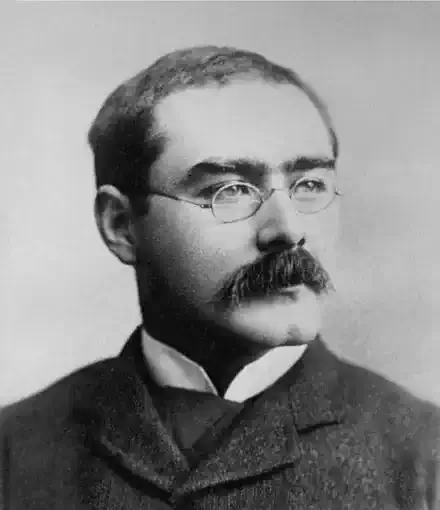
Rudyard Kipling
The Second Voyage
The Second Voyage
We've sent our little Cupids all ashore --
They were frightened, they were tired, they were cold:
Our sails of silk and purple go to store,
And we've cut away our mast of beaten gold
(Foul weather!)
Oh 'tis hemp and singing pine for to stand against the brine,
But Love he is our master as of old!
The sea has shorn our galleries away,
The salt has soiled our gilding past remede;
Our paint is flaked and blistered by the spray,
Our sides are half a fathom furred in weed
(Foul weather!)
And the Doves of Venus fled and the petrels came instead,
But Love he was our master at our need!
'Was Youth would keep no vigil at the bow,
'Was Pleasure at the helm too drunk to steer --
We've shipped three able quartermasters now.
Men call them Custom, Reverence, and Fear
(Foul weather!)
They are old and scarred and plain, but we'll run no risk again
From any Port o' Paphos mutineer!
We seek no more the tempest for delight,
We skirt no more the indraught and the shoal --
We ask no more of any day or night
Than to come with least adventure to our goal
(Foul weather!)
What we find we needs must brook, but we do not go to look,
Nor tempt the Lord our God that saved us whole.
Yet, caring so, not overmuch we care
To brace and trim for every foolish blast,
If the squall be pleased to seep us unaware,
He may bellow off to leeward like the last
(Foul weather!)
We will blame it on the deep (for the watch must have their sleep),
And Love can come and wake us when 'tis past.
Oh launch them down with music from the beach,
Oh warp them out with garlands from the quays --
Most resolute -- a damsel unto each --
New prows that seek the old Hesperides!
(Foul weather!)
Though we know their voyage is vain, yet we see our path again
In the saffroned bridesails scenting all the seas!
(Foul weather!)
We've sent our little Cupids all ashore --
They were frightened, they were tired, they were cold:
Our sails of silk and purple go to store,
And we've cut away our mast of beaten gold
(Foul weather!)
Oh 'tis hemp and singing pine for to stand against the brine,
But Love he is our master as of old!
The sea has shorn our galleries away,
The salt has soiled our gilding past remede;
Our paint is flaked and blistered by the spray,
Our sides are half a fathom furred in weed
(Foul weather!)
And the Doves of Venus fled and the petrels came instead,
But Love he was our master at our need!
'Was Youth would keep no vigil at the bow,
'Was Pleasure at the helm too drunk to steer --
We've shipped three able quartermasters now.
Men call them Custom, Reverence, and Fear
(Foul weather!)
They are old and scarred and plain, but we'll run no risk again
From any Port o' Paphos mutineer!
We seek no more the tempest for delight,
We skirt no more the indraught and the shoal --
We ask no more of any day or night
Than to come with least adventure to our goal
(Foul weather!)
What we find we needs must brook, but we do not go to look,
Nor tempt the Lord our God that saved us whole.
Yet, caring so, not overmuch we care
To brace and trim for every foolish blast,
If the squall be pleased to seep us unaware,
He may bellow off to leeward like the last
(Foul weather!)
We will blame it on the deep (for the watch must have their sleep),
And Love can come and wake us when 'tis past.
Oh launch them down with music from the beach,
Oh warp them out with garlands from the quays --
Most resolute -- a damsel unto each --
New prows that seek the old Hesperides!
(Foul weather!)
Though we know their voyage is vain, yet we see our path again
In the saffroned bridesails scenting all the seas!
(Foul weather!)
440
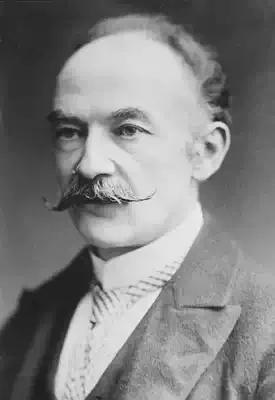
Thomas Hardy
The Sleep-Worker
The Sleep-Worker
When wilt thou wake, O Mother, wake and see -
As one who, held in trance, has laboured long
By vacant rote and prepossession strong -
The coils that thou hast wrought unwittingly;
Wherein have place, unrealized by thee,
Fair growths, foul cankers, right enmeshed with wrong,
Strange orchestras of victim-shriek and song,
And curious blends of ache and ecstasy? -
Should that morn come, and show thy opened eyes
All that Life's palpitating tissues feel,
How wilt thou bear thyself in thy surprise? -
Wilt thou destroy, in one wild shock of shame,
Thy whole high heaving firmamental frame,
Or patiently adjust, amend, and heal?
When wilt thou wake, O Mother, wake and see -
As one who, held in trance, has laboured long
By vacant rote and prepossession strong -
The coils that thou hast wrought unwittingly;
Wherein have place, unrealized by thee,
Fair growths, foul cankers, right enmeshed with wrong,
Strange orchestras of victim-shriek and song,
And curious blends of ache and ecstasy? -
Should that morn come, and show thy opened eyes
All that Life's palpitating tissues feel,
How wilt thou bear thyself in thy surprise? -
Wilt thou destroy, in one wild shock of shame,
Thy whole high heaving firmamental frame,
Or patiently adjust, amend, and heal?
215
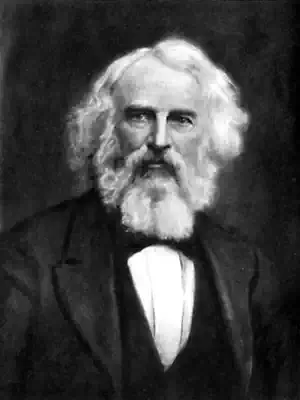
Henry Wadsworth Longfellow
My Lost Youth
My Lost Youth
Often I think of the beautiful town
That is seated by the sea;
Often in thought go up and down
The pleasant streets of that dear old town,
And my youth comes back to me.
And a verse of a Lapland song
Is haunting my memory still:
"A boy's will is the wind's will,
And the thoughts of youth are long, long thoughts."
I can see the shadowy lines of its trees,
And catch, in sudden gleams,
The sheen of the far-surrounding seas,
And islands that were the Hesperides
Of all my boyish dreams.
And the burden of that old song,
It murmurs and whispers still:
"A boy's will is the wind's will,
And the thoughts of youth are long, long thoughts."
I remember the black wharves and the ships,
And the sea-tides tossing free;
And Spanish sailors with bearded lips,
And the beauty and mystery of the ships,
And the magic of the sea.
And the voice of that wayward song
Is singing and saying still:
"A boy's will is the wind's will,
And the thoughts of youth are long, long thoughts."
I remember the bulwarks by the shore,
And the fort upon the hill;
The sunrise gun, with its hollow roar,
The drum-beat repeated o'er and o'er,
And the bugle wild and shrill.
And the music of that old song
Throbs in my memory still:
"A boy's will is the wind's will,
And the thoughts of youth are long, long thoughts."
I remember the sea-fight far away,
How it thundered o'er the tide!
And the dead captains, as they lay
In their graves, o'erlooking the tranquil bay
Where they in battle died.
And the sound of that mournful song
Goes through me with a thrill:
"A boy's will is the wind's will,
And the thoughts of youth are long, long thoughts."
I can see the breezy dome of groves,
The shadows of Deering's Woods;
And the friendships old and the early loves
Come back with a Sabbath sound, as of doves
In quiet neighborhoods.
And the verse of that sweet old song,
It flutters and murmurs still:
"A boy's will is the wind's will,
And the thoughts of youth are long, long thoughts."
I remember the gleams and glooms that dart
Across the school-boy's brain;
The song and the silence in the heart,
That in part are prophecies, and in part
Are longings wild and vain.
And the voice of that fitful song
Sings on, and is never still:
"A boy's will is the wind's will,
And the thoughts of youth are long, long thoughts."
There are things of which I may not speak;
There are dreams that cannot die;
There are thoughts that make the strong heart weak,
And bring a pallor into the cheek,
And a mist before the eye.
And the words of that fatal song
Come over me like a chill:
"A boy's will is the wind's will,
And the thoughts of youth are long, long thoughts."
Strange to me now are the forms I meet
When I visit the dear old town;
But the native air is pure and sweet,
And the trees that o'ershadow each well-known street,
As they balance up and down,
Are singing the beautiful song,
Are sighing and whispering still:
"A boy's will is the wind's will,
And the thoughts of youth are long, long thoughts."
And Deering's Woods are fresh and fair,
And with joy that is almost pain
My heart goes back to wander there,
And among the dreams of the days that were,
I find my lost youth again.
And the strange and beautiful song,
The groves are repeating it still:
"A boy's will is the wind's will,
And the thoughts of youth are long, long thoughts."
Often I think of the beautiful town
That is seated by the sea;
Often in thought go up and down
The pleasant streets of that dear old town,
And my youth comes back to me.
And a verse of a Lapland song
Is haunting my memory still:
"A boy's will is the wind's will,
And the thoughts of youth are long, long thoughts."
I can see the shadowy lines of its trees,
And catch, in sudden gleams,
The sheen of the far-surrounding seas,
And islands that were the Hesperides
Of all my boyish dreams.
And the burden of that old song,
It murmurs and whispers still:
"A boy's will is the wind's will,
And the thoughts of youth are long, long thoughts."
I remember the black wharves and the ships,
And the sea-tides tossing free;
And Spanish sailors with bearded lips,
And the beauty and mystery of the ships,
And the magic of the sea.
And the voice of that wayward song
Is singing and saying still:
"A boy's will is the wind's will,
And the thoughts of youth are long, long thoughts."
I remember the bulwarks by the shore,
And the fort upon the hill;
The sunrise gun, with its hollow roar,
The drum-beat repeated o'er and o'er,
And the bugle wild and shrill.
And the music of that old song
Throbs in my memory still:
"A boy's will is the wind's will,
And the thoughts of youth are long, long thoughts."
I remember the sea-fight far away,
How it thundered o'er the tide!
And the dead captains, as they lay
In their graves, o'erlooking the tranquil bay
Where they in battle died.
And the sound of that mournful song
Goes through me with a thrill:
"A boy's will is the wind's will,
And the thoughts of youth are long, long thoughts."
I can see the breezy dome of groves,
The shadows of Deering's Woods;
And the friendships old and the early loves
Come back with a Sabbath sound, as of doves
In quiet neighborhoods.
And the verse of that sweet old song,
It flutters and murmurs still:
"A boy's will is the wind's will,
And the thoughts of youth are long, long thoughts."
I remember the gleams and glooms that dart
Across the school-boy's brain;
The song and the silence in the heart,
That in part are prophecies, and in part
Are longings wild and vain.
And the voice of that fitful song
Sings on, and is never still:
"A boy's will is the wind's will,
And the thoughts of youth are long, long thoughts."
There are things of which I may not speak;
There are dreams that cannot die;
There are thoughts that make the strong heart weak,
And bring a pallor into the cheek,
And a mist before the eye.
And the words of that fatal song
Come over me like a chill:
"A boy's will is the wind's will,
And the thoughts of youth are long, long thoughts."
Strange to me now are the forms I meet
When I visit the dear old town;
But the native air is pure and sweet,
And the trees that o'ershadow each well-known street,
As they balance up and down,
Are singing the beautiful song,
Are sighing and whispering still:
"A boy's will is the wind's will,
And the thoughts of youth are long, long thoughts."
And Deering's Woods are fresh and fair,
And with joy that is almost pain
My heart goes back to wander there,
And among the dreams of the days that were,
I find my lost youth again.
And the strange and beautiful song,
The groves are repeating it still:
"A boy's will is the wind's will,
And the thoughts of youth are long, long thoughts."
313
Thomas Hardy
The Sick God
The Sick God
I
In days when men had joy of war,
A God of Battles sped each mortal jar;
The peoples pledged him heart and hand,
From Israel's land to isles afar.
II
His crimson form, with clang and chime,
Flashed on each murk and murderous meeting-time,
And kings invoked, for rape and raid,
His fearsome aid in rune and rhyme.
III
On bruise and blood-hole, scar and seam,
On blade and bolt, he flung his fulgid beam:
His haloes rayed the very gore,
And corpses wore his glory-gleam.
IV
Often an early King or Queen,
And storied hero onward, knew his sheen;
'Twas glimpsed by Wolfe, by Ney anon,
And Nelson on his blue demesne.
V
But new light spread. That god's gold nimb
And blazon have waned dimmer and more dim;
Even his flushed form begins to fade,
Till but a shade is left of him.
VI
That modern meditation broke
His spell, that penmen's pleadings dealt a stroke,
Say some; and some that crimes too dire
Did much to mire his crimson cloak.
VII
Yea, seeds of crescive sympathy
Were sown by those more excellent than he,
Long known, though long contemned till then -
The gods of men in amity.
VIII
Souls have grown seers, and thought out-brings
The mournful many-sidedness of things
With foes as friends, enfeebling ires
And fury-fires by gaingivings!
IX
He scarce impassions champions now;
They do and dare, but tensely--pale of brow;
And would they fain uplift the arm
Of that faint form they know not how.
X
Yet wars arise, though zest grows cold;
Wherefore, at whiles, as 'twere in ancient mould
He looms, bepatched with paint and lath;
But never hath he seemed the old!
XI
Let men rejoice, let men deplore.
The lurid Deity of heretofore
Succumbs to one of saner nod;
The Battle-god is god no more.
I
In days when men had joy of war,
A God of Battles sped each mortal jar;
The peoples pledged him heart and hand,
From Israel's land to isles afar.
II
His crimson form, with clang and chime,
Flashed on each murk and murderous meeting-time,
And kings invoked, for rape and raid,
His fearsome aid in rune and rhyme.
III
On bruise and blood-hole, scar and seam,
On blade and bolt, he flung his fulgid beam:
His haloes rayed the very gore,
And corpses wore his glory-gleam.
IV
Often an early King or Queen,
And storied hero onward, knew his sheen;
'Twas glimpsed by Wolfe, by Ney anon,
And Nelson on his blue demesne.
V
But new light spread. That god's gold nimb
And blazon have waned dimmer and more dim;
Even his flushed form begins to fade,
Till but a shade is left of him.
VI
That modern meditation broke
His spell, that penmen's pleadings dealt a stroke,
Say some; and some that crimes too dire
Did much to mire his crimson cloak.
VII
Yea, seeds of crescive sympathy
Were sown by those more excellent than he,
Long known, though long contemned till then -
The gods of men in amity.
VIII
Souls have grown seers, and thought out-brings
The mournful many-sidedness of things
With foes as friends, enfeebling ires
And fury-fires by gaingivings!
IX
He scarce impassions champions now;
They do and dare, but tensely--pale of brow;
And would they fain uplift the arm
Of that faint form they know not how.
X
Yet wars arise, though zest grows cold;
Wherefore, at whiles, as 'twere in ancient mould
He looms, bepatched with paint and lath;
But never hath he seemed the old!
XI
Let men rejoice, let men deplore.
The lurid Deity of heretofore
Succumbs to one of saner nod;
The Battle-god is god no more.
205
Rudyard Kipling
The Sea and the Hills
The Sea and the Hills
Who hath desired the Sea? -- the sight of salt water unbounded --
The heave and the halt and the hurl and the crash of the comber wind-hounded?
The sleek-barrelled swell before storm, grey, foamless, enormous, and growing --
Stark calm on the lap of the Line or the crazy-eyed hurricane blowing --
His Sea in no showing the same his Sea and the same 'neath each showing:
His Sea as she slackens or thrills?
So and no otherwise -- so and no otherwise -- hillmen desire their Hills!
Who hath desired the Sea? -- the immense and contemptuous surges?
The shudder, the stumble, the swerve, as the star-stabbing bow-sprit emerges?
The orderly clouds of the Trades, the ridged, roaring sapphire thereunder --
Unheralded cliff-haunting flaws and the headsail's low-volleying thunder --
His Sea in no wonder the same his Sea and the same through each wonder:
His Sea as she rages or stills?
So and no otherwise -- so and no otherwise -- hillmen desire their Hills.
Who hath desired the Sea? Her menaces swift as her mercies?
The in-rolling walls of the fog and the silver-winged breeze that disperses?
The unstable mined berg going South and the calvings and groans that declare it --
White water half-guessed overside and the moon breaking timely to bare it --
His Sea as his fathers have dared -- his Sea as his children shall dare it:
His Sea as she serves him or kills?
So and no otherwise -- so and no otherwise -- hillmen desire their Hills.
Who hath desired the Sea? Her excellent loneliness rather
Than forecourts of kings, and her outermost pits than the streets where men gather
Inland, among dust, under trees -- inland where the slayer may slay him --
Inland, out of reach of her arms, and the bosom whereon he must lay him
His Sea from the first that betrayed -- at the last that shall never betray him:
His Sea that his being fulfils?
So and no otherwise -- so and no otherwise -- hillmen desire their Hills.
Who hath desired the Sea? -- the sight of salt water unbounded --
The heave and the halt and the hurl and the crash of the comber wind-hounded?
The sleek-barrelled swell before storm, grey, foamless, enormous, and growing --
Stark calm on the lap of the Line or the crazy-eyed hurricane blowing --
His Sea in no showing the same his Sea and the same 'neath each showing:
His Sea as she slackens or thrills?
So and no otherwise -- so and no otherwise -- hillmen desire their Hills!
Who hath desired the Sea? -- the immense and contemptuous surges?
The shudder, the stumble, the swerve, as the star-stabbing bow-sprit emerges?
The orderly clouds of the Trades, the ridged, roaring sapphire thereunder --
Unheralded cliff-haunting flaws and the headsail's low-volleying thunder --
His Sea in no wonder the same his Sea and the same through each wonder:
His Sea as she rages or stills?
So and no otherwise -- so and no otherwise -- hillmen desire their Hills.
Who hath desired the Sea? Her menaces swift as her mercies?
The in-rolling walls of the fog and the silver-winged breeze that disperses?
The unstable mined berg going South and the calvings and groans that declare it --
White water half-guessed overside and the moon breaking timely to bare it --
His Sea as his fathers have dared -- his Sea as his children shall dare it:
His Sea as she serves him or kills?
So and no otherwise -- so and no otherwise -- hillmen desire their Hills.
Who hath desired the Sea? Her excellent loneliness rather
Than forecourts of kings, and her outermost pits than the streets where men gather
Inland, among dust, under trees -- inland where the slayer may slay him --
Inland, out of reach of her arms, and the bosom whereon he must lay him
His Sea from the first that betrayed -- at the last that shall never betray him:
His Sea that his being fulfils?
So and no otherwise -- so and no otherwise -- hillmen desire their Hills.
550

Robert W. Service
My Coffin
My Coffin
Deeming that I was due to die
I framed myself a coffin;
So full of graveyard zeal was I,
I set the folks a-laughing.
I made it snugly to my fit,
My joinering was honest;
And sometimes in it I would sit,
And fancy I was non est.
I stored it on my cabin shelf
Forever to remind me,
When I was tickled with myself,
That Death was close behind me.
Let's be prepared, I used to say,
E're in the Dark we launch us:
And so with boding day by day
I kept me coffin-conscious.
Then came that winter dark as doom,
No firing wood had I;
My shack was icy as a tomb
And I was set to die.
But e'er the losing of my wits
I saw that coffin there,
S smashing the damned thing to bits
I made a gorgeous flare.
I never saw a flame so bright,
So goldenly divine,
As starred the blackness of the night
That boneyard box of mine.
And now I go forth coffin-shy,
With no more carnal fears,
For radiantly sure am I
I'll stack a hundred years.
Deeming that I was due to die
I framed myself a coffin;
So full of graveyard zeal was I,
I set the folks a-laughing.
I made it snugly to my fit,
My joinering was honest;
And sometimes in it I would sit,
And fancy I was non est.
I stored it on my cabin shelf
Forever to remind me,
When I was tickled with myself,
That Death was close behind me.
Let's be prepared, I used to say,
E're in the Dark we launch us:
And so with boding day by day
I kept me coffin-conscious.
Then came that winter dark as doom,
No firing wood had I;
My shack was icy as a tomb
And I was set to die.
But e'er the losing of my wits
I saw that coffin there,
S smashing the damned thing to bits
I made a gorgeous flare.
I never saw a flame so bright,
So goldenly divine,
As starred the blackness of the night
That boneyard box of mine.
And now I go forth coffin-shy,
With no more carnal fears,
For radiantly sure am I
I'll stack a hundred years.
201
Thomas Hardy
The Self-Unseeing
The Self-Unseeing
Here is the ancient floor,
Footworn and hollowed and thin,
Here was the former door
Where the dead feet walked in.
She sat here in her chair,
Smiling into the fire;
He who played stood there,
Bowing it higher and higher.
Childlike, I danced in a dream;
Blessings emblazoned that day;
Everything glowed with a gleam;
Yet we were looking away!
Here is the ancient floor,
Footworn and hollowed and thin,
Here was the former door
Where the dead feet walked in.
She sat here in her chair,
Smiling into the fire;
He who played stood there,
Bowing it higher and higher.
Childlike, I danced in a dream;
Blessings emblazoned that day;
Everything glowed with a gleam;
Yet we were looking away!
239
Rudyard Kipling
The Rupaiyat of Omar Kal'vin
The Rupaiyat of Omar Kal'vin
Allowing for the difference 'twixt prose and rhymed exaggeration, this ought to
reproduce the sense of what Sir A-- told the nation sometime ago, when the
Government struck from our incomes two per cent.
Now the New Year, reviving last Year's Debt,
The Thoughtful Fisher casteth wide his Net;
So I with begging Dish and ready Tongue
Assail all Men for all that I can get.
Imports indeed are gone with all their Dues --
Lo! Salt a Lever that I dare not use,
Nor may I ask the Tillers in Bengal --
Surely my Kith and Kin will not refuse!
Pay -- and I promise by the Dust of Spring,
Retrenchment. If my promises can bring
Comfort, Ye have Them now a thousandfold --
By Allah! I will promise Anything!
Indeed, indeed, Retrenchment oft before
I swore -- but did I mean it when I swore?
And then, and then, We wandered to the Hills,
And so the Little Less became Much More.
Whether a Boileaugunge or Babylon,
I know not how the wretched Thing is done,
The Items of Receipt grow surely small;
The Items of Expense mount one by one.
I cannot help it. What have I to do
With One and Five, or Four, or Three, or Two?
Let Scribes spit Blood and Sulphur as they please,
Or Statesmen call me foolish -- Heed not you.
Behold, I promise -- Anything You will.
Behold, I greet you with an empty Till --
Ah! Fellow-Sinners, of your Charity
Seek not the Reason of the Dearth, but fill.
For if I sinned and fell, where lies the Gain
Of Knowledge? Would it ease you of your Pain
To know the tangled Threads of Revenue,
I ravel deeper in a hopeless Skein?
"Who hath not Prudence" -- what was it I said,
Of Her who paints her Eyes and tires Her Head,
And gibes and mocks and People in the Street,
And fawns upon them for Her thriftless Bread?
Accursed is She of Eve's daughters -- She
Hath cast off Prudence, and Her End shall be
Destruction . . . Brethren, of your Bounty
Some portion of your daily Bread to Me.
Allowing for the difference 'twixt prose and rhymed exaggeration, this ought to
reproduce the sense of what Sir A-- told the nation sometime ago, when the
Government struck from our incomes two per cent.
Now the New Year, reviving last Year's Debt,
The Thoughtful Fisher casteth wide his Net;
So I with begging Dish and ready Tongue
Assail all Men for all that I can get.
Imports indeed are gone with all their Dues --
Lo! Salt a Lever that I dare not use,
Nor may I ask the Tillers in Bengal --
Surely my Kith and Kin will not refuse!
Pay -- and I promise by the Dust of Spring,
Retrenchment. If my promises can bring
Comfort, Ye have Them now a thousandfold --
By Allah! I will promise Anything!
Indeed, indeed, Retrenchment oft before
I swore -- but did I mean it when I swore?
And then, and then, We wandered to the Hills,
And so the Little Less became Much More.
Whether a Boileaugunge or Babylon,
I know not how the wretched Thing is done,
The Items of Receipt grow surely small;
The Items of Expense mount one by one.
I cannot help it. What have I to do
With One and Five, or Four, or Three, or Two?
Let Scribes spit Blood and Sulphur as they please,
Or Statesmen call me foolish -- Heed not you.
Behold, I promise -- Anything You will.
Behold, I greet you with an empty Till --
Ah! Fellow-Sinners, of your Charity
Seek not the Reason of the Dearth, but fill.
For if I sinned and fell, where lies the Gain
Of Knowledge? Would it ease you of your Pain
To know the tangled Threads of Revenue,
I ravel deeper in a hopeless Skein?
"Who hath not Prudence" -- what was it I said,
Of Her who paints her Eyes and tires Her Head,
And gibes and mocks and People in the Street,
And fawns upon them for Her thriftless Bread?
Accursed is She of Eve's daughters -- She
Hath cast off Prudence, and Her End shall be
Destruction . . . Brethren, of your Bounty
Some portion of your daily Bread to Me.
412
Henry Wadsworth Longfellow
Musings
Musings
I sat by my window one night,
And watched how the stars grew high;
And the earth and skies were a splendid sight
To a sober and musing eye.
From heaven the silver moon shone down
With gentle and mellow ray,
And beneath the crowded roofs of the town
In broad light and shadow lay.
A glory was on the silent sea,
And mainland and island too,
Till a haze came over the lowland lea,
And shrouded that beautiful blue.
Bright in the moon the autumn wood
Its crimson scarf unrolled,
And the trees like a splendid army stood
In a panoply of gold!
I saw them waving their banners high,
As their crests to the night wind bowed,
And a distant sound on the air went by,
Like the whispering of a crowd.
Then I watched from my window how fast
The lights all around me fled,
As the wearied man to his slumber passed
And the sick one to his bed.
All faded save one, that burned
With distant and steady light;
But that, too, went out -- and I turned
Where my own lamp within shone bright!
Thus, thought I, our joys must die,
Yes -- the brightest from earth we win:
Till each turns away, with a sign,
To the lamp that burns brightly within.
I sat by my window one night,
And watched how the stars grew high;
And the earth and skies were a splendid sight
To a sober and musing eye.
From heaven the silver moon shone down
With gentle and mellow ray,
And beneath the crowded roofs of the town
In broad light and shadow lay.
A glory was on the silent sea,
And mainland and island too,
Till a haze came over the lowland lea,
And shrouded that beautiful blue.
Bright in the moon the autumn wood
Its crimson scarf unrolled,
And the trees like a splendid army stood
In a panoply of gold!
I saw them waving their banners high,
As their crests to the night wind bowed,
And a distant sound on the air went by,
Like the whispering of a crowd.
Then I watched from my window how fast
The lights all around me fled,
As the wearied man to his slumber passed
And the sick one to his bed.
All faded save one, that burned
With distant and steady light;
But that, too, went out -- and I turned
Where my own lamp within shone bright!
Thus, thought I, our joys must die,
Yes -- the brightest from earth we win:
Till each turns away, with a sign,
To the lamp that burns brightly within.
264
Rudyard Kipling
The Run of the Downs
The Run of the Downs
The Weald is good, the Downs are best---
I'll give you the run of 'em, East to West.
Beachy Head and Winddoor Hill,
They were once and they are still.
Firle Mount Caburn and Mount Harry
Go back as far as sums 'l carry.
Ditchling Beacon and Chanctonbury Ring
They have looked on many a thing,
And what those two have missed between 'em
I reckon Truleigh Hill has seen 'em.
Highden, Bignor and Duncton Down
Knew Old England before the Crown.
Linch Down, Treyford and Sunwood
Knew Old England before the Flood;
And when you end on the Hampshire side--
Butser's old as Time and Tide.
The Downs are sheep, the Weald is corn,
You be glad you are Sussex born!
The Weald is good, the Downs are best---
I'll give you the run of 'em, East to West.
Beachy Head and Winddoor Hill,
They were once and they are still.
Firle Mount Caburn and Mount Harry
Go back as far as sums 'l carry.
Ditchling Beacon and Chanctonbury Ring
They have looked on many a thing,
And what those two have missed between 'em
I reckon Truleigh Hill has seen 'em.
Highden, Bignor and Duncton Down
Knew Old England before the Crown.
Linch Down, Treyford and Sunwood
Knew Old England before the Flood;
And when you end on the Hampshire side--
Butser's old as Time and Tide.
The Downs are sheep, the Weald is corn,
You be glad you are Sussex born!
364
Thomas Hardy
The Seasons of Her Year
The Seasons of Her Year
I
Winter is white on turf and tree,
And birds are fled;
But summer songsters pipe to me,
And petals spread,
For what I dreamt of secretly
His lips have said!
II
O 'tis a fine May morn, they say,
And blooms have blown;
But wild and wintry is my day,
My birds make moan;
For he who vowed leaves me to pay
Alone--alone!
I
Winter is white on turf and tree,
And birds are fled;
But summer songsters pipe to me,
And petals spread,
For what I dreamt of secretly
His lips have said!
II
O 'tis a fine May morn, they say,
And blooms have blown;
But wild and wintry is my day,
My birds make moan;
For he who vowed leaves me to pay
Alone--alone!
222
Robert W. Service
My Chapel
My Chapel
In idle dream with pipe in hand
I looked across the Square,
And saw the little chapel stand
In eloquent despair.
A ruin of the War it was,
A dreary, dingy mess:
It worried me a lot because
My hobby's happiness.
The shabby Priest said: 'You are kind.
Time leaves us on the lurch,
And there are very few who mind
Their duty to the Church.
But with this precious sum you give,
I'll make it like a gem;
Poor folks will come, our altar live
To comfort them.'
So now my chapel of despair
Is full of joy and song;
I watch the humble go to prayer
Although I don't belong.
An artist and agnostic I
Possess but little pelf;
But oh what blessings it can buy
Them--and myself!
In idle dream with pipe in hand
I looked across the Square,
And saw the little chapel stand
In eloquent despair.
A ruin of the War it was,
A dreary, dingy mess:
It worried me a lot because
My hobby's happiness.
The shabby Priest said: 'You are kind.
Time leaves us on the lurch,
And there are very few who mind
Their duty to the Church.
But with this precious sum you give,
I'll make it like a gem;
Poor folks will come, our altar live
To comfort them.'
So now my chapel of despair
Is full of joy and song;
I watch the humble go to prayer
Although I don't belong.
An artist and agnostic I
Possess but little pelf;
But oh what blessings it can buy
Them--and myself!
212
Rudyard Kipling
The Rout of the White Hussars
The Rout of the White Hussars
It was not in the open fight
We threw away the sword,
But in the lonely watching
In the darkness by the ford.
The waters lapped, the night-wind blew,
Full-armed the Fear was born and grew,
And we were flying ere we knew
From panic in the night.
It was not in the open fight
We threw away the sword,
But in the lonely watching
In the darkness by the ford.
The waters lapped, the night-wind blew,
Full-armed the Fear was born and grew,
And we were flying ere we knew
From panic in the night.
419
Thomas Hardy
The Roman Road
The Roman Road
The Roman Road runs straight and bare
As the pale parting-line in hair
Across the heath. And thoughtful men
Contrast its days of Now and Then,
And delve, and measure, and compare;
Visioning on the vacant air
Helmeted legionnaires, who proudly rear
The Eagle, as they pace again
The Roman Road.
But no tall brass-helmeted legionnaire
Haunts it for me. Uprises there
A mother's form upon my ken,
Guiding my infant steps, as when
We walked that ancient thoroughfare,
The Roman Road.
The Roman Road runs straight and bare
As the pale parting-line in hair
Across the heath. And thoughtful men
Contrast its days of Now and Then,
And delve, and measure, and compare;
Visioning on the vacant air
Helmeted legionnaires, who proudly rear
The Eagle, as they pace again
The Roman Road.
But no tall brass-helmeted legionnaire
Haunts it for me. Uprises there
A mother's form upon my ken,
Guiding my infant steps, as when
We walked that ancient thoroughfare,
The Roman Road.
156
Henry Wadsworth Longfellow
Morituri Salutamus: Poem for the Fiftieth Anniversary of th
Morituri Salutamus: Poem for the Fiftieth Anniversary of th
Tempora labuntur, tacitisque senescimus annis,
Et fugiunt freno non remorante dies.
Ovid, Fastorum, Lib. vi.
"O Cæsar, we who are about to die
Salute you!" was the gladiators' cry
In the arena, standing face to face
With death and with the Roman populace.
O ye familiar scenes,--ye groves of pine,
That once were mine and are no longer mine,-Thou
river, widening through the meadows green
To the vast sea, so near and yet unseen,-Ye
halls, in whose seclusion and repose
Phantoms of fame, like exhalations, rose
And vanished,--we who are about to die,
Salute you; earth and air and sea and sky,
And the Imperial Sun that scatters down
His sovereign splendors upon grove and town.
Ye do not answer us! ye do not hear!
We are forgotten; and in your austere
And calm indifference, ye little care
Whether we come or go, or whence or where.
What passing generations fill these halls,
What passing voices echo from these walls,
Ye heed not; we are only as the blast,
A moment heard, and then forever past.
Not so the teachers who in earlier days
Led our bewildered feet through learning's maze;
They answer us--alas! what have I said?
What greetings come there from the voiceless dead?
What salutation, welcome, or reply?
What pressure from the hands that lifeless lie?
They are no longer here; they all are gone
Into the land of shadows,--all save one.
Honor and reverence, and the good repute
That follows faithful service as its fruit,
Be unto him, whom living we salute.
The great Italian poet, when he made
His dreadful journey to the realms of shade,
Met there the old instructor of his youth,
And cried in tones of pity and of ruth:
"Oh, never from the memory of my heart
Your dear, paternal image shall depart,
Who while on earth, ere yet by death surprised,
Taught me how mortals are immortalized;
How grateful am I for that patient care
All my life long my language shall declare."
To-day we make the poet's words our own,
And utter them in plaintive undertone;
Nor to the living only be they said,
But to the other living called the dead,
Whose dear, paternal images appear
Not wrapped in gloom, but robed in sunshine here;
Whose simple lives, complete and without flaw,
Were part and parcel of great Nature's law;
Who said not to their Lord, as if afraid,
"Here is thy talent in a napkin laid,"
But labored in their sphere, as men who live
In the delight that work alone can give.
Peace be to them; eternal peace and rest,
And the fulfilment of the great behest:
"Ye have been faithful over a few things,
Over ten cities shall ye reign as kings."
And ye who fill the places we once filled,
And follow in the furrows that we tilled,
Young men, whose generous hearts are beating high,
We who are old, and are about to die,
Salute you; hail you; take your hands in ours,
And crown you with our welcome as with flowers!
How beautiful is youth! how bright it gleams
With its illusions, aspirations, dreams!
Book of Beginnings, Story without End,
Each maid a heroine, and each man a friend!
Aladdin's Lamp, and Fortunatus' Purse,
That holds the treasures of the universe!
All possibilities are in its hands,
No danger daunts it, and no foe withstands;
In its sublime audacity of faith,
"Be thou removed!" it to the mountain saith,
And with ambitious feet, secure and proud,
Ascends the ladder leaning on the cloud!
As ancient Priam at the Scæan gate
Sat on the walls of Troy in regal state
With the old men, too old and weak to fight,
Chirping like grasshoppers in their delight
To see the embattled hosts, with spear and shield,
Of Trojans and Achaians in the field;
So from the snowy summits of our years
We see you in the plain, as each appears,
And question of you; asking, "Who is he
That towers above the others? Which may be
Atreides, Menelaus, Odysseus,
Ajax the great, or bold Idomeneus?"
Let him not boast who puts his armor on
As he who puts it off, the battle done.
Study yourselves; and most of all note well
Wherein kind Nature meant you to excel.
Not every blossom ripens into fruit;
Minerva, the inventress of the flute,
Flung it aside, when she her face surveyed
Distorted in a fountain as she played;
The unlucky Marsyas found it, and his fate
Was one to make the bravest hesitate.
Write on your doors the saying wise and old,
"Be bold! be bold!" and everywhere, "Be bold;
Be not too bold!" Yet better the excess
Than the defect; better the more than less;
Better like Hector in the field to die,
Than like a perfumed Paris turn and fly.
And now, my classmates; ye remaining few
That number not the half of those we knew,
Ye, against whose familiar names not yet
The fatal asterisk of death is set,
Ye I salute! The horologe of Time
Strikes the half-century with a solemn chime,
And summons us together once again,
The joy of meeting not unmixed with pain.
Where are the others? Voices from the deep
Caverns of darkness answer me: "They sleep!"
I name no names; instinctively I feel
Each at some well-remembered grave will kneel,
And from the inscription wipe the weeds and moss,
For every heart best knoweth its own loss.
I see their scattered gravestones gleaming white
Through the pale dusk of the impending night;
O'er all alike the impartial sunset throws
Its golden lilies mingled with the rose;
We give to each a tender thought, and pass
Out of the graveyards with their tangled grass,
Unto these scenes frequented by our feet
When we were young, and life was fresh and sweet.
What shall I say to you? What can I say
Better than silence is? When I survey
This throng of faces turned to meet my own,
Friendly and fair, and yet to me unknown,
Transformed the very landscape seems to be;
It is the same, yet not the same to me.
So many memories crowd upon my brain,
So many ghosts are in the wooded plain,
I fain would steal away, with noiseless tread,
As from a house where some one lieth dead.
I cannot go;--I pause;--I hesitate;
My feet reluctant linger at the gate;
As one who struggles in a troubled dream
To speak and cannot, to myself I seem.
Vanish the dream! Vanish the idle fears!
Vanish the rolling mists of fifty years!
Whatever time or space may intervene,
I will not be a stranger in this scene.
Here every doubt, all indecision, ends;
Hail, my companions, comrades, classmates, friends!
Ah me! the fifty years since last we met
Seem to me fifty folios bound and set
By Time, the great transcriber, on his shelves,
Wherein are written the histories of ourselves.
What tragedies, what comedies, are there;
What joy and grief, what rapture and despair!
What chronicles of triumph and defeat,
Of struggle, and temptation, and retreat!
What records of regrets, and doubts, and fears!
What pages blotted, blistered by our tears!
What lovely landscapes on the margin shine,
What sweet, angelic faces, what divine
And holy images of love and trust,
Undimmed by age, unsoiled by damp or dust!
Whose hand shall dare to open and explore
These volumes, closed and clasped forevermore?
Not mine. With reverential feet I pass;
I hear a voice that cries, "Alas! alas!
Whatever hath been written shall remain,
Nor be erased nor written o'er again;
The unwritten only still belongs to thee:
Take heed, and ponder well what that shall be."
As children frightened by a thunder-cloud
Are reassured if some one reads aloud
A tale of wonder, with enchantment fraught,
Or wild adventure, that diverts their thought,
Let me endeavor with a tale to chase
The gathering shadows of the time and place,
And banish what we all too deeply feel
Wholly to say, or wholly to conceal.
In mediæval Rome, I know not where,
There stood an image with its arm in air,
And on its lifted finger, shining clear,
A golden ring with the device, "Strike here!"
Greatly the people wondered, though none guessed
The meaning that these words but half expressed,
Until a learned clerk, who at noonday
With downcast eyes was passing on his way,
Paused, and observed the spot, and marked it well,
Whereon the shadow of the finger fell;
And, coming back at midnight, delved, and found
A secret stairway leading underground.
Down this he passed into a spacious hall,
Lit by a flaming jewel on the wall;
And opposite, in threatening attitude,
With bow and shaft a brazen statue stood.
Upon its forehead, like a coronet,
Were these mysterious words of menace set:
"That which I am, I am; my fatal aim
None can escape, not even yon luminous flame!"
Midway the hall was a fair table placed,
With cloth of gold, and golden cups enchased
With rubies, and the plates and knives were gold,
And gold the bread and viands manifold.
Around it, silent, motionless, and sad,
Were seated gallant knights in armor clad,
And ladies beautiful with plume and zone,
But they were stone, their hearts within were stone;
And the vast hall was filled in every part
With silent crowds, stony in face and heart.
Long at the scene, bewildered and amazed
The trembling clerk in speechless wonder gazed;
Then from the table, by his greed made bold,
He seized a goblet and a knife of gold,
And suddenly from their seats the guests upsprang,
The vaulted ceiling with loud clamors rang,
The archer sped his arrow, at their call,
Shattering the lambent jewel on the wall,
And all was dark around and overhead;-Stark
on the floor the luckless clerk lay dead!
The writer of this legend then records
Its ghostly application in these words:
The image is the Adversary old,
Whose beckoning finger points to realms of gold;
Our lusts and passions are the downward stair
That leads the soul from a diviner air;
The archer, Death; the flaming jewel, Life;
Terrestrial goods, the goblet and the knife;
The knights and ladies, all whose flesh and bone
By avarice have been hardened into stone;
The clerk, the scholar whom the love of pelf
Tempts from his books and from his nobler self.
The scholar and the world! The endless strife,
The discord in the harmonies of life!
The love of learning, the sequestered nooks,
And all the sweet serenity of books;
The market-place, the eager love of gain,
Whose aim is vanity, and whose end is pain!
But why, you ask me, should this tale be told
To men grown old, or who are growing old?
It is too late! Ah, nothing is too late
Till the tired heart shall cease to palpitate.
Cato learned Greek at eighty; Sophocles
Wrote his grand Oedipus, and Simonides
Bore off the prize of verse from his compeers,
When each had numbered more than fourscore years,
And Theophrastus, at fourscore and ten,
Had but begun his "Characters of Men."
Chaucer, at Woodstock with the nightingales,
At sixty wrote the Canterbury Tales;
Goethe at Weimar, toiling to the last,
Completed Faust when eighty years were past.
These are indeed exceptions; but they show
How far the gulf-stream of our youth may flow
Into the arctic regions of our lives,
Where little else than life itself survives.
As the barometer foretells the storm
While still the skies are clear, the weather warm
So something in us, as old age draws near,
Betrays the pressure of the atmosphere.
The nimble mercury, ere we are aware,
Descends the elastic ladder of the air;
The telltale blood in artery and vein
Sinks from its higher levels in the brain;
Whatever poet, orator, or sage
May say of it, old age is still old age.
It is the waning, not the crescent moon;
The dusk of evening, not the blaze of noon;
It is not strength, but weakness; not desire,
But its surcease; not the fierce heat of fire,
The burning and consuming element,
But that of ashes and of embers spent,
In which some living sparks we still discern,
Enough to warm, but not enough to burn.
What then? Shall we sit idly down and say
The night hath come; it is no longer day?
The night hath not yet come; we are not quite
Cut off from labor by the failing light;
Something remains for us to do or dare;
Even the oldest tree some fruit may bear;
Not Oedipus Coloneus, or Greek Ode,
Or tales of pilgrims that one morning rode
Out of the gateway of the Tabard Inn,
But other something, would we but begin;
For age is opportunity no less
Than youth itself, though in another dress,
And as the evening twilight fades away
The sky is filled with stars, invisible by day.
Tempora labuntur, tacitisque senescimus annis,
Et fugiunt freno non remorante dies.
Ovid, Fastorum, Lib. vi.
"O Cæsar, we who are about to die
Salute you!" was the gladiators' cry
In the arena, standing face to face
With death and with the Roman populace.
O ye familiar scenes,--ye groves of pine,
That once were mine and are no longer mine,-Thou
river, widening through the meadows green
To the vast sea, so near and yet unseen,-Ye
halls, in whose seclusion and repose
Phantoms of fame, like exhalations, rose
And vanished,--we who are about to die,
Salute you; earth and air and sea and sky,
And the Imperial Sun that scatters down
His sovereign splendors upon grove and town.
Ye do not answer us! ye do not hear!
We are forgotten; and in your austere
And calm indifference, ye little care
Whether we come or go, or whence or where.
What passing generations fill these halls,
What passing voices echo from these walls,
Ye heed not; we are only as the blast,
A moment heard, and then forever past.
Not so the teachers who in earlier days
Led our bewildered feet through learning's maze;
They answer us--alas! what have I said?
What greetings come there from the voiceless dead?
What salutation, welcome, or reply?
What pressure from the hands that lifeless lie?
They are no longer here; they all are gone
Into the land of shadows,--all save one.
Honor and reverence, and the good repute
That follows faithful service as its fruit,
Be unto him, whom living we salute.
The great Italian poet, when he made
His dreadful journey to the realms of shade,
Met there the old instructor of his youth,
And cried in tones of pity and of ruth:
"Oh, never from the memory of my heart
Your dear, paternal image shall depart,
Who while on earth, ere yet by death surprised,
Taught me how mortals are immortalized;
How grateful am I for that patient care
All my life long my language shall declare."
To-day we make the poet's words our own,
And utter them in plaintive undertone;
Nor to the living only be they said,
But to the other living called the dead,
Whose dear, paternal images appear
Not wrapped in gloom, but robed in sunshine here;
Whose simple lives, complete and without flaw,
Were part and parcel of great Nature's law;
Who said not to their Lord, as if afraid,
"Here is thy talent in a napkin laid,"
But labored in their sphere, as men who live
In the delight that work alone can give.
Peace be to them; eternal peace and rest,
And the fulfilment of the great behest:
"Ye have been faithful over a few things,
Over ten cities shall ye reign as kings."
And ye who fill the places we once filled,
And follow in the furrows that we tilled,
Young men, whose generous hearts are beating high,
We who are old, and are about to die,
Salute you; hail you; take your hands in ours,
And crown you with our welcome as with flowers!
How beautiful is youth! how bright it gleams
With its illusions, aspirations, dreams!
Book of Beginnings, Story without End,
Each maid a heroine, and each man a friend!
Aladdin's Lamp, and Fortunatus' Purse,
That holds the treasures of the universe!
All possibilities are in its hands,
No danger daunts it, and no foe withstands;
In its sublime audacity of faith,
"Be thou removed!" it to the mountain saith,
And with ambitious feet, secure and proud,
Ascends the ladder leaning on the cloud!
As ancient Priam at the Scæan gate
Sat on the walls of Troy in regal state
With the old men, too old and weak to fight,
Chirping like grasshoppers in their delight
To see the embattled hosts, with spear and shield,
Of Trojans and Achaians in the field;
So from the snowy summits of our years
We see you in the plain, as each appears,
And question of you; asking, "Who is he
That towers above the others? Which may be
Atreides, Menelaus, Odysseus,
Ajax the great, or bold Idomeneus?"
Let him not boast who puts his armor on
As he who puts it off, the battle done.
Study yourselves; and most of all note well
Wherein kind Nature meant you to excel.
Not every blossom ripens into fruit;
Minerva, the inventress of the flute,
Flung it aside, when she her face surveyed
Distorted in a fountain as she played;
The unlucky Marsyas found it, and his fate
Was one to make the bravest hesitate.
Write on your doors the saying wise and old,
"Be bold! be bold!" and everywhere, "Be bold;
Be not too bold!" Yet better the excess
Than the defect; better the more than less;
Better like Hector in the field to die,
Than like a perfumed Paris turn and fly.
And now, my classmates; ye remaining few
That number not the half of those we knew,
Ye, against whose familiar names not yet
The fatal asterisk of death is set,
Ye I salute! The horologe of Time
Strikes the half-century with a solemn chime,
And summons us together once again,
The joy of meeting not unmixed with pain.
Where are the others? Voices from the deep
Caverns of darkness answer me: "They sleep!"
I name no names; instinctively I feel
Each at some well-remembered grave will kneel,
And from the inscription wipe the weeds and moss,
For every heart best knoweth its own loss.
I see their scattered gravestones gleaming white
Through the pale dusk of the impending night;
O'er all alike the impartial sunset throws
Its golden lilies mingled with the rose;
We give to each a tender thought, and pass
Out of the graveyards with their tangled grass,
Unto these scenes frequented by our feet
When we were young, and life was fresh and sweet.
What shall I say to you? What can I say
Better than silence is? When I survey
This throng of faces turned to meet my own,
Friendly and fair, and yet to me unknown,
Transformed the very landscape seems to be;
It is the same, yet not the same to me.
So many memories crowd upon my brain,
So many ghosts are in the wooded plain,
I fain would steal away, with noiseless tread,
As from a house where some one lieth dead.
I cannot go;--I pause;--I hesitate;
My feet reluctant linger at the gate;
As one who struggles in a troubled dream
To speak and cannot, to myself I seem.
Vanish the dream! Vanish the idle fears!
Vanish the rolling mists of fifty years!
Whatever time or space may intervene,
I will not be a stranger in this scene.
Here every doubt, all indecision, ends;
Hail, my companions, comrades, classmates, friends!
Ah me! the fifty years since last we met
Seem to me fifty folios bound and set
By Time, the great transcriber, on his shelves,
Wherein are written the histories of ourselves.
What tragedies, what comedies, are there;
What joy and grief, what rapture and despair!
What chronicles of triumph and defeat,
Of struggle, and temptation, and retreat!
What records of regrets, and doubts, and fears!
What pages blotted, blistered by our tears!
What lovely landscapes on the margin shine,
What sweet, angelic faces, what divine
And holy images of love and trust,
Undimmed by age, unsoiled by damp or dust!
Whose hand shall dare to open and explore
These volumes, closed and clasped forevermore?
Not mine. With reverential feet I pass;
I hear a voice that cries, "Alas! alas!
Whatever hath been written shall remain,
Nor be erased nor written o'er again;
The unwritten only still belongs to thee:
Take heed, and ponder well what that shall be."
As children frightened by a thunder-cloud
Are reassured if some one reads aloud
A tale of wonder, with enchantment fraught,
Or wild adventure, that diverts their thought,
Let me endeavor with a tale to chase
The gathering shadows of the time and place,
And banish what we all too deeply feel
Wholly to say, or wholly to conceal.
In mediæval Rome, I know not where,
There stood an image with its arm in air,
And on its lifted finger, shining clear,
A golden ring with the device, "Strike here!"
Greatly the people wondered, though none guessed
The meaning that these words but half expressed,
Until a learned clerk, who at noonday
With downcast eyes was passing on his way,
Paused, and observed the spot, and marked it well,
Whereon the shadow of the finger fell;
And, coming back at midnight, delved, and found
A secret stairway leading underground.
Down this he passed into a spacious hall,
Lit by a flaming jewel on the wall;
And opposite, in threatening attitude,
With bow and shaft a brazen statue stood.
Upon its forehead, like a coronet,
Were these mysterious words of menace set:
"That which I am, I am; my fatal aim
None can escape, not even yon luminous flame!"
Midway the hall was a fair table placed,
With cloth of gold, and golden cups enchased
With rubies, and the plates and knives were gold,
And gold the bread and viands manifold.
Around it, silent, motionless, and sad,
Were seated gallant knights in armor clad,
And ladies beautiful with plume and zone,
But they were stone, their hearts within were stone;
And the vast hall was filled in every part
With silent crowds, stony in face and heart.
Long at the scene, bewildered and amazed
The trembling clerk in speechless wonder gazed;
Then from the table, by his greed made bold,
He seized a goblet and a knife of gold,
And suddenly from their seats the guests upsprang,
The vaulted ceiling with loud clamors rang,
The archer sped his arrow, at their call,
Shattering the lambent jewel on the wall,
And all was dark around and overhead;-Stark
on the floor the luckless clerk lay dead!
The writer of this legend then records
Its ghostly application in these words:
The image is the Adversary old,
Whose beckoning finger points to realms of gold;
Our lusts and passions are the downward stair
That leads the soul from a diviner air;
The archer, Death; the flaming jewel, Life;
Terrestrial goods, the goblet and the knife;
The knights and ladies, all whose flesh and bone
By avarice have been hardened into stone;
The clerk, the scholar whom the love of pelf
Tempts from his books and from his nobler self.
The scholar and the world! The endless strife,
The discord in the harmonies of life!
The love of learning, the sequestered nooks,
And all the sweet serenity of books;
The market-place, the eager love of gain,
Whose aim is vanity, and whose end is pain!
But why, you ask me, should this tale be told
To men grown old, or who are growing old?
It is too late! Ah, nothing is too late
Till the tired heart shall cease to palpitate.
Cato learned Greek at eighty; Sophocles
Wrote his grand Oedipus, and Simonides
Bore off the prize of verse from his compeers,
When each had numbered more than fourscore years,
And Theophrastus, at fourscore and ten,
Had but begun his "Characters of Men."
Chaucer, at Woodstock with the nightingales,
At sixty wrote the Canterbury Tales;
Goethe at Weimar, toiling to the last,
Completed Faust when eighty years were past.
These are indeed exceptions; but they show
How far the gulf-stream of our youth may flow
Into the arctic regions of our lives,
Where little else than life itself survives.
As the barometer foretells the storm
While still the skies are clear, the weather warm
So something in us, as old age draws near,
Betrays the pressure of the atmosphere.
The nimble mercury, ere we are aware,
Descends the elastic ladder of the air;
The telltale blood in artery and vein
Sinks from its higher levels in the brain;
Whatever poet, orator, or sage
May say of it, old age is still old age.
It is the waning, not the crescent moon;
The dusk of evening, not the blaze of noon;
It is not strength, but weakness; not desire,
But its surcease; not the fierce heat of fire,
The burning and consuming element,
But that of ashes and of embers spent,
In which some living sparks we still discern,
Enough to warm, but not enough to burn.
What then? Shall we sit idly down and say
The night hath come; it is no longer day?
The night hath not yet come; we are not quite
Cut off from labor by the failing light;
Something remains for us to do or dare;
Even the oldest tree some fruit may bear;
Not Oedipus Coloneus, or Greek Ode,
Or tales of pilgrims that one morning rode
Out of the gateway of the Tabard Inn,
But other something, would we but begin;
For age is opportunity no less
Than youth itself, though in another dress,
And as the evening twilight fades away
The sky is filled with stars, invisible by day.
331
Thomas Hardy
The Rambler
The Rambler
I do not see the hills around,
Nor mark the tints the copses wear;
I do not note the grassy ground
And constellated daisies there.
I hear not the contralto note
Of cuckoos hid on either hand,
The whirr that shakes the nighthawk's throat
When eve's brown awning hoods the land.
Some say each songster, tree and mead--
All eloquent of love divine--
Receives their constant careful heed:
Such keen appraisement is not mine.
The tones around me that I hear,
The aspects, meanings, shapes I see,
Are those far back ones missed when near,
And now perceived too late by me!
I do not see the hills around,
Nor mark the tints the copses wear;
I do not note the grassy ground
And constellated daisies there.
I hear not the contralto note
Of cuckoos hid on either hand,
The whirr that shakes the nighthawk's throat
When eve's brown awning hoods the land.
Some say each songster, tree and mead--
All eloquent of love divine--
Receives their constant careful heed:
Such keen appraisement is not mine.
The tones around me that I hear,
The aspects, meanings, shapes I see,
Are those far back ones missed when near,
And now perceived too late by me!
230
Rudyard Kipling
The River's Tale
The River's Tale
Prehistoric
Twenty bridges from Tower to Kew--
(Twenty bridges or twenty-two)--
Wanted to know what the River knew,
For they were young, and the Thames was old
And this is the tale that River told:--
"I walk my beat before London Town,
Five hours up and seven down.
Up I go till I end my run
At Tide-end-town, which is Teddington.
Down I come with the mud in my hands
And plaster it over the Maplin Sands.
But I'd have you know that these waters of mine
Were once a branch of the River Rhine,
When hundreds of miles to the East I went
And England was joined to the Continent.
"I remember the bat-winged lizard-birds,
The Age of Ice and the mammoth herds,
And the giant tigers that stalked them down
Through Regent's Park into Camden Town.
And I remember like yesterday
The earliest Cockney who came my way,
When he pushed through the forest that lined the Strand,
With paint on his face and a club in his hand.
He was death to feather and fin and fur.
He trapped my beavers at Westminster.
He netted my salmon, he hunted my deer,
He killed my heron off Lambeth Pier.
He fought his neighbour with axes and swords,
Flint or bronze, at my upper fords,
While down at Greenwich, for slaves and tin,
The tall Phoenician ships stole in,
And North Sea war-boats, painted and gay,
Flashed like dragon-flies, Erith way;
And Norseman and Negro and Gaul and Greek
Drank with the Britons in Barking Creek,
And life was gay, and the world was new,
And I was a mile across at Kew!
But the Roman came with a heavy hand,
And bridged and roaded and ruled the land,
And the Roman left and the Danes blew in--
And that's where your history-books begin!"
Prehistoric
Twenty bridges from Tower to Kew--
(Twenty bridges or twenty-two)--
Wanted to know what the River knew,
For they were young, and the Thames was old
And this is the tale that River told:--
"I walk my beat before London Town,
Five hours up and seven down.
Up I go till I end my run
At Tide-end-town, which is Teddington.
Down I come with the mud in my hands
And plaster it over the Maplin Sands.
But I'd have you know that these waters of mine
Were once a branch of the River Rhine,
When hundreds of miles to the East I went
And England was joined to the Continent.
"I remember the bat-winged lizard-birds,
The Age of Ice and the mammoth herds,
And the giant tigers that stalked them down
Through Regent's Park into Camden Town.
And I remember like yesterday
The earliest Cockney who came my way,
When he pushed through the forest that lined the Strand,
With paint on his face and a club in his hand.
He was death to feather and fin and fur.
He trapped my beavers at Westminster.
He netted my salmon, he hunted my deer,
He killed my heron off Lambeth Pier.
He fought his neighbour with axes and swords,
Flint or bronze, at my upper fords,
While down at Greenwich, for slaves and tin,
The tall Phoenician ships stole in,
And North Sea war-boats, painted and gay,
Flashed like dragon-flies, Erith way;
And Norseman and Negro and Gaul and Greek
Drank with the Britons in Barking Creek,
And life was gay, and the world was new,
And I was a mile across at Kew!
But the Roman came with a heavy hand,
And bridged and roaded and ruled the land,
And the Roman left and the Danes blew in--
And that's where your history-books begin!"
481
Robert W. Service
My Cancer Cure
My Cancer Cure
"A year to live," the Doctor said;
"There is no cure," and shook his head.
Ah me! I felt as good as dead.
Yet quite resigned to fate was I,
Thinking: "Well, since I have to die
'Twill be beneath the open sky."
And so I sought a wildsome wood
Wherein a lonely cabin stood,
And doomed myself to solitude,
And there was no one I would see:
Each morn a farmer brought to me
My food and hung it on a tree.
Six eggs he brought, and milk a quart,
Enough for wretches of my sort
Whose life is fated to be short.
At night I laid me on the round,
In robe of buffalo wrapped round . . .
'Twas strange that I should sleep so sound.
The farmer man I seldom saw;
I pierced my eggs and sucked them raw;
Sweet mil refreshed my ravaged maw.
So slowly days and weeks went by,
And always I would wonder why
I did not die. . . I did not die.
Thus brooding on my grievous lot
The world of men I fast forgot.
And in the wildwood friends I sought.
The brook bright melodies would sing,
The groves with feathered rapture ring,
And bring me strange, sweet comforting. . . .
Then all at once I knew that I
Miraculously would not die:
When doctors fail let Nature try.
"A year to live," the Doctor said;
"There is no cure," and shook his head.
Ah me! I felt as good as dead.
Yet quite resigned to fate was I,
Thinking: "Well, since I have to die
'Twill be beneath the open sky."
And so I sought a wildsome wood
Wherein a lonely cabin stood,
And doomed myself to solitude,
And there was no one I would see:
Each morn a farmer brought to me
My food and hung it on a tree.
Six eggs he brought, and milk a quart,
Enough for wretches of my sort
Whose life is fated to be short.
At night I laid me on the round,
In robe of buffalo wrapped round . . .
'Twas strange that I should sleep so sound.
The farmer man I seldom saw;
I pierced my eggs and sucked them raw;
Sweet mil refreshed my ravaged maw.
So slowly days and weeks went by,
And always I would wonder why
I did not die. . . I did not die.
Thus brooding on my grievous lot
The world of men I fast forgot.
And in the wildwood friends I sought.
The brook bright melodies would sing,
The groves with feathered rapture ring,
And bring me strange, sweet comforting. . . .
Then all at once I knew that I
Miraculously would not die:
When doctors fail let Nature try.
112
Rudyard Kipling
The Rhyme Of The Three Captains
The Rhyme Of The Three Captains
. . . At the close of a winter day,
Their anchors down, by London town, the Three Great Captains lay;
And one was Admiral of the North from Solway Firth to Skye,
And one was Lord of the Wessex coast and all the lands thereby,
And one was Master of the Thames from Limehouse to Blackwall,
And he was Captain of the Fleet -- the bravest of them all.
Their good guns guarded their great gray sides
that were thirty foot in the sheer,
When there came a certain trading-brig with news of a privateer.
Her rigging was rough with the clotted drift that drives in a Northern breeze,
Her sides were clogged with the lazy weed that spawns in the Eastern seas.
Light she rode in the rude tide-rip, to left and right she rolled,
And the skipper sat on the scuttle-butt and stared at an empty hold.
"I ha' paid Port dues for your Law," quoth he, "and where is the Law ye boast
If I sail unscathed from a heathen port to be robbed on a Christian coast?
Ye have smoked the hives of the Laccadives as we burn the lice in a bunk,
We tack not now to a Gallang prow or a plunging Pei-ho junk;
I had no fear but the seas were clear as far as a sail might fare
Till I met with a lime-washed Yankee brig that rode off Finisterre.
There were canvas blinds to his bow-gun ports to screen the weight he bore,
And the signals ran for a merchantman from Sandy Hook to the Nore.
He would not fly the Rovers' flag -- the bloody or the black,
But now he floated the Gridiron and now he flaunted the Jack.
He spoke of the Law as he crimped my crew -- he swore it was only a loan;
But when I would ask for my own again, he swore it was none of my own.
He has taken my little parrakeets that nest beneath the Line,
He has stripped my rails of the shaddock-frails and the green unripened pine;
He has taken my bale of dammer and spice I won beyond the seas,
He has taken my grinning heathen gods -- and what should he want o' these?
My foremast would not mend his boom, my deckhouse patch his boats;
He has whittled the two, this Yank Yahoo, to peddle for shoe-peg oats.
I could not fight for the failing light and a rough beam-sea beside,
But I hulled him once for a clumsy crimp and twice because he lied.
Had I had guns (as I had goods) to work my Christian harm,
I had run him up from his quarter-deck to trade with his own yard-arm;
I had nailed his ears to my capstan-head, and ripped them off with a saw,
And soused them in the bilgewater, and served them to him raw;
I had flung him blind in a rudderless boat to rot in the rocking dark,
I had towed him aft of his own craft, a bait for his brother shark;
I had lapped him round with cocoa husk, and drenched him with the oil,
And lashed him fast to his own mast to blaze above my spoil;
I had stripped his hide for my hammock-side,
and tasselled his beard i' the mesh,
And spitted his crew on the live bamboo
that grows through the gangrened flesh;
I had hove him down by the mangroves brown,
where the mud-reef sucks and draws,
Moored by the heel to his own keel to wait for the land-crab's claws!
He is lazar within and lime without, ye can nose him far enow,
For he carries the taint of a musky ship -- the reek of the slaver's dhow!"
The skipper looked at the tiering guns and the bulwarks tall and cold,
And the Captains Three full courteously peered down at the gutted hold,
And the Captains Three called courteously from deck to scuttle-butt: --
"Good Sir, we ha' dealt with that merchantman or ever your teeth were cut.
Your words be words of a lawless race, and the Law it standeth thus:
He comes of a race that have never a Law, and he never has boarded us.
We ha' sold him canvas and rope and spar -- we know that his price is fair,
And we know that he weeps for the lack of a Law as he rides off Finisterre.
And since he is damned for a gallows-thief by you and better than you,
We hold it meet that the English fleet should know that we hold him true."
The skipper called to the tall taffrail: -- "And what is that to me?
Did ever you hear of a Yankee brig that rifled a Seventy-three?
Do I loom so large from your quarter-deck that I lift like a ship o' the Line?
He has learned to run from a shotted gun and harry such craft as mine.
There is never a Law on the Cocos Keys to hold a white man in,
But we do not steal the niggers' meal, for that is a nigger's sin.
Must he have his Law as a quid to chaw, or laid in brass on his wheel?
Does he steal with tears when he buccaneers?
'Fore Gad, then, why does he steal?"
The skipper bit on a deep-sea word, and the word it was not sweet,
For he could see the Captains Three had signalled to the Fleet.
But three and two, in white and blue, the whimpering flags began: --
"We have heard a tale of a -- foreign sail, but he is a merchantman."
The skipper peered beneath his palm and swore by the Great Horn Spoon: --
"'Fore Gad, the Chaplain of the Fleet would bless my picaroon!"
By two and three the flags blew free to lash the laughing air: --
"We have sold our spars to the merchantman -- we know that his price is fair."
The skipper winked his Western eye, and swore by a China storm: --
"They ha' rigged him a Joseph's jury-coat to keep his honour warm."
The halliards twanged against the tops, the bunting bellied broad,
The skipper spat in the empty hold and mourned for a wasted cord.
Masthead -- masthead, the signal sped by the line o' the British craft;
The skipper called to his Lascar crew, and put her about and laughed: --
"It's mainsail haul, my bully boys all -- we'll out to the seas again --
Ere they set us to paint their pirate saint, or scrub at his grapnel-chain.
It's fore-sheet free, with her head to the sea,
and the swing of the unbought brine --
We'll make no sport in an English court till we come as a ship o' the Line:
Till we come as a ship o' the Line, my lads, of thirty foot in the sheer,
Lifting again from the outer main with news of a privateer;
Flying his pluck at our mizzen-truck for weft of Admiralty,
Heaving his head for our dipsey-lead in sign that we keep the sea.
Then fore-sheet home as she lifts to the foam -- we stand on the outward tack,
We are paid in the coin of the white man's trade --
the bezant is hard, ay, and black.
The frigate-bird shall carry my word to the Kling and the Orang-Laut
How a man may sail from a heathen coast to be robbed in a Christian port;
How a man may be robbed in Christian port while Three Great Captains there
Shall dip their flag to a slaver's rag -- to show that his trade is fair!"
. . . At the close of a winter day,
Their anchors down, by London town, the Three Great Captains lay;
And one was Admiral of the North from Solway Firth to Skye,
And one was Lord of the Wessex coast and all the lands thereby,
And one was Master of the Thames from Limehouse to Blackwall,
And he was Captain of the Fleet -- the bravest of them all.
Their good guns guarded their great gray sides
that were thirty foot in the sheer,
When there came a certain trading-brig with news of a privateer.
Her rigging was rough with the clotted drift that drives in a Northern breeze,
Her sides were clogged with the lazy weed that spawns in the Eastern seas.
Light she rode in the rude tide-rip, to left and right she rolled,
And the skipper sat on the scuttle-butt and stared at an empty hold.
"I ha' paid Port dues for your Law," quoth he, "and where is the Law ye boast
If I sail unscathed from a heathen port to be robbed on a Christian coast?
Ye have smoked the hives of the Laccadives as we burn the lice in a bunk,
We tack not now to a Gallang prow or a plunging Pei-ho junk;
I had no fear but the seas were clear as far as a sail might fare
Till I met with a lime-washed Yankee brig that rode off Finisterre.
There were canvas blinds to his bow-gun ports to screen the weight he bore,
And the signals ran for a merchantman from Sandy Hook to the Nore.
He would not fly the Rovers' flag -- the bloody or the black,
But now he floated the Gridiron and now he flaunted the Jack.
He spoke of the Law as he crimped my crew -- he swore it was only a loan;
But when I would ask for my own again, he swore it was none of my own.
He has taken my little parrakeets that nest beneath the Line,
He has stripped my rails of the shaddock-frails and the green unripened pine;
He has taken my bale of dammer and spice I won beyond the seas,
He has taken my grinning heathen gods -- and what should he want o' these?
My foremast would not mend his boom, my deckhouse patch his boats;
He has whittled the two, this Yank Yahoo, to peddle for shoe-peg oats.
I could not fight for the failing light and a rough beam-sea beside,
But I hulled him once for a clumsy crimp and twice because he lied.
Had I had guns (as I had goods) to work my Christian harm,
I had run him up from his quarter-deck to trade with his own yard-arm;
I had nailed his ears to my capstan-head, and ripped them off with a saw,
And soused them in the bilgewater, and served them to him raw;
I had flung him blind in a rudderless boat to rot in the rocking dark,
I had towed him aft of his own craft, a bait for his brother shark;
I had lapped him round with cocoa husk, and drenched him with the oil,
And lashed him fast to his own mast to blaze above my spoil;
I had stripped his hide for my hammock-side,
and tasselled his beard i' the mesh,
And spitted his crew on the live bamboo
that grows through the gangrened flesh;
I had hove him down by the mangroves brown,
where the mud-reef sucks and draws,
Moored by the heel to his own keel to wait for the land-crab's claws!
He is lazar within and lime without, ye can nose him far enow,
For he carries the taint of a musky ship -- the reek of the slaver's dhow!"
The skipper looked at the tiering guns and the bulwarks tall and cold,
And the Captains Three full courteously peered down at the gutted hold,
And the Captains Three called courteously from deck to scuttle-butt: --
"Good Sir, we ha' dealt with that merchantman or ever your teeth were cut.
Your words be words of a lawless race, and the Law it standeth thus:
He comes of a race that have never a Law, and he never has boarded us.
We ha' sold him canvas and rope and spar -- we know that his price is fair,
And we know that he weeps for the lack of a Law as he rides off Finisterre.
And since he is damned for a gallows-thief by you and better than you,
We hold it meet that the English fleet should know that we hold him true."
The skipper called to the tall taffrail: -- "And what is that to me?
Did ever you hear of a Yankee brig that rifled a Seventy-three?
Do I loom so large from your quarter-deck that I lift like a ship o' the Line?
He has learned to run from a shotted gun and harry such craft as mine.
There is never a Law on the Cocos Keys to hold a white man in,
But we do not steal the niggers' meal, for that is a nigger's sin.
Must he have his Law as a quid to chaw, or laid in brass on his wheel?
Does he steal with tears when he buccaneers?
'Fore Gad, then, why does he steal?"
The skipper bit on a deep-sea word, and the word it was not sweet,
For he could see the Captains Three had signalled to the Fleet.
But three and two, in white and blue, the whimpering flags began: --
"We have heard a tale of a -- foreign sail, but he is a merchantman."
The skipper peered beneath his palm and swore by the Great Horn Spoon: --
"'Fore Gad, the Chaplain of the Fleet would bless my picaroon!"
By two and three the flags blew free to lash the laughing air: --
"We have sold our spars to the merchantman -- we know that his price is fair."
The skipper winked his Western eye, and swore by a China storm: --
"They ha' rigged him a Joseph's jury-coat to keep his honour warm."
The halliards twanged against the tops, the bunting bellied broad,
The skipper spat in the empty hold and mourned for a wasted cord.
Masthead -- masthead, the signal sped by the line o' the British craft;
The skipper called to his Lascar crew, and put her about and laughed: --
"It's mainsail haul, my bully boys all -- we'll out to the seas again --
Ere they set us to paint their pirate saint, or scrub at his grapnel-chain.
It's fore-sheet free, with her head to the sea,
and the swing of the unbought brine --
We'll make no sport in an English court till we come as a ship o' the Line:
Till we come as a ship o' the Line, my lads, of thirty foot in the sheer,
Lifting again from the outer main with news of a privateer;
Flying his pluck at our mizzen-truck for weft of Admiralty,
Heaving his head for our dipsey-lead in sign that we keep the sea.
Then fore-sheet home as she lifts to the foam -- we stand on the outward tack,
We are paid in the coin of the white man's trade --
the bezant is hard, ay, and black.
The frigate-bird shall carry my word to the Kling and the Orang-Laut
How a man may sail from a heathen coast to be robbed in a Christian port;
How a man may be robbed in Christian port while Three Great Captains there
Shall dip their flag to a slaver's rag -- to show that his trade is fair!"
388
Thomas Hardy
The Puzzled Game-Birds
The Puzzled Game-Birds
They are not those who used to feed us
When we were young--they cannot be -
These shapes that now bereave and bleed us?
They are not those who used to feed us, -
For would they not fair terms concede us?
- If hearts can house such treachery
They are not those who used to feed us
When we were young--they cannot be!
They are not those who used to feed us
When we were young--they cannot be -
These shapes that now bereave and bleed us?
They are not those who used to feed us, -
For would they not fair terms concede us?
- If hearts can house such treachery
They are not those who used to feed us
When we were young--they cannot be!
237
Henry Wadsworth Longfellow
Moods
Moods
Oh that a Song would sing itself to me
Out of the heart of Nature, or the heart
Of man, the child of Nature, not of Art,
Fresh as the morning, salt as the salt sea,
With just enough of bitterness to be
A medicine to this sluggish mood, and start
The life-blood in my veins, and so impart
Healing and help in this dull lethargy!
Alas! not always doth the breath of song
Breathe on us. It is like the wind that bloweth
At its own will, not ours, nor tarrieth long;
We hear the sound thereof, but no man knoweth
From whence it comes, so sudden and swift and strong,
Nor whither in its wayward course it goeth.
Oh that a Song would sing itself to me
Out of the heart of Nature, or the heart
Of man, the child of Nature, not of Art,
Fresh as the morning, salt as the salt sea,
With just enough of bitterness to be
A medicine to this sluggish mood, and start
The life-blood in my veins, and so impart
Healing and help in this dull lethargy!
Alas! not always doth the breath of song
Breathe on us. It is like the wind that bloweth
At its own will, not ours, nor tarrieth long;
We hear the sound thereof, but no man knoweth
From whence it comes, so sudden and swift and strong,
Nor whither in its wayward course it goeth.
346
Rudyard Kipling
The Return
The Return
Peace is declared, and I return
To 'Ackneystadt, but not the same;
Things 'ave transpired which made me learn
The size and meanin' of the game.
I did no more than others did,
I don't know where the change began;
I started as a average kid,
I finished as a thinkin' man.
If England was what England seems
An' not the England of our dreams,
But only putty, brass, an' paint,
'Ow quick we'd drop 'er! But she ain't!
Before my gappin' mouth could speak
I 'eard it in my comrade's tone;
I saw it on my neighbour's cheek
Before I felt it flush my own.
An' last it come to me--not pride,
Nor yet conceit, but on the 'ole
(If such a term may be applied),
The makin's of a bloomin' soul.
Rivers at night that cluck an' jeer,
Plains which the moonshine turns to sea,
Mountains that never let you near,
An' stars to all eternity;
An' the quick-breathin' dark that fills
The 'ollows of the wilderness,
When the wind worries through the 'ills--
These may 'ave taught me more or less.
Towns without people, ten times took,
An' ten times left an' burned at last;
An' starvin' dogs that come to look
For owners when a column passed;
An' quiet, 'omesick talks between
Men, met by night, you never knew
Until--'is face--by shellfire seen--
Once--an' struck off. They taught me, too.
The day's lay-out--the mornin' sun
Beneath your 'at-brim as you sight;
The dinner-'ush from noon till one,
An' the full roar that lasts till night;
An' the pore dead that look so old
An' was so young an hour ago,
An' legs tied down before they're cold--
These are the things which make you know.
Also Time runnin' into years--
A thousand Places left be'ind--
An' Men from both two 'emispheres
Discussin' things of every kind;
So much more near than I 'ad known,
So much more great than I 'ad guessed--
An' me, like all the rest, alone--
But reachin' out to all the rest!
So 'ath it come to me--not pride,
Nor yet conceit, but on the 'ole
(If such a term may be applied),
The makin's of a bloomin' soul.
But now, discharged, I fall away
To do with little things again....
Gawd, 'oo knows all I cannot say,
Look after me in Thamesfontein!
If England was what England seems
An' not the England of our dreams,
But only putty, brass, an' paint,
'Ow quick we'd chuck 'er! But she ain't!
Peace is declared, and I return
To 'Ackneystadt, but not the same;
Things 'ave transpired which made me learn
The size and meanin' of the game.
I did no more than others did,
I don't know where the change began;
I started as a average kid,
I finished as a thinkin' man.
If England was what England seems
An' not the England of our dreams,
But only putty, brass, an' paint,
'Ow quick we'd drop 'er! But she ain't!
Before my gappin' mouth could speak
I 'eard it in my comrade's tone;
I saw it on my neighbour's cheek
Before I felt it flush my own.
An' last it come to me--not pride,
Nor yet conceit, but on the 'ole
(If such a term may be applied),
The makin's of a bloomin' soul.
Rivers at night that cluck an' jeer,
Plains which the moonshine turns to sea,
Mountains that never let you near,
An' stars to all eternity;
An' the quick-breathin' dark that fills
The 'ollows of the wilderness,
When the wind worries through the 'ills--
These may 'ave taught me more or less.
Towns without people, ten times took,
An' ten times left an' burned at last;
An' starvin' dogs that come to look
For owners when a column passed;
An' quiet, 'omesick talks between
Men, met by night, you never knew
Until--'is face--by shellfire seen--
Once--an' struck off. They taught me, too.
The day's lay-out--the mornin' sun
Beneath your 'at-brim as you sight;
The dinner-'ush from noon till one,
An' the full roar that lasts till night;
An' the pore dead that look so old
An' was so young an hour ago,
An' legs tied down before they're cold--
These are the things which make you know.
Also Time runnin' into years--
A thousand Places left be'ind--
An' Men from both two 'emispheres
Discussin' things of every kind;
So much more near than I 'ad known,
So much more great than I 'ad guessed--
An' me, like all the rest, alone--
But reachin' out to all the rest!
So 'ath it come to me--not pride,
Nor yet conceit, but on the 'ole
(If such a term may be applied),
The makin's of a bloomin' soul.
But now, discharged, I fall away
To do with little things again....
Gawd, 'oo knows all I cannot say,
Look after me in Thamesfontein!
If England was what England seems
An' not the England of our dreams,
But only putty, brass, an' paint,
'Ow quick we'd chuck 'er! But she ain't!
429
Thomas Hardy
The Pity Of It
The Pity Of It
I walked in loamy Wessex lanes, afar
From rail-track and from highway, and I heard
In field and farmstead many an ancient word
Of local lineage like "Thu bist," "Er war,"
"Ich woll," "Er sholl," and by-talk similar,
Nigh as they speak who in this month's moon gird
At England's very loins, thereunto spurred
By gangs whose glory threats and slaughters are.
Then seemed a Heart crying: "Whosoever they be
At root and bottom of this, who flung this flame
Between kin folk kin tongued even as are we,
Sinister, ugly, lurid, be their fame;
May their familiars grow to shun their name,
And their brood perish everlastingly."
I walked in loamy Wessex lanes, afar
From rail-track and from highway, and I heard
In field and farmstead many an ancient word
Of local lineage like "Thu bist," "Er war,"
"Ich woll," "Er sholl," and by-talk similar,
Nigh as they speak who in this month's moon gird
At England's very loins, thereunto spurred
By gangs whose glory threats and slaughters are.
Then seemed a Heart crying: "Whosoever they be
At root and bottom of this, who flung this flame
Between kin folk kin tongued even as are we,
Sinister, ugly, lurid, be their fame;
May their familiars grow to shun their name,
And their brood perish everlastingly."
208
Robert W. Service
My Brothers
My Brothers
While I make rhymes my brother John
Makes shiny shoes which dames try on,
And finding to their fit and stance
They buy and wear with elegance;
But mine is quite another tale,-
For song there is no sale.
My brother Tom a tailor shop
Is owner of, and ladies stop
To try the models he has planned,
And richly pay, I understand:
Yet not even a dingy dime
Can I make with my rhyme.
My brother Jim sells stuff to eat
Like trotters, tripe and sausage meat.
I dare not by his window stop,
Lest he should offer me a chop;
For though a starving bard I be,
To hell, say I, with charity!
My brothers all are proud of purse,
But though my poverty I curse,
I would not for a diadem
Exchange my lowly lot with them:
A garret and a crust for me,
And reams and dreams of Poetry.
While I make rhymes my brother John
Makes shiny shoes which dames try on,
And finding to their fit and stance
They buy and wear with elegance;
But mine is quite another tale,-
For song there is no sale.
My brother Tom a tailor shop
Is owner of, and ladies stop
To try the models he has planned,
And richly pay, I understand:
Yet not even a dingy dime
Can I make with my rhyme.
My brother Jim sells stuff to eat
Like trotters, tripe and sausage meat.
I dare not by his window stop,
Lest he should offer me a chop;
For though a starving bard I be,
To hell, say I, with charity!
My brothers all are proud of purse,
But though my poverty I curse,
I would not for a diadem
Exchange my lowly lot with them:
A garret and a crust for me,
And reams and dreams of Poetry.
224