
Poems List
Explore poems from our collection
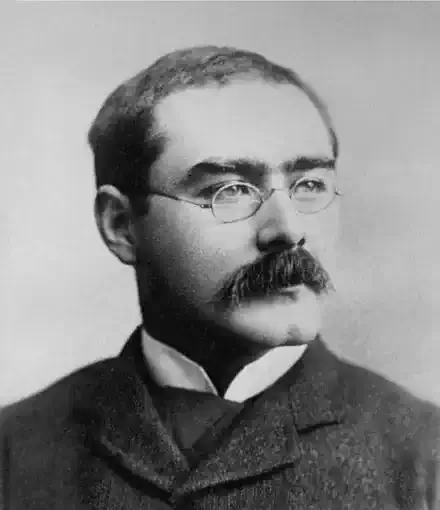
Rudyard Kipling
The Tour
The Tour
Thirteen as twelve my Murray always took--
He was a publisher. The new Police
Have neater ways of bringing men to book,
So Juan found himself before J.P.'s
Accused of storming through that placed nook
At practically any pace you please.
The Dogberry, and the Waterbury, made
It fifty mile--five pounds. And Juan paid!
Thirteen as twelve my Murray always took--
He was a publisher. The new Police
Have neater ways of bringing men to book,
So Juan found himself before J.P.'s
Accused of storming through that placed nook
At practically any pace you please.
The Dogberry, and the Waterbury, made
It fifty mile--five pounds. And Juan paid!
391
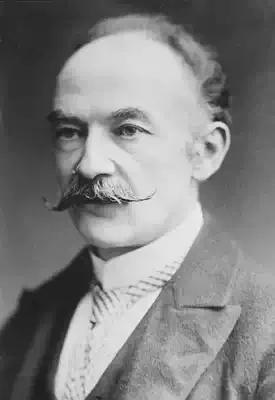
Thomas Hardy
V.R. -, A Reverie
V.R. -, A Reverie
Moments the mightiest pass uncalendared,
And when the Absolute
In backward Time outgave the deedful word
Whereby all life is stirred:
"Let one be born and throned whose mould shall constitute
The norm of every royal-reckoned attribute,"
No mortal knew or heard.
But in due days the purposed Life outshone -
Serene, sagacious, free;
--Her waxing seasons bloomed with deeds well done,
And the world's heart was won . . .
Yet may the deed of hers most bright in eyes to be
Lie hid from ours--as in the All-One's thought lay she -
Till ripening years have run.
Moments the mightiest pass uncalendared,
And when the Absolute
In backward Time outgave the deedful word
Whereby all life is stirred:
"Let one be born and throned whose mould shall constitute
The norm of every royal-reckoned attribute,"
No mortal knew or heard.
But in due days the purposed Life outshone -
Serene, sagacious, free;
--Her waxing seasons bloomed with deeds well done,
And the world's heart was won . . .
Yet may the deed of hers most bright in eyes to be
Lie hid from ours--as in the All-One's thought lay she -
Till ripening years have run.
237
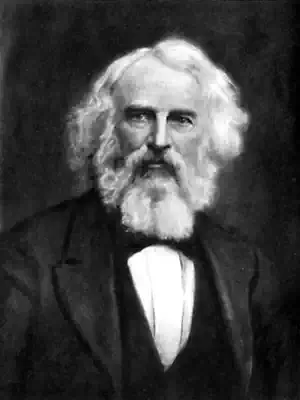
Henry Wadsworth Longfellow
Prometheus, Or, The Poet's Forethought. (Birds Of Passage. Flight The First)
Prometheus, Or, The Poet's Forethought. (Birds Of Passage. Flight The First)
Of Prometheus, how undaunted
On Olympus' shining bastions
His audacious foot he planted,
Myths are told and songs are chanted,
Full of promptings and suggestions.
Beautiful is the tradition
Of that flight through heavenly portals,
The old classic superstition
Of the theft and the transmission
Of the fire of the Immortals!
First the deed of noble daring,
Born of heavenward aspiration,
Then the fire with mortals sharing,
Then the vulture,--the despairing
Cry of pain on crags Caucasian.
All is but a symbol painted
Of the Poet, Prophet, Seer;
Only those are crowned and sainted
Who with grief have been acquainted,
Making nations nobler, freer.
In their feverish exultations,
In their triumph and their yearning,
In their passionate pulsations,
In their words among the nations,
The Promethean fire is burning.
Shall it, then, be unavailing,
All this toil for human culture?
Through the cloud-rack, dark and trailing,
Must they see above them sailing
O'er life's barren crags the vulture?
Such a fate as this was Dante's,
By defeat and exile maddened;
Thus were Milton and Cervantes,
Nature's priests and Corybantes,
By affliction touched and saddened.
But the glories so transcendent
That around their memories cluster,
And, on all their steps attendant,
Make their darkened lives resplendent
With such gleams of inward lustre!
All the melodies mysterious,
Through the dreary darkness chanted;
Thoughts in attitudes imperious,
Voices soft, and deep, and serious,
Words that whispered, songs that haunted!
All the soul in rapt suspension,
All the quivering, palpitating
Chords of life in utmost tension,
With the fervor of invention,
With the rapture of creating!
Ah, Prometheus! heaven-scaling!
In such hours of exultation
Even the faintest heart, unquailing,
Might behold the vulture sailing
Round the cloudy crags Caucasian!
Though to all there is not given
Strength for such sublime endeavor,
Thus to scale the walls of heaven,
And to leaven with fiery leaven
All the hearts of men forever;
Yet all bards, whose hearts unblighted
Honor and believe the presage,
Hold aloft their torches lighted,
Gleaming through the realms benighted,
As they onward bear the message!
Of Prometheus, how undaunted
On Olympus' shining bastions
His audacious foot he planted,
Myths are told and songs are chanted,
Full of promptings and suggestions.
Beautiful is the tradition
Of that flight through heavenly portals,
The old classic superstition
Of the theft and the transmission
Of the fire of the Immortals!
First the deed of noble daring,
Born of heavenward aspiration,
Then the fire with mortals sharing,
Then the vulture,--the despairing
Cry of pain on crags Caucasian.
All is but a symbol painted
Of the Poet, Prophet, Seer;
Only those are crowned and sainted
Who with grief have been acquainted,
Making nations nobler, freer.
In their feverish exultations,
In their triumph and their yearning,
In their passionate pulsations,
In their words among the nations,
The Promethean fire is burning.
Shall it, then, be unavailing,
All this toil for human culture?
Through the cloud-rack, dark and trailing,
Must they see above them sailing
O'er life's barren crags the vulture?
Such a fate as this was Dante's,
By defeat and exile maddened;
Thus were Milton and Cervantes,
Nature's priests and Corybantes,
By affliction touched and saddened.
But the glories so transcendent
That around their memories cluster,
And, on all their steps attendant,
Make their darkened lives resplendent
With such gleams of inward lustre!
All the melodies mysterious,
Through the dreary darkness chanted;
Thoughts in attitudes imperious,
Voices soft, and deep, and serious,
Words that whispered, songs that haunted!
All the soul in rapt suspension,
All the quivering, palpitating
Chords of life in utmost tension,
With the fervor of invention,
With the rapture of creating!
Ah, Prometheus! heaven-scaling!
In such hours of exultation
Even the faintest heart, unquailing,
Might behold the vulture sailing
Round the cloudy crags Caucasian!
Though to all there is not given
Strength for such sublime endeavor,
Thus to scale the walls of heaven,
And to leaven with fiery leaven
All the hearts of men forever;
Yet all bards, whose hearts unblighted
Honor and believe the presage,
Hold aloft their torches lighted,
Gleaming through the realms benighted,
As they onward bear the message!
245
Rudyard Kipling
The Threshold
The Threshold
In their deepest caverns of limestone
They pictured the Gods of Food--
The Horse, the Elk, and the Bison
That the hunting might be good;
With the Gods of Death and Terror--
The Mammoth, Tiger, and Bear.
And the pictures moved in the torchlight
To show that the Gods were there!
But that was before Ionia--
(Or the Seven Holy Islands of Ionia)
Any of the Mountains of Ionia,
Had bared their peaks to the air.
The close years packed behind them,
As the glaciers bite and grind,
Filling the new-gouged valleys
With Gods of every kind.
Gods of all-reaching power--
Gods of all-searching eyes--
But each to be wooed by worship
And won by sacrifice.
Till, after many winters, rose Ionia--
(Strange men brooding in Ionia)
Crystal-eyed Sages of Ionia
Who said, "These tales are lies.
"We dream one Breath in all things,
"That blows all things between.
"We dream one Matter in all things--
"Eternal, changeless, unseen.
"'That the heart of the Matter is single
"Till the Breath shall bid it bring forth--
"By choosing or losing its neighbour--
"All things made upon Earth."
But Earth was wiser than Ionia
(Babylon and Egypt than Ionia)
And they overlaid the teaching of Ionia
And the Truth was choked at birth.
It died at the Gate of Knowledge--
The Key to the Gate in its hand--
And the anxious priests and wizards
Re-blinded the wakening land;
For they showed, by answering echoes,
And chasing clouds as they rose,
How shadows should stand for bulwarks
Between mankind and its woes.
It was then that men bethought them of Ionia
(The few that had not allforgot Ionia)
Or the Word that was whispered in Ionia;
And they turned from the shadows and the shows.
They found one Breath in all things,
That moves all things between.
They proved one Matter in all things--
Eternal, changeless, unseen;
That the heart of the Matter was single
Till the Breath should bid it bring forth--
Even as men whispered in Ionia,
(Resolute, unsatisfied Ionia)
Ere the Word was stifled in Ionia--
All things known upon earth!
In their deepest caverns of limestone
They pictured the Gods of Food--
The Horse, the Elk, and the Bison
That the hunting might be good;
With the Gods of Death and Terror--
The Mammoth, Tiger, and Bear.
And the pictures moved in the torchlight
To show that the Gods were there!
But that was before Ionia--
(Or the Seven Holy Islands of Ionia)
Any of the Mountains of Ionia,
Had bared their peaks to the air.
The close years packed behind them,
As the glaciers bite and grind,
Filling the new-gouged valleys
With Gods of every kind.
Gods of all-reaching power--
Gods of all-searching eyes--
But each to be wooed by worship
And won by sacrifice.
Till, after many winters, rose Ionia--
(Strange men brooding in Ionia)
Crystal-eyed Sages of Ionia
Who said, "These tales are lies.
"We dream one Breath in all things,
"That blows all things between.
"We dream one Matter in all things--
"Eternal, changeless, unseen.
"'That the heart of the Matter is single
"Till the Breath shall bid it bring forth--
"By choosing or losing its neighbour--
"All things made upon Earth."
But Earth was wiser than Ionia
(Babylon and Egypt than Ionia)
And they overlaid the teaching of Ionia
And the Truth was choked at birth.
It died at the Gate of Knowledge--
The Key to the Gate in its hand--
And the anxious priests and wizards
Re-blinded the wakening land;
For they showed, by answering echoes,
And chasing clouds as they rose,
How shadows should stand for bulwarks
Between mankind and its woes.
It was then that men bethought them of Ionia
(The few that had not allforgot Ionia)
Or the Word that was whispered in Ionia;
And they turned from the shadows and the shows.
They found one Breath in all things,
That moves all things between.
They proved one Matter in all things--
Eternal, changeless, unseen;
That the heart of the Matter was single
Till the Breath should bid it bring forth--
Even as men whispered in Ionia,
(Resolute, unsatisfied Ionia)
Ere the Word was stifled in Ionia--
All things known upon earth!
433
Thomas Hardy
Unknowing
Unknowing
WHEN, soul in soul reflected,
We breathed an æthered air,
When we neglected
All things elsewhere,
And left the friendly friendless
To keep our love aglow,
We deemed it endless...
--We did not know!
When, by mad passion goaded,
We planned to hie away,
But, unforeboded,
The storm-shafts gray
So heavily down-pattered
That none could forthward go,
Our lives seemed shattered...
--We did not know!
When I found you, helpless lying,
And you waived my deep misprise,
And swore me, dying,
In phantom-guise
To wing to me when grieving,
And touch away my woe,
We kissed, believing...
--We did not know!
But though, your powers outreckoning,
You hold you dead and dumb,
Or scorn my beckoning,
And will not come;
And I say, "'Twere mood ungainly
To store her memory so:"
I say it vainly--
I feel and know!
WHEN, soul in soul reflected,
We breathed an æthered air,
When we neglected
All things elsewhere,
And left the friendly friendless
To keep our love aglow,
We deemed it endless...
--We did not know!
When, by mad passion goaded,
We planned to hie away,
But, unforeboded,
The storm-shafts gray
So heavily down-pattered
That none could forthward go,
Our lives seemed shattered...
--We did not know!
When I found you, helpless lying,
And you waived my deep misprise,
And swore me, dying,
In phantom-guise
To wing to me when grieving,
And touch away my woe,
We kissed, believing...
--We did not know!
But though, your powers outreckoning,
You hold you dead and dumb,
Or scorn my beckoning,
And will not come;
And I say, "'Twere mood ungainly
To store her memory so:"
I say it vainly--
I feel and know!
218

Robert W. Service
My Hero
My Hero
Of all the boys with whom I fought
In Africa and Sicily,
Bill was the bravest of the lot
In our dare-devil Company.
That lad would rather die than yield;
His gore he glorified to spill,
And so in every battlefield
A hero in my eyes was Bill.
Then when the bloody war was done,
He moseyed back to our home town,
And there, a loving mother's son,
Like other kids he settled down.
His old girl seemed a shade straight-laced,
For when I called my buddy "Bill,"
She looked at me with some distaste,
Suggesting that his name was "Will."
And then he had to get engaged,
And took unto himself a wife;
And so inevitably caged,
He settled down to wedded life.
He introduced me to his Missis,
But oh I thought her rather silly,
For in between their frequent kisses
She called my hard-boiled here: "Willie."
Now he has long forgot the War,
The which he did a lot to win,
And feeling full of ginger for
He's happy Pop of cherubs twin.
Yet with his air: "Don't care a damn,"
On Main Street he's my hero still . . .
As proud he wheels a double pram
What guy has got the guts of Bill!
Of all the boys with whom I fought
In Africa and Sicily,
Bill was the bravest of the lot
In our dare-devil Company.
That lad would rather die than yield;
His gore he glorified to spill,
And so in every battlefield
A hero in my eyes was Bill.
Then when the bloody war was done,
He moseyed back to our home town,
And there, a loving mother's son,
Like other kids he settled down.
His old girl seemed a shade straight-laced,
For when I called my buddy "Bill,"
She looked at me with some distaste,
Suggesting that his name was "Will."
And then he had to get engaged,
And took unto himself a wife;
And so inevitably caged,
He settled down to wedded life.
He introduced me to his Missis,
But oh I thought her rather silly,
For in between their frequent kisses
She called my hard-boiled here: "Willie."
Now he has long forgot the War,
The which he did a lot to win,
And feeling full of ginger for
He's happy Pop of cherubs twin.
Yet with his air: "Don't care a damn,"
On Main Street he's my hero still . . .
As proud he wheels a double pram
What guy has got the guts of Bill!
174
Thomas Hardy
Transformations
Transformations
Portion of this yew
Is a man my grandsire knew,
Bosomed here at its foot:
This branch may be his wife,
A ruddy human life
Now turned to a green shoot.
These grasses must be made
Of her who often prayed,
Last century, for repose;
And the fair girl long ago
Whom I often tried to know
May be entering this rose.
So, they are not underground,
But as nerves and veins abound
In the growths of upper air,
And they feel the sun and rain,
And the energy again
That made them what they were!
Portion of this yew
Is a man my grandsire knew,
Bosomed here at its foot:
This branch may be his wife,
A ruddy human life
Now turned to a green shoot.
These grasses must be made
Of her who often prayed,
Last century, for repose;
And the fair girl long ago
Whom I often tried to know
May be entering this rose.
So, they are not underground,
But as nerves and veins abound
In the growths of upper air,
And they feel the sun and rain,
And the energy again
That made them what they were!
218
Rudyard Kipling
The Thousandth Man
The Thousandth Man
One man in a thousand, Solomon says,
Will stick more close than a brother.
And it's worth while seeking him half your days
If you find him before the other.
Nine nundred and ninety-nine depend
On what the world sees in you,
But the Thousandth man will stand your friend
With the whole round world agin you.
'Tis neither promise nor prayer nor show
Will settle the finding for 'ee.
Nine hundred and ninety-nine of 'em go
By your looks, or your acts, or your glory.
But if he finds you and you find him.
The rest of the world don't matter;
For the Thousandth Man will sink or swim
With you in any water.
You can use his purse with no more talk
Than he uses yours for his spendings,
And laugh and meet in your daily walk
As though there had been no lendings.
Nine hundred and ninety-nine of 'em call
For silver and gold in their dealings;
But the Thousandth Man h's worth 'em all,
Because you can show him your feelings.
His wrong's your wrong, and his right's your right,
In season or out of season.
Stand up and back it in all men's sight --
With that for your only reason!
Nine hundred and ninety-nine can't bide
The shame or mocking or laughter,
But the Thousandth Man will stand by your side
To the gallows-foot -- and after!
One man in a thousand, Solomon says,
Will stick more close than a brother.
And it's worth while seeking him half your days
If you find him before the other.
Nine nundred and ninety-nine depend
On what the world sees in you,
But the Thousandth man will stand your friend
With the whole round world agin you.
'Tis neither promise nor prayer nor show
Will settle the finding for 'ee.
Nine hundred and ninety-nine of 'em go
By your looks, or your acts, or your glory.
But if he finds you and you find him.
The rest of the world don't matter;
For the Thousandth Man will sink or swim
With you in any water.
You can use his purse with no more talk
Than he uses yours for his spendings,
And laugh and meet in your daily walk
As though there had been no lendings.
Nine hundred and ninety-nine of 'em call
For silver and gold in their dealings;
But the Thousandth Man h's worth 'em all,
Because you can show him your feelings.
His wrong's your wrong, and his right's your right,
In season or out of season.
Stand up and back it in all men's sight --
With that for your only reason!
Nine hundred and ninety-nine can't bide
The shame or mocking or laughter,
But the Thousandth Man will stand by your side
To the gallows-foot -- and after!
842
Henry Wadsworth Longfellow
Picture-Writing
Picture-Writing
In those days said Hiawatha,
"Lo! how all things fade and perish!
From the memory of the old men
Pass away the great traditions,
The achievements of the warriors,
The adventures of the hunters,
All the wisdom of the Medas,
All the craft of the Wabenos,
All the marvellous dreams and visions
Of the Jossakeeds, the Prophets!
"Great men die and are forgotten,
Wise men speak; their words of wisdom
Perish in the ears that hear them,
Do not reach the generations
That, as yet unborn, are waiting
In the great, mysterious darkness
Of the speechless days that shall be!
"On the grave-posts of our fathers
Are no signs, no figures painted;
Who are in those graves we know not,
Only know they are our fathers.
Of what kith they are and kindred,
From what old, ancestral Totem,
Be it Eagle, Bear, or Beaver,
They descended, this we know not,
Only know they are our fathers.
"Face to face we speak together,
But we cannot speak when absent,
Cannot send our voices from us
To the friends that dwell afar off;
Cannot send a secret message,
But the bearer learns our secret,
May pervert it, may betray it,
May reveal it unto others."
Thus said Hiawatha, walking
In the solitary forest,
Pondering, musing in the forest,
On the welfare of his people.
From his pouch he took his colors,
Took his paints of different colors,
On the smooth bark of a birch-tree
Painted many shapes and figures,
Wonderful and mystic figures,
And each figure had a meaning,
Each some word or thought suggested.
Gitche Manito the Mighty,
He, the Master of Life, was painted
As an egg, with points projecting
To the four winds of the heavens.
Everywhere is the Great Spirit,
Was the meaning of this symbol.
Gitche Manito the Mighty,
He the dreadful Spirit of Evil,
As a serpent was depicted,
As Kenabeek, the great serpent.
Very crafty, very cunning,
Is the creeping Spirit of Evil,
Was the meaning of this symbol.
Life and Death he drew as circles,
Life was white, but Death was darkened;
Sun and moon and stars he painted,
Man and beast, and fish and reptile,
Forests, mountains, lakes, and rivers.
For the earth he drew a straight line,
For the sky a bow above it;
White the space between for daytime,
Filled with little stars for night-time;
On the left a point for sunrise,
On the right a point for sunset,
On the top a point for noontide,
And for rain and cloudy weather
Waving lines descending from it.
Footprints pointing towards a wigwam
Were a sign of invitation,
Were a sign of guests assembling;
Bloody hands with palms uplifted
Were a symbol of destruction,
Were a hostile sign and symbol.
All these things did Hiawatha
Show unto his wondering people,
And interpreted their meaning,
And he said: "Behold, your grave-posts
Have no mark, no sign, nor symbol,
Go and paint them all with figures;
Each one with its household symbol,
With its own ancestral Totem;
So that those who follow after
May distinguish them and know them."
And they painted on the grave-posts
On the graves yet unforgotten,
Each his own ancestral Totem,
Each the symbol of his household;
Figures of the Bear and Reindeer,
Of the Turtle, Crane, and Beaver,
Each inverted as a token
That the owner was departed,
That the chief who bore the symbol
Lay beneath in dust and ashes.
And the Jossakeeds, the Prophets,
The Wabenos, the Magicians,
And the Medicine-men, the Medas,
Painted upon bark and deer-skin
Figures for the songs they chanted,
For each song a separate symbol,
Figures mystical and awful,
Figures strange and brightly colored;
And each figure had its meaning,
Each some magic song suggested.
The Great Spirit, the Creator,
Flashing light through all the heaven;
The Great Serpent, the Kenabeek,
With his bloody crest erected,
Creeping, looking into heaven;
In the sky the sun, that listens,
And the moon eclipsed and dying;
Owl and eagle, crane and hen-hawk,
And the cormorant, bird of magic;
Headless men, that walk the heavens,
Bodies lying pierced with arrows,
Bloody hands of death uplifted,
Flags on graves, and great war-captains
Grasping both the earth and heaven!
Such as these the shapes they painted
On the birch-bark and the deer-skin;
Songs of war and songs of hunting,
Songs of medicine and of magic,
All were written in these figures,
For each figure had its meaning,
Each its separate song recorded.
Nor forgotten was the Love-Song,
The most subtle of all medicines,
The most potent spell of magic,
Dangerous more than war or hunting!
Thus the Love-Song was recorded,
Symbol and interpretation.
First a human figure standing,
Painted in the brightest scarlet;
`T Is the lover, the musician,
And the meaning is, "My painting
Makes me powerful over others."
Then the figure seated, singing,
Playing on a drum of magic,
And the interpretation, "Listen!
`T Is my voice you hear, my singing!"
Then the same red figure seated
In the shelter of a wigwam,
And the meaning of the symbol,
"I will come and sit beside you
In the mystery of my passion!"
Then two figures, man and woman,
Standing hand in hand together
With their hands so clasped together
That they seemed in one united,
And the words thus represented
Are, "I see your heart within you,
And your cheeks are red with blushes!"
Next the maiden on an island,
In the centre of an Island;
And the song this shape suggested
Was, "Though you were at a distance,
Were upon some far-off island,
Such the spell I cast upon you,
Such the magic power of passion,
I could straightway draw you to me!"
Then the figure of the maiden
Sleeping, and the lover near her,
Whispering to her in her slumbers,
Saying, "Though you were far from me
In the land of Sleep and Silence,
Still the voice of love would reach you!"
And the last of all the figures
Was a heart within a circle,
Drawn within a magic circle;
And the image had this meaning:
"Naked lies your heart before me,
To your naked heart I whisper!"
Thus it was that Hiawatha,
In his wisdom, taught the people
All the mysteries of painting,
All the art of Picture-Writing,
On the smooth bark of the birch-tree,
On the white skin of the reindeer,
On the grave-posts of the village.
In those days said Hiawatha,
"Lo! how all things fade and perish!
From the memory of the old men
Pass away the great traditions,
The achievements of the warriors,
The adventures of the hunters,
All the wisdom of the Medas,
All the craft of the Wabenos,
All the marvellous dreams and visions
Of the Jossakeeds, the Prophets!
"Great men die and are forgotten,
Wise men speak; their words of wisdom
Perish in the ears that hear them,
Do not reach the generations
That, as yet unborn, are waiting
In the great, mysterious darkness
Of the speechless days that shall be!
"On the grave-posts of our fathers
Are no signs, no figures painted;
Who are in those graves we know not,
Only know they are our fathers.
Of what kith they are and kindred,
From what old, ancestral Totem,
Be it Eagle, Bear, or Beaver,
They descended, this we know not,
Only know they are our fathers.
"Face to face we speak together,
But we cannot speak when absent,
Cannot send our voices from us
To the friends that dwell afar off;
Cannot send a secret message,
But the bearer learns our secret,
May pervert it, may betray it,
May reveal it unto others."
Thus said Hiawatha, walking
In the solitary forest,
Pondering, musing in the forest,
On the welfare of his people.
From his pouch he took his colors,
Took his paints of different colors,
On the smooth bark of a birch-tree
Painted many shapes and figures,
Wonderful and mystic figures,
And each figure had a meaning,
Each some word or thought suggested.
Gitche Manito the Mighty,
He, the Master of Life, was painted
As an egg, with points projecting
To the four winds of the heavens.
Everywhere is the Great Spirit,
Was the meaning of this symbol.
Gitche Manito the Mighty,
He the dreadful Spirit of Evil,
As a serpent was depicted,
As Kenabeek, the great serpent.
Very crafty, very cunning,
Is the creeping Spirit of Evil,
Was the meaning of this symbol.
Life and Death he drew as circles,
Life was white, but Death was darkened;
Sun and moon and stars he painted,
Man and beast, and fish and reptile,
Forests, mountains, lakes, and rivers.
For the earth he drew a straight line,
For the sky a bow above it;
White the space between for daytime,
Filled with little stars for night-time;
On the left a point for sunrise,
On the right a point for sunset,
On the top a point for noontide,
And for rain and cloudy weather
Waving lines descending from it.
Footprints pointing towards a wigwam
Were a sign of invitation,
Were a sign of guests assembling;
Bloody hands with palms uplifted
Were a symbol of destruction,
Were a hostile sign and symbol.
All these things did Hiawatha
Show unto his wondering people,
And interpreted their meaning,
And he said: "Behold, your grave-posts
Have no mark, no sign, nor symbol,
Go and paint them all with figures;
Each one with its household symbol,
With its own ancestral Totem;
So that those who follow after
May distinguish them and know them."
And they painted on the grave-posts
On the graves yet unforgotten,
Each his own ancestral Totem,
Each the symbol of his household;
Figures of the Bear and Reindeer,
Of the Turtle, Crane, and Beaver,
Each inverted as a token
That the owner was departed,
That the chief who bore the symbol
Lay beneath in dust and ashes.
And the Jossakeeds, the Prophets,
The Wabenos, the Magicians,
And the Medicine-men, the Medas,
Painted upon bark and deer-skin
Figures for the songs they chanted,
For each song a separate symbol,
Figures mystical and awful,
Figures strange and brightly colored;
And each figure had its meaning,
Each some magic song suggested.
The Great Spirit, the Creator,
Flashing light through all the heaven;
The Great Serpent, the Kenabeek,
With his bloody crest erected,
Creeping, looking into heaven;
In the sky the sun, that listens,
And the moon eclipsed and dying;
Owl and eagle, crane and hen-hawk,
And the cormorant, bird of magic;
Headless men, that walk the heavens,
Bodies lying pierced with arrows,
Bloody hands of death uplifted,
Flags on graves, and great war-captains
Grasping both the earth and heaven!
Such as these the shapes they painted
On the birch-bark and the deer-skin;
Songs of war and songs of hunting,
Songs of medicine and of magic,
All were written in these figures,
For each figure had its meaning,
Each its separate song recorded.
Nor forgotten was the Love-Song,
The most subtle of all medicines,
The most potent spell of magic,
Dangerous more than war or hunting!
Thus the Love-Song was recorded,
Symbol and interpretation.
First a human figure standing,
Painted in the brightest scarlet;
`T Is the lover, the musician,
And the meaning is, "My painting
Makes me powerful over others."
Then the figure seated, singing,
Playing on a drum of magic,
And the interpretation, "Listen!
`T Is my voice you hear, my singing!"
Then the same red figure seated
In the shelter of a wigwam,
And the meaning of the symbol,
"I will come and sit beside you
In the mystery of my passion!"
Then two figures, man and woman,
Standing hand in hand together
With their hands so clasped together
That they seemed in one united,
And the words thus represented
Are, "I see your heart within you,
And your cheeks are red with blushes!"
Next the maiden on an island,
In the centre of an Island;
And the song this shape suggested
Was, "Though you were at a distance,
Were upon some far-off island,
Such the spell I cast upon you,
Such the magic power of passion,
I could straightway draw you to me!"
Then the figure of the maiden
Sleeping, and the lover near her,
Whispering to her in her slumbers,
Saying, "Though you were far from me
In the land of Sleep and Silence,
Still the voice of love would reach you!"
And the last of all the figures
Was a heart within a circle,
Drawn within a magic circle;
And the image had this meaning:
"Naked lies your heart before me,
To your naked heart I whisper!"
Thus it was that Hiawatha,
In his wisdom, taught the people
All the mysteries of painting,
All the art of Picture-Writing,
On the smooth bark of the birch-tree,
On the white skin of the reindeer,
On the grave-posts of the village.
282
Rudyard Kipling
The Survival
The Survival
Securely, after days
Unnumbered, I behold
Kings mourn that promised praise
Their cheating bars foretold.
Of earth-constructing Wars,
Of Princes passed in chains,
Of deeds out-shining stars,
No word or voice remains.
Yet furthest times receive,
And to fresh praise restore,
Mere breath of flutes at eve,
Mere seaweed on the shore.
A smoke of sacrifice;
A chosen myrtle-wreath;
An harlot's altered eyes;
A rage 'gainst love or death;
Glazed snow beneath the moon --
The surge of storm-bowed trees--
The Caesars perished soon,
And Rome Herself: But these
Endure while Empires fall
And Gods for Gods make room....
Which greater God than all
Imposed the amazing doom?
Securely, after days
Unnumbered, I behold
Kings mourn that promised praise
Their cheating bars foretold.
Of earth-constructing Wars,
Of Princes passed in chains,
Of deeds out-shining stars,
No word or voice remains.
Yet furthest times receive,
And to fresh praise restore,
Mere breath of flutes at eve,
Mere seaweed on the shore.
A smoke of sacrifice;
A chosen myrtle-wreath;
An harlot's altered eyes;
A rage 'gainst love or death;
Glazed snow beneath the moon --
The surge of storm-bowed trees--
The Caesars perished soon,
And Rome Herself: But these
Endure while Empires fall
And Gods for Gods make room....
Which greater God than all
Imposed the amazing doom?
540
Thomas Hardy
To Lizbie Browne
To Lizbie Browne
I
Dear Lizbie Browne,
Where are you now?
In sun, in rain? -
Or is your brow
Past joy, past pain,
Dear Lizbie Browne?
II
Sweet Lizbie Browne
How you could smile,
How you could sing! -
How archly wile
In glance-giving,
Sweet Lizbie Browne!
III
And, Lizbie Browne,
Who else had hair
Bay-red as yours,
Or flesh so fair
Bred out of doors,
Sweet Lizbie Browne?
IV
When, Lizbie Browne,
You had just begun
To be endeared
By stealth to one,
You disappeared
My Lizbie Browne!
V
Ay, Lizbie Browne,
So swift your life,
And mine so slow,
You were a wife
Ere I could show
Love, Lizbie Browne.
VI
Still, Lizbie Browne,
You won, they said,
The best of men
When you were wed . . .
Where went you then,
O Lizbie Browne?
VII
Dear Lizbie Browne,
I should have thought,
"Girls ripen fast,"
And coaxed and caught
You ere you passed,
Dear Lizbie Browne!
VIII
But, Lizbie Browne,
I let you slip;
Shaped not a sign;
Touched never your lip
With lip of mine,
Lost Lizbie Browne!
IX
So, Lizbie Browne,
When on a day
Men speak of me
As not, you'll say,
"And who was he?" -
Yes, Lizbie Browne!
I
Dear Lizbie Browne,
Where are you now?
In sun, in rain? -
Or is your brow
Past joy, past pain,
Dear Lizbie Browne?
II
Sweet Lizbie Browne
How you could smile,
How you could sing! -
How archly wile
In glance-giving,
Sweet Lizbie Browne!
III
And, Lizbie Browne,
Who else had hair
Bay-red as yours,
Or flesh so fair
Bred out of doors,
Sweet Lizbie Browne?
IV
When, Lizbie Browne,
You had just begun
To be endeared
By stealth to one,
You disappeared
My Lizbie Browne!
V
Ay, Lizbie Browne,
So swift your life,
And mine so slow,
You were a wife
Ere I could show
Love, Lizbie Browne.
VI
Still, Lizbie Browne,
You won, they said,
The best of men
When you were wed . . .
Where went you then,
O Lizbie Browne?
VII
Dear Lizbie Browne,
I should have thought,
"Girls ripen fast,"
And coaxed and caught
You ere you passed,
Dear Lizbie Browne!
VIII
But, Lizbie Browne,
I let you slip;
Shaped not a sign;
Touched never your lip
With lip of mine,
Lost Lizbie Browne!
IX
So, Lizbie Browne,
When on a day
Men speak of me
As not, you'll say,
"And who was he?" -
Yes, Lizbie Browne!
219
Robert W. Service
My Garret
My Garret
Here is my Garret up five flights of stairs;
Here's where I deal in dreams and ply in fancies,
Here is the wonder-shop of all my wares,
My sounding sonnets and my red romances.
Here's where I challenge Fate and ring my rhymes,
And grope at glory -- aye, and starve at times.
Here is my Stronghold: stout of heart am I,
Greeting each dawn as songful as a linnet;
And when at night on yon poor bed I lie
(Blessing the world and every soul that's in it),
Here's where I thank the Lord no shadow bars
My skylight's vision of the valiant stars.
Here is my Palace tapestried with dreams.
Ah! though to-night ten sous are all my treasure,
While in my gaze immortal beauty gleams,
Am I not dowered with wealth beyond all measure?
Though in my ragged coat my songs I sing,
King of my soul, I envy not the king.
Here is my Haven: it's so quiet here;
Only the scratch of pen, the candle's flutter;
Shabby and bare and small, but O how dear!
Mark you -- my table with my work a-clutter,
My shelf of tattered books along the wall,
My bed, my broken chair -- that's nearly all.
Only four faded walls, yet mine, all mine.
Oh, you fine folks, a pauper scorns your pity.
Look, where above me stars of rapture shine;
See, where below me gleams the siren city . . .
Am I not rich? -- a millionaire no less,
If wealth be told in terms of Happiness.
Here is my Garret up five flights of stairs;
Here's where I deal in dreams and ply in fancies,
Here is the wonder-shop of all my wares,
My sounding sonnets and my red romances.
Here's where I challenge Fate and ring my rhymes,
And grope at glory -- aye, and starve at times.
Here is my Stronghold: stout of heart am I,
Greeting each dawn as songful as a linnet;
And when at night on yon poor bed I lie
(Blessing the world and every soul that's in it),
Here's where I thank the Lord no shadow bars
My skylight's vision of the valiant stars.
Here is my Palace tapestried with dreams.
Ah! though to-night ten sous are all my treasure,
While in my gaze immortal beauty gleams,
Am I not dowered with wealth beyond all measure?
Though in my ragged coat my songs I sing,
King of my soul, I envy not the king.
Here is my Haven: it's so quiet here;
Only the scratch of pen, the candle's flutter;
Shabby and bare and small, but O how dear!
Mark you -- my table with my work a-clutter,
My shelf of tattered books along the wall,
My bed, my broken chair -- that's nearly all.
Only four faded walls, yet mine, all mine.
Oh, you fine folks, a pauper scorns your pity.
Look, where above me stars of rapture shine;
See, where below me gleams the siren city . . .
Am I not rich? -- a millionaire no less,
If wealth be told in terms of Happiness.
175
Thomas Hardy
To Flowers From Italy in Winter
To Flowers From Italy in Winter
Sunned in the South, and here to-day;
--If all organic things
Be sentient, Flowers, as some men say,
What are your ponderings?
How can you stay, nor vanish quite
From this bleak spot of thorn,
And birch, and fir, and frozen white
Expanse of the forlorn?
Frail luckless exiles hither brought!
Your dust will not regain
Old sunny haunts of Classic thought
When you shall waste and wane;
But mix with alien earth, be lit
With frigid Boreal flame,
And not a sign remain in it
To tell men whence you came.
Sunned in the South, and here to-day;
--If all organic things
Be sentient, Flowers, as some men say,
What are your ponderings?
How can you stay, nor vanish quite
From this bleak spot of thorn,
And birch, and fir, and frozen white
Expanse of the forlorn?
Frail luckless exiles hither brought!
Your dust will not regain
Old sunny haunts of Classic thought
When you shall waste and wane;
But mix with alien earth, be lit
With frigid Boreal flame,
And not a sign remain in it
To tell men whence you came.
167
Rudyard Kipling
The Story of Uriah
The Story of Uriah
Jack Barrett went to Quetta
Because they told him to.
He left his wife at Simla
On three-fourths his monthly screw.
Jack Barrett died at Quetta
Ere the next month's pay he drew.
Jack Barrett went to Quetta.
He didn't understand
The reason of his transfer
From the pleasant mountain-land.
The season was September,
And it killed him out of hand.
Jack Barrett went to Quetta
And there gave up the ghost,
Attempting two men's duty
In that very healthy post;
And Mrs. Barrett mourned for him
Five lively months at most.
Jack Barrett's bones at Quetta
Enjoy profound repose;
But I shouldn't be astonished
If now his spirit knows
The reason of his transfer
From the Himalayan snows.
And, when the Last Great Bugle Call
Adown the Hurnai throbs,
And the last grim joke is entered
In the big black Book of Jobs.
And Quetta graveyards give again
Their victims to the air,
I shouldn't like to be the man
Who sent Jack Barrett there.
Jack Barrett went to Quetta
Because they told him to.
He left his wife at Simla
On three-fourths his monthly screw.
Jack Barrett died at Quetta
Ere the next month's pay he drew.
Jack Barrett went to Quetta.
He didn't understand
The reason of his transfer
From the pleasant mountain-land.
The season was September,
And it killed him out of hand.
Jack Barrett went to Quetta
And there gave up the ghost,
Attempting two men's duty
In that very healthy post;
And Mrs. Barrett mourned for him
Five lively months at most.
Jack Barrett's bones at Quetta
Enjoy profound repose;
But I shouldn't be astonished
If now his spirit knows
The reason of his transfer
From the Himalayan snows.
And, when the Last Great Bugle Call
Adown the Hurnai throbs,
And the last grim joke is entered
In the big black Book of Jobs.
And Quetta graveyards give again
Their victims to the air,
I shouldn't like to be the man
Who sent Jack Barrett there.
459
Henry Wadsworth Longfellow
Paul Revere's Ride (The Landlord's Tale)
Paul Revere's Ride (The Landlord's Tale)
Listen, my children, and you shall hear
Of the midnight ride of Paul Revere,
On the eighteenth of April, in 'Seventy-five;
Hardly a man is now alive
Who remembers that famous day and year.
He said to his friend, "If the British march
By land or sea from the town to-night,
Hang a lantern aloft in the belfry arch
Of the North Church tower as a signal light, --
One, if by land, and two, if by sea;
And I on the opposite shore will be,
Ready to ride and spread the alarm
Through every Middlesex village and farm,
For the country folk to be up and to arm."
Then he said, "Good night!" and with muffled oar
Silently rowed to the Charlestown shore,
Just as the moon rose over the bay,
Where swinging wide at her moorings lay
The somerset, British man-of-war;
A phantom ship, with each mast and spar
Across the moon like a prison bar,
And a huge black hulk, that was magnified
By its own reflection in the tide.
Meanwhile, his friend, through alley and street,
Wanders and watches with eager ears,
Till in the silence around him he hears
The muster of men at the barrack door,
The sound of arms, and the tramp of feet,
And the measured tread of the grenadiers,
Marching down to their boats on the shore.
Then he climbed the tower of the Old North Church
By the wooden stairs, with stealthy tread,
To the belfry-chamber overhead,
And startled the pigeons from their perch
On the sombre rafters, that round him made
Masses and moving shapes of shade, --
By the trembling ladder, steep and tall,
To the highest window in the wall,
Where he paused to listen and look down
A moment on the roofs of the town,
And the moonlight flowing over all.
Beneath, in the churchyard, lay the dead,
In their night-encampment on the hill,
Wrapped in silence so deep and still
That he could hear, like a sentinel's tread,
The watchful night-wind, as it went
Creeping along from tent to tent,
And seeming to whisper, "All is well!"
A moment only he feels the spell
Of the place and the hour, and the secret dread
Of the lonely belfry and the dead;
For suddenly all his thoughts are bent
On a shadowy something far away,
Where the river widens to meet the bay, --
A line of black that bends and floats
On the rising tide, like a bridge of boats.
Meanwhile, impatient to mount and ride,
Booted and spurred, with a heavy stride,
On the opposite shore walked Paul Revere.
Now he patted his horse's side,
Now gazed at the landscape far and near,
Then, impetuous, stamped the earth,
And turned and tightened his saddle-girth;
But mostly he watched with eager search
The belfry-tower of the Old North Church,
As it rose above the graves on the hill,
Lonely and spectral and sombre and still.
And lo! As he looks, on the belfry's height
A glimmer, and then a gleam of light!
He springs to the saddle, the bridle he turns,
But lingers and gazes, till full on his sight
A second lamp in the belfry burns!
A hurry of hoofs in a village street,
A shape in the moonlight, a bulk in the dark,
And beneath, from the pebbles, in passing, a spark
Struck out by a steed flying fearless and fleet:
That was all! And yet, through the gloom and the light,
The fate of a nation was riding that night;
And the spark struck out by that steed, in his flight,
Kindled the land into flame with its heat.
He has left the village and mounted the steep,
And beneath him, tranquil and broad and deep,
Is the Mystic, meeting the ocean tides;
And under the alders, that skirt its edge,
Now soft on the sand, now loud on the ledge,
Is heard the tramp of his steed as he rides.
It was twelve by the village clock
When he crossed the bridge into Medford town.
He heard the crowing of the cock,
And the barking of the farmer's dog,
And felt the damp of the river fog,
That rises after the sun goes down.
It was one by the village clock
When he galloped into Lexington.
He saw the gilded weathercock
Swim in the moonlight as he passed,
And the meeting-house windows, blank and bare,
Gaze at him with a spectral glare,
As if they already stood aghast
At the bloody work they would look upon.
It was two by the village clock
When he came to the bridge in Concord town.
He heard the bleating of the flock,
And the twitter of birds among the trees,
And felt the breath of the morning breeze
Blowing over the meadows brown.
And one was safe and asleep in his bed
Who at the bridge would be first to fall,
Who that day would be lying dead,
Pierced by a British musket-ball.
You know the rest. In the books you have read,
How the British Regulars fired and fled, --
How the farmers gave them ball for ball,
From behind each fence and farm-yard wall,
Chasing the redcoats down the lane,
Then crossing the fields to emerge again
Under the trees at the turn of the road,
And only pausing to fire and load.
So through the night rode Paul Revere;
And so through the night went his cry of alarm
To every Middlesex village and farm, --
A cry of defiance and not of fear,
A voice in the darkness, a knock at the door,
And a word that shall echo forevermore!
For borne on the night-wind of the Past,
Through all our history, to the last,
In the hour of darkness and peril and need,
The people will waken and listen to hear
The hurrying hoof-beats of that steed
And the midnight message of Paul Revere.
Listen, my children, and you shall hear
Of the midnight ride of Paul Revere,
On the eighteenth of April, in 'Seventy-five;
Hardly a man is now alive
Who remembers that famous day and year.
He said to his friend, "If the British march
By land or sea from the town to-night,
Hang a lantern aloft in the belfry arch
Of the North Church tower as a signal light, --
One, if by land, and two, if by sea;
And I on the opposite shore will be,
Ready to ride and spread the alarm
Through every Middlesex village and farm,
For the country folk to be up and to arm."
Then he said, "Good night!" and with muffled oar
Silently rowed to the Charlestown shore,
Just as the moon rose over the bay,
Where swinging wide at her moorings lay
The somerset, British man-of-war;
A phantom ship, with each mast and spar
Across the moon like a prison bar,
And a huge black hulk, that was magnified
By its own reflection in the tide.
Meanwhile, his friend, through alley and street,
Wanders and watches with eager ears,
Till in the silence around him he hears
The muster of men at the barrack door,
The sound of arms, and the tramp of feet,
And the measured tread of the grenadiers,
Marching down to their boats on the shore.
Then he climbed the tower of the Old North Church
By the wooden stairs, with stealthy tread,
To the belfry-chamber overhead,
And startled the pigeons from their perch
On the sombre rafters, that round him made
Masses and moving shapes of shade, --
By the trembling ladder, steep and tall,
To the highest window in the wall,
Where he paused to listen and look down
A moment on the roofs of the town,
And the moonlight flowing over all.
Beneath, in the churchyard, lay the dead,
In their night-encampment on the hill,
Wrapped in silence so deep and still
That he could hear, like a sentinel's tread,
The watchful night-wind, as it went
Creeping along from tent to tent,
And seeming to whisper, "All is well!"
A moment only he feels the spell
Of the place and the hour, and the secret dread
Of the lonely belfry and the dead;
For suddenly all his thoughts are bent
On a shadowy something far away,
Where the river widens to meet the bay, --
A line of black that bends and floats
On the rising tide, like a bridge of boats.
Meanwhile, impatient to mount and ride,
Booted and spurred, with a heavy stride,
On the opposite shore walked Paul Revere.
Now he patted his horse's side,
Now gazed at the landscape far and near,
Then, impetuous, stamped the earth,
And turned and tightened his saddle-girth;
But mostly he watched with eager search
The belfry-tower of the Old North Church,
As it rose above the graves on the hill,
Lonely and spectral and sombre and still.
And lo! As he looks, on the belfry's height
A glimmer, and then a gleam of light!
He springs to the saddle, the bridle he turns,
But lingers and gazes, till full on his sight
A second lamp in the belfry burns!
A hurry of hoofs in a village street,
A shape in the moonlight, a bulk in the dark,
And beneath, from the pebbles, in passing, a spark
Struck out by a steed flying fearless and fleet:
That was all! And yet, through the gloom and the light,
The fate of a nation was riding that night;
And the spark struck out by that steed, in his flight,
Kindled the land into flame with its heat.
He has left the village and mounted the steep,
And beneath him, tranquil and broad and deep,
Is the Mystic, meeting the ocean tides;
And under the alders, that skirt its edge,
Now soft on the sand, now loud on the ledge,
Is heard the tramp of his steed as he rides.
It was twelve by the village clock
When he crossed the bridge into Medford town.
He heard the crowing of the cock,
And the barking of the farmer's dog,
And felt the damp of the river fog,
That rises after the sun goes down.
It was one by the village clock
When he galloped into Lexington.
He saw the gilded weathercock
Swim in the moonlight as he passed,
And the meeting-house windows, blank and bare,
Gaze at him with a spectral glare,
As if they already stood aghast
At the bloody work they would look upon.
It was two by the village clock
When he came to the bridge in Concord town.
He heard the bleating of the flock,
And the twitter of birds among the trees,
And felt the breath of the morning breeze
Blowing over the meadows brown.
And one was safe and asleep in his bed
Who at the bridge would be first to fall,
Who that day would be lying dead,
Pierced by a British musket-ball.
You know the rest. In the books you have read,
How the British Regulars fired and fled, --
How the farmers gave them ball for ball,
From behind each fence and farm-yard wall,
Chasing the redcoats down the lane,
Then crossing the fields to emerge again
Under the trees at the turn of the road,
And only pausing to fire and load.
So through the night rode Paul Revere;
And so through the night went his cry of alarm
To every Middlesex village and farm, --
A cry of defiance and not of fear,
A voice in the darkness, a knock at the door,
And a word that shall echo forevermore!
For borne on the night-wind of the Past,
Through all our history, to the last,
In the hour of darkness and peril and need,
The people will waken and listen to hear
The hurrying hoof-beats of that steed
And the midnight message of Paul Revere.
363
Thomas Hardy
To An Orphan Child
To An Orphan Child
A Whimsey
AH, child, thou art but half thy darling mother's;
Hers couldst thou wholly be,
My light in thee would outglow all in others;
She would relive to me.
But niggard Nature's trick of birth
Bars, lest she overjoy,
Renewal of the loved on earth
Save with alloy.
The Dame has no regard, alas, my maiden,
For love and loss like mine--
No sympathy with mind-sight memory-laden;
Only with fickle eyne.
To her mechanic artistry
My dreams are all unknown,
And why I wish that thou couldst be
But One's alone!
A Whimsey
AH, child, thou art but half thy darling mother's;
Hers couldst thou wholly be,
My light in thee would outglow all in others;
She would relive to me.
But niggard Nature's trick of birth
Bars, lest she overjoy,
Renewal of the loved on earth
Save with alloy.
The Dame has no regard, alas, my maiden,
For love and loss like mine--
No sympathy with mind-sight memory-laden;
Only with fickle eyne.
To her mechanic artistry
My dreams are all unknown,
And why I wish that thou couldst be
But One's alone!
214
Rudyard Kipling
The Spring Running
The Spring Running
Man goes to Man! Cry the challenge through the Jungle!
He that was our Brother goes away.
Hear, now, and judge, O ye People of the Jungle--
Answer, who can turn him--who shall stay?
Man goes to Man! He is weeping in the Jungle:
He that was our Brother sorrows sore!
Man goes to Man! (Oh, we loved him in the Jungle!)
To the Man-Trail where we may not follow more.
Man goes to Man! Cry the challenge through the Jungle!
He that was our Brother goes away.
Hear, now, and judge, O ye People of the Jungle--
Answer, who can turn him--who shall stay?
Man goes to Man! He is weeping in the Jungle:
He that was our Brother sorrows sore!
Man goes to Man! (Oh, we loved him in the Jungle!)
To the Man-Trail where we may not follow more.
450
Robert W. Service
My Future
My Future
"Let's make him a sailor," said Father,
"And he will adventure the sea."
"A soldier," said Mother, "is rather
What I would prefer him to be."
"A lawyer," said Father, "would please me,
For then he could draw up my will."
"A doctor," said Mother, "would ease me;
Maybe he could give me a pill."
Said Father: "Lt's make him a curate,
A Bishop in gaiters to be."
Said Mother: "I couldn't endure it
To have Willie preaching to me."
Said Father: ""Let him be a poet;
So often he's gathering wool."
Said Mother with temper: "Oh stow it!
You know it, a poet's a fool."
Said Farther: "Your son is a duffer,
A stupid and mischievous elf."
Said Mother, who's rather a huffer:
"That's right - he takes after yourself."
Controlling parental emotion
They turned to me, seeking a cue,
And sudden conceived the bright notion
To ask what I wanted to do.
Said I: "my ambition is modest:
A clown in a circus I'd be,
And turn somersaults in the sawdust
With audience laughing at me."
. . . Poor parents! they're dead and decaying,
But I am a clown as you see;
And though in no circus I'm playing,
How people are laughing at me!
"Let's make him a sailor," said Father,
"And he will adventure the sea."
"A soldier," said Mother, "is rather
What I would prefer him to be."
"A lawyer," said Father, "would please me,
For then he could draw up my will."
"A doctor," said Mother, "would ease me;
Maybe he could give me a pill."
Said Father: "Lt's make him a curate,
A Bishop in gaiters to be."
Said Mother: "I couldn't endure it
To have Willie preaching to me."
Said Father: ""Let him be a poet;
So often he's gathering wool."
Said Mother with temper: "Oh stow it!
You know it, a poet's a fool."
Said Farther: "Your son is a duffer,
A stupid and mischievous elf."
Said Mother, who's rather a huffer:
"That's right - he takes after yourself."
Controlling parental emotion
They turned to me, seeking a cue,
And sudden conceived the bright notion
To ask what I wanted to do.
Said I: "my ambition is modest:
A clown in a circus I'd be,
And turn somersaults in the sawdust
With audience laughing at me."
. . . Poor parents! they're dead and decaying,
But I am a clown as you see;
And though in no circus I'm playing,
How people are laughing at me!
209
Rudyard Kipling
The Sons of Martha
The Sons of Martha
The Sons of Mary seldom bother, for they have inherited that good part;
But the Sons of Martha favour their Mother of the careful soul and the troubled heart.
And because she lost her temper once, and because she was rude to the Lord her
Guest,
Her Sons must wait upon Mary's Sons, world without end, reprieve, or rest.
It is their care in all the ages to take the buffet and cushion the shock.
It is their care that the gear engages; it is their care that the switches lock.
It is their care that the wheels run truly; it is their care to embark and entrain,
Tally, transport, and deliver duly the Sons of Mary by land and main.
They say to mountains ``Be ye removèd.'' They say to the lesser floods ``Be dry.''
Under their rods are the rocks reprovèd---they are not afraid of that which is high.
Then do the hill-tops shake to the summit---then is the bed of the deep laid bare,
That the Sons of Mary may overcome it, pleasantly sleeping and unaware.
They finger Death at their gloves' end where they piece and repiece the living wires.
He rears against the gates they tend: they feed him hungry behind their fires.
Early at dawn, ere men see clear, they stumble into his terrible stall,
And hale him forth like a haltered steer, and goad and turn him till evenfall.
To these from birth is Belief forbidden; from these till death is Relief afar.
They are concerned with matters hidden---under the earthline their altars are---
The secret fountains to follow up, waters withdrawn to restore to the mouth,
And gather the floods as in a cup, and pour them again at a city's drouth.
They do not preach that their God will rouse them a little before the nuts work loose.
They do not preach that His Pity allows them to drop their job when they damn-well
choose.
As in the thronged and the lighted ways, so in the dark and the desert they stand,
Wary and watchful all their days that their brethren's ways may be long in the land.
Raise ye the stone or cleave the wood to make a path more fair or flat;
Lo, it is black already with the blood some Son of Martha spilled for that!
Not as a ladder from earth to Heaven, not as a witness to any creed,
But simple service simply given to his own kind in their common need.
And the Sons of Mary smile and are blessèd---they know the Angels are on their side.
They know in them is the Grace confessèd, and for them are the Mercies multiplied.
They sit at the feet---they hear the Word---they see how truly the Promise runs.
They have cast their burden upon the Lord, and---the Lord He lays it on Martha's Sons!
The Sons of Mary seldom bother, for they have inherited that good part;
But the Sons of Martha favour their Mother of the careful soul and the troubled heart.
And because she lost her temper once, and because she was rude to the Lord her
Guest,
Her Sons must wait upon Mary's Sons, world without end, reprieve, or rest.
It is their care in all the ages to take the buffet and cushion the shock.
It is their care that the gear engages; it is their care that the switches lock.
It is their care that the wheels run truly; it is their care to embark and entrain,
Tally, transport, and deliver duly the Sons of Mary by land and main.
They say to mountains ``Be ye removèd.'' They say to the lesser floods ``Be dry.''
Under their rods are the rocks reprovèd---they are not afraid of that which is high.
Then do the hill-tops shake to the summit---then is the bed of the deep laid bare,
That the Sons of Mary may overcome it, pleasantly sleeping and unaware.
They finger Death at their gloves' end where they piece and repiece the living wires.
He rears against the gates they tend: they feed him hungry behind their fires.
Early at dawn, ere men see clear, they stumble into his terrible stall,
And hale him forth like a haltered steer, and goad and turn him till evenfall.
To these from birth is Belief forbidden; from these till death is Relief afar.
They are concerned with matters hidden---under the earthline their altars are---
The secret fountains to follow up, waters withdrawn to restore to the mouth,
And gather the floods as in a cup, and pour them again at a city's drouth.
They do not preach that their God will rouse them a little before the nuts work loose.
They do not preach that His Pity allows them to drop their job when they damn-well
choose.
As in the thronged and the lighted ways, so in the dark and the desert they stand,
Wary and watchful all their days that their brethren's ways may be long in the land.
Raise ye the stone or cleave the wood to make a path more fair or flat;
Lo, it is black already with the blood some Son of Martha spilled for that!
Not as a ladder from earth to Heaven, not as a witness to any creed,
But simple service simply given to his own kind in their common need.
And the Sons of Mary smile and are blessèd---they know the Angels are on their side.
They know in them is the Grace confessèd, and for them are the Mercies multiplied.
They sit at the feet---they hear the Word---they see how truly the Promise runs.
They have cast their burden upon the Lord, and---the Lord He lays it on Martha's Sons!
692
Thomas Hardy
Thoughts of Phena
Thoughts of Phena
at news of her death
Not a line of her writing have I
Not a thread of her hair,
No mark of her late time as dame in her dwelling, whereby
I may picture her there;
And in vain do I urge my unsight
To conceive my lost prize
At her close, whom I knew when her dreams were upbrimming with light
And with laughter her eyes.
What scenes spread around her last days,
Sad, shining, or dim?
Did her gifts and compassions enray and enarch her sweet ways
With an aureate nimb?
Or did life-light decline from her years,
And mischances control
Her full day-star; unease, or regret, or forebodings, or fears
Disennoble her soul?
Thus I do but the phantom retain
Of the maiden of yore
As my relic; yet haply the best of her--fined in my brain
It may be the more
That no line of her writing have I,
Nor a thread of her hair,
No mark of her late time as dame in her dwelling, whereby
I may picture her there.
March .
at news of her death
Not a line of her writing have I
Not a thread of her hair,
No mark of her late time as dame in her dwelling, whereby
I may picture her there;
And in vain do I urge my unsight
To conceive my lost prize
At her close, whom I knew when her dreams were upbrimming with light
And with laughter her eyes.
What scenes spread around her last days,
Sad, shining, or dim?
Did her gifts and compassions enray and enarch her sweet ways
With an aureate nimb?
Or did life-light decline from her years,
And mischances control
Her full day-star; unease, or regret, or forebodings, or fears
Disennoble her soul?
Thus I do but the phantom retain
Of the maiden of yore
As my relic; yet haply the best of her--fined in my brain
It may be the more
That no line of her writing have I,
Nor a thread of her hair,
No mark of her late time as dame in her dwelling, whereby
I may picture her there.
March .
278
Henry Wadsworth Longfellow
Ovid In Exile, At Tomis, In Bessarabia, Near The Mouths Of The Danube
Ovid In Exile, At Tomis, In Bessarabia, Near The Mouths Of The Danube
(Tristia, Book III. Elegy X.)
Should any one there in Rome remember Ovid the exile,
And, without me, my name still in the city survive;
Tell him that under stars which never set in the ocean
I am existing still, here in a barbarous land.
Fierce Sarmatians encompass me round, and the Bessi and Getae;
Names how unworthy to be sung by a genius like mine!
Yet when the air is warm, intervening Ister defends us:
He, as he flows, repels inroads of war with his waves.
But when the dismal winter reveals its hideous aspect,
When all the earth becomes white with a marble-like frost;
And when Boreas is loosed, and the snow hurled under Arcturus,
Then these nations, in sooth, shudder and shiver with cold.
Deep lies the snow, and neither the sun nor the rain can dissolve
it;
Boreas hardens it still, makes it forever remain.
Hence, ere the first ha-s melted away, another succeeds it,
And two years it is wont, in many places, to lie.
And so great is the power of the Northwind awakened, it levels
Lofty towers with the ground, roofs uplifted bears off.
Wrapped in skins, and with trousers sewed, they contend with the
weather,
And their faces alone of the whole body are seen.
Often their tresses, when shaken, with pendent icicles tinkle,
And their whitened beards shine with the gathering frost.
Wines consolidate stand, preserving the form of the vessels;
No more draughts of wine,--pieces presented they drink.
Why should I tell you how all the rivers are frozen and solid,
And from out of the lake frangible water is dug?
Ister,--no narrower stream than the river that bears the
papyrus,--
Which through its many mouths mingles its waves with the deep;
Ister, with hardening winds, congeals its cerulean waters,
Under a roof of ice, winding its way to the sea.
There where ships have sailed, men go on foot; and the billows,
Solid made by the frost, hoof-beats of horses indent.
Over unwonted bridges, with water gliding beneath them,
The Sarmatian steers drag their barbarian carts.
Scarcely shall I be believed; yet when naught is gained by a
falsehood,
Absolute credence then should to a witness be given.
I have beheld the vast Black Sea of ice all compacted,
And a slippery crust pressing its motionless tides.
'Tis not enough to have seen, I have trodden this indurate
ocean;
Dry shod passed my foot over its uppermost wave.
If thou hadst had of old such a sea as this is, Leander!
Then thy death had not been charged as a crime to the Strait.
Nor can the curved dolphins uplift themselves from the water;
All their struggles to rise merciless winter prevents;
And though Boreas sound with roar of wings in commotion,
In the blockaded gulf never a wave will there be;
And the ships will stand hemmed in by the frost, as in marble,
Nor will the oar have power through the stiff waters to cleave.
Fast-bound in the ice have I seen the fishes adhering,
Yet notwithstanding this some of them still were alive.
Hence, if the savage strength of omnipotent Boreas freezes
Whether the salt-sea wave, whether the refluent stream,-
Straightway,--the Ister made level by arid blasts of the North-wind,--
Comes the barbaric foe borne on his swift-footed steed;
Foe, that powerful made by his steed and his far-flying arrows,
All the neighboring land void of inhabitants makes.
Some take flight, and none being left to defend their possessions,
Unprotected, their goods pillage and plunder become;
Cattle and creaking carts, the little wealth of the country,
And what riches beside indigent peasants possess.
Some as captives are driven along, their hands bound behind them,
Looking backward in vain toward their Lares and lands.
Others, transfixed with barbed arrows, in agony perish,
For the swift arrow-heads all have in poison been dipped.
What they cannot carry or lead away they demolish,
And the hostile flames burn up the innocent cots.
Even when there is peace, the fear of war is impending;
None, with the ploughshare pressed, furrows the soil any more.
Either this region sees, or fears a foe that it sees not,
And the sluggish land slumbers in utter neglect.
No sweet grape lies hidden here in the shade of its vine-leaves,
No fermenting must fills and o'erflows the deep vats.
Apples the region denies; nor would Acontius have found here
Aught upon which to write words for his mistress to read.
Naked and barren plains without leaves or trees we behold here,--
Places, alas! unto which no happy man would repair.
Since then this mighty orb lies open so wide upon all sides,
Has this region been found only my prison to be?
(Tristia, Book III. Elegy XII.)
Now the zephyrs diminish the cold, and the year being ended,
Winter Maeotian seems longer than ever before;
And the Ram that bore unsafely the burden of Helle,
Now makes the hours of the day equal with those of the night.
Now the boys and the laughing girls the violet gather,
Which the fields bring forth, nobody sowing the seed.
Now the meadows are blooming with flowers of various colors,
And with untaught throats carol the garrulous birds.
Now the swallow, to shun the crime of her merciless mother,
Under the rafters builds cradles and dear little homes;
And the blade that lay hid, covered up in the furrows of Ceres,
Now from the tepid ground raises its delicate head.
Where there is ever a vine, the bud shoots forth from the tendrils,
But from the Getic shore distant afar is the vine!
Where there is ever a tree, on the tree the branches are swelling,
But from the Getic land distant afar is the tree!
Now it is holiday there in Rome, and to games in due order
Give place the windy wars of the vociferous bar.
Now they are riding the horses; with light arms now they are playing,
Now with the ball, and now round rolls the swift-flying hoop:
Now, when the young athlete with flowing oil is anointed,
He in the Virgin's Fount bathes, over-wearied, his limbs.
Thrives the stage; and applause, with voices at variance, thunders,
And the Theatres three for the three Forums resound.
Four times happy is he, and times without number is happy,
Who the city of Rome, uninterdicted, enjoys.
But all I see is the snow in the vernal sunshine dissolving,
And the waters no more delved from the indurate lake.
Nor is the sea now frozen, nor as before o'er the Ister
Comes the Sarmatian boor driving his stridulous cart.
Hitherward, nevertheless, some keels already are steering,
And on this Pontic shore alien vessels will be.
Eagerly shall I run to the sailor, and, having saluted,
Who he may be, I shall ask; wherefore and whence he hath come.
Strange indeed will it be, if he come not from regions adjacent,
And incautious unless ploughing the neighboring sea.
Rarely a mariner over the deep from Italy passes,
Rarely he comes to these shores, wholly of harbors devoid.
Whether he knoweth Greek, or whether in Latin he speaketh,
Surely on this account he the more welcome will be.
Also perchance from the mouth of the Strait and the waters Propontic,
Unto the steady South-wind, some one is spreading his sails.
Whosoever he is, the news he can faithfully tell me,
Which may become a part and an approach to the truth.
He, I pray, may he able to tell me the triumphs of Caesar,
Which he has heard of, and vows paid to the Latian Jove;
And that thy sorrowful head, Germania, thou, the rebellious,
Under the feet, at last, of the Great Captain hast laid.
Whoso shall tell me these things, that not to have seen will afflict me,
Forthwith unto my house welcomed as guest shall he be.
Woe is me! Is the house of Ovid in Scythian lands now?
And doth punishment now give me its place for a home?
Grant, ye gods, that Caesar make this not my house and my homestead,
But decree it to be only the inn of my pain.
(Tristia, Book III. Elegy X.)
Should any one there in Rome remember Ovid the exile,
And, without me, my name still in the city survive;
Tell him that under stars which never set in the ocean
I am existing still, here in a barbarous land.
Fierce Sarmatians encompass me round, and the Bessi and Getae;
Names how unworthy to be sung by a genius like mine!
Yet when the air is warm, intervening Ister defends us:
He, as he flows, repels inroads of war with his waves.
But when the dismal winter reveals its hideous aspect,
When all the earth becomes white with a marble-like frost;
And when Boreas is loosed, and the snow hurled under Arcturus,
Then these nations, in sooth, shudder and shiver with cold.
Deep lies the snow, and neither the sun nor the rain can dissolve
it;
Boreas hardens it still, makes it forever remain.
Hence, ere the first ha-s melted away, another succeeds it,
And two years it is wont, in many places, to lie.
And so great is the power of the Northwind awakened, it levels
Lofty towers with the ground, roofs uplifted bears off.
Wrapped in skins, and with trousers sewed, they contend with the
weather,
And their faces alone of the whole body are seen.
Often their tresses, when shaken, with pendent icicles tinkle,
And their whitened beards shine with the gathering frost.
Wines consolidate stand, preserving the form of the vessels;
No more draughts of wine,--pieces presented they drink.
Why should I tell you how all the rivers are frozen and solid,
And from out of the lake frangible water is dug?
Ister,--no narrower stream than the river that bears the
papyrus,--
Which through its many mouths mingles its waves with the deep;
Ister, with hardening winds, congeals its cerulean waters,
Under a roof of ice, winding its way to the sea.
There where ships have sailed, men go on foot; and the billows,
Solid made by the frost, hoof-beats of horses indent.
Over unwonted bridges, with water gliding beneath them,
The Sarmatian steers drag their barbarian carts.
Scarcely shall I be believed; yet when naught is gained by a
falsehood,
Absolute credence then should to a witness be given.
I have beheld the vast Black Sea of ice all compacted,
And a slippery crust pressing its motionless tides.
'Tis not enough to have seen, I have trodden this indurate
ocean;
Dry shod passed my foot over its uppermost wave.
If thou hadst had of old such a sea as this is, Leander!
Then thy death had not been charged as a crime to the Strait.
Nor can the curved dolphins uplift themselves from the water;
All their struggles to rise merciless winter prevents;
And though Boreas sound with roar of wings in commotion,
In the blockaded gulf never a wave will there be;
And the ships will stand hemmed in by the frost, as in marble,
Nor will the oar have power through the stiff waters to cleave.
Fast-bound in the ice have I seen the fishes adhering,
Yet notwithstanding this some of them still were alive.
Hence, if the savage strength of omnipotent Boreas freezes
Whether the salt-sea wave, whether the refluent stream,-
Straightway,--the Ister made level by arid blasts of the North-wind,--
Comes the barbaric foe borne on his swift-footed steed;
Foe, that powerful made by his steed and his far-flying arrows,
All the neighboring land void of inhabitants makes.
Some take flight, and none being left to defend their possessions,
Unprotected, their goods pillage and plunder become;
Cattle and creaking carts, the little wealth of the country,
And what riches beside indigent peasants possess.
Some as captives are driven along, their hands bound behind them,
Looking backward in vain toward their Lares and lands.
Others, transfixed with barbed arrows, in agony perish,
For the swift arrow-heads all have in poison been dipped.
What they cannot carry or lead away they demolish,
And the hostile flames burn up the innocent cots.
Even when there is peace, the fear of war is impending;
None, with the ploughshare pressed, furrows the soil any more.
Either this region sees, or fears a foe that it sees not,
And the sluggish land slumbers in utter neglect.
No sweet grape lies hidden here in the shade of its vine-leaves,
No fermenting must fills and o'erflows the deep vats.
Apples the region denies; nor would Acontius have found here
Aught upon which to write words for his mistress to read.
Naked and barren plains without leaves or trees we behold here,--
Places, alas! unto which no happy man would repair.
Since then this mighty orb lies open so wide upon all sides,
Has this region been found only my prison to be?
(Tristia, Book III. Elegy XII.)
Now the zephyrs diminish the cold, and the year being ended,
Winter Maeotian seems longer than ever before;
And the Ram that bore unsafely the burden of Helle,
Now makes the hours of the day equal with those of the night.
Now the boys and the laughing girls the violet gather,
Which the fields bring forth, nobody sowing the seed.
Now the meadows are blooming with flowers of various colors,
And with untaught throats carol the garrulous birds.
Now the swallow, to shun the crime of her merciless mother,
Under the rafters builds cradles and dear little homes;
And the blade that lay hid, covered up in the furrows of Ceres,
Now from the tepid ground raises its delicate head.
Where there is ever a vine, the bud shoots forth from the tendrils,
But from the Getic shore distant afar is the vine!
Where there is ever a tree, on the tree the branches are swelling,
But from the Getic land distant afar is the tree!
Now it is holiday there in Rome, and to games in due order
Give place the windy wars of the vociferous bar.
Now they are riding the horses; with light arms now they are playing,
Now with the ball, and now round rolls the swift-flying hoop:
Now, when the young athlete with flowing oil is anointed,
He in the Virgin's Fount bathes, over-wearied, his limbs.
Thrives the stage; and applause, with voices at variance, thunders,
And the Theatres three for the three Forums resound.
Four times happy is he, and times without number is happy,
Who the city of Rome, uninterdicted, enjoys.
But all I see is the snow in the vernal sunshine dissolving,
And the waters no more delved from the indurate lake.
Nor is the sea now frozen, nor as before o'er the Ister
Comes the Sarmatian boor driving his stridulous cart.
Hitherward, nevertheless, some keels already are steering,
And on this Pontic shore alien vessels will be.
Eagerly shall I run to the sailor, and, having saluted,
Who he may be, I shall ask; wherefore and whence he hath come.
Strange indeed will it be, if he come not from regions adjacent,
And incautious unless ploughing the neighboring sea.
Rarely a mariner over the deep from Italy passes,
Rarely he comes to these shores, wholly of harbors devoid.
Whether he knoweth Greek, or whether in Latin he speaketh,
Surely on this account he the more welcome will be.
Also perchance from the mouth of the Strait and the waters Propontic,
Unto the steady South-wind, some one is spreading his sails.
Whosoever he is, the news he can faithfully tell me,
Which may become a part and an approach to the truth.
He, I pray, may he able to tell me the triumphs of Caesar,
Which he has heard of, and vows paid to the Latian Jove;
And that thy sorrowful head, Germania, thou, the rebellious,
Under the feet, at last, of the Great Captain hast laid.
Whoso shall tell me these things, that not to have seen will afflict me,
Forthwith unto my house welcomed as guest shall he be.
Woe is me! Is the house of Ovid in Scythian lands now?
And doth punishment now give me its place for a home?
Grant, ye gods, that Caesar make this not my house and my homestead,
But decree it to be only the inn of my pain.
247
Thomas Hardy
Then and Now
Then and Now
When battles were fought
With a chivalrous sense of should and ought,
In spirit men said,
"End we quick or dead,
Honour is some reward!
Let us fight fair -- for our own best or worst;
So, Gentlemen of the Guard,
Fire first!"
In the open they stood,
Man to man in his knightlihood:
They would not deign
To profit by a stain
On the honourable rules,
Knowing that practise perfidy no man durst
Who in the heroic schools
Was nurst.
But now, behold, what
Is war with those where honour is not!
Rama laments
Its dead innocents;
Herod howls: "Sly slaughter
Rules now! Let us, by modes once called accurst,
Overhead, under water,
Stab first."
When battles were fought
With a chivalrous sense of should and ought,
In spirit men said,
"End we quick or dead,
Honour is some reward!
Let us fight fair -- for our own best or worst;
So, Gentlemen of the Guard,
Fire first!"
In the open they stood,
Man to man in his knightlihood:
They would not deign
To profit by a stain
On the honourable rules,
Knowing that practise perfidy no man durst
Who in the heroic schools
Was nurst.
But now, behold, what
Is war with those where honour is not!
Rama laments
Its dead innocents;
Herod howls: "Sly slaughter
Rules now! Let us, by modes once called accurst,
Overhead, under water,
Stab first."
243
Rudyard Kipling
The Song of the Women
The Song of the Women
How shall she know the worship we would do her?
The walls are high, and she is very far.
How shall the woman's message reach unto her
Above the tumult of the packed bazaar?
Free wind of March, against the lattice blowing,
Bear thou our thanks, lest she depart unknowing.
Go forth across the fields we may not roam in,
Go forth beyond the trees that rim the city,
To whatsoe'er fair place she hath her home in,
Who dowered us with walth of love and pity.
Out of our shadow pass, and seek her singing --
"I have no gifts but Love alone for bringing."
Say that we be a feeble folk who greet her,
But old in grief, and very wise in tears;
Say that we, being desolate, entreat her
That she forget us not in after years;
For we have seen the light, and it were grievous
To dim that dawning if our lady leave us.
By life that ebbed with none to stanch the failing
By Love's sad harvest garnered in the spring,
When Love in ignorance wept unavailing
O'er young buds dead before their blossoming;
By all the grey owl watched, the pale moon viewed,
In past grim years, declare our gratitude!
By hands uplifted to the Gods that heard not,
By fits that found no favor in their sight,
By faces bent above the babe that stirred not,
By nameless horrors of the stifling night;
By ills foredone, by peace her toils discover,
Bid Earth be good beneath and Heaven above her!
If she have sent her servants in our pain
If she have fought with Death and dulled his sword;
If she have given back our sick again.
And to the breast the wakling lips restored,
Is it a little thing that she has wrought?
Then Life and Death and Motherhood be nought.
Go forth, O wind, our message on thy wings,
And they shall hear thee pass and bid thee speed,
In reed-roofed hut, or white-walled home of kings,
Who have been helpen by ther in their need.
All spring shall give thee fragrance, and the wheat
Shall be a tasselled floorcloth to thy feet.
Haste, for our hearts are with thee, take no rest!
Loud-voiced ambassador, from sea to sea
Proclaim the blessing, mainfold, confessed.
Of those in darkness by her hand set free.
Then very softly to her presence move,
And whisper: "Lady, lo, they know and love!"
How shall she know the worship we would do her?
The walls are high, and she is very far.
How shall the woman's message reach unto her
Above the tumult of the packed bazaar?
Free wind of March, against the lattice blowing,
Bear thou our thanks, lest she depart unknowing.
Go forth across the fields we may not roam in,
Go forth beyond the trees that rim the city,
To whatsoe'er fair place she hath her home in,
Who dowered us with walth of love and pity.
Out of our shadow pass, and seek her singing --
"I have no gifts but Love alone for bringing."
Say that we be a feeble folk who greet her,
But old in grief, and very wise in tears;
Say that we, being desolate, entreat her
That she forget us not in after years;
For we have seen the light, and it were grievous
To dim that dawning if our lady leave us.
By life that ebbed with none to stanch the failing
By Love's sad harvest garnered in the spring,
When Love in ignorance wept unavailing
O'er young buds dead before their blossoming;
By all the grey owl watched, the pale moon viewed,
In past grim years, declare our gratitude!
By hands uplifted to the Gods that heard not,
By fits that found no favor in their sight,
By faces bent above the babe that stirred not,
By nameless horrors of the stifling night;
By ills foredone, by peace her toils discover,
Bid Earth be good beneath and Heaven above her!
If she have sent her servants in our pain
If she have fought with Death and dulled his sword;
If she have given back our sick again.
And to the breast the wakling lips restored,
Is it a little thing that she has wrought?
Then Life and Death and Motherhood be nought.
Go forth, O wind, our message on thy wings,
And they shall hear thee pass and bid thee speed,
In reed-roofed hut, or white-walled home of kings,
Who have been helpen by ther in their need.
All spring shall give thee fragrance, and the wheat
Shall be a tasselled floorcloth to thy feet.
Haste, for our hearts are with thee, take no rest!
Loud-voiced ambassador, from sea to sea
Proclaim the blessing, mainfold, confessed.
Of those in darkness by her hand set free.
Then very softly to her presence move,
And whisper: "Lady, lo, they know and love!"
403
Robert W. Service
My Foe
My Foe
A Belgian Priest-Soldier Speaks;
GURR! You cochon! Stand and fight!
Show your mettle! Snarl and bite!
Spawn of an accursed race,
Turn and meet me face to face!
Here amid the wreck and rout
Let us grip and have it out!
Here where ruins rock and reel
Let us settle, steel to steel!
Look! Our houses, how they spit
Sparks from brands your friends have lit.
See! Our gutters running red,
Bright with blood your friends have shed.
Hark! Amid your drunken brawl
How our maidens shriek and call.
Why have you come here alone,
To this hearth's blood-spattered stone?
Come to ravish, come to loot,
Come to play the ghoulish brute.
Ah, indeed! We well are met,
Bayonet to bayonet.
God! I never killed a man:
Now I'll do the best I can.
Rip you to the evil heart,
Laugh to see the life-blood start.
Bah! You swine! I hate you so.
Show you mercy? No! . . . and no! . . .
There! I've done it. See! He lies
Death a-staring from his eyes;
Glazing eyeballs, panting breath,
How it's horrible, is Death!
Plucking at his bloody lips
With his trembling finger-tips;
Choking in a dreadful way
As if he would something say
In that uncouth tongue of his. . . .
Oh, how horrible Death is!
How I wish that he would die!
So unnerved, unmanned am I.
See! His twitching face is white!
See! His bubbling blood is bright.
Why do I not shout with glee?
What strange spell is over me?
There he lies; the fight was fair;
Let me toss my cap in air.
Why am I so silent? Why
Do I pray for him to die?
Where is all my vengeful joy?
Ugh! My foe is but a boy.
I'd a brother of his age
Perished in the war's red rage;
Perished in the Ypres hell:
Oh, I loved my brother well.
And though I be hard and grim,
How it makes me think of him!
He had just such flaxen hair
As the lad that's lying there.
Just such frank blue eyes were his. . . .
God! How horrible war is!
I have reason to be gay:
There is one less foe to slay.
I have reason to be glad:
Yet -- my foe is such a lad.
So I watch in dull amaze,
See his dying eyes a-glaze,
See his face grow glorified,
See his hands outstretched and wide
To that bit of ruined wall
Where the flames have ceased to crawl,
Where amid the crumbling bricks
Hangs a blackebed crucifix.
Now, oh now I understand.
Quick I press it in his hand,
Close his feeble finger-tips,
Hold it to his faltering lips.
As I watch his welling blood
I would stem it if I could.
God of Pity, let him live!
God of Love, forgive, forgive.
* * * *
His face looked strangely, as he died,
Like that of One they crucified.
And in the pocket of his coat
I found a letter; thus he wrote:
The things I've seen! Oh, mother dear,
I'm wondering can God be here?
To-night amid the drunken brawl
I saw a Cross hung on a wall;
I'll seek it now, and there alone
Perhaps I may atone, atone. . . .
Ah no! 'Tis I who must atone.
No other saw but God alone;
Yet how can I forget the sight
Of that face so woeful white!
Dead I kissed him as he lay,
Knelt by him and tried to pray;
Left him lying there at rest,
Crucifix upon his breast.
Not for him the pity be.
Ye who pity, pity me,
Crawling now the ways I trod,
Blood-guilty in sight of God.
A Belgian Priest-Soldier Speaks;
GURR! You cochon! Stand and fight!
Show your mettle! Snarl and bite!
Spawn of an accursed race,
Turn and meet me face to face!
Here amid the wreck and rout
Let us grip and have it out!
Here where ruins rock and reel
Let us settle, steel to steel!
Look! Our houses, how they spit
Sparks from brands your friends have lit.
See! Our gutters running red,
Bright with blood your friends have shed.
Hark! Amid your drunken brawl
How our maidens shriek and call.
Why have you come here alone,
To this hearth's blood-spattered stone?
Come to ravish, come to loot,
Come to play the ghoulish brute.
Ah, indeed! We well are met,
Bayonet to bayonet.
God! I never killed a man:
Now I'll do the best I can.
Rip you to the evil heart,
Laugh to see the life-blood start.
Bah! You swine! I hate you so.
Show you mercy? No! . . . and no! . . .
There! I've done it. See! He lies
Death a-staring from his eyes;
Glazing eyeballs, panting breath,
How it's horrible, is Death!
Plucking at his bloody lips
With his trembling finger-tips;
Choking in a dreadful way
As if he would something say
In that uncouth tongue of his. . . .
Oh, how horrible Death is!
How I wish that he would die!
So unnerved, unmanned am I.
See! His twitching face is white!
See! His bubbling blood is bright.
Why do I not shout with glee?
What strange spell is over me?
There he lies; the fight was fair;
Let me toss my cap in air.
Why am I so silent? Why
Do I pray for him to die?
Where is all my vengeful joy?
Ugh! My foe is but a boy.
I'd a brother of his age
Perished in the war's red rage;
Perished in the Ypres hell:
Oh, I loved my brother well.
And though I be hard and grim,
How it makes me think of him!
He had just such flaxen hair
As the lad that's lying there.
Just such frank blue eyes were his. . . .
God! How horrible war is!
I have reason to be gay:
There is one less foe to slay.
I have reason to be glad:
Yet -- my foe is such a lad.
So I watch in dull amaze,
See his dying eyes a-glaze,
See his face grow glorified,
See his hands outstretched and wide
To that bit of ruined wall
Where the flames have ceased to crawl,
Where amid the crumbling bricks
Hangs a blackebed crucifix.
Now, oh now I understand.
Quick I press it in his hand,
Close his feeble finger-tips,
Hold it to his faltering lips.
As I watch his welling blood
I would stem it if I could.
God of Pity, let him live!
God of Love, forgive, forgive.
* * * *
His face looked strangely, as he died,
Like that of One they crucified.
And in the pocket of his coat
I found a letter; thus he wrote:
The things I've seen! Oh, mother dear,
I'm wondering can God be here?
To-night amid the drunken brawl
I saw a Cross hung on a wall;
I'll seek it now, and there alone
Perhaps I may atone, atone. . . .
Ah no! 'Tis I who must atone.
No other saw but God alone;
Yet how can I forget the sight
Of that face so woeful white!
Dead I kissed him as he lay,
Knelt by him and tried to pray;
Left him lying there at rest,
Crucifix upon his breast.
Not for him the pity be.
Ye who pity, pity me,
Crawling now the ways I trod,
Blood-guilty in sight of God.
209