
Poems List
Explore poems from our collection
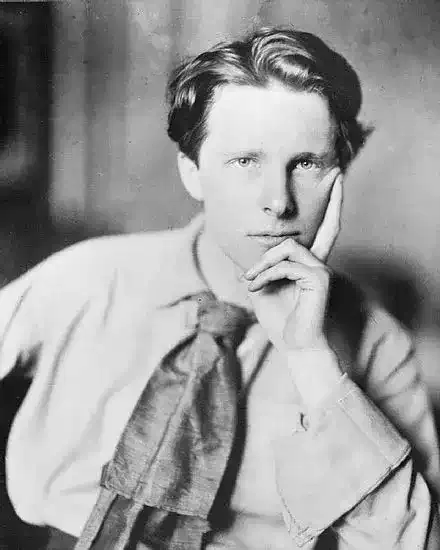
Rupert Brooke
Dawn
Dawn
Opposite me two Germans snore and sweat.
Through sullen swirling gloom we jolt and roar.
We have been here for ever: even yet
A dim watch tells two hours, two aeons, more.
The windows are tight-shut and slimy-wet
With a night's foetor. There are two hours more;
Two hours to dawn and Milan; two hours yet.
Opposite me two Germans sweat and snore. . . .
One of them wakes, and spits, and sleeps again.
The darkness shivers. A wan light through the rain
Strikes on our faces, drawn and white. Somewhere
A new day sprawls; and, inside, the foul air
Is chill, and damp, and fouler than before. . . .
Opposite me two Germans sweat and snore.
Opposite me two Germans snore and sweat.
Through sullen swirling gloom we jolt and roar.
We have been here for ever: even yet
A dim watch tells two hours, two aeons, more.
The windows are tight-shut and slimy-wet
With a night's foetor. There are two hours more;
Two hours to dawn and Milan; two hours yet.
Opposite me two Germans sweat and snore. . . .
One of them wakes, and spits, and sleeps again.
The darkness shivers. A wan light through the rain
Strikes on our faces, drawn and white. Somewhere
A new day sprawls; and, inside, the foul air
Is chill, and damp, and fouler than before. . . .
Opposite me two Germans sweat and snore.
204
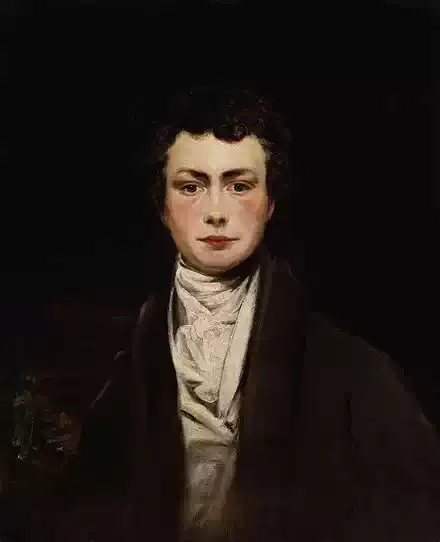
Thomas Moore
Oh, Banquet Not
Oh, Banquet Not
Oh, banquet not in those shining bowers,
Where Youth resorts, but come to me,
For mine's a garden of faded flowers,
More fit for sorrow, for age, and thee.
And there we shall have our feast of tears,
And many a cup in silence pour;
Our guests, the shades of former years,
Our toasts, to lips that bloom no more.
There, while the myrtle's withering boughs
Their lifeless leaves around us shed,
We'll brim the bowl to broken vows
To friends long lost, the changed, the dead.
Or, while some blighted laurel waves
Its branches o'er the dreary spot,
We'll drink to those neglected graves
Where valour sleeps, unnamed, forgot.
Oh, banquet not in those shining bowers,
Where Youth resorts, but come to me,
For mine's a garden of faded flowers,
More fit for sorrow, for age, and thee.
And there we shall have our feast of tears,
And many a cup in silence pour;
Our guests, the shades of former years,
Our toasts, to lips that bloom no more.
There, while the myrtle's withering boughs
Their lifeless leaves around us shed,
We'll brim the bowl to broken vows
To friends long lost, the changed, the dead.
Or, while some blighted laurel waves
Its branches o'er the dreary spot,
We'll drink to those neglected graves
Where valour sleeps, unnamed, forgot.
174
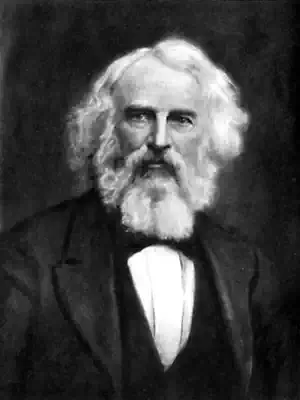
Henry Wadsworth Longfellow
Tales Of A Wayside Inn : Part 1. The Musician's Tale; The Saga of King Olaf I.
Tales Of A Wayside Inn : Part 1. The Musician's Tale; The Saga of King Olaf I.
-- The Challenge Of Thor
I am the God Thor,
I am the War God,
I am the Thunderer!
Here in my Northland,
My fastness and fortress,
Reign I forever!
Here amid icebergs
Rule I the nations;
This is my hammer,
Miölner the mighty;
Giants and sorcerers
Cannot withstand it!
These are the gauntlets
Wherewith I wield it,
And hurl it afar off;
This is my girdle;
Whenever I brace it,
Strength is redoubled!
The light thou beholdest
Stream through the heavens,
In flashes of crimson,
Is but my red beard
Blown by the night-wind,
Affrighting the nations!
Jove is my brother;
Mine eyes are the lightning;
The wheels of my chariot
Roll in the thunder,
The blows of my hammer
Ring in the earthquake!
Force rules the world still,
Has ruled it, shall rule it;
Meekness is weakness,
Strength is triumphant,
Over the whole earth
Still is it Thor's-Day!
Thou art a God too,
O Galilean!
And thus single-handed
Unto the combat,
Gauntlet or Gospel,
Here I defy thee!
-- The Challenge Of Thor
I am the God Thor,
I am the War God,
I am the Thunderer!
Here in my Northland,
My fastness and fortress,
Reign I forever!
Here amid icebergs
Rule I the nations;
This is my hammer,
Miölner the mighty;
Giants and sorcerers
Cannot withstand it!
These are the gauntlets
Wherewith I wield it,
And hurl it afar off;
This is my girdle;
Whenever I brace it,
Strength is redoubled!
The light thou beholdest
Stream through the heavens,
In flashes of crimson,
Is but my red beard
Blown by the night-wind,
Affrighting the nations!
Jove is my brother;
Mine eyes are the lightning;
The wheels of my chariot
Roll in the thunder,
The blows of my hammer
Ring in the earthquake!
Force rules the world still,
Has ruled it, shall rule it;
Meekness is weakness,
Strength is triumphant,
Over the whole earth
Still is it Thor's-Day!
Thou art a God too,
O Galilean!
And thus single-handed
Unto the combat,
Gauntlet or Gospel,
Here I defy thee!
258
Thomas Moore
Oh! Had We Some Bright Little Isle of Our Own
Oh! Had We Some Bright Little Isle of Our Own
Oh! had we some bright little isle of our own,
In a blue summer ocean, far off and alone,
Where a leaf never dies in the still blooming bowers,
And the bee banquets on through a whole year of flowers;
Where the sun loves to pause
With so fond a delay,
That the night only draws
A thin veil o'er the day;
Where simply to feel that we breathe, that we live,
Is worth the best joy that life elsewhere can give.
There with souls ever ardent and pure as the clime,
We should love, as they loved in the first golden time;
The glow of the sunshine, the balm of the air,
Would steal to our hearts, and make all summer there.
With affection as free
From decline as the bowers,
And, with hope, like the bee,
Living always on flowers,
Our life should resemble a long day of light,
And our death come on, holy and calm as the night.
Oh! had we some bright little isle of our own,
In a blue summer ocean, far off and alone,
Where a leaf never dies in the still blooming bowers,
And the bee banquets on through a whole year of flowers;
Where the sun loves to pause
With so fond a delay,
That the night only draws
A thin veil o'er the day;
Where simply to feel that we breathe, that we live,
Is worth the best joy that life elsewhere can give.
There with souls ever ardent and pure as the clime,
We should love, as they loved in the first golden time;
The glow of the sunshine, the balm of the air,
Would steal to our hearts, and make all summer there.
With affection as free
From decline as the bowers,
And, with hope, like the bee,
Living always on flowers,
Our life should resemble a long day of light,
And our death come on, holy and calm as the night.
156
Rupert Brooke
Choriambics II
Choriambics II
Here the flame that was ash, shrine that was void,
lost in the haunted wood,
I have tended and loved, year upon year, I in the solitude
Waiting, quiet and glad-eyed in the dark, knowing that once a gleam
Glowed and went through the wood. Still I abode strong in a golden dream,
Unrecaptured.
For I, I that had faith, knew that a face would glance
One day, white in the dim woods, and a voice call, and a radiance
Fill the grove, and the fire suddenly leap . . . and, in the heart of it,
End of labouring, you! Therefore I kept ready the altar, lit
The flame, burning apart.
Face of my dreams vainly in vision white
Gleaming down to me, lo! hopeless I rise now. For about midnight
Whispers grew through the wood suddenly, strange cries in the boughs above
Grated, cries like a laugh. Silent and black then through the sacred grove
Great birds flew, as a dream, troubling the leaves, passing at length.
I knew
Long expected and long loved, that afar, God of the dim wood, you
Somewhere lay, as a child sleeping, a child suddenly reft from mirth,
White and wonderful yet, white in your youth, stretched upon foreign earth,
God, immortal and dead!
Therefore I go; never to rest, or win
Peace, and worship of you more, and the dumb wood and the shrine therein.
Here the flame that was ash, shrine that was void,
lost in the haunted wood,
I have tended and loved, year upon year, I in the solitude
Waiting, quiet and glad-eyed in the dark, knowing that once a gleam
Glowed and went through the wood. Still I abode strong in a golden dream,
Unrecaptured.
For I, I that had faith, knew that a face would glance
One day, white in the dim woods, and a voice call, and a radiance
Fill the grove, and the fire suddenly leap . . . and, in the heart of it,
End of labouring, you! Therefore I kept ready the altar, lit
The flame, burning apart.
Face of my dreams vainly in vision white
Gleaming down to me, lo! hopeless I rise now. For about midnight
Whispers grew through the wood suddenly, strange cries in the boughs above
Grated, cries like a laugh. Silent and black then through the sacred grove
Great birds flew, as a dream, troubling the leaves, passing at length.
I knew
Long expected and long loved, that afar, God of the dim wood, you
Somewhere lay, as a child sleeping, a child suddenly reft from mirth,
White and wonderful yet, white in your youth, stretched upon foreign earth,
God, immortal and dead!
Therefore I go; never to rest, or win
Peace, and worship of you more, and the dumb wood and the shrine therein.
185

Robert W. Service
No Sourdough
No Sourdough
To be a bony feed Sourdough
You must, by Yukon Law,
Have killed a moose,
And robbed a sluice,
AND BUNKED UP WITH A SQUAW. . . .
Alas! Sourdough I'll never be.
Oh, sad is my excuse:
My shooting's so damn bad, you see . . .
I've never killed a moose.
To be a bony feed Sourdough
You must, by Yukon Law,
Have killed a moose,
And robbed a sluice,
AND BUNKED UP WITH A SQUAW. . . .
Alas! Sourdough I'll never be.
Oh, sad is my excuse:
My shooting's so damn bad, you see . . .
I've never killed a moose.
216
Thomas Moore
Oh! Breathe Not His Name
Oh! Breathe Not His Name
Oh! breathe not his name, let it sleep in the shade,
Where cold and unhonour'd his relics are laid:
Sad, silent, and dark, be the tears that we shed,
As the night-dew that falls on the grass o'er his head.
But the night-dew that falls, though in silence it weeps,
Shall brighten with verdure the grave where he sleeps;
And the tear that we shed, though in secret it rolls,
Shall long keep his memory green in our souls.
Oh! breathe not his name, let it sleep in the shade,
Where cold and unhonour'd his relics are laid:
Sad, silent, and dark, be the tears that we shed,
As the night-dew that falls on the grass o'er his head.
But the night-dew that falls, though in silence it weeps,
Shall brighten with verdure the grave where he sleeps;
And the tear that we shed, though in secret it rolls,
Shall long keep his memory green in our souls.
137
Rupert Brooke
Choriambics -- II
Choriambics -- II
Here the flame that was ash, shrine that was void,
lost in the haunted wood,
I have tended and loved, year upon year, I in the solitude
Waiting, quiet and glad-eyed in the dark, knowing that once a gleam
Glowed and went through the wood. Still I abode strong in a golden dream,
Unrecaptured.
For I, I that had faith, knew that a face would glance
One day, white in the dim woods, and a voice call, and a radiance
Fill the grove, and the fire suddenly leap . . . and, in the heart of it,
End of labouring, you! Therefore I kept ready the altar, lit
The flame, burning apart.
Face of my dreams vainly in vision white
Gleaming down to me, lo! hopeless I rise now. For about midnight
Whispers grew through the wood suddenly, strange cries in the boughs above
Grated, cries like a laugh. Silent and black then through the sacred grove
Great birds flew, as a dream, troubling the leaves, passing at length.
I knew
Long expected and long loved, that afar, God of the dim wood, you
Somewhere lay, as a child sleeping, a child suddenly reft from mirth,
White and wonderful yet, white in your youth, stretched upon foreign earth,
God, immortal and dead!
Therefore I go; never to rest, or win
Peace, and worship of you more, and the dumb wood and the shrine therein.
Here the flame that was ash, shrine that was void,
lost in the haunted wood,
I have tended and loved, year upon year, I in the solitude
Waiting, quiet and glad-eyed in the dark, knowing that once a gleam
Glowed and went through the wood. Still I abode strong in a golden dream,
Unrecaptured.
For I, I that had faith, knew that a face would glance
One day, white in the dim woods, and a voice call, and a radiance
Fill the grove, and the fire suddenly leap . . . and, in the heart of it,
End of labouring, you! Therefore I kept ready the altar, lit
The flame, burning apart.
Face of my dreams vainly in vision white
Gleaming down to me, lo! hopeless I rise now. For about midnight
Whispers grew through the wood suddenly, strange cries in the boughs above
Grated, cries like a laugh. Silent and black then through the sacred grove
Great birds flew, as a dream, troubling the leaves, passing at length.
I knew
Long expected and long loved, that afar, God of the dim wood, you
Somewhere lay, as a child sleeping, a child suddenly reft from mirth,
White and wonderful yet, white in your youth, stretched upon foreign earth,
God, immortal and dead!
Therefore I go; never to rest, or win
Peace, and worship of you more, and the dumb wood and the shrine therein.
139
Henry Wadsworth Longfellow
Tales Of A Wayside Inn : Part 1. Prelude; The Wayside Inn
Tales Of A Wayside Inn : Part 1. Prelude; The Wayside Inn
One Autumn night, in Sudbury town,
Across the meadows bare and brown,
The windows of the wayside inn
Gleamed red with fire-light through the leaves
Of woodbine, hanging from the eaves
Their crimson curtains rent and thin.
As ancient is this hostelry
As any in the land may be,
Built in the old Colonial day,
When men lived in a grander way,
With ampler hospitality;
A kind of old Hobgoblin Hall,
Now somewhat fallen to decay,
With weather-stains upon the wall,
And stairways worn, and crazy doors,
And creaking and uneven floors,
And chimneys huge, and tiled and tall.
A region of repose it seems,
A place of slumber and of dreams,
Remote among the wooded hills!
For there no noisy railway speeds,
Its torch-race scattering smoke and gleeds;
But noon and night, the panting teams
Stop under the great oaks, that throw
Tangles of light and shade below,
On roofs and doors and window-sills.
Across the road the barns display
Their lines of stalls, their mows of hay,
Through the wide doors the breezes blow,
The wattled cocks strut to and fro,
And, half effaced by rain and shine,
The Red Horse prances on the sign.
Round this old-fashioned, quaint abode
Deep silence reigned, save when a gust
Went rushing down the county road,
And skeletons of leaves, and dust,
A moment quickened by its breath,
Shuddered and danced their dance of death,
And through the ancient oaks o'erhead
Mysterious voices moaned and fled.
But from the parlor of the inn
A pleasant murmur smote the ear,
Like water rushing through a weir:
Oft interrupted by the din
Of laughter and of loud applause,
And, in each intervening pause,
The music of a violin.
The fire-light, shedding over all
The splendor of its ruddy glow,
Filled the whole parlor large and low;
It gleamed on wainscot and on wall,
It touched with more than wonted grace
Fair Princess Mary's pictured face;
It bronzed the rafters overhead,
On the old spinet's ivory keys
It played inaudible melodies,
It crowned the sombre clock with flame,
The hands, the hours, the maker's name,
And painted with a livelier red
The Landlord's coat-of-arms again;
And, flashing on the window-pane,
Emblazoned with its light and shade
The jovial rhymes, that still remain,
Writ near a century ago,
By the great Major Molineaux,
Whom Hawthorne has immortal made.
Before the blazing fire of wood
Erect the rapt musician stood;
And ever and anon he bent
His head upon his instrument,
And seemed to listen, till he caught
Confessions of its secret thought,--
The joy, the triumph, the lament,
The exultation and the pain;
Then, by the magic of his art,
He soothed the throbbings of its heart,
And lulled it into peace again.
Around the fireside at their ease
There sat a group of friends, entranced
With the delicious melodies
Who from the far-off noisy town
Had to the wayside inn come down,
To rest beneath its old oak-trees.
The fire-light on their faces glanced,
Their shadows on the wainscot danced,
And, though of different lands and speech,
Each had his tale to tell, and each
Was anxious to be pleased and please.
And while the sweet musician plays,
Let me in outline sketch them all,
Perchance uncouthly as the blaze
With its uncertain touch portrays
Their shadowy semblance on the wall.
But first the Landlord will I trace;
Grave in his aspect and attire;
A man of ancient pedigree,
A Justice of the Peace was he,
Known in all Sudbury as 'The Squire.'
Proud was he of his name and race,
Of old Sir William and Sir Hugh,
And in the parlor, full in view,
His coat-of-arms, well framed and glazed,
Upon the wall in colors blazed;
He beareth gules upon his shield,
A chevron argent in the field,
With three wolf's-heads, and for the crest
A Wyvern part-per-pale addressed
Upon a helmet barred; below
The scroll reads, 'By the name of Howe.'
And over this, no longer bright,
Though glimmering with a latent light,
Was hung the sword his grandsire bore
In the rebellious days of yore,
Down there at Concord in the fight.
A youth was there, of quiet ways,
A Student of old books and days,
To whom all tongues and lands were known,
And yet a lover of his own;
With many a social virtue graced,
And yet a friend of solitude;
A man of such a genial mood
The heart of all things he embraced,
And yet of such fastidious taste,
He never found the best too good.
Books were his passion and delight,
And in his upper room at home
Stood many a rare and sumptuous tome,
In vellum bound, with gold bedight,
Great volumes garmented in white,
Recalling Florence, Pisa, Rome.
He loved the twilight that surrounds
The border-land of old romance;
Where glitter hauberk, helm, and lance,
And banner waves, and trumpet sounds,
And ladies ride with hawk on wrist,
And mighty warriors sweep along,
Magnified by the purple mist,
The dusk of centuries and of song.
The chronicles of Charlemagne,
Of Merlin and the Mort d'Arthure,
Mingled together in his brain
With tales of Flores and Blanchefleur,
Sir Ferumbras, Sir Eglamour,
Sir Launcelot, Sir Morgadour,
Sir Guy, Sir Bevis, Sir Gawain.
A young Sicilian, too, was there;
In sight of Etna born and bred,
Some breath of its volcanic air
Was glowing in his heart and brain,
And, being rebellious to his liege,
After Palermo's fatal siege,
Across the western seas he fled,
In good King Bomba's happy reign.
His face was like a summer night,
All flooded with a dusky light;
His hands were small; his teeth shone white
As sea-shells, when he smiled or spoke;
His sinews supple and strong as oak;
Clean shaven was he as a priest,
Who at the mass on Sunday sings,
Save that upon his upper lip
His beard, a good palm's length least,
Level and pointed at the tip,
Shot sideways, like a swallow's wings.
The poets read he o'er and o'er,
And most of all the Immortal Four
Of Italy; and next to those,
The story-telling bard of prose,
Who wrote the joyous Tuscan tales
Of the Decameron, that make
Fiesole's green hills and vales
Remembered for Boccaccio's sake.
Much too of music was his thought;
The melodies and measures fraught
With sunshine and the open air,
Of vineyards and the singing sea
Of his beloved Sicily;
And much it pleased him to peruse
The songs of the Sicilian muse,--
Bucolic songs by Meli sung
In the familiar peasant tongue,
That made men say, 'Behold! once more
The pitying gods to earth restore
Theocritus of Syracuse!'
A Spanish Jew from Alicant
With aspect grand and grave was there;
Vender of silks and fabrics rare,
And attar of rose from the Levant.
Like an old Patriarch he appeared,
Abraham or Isaac, or at least
Some later Prophet or High-Priest;
With lustrous eyes, and olive skin,
And, wildly tossed from cheeks and chin,
The tumbling cataract of his beard.
His garments breathed a spicy scent
Of cinnamon and sandal blent,
Like the soft aromatic gales
That meet the mariner, who sails
Through the Moluccas, and the seas
That wash the shores of Celebes.
All stories that recorded are
By Pierre Alphonse he knew by heart,
And it was rumored he could say
The Parables of Sandabar,
And all the Fables of Pilpay,
Or if not all, the greater part!
Well versed was he in Hebrew books,
Talmud and Targum, and the lore
Of Kabala; and evermore
There was a mystery in his looks;
His eyes seemed gazing far away,
As if in vision or in trance
He heard the solemn sackbut play,
And saw the Jewish maidens dance.
A Theologian, from the school
Of Cambridge on the Charles, was there;
Skilful alike with tongue and pen,
He preached to all men everywhere
The Gospel of the Golden Rule,
The New Commandment given to men,
Thinking the deed, and not the creed,
Would help us in our utmost need.
With reverent feet the earth he trod,
Nor banished nature from his plan,
But studied still with deep research
To build the Universal Church,
Lofty as in the love of God,
And ample as the wants of man.
A Poet, too, was there, whose verse
Was tender, musical, and terse;
The inspiration, the delight,
The gleam, the glory, the swift flight,
Of thoughts so sudden, that they seem
The revelations of a dream,
All these were his; but with them came
No envy of another's fame;
He did not find his sleep less sweet,
For music in some neighboring street
Nor rustling hear in every breeze
The laurels of Miltiades.
Honor and blessings on his head
While living, good report when dead,
Who, not too eager for renown,
Accepts, but does not clutch, the crown!
Last the Musician, as he stood
Illumined by that fire of wood;
Fair-haired, blue-eyed, his aspect blithe,
His figure tall and straight and lithe,
And every feature of his face
Revealing his Norwegian race;
A radiance, streaming from within,
Around his eyes and forehead beamed,
The Angel with the violin,
Painted by Raphael, he seemed.
He lived in that ideal world
Whose language is not speech, but song;
Around him evermore the throng
Of elves and sprites their dances whirled;
The Strömkarl sang, the cataract hurled
Its headlong waters from the height;
And mingled in the wild delight
The scream of sea-birds in their flight,
The rumor of the forest trees,
The plunge of the implacable seas,
The tumult of the wind at night,
Voices of eld, like trumpets blowing,
Old ballads, and wild melodies
Through mist and darkness pouring forth,
Like Elivagar's river flowing
Out of the glaciers of the North.
The instrument on which he played
Was in Cremona's workshops made,
By a great master of the past,
Ere yet was lost the art divine;
Fashioned of maple and of pine,
That in Tyrolean forests vast
Had rocked and wrestled with the blast;
Exquisite was it in design,
Perfect in each minutest part,
A marvel of the lutist's art;
And in its hollow chamber, thus,
The maker from whose hands it came
Had written his unrivalled name,-'
Antonius Stradivarius.'
And when he played, the atmosphere
Was filled with magic, and the ear
Caught echoes of that Harp of Gold,
Whose music had so weird a sound,
The hunted stag forgot to bound,
The leaping rivulet backward rolled,
The birds came down from bush and tree,
The dead came from beneath the sea,
The maiden to the harper's knee!
The music ceased; the applause was loud,
The pleased musician smiled and bowed;
The wood-fire clapped its hands of flame,
The shadows on the wainscot stirred,
And from the harpsichord there came
A ghostly murmur of acclaim,
A sound like that sent down at night
By birds of passage in their flight,
From the remotest distance heard.
Then silence followed; then began
A clamor for the Landlord's tale,--
The story promised them of old,
They said, but always left untold;
And he, although a bashful man,
And all his courage seemed to fail,
Finding excuse of no avail,
Yielded; and thus the story ran.
One Autumn night, in Sudbury town,
Across the meadows bare and brown,
The windows of the wayside inn
Gleamed red with fire-light through the leaves
Of woodbine, hanging from the eaves
Their crimson curtains rent and thin.
As ancient is this hostelry
As any in the land may be,
Built in the old Colonial day,
When men lived in a grander way,
With ampler hospitality;
A kind of old Hobgoblin Hall,
Now somewhat fallen to decay,
With weather-stains upon the wall,
And stairways worn, and crazy doors,
And creaking and uneven floors,
And chimneys huge, and tiled and tall.
A region of repose it seems,
A place of slumber and of dreams,
Remote among the wooded hills!
For there no noisy railway speeds,
Its torch-race scattering smoke and gleeds;
But noon and night, the panting teams
Stop under the great oaks, that throw
Tangles of light and shade below,
On roofs and doors and window-sills.
Across the road the barns display
Their lines of stalls, their mows of hay,
Through the wide doors the breezes blow,
The wattled cocks strut to and fro,
And, half effaced by rain and shine,
The Red Horse prances on the sign.
Round this old-fashioned, quaint abode
Deep silence reigned, save when a gust
Went rushing down the county road,
And skeletons of leaves, and dust,
A moment quickened by its breath,
Shuddered and danced their dance of death,
And through the ancient oaks o'erhead
Mysterious voices moaned and fled.
But from the parlor of the inn
A pleasant murmur smote the ear,
Like water rushing through a weir:
Oft interrupted by the din
Of laughter and of loud applause,
And, in each intervening pause,
The music of a violin.
The fire-light, shedding over all
The splendor of its ruddy glow,
Filled the whole parlor large and low;
It gleamed on wainscot and on wall,
It touched with more than wonted grace
Fair Princess Mary's pictured face;
It bronzed the rafters overhead,
On the old spinet's ivory keys
It played inaudible melodies,
It crowned the sombre clock with flame,
The hands, the hours, the maker's name,
And painted with a livelier red
The Landlord's coat-of-arms again;
And, flashing on the window-pane,
Emblazoned with its light and shade
The jovial rhymes, that still remain,
Writ near a century ago,
By the great Major Molineaux,
Whom Hawthorne has immortal made.
Before the blazing fire of wood
Erect the rapt musician stood;
And ever and anon he bent
His head upon his instrument,
And seemed to listen, till he caught
Confessions of its secret thought,--
The joy, the triumph, the lament,
The exultation and the pain;
Then, by the magic of his art,
He soothed the throbbings of its heart,
And lulled it into peace again.
Around the fireside at their ease
There sat a group of friends, entranced
With the delicious melodies
Who from the far-off noisy town
Had to the wayside inn come down,
To rest beneath its old oak-trees.
The fire-light on their faces glanced,
Their shadows on the wainscot danced,
And, though of different lands and speech,
Each had his tale to tell, and each
Was anxious to be pleased and please.
And while the sweet musician plays,
Let me in outline sketch them all,
Perchance uncouthly as the blaze
With its uncertain touch portrays
Their shadowy semblance on the wall.
But first the Landlord will I trace;
Grave in his aspect and attire;
A man of ancient pedigree,
A Justice of the Peace was he,
Known in all Sudbury as 'The Squire.'
Proud was he of his name and race,
Of old Sir William and Sir Hugh,
And in the parlor, full in view,
His coat-of-arms, well framed and glazed,
Upon the wall in colors blazed;
He beareth gules upon his shield,
A chevron argent in the field,
With three wolf's-heads, and for the crest
A Wyvern part-per-pale addressed
Upon a helmet barred; below
The scroll reads, 'By the name of Howe.'
And over this, no longer bright,
Though glimmering with a latent light,
Was hung the sword his grandsire bore
In the rebellious days of yore,
Down there at Concord in the fight.
A youth was there, of quiet ways,
A Student of old books and days,
To whom all tongues and lands were known,
And yet a lover of his own;
With many a social virtue graced,
And yet a friend of solitude;
A man of such a genial mood
The heart of all things he embraced,
And yet of such fastidious taste,
He never found the best too good.
Books were his passion and delight,
And in his upper room at home
Stood many a rare and sumptuous tome,
In vellum bound, with gold bedight,
Great volumes garmented in white,
Recalling Florence, Pisa, Rome.
He loved the twilight that surrounds
The border-land of old romance;
Where glitter hauberk, helm, and lance,
And banner waves, and trumpet sounds,
And ladies ride with hawk on wrist,
And mighty warriors sweep along,
Magnified by the purple mist,
The dusk of centuries and of song.
The chronicles of Charlemagne,
Of Merlin and the Mort d'Arthure,
Mingled together in his brain
With tales of Flores and Blanchefleur,
Sir Ferumbras, Sir Eglamour,
Sir Launcelot, Sir Morgadour,
Sir Guy, Sir Bevis, Sir Gawain.
A young Sicilian, too, was there;
In sight of Etna born and bred,
Some breath of its volcanic air
Was glowing in his heart and brain,
And, being rebellious to his liege,
After Palermo's fatal siege,
Across the western seas he fled,
In good King Bomba's happy reign.
His face was like a summer night,
All flooded with a dusky light;
His hands were small; his teeth shone white
As sea-shells, when he smiled or spoke;
His sinews supple and strong as oak;
Clean shaven was he as a priest,
Who at the mass on Sunday sings,
Save that upon his upper lip
His beard, a good palm's length least,
Level and pointed at the tip,
Shot sideways, like a swallow's wings.
The poets read he o'er and o'er,
And most of all the Immortal Four
Of Italy; and next to those,
The story-telling bard of prose,
Who wrote the joyous Tuscan tales
Of the Decameron, that make
Fiesole's green hills and vales
Remembered for Boccaccio's sake.
Much too of music was his thought;
The melodies and measures fraught
With sunshine and the open air,
Of vineyards and the singing sea
Of his beloved Sicily;
And much it pleased him to peruse
The songs of the Sicilian muse,--
Bucolic songs by Meli sung
In the familiar peasant tongue,
That made men say, 'Behold! once more
The pitying gods to earth restore
Theocritus of Syracuse!'
A Spanish Jew from Alicant
With aspect grand and grave was there;
Vender of silks and fabrics rare,
And attar of rose from the Levant.
Like an old Patriarch he appeared,
Abraham or Isaac, or at least
Some later Prophet or High-Priest;
With lustrous eyes, and olive skin,
And, wildly tossed from cheeks and chin,
The tumbling cataract of his beard.
His garments breathed a spicy scent
Of cinnamon and sandal blent,
Like the soft aromatic gales
That meet the mariner, who sails
Through the Moluccas, and the seas
That wash the shores of Celebes.
All stories that recorded are
By Pierre Alphonse he knew by heart,
And it was rumored he could say
The Parables of Sandabar,
And all the Fables of Pilpay,
Or if not all, the greater part!
Well versed was he in Hebrew books,
Talmud and Targum, and the lore
Of Kabala; and evermore
There was a mystery in his looks;
His eyes seemed gazing far away,
As if in vision or in trance
He heard the solemn sackbut play,
And saw the Jewish maidens dance.
A Theologian, from the school
Of Cambridge on the Charles, was there;
Skilful alike with tongue and pen,
He preached to all men everywhere
The Gospel of the Golden Rule,
The New Commandment given to men,
Thinking the deed, and not the creed,
Would help us in our utmost need.
With reverent feet the earth he trod,
Nor banished nature from his plan,
But studied still with deep research
To build the Universal Church,
Lofty as in the love of God,
And ample as the wants of man.
A Poet, too, was there, whose verse
Was tender, musical, and terse;
The inspiration, the delight,
The gleam, the glory, the swift flight,
Of thoughts so sudden, that they seem
The revelations of a dream,
All these were his; but with them came
No envy of another's fame;
He did not find his sleep less sweet,
For music in some neighboring street
Nor rustling hear in every breeze
The laurels of Miltiades.
Honor and blessings on his head
While living, good report when dead,
Who, not too eager for renown,
Accepts, but does not clutch, the crown!
Last the Musician, as he stood
Illumined by that fire of wood;
Fair-haired, blue-eyed, his aspect blithe,
His figure tall and straight and lithe,
And every feature of his face
Revealing his Norwegian race;
A radiance, streaming from within,
Around his eyes and forehead beamed,
The Angel with the violin,
Painted by Raphael, he seemed.
He lived in that ideal world
Whose language is not speech, but song;
Around him evermore the throng
Of elves and sprites their dances whirled;
The Strömkarl sang, the cataract hurled
Its headlong waters from the height;
And mingled in the wild delight
The scream of sea-birds in their flight,
The rumor of the forest trees,
The plunge of the implacable seas,
The tumult of the wind at night,
Voices of eld, like trumpets blowing,
Old ballads, and wild melodies
Through mist and darkness pouring forth,
Like Elivagar's river flowing
Out of the glaciers of the North.
The instrument on which he played
Was in Cremona's workshops made,
By a great master of the past,
Ere yet was lost the art divine;
Fashioned of maple and of pine,
That in Tyrolean forests vast
Had rocked and wrestled with the blast;
Exquisite was it in design,
Perfect in each minutest part,
A marvel of the lutist's art;
And in its hollow chamber, thus,
The maker from whose hands it came
Had written his unrivalled name,-'
Antonius Stradivarius.'
And when he played, the atmosphere
Was filled with magic, and the ear
Caught echoes of that Harp of Gold,
Whose music had so weird a sound,
The hunted stag forgot to bound,
The leaping rivulet backward rolled,
The birds came down from bush and tree,
The dead came from beneath the sea,
The maiden to the harper's knee!
The music ceased; the applause was loud,
The pleased musician smiled and bowed;
The wood-fire clapped its hands of flame,
The shadows on the wainscot stirred,
And from the harpsichord there came
A ghostly murmur of acclaim,
A sound like that sent down at night
By birds of passage in their flight,
From the remotest distance heard.
Then silence followed; then began
A clamor for the Landlord's tale,--
The story promised them of old,
They said, but always left untold;
And he, although a bashful man,
And all his courage seemed to fail,
Finding excuse of no avail,
Yielded; and thus the story ran.
400
Rupert Brooke
Chilterns, The
Chilterns, The
Your hands, my dear, adorable,
Your lips of tenderness
-- Oh, I've loved you faithfully and well,
Three years, or a bit less.
It wasn't a success.
Thank God, that's done! and I'll take the road,
Quit of my youth and you,
The Roman road to Wendover
By Tring and Lilley Hoo,
As a free man may do.
For youth goes over, the joys that fly,
The tears that follow fast;
And the dirtiest things we do must lie
Forgotten at the last;
Even Love goes past.
What's left behind I shall not find,
The splendour and the pain;
The splash of sun, the shouting wind,
And the brave sting of rain,
I may not meet again.
But the years, that take the best away,
Give something in the end;
And a better friend than love have they,
For none to mar or mend,
That have themselves to friend.
I shall desire and I shall find
The best of my desires;
The autumn road, the mellow wind
That soothes the darkening shires.
And laughter, and inn-fires.
White mist about the black hedgerows,
The slumbering Midland plain,
The silence where the clover grows,
And the dead leaves in the lane,
Certainly, these remain.
And I shall find some girl perhaps,
And a better one than you,
With eyes as wise, but kindlier,
And lips as soft, but true.
And I daresay she will do.
Your hands, my dear, adorable,
Your lips of tenderness
-- Oh, I've loved you faithfully and well,
Three years, or a bit less.
It wasn't a success.
Thank God, that's done! and I'll take the road,
Quit of my youth and you,
The Roman road to Wendover
By Tring and Lilley Hoo,
As a free man may do.
For youth goes over, the joys that fly,
The tears that follow fast;
And the dirtiest things we do must lie
Forgotten at the last;
Even Love goes past.
What's left behind I shall not find,
The splendour and the pain;
The splash of sun, the shouting wind,
And the brave sting of rain,
I may not meet again.
But the years, that take the best away,
Give something in the end;
And a better friend than love have they,
For none to mar or mend,
That have themselves to friend.
I shall desire and I shall find
The best of my desires;
The autumn road, the mellow wind
That soothes the darkening shires.
And laughter, and inn-fires.
White mist about the black hedgerows,
The slumbering Midland plain,
The silence where the clover grows,
And the dead leaves in the lane,
Certainly, these remain.
And I shall find some girl perhaps,
And a better one than you,
With eyes as wise, but kindlier,
And lips as soft, but true.
And I daresay she will do.
190
Thomas Moore
Oh! Arranmore, Loved Arranmore
Oh! Arranmore, Loved Arranmore
Oh! Arranmore, loved Arranmore,
How oft I dream of thee,
And of those days when, by thy shore,
I wander'd young and free.
Full many a path I've tried, since then,
Through pleasure's flowery maze,
But ne'er could find the bliss again
I felt in those sweet days.
How blithe upon thy breezy cliffs
At sunny morn I've stood,
With heart as bounding as the skiffs
That danced along thy flood;
Or, when the western wave grew bright
With daylight's parting wing,
Have sought that Eden in its light
Which dreaming poets sing;
That Eden where the immortal brave
Dwell in a land serene --
Whose bowers beyond the shining wave
At sunset, oft are seen.
Ah, dream too full of saddening truth!
Those mansions o'er the main
Are like the hopes I built in youth --
As sunny and as vain!
Oh! Arranmore, loved Arranmore,
How oft I dream of thee,
And of those days when, by thy shore,
I wander'd young and free.
Full many a path I've tried, since then,
Through pleasure's flowery maze,
But ne'er could find the bliss again
I felt in those sweet days.
How blithe upon thy breezy cliffs
At sunny morn I've stood,
With heart as bounding as the skiffs
That danced along thy flood;
Or, when the western wave grew bright
With daylight's parting wing,
Have sought that Eden in its light
Which dreaming poets sing;
That Eden where the immortal brave
Dwell in a land serene --
Whose bowers beyond the shining wave
At sunset, oft are seen.
Ah, dream too full of saddening truth!
Those mansions o'er the main
Are like the hopes I built in youth --
As sunny and as vain!
192
Robert W. Service
No More Music
No More Music
The Porch was blazoned with geranium bloom;
Myrtle and jasmine meadows lit the lea;
With rose and violet the vale's perfume
Languished to where the hyacinthine sea
Dreamed tenderly . . . "And I must go," said he.
He spoke in that dim, ghostly voice of his:
"I was a singer; then the Was . . . and GAS."
(I had to lean to him, no word to miss.)
"We bought this little café nigh to Grasse;
With sun and flowers my last few days will pass.
"And music too. I have my mandolin:
Say! Maybe you can strum on your guitar . . .
Come on - we two will make melodious din,
While Madame sings to us behind the bar:
You'll see how sweet Italian folk-songs are."
So he would play and I would thrum the while;
I used to there every lovely day;
His wife would listen with a sunny smile,
And when I left: "Please come again," she'd say.
"He seems quite sad when you have one away."
Alas! I had to leave without good-bye,
And lived in sooty cities for ayear.
Oh, how my heart ached for that happy sky!
Then, then one day my café I drew near -
God! it was strange how I was gripped with fear.
So still it was; I saw no mandolin,
No gay guitar with ribbons blue and red;
Then all in black, stone-faced the wife came in . . .
I did not ask; I looked, she shook her head:
"La musique est fini," was all she said.
The Porch was blazoned with geranium bloom;
Myrtle and jasmine meadows lit the lea;
With rose and violet the vale's perfume
Languished to where the hyacinthine sea
Dreamed tenderly . . . "And I must go," said he.
He spoke in that dim, ghostly voice of his:
"I was a singer; then the Was . . . and GAS."
(I had to lean to him, no word to miss.)
"We bought this little café nigh to Grasse;
With sun and flowers my last few days will pass.
"And music too. I have my mandolin:
Say! Maybe you can strum on your guitar . . .
Come on - we two will make melodious din,
While Madame sings to us behind the bar:
You'll see how sweet Italian folk-songs are."
So he would play and I would thrum the while;
I used to there every lovely day;
His wife would listen with a sunny smile,
And when I left: "Please come again," she'd say.
"He seems quite sad when you have one away."
Alas! I had to leave without good-bye,
And lived in sooty cities for ayear.
Oh, how my heart ached for that happy sky!
Then, then one day my café I drew near -
God! it was strange how I was gripped with fear.
So still it was; I saw no mandolin,
No gay guitar with ribbons blue and red;
Then all in black, stone-faced the wife came in . . .
I did not ask; I looked, she shook her head:
"La musique est fini," was all she said.
237
Rupert Brooke
Call, The
Call, The
Out of the nothingness of sleep,
The slow dreams of Eternity,
There was a thunder on the deep:
I came, because you called to me.
I broke the Night's primeval bars,
I dared the old abysmal curse,
And flashed through ranks of frightened stars
Suddenly on the universe!
The eternal silences were broken;
Hell became Heaven as I passed. --
What shall I give you as a token,
A sign that we have met, at last?
I'll break and forge the stars anew,
Shatter the heavens with a song;
Immortal in my love for you,
Because I love you, very strong.
Your mouth shall mock the old and wise,
Your laugh shall fill the world with flame,
I'll write upon the shrinking skies
The scarlet splendour of your name,
Till Heaven cracks, and Hell thereunder
Dies in her ultimate mad fire,
And darkness falls, with scornful thunder,
On dreams of men and men's desire.
Then only in the empty spaces,
Death, walking very silently,
Shall fear the glory of our faces
Through all the dark infinity.
So, clothed about with perfect love,
The eternal end shall find us one,
Alone above the Night, above
The dust of the dead gods, alone.
Out of the nothingness of sleep,
The slow dreams of Eternity,
There was a thunder on the deep:
I came, because you called to me.
I broke the Night's primeval bars,
I dared the old abysmal curse,
And flashed through ranks of frightened stars
Suddenly on the universe!
The eternal silences were broken;
Hell became Heaven as I passed. --
What shall I give you as a token,
A sign that we have met, at last?
I'll break and forge the stars anew,
Shatter the heavens with a song;
Immortal in my love for you,
Because I love you, very strong.
Your mouth shall mock the old and wise,
Your laugh shall fill the world with flame,
I'll write upon the shrinking skies
The scarlet splendour of your name,
Till Heaven cracks, and Hell thereunder
Dies in her ultimate mad fire,
And darkness falls, with scornful thunder,
On dreams of men and men's desire.
Then only in the empty spaces,
Death, walking very silently,
Shall fear the glory of our faces
Through all the dark infinity.
So, clothed about with perfect love,
The eternal end shall find us one,
Alone above the Night, above
The dust of the dead gods, alone.
191
Thomas Moore
Oft, in the Stilly Night
Oft, in the Stilly Night
Oft, in the stilly night,
Ere slumber's chain has bound me,
Fond memory brings the light
Of other days around me;
The smiles, the tears,
Of boyhood's years,
The words of love then spoken;
The eyes that shone,
Now dimm'd and gone,
The cheerful hearts now broken!
Thus, in the stilly night,
Ere slumber's chain hath bound me,
Sad memory brings the light
Of other days around me.
When I remember all
The friends, so link'd together,
I've seen around me fall,
Like leaves in wintry weather;
I feel like one
Who treads alone
Some banquet-hall deserted,
Whose lights are fled,
Whose garlands dead,
And all but he departed!
Thus, in the stilly night,
Ere slumber's chain has bound me,
Sad memory brings the light
Of other days around me.
Oft, in the stilly night,
Ere slumber's chain has bound me,
Fond memory brings the light
Of other days around me;
The smiles, the tears,
Of boyhood's years,
The words of love then spoken;
The eyes that shone,
Now dimm'd and gone,
The cheerful hearts now broken!
Thus, in the stilly night,
Ere slumber's chain hath bound me,
Sad memory brings the light
Of other days around me.
When I remember all
The friends, so link'd together,
I've seen around me fall,
Like leaves in wintry weather;
I feel like one
Who treads alone
Some banquet-hall deserted,
Whose lights are fled,
Whose garlands dead,
And all but he departed!
Thus, in the stilly night,
Ere slumber's chain has bound me,
Sad memory brings the light
Of other days around me.
446
Henry Wadsworth Longfellow
Tales Of A Wayside Inn : Part 1. Interlude V.
Tales Of A Wayside Inn : Part 1. Interlude V.
A strain of music closed the tale,
A low, monotonous, funeral wail,
That with its cadence, wild and sweet,
Made the long Saga more complete.
'Thank God,' the Theologian said,
'The reign of violence is dead,
Or dying surely from the world;
While Love triumphant reigns instead,
And in a brighter sky o'erhead
His blessed banners are unfurled.
And most of all thank God for this:
The war and waste of clashing creeds
Now end in words, and not in deeds,
And no one suffers loss, or bleeds,
For thoughts that men call heresies.
'I stand without here in the porch,
I hear the bell's melodious din,
I hear the organ peal within,
I hear the prayer, with words that scorch
Like sparks from an inverted torch,
I hear the sermon upon sin,
With threatenings of the last account.
And all, translated in the air,
Reach me but as our dear Lord's Prayer,
And as the Sermon on the Mount.
'Must it be Calvin, and not Christ?
Must it be Athanasian creeds,
Or holy water, books, and beads?
Must struggling souls remain content
With councils and decrees of Trent?
And can it be enough for these
The Christian Church the year embalms
With evergreens and boughs of palms,
And fills the air with litanies?
'I know that yonder Pharisee
Thanks God that he is not like me;
In my humiliation dressed,
I only stand and beat my breast,
And pray for human charity.
'Not to one church alone, but seven,
The voice prophetic spake from heaven;
And unto each the promise came,
Diversified, but still the same;
For him that overcometh are
The new name written on the stone,
The raiment white, the crown, the throne,
And I will give him the Morning Star!
'Ah! to how many Faith has been
No evidence of things unseen,
But a dim shadow, that recasts
The creed of the Phantasiasts,
For whom no Man of Sorrows died,
For whom the Tragedy Divine
Was but a symbol and a sign,
And Christ a phantom crucified!
'For others a diviner creed
Is living in the life they lead.
The passing of their beautiful feet
Blesses the pavement of the street
And all their looks and words repeat
Old Fuller's saying, wise and sweet,
Not as a vulture, but a dove,
The Holy Ghost came from above.
'And this brings back to me a tale
So sad the hearer well may quail,
And question if such things can be;
Yet in the chronicles of Spain
Down the dark pages runs this stain,
And naught can wash them white again,
So fearful is the tragedy.'
A strain of music closed the tale,
A low, monotonous, funeral wail,
That with its cadence, wild and sweet,
Made the long Saga more complete.
'Thank God,' the Theologian said,
'The reign of violence is dead,
Or dying surely from the world;
While Love triumphant reigns instead,
And in a brighter sky o'erhead
His blessed banners are unfurled.
And most of all thank God for this:
The war and waste of clashing creeds
Now end in words, and not in deeds,
And no one suffers loss, or bleeds,
For thoughts that men call heresies.
'I stand without here in the porch,
I hear the bell's melodious din,
I hear the organ peal within,
I hear the prayer, with words that scorch
Like sparks from an inverted torch,
I hear the sermon upon sin,
With threatenings of the last account.
And all, translated in the air,
Reach me but as our dear Lord's Prayer,
And as the Sermon on the Mount.
'Must it be Calvin, and not Christ?
Must it be Athanasian creeds,
Or holy water, books, and beads?
Must struggling souls remain content
With councils and decrees of Trent?
And can it be enough for these
The Christian Church the year embalms
With evergreens and boughs of palms,
And fills the air with litanies?
'I know that yonder Pharisee
Thanks God that he is not like me;
In my humiliation dressed,
I only stand and beat my breast,
And pray for human charity.
'Not to one church alone, but seven,
The voice prophetic spake from heaven;
And unto each the promise came,
Diversified, but still the same;
For him that overcometh are
The new name written on the stone,
The raiment white, the crown, the throne,
And I will give him the Morning Star!
'Ah! to how many Faith has been
No evidence of things unseen,
But a dim shadow, that recasts
The creed of the Phantasiasts,
For whom no Man of Sorrows died,
For whom the Tragedy Divine
Was but a symbol and a sign,
And Christ a phantom crucified!
'For others a diviner creed
Is living in the life they lead.
The passing of their beautiful feet
Blesses the pavement of the street
And all their looks and words repeat
Old Fuller's saying, wise and sweet,
Not as a vulture, but a dove,
The Holy Ghost came from above.
'And this brings back to me a tale
So sad the hearer well may quail,
And question if such things can be;
Yet in the chronicles of Spain
Down the dark pages runs this stain,
And naught can wash them white again,
So fearful is the tragedy.'
261
Rupert Brooke
Blue Evening
Blue Evening
My restless blood now lies a-quiver,
Knowing that always, exquisitely,
This April twilight on the river
Stirs anguish in the heart of me.
For the fast world in that rare glimmer
Puts on the witchery of a dream,
The straight grey buildings, richly dimmer,
The fiery windows, and the stream
With willows leaning quietly over,
The still ecstatic fading skies . . .
And all these, like a waiting lover,
Murmur and gleam, lift lustrous eyes,
Drift close to me, and sideways bending
Whisper delicious words.
But I
Stretch terrible hands, uncomprehending,
Shaken with love; and laugh; and cry.
My agony made the willows quiver;
I heard the knocking of my heart
Die loudly down the windless river,
I heard the pale skies fall apart,
And the shrill stars' unmeaning laughter,
And my voice with the vocal trees
Weeping. And Hatred followed after,
Shrilling madly down the breeze.
In peace from the wild heart of clamour,
A flower in moonlight, she was there,
Was rippling down white ways of glamour
Quietly laid on wave and air.
Her passing left no leaf a-quiver.
Pale flowers wreathed her white, white brows.
Her feet were silence on the river;
And 'Hush!' she said, between the boughs.
My restless blood now lies a-quiver,
Knowing that always, exquisitely,
This April twilight on the river
Stirs anguish in the heart of me.
For the fast world in that rare glimmer
Puts on the witchery of a dream,
The straight grey buildings, richly dimmer,
The fiery windows, and the stream
With willows leaning quietly over,
The still ecstatic fading skies . . .
And all these, like a waiting lover,
Murmur and gleam, lift lustrous eyes,
Drift close to me, and sideways bending
Whisper delicious words.
But I
Stretch terrible hands, uncomprehending,
Shaken with love; and laugh; and cry.
My agony made the willows quiver;
I heard the knocking of my heart
Die loudly down the windless river,
I heard the pale skies fall apart,
And the shrill stars' unmeaning laughter,
And my voice with the vocal trees
Weeping. And Hatred followed after,
Shrilling madly down the breeze.
In peace from the wild heart of clamour,
A flower in moonlight, she was there,
Was rippling down white ways of glamour
Quietly laid on wave and air.
Her passing left no leaf a-quiver.
Pale flowers wreathed her white, white brows.
Her feet were silence on the river;
And 'Hush!' she said, between the boughs.
196
Thomas Moore
Ode to the Sublime Porte
Ode to the Sublime Porte
Great Sultan, how wise are thy state compositions!
And oh, above all, I admire that Decree,
In which thou command'st, that all she politicians
Shall forthwith be strangled and cast in the sea.
'Tis my fortune to know a lean Benthamite spinster --
A maid, who her faith in old Jeremy puts;
Who talks, with a lisp, of the "last new Westminster,"
And hopes you're delighted with "Mill upon Gluts";
Who tells you how clever one Mr. Fun-blank is,
How charming his Articles 'gainst the Nobility; --
And assures you that even a gentleman's rank is,
In Jeremy's school, of no sort of utility.
To see her, ye Gods, a new number perusing --
Art. - "On the Needle's variations", by Pl--e;
Art. - By her fav'rite Fun-blank - so amusing!
"Dear man! he makes poetry quite a Law case."
Art. -"Upon Fallacies", Jeremy's own --
(Chief Fallacy being, his hope to find readers); -
Art. - "Upon Honesty", author unkown; --
Art. - (by the young Mr. M--) "Hints to Breeders".
Oh, Sultan, oh, Sultan, though oft for the bag
And the bowstring, like thee, I am tempted to call --
Though drowning's too good for each blue-stocking hag,
I would bag this she Benthamite first of them all!
And, lest she should ever again lift her head
From the watery bottom, her clack to renew --
As a clog, as a sinker, far better than lead,
I would hang round her neck her own darling Review.
Great Sultan, how wise are thy state compositions!
And oh, above all, I admire that Decree,
In which thou command'st, that all she politicians
Shall forthwith be strangled and cast in the sea.
'Tis my fortune to know a lean Benthamite spinster --
A maid, who her faith in old Jeremy puts;
Who talks, with a lisp, of the "last new Westminster,"
And hopes you're delighted with "Mill upon Gluts";
Who tells you how clever one Mr. Fun-blank is,
How charming his Articles 'gainst the Nobility; --
And assures you that even a gentleman's rank is,
In Jeremy's school, of no sort of utility.
To see her, ye Gods, a new number perusing --
Art. - "On the Needle's variations", by Pl--e;
Art. - By her fav'rite Fun-blank - so amusing!
"Dear man! he makes poetry quite a Law case."
Art. -"Upon Fallacies", Jeremy's own --
(Chief Fallacy being, his hope to find readers); -
Art. - "Upon Honesty", author unkown; --
Art. - (by the young Mr. M--) "Hints to Breeders".
Oh, Sultan, oh, Sultan, though oft for the bag
And the bowstring, like thee, I am tempted to call --
Though drowning's too good for each blue-stocking hag,
I would bag this she Benthamite first of them all!
And, lest she should ever again lift her head
From the watery bottom, her clack to renew --
As a clog, as a sinker, far better than lead,
I would hang round her neck her own darling Review.
156
Robert W. Service
New Year's Eve
New Year's Eve
It's cruel cold on the water-front, silent and dark and drear;
Only the black tide weltering, only the hissing snow;
And I, alone, like a storm-tossed wreck, on this night of the glad New Year,
Shuffling along in the icy wind, ghastly and gaunt and slow.
They're playing a tune in McGuffy's saloon, and it's cheery and bright in there
(God! but I'm weak -- since the bitter dawn, and never a bite of food);
I'll just go over and slip inside -- I mustn't give way to despair -Perhaps
I can bum a little booze if the boys are feeling good.
They'll jeer at me, and they'll sneer at me, and they'll call me a whiskey soak;
("Have a drink? Well, thankee kindly, sir, I don't mind if I do.")
A drivelling, dirty, gin-joint fiend, the butt of the bar-room joke;
Sunk and sodden and hopeless -- "Another? Well, here's to you!"
McGuffy is showing a bunch of the boys how Bob Fitzsimmons hit;
The barman is talking of Tammany Hall, and why the ward boss got fired.
I'll just sneak into a corner and they'll let me alone a bit;
The room is reeling round and round . . .O God! but I'm tired, I'm tired. . . .
* * * * *
Roses she wore on her breast that night. Oh, but their scent was sweet!
Alone we sat on the balcony, and the fan-palms arched above;
The witching strain of a waltz by Strauss came up to our cool retreat,
And I prisoned her little hand in mine, and I whispered my plea of love.
Then sudden the laughter died on her lips, and lowly she bent her head;
And oh, there came in the deep, dark eyes a look that was heaven to see;
And the moments went, and I waited there, and never a word was said,
And she plucked from her bosom a rose of red and shyly gave it to me.
Then the music swelled to a crash of joy, and the lights blazed up like day,
And I held her fast to my throbbing heart, and I kissed her bonny brow.
"She is mine, she is mine for evermore!" the violins seemed to say,
And the bells were ringing the New Year in -- O God! I can hear them now.
Don't you remember that long, last waltz, with its sobbing, sad refrain?
Don't you remember that last good-by, and the dear eyes dim with tears?
Don't you remember that golden dream, with never a hint of pain,
Of lives that would blend like an angel-song in the bliss of the coming years?
Oh, what have I lost! What have I lost! Ethel, forgive, forgive!
The red, red rose is faded now, and it's fifty years ago.
'Twere better to die a thousand deaths than live each day as I live!
I have sinned, I have sunk to the lowest depths -- but oh, I have suffered so!
Hark! Oh, hark! I can hear the bells! . . . Look! I can see her there,
Fair as a dream . . . but it fades . . . And now -- I can hear the dreadful hum
Of the crowded court . . . See! the Judge looks down . . .
NOT GUILTY, my Lord, I swear . . .
The bells -- I can hear the bells again! . . . Ethel, I come, I come! . . .
* * * * *
"Rouse up, old man, it's twelve o'clock. You can't sleep here, you know.
Say! ain't you got no sentiment? Lift up your muddled head;
Have a drink to the glad New Year, a drop before you go -You
darned old dirty hobo . . . My God! Here, boys! He's DEAD!"
It's cruel cold on the water-front, silent and dark and drear;
Only the black tide weltering, only the hissing snow;
And I, alone, like a storm-tossed wreck, on this night of the glad New Year,
Shuffling along in the icy wind, ghastly and gaunt and slow.
They're playing a tune in McGuffy's saloon, and it's cheery and bright in there
(God! but I'm weak -- since the bitter dawn, and never a bite of food);
I'll just go over and slip inside -- I mustn't give way to despair -Perhaps
I can bum a little booze if the boys are feeling good.
They'll jeer at me, and they'll sneer at me, and they'll call me a whiskey soak;
("Have a drink? Well, thankee kindly, sir, I don't mind if I do.")
A drivelling, dirty, gin-joint fiend, the butt of the bar-room joke;
Sunk and sodden and hopeless -- "Another? Well, here's to you!"
McGuffy is showing a bunch of the boys how Bob Fitzsimmons hit;
The barman is talking of Tammany Hall, and why the ward boss got fired.
I'll just sneak into a corner and they'll let me alone a bit;
The room is reeling round and round . . .O God! but I'm tired, I'm tired. . . .
* * * * *
Roses she wore on her breast that night. Oh, but their scent was sweet!
Alone we sat on the balcony, and the fan-palms arched above;
The witching strain of a waltz by Strauss came up to our cool retreat,
And I prisoned her little hand in mine, and I whispered my plea of love.
Then sudden the laughter died on her lips, and lowly she bent her head;
And oh, there came in the deep, dark eyes a look that was heaven to see;
And the moments went, and I waited there, and never a word was said,
And she plucked from her bosom a rose of red and shyly gave it to me.
Then the music swelled to a crash of joy, and the lights blazed up like day,
And I held her fast to my throbbing heart, and I kissed her bonny brow.
"She is mine, she is mine for evermore!" the violins seemed to say,
And the bells were ringing the New Year in -- O God! I can hear them now.
Don't you remember that long, last waltz, with its sobbing, sad refrain?
Don't you remember that last good-by, and the dear eyes dim with tears?
Don't you remember that golden dream, with never a hint of pain,
Of lives that would blend like an angel-song in the bliss of the coming years?
Oh, what have I lost! What have I lost! Ethel, forgive, forgive!
The red, red rose is faded now, and it's fifty years ago.
'Twere better to die a thousand deaths than live each day as I live!
I have sinned, I have sunk to the lowest depths -- but oh, I have suffered so!
Hark! Oh, hark! I can hear the bells! . . . Look! I can see her there,
Fair as a dream . . . but it fades . . . And now -- I can hear the dreadful hum
Of the crowded court . . . See! the Judge looks down . . .
NOT GUILTY, my Lord, I swear . . .
The bells -- I can hear the bells again! . . . Ethel, I come, I come! . . .
* * * * *
"Rouse up, old man, it's twelve o'clock. You can't sleep here, you know.
Say! ain't you got no sentiment? Lift up your muddled head;
Have a drink to the glad New Year, a drop before you go -You
darned old dirty hobo . . . My God! Here, boys! He's DEAD!"
238
Rupert Brooke
Beauty and Beauty
Beauty and Beauty
When Beauty and Beauty meet
All naked, fair to fair,
The earth is crying-sweet,
And scattering-bright the air,
Eddying, dizzying, closing round,
With soft and drunken laughter;
Veiling all that may befall
After -- after --
Where Beauty and Beauty met,
Earth's still a-tremble there,
And winds are scented yet,
And memory-soft the air,
Bosoming, folding glints of light,
And shreds of shadowy laughter;
Not the tears that fill the years
After -- after --
When Beauty and Beauty meet
All naked, fair to fair,
The earth is crying-sweet,
And scattering-bright the air,
Eddying, dizzying, closing round,
With soft and drunken laughter;
Veiling all that may befall
After -- after --
Where Beauty and Beauty met,
Earth's still a-tremble there,
And winds are scented yet,
And memory-soft the air,
Bosoming, folding glints of light,
And shreds of shadowy laughter;
Not the tears that fill the years
After -- after --
181
Thomas Moore
No, Not More Welcome
No, Not More Welcome
No, not more welcome the fairy numbers
Of music fall on the sleeper's ear,
When half awaking from fearful slumbers,
He thinks the full quire of heaven is near --
Than came that voice, when, all forsaken,
This heart long had sleeping lain,
Nor thought its cold pulse would ever waken
To such benign blessed sounds again.
Sweet voice of comfort! 'twas like the stealing
Of summer wind through some wreathed shell --
Each secret winding, each inmost feeling
Of all my soul echoed to its spell.
'Twas whisper'd balm -- 'twas sunshine spoken! --
I'd live years of grief and pain
To have my long sleep of sorrow broken
By such benign blessed sounds again.
No, not more welcome the fairy numbers
Of music fall on the sleeper's ear,
When half awaking from fearful slumbers,
He thinks the full quire of heaven is near --
Than came that voice, when, all forsaken,
This heart long had sleeping lain,
Nor thought its cold pulse would ever waken
To such benign blessed sounds again.
Sweet voice of comfort! 'twas like the stealing
Of summer wind through some wreathed shell --
Each secret winding, each inmost feeling
Of all my soul echoed to its spell.
'Twas whisper'd balm -- 'twas sunshine spoken! --
I'd live years of grief and pain
To have my long sleep of sorrow broken
By such benign blessed sounds again.
159
Henry Wadsworth Longfellow
Tales Of A Wayside Inn : Part 1. Interlude III.
Tales Of A Wayside Inn : Part 1. Interlude III.
He ended: and a kind of spell
Upon the silent listeners fell.
His solemn manner and his words
Had touched the deep, mysterious chords
That vibrate in each human breast
Alike, but not alike confessed.
The spiritual world seemed near;
And close above them, full of fear,
Its awful adumbration passed,
A luminous shadow, vague and vast.
They almost feared to look, lest there,
Embodied from the impalpable air,
They might behold the Angel stand,
Holding the sword in his right hand.
At last, but in a voice subdued,
Not to disturb their dreamy mood,
Said the Sicilian: 'While you spoke,
Telling your legend marvellous,
Suddenly in my memory woke
The thought of one, now gone from us,--
An old Abate, meek and mild,
My friend and teacher, when a child,
Who sometimes in those days of old
The legend of an Angel told,
Which ran, as I remember, thus.'
He ended: and a kind of spell
Upon the silent listeners fell.
His solemn manner and his words
Had touched the deep, mysterious chords
That vibrate in each human breast
Alike, but not alike confessed.
The spiritual world seemed near;
And close above them, full of fear,
Its awful adumbration passed,
A luminous shadow, vague and vast.
They almost feared to look, lest there,
Embodied from the impalpable air,
They might behold the Angel stand,
Holding the sword in his right hand.
At last, but in a voice subdued,
Not to disturb their dreamy mood,
Said the Sicilian: 'While you spoke,
Telling your legend marvellous,
Suddenly in my memory woke
The thought of one, now gone from us,--
An old Abate, meek and mild,
My friend and teacher, when a child,
Who sometimes in those days of old
The legend of an Angel told,
Which ran, as I remember, thus.'
318
Rupert Brooke
And love has changed to kindliness
And love has changed to kindliness
When love has changed to kindliness --
Oh, love, our hungry lips, that press
So tight that Time's an old god's dream
Nodding in heaven, and whisper stuff
Seven million years were not enough
To think on after, make it seem
Less than the breath of children playing,
A blasphemy scarce worth the saying,
A sorry jest, "When love has grown
To kindliness -- to kindliness!" . . .
And yet -- the best that either's known
Will change, and wither, and be less,
At last, than comfort, or its own
Remembrance. And when some caress
Tendered in habit (once a flame
All heaven sang out to) wakes the shame
Unworded, in the steady eyes
We'll have, -- that day, what shall we do?
Being so noble, kill the two
Who've reached their second-best? Being wise,
Break cleanly off, and get away.
Follow down other windier skies
New lures, alone? Or shall we stay,
Since this is all we've known, content
In the lean twilight of such day,
And not remember, not lament?
That time when all is over, and
Hand never flinches, brushing hand;
And blood lies quiet, for all you're near;
And it's but spoken words we hear,
Where trumpets sang; when the mere skies
Are stranger and nobler than your eyes;
And flesh is flesh, was flame before;
And infinite hungers leap no more
In the chance swaying of your dress;
And love has changed to kindliness.
When love has changed to kindliness --
Oh, love, our hungry lips, that press
So tight that Time's an old god's dream
Nodding in heaven, and whisper stuff
Seven million years were not enough
To think on after, make it seem
Less than the breath of children playing,
A blasphemy scarce worth the saying,
A sorry jest, "When love has grown
To kindliness -- to kindliness!" . . .
And yet -- the best that either's known
Will change, and wither, and be less,
At last, than comfort, or its own
Remembrance. And when some caress
Tendered in habit (once a flame
All heaven sang out to) wakes the shame
Unworded, in the steady eyes
We'll have, -- that day, what shall we do?
Being so noble, kill the two
Who've reached their second-best? Being wise,
Break cleanly off, and get away.
Follow down other windier skies
New lures, alone? Or shall we stay,
Since this is all we've known, content
In the lean twilight of such day,
And not remember, not lament?
That time when all is over, and
Hand never flinches, brushing hand;
And blood lies quiet, for all you're near;
And it's but spoken words we hear,
Where trumpets sang; when the mere skies
Are stranger and nobler than your eyes;
And flesh is flesh, was flame before;
And infinite hungers leap no more
In the chance swaying of your dress;
And love has changed to kindliness.
187
Thomas Moore
Nay, Tell Me Not, Dear
Nay, Tell Me Not, Dear
Nay, tell me not, dear, that the goblet drowns
One charm of feeling, one fond regret;
Believe me, a few of thy angry frowns
Are all I've sunk in its bright wave yet.
Ne'er hath a beam
Been lost in the stream
That ever was shed from thy form or soul;
The spell of those eyes,
The balm of thy sighs,
Still float on the surface, and hallow by bowl.
Then fancy not, dearest, that wine can steal
One blissful dream of the heart from me;
Like founts that awaken the pilgrim's zeal,
The bowl but brightens my love for thee.
They tell us the Love in his fairy bower
Had two blush-roses, of birth divine;
He sprinkled the one with a rainbow's shower,
But bathed the other with mantling wine.
Soon did the buds
That drunk of the floods
Distill'd by the rainbow decline and fade;
While those which the tide
Of ruby had dyed
All blush'd into beauty, like thee, sweet maid!
Then fancy not, dearest, that wine can steal
One blissful dream of the heart from me;
Like founts that awaken the pilgrim's zeal,
The bowl but brightens my love for thee.
Nay, tell me not, dear, that the goblet drowns
One charm of feeling, one fond regret;
Believe me, a few of thy angry frowns
Are all I've sunk in its bright wave yet.
Ne'er hath a beam
Been lost in the stream
That ever was shed from thy form or soul;
The spell of those eyes,
The balm of thy sighs,
Still float on the surface, and hallow by bowl.
Then fancy not, dearest, that wine can steal
One blissful dream of the heart from me;
Like founts that awaken the pilgrim's zeal,
The bowl but brightens my love for thee.
They tell us the Love in his fairy bower
Had two blush-roses, of birth divine;
He sprinkled the one with a rainbow's shower,
But bathed the other with mantling wine.
Soon did the buds
That drunk of the floods
Distill'd by the rainbow decline and fade;
While those which the tide
Of ruby had dyed
All blush'd into beauty, like thee, sweet maid!
Then fancy not, dearest, that wine can steal
One blissful dream of the heart from me;
Like founts that awaken the pilgrim's zeal,
The bowl but brightens my love for thee.
167
Robert W. Service
Negress In Notre Dame
Negress In Notre Dame
When I attended Mass today
A coloured maid sat down by me,
And as I watched her kneel and pray,
Her reverence was good to see.
For whether there may be or no'
A merciful and mighty God,
The love for Him is like a glow
That glorifies the meanest clod.
And then a starched and snotty dame
Who sat the other side of me
Said: "Monsieur, is it not a shame
Such things should be allowed to be?
In my homeland, I'm proud to say,
We know to handle niggers right,
And wouldn't let a black wench pray
And worship God beside a white."
Her tone so tart bewilderd me,
For I am just a simple man.
A friend in every one I see,
Though yellow, brown or black and tan.
For I would father children five
With any comely coloured maid,
And lush with any man alive,
Of any race, of any shade.
Religion may be false or true,
The Churches may be wrong or right,
But if there be the Faith in you
It can be like a shining light.
And though I lack not piety
And pray my best, I'm sure that God
To that black wench and not to me
Would give his most approving nod.
Aye, you may scrub him day and night,
You'll never change a nigger's hide;
But maybe he is just as white,
(Or even more) than you...inside.
When I attended Mass today
A coloured maid sat down by me,
And as I watched her kneel and pray,
Her reverence was good to see.
For whether there may be or no'
A merciful and mighty God,
The love for Him is like a glow
That glorifies the meanest clod.
And then a starched and snotty dame
Who sat the other side of me
Said: "Monsieur, is it not a shame
Such things should be allowed to be?
In my homeland, I'm proud to say,
We know to handle niggers right,
And wouldn't let a black wench pray
And worship God beside a white."
Her tone so tart bewilderd me,
For I am just a simple man.
A friend in every one I see,
Though yellow, brown or black and tan.
For I would father children five
With any comely coloured maid,
And lush with any man alive,
Of any race, of any shade.
Religion may be false or true,
The Churches may be wrong or right,
But if there be the Faith in you
It can be like a shining light.
And though I lack not piety
And pray my best, I'm sure that God
To that black wench and not to me
Would give his most approving nod.
Aye, you may scrub him day and night,
You'll never change a nigger's hide;
But maybe he is just as white,
(Or even more) than you...inside.
218