
Poems List
Explore poems from our collection

Sarah Teasdale
Jewls
Jewls
If I should see your eyes again,
I know how far their look would go --
Back to a morning in the park
With sapphire shadows on the snow.
Or back to oak trees in the spring
When you unloosed my hair and kissed
The head that lay against your knees
In the leaf shadow's amethyst.
And still another shining place
We would remember -- how the dun
Wild mountain held us on its crest
One diamond morning white with sun.
But I will turn my eyes from you
As women turn to put away
The jewels they have worn at night
And cannot wear in sober day.
If I should see your eyes again,
I know how far their look would go --
Back to a morning in the park
With sapphire shadows on the snow.
Or back to oak trees in the spring
When you unloosed my hair and kissed
The head that lay against your knees
In the leaf shadow's amethyst.
And still another shining place
We would remember -- how the dun
Wild mountain held us on its crest
One diamond morning white with sun.
But I will turn my eyes from you
As women turn to put away
The jewels they have worn at night
And cannot wear in sober day.
347
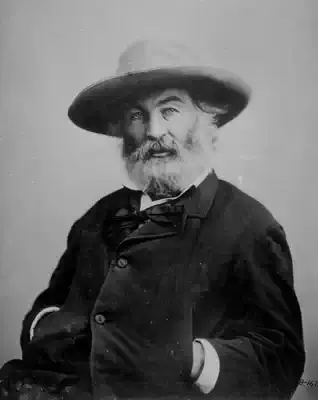
Walt Whitman
Facing West From California's Shores
Facing West From California's Shores
FACING west, from California's shores,
Inquiring, tireless, seeking what is yet unfound,
I, a child, very old, over waves, towards the house of maternity, the
land of migrations, look afar,
Look off the shores of my Western Sea--the circle almost circled;
For, starting westward from Hindustan, from the vales of Kashmere,
From Asia--from the north--from the God, the sage, and the hero,
From the south--from the flowery peninsulas, and the spice islands;
Long having wander'd since--round the earth having wander'd,
Now I face home again--very pleas'd and joyous;
(But where is what I started for, so long ago? 10
And why is it yet unfound?)
FACING west, from California's shores,
Inquiring, tireless, seeking what is yet unfound,
I, a child, very old, over waves, towards the house of maternity, the
land of migrations, look afar,
Look off the shores of my Western Sea--the circle almost circled;
For, starting westward from Hindustan, from the vales of Kashmere,
From Asia--from the north--from the God, the sage, and the hero,
From the south--from the flowery peninsulas, and the spice islands;
Long having wander'd since--round the earth having wander'd,
Now I face home again--very pleas'd and joyous;
(But where is what I started for, so long ago? 10
And why is it yet unfound?)
335
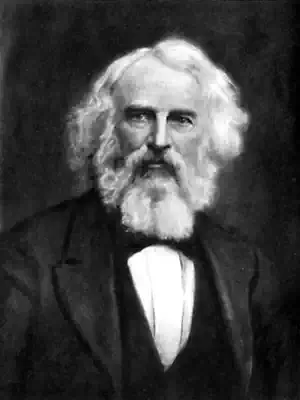
Henry Wadsworth Longfellow
The Golden Legend: II. A Farm In The Odenwald
The Golden Legend: II. A Farm In The Odenwald
A garden; morning;_ PRINCE HENRY _seated, with a
book_. ELSIE, _at a distance, gathering flowers._
_Prince Henry (reading)._ One morning, all alone,
Out of his convent of gray stone,
Into the forest older, darker, grayer,
His lips moving as if in prayer,
His head sunken upon his breast
As in a dream of rest,
Walked the Monk Felix. All about
The broad, sweet sunshine lay without,
Filling the summer air;
And within the woodlands as he trod,
The twilight was like the Truce of God
With worldly woe and care;
Under him lay the golden moss;
And above him the boughs of hemlock-tree
Waved, and made the sign of the cross,
And whispered their Benedicites;
And from the ground
Rose an odor sweet and fragrant
Of the wild flowers and the vagrant
Vines that wandered,
Seeking the sunshine, round and round.
These he heeded not, but pondered
On the volume in his hand,
A volume of Saint Augustine;
Wherein he read of the unseen
Splendors of God's great town
In the unknown land,
And, with his eyes cast down
In humility, he said:
'I believe, O God,
What herein I have read,
But alas! I do not understand!'
And lo! he heard
The sudden singing of a bird,
A snow-white bird, that from a cloud
Dropped down,
And among the branches brown
Sat singing
So sweet, and clear, and loud,
It seemed a thousand harp strings ringing.
And the Monk Felix closed his book,
And long, long,
With rapturous look,
He listened to the song,
And hardly breathed or stirred,
Until he saw, as in a vision,
The land Elysian,
And in the heavenly city heard
Angelic feet
Fall on the golden flagging of the street.
And he would fain
Have caught the wondrous bird,
But strove in vain;
For it flew away, away,
Far over hill and dell,
And instead of its sweet singing
He heard the convent bell
Suddenly in the silence ringing
For the service of noonday.
And he retraced
His pathway homeward sadly and in haste.
In the convent there was a change!
He looked for each well known face,
But the faces were new and strange;
New figures sat in the oaken stalls,
New voices chaunted in the choir,
Yet the place was the same place,
The same dusky walls
Of cold, gray stone,
The same cloisters and belfry and spire.
A stranger and alone
Among that brotherhood
The Monk Felix stood
'Forty years,' said a Friar.
'Have I been Prior
Of this convent in the wood,
But for that space
Never have I beheld thy face!'
The heart of the Monk Felix fell:
And he answered with submissive tone,
'This morning, after the hour of Prime,
I left my cell,
And wandered forth alone,
Listening all the time
To the melodious singing
Of a beautiful white bird,
Until I heard
The bells of the convent ringing
Noon from their noisy towers,
It was as if I dreamed;
For what to me had seemed
Moments only, had been hours!'
'Years!' said a voice close by.
It was an aged monk who spoke,
From a bench of oak
Fastened against the wall;-
He was the oldest monk of all.
For a whole century
Had he been there,
Serving God in prayer,
The meekest and humblest of his creatures.
He remembered well the features
Of Felix, and he said,
Speaking distinct and slow:
'One hundred years ago,
When I was a novice in this place,
There was here a monk, full of God's grace,
Who bore the name
Of Felix, and this man must be the same.'
And straightway
They brought forth to the light of day
A volume old and brown,
A huge tome, bound
With brass and wild-boar's hide,
Therein were written down
The names of all who had died
In the convent, since it was edified.
And there they found,
Just as the old monk said,
That on a certain day and date,
One hundred years before,
Had gone forth from the convent gate
The Monk Felix, and never more
Had entered that sacred door.
He had been counted among the dead!
And they knew, at last,
That, such had been the power
Of that celestial and immortal song,
A hundred years had passed,
And had not seemed so long
As a single hour!
(ELSIE _comes in with flowers._)
_Elsie._ Here are flowers for you,
But they are not all for you.
Some of them are for the Virgin
And for Saint Cecilia.
_Prince Henry._ As thou standest there,
Thou seemest to me like the angel
That brought the immortal roses
To Saint Cecilia's bridal chamber.
_Elsie._ But these will fade.
_Prince Henry._ Themselves will fade,
But not their memory,
And memory has the power
To re-create them from the dust.
They remind me, too,
Of martyred Dorothea,
Who from celestial gardens sent
Flowers as her witnesses
To him who scoffed and doubted.
_Elsie._ Do you know the story
Of Christ and the Sultan's daughter?
That is the prettiest legend of them all.
_Prince Henry._ Then tell it to me.
But first come hither.
Lay the flowers down beside me.
And put both thy hands in mine.
Now tell me the story.
_Elsie._ Early in the morning
The Sultan's daughter
Walked in her father's garden,
Gathering the bright flowers,
All full of dew.
_Prince Henry._ Just as thou hast been doing
This morning, dearest Elsie.
_Elsie._ And as she gathered them,
She wondered more and more
Who was the Master of the Flowers,
And made them grow
Out of the cold, dark earth.
'In my heart,' she said,
'I love him; and for him
Would leave my father's palace,
To labor in his garden.'
_Prince Henry._ Dear, innocent child!
How sweetly thou recallest
The long-forgotten legend,
That in my early childhood
My mother told me!
Upon my brain
It reappears once more,
As a birth-mark on the forehead
When a hand suddenly
Is laid upon it, and removed!
_Elsie._ And at midnight,
As she lay upon her bed,
She heard a voice
Call to her from the garden,
And, looking forth from her window,
She saw a beautiful youth
Standing among the flowers.
It was the Lord Jesus;
And she went down to him,
And opened the door for him;
And he said to her, 'O maiden!
Thou hast thought of me with love,
And for thy sake
Out of my Father's kingdom
Have I come hither:
I am the Master of the Flowers.
My garden is in Paradise,
And if thou wilt go with me,
Thy bridal garland
Shall be of bright red flowers.'
And then he took from his finger
A golden ring,
And asked the Sultan's daughter
If she would be his bride.
And when she answered him with love,
His wounds began to bleed,
And she said to him,
'O Love! how red thy heart is,
And thy hands are full of roses,'
'For thy sake,' answered he,
'For thy sake is my heart so red,
For thee I bring these roses.
I gathered them at the cross
Whereon I died for thee!
Come, for my Father calls.
Thou art my elected bride!'
And the Sultan's daughter
Followed him to his Father's garden.
_Prince Henry._ Wouldst thou have done so, Elsie?
_Elsie._ Yes, very gladly.
_Prince Henry._ Then the Celestial Bridegroom
Will come for thee also.
Upon thy forehead he will place,
Not his crown of thorns,
But a crown of roses.
In thy bridal chamber,
Like Saint Cecilia,
Thou shall hear sweet music,
And breathe the fragrance
Of flowers immortal!
Go now and place these flowers
Before her picture.
* * * * *
A ROOM IN THE FARM-HOUSE.
* * * * *
_Twilight._ URSULA _spinning._ GOTTLIEB _asleep in his
chair._
_Ursula._ Darker and darker! Hardly a glimmer
Of light comes in at the window-pane;
Or is it my eyes are growing dimmer?
I cannot disentangle this skein,
Nor wind it rightly upon the reel.
Elsie!
_Gottlieb (starting)_. The stopping of thy wheel
Has wakened me out of a pleasant dream.
I thought I was sitting beside a stream,
And heard the grinding of a mill,
When suddenly the wheels stood still,
And a voice cried 'Elsie' in my ear!
It startled me, it seemed so near.
_Ursula._ I was calling her: I want a light.
I cannot see to spin my flax.
Bring the lamp, Elsie. Dost thou hear?
_Elsie (within)._ In a moment!
_Gottlieb._ Where are Bertha and Max?
_Ursula._ They are sitting with Elsie at the door.
She is telling them stories of the wood,
And the Wolf, and Little Red Ridinghood.
_Gottlieb_. And where is the Prince?
_Ursula_. In his room overhead;
I heard him walking across the floor,
As he always does, with a heavy tread.
(ELSIE _comes in with a lamp_. MAX _and_ BERTHA _follow her;
and they all sing the Evening Song on the lighting of the lamps_.)
EVENING SONG.
O gladsome light
Of the Father Immortal,
And of the celestial
Sacred and blessed
Jesus, our Saviour!
Now to the sunset
Again hast thou brought us;
And, seeing the evening
Twilight, we bless thee,
Praise thee, adore thee!
Father omnipotent!
Son, the Life-giver!
Spirit, the Comforter!
Worthy at all times
Of worship and wonder!
_Prince Henry (at the door)_. Amen!
_Ursula_. Who was it said Amen?
_Elsie_. It was the Prince: he stood at the door,
And listened a moment, as we chaunted
The evening song. He is gone again.
I have often seen him there before.
_Ursula_. Poor Prince!
_Gottlieb_. I thought the house was haunted!
Poor Prince, alas! and yet as mild
And patient as the gentlest child!
_Max._ I love him because he is so good,
And makes me such fine bows and arrows,
To shoot at the robins and the sparrows,
And the red squirrels in the wood!
_Bertha._ I love him, too!
_Gottlieb._ Ah, yes! we all
Love him, from the bottom of our hearts;
He gave us the farm, the house, and the grange,
He gave us the horses and the carts,
And the great oxen in the stall,
The vineyard, and the forest range!
We have nothing to give him but our love!
_Bertha._ Did he give us the beautiful stork above
On the chimney-top, with its large, round nest?
_Gottlieb._ No, not the stork; by God in heaven,
As a blessing, the dear, white stork was given;
But the Prince has given us all the rest.
God bless him, and make him well again.
_Elsie._ Would I could do something for his sake,
Something to cure his sorrow and pain!
_Gottlieb._ That no one can; neither thou nor I,
Nor any one else.
_Elsie._ And must he die?
_Ursula._ Yes; if the dear God does not take
Pity upon him, in his distress,
And work a miracle!
_Gottlieb._ Or unless
Some maiden, of her own accord,
Offers her life for that of her lord,
And is willing to die in his stead.
_Elsie._ I will!
_Ursula._ Prithee, thou foolish child, be still!
Thou shouldst not say what thou dost not mean!
_Elsie._ I mean it truly!
_Max._ O father! this morning,
Down by the mill, in the ravine,
Hans killed a wolf, the very same
That in the night to the sheepfold came,
And ate up my lamb, that was left outside.
_Gottlieb._ I am glad he is dead. It will be a warning
To the wolves in the forest, far and wide.
_Max._ And I am going to have his hide!
_Bertha._ I wonder if this is the wolf that ate
Little Red Ridinghood!
_Ursula._ O, no!
That wolf was killed a long while ago.
Come, children, it is growing late.
_Max._ Ah, how I wish I were a man,
As stout as Hans is, and as strong!
I would do nothing else, the whole day long,
But just kill wolves.
_Gottlieb._ Then go to bed,
And grow as fast as a little boy can.
Bertha is half asleep already.
See how she nods her heavy head,
And her sleepy feet are so unsteady
She will hardly be able to creep upstairs.
_Ursula._ Good-night, my children. Here's the light.
And do not forget to say your prayers
Before you sleep.
_Gottlieb._ Good-night!
_Max and Bertha._ Good-night!
(_They go out with_ ELSIE.)
_Ursula, (spinning)._ She is a strange and wayward child,
That Elsie of ours. She looks so old,
And thoughts and fancies weird and wild
Seem of late to have taken hold
Of her heart, that was once so docile and mild!
_Gottlieb._ She is like all girls.
_Ursula._ Ah no, forsooth!
Unlike all I have ever seen.
For she has visions and strange dreams,
And in all her words and ways, she seems
Much older than she is in truth.
Who would think her but fourteen?
And there has been of late such a change!
My heart is heavy with fear and doubt
That she may not live till the year is out.
She is so strange,--so strange,--so strange!
_Gottlieb._ I am not troubled with any such fear!
She will live and thrive for many a year.
* * * * *
ELSIE'S CHAMBER.
* * * * *
_Night._ ELSIE _praying._
_Elsie._ My Redeemer and my Lord,
I beseech thee, I entreat thee,
Guide me in each act and word,
That hereafter I may meet thee,
Watching, waiting, hoping, yearning,
With my lamp well trimmed and burning!
Interceding
With these bleeding
Wounds upon thy hands and side,
For all who have lived and erred
Thou hast suffered, thou hast died,
Scourged, and mocked, and crucified,
And in the grave hast thou been buried!
If my feeble prayer can reach thee,
O my Saviour, I beseech thee,
Even as thou hast died for me,
More sincerely
Let me follow where thou leadest,
Let me, bleeding as thou bleedest,
Die, if dying I may give
Life to one who asks to live,
And more nearly,
Dying thus, resemble thee!
* * * * *
THE CHAMBER OF GOTTLIEB AND URSULA.
* * * * *
_Midnight._ ELSIE _standing by their bedside, weeping._
_Gottlieb._ The wind is roaring; the rushing rain
Is loud upon roof and window-pane,
As if the Wild Huntsman of Rodenstein,
Boding evil to me and mine,
Were abroad to-night with his ghostly train!
In the brief lulls of the tempest wild,
The dogs howl in the yard; and hark!
Some one is sobbing in the dark,
Here in the chamber!
_Elsie._ It is I.
_Ursula._ Elsie! what ails thee, my poor child?
_Elsie._ I am disturbed and much distressed,
In thinking our dear Prince must die,
I cannot close mine eyes, nor rest.
_Gottlieb._ What wouldst thou? In the Power Divine
His healing lies, not in our own;
It is in the hand of God alone.
_Elsie._ Nay, he has put it into mine,
And into my heart!
_Gottlieb._ Thy words are wild!
_Ursula._ What dost thou mean? my child! my child!
_Elsie._ That for our dear Prince Henry's sake
I will myself the offering make,
And give my life to purchase his.
_Ursula_ Am I still dreaming, or awake?
Thou speakest carelessly of death,
And yet thou knowest not what it is.
_Elsie._ 'T is the cessation of our breath.
Silent and motionless we lie;
And no one knoweth more than this.
I saw our little Gertrude die,
She left off breathing, and no more
I smoothed the pillow beneath her head.
She was more beautiful than before.
Like violets faded were her eyes;
By this we knew that she was dead.
Through the open window looked the skies
Into the chamber where she lay,
And the wind was like the sound of wings,
As if angels came to bear her away.
Ah! when I saw and felt these things,
I found it difficult to stay;
I longed to die, as she had died,
And go forth with her, side by side.
The Saints are dead, the Martyrs dead,
And Mary, and our Lord, and I
Would follow in humility
The way by them illumined!
_Ursula._ My child! my child! thou must not die!
_Elsie_ Why should I live? Do I not know
The life of woman is full of woe?
Toiling on and on and on,
With breaking heart, and tearful eyes,
And silent lips, and in the soul
The secret longings that arise,
Which this world never satisfies!
Some more, some less, but of the whole
Not one quite happy, no, not one!
_Ursula._ It is the malediction of Eve!
_Elsie._ In place of it, let me receive
The benediction of Mary, then.
_Gottlieb._ Ah, woe is me! Ah, woe is me!
Most wretched am I among men!
_Ursula._ Alas! that I should live to see
Thy death, beloved, and to stand
Above thy grave! Ah, woe the day!
_Elsie._ Thou wilt not see it. I shall lie
Beneath the flowers of another land,
For at Salerno, far away
Over the mountains, over the sea,
It is appointed me to die!
And it will seem no more to thee
Than if at the village on market-day
I should a little longer stay
Than I am used.
_Ursula._ Even as thou sayest!
And how my heart beats, when thou stayest!
I cannot rest until my sight
Is satisfied with seeing thee.
What, then, if thou wert dead?
_Gottlieb_ Ah me!
Of our old eyes thou art the light!
The joy of our old hearts art thou!
And wilt thou die?
_Ursula._ Not now! not now!
_Elsie_ Christ died for me, and shall not I
Be willing for my Prince to die?
You both are silent; you cannot speak.
This said I, at our Saviour's feast,
After confession, to the priest,
And even he made no reply.
Does he not warn us all to seek
The happier, better land on high,
Where flowers immortal never wither,
And could he forbid me to go thither?
_Gottlieb._ In God's own time, my heart's delight!
When he shall call thee, not before!
_Elsie._ I heard him call. When Christ ascended
Triumphantly, from star to star,
He left the gates of heaven ajar.
I had a vision in the night,
And saw him standing at the door
Of his Father's mansion, vast and splendid,
And beckoning to me from afar.
I cannot stay!
_Gottlieb._ She speaks almost
As if it were the Holy Ghost
Spake through her lips, and in her stead!
What if this were of God?
_Ursula._ Ah, then
Gainsay it dare we not.
_Gottlieb._ Amen!
Elsie! the words that thou hast said
Are strange and new for us to hear,
And fill our hearts with doubt and fear.
Whether it be a dark temptation
Of the Evil One, or God's inspiration,
We in our blindness cannot say.
We must think upon it, and pray;
For evil and good in both resembles.
If it be of God, his will be done!
May he guard us from the Evil One!
How hot thy hand is! how it trembles!
Go to thy bed, and try to sleep.
_Ursula._ Kiss me. Good-night; and do not weep!
(ELSIE _goes out._)
Ah, what an awful thing is this!
I almost shuddered at her kiss.
As if a ghost had touched my cheek,
I am so childish and so weak!
As soon as I see the earliest gray
Of morning glimmer in the east,
I will go over to the priest,
And hear what the good man has to say!
* * * * *
A VILLAGE CHURCH.
* * * * *
_A woman kneeling at the confessional.
The Parish Priest (from within)_. Go, sin no
more! Thy penance o'er,
A new and better life begin!
God maketh thee forever free
From the dominion of thy sin!
Go, sin no more! He will restore
The peace that filled thy heart before,
And pardon thine iniquity!
(_The woman goes out. The Priest comes forth, and
walks slowly up and down the church_.)
O blessed Lord! how much I need
Thy light to guide me on my way!
So many hands, that, without heed,
Still touch thy wounds, and make them bleed!
So many feet, that, day by day,
Still wander from thy fold astray!
Unless thou fill me with thy light,
I cannot lead thy flock aright;
Nor, without thy support, can bear
The burden of so great a care,
But am myself a castaway!
(_A pause_.)
The day is drawing to its close;
And what good deeds, since first it rose,
Have I presented, Lord, to thee,
As offerings of my ministry?
What wrong repressed, what right maintained
What struggle passed, what victory gained,
What good attempted and attained?
Feeble, at best, is my endeavor!
I see, but cannot reach, the height
That lies forever in the light,
And yet forever and forever,
When seeming just within my grasp,
I feel my feeble hands unclasp,
And sink discouraged into night!
For thine own purpose, thou hast sent
The strife and the discouragement!
(_A pause_.)
Why stayest thou, Prince of Hoheneck?
Why keep me pacing to and fro
Amid these aisles of sacred gloom,
Counting my footsteps as I go,
And marking with each step a tomb?
Why should the world for thee make room,
And wait thy leisure and thy beck?
Thou comest in the hope to hear
Some word of comfort and of cheer.
What can I say? I cannot give
The counsel to do this and live;
But rather, firmly to deny
The tempter, though his power is strong,
And, inaccessible to wrong,
Still like a martyr live and die!
(_A pause_.)
The evening air grows dusk and brown;
I must go forth into the town,
To visit beds of pain and death,
Of restless limbs, and quivering breath,
And sorrowing hearts, and patient eyes
That see, through tears, the sun go down,
But never more shall see it rise.
The poor in body and estate,
The sick and the disconsolate.
Must not on man's convenience wait.
(_Goes out. Enter_ LUCIFER, _as a Priest_. LUCIFER,
_with a genuflexion, mocking_.)
This is the Black Pater-noster.
God was my foster,
He fostered me
Under the book of the Palm-tree!
St. Michael was my dame.
He was born at Bethlehem,
He was made of flesh and blood.
God send me my right food,
My right food, and shelter too,
That I may to yon kirk go,
To read upon yon sweet book
Which the mighty God of heaven shook.
Open, open, hell's gates!
Shut, shut, heaven's gates!
All the devils in the air
The stronger be, that hear the Black Prayer!
(_Looking round the church_.)
What a darksome and dismal place!
I wonder that any man has the face
To call such a hole the House of the Lord,
And the Gate of Heaven,--yet such is the word.
Ceiling, and walls, and windows old,
Covered with cobwebs, blackened with mould;
Dust on the pulpit, dust on the stairs,
Dust on the benches, and stalls, and chairs!
The pulpit, from which such ponderous sermons
Have fallen down on the brains of the Germans,
With about as much real edification
As if a great Bible, bound in lead,
Had fallen, and struck them on the head;
And I ought to remember that sensation!
Here stands the holy water stoup!
Holy-water it may be to many,
But to me, the veriest Liquor Gehennae!
It smells like a filthy fast day soup!
Near it stands the box for the poor;
With its iron padlock, safe and sure,
I and the priest of the parish know
Whither all these charities go;
Therefore, to keep up the institution,
I will add my little contribution!
(_He puts in money._)
Underneath this mouldering tomb,
With statue of stone, and scutcheon of brass,
Slumbers a great lord of the village.
All his life was riot and pillage,
But at length, to escape the threatened doom
Of the everlasting, penal fire,
He died in the dress of a mendicant friar,
And bartered his wealth for a daily mass.
But all that afterward came to pass,
And whether he finds it dull or pleasant,
Is kept a secret for the present,
At his own particular desire.
And here, in a corner of the wall,
Shadowy, silent, apart from all,
With its awful portal open wide,
And its latticed windows on either side,
And its step well worn by the bended knees
Of one or two pious centuries,
Stands the village confessional!
Within it, as an honored guest,
I will sit me down awhile and rest!
(_Seats himself in the confessional_.)
Here sits the priest, and faint and low,
Like the sighing of an evening breeze,
Comes through these painted lattices
The ceaseless sound of human woe,
Here, while her bosom aches and throbs
With deep and agonizing sobs,
That half are passion, half contrition,
The luckless daughter of perdition
Slowly confesses her secret shame!
The time, the place, the lover's name!
Here the grim murderer, with a groan,
From his bruised conscience rolls the stone,
Thinking that thus he can atone
For ravages of sword and flame!
Indeed, I marvel, and marvel greatly,
How a priest can sit here so sedately,
Reading, the whole year out and in,
Naught but the catalogue of sin,
And still keep any faith whatever
In human virtue! Never! never!
I cannot repeat a thousandth part
Of the horrors and crimes and sins and woes
That arise, when with palpitating throes
The graveyard in the human heart
Gives up its dead, at the voice of the priest,
As if he were an archangel, at least.
It makes a peculiar atmosphere,
This odor of earthly passions and crimes,
Such as I like to breathe, at times,
And such as often brings me here
In the hottest and most pestilential season.
To-day, I come for another reason;
To foster and ripen an evil thought
In a heart that is almost to madness wrought,
And to make a murderer out of a prince,
A sleight of hand I learned long since!
He comes In the twilight he will not see
the difference between his priest and me!
In the same net was the mother caught!
(_Prince Henry entering and kneeling at the confessional._)
Remorseful, penitent, and lowly,
I come to crave, O Father holy,
Thy benediction on my head.
_Lucifer_. The benediction shall be said
After confession, not before!
'T is a God speed to the parting guest,
Who stands already at the door,
Sandalled with holiness, and dressed
In garments pure from earthly stain.
Meanwhile, hast thou searched well thy breast?
Does the same madness fill thy brain?
Or have thy passion and unrest
Vanished forever from thy mind?
_Prince Henry_. By the same madness still made blind,
By the same passion still possessed,
I come again to the house of prayer,
A man afflicted and distressed!
As in a cloudy atmosphere,
Through unseen sluices of the air,
A sudden and impetuous wind
Strikes the great forest white with fear,
And every branch, and bough, and spray
Points all its quivering leaves one way,
And meadows of grass, and fields of grain,
And the clouds above, and the slanting rain,
And smoke from chimneys of the town,
Yield themselves to it, and bow down,
So does this dreadful purpose press
Onward, with irresistible stress,
And all my thoughts and faculties,
Struck level by the strength of this,
From their true inclination turn,
And all stream forward to Salem!
_Lucifer_. Alas! we are but eddies of dust,
Uplifted by the blast, and whirled
Along the highway of the world
A moment only, then to fall
Back to a common level all,
At the subsiding of the gust!
_Prince Henry_. O holy Father! pardon in me
The oscillation of a mind
Unsteadfast, and that cannot find
Its centre of rest and harmony!
For evermore before mine eyes
This ghastly phantom flits and flies,
And as a madman through a crowd,
With frantic gestures and wild cries,
It hurries onward, and aloud
Repeats its awful prophecies!
Weakness is wretchedness! To be strong
Is to be happy! I am weak,
And cannot find the good I seek,
Because I feel and fear the wrong!
_Lucifer_. Be not alarmed! The Church is kind--
And in her mercy and her meekness
She meets half-way her children's weakness,
Writes their transgressions in the dust!
Though in the Decalogue we find
The mandate written, 'Thou shalt not kill!'
Yet there are cases when we must.
In war, for instance, or from scathe
To guard and keep the one true Faith!
We must look at the Decalogue in the light
Of an ancient statute, that was meant
For a mild and general application,
To be understood with the reservation,
That, in certain instances, the Right
Must yield to the Expedient!
Thou art a Prince. If thou shouldst die,
What hearts and hopes would prostrate he!
What noble deeds, what fair renown,
Into the grave with thee go down!
What acts of valor and courtesy
Remain undone, and die with thee!
Thou art the last of all thy race!
With thee a noble name expires,
And vanishes from the earth's face
The glorious memory of thy sires!
She is a peasant. In her veins
Flows common and plebeian blood;
It is such as daily and hourly stains
The dust and the turf of battle plains,
By vassals shed, in a crimson flood,
Without reserve, and without reward,
At the slightest summons of their lord!
But thine is precious, the fore-appointed
Blood of kings, of God's anointed!
Moreover, what has the world in store
For one like her, but tears and toil?
Daughter of sorrow, serf of the soil,
A peasant's child and a peasant's wife,
And her soul within her sick and sore
With the roughness and barrenness of life!
I marvel not at the heart's recoil
From a fate like this, in one so tender,
Nor at its eagerness to surrender
All the wretchedness, want, and woe
That await it in this world below,
For the unutterable splendor
Of the world of rest beyond the skies.
So the Church sanctions the sacrifice:
Therefore inhale this healing balm,
And breathe this fresh life into thine;
Accept the comfort and the calm
She offers, as a gift divine,
Let her fall down and anoint thy feet
With the ointment costly and most sweet
Of her young blood, and thou shall live.
_Prince Henry._ And will the righteous Heaven forgive?
No action, whether foul or fair,
Is ever done, but it leaves somewhere
A record, written by fingers ghostly,
As a blessing or a curse, and mostly
In the greater weakness or greater strength
Of the acts which follow it, till at length
The wrongs of ages are redressed,
And the justice of God made manifest!
_Lucifer_ In ancient records it is stated
That, whenever an evil deed is done,
Another devil is created
To scourge and torment the offending one!
But evil is only good perverted,
And Lucifer, the Bearer of Light,
But an angel fallen and deserted,
Thrust from his Father's house with a curse
Into the black and endless night.
_Prince Henry._ If justice rules the universe,
From the good actions of good men
Angels of light should be begotten,
And thus the balance restored again.
_Lucifer._ Yes; if the world were not so rotten,
And so given over to the Devil!
_Prince Henry._ But this deed, is it good or evil?
Have I thine absolution free
To do it, and without restriction?
_Lucifer._ Ay; and from whatsoever sin
Lieth around it and within,
From all crimes in which it may involve thee,
I now release thee and absolve thee!
_Prince Henry._ Give me thy holy benediction.
_Lucifer._ (_stretching forth his hand and muttering_),
Maledictione perpetua
Maledicat vos
Pater eternus!
_The Angel_ (_with the aeolian harp_). Take heed! take heed!
Noble art thou in thy birth,
By the good and the great of earth
Hast thou been taught!
Be noble in every thought
And in every deed!
Let not the illusion of thy senses
Betray thee to deadly offences.
Be strong! be good! be pure!
The right only shall endure,
All things else are but false pretences!
I entreat thee, I implore,
Listen no more
To the suggestions of an evil spirit,
That even now is there,
Making the foul seem fair,
And selfishness itself a virtue and a merit!
* * * * *
A ROOM IN THE FARM-HOUSE.
* * * * *
_Gottlieb_. It is decided! For many days,
And nights as many, we have had
A nameless terror in our breast,
Making us timid, and afraid
Of God, and his mysterious ways!
We have been sorrowful and sad;
Much have we suffered, much have prayed
That he would lead us as is best,
And show us what his will required.
It is decided; and we give
Our child, O Prince, that you may live!
_Ursula_. It is of God. He has inspired
This purpose in her; and through pain,
Out of a world of sin and woe,
He takes her to himself again.
The mother's heart resists no longer;
With the Angel of the Lord in vain
It wrestled, for he was the stronger.
_Gottlieb_. As Abraham offered long ago
His son unto the Lord, and even
The Everlasting Father in heaven
Gave his, as a lamb unto the slaughter,
So do I offer up my daughter!
(URSULA _hides her face_.)
_Elsie_. My life is little,
Only a cup of water,
But pure and limpid.
Take it, O my Prince!
Let it refresh you,
Let it restore you.
It is given willingly,
It is given freely;
May God bless the gift!
_Prince Henry._ And the giver!
_Gottlieb._ Amen!
_Prince Henry._ I accept it!
_Gottlieb._ Where are the children?
_Ursula._ They are already asleep.
_Gottlieb._ What if they were dead?
* * * * *
IN THE GARDEN.
* * * * *
_Elsie._ I have one thing to ask of you.
_Prince Henry._ What is it?
It is already granted.
_Elsie._ Promise me,
When we are gone from here, and on our way
Are journeying to Salerno, you will not,
By word or deed, endeavor to dissuade me
And turn me from my purpose, but remember
That as a pilgrim to the Holy City
Walks unmolested, and with thoughts of pardon
Occupied wholly, so would I approach
The gates of Heaven, in this great jubilee,
With my petition, putting off from me
All thoughts of earth, as shoes from off my feet.
Promise me this.
_Prince Henry._ Thy words fall from thy lips
Like roses from the lips of Angelo: and angels
Might stoop to pick them up!
_Elsie._ Will you not promise?
_Prince Henry._ If ever we depart upon this journey,
So long to one or both of us, I promise.
_Elsie._ Shall we not go, then? Have you lifted me
Into the air, only to hurl me back
Wounded upon the ground? and offered me
The waters of eternal life, to bid me
Drink the polluted puddles of this world?
_Prince Henry._ O Elsie! what a lesson thou dost teach me!
The life which is, and that which is to come,
Suspended hang in such nice equipoise
A breath disturbs the balance; and that scale
In which we throw our hearts preponderates,
And the other, like an empty one, flies up,
And is accounted vanity and air!
To me the thought of death is terrible,
Having such hold on life. To thee it is not
So much even as the lifting of a latch;
Only a step into the open air
Out of a tent already luminous
With light that shines through its transparent walls!
O pure in heart! from thy sweet dust shall grow
Lilies, upon whose petals will be written
'Ave Maria' in characters of gold!
A garden; morning;_ PRINCE HENRY _seated, with a
book_. ELSIE, _at a distance, gathering flowers._
_Prince Henry (reading)._ One morning, all alone,
Out of his convent of gray stone,
Into the forest older, darker, grayer,
His lips moving as if in prayer,
His head sunken upon his breast
As in a dream of rest,
Walked the Monk Felix. All about
The broad, sweet sunshine lay without,
Filling the summer air;
And within the woodlands as he trod,
The twilight was like the Truce of God
With worldly woe and care;
Under him lay the golden moss;
And above him the boughs of hemlock-tree
Waved, and made the sign of the cross,
And whispered their Benedicites;
And from the ground
Rose an odor sweet and fragrant
Of the wild flowers and the vagrant
Vines that wandered,
Seeking the sunshine, round and round.
These he heeded not, but pondered
On the volume in his hand,
A volume of Saint Augustine;
Wherein he read of the unseen
Splendors of God's great town
In the unknown land,
And, with his eyes cast down
In humility, he said:
'I believe, O God,
What herein I have read,
But alas! I do not understand!'
And lo! he heard
The sudden singing of a bird,
A snow-white bird, that from a cloud
Dropped down,
And among the branches brown
Sat singing
So sweet, and clear, and loud,
It seemed a thousand harp strings ringing.
And the Monk Felix closed his book,
And long, long,
With rapturous look,
He listened to the song,
And hardly breathed or stirred,
Until he saw, as in a vision,
The land Elysian,
And in the heavenly city heard
Angelic feet
Fall on the golden flagging of the street.
And he would fain
Have caught the wondrous bird,
But strove in vain;
For it flew away, away,
Far over hill and dell,
And instead of its sweet singing
He heard the convent bell
Suddenly in the silence ringing
For the service of noonday.
And he retraced
His pathway homeward sadly and in haste.
In the convent there was a change!
He looked for each well known face,
But the faces were new and strange;
New figures sat in the oaken stalls,
New voices chaunted in the choir,
Yet the place was the same place,
The same dusky walls
Of cold, gray stone,
The same cloisters and belfry and spire.
A stranger and alone
Among that brotherhood
The Monk Felix stood
'Forty years,' said a Friar.
'Have I been Prior
Of this convent in the wood,
But for that space
Never have I beheld thy face!'
The heart of the Monk Felix fell:
And he answered with submissive tone,
'This morning, after the hour of Prime,
I left my cell,
And wandered forth alone,
Listening all the time
To the melodious singing
Of a beautiful white bird,
Until I heard
The bells of the convent ringing
Noon from their noisy towers,
It was as if I dreamed;
For what to me had seemed
Moments only, had been hours!'
'Years!' said a voice close by.
It was an aged monk who spoke,
From a bench of oak
Fastened against the wall;-
He was the oldest monk of all.
For a whole century
Had he been there,
Serving God in prayer,
The meekest and humblest of his creatures.
He remembered well the features
Of Felix, and he said,
Speaking distinct and slow:
'One hundred years ago,
When I was a novice in this place,
There was here a monk, full of God's grace,
Who bore the name
Of Felix, and this man must be the same.'
And straightway
They brought forth to the light of day
A volume old and brown,
A huge tome, bound
With brass and wild-boar's hide,
Therein were written down
The names of all who had died
In the convent, since it was edified.
And there they found,
Just as the old monk said,
That on a certain day and date,
One hundred years before,
Had gone forth from the convent gate
The Monk Felix, and never more
Had entered that sacred door.
He had been counted among the dead!
And they knew, at last,
That, such had been the power
Of that celestial and immortal song,
A hundred years had passed,
And had not seemed so long
As a single hour!
(ELSIE _comes in with flowers._)
_Elsie._ Here are flowers for you,
But they are not all for you.
Some of them are for the Virgin
And for Saint Cecilia.
_Prince Henry._ As thou standest there,
Thou seemest to me like the angel
That brought the immortal roses
To Saint Cecilia's bridal chamber.
_Elsie._ But these will fade.
_Prince Henry._ Themselves will fade,
But not their memory,
And memory has the power
To re-create them from the dust.
They remind me, too,
Of martyred Dorothea,
Who from celestial gardens sent
Flowers as her witnesses
To him who scoffed and doubted.
_Elsie._ Do you know the story
Of Christ and the Sultan's daughter?
That is the prettiest legend of them all.
_Prince Henry._ Then tell it to me.
But first come hither.
Lay the flowers down beside me.
And put both thy hands in mine.
Now tell me the story.
_Elsie._ Early in the morning
The Sultan's daughter
Walked in her father's garden,
Gathering the bright flowers,
All full of dew.
_Prince Henry._ Just as thou hast been doing
This morning, dearest Elsie.
_Elsie._ And as she gathered them,
She wondered more and more
Who was the Master of the Flowers,
And made them grow
Out of the cold, dark earth.
'In my heart,' she said,
'I love him; and for him
Would leave my father's palace,
To labor in his garden.'
_Prince Henry._ Dear, innocent child!
How sweetly thou recallest
The long-forgotten legend,
That in my early childhood
My mother told me!
Upon my brain
It reappears once more,
As a birth-mark on the forehead
When a hand suddenly
Is laid upon it, and removed!
_Elsie._ And at midnight,
As she lay upon her bed,
She heard a voice
Call to her from the garden,
And, looking forth from her window,
She saw a beautiful youth
Standing among the flowers.
It was the Lord Jesus;
And she went down to him,
And opened the door for him;
And he said to her, 'O maiden!
Thou hast thought of me with love,
And for thy sake
Out of my Father's kingdom
Have I come hither:
I am the Master of the Flowers.
My garden is in Paradise,
And if thou wilt go with me,
Thy bridal garland
Shall be of bright red flowers.'
And then he took from his finger
A golden ring,
And asked the Sultan's daughter
If she would be his bride.
And when she answered him with love,
His wounds began to bleed,
And she said to him,
'O Love! how red thy heart is,
And thy hands are full of roses,'
'For thy sake,' answered he,
'For thy sake is my heart so red,
For thee I bring these roses.
I gathered them at the cross
Whereon I died for thee!
Come, for my Father calls.
Thou art my elected bride!'
And the Sultan's daughter
Followed him to his Father's garden.
_Prince Henry._ Wouldst thou have done so, Elsie?
_Elsie._ Yes, very gladly.
_Prince Henry._ Then the Celestial Bridegroom
Will come for thee also.
Upon thy forehead he will place,
Not his crown of thorns,
But a crown of roses.
In thy bridal chamber,
Like Saint Cecilia,
Thou shall hear sweet music,
And breathe the fragrance
Of flowers immortal!
Go now and place these flowers
Before her picture.
* * * * *
A ROOM IN THE FARM-HOUSE.
* * * * *
_Twilight._ URSULA _spinning._ GOTTLIEB _asleep in his
chair._
_Ursula._ Darker and darker! Hardly a glimmer
Of light comes in at the window-pane;
Or is it my eyes are growing dimmer?
I cannot disentangle this skein,
Nor wind it rightly upon the reel.
Elsie!
_Gottlieb (starting)_. The stopping of thy wheel
Has wakened me out of a pleasant dream.
I thought I was sitting beside a stream,
And heard the grinding of a mill,
When suddenly the wheels stood still,
And a voice cried 'Elsie' in my ear!
It startled me, it seemed so near.
_Ursula._ I was calling her: I want a light.
I cannot see to spin my flax.
Bring the lamp, Elsie. Dost thou hear?
_Elsie (within)._ In a moment!
_Gottlieb._ Where are Bertha and Max?
_Ursula._ They are sitting with Elsie at the door.
She is telling them stories of the wood,
And the Wolf, and Little Red Ridinghood.
_Gottlieb_. And where is the Prince?
_Ursula_. In his room overhead;
I heard him walking across the floor,
As he always does, with a heavy tread.
(ELSIE _comes in with a lamp_. MAX _and_ BERTHA _follow her;
and they all sing the Evening Song on the lighting of the lamps_.)
EVENING SONG.
O gladsome light
Of the Father Immortal,
And of the celestial
Sacred and blessed
Jesus, our Saviour!
Now to the sunset
Again hast thou brought us;
And, seeing the evening
Twilight, we bless thee,
Praise thee, adore thee!
Father omnipotent!
Son, the Life-giver!
Spirit, the Comforter!
Worthy at all times
Of worship and wonder!
_Prince Henry (at the door)_. Amen!
_Ursula_. Who was it said Amen?
_Elsie_. It was the Prince: he stood at the door,
And listened a moment, as we chaunted
The evening song. He is gone again.
I have often seen him there before.
_Ursula_. Poor Prince!
_Gottlieb_. I thought the house was haunted!
Poor Prince, alas! and yet as mild
And patient as the gentlest child!
_Max._ I love him because he is so good,
And makes me such fine bows and arrows,
To shoot at the robins and the sparrows,
And the red squirrels in the wood!
_Bertha._ I love him, too!
_Gottlieb._ Ah, yes! we all
Love him, from the bottom of our hearts;
He gave us the farm, the house, and the grange,
He gave us the horses and the carts,
And the great oxen in the stall,
The vineyard, and the forest range!
We have nothing to give him but our love!
_Bertha._ Did he give us the beautiful stork above
On the chimney-top, with its large, round nest?
_Gottlieb._ No, not the stork; by God in heaven,
As a blessing, the dear, white stork was given;
But the Prince has given us all the rest.
God bless him, and make him well again.
_Elsie._ Would I could do something for his sake,
Something to cure his sorrow and pain!
_Gottlieb._ That no one can; neither thou nor I,
Nor any one else.
_Elsie._ And must he die?
_Ursula._ Yes; if the dear God does not take
Pity upon him, in his distress,
And work a miracle!
_Gottlieb._ Or unless
Some maiden, of her own accord,
Offers her life for that of her lord,
And is willing to die in his stead.
_Elsie._ I will!
_Ursula._ Prithee, thou foolish child, be still!
Thou shouldst not say what thou dost not mean!
_Elsie._ I mean it truly!
_Max._ O father! this morning,
Down by the mill, in the ravine,
Hans killed a wolf, the very same
That in the night to the sheepfold came,
And ate up my lamb, that was left outside.
_Gottlieb._ I am glad he is dead. It will be a warning
To the wolves in the forest, far and wide.
_Max._ And I am going to have his hide!
_Bertha._ I wonder if this is the wolf that ate
Little Red Ridinghood!
_Ursula._ O, no!
That wolf was killed a long while ago.
Come, children, it is growing late.
_Max._ Ah, how I wish I were a man,
As stout as Hans is, and as strong!
I would do nothing else, the whole day long,
But just kill wolves.
_Gottlieb._ Then go to bed,
And grow as fast as a little boy can.
Bertha is half asleep already.
See how she nods her heavy head,
And her sleepy feet are so unsteady
She will hardly be able to creep upstairs.
_Ursula._ Good-night, my children. Here's the light.
And do not forget to say your prayers
Before you sleep.
_Gottlieb._ Good-night!
_Max and Bertha._ Good-night!
(_They go out with_ ELSIE.)
_Ursula, (spinning)._ She is a strange and wayward child,
That Elsie of ours. She looks so old,
And thoughts and fancies weird and wild
Seem of late to have taken hold
Of her heart, that was once so docile and mild!
_Gottlieb._ She is like all girls.
_Ursula._ Ah no, forsooth!
Unlike all I have ever seen.
For she has visions and strange dreams,
And in all her words and ways, she seems
Much older than she is in truth.
Who would think her but fourteen?
And there has been of late such a change!
My heart is heavy with fear and doubt
That she may not live till the year is out.
She is so strange,--so strange,--so strange!
_Gottlieb._ I am not troubled with any such fear!
She will live and thrive for many a year.
* * * * *
ELSIE'S CHAMBER.
* * * * *
_Night._ ELSIE _praying._
_Elsie._ My Redeemer and my Lord,
I beseech thee, I entreat thee,
Guide me in each act and word,
That hereafter I may meet thee,
Watching, waiting, hoping, yearning,
With my lamp well trimmed and burning!
Interceding
With these bleeding
Wounds upon thy hands and side,
For all who have lived and erred
Thou hast suffered, thou hast died,
Scourged, and mocked, and crucified,
And in the grave hast thou been buried!
If my feeble prayer can reach thee,
O my Saviour, I beseech thee,
Even as thou hast died for me,
More sincerely
Let me follow where thou leadest,
Let me, bleeding as thou bleedest,
Die, if dying I may give
Life to one who asks to live,
And more nearly,
Dying thus, resemble thee!
* * * * *
THE CHAMBER OF GOTTLIEB AND URSULA.
* * * * *
_Midnight._ ELSIE _standing by their bedside, weeping._
_Gottlieb._ The wind is roaring; the rushing rain
Is loud upon roof and window-pane,
As if the Wild Huntsman of Rodenstein,
Boding evil to me and mine,
Were abroad to-night with his ghostly train!
In the brief lulls of the tempest wild,
The dogs howl in the yard; and hark!
Some one is sobbing in the dark,
Here in the chamber!
_Elsie._ It is I.
_Ursula._ Elsie! what ails thee, my poor child?
_Elsie._ I am disturbed and much distressed,
In thinking our dear Prince must die,
I cannot close mine eyes, nor rest.
_Gottlieb._ What wouldst thou? In the Power Divine
His healing lies, not in our own;
It is in the hand of God alone.
_Elsie._ Nay, he has put it into mine,
And into my heart!
_Gottlieb._ Thy words are wild!
_Ursula._ What dost thou mean? my child! my child!
_Elsie._ That for our dear Prince Henry's sake
I will myself the offering make,
And give my life to purchase his.
_Ursula_ Am I still dreaming, or awake?
Thou speakest carelessly of death,
And yet thou knowest not what it is.
_Elsie._ 'T is the cessation of our breath.
Silent and motionless we lie;
And no one knoweth more than this.
I saw our little Gertrude die,
She left off breathing, and no more
I smoothed the pillow beneath her head.
She was more beautiful than before.
Like violets faded were her eyes;
By this we knew that she was dead.
Through the open window looked the skies
Into the chamber where she lay,
And the wind was like the sound of wings,
As if angels came to bear her away.
Ah! when I saw and felt these things,
I found it difficult to stay;
I longed to die, as she had died,
And go forth with her, side by side.
The Saints are dead, the Martyrs dead,
And Mary, and our Lord, and I
Would follow in humility
The way by them illumined!
_Ursula._ My child! my child! thou must not die!
_Elsie_ Why should I live? Do I not know
The life of woman is full of woe?
Toiling on and on and on,
With breaking heart, and tearful eyes,
And silent lips, and in the soul
The secret longings that arise,
Which this world never satisfies!
Some more, some less, but of the whole
Not one quite happy, no, not one!
_Ursula._ It is the malediction of Eve!
_Elsie._ In place of it, let me receive
The benediction of Mary, then.
_Gottlieb._ Ah, woe is me! Ah, woe is me!
Most wretched am I among men!
_Ursula._ Alas! that I should live to see
Thy death, beloved, and to stand
Above thy grave! Ah, woe the day!
_Elsie._ Thou wilt not see it. I shall lie
Beneath the flowers of another land,
For at Salerno, far away
Over the mountains, over the sea,
It is appointed me to die!
And it will seem no more to thee
Than if at the village on market-day
I should a little longer stay
Than I am used.
_Ursula._ Even as thou sayest!
And how my heart beats, when thou stayest!
I cannot rest until my sight
Is satisfied with seeing thee.
What, then, if thou wert dead?
_Gottlieb_ Ah me!
Of our old eyes thou art the light!
The joy of our old hearts art thou!
And wilt thou die?
_Ursula._ Not now! not now!
_Elsie_ Christ died for me, and shall not I
Be willing for my Prince to die?
You both are silent; you cannot speak.
This said I, at our Saviour's feast,
After confession, to the priest,
And even he made no reply.
Does he not warn us all to seek
The happier, better land on high,
Where flowers immortal never wither,
And could he forbid me to go thither?
_Gottlieb._ In God's own time, my heart's delight!
When he shall call thee, not before!
_Elsie._ I heard him call. When Christ ascended
Triumphantly, from star to star,
He left the gates of heaven ajar.
I had a vision in the night,
And saw him standing at the door
Of his Father's mansion, vast and splendid,
And beckoning to me from afar.
I cannot stay!
_Gottlieb._ She speaks almost
As if it were the Holy Ghost
Spake through her lips, and in her stead!
What if this were of God?
_Ursula._ Ah, then
Gainsay it dare we not.
_Gottlieb._ Amen!
Elsie! the words that thou hast said
Are strange and new for us to hear,
And fill our hearts with doubt and fear.
Whether it be a dark temptation
Of the Evil One, or God's inspiration,
We in our blindness cannot say.
We must think upon it, and pray;
For evil and good in both resembles.
If it be of God, his will be done!
May he guard us from the Evil One!
How hot thy hand is! how it trembles!
Go to thy bed, and try to sleep.
_Ursula._ Kiss me. Good-night; and do not weep!
(ELSIE _goes out._)
Ah, what an awful thing is this!
I almost shuddered at her kiss.
As if a ghost had touched my cheek,
I am so childish and so weak!
As soon as I see the earliest gray
Of morning glimmer in the east,
I will go over to the priest,
And hear what the good man has to say!
* * * * *
A VILLAGE CHURCH.
* * * * *
_A woman kneeling at the confessional.
The Parish Priest (from within)_. Go, sin no
more! Thy penance o'er,
A new and better life begin!
God maketh thee forever free
From the dominion of thy sin!
Go, sin no more! He will restore
The peace that filled thy heart before,
And pardon thine iniquity!
(_The woman goes out. The Priest comes forth, and
walks slowly up and down the church_.)
O blessed Lord! how much I need
Thy light to guide me on my way!
So many hands, that, without heed,
Still touch thy wounds, and make them bleed!
So many feet, that, day by day,
Still wander from thy fold astray!
Unless thou fill me with thy light,
I cannot lead thy flock aright;
Nor, without thy support, can bear
The burden of so great a care,
But am myself a castaway!
(_A pause_.)
The day is drawing to its close;
And what good deeds, since first it rose,
Have I presented, Lord, to thee,
As offerings of my ministry?
What wrong repressed, what right maintained
What struggle passed, what victory gained,
What good attempted and attained?
Feeble, at best, is my endeavor!
I see, but cannot reach, the height
That lies forever in the light,
And yet forever and forever,
When seeming just within my grasp,
I feel my feeble hands unclasp,
And sink discouraged into night!
For thine own purpose, thou hast sent
The strife and the discouragement!
(_A pause_.)
Why stayest thou, Prince of Hoheneck?
Why keep me pacing to and fro
Amid these aisles of sacred gloom,
Counting my footsteps as I go,
And marking with each step a tomb?
Why should the world for thee make room,
And wait thy leisure and thy beck?
Thou comest in the hope to hear
Some word of comfort and of cheer.
What can I say? I cannot give
The counsel to do this and live;
But rather, firmly to deny
The tempter, though his power is strong,
And, inaccessible to wrong,
Still like a martyr live and die!
(_A pause_.)
The evening air grows dusk and brown;
I must go forth into the town,
To visit beds of pain and death,
Of restless limbs, and quivering breath,
And sorrowing hearts, and patient eyes
That see, through tears, the sun go down,
But never more shall see it rise.
The poor in body and estate,
The sick and the disconsolate.
Must not on man's convenience wait.
(_Goes out. Enter_ LUCIFER, _as a Priest_. LUCIFER,
_with a genuflexion, mocking_.)
This is the Black Pater-noster.
God was my foster,
He fostered me
Under the book of the Palm-tree!
St. Michael was my dame.
He was born at Bethlehem,
He was made of flesh and blood.
God send me my right food,
My right food, and shelter too,
That I may to yon kirk go,
To read upon yon sweet book
Which the mighty God of heaven shook.
Open, open, hell's gates!
Shut, shut, heaven's gates!
All the devils in the air
The stronger be, that hear the Black Prayer!
(_Looking round the church_.)
What a darksome and dismal place!
I wonder that any man has the face
To call such a hole the House of the Lord,
And the Gate of Heaven,--yet such is the word.
Ceiling, and walls, and windows old,
Covered with cobwebs, blackened with mould;
Dust on the pulpit, dust on the stairs,
Dust on the benches, and stalls, and chairs!
The pulpit, from which such ponderous sermons
Have fallen down on the brains of the Germans,
With about as much real edification
As if a great Bible, bound in lead,
Had fallen, and struck them on the head;
And I ought to remember that sensation!
Here stands the holy water stoup!
Holy-water it may be to many,
But to me, the veriest Liquor Gehennae!
It smells like a filthy fast day soup!
Near it stands the box for the poor;
With its iron padlock, safe and sure,
I and the priest of the parish know
Whither all these charities go;
Therefore, to keep up the institution,
I will add my little contribution!
(_He puts in money._)
Underneath this mouldering tomb,
With statue of stone, and scutcheon of brass,
Slumbers a great lord of the village.
All his life was riot and pillage,
But at length, to escape the threatened doom
Of the everlasting, penal fire,
He died in the dress of a mendicant friar,
And bartered his wealth for a daily mass.
But all that afterward came to pass,
And whether he finds it dull or pleasant,
Is kept a secret for the present,
At his own particular desire.
And here, in a corner of the wall,
Shadowy, silent, apart from all,
With its awful portal open wide,
And its latticed windows on either side,
And its step well worn by the bended knees
Of one or two pious centuries,
Stands the village confessional!
Within it, as an honored guest,
I will sit me down awhile and rest!
(_Seats himself in the confessional_.)
Here sits the priest, and faint and low,
Like the sighing of an evening breeze,
Comes through these painted lattices
The ceaseless sound of human woe,
Here, while her bosom aches and throbs
With deep and agonizing sobs,
That half are passion, half contrition,
The luckless daughter of perdition
Slowly confesses her secret shame!
The time, the place, the lover's name!
Here the grim murderer, with a groan,
From his bruised conscience rolls the stone,
Thinking that thus he can atone
For ravages of sword and flame!
Indeed, I marvel, and marvel greatly,
How a priest can sit here so sedately,
Reading, the whole year out and in,
Naught but the catalogue of sin,
And still keep any faith whatever
In human virtue! Never! never!
I cannot repeat a thousandth part
Of the horrors and crimes and sins and woes
That arise, when with palpitating throes
The graveyard in the human heart
Gives up its dead, at the voice of the priest,
As if he were an archangel, at least.
It makes a peculiar atmosphere,
This odor of earthly passions and crimes,
Such as I like to breathe, at times,
And such as often brings me here
In the hottest and most pestilential season.
To-day, I come for another reason;
To foster and ripen an evil thought
In a heart that is almost to madness wrought,
And to make a murderer out of a prince,
A sleight of hand I learned long since!
He comes In the twilight he will not see
the difference between his priest and me!
In the same net was the mother caught!
(_Prince Henry entering and kneeling at the confessional._)
Remorseful, penitent, and lowly,
I come to crave, O Father holy,
Thy benediction on my head.
_Lucifer_. The benediction shall be said
After confession, not before!
'T is a God speed to the parting guest,
Who stands already at the door,
Sandalled with holiness, and dressed
In garments pure from earthly stain.
Meanwhile, hast thou searched well thy breast?
Does the same madness fill thy brain?
Or have thy passion and unrest
Vanished forever from thy mind?
_Prince Henry_. By the same madness still made blind,
By the same passion still possessed,
I come again to the house of prayer,
A man afflicted and distressed!
As in a cloudy atmosphere,
Through unseen sluices of the air,
A sudden and impetuous wind
Strikes the great forest white with fear,
And every branch, and bough, and spray
Points all its quivering leaves one way,
And meadows of grass, and fields of grain,
And the clouds above, and the slanting rain,
And smoke from chimneys of the town,
Yield themselves to it, and bow down,
So does this dreadful purpose press
Onward, with irresistible stress,
And all my thoughts and faculties,
Struck level by the strength of this,
From their true inclination turn,
And all stream forward to Salem!
_Lucifer_. Alas! we are but eddies of dust,
Uplifted by the blast, and whirled
Along the highway of the world
A moment only, then to fall
Back to a common level all,
At the subsiding of the gust!
_Prince Henry_. O holy Father! pardon in me
The oscillation of a mind
Unsteadfast, and that cannot find
Its centre of rest and harmony!
For evermore before mine eyes
This ghastly phantom flits and flies,
And as a madman through a crowd,
With frantic gestures and wild cries,
It hurries onward, and aloud
Repeats its awful prophecies!
Weakness is wretchedness! To be strong
Is to be happy! I am weak,
And cannot find the good I seek,
Because I feel and fear the wrong!
_Lucifer_. Be not alarmed! The Church is kind--
And in her mercy and her meekness
She meets half-way her children's weakness,
Writes their transgressions in the dust!
Though in the Decalogue we find
The mandate written, 'Thou shalt not kill!'
Yet there are cases when we must.
In war, for instance, or from scathe
To guard and keep the one true Faith!
We must look at the Decalogue in the light
Of an ancient statute, that was meant
For a mild and general application,
To be understood with the reservation,
That, in certain instances, the Right
Must yield to the Expedient!
Thou art a Prince. If thou shouldst die,
What hearts and hopes would prostrate he!
What noble deeds, what fair renown,
Into the grave with thee go down!
What acts of valor and courtesy
Remain undone, and die with thee!
Thou art the last of all thy race!
With thee a noble name expires,
And vanishes from the earth's face
The glorious memory of thy sires!
She is a peasant. In her veins
Flows common and plebeian blood;
It is such as daily and hourly stains
The dust and the turf of battle plains,
By vassals shed, in a crimson flood,
Without reserve, and without reward,
At the slightest summons of their lord!
But thine is precious, the fore-appointed
Blood of kings, of God's anointed!
Moreover, what has the world in store
For one like her, but tears and toil?
Daughter of sorrow, serf of the soil,
A peasant's child and a peasant's wife,
And her soul within her sick and sore
With the roughness and barrenness of life!
I marvel not at the heart's recoil
From a fate like this, in one so tender,
Nor at its eagerness to surrender
All the wretchedness, want, and woe
That await it in this world below,
For the unutterable splendor
Of the world of rest beyond the skies.
So the Church sanctions the sacrifice:
Therefore inhale this healing balm,
And breathe this fresh life into thine;
Accept the comfort and the calm
She offers, as a gift divine,
Let her fall down and anoint thy feet
With the ointment costly and most sweet
Of her young blood, and thou shall live.
_Prince Henry._ And will the righteous Heaven forgive?
No action, whether foul or fair,
Is ever done, but it leaves somewhere
A record, written by fingers ghostly,
As a blessing or a curse, and mostly
In the greater weakness or greater strength
Of the acts which follow it, till at length
The wrongs of ages are redressed,
And the justice of God made manifest!
_Lucifer_ In ancient records it is stated
That, whenever an evil deed is done,
Another devil is created
To scourge and torment the offending one!
But evil is only good perverted,
And Lucifer, the Bearer of Light,
But an angel fallen and deserted,
Thrust from his Father's house with a curse
Into the black and endless night.
_Prince Henry._ If justice rules the universe,
From the good actions of good men
Angels of light should be begotten,
And thus the balance restored again.
_Lucifer._ Yes; if the world were not so rotten,
And so given over to the Devil!
_Prince Henry._ But this deed, is it good or evil?
Have I thine absolution free
To do it, and without restriction?
_Lucifer._ Ay; and from whatsoever sin
Lieth around it and within,
From all crimes in which it may involve thee,
I now release thee and absolve thee!
_Prince Henry._ Give me thy holy benediction.
_Lucifer._ (_stretching forth his hand and muttering_),
Maledictione perpetua
Maledicat vos
Pater eternus!
_The Angel_ (_with the aeolian harp_). Take heed! take heed!
Noble art thou in thy birth,
By the good and the great of earth
Hast thou been taught!
Be noble in every thought
And in every deed!
Let not the illusion of thy senses
Betray thee to deadly offences.
Be strong! be good! be pure!
The right only shall endure,
All things else are but false pretences!
I entreat thee, I implore,
Listen no more
To the suggestions of an evil spirit,
That even now is there,
Making the foul seem fair,
And selfishness itself a virtue and a merit!
* * * * *
A ROOM IN THE FARM-HOUSE.
* * * * *
_Gottlieb_. It is decided! For many days,
And nights as many, we have had
A nameless terror in our breast,
Making us timid, and afraid
Of God, and his mysterious ways!
We have been sorrowful and sad;
Much have we suffered, much have prayed
That he would lead us as is best,
And show us what his will required.
It is decided; and we give
Our child, O Prince, that you may live!
_Ursula_. It is of God. He has inspired
This purpose in her; and through pain,
Out of a world of sin and woe,
He takes her to himself again.
The mother's heart resists no longer;
With the Angel of the Lord in vain
It wrestled, for he was the stronger.
_Gottlieb_. As Abraham offered long ago
His son unto the Lord, and even
The Everlasting Father in heaven
Gave his, as a lamb unto the slaughter,
So do I offer up my daughter!
(URSULA _hides her face_.)
_Elsie_. My life is little,
Only a cup of water,
But pure and limpid.
Take it, O my Prince!
Let it refresh you,
Let it restore you.
It is given willingly,
It is given freely;
May God bless the gift!
_Prince Henry._ And the giver!
_Gottlieb._ Amen!
_Prince Henry._ I accept it!
_Gottlieb._ Where are the children?
_Ursula._ They are already asleep.
_Gottlieb._ What if they were dead?
* * * * *
IN THE GARDEN.
* * * * *
_Elsie._ I have one thing to ask of you.
_Prince Henry._ What is it?
It is already granted.
_Elsie._ Promise me,
When we are gone from here, and on our way
Are journeying to Salerno, you will not,
By word or deed, endeavor to dissuade me
And turn me from my purpose, but remember
That as a pilgrim to the Holy City
Walks unmolested, and with thoughts of pardon
Occupied wholly, so would I approach
The gates of Heaven, in this great jubilee,
With my petition, putting off from me
All thoughts of earth, as shoes from off my feet.
Promise me this.
_Prince Henry._ Thy words fall from thy lips
Like roses from the lips of Angelo: and angels
Might stoop to pick them up!
_Elsie._ Will you not promise?
_Prince Henry._ If ever we depart upon this journey,
So long to one or both of us, I promise.
_Elsie._ Shall we not go, then? Have you lifted me
Into the air, only to hurl me back
Wounded upon the ground? and offered me
The waters of eternal life, to bid me
Drink the polluted puddles of this world?
_Prince Henry._ O Elsie! what a lesson thou dost teach me!
The life which is, and that which is to come,
Suspended hang in such nice equipoise
A breath disturbs the balance; and that scale
In which we throw our hearts preponderates,
And the other, like an empty one, flies up,
And is accounted vanity and air!
To me the thought of death is terrible,
Having such hold on life. To thee it is not
So much even as the lifting of a latch;
Only a step into the open air
Out of a tent already luminous
With light that shines through its transparent walls!
O pure in heart! from thy sweet dust shall grow
Lilies, upon whose petals will be written
'Ave Maria' in characters of gold!
292
Walt Whitman
Excelsior
Excelsior
WHO has gone farthest? For lo! have not I gone farther?
And who has been just? For I would be the most just person of the
earth;
And who most cautious? For I would be more cautious;
And who has been happiest? O I think it is I! I think no one was ever
happier than I;
And who has lavish'd all? For I lavish constantly the best I have;
And who has been firmest? For I would be firmer;
And who proudest? For I think I have reason to be the proudest son
alive--for I am the son of the brawny and tall-topt city;
And who has been bold and true? For I would be the boldest and truest
being of the universe;
And who benevolent? For I would show more benevolence than all the
rest;
And who has projected beautiful words through the longest time? Have
I not outvied him? have I not said the words that shall stretch
through longer time? 10
And who has receiv'd the love of the most friends? For I know what it
is to receive the passionate love of many friends;
And who possesses a perfect and enamour'd body? For I do not believe
any one possesses a more perfect or enamour'd body than mine;
And who thinks the amplest thoughts? For I will surround those
thoughts;
And who has made hymns fit for the earth? For I am mad with devouring
extasy to make joyous hymns for the whole earth!
WHO has gone farthest? For lo! have not I gone farther?
And who has been just? For I would be the most just person of the
earth;
And who most cautious? For I would be more cautious;
And who has been happiest? O I think it is I! I think no one was ever
happier than I;
And who has lavish'd all? For I lavish constantly the best I have;
And who has been firmest? For I would be firmer;
And who proudest? For I think I have reason to be the proudest son
alive--for I am the son of the brawny and tall-topt city;
And who has been bold and true? For I would be the boldest and truest
being of the universe;
And who benevolent? For I would show more benevolence than all the
rest;
And who has projected beautiful words through the longest time? Have
I not outvied him? have I not said the words that shall stretch
through longer time? 10
And who has receiv'd the love of the most friends? For I know what it
is to receive the passionate love of many friends;
And who possesses a perfect and enamour'd body? For I do not believe
any one possesses a more perfect or enamour'd body than mine;
And who thinks the amplest thoughts? For I will surround those
thoughts;
And who has made hymns fit for the earth? For I am mad with devouring
extasy to make joyous hymns for the whole earth!
443
Sarah Teasdale
In the End
In the End
All that could never be said,
All that could never be done,
Wait for us at last
Somewhere back of the sun;
All the heart broke to forego
Shall be ours without pain,
We shall take them as lightly as girls
Pluck flowers after rain.
And when they are ours in the end
Perhaps after all
The skies will not open for us
Nor heaven be there at our call.
All that could never be said,
All that could never be done,
Wait for us at last
Somewhere back of the sun;
All the heart broke to forego
Shall be ours without pain,
We shall take them as lightly as girls
Pluck flowers after rain.
And when they are ours in the end
Perhaps after all
The skies will not open for us
Nor heaven be there at our call.
443

Robert W. Service
Slugging Saint
Slugging Saint
'Twas in a pub in Battersea
They call the "Rose and Crown,"
Quite suddenly, it seemed to me,
The Lord was looking down;
The Lord was looking from above,
And shiny was His face,
And I was filled with gush of love
For all the human race.
Anon I saw three ancient men
Who reckoned not of bliss,
And they looked quite astonished when
I gave them each a kiss.
I kissed each on his balding spot
With heart of Heaven grace . . .
And then it seemed there was a lot
Of trouble round the place.
They had me up before the beak,
But though I told my tale,
He sentanced me to spend a week
In Yard of Scotland Gaol.
So when they kindly set me free
Please don't think it amiss,
If Battling Bill of Battersea,
For love of all humanity
Gives you a kiss.
'Twas in a pub in Battersea
They call the "Rose and Crown,"
Quite suddenly, it seemed to me,
The Lord was looking down;
The Lord was looking from above,
And shiny was His face,
And I was filled with gush of love
For all the human race.
Anon I saw three ancient men
Who reckoned not of bliss,
And they looked quite astonished when
I gave them each a kiss.
I kissed each on his balding spot
With heart of Heaven grace . . .
And then it seemed there was a lot
Of trouble round the place.
They had me up before the beak,
But though I told my tale,
He sentanced me to spend a week
In Yard of Scotland Gaol.
So when they kindly set me free
Please don't think it amiss,
If Battling Bill of Battersea,
For love of all humanity
Gives you a kiss.
192
Walt Whitman
Ethiopia Saluting The Colors
Ethiopia Saluting The Colors
WHO are you, dusky woman, so ancient, hardly human,
With your woolly-white and turban'd head, and bare bony feet?
Why, rising by the roadside here, do you the colors greet?
('Tis while our army lines Carolina's sand and pines,
Forth from thy hovel door, thou, Ethiopia, com'st to me,
As, under doughty Sherman, I march toward the sea.)
Me, master, years a hundred, since from my parents sunder'd,
A little child, they caught me as the savage beast is caught;
Then hither me, across the sea, the cruel slaver brought.
No further does she say, but lingering all the day, 10
Her high-borne turban'd head she wags, and rolls her darkling eye,
And curtseys to the regiments, the guidons moving by.
What is it, fateful woman--so blear, hardly human?
Why wag your head, with turban bound--yellow, red and green?
Are the things so strange and marvelous, you see or have seen?
WHO are you, dusky woman, so ancient, hardly human,
With your woolly-white and turban'd head, and bare bony feet?
Why, rising by the roadside here, do you the colors greet?
('Tis while our army lines Carolina's sand and pines,
Forth from thy hovel door, thou, Ethiopia, com'st to me,
As, under doughty Sherman, I march toward the sea.)
Me, master, years a hundred, since from my parents sunder'd,
A little child, they caught me as the savage beast is caught;
Then hither me, across the sea, the cruel slaver brought.
No further does she say, but lingering all the day, 10
Her high-borne turban'd head she wags, and rolls her darkling eye,
And curtseys to the regiments, the guidons moving by.
What is it, fateful woman--so blear, hardly human?
Why wag your head, with turban bound--yellow, red and green?
Are the things so strange and marvelous, you see or have seen?
383
Sarah Teasdale
If Death Is Kind
If Death Is Kind
Perhaps if Death is kind, and there can be returning,
We will come back to earth some fragrant night,
And take these lanes to find the sea, and bending
Breathe the same honeysuckle, low and white.
We will come down at night to these resounding beaches
And the long gentle thunder of the sea,
Here for a single hour in the wide starlight
We shall be happy, for the dead are free.
Perhaps if Death is kind, and there can be returning,
We will come back to earth some fragrant night,
And take these lanes to find the sea, and bending
Breathe the same honeysuckle, low and white.
We will come down at night to these resounding beaches
And the long gentle thunder of the sea,
Here for a single hour in the wide starlight
We shall be happy, for the dead are free.
431
Henry Wadsworth Longfellow
The Ghosts
The Ghosts
Never stoops the soaring vulture
On his quarry in the desert,
On the sick or wounded bison,
But another vulture, watching
From his high aerial look-out,
Sees the downward plunge, and follows;
And a third pursues the second,
Coming from the invisible ether,
First a speck, and then a vulture,
Till the air is dark with pinions.
So disasters come not singly;
But as if they watched and waited,
Scanning one another's motions,
When the first descends, the others
Follow, follow, gathering flock-wise
Round their victim, sick and wounded,
First a shadow, then a sorrow,
Till the air is dark with anguish.
Now, o'er all the dreary North-land,
Mighty Peboan, the Winter,
Breathing on the lakes and rivers,
Into stone had changed their waters.
From his hair he shook the snow-flakes,
Till the plains were strewn with whiteness,
One uninterrupted level,
As if, stooping, the Creator
With his hand had smoothed them over.
Through the forest, wide and wailing,
Roamed the hunter on his snow-shoes;
In the village worked the women,
Pounded maize, or dressed the deer-skin;
And the young men played together
On the ice the noisy ball-play,
On the plain the dance of snow-shoes.
One dark evening, after sundown,
In her wigwam Laughing Water
Sat with old Nokomis, waiting
For the steps of Hiawatha
Homeward from the hunt returning.
On their faces gleamed the firelight,
Painting them with streaks of crimson,
In the eyes of old Nokomis
Glimmered like the watery moonlight,
In the eyes of Laughing Water
Glistened like the sun in water;
And behind them crouched their shadows
In the corners of the wigwam,
And the smoke In wreaths above them
Climbed and crowded through the smoke-flue.
Then the curtain of the doorway
From without was slowly lifted;
Brighter glowed the fire a moment,
And a moment swerved the smoke-wreath,
As two women entered softly,
Passed the doorway uninvited,
Without word of salutation,
Without sign of recognition,
Sat down in the farthest corner,
Crouching low among the shadows.
From their aspect and their garments,
Strangers seemed they in the village;
Very pale and haggard were they,
As they sat there sad and silent,
Trembling, cowering with the shadows.
Was it the wind above the smoke-flue,
Muttering down into the wigwam?
Was it the owl, the Koko-koho,
Hooting from the dismal forest?
Sure a voice said in the silence:
"These are corpses clad in garments,
These are ghosts that come to haunt you,
From the kingdom of Ponemah,
From the land of the Hereafter!"
Homeward now came Hiawatha
From his hunting in the forest,
With the snow upon his tresses,
And the red deer on his shoulders.
At the feet of Laughing Water
Down he threw his lifeless burden;
Nobler, handsomer she thought him,
Than when first he came to woo her,
First threw down the deer before her,
As a token of his wishes,
As a promise of the future.
Then he turned and saw the strangers,
Cowering, crouching with the shadows;
Said within himself, "Who are they?
What strange guests has Minnehaha?"
But he questioned not the strangers,
Only spake to bid them welcome
To his lodge, his food, his fireside.
When the evening meal was ready,
And the deer had been divided,
Both the pallid guests, the strangers,
Springing from among the shadows,
Seized upon the choicest portions,
Seized the white fat of the roebuck,
Set apart for Laughing Water,
For the wife of Hiawatha;
Without asking, without thanking,
Eagerly devoured the morsels,
Flitted back among the shadows
In the corner of the wigwam.
Not a word spake Hiawatha,
Not a motion made Nokomis,
Not a gesture Laughing Water;
Not a change came o'er their features;
Only Minnehaha softly
Whispered, saying, "They are famished;
Let them do what best delights them;
Let them eat, for they are famished."
Many a daylight dawned and darkened,
Many a night shook off the daylight
As the pine shakes off the snow-flakes
From the midnight of its branches;
Day by day the guests unmoving
Sat there silent in the wigwam;
But by night, in storm or starlight,
Forth they went into the forest,
Bringing fire-wood to the wigwam,
Bringing pine-cones for the burning,
Always sad and always silent.
And whenever Hiawatha
Came from fishing or from hunting,
When the evening meal was ready,
And the food had been divided,
Gliding from their darksome corner,
Came the pallid guests, the strangers,
Seized upon the choicest portions
Set aside for Laughing Water,
And without rebuke or question
Flitted back among the shadows.
Never once had Hiawatha
By a word or look reproved them;
Never once had old Nokomis
Made a gesture of impatience;
Never once had Laughing Water
Shown resentment at the outrage.
All had they endured in silence,
That the rights of guest and stranger,
That the virtue of free-giving,
By a look might not be lessened,
By a word might not be broken.
Once at midnight Hiawatha,
Ever wakeful, ever watchful,
In the wigwam, dimly lighted
By the brands that still were burning,
By the glimmering, flickering firelight
Heard a sighing, oft repeated,
From his couch rose Hiawatha,
From his shaggy hides of bison,
Pushed aside the deer-skin curtain,
Saw the pallid guests, the shadows,
Sitting upright on their couches,
Weeping in the silent midnight.
And he said: "O guests! why is it
That your hearts are so afflicted,
That you sob so in the midnight?
Has perchance the old Nokomis,
Has my wife, my Minnehaha,
Wronged or grieved you by unkindness,
Failed in hospitable duties?"
Then the shadows ceased from weeping,
Ceased from sobbing and lamenting,
And they said, with gentle voices:
"We are ghosts of the departed,
Souls of those who once were with you.
From the realms of Chibiabos
Hither have we come to try you,
Hither have we come to warn you.
"Cries of grief and lamentation
Reach us in the Blessed Islands;
Cries of anguish from the living,
Calling back their friends departed,
Sadden us with useless sorrow.
Therefore have we come to try you;
No one knows us, no one heeds us.
We are but a burden to you,
And we see that the departed
Have no place among the living.
"Think of this, O Hiawatha!
Speak of it to all the people,
That henceforward and forever
They no more with lamentations
Sadden the souls of the departed
In the Islands of the Blessed.
"Do not lay such heavy burdens
In the graves of those you bury,
Not such weight of furs and wampum,
Not such weight of pots and kettles,
For the spirits faint beneath them.
Only give them food to carry,
Only give them fire to light them.
"Four days is the spirit's journey
To the land of ghosts and shadows,
Four its lonely night encampments;
Four times must their fires be lighted.
Therefore, when the dead are buried,
Let a fire, as night approaches,
Four times on the grave be kindled,
That the soul upon its journey
May not lack the cheerful firelight,
May not grope about in darkness.
"Farewell, noble Hiawatha!
We have put you to the trial,
To the proof have put your patience,
By the insult of our presence,
By the outrage of our actions.
We have found you great and noble.
Fail not in the greater trial,
Faint not In the harder struggle."
When they ceased, a sudden darkness
Fell and filled the silent wigwam.
Hiawatha heard a rustle
As of garments trailing by him,
Heard the curtain of the doorway
Lifted by a hand he saw not,
Felt the cold breath of the night air,
For a moment saw the starlight;
But he saw the ghosts no longer,
Saw no more the wandering spirits
From the kingdom of Ponemah,
From the land of the Hereafter.
Never stoops the soaring vulture
On his quarry in the desert,
On the sick or wounded bison,
But another vulture, watching
From his high aerial look-out,
Sees the downward plunge, and follows;
And a third pursues the second,
Coming from the invisible ether,
First a speck, and then a vulture,
Till the air is dark with pinions.
So disasters come not singly;
But as if they watched and waited,
Scanning one another's motions,
When the first descends, the others
Follow, follow, gathering flock-wise
Round their victim, sick and wounded,
First a shadow, then a sorrow,
Till the air is dark with anguish.
Now, o'er all the dreary North-land,
Mighty Peboan, the Winter,
Breathing on the lakes and rivers,
Into stone had changed their waters.
From his hair he shook the snow-flakes,
Till the plains were strewn with whiteness,
One uninterrupted level,
As if, stooping, the Creator
With his hand had smoothed them over.
Through the forest, wide and wailing,
Roamed the hunter on his snow-shoes;
In the village worked the women,
Pounded maize, or dressed the deer-skin;
And the young men played together
On the ice the noisy ball-play,
On the plain the dance of snow-shoes.
One dark evening, after sundown,
In her wigwam Laughing Water
Sat with old Nokomis, waiting
For the steps of Hiawatha
Homeward from the hunt returning.
On their faces gleamed the firelight,
Painting them with streaks of crimson,
In the eyes of old Nokomis
Glimmered like the watery moonlight,
In the eyes of Laughing Water
Glistened like the sun in water;
And behind them crouched their shadows
In the corners of the wigwam,
And the smoke In wreaths above them
Climbed and crowded through the smoke-flue.
Then the curtain of the doorway
From without was slowly lifted;
Brighter glowed the fire a moment,
And a moment swerved the smoke-wreath,
As two women entered softly,
Passed the doorway uninvited,
Without word of salutation,
Without sign of recognition,
Sat down in the farthest corner,
Crouching low among the shadows.
From their aspect and their garments,
Strangers seemed they in the village;
Very pale and haggard were they,
As they sat there sad and silent,
Trembling, cowering with the shadows.
Was it the wind above the smoke-flue,
Muttering down into the wigwam?
Was it the owl, the Koko-koho,
Hooting from the dismal forest?
Sure a voice said in the silence:
"These are corpses clad in garments,
These are ghosts that come to haunt you,
From the kingdom of Ponemah,
From the land of the Hereafter!"
Homeward now came Hiawatha
From his hunting in the forest,
With the snow upon his tresses,
And the red deer on his shoulders.
At the feet of Laughing Water
Down he threw his lifeless burden;
Nobler, handsomer she thought him,
Than when first he came to woo her,
First threw down the deer before her,
As a token of his wishes,
As a promise of the future.
Then he turned and saw the strangers,
Cowering, crouching with the shadows;
Said within himself, "Who are they?
What strange guests has Minnehaha?"
But he questioned not the strangers,
Only spake to bid them welcome
To his lodge, his food, his fireside.
When the evening meal was ready,
And the deer had been divided,
Both the pallid guests, the strangers,
Springing from among the shadows,
Seized upon the choicest portions,
Seized the white fat of the roebuck,
Set apart for Laughing Water,
For the wife of Hiawatha;
Without asking, without thanking,
Eagerly devoured the morsels,
Flitted back among the shadows
In the corner of the wigwam.
Not a word spake Hiawatha,
Not a motion made Nokomis,
Not a gesture Laughing Water;
Not a change came o'er their features;
Only Minnehaha softly
Whispered, saying, "They are famished;
Let them do what best delights them;
Let them eat, for they are famished."
Many a daylight dawned and darkened,
Many a night shook off the daylight
As the pine shakes off the snow-flakes
From the midnight of its branches;
Day by day the guests unmoving
Sat there silent in the wigwam;
But by night, in storm or starlight,
Forth they went into the forest,
Bringing fire-wood to the wigwam,
Bringing pine-cones for the burning,
Always sad and always silent.
And whenever Hiawatha
Came from fishing or from hunting,
When the evening meal was ready,
And the food had been divided,
Gliding from their darksome corner,
Came the pallid guests, the strangers,
Seized upon the choicest portions
Set aside for Laughing Water,
And without rebuke or question
Flitted back among the shadows.
Never once had Hiawatha
By a word or look reproved them;
Never once had old Nokomis
Made a gesture of impatience;
Never once had Laughing Water
Shown resentment at the outrage.
All had they endured in silence,
That the rights of guest and stranger,
That the virtue of free-giving,
By a look might not be lessened,
By a word might not be broken.
Once at midnight Hiawatha,
Ever wakeful, ever watchful,
In the wigwam, dimly lighted
By the brands that still were burning,
By the glimmering, flickering firelight
Heard a sighing, oft repeated,
From his couch rose Hiawatha,
From his shaggy hides of bison,
Pushed aside the deer-skin curtain,
Saw the pallid guests, the shadows,
Sitting upright on their couches,
Weeping in the silent midnight.
And he said: "O guests! why is it
That your hearts are so afflicted,
That you sob so in the midnight?
Has perchance the old Nokomis,
Has my wife, my Minnehaha,
Wronged or grieved you by unkindness,
Failed in hospitable duties?"
Then the shadows ceased from weeping,
Ceased from sobbing and lamenting,
And they said, with gentle voices:
"We are ghosts of the departed,
Souls of those who once were with you.
From the realms of Chibiabos
Hither have we come to try you,
Hither have we come to warn you.
"Cries of grief and lamentation
Reach us in the Blessed Islands;
Cries of anguish from the living,
Calling back their friends departed,
Sadden us with useless sorrow.
Therefore have we come to try you;
No one knows us, no one heeds us.
We are but a burden to you,
And we see that the departed
Have no place among the living.
"Think of this, O Hiawatha!
Speak of it to all the people,
That henceforward and forever
They no more with lamentations
Sadden the souls of the departed
In the Islands of the Blessed.
"Do not lay such heavy burdens
In the graves of those you bury,
Not such weight of furs and wampum,
Not such weight of pots and kettles,
For the spirits faint beneath them.
Only give them food to carry,
Only give them fire to light them.
"Four days is the spirit's journey
To the land of ghosts and shadows,
Four its lonely night encampments;
Four times must their fires be lighted.
Therefore, when the dead are buried,
Let a fire, as night approaches,
Four times on the grave be kindled,
That the soul upon its journey
May not lack the cheerful firelight,
May not grope about in darkness.
"Farewell, noble Hiawatha!
We have put you to the trial,
To the proof have put your patience,
By the insult of our presence,
By the outrage of our actions.
We have found you great and noble.
Fail not in the greater trial,
Faint not In the harder struggle."
When they ceased, a sudden darkness
Fell and filled the silent wigwam.
Hiawatha heard a rustle
As of garments trailing by him,
Heard the curtain of the doorway
Lifted by a hand he saw not,
Felt the cold breath of the night air,
For a moment saw the starlight;
But he saw the ghosts no longer,
Saw no more the wandering spirits
From the kingdom of Ponemah,
From the land of the Hereafter.
348
Sarah Teasdale
I Shall Not Care
I Shall Not Care
When I am dead and over me bright April
Shakes out her rain-drenched hair,
Though you should lean above me broken-hearted,
I shall not care.
I shall have peace, as leafy trees are peaceful
When rain bends down the bough,
And I shall be more silent and cold-hearted
Than you are now.
When I am dead and over me bright April
Shakes out her rain-drenched hair,
Though you should lean above me broken-hearted,
I shall not care.
I shall have peace, as leafy trees are peaceful
When rain bends down the bough,
And I shall be more silent and cold-hearted
Than you are now.
438
Walt Whitman
Eidólons
Eidólons
I MET a Seer,
Passing the hues and objects of the world,
The fields of art and learning, pleasure, sense,
To glean Eidólons.
Put in thy chants, said he,
No more the puzzling hour, nor day--nor segments, parts, put in,
Put first before the rest, as light for all, and entrance-song of
all,
That of Eidólons.
Ever the dim beginning;
Ever the growth, the rounding of the circle; 10
Ever the summit, and the merge at last, (to surely start again,)
Eidólons! Eidólons!
Ever the mutable!
Ever materials, changing, crumbling, re-cohering;
Ever the ateliers, the factories divine,
Issuing Eidólons!
Lo! I or you!
Or woman, man, or State, known or unknown,
We seeming solid wealth, strength, beauty build,
But really build Eidólons. 20
The ostent evanescent;
The substance of an artist's mood, or savan's studies long,
Or warrior's, martyr's, hero's toils,
To fashion his Eidólon.
Of every human life,
(The units gather'd, posted--not a thought, emotion, deed, left out;)
The whole, or large or small, summ'd, added up,
In its Eidólon.
The old, old urge;
Based on the ancient pinnacles, lo! newer, higher pinnacles; 30
From Science and the Modern still impell'd,
The old, old urge, Eidólons.
The present, now and here,
America's busy, teeming, intricate whirl,
Of aggregate and segregate, for only thence releasing,
To-day's Eidólons.
These, with the past,
Of vanish'd lands--of all the reigns of kings across the sea,
Old conquerors, old campaigns, old sailors' voyages,
Joining Eidólons. 40
Densities, growth, façades,
Strata of mountains, soils, rocks, giant trees,
Far-born, far-dying, living long, to leave,
Eidólons everlasting.
Exaltè, rapt, extatic,
The visible but their womb of birth,
Of orbic tendencies to shape, and shape, and shape,
The mighty Earth-Eidólon.
All space, all time,
(The stars, the terrible perturbations of the suns, 50
Swelling, collapsing, ending--serving their longer, shorter use,)
Fill'd with Eidólons only.
The noiseless myriads!
The infinite oceans where the rivers empty!
The separate, countless free identities, like eyesight;
The true realities, Eidólons.
Not this the World,
Nor these the Universes--they the Universes,
Purport and end--ever the permanent life of life,
Eidólons, Eidólons. 60
Beyond thy lectures, learn'd professor,
Beyond thy telescope or spectroscope, observer keen--beyond all
mathematics,
Beyond the doctor's surgery, anatomy--beyond the chemist with his
chemistry,
The entities of entities, Eidólons.
Unfix'd, yet fix'd;
Ever shall be--ever have been, and are,
Sweeping the present to the infinite future,
Eidólons, Eidólons, Eidólons.
The prophet and the bard,
Shall yet maintain themselves--in higher stages yet, 70
Shall mediate to the Modern, to Democracy--interpret yet to them,
God, and Eidólons.
And thee, My Soul!
Joys, ceaseless exercises, exaltations!
Thy yearning amply fed at last, prepared to meet,
Thy mates, Eidólons.
Thy Body permanent,
The Body lurking there within thy Body,
The only purport of the Form thou art--the real I myself,
An image, an Eidólon. 80
Thy very songs, not in thy songs;
No special strains to sing--none for itself;
But from the whole resulting, rising at last and floating,
A round, full-orb'd Eidólon.
I MET a Seer,
Passing the hues and objects of the world,
The fields of art and learning, pleasure, sense,
To glean Eidólons.
Put in thy chants, said he,
No more the puzzling hour, nor day--nor segments, parts, put in,
Put first before the rest, as light for all, and entrance-song of
all,
That of Eidólons.
Ever the dim beginning;
Ever the growth, the rounding of the circle; 10
Ever the summit, and the merge at last, (to surely start again,)
Eidólons! Eidólons!
Ever the mutable!
Ever materials, changing, crumbling, re-cohering;
Ever the ateliers, the factories divine,
Issuing Eidólons!
Lo! I or you!
Or woman, man, or State, known or unknown,
We seeming solid wealth, strength, beauty build,
But really build Eidólons. 20
The ostent evanescent;
The substance of an artist's mood, or savan's studies long,
Or warrior's, martyr's, hero's toils,
To fashion his Eidólon.
Of every human life,
(The units gather'd, posted--not a thought, emotion, deed, left out;)
The whole, or large or small, summ'd, added up,
In its Eidólon.
The old, old urge;
Based on the ancient pinnacles, lo! newer, higher pinnacles; 30
From Science and the Modern still impell'd,
The old, old urge, Eidólons.
The present, now and here,
America's busy, teeming, intricate whirl,
Of aggregate and segregate, for only thence releasing,
To-day's Eidólons.
These, with the past,
Of vanish'd lands--of all the reigns of kings across the sea,
Old conquerors, old campaigns, old sailors' voyages,
Joining Eidólons. 40
Densities, growth, façades,
Strata of mountains, soils, rocks, giant trees,
Far-born, far-dying, living long, to leave,
Eidólons everlasting.
Exaltè, rapt, extatic,
The visible but their womb of birth,
Of orbic tendencies to shape, and shape, and shape,
The mighty Earth-Eidólon.
All space, all time,
(The stars, the terrible perturbations of the suns, 50
Swelling, collapsing, ending--serving their longer, shorter use,)
Fill'd with Eidólons only.
The noiseless myriads!
The infinite oceans where the rivers empty!
The separate, countless free identities, like eyesight;
The true realities, Eidólons.
Not this the World,
Nor these the Universes--they the Universes,
Purport and end--ever the permanent life of life,
Eidólons, Eidólons. 60
Beyond thy lectures, learn'd professor,
Beyond thy telescope or spectroscope, observer keen--beyond all
mathematics,
Beyond the doctor's surgery, anatomy--beyond the chemist with his
chemistry,
The entities of entities, Eidólons.
Unfix'd, yet fix'd;
Ever shall be--ever have been, and are,
Sweeping the present to the infinite future,
Eidólons, Eidólons, Eidólons.
The prophet and the bard,
Shall yet maintain themselves--in higher stages yet, 70
Shall mediate to the Modern, to Democracy--interpret yet to them,
God, and Eidólons.
And thee, My Soul!
Joys, ceaseless exercises, exaltations!
Thy yearning amply fed at last, prepared to meet,
Thy mates, Eidólons.
Thy Body permanent,
The Body lurking there within thy Body,
The only purport of the Form thou art--the real I myself,
An image, an Eidólon. 80
Thy very songs, not in thy songs;
No special strains to sing--none for itself;
But from the whole resulting, rising at last and floating,
A round, full-orb'd Eidólon.
382
Robert W. Service
Sinister Sooth
Sinister Sooth
You say I am the slave of Fate
Bound by unalterable laws.
I harken, but your words I hate,
Your damnable Effect and Cause.
If there's no hope for happy Chance
Give me the bliss of ignorance.
You say my life ends with the tomb;
This brain, my mind machine, will rot;
Its many million cells that room
My personality and thought
Will in the Dark Destroyer's term
Provide a banquet for the worm.
You say--yet though your wisdom wells,
To it I am unreconciled;
My mind admits, my heart rebels . . .
O let me listen like a child
To Him who spoke with blessed breath
From bench of toil in Nazareth!
You say I am the slave of Fate
Bound by unalterable laws.
I harken, but your words I hate,
Your damnable Effect and Cause.
If there's no hope for happy Chance
Give me the bliss of ignorance.
You say my life ends with the tomb;
This brain, my mind machine, will rot;
Its many million cells that room
My personality and thought
Will in the Dark Destroyer's term
Provide a banquet for the worm.
You say--yet though your wisdom wells,
To it I am unreconciled;
My mind admits, my heart rebels . . .
O let me listen like a child
To Him who spoke with blessed breath
From bench of toil in Nazareth!
191
Walt Whitman
Drum-Taps
Drum-Taps
Aroused and angry,
I thought to beat the alarum, and urge relentless war;
But soon my fingers fail'd me, my face droop'd, and I resign'd
myself,
To sit by the wounded and soothe them, or silently watch the dead.
Drum-Taps
FIRST, O songs, for a prelude,
Lightly strike on the stretch'd tympanum, pride and joy in my city,
How she led the rest to arms--how she gave the cue,
How at once with lithe limbs, unwaiting a moment, she sprang;
(O superb! O Manhattan, my own, my peerless!
O strongest you in the hour of danger, in crisis! O truer than
steel!)
How you sprang! how you threw off the costumes of peace with
indifferent hand;
How your soft opera-music changed, and the drum and fife were heard
in their stead;
How you led to the war, (that shall serve for our prelude, songs of
soldiers,)
How Manhattan drum-taps led. 10
Forty years had I in my city seen soldiers parading;
Forty years as a pageant--till unawares, the Lady of this teeming and
turbulent city,
Sleepless amid her ships, her houses, her incalculable wealth,
With her million children around her--suddenly,
At dead of night, at news from the south,
Incens'd, struck with clench'd hand the pavement.
A shock electric--the night sustain'd it;
Till with ominous hum, our hive at day-break pour'd out its myriads.
From the houses then, and the workshops, and through all the
doorways,
Leapt they tumultuous--and lo! Manhattan arming. 20
To the drum-taps prompt,
The young men falling in and arming;
The mechanics arming, (the trowel, the jack-plane, the blacksmith's
hammer, tost aside with precipitation;)
The lawyer leaving his office, and arming--the judge leaving the
court;
The driver deserting his wagon in the street, jumping down, throwing
the reins abruptly down on the horses' backs;
The salesman leaving the store--the boss, book-keeper, porter, all
leaving;
Squads gather everywhere by common consent, and arm;
The new recruits, even boys--the old men show them how to wear their
accoutrements--they buckle the straps carefully;
Outdoors arming--indoors arming--the flash of the musket-barrels;
The white tents cluster in camps--the arm'd sentries around--the
sunrise cannon, and again at sunset; 30
Arm'd regiments arrive every day, pass through the city, and embark
from the wharves;
(How good they look, as they tramp down to the river, sweaty, with
their guns on their shoulders!
How I love them! how I could hug them, with their brown faces, and
their clothes and knapsacks cover'd with dust!)
The blood of the city up--arm'd! arm'd! the cry everywhere;
The flags flung out from the steeples of churches, and from all the
public buildings and stores;
The tearful parting--the mother kisses her son--the son kisses his
mother;
(Loth is the mother to part--yet not a word does she speak to detain
him;)
The tumultuous escort--the ranks of policemen preceding, clearing the
way;
The unpent enthusiasm--the wild cheers of the crowd for their
favorites;
The artillery--the silent cannons, bright as gold, drawn along,
rumble lightly over the stones; 40
(Silent cannons--soon to cease your silence!
Soon, unlimber'd, to begin the red business;)
All the mutter of preparation--all the determin'd arming;
The hospital service--the lint, bandages, and medicines;
The women volunteering for nurses--the work begun for, in earnest--no
mere parade now;
War! an arm'd race is advancing!--the welcome for battle--no turning
away;
War! be it weeks, months, or years--an arm'd race is advancing to
welcome it.
Mannahatta a-march!--and it's O to sing it well!
It's O for a manly life in the camp!
And the sturdy artillery! 50
The guns, bright as gold--the work for giants--to serve well the
guns:
Unlimber them! no more, as the past forty years, for salutes for
courtesies merely;
Put in something else now besides powder and wadding.
And you, Lady of Ships! you Mannahatta!
Old matron of this proud, friendly, turbulent city!
Often in peace and wealth you were pensive, or covertly frown'd amid
all your children;
But now you smile with joy, exulting old Mannahatta!
Aroused and angry,
I thought to beat the alarum, and urge relentless war;
But soon my fingers fail'd me, my face droop'd, and I resign'd
myself,
To sit by the wounded and soothe them, or silently watch the dead.
Drum-Taps
FIRST, O songs, for a prelude,
Lightly strike on the stretch'd tympanum, pride and joy in my city,
How she led the rest to arms--how she gave the cue,
How at once with lithe limbs, unwaiting a moment, she sprang;
(O superb! O Manhattan, my own, my peerless!
O strongest you in the hour of danger, in crisis! O truer than
steel!)
How you sprang! how you threw off the costumes of peace with
indifferent hand;
How your soft opera-music changed, and the drum and fife were heard
in their stead;
How you led to the war, (that shall serve for our prelude, songs of
soldiers,)
How Manhattan drum-taps led. 10
Forty years had I in my city seen soldiers parading;
Forty years as a pageant--till unawares, the Lady of this teeming and
turbulent city,
Sleepless amid her ships, her houses, her incalculable wealth,
With her million children around her--suddenly,
At dead of night, at news from the south,
Incens'd, struck with clench'd hand the pavement.
A shock electric--the night sustain'd it;
Till with ominous hum, our hive at day-break pour'd out its myriads.
From the houses then, and the workshops, and through all the
doorways,
Leapt they tumultuous--and lo! Manhattan arming. 20
To the drum-taps prompt,
The young men falling in and arming;
The mechanics arming, (the trowel, the jack-plane, the blacksmith's
hammer, tost aside with precipitation;)
The lawyer leaving his office, and arming--the judge leaving the
court;
The driver deserting his wagon in the street, jumping down, throwing
the reins abruptly down on the horses' backs;
The salesman leaving the store--the boss, book-keeper, porter, all
leaving;
Squads gather everywhere by common consent, and arm;
The new recruits, even boys--the old men show them how to wear their
accoutrements--they buckle the straps carefully;
Outdoors arming--indoors arming--the flash of the musket-barrels;
The white tents cluster in camps--the arm'd sentries around--the
sunrise cannon, and again at sunset; 30
Arm'd regiments arrive every day, pass through the city, and embark
from the wharves;
(How good they look, as they tramp down to the river, sweaty, with
their guns on their shoulders!
How I love them! how I could hug them, with their brown faces, and
their clothes and knapsacks cover'd with dust!)
The blood of the city up--arm'd! arm'd! the cry everywhere;
The flags flung out from the steeples of churches, and from all the
public buildings and stores;
The tearful parting--the mother kisses her son--the son kisses his
mother;
(Loth is the mother to part--yet not a word does she speak to detain
him;)
The tumultuous escort--the ranks of policemen preceding, clearing the
way;
The unpent enthusiasm--the wild cheers of the crowd for their
favorites;
The artillery--the silent cannons, bright as gold, drawn along,
rumble lightly over the stones; 40
(Silent cannons--soon to cease your silence!
Soon, unlimber'd, to begin the red business;)
All the mutter of preparation--all the determin'd arming;
The hospital service--the lint, bandages, and medicines;
The women volunteering for nurses--the work begun for, in earnest--no
mere parade now;
War! an arm'd race is advancing!--the welcome for battle--no turning
away;
War! be it weeks, months, or years--an arm'd race is advancing to
welcome it.
Mannahatta a-march!--and it's O to sing it well!
It's O for a manly life in the camp!
And the sturdy artillery! 50
The guns, bright as gold--the work for giants--to serve well the
guns:
Unlimber them! no more, as the past forty years, for salutes for
courtesies merely;
Put in something else now besides powder and wadding.
And you, Lady of Ships! you Mannahatta!
Old matron of this proud, friendly, turbulent city!
Often in peace and wealth you were pensive, or covertly frown'd amid
all your children;
But now you smile with joy, exulting old Mannahatta!
422
Sarah Teasdale
Houses of Dreams
Houses of Dreams
You took my empty dreams
And filled them every one
With tenderness and nobleness,
April and the sun.
The old empty dreams
Where my thoughts would throng
Are far too full of happiness
To even hold a song.
Oh, the empty dreams were dim
And the empty dreams were wide,
They were sweet and shadowy houses
Where my thoughts could hide.
But you took my dreams away
And you made them all come true --
My thoughts have no place now to play,
And nothing now to do.
You took my empty dreams
And filled them every one
With tenderness and nobleness,
April and the sun.
The old empty dreams
Where my thoughts would throng
Are far too full of happiness
To even hold a song.
Oh, the empty dreams were dim
And the empty dreams were wide,
They were sweet and shadowy houses
Where my thoughts could hide.
But you took my dreams away
And you made them all come true --
My thoughts have no place now to play,
And nothing now to do.
424
Henry Wadsworth Longfellow
The Fugitive. (Tartar Song, From The Prose Version Of Chodzko)
The Fugitive. (Tartar Song, From The Prose Version Of Chodzko)
I.
'He is gone to the desert land
I can see the shining mane
Of his horse on the distant plain,
As he rides with his Kossak band!
'Come back, rebellious one!
Let thy proud heart relent;
Come back to my tall, white tent,
Come back, my only son!
'Thy hand in freedom shall
Cast thy hawks, when morning breaks,
On the swans of the Seven Lakes,
On the lakes of Karajal.
'I will give thee leave to stray
And pasture thy hunting steeds
In the long grass and the reeds
Of the meadows of Karaday.
'I will give thee my coat of mail,
Of softest leather made,
With choicest steel inlaid;
Will not all this prevail?'
II.
'This hand no longer shall
Cast my hawks, when morning breaks,
On the swans of the Seven Lakes,
On the lakes of Karajal.
'I will no longer stray
And pasture my hunting steeds
In the long grass and the reeds
Of the meadows of Karaday.
'Though thou give me thy coat of mall,
Of softest leather made,
With choicest steel inlaid,
All this cannot prevail.
'What right hast thou, O Khan,
To me, who am mine own,
Who am slave to God alone,
And not to any man?
'God will appoint the day
When I again shall be
By the blue, shallow sea,
Where the steel-bright sturgeons play.
'God, who doth care for me,
In the barren wilderness,
On unknown hills, no less
Will my companion be.
'When I wander lonely and lost
In the wind; when I watch at night
Like a hungry wolf, and am white
And covered with hoar-frost;
'Yea, wheresoever I be,
In the yellow desert sands,
In mountains or unknown lands,
Allah will care for me!'
III.
Then Sobra, the old, old man,--
Three hundred and sixty years
Had he lived in this land of tears,
Bowed down and said, 'O Khan!
'If you bid me, I will speak.
There's no sap in dry grass,
No marrow in dry bones! Alas,
The mind of old men is weak!
'I am old, I am very old:
I have seen the primeval man,
I have seen the great Gengis Khan,
Arrayed in his robes of gold.
'What I say to you is the truth;
And I say to you, O Khan,
Pursue not the star-white man,
Pursue not the beautiful youth.
'Him the Almighty made,
And brought him forth of the light,
At the verge and end of the night,
When men on the mountain prayed.
'He was born at the break of day,
When abroad the angels walk;
He hath listened to their talk,
And he knoweth what they say.
'Gifted with Allah's grace,
Like the moon of Ramazan
When it shines in the skies, O Khan,
Is the light of his beautiful face.
'When first on earth he trod,
The first words that he said
Were these, as he stood and prayed,
There is no God but God!
'And he shall be king of men,
For Allah hath heard his prayer,
And the Archangel in the air,
Gabriel, hath said, Amen!'
I.
'He is gone to the desert land
I can see the shining mane
Of his horse on the distant plain,
As he rides with his Kossak band!
'Come back, rebellious one!
Let thy proud heart relent;
Come back to my tall, white tent,
Come back, my only son!
'Thy hand in freedom shall
Cast thy hawks, when morning breaks,
On the swans of the Seven Lakes,
On the lakes of Karajal.
'I will give thee leave to stray
And pasture thy hunting steeds
In the long grass and the reeds
Of the meadows of Karaday.
'I will give thee my coat of mail,
Of softest leather made,
With choicest steel inlaid;
Will not all this prevail?'
II.
'This hand no longer shall
Cast my hawks, when morning breaks,
On the swans of the Seven Lakes,
On the lakes of Karajal.
'I will no longer stray
And pasture my hunting steeds
In the long grass and the reeds
Of the meadows of Karaday.
'Though thou give me thy coat of mall,
Of softest leather made,
With choicest steel inlaid,
All this cannot prevail.
'What right hast thou, O Khan,
To me, who am mine own,
Who am slave to God alone,
And not to any man?
'God will appoint the day
When I again shall be
By the blue, shallow sea,
Where the steel-bright sturgeons play.
'God, who doth care for me,
In the barren wilderness,
On unknown hills, no less
Will my companion be.
'When I wander lonely and lost
In the wind; when I watch at night
Like a hungry wolf, and am white
And covered with hoar-frost;
'Yea, wheresoever I be,
In the yellow desert sands,
In mountains or unknown lands,
Allah will care for me!'
III.
Then Sobra, the old, old man,--
Three hundred and sixty years
Had he lived in this land of tears,
Bowed down and said, 'O Khan!
'If you bid me, I will speak.
There's no sap in dry grass,
No marrow in dry bones! Alas,
The mind of old men is weak!
'I am old, I am very old:
I have seen the primeval man,
I have seen the great Gengis Khan,
Arrayed in his robes of gold.
'What I say to you is the truth;
And I say to you, O Khan,
Pursue not the star-white man,
Pursue not the beautiful youth.
'Him the Almighty made,
And brought him forth of the light,
At the verge and end of the night,
When men on the mountain prayed.
'He was born at the break of day,
When abroad the angels walk;
He hath listened to their talk,
And he knoweth what they say.
'Gifted with Allah's grace,
Like the moon of Ramazan
When it shines in the skies, O Khan,
Is the light of his beautiful face.
'When first on earth he trod,
The first words that he said
Were these, as he stood and prayed,
There is no God but God!
'And he shall be king of men,
For Allah hath heard his prayer,
And the Archangel in the air,
Gabriel, hath said, Amen!'
271
Sarah Teasdale
Gray Eyes
Gray Eyes
It was April when you came
The first time to me,
And my first look in your eyes
Was like my first look at the sea.
We have been together
Four Aprils now
Watching for the green
On the swaying willow bough;
Yet whenever I turn
To your gray eyes over me,
It is as though I looked
For the first time at the sea.
It was April when you came
The first time to me,
And my first look in your eyes
Was like my first look at the sea.
We have been together
Four Aprils now
Watching for the green
On the swaying willow bough;
Yet whenever I turn
To your gray eyes over me,
It is as though I looked
For the first time at the sea.
340
Walt Whitman
Despairing Cries
Despairing Cries
DESPAIRING cries float ceaselessly toward me, day and night,
The sad voice of Death--the call of my nearest lover, putting forth,
alarmed, uncertain,
This sea I am quickly to sail, come tell me,
Come tell me where I am speeding--tell me my destination.
I understand your anguish, but I cannot help you,
I approach, hear, behold--the sad mouth, the look out of the eyes,
your mute inquiry,
Whither I go from the bed I now recline on, come tell me;
Old age, alarmed, uncertain--A young woman's voice appealing to me,
for comfort,
A young man's voice, Shall I not escape?
DESPAIRING cries float ceaselessly toward me, day and night,
The sad voice of Death--the call of my nearest lover, putting forth,
alarmed, uncertain,
This sea I am quickly to sail, come tell me,
Come tell me where I am speeding--tell me my destination.
I understand your anguish, but I cannot help you,
I approach, hear, behold--the sad mouth, the look out of the eyes,
your mute inquiry,
Whither I go from the bed I now recline on, come tell me;
Old age, alarmed, uncertain--A young woman's voice appealing to me,
for comfort,
A young man's voice, Shall I not escape?
418
Robert W. Service
Silence
Silence
When I was cub reporter I
Would interview the Great,
And sometimes they would make reply,
And sometimes hesitate;
But often they would sharply say,
With bushy eyebrows bent:
"Young man, your answer for to-day
Is - No Comment."
Nigh sixty years have called the tune,
And silver is my pate;
No longer do I importune
Important men of state;
But time has made me wise, and so
When button-holed I shake
My head and say: "To-day, I've no
Comment to make."
Oh, silence is a mighty shield,
Verbosity is vain;
let others wordy warfare wield,
From arguments abstain;
When faced with dialectic foes
Just shrug and turn away:
Be sure your wisest words are those
You do not say.
Yea, Silence is a gleaming sword
Whose wounds are hard to heal;
Its quiet stuns the spoken word
More than a thunder peal;
Against it there is no defense,
For like the grave-yard sod
Its hush is Heaven's eloquence,
The VOICE OF GOD.
When I was cub reporter I
Would interview the Great,
And sometimes they would make reply,
And sometimes hesitate;
But often they would sharply say,
With bushy eyebrows bent:
"Young man, your answer for to-day
Is - No Comment."
Nigh sixty years have called the tune,
And silver is my pate;
No longer do I importune
Important men of state;
But time has made me wise, and so
When button-holed I shake
My head and say: "To-day, I've no
Comment to make."
Oh, silence is a mighty shield,
Verbosity is vain;
let others wordy warfare wield,
From arguments abstain;
When faced with dialectic foes
Just shrug and turn away:
Be sure your wisest words are those
You do not say.
Yea, Silence is a gleaming sword
Whose wounds are hard to heal;
Its quiet stuns the spoken word
More than a thunder peal;
Against it there is no defense,
For like the grave-yard sod
Its hush is Heaven's eloquence,
The VOICE OF GOD.
204
Walt Whitman
Debris
Debris
HE is wisest who has the most caution,
He only wins who goes far enough.
Any thing is as good as established, when that is established that
will produce it and continue it.
HE is wisest who has the most caution,
He only wins who goes far enough.
Any thing is as good as established, when that is established that
will produce it and continue it.
461
Sarah Teasdale
Four Winds
Four Winds
"Four winds blowing through the sky,
You have seen poor maidens die,
Tell me then what I shall do
That my lover may be true."
Said the wind from out the south,
"Lay no kiss upon his mouth,"
And the wind from out the west,
"Wound the heart within his breast,"
And the wind from out the east,
"Send him empty from the feast,"
And the wind from out the north,
"In the tempest thrust him forth;
When thou art more cruel than he,
Then will Love be kind to thee."
"Four winds blowing through the sky,
You have seen poor maidens die,
Tell me then what I shall do
That my lover may be true."
Said the wind from out the south,
"Lay no kiss upon his mouth,"
And the wind from out the west,
"Wound the heart within his breast,"
And the wind from out the east,
"Send him empty from the feast,"
And the wind from out the north,
"In the tempest thrust him forth;
When thou art more cruel than he,
Then will Love be kind to thee."
412
Henry Wadsworth Longfellow
The Four Princesses At Wilna. A Photograph
The Four Princesses At Wilna. A Photograph
Sweet faces, that from pictured casements lean
As from a castle window, looking down
On some gay pageant passing through a town,
Yourselves the fairest figures in the scene;
With what a gentle grace, with what serene
Unconsciousness ye wear the triple crown
Of youth and beauty and the fair renown
Of a great name, that ne'er hath tarnished been!
From your soft eyes, so innocent and sweet,
Four spirits, sweet and innocent as they,
Gaze on the world below, the sky above;
Hark! there is some one singing in the street;
'Faith, Hope, and Love! these three,' he seems to say;
'These three; and greatest of the three is Love.'
Sweet faces, that from pictured casements lean
As from a castle window, looking down
On some gay pageant passing through a town,
Yourselves the fairest figures in the scene;
With what a gentle grace, with what serene
Unconsciousness ye wear the triple crown
Of youth and beauty and the fair renown
Of a great name, that ne'er hath tarnished been!
From your soft eyes, so innocent and sweet,
Four spirits, sweet and innocent as they,
Gaze on the world below, the sky above;
Hark! there is some one singing in the street;
'Faith, Hope, and Love! these three,' he seems to say;
'These three; and greatest of the three is Love.'
324
Walt Whitman
Crossing Brooklyn Ferry
Crossing Brooklyn Ferry
FLOOD-TIDE below me! I watch you face to face;
Clouds of the west! sun there half an hour high! I see you also face
to face.
Crowds of men and women attired in the usual costumes! how curious
you are to me!
On the ferry-boats, the hundreds and hundreds that cross, returning
home, are more curious to me than you suppose;
And you that shall cross from shore to shore years hence, are more to
me, and more in my meditations, than you might suppose.
The impalpable sustenance of me from all things, at all hours of the
day;
The simple, compact, well-join'd scheme--myself disintegrated, every
one disintegrated, yet part of the scheme:
The similitudes of the past, and those of the future;
The glories strung like beads on my smallest sights and hearings--on
the walk in the street, and the passage over the river;
The current rushing so swiftly, and swimming with me far away; 10
The others that are to follow me, the ties between me and them;
The certainty of others--the life, love, sight, hearing of others.
Others will enter the gates of the ferry, and cross from shore to
shore;
Others will watch the run of the flood-tide;
Others will see the shipping of Manhattan north and west, and the
heights of Brooklyn to the south and east;
Others will see the islands large and small;
Fifty years hence, others will see them as they cross, the sun half
an hour high;
A hundred years hence, or ever so many hundred years hence, others
will see them,
Will enjoy the sunset, the pouring in of the flood-tide, the falling
back to the sea of the ebb-tide.
It avails not, neither time or place--distance avails not; 20
I am with you, you men and women of a generation, or ever so many
generations hence;
I project myself--also I return--I am with you, and know how it is.
Just as you feel when you look on the river and sky, so I felt;
Just as any of you is one of a living crowd, I was one of a crowd;
Just as you are refresh'd by the gladness of the river and the bright
flow, I was refresh'd;
Just as you stand and lean on the rail, yet hurry with the swift
current, I stood, yet was hurried;
Just as you look on the numberless masts of ships, and the thickstem'd
pipes of steamboats, I look'd.
I too many and many a time cross'd the river, the sun half an hour
high;
I watched the Twelfth-month sea-gulls--I saw them high in the air,
floating with motionless wings, oscillating their bodies,
I saw how the glistening yellow lit up parts of their bodies, and
left the rest in strong shadow, 30
I saw the slow-wheeling circles, and the gradual edging toward the
south.
I too saw the reflection of the summer sky in the water,
Had my eyes dazzled by the shimmering track of beams,
Look'd at the fine centrifugal spokes of light around the shape of my
head in the sun-lit water,
Look'd on the haze on the hills southward and southwestward,
Look'd on the vapor as it flew in fleeces tinged with violet,
Look'd toward the lower bay to notice the arriving ships,
Saw their approach, saw aboard those that were near me,
Saw the white sails of schooners and sloops--saw the ships at anchor,
The sailors at work in the rigging, or out astride the spars, 40
The round masts, the swinging motion of the hulls, the slender
serpentine pennants,
The large and small steamers in motion, the pilots in their pilothouses,
The white wake left by the passage, the quick tremulous whirl of the
wheels,
The flags of all nations, the falling of them at sun-set,
The scallop-edged waves in the twilight, the ladled cups, the
frolicsome crests and glistening,
The stretch afar growing dimmer and dimmer, the gray walls of the
granite store-houses by the docks,
On the river the shadowy group, the big steam-tug closely flank'd on
each side by the barges--the hay-boat, the belated lighter,
On the neighboring shore, the fires from the foundry chimneys burning
high and glaringly into the night,
Casting their flicker of black, contrasted with wild red and yellow
light, over the tops of houses, and down into the clefts of
streets.
These, and all else, were to me the same as they are to you; 50
I project myself a moment to tell you--also I return.
I loved well those cities;
I loved well the stately and rapid river;
The men and women I saw were all near to me;
Others the same--others who look back on me, because I look'd forward
to them;
(The time will come, though I stop here to-day and to-night.)
What is it, then, between us?
What is the count of the scores or hundreds of years between us?
Whatever it is, it avails not--distance avails not, and place avails
not.
I too lived--Brooklyn, of ample hills, was mine; 60
I too walk'd the streets of Manhattan Island, and bathed in the
waters around it;
I too felt the curious abrupt questionings stir within me,
In the day, among crowds of people, sometimes they came upon me,
In my walks home late at night, or as I lay in my bed, they came upon
me.
I too had been struck from the float forever held in solution;
I too had receiv'd identity by my Body;
That I was, I knew was of my body--and what I should be, I knew I
should be of my body.
It is not upon you alone the dark patches fall,
The dark threw patches down upon me also;
The best I had done seem'd to me blank and suspicious; 70
My great thoughts, as I supposed them, were they not in reality
meagre? would not people laugh at me?
It is not you alone who know what it is to be evil;
I am he who knew what it was to be evil;
I too knitted the old knot of contrariety,
Blabb'd, blush'd, resented, lied, stole, grudg'd,
Had guile, anger, lust, hot wishes I dared not speak,
Was wayward, vain, greedy, shallow, sly, cowardly, malignant;
The wolf, the snake, the hog, not wanting in me,
The cheating look, the frivolous word, the adulterous wish, not
wanting,
Refusals, hates, postponements, meanness, laziness, none of these
wanting. 80
But I was Manhattanese, friendly and proud!
I was call'd by my nighest name by clear loud voices of young men as
they saw me approaching or passing,
Felt their arms on my neck as I stood, or the negligent leaning of
their flesh against me as I sat,
Saw many I loved in the street, or ferry-boat, or public assembly,
yet never told them a word,
Lived the same life with the rest, the same old laughing, gnawing,
sleeping,
Play'd the part that still looks back on the actor or actress,
The same old role, the role that is what we make it, as great as we
like,
Or as small as we like, or both great and small.
Closer yet I approach you;
What thought you have of me, I had as much of you--I laid in my
stores in advance; 90
I consider'd long and seriously of you before you were born.
Who was to know what should come home to me?
Who knows but I am enjoying this?
Who knows but I am as good as looking at you now, for all you cannot
see me?
It is not you alone, nor I alone;
Not a few races, nor a few generations, nor a few centuries;
It is that each came, or comes, or shall come, from its due emission,
From the general centre of all, and forming a part of all:
Everything indicates--the smallest does, and the largest does;
A necessary film envelopes all, and envelopes the Soul for a proper
time. 100
Now I am curious what sight can ever be more stately and admirable to
me than my mast-hemm'd Manhattan,
My river and sun-set, and my scallop-edg'd waves of flood-tide,
The sea-gulls oscillating their bodies, the hay-boat in the twilight,
and the belated lighter;
Curious what Gods can exceed these that clasp me by the hand, and
with voices I love call me promptly and loudly by my nighest
name as I approach;
Curious what is more subtle than this which ties me to the woman or
man that looks in my face,
Which fuses me into you now, and pours my meaning into you.
We understand, then, do we not?
What I promis'd without mentioning it, have you not accepted?
What the study could not teach--what the preaching could not
accomplish, is accomplish'd, is it not?
What the push of reading could not start, is started by me
personally, is it not? 110
Flow on, river! flow with the flood-tide, and ebb with the ebb-tide!
Frolic on, crested and scallop-edg'd waves!
Gorgeous clouds of the sun-set! drench with your splendor me, or the
men and women generations after me;
Cross from shore to shore, countless crowds of passengers!
Stand up, tall masts of Mannahatta!--stand up, beautiful hills of
Brooklyn!
Throb, baffled and curious brain! throw out questions and answers!
Suspend here and everywhere, eternal float of solution!
Gaze, loving and thirsting eyes, in the house, or street, or public
assembly!
Sound out, voices of young men! loudly and musically call me by my
nighest name!
Live, old life! play the part that looks back on the actor or
actress! 120
Play the old role, the role that is great or small, according as one
makes it!
Consider, you who peruse me, whether I may not in unknown ways be
looking upon you;
Be firm, rail over the river, to support those who lean idly, yet
haste with the hasting current;
Fly on, sea-birds! fly sideways, or wheel in large circles high in
the air;
Receive the summer sky, you water! and faithfully hold it, till all
downcast eyes have time to take it from you;
Diverge, fine spokes of light, from the shape of my head, or any
one's head, in the sun-lit water;
Come on, ships from the lower bay! pass up or down, white-sail'd
schooners, sloops, lighters!
Flaunt away, flags of all nations! be duly lower'd at sunset;
Burn high your fires, foundry chimneys! cast black shadows at
nightfall! cast red and yellow light over the tops of the
houses;
Appearances, now or henceforth, indicate what you are; 130
You necessary film, continue to envelop the soul;
About my body for me, and your body for you, be hung our divinest
aromas;
Thrive, cities! bring your freight, bring your shows, ample and
sufficient rivers;
Expand, being than which none else is perhaps more spiritual;
Keep your places, objects than which none else is more lasting.
We descend upon you and all things--we arrest you all;
We realize the soul only by you, you faithful solids and fluids;
Through you color, form, location, sublimity, ideality;
Through you every proof, comparison, and all the suggestions and
determinations of ourselves.
You have waited, you always wait, you dumb, beautiful ministers! you
novices! 140
We receive you with free sense at last, and are insatiate
henceforward;
Not you any more shall be able to foil us, or withhold yourselves
from us;
We use you, and do not cast you aside--we plant you permanently
within us;
We fathom you not--we love you--there is perfection in you also;
You furnish your parts toward eternity;
Great or small, you furnish your parts toward the soul.
FLOOD-TIDE below me! I watch you face to face;
Clouds of the west! sun there half an hour high! I see you also face
to face.
Crowds of men and women attired in the usual costumes! how curious
you are to me!
On the ferry-boats, the hundreds and hundreds that cross, returning
home, are more curious to me than you suppose;
And you that shall cross from shore to shore years hence, are more to
me, and more in my meditations, than you might suppose.
The impalpable sustenance of me from all things, at all hours of the
day;
The simple, compact, well-join'd scheme--myself disintegrated, every
one disintegrated, yet part of the scheme:
The similitudes of the past, and those of the future;
The glories strung like beads on my smallest sights and hearings--on
the walk in the street, and the passage over the river;
The current rushing so swiftly, and swimming with me far away; 10
The others that are to follow me, the ties between me and them;
The certainty of others--the life, love, sight, hearing of others.
Others will enter the gates of the ferry, and cross from shore to
shore;
Others will watch the run of the flood-tide;
Others will see the shipping of Manhattan north and west, and the
heights of Brooklyn to the south and east;
Others will see the islands large and small;
Fifty years hence, others will see them as they cross, the sun half
an hour high;
A hundred years hence, or ever so many hundred years hence, others
will see them,
Will enjoy the sunset, the pouring in of the flood-tide, the falling
back to the sea of the ebb-tide.
It avails not, neither time or place--distance avails not; 20
I am with you, you men and women of a generation, or ever so many
generations hence;
I project myself--also I return--I am with you, and know how it is.
Just as you feel when you look on the river and sky, so I felt;
Just as any of you is one of a living crowd, I was one of a crowd;
Just as you are refresh'd by the gladness of the river and the bright
flow, I was refresh'd;
Just as you stand and lean on the rail, yet hurry with the swift
current, I stood, yet was hurried;
Just as you look on the numberless masts of ships, and the thickstem'd
pipes of steamboats, I look'd.
I too many and many a time cross'd the river, the sun half an hour
high;
I watched the Twelfth-month sea-gulls--I saw them high in the air,
floating with motionless wings, oscillating their bodies,
I saw how the glistening yellow lit up parts of their bodies, and
left the rest in strong shadow, 30
I saw the slow-wheeling circles, and the gradual edging toward the
south.
I too saw the reflection of the summer sky in the water,
Had my eyes dazzled by the shimmering track of beams,
Look'd at the fine centrifugal spokes of light around the shape of my
head in the sun-lit water,
Look'd on the haze on the hills southward and southwestward,
Look'd on the vapor as it flew in fleeces tinged with violet,
Look'd toward the lower bay to notice the arriving ships,
Saw their approach, saw aboard those that were near me,
Saw the white sails of schooners and sloops--saw the ships at anchor,
The sailors at work in the rigging, or out astride the spars, 40
The round masts, the swinging motion of the hulls, the slender
serpentine pennants,
The large and small steamers in motion, the pilots in their pilothouses,
The white wake left by the passage, the quick tremulous whirl of the
wheels,
The flags of all nations, the falling of them at sun-set,
The scallop-edged waves in the twilight, the ladled cups, the
frolicsome crests and glistening,
The stretch afar growing dimmer and dimmer, the gray walls of the
granite store-houses by the docks,
On the river the shadowy group, the big steam-tug closely flank'd on
each side by the barges--the hay-boat, the belated lighter,
On the neighboring shore, the fires from the foundry chimneys burning
high and glaringly into the night,
Casting their flicker of black, contrasted with wild red and yellow
light, over the tops of houses, and down into the clefts of
streets.
These, and all else, were to me the same as they are to you; 50
I project myself a moment to tell you--also I return.
I loved well those cities;
I loved well the stately and rapid river;
The men and women I saw were all near to me;
Others the same--others who look back on me, because I look'd forward
to them;
(The time will come, though I stop here to-day and to-night.)
What is it, then, between us?
What is the count of the scores or hundreds of years between us?
Whatever it is, it avails not--distance avails not, and place avails
not.
I too lived--Brooklyn, of ample hills, was mine; 60
I too walk'd the streets of Manhattan Island, and bathed in the
waters around it;
I too felt the curious abrupt questionings stir within me,
In the day, among crowds of people, sometimes they came upon me,
In my walks home late at night, or as I lay in my bed, they came upon
me.
I too had been struck from the float forever held in solution;
I too had receiv'd identity by my Body;
That I was, I knew was of my body--and what I should be, I knew I
should be of my body.
It is not upon you alone the dark patches fall,
The dark threw patches down upon me also;
The best I had done seem'd to me blank and suspicious; 70
My great thoughts, as I supposed them, were they not in reality
meagre? would not people laugh at me?
It is not you alone who know what it is to be evil;
I am he who knew what it was to be evil;
I too knitted the old knot of contrariety,
Blabb'd, blush'd, resented, lied, stole, grudg'd,
Had guile, anger, lust, hot wishes I dared not speak,
Was wayward, vain, greedy, shallow, sly, cowardly, malignant;
The wolf, the snake, the hog, not wanting in me,
The cheating look, the frivolous word, the adulterous wish, not
wanting,
Refusals, hates, postponements, meanness, laziness, none of these
wanting. 80
But I was Manhattanese, friendly and proud!
I was call'd by my nighest name by clear loud voices of young men as
they saw me approaching or passing,
Felt their arms on my neck as I stood, or the negligent leaning of
their flesh against me as I sat,
Saw many I loved in the street, or ferry-boat, or public assembly,
yet never told them a word,
Lived the same life with the rest, the same old laughing, gnawing,
sleeping,
Play'd the part that still looks back on the actor or actress,
The same old role, the role that is what we make it, as great as we
like,
Or as small as we like, or both great and small.
Closer yet I approach you;
What thought you have of me, I had as much of you--I laid in my
stores in advance; 90
I consider'd long and seriously of you before you were born.
Who was to know what should come home to me?
Who knows but I am enjoying this?
Who knows but I am as good as looking at you now, for all you cannot
see me?
It is not you alone, nor I alone;
Not a few races, nor a few generations, nor a few centuries;
It is that each came, or comes, or shall come, from its due emission,
From the general centre of all, and forming a part of all:
Everything indicates--the smallest does, and the largest does;
A necessary film envelopes all, and envelopes the Soul for a proper
time. 100
Now I am curious what sight can ever be more stately and admirable to
me than my mast-hemm'd Manhattan,
My river and sun-set, and my scallop-edg'd waves of flood-tide,
The sea-gulls oscillating their bodies, the hay-boat in the twilight,
and the belated lighter;
Curious what Gods can exceed these that clasp me by the hand, and
with voices I love call me promptly and loudly by my nighest
name as I approach;
Curious what is more subtle than this which ties me to the woman or
man that looks in my face,
Which fuses me into you now, and pours my meaning into you.
We understand, then, do we not?
What I promis'd without mentioning it, have you not accepted?
What the study could not teach--what the preaching could not
accomplish, is accomplish'd, is it not?
What the push of reading could not start, is started by me
personally, is it not? 110
Flow on, river! flow with the flood-tide, and ebb with the ebb-tide!
Frolic on, crested and scallop-edg'd waves!
Gorgeous clouds of the sun-set! drench with your splendor me, or the
men and women generations after me;
Cross from shore to shore, countless crowds of passengers!
Stand up, tall masts of Mannahatta!--stand up, beautiful hills of
Brooklyn!
Throb, baffled and curious brain! throw out questions and answers!
Suspend here and everywhere, eternal float of solution!
Gaze, loving and thirsting eyes, in the house, or street, or public
assembly!
Sound out, voices of young men! loudly and musically call me by my
nighest name!
Live, old life! play the part that looks back on the actor or
actress! 120
Play the old role, the role that is great or small, according as one
makes it!
Consider, you who peruse me, whether I may not in unknown ways be
looking upon you;
Be firm, rail over the river, to support those who lean idly, yet
haste with the hasting current;
Fly on, sea-birds! fly sideways, or wheel in large circles high in
the air;
Receive the summer sky, you water! and faithfully hold it, till all
downcast eyes have time to take it from you;
Diverge, fine spokes of light, from the shape of my head, or any
one's head, in the sun-lit water;
Come on, ships from the lower bay! pass up or down, white-sail'd
schooners, sloops, lighters!
Flaunt away, flags of all nations! be duly lower'd at sunset;
Burn high your fires, foundry chimneys! cast black shadows at
nightfall! cast red and yellow light over the tops of the
houses;
Appearances, now or henceforth, indicate what you are; 130
You necessary film, continue to envelop the soul;
About my body for me, and your body for you, be hung our divinest
aromas;
Thrive, cities! bring your freight, bring your shows, ample and
sufficient rivers;
Expand, being than which none else is perhaps more spiritual;
Keep your places, objects than which none else is more lasting.
We descend upon you and all things--we arrest you all;
We realize the soul only by you, you faithful solids and fluids;
Through you color, form, location, sublimity, ideality;
Through you every proof, comparison, and all the suggestions and
determinations of ourselves.
You have waited, you always wait, you dumb, beautiful ministers! you
novices! 140
We receive you with free sense at last, and are insatiate
henceforward;
Not you any more shall be able to foil us, or withhold yourselves
from us;
We use you, and do not cast you aside--we plant you permanently
within us;
We fathom you not--we love you--there is perfection in you also;
You furnish your parts toward eternity;
Great or small, you furnish your parts toward the soul.
549
Sarah Teasdale
Faces
Faces
People that I meet and pass
In the city's broken roar,
Faces that I lose so soon
And have never found before,
Do you know how much you tell
In the meeting of our eyes,
How ashamed I am, and sad
To have pierced your poor disguise?
Secrets rushing without sound
Crying from your hiding places --
Let me go, I cannot bear
The sorrow of the passing faces.
-- People in the restless street,
Can it be, oh can it be
In the meeting of our eyes
That you know as much of me?
People that I meet and pass
In the city's broken roar,
Faces that I lose so soon
And have never found before,
Do you know how much you tell
In the meeting of our eyes,
How ashamed I am, and sad
To have pierced your poor disguise?
Secrets rushing without sound
Crying from your hiding places --
Let me go, I cannot bear
The sorrow of the passing faces.
-- People in the restless street,
Can it be, oh can it be
In the meeting of our eyes
That you know as much of me?
353
Robert W. Service
Shakespeare And Cervantes
Shakespeare And Cervantes
Obit 23rd April 1616
Is it not strange that on this common date,
Two titans of their age, aye of all Time,
Together should renounce this mortal state,
And rise like gods, unsullied and sublime?
Should mutually render up the ghost,
And hand n hand join Jove's celestial host?
What wondrous welcome from the scribes on high!
Homer and Virgil would be waiting there;
Plato and Aristotle standing nigh;
Petrarch and Dante greet the peerless pair:
And as in harmony they make their bow,
Horace might quip: "Great timing, you'll allow."
Imagine this transcendant team arrive
At some hilarious banquet of the gods!
Their nations battled when they were alive,
And they were bitter foes - but what's the odd?
Actor and soldier, happy hand in hand,
By death close-linked, like loving brothers stand.
But how diverse! Our Will had gold and gear,
Chattels and land, the starshine of success;
The bleak Castilian fought with casque and spear,
Passing his life in prisons - more or less.
The Bard of Avon was accounted rich;
Cervantes often bedded in a ditch.
Yet when I slough this flesh, if I could meet
By sweet, fantastic fate one of these two,
In languorous Elysian retreat,
Which would I choose? Fair reader, which would you?
Well, though our William more divinely wrote,
By gad! the lousy Spaniard has my vote.
Obit 23rd April 1616
Is it not strange that on this common date,
Two titans of their age, aye of all Time,
Together should renounce this mortal state,
And rise like gods, unsullied and sublime?
Should mutually render up the ghost,
And hand n hand join Jove's celestial host?
What wondrous welcome from the scribes on high!
Homer and Virgil would be waiting there;
Plato and Aristotle standing nigh;
Petrarch and Dante greet the peerless pair:
And as in harmony they make their bow,
Horace might quip: "Great timing, you'll allow."
Imagine this transcendant team arrive
At some hilarious banquet of the gods!
Their nations battled when they were alive,
And they were bitter foes - but what's the odd?
Actor and soldier, happy hand in hand,
By death close-linked, like loving brothers stand.
But how diverse! Our Will had gold and gear,
Chattels and land, the starshine of success;
The bleak Castilian fought with casque and spear,
Passing his life in prisons - more or less.
The Bard of Avon was accounted rich;
Cervantes often bedded in a ditch.
Yet when I slough this flesh, if I could meet
By sweet, fantastic fate one of these two,
In languorous Elysian retreat,
Which would I choose? Fair reader, which would you?
Well, though our William more divinely wrote,
By gad! the lousy Spaniard has my vote.
209