
Poems List
Explore poems from our collection

Sarah Teasdale
The Crystal Gazer
The Crystal Gazer
I shall gather myself into my self again,
I shall take my scattered selves and make them one.
I shall fuse them into a polished crystal ball
Where I can see the moon and the flashing sun.
I Shall sit like a sibyl, hour after hour intent.
Watching the future come and the present go -
And the little shifting pictures of people rushing
In tiny self-importance to and fro.
I shall gather myself into my self again,
I shall take my scattered selves and make them one.
I shall fuse them into a polished crystal ball
Where I can see the moon and the flashing sun.
I Shall sit like a sibyl, hour after hour intent.
Watching the future come and the present go -
And the little shifting pictures of people rushing
In tiny self-importance to and fro.
424
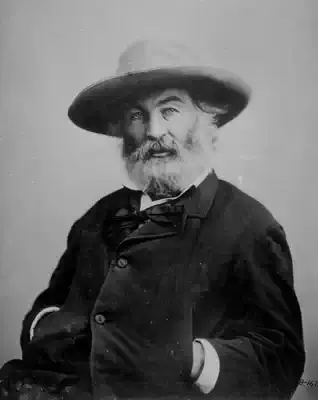
Walt Whitman
Long I Thought That Knowledge
Long I Thought That Knowledge
LONG I thought that knowledge alone would suffice me--O if I could
but obtain knowledge!
Then my lands engrossed me--Lands of the prairies, Ohio's land, the
southern savannas, engrossed me--For them I would live--I would
be their orator;
Then I met the examples of old and new heroes--I heard of warriors,
sailors, and all dauntless persons--And it seemed to me that I
too had it in me to be as dauntless as any--and would be so;
And then, to enclose all, it came to me to strike up the songs of the
New World--And then I believed my life must be spent in
singing;
But now take notice, land of the prairies, land of the south
savannas, Ohio's land,
Take notice, you Kanuck woods--and you Lake Huron--and all that with
you roll toward Niagara--and you Niagara also,
And you, Californian mountains--That you each and all find somebody
else to be your singer of songs,
For I can be your singer of songs no longer--One who loves me is
jealous of me, and withdraws me from all but love,
With the rest I dispense--I sever from what I thought would suffice
me, for it does not--it is now empty and tasteless to me,
I heed knowledge, and the grandeur of The States, and the example of
heroes, no more, 10
I am indifferent to my own songs--I will go with him I love,
It is to be enough for us that we are together--We never separate
again.
LONG I thought that knowledge alone would suffice me--O if I could
but obtain knowledge!
Then my lands engrossed me--Lands of the prairies, Ohio's land, the
southern savannas, engrossed me--For them I would live--I would
be their orator;
Then I met the examples of old and new heroes--I heard of warriors,
sailors, and all dauntless persons--And it seemed to me that I
too had it in me to be as dauntless as any--and would be so;
And then, to enclose all, it came to me to strike up the songs of the
New World--And then I believed my life must be spent in
singing;
But now take notice, land of the prairies, land of the south
savannas, Ohio's land,
Take notice, you Kanuck woods--and you Lake Huron--and all that with
you roll toward Niagara--and you Niagara also,
And you, Californian mountains--That you each and all find somebody
else to be your singer of songs,
For I can be your singer of songs no longer--One who loves me is
jealous of me, and withdraws me from all but love,
With the rest I dispense--I sever from what I thought would suffice
me, for it does not--it is now empty and tasteless to me,
I heed knowledge, and the grandeur of The States, and the example of
heroes, no more, 10
I am indifferent to my own songs--I will go with him I love,
It is to be enough for us that we are together--We never separate
again.
404
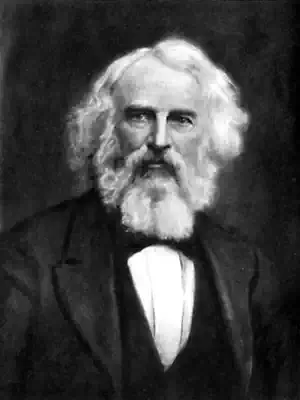
Henry Wadsworth Longfellow
The Luck of Edenhall. From The German Of Uhland
The Luck of Edenhall. From The German Of Uhland
Of Edenhall, the youthful Lord
Bids sound the festal trumpet's call.
He rises at the banquet board,
And cries, 'mid the drunken revellers all,
'Now bring me the Luck of Edenhall!'
The butler hears the words with pain,
The house's oldest seneschal,
Takes slow from its silken cloth again
The drinking glass of crystal tall;
They call it The Luck of Edenhall.
Then said the Lord, 'This glass to praise,
Fill with red wine from Portugal!'
The graybeard with trembling hand obeys;
A purple light shines over all,
It beams from the Luck of Edenhall.
Then speaks the Lord, and waves it light:
'This glass of flashing crystal tall
Gave to my sires the Fountain-Sprite;
She wrote in it,
If this glass doth fall,
Farewell then, O Luck of Edenhall!
''Twas right a goblet the Fate should be
Of the joyous race of Edenhall!
Deep draughts drink we right willingly:
And willingly ring, with merry call,
Kling! klang! to the Luck of Edenhall!'
First rings it deep, and full, and mild,
Like to the song of a nightingale
Then like the roar of a torrent wild;
Then mutters at last like the thunder's fall,
The glorious Luck of Edenhall.
'For its keeper takes a race of might,
The fragile goblet of crystal tall;
It has lasted longer than is right;
King! klang!--with a harder blow than all
Will I try the Luck of Edenhall!'
As the goblet ringing flies apart,
Suddenly cracks the vaulted hall;
And through the rift, the wild flames start;
The guests in dust are scattered all,
With the breaking Luck of Edenhall!
In storms the foe, with fire and sword;
He in the night had scaled the wall,
Slain by the sword lies the youthful Lord,
But holds in his hand the crystal tall,
The shattered Luck of Edenhall.
On the morrow the butler gropes alone,
The graybeard in the desert hall,
He seeks his Lord's burnt skeleton,
He seeks in the dismal ruin's fall
The shards of the Luck of Edenhall.
'The stone wall,' saith he, 'doth fall aside,
Down must the stately columns fall;
Glass is this earth's Luck and Pride;
In atoms shall fall this earthly ball
One day like the Luck of Edenhall!'
Of Edenhall, the youthful Lord
Bids sound the festal trumpet's call.
He rises at the banquet board,
And cries, 'mid the drunken revellers all,
'Now bring me the Luck of Edenhall!'
The butler hears the words with pain,
The house's oldest seneschal,
Takes slow from its silken cloth again
The drinking glass of crystal tall;
They call it The Luck of Edenhall.
Then said the Lord, 'This glass to praise,
Fill with red wine from Portugal!'
The graybeard with trembling hand obeys;
A purple light shines over all,
It beams from the Luck of Edenhall.
Then speaks the Lord, and waves it light:
'This glass of flashing crystal tall
Gave to my sires the Fountain-Sprite;
She wrote in it,
If this glass doth fall,
Farewell then, O Luck of Edenhall!
''Twas right a goblet the Fate should be
Of the joyous race of Edenhall!
Deep draughts drink we right willingly:
And willingly ring, with merry call,
Kling! klang! to the Luck of Edenhall!'
First rings it deep, and full, and mild,
Like to the song of a nightingale
Then like the roar of a torrent wild;
Then mutters at last like the thunder's fall,
The glorious Luck of Edenhall.
'For its keeper takes a race of might,
The fragile goblet of crystal tall;
It has lasted longer than is right;
King! klang!--with a harder blow than all
Will I try the Luck of Edenhall!'
As the goblet ringing flies apart,
Suddenly cracks the vaulted hall;
And through the rift, the wild flames start;
The guests in dust are scattered all,
With the breaking Luck of Edenhall!
In storms the foe, with fire and sword;
He in the night had scaled the wall,
Slain by the sword lies the youthful Lord,
But holds in his hand the crystal tall,
The shattered Luck of Edenhall.
On the morrow the butler gropes alone,
The graybeard in the desert hall,
He seeks his Lord's burnt skeleton,
He seeks in the dismal ruin's fall
The shards of the Luck of Edenhall.
'The stone wall,' saith he, 'doth fall aside,
Down must the stately columns fall;
Glass is this earth's Luck and Pride;
In atoms shall fall this earthly ball
One day like the Luck of Edenhall!'
339
Walt Whitman
Lo! Victress On The Peaks
Lo! Victress On The Peaks
LO! Victress on the peaks!
Where thou, with mighty brow, regarding the world,
(The world, O Libertad, that vainly conspired against thee;)
Out of its countless beleaguering toils, after thwarting them all;
Dominant, with the dazzling sun around thee,
Flauntest now unharm'd, in immortal soundness and bloom--lo! in these
hours supreme,
No poem proud, I, chanting, bring to thee--nor mastery's rapturous
verse;
But a book, containing night's darkness, and blood-dripping wounds,
And psalms of the dead.
LO! Victress on the peaks!
Where thou, with mighty brow, regarding the world,
(The world, O Libertad, that vainly conspired against thee;)
Out of its countless beleaguering toils, after thwarting them all;
Dominant, with the dazzling sun around thee,
Flauntest now unharm'd, in immortal soundness and bloom--lo! in these
hours supreme,
No poem proud, I, chanting, bring to thee--nor mastery's rapturous
verse;
But a book, containing night's darkness, and blood-dripping wounds,
And psalms of the dead.
300
Sarah Teasdale
The Answer
The Answer
When I go back to earth
And all my joyous body
Puts off the red and white
That once had been so proud,
If men should pass above
With false and feeble pity,
My dust will find a voice
To answer them aloud:
"Be still, I am content,
Take back your poor compassion --
Joy was a flame in me
Too steady to destroy.
Lithe as a bending reed
Loving the storm that sways her --
I found more joy in sorrow
Than you could find in joy."
When I go back to earth
And all my joyous body
Puts off the red and white
That once had been so proud,
If men should pass above
With false and feeble pity,
My dust will find a voice
To answer them aloud:
"Be still, I am content,
Take back your poor compassion --
Joy was a flame in me
Too steady to destroy.
Lithe as a bending reed
Loving the storm that sways her --
I found more joy in sorrow
Than you could find in joy."
441

Robert W. Service
Teddy Bear
Teddy Bear
O Teddy Bear! with your head awry
And your comical twisted smile,
You rub your eyes -- do you wonder why
You've slept such a long, long while?
As you lay so still in the cupboard dim,
And you heard on the roof the rain,
Were you thinking . . . what has become of him?
And when will he play again?
Do you sometimes long for a chubby hand,
And a voice so sweetly shrill?
O Teddy Bear! don't you understand
Why the house is awf'ly still?
You sit with your muzzle propped on your paws,
And your whimsical face askew.
Don't wait, don't wait for your friend . . . because
He's sleeping and dreaming too.
Aye, sleeping long. . . . You remember how
He stabbed our hearts with his cries?
And oh, the dew of pain on his brow,
And the deeps of pain in his eyes!
And, Teddy Bear! you remember, too,
As he sighed and sank to his rest,
How all of a sudden he smiled to you,
And he clutched you close to his breast.
I'll put you away, little Teddy Bear,
In the cupboard far from my sight;
Maybe he'll come and he'll kiss you there,
A wee white ghost in the night.
But me, I'll live with my love and pain
A weariful lifetime through;
And my Hope: will I see him again, again?
Ah, God! If I only knew!
O Teddy Bear! with your head awry
And your comical twisted smile,
You rub your eyes -- do you wonder why
You've slept such a long, long while?
As you lay so still in the cupboard dim,
And you heard on the roof the rain,
Were you thinking . . . what has become of him?
And when will he play again?
Do you sometimes long for a chubby hand,
And a voice so sweetly shrill?
O Teddy Bear! don't you understand
Why the house is awf'ly still?
You sit with your muzzle propped on your paws,
And your whimsical face askew.
Don't wait, don't wait for your friend . . . because
He's sleeping and dreaming too.
Aye, sleeping long. . . . You remember how
He stabbed our hearts with his cries?
And oh, the dew of pain on his brow,
And the deeps of pain in his eyes!
And, Teddy Bear! you remember, too,
As he sighed and sank to his rest,
How all of a sudden he smiled to you,
And he clutched you close to his breast.
I'll put you away, little Teddy Bear,
In the cupboard far from my sight;
Maybe he'll come and he'll kiss you there,
A wee white ghost in the night.
But me, I'll live with my love and pain
A weariful lifetime through;
And my Hope: will I see him again, again?
Ah, God! If I only knew!
231
Walt Whitman
Leaves Of Grass. A Carol Of Harvest For 1867
Leaves Of Grass. A Carol Of Harvest For 1867
A SONG of the good green grass!
A song no more of the city streets;
A song of farms--a song of the soil of fields.
A song with the smell of sun-dried hay, where the nimble pitchers
handle the pitch-fork;
A song tasting of new wheat, and of fresh-husk'd maize.
For the lands, and for these passionate days, and for myself,
Now I awhile return to thee, O soil of Autumn fields,
Reclining on thy breast, giving myself to thee,
Answering the pulses of thy sane and equable heart,
Tuning a verse for thee. 10
O Earth, that hast no voice, confide to me a voice!
O harvest of my lands! O boundless summer growths!
O lavish, brown, parturient earth! O infinite, teeming womb!
A verse to seek, to see, to narrate thee.
Ever upon this stage,
Is acted God's calm, annual drama,
Gorgeous processions, songs of birds,
Sunrise, that fullest feeds and freshens most the soul,
The heaving sea, the waves upon the shore, the musical, strong waves,
The woods, the stalwart trees, the slender, tapering trees, 20
The flowers, the grass, the lilliput, countless armies of the grass,
The heat, the showers, the measureless pasturages,
The scenery of the snows, the winds' free orchestra,
The stretching, light-hung roof of clouds--the clear cerulean, and
the bulging, silvery fringes,
The high dilating stars, the placid, beckoning stars,
The moving flocks and herds, the plains and emerald meadows,
The shows of all the varied lands, and all the growths and products.
Fecund America! To-day,
Thou art all over set in births and joys!
Thou groan'st with riches! thy wealth clothes thee as with a swathing
garment! 30
Thou laughest loud with ache of great possessions!
A myriad-twining life, like interlacing vines, binds all thy vast
demesne!
As some huge ship, freighted to water's edge, thou ridest into port!
As rain falls from the heaven, and vapors rise from earth, so have
the precious values fallen upon thee, and risen out of thee!
Thou envy of the globe! thou miracle!
Thou, bathed, choked, swimming in plenty!
Thou lucky Mistress of the tranquil barns!
Thou Prairie Dame that sittest in the middle, and lookest out upon
thy world, and lookest East, and lookest West!
Dispensatress, that by a word givest a thousand miles--that giv'st a
million farms, and missest nothing!
Thou All-Acceptress--thou Hospitable--(thou only art hospitable, as
God is hospitable.) 40
When late I sang, sad was my voice;
Sad were the shows around me, with deafening noises of hatred, and
smoke of conflict;
In the midst of the armies, the Heroes, I stood,
Or pass'd with slow step through the wounded and dying.
But now I sing not War,
Nor the measur'd march of soldiers, nor the tents of camps,
Nor the regiments hastily coming up, deploying in line of battle.
No more the dead and wounded;
No more the sad, unnatural shows of War.
Ask'd room those flush'd immortal ranks? the first forth-stepping
armies? 50
Ask room, alas, the ghastly ranks--the armies dread that follow'd.
(Pass--pass, ye proud brigades!
So handsome, dress'd in blue--with your tramping, sinewy legs;
With your shoulders young and strong--with your knapsacks and your
muskets;
--How elate I stood and watch'd you, where, starting off, you
march'd!
Pass;--then rattle, drums, again!
Scream, you steamers on the river, out of whistles loud and shrill,
your salutes!
For an army heaves in sight--O another gathering army!
Swarming, trailing on the rear--O you dread, accruing army!
O you regiments so piteous, with your mortal diarrhoea! with your
fever! 60
O my land's maimed darlings! with the plenteous bloody bandage and
the crutch!
Lo! your pallid army follow'd!)
But on these days of brightness,
On the far-stretching beauteous landscape, the roads and lanes, the
high-piled farm-wagons, and the fruits and barns,
Shall the dead intrude?
Ah, the dead to me mar not--they fit well in Nature;
They fit very well in the landscape, under the trees and grass,
And along the edge of the sky, in the horizon's far margin.
Nor do I forget you, departed;
Nor in winter or summer, my lost ones; 70
But most, in the open air, as now, when my soul is rapt and at
peace--like pleasing phantoms,
Your dear memories, rising, glide silently by me.
I saw the day, the return of the Heroes;
(Yet the Heroes never surpass'd, shall never return;
Them, that day, I saw not.)
I saw the interminable Corps--I saw the processions of armies,
I saw them approaching, defiling by, with divisions,
Streaming northward, their work done, camping awhile in clusters of
mighty camps.
No holiday soldiers!--youthful, yet veterans;
Worn, swart, handsome, strong, of the stock of homestead and
workshop,
Harden'd of many a long campaign and sweaty march,
Inured on many a hard-fought, bloody field.
80
A pause--the armies wait;
A million flush'd, embattled conquerors wait;
The world, too, waits--then, soft as breaking night, and sure as
dawn,
They melt--they disappear.
Exult, indeed, O lands! victorious lands!
Not there your victory, on those red, shuddering fields;
But here and hence your victory.
Melt, melt away, ye armies! disperse, ye blue-clad soldiers!
Resolve ye back again--give up, for good, your deadly arms; 90
Other the arms, the fields henceforth for you, or South or North, or
East or West,
With saner wars--sweet wars--life-giving wars.
Loud, O my throat, and clear, O soul!
The season of thanks, and the voice of full-yielding;
The chant of joy and power for boundless fertility.
All till'd and untill'd fields expand before me;
I see the true arenas of my race--or first, or last,
Man's innocent and strong arenas.
I see the Heroes at other toils;
I see, well-wielded in their hands, the better weapons. 100
I see where America, Mother of All,
Well-pleased, with full-spanning eye, gazes forth, dwells long,
And counts the varied gathering of the products.
Busy the far, the sunlit panorama;
Prairie, orchard, and yellow grain of the North,
Cotton and rice of the South, and Louisianian cane;
Open, unseeded fallows, rich fields of clover and timothy,
Kine and horses feeding, and droves of sheep and swine,
And many a stately river flowing, and many a jocund brook,
And healthy uplands with their herby-perfumed breezes, 110
And the good green grass--that delicate miracle, the ever-recurring
grass.
Toil on, Heroes! harvest the products!
Not alone on those warlike fields, the Mother of All,
With dilated form and lambent eyes, watch'd you.
Toil on, Heroes! toil well! Handle the weapons well!
The Mother of All--yet here, as ever, she watches you.
Well-pleased, America, thou beholdest,
Over the fields of the West, those crawling monsters,
The human-divine inventions, the labor-saving implements:
Beholdest, moving in every direction, imbued as with life, the
revolving hay-rakes, 120
The steam-power reaping-machines, and the horse-power machines,
The engines, thrashers of grain, and cleaners of grain, well
separating the straw--the nimble work of the patent pitch-fork;
Beholdest the newer saw-mill, the southern cotton-gin, and the ricecleanser.
Beneath thy look, O Maternal,
With these, and else, and with their own strong hands, the Heroes
harvest.
All gather, and all harvest;
(Yet but for thee, O Powerful! not a scythe might swing, as now, in
security;
Not a maize-stalk dangle, as now, its silken tassels in peace.)
Under Thee only they harvest--even but a wisp of hay, under thy great
face, only;
Harvest the wheat of Ohio, Illinois, Wisconsin--every barbed spear,
under thee; 130
Harvest the maize of Missouri, Kentucky, Tennessee--each ear in its
light-green sheath,
Gather the hay to its myriad mows, in the odorous, tranquil barns,
Oats to their bins--the white potato, the buckwheat of Michigan, to
theirs;
Gather the cotton in Mississippi or Alabama--dig and hoard the
golden, the sweet potato of Georgia and the Carolinas,
Clip the wool of California or Pennsylvania,
Cut the flax in the Middle States, or hemp, or tobacco in the
Borders,
Pick the pea and the bean, or pull apples from the trees, or bunches
of grapes from the vines,
Or aught that ripens in all These States, or North or South,
Under the beaming sun, and under Thee.
A SONG of the good green grass!
A song no more of the city streets;
A song of farms--a song of the soil of fields.
A song with the smell of sun-dried hay, where the nimble pitchers
handle the pitch-fork;
A song tasting of new wheat, and of fresh-husk'd maize.
For the lands, and for these passionate days, and for myself,
Now I awhile return to thee, O soil of Autumn fields,
Reclining on thy breast, giving myself to thee,
Answering the pulses of thy sane and equable heart,
Tuning a verse for thee. 10
O Earth, that hast no voice, confide to me a voice!
O harvest of my lands! O boundless summer growths!
O lavish, brown, parturient earth! O infinite, teeming womb!
A verse to seek, to see, to narrate thee.
Ever upon this stage,
Is acted God's calm, annual drama,
Gorgeous processions, songs of birds,
Sunrise, that fullest feeds and freshens most the soul,
The heaving sea, the waves upon the shore, the musical, strong waves,
The woods, the stalwart trees, the slender, tapering trees, 20
The flowers, the grass, the lilliput, countless armies of the grass,
The heat, the showers, the measureless pasturages,
The scenery of the snows, the winds' free orchestra,
The stretching, light-hung roof of clouds--the clear cerulean, and
the bulging, silvery fringes,
The high dilating stars, the placid, beckoning stars,
The moving flocks and herds, the plains and emerald meadows,
The shows of all the varied lands, and all the growths and products.
Fecund America! To-day,
Thou art all over set in births and joys!
Thou groan'st with riches! thy wealth clothes thee as with a swathing
garment! 30
Thou laughest loud with ache of great possessions!
A myriad-twining life, like interlacing vines, binds all thy vast
demesne!
As some huge ship, freighted to water's edge, thou ridest into port!
As rain falls from the heaven, and vapors rise from earth, so have
the precious values fallen upon thee, and risen out of thee!
Thou envy of the globe! thou miracle!
Thou, bathed, choked, swimming in plenty!
Thou lucky Mistress of the tranquil barns!
Thou Prairie Dame that sittest in the middle, and lookest out upon
thy world, and lookest East, and lookest West!
Dispensatress, that by a word givest a thousand miles--that giv'st a
million farms, and missest nothing!
Thou All-Acceptress--thou Hospitable--(thou only art hospitable, as
God is hospitable.) 40
When late I sang, sad was my voice;
Sad were the shows around me, with deafening noises of hatred, and
smoke of conflict;
In the midst of the armies, the Heroes, I stood,
Or pass'd with slow step through the wounded and dying.
But now I sing not War,
Nor the measur'd march of soldiers, nor the tents of camps,
Nor the regiments hastily coming up, deploying in line of battle.
No more the dead and wounded;
No more the sad, unnatural shows of War.
Ask'd room those flush'd immortal ranks? the first forth-stepping
armies? 50
Ask room, alas, the ghastly ranks--the armies dread that follow'd.
(Pass--pass, ye proud brigades!
So handsome, dress'd in blue--with your tramping, sinewy legs;
With your shoulders young and strong--with your knapsacks and your
muskets;
--How elate I stood and watch'd you, where, starting off, you
march'd!
Pass;--then rattle, drums, again!
Scream, you steamers on the river, out of whistles loud and shrill,
your salutes!
For an army heaves in sight--O another gathering army!
Swarming, trailing on the rear--O you dread, accruing army!
O you regiments so piteous, with your mortal diarrhoea! with your
fever! 60
O my land's maimed darlings! with the plenteous bloody bandage and
the crutch!
Lo! your pallid army follow'd!)
But on these days of brightness,
On the far-stretching beauteous landscape, the roads and lanes, the
high-piled farm-wagons, and the fruits and barns,
Shall the dead intrude?
Ah, the dead to me mar not--they fit well in Nature;
They fit very well in the landscape, under the trees and grass,
And along the edge of the sky, in the horizon's far margin.
Nor do I forget you, departed;
Nor in winter or summer, my lost ones; 70
But most, in the open air, as now, when my soul is rapt and at
peace--like pleasing phantoms,
Your dear memories, rising, glide silently by me.
I saw the day, the return of the Heroes;
(Yet the Heroes never surpass'd, shall never return;
Them, that day, I saw not.)
I saw the interminable Corps--I saw the processions of armies,
I saw them approaching, defiling by, with divisions,
Streaming northward, their work done, camping awhile in clusters of
mighty camps.
No holiday soldiers!--youthful, yet veterans;
Worn, swart, handsome, strong, of the stock of homestead and
workshop,
Harden'd of many a long campaign and sweaty march,
Inured on many a hard-fought, bloody field.
80
A pause--the armies wait;
A million flush'd, embattled conquerors wait;
The world, too, waits--then, soft as breaking night, and sure as
dawn,
They melt--they disappear.
Exult, indeed, O lands! victorious lands!
Not there your victory, on those red, shuddering fields;
But here and hence your victory.
Melt, melt away, ye armies! disperse, ye blue-clad soldiers!
Resolve ye back again--give up, for good, your deadly arms; 90
Other the arms, the fields henceforth for you, or South or North, or
East or West,
With saner wars--sweet wars--life-giving wars.
Loud, O my throat, and clear, O soul!
The season of thanks, and the voice of full-yielding;
The chant of joy and power for boundless fertility.
All till'd and untill'd fields expand before me;
I see the true arenas of my race--or first, or last,
Man's innocent and strong arenas.
I see the Heroes at other toils;
I see, well-wielded in their hands, the better weapons. 100
I see where America, Mother of All,
Well-pleased, with full-spanning eye, gazes forth, dwells long,
And counts the varied gathering of the products.
Busy the far, the sunlit panorama;
Prairie, orchard, and yellow grain of the North,
Cotton and rice of the South, and Louisianian cane;
Open, unseeded fallows, rich fields of clover and timothy,
Kine and horses feeding, and droves of sheep and swine,
And many a stately river flowing, and many a jocund brook,
And healthy uplands with their herby-perfumed breezes, 110
And the good green grass--that delicate miracle, the ever-recurring
grass.
Toil on, Heroes! harvest the products!
Not alone on those warlike fields, the Mother of All,
With dilated form and lambent eyes, watch'd you.
Toil on, Heroes! toil well! Handle the weapons well!
The Mother of All--yet here, as ever, she watches you.
Well-pleased, America, thou beholdest,
Over the fields of the West, those crawling monsters,
The human-divine inventions, the labor-saving implements:
Beholdest, moving in every direction, imbued as with life, the
revolving hay-rakes, 120
The steam-power reaping-machines, and the horse-power machines,
The engines, thrashers of grain, and cleaners of grain, well
separating the straw--the nimble work of the patent pitch-fork;
Beholdest the newer saw-mill, the southern cotton-gin, and the ricecleanser.
Beneath thy look, O Maternal,
With these, and else, and with their own strong hands, the Heroes
harvest.
All gather, and all harvest;
(Yet but for thee, O Powerful! not a scythe might swing, as now, in
security;
Not a maize-stalk dangle, as now, its silken tassels in peace.)
Under Thee only they harvest--even but a wisp of hay, under thy great
face, only;
Harvest the wheat of Ohio, Illinois, Wisconsin--every barbed spear,
under thee; 130
Harvest the maize of Missouri, Kentucky, Tennessee--each ear in its
light-green sheath,
Gather the hay to its myriad mows, in the odorous, tranquil barns,
Oats to their bins--the white potato, the buckwheat of Michigan, to
theirs;
Gather the cotton in Mississippi or Alabama--dig and hoard the
golden, the sweet potato of Georgia and the Carolinas,
Clip the wool of California or Pennsylvania,
Cut the flax in the Middle States, or hemp, or tobacco in the
Borders,
Pick the pea and the bean, or pull apples from the trees, or bunches
of grapes from the vines,
Or aught that ripens in all These States, or North or South,
Under the beaming sun, and under Thee.
411
Sarah Teasdale
Sunset: St. Louis
Sunset: St. Louis
Hushed in the smoky haze of summer sunset,
When I came home again from far-off places,
How many times I saw my western city
Dream by her river.
Then for an hour the water wore a mantle
Of tawny gold and mauve and misted turquoise
Under the tall and darkened arches bearing
Gray, high-flung bridges.
Against the sunset, water-towers and steeples
Flickered with fire up the slope to westward,
And old warehouses poured their purple shadows
Across the levee.
High over them the black train swept with thunder,
Cleaving the city, leaving far beneath it
Wharf-boats moored beside the old side-wheelers
Resting in twilight.
Hushed in the smoky haze of summer sunset,
When I came home again from far-off places,
How many times I saw my western city
Dream by her river.
Then for an hour the water wore a mantle
Of tawny gold and mauve and misted turquoise
Under the tall and darkened arches bearing
Gray, high-flung bridges.
Against the sunset, water-towers and steeples
Flickered with fire up the slope to westward,
And old warehouses poured their purple shadows
Across the levee.
High over them the black train swept with thunder,
Cleaving the city, leaving far beneath it
Wharf-boats moored beside the old side-wheelers
Resting in twilight.
387
Henry Wadsworth Longfellow
The Leap Of Roushan Beg. (Birds Of Passage. Flight The Fifth)
The Leap Of Roushan Beg. (Birds Of Passage. Flight The Fifth)
Mounted on Kyrat strong and fleet,
His chestnut steed with four white feet,
Roushan Beg, called Kurroglou,
Son of the road and bandit chief,
Seeking refuge and relief,
Up the mountain pathway flew.
Such was Kyrat's wondrous speed,
Never yet could any steed
Reach the dust-cloud in his course.
More than maiden, more than wife,
More than gold and next to life
Roushan the Robber loved his horse.
In the land that lies beyond
Erzeroum and Trebizond,
Garden-girt his fortress stood;
Plundered khan, or caravan
Journeying north from Koordistan,
Gave him wealth and wine and food.
Seven hundred and fourscore
Men at arms his livery wore,
Did his bidding night and day;
Now, through regions all unknown,
He was wandering, lost, alone,
Seeking without guide his way.
Suddenly the pathway ends,
Sheer the precipice descends,
Loud the torrent roars unseen;
Thirty feet from side to side
Yawns the chasm; on air must ride
He who crosses this ravine.
Following close in his pursuit,
At the precipice's foot,
Reyhan the Arab of Orfah
Halted with his hundred men,
Shouting upward from the glen,
'La Illáh illa Alláh!'
Gently Roushan Beg caressed
Kyrat's forehead, neck, and breast;
Kissed him upon both his eyes,
Sang to him in his wild way,
As upon the topmost spray
Sings a bird before it flies.
'O my Kyrat, O my steed,
Round and slender as a reed,
Carry me this peril through!
Satin housings shall be thine,
Shoes of gold, O Kyrat mine,
O thou soul of Kurroglou!
'Soft thy skin as silken skein,
Soft as woman's hair thy mane,
Tender are thine eyes and true;
All thy hoofs like ivory shine,
Polished bright; O, life of mine,
Leap, and rescue Kurroglou!'
Kyrat, then, the strong and fleet,
Drew together his four white feet,
Paused a moment on the verge,
Measured with his eye the space,
And into the air's embrace
Leaped as leaps the ocean surge.
As the ocean surge o'er sand
Bears a swimmer safe to land,
Kyrat safe his rider bore;
Rattling down the deep abyss
Fragments of the precipice
Rolled like pebbles on a shore.
Roushan's tasselled cap of red
Trembled not upon his head,
Careless sat he and upright;
Neither hand nor bridle shook,
Nor his head he turned to look,
As he galloped out of sight.
Flash of harness in the air,
Seen a moment like the glare
Of a sword drawn from its sheath;
Thus the phantom horseman passed,
And the shadow that he cast
Leaped the cataract underneath.
Reyhan the Arab held his breath
While this vision of life and death
Passed above him. 'Allahu!'
Cried he. 'In all Koordistan
Lives there not so brave a man
As this Robber Kurroglou!'
Mounted on Kyrat strong and fleet,
His chestnut steed with four white feet,
Roushan Beg, called Kurroglou,
Son of the road and bandit chief,
Seeking refuge and relief,
Up the mountain pathway flew.
Such was Kyrat's wondrous speed,
Never yet could any steed
Reach the dust-cloud in his course.
More than maiden, more than wife,
More than gold and next to life
Roushan the Robber loved his horse.
In the land that lies beyond
Erzeroum and Trebizond,
Garden-girt his fortress stood;
Plundered khan, or caravan
Journeying north from Koordistan,
Gave him wealth and wine and food.
Seven hundred and fourscore
Men at arms his livery wore,
Did his bidding night and day;
Now, through regions all unknown,
He was wandering, lost, alone,
Seeking without guide his way.
Suddenly the pathway ends,
Sheer the precipice descends,
Loud the torrent roars unseen;
Thirty feet from side to side
Yawns the chasm; on air must ride
He who crosses this ravine.
Following close in his pursuit,
At the precipice's foot,
Reyhan the Arab of Orfah
Halted with his hundred men,
Shouting upward from the glen,
'La Illáh illa Alláh!'
Gently Roushan Beg caressed
Kyrat's forehead, neck, and breast;
Kissed him upon both his eyes,
Sang to him in his wild way,
As upon the topmost spray
Sings a bird before it flies.
'O my Kyrat, O my steed,
Round and slender as a reed,
Carry me this peril through!
Satin housings shall be thine,
Shoes of gold, O Kyrat mine,
O thou soul of Kurroglou!
'Soft thy skin as silken skein,
Soft as woman's hair thy mane,
Tender are thine eyes and true;
All thy hoofs like ivory shine,
Polished bright; O, life of mine,
Leap, and rescue Kurroglou!'
Kyrat, then, the strong and fleet,
Drew together his four white feet,
Paused a moment on the verge,
Measured with his eye the space,
And into the air's embrace
Leaped as leaps the ocean surge.
As the ocean surge o'er sand
Bears a swimmer safe to land,
Kyrat safe his rider bore;
Rattling down the deep abyss
Fragments of the precipice
Rolled like pebbles on a shore.
Roushan's tasselled cap of red
Trembled not upon his head,
Careless sat he and upright;
Neither hand nor bridle shook,
Nor his head he turned to look,
As he galloped out of sight.
Flash of harness in the air,
Seen a moment like the glare
Of a sword drawn from its sheath;
Thus the phantom horseman passed,
And the shadow that he cast
Leaped the cataract underneath.
Reyhan the Arab held his breath
While this vision of life and death
Passed above him. 'Allahu!'
Cried he. 'In all Koordistan
Lives there not so brave a man
As this Robber Kurroglou!'
482
Sarah Teasdale
Summer Night, Riverside
Summer Night, Riverside
In the wild, soft summer darkness
How many and many a night we two together
Sat in the park and watched the Hudson
Wearing her lights like golden spangles
Glinting on black satin.
The rail along the curving pathway
Was low in a happy place to let us cross,
And down the hill a tree that dripped with bloom
Sheltered us,
While your kisses and the flowers,
Falling, falling,
Tangled my hair. . . .
The frail white stars moved slowly over the sky.
And now, far off
In the fragrant darkness
The tree is tremulous again with bloom,
For June comes back.
To-night what girl
Dreamily before her mirror shakes from her hair
This year's blossoms, clinging in its coils?
In the wild, soft summer darkness
How many and many a night we two together
Sat in the park and watched the Hudson
Wearing her lights like golden spangles
Glinting on black satin.
The rail along the curving pathway
Was low in a happy place to let us cross,
And down the hill a tree that dripped with bloom
Sheltered us,
While your kisses and the flowers,
Falling, falling,
Tangled my hair. . . .
The frail white stars moved slowly over the sky.
And now, far off
In the fragrant darkness
The tree is tremulous again with bloom,
For June comes back.
To-night what girl
Dreamily before her mirror shakes from her hair
This year's blossoms, clinging in its coils?
441
Walt Whitman
Kosmos
Kosmos
WHO includes diversity, and is Nature,
Who is the amplitude of the earth, and the coarseness and sexuality
of the earth, and the great charity of the earth, and the
equilibrium also,
Who has not look'd forth from the windows, the eyes, for nothing, or
whose brain held audience with messengers for nothing;
Who contains believers and disbelievers--Who is the most majestic
lover;
Who holds duly his or her triune proportion of realism, spiritualism,
and of the aesthetic, or intellectual,
Who, having consider'd the Body, finds all its organs and parts good;
Who, out of the theory of the earth, and of his or her body,
understands by subtle analogies all other theories,
The theory of a city, a poem, and of the large politics of These
States;
Who believes not only in our globe, with its sun and moon, but in
other globes, with their suns and moons;
Who, constructing the house of himself or herself, not for a day, but
for all time, sees races, eras, dates, generations, 10
The past, the future, dwelling there, like space, inseparable
together.
WHO includes diversity, and is Nature,
Who is the amplitude of the earth, and the coarseness and sexuality
of the earth, and the great charity of the earth, and the
equilibrium also,
Who has not look'd forth from the windows, the eyes, for nothing, or
whose brain held audience with messengers for nothing;
Who contains believers and disbelievers--Who is the most majestic
lover;
Who holds duly his or her triune proportion of realism, spiritualism,
and of the aesthetic, or intellectual,
Who, having consider'd the Body, finds all its organs and parts good;
Who, out of the theory of the earth, and of his or her body,
understands by subtle analogies all other theories,
The theory of a city, a poem, and of the large politics of These
States;
Who believes not only in our globe, with its sun and moon, but in
other globes, with their suns and moons;
Who, constructing the house of himself or herself, not for a day, but
for all time, sees races, eras, dates, generations, 10
The past, the future, dwelling there, like space, inseparable
together.
597
Robert W. Service
Take It Easy
Take It Easy
When I was boxing in the ring
In 'Frisco back in ninety-seven,
I used to make five bucks a fling
To give as good as I was given.
But when I felt too fighting gay,
And tried to be a dinger-donger,
My second, Mike Muldoon. would say:
"Go easy, kid; you'll stay the longer."
When I was on the Yukon trail
The boys would warn, when things were bleakest,
The weakest link's the one to fail -
Said I: "by Gosh! I won't be weakest."
So I would strain with might and main,
Striving to prove I was the stronger,
Till Sourdough Sam would snap: "Goddam!
Go easy, son; you'' last the longer."
So all you lads of eighty odd
Take my advice - you'll never rue it:
Be quite prepared to meet your God,
But don't stampede yourselves to do it.
Just cultivate a sober gait;
Don't emulate the lively conger;
No need to race, slow down the pace,
Go easy, Pals - you'll linger longer.
When I was boxing in the ring
In 'Frisco back in ninety-seven,
I used to make five bucks a fling
To give as good as I was given.
But when I felt too fighting gay,
And tried to be a dinger-donger,
My second, Mike Muldoon. would say:
"Go easy, kid; you'll stay the longer."
When I was on the Yukon trail
The boys would warn, when things were bleakest,
The weakest link's the one to fail -
Said I: "by Gosh! I won't be weakest."
So I would strain with might and main,
Striving to prove I was the stronger,
Till Sourdough Sam would snap: "Goddam!
Go easy, son; you'' last the longer."
So all you lads of eighty odd
Take my advice - you'll never rue it:
Be quite prepared to meet your God,
But don't stampede yourselves to do it.
Just cultivate a sober gait;
Don't emulate the lively conger;
No need to race, slow down the pace,
Go easy, Pals - you'll linger longer.
177
Walt Whitman
Italian Music In Dakota
Italian Music In Dakota
THROUGH the soft evening air enwrinding all,
Rocks, woods, fort, cannon, pacing sentries, endless wilds,
In dulcet streams, in flutes' and cornets' notes,
Electric, pensive, turbulent artificial,
(Yet strangely fitting even here, meanings unknown before,
Subtler than ever, more harmony, as if born here, related here,
Not to the city's fresco'd rooms, not to the audience of the opera
house,
Sounds, echoes, wandering strains, as really here at home,
Sonnambula's innocent love, trios with Norma's anguish,
And thy ecstatic chorus Poliuto;) 10
Ray'd in the limpid yellow slanting sundown,
Music, Italian music in Dakota.
While Nature, sovereign of this gnarl'd realm,
Lurking in hidden barbaric grim recesses,
Acknowledging rapport however far remov'd,
(As some old root or soil of earth its last-born flower or fruit,)
Listens well pleas'd.
THROUGH the soft evening air enwrinding all,
Rocks, woods, fort, cannon, pacing sentries, endless wilds,
In dulcet streams, in flutes' and cornets' notes,
Electric, pensive, turbulent artificial,
(Yet strangely fitting even here, meanings unknown before,
Subtler than ever, more harmony, as if born here, related here,
Not to the city's fresco'd rooms, not to the audience of the opera
house,
Sounds, echoes, wandering strains, as really here at home,
Sonnambula's innocent love, trios with Norma's anguish,
And thy ecstatic chorus Poliuto;) 10
Ray'd in the limpid yellow slanting sundown,
Music, Italian music in Dakota.
While Nature, sovereign of this gnarl'd realm,
Lurking in hidden barbaric grim recesses,
Acknowledging rapport however far remov'd,
(As some old root or soil of earth its last-born flower or fruit,)
Listens well pleas'd.
419
Sarah Teasdale
Spring Torrents
Spring Torrents
Will it always be like this until I am dead,
Every spring must I bear it all again
With the first red haze of the budding maple boughs,
And the first sweet-smelling rain?
Oh I am like a rock in the rising river
Where the flooded water breaks with a low call --
Like a rock that knows the cry of the waters
And cannot answer at all.
Will it always be like this until I am dead,
Every spring must I bear it all again
With the first red haze of the budding maple boughs,
And the first sweet-smelling rain?
Oh I am like a rock in the rising river
Where the flooded water breaks with a low call --
Like a rock that knows the cry of the waters
And cannot answer at all.
380
Henry Wadsworth Longfellow
The Jewish Cemetery at Newport
The Jewish Cemetery at Newport
How strange it seems! These Hebrews in their graves,
Close by the street of this fair seaport town,
Silent beside the never-silent waves,
At rest in all this moving up and down!
The trees are white with dust, that o'er their sleep
Wave their broad curtains in the southwind's breath,
While underneath these leafy tents they keep
The long, mysterious Exodus of Death.
And these sepulchral stones, so old and brown,
That pave with level flags their burial-place,
Seem like the tablets of the Law, thrown down
And broken by Moses at the mountain's base.
The very names recorded here are strange,
Of foreign accent, and of different climes;
Alvares and Rivera interchange
With Abraham and Jacob of old times.
"Blessed be God! for he created Death!"
The mourner said, "and Death is rest and peace!"
Then added, in the certainty of faith,
"And giveth Life that nevermore shall cease."
Closed are the portals of their Synagogue,
No Psalms of David now the silence break,
No Rabbi reads the ancient Decalogue
In the grand dialect the Prophets spake.
Gone are the living, but the dead remain,
And not neglected; for a hand unseen,
Scattering its bounty, like a summer rain,
Still keeps their graves and their remembrance green.
How came they here? What burst of Christian hate,
What persecution, merciless and blind,
Drove o'er the sea -that desert desolate -
These Ishmaels and Hagars of mankind?
They lived in narrow streets and lanes obscure,
Ghetto and Judenstrass, in mirk and mire;
Taught in the school of patience to endure
The life of anguish and the death of fire.
All their lives long, with the unleavened bread
And bitter herbs of exile and its fears,
The wasting famine of the heart they fed,
And slaked its thirst with marah of their tears.
Anathema maranatha! was the cry
That rang from town to town, from street to street:
At every gate the accursed Mordecai
Was mocked and jeered, and spurned by Christian feet.
Pride and humiliation hand in hand
Walked with them through the world where'er they went;
Trampled and beaten were they as the sand,
And yet unshaken as the continent.
For in the background figures vague and vast
Of patriarchs and of prophets rose sublime,
And all the great traditions of the Past
They saw reflected in the coming time.
And thus forever with reverted look
The mystic volume of the world they read,
Spelling it backward, like a Hebrew book,
Till life became a Legend of the Dead.
But ah! what once has been shall be no more!
The groaning earth in travail and in pain
Brings forth its races, but does not restore,
And the dead nations never rise again.
How strange it seems! These Hebrews in their graves,
Close by the street of this fair seaport town,
Silent beside the never-silent waves,
At rest in all this moving up and down!
The trees are white with dust, that o'er their sleep
Wave their broad curtains in the southwind's breath,
While underneath these leafy tents they keep
The long, mysterious Exodus of Death.
And these sepulchral stones, so old and brown,
That pave with level flags their burial-place,
Seem like the tablets of the Law, thrown down
And broken by Moses at the mountain's base.
The very names recorded here are strange,
Of foreign accent, and of different climes;
Alvares and Rivera interchange
With Abraham and Jacob of old times.
"Blessed be God! for he created Death!"
The mourner said, "and Death is rest and peace!"
Then added, in the certainty of faith,
"And giveth Life that nevermore shall cease."
Closed are the portals of their Synagogue,
No Psalms of David now the silence break,
No Rabbi reads the ancient Decalogue
In the grand dialect the Prophets spake.
Gone are the living, but the dead remain,
And not neglected; for a hand unseen,
Scattering its bounty, like a summer rain,
Still keeps their graves and their remembrance green.
How came they here? What burst of Christian hate,
What persecution, merciless and blind,
Drove o'er the sea -that desert desolate -
These Ishmaels and Hagars of mankind?
They lived in narrow streets and lanes obscure,
Ghetto and Judenstrass, in mirk and mire;
Taught in the school of patience to endure
The life of anguish and the death of fire.
All their lives long, with the unleavened bread
And bitter herbs of exile and its fears,
The wasting famine of the heart they fed,
And slaked its thirst with marah of their tears.
Anathema maranatha! was the cry
That rang from town to town, from street to street:
At every gate the accursed Mordecai
Was mocked and jeered, and spurned by Christian feet.
Pride and humiliation hand in hand
Walked with them through the world where'er they went;
Trampled and beaten were they as the sand,
And yet unshaken as the continent.
For in the background figures vague and vast
Of patriarchs and of prophets rose sublime,
And all the great traditions of the Past
They saw reflected in the coming time.
And thus forever with reverted look
The mystic volume of the world they read,
Spelling it backward, like a Hebrew book,
Till life became a Legend of the Dead.
But ah! what once has been shall be no more!
The groaning earth in travail and in pain
Brings forth its races, but does not restore,
And the dead nations never rise again.
255
Walt Whitman
In The New Garden In All The Parts
In The New Garden In All The Parts
IN the new garden, in all the parts,
In cities now, modern, I wander,
Though the second or third result, or still further, primitive yet,
Days, places, indifferent--though various, the same,
Time, Paradise, the Mannahatta, the prairies, finding me unchanged,
Death indifferent--Is it that I lived long since? Was I buried very
long ago?
For all that, I may now be watching you here, this moment;
For the future, with determined will, I seek--the woman of the
future,
You, born years, centuries after me, I seek.
IN the new garden, in all the parts,
In cities now, modern, I wander,
Though the second or third result, or still further, primitive yet,
Days, places, indifferent--though various, the same,
Time, Paradise, the Mannahatta, the prairies, finding me unchanged,
Death indifferent--Is it that I lived long since? Was I buried very
long ago?
For all that, I may now be watching you here, this moment;
For the future, with determined will, I seek--the woman of the
future,
You, born years, centuries after me, I seek.
255
Sarah Teasdale
Spring Night
Spring Night
The park is filled with night and fog,
The veils are drawn about the world,
The drowsy lights along the paths
Are dim and pearled.
Gold and gleaming the empty streets,
Gold and gleaming the misty lake,
The mirrored lights like sunken swords,
Glimmer and shake.
Oh, is it not enough to be
Here with this beauty over me?
My throat should ache with praise, and I
Should kneel in joy beneath the sky.
O, beauty, are you not enough?
Why am I crying after love,
With youth, a singing voice, and eyes
To take earth's wonder with surprise?
Why have I put off my pride,
Why am I unsatisfied, --
I, for whom the pensive night
Binds her cloudy hair with light, --
I, for whom all beauty burns
Like incense in a million urns?
O beauty, are you not enough?
Why am I crying after love?
The park is filled with night and fog,
The veils are drawn about the world,
The drowsy lights along the paths
Are dim and pearled.
Gold and gleaming the empty streets,
Gold and gleaming the misty lake,
The mirrored lights like sunken swords,
Glimmer and shake.
Oh, is it not enough to be
Here with this beauty over me?
My throat should ache with praise, and I
Should kneel in joy beneath the sky.
O, beauty, are you not enough?
Why am I crying after love,
With youth, a singing voice, and eyes
To take earth's wonder with surprise?
Why have I put off my pride,
Why am I unsatisfied, --
I, for whom the pensive night
Binds her cloudy hair with light, --
I, for whom all beauty burns
Like incense in a million urns?
O beauty, are you not enough?
Why am I crying after love?
448
Robert W. Service
Susie
Susie
My daughter Susie, aged two,
Apes me in every way,
For as my household chores I do
With brooms she loves to play.
A scrubbing brush to her is dear;
Ah! Though my soul it vex,
My bunch of cuteness has, I fear,
Kitchen complex.
My dream was that she might go far,
And play or sing or dance;
Aye, even be a movie star
Of glamour and romance.
But no more with such hope I think,
For now her fondest wish is
To draw a chair up to the sink
And wash the dishes.
Yet when you put it to a test
In ups and downs of life,
A maiden's mission may be best
To make a good house-wife;
To bake, to cook, to knit, to lave:
And so I pray that Sue
Will keep a happy hearth and have
A baby too.
My daughter Susie, aged two,
Apes me in every way,
For as my household chores I do
With brooms she loves to play.
A scrubbing brush to her is dear;
Ah! Though my soul it vex,
My bunch of cuteness has, I fear,
Kitchen complex.
My dream was that she might go far,
And play or sing or dance;
Aye, even be a movie star
Of glamour and romance.
But no more with such hope I think,
For now her fondest wish is
To draw a chair up to the sink
And wash the dishes.
Yet when you put it to a test
In ups and downs of life,
A maiden's mission may be best
To make a good house-wife;
To bake, to cook, to knit, to lave:
And so I pray that Sue
Will keep a happy hearth and have
A baby too.
172
Walt Whitman
In Midnight Sleep
In Midnight Sleep
IN midnight sleep, of many a face of anguish,
Of the look at first of the mortally wounded--of that indescribable
look;
Of the dead on their backs, with arms extended wide,
I dream, I dream, I dream.
Of scenes of nature, fields and mountains;
Of skies, so beauteous after a storm--and at night the moon so
unearthly bright,
Shining sweetly, shining down, where we dig the trenches and gather
the heaps,
I dream, I dream, I dream.
Long, long have they pass'd--faces and trenches and fields;
Where through the carnage I moved with a callous composure--or away
from the fallen,
Onward I sped at the time--But now of their forms at night,
I dream, I dream, I dream. 10
IN midnight sleep, of many a face of anguish,
Of the look at first of the mortally wounded--of that indescribable
look;
Of the dead on their backs, with arms extended wide,
I dream, I dream, I dream.
Of scenes of nature, fields and mountains;
Of skies, so beauteous after a storm--and at night the moon so
unearthly bright,
Shining sweetly, shining down, where we dig the trenches and gather
the heaps,
I dream, I dream, I dream.
Long, long have they pass'd--faces and trenches and fields;
Where through the carnage I moved with a callous composure--or away
from the fallen,
Onward I sped at the time--But now of their forms at night,
I dream, I dream, I dream. 10
417
Sarah Teasdale
Song Making
Song Making
My heart cried like a beaten child
Ceaselessly all night long;
I had to take my own cries
And thread them into a song.
One was a cry at black midnight
And one when the first cock crew --
My heart was like a beaten child,
But no one ever knew.
Life, you have put me in your debt
And I must serve you long --
But oh, the debt is terrible
That must be paid in song.
My heart cried like a beaten child
Ceaselessly all night long;
I had to take my own cries
And thread them into a song.
One was a cry at black midnight
And one when the first cock crew --
My heart was like a beaten child,
But no one ever knew.
Life, you have put me in your debt
And I must serve you long --
But oh, the debt is terrible
That must be paid in song.
412
Henry Wadsworth Longfellow
The Image Of God (From The Spanish Of Francisco De Aldana)
The Image Of God (From The Spanish Of Francisco De Aldana)
O Lord! who seest, from yon starry height
Centred in one the future and the past
Fashioned in thine own image, see
The world obscures in me what once was bright!
Eternal Sun! the warmth which thou hast given,
To cheer life's flowery April, fast decays;
Yet in the hoary winter of my days,
For ever green shall be my trust in Heaven.
Celestial King! Oh let thy presence pass
Before my spirit, and an image fair
Shall meet that look of mercy from on high,
As the reflected image in a glass
Doth meet the look of him who seeks it there,
And owes its being to the gazer's eye.
O Lord! who seest, from yon starry height
Centred in one the future and the past
Fashioned in thine own image, see
The world obscures in me what once was bright!
Eternal Sun! the warmth which thou hast given,
To cheer life's flowery April, fast decays;
Yet in the hoary winter of my days,
For ever green shall be my trust in Heaven.
Celestial King! Oh let thy presence pass
Before my spirit, and an image fair
Shall meet that look of mercy from on high,
As the reflected image in a glass
Doth meet the look of him who seeks it there,
And owes its being to the gazer's eye.
219
Sarah Teasdale
Snowfall
Snowfall
"She can't be unhappy," you said,
"The smiles are like stars in her eyes,
And her laugh is thistledown
Around her low replies."
"Is she unhappy?" you said --
But who has ever known
Another's heartbreak --
All he can know is his own;
And she seems hushed to me,
As hushed as though
Her heart were a hunter's fire
Smothered in snow.
"She can't be unhappy," you said,
"The smiles are like stars in her eyes,
And her laugh is thistledown
Around her low replies."
"Is she unhappy?" you said --
But who has ever known
Another's heartbreak --
All he can know is his own;
And she seems hushed to me,
As hushed as though
Her heart were a hunter's fire
Smothered in snow.
465
Walt Whitman
In Cabin'd Ships At Sea
In Cabin'd Ships At Sea
IN cabin'd ships, at sea,
The boundless blue on every side expanding,
With whistling winds and music of the waves--the large imperious
waves--In such,
Or some lone bark, buoy'd on the dense marine,
Where, joyous, full of faith, spreading white sails,
She cleaves the ether, mid the sparkle and the foam of day, or under
many a star at night,
By sailors young and old, haply will I, a reminiscence of the land,
be read,
In full rapport at last.
Here are our thoughts--voyagers' thoughts,
Here not the land, firm land, alone appears, may then by them be
said; 10
The sky o'erarches here--we feel the undulating deck beneath our
feet,
We feel the long pulsation--ebb and flow of endless motion;
The tones of unseen mystery--the vague and vast suggestions of the
briny world--the liquid-flowing syllables,
The perfume, the faint creaking of the cordage, the melancholy
rhythm,
The boundless vista, and the horizon far and dim, are all here,
And this is Ocean's poem.
Then falter not, O book! fulfil your destiny!
You, not a reminiscence of the land alone,
You too, as a lone bark, cleaving the ether--purpos'd I know
not whither--yet ever full of faith, 20
Consort to every ship that sails--sail you!
Bear forth to them, folded, my love--(Dear mariners! for you I fold
it here, in every leaf;)
Speed on, my Book! spread your white sails, my little bark, athwart
the imperious waves!
Chant on--sail on--bear o'er the boundless blue, from me, to every
shore,
This song for mariners and all their ships.
IN cabin'd ships, at sea,
The boundless blue on every side expanding,
With whistling winds and music of the waves--the large imperious
waves--In such,
Or some lone bark, buoy'd on the dense marine,
Where, joyous, full of faith, spreading white sails,
She cleaves the ether, mid the sparkle and the foam of day, or under
many a star at night,
By sailors young and old, haply will I, a reminiscence of the land,
be read,
In full rapport at last.
Here are our thoughts--voyagers' thoughts,
Here not the land, firm land, alone appears, may then by them be
said; 10
The sky o'erarches here--we feel the undulating deck beneath our
feet,
We feel the long pulsation--ebb and flow of endless motion;
The tones of unseen mystery--the vague and vast suggestions of the
briny world--the liquid-flowing syllables,
The perfume, the faint creaking of the cordage, the melancholy
rhythm,
The boundless vista, and the horizon far and dim, are all here,
And this is Ocean's poem.
Then falter not, O book! fulfil your destiny!
You, not a reminiscence of the land alone,
You too, as a lone bark, cleaving the ether--purpos'd I know
not whither--yet ever full of faith, 20
Consort to every ship that sails--sail you!
Bear forth to them, folded, my love--(Dear mariners! for you I fold
it here, in every leaf;)
Speed on, my Book! spread your white sails, my little bark, athwart
the imperious waves!
Chant on--sail on--bear o'er the boundless blue, from me, to every
shore,
This song for mariners and all their ships.
399
Robert W. Service
Suppose?
Suppose?
It's mighty nice at shut of day
With weariness to hit the hey,
To close your eyes, tired through and through,
And just forget that "you are you."
It's mighty sweet to wake again
When sunshine floods the window pain;
I love in cosy couch to lie,
And re-discover "I am I."
It would be grand could we conceive
A heaven in which to believe,
And in a better life to be be,
Find out with joy "we still are we."
Though we assume with lapsing breath
Eternal is the sleep of death,
Would it not be divinely odd
To wake and find that - "God is God."
It's mighty nice at shut of day
With weariness to hit the hey,
To close your eyes, tired through and through,
And just forget that "you are you."
It's mighty sweet to wake again
When sunshine floods the window pain;
I love in cosy couch to lie,
And re-discover "I am I."
It would be grand could we conceive
A heaven in which to believe,
And in a better life to be be,
Find out with joy "we still are we."
Though we assume with lapsing breath
Eternal is the sleep of death,
Would it not be divinely odd
To wake and find that - "God is God."
191