
Poems List
Explore poems from our collection
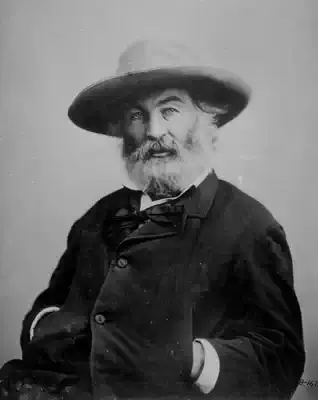
Walt Whitman
Not Heaving From My Ribb'd Breast Only
Not Heaving From My Ribb'd Breast Only
NOT heaving from my ribb'd breast only;
Not in sighs at night, in rage, dissatisfied with myself;
Not in those long-drawn, ill-supprest sighs;
Not in many an oath and promise broken;
Not in my wilful and savage soul's volition;
Not in the subtle nourishment of the air;
Not in this beating and pounding at my temples and wrists;
Not in the curious systole and diastole within, which will one day
cease;
Not in many a hungry wish, told to the skies only;
Not in cries, laughter, defiances, thrown from me when alone, far in
the wilds; 10
Not in husky pantings through clench'd teeth;
Not in sounded and resounded words--chattering words, echoes, dead
words;
Not in the murmurs of my dreams while I sleep,
Nor the other murmurs of these incredible dreams of every day;
Nor in the limbs and senses of my body, that take you and dismiss you
continually--Not there;
Not in any or all of them, O adhesiveness! O pulse of my life!
Need I that you exist and show yourself, any more than in these
songs.
NOT heaving from my ribb'd breast only;
Not in sighs at night, in rage, dissatisfied with myself;
Not in those long-drawn, ill-supprest sighs;
Not in many an oath and promise broken;
Not in my wilful and savage soul's volition;
Not in the subtle nourishment of the air;
Not in this beating and pounding at my temples and wrists;
Not in the curious systole and diastole within, which will one day
cease;
Not in many a hungry wish, told to the skies only;
Not in cries, laughter, defiances, thrown from me when alone, far in
the wilds; 10
Not in husky pantings through clench'd teeth;
Not in sounded and resounded words--chattering words, echoes, dead
words;
Not in the murmurs of my dreams while I sleep,
Nor the other murmurs of these incredible dreams of every day;
Nor in the limbs and senses of my body, that take you and dismiss you
continually--Not there;
Not in any or all of them, O adhesiveness! O pulse of my life!
Need I that you exist and show yourself, any more than in these
songs.
336

Sarah Teasdale
The Song For Colin
The Song For Colin
I sang a song at dusking time
Beneath the evening star,
And Terence left his latest rhyme
To answer from afar.
Pierrot laid down his lute to weep,
And sighed, "She sings for me."
But Colin slept a careless sleep
Beneath an apple tree.
I sang a song at dusking time
Beneath the evening star,
And Terence left his latest rhyme
To answer from afar.
Pierrot laid down his lute to weep,
And sighed, "She sings for me."
But Colin slept a careless sleep
Beneath an apple tree.
391
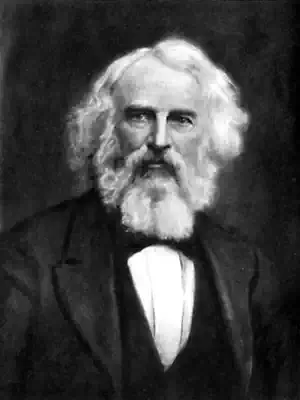
Henry Wadsworth Longfellow
The Old Bridge At Florence
The Old Bridge At Florence
Taddeo Gaddi built me. I am old,
Five centuries old. I plant my foot of stone
Upon the Arno, as St. Michael's own
Was planted on the dragon. Fold by fold
Beneath me as it struggles. I behold
Its glistening scales. Twice hath it overthrown
My kindred and companions. Me alone
It moveth not, but is by me controlled.
I can remember when the Medici
Were driven from Florence; longer still ago
The final wars of Ghibelline and Guelf.
Florence adorns me with her jewelry;
And when I think that Michael Angelo
Hath leaned on me, I glory in myself.
Taddeo Gaddi built me. I am old,
Five centuries old. I plant my foot of stone
Upon the Arno, as St. Michael's own
Was planted on the dragon. Fold by fold
Beneath me as it struggles. I behold
Its glistening scales. Twice hath it overthrown
My kindred and companions. Me alone
It moveth not, but is by me controlled.
I can remember when the Medici
Were driven from Florence; longer still ago
The final wars of Ghibelline and Guelf.
Florence adorns me with her jewelry;
And when I think that Michael Angelo
Hath leaned on me, I glory in myself.
251
Walt Whitman
No Labor-Saving Machine
No Labor-Saving Machine
NO labor-saving machine,
Nor discovery have I made;
Nor will I be able to leave behind me any wealthy bequest to found a
hospital or library,
Nor reminiscence of any deed of courage, for America,
Nor literary success, nor intellect--nor book for the book-shelf;
Only a few carols, vibrating through the air, I leave,
For comrades and lovers.
NO labor-saving machine,
Nor discovery have I made;
Nor will I be able to leave behind me any wealthy bequest to found a
hospital or library,
Nor reminiscence of any deed of courage, for America,
Nor literary success, nor intellect--nor book for the book-shelf;
Only a few carols, vibrating through the air, I leave,
For comrades and lovers.
320
Sarah Teasdale
The Sanctuary
The Sanctuary
If I could keep my innermost Me
Fearless, aloof and free
Of the least breath of love or hate,
And not disconsolate
At the sick load of sorrow laid on men;
If I could keep a sanctuary there
Free even of prayer,
If I could do this, then,
With quiet candor as I grew more wise
I could look even at God with grave forgiving eyes.
If I could keep my innermost Me
Fearless, aloof and free
Of the least breath of love or hate,
And not disconsolate
At the sick load of sorrow laid on men;
If I could keep a sanctuary there
Free even of prayer,
If I could do this, then,
With quiet candor as I grew more wise
I could look even at God with grave forgiving eyes.
338

Robert W. Service
The Ape And God
The Ape And God
Son put a poser up to me
That made me scratch my head:
"God made the whole wide world," quoth he;
"That's right, my boy," I said.
Said son: "He mad the mountains soar,
And all the plains lie flat;
But Dad, what did he do before
He did all that?
Said I: "Creation was his biz;
He set the stars to shine;
The sun and moon and all that is
Were His unique design.
The Cosmos is his concrete thought,
The Universe his chore..."
Said Son: "I understand, but what
Did He before?"
I gave it up; I could not cope
With his enquiring prod,
And must admit I've little hope
Of understanding God.
Indeed I find more to my mind
The monkey in the tree
In whose crude form Nature defined
Our human destiny.
Thought I: "Why search for Deity
In visionary shape?
'Twould better be if we could see
The angel in the ape.
Let mystic seek a God above:
Far wiser he who delves,
To find in kindliness and love
God in ourselves."
Son put a poser up to me
That made me scratch my head:
"God made the whole wide world," quoth he;
"That's right, my boy," I said.
Said son: "He mad the mountains soar,
And all the plains lie flat;
But Dad, what did he do before
He did all that?
Said I: "Creation was his biz;
He set the stars to shine;
The sun and moon and all that is
Were His unique design.
The Cosmos is his concrete thought,
The Universe his chore..."
Said Son: "I understand, but what
Did He before?"
I gave it up; I could not cope
With his enquiring prod,
And must admit I've little hope
Of understanding God.
Indeed I find more to my mind
The monkey in the tree
In whose crude form Nature defined
Our human destiny.
Thought I: "Why search for Deity
In visionary shape?
'Twould better be if we could see
The angel in the ape.
Let mystic seek a God above:
Far wiser he who delves,
To find in kindliness and love
God in ourselves."
239
Walt Whitman
Native Moments
Native Moments
NATIVE moments! when you come upon me--Ah you are here now! Give me now
libidinous joys only! Give me the drench of my passions! Give me life
coarse and rank! To-day, I go consort with nature's darlings--to-night too;
I am for those who believe in loose delights--I share the midnight orgies
of young men; I dance with the dancers, and drink with the drinkers; The
echoes ring with our indecent calls; I take for my love some prostitute--I
pick out some low person for my dearest friend, He shall be lawless, rude,
illiterate--he shall be one condemn'd by others for deeds done; I will play
a part no longer--Why should I exile myself from my companions? 10 O you
shunn'd persons! I at least do not shun you, I come forthwith in your
midst--I will be your poet, I will be more to you than to any of the rest.
NATIVE moments! when you come upon me--Ah you are here now! Give me now
libidinous joys only! Give me the drench of my passions! Give me life
coarse and rank! To-day, I go consort with nature's darlings--to-night too;
I am for those who believe in loose delights--I share the midnight orgies
of young men; I dance with the dancers, and drink with the drinkers; The
echoes ring with our indecent calls; I take for my love some prostitute--I
pick out some low person for my dearest friend, He shall be lawless, rude,
illiterate--he shall be one condemn'd by others for deeds done; I will play
a part no longer--Why should I exile myself from my companions? 10 O you
shunn'd persons! I at least do not shun you, I come forthwith in your
midst--I will be your poet, I will be more to you than to any of the rest.
350
Sarah Teasdale
The Return
The Return
He has come, he is here,
My love has come home,
The minutes are lighter
Than flying foam,
The hours are like dancers
On gold-slippered feet,
The days are young runners
Naked and fleet --
For my love has returned,
He is home, he is here,
In the whole world no other
Is dear as my dear!
He has come, he is here,
My love has come home,
The minutes are lighter
Than flying foam,
The hours are like dancers
On gold-slippered feet,
The days are young runners
Naked and fleet --
For my love has returned,
He is home, he is here,
In the whole world no other
Is dear as my dear!
311
Henry Wadsworth Longfellow
The Norman Baron
The Norman Baron
et plus profonde, ou l'interet et l'avarice parlent moins haut
que la raison, dans les instants de chagrin domestique, de
maladie, et de peril de mort, les nobles se repentirent de
posseder des serfs, comme d'une chose peu agreable a Dieu, qui
avait cree tous les hommes a son image.--THIERRY, Conquete de
l'Angleterre.
In his chamber, weak and dying,
Was the Norman baron lying;
Loud, without, the tempest thundered
And the castle-turret shook,
In this fight was Death the gainer,
Spite of vassal and retainer,
And the lands his sires had plundered,
Written in the Doomsday Book.
By his bed a monk was seated,
Who in humble voice repeated
Many a prayer and pater-noster,
From the missal on his knee;
And, amid the tempest pealing,
Sounds of bells came faintly stealing,
Bells, that from the neighboring kloster
Rang for the Nativity.
In the hall, the serf and vassal
Held, that night their Christmas wassail;
Many a carol, old and saintly,
Sang the minstrels and the waits;
And so loud these Saxon gleemen
Sang to slaves the songs of freemen,
That the storm was heard but faintly,
Knocking at the castle-gates.
Till at length the lays they chanted
Reached the chamber terror-haunted,
Where the monk, with accents holy,
Whispered at the baron's ear.
Tears upon his eyelids glistened,
As he paused awhile and listened,
And the dying baron slowly
Turned his weary head to hear.
"Wassail for the kingly stranger
Born and cradled in a manger!
King, like David, priest, like Aaron,
Christ is born to set us free!"
And the lightning showed the sainted
Figures on the casement painted,
And exclaimed the shuddering baron,
"Miserere, Domine!"
In that hour of deep contrition
He beheld, with clearer vision,
Through all outward show and fashion,
Justice, the Avenger, rise.
All the pomp of earth had vanished,
Falsehood and deceit were banished,
Reason spake more loud than passion,
And the truth wore no disguise.
Every vassal of his banner,
Every serf born to his manor,
All those wronged and wretched creatures,
By his hand were freed again.
And, as on the sacred missal
He recorded their dismissal,
Death relaxed his iron features,
And the monk replied, "Amen!"
Many centuries have been numbered
Since in death the baron slumbered
By the convent's sculptured portal,
Mingling with the common dust:
But the good deed, through the ages
Living in historic pages,
Brighter grows and gleams immortal,
Unconsumed by moth or rust.
et plus profonde, ou l'interet et l'avarice parlent moins haut
que la raison, dans les instants de chagrin domestique, de
maladie, et de peril de mort, les nobles se repentirent de
posseder des serfs, comme d'une chose peu agreable a Dieu, qui
avait cree tous les hommes a son image.--THIERRY, Conquete de
l'Angleterre.
In his chamber, weak and dying,
Was the Norman baron lying;
Loud, without, the tempest thundered
And the castle-turret shook,
In this fight was Death the gainer,
Spite of vassal and retainer,
And the lands his sires had plundered,
Written in the Doomsday Book.
By his bed a monk was seated,
Who in humble voice repeated
Many a prayer and pater-noster,
From the missal on his knee;
And, amid the tempest pealing,
Sounds of bells came faintly stealing,
Bells, that from the neighboring kloster
Rang for the Nativity.
In the hall, the serf and vassal
Held, that night their Christmas wassail;
Many a carol, old and saintly,
Sang the minstrels and the waits;
And so loud these Saxon gleemen
Sang to slaves the songs of freemen,
That the storm was heard but faintly,
Knocking at the castle-gates.
Till at length the lays they chanted
Reached the chamber terror-haunted,
Where the monk, with accents holy,
Whispered at the baron's ear.
Tears upon his eyelids glistened,
As he paused awhile and listened,
And the dying baron slowly
Turned his weary head to hear.
"Wassail for the kingly stranger
Born and cradled in a manger!
King, like David, priest, like Aaron,
Christ is born to set us free!"
And the lightning showed the sainted
Figures on the casement painted,
And exclaimed the shuddering baron,
"Miserere, Domine!"
In that hour of deep contrition
He beheld, with clearer vision,
Through all outward show and fashion,
Justice, the Avenger, rise.
All the pomp of earth had vanished,
Falsehood and deceit were banished,
Reason spake more loud than passion,
And the truth wore no disguise.
Every vassal of his banner,
Every serf born to his manor,
All those wronged and wretched creatures,
By his hand were freed again.
And, as on the sacred missal
He recorded their dismissal,
Death relaxed his iron features,
And the monk replied, "Amen!"
Many centuries have been numbered
Since in death the baron slumbered
By the convent's sculptured portal,
Mingling with the common dust:
But the good deed, through the ages
Living in historic pages,
Brighter grows and gleams immortal,
Unconsumed by moth or rust.
366
Walt Whitman
My Picture-Callery
My Picture-Callery
IN a little house keep I pictures suspended, it is not a fix'd house,
It is round, it is only a few inches from one side to the other;
Yet behold, it has room for all the shows of the world, all memories?
Here the tableaus of life, and here the groupings of death;
Here, do you know this? this is cicerone himself,
With finger rais'd he points to the prodigal pictures.
IN a little house keep I pictures suspended, it is not a fix'd house,
It is round, it is only a few inches from one side to the other;
Yet behold, it has room for all the shows of the world, all memories?
Here the tableaus of life, and here the groupings of death;
Here, do you know this? this is cicerone himself,
With finger rais'd he points to the prodigal pictures.
350
Sarah Teasdale
The Net
The Net
I made you many and many a song,
Yet never one told all you are --
It was as though a net of words
Were flung to catch a star;
It was as though I curved my hand
And dipped sea-water eagerly,
Only to find it lost the blue
Dark splendor of the sea.
I made you many and many a song,
Yet never one told all you are --
It was as though a net of words
Were flung to catch a star;
It was as though I curved my hand
And dipped sea-water eagerly,
Only to find it lost the blue
Dark splendor of the sea.
388
Robert W. Service
The Anniversary
The Anniversary
"This bunch of violets," he said,
"Is for my daughter dear.
Since that glad morn when she was wed
It is today a year.
She lives atop this flight of stairs-Please
give an arm to me:
If we can take her unawares
How glad she'll be!"
We climbed the stairs; the flight was four,
Our steps were stiff and slow;
But as he reached his daughter's door
His eyes were all aglow.
Joylike he raised his hand to knock,
Then sore distressed was I,
For from the silence like a shock
I heard a cry.
A drunken curse, a sob of woe . . .
His withered face grew grey.
"I think," said he, "we'd better go
And come another day."
And as he went a block with me,
Walking with weary feet,
His violets, I sighed to see,
Bestrewed the street.
"This bunch of violets," he said,
"Is for my daughter dear.
Since that glad morn when she was wed
It is today a year.
She lives atop this flight of stairs-Please
give an arm to me:
If we can take her unawares
How glad she'll be!"
We climbed the stairs; the flight was four,
Our steps were stiff and slow;
But as he reached his daughter's door
His eyes were all aglow.
Joylike he raised his hand to knock,
Then sore distressed was I,
For from the silence like a shock
I heard a cry.
A drunken curse, a sob of woe . . .
His withered face grew grey.
"I think," said he, "we'd better go
And come another day."
And as he went a block with me,
Walking with weary feet,
His violets, I sighed to see,
Bestrewed the street.
223
Sarah Teasdale
The Look
The Look
Strephon kissed me in the spring,
Robin in the fall,
But Colin only looked at me
And never kissed at all.
Strephon's kiss was lost in jest,
Robin's lost in play,
But the kiss in Colin's eyes
Haunts me night and day.
Strephon kissed me in the spring,
Robin in the fall,
But Colin only looked at me
And never kissed at all.
Strephon's kiss was lost in jest,
Robin's lost in play,
But the kiss in Colin's eyes
Haunts me night and day.
328
Walt Whitman
Miracles
Miracles
WHY! who makes much of a miracle?
As to me, I know of nothing else but miracles,
Whether I walk the streets of Manhattan,
Or dart my sight over the roofs of houses toward the sky,
Or wade with naked feet along the beach, just in the edge of the
water,
Or stand under trees in the woods,
Or talk by day with any one I love--or sleep in the bed at night with
any one I love,
Or sit at table at dinner with my mother,
Or look at strangers opposite me riding in the car,
Or watch honey-bees busy around the hive, of a summer forenoon, 10
Or animals feeding in the fields,
Or birds--or the wonderfulness of insects in the air,
Or the wonderfulness of the sun-down--or of stars shining so quiet
and bright,
Or the exquisite, delicate, thin curve of the new moon in spring;
Or whether I go among those I like best, and that like me best-
mechanics, boatmen, farmers,
Or among the savans--or to the soiree--or to the opera,
Or stand a long while looking at the movements of machinery,
Or behold children at their sports,
Or the admirable sight of the perfect old man, or the perfect old
woman,
Or the sick in hospitals, or the dead carried to burial, 20
Or my own eyes and figure in the glass;
These, with the rest, one and all, are to me miracles,
The whole referring--yet each distinct, and in its place.
To me, every hour of the light and dark is a miracle,
Every cubic inch of space is a miracle,
Every square yard of the surface of the earth is spread with the
same,
Every foot of the interior swarms with the same;
Every spear of grass--the frames, limbs, organs, of men and women,
and all that concerns them,
All these to me are unspeakably perfect miracles.
To me the sea is a continual miracle; 30
The fishes that swim--the rocks--the motion of the waves--the ships,
with men in them,
What stranger miracles are there?
WHY! who makes much of a miracle?
As to me, I know of nothing else but miracles,
Whether I walk the streets of Manhattan,
Or dart my sight over the roofs of houses toward the sky,
Or wade with naked feet along the beach, just in the edge of the
water,
Or stand under trees in the woods,
Or talk by day with any one I love--or sleep in the bed at night with
any one I love,
Or sit at table at dinner with my mother,
Or look at strangers opposite me riding in the car,
Or watch honey-bees busy around the hive, of a summer forenoon, 10
Or animals feeding in the fields,
Or birds--or the wonderfulness of insects in the air,
Or the wonderfulness of the sun-down--or of stars shining so quiet
and bright,
Or the exquisite, delicate, thin curve of the new moon in spring;
Or whether I go among those I like best, and that like me best-
mechanics, boatmen, farmers,
Or among the savans--or to the soiree--or to the opera,
Or stand a long while looking at the movements of machinery,
Or behold children at their sports,
Or the admirable sight of the perfect old man, or the perfect old
woman,
Or the sick in hospitals, or the dead carried to burial, 20
Or my own eyes and figure in the glass;
These, with the rest, one and all, are to me miracles,
The whole referring--yet each distinct, and in its place.
To me, every hour of the light and dark is a miracle,
Every cubic inch of space is a miracle,
Every square yard of the surface of the earth is spread with the
same,
Every foot of the interior swarms with the same;
Every spear of grass--the frames, limbs, organs, of men and women,
and all that concerns them,
All these to me are unspeakably perfect miracles.
To me the sea is a continual miracle; 30
The fishes that swim--the rocks--the motion of the waves--the ships,
with men in them,
What stranger miracles are there?
689
Henry Wadsworth Longfellow
The Native Land. (From The Spanish Of Francisco De Aldana)
The Native Land. (From The Spanish Of Francisco De Aldana)
Clear fount of light! my native land on high,
Bright with a glory that shall never fade!
Mansion of truth! without a veil or shade,
Thy holy quiet meets the spirit's eye.
There dwells the soul in its ethereal essence,
Gasping no longer for life's feeble breath;
But, sentinelled in heaven, its glorious presence
With pitying eye beholds, yet fears not, death.
Beloved country! banished from thy shore,
A stranger in this prison-house of clay,
The exiled spirit weeps and sighs for thee!
Heavenward the bright perfections I adore
Direct, and the sure promise cheers the way,
That, whither love aspires, there shall my dwelling be.
Clear fount of light! my native land on high,
Bright with a glory that shall never fade!
Mansion of truth! without a veil or shade,
Thy holy quiet meets the spirit's eye.
There dwells the soul in its ethereal essence,
Gasping no longer for life's feeble breath;
But, sentinelled in heaven, its glorious presence
With pitying eye beholds, yet fears not, death.
Beloved country! banished from thy shore,
A stranger in this prison-house of clay,
The exiled spirit weeps and sighs for thee!
Heavenward the bright perfections I adore
Direct, and the sure promise cheers the way,
That, whither love aspires, there shall my dwelling be.
342
Walt Whitman
Me Imperturbe
Me Imperturbe
ME imperturbe, standing at ease in Nature,
Master of all, or mistress of all--aplomb in the midst of irrational
things,
Imbued as they--passive, receptive, silent as they,
Finding my occupation, poverty, notoriety, foibles, crimes, less
important than I thought;
Me private, or public, or menial, or solitary--all these subordinate,
(I am eternally equal with the best--I am not subordinate;)
Me toward the Mexican Sea, or in the Mannahatta, or the Tennessee, or
far north, or inland,
A river man, or a man of the woods, or of any farm-life in These
States, or of the coast, or the lakes, or Kanada,
Me, wherever my life is lived, O to be
self-balanced for
contingencies!
O to confront night, storms, hunger, ridicule, accidents, rebuffs, as
the trees and animals do.
ME imperturbe, standing at ease in Nature,
Master of all, or mistress of all--aplomb in the midst of irrational
things,
Imbued as they--passive, receptive, silent as they,
Finding my occupation, poverty, notoriety, foibles, crimes, less
important than I thought;
Me private, or public, or menial, or solitary--all these subordinate,
(I am eternally equal with the best--I am not subordinate;)
Me toward the Mexican Sea, or in the Mannahatta, or the Tennessee, or
far north, or inland,
A river man, or a man of the woods, or of any farm-life in These
States, or of the coast, or the lakes, or Kanada,
Me, wherever my life is lived, O to be
self-balanced for
contingencies!
O to confront night, storms, hunger, ridicule, accidents, rebuffs, as
the trees and animals do.
432
Sarah Teasdale
The Lamp
The Lamp
If I can bear your love like a lamp before me,
When I go down the long steep Road of Darkness,
I shall not fear the everlasting shadows,
Nor cry in terror.
If I can find out God, then I shall find Him,
If none can find Him, then I shall sleep soundly,
Knowing how well on earth your love sufficed me,
A lamp in darkness.
If I can bear your love like a lamp before me,
When I go down the long steep Road of Darkness,
I shall not fear the everlasting shadows,
Nor cry in terror.
If I can find out God, then I shall find Him,
If none can find Him, then I shall sleep soundly,
Knowing how well on earth your love sufficed me,
A lamp in darkness.
369
Robert W. Service
The Aftermath
The Aftermath
Although my blood I've shed
In war's red wrath,
Oh how I darkly dread
Its aftermath!
Oh how I fear the day
Of my release,
When I must face the fray
Of phoney peace!
When I must fend again
In labour strife;
And toil with sweat and strain
For kids and wife.
The world is so upset
I battled for,
That grimly I regret
The peace of war.
The wounds are hard to heal
Of shell and shard,
But O the way to weal
Is bitter hard!
Though looking back I see
A gory path,
How bloody black can be
War's Aftermath!
Although my blood I've shed
In war's red wrath,
Oh how I darkly dread
Its aftermath!
Oh how I fear the day
Of my release,
When I must face the fray
Of phoney peace!
When I must fend again
In labour strife;
And toil with sweat and strain
For kids and wife.
The world is so upset
I battled for,
That grimly I regret
The peace of war.
The wounds are hard to heal
Of shell and shard,
But O the way to weal
Is bitter hard!
Though looking back I see
A gory path,
How bloody black can be
War's Aftermath!
165
Walt Whitman
Manhattan Streets I Saunter'd, Pondering
Manhattan Streets I Saunter'd, Pondering
MANHATTAN'S streets I saunter'd, pondering,
On time, space, reality--on such as these, and abreast with them,
prudence.
After all, the last explanation remains to be made about prudence;
Little and large alike drop quietly aside from the prudence that
suits immortality.
The Soul is of itself;
All verges to it--all has reference to what ensues;
All that a person does, says, thinks, is of consequence;
Not a move can a man or woman make, that affects him or her in a day,
month, any part of the direct life-time, or the hour of death,
but the same affects him or her onward afterward through the
indirect life-time.
The indirect is just as much as the direct,
The spirit receives from the body just as much as it gives to the
body, if not more. 10
Not one word or deed--not venereal sore, discoloration, privacy of
the onanist, putridity of gluttons or rum-drinkers, peculation,
cunning, betrayal, murder, seduction, prostitution, but has
results beyond death, as really as before death.
Charity and personal force are the only investments worth anything.
No specification is necessary--all that a male or female does, that
is vigorous, benevolent, clean, is so much profit to him or
her, in the unshakable order of the universe, and through the
whole scope of it forever.
Who has been wise, receives interest,
Savage, felon, President, judge, farmer, sailor, mechanic, literat,
young, old, it is the same,
The interest will come round--all will come round.
Singly, wholly, to affect now, affected their time, will forever
affect all of the past, and all of the present, and all of the
future,
All the brave actions of war and peace,
All help given to relatives, strangers, the poor, old, sorrowful,
young children, widows, the sick, and to shunn'd persons,
All furtherance of fugitives, and of the escape of slaves, 20
All self-denial that stood steady and aloof on wrecks, and saw others
fill the seats of the boats,
All offering of substance or life for the good old cause, or for a
friend's sake, or opinion's sake,
All pains of enthusiasts, scoff'd at by their neighbors,
All the limitless sweet love and precious suffering of mothers,
All honest men baffled in strifes recorded or unrecorded,
All the grandeur and good of ancient nations whose fragments we
inherit,
All the good of the dozens of ancient nations unknown to us by name,
date, location,
All that was ever manfully begun, whether it succeeded or no,
All suggestions of the divine mind of man, or the divinity of his
mouth, or the shaping of his great hands;
All that is well thought or said this day on any part of the globe-or
on any of the wandering stars, or on any of the fix'd stars,
by those there as we are here; 30
All that is henceforth to be thought or done by you, whoever you are,
or by any one;
These inure, have inured, shall inure, to the identities from which
they sprang, or shall spring.
Did you guess anything lived only its moment?
The world does not so exist--no parts palpable or impalpable so
exist;
No consummation exists without being from some long previous
consummation--and that from some other,
Without the farthest conceivable one coming a bit nearer the
beginning than any.
Whatever satisfies Souls is true;
Prudence entirely satisfies the craving and glut of Souls;
Itself only finally satisfies the Soul;
The Soul has that measureless pride which revolts from every lesson
but its own. 40
Now I give you an inkling;
Now I breathe the word of the prudence that walks abreast with time,
space, reality,
That answers the pride which refuses every lesson but its own.
What is prudence, is indivisible,
Declines to separate one part of life from every part,
Divides not the righteous from the unrighteous, or the living from
the dead,
Matches every thought or act by its correlative,
Knows no possible forgiveness, or deputed atonement,
Knows that the young man who composedly peril'd his life and lost it,
has done exceedingly well for himself without doubt,
That he who never peril'd his life, but retains it to old age in
riches and ease, has probably achiev'd nothing for himself
worth mentioning; 50
Knows that only that person has really learn'd, who has learn'd to
prefer results,
Who favors Body and Soul the same,
Who perceives the indirect assuredly following the direct,
Who in his spirit in any emergency whatever neither hurries or,
avoids death.
MANHATTAN'S streets I saunter'd, pondering,
On time, space, reality--on such as these, and abreast with them,
prudence.
After all, the last explanation remains to be made about prudence;
Little and large alike drop quietly aside from the prudence that
suits immortality.
The Soul is of itself;
All verges to it--all has reference to what ensues;
All that a person does, says, thinks, is of consequence;
Not a move can a man or woman make, that affects him or her in a day,
month, any part of the direct life-time, or the hour of death,
but the same affects him or her onward afterward through the
indirect life-time.
The indirect is just as much as the direct,
The spirit receives from the body just as much as it gives to the
body, if not more. 10
Not one word or deed--not venereal sore, discoloration, privacy of
the onanist, putridity of gluttons or rum-drinkers, peculation,
cunning, betrayal, murder, seduction, prostitution, but has
results beyond death, as really as before death.
Charity and personal force are the only investments worth anything.
No specification is necessary--all that a male or female does, that
is vigorous, benevolent, clean, is so much profit to him or
her, in the unshakable order of the universe, and through the
whole scope of it forever.
Who has been wise, receives interest,
Savage, felon, President, judge, farmer, sailor, mechanic, literat,
young, old, it is the same,
The interest will come round--all will come round.
Singly, wholly, to affect now, affected their time, will forever
affect all of the past, and all of the present, and all of the
future,
All the brave actions of war and peace,
All help given to relatives, strangers, the poor, old, sorrowful,
young children, widows, the sick, and to shunn'd persons,
All furtherance of fugitives, and of the escape of slaves, 20
All self-denial that stood steady and aloof on wrecks, and saw others
fill the seats of the boats,
All offering of substance or life for the good old cause, or for a
friend's sake, or opinion's sake,
All pains of enthusiasts, scoff'd at by their neighbors,
All the limitless sweet love and precious suffering of mothers,
All honest men baffled in strifes recorded or unrecorded,
All the grandeur and good of ancient nations whose fragments we
inherit,
All the good of the dozens of ancient nations unknown to us by name,
date, location,
All that was ever manfully begun, whether it succeeded or no,
All suggestions of the divine mind of man, or the divinity of his
mouth, or the shaping of his great hands;
All that is well thought or said this day on any part of the globe-or
on any of the wandering stars, or on any of the fix'd stars,
by those there as we are here; 30
All that is henceforth to be thought or done by you, whoever you are,
or by any one;
These inure, have inured, shall inure, to the identities from which
they sprang, or shall spring.
Did you guess anything lived only its moment?
The world does not so exist--no parts palpable or impalpable so
exist;
No consummation exists without being from some long previous
consummation--and that from some other,
Without the farthest conceivable one coming a bit nearer the
beginning than any.
Whatever satisfies Souls is true;
Prudence entirely satisfies the craving and glut of Souls;
Itself only finally satisfies the Soul;
The Soul has that measureless pride which revolts from every lesson
but its own. 40
Now I give you an inkling;
Now I breathe the word of the prudence that walks abreast with time,
space, reality,
That answers the pride which refuses every lesson but its own.
What is prudence, is indivisible,
Declines to separate one part of life from every part,
Divides not the righteous from the unrighteous, or the living from
the dead,
Matches every thought or act by its correlative,
Knows no possible forgiveness, or deputed atonement,
Knows that the young man who composedly peril'd his life and lost it,
has done exceedingly well for himself without doubt,
That he who never peril'd his life, but retains it to old age in
riches and ease, has probably achiev'd nothing for himself
worth mentioning; 50
Knows that only that person has really learn'd, who has learn'd to
prefer results,
Who favors Body and Soul the same,
Who perceives the indirect assuredly following the direct,
Who in his spirit in any emergency whatever neither hurries or,
avoids death.
344
Sarah Teasdale
The Giver
The Giver
You bound strong sandals on my feet,
You gave me bread and wine,
And sent me under sun and stars,
For all the world was mine.
Oh, take the sandals off my feet,
You know not what you do;
For all my world is in your arms,
My sun and stars are you.
You bound strong sandals on my feet,
You gave me bread and wine,
And sent me under sun and stars,
For all the world was mine.
Oh, take the sandals off my feet,
You know not what you do;
For all my world is in your arms,
My sun and stars are you.
448
Henry Wadsworth Longfellow
The Masque Of Pandora
The Masque Of Pandora
THE WORKSHOP OF HEPHAESTUS
HEPHAESTUS (standing before the statue of Pandora.)
Not fashioned out of gold, like Hera's throne,
Nor forged of iron like the thunderbolts
Of Zeus omnipotent, or other works
Wrought by my hands at Lemnos or Olympus,
But moulded in soft clay, that unresisting
Yields itself to the touch, this lovely form
Before me stands, perfect in every part.
Not Aphrodite's self appeared more fair,
When first upwafted by caressing winds
She came to high Olympus, and the gods
Paid homage to her beauty. Thus her hair
Was cinctured; thus her floating drapery
Was like a cloud about her, and her face
Was radiant with the sunshine and the sea.
THE VOICE OF ZEUS.
Is thy work done, Hephaestus?
HEPHAESTUS.
It is finished!
THE VOICE.
Not finished till I breathe the breath of life
Into her nostrils, and she moves and speaks.
HEPHAESTUS.
Will she become immortal like ourselves?
THE VOICE.
The form that thou hast fashioned out of clay
Is of the earth and mortal; but the spirit,
The life, the exhalation of my breath,
Is of diviner essence and immortal.
The gods shall shower on her their benefactions,
She shall possess all gifts: the gift of song,
The gift of eloquence, the gift of beauty,
The fascination and the nameless charm
That shall lead all men captive.
HEPHAESTUS.
Wherefore? wherefore?
(A wind shakes the house.)
I hear the rushing of a mighty wind
Through all the halls and chambers of my house!
Her parted lips inhale it, and her bosom
Heaves with the inspiration. As a reed
Beside a river in the rippling current
Bends to and fro, she bows or lifts her head.
She gazes round about as if amazed;
She is alive; she breathes, but yet she speaks not!
(PANDORA descends from the pedestal.)
CHORUS OF THE GRACES
AGLAIA.
In the workshop of Hephaestus
What is this I see?
Have the Gods to four increased us
Who were only three?
Beautiful in form and feature,
Lovely as the day,
Can there be so fair a creature
Formed of common clay?
THALIA.
O sweet, pale face! O lovely eyes of azure,
Clear as the waters of a brook that run
Limpid and laughing in the summer sun!
O golden hair that like a miser's treasure
In its abundance overflows the measure!
O graceful form, that cloudlike floatest on
With the soft, undulating gait of one
Who moveth as if motion were a pleasure!
By what name shall I call thee? Nymph or Muse,
Callirrhoe or Urania? Some sweet name
Whose every syllable is a caress
Would best befit thee; but I cannot choose,
Nor do I care to choose; for still the same,
Nameless or named, will be thy loveliness.
EUPHROSYNE.
Dowered with all celestial gifts,
Skilled in every art
That ennobles and uplifts
And delights the heart,
Fair on earth shall be thy fame
As thy face is fair,
And Pandora be the name
Thou henceforth shalt bear.
II.
OLYMPUS
HERMES (putting on his sandals.)
Much must he toil who serves the Immortal Gods,
And I, who am their herald, most of all.
No rest have I, nor respite. I no sooner
Unclasp the winged sandals from my feet,
Than I again must clasp them, and depart
Upon some foolish errand. But to-day
The errand is not foolish. Never yet
With greater joy did I obey the summons
That sends me earthward. I will fly so swiftly
That my caduceus in the whistling air
Shall make a sound like the Pandaean pipes,
Cheating the shepherds; for to-day I go,
Commissioned by high-thundering Zeus, to lead
A maiden to Prometheus, in his tower,
And by my cunning arguments persuade him
To marry her. What mischief lies concealed
In this design I know not; but I know
Who thinks of marrying hath already taken
One step upon the road to penitence.
Such embassies delight me. Forth I launch
On the sustaining air, nor fear to fall
Like Icarus, nor swerve aside like him
Who drove amiss Hyperion's fiery steeds.
I sink, I fly! The yielding element
Folds itself round about me like an arm,
And holds me as a mother holds her child.
III.
TOWER OF PROMETHEUS ON MOUNT CAUCASUS
PROMETHEUS.
I hear the trumpet of Alectryon
Proclaim the dawn. The stars begin to fade,
And all the heavens are full of prophecies
And evil auguries. Blood-red last night
I saw great Kronos rise; the crescent moon
Sank through the mist, as if it were the scythe
His parricidal hand had flung far down
The western steeps. O ye Immortal Gods,
What evil are ye plotting and contriving?
(HERMES and PANDORA at the threshold.)
PANDORA.
I cannot cross the threshold. An unseen
And icy hand repels me. These blank walls
Oppress me with their weight!
PROMETHEUS.
Powerful ye are,
But not omnipotent. Ye cannot fight
Against Necessity. The Fates control you,
As they do us, and so far we are equals!
PANDORA.
Motionless, passionless, companionless,
He sits there muttering in his beard. His voice
Is like a river flowing underground!
HERMES.
Prometheus, hail!
PROMETHEUS.
Who calls me?
HERMES.
It is I.
Dost thou not know me?
PROMETHEUS.
By thy winged cap
And winged heels I know thee. Thou art Hermes,
Captain of thieves! Hast thou again been stealing
The heifers of Admetus in the sweet
Meadows of asphodel? or Hera's girdle?
Or the earth-shaking trident of Poseidon?
HERMES.
And thou, Prometheus; say, hast thou again
Been stealing fire from Helios' chariot-wheels
To light thy furnaces?
PROMETHEUS.
Why comest thou hither
So early in the dawn?
HERMES.
The Immortal Gods
Know naught of late or early. Zeus himself
The omnipotent hath sent me.
PROMETHEUS.
For what purpose?
HERMES.
To bring this maiden to thee.
PROMETHEUS.
I mistrust
The Gods and all their gifts. If they have sent her
It is for no good purpose.
HERMES.
What disaster
Could she bring on thy house, who is a woman?
PROMETHEUS.
The Gods are not my friends, nor am I theirs.
Whatever comes from them, though in a shape
As beautiful as this, is evil only.
Who art thou?
PANDORA.
One who, though to thee unknown,
Yet knoweth thee.
PROMETHEUS.
How shouldst thou know me, woman?
PANDORA.
Who knoweth not Prometheus the humane?
PROMETHEUS.
Prometheus the unfortunate; to whom
Both Gods and men have shown themselves ungrateful.
When every spark was quenched on every hearth
Throughout the earth, I brought to man the fire
And all its ministrations. My reward
Hath been the rock and vulture.
HERMES.
But the Gods
At last relent and pardon.
PROMETHEUS.
They relent not;
They pardon not; they are implacable,
Revengeful, unforgiving!
HERMES.
As a pledge
Of reconciliation they have sent to thee
This divine being, to be thy companion,
And bring into thy melancholy house
The sunshine and the fragrance of her youth.
PROMETHEUS.
I need them not. I have within myself
All that my heart desires; the ideal beauty
Which the creative faculty of mind
Fashions and follows in a thousand shapes
More lovely than the real. My own thoughts
Are my companions; my designs and labors
And aspirations are my only friends.
HERMES.
Decide not rashly. The decision made
Can never be recalled. The Gods implore not,
Plead not, solicit not; they only offer
Choice and occasion, which once being passed
Return no more. Dost thou accept the gift?
PROMETHEUS.
No gift of theirs, in whatsoever shape
It comes to me, with whatsoever charm
To fascinate my sense, will I receive.
Leave me.
PANDORA.
Let us go hence. I will not stay.
HERMES.
We leave thee to thy vacant dreams, and all
The silence and the solitude of thought,
The endless bitterness of unbelief,
The loneliness of existence without love.
CHORUS OF THE FATES
CLOTHO.
How the Titan, the defiant,
The self-centred, self-reliant,
Wrapped in visions and illusions,
Robs himself of life's best gifts!
Till by all the storm-winds shaken,
By the blast of fate o'ertaken,
Hopeless, helpless, and forsaken,
In the mists of his confusions
To the reefs of doom he drifts!
LACHESIS.
Sorely tried and sorely tempted,
From no agonies exempted,
In the penance of his trial,
And the discipline of pain;
Often by illusions cheated,
Often baffled and defeated
In the tasks to be completed,
He, by toil and self-denial,
To the highest shall attain.
ATROPOS.
Tempt no more the noble schemer;
Bear unto some idle dreamer
This new toy and fascination,
This new dalliance and delight!
To the garden where reposes
Epimetheus crowned with roses,
To the door that never closes
Upon pleasure and temptation,
Bring this vision of the night!
IV.
THE AIR
HERMES (returning to Olympus.)
As lonely as the tower that he inhabits,
As firm and cold as are the crags about him,
Prometheus stands. The thunderbolts of Zeus
Alone can move him; but the tender heart
Of Epimetheus, burning at white heat,
Hammers and flames like all his brother's forges!
Now as an arrow from Hyperion's bow,
My errand done, I fly, I float, I soar
Into the air, returning to Olympus.
O joy of motion! O delight to cleave
The infinite realms of space, the liquid ether,
Through the warm sunshine and the cooling cloud,
Myself as light as sunbeam or as cloud!
With one touch of my swift and winged feet,
I spurn the solid earth, and leave it rocking
As rocks the bough from which a bird takes wing.
V.
THE HOUSE OF EPIMETHEUS
EPIMETHEUS.
Beautiful apparition! go not hence!
Surely thou art a Goddess, for thy voice
Is a celestial melody, and thy form
Self-poised as if it floated on the air!
PANDORA.
No Goddess am I, nor of heavenly birth,
But a mere woman fashioned out of clay
And mortal as the rest.
EPIMETHEUS.
Thy face is fair;
There is a wonder in thine azure eyes
That fascinates me. Thy whole presence seems
A soft desire, a breathing thought of love.
Say, would thy star like Merope's grow dim
If thou shouldst wed beneath thee?
PANDORA.
Ask me not;
I cannot answer thee. I only know
The Gods have sent me hither.
EPIMETHEUS.
I believe,
And thus believing am most fortunate.
It was not Hermes led thee here, but Eros,
And swifter than his arrows were thine eves
In wounding me. There was no moment's space
Between my seeing thee and loving thee.
O, what a telltale face thou hast! Again
I see the wonder in thy tender eyes.
PANDORA.
They do but answer to the love in thine,
Yet secretly I wonder thou shouldst love me.
Thou knowest me not.
EPIMETHEUS.
Perhaps I know thee better
Than had I known thee longer. Yet it seems
That I have always known thee, and but now
Have found thee. Ah, I have been waiting long.
PANDORA.
How beautiful is this house! The atmosphere
Breathes rest and comfort, and the many chambers
Seem full of welcomes.
EPIMETHEUS.
They not only seem,
But truly are. This dwelling and its master
Belong to thee.
PANDORA.
Here let me stay forever!
There is a spell upon me.
EPIMETHEUS.
Thou thyself
Art the enchantress, and I feel thy power
Envelop me, and wrap my soul and sense
In an Elysian dream.
PANDORA.
O, let me stay.
How beautiful are all things round about me,
Multiplied by the mirrors on the walls!
What treasures hast thou here! Yon oaken chest,
Carven with figures and embossed with gold,
Is wonderful to look upon! What choice
And precious things dost thou keep hidden in it?
EPIMETHEUS.
I know not. 'T is a mystery.
PANDORA.
Hast thou never
Lifted the lid?
EPIMETHEUS.
The oracle forbids.
Safely concealed there from all mortal eyes
Forever sleeps the secret of the Gods.
Seek not to know what they have hidden from thee,
Till they themselves reveal it.
PANDORA.
As thou wilt.
EPIMETHEUS.
Let us go forth from this mysterious place.
The garden walks are pleasant at this hour;
The nightingales among the sheltering boughs
Of populous and many-nested trees
Shall teach me how to woo thee, and shall tell me
By what resistless charms or incantations
They won their mates.
PANDORA.
Thou dost not need a teacher.
(They go out.)
CHORUS OF THE EUMENIDES.
What the Immortals
Confide to thy keeping,
Tell unto no man;
Waking or sleeping,
Closed be thy portals
To friend as to foeman.
Silence conceals it;
The word that is spoken
Betrays and reveals it;
By breath or by token
The charm may be broken.
With shafts of their splendors
The Gods unforgiving
Pursue the offenders,
The dead and the living!
Fortune forsakes them,
Nor earth shall abide them,
Nor Tartarus hide them;
Swift wrath overtakes them!
With useless endeavor,
Forever, forever,
Is Sisyphus rolling
His stone up the mountain!
Immersed in the fountain,
Tantalus tastes not
The water that wastes not!
Through ages increasing
The pangs that afflict him,
With motion unceasing
The wheel of Ixion
Shall torture its victim!
VI.
IN THE GARDEN
EPIMETHEUS.
Yon snow-white cloud that sails sublime in ether
Is but the sovereign Zeus, who like a swan
Flies to fair-ankled Leda!
PANDORA.
Or perchance
Ixion's cloud, the shadowy shape of Hera,
That bore the Centaurs.
EPIMETHEUS.
The divine and human.
CHORUS OF BIRDS.
Gently swaying to and fro,
Rocked by all the winds that blow,
Bright with sunshine from above
Dark with shadow from below,
Beak to beak and breast to breast
In the cradle of their nest,
Lie the fledglings of our love.
ECHO.
Love! love!
EPIMETHEUS.
Hark! listen! Hear how sweetly overhead
The feathered flute-players pipe their songs of love,
And echo answers, love and only love.
CHORUS OF BIRDS.
Every flutter of the wing,
Every note of song we sing,
Every murmur, every tone,
Is of love and love alone.
ECHO.
Love alone!
EPIMETHEUS.
Who would not love, if loving she might be
Changed like Callisto to a star in heaven?
PANDORA.
Ah, who would love, if loving she might be
Like Semele consumed and burnt to ashes?
EPIMETHEUS.
Whence knowest thou these stories?
PANDORA.
Hermes taught me;
He told me all the history of the Gods.
CHORUS OF REEDS.
Evermore a sound shall be
In the reeds of Arcady,
Evermore a low lament
Of unrest and discontent,
As the story is retold
Of the nymph so coy and cold,
Who with frightened feet outran
The pursuing steps of Pan.
EPIMETHEUS.
The pipe of Pan out of these reeds is made,
And when he plays upon it to the shepherds
They pity him, so mournful is the sound.
Be thou not coy and cold as Syrinx was.
PANDORA.
Nor thou as Pan be rude and mannerless.
PROMETHEUS (without).
Ho! Epimetheus!
EPIMETHEUS.
'T is my brother's voice;
A sound unwelcome and inopportune
As was the braying of Silenus' ass,
Once heard in Cybele's garden.
PANDORA.
Let me go.
I would not be found here. I would not see him.
(She escapes among the trees.)
CHORUS OF DRYADES.
Haste and hide thee,
Ere too late,
In these thickets intricate;
Lest Prometheus
See and chide thee,
Lest some hurt
Or harm betide thee,
Haste and hide thee!
PROMETHEUS (entering.)
Who was it fled from here? I saw a shape
Flitting among the trees.
EPIMETHEUS.
It was Pandora.
PROMETHEUS.
O Epimetheus! Is it then in vain
That I have warned thee? Let me now implore.
Thou harborest in thy house a dangerous guest.
EPIMETHEUS.
Whom the Gods love they honor with such guests.
PROMETHEUS.
Whom the Gods would destroy they first make mad.
EPIMETHEUS.
Shall I refuse the gifts they send to me?
PROMETHEUS.
Reject all gifts that come from higher powers.
EPIMETHEUS.
Such gifts as this are not to be rejected.
PROMETHEUS.
Make not thyself the slave of any woman.
EPIMETHEUS.
Make not thyself the judge of any man.
PROMETHEUS.
I judge thee not; for thou art more than man;
Thou art descended from Titanic race,
And hast a Titan's strength, and faculties
That make thee godlike; and thou sittest here
Like Heracles spinning Omphale's flax,
And beaten with her sandals.
EPIMETHEUS.
O my brother!
Thou drivest me to madness with thy taunts.
PROMETHEUS.
And me thou drivest to madness with thy follies.
Come with me to my tower on Caucasus:
See there my forges in the roaring caverns,
Beneficent to man, and taste the joy
That springs from labor. Read with me the stars,
And learn the virtues that lie hidden in plants,
And all things that are useful.
EPIMETHEUS.
O my brother!
I am not as thou art. Thou dost inherit
Our father's strength, and I our mother's weakness:
The softness of the Oceanides,
The yielding nature that cannot resist.
PROMETHEUS.
Because thou wilt not.
EPIMETHEUS.
Nay; because I cannot.
PROMETHEUS.
Assert thyself; rise up to thy full height;
Shake from thy soul these dreams effeminate,
These passions born of indolence and ease.
Resolve, and thou art free. But breathe the air
Of mountains, and their unapproachable summits
Will lift thee to the level of themselves.
EPIMETHEUS.
The roar of forests and of waterfalls,
The rushing of a mighty wind, with loud
And undistinguishable voices calling,
Are in my ear!
PROMETHEUS.
O, listen and obey.
EPIMETHEUS.
Thou leadest me as a child, I follow thee.
(They go out.)
CHORUS OF OREADES.
Centuries old are the monntains;
Their foreheads wrinkled and rifted
Helios crowns by day,
Pallid Selene by night;
From their bosoms uptossed
The snows are driven and drifted,
Like Tithonus' beard
Streaming dishevelled and white.
Thunder and tempest of wind
Their trumpets blow in the vastness;
Phantoms of mist and rain,
Cloud and the shadow of cloud,
Pass and repass by the gates
Of their inaccessible fastness;
Ever unmoved they stand,
Solemn, eternal, and proud,
VOICES OF THE WATERS.
Flooded by rain and snow
In their inexhaustible sources,
Swollen by affluent streams
Hurrying onward and hurled
Headlong over the crags,
The impetuous water-courses,
Rush and roar and plunge
Down to the nethermost world.
Say, have the solid rocks
Into streams of silver been melted,
Flowing over the plains,
Spreading to lakes in the fields?
Or have the mountains, the giants,
The ice-helmed, the forest-belted,
Scattered their arms abroad;
Flung in the meadows their shields?
VOICES OF THE WINDS.
High on their turreted cliffs
That bolts of thunder have shattered,
Storm-winds muster and blow
Trumpets of terrible breath;
Then from the gateways rush,
And before them routed and scattered
Sullen the cloud-rack flies,
Pale with the pallor of death.
Onward the hurricane rides,
And flee for shelter the shepherds;
White are the frightened leaves,
Harvests with terror are white;
Panic seizes the herds,
And even the lions and leopards,
Prowling no longer for prey,
Crouch in their caverns with fright.
VOICES OF THE FOREST.
Guarding the mountains around
Majestic the forests are standing,
Bright are their crested helms,
Dark is their armor of leaves;
Filled with the breath of freedom
Each bosom subsiding, expanding,
Now like the ocean sinks,
Now like the ocean upheaves.
Planted firm on the rock,
With foreheads stern and defiant,
Loud they shout to the winds,
Loud to the tempest they call;
Naught but Olympian thunders,
That blasted Titan and Giant,
Them can uproot and o'erthrow,
Shaking the earth with their fall.
CHORUS OF OREADES.
These are the Voices Three
Of winds and forests and fountains,
Voices of earth and of air,
Murmur and rushing of streams,
Making together one sound,
The mysterious voice of the mountains,
Waking the sluggard that sleeps,
Waking the dreamer of dreams.
These are the Voices Three,
That speak of endless endeavor,
Speak of endurance and strength,
Triumph and fulness of fame,
Sounding about the world,
An inspiration forever,
Stirring the hearts of men,
Shaping their end and their aim.
VII.
THE HOUSE OF EPIMETHEUS
PANDORA.
Left to myself I wander as I will,
And as my fancy leads me, through this house,
Nor could I ask a dwelling more complete
Were I indeed the Goddess that he deems me.
No mansion of Olympus, framed to be
The habitation of the Immortal Gods,
Can be more beautiful. And this is mine
And more than this, the love wherewith he crowns me.
As if impelled by powers invisible
And irresistible, my steps return
Unto this spacious hall. All corridors
And passages lead hither, and all doors
But open into it. Yon mysterious chest
Attracts and fascinates me. Would I knew
What there lies hidden! But the oracle
Forbids. Ah me! The secret then is safe.
So would it be if it were in my keeping.
A crowd of shadowy faces from the mirrors
That line these walls are watching me. I dare not
Lift up the lid. A hundred times the act
Would be repeated, and the secret seen
By twice a hundred incorporeal eyes.
(She walks to the other side of the hall.)
My feet are weary, wandering to and fro,
My eyes with seeing and my heart with waiting.
I will lie here and rest till he returns,
Who is my dawn, my day, my Helios.
(Throws herself upon a couch, and falls asleep.)
ZEPHYRUS.
Come from thy caverns dark and deep.
O son of Erebus and Night;
All sense of hearing and of sight
Enfold in the serene delight
And quietude of sleep!
Set all the silent sentinels
To bar and guard the Ivory Gate,
And keep the evil dreams of fate
And falsehood and infernal hate
Imprisoned in their cells.
But open wide the Gate of Horn,
Whence, beautiful as planets, rise
The dreams of truth, with starry eyes,
And all the wondrous prophecies
And visions of the morn.
CHORUS OF DREAMS FROM THE IVORY GATE.
Ye sentinels of sleep,
It is in vain ye keep
Your drowsy watch before the Ivory Gate;
Though closed the portal seems,
The airy feet of dreams
Ye cannot thus in walls incarcerate.
We phantoms are and dreams
Born by Tartarean streams,
As ministers of the infernal powers;
O son of Erebus
And Night, behold! we thus
Elude your watchful warders on the towers!
From gloomy Tartarus
The Fates have summoned us
To whisper in her ear, who lies asleep,
A tale to fan the fire
Of her insane desire
To know a secret that the Gods would keep.
This passion, in their ire,
The Gods themselves inspire,
To vex mankind with evils manifold,
So that disease and pain
O'er the whole earth may reign,
And nevermore return the Age of Gold.
PANDORA (waking).
A voice said in my sleep: 'Do not delay:
Do not delay; the golden moments fly!
The oracle hath forbidden; yet not thee
Doth it forbid, but Epimetheus only!'
I am alone. These faces in the mirrors
Are but the shadows and phantoms of myself;
They cannot help nor hinder. No one sees me,
Save the all-seeing Gods, who, knowing good
And knowing evil, have created me
Such as I am, and filled me with desire
Of knowing good and evil like themselves.
(She approaches the chest.)
I hesitate no longer. Weal or woe,
Or life or death, the moment shall decide.
(She lifts the lid. A dense mist rises from
the chest, and fills the room. PANDORA
falls senseless on the floor. Storm without.)
CHORUS OF DREAMS FROM THE GATE OF HORN.
Yes, the moment shall decide!
It already hath decided;
And the secret once confided
To the keeping of the Titan
Now is flying far and wide,
Whispered, told on every side,
To disquiet and to frighten.
Fever of the heart and brain,
Sorrow, pestilence, and pain,
Moans of anguish, maniac laughter,
All the evils that hereafter
Shall afflict and vex mankind,
All into the air have risen
From the chambers of their prison;
Only Hope remains behind.
VIII.
IN THE GARDEN
EPIMETHEUS.
The storm is past, but it hath left behind it
Ruin and desolation. All the walks
Are strewn with shattered boughs; the birds are silent;
The flowers, downtrodden by the wind, lie dead;
The swollen rivulet sobs with secret pain,
The melancholy reeds whisper together
As if some dreadful deed had been committed
They dare not name, and all the air is heavy
With an unspoken sorrow! Premonitions,
Foreshadowings of some terrible disaster
Oppress my heart. Ye Gods, avert the omen!
PANDORA (coming from the house).
O Epimetheus, I no longer dare
To lift mine eyes to thine, nor hear thy voice,
Being no longer worthy of thy love.
EPIMETHEUS.
What hast thou done?
PANDORA.
Forgive me not, but kill me.
EPIMETHEUS.
What hast thou done?
PANDORA.
I pray for death, not pardon.
EPIMETHEUS.
What hast thou done?
PANDORA.
I dare not speak of it.
EPIMETHEUS.
Thy pallor and thy silence terrify me!
PANDORA.
I have brought wrath and ruin on thy house!
My heart hath braved the oracle that guarded
The fatal secret from us, and my hand
Lifted the lid of the mysterious chest!
EPIMETHEUS.
Then all is lost! I am indeed undone.
PANDORA.
I pray for punishment, and not for pardon.
EPIMETHEUS.
Mine is the fault not thine. On me shall fall
The vengeance of the Gods, for I betrayed
Their secret when, in evil hour, I said
It was a secret; when, in evil hour,
I left thee here alone to this temptation.
Why did I leave thee?
PANDORA.
Why didst thou return?
Eternal absence would have been to me
The greatest punishment. To be left alone
And face to face with my own crime, had been
Just retribution. Upon me, ye Gods,
Let all your vengeance fall!
EPIMETHEUS.
On thee and me.
I do not love thee less for what is done,
And cannot be undone. Thy very weakness
Hath brought thee nearer to me, and henceforth
My love will have a sense of pity in it,
Making it less a worship than before.
PANDORA.
Pity me not; pity is degradation.
Love me and kill me.
EPIMETHEUS.
Beautiful Pandora!
Thou art a Goddess still!
PANDORA.
I am a woman;
And the insurgent demon in my nature,
That made me brave the oracle, revolts
At pity and compassion. Let me die;
What else remains for me?
EPIMETHEUS.
Youth, hope, and love:
To build a new life on a ruined life,
To make the future fairer than the past,
And make the past appear a troubled dream.
Even now in passing through the garden walks
Upon the ground I saw a fallen nest
Ruined and full of rain; and over me
Beheld the uncomplaining birds already
Busy in building a new habitation.
PANDORA.
Auspicious omen!
EPIMETHEUS.
May the Eumenides
Put out their torches and behold us not,
And fling away their whips of scorpions
And touch us not.
PANDORA.
Me let them punish.
Only through punishment of our evil deeds,
Only through suffering, are we reconciled
To the immortal Gods and to ourselves.
CHORUS OF THE EUMENIDES.
Never shall souls like these
Escape the Eumenides,
The daughters dark of Acheron and Night!
Unquenched our torches glare,
Our scourges in the air
Send forth prophetic sounds before they smite.
Never by lapse of time
The soul defaced by crime
Into its former self returns again;
For every guilty deed
Holds in itself the seed
Of retribution and undying pain.
Never shall be the loss
Restored, till Helios
Hath purified them with his heavenly fires;
Then what was lost is won,
And the new life begun,
Kindled with nobler passions and desires.
THE WORKSHOP OF HEPHAESTUS
HEPHAESTUS (standing before the statue of Pandora.)
Not fashioned out of gold, like Hera's throne,
Nor forged of iron like the thunderbolts
Of Zeus omnipotent, or other works
Wrought by my hands at Lemnos or Olympus,
But moulded in soft clay, that unresisting
Yields itself to the touch, this lovely form
Before me stands, perfect in every part.
Not Aphrodite's self appeared more fair,
When first upwafted by caressing winds
She came to high Olympus, and the gods
Paid homage to her beauty. Thus her hair
Was cinctured; thus her floating drapery
Was like a cloud about her, and her face
Was radiant with the sunshine and the sea.
THE VOICE OF ZEUS.
Is thy work done, Hephaestus?
HEPHAESTUS.
It is finished!
THE VOICE.
Not finished till I breathe the breath of life
Into her nostrils, and she moves and speaks.
HEPHAESTUS.
Will she become immortal like ourselves?
THE VOICE.
The form that thou hast fashioned out of clay
Is of the earth and mortal; but the spirit,
The life, the exhalation of my breath,
Is of diviner essence and immortal.
The gods shall shower on her their benefactions,
She shall possess all gifts: the gift of song,
The gift of eloquence, the gift of beauty,
The fascination and the nameless charm
That shall lead all men captive.
HEPHAESTUS.
Wherefore? wherefore?
(A wind shakes the house.)
I hear the rushing of a mighty wind
Through all the halls and chambers of my house!
Her parted lips inhale it, and her bosom
Heaves with the inspiration. As a reed
Beside a river in the rippling current
Bends to and fro, she bows or lifts her head.
She gazes round about as if amazed;
She is alive; she breathes, but yet she speaks not!
(PANDORA descends from the pedestal.)
CHORUS OF THE GRACES
AGLAIA.
In the workshop of Hephaestus
What is this I see?
Have the Gods to four increased us
Who were only three?
Beautiful in form and feature,
Lovely as the day,
Can there be so fair a creature
Formed of common clay?
THALIA.
O sweet, pale face! O lovely eyes of azure,
Clear as the waters of a brook that run
Limpid and laughing in the summer sun!
O golden hair that like a miser's treasure
In its abundance overflows the measure!
O graceful form, that cloudlike floatest on
With the soft, undulating gait of one
Who moveth as if motion were a pleasure!
By what name shall I call thee? Nymph or Muse,
Callirrhoe or Urania? Some sweet name
Whose every syllable is a caress
Would best befit thee; but I cannot choose,
Nor do I care to choose; for still the same,
Nameless or named, will be thy loveliness.
EUPHROSYNE.
Dowered with all celestial gifts,
Skilled in every art
That ennobles and uplifts
And delights the heart,
Fair on earth shall be thy fame
As thy face is fair,
And Pandora be the name
Thou henceforth shalt bear.
II.
OLYMPUS
HERMES (putting on his sandals.)
Much must he toil who serves the Immortal Gods,
And I, who am their herald, most of all.
No rest have I, nor respite. I no sooner
Unclasp the winged sandals from my feet,
Than I again must clasp them, and depart
Upon some foolish errand. But to-day
The errand is not foolish. Never yet
With greater joy did I obey the summons
That sends me earthward. I will fly so swiftly
That my caduceus in the whistling air
Shall make a sound like the Pandaean pipes,
Cheating the shepherds; for to-day I go,
Commissioned by high-thundering Zeus, to lead
A maiden to Prometheus, in his tower,
And by my cunning arguments persuade him
To marry her. What mischief lies concealed
In this design I know not; but I know
Who thinks of marrying hath already taken
One step upon the road to penitence.
Such embassies delight me. Forth I launch
On the sustaining air, nor fear to fall
Like Icarus, nor swerve aside like him
Who drove amiss Hyperion's fiery steeds.
I sink, I fly! The yielding element
Folds itself round about me like an arm,
And holds me as a mother holds her child.
III.
TOWER OF PROMETHEUS ON MOUNT CAUCASUS
PROMETHEUS.
I hear the trumpet of Alectryon
Proclaim the dawn. The stars begin to fade,
And all the heavens are full of prophecies
And evil auguries. Blood-red last night
I saw great Kronos rise; the crescent moon
Sank through the mist, as if it were the scythe
His parricidal hand had flung far down
The western steeps. O ye Immortal Gods,
What evil are ye plotting and contriving?
(HERMES and PANDORA at the threshold.)
PANDORA.
I cannot cross the threshold. An unseen
And icy hand repels me. These blank walls
Oppress me with their weight!
PROMETHEUS.
Powerful ye are,
But not omnipotent. Ye cannot fight
Against Necessity. The Fates control you,
As they do us, and so far we are equals!
PANDORA.
Motionless, passionless, companionless,
He sits there muttering in his beard. His voice
Is like a river flowing underground!
HERMES.
Prometheus, hail!
PROMETHEUS.
Who calls me?
HERMES.
It is I.
Dost thou not know me?
PROMETHEUS.
By thy winged cap
And winged heels I know thee. Thou art Hermes,
Captain of thieves! Hast thou again been stealing
The heifers of Admetus in the sweet
Meadows of asphodel? or Hera's girdle?
Or the earth-shaking trident of Poseidon?
HERMES.
And thou, Prometheus; say, hast thou again
Been stealing fire from Helios' chariot-wheels
To light thy furnaces?
PROMETHEUS.
Why comest thou hither
So early in the dawn?
HERMES.
The Immortal Gods
Know naught of late or early. Zeus himself
The omnipotent hath sent me.
PROMETHEUS.
For what purpose?
HERMES.
To bring this maiden to thee.
PROMETHEUS.
I mistrust
The Gods and all their gifts. If they have sent her
It is for no good purpose.
HERMES.
What disaster
Could she bring on thy house, who is a woman?
PROMETHEUS.
The Gods are not my friends, nor am I theirs.
Whatever comes from them, though in a shape
As beautiful as this, is evil only.
Who art thou?
PANDORA.
One who, though to thee unknown,
Yet knoweth thee.
PROMETHEUS.
How shouldst thou know me, woman?
PANDORA.
Who knoweth not Prometheus the humane?
PROMETHEUS.
Prometheus the unfortunate; to whom
Both Gods and men have shown themselves ungrateful.
When every spark was quenched on every hearth
Throughout the earth, I brought to man the fire
And all its ministrations. My reward
Hath been the rock and vulture.
HERMES.
But the Gods
At last relent and pardon.
PROMETHEUS.
They relent not;
They pardon not; they are implacable,
Revengeful, unforgiving!
HERMES.
As a pledge
Of reconciliation they have sent to thee
This divine being, to be thy companion,
And bring into thy melancholy house
The sunshine and the fragrance of her youth.
PROMETHEUS.
I need them not. I have within myself
All that my heart desires; the ideal beauty
Which the creative faculty of mind
Fashions and follows in a thousand shapes
More lovely than the real. My own thoughts
Are my companions; my designs and labors
And aspirations are my only friends.
HERMES.
Decide not rashly. The decision made
Can never be recalled. The Gods implore not,
Plead not, solicit not; they only offer
Choice and occasion, which once being passed
Return no more. Dost thou accept the gift?
PROMETHEUS.
No gift of theirs, in whatsoever shape
It comes to me, with whatsoever charm
To fascinate my sense, will I receive.
Leave me.
PANDORA.
Let us go hence. I will not stay.
HERMES.
We leave thee to thy vacant dreams, and all
The silence and the solitude of thought,
The endless bitterness of unbelief,
The loneliness of existence without love.
CHORUS OF THE FATES
CLOTHO.
How the Titan, the defiant,
The self-centred, self-reliant,
Wrapped in visions and illusions,
Robs himself of life's best gifts!
Till by all the storm-winds shaken,
By the blast of fate o'ertaken,
Hopeless, helpless, and forsaken,
In the mists of his confusions
To the reefs of doom he drifts!
LACHESIS.
Sorely tried and sorely tempted,
From no agonies exempted,
In the penance of his trial,
And the discipline of pain;
Often by illusions cheated,
Often baffled and defeated
In the tasks to be completed,
He, by toil and self-denial,
To the highest shall attain.
ATROPOS.
Tempt no more the noble schemer;
Bear unto some idle dreamer
This new toy and fascination,
This new dalliance and delight!
To the garden where reposes
Epimetheus crowned with roses,
To the door that never closes
Upon pleasure and temptation,
Bring this vision of the night!
IV.
THE AIR
HERMES (returning to Olympus.)
As lonely as the tower that he inhabits,
As firm and cold as are the crags about him,
Prometheus stands. The thunderbolts of Zeus
Alone can move him; but the tender heart
Of Epimetheus, burning at white heat,
Hammers and flames like all his brother's forges!
Now as an arrow from Hyperion's bow,
My errand done, I fly, I float, I soar
Into the air, returning to Olympus.
O joy of motion! O delight to cleave
The infinite realms of space, the liquid ether,
Through the warm sunshine and the cooling cloud,
Myself as light as sunbeam or as cloud!
With one touch of my swift and winged feet,
I spurn the solid earth, and leave it rocking
As rocks the bough from which a bird takes wing.
V.
THE HOUSE OF EPIMETHEUS
EPIMETHEUS.
Beautiful apparition! go not hence!
Surely thou art a Goddess, for thy voice
Is a celestial melody, and thy form
Self-poised as if it floated on the air!
PANDORA.
No Goddess am I, nor of heavenly birth,
But a mere woman fashioned out of clay
And mortal as the rest.
EPIMETHEUS.
Thy face is fair;
There is a wonder in thine azure eyes
That fascinates me. Thy whole presence seems
A soft desire, a breathing thought of love.
Say, would thy star like Merope's grow dim
If thou shouldst wed beneath thee?
PANDORA.
Ask me not;
I cannot answer thee. I only know
The Gods have sent me hither.
EPIMETHEUS.
I believe,
And thus believing am most fortunate.
It was not Hermes led thee here, but Eros,
And swifter than his arrows were thine eves
In wounding me. There was no moment's space
Between my seeing thee and loving thee.
O, what a telltale face thou hast! Again
I see the wonder in thy tender eyes.
PANDORA.
They do but answer to the love in thine,
Yet secretly I wonder thou shouldst love me.
Thou knowest me not.
EPIMETHEUS.
Perhaps I know thee better
Than had I known thee longer. Yet it seems
That I have always known thee, and but now
Have found thee. Ah, I have been waiting long.
PANDORA.
How beautiful is this house! The atmosphere
Breathes rest and comfort, and the many chambers
Seem full of welcomes.
EPIMETHEUS.
They not only seem,
But truly are. This dwelling and its master
Belong to thee.
PANDORA.
Here let me stay forever!
There is a spell upon me.
EPIMETHEUS.
Thou thyself
Art the enchantress, and I feel thy power
Envelop me, and wrap my soul and sense
In an Elysian dream.
PANDORA.
O, let me stay.
How beautiful are all things round about me,
Multiplied by the mirrors on the walls!
What treasures hast thou here! Yon oaken chest,
Carven with figures and embossed with gold,
Is wonderful to look upon! What choice
And precious things dost thou keep hidden in it?
EPIMETHEUS.
I know not. 'T is a mystery.
PANDORA.
Hast thou never
Lifted the lid?
EPIMETHEUS.
The oracle forbids.
Safely concealed there from all mortal eyes
Forever sleeps the secret of the Gods.
Seek not to know what they have hidden from thee,
Till they themselves reveal it.
PANDORA.
As thou wilt.
EPIMETHEUS.
Let us go forth from this mysterious place.
The garden walks are pleasant at this hour;
The nightingales among the sheltering boughs
Of populous and many-nested trees
Shall teach me how to woo thee, and shall tell me
By what resistless charms or incantations
They won their mates.
PANDORA.
Thou dost not need a teacher.
(They go out.)
CHORUS OF THE EUMENIDES.
What the Immortals
Confide to thy keeping,
Tell unto no man;
Waking or sleeping,
Closed be thy portals
To friend as to foeman.
Silence conceals it;
The word that is spoken
Betrays and reveals it;
By breath or by token
The charm may be broken.
With shafts of their splendors
The Gods unforgiving
Pursue the offenders,
The dead and the living!
Fortune forsakes them,
Nor earth shall abide them,
Nor Tartarus hide them;
Swift wrath overtakes them!
With useless endeavor,
Forever, forever,
Is Sisyphus rolling
His stone up the mountain!
Immersed in the fountain,
Tantalus tastes not
The water that wastes not!
Through ages increasing
The pangs that afflict him,
With motion unceasing
The wheel of Ixion
Shall torture its victim!
VI.
IN THE GARDEN
EPIMETHEUS.
Yon snow-white cloud that sails sublime in ether
Is but the sovereign Zeus, who like a swan
Flies to fair-ankled Leda!
PANDORA.
Or perchance
Ixion's cloud, the shadowy shape of Hera,
That bore the Centaurs.
EPIMETHEUS.
The divine and human.
CHORUS OF BIRDS.
Gently swaying to and fro,
Rocked by all the winds that blow,
Bright with sunshine from above
Dark with shadow from below,
Beak to beak and breast to breast
In the cradle of their nest,
Lie the fledglings of our love.
ECHO.
Love! love!
EPIMETHEUS.
Hark! listen! Hear how sweetly overhead
The feathered flute-players pipe their songs of love,
And echo answers, love and only love.
CHORUS OF BIRDS.
Every flutter of the wing,
Every note of song we sing,
Every murmur, every tone,
Is of love and love alone.
ECHO.
Love alone!
EPIMETHEUS.
Who would not love, if loving she might be
Changed like Callisto to a star in heaven?
PANDORA.
Ah, who would love, if loving she might be
Like Semele consumed and burnt to ashes?
EPIMETHEUS.
Whence knowest thou these stories?
PANDORA.
Hermes taught me;
He told me all the history of the Gods.
CHORUS OF REEDS.
Evermore a sound shall be
In the reeds of Arcady,
Evermore a low lament
Of unrest and discontent,
As the story is retold
Of the nymph so coy and cold,
Who with frightened feet outran
The pursuing steps of Pan.
EPIMETHEUS.
The pipe of Pan out of these reeds is made,
And when he plays upon it to the shepherds
They pity him, so mournful is the sound.
Be thou not coy and cold as Syrinx was.
PANDORA.
Nor thou as Pan be rude and mannerless.
PROMETHEUS (without).
Ho! Epimetheus!
EPIMETHEUS.
'T is my brother's voice;
A sound unwelcome and inopportune
As was the braying of Silenus' ass,
Once heard in Cybele's garden.
PANDORA.
Let me go.
I would not be found here. I would not see him.
(She escapes among the trees.)
CHORUS OF DRYADES.
Haste and hide thee,
Ere too late,
In these thickets intricate;
Lest Prometheus
See and chide thee,
Lest some hurt
Or harm betide thee,
Haste and hide thee!
PROMETHEUS (entering.)
Who was it fled from here? I saw a shape
Flitting among the trees.
EPIMETHEUS.
It was Pandora.
PROMETHEUS.
O Epimetheus! Is it then in vain
That I have warned thee? Let me now implore.
Thou harborest in thy house a dangerous guest.
EPIMETHEUS.
Whom the Gods love they honor with such guests.
PROMETHEUS.
Whom the Gods would destroy they first make mad.
EPIMETHEUS.
Shall I refuse the gifts they send to me?
PROMETHEUS.
Reject all gifts that come from higher powers.
EPIMETHEUS.
Such gifts as this are not to be rejected.
PROMETHEUS.
Make not thyself the slave of any woman.
EPIMETHEUS.
Make not thyself the judge of any man.
PROMETHEUS.
I judge thee not; for thou art more than man;
Thou art descended from Titanic race,
And hast a Titan's strength, and faculties
That make thee godlike; and thou sittest here
Like Heracles spinning Omphale's flax,
And beaten with her sandals.
EPIMETHEUS.
O my brother!
Thou drivest me to madness with thy taunts.
PROMETHEUS.
And me thou drivest to madness with thy follies.
Come with me to my tower on Caucasus:
See there my forges in the roaring caverns,
Beneficent to man, and taste the joy
That springs from labor. Read with me the stars,
And learn the virtues that lie hidden in plants,
And all things that are useful.
EPIMETHEUS.
O my brother!
I am not as thou art. Thou dost inherit
Our father's strength, and I our mother's weakness:
The softness of the Oceanides,
The yielding nature that cannot resist.
PROMETHEUS.
Because thou wilt not.
EPIMETHEUS.
Nay; because I cannot.
PROMETHEUS.
Assert thyself; rise up to thy full height;
Shake from thy soul these dreams effeminate,
These passions born of indolence and ease.
Resolve, and thou art free. But breathe the air
Of mountains, and their unapproachable summits
Will lift thee to the level of themselves.
EPIMETHEUS.
The roar of forests and of waterfalls,
The rushing of a mighty wind, with loud
And undistinguishable voices calling,
Are in my ear!
PROMETHEUS.
O, listen and obey.
EPIMETHEUS.
Thou leadest me as a child, I follow thee.
(They go out.)
CHORUS OF OREADES.
Centuries old are the monntains;
Their foreheads wrinkled and rifted
Helios crowns by day,
Pallid Selene by night;
From their bosoms uptossed
The snows are driven and drifted,
Like Tithonus' beard
Streaming dishevelled and white.
Thunder and tempest of wind
Their trumpets blow in the vastness;
Phantoms of mist and rain,
Cloud and the shadow of cloud,
Pass and repass by the gates
Of their inaccessible fastness;
Ever unmoved they stand,
Solemn, eternal, and proud,
VOICES OF THE WATERS.
Flooded by rain and snow
In their inexhaustible sources,
Swollen by affluent streams
Hurrying onward and hurled
Headlong over the crags,
The impetuous water-courses,
Rush and roar and plunge
Down to the nethermost world.
Say, have the solid rocks
Into streams of silver been melted,
Flowing over the plains,
Spreading to lakes in the fields?
Or have the mountains, the giants,
The ice-helmed, the forest-belted,
Scattered their arms abroad;
Flung in the meadows their shields?
VOICES OF THE WINDS.
High on their turreted cliffs
That bolts of thunder have shattered,
Storm-winds muster and blow
Trumpets of terrible breath;
Then from the gateways rush,
And before them routed and scattered
Sullen the cloud-rack flies,
Pale with the pallor of death.
Onward the hurricane rides,
And flee for shelter the shepherds;
White are the frightened leaves,
Harvests with terror are white;
Panic seizes the herds,
And even the lions and leopards,
Prowling no longer for prey,
Crouch in their caverns with fright.
VOICES OF THE FOREST.
Guarding the mountains around
Majestic the forests are standing,
Bright are their crested helms,
Dark is their armor of leaves;
Filled with the breath of freedom
Each bosom subsiding, expanding,
Now like the ocean sinks,
Now like the ocean upheaves.
Planted firm on the rock,
With foreheads stern and defiant,
Loud they shout to the winds,
Loud to the tempest they call;
Naught but Olympian thunders,
That blasted Titan and Giant,
Them can uproot and o'erthrow,
Shaking the earth with their fall.
CHORUS OF OREADES.
These are the Voices Three
Of winds and forests and fountains,
Voices of earth and of air,
Murmur and rushing of streams,
Making together one sound,
The mysterious voice of the mountains,
Waking the sluggard that sleeps,
Waking the dreamer of dreams.
These are the Voices Three,
That speak of endless endeavor,
Speak of endurance and strength,
Triumph and fulness of fame,
Sounding about the world,
An inspiration forever,
Stirring the hearts of men,
Shaping their end and their aim.
VII.
THE HOUSE OF EPIMETHEUS
PANDORA.
Left to myself I wander as I will,
And as my fancy leads me, through this house,
Nor could I ask a dwelling more complete
Were I indeed the Goddess that he deems me.
No mansion of Olympus, framed to be
The habitation of the Immortal Gods,
Can be more beautiful. And this is mine
And more than this, the love wherewith he crowns me.
As if impelled by powers invisible
And irresistible, my steps return
Unto this spacious hall. All corridors
And passages lead hither, and all doors
But open into it. Yon mysterious chest
Attracts and fascinates me. Would I knew
What there lies hidden! But the oracle
Forbids. Ah me! The secret then is safe.
So would it be if it were in my keeping.
A crowd of shadowy faces from the mirrors
That line these walls are watching me. I dare not
Lift up the lid. A hundred times the act
Would be repeated, and the secret seen
By twice a hundred incorporeal eyes.
(She walks to the other side of the hall.)
My feet are weary, wandering to and fro,
My eyes with seeing and my heart with waiting.
I will lie here and rest till he returns,
Who is my dawn, my day, my Helios.
(Throws herself upon a couch, and falls asleep.)
ZEPHYRUS.
Come from thy caverns dark and deep.
O son of Erebus and Night;
All sense of hearing and of sight
Enfold in the serene delight
And quietude of sleep!
Set all the silent sentinels
To bar and guard the Ivory Gate,
And keep the evil dreams of fate
And falsehood and infernal hate
Imprisoned in their cells.
But open wide the Gate of Horn,
Whence, beautiful as planets, rise
The dreams of truth, with starry eyes,
And all the wondrous prophecies
And visions of the morn.
CHORUS OF DREAMS FROM THE IVORY GATE.
Ye sentinels of sleep,
It is in vain ye keep
Your drowsy watch before the Ivory Gate;
Though closed the portal seems,
The airy feet of dreams
Ye cannot thus in walls incarcerate.
We phantoms are and dreams
Born by Tartarean streams,
As ministers of the infernal powers;
O son of Erebus
And Night, behold! we thus
Elude your watchful warders on the towers!
From gloomy Tartarus
The Fates have summoned us
To whisper in her ear, who lies asleep,
A tale to fan the fire
Of her insane desire
To know a secret that the Gods would keep.
This passion, in their ire,
The Gods themselves inspire,
To vex mankind with evils manifold,
So that disease and pain
O'er the whole earth may reign,
And nevermore return the Age of Gold.
PANDORA (waking).
A voice said in my sleep: 'Do not delay:
Do not delay; the golden moments fly!
The oracle hath forbidden; yet not thee
Doth it forbid, but Epimetheus only!'
I am alone. These faces in the mirrors
Are but the shadows and phantoms of myself;
They cannot help nor hinder. No one sees me,
Save the all-seeing Gods, who, knowing good
And knowing evil, have created me
Such as I am, and filled me with desire
Of knowing good and evil like themselves.
(She approaches the chest.)
I hesitate no longer. Weal or woe,
Or life or death, the moment shall decide.
(She lifts the lid. A dense mist rises from
the chest, and fills the room. PANDORA
falls senseless on the floor. Storm without.)
CHORUS OF DREAMS FROM THE GATE OF HORN.
Yes, the moment shall decide!
It already hath decided;
And the secret once confided
To the keeping of the Titan
Now is flying far and wide,
Whispered, told on every side,
To disquiet and to frighten.
Fever of the heart and brain,
Sorrow, pestilence, and pain,
Moans of anguish, maniac laughter,
All the evils that hereafter
Shall afflict and vex mankind,
All into the air have risen
From the chambers of their prison;
Only Hope remains behind.
VIII.
IN THE GARDEN
EPIMETHEUS.
The storm is past, but it hath left behind it
Ruin and desolation. All the walks
Are strewn with shattered boughs; the birds are silent;
The flowers, downtrodden by the wind, lie dead;
The swollen rivulet sobs with secret pain,
The melancholy reeds whisper together
As if some dreadful deed had been committed
They dare not name, and all the air is heavy
With an unspoken sorrow! Premonitions,
Foreshadowings of some terrible disaster
Oppress my heart. Ye Gods, avert the omen!
PANDORA (coming from the house).
O Epimetheus, I no longer dare
To lift mine eyes to thine, nor hear thy voice,
Being no longer worthy of thy love.
EPIMETHEUS.
What hast thou done?
PANDORA.
Forgive me not, but kill me.
EPIMETHEUS.
What hast thou done?
PANDORA.
I pray for death, not pardon.
EPIMETHEUS.
What hast thou done?
PANDORA.
I dare not speak of it.
EPIMETHEUS.
Thy pallor and thy silence terrify me!
PANDORA.
I have brought wrath and ruin on thy house!
My heart hath braved the oracle that guarded
The fatal secret from us, and my hand
Lifted the lid of the mysterious chest!
EPIMETHEUS.
Then all is lost! I am indeed undone.
PANDORA.
I pray for punishment, and not for pardon.
EPIMETHEUS.
Mine is the fault not thine. On me shall fall
The vengeance of the Gods, for I betrayed
Their secret when, in evil hour, I said
It was a secret; when, in evil hour,
I left thee here alone to this temptation.
Why did I leave thee?
PANDORA.
Why didst thou return?
Eternal absence would have been to me
The greatest punishment. To be left alone
And face to face with my own crime, had been
Just retribution. Upon me, ye Gods,
Let all your vengeance fall!
EPIMETHEUS.
On thee and me.
I do not love thee less for what is done,
And cannot be undone. Thy very weakness
Hath brought thee nearer to me, and henceforth
My love will have a sense of pity in it,
Making it less a worship than before.
PANDORA.
Pity me not; pity is degradation.
Love me and kill me.
EPIMETHEUS.
Beautiful Pandora!
Thou art a Goddess still!
PANDORA.
I am a woman;
And the insurgent demon in my nature,
That made me brave the oracle, revolts
At pity and compassion. Let me die;
What else remains for me?
EPIMETHEUS.
Youth, hope, and love:
To build a new life on a ruined life,
To make the future fairer than the past,
And make the past appear a troubled dream.
Even now in passing through the garden walks
Upon the ground I saw a fallen nest
Ruined and full of rain; and over me
Beheld the uncomplaining birds already
Busy in building a new habitation.
PANDORA.
Auspicious omen!
EPIMETHEUS.
May the Eumenides
Put out their torches and behold us not,
And fling away their whips of scorpions
And touch us not.
PANDORA.
Me let them punish.
Only through punishment of our evil deeds,
Only through suffering, are we reconciled
To the immortal Gods and to ourselves.
CHORUS OF THE EUMENIDES.
Never shall souls like these
Escape the Eumenides,
The daughters dark of Acheron and Night!
Unquenched our torches glare,
Our scourges in the air
Send forth prophetic sounds before they smite.
Never by lapse of time
The soul defaced by crime
Into its former self returns again;
For every guilty deed
Holds in itself the seed
Of retribution and undying pain.
Never shall be the loss
Restored, till Helios
Hath purified them with his heavenly fires;
Then what was lost is won,
And the new life begun,
Kindled with nobler passions and desires.
381
Sarah Teasdale
The Garden
The Garden
My heart is a garden tired with autumn,
Heaped with bending asters and dahlias heavy and dark,
In the hazy sunshine, the garden remembers April,
The drench of rains and a snow-drop quick and clear as a spark;
Daffodils blowing in the cold wind of morning,
And golden tulips, goblets holding the rain --
The garden will be hushed with snow, forgotten soon, forgotten --
After the stillness, will spring come again?
My heart is a garden tired with autumn,
Heaped with bending asters and dahlias heavy and dark,
In the hazy sunshine, the garden remembers April,
The drench of rains and a snow-drop quick and clear as a spark;
Daffodils blowing in the cold wind of morning,
And golden tulips, goblets holding the rain --
The garden will be hushed with snow, forgotten soon, forgotten --
After the stillness, will spring come again?
708
Walt Whitman
Long, Too Long, O Land!
Long, Too Long, O Land!
LONG, too long, O land,
Traveling roads all even and peaceful, you learn'd from joys and
prosperity only;
But now, ah now, to learn from crises of anguish--advancing,
grappling with direst fate, and recoiling not;
And now to conceive, and show to the world, what your children
en-masse really are;
(For who except myself has yet conceiv'd what your children en-masse
really are?)
LONG, too long, O land,
Traveling roads all even and peaceful, you learn'd from joys and
prosperity only;
But now, ah now, to learn from crises of anguish--advancing,
grappling with direst fate, and recoiling not;
And now to conceive, and show to the world, what your children
en-masse really are;
(For who except myself has yet conceiv'd what your children en-masse
really are?)
324
Robert W. Service
The Actor
The Actor
Enthusiastic was the crowd
That hailed him with delight;
The wine was bright, the laughter loud
And glorious the night.
But when at dawn he drove away
With echo of their cheer,
To where his little daughter lay,
Then he knew-- Fear.
How strangely still the house! He crept
On tip-toe to the bed;
And there she lay as if she slept
With candles at her head.
Her mother died to give her birth,
An angel child was she;
To him the dearest one on earth . . .
How could it be?
'O God! If she could only live,'
He thought with bitter pain,
'How gladly, gladly would I give
My glory and my gain.
I have created many a part,
And many a triumph known;
Yet here is one with breaking heart
I play alone.'
Beside the hush of her his breath
Came with a sobbing sigh.
He babbled: 'Sweet, you play at death . . .
'Tis I who die.'
Enthusiastic was the crowd
That hailed him with delight;
The wine was bright, the laughter loud
And glorious the night.
But when at dawn he drove away
With echo of their cheer,
To where his little daughter lay,
Then he knew-- Fear.
How strangely still the house! He crept
On tip-toe to the bed;
And there she lay as if she slept
With candles at her head.
Her mother died to give her birth,
An angel child was she;
To him the dearest one on earth . . .
How could it be?
'O God! If she could only live,'
He thought with bitter pain,
'How gladly, gladly would I give
My glory and my gain.
I have created many a part,
And many a triumph known;
Yet here is one with breaking heart
I play alone.'
Beside the hush of her his breath
Came with a sobbing sigh.
He babbled: 'Sweet, you play at death . . .
'Tis I who die.'
177