
Poems List
Explore poems from our collection

Siegfried Sassoon
A Poplar and the Moon
A Poplar and the Moon
There stood a Poplar, tall and straight;
The fair, round Moon, uprisen late,
Made the long shadow on the grass
A ghostly bridge ’twixt heaven and me.
But May, with slumbrous nights, must pass;
And blustering winds will strip the tree.
And I’ve no magic to express
The moment of that loveliness;
So from these words you’ll never guess
The stars and lilies I could see.
There stood a Poplar, tall and straight;
The fair, round Moon, uprisen late,
Made the long shadow on the grass
A ghostly bridge ’twixt heaven and me.
But May, with slumbrous nights, must pass;
And blustering winds will strip the tree.
And I’ve no magic to express
The moment of that loveliness;
So from these words you’ll never guess
The stars and lilies I could see.
83
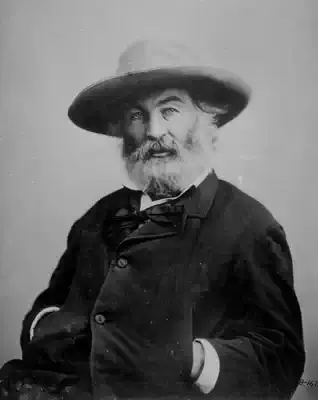
Walt Whitman
Sparkles From The Wheel
Sparkles From The Wheel
WHERE the city's ceaseless crowd moves on, the live-long day,
Withdrawn, I join a group of children watching--I pause aside with
them.
By the curb, toward the edge of the flagging,
A knife-grinder works at his wheel, sharpening a great knife;
Bending over, he carefully holds it to the stone--by foot and knee,
With measur'd tread, he turns rapidly--As he presses with light but
firm hand,
Forth issue, then, in copious golden jets,
Sparkles from the wheel.
The scene, and all its belongings--how they seize and affect me!
The sad, sharp-chinn'd old man, with worn clothes, and broad
shoulder-band of leather; 10
Myself, effusing and fluid--a phantom curiously floating--now here
absorb'd and arrested;
The group, (an unminded point, set in a vast surrounding;)
The attentive, quiet children--the loud, proud, restive base of the
streets;
The low, hoarse purr of the whirling stone--the light-press'd blade,
Diffusing, dropping, sideways-darting, in tiny showers of gold,
Sparkles from the wheel.
WHERE the city's ceaseless crowd moves on, the live-long day,
Withdrawn, I join a group of children watching--I pause aside with
them.
By the curb, toward the edge of the flagging,
A knife-grinder works at his wheel, sharpening a great knife;
Bending over, he carefully holds it to the stone--by foot and knee,
With measur'd tread, he turns rapidly--As he presses with light but
firm hand,
Forth issue, then, in copious golden jets,
Sparkles from the wheel.
The scene, and all its belongings--how they seize and affect me!
The sad, sharp-chinn'd old man, with worn clothes, and broad
shoulder-band of leather; 10
Myself, effusing and fluid--a phantom curiously floating--now here
absorb'd and arrested;
The group, (an unminded point, set in a vast surrounding;)
The attentive, quiet children--the loud, proud, restive base of the
streets;
The low, hoarse purr of the whirling stone--the light-press'd blade,
Diffusing, dropping, sideways-darting, in tiny showers of gold,
Sparkles from the wheel.
460
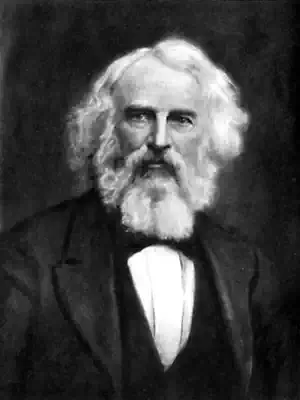
Henry Wadsworth Longfellow
The Song Of Hiawatha XV: Hiawatha's Lamentation
The Song Of Hiawatha XV: Hiawatha's Lamentation
In those days the Evil Spirits,
All the Manitos of mischief,
Fearing Hiawatha's wisdom,
And his love for Chibiabos,
Jealous of their faithful friendship,
And their noble words and actions,
Made at length a league against them,
To molest them and destroy them.
Hiawatha, wise and wary,
Often said to Chibiabos,
'O my brother! do not leave me,
Lest the Evil Spirits harm you!'
Chibiabos, young and heedless,
Laughing shook his coal-black tresses,
Answered ever sweet and childlike,
'Do not fear for me, O brother!
Harm and evil come not near me!'
Once when Peboan, the Winter,
Roofed with ice the Big-Sea-Water,
When the snow-flakes, whirling downward,
Hissed among the withered oak-leaves,
Changed the pine-trees into wigwams,
Covered all the earth with silence,
Armed with arrows, shod with snow-shoes,
Heeding not his brother's warning,
Fearing not the Evil Spirits,
Forth to hunt the deer with antlers
All alone went Chibiabos.
Right across the Big-Sea-Water
Sprang with speed the deer before him.
With the wind and snow he followed,
O'er the treacherous ice he followed,
Wild with all the fierce commotion
And the rapture of the hunting.
But beneath, the Evil Spirits
Lay in ambush, waiting for him,
Broke the treacherous ice beneath him,
Dragged him downward to the bottom,
Buried in the sand his body.
Unktahee, the god of water,
He the god of the Dacotahs,
Drowned him in the deep abysses
Of the lake of Gitche Gumee.
From the headlands Hiawatha
Sent forth such a wail of anguish,
Such a fearful lamentation,
That the bison paused to listen,
And the wolves howled from the prairies,
And the thunder in the distance
Starting answered 'Baim-wawa!'
Then his face with black he painted,
With his robe his head he covered,
In his wigwam sat lamenting,
Seven long weeks he sat lamenting,
Uttering still this moan of sorrow:
'He is dead, the sweet musician!
He the sweetest of all singers!
He has gone from us forever,
He has moved a little nearer
To the Master of all music,
To the Master of all singing!
O my brother, Chibiabos!'
And the melancholy fir-trees
Waved their dark green fans above him,
Waved their purple cones above him,
Sighing with him to console him,
Mingling with his lamentation
Their complaining, their lamenting.
Came the Spring, and all the forest
Looked in vain for Chibiabos;
Sighed the rivulet, Sebowisha,
Sighed the rushes in the meadow.
From the tree-tops sang the bluebird,
Sang the bluebird, the Owaissa,
'Chibiabos! Chibiabos!
He is dead, the sweet musician!'
From the wigwam sang the robin,
Sang the robin, the Opechee,
'Chibiabos! Chibiabos!
He is dead, the sweetest singer!'
And at night through all the forest
Went the whippoorwill complaining,
Wailing went the Wawonaissa,
'Chibiabos! Chibiabos!
He is dead, the sweet musician!
He the sweetest of all singers!'
Then the Medicine-men, the Medas,
The magicians, the Wabenos,
And the Jossakeeds, the Prophets,
Came to visit Hiawatha;
Built a Sacred Lodge beside him,
To appease him, to console him,
Walked in silent, grave procession,
Bearing each a pouch of healing,
Skin of beaver, lynx, or otter,
Filled with magic roots and simples,
Filled with very potent medicines.
When he heard their steps approaching~,
Hiawatha ceased lamenting,
Called no more on Chibiabos;
Naught he questioned, naught he answered,
But his mournful head uncovered,
From his face the mourning colors
Washed he slowly and in silence,
Slowly and in silence followed
Onward to the Sacred Wigwam.
There a magic drink they gave him,
Made of Nahma-wusk, the spearmint,
And Wabeno-wusk, the yarrow,
Roots of power, and herbs of healing;
Beat their drums, and shook their rattles;
Chanted singly and in chorus,
Mystic songs like these, they chanted.
'I myself, myself! behold me!
`T Is the great Gray Eagle talking;
Come, ye white crows, come and hear him!
The loud-speaking thunder helps me;
All the unseen spirits help me;
I can hear their voices calling,
All around the sky I hear them!
I can blow you strong, my brother,
I can heal you, Hiawatha!'
'Hi-au-ha!' replied the chorus,
'Wayha-way!' the mystic chorus.
Friends of mine are all the serpents!
Hear me shake my skin of hen-hawk!
Mahng, the white loon, I can kill him;
I can shoot your heart and kill it!
I can blow you strong, my brother,
I can heal you, Hiawatha !'
'Hi-au-ha!' replied the chorus,
'Wayhaway!' the mystic chorus.
'I myself, myself! the prophet!
When I speak the wigwam trembles,
Shakes the Sacred Lodge with terror,
Hands unseen begin to shake it!
When I walk, the sky I tread on
Bends and makes a noise beneath me!
I can blow you strong, my brother!
Rise and speak, O Hiawatha!'
'Hi-au-ha!' replied the chorus,
'Way-ha-way!' the mystic chorus.
Then they shook their medicine-pouches
O'er the head of Hiawatha,
Danced their medicine-dance around him;
And upstarting wild and haggard,
Like a man from dreams awakened,
He was healed of all his madness.
As the clouds are swept from heaven,
Straightway from his brain departed
All his moody melancholy;
As the ice is swept from rivers,
Straightway from his heart departed
All his sorrow and affliction.
Then they summoned Chibiabos
From his grave beneath the waters,
From the sands of Gitche Gumee
Summoned Hiawatha's brother.
And so mighty was the magic
Of that cry and invocation,
That he heard it as he lay there
Underneath the Big-Sea-Water;
From the sand he rose and listened,
Heard the music and the singing,
Came, obedient to the summons,
To the doorway of the wigwam,
But to enter they forbade him.
Through a chink a coal they gave him,
Through the door a burning fire-brand;
Ruler in the Land of Spirits,
Ruler o'er the dead, they made him,
Telling him a fire to kindle
For all those that died thereafter,
Camp-fires for their night encampments
On their solitary journey
To the kingdom of Ponemah,
To the land of the Hereafter.
From the village of his childhood,
From the homes of those who knew him,
Passing silent through the forest,
Like a smoke-wreath wafted sideways,
Slowly vanished Chibiabos!
Where he passed, the branches moved not,
Where he trod, the grasses bent not,
And the fallen leaves of last year
Made no sound beneath his footstep.
Four whole days he journeyed onward
Down the pathway of the dead men;
On the dead-man's strawberry feasted,
Crossed the melancholy river,
On the swinging log he crossed it,
Came unto the Lake of Silver,
In the Stone Canoe was carried
To the Islands of the Blessed,
To the land of ghosts and shadows.
On that journey, moving slowly,
Many weary spirits saw he,
Panting under heavy burdens,
Laden with war-clubs, bows and arrows,
Robes of fur, and pots and kettles,
And with food that friends had given
For that solitary journey.
'Ay! why do the living,' said they,
'Lay such heavy burdens on us!
Better were it to go naked,
Better were it to go fasting,
Than to bear such heavy burdens
On our long and weary journey!'
Forth then issued Hiawatha,
Wandered eastward, wandered westward,
Teaching men the use of simples
And the antidotes for poisons,
And the cure of all diseases.
Thus was first made known to mortals
All the mystery of Medamin,
All the sacred art of healing.
In those days the Evil Spirits,
All the Manitos of mischief,
Fearing Hiawatha's wisdom,
And his love for Chibiabos,
Jealous of their faithful friendship,
And their noble words and actions,
Made at length a league against them,
To molest them and destroy them.
Hiawatha, wise and wary,
Often said to Chibiabos,
'O my brother! do not leave me,
Lest the Evil Spirits harm you!'
Chibiabos, young and heedless,
Laughing shook his coal-black tresses,
Answered ever sweet and childlike,
'Do not fear for me, O brother!
Harm and evil come not near me!'
Once when Peboan, the Winter,
Roofed with ice the Big-Sea-Water,
When the snow-flakes, whirling downward,
Hissed among the withered oak-leaves,
Changed the pine-trees into wigwams,
Covered all the earth with silence,
Armed with arrows, shod with snow-shoes,
Heeding not his brother's warning,
Fearing not the Evil Spirits,
Forth to hunt the deer with antlers
All alone went Chibiabos.
Right across the Big-Sea-Water
Sprang with speed the deer before him.
With the wind and snow he followed,
O'er the treacherous ice he followed,
Wild with all the fierce commotion
And the rapture of the hunting.
But beneath, the Evil Spirits
Lay in ambush, waiting for him,
Broke the treacherous ice beneath him,
Dragged him downward to the bottom,
Buried in the sand his body.
Unktahee, the god of water,
He the god of the Dacotahs,
Drowned him in the deep abysses
Of the lake of Gitche Gumee.
From the headlands Hiawatha
Sent forth such a wail of anguish,
Such a fearful lamentation,
That the bison paused to listen,
And the wolves howled from the prairies,
And the thunder in the distance
Starting answered 'Baim-wawa!'
Then his face with black he painted,
With his robe his head he covered,
In his wigwam sat lamenting,
Seven long weeks he sat lamenting,
Uttering still this moan of sorrow:
'He is dead, the sweet musician!
He the sweetest of all singers!
He has gone from us forever,
He has moved a little nearer
To the Master of all music,
To the Master of all singing!
O my brother, Chibiabos!'
And the melancholy fir-trees
Waved their dark green fans above him,
Waved their purple cones above him,
Sighing with him to console him,
Mingling with his lamentation
Their complaining, their lamenting.
Came the Spring, and all the forest
Looked in vain for Chibiabos;
Sighed the rivulet, Sebowisha,
Sighed the rushes in the meadow.
From the tree-tops sang the bluebird,
Sang the bluebird, the Owaissa,
'Chibiabos! Chibiabos!
He is dead, the sweet musician!'
From the wigwam sang the robin,
Sang the robin, the Opechee,
'Chibiabos! Chibiabos!
He is dead, the sweetest singer!'
And at night through all the forest
Went the whippoorwill complaining,
Wailing went the Wawonaissa,
'Chibiabos! Chibiabos!
He is dead, the sweet musician!
He the sweetest of all singers!'
Then the Medicine-men, the Medas,
The magicians, the Wabenos,
And the Jossakeeds, the Prophets,
Came to visit Hiawatha;
Built a Sacred Lodge beside him,
To appease him, to console him,
Walked in silent, grave procession,
Bearing each a pouch of healing,
Skin of beaver, lynx, or otter,
Filled with magic roots and simples,
Filled with very potent medicines.
When he heard their steps approaching~,
Hiawatha ceased lamenting,
Called no more on Chibiabos;
Naught he questioned, naught he answered,
But his mournful head uncovered,
From his face the mourning colors
Washed he slowly and in silence,
Slowly and in silence followed
Onward to the Sacred Wigwam.
There a magic drink they gave him,
Made of Nahma-wusk, the spearmint,
And Wabeno-wusk, the yarrow,
Roots of power, and herbs of healing;
Beat their drums, and shook their rattles;
Chanted singly and in chorus,
Mystic songs like these, they chanted.
'I myself, myself! behold me!
`T Is the great Gray Eagle talking;
Come, ye white crows, come and hear him!
The loud-speaking thunder helps me;
All the unseen spirits help me;
I can hear their voices calling,
All around the sky I hear them!
I can blow you strong, my brother,
I can heal you, Hiawatha!'
'Hi-au-ha!' replied the chorus,
'Wayha-way!' the mystic chorus.
Friends of mine are all the serpents!
Hear me shake my skin of hen-hawk!
Mahng, the white loon, I can kill him;
I can shoot your heart and kill it!
I can blow you strong, my brother,
I can heal you, Hiawatha !'
'Hi-au-ha!' replied the chorus,
'Wayhaway!' the mystic chorus.
'I myself, myself! the prophet!
When I speak the wigwam trembles,
Shakes the Sacred Lodge with terror,
Hands unseen begin to shake it!
When I walk, the sky I tread on
Bends and makes a noise beneath me!
I can blow you strong, my brother!
Rise and speak, O Hiawatha!'
'Hi-au-ha!' replied the chorus,
'Way-ha-way!' the mystic chorus.
Then they shook their medicine-pouches
O'er the head of Hiawatha,
Danced their medicine-dance around him;
And upstarting wild and haggard,
Like a man from dreams awakened,
He was healed of all his madness.
As the clouds are swept from heaven,
Straightway from his brain departed
All his moody melancholy;
As the ice is swept from rivers,
Straightway from his heart departed
All his sorrow and affliction.
Then they summoned Chibiabos
From his grave beneath the waters,
From the sands of Gitche Gumee
Summoned Hiawatha's brother.
And so mighty was the magic
Of that cry and invocation,
That he heard it as he lay there
Underneath the Big-Sea-Water;
From the sand he rose and listened,
Heard the music and the singing,
Came, obedient to the summons,
To the doorway of the wigwam,
But to enter they forbade him.
Through a chink a coal they gave him,
Through the door a burning fire-brand;
Ruler in the Land of Spirits,
Ruler o'er the dead, they made him,
Telling him a fire to kindle
For all those that died thereafter,
Camp-fires for their night encampments
On their solitary journey
To the kingdom of Ponemah,
To the land of the Hereafter.
From the village of his childhood,
From the homes of those who knew him,
Passing silent through the forest,
Like a smoke-wreath wafted sideways,
Slowly vanished Chibiabos!
Where he passed, the branches moved not,
Where he trod, the grasses bent not,
And the fallen leaves of last year
Made no sound beneath his footstep.
Four whole days he journeyed onward
Down the pathway of the dead men;
On the dead-man's strawberry feasted,
Crossed the melancholy river,
On the swinging log he crossed it,
Came unto the Lake of Silver,
In the Stone Canoe was carried
To the Islands of the Blessed,
To the land of ghosts and shadows.
On that journey, moving slowly,
Many weary spirits saw he,
Panting under heavy burdens,
Laden with war-clubs, bows and arrows,
Robes of fur, and pots and kettles,
And with food that friends had given
For that solitary journey.
'Ay! why do the living,' said they,
'Lay such heavy burdens on us!
Better were it to go naked,
Better were it to go fasting,
Than to bear such heavy burdens
On our long and weary journey!'
Forth then issued Hiawatha,
Wandered eastward, wandered westward,
Teaching men the use of simples
And the antidotes for poisons,
And the cure of all diseases.
Thus was first made known to mortals
All the mystery of Medamin,
All the sacred art of healing.
341
Siegfried Sassoon
A Letter Home
A Letter Home
(To Robert Graves)
I
Here I'm sitting in the gloom
Of my quiet attic room.
France goes rolling all around,
Fledged with forest May has crowned.
And I puff my pipe, calm-hearted,
Thinking how the fighting started,
Wondering when we'll ever end it,
Back to hell with Kaiser sent it,
Gag the noise, pack up and go,
Clockwork soldiers in a row.
I've got better things to do
Than to waste my time on you.
II
Robert, when I drowse to-night,
Skirting lawns of sleep to chase
Shifting dreams in mazy light,
Somewhere then I'll see your face
Turning back to bid me follow
Where I wag my arms and hollo,
Over hedges hasting after
Crooked smile and baffling laughter,
Running tireless, floating, leaping,
Down your web-hung woods and valleys,
Where the glowworm stars are peeping,
Till I find you, quiet as stone
On a hill-top all alone,
Staring outward, gravely pondering
Jumbled leagues of hillock-wandering.
III
You and I have walked together
In the starving winter weather.
We've been glad because we knew
Time's too short and friends are few.
We've been sad because we missed
One whose yellow head was kissed
By the gods, who thought about him
Till they couldn't do without him.
Now he's here again; I've been
Soldier David dressed in green,
Standing in a wood that swings
To the madrigal he sings.
He's come back, all mirth and glory,
Like the prince in a fairy tory.
Winter called him far away;
Blossoms bring him home with May.
IV
Well, I know you'll swear it's true
That you found him decked in blue
Striding up through morning-land
With a cloud on either hand.
Out in Wales, you'll say, he marches
Arm-in-arm with aoks and larches;
Hides all night in hilly nooks,
Laughs at dawn in tumbling brooks.
Yet, it's certain, here he teaches
Outpost-schemes to groups of beeches.
And I'm sure, as here I stand,
That he shines through every land,
That he sings in every place
Where we're thinking of his face.
V
Robert, there's a war in France;
Everywhere men bang and blunder,
Sweat and swear and worship Chance,
Creep and blink through cannon thunder.
Rifles crack and bullets flick,
Sing and hum like hornet-swarms.
Bones are smashed and buried quick.
Yet, through stunning battle storms,
All the while I watch the spark
Lit to guide me; for I know
Dreams will triumph, though the dark
Scowls above me where I go.
You can hear me; you can mingle
Radiant folly with my jingle.
War's a joke for me and you
While we know such dreams are true!
(To Robert Graves)
I
Here I'm sitting in the gloom
Of my quiet attic room.
France goes rolling all around,
Fledged with forest May has crowned.
And I puff my pipe, calm-hearted,
Thinking how the fighting started,
Wondering when we'll ever end it,
Back to hell with Kaiser sent it,
Gag the noise, pack up and go,
Clockwork soldiers in a row.
I've got better things to do
Than to waste my time on you.
II
Robert, when I drowse to-night,
Skirting lawns of sleep to chase
Shifting dreams in mazy light,
Somewhere then I'll see your face
Turning back to bid me follow
Where I wag my arms and hollo,
Over hedges hasting after
Crooked smile and baffling laughter,
Running tireless, floating, leaping,
Down your web-hung woods and valleys,
Where the glowworm stars are peeping,
Till I find you, quiet as stone
On a hill-top all alone,
Staring outward, gravely pondering
Jumbled leagues of hillock-wandering.
III
You and I have walked together
In the starving winter weather.
We've been glad because we knew
Time's too short and friends are few.
We've been sad because we missed
One whose yellow head was kissed
By the gods, who thought about him
Till they couldn't do without him.
Now he's here again; I've been
Soldier David dressed in green,
Standing in a wood that swings
To the madrigal he sings.
He's come back, all mirth and glory,
Like the prince in a fairy tory.
Winter called him far away;
Blossoms bring him home with May.
IV
Well, I know you'll swear it's true
That you found him decked in blue
Striding up through morning-land
With a cloud on either hand.
Out in Wales, you'll say, he marches
Arm-in-arm with aoks and larches;
Hides all night in hilly nooks,
Laughs at dawn in tumbling brooks.
Yet, it's certain, here he teaches
Outpost-schemes to groups of beeches.
And I'm sure, as here I stand,
That he shines through every land,
That he sings in every place
Where we're thinking of his face.
V
Robert, there's a war in France;
Everywhere men bang and blunder,
Sweat and swear and worship Chance,
Creep and blink through cannon thunder.
Rifles crack and bullets flick,
Sing and hum like hornet-swarms.
Bones are smashed and buried quick.
Yet, through stunning battle storms,
All the while I watch the spark
Lit to guide me; for I know
Dreams will triumph, though the dark
Scowls above me where I go.
You can hear me; you can mingle
Radiant folly with my jingle.
War's a joke for me and you
While we know such dreams are true!
105
Walt Whitman
Souvenirs Of Democracy
Souvenirs Of Democracy
THE business man, the acquirer vast,
After assiduous years, surveying results, preparing for departure,
Devises houses and lands to his children--bequeaths stocks, goods-
funds for a school or hospital,
Leaves money to certain companions to buy tokens, souvenirs of gems
and gold;
Parceling out with care--And then, to prevent all cavil,
His name to his testament formally signs.
But I, my life surveying,
With nothing to show, to devise, from its idle years,
Nor houses, nor lands--nor tokens of gems or gold for my friends,
Only these Souvenirs of Democracy--In them--in all my songs--behind
me leaving, 10
To You, who ever you are, (bathing, leavening this leaf especially
with my breath--pressing on it a moment with my own hands;
--Here! feel how the pulse beats in my wrists!--how my heart's-blood
is swelling, contracting!)
I will You, in all, Myself, with promise to never desert you,
To which I sign my name.
THE business man, the acquirer vast,
After assiduous years, surveying results, preparing for departure,
Devises houses and lands to his children--bequeaths stocks, goods-
funds for a school or hospital,
Leaves money to certain companions to buy tokens, souvenirs of gems
and gold;
Parceling out with care--And then, to prevent all cavil,
His name to his testament formally signs.
But I, my life surveying,
With nothing to show, to devise, from its idle years,
Nor houses, nor lands--nor tokens of gems or gold for my friends,
Only these Souvenirs of Democracy--In them--in all my songs--behind
me leaving, 10
To You, who ever you are, (bathing, leavening this leaf especially
with my breath--pressing on it a moment with my own hands;
--Here! feel how the pulse beats in my wrists!--how my heart's-blood
is swelling, contracting!)
I will You, in all, Myself, with promise to never desert you,
To which I sign my name.
420

Robert W. Service
The Call
The Call
(France, August first, 1914)
Far and near, high and clear,
Hark to the call of War!
Over the gorse and the golden dells,
Ringing and swinging of clamorous bells,
Praying and saying of wild farewells:
War! War! War!
High and low, all must go:
Hark to the shout of War!
Leave to the women the harvest yield;
Gird ye, men, for the sinister field;
A sabre instead of a scythe to wield:
War! Red War!
Rich and poor, lord and boor,
Hark to the blast of War!
Tinker and tailor and millionaire,
Actor in triumph and priest in prayer,
Comrades now in the hell out there,
Sweep to the fire of War!
Prince and page, sot and sage,
Hark to the roar of War!
Poet, professor and circus clown,
Chimney-sweeper and fop o' the town,
Into the pot and be melted down:
Into the pot of War!
Women all, hear the call,
The pitiless call of War!
Look your last on your dearest ones,
Brothers and husbands, fathers, sons:
Swift they go to the ravenous guns,
The gluttonous guns of War.
Everywhere thrill the air
The maniac bells of War.
There will be little of sleeping to-night;
There will be wailing and weeping to-night;
Death's red sickle is reaping to-night:
War! War! War!
(France, August first, 1914)
Far and near, high and clear,
Hark to the call of War!
Over the gorse and the golden dells,
Ringing and swinging of clamorous bells,
Praying and saying of wild farewells:
War! War! War!
High and low, all must go:
Hark to the shout of War!
Leave to the women the harvest yield;
Gird ye, men, for the sinister field;
A sabre instead of a scythe to wield:
War! Red War!
Rich and poor, lord and boor,
Hark to the blast of War!
Tinker and tailor and millionaire,
Actor in triumph and priest in prayer,
Comrades now in the hell out there,
Sweep to the fire of War!
Prince and page, sot and sage,
Hark to the roar of War!
Poet, professor and circus clown,
Chimney-sweeper and fop o' the town,
Into the pot and be melted down:
Into the pot of War!
Women all, hear the call,
The pitiless call of War!
Look your last on your dearest ones,
Brothers and husbands, fathers, sons:
Swift they go to the ravenous guns,
The gluttonous guns of War.
Everywhere thrill the air
The maniac bells of War.
There will be little of sleeping to-night;
There will be wailing and weeping to-night;
Death's red sickle is reaping to-night:
War! War! War!
171
Siegfried Sassoon
A Child's Prayer
A Child's Prayer
For Morn, my dome of blue,
For Meadows, green and gay,
And Birds who love the twilight of the leaves,
Let Jesus keep me joyful when I pray.
For the big Bees that hum
And hide in bells of flowers;
For the winding roads that come
To Evening’s holy door,
May Jesus bring me grateful to his arms,
And guard my innocence for evermore.
For Morn, my dome of blue,
For Meadows, green and gay,
And Birds who love the twilight of the leaves,
Let Jesus keep me joyful when I pray.
For the big Bees that hum
And hide in bells of flowers;
For the winding roads that come
To Evening’s holy door,
May Jesus bring me grateful to his arms,
And guard my innocence for evermore.
66
Walt Whitman
Song Of The Redwood-Tree
Song Of The Redwood-Tree
A CALIFORNIA song!
A prophecy and indirection--a thought impalpable, to breathe, as air;
A chorus of dryads, fading, departing--or hamadryads departing;
A murmuring, fateful, giant voice, out of the earth and sky,
Voice of a mighty dying tree in the Redwood forest dense.
Farewell, my brethren,
Farewell, O earth and sky--farewell, ye neighboring waters;
My time has ended, my term has come.
Along the northern coast,
Just back from the rock-bound shore, and the caves, 10
In the saline air from the sea, in the Mendocino country,
With the surge for bass and accompaniment low and hoarse,
With crackling blows of axes, sounding musically, driven by strong
arms,
Riven deep by the sharp tongues of the axes--there in the Redwood
forest dense,
I heard the mighty tree its death-chant chanting.
The choppers heard not--the camp shanties echoed not;
The quick-ear'd teamsters, and chain and jack-screw men, heard not,
As the wood-spirits came from their haunts of a thousand years, to
join the refrain;
But in my soul I plainly heard.
Murmuring out of its myriad leaves, 20
Down from its lofty top, rising two hundred feet high,
Out of its stalwart trunk and limbs--out of its foot-thick bark,
That chant of the seasons and time--chant, not of the past only, but
the future.
You untold life of me,
And all you venerable and innocent joys,
Perennial, hardy life of me, with joys, 'mid rain, and many a summer
sun,
And the white snows, and night, and the wild winds;
O the great patient, rugged joys! my soul's strong joys, unreck'd by
man;
(For know I bear the soul befitting me--I too have consciousness,
identity,
And all the rocks and mountains have--and all the earth;) 30
Joys of the life befitting me and brothers mine,
Our time, our term has come.
Nor yield we mournfully, majestic brothers,
We who have grandly fill'd our time;
With Nature's calm content, and tacit, huge delight,
We welcome what we wrought for through the past,
And leave the field for them.
For them predicted long,
For a superber Race--they too to grandly fill their time,
For them we abdicate--in them ourselves, ye forest kings! 40
In them these skies and airs--these mountain peaks--Shasta--Nevadas,
These huge, precipitous cliffs--this amplitude--these valleys grand-Yosemite,
To be in them absorb'd, assimilated.
Then to a loftier strain,
Still prouder, more ecstatic, rose the chant,
As if the heirs, the Deities of the West,
Joining, with master-tongue, bore part.
Not wan from Asia's fetishes,
Nor red from Europe's old dynastic slaughter-house,
(Area of murder-plots of thrones, with scent left yet of wars and
scaffolds every where,) 50
But come from Nature's long and harmless throes--peacefully builded
thence,
These virgin lands--Lands of the Western Shore,
To the new Culminating Man--to you, the Empire New,
You, promis'd long, we pledge, we dedicate.
You occult, deep volitions,
You average Spiritual Manhood, purpose of all, pois'd on yourself-giving,
not taking law,
You Womanhood divine, mistress and source of all, whence life and
love, and aught that comes from life and love,
You unseen Moral Essence of all the vast materials of America, (age
upon age, working in Death the same as Life,)
You that, sometimes known, oftener unknown, really shape and mould
the New World, adjusting it to Time and Space,
You hidden National Will, lying in your abysms, conceal'd, but ever
alert, 60
You past and present purposes, tenaciously pursued, may-be
unconscious of yourselves,
Unswerv'd by all the passing errors, perturbations of the surface;
You vital, universal, deathless germs, beneath all creeds, arts,
statutes, literatures,
Here build your homes for good--establish here--These areas entire,
Lands of the Western Shore,
We pledge, we dedicate to you.
For man of you--your characteristic Race,
Here may be hardy, sweet, gigantic grow--here tower, proportionate to
Nature,
Here climb the vast, pure spaces, unconfined, uncheck'd by wall or
roof,
Here laugh with storm or sun--here joy--here patiently inure,
Here heed himself, unfold himself (not others' formulas heed)--here
fill his time, 70
To duly fall, to aid, unreck'd at last,
To disappear, to serve.
Thus, on the northern coast,
In the echo of teamsters' calls, and the clinking chains, and the
music of choppers' axes,
The falling trunk and limbs, the crash, the muffled shriek, the
groan,
Such words combined from the Redwood-tree--as of wood-spirits' voices
ecstatic, ancient and rustling,
The century-lasting, unseen dryads, singing, withdrawing,
All their recesses of forests and mountains leaving,
From the Cascade range to the Wasatch--or Idaho far, or Utah,
To the deities of the Modern henceforth yielding, 80
The chorus and indications, the vistas of coming humanity--the
settlements, features all,
In the Mendocino woods I caught.
The flashing and golden pageant of California!
The sudden and gorgeous drama--the sunny and ample lands;
The long and varied stretch from Puget Sound to Colorado south;
Lands bathed in sweeter, rarer, healthier air--valleys and mountain
cliffs;
The fields of Nature long prepared and fallow--the silent, cyclic
chemistry;
The slow and steady ages plodding--the unoccupied surface ripening-
the rich ores forming beneath;
At last the New arriving, assuming, taking possession,
A swarming and busy race settling and organizing every where;
Ships coming in from the whole round world, and going out to the
whole world, 90
To India and China and Australia, and the thousand island paradises
of the Pacific;
Populous cities--the latest inventions--the steamers on the rivers-the
railroads--with many a thrifty farm, with machinery,
And wool, and wheat, and the grape--and diggings of yellow gold.
But more in you than these, Lands of the Western Shore!
(These but the means, the implements, the standing-ground,)
I see in you, certain to come, the promise of thousands of years,
till now deferr'd,
Promis'd, to be fulfill'd, our common kind, the Race.
The New Society at last, proportionate to Nature,
In Man of you, more than your mountain peaks, or stalwart trees
imperial, 100
In Woman more, far more, than all your gold, or vines, or even vital
air.
Fresh come, to a New World indeed, yet long prepared,
I see the Genius of the Modern, child of the Real and Ideal,
Clearing the ground for broad humanity, the true America, heir of the
past so grand,
To build a grander future.
A CALIFORNIA song!
A prophecy and indirection--a thought impalpable, to breathe, as air;
A chorus of dryads, fading, departing--or hamadryads departing;
A murmuring, fateful, giant voice, out of the earth and sky,
Voice of a mighty dying tree in the Redwood forest dense.
Farewell, my brethren,
Farewell, O earth and sky--farewell, ye neighboring waters;
My time has ended, my term has come.
Along the northern coast,
Just back from the rock-bound shore, and the caves, 10
In the saline air from the sea, in the Mendocino country,
With the surge for bass and accompaniment low and hoarse,
With crackling blows of axes, sounding musically, driven by strong
arms,
Riven deep by the sharp tongues of the axes--there in the Redwood
forest dense,
I heard the mighty tree its death-chant chanting.
The choppers heard not--the camp shanties echoed not;
The quick-ear'd teamsters, and chain and jack-screw men, heard not,
As the wood-spirits came from their haunts of a thousand years, to
join the refrain;
But in my soul I plainly heard.
Murmuring out of its myriad leaves, 20
Down from its lofty top, rising two hundred feet high,
Out of its stalwart trunk and limbs--out of its foot-thick bark,
That chant of the seasons and time--chant, not of the past only, but
the future.
You untold life of me,
And all you venerable and innocent joys,
Perennial, hardy life of me, with joys, 'mid rain, and many a summer
sun,
And the white snows, and night, and the wild winds;
O the great patient, rugged joys! my soul's strong joys, unreck'd by
man;
(For know I bear the soul befitting me--I too have consciousness,
identity,
And all the rocks and mountains have--and all the earth;) 30
Joys of the life befitting me and brothers mine,
Our time, our term has come.
Nor yield we mournfully, majestic brothers,
We who have grandly fill'd our time;
With Nature's calm content, and tacit, huge delight,
We welcome what we wrought for through the past,
And leave the field for them.
For them predicted long,
For a superber Race--they too to grandly fill their time,
For them we abdicate--in them ourselves, ye forest kings! 40
In them these skies and airs--these mountain peaks--Shasta--Nevadas,
These huge, precipitous cliffs--this amplitude--these valleys grand-Yosemite,
To be in them absorb'd, assimilated.
Then to a loftier strain,
Still prouder, more ecstatic, rose the chant,
As if the heirs, the Deities of the West,
Joining, with master-tongue, bore part.
Not wan from Asia's fetishes,
Nor red from Europe's old dynastic slaughter-house,
(Area of murder-plots of thrones, with scent left yet of wars and
scaffolds every where,) 50
But come from Nature's long and harmless throes--peacefully builded
thence,
These virgin lands--Lands of the Western Shore,
To the new Culminating Man--to you, the Empire New,
You, promis'd long, we pledge, we dedicate.
You occult, deep volitions,
You average Spiritual Manhood, purpose of all, pois'd on yourself-giving,
not taking law,
You Womanhood divine, mistress and source of all, whence life and
love, and aught that comes from life and love,
You unseen Moral Essence of all the vast materials of America, (age
upon age, working in Death the same as Life,)
You that, sometimes known, oftener unknown, really shape and mould
the New World, adjusting it to Time and Space,
You hidden National Will, lying in your abysms, conceal'd, but ever
alert, 60
You past and present purposes, tenaciously pursued, may-be
unconscious of yourselves,
Unswerv'd by all the passing errors, perturbations of the surface;
You vital, universal, deathless germs, beneath all creeds, arts,
statutes, literatures,
Here build your homes for good--establish here--These areas entire,
Lands of the Western Shore,
We pledge, we dedicate to you.
For man of you--your characteristic Race,
Here may be hardy, sweet, gigantic grow--here tower, proportionate to
Nature,
Here climb the vast, pure spaces, unconfined, uncheck'd by wall or
roof,
Here laugh with storm or sun--here joy--here patiently inure,
Here heed himself, unfold himself (not others' formulas heed)--here
fill his time, 70
To duly fall, to aid, unreck'd at last,
To disappear, to serve.
Thus, on the northern coast,
In the echo of teamsters' calls, and the clinking chains, and the
music of choppers' axes,
The falling trunk and limbs, the crash, the muffled shriek, the
groan,
Such words combined from the Redwood-tree--as of wood-spirits' voices
ecstatic, ancient and rustling,
The century-lasting, unseen dryads, singing, withdrawing,
All their recesses of forests and mountains leaving,
From the Cascade range to the Wasatch--or Idaho far, or Utah,
To the deities of the Modern henceforth yielding, 80
The chorus and indications, the vistas of coming humanity--the
settlements, features all,
In the Mendocino woods I caught.
The flashing and golden pageant of California!
The sudden and gorgeous drama--the sunny and ample lands;
The long and varied stretch from Puget Sound to Colorado south;
Lands bathed in sweeter, rarer, healthier air--valleys and mountain
cliffs;
The fields of Nature long prepared and fallow--the silent, cyclic
chemistry;
The slow and steady ages plodding--the unoccupied surface ripening-
the rich ores forming beneath;
At last the New arriving, assuming, taking possession,
A swarming and busy race settling and organizing every where;
Ships coming in from the whole round world, and going out to the
whole world, 90
To India and China and Australia, and the thousand island paradises
of the Pacific;
Populous cities--the latest inventions--the steamers on the rivers-the
railroads--with many a thrifty farm, with machinery,
And wool, and wheat, and the grape--and diggings of yellow gold.
But more in you than these, Lands of the Western Shore!
(These but the means, the implements, the standing-ground,)
I see in you, certain to come, the promise of thousands of years,
till now deferr'd,
Promis'd, to be fulfill'd, our common kind, the Race.
The New Society at last, proportionate to Nature,
In Man of you, more than your mountain peaks, or stalwart trees
imperial, 100
In Woman more, far more, than all your gold, or vines, or even vital
air.
Fresh come, to a New World indeed, yet long prepared,
I see the Genius of the Modern, child of the Real and Ideal,
Clearing the ground for broad humanity, the true America, heir of the
past so grand,
To build a grander future.
504
Henry Wadsworth Longfellow
The Song Of Hiawatha XIV: Picture-Writing
The Song Of Hiawatha XIV: Picture-Writing
In those days said Hiawatha,
'Lo! how all things fade and perish!
From the memory of the old men
Pass away the great traditions,
The achievements of the warriors,
The adventures of the hunters,
All the wisdom of the Medas,
All the craft of the Wabenos,
All the marvellous dreams and visions
Of the Jossakeeds, the Prophets!
'Great men die and are forgotten,
Wise men speak; their words of wisdom
Perish in the ears that hear them,
Do not reach the generations
That, as yet unborn, are waiting
In the great, mysterious darkness
Of the speechless days that shall be!
'On the grave-posts of our fathers
Are no signs, no figures painted;
Who are in those graves we know not,
Only know they are our fathers.
Of what kith they are and kindred,
From what old, ancestral Totem,
Be it Eagle, Bear, or Beaver,
They descended, this we know not,
Only know they are our fathers.
'Face to face we speak together,
But we cannot speak when absent,
Cannot send our voices from us
To the friends that dwell afar off;
Cannot send a secret message,
But the bearer learns our secret,
May pervert it, may betray it,
May reveal it unto others.'
Thus said Hiawatha, walking
In the solitary forest,
Pondering, musing in the forest,
On the welfare of his people.
From his pouch he took his colors,
Took his paints of different colors,
On the smooth bark of a birch-tree
Painted many shapes and figures,
Wonderful and mystic figures,
And each figure had a meaning,
Each some word or thought suggested.
Gitche Manito the Mighty,
He, the Master of Life, was painted
As an egg, with points projecting
To the four winds of the heavens.
Everywhere is the Great Spirit,
Was the meaning of this symbol.
Gitche Manito the Mighty,
He the dreadful Spirit of Evil,
As a serpent was depicted,
As Kenabeek, the great serpent.
Very crafty, very cunning,
Is the creeping Spirit of Evil,
Was the meaning of this symbol.
Life and Death he drew as circles,
Life was white, but Death was darkened;
Sun and moon and stars he painted,
Man and beast, and fish and reptile,
Forests, mountains, lakes, and rivers.
For the earth he drew a straight line,
For the sky a bow above it;
White the space between for daytime,
Filled with little stars for night-time;
On the left a point for sunrise,
On the right a point for sunset,
On the top a point for noontide,
And for rain and cloudy weather
Waving lines descending from it.
Footprints pointing towards a wigwam
Were a sign of invitation,
Were a sign of guests assembling;
Bloody hands with palms uplifted
Were a symbol of destruction,
Were a hostile sign and symbol.
All these things did Hiawatha
Show unto his wondering people,
And interpreted their meaning,
And he said: 'Behold, your grave-posts
Have no mark, no sign, nor symbol,
Go and paint them all with figures;
Each one with its household symbol,
With its own ancestral Totem;
So that those who follow after
May distinguish them and know them.'
And they painted on the grave-posts
On the graves yet unforgotten,
Each his own ancestral Totem,
Each the symbol of his household;
Figures of the Bear and Reindeer,
Of the Turtle, Crane, and Beaver,
Each inverted as a token
That the owner was departed,
That the chief who bore the symbol
Lay beneath in dust and ashes.
And the Jossakeeds, the Prophets,
The Wabenos, the Magicians,
And the Medicine-men, the Medas,
Painted upon bark and deer-skin
Figures for the songs they chanted,
For each song a separate symbol,
Figures mystical and awful,
Figures strange and brightly colored;
And each figure had its meaning,
Each some magic song suggested.
The Great Spirit, the Creator,
Flashing light through all the heaven;
The Great Serpent, the Kenabeek,
With his bloody crest erected,
Creeping, looking into heaven;
In the sky the sun, that listens,
And the moon eclipsed and dying;
Owl and eagle, crane and hen-hawk,
And the cormorant, bird of magic;
Headless men, that walk the heavens,
Bodies lying pierced with arrows,
Bloody hands of death uplifted,
Flags on graves, and great war-captains
Grasping both the earth and heaven!
Such as these the shapes they painted
On the birch-bark and the deer-skin;
Songs of war and songs of hunting,
Songs of medicine and of magic,
All were written in these figures,
For each figure had its meaning,
Each its separate song recorded.
Nor forgotten was the Love-Song,
The most subtle of all medicines,
The most potent spell of magic,
Dangerous more than war or hunting!
Thus the Love-Song was recorded,
Symbol and interpretation.
First a human figure standing,
Painted in the brightest scarlet;
`T Is the lover, the musician,
And the meaning is, 'My painting
Makes me powerful over others.'
Then the figure seated, singing,
Playing on a drum of magic,
And the interpretation, 'Listen!
`T Is my voice you hear, my singing!'
Then the same red figure seated
In the shelter of a wigwam,
And the meaning of the symbol,
'I will come and sit beside you
In the mystery of my passion!'
Then two figures, man and woman,
Standing hand in hand together
With their hands so clasped together
That they seemed in one united,
And the words thus represented
Are, 'I see your heart within you,
And your cheeks are red with blushes!'
Next the maiden on an island,
In the centre of an Island;
And the song this shape suggested
Was, 'Though you were at a distance,
Were upon some far-off island,
Such the spell I cast upon you,
Such the magic power of passion,
I could straightway draw you to me!'
Then the figure of the maiden
Sleeping, and the lover near her,
Whispering to her in her slumbers,
Saying, 'Though you were far from me
In the land of Sleep and Silence,
Still the voice of love would reach you!'
And the last of all the figures
Was a heart within a circle,
Drawn within a magic circle;
And the image had this meaning:
'Naked lies your heart before me,
To your naked heart I whisper!'
Thus it was that Hiawatha,
In his wisdom, taught the people
All the mysteries of painting,
All the art of Picture-Writing,
On the smooth bark of the birch-tree,
On the white skin of the reindeer,
On the grave-posts of the village.
In those days said Hiawatha,
'Lo! how all things fade and perish!
From the memory of the old men
Pass away the great traditions,
The achievements of the warriors,
The adventures of the hunters,
All the wisdom of the Medas,
All the craft of the Wabenos,
All the marvellous dreams and visions
Of the Jossakeeds, the Prophets!
'Great men die and are forgotten,
Wise men speak; their words of wisdom
Perish in the ears that hear them,
Do not reach the generations
That, as yet unborn, are waiting
In the great, mysterious darkness
Of the speechless days that shall be!
'On the grave-posts of our fathers
Are no signs, no figures painted;
Who are in those graves we know not,
Only know they are our fathers.
Of what kith they are and kindred,
From what old, ancestral Totem,
Be it Eagle, Bear, or Beaver,
They descended, this we know not,
Only know they are our fathers.
'Face to face we speak together,
But we cannot speak when absent,
Cannot send our voices from us
To the friends that dwell afar off;
Cannot send a secret message,
But the bearer learns our secret,
May pervert it, may betray it,
May reveal it unto others.'
Thus said Hiawatha, walking
In the solitary forest,
Pondering, musing in the forest,
On the welfare of his people.
From his pouch he took his colors,
Took his paints of different colors,
On the smooth bark of a birch-tree
Painted many shapes and figures,
Wonderful and mystic figures,
And each figure had a meaning,
Each some word or thought suggested.
Gitche Manito the Mighty,
He, the Master of Life, was painted
As an egg, with points projecting
To the four winds of the heavens.
Everywhere is the Great Spirit,
Was the meaning of this symbol.
Gitche Manito the Mighty,
He the dreadful Spirit of Evil,
As a serpent was depicted,
As Kenabeek, the great serpent.
Very crafty, very cunning,
Is the creeping Spirit of Evil,
Was the meaning of this symbol.
Life and Death he drew as circles,
Life was white, but Death was darkened;
Sun and moon and stars he painted,
Man and beast, and fish and reptile,
Forests, mountains, lakes, and rivers.
For the earth he drew a straight line,
For the sky a bow above it;
White the space between for daytime,
Filled with little stars for night-time;
On the left a point for sunrise,
On the right a point for sunset,
On the top a point for noontide,
And for rain and cloudy weather
Waving lines descending from it.
Footprints pointing towards a wigwam
Were a sign of invitation,
Were a sign of guests assembling;
Bloody hands with palms uplifted
Were a symbol of destruction,
Were a hostile sign and symbol.
All these things did Hiawatha
Show unto his wondering people,
And interpreted their meaning,
And he said: 'Behold, your grave-posts
Have no mark, no sign, nor symbol,
Go and paint them all with figures;
Each one with its household symbol,
With its own ancestral Totem;
So that those who follow after
May distinguish them and know them.'
And they painted on the grave-posts
On the graves yet unforgotten,
Each his own ancestral Totem,
Each the symbol of his household;
Figures of the Bear and Reindeer,
Of the Turtle, Crane, and Beaver,
Each inverted as a token
That the owner was departed,
That the chief who bore the symbol
Lay beneath in dust and ashes.
And the Jossakeeds, the Prophets,
The Wabenos, the Magicians,
And the Medicine-men, the Medas,
Painted upon bark and deer-skin
Figures for the songs they chanted,
For each song a separate symbol,
Figures mystical and awful,
Figures strange and brightly colored;
And each figure had its meaning,
Each some magic song suggested.
The Great Spirit, the Creator,
Flashing light through all the heaven;
The Great Serpent, the Kenabeek,
With his bloody crest erected,
Creeping, looking into heaven;
In the sky the sun, that listens,
And the moon eclipsed and dying;
Owl and eagle, crane and hen-hawk,
And the cormorant, bird of magic;
Headless men, that walk the heavens,
Bodies lying pierced with arrows,
Bloody hands of death uplifted,
Flags on graves, and great war-captains
Grasping both the earth and heaven!
Such as these the shapes they painted
On the birch-bark and the deer-skin;
Songs of war and songs of hunting,
Songs of medicine and of magic,
All were written in these figures,
For each figure had its meaning,
Each its separate song recorded.
Nor forgotten was the Love-Song,
The most subtle of all medicines,
The most potent spell of magic,
Dangerous more than war or hunting!
Thus the Love-Song was recorded,
Symbol and interpretation.
First a human figure standing,
Painted in the brightest scarlet;
`T Is the lover, the musician,
And the meaning is, 'My painting
Makes me powerful over others.'
Then the figure seated, singing,
Playing on a drum of magic,
And the interpretation, 'Listen!
`T Is my voice you hear, my singing!'
Then the same red figure seated
In the shelter of a wigwam,
And the meaning of the symbol,
'I will come and sit beside you
In the mystery of my passion!'
Then two figures, man and woman,
Standing hand in hand together
With their hands so clasped together
That they seemed in one united,
And the words thus represented
Are, 'I see your heart within you,
And your cheeks are red with blushes!'
Next the maiden on an island,
In the centre of an Island;
And the song this shape suggested
Was, 'Though you were at a distance,
Were upon some far-off island,
Such the spell I cast upon you,
Such the magic power of passion,
I could straightway draw you to me!'
Then the figure of the maiden
Sleeping, and the lover near her,
Whispering to her in her slumbers,
Saying, 'Though you were far from me
In the land of Sleep and Silence,
Still the voice of love would reach you!'
And the last of all the figures
Was a heart within a circle,
Drawn within a magic circle;
And the image had this meaning:
'Naked lies your heart before me,
To your naked heart I whisper!'
Thus it was that Hiawatha,
In his wisdom, taught the people
All the mysteries of painting,
All the art of Picture-Writing,
On the smooth bark of the birch-tree,
On the white skin of the reindeer,
On the grave-posts of the village.
272

Sheldon Allan Silverstein
Enter This Deserted House
Enter This Deserted House
But please walk softly as you do.
Frogs dwell here and crickets too.
Ain't no ceiling, only blue.
Jays dwell here and sunbeams too.
Floors are flowers - take a few
Ferns grow here and daisies too.
Swoosh, whoosh - too-whit, too-woo
Bats dwell here and hoot owls too.
Ha-ha-ha, hee-hee, hoo-hoooo,
Gnomes dwell here and goblins too.
And my child, I thought you knew
I dwell here... and so do you
But please walk softly as you do.
Frogs dwell here and crickets too.
Ain't no ceiling, only blue.
Jays dwell here and sunbeams too.
Floors are flowers - take a few
Ferns grow here and daisies too.
Swoosh, whoosh - too-whit, too-woo
Bats dwell here and hoot owls too.
Ha-ha-ha, hee-hee, hoo-hoooo,
Gnomes dwell here and goblins too.
And my child, I thought you knew
I dwell here... and so do you
524
Walt Whitman
Song Of The Exposition
Song Of The Exposition
AFTER all, not to create only, or found only,
But to bring, perhaps from afar, what is already founded,
To give it our own identity, average, limitless, free;
To fill the gross, the torpid bulk with vital religious fire;
Not to repel or destroy, so much as accept, fuse, rehabilitate;
To obey, as well as command--to follow, more than to lead;
These also are the lessons of our New World;
--While how little the New, after all--how much the Old, Old World!
Long, long, long, has the grass been growing,
Long and long has the rain been falling, 10
Long has the globe been rolling round.
Come, Muse, migrate from Greece and Ionia;
Cross out, please, those immensely overpaid accounts,
That matter of Troy, and Achilles' wrath, and Eneas', Odysseus'
wanderings;
Placard "Removed" and "To Let" on the rocks of your snowy Parnassus;
Repeat at Jerusalem--place the notice high on Jaffa's gate, and on
Mount Moriah;
The same on the walls of your Gothic European Cathedrals, and German,
French and Spanish Castles;
For know a better, fresher, busier sphere--a wide, untried domain
awaits, demands you.
Responsive to our summons,
Or rather to her long-nurs'd inclination, 20
Join'd with an irresistible, natural gravitation,
She comes! this famous Female--as was indeed to be expected;
(For who, so-ever youthful, 'cute and handsome, would wish to stay in
mansions such as those,
When offer'd quarters with all the modern improvements,
With all the fun that 's going--and all the best society?)
She comes! I hear the rustling of her gown;
I scent the odor of her breath's delicious fragrance;
I mark her step divine--her curious eyes a-turning, rolling,
Upon this very scene.
The Dame of Dames! can I believe, then, 30
Those ancient temples classic, and castles strong and feudalistic,
could none of them restrain her?
Nor shades of Virgil and Dante--nor myriad memories, poems, old
associations, magnetize and hold on to her?
But that she 's left them all--and here?
Yes, if you will allow me to say so,
I, my friends, if you do not, can plainly see Her,
The same Undying Soul of Earth's, activity's, beauty's, heroism's
Expression,
Out from her evolutions hither come--submerged the strata of her
former themes,
Hidden and cover'd by to-day's--foundation of to-day's;
Ended, deceas'd, through time, her voice by Castaly's fountain;
Silent through time the broken-lipp'd Sphynx in Egypt--silent those
century-baffling tombs; 40
Closed for aye the epics of Asia's, Europe's helmeted warriors;
Calliope's call for ever closed--Clio, Melpomene, Thalia closed and
dead;
Seal'd the stately rhythmus of Una and Oriana--ended the quest of the
Holy Graal;
Jerusalem a handful of ashes blown by the wind--extinct;
The Crusaders' streams of shadowy, midnight troops, sped with the
sunrise;
Amadis, Tancred, utterly gone--Charlemagne, Roland, Oliver gone,
Palmerin, ogre, departed--vanish'd the turrets that Usk reflected,
Arthur vanish'd with all his knights--Merlin and Lancelot and
Galahad--all gone--dissolv'd utterly, like an exhalation;
Pass'd! pass'd! for us, for ever pass'd! that once so mighty World-now
void, inanimate, phantom World!
Embroider'd, dazzling World! with all its gorgeous legends, myths, 50
Its kings and barons proud--its priests, and warlike lords, and
courtly dames;
Pass'd to its charnel vault--laid on the shelf--coffin'd, with Crown
and Armor on,
Blazon'd with Shakspeare's purple page,
And dirged by Tennyson's sweet sad rhyme.
I say I see, my friends, if you do not, the Animus of all that World,
Escaped, bequeath'd, vital, fugacious as ever, leaving those dead
remains, and now this spot approaching, filling;
--And I can hear what maybe you do not--a terrible aesthetical
commotion,
With howling, desperate gulp of "flower" and "bower,"
With "Sonnet to Matilda's Eyebrow" quite, quite frantic;
With gushing, sentimental reading circles turn'd to ice or stone; 60
With many a squeak, (in metre choice,) from Boston, New York,
Philadelphia, London;
As she, the illustrious Emigré, (having, it is true, in her day,
although the same, changed, journey'd considerable,)
Making directly for this rendezvous--vigorously clearing a path for
herself--striding through the confusion,
By thud of machinery and shrill steam-whistle undismay'd,
Bluff'd not a bit by drain-pipe, gasometers, artificial fertilizers,
Smiling and pleased, with palpable intent to stay,
She 's here, install'd amid the kitchen ware!
But hold--don't I forget my manners?
To introduce the Stranger (what else indeed have I come for?) to
thee, Columbia:
In Liberty's name, welcome, Immortal! clasp hands, 70
And ever henceforth Sisters dear be both.
Fear not, O Muse! truly new ways and days receive, surround you,
(I candidly confess, a queer, queer race, of novel fashion,)
And yet the same old human race--the same within, without,
Faces and hearts the same--feelings the same--yearnings the same,
The same old love--beauty and use the same.
We do not blame thee, Elder World--nor separate ourselves from thee:
(Would the Son separate himself from the Father?)
Looking back on thee--seeing thee to thy duties, grandeurs, through
past ages bending, building,
We build to ours to-day. 80
Mightier than Egypt's tombs,
Fairer than Grecia's, Roma's temples,
Prouder than Milan's statued, spired Cathedral,
More picturesque than Rhenish castle-keeps,
We plan, even now, to raise, beyond them all,
Thy great Cathedral, sacred Industry--no tomb,
A Keep for life for practical Invention.
As in a waking vision,
E'en while I chant, I see it rise--I scan and prophesy outside and
in,
Its manifold ensemble. 90
Around a Palace,
Loftier, fairer, ampler than any yet,
Earth's modern Wonder, History's Seven outstripping,
High rising tier on tier, with glass and iron façades.
Gladdening the sun and sky--enhued in cheerfulest hues,
Bronze, lilac, robin's-egg, marine and crimson,
Over whose golden roof shall flaunt, beneath thy banner, Freedom,
The banners of The States, the flags of every land,
A brood of lofty, fair, but lesser Palaces shall cluster.
Somewhere within the walls of all, 100
Shall all that forwards perfect human life be started,
Tried, taught, advanced, visibly exhibited.
Here shall you trace in flowing operation,
In every state of practical, busy movement,
The rills of Civilization.
Materials here, under your eye, shall change their shape, as if by
magic;
The cotton shall be pick'd almost in the very field,
Shall be dried, clean'd, ginn'd, baled, spun into thread and cloth,
before you:
You shall see hands at work at all the old processes, and all the new
ones;
You shall see the various grains, and how flour is made, and then
bread baked by the bakers; 110
You shall see the crude ores of California and Nevada passing on and
on till they become bullion;
You shall watch how the printer sets type, and learn what a composing
stick is;
You shall mark, in amazement, the Hoe press whirling its cylinders,
shedding the printed leaves steady and fast:
The photograph, model, watch, pin, nail, shall be created before you.
In large calm halls, a stately Museum shall teach you the infinite,
solemn lessons of Minerals;
In another, woods, plants, Vegetation shall be illustrated--in
another Animals, animal life and development.
One stately house shall be the Music House;
Others for other Arts--Learning, the Sciences, shall all be here;
None shall be slighted--none but shall here be honor'd, help'd,
exampled.
This, this and these, America, shall be your Pyramids and
Obelisks, 120
Your Alexandrian Pharos, gardens of Babylon,
Your temple at Olympia.
The male and female many laboring not,
Shall ever here confront the laboring many,
With precious benefits to both--glory to all,
To thee, America--and thee, Eternal Muse.
And here shall ye inhabit, Powerful Matrons!
In your vast state, vaster than all the old;
Echoed through long, long centuries to come,
To sound of different, prouder songs, with stronger themes, 130
Practical, peaceful life--the people's life--the People themselves,
Lifted, illumin'd, bathed in peace--elate, secure in peace.
Away with themes of war! away with War itself!
Hence from my shuddering sight, to never more return, that show of
blacken'd, mutilated corpses!
That hell unpent, and raid of blood--fit for wild tigers, or for lop
tongued wolves--not reasoning men!
And in its stead speed Industry's campaigns!
With thy undaunted armies, Engineering!
Thy pennants, Labor, loosen'd to the breeze!
Thy bugles sounding loud and clear!
Away with old romance! 140
Away with novels, plots, and plays of foreign courts!
Away with love-verses, sugar'd in rhyme--the intrigues, amours of
idlers,
Fitted for only banquets of the night, where dancers to late music
slide;
The unhealthy pleasures, extravagant dissipations of the few,
With perfumes, heat and wine, beneath the dazzling chandeliers.
To you, ye Reverent, sane Sisters,
To this resplendent day, the present scene,
These eyes and ears that like some broad parterre bloom up around,
before me,
I raise a voice for far superber themes for poets and for Art,
To exalt the present and the real, 150
To teach the average man the glory of his daily walk and trade,
To sing, in songs, how exercise and chemical life are never to be
baffled;
Boldly to thee, America, to-day! and thee, Immortal Muse!
To practical, manual work, for each and all--to plough, hoe, dig,
To plant and tend the tree, the berry, the vegetables, flowers,
For every man to see to it that he really do something--for every
woman too;
To use the hammer, and the saw, (rip or cross-cut,)
To cultivate a turn for carpentering, plastering, painting,
To work as tailor, tailoress, nurse, hostler, porter,
To invent a little--something ingenious--to aid the washing, cooking,
cleaning, 160
And hold it no disgrace to take a hand at them themselves.
I say I bring thee, Muse, to-day and here,
All occupations, duties broad and close,
Toil, healthy toil and sweat, endless, without cessation,
The old, old general burdens, interests, joys,
The family, parentage, childhood, husband and wife,
The house-comforts--the house itself, and all its belongings,
Food and its preservations--chemistry applied to it;
Whatever forms the average, strong, complete, sweet-blooded Man or
Woman--the perfect, longeve Personality,
And helps its present life to health and happiness--and shapes its
Soul, 170
For the eternal Real Life to come.
With latest materials, works,
Steam-power, the great Express lines, gas, petroleum,
These triumphs of our time, the Atlantic's delicate cable,
The Pacific Railroad, the Suez canal, the Mont Cenis tunnel;
Science advanced, in grandeur and reality, analyzing every thing,
This world all spann'd with iron rails--with lines of steamships
threading every sea,
Our own Rondure, the current globe I bring.
And thou, high-towering One--America!
Thy swarm of offspring towering high--yet higher thee, above all
towering, 180
With Victory on thy left, and at thy right hand Law;
Thou Union, holding all--fusing, absorbing, tolerating all,
Thee, ever thee, I bring.
Thou--also thou, a world!
With all thy wide geographies, manifold, different, distant,
Rounding by thee in One--one common orbic language,
One common indivisible destiny and Union.
And by the spells which ye vouchsafe,
To those, your ministers in earnest,
I here personify and call my themes, 190
To make them pass before ye.
Behold, America! (And thou, ineffable Guest and Sister!)
For thee come trooping up thy waters and thy lands:
Behold! thy fields and farms, thy far-off woods and mountains,
As in procession coming.
Behold! the sea itself!
And on its limitless, heaving breast, thy ships:
See! where their white sails, bellying in the wind, speckle the green
and blue!
See! thy steamers coming and going, steaming in or out of port!
See! dusky and undulating, their long pennants of smoke! 200
Behold, in Oregon, far in the north and west,
Or in Maine, far in the north and east, thy cheerful axemen,
Wielding all day their axes!
Behold, on the lakes, thy pilots at their wheels--thy oarsmen!
Behold how the ash writhes under those muscular arms!
There by the furnace, and there by the anvil,
Behold thy sturdy blacksmiths, swinging their sledges;
Overhand so steady--overhand they turn and fall, with joyous clank,
Like a tumult of laughter.
Behold! (for still the procession moves,) 210
Behold, Mother of All, thy countless sailors, boatmen, coasters!
The myriads of thy young and old mechanics!
Mark--mark the spirit of invention everywhere--thy rapid patents,
Thy continual workshops, foundries, risen or rising;
See, from their chimneys, how the tall flame-fires stream!
Mark, thy interminable farms, North, South,
Thy wealthy Daughter-States, Eastern, and Western,
The varied products of Ohio, Pennsylvania, Missouri, Georgia, Texas,
and the rest;
Thy limitless crops--grass, wheat, sugar, corn, rice, hemp, hops,
Thy barns all fill'd--thy endless freight-trains, and thy bulging
store-houses, 220
The grapes that ripen on thy vines--the apples in thy orchards,
Thy incalculable lumber, beef, pork, potatoes--thy coal--thy gold and
silver,
The inexhaustible iron in thy mines.
All thine, O sacred Union!
Ship, farm, shop, barns, factories, mines,
City and State--North, South, item and aggregate,
We dedicate, dread Mother, all to thee!
Protectress absolute, thou! Bulwark of all!
For well we know that while thou givest each and all, (generous as
God,)
Without thee, neither all nor each, nor land, home, 230
Ship, nor mine--nor any here, this day, secure,
Nor aught, nor any day secure.
And thou, thy Emblem, waving over all!
Delicate beauty! a word to thee, (it may be salutary;)
Remember, thou hast not always been, as here to-day, so comfortably
ensovereign'd;
In other scenes than these have I observ'd thee, flag;
Not quite so trim and whole, and freshly blooming, in folds of
stainless silk;
But I have seen thee, bunting, to tatters torn, upon thy splinter'd
staff,
Or clutch'd to some young color-bearer's breast, with desperate
hands,
Savagely struggled for, for life or death--fought over long, 240
'Mid cannon's thunder-crash, and many a curse, and groan and yell-and
rifle-volleys cracking sharp,
And moving masses, as wild demons surging--and lives as nothing
risk'd,
For thy mere remnant, grimed with dirt and smoke, and sopp'd in
blood;
For sake of that, my beauty--and that thou might'st dally, as now,
secure up there,
Many a good man have I seen go under.
Now here, and these, and hence, in peace all thine, O Flag!
And here, and hence, for thee, O universal Muse! and thou for them!
And here and hence, O Union, all the work and workmen thine!
The poets, women, sailors, soldiers, farmers, miners, students thine!
None separate from Thee--henceforth one only, we and Thou; 250
(For the blood of the children--what is it only the blood Maternal?
And lives and works--what are they all at last except the roads to
Faith and Death?)
While we rehearse our measureless wealth, it is for thee, dear
Mother!
We own it all and several to-day indissoluble in Thee;
--Think not our chant, our show, merely for products gross, or
lucre--it is for Thee, the Soul, electric, spiritual!
Our farms, inventions, crops, we own in Thee! Cities and States in
Thee!
Our freedom all in Thee! our very lives in Thee!
AFTER all, not to create only, or found only,
But to bring, perhaps from afar, what is already founded,
To give it our own identity, average, limitless, free;
To fill the gross, the torpid bulk with vital religious fire;
Not to repel or destroy, so much as accept, fuse, rehabilitate;
To obey, as well as command--to follow, more than to lead;
These also are the lessons of our New World;
--While how little the New, after all--how much the Old, Old World!
Long, long, long, has the grass been growing,
Long and long has the rain been falling, 10
Long has the globe been rolling round.
Come, Muse, migrate from Greece and Ionia;
Cross out, please, those immensely overpaid accounts,
That matter of Troy, and Achilles' wrath, and Eneas', Odysseus'
wanderings;
Placard "Removed" and "To Let" on the rocks of your snowy Parnassus;
Repeat at Jerusalem--place the notice high on Jaffa's gate, and on
Mount Moriah;
The same on the walls of your Gothic European Cathedrals, and German,
French and Spanish Castles;
For know a better, fresher, busier sphere--a wide, untried domain
awaits, demands you.
Responsive to our summons,
Or rather to her long-nurs'd inclination, 20
Join'd with an irresistible, natural gravitation,
She comes! this famous Female--as was indeed to be expected;
(For who, so-ever youthful, 'cute and handsome, would wish to stay in
mansions such as those,
When offer'd quarters with all the modern improvements,
With all the fun that 's going--and all the best society?)
She comes! I hear the rustling of her gown;
I scent the odor of her breath's delicious fragrance;
I mark her step divine--her curious eyes a-turning, rolling,
Upon this very scene.
The Dame of Dames! can I believe, then, 30
Those ancient temples classic, and castles strong and feudalistic,
could none of them restrain her?
Nor shades of Virgil and Dante--nor myriad memories, poems, old
associations, magnetize and hold on to her?
But that she 's left them all--and here?
Yes, if you will allow me to say so,
I, my friends, if you do not, can plainly see Her,
The same Undying Soul of Earth's, activity's, beauty's, heroism's
Expression,
Out from her evolutions hither come--submerged the strata of her
former themes,
Hidden and cover'd by to-day's--foundation of to-day's;
Ended, deceas'd, through time, her voice by Castaly's fountain;
Silent through time the broken-lipp'd Sphynx in Egypt--silent those
century-baffling tombs; 40
Closed for aye the epics of Asia's, Europe's helmeted warriors;
Calliope's call for ever closed--Clio, Melpomene, Thalia closed and
dead;
Seal'd the stately rhythmus of Una and Oriana--ended the quest of the
Holy Graal;
Jerusalem a handful of ashes blown by the wind--extinct;
The Crusaders' streams of shadowy, midnight troops, sped with the
sunrise;
Amadis, Tancred, utterly gone--Charlemagne, Roland, Oliver gone,
Palmerin, ogre, departed--vanish'd the turrets that Usk reflected,
Arthur vanish'd with all his knights--Merlin and Lancelot and
Galahad--all gone--dissolv'd utterly, like an exhalation;
Pass'd! pass'd! for us, for ever pass'd! that once so mighty World-now
void, inanimate, phantom World!
Embroider'd, dazzling World! with all its gorgeous legends, myths, 50
Its kings and barons proud--its priests, and warlike lords, and
courtly dames;
Pass'd to its charnel vault--laid on the shelf--coffin'd, with Crown
and Armor on,
Blazon'd with Shakspeare's purple page,
And dirged by Tennyson's sweet sad rhyme.
I say I see, my friends, if you do not, the Animus of all that World,
Escaped, bequeath'd, vital, fugacious as ever, leaving those dead
remains, and now this spot approaching, filling;
--And I can hear what maybe you do not--a terrible aesthetical
commotion,
With howling, desperate gulp of "flower" and "bower,"
With "Sonnet to Matilda's Eyebrow" quite, quite frantic;
With gushing, sentimental reading circles turn'd to ice or stone; 60
With many a squeak, (in metre choice,) from Boston, New York,
Philadelphia, London;
As she, the illustrious Emigré, (having, it is true, in her day,
although the same, changed, journey'd considerable,)
Making directly for this rendezvous--vigorously clearing a path for
herself--striding through the confusion,
By thud of machinery and shrill steam-whistle undismay'd,
Bluff'd not a bit by drain-pipe, gasometers, artificial fertilizers,
Smiling and pleased, with palpable intent to stay,
She 's here, install'd amid the kitchen ware!
But hold--don't I forget my manners?
To introduce the Stranger (what else indeed have I come for?) to
thee, Columbia:
In Liberty's name, welcome, Immortal! clasp hands, 70
And ever henceforth Sisters dear be both.
Fear not, O Muse! truly new ways and days receive, surround you,
(I candidly confess, a queer, queer race, of novel fashion,)
And yet the same old human race--the same within, without,
Faces and hearts the same--feelings the same--yearnings the same,
The same old love--beauty and use the same.
We do not blame thee, Elder World--nor separate ourselves from thee:
(Would the Son separate himself from the Father?)
Looking back on thee--seeing thee to thy duties, grandeurs, through
past ages bending, building,
We build to ours to-day. 80
Mightier than Egypt's tombs,
Fairer than Grecia's, Roma's temples,
Prouder than Milan's statued, spired Cathedral,
More picturesque than Rhenish castle-keeps,
We plan, even now, to raise, beyond them all,
Thy great Cathedral, sacred Industry--no tomb,
A Keep for life for practical Invention.
As in a waking vision,
E'en while I chant, I see it rise--I scan and prophesy outside and
in,
Its manifold ensemble. 90
Around a Palace,
Loftier, fairer, ampler than any yet,
Earth's modern Wonder, History's Seven outstripping,
High rising tier on tier, with glass and iron façades.
Gladdening the sun and sky--enhued in cheerfulest hues,
Bronze, lilac, robin's-egg, marine and crimson,
Over whose golden roof shall flaunt, beneath thy banner, Freedom,
The banners of The States, the flags of every land,
A brood of lofty, fair, but lesser Palaces shall cluster.
Somewhere within the walls of all, 100
Shall all that forwards perfect human life be started,
Tried, taught, advanced, visibly exhibited.
Here shall you trace in flowing operation,
In every state of practical, busy movement,
The rills of Civilization.
Materials here, under your eye, shall change their shape, as if by
magic;
The cotton shall be pick'd almost in the very field,
Shall be dried, clean'd, ginn'd, baled, spun into thread and cloth,
before you:
You shall see hands at work at all the old processes, and all the new
ones;
You shall see the various grains, and how flour is made, and then
bread baked by the bakers; 110
You shall see the crude ores of California and Nevada passing on and
on till they become bullion;
You shall watch how the printer sets type, and learn what a composing
stick is;
You shall mark, in amazement, the Hoe press whirling its cylinders,
shedding the printed leaves steady and fast:
The photograph, model, watch, pin, nail, shall be created before you.
In large calm halls, a stately Museum shall teach you the infinite,
solemn lessons of Minerals;
In another, woods, plants, Vegetation shall be illustrated--in
another Animals, animal life and development.
One stately house shall be the Music House;
Others for other Arts--Learning, the Sciences, shall all be here;
None shall be slighted--none but shall here be honor'd, help'd,
exampled.
This, this and these, America, shall be your Pyramids and
Obelisks, 120
Your Alexandrian Pharos, gardens of Babylon,
Your temple at Olympia.
The male and female many laboring not,
Shall ever here confront the laboring many,
With precious benefits to both--glory to all,
To thee, America--and thee, Eternal Muse.
And here shall ye inhabit, Powerful Matrons!
In your vast state, vaster than all the old;
Echoed through long, long centuries to come,
To sound of different, prouder songs, with stronger themes, 130
Practical, peaceful life--the people's life--the People themselves,
Lifted, illumin'd, bathed in peace--elate, secure in peace.
Away with themes of war! away with War itself!
Hence from my shuddering sight, to never more return, that show of
blacken'd, mutilated corpses!
That hell unpent, and raid of blood--fit for wild tigers, or for lop
tongued wolves--not reasoning men!
And in its stead speed Industry's campaigns!
With thy undaunted armies, Engineering!
Thy pennants, Labor, loosen'd to the breeze!
Thy bugles sounding loud and clear!
Away with old romance! 140
Away with novels, plots, and plays of foreign courts!
Away with love-verses, sugar'd in rhyme--the intrigues, amours of
idlers,
Fitted for only banquets of the night, where dancers to late music
slide;
The unhealthy pleasures, extravagant dissipations of the few,
With perfumes, heat and wine, beneath the dazzling chandeliers.
To you, ye Reverent, sane Sisters,
To this resplendent day, the present scene,
These eyes and ears that like some broad parterre bloom up around,
before me,
I raise a voice for far superber themes for poets and for Art,
To exalt the present and the real, 150
To teach the average man the glory of his daily walk and trade,
To sing, in songs, how exercise and chemical life are never to be
baffled;
Boldly to thee, America, to-day! and thee, Immortal Muse!
To practical, manual work, for each and all--to plough, hoe, dig,
To plant and tend the tree, the berry, the vegetables, flowers,
For every man to see to it that he really do something--for every
woman too;
To use the hammer, and the saw, (rip or cross-cut,)
To cultivate a turn for carpentering, plastering, painting,
To work as tailor, tailoress, nurse, hostler, porter,
To invent a little--something ingenious--to aid the washing, cooking,
cleaning, 160
And hold it no disgrace to take a hand at them themselves.
I say I bring thee, Muse, to-day and here,
All occupations, duties broad and close,
Toil, healthy toil and sweat, endless, without cessation,
The old, old general burdens, interests, joys,
The family, parentage, childhood, husband and wife,
The house-comforts--the house itself, and all its belongings,
Food and its preservations--chemistry applied to it;
Whatever forms the average, strong, complete, sweet-blooded Man or
Woman--the perfect, longeve Personality,
And helps its present life to health and happiness--and shapes its
Soul, 170
For the eternal Real Life to come.
With latest materials, works,
Steam-power, the great Express lines, gas, petroleum,
These triumphs of our time, the Atlantic's delicate cable,
The Pacific Railroad, the Suez canal, the Mont Cenis tunnel;
Science advanced, in grandeur and reality, analyzing every thing,
This world all spann'd with iron rails--with lines of steamships
threading every sea,
Our own Rondure, the current globe I bring.
And thou, high-towering One--America!
Thy swarm of offspring towering high--yet higher thee, above all
towering, 180
With Victory on thy left, and at thy right hand Law;
Thou Union, holding all--fusing, absorbing, tolerating all,
Thee, ever thee, I bring.
Thou--also thou, a world!
With all thy wide geographies, manifold, different, distant,
Rounding by thee in One--one common orbic language,
One common indivisible destiny and Union.
And by the spells which ye vouchsafe,
To those, your ministers in earnest,
I here personify and call my themes, 190
To make them pass before ye.
Behold, America! (And thou, ineffable Guest and Sister!)
For thee come trooping up thy waters and thy lands:
Behold! thy fields and farms, thy far-off woods and mountains,
As in procession coming.
Behold! the sea itself!
And on its limitless, heaving breast, thy ships:
See! where their white sails, bellying in the wind, speckle the green
and blue!
See! thy steamers coming and going, steaming in or out of port!
See! dusky and undulating, their long pennants of smoke! 200
Behold, in Oregon, far in the north and west,
Or in Maine, far in the north and east, thy cheerful axemen,
Wielding all day their axes!
Behold, on the lakes, thy pilots at their wheels--thy oarsmen!
Behold how the ash writhes under those muscular arms!
There by the furnace, and there by the anvil,
Behold thy sturdy blacksmiths, swinging their sledges;
Overhand so steady--overhand they turn and fall, with joyous clank,
Like a tumult of laughter.
Behold! (for still the procession moves,) 210
Behold, Mother of All, thy countless sailors, boatmen, coasters!
The myriads of thy young and old mechanics!
Mark--mark the spirit of invention everywhere--thy rapid patents,
Thy continual workshops, foundries, risen or rising;
See, from their chimneys, how the tall flame-fires stream!
Mark, thy interminable farms, North, South,
Thy wealthy Daughter-States, Eastern, and Western,
The varied products of Ohio, Pennsylvania, Missouri, Georgia, Texas,
and the rest;
Thy limitless crops--grass, wheat, sugar, corn, rice, hemp, hops,
Thy barns all fill'd--thy endless freight-trains, and thy bulging
store-houses, 220
The grapes that ripen on thy vines--the apples in thy orchards,
Thy incalculable lumber, beef, pork, potatoes--thy coal--thy gold and
silver,
The inexhaustible iron in thy mines.
All thine, O sacred Union!
Ship, farm, shop, barns, factories, mines,
City and State--North, South, item and aggregate,
We dedicate, dread Mother, all to thee!
Protectress absolute, thou! Bulwark of all!
For well we know that while thou givest each and all, (generous as
God,)
Without thee, neither all nor each, nor land, home, 230
Ship, nor mine--nor any here, this day, secure,
Nor aught, nor any day secure.
And thou, thy Emblem, waving over all!
Delicate beauty! a word to thee, (it may be salutary;)
Remember, thou hast not always been, as here to-day, so comfortably
ensovereign'd;
In other scenes than these have I observ'd thee, flag;
Not quite so trim and whole, and freshly blooming, in folds of
stainless silk;
But I have seen thee, bunting, to tatters torn, upon thy splinter'd
staff,
Or clutch'd to some young color-bearer's breast, with desperate
hands,
Savagely struggled for, for life or death--fought over long, 240
'Mid cannon's thunder-crash, and many a curse, and groan and yell-and
rifle-volleys cracking sharp,
And moving masses, as wild demons surging--and lives as nothing
risk'd,
For thy mere remnant, grimed with dirt and smoke, and sopp'd in
blood;
For sake of that, my beauty--and that thou might'st dally, as now,
secure up there,
Many a good man have I seen go under.
Now here, and these, and hence, in peace all thine, O Flag!
And here, and hence, for thee, O universal Muse! and thou for them!
And here and hence, O Union, all the work and workmen thine!
The poets, women, sailors, soldiers, farmers, miners, students thine!
None separate from Thee--henceforth one only, we and Thou; 250
(For the blood of the children--what is it only the blood Maternal?
And lives and works--what are they all at last except the roads to
Faith and Death?)
While we rehearse our measureless wealth, it is for thee, dear
Mother!
We own it all and several to-day indissoluble in Thee;
--Think not our chant, our show, merely for products gross, or
lucre--it is for Thee, the Soul, electric, spiritual!
Our farms, inventions, crops, we own in Thee! Cities and States in
Thee!
Our freedom all in Thee! our very lives in Thee!
405
Robert W. Service
The Bulls
The Bulls
Six bulls I saw as black as jet,
With crimsoned horns and amber eyes
That chewed their cud without a fret,
And swished to brush away the flies,
Unwitting their soon sacrifice.
It is the Corpus Christi fête;
Processions crowd the bannered ways;
Before the alters women wait,
While men unite in hymns of praise,
And children look with angel gaze.
The bulls know naught of holiness,
To pious pomp their eyes are blind;
Their brutish brains will never guess
The sordid passions of mankind:
Poor innocents, they wait resigned.
Till in a black room each is penned,
While from above with cruel aim
Two torturers with lances bend
To goad their fieriness to flame,
To devil them to play the game.
The red with rage and mad with fear
They charge into the roaring ring;
Against the mockery most near
Of human might their hate they fling,
In futile, blind blood-boltering.
And so the day of unction ends;
Six bulls are dragged across the sand.
Ferocity and worship blends,
Religion and red thirst hold hands . . .
Dear Christ! 'Tis hard to understand!
Six bulls I saw as black as jet,
With crimsoned horns and amber eyes
That chewed their cud without a fret,
And swished to brush away the flies,
Unwitting their soon sacrifice.
It is the Corpus Christi fête;
Processions crowd the bannered ways;
Before the alters women wait,
While men unite in hymns of praise,
And children look with angel gaze.
The bulls know naught of holiness,
To pious pomp their eyes are blind;
Their brutish brains will never guess
The sordid passions of mankind:
Poor innocents, they wait resigned.
Till in a black room each is penned,
While from above with cruel aim
Two torturers with lances bend
To goad their fieriness to flame,
To devil them to play the game.
The red with rage and mad with fear
They charge into the roaring ring;
Against the mockery most near
Of human might their hate they fling,
In futile, blind blood-boltering.
And so the day of unction ends;
Six bulls are dragged across the sand.
Ferocity and worship blends,
Religion and red thirst hold hands . . .
Dear Christ! 'Tis hard to understand!
267
Sheldon Allan Silverstein
Crowded Tub
Crowded Tub
There are too many kids in this tub
There are too many elbows to scrub
I just washed a behind that I'm sure wasn't mine
There are too many kids in this tub.
There are too many kids in this tub
There are too many elbows to scrub
I just washed a behind that I'm sure wasn't mine
There are too many kids in this tub.
589
Walt Whitman
Song of Myself, XI
Song of Myself, XI
Twenty-eight young men bathe by the shore,
Twenty-eight young men and all so friendly;
Twenty-eight years of womanly life and all so lonesome.
She owns the fine house by the rise of the bank,
She hides handsome and richly drest aft the blinds of the window.
Which of the young men does she like the best?
Ah the homeliest of them is beautiful to her.
Where are you off to, lady? for I see you,
You splash in the water there, yet stay stock still in your room.
Dancing and laughing along the beach came the twenty-ninth bather,
The rest did not see her, but she saw them and loved them.
The beards of the young men glisten'd with wet, it ran from their long
hair,
Little streams pass'd over their bodies.
An unseen hand also pass'd over their bodies,
It descended trembling from their temples and ribs.
The young men float on their backs, their white bellies bulge to the sun,
they do not ask who seizes fast to them,
They do not know who puffs and declines with the pendant and bending
arch,
They do not think whom they souse with spray.
Twenty-eight young men bathe by the shore,
Twenty-eight young men and all so friendly;
Twenty-eight years of womanly life and all so lonesome.
She owns the fine house by the rise of the bank,
She hides handsome and richly drest aft the blinds of the window.
Which of the young men does she like the best?
Ah the homeliest of them is beautiful to her.
Where are you off to, lady? for I see you,
You splash in the water there, yet stay stock still in your room.
Dancing and laughing along the beach came the twenty-ninth bather,
The rest did not see her, but she saw them and loved them.
The beards of the young men glisten'd with wet, it ran from their long
hair,
Little streams pass'd over their bodies.
An unseen hand also pass'd over their bodies,
It descended trembling from their temples and ribs.
The young men float on their backs, their white bellies bulge to the sun,
they do not ask who seizes fast to them,
They do not know who puffs and declines with the pendant and bending
arch,
They do not think whom they souse with spray.
412
Henry Wadsworth Longfellow
The Song Of Hiawatha XII: The Son Of The Evening Star
The Song Of Hiawatha XII: The Son Of The Evening Star
Can it be the sun descending
O'er the level plain of water?
Or the Red Swan floating, flying,
Wounded by the magic arrow,
Staining all the waves with crimson,
With the crimson of its life-blood,
Filling all the air with splendor,
With the splendor of its plumage?
Yes; it is the sun descending,
Sinking down into the water;
All the sky is stained with purple,
All the water flushed with crimson!
No; it is the Red Swan floating,
Diving down beneath the water;
To the sky its wings are lifted,
With its blood the waves are reddened!
Over it the Star of Evening
Melts and trembles through the purple,
Hangs suspended in the twilight.
No; it is a bead of wampum
On the robes of the Great Spirit
As he passes through the twilight,
Walks in silence through the heavens.
This with joy beheld Iagoo
And he said in haste: 'Behold it!
See the sacred Star of Evening!
You shall hear a tale of wonder,
Hear the story of Osseo,
Son of the Evening Star, Osseo!
'Once, in days no more remembered,
Ages nearer the beginning,
When the heavens were closer to us,
And the Gods were more familiar,
In the North-land lived a hunter,
With ten young and comely daughters,
Tall and lithe as wands of willow;
Only Oweenee, the youngest,
She the wilful and the wayward,
She the silent, dreamy maiden,
Was the fairest of the sisters.
'All these women married warriors,
Married brave and haughty husbands;
Only Oweenee, the youngest,
Laughed and flouted all her lovers,
All her young and handsome suitors,
And then married old Osseo,
Old Osseo, poor and ugly,
Broken with age and weak with coughing,
Always coughing like a squirrel.
'Ah, but beautiful within him
Was the spirit of Osseo,
From the Evening Star descended,
Star of Evening, Star of Woman,
Star of tenderness and passion!
All its fire was in his bosom,
All its beauty in his spirit,
All its mystery in his being,
All its splendor in his language!
'And her lovers, the rejected,
Handsome men with belts of wampum,
Handsome men with paint and feathers.
Pointed at her in derision,
Followed her with jest and laughter.
But she said: 'I care not for you,
Care not for your belts of wampum,
Care not for your paint and feathers,
Care not for your jests and laughter;
I am happy with Osseo!'
'Once to some great feast invited,
Through the damp and dusk of evening,
Walked together the ten sisters,
Walked together with their husbands;
Slowly followed old Osseo,
With fair Oweenee beside him;
All the others chatted gayly,
These two only walked in silence.
'At the western sky Osseo
Gazed intent, as if imploring,
Often stopped and gazed imploring
At the trembling Star of Evening,
At the tender Star of Woman;
And they heard him murmur softly,
'Ah, showain nemeshin, Nosa!
Pity, pity me, my father!'
'Listen!' said the eldest sister,
'He is praying to his father!
What a pity that the old man
Does not stumble in the pathway,
Does not break his neck by falling!'
And they laughed till all the forest
Rang with their unseemly laughter.
'On their pathway through the woodlands
Lay an oak, by storms uprooted,
Lay the great trunk of an oak-tree,
Buried half in leaves and mosses,
Mouldering, crumbling, huge and hollow.
And Osseo, when he saw it,
Gave a shout, a cry of anguish,
Leaped into its yawning cavern,
At one end went in an old man,
Wasted, wrinkled, old, and ugly;
From the other came a young man,
Tall and straight and strong and handsome.
'Thus Osseo was transfigured,
Thus restored to youth and beauty;
But, alas for good Osseo,
And for Oweenee, the faithful!
Strangely, too, was she transfigured.
Changed into a weak old woman,
With a staff she tottered onward,
Wasted, wrinkled, old, and ugly!
And the sisters and their husbands
Laughed until the echoing forest
Rang with their unseemly laughter.
'But Osseo turned not from her,
Walked with slower step beside her,
Took her hand, as brown and withered
As an oak-leaf is in Winter,
Called her sweetheart, Nenemoosha,
Soothed her with soft words of kindness,
Till they reached the lodge of feasting,
Till they sat down in the wigwam,
Sacred to the Star of Evening,
To the tender Star of Woman.
'Wrapt in visions, lost in dreaming,
At the banquet sat Osseo;
All were merry, all were happy,
All were joyous but Osseo.
Neither food nor drink he tasted,
Neither did he speak nor listen;
But as one bewildered sat he,
Looking dreamily and sadly,
First at Oweenee, then upward
At the gleaming sky above them.
'Then a voice was heard, a whisper,
Coming from the starry distance,
Coming from the empty vastness,
Low, and musical, and tender;
And the voice said: 'O Osseo!
O my son, my best beloved!
Broken are the spells that bound you,
All the charms of the magicians,
All the magic powers of evil;
Come to me; ascend, Osseo!
''Taste the food that stands before you:
It is blessed and enchanted,
It has magic virtues in it,
It will change you to a spirit.
All your bowls and all your kettles
Shall be wood and clay no longer;
But the bowls be changed to wampum,
And the kettles shall be silver;
They shall shine like shells of scarlet,
Like the fire shall gleam and glimmer.
''And the women shall no longer
Bear the dreary doom of labor,
But be changed to birds, and glisten
With the beauty of the starlight,
Painted with the dusky splendors
Of the skies and clouds of evening!'
'What Osseo heard as whispers,
What as words he comprehended,
Was but music to the others,
Music as of birds afar off,
Of the whippoorwill afar off,
Of the lonely Wawonaissa
Singing in the darksome forest.
'Then the lodge began to tremble,
Straight began to shake and tremble,
And they felt it rising, rising,
Slowly through the air ascending,
From the darkness of the tree-tops
Forth into the dewy starlight,
Till it passed the topmost branches;
And behold! the wooden dishes
All were changed to shells of scarlet!
And behold! the earthen kettles
All were changed to bowls of silver!
And the roof-poles of the wigwam
Were as glittering rods of silver,
And the roof of bark upon them
As the shining shards of beetles.
'Then Osseo gazed around him,
And he saw the nine fair sisters,
All the sisters and their husbands,
Changed to birds of various plumage.
Some were jays and some were magpies,
Others thrushes, others blackbirds;
And they hopped, and sang, and twittered,
Perked and fluttered all their feathers,
Strutted in their shining plumage,
And their tails like fans unfolded.
'Only Oweenee, the youngest,
Was not changed, but sat in silence,
Wasted, wrinkled, old, and ugly,
Looking sadly at the others;
Till Osseo, gazing upward,
Gave another cry of anguish,
Such a cry as he had uttered
By the oak-tree in the forest.
'Then returned her youth and beauty,
And her soiled and tattered garments
Were transformed to robes of ermine,
And her staff became a feather,
Yes, a shining silver feather!
'And again the wigwam trembled,
Swayed and rushed through airy currents,
Through transparent cloud and vapor,
And amid celestial splendors
On the Evening Star alighted,
As a snow-flake falls on snow-flake,
As a leaf drops on a river,
As the thistledown on water.
'Forth with cheerful words of welcome
Came the father of Osseo,
He with radiant locks of silver,
He with eyes serene and tender.
And he said: `My son, Osseo,
Hang the cage of birds you bring there,
Hang the cage with rods of silver,
And the birds with glistening feathers,
At the doorway of my wigwam.'
'At the door he hung the bird-cage,
And they entered in and gladly
Listened to Osseo's father,
Ruler of the Star of Evening,
As he said: `O my Osseo!
I have had compassion on you,
Given you back your youth and beauty,
Into birds of various plumage
Changed your sisters and their husbands;
Changed them thus because they mocked you
In the figure of the old man,
In that aspect sad and wrinkled,
Could not see your heart of passion,
Could not see your youth immortal;
Only Oweenee, the faithful,
Saw your naked heart and loved you.
'`In the lodge that glimmers yonder,
In the little star that twinkles
Through the vapors, on the left hand,
Lives the envious Evil Spirit,
The Wabeno, the magician,
Who transformed you to an old man.
Take heed lest his beams fall on you,
For the rays he darts around him
Are the power of his enchantment,
Are the arrows that he uses.'
'Many years, in peace and quiet,
On the peaceful Star of Evening
Dwelt Osseo with his father;
Many years, in song and flutter,
At the doorway of the wigwam,
Hung the cage with rods of silver,
And fair Oweenee, the faithful,
Bore a son unto Osseo,
With the beauty of his mother,
With the courage of his father.
'And the boy grew up and prospered,
And Osseo, to delight him,
Made him little bows and arrows,
Opened the great cage of silver,
And let loose his aunts and uncles,
All those birds with glossy feathers,
For his little son to shoot at.
'Round and round they wheeled and darted,
Filled the Evening Star with music,
With their songs of joy and freedom
Filled the Evening Star with splendor,
With the fluttering of their plumage;
Till the boy, the little hunter,
Bent his bow and shot an arrow,
Shot a swift and fatal arrow,
And a bird, with shining feathers,
At his feet fell wounded sorely.
'But, O wondrous transformation!
`T was no bird he saw before him,
`T was a beautiful young woman,
With the arrow in her bosom!
'When her blood fell on the planet,
On the sacred Star of Evening,
Broken was the spell of magic,
Powerless was the strange enchantment,
And the youth, the fearless bowman,
Suddenly felt himself descending,
Held by unseen hands, but sinking
Downward through the empty spaces,
Downward through the clouds and vapors,
Till he rested on an island,
On an island, green and grassy,
Yonder in the Big-Sea-Water.
'After him he saw descending
All the birds with shining feathers,
Fluttering, falling, wafted downward,
Like the painted leaves of Autumn;
And the lodge with poles of silver,
With its roof like wings of beetles,
Like the shining shards of beetles,
By the winds of heaven uplifted,
Slowly sank upon the island,
Bringing back the good Osseo,
Bringing Oweenee, the faithful.
'Then the birds, again transfigured,
Reassumed the shape of mortals,
Took their shape, but not their stature;
They remained as Little People,
Like the pygmies, the Puk-Wudjies,
And on pleasant nights of Summer,
When the Evening Star was shining,
Hand in hand they danced together
On the island's craggy headlands,
On the sand-beach low and level.
'Still their glittering lodge is seen there,
On the tranquil Summer evenings,
And upon the shore the fisher
Sometimes hears their happy voices,
Sees them dancing in the starlight !'
When the story was completed,
When the wondrous tale was ended,
Looking round upon his listeners,
Solemnly Iagoo added:
'There are great men, I have known such,
Whom their people understand not,
Whom they even make a jest of,
Scoff and jeer at in derision.
From the story of Osseo
Let us learn the fate of jesters!'
All the wedding guests delighted
Listened to the marvellous story,
Listened laughing and applauding,
And they whispered to each other:
'Does he mean himself, I wonder?
And are we the aunts and uncles?'
Then again sang Chibiabos,
Sang a song of love and longing,
In those accents sweet and tender,
In those tones of pensive sadness,
Sang a maiden's lamentation
For her lover, her Algonquin.
'When I think of my beloved,
Ah me! think of my beloved,
When my heart is thinking of him,
O my sweetheart, my Algonquin!
'Ah me! when I parted from him,
Round my neck he hung the wampum,
As a pledge, the snow-white wampum,
O my sweetheart, my Algonquin!
'`I will go with you, he whispered,
Ah me! to your native country;
Let me go with you, he whispered,
O my sweetheart, my Algonquin!
'Far away, away, I answered,
Very far away, I answered,
Ah me! is my native country,
O my sweetheart, my Algonquin!
'When I looked back to behold him,
Where we parted, to behold him,
After me he still was gazing,
O my sweetheart, my Algonquin!
'By the tree he still was standing,
By the fallen tree was standing,
That had dropped into the water,
O my sweetheart, my Algonquin!
'When I think of my beloved,
Ah me! think of my beloved,
When my heart is thinking of him,
O my sweetheart, my Algonquin!'
Such was Hiawatha's Wedding,
Such the dance of Pau-Puk-Keewis,
Such the story of Iagoo,
Such the songs of Chibiabos;
Thus the wedding banquet ended,
And the wedding guests departed,
Leaving Hiawatha happy
With the night and Minnehaha.
Can it be the sun descending
O'er the level plain of water?
Or the Red Swan floating, flying,
Wounded by the magic arrow,
Staining all the waves with crimson,
With the crimson of its life-blood,
Filling all the air with splendor,
With the splendor of its plumage?
Yes; it is the sun descending,
Sinking down into the water;
All the sky is stained with purple,
All the water flushed with crimson!
No; it is the Red Swan floating,
Diving down beneath the water;
To the sky its wings are lifted,
With its blood the waves are reddened!
Over it the Star of Evening
Melts and trembles through the purple,
Hangs suspended in the twilight.
No; it is a bead of wampum
On the robes of the Great Spirit
As he passes through the twilight,
Walks in silence through the heavens.
This with joy beheld Iagoo
And he said in haste: 'Behold it!
See the sacred Star of Evening!
You shall hear a tale of wonder,
Hear the story of Osseo,
Son of the Evening Star, Osseo!
'Once, in days no more remembered,
Ages nearer the beginning,
When the heavens were closer to us,
And the Gods were more familiar,
In the North-land lived a hunter,
With ten young and comely daughters,
Tall and lithe as wands of willow;
Only Oweenee, the youngest,
She the wilful and the wayward,
She the silent, dreamy maiden,
Was the fairest of the sisters.
'All these women married warriors,
Married brave and haughty husbands;
Only Oweenee, the youngest,
Laughed and flouted all her lovers,
All her young and handsome suitors,
And then married old Osseo,
Old Osseo, poor and ugly,
Broken with age and weak with coughing,
Always coughing like a squirrel.
'Ah, but beautiful within him
Was the spirit of Osseo,
From the Evening Star descended,
Star of Evening, Star of Woman,
Star of tenderness and passion!
All its fire was in his bosom,
All its beauty in his spirit,
All its mystery in his being,
All its splendor in his language!
'And her lovers, the rejected,
Handsome men with belts of wampum,
Handsome men with paint and feathers.
Pointed at her in derision,
Followed her with jest and laughter.
But she said: 'I care not for you,
Care not for your belts of wampum,
Care not for your paint and feathers,
Care not for your jests and laughter;
I am happy with Osseo!'
'Once to some great feast invited,
Through the damp and dusk of evening,
Walked together the ten sisters,
Walked together with their husbands;
Slowly followed old Osseo,
With fair Oweenee beside him;
All the others chatted gayly,
These two only walked in silence.
'At the western sky Osseo
Gazed intent, as if imploring,
Often stopped and gazed imploring
At the trembling Star of Evening,
At the tender Star of Woman;
And they heard him murmur softly,
'Ah, showain nemeshin, Nosa!
Pity, pity me, my father!'
'Listen!' said the eldest sister,
'He is praying to his father!
What a pity that the old man
Does not stumble in the pathway,
Does not break his neck by falling!'
And they laughed till all the forest
Rang with their unseemly laughter.
'On their pathway through the woodlands
Lay an oak, by storms uprooted,
Lay the great trunk of an oak-tree,
Buried half in leaves and mosses,
Mouldering, crumbling, huge and hollow.
And Osseo, when he saw it,
Gave a shout, a cry of anguish,
Leaped into its yawning cavern,
At one end went in an old man,
Wasted, wrinkled, old, and ugly;
From the other came a young man,
Tall and straight and strong and handsome.
'Thus Osseo was transfigured,
Thus restored to youth and beauty;
But, alas for good Osseo,
And for Oweenee, the faithful!
Strangely, too, was she transfigured.
Changed into a weak old woman,
With a staff she tottered onward,
Wasted, wrinkled, old, and ugly!
And the sisters and their husbands
Laughed until the echoing forest
Rang with their unseemly laughter.
'But Osseo turned not from her,
Walked with slower step beside her,
Took her hand, as brown and withered
As an oak-leaf is in Winter,
Called her sweetheart, Nenemoosha,
Soothed her with soft words of kindness,
Till they reached the lodge of feasting,
Till they sat down in the wigwam,
Sacred to the Star of Evening,
To the tender Star of Woman.
'Wrapt in visions, lost in dreaming,
At the banquet sat Osseo;
All were merry, all were happy,
All were joyous but Osseo.
Neither food nor drink he tasted,
Neither did he speak nor listen;
But as one bewildered sat he,
Looking dreamily and sadly,
First at Oweenee, then upward
At the gleaming sky above them.
'Then a voice was heard, a whisper,
Coming from the starry distance,
Coming from the empty vastness,
Low, and musical, and tender;
And the voice said: 'O Osseo!
O my son, my best beloved!
Broken are the spells that bound you,
All the charms of the magicians,
All the magic powers of evil;
Come to me; ascend, Osseo!
''Taste the food that stands before you:
It is blessed and enchanted,
It has magic virtues in it,
It will change you to a spirit.
All your bowls and all your kettles
Shall be wood and clay no longer;
But the bowls be changed to wampum,
And the kettles shall be silver;
They shall shine like shells of scarlet,
Like the fire shall gleam and glimmer.
''And the women shall no longer
Bear the dreary doom of labor,
But be changed to birds, and glisten
With the beauty of the starlight,
Painted with the dusky splendors
Of the skies and clouds of evening!'
'What Osseo heard as whispers,
What as words he comprehended,
Was but music to the others,
Music as of birds afar off,
Of the whippoorwill afar off,
Of the lonely Wawonaissa
Singing in the darksome forest.
'Then the lodge began to tremble,
Straight began to shake and tremble,
And they felt it rising, rising,
Slowly through the air ascending,
From the darkness of the tree-tops
Forth into the dewy starlight,
Till it passed the topmost branches;
And behold! the wooden dishes
All were changed to shells of scarlet!
And behold! the earthen kettles
All were changed to bowls of silver!
And the roof-poles of the wigwam
Were as glittering rods of silver,
And the roof of bark upon them
As the shining shards of beetles.
'Then Osseo gazed around him,
And he saw the nine fair sisters,
All the sisters and their husbands,
Changed to birds of various plumage.
Some were jays and some were magpies,
Others thrushes, others blackbirds;
And they hopped, and sang, and twittered,
Perked and fluttered all their feathers,
Strutted in their shining plumage,
And their tails like fans unfolded.
'Only Oweenee, the youngest,
Was not changed, but sat in silence,
Wasted, wrinkled, old, and ugly,
Looking sadly at the others;
Till Osseo, gazing upward,
Gave another cry of anguish,
Such a cry as he had uttered
By the oak-tree in the forest.
'Then returned her youth and beauty,
And her soiled and tattered garments
Were transformed to robes of ermine,
And her staff became a feather,
Yes, a shining silver feather!
'And again the wigwam trembled,
Swayed and rushed through airy currents,
Through transparent cloud and vapor,
And amid celestial splendors
On the Evening Star alighted,
As a snow-flake falls on snow-flake,
As a leaf drops on a river,
As the thistledown on water.
'Forth with cheerful words of welcome
Came the father of Osseo,
He with radiant locks of silver,
He with eyes serene and tender.
And he said: `My son, Osseo,
Hang the cage of birds you bring there,
Hang the cage with rods of silver,
And the birds with glistening feathers,
At the doorway of my wigwam.'
'At the door he hung the bird-cage,
And they entered in and gladly
Listened to Osseo's father,
Ruler of the Star of Evening,
As he said: `O my Osseo!
I have had compassion on you,
Given you back your youth and beauty,
Into birds of various plumage
Changed your sisters and their husbands;
Changed them thus because they mocked you
In the figure of the old man,
In that aspect sad and wrinkled,
Could not see your heart of passion,
Could not see your youth immortal;
Only Oweenee, the faithful,
Saw your naked heart and loved you.
'`In the lodge that glimmers yonder,
In the little star that twinkles
Through the vapors, on the left hand,
Lives the envious Evil Spirit,
The Wabeno, the magician,
Who transformed you to an old man.
Take heed lest his beams fall on you,
For the rays he darts around him
Are the power of his enchantment,
Are the arrows that he uses.'
'Many years, in peace and quiet,
On the peaceful Star of Evening
Dwelt Osseo with his father;
Many years, in song and flutter,
At the doorway of the wigwam,
Hung the cage with rods of silver,
And fair Oweenee, the faithful,
Bore a son unto Osseo,
With the beauty of his mother,
With the courage of his father.
'And the boy grew up and prospered,
And Osseo, to delight him,
Made him little bows and arrows,
Opened the great cage of silver,
And let loose his aunts and uncles,
All those birds with glossy feathers,
For his little son to shoot at.
'Round and round they wheeled and darted,
Filled the Evening Star with music,
With their songs of joy and freedom
Filled the Evening Star with splendor,
With the fluttering of their plumage;
Till the boy, the little hunter,
Bent his bow and shot an arrow,
Shot a swift and fatal arrow,
And a bird, with shining feathers,
At his feet fell wounded sorely.
'But, O wondrous transformation!
`T was no bird he saw before him,
`T was a beautiful young woman,
With the arrow in her bosom!
'When her blood fell on the planet,
On the sacred Star of Evening,
Broken was the spell of magic,
Powerless was the strange enchantment,
And the youth, the fearless bowman,
Suddenly felt himself descending,
Held by unseen hands, but sinking
Downward through the empty spaces,
Downward through the clouds and vapors,
Till he rested on an island,
On an island, green and grassy,
Yonder in the Big-Sea-Water.
'After him he saw descending
All the birds with shining feathers,
Fluttering, falling, wafted downward,
Like the painted leaves of Autumn;
And the lodge with poles of silver,
With its roof like wings of beetles,
Like the shining shards of beetles,
By the winds of heaven uplifted,
Slowly sank upon the island,
Bringing back the good Osseo,
Bringing Oweenee, the faithful.
'Then the birds, again transfigured,
Reassumed the shape of mortals,
Took their shape, but not their stature;
They remained as Little People,
Like the pygmies, the Puk-Wudjies,
And on pleasant nights of Summer,
When the Evening Star was shining,
Hand in hand they danced together
On the island's craggy headlands,
On the sand-beach low and level.
'Still their glittering lodge is seen there,
On the tranquil Summer evenings,
And upon the shore the fisher
Sometimes hears their happy voices,
Sees them dancing in the starlight !'
When the story was completed,
When the wondrous tale was ended,
Looking round upon his listeners,
Solemnly Iagoo added:
'There are great men, I have known such,
Whom their people understand not,
Whom they even make a jest of,
Scoff and jeer at in derision.
From the story of Osseo
Let us learn the fate of jesters!'
All the wedding guests delighted
Listened to the marvellous story,
Listened laughing and applauding,
And they whispered to each other:
'Does he mean himself, I wonder?
And are we the aunts and uncles?'
Then again sang Chibiabos,
Sang a song of love and longing,
In those accents sweet and tender,
In those tones of pensive sadness,
Sang a maiden's lamentation
For her lover, her Algonquin.
'When I think of my beloved,
Ah me! think of my beloved,
When my heart is thinking of him,
O my sweetheart, my Algonquin!
'Ah me! when I parted from him,
Round my neck he hung the wampum,
As a pledge, the snow-white wampum,
O my sweetheart, my Algonquin!
'`I will go with you, he whispered,
Ah me! to your native country;
Let me go with you, he whispered,
O my sweetheart, my Algonquin!
'Far away, away, I answered,
Very far away, I answered,
Ah me! is my native country,
O my sweetheart, my Algonquin!
'When I looked back to behold him,
Where we parted, to behold him,
After me he still was gazing,
O my sweetheart, my Algonquin!
'By the tree he still was standing,
By the fallen tree was standing,
That had dropped into the water,
O my sweetheart, my Algonquin!
'When I think of my beloved,
Ah me! think of my beloved,
When my heart is thinking of him,
O my sweetheart, my Algonquin!'
Such was Hiawatha's Wedding,
Such the dance of Pau-Puk-Keewis,
Such the story of Iagoo,
Such the songs of Chibiabos;
Thus the wedding banquet ended,
And the wedding guests departed,
Leaving Hiawatha happy
With the night and Minnehaha.
260
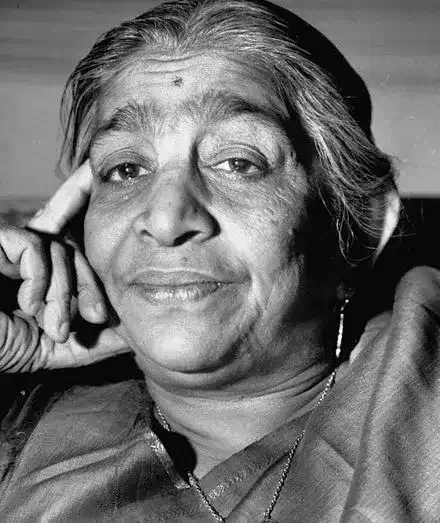
Sarojini Naidu
Wandering Singers
Wandering Singers
WHERE the voice of the wind calls our wandering feet,
Through echoing forest and echoing street,
With lutes in our hands ever-singing we roam,
All men are our kindred, the world is our home.
Our lays are of cities whose lustre is shed,
The laughter and beauty of women long dead;
The sword of old battles, the crown of old kings,
And happy and simple and sorrowful things.
What hope shall we gather, what dreams shall we sow?
Where the wind calls our wandering footsteps we go.
No love bids us tarry, no joy bids us wait:
The voice of the wind is the voice of our fate.
WHERE the voice of the wind calls our wandering feet,
Through echoing forest and echoing street,
With lutes in our hands ever-singing we roam,
All men are our kindred, the world is our home.
Our lays are of cities whose lustre is shed,
The laughter and beauty of women long dead;
The sword of old battles, the crown of old kings,
And happy and simple and sorrowful things.
What hope shall we gather, what dreams shall we sow?
Where the wind calls our wandering footsteps we go.
No love bids us tarry, no joy bids us wait:
The voice of the wind is the voice of our fate.
628
Walt Whitman
Song of Myself, I, II, VI & LII
Song of Myself, I, II, VI & LII
I Celebrate myself, and sing myself,
And what I assume you shall assume,
For every atom belonging to me as good belongs to you.
I loafe and invite my soul,
I lean and loafe at my ease observing a spear of summer grass.
My tongue, every atom of my blood, form'd from this soil,
this air,
Born here of parents born here from parents the same, and
their parents the same,
I, now thirty-seven years old in perfect health begin,
Hoping to cease not till death.
Creeds and schools in abeyance,
Retiring back a while sufficed at what they are, but never
forgotten,
I harbor for good or bad, I permit to speak at every hazard,
Nature without check with original energy.
I Celebrate myself, and sing myself,
And what I assume you shall assume,
For every atom belonging to me as good belongs to you.
I loafe and invite my soul,
I lean and loafe at my ease observing a spear of summer grass.
My tongue, every atom of my blood, form'd from this soil,
this air,
Born here of parents born here from parents the same, and
their parents the same,
I, now thirty-seven years old in perfect health begin,
Hoping to cease not till death.
Creeds and schools in abeyance,
Retiring back a while sufficed at what they are, but never
forgotten,
I harbor for good or bad, I permit to speak at every hazard,
Nature without check with original energy.
433
Robert W. Service
The Boola-Boola Maid
The Boola-Boola Maid
In the wilds of Madagascar, Dwelt a Boola-boola maid;
For her hand young men would ask her, But she always was afraid.
Oh that Boola-boola maid She was living in the shade Of a spreading Yum-yum tree;
And - when the day was done At the setting of the sun, She would make this melodee:
As this ditty she was cooing, Came a Boola-boola man;
And he lost no time in wooing; For he punched her on the pan.
Oh that Boola-boola maid She was terribly afraid So he punched her on the eye;
And - then he laugh'd with glee As beneath the Yum-yum tree He - heard that maiden
cry:
Then with shrieks of ribald laughter, Said the Boola-boola man;
"If it's only socks you're after, I will do the best I can.
I have handed you a pair, And I've plenty more to spare," So he socked her on the
nose;
And a woeful maid was she, As beneath the Yum-yum tree, This - lamentation 'rose:
Now the wedding tom-tom's over, for this Boola-boola maid;
And when ev'ning shadows hover, She no longer is afraid.
For she weasrs a palm-leaf pinny And she rocks a pickaninny In the shade of the
Yum-yum tree,
And she's happy with her he-man, Though she still dreams of a She-man, As she sings
this song with glee:
Chorus:
Oh - I don't want my cave-man to caress me,
Oh I don't want no coal-black heads to press me.
All I want is a fellow who wears suspenders,
That'll be the coon to whom this babe surenders.
For the man I wed must have a proper trouseau.
On none of your fig-leaf dudes will make me do so.
For it's funny how I feel, But I'm crazy for socks appeal
And my dream is to marry a man with a pair of socks.
In the wilds of Madagascar, Dwelt a Boola-boola maid;
For her hand young men would ask her, But she always was afraid.
Oh that Boola-boola maid She was living in the shade Of a spreading Yum-yum tree;
And - when the day was done At the setting of the sun, She would make this melodee:
As this ditty she was cooing, Came a Boola-boola man;
And he lost no time in wooing; For he punched her on the pan.
Oh that Boola-boola maid She was terribly afraid So he punched her on the eye;
And - then he laugh'd with glee As beneath the Yum-yum tree He - heard that maiden
cry:
Then with shrieks of ribald laughter, Said the Boola-boola man;
"If it's only socks you're after, I will do the best I can.
I have handed you a pair, And I've plenty more to spare," So he socked her on the
nose;
And a woeful maid was she, As beneath the Yum-yum tree, This - lamentation 'rose:
Now the wedding tom-tom's over, for this Boola-boola maid;
And when ev'ning shadows hover, She no longer is afraid.
For she weasrs a palm-leaf pinny And she rocks a pickaninny In the shade of the
Yum-yum tree,
And she's happy with her he-man, Though she still dreams of a She-man, As she sings
this song with glee:
Chorus:
Oh - I don't want my cave-man to caress me,
Oh I don't want no coal-black heads to press me.
All I want is a fellow who wears suspenders,
That'll be the coon to whom this babe surenders.
For the man I wed must have a proper trouseau.
On none of your fig-leaf dudes will make me do so.
For it's funny how I feel, But I'm crazy for socks appeal
And my dream is to marry a man with a pair of socks.
226
Walt Whitman
Song At Sunset
Song At Sunset
SPLENDOR of ended day, floating and filling me!
Hour prophetic--hour resuming the past!
Inflating my throat--you, divine average!
You, Earth and Life, till the last ray gleams, I sing.
Open mouth of my Soul, uttering gladness,
Eyes of my Soul, seeing perfection,
Natural life of me, faithfully praising things;
Corroborating forever the triumph of things.
Illustrious every one!
Illustrious what we name space--sphere of unnumber'd spirits; 10
Illustrious the mystery of motion, in all beings, even the tiniest
insect;
Illustrious the attribute of speech--the senses--the body;
Illustrious the passing light! Illustrious the pale reflection on the
new moon in the western sky!
Illustrious whatever I see, or hear, or touch, to the last.
Good in all,
In the satisfaction and aplomb of animals,
In the annual return of the seasons,
In the hilarity of youth,
In the strength and flush of manhood,
In the grandeur and exquisiteness of old age, 20
In the superb vistas of Death.
Wonderful to depart;
Wonderful to be here!
The heart, to jet the all-alike and innocent blood!
To breathe the air, how delicious!
To speak! to walk! to seize something by the hand!
To prepare for sleep, for bed--to look on my rose-color'd flesh;
To be conscious of my body, so satisfied, so large;
To be this incredible God I am;
To have gone forth among other Gods--these men and women I love. 30
Wonderful how I celebrate you and myself!
How my thoughts play subtly at the spectacles around!
How the clouds pass silently overhead!
How the earth darts on and on! and how the sun, moon, stars, dart on
and on!
How the water sports and sings! (Surely it is alive!)
How the trees rise and stand up--with strong trunks--with branches
and leaves!
(Surely there is something more in each of the tree--some living
Soul.)
O amazement of things! even the least particle!
O spirituality of things!
O strain musical, flowing through ages and continents--now reaching
me and America! 40
I take your strong chords--I intersperse them, and cheerfully pass
them forward.
I too carol the sun, usher'd, or at noon, or, as now, setting,
I too throb to the brain and beauty of the earth, and of all the
growths of the earth,
I too have felt the resistless call of myself.
As I sail'd down the Mississippi,
As I wander'd over the prairies,
As I have lived--As I have look'd through my windows, my eyes,
As I went forth in the morning--As I beheld the light breaking in the
east;
As I bathed on the beach of the Eastern Sea, and again on the beach
of the Western Sea;
As I roam'd the streets of inland Chicago--whatever streets I have
roam'd; 50
Or cities, or silent woods, or peace, or even amid the sights of war;
Wherever I have been, I have charged myself with contentment and
triumph.
I sing the Equalities, modern or old,
I sing the endless finales of things;
I say Nature continues--Glory continues;
I praise with electric voice;
For I do not see one imperfection in the universe;
And I do not see one cause or result lamentable at last in the
universe.
O setting sun! though the time has come,
I still warble under you, if none else does, unmitigated
adoration. 60
SPLENDOR of ended day, floating and filling me!
Hour prophetic--hour resuming the past!
Inflating my throat--you, divine average!
You, Earth and Life, till the last ray gleams, I sing.
Open mouth of my Soul, uttering gladness,
Eyes of my Soul, seeing perfection,
Natural life of me, faithfully praising things;
Corroborating forever the triumph of things.
Illustrious every one!
Illustrious what we name space--sphere of unnumber'd spirits; 10
Illustrious the mystery of motion, in all beings, even the tiniest
insect;
Illustrious the attribute of speech--the senses--the body;
Illustrious the passing light! Illustrious the pale reflection on the
new moon in the western sky!
Illustrious whatever I see, or hear, or touch, to the last.
Good in all,
In the satisfaction and aplomb of animals,
In the annual return of the seasons,
In the hilarity of youth,
In the strength and flush of manhood,
In the grandeur and exquisiteness of old age, 20
In the superb vistas of Death.
Wonderful to depart;
Wonderful to be here!
The heart, to jet the all-alike and innocent blood!
To breathe the air, how delicious!
To speak! to walk! to seize something by the hand!
To prepare for sleep, for bed--to look on my rose-color'd flesh;
To be conscious of my body, so satisfied, so large;
To be this incredible God I am;
To have gone forth among other Gods--these men and women I love. 30
Wonderful how I celebrate you and myself!
How my thoughts play subtly at the spectacles around!
How the clouds pass silently overhead!
How the earth darts on and on! and how the sun, moon, stars, dart on
and on!
How the water sports and sings! (Surely it is alive!)
How the trees rise and stand up--with strong trunks--with branches
and leaves!
(Surely there is something more in each of the tree--some living
Soul.)
O amazement of things! even the least particle!
O spirituality of things!
O strain musical, flowing through ages and continents--now reaching
me and America! 40
I take your strong chords--I intersperse them, and cheerfully pass
them forward.
I too carol the sun, usher'd, or at noon, or, as now, setting,
I too throb to the brain and beauty of the earth, and of all the
growths of the earth,
I too have felt the resistless call of myself.
As I sail'd down the Mississippi,
As I wander'd over the prairies,
As I have lived--As I have look'd through my windows, my eyes,
As I went forth in the morning--As I beheld the light breaking in the
east;
As I bathed on the beach of the Eastern Sea, and again on the beach
of the Western Sea;
As I roam'd the streets of inland Chicago--whatever streets I have
roam'd; 50
Or cities, or silent woods, or peace, or even amid the sights of war;
Wherever I have been, I have charged myself with contentment and
triumph.
I sing the Equalities, modern or old,
I sing the endless finales of things;
I say Nature continues--Glory continues;
I praise with electric voice;
For I do not see one imperfection in the universe;
And I do not see one cause or result lamentable at last in the
universe.
O setting sun! though the time has come,
I still warble under you, if none else does, unmitigated
adoration. 60
441
Sarojini Naidu
Transcience
Transcience
Nay, do not grieve tho' life be full of sadness,
Dawn will not veil her spleandor for your grief,
Nor spring deny their bright, appointed beauty
To lotus blossom and ashoka leaf.
Nay, do not pine, tho' life be dark with trouble,
Time will not pause or tarry on his way;
To-day that seems so long, so strange, so bitter,
Will soon be some forgotten yesterday.
Nay, do not weep; new hopes, new dreams, new faces,
The unspent joy of all the unborn years,
Will prove your heart a traitor to its sorrow,
And make your eyes unfaithful to their tears.
Nay, do not grieve tho' life be full of sadness,
Dawn will not veil her spleandor for your grief,
Nor spring deny their bright, appointed beauty
To lotus blossom and ashoka leaf.
Nay, do not pine, tho' life be dark with trouble,
Time will not pause or tarry on his way;
To-day that seems so long, so strange, so bitter,
Will soon be some forgotten yesterday.
Nay, do not weep; new hopes, new dreams, new faces,
The unspent joy of all the unborn years,
Will prove your heart a traitor to its sorrow,
And make your eyes unfaithful to their tears.
262
Henry Wadsworth Longfellow
The Song of Hiawatha X: Hiawatha's Wooing
The Song of Hiawatha X: Hiawatha's Wooing
'As unto the bow the cord is,
So unto the man is woman,
Though she bends him, she obeys him,
Though she draws him, yet she follows,
Useless each without the other!'
Thus the youthful Hiawatha
Said within himself and pondered,
Much perplexed by various feelings,
Listless, longing, hoping, fearing,
Dreaming still of Minnehaha,
Of the lovely Laughing Water,
In the land of the Dacotahs.
'Wed a maiden of your people,'
Warning said the old Nokomis;
'Go not eastward, go not westward,
For a stranger, whom we know not!
Like a fire upon the hearth-stone
Is a neighbor's homely daughter,
Like the starlight or the moonlight
Is the handsomest of strangers!'
Thus dissuading spake Nokomis,
And my Hiawatha answered
Only this: 'Dear old Nokomis,
Very pleasant is the firelight,
But I like the starlight better,
Better do I like the moonlight!'
Gravely then said old Nokomis:
'Bring not here an idle maiden,
Bring not here a useless woman,
Hands unskilful, feet unwilling;
Bring a wife with nimble fingers,
Heart and hand that move together,
Feet that run on willing errands!'
Smiling answered Hiawatha:
'In the land of the Dacotahs
Lives the Arrow-maker's daughter,
Minnehaha, Laughing Water,
Handsomest of all the women.
I will bring her to your wigwam,
She shall run upon your errands,
Be your starlight, moonlight, firelight,
Be the sunlight of my people!'
Still dissuading said Nokomis:
'Bring not to my lodge a stranger
From the land of the Dacotahs!
Very fierce are the Dacotahs,
Often is there war between us,
There are feuds yet unforgotten,
Wounds that ache and still may open!
Laughing answered Hiawatha:
'For that reason, if no other,
Would I wed the fair Dacotah,
That our tribes might be united,
That old feuds might be forgotten,
And old wounds be healed forever!'
Thus departed Hiawatha
To the land of the Dacotahs,
To the land of handsome women;
Striding over moor and meadow,
Through interminable forests,
Through uninterrupted silence.
With his moccasins of magic,
At each stride a mile he measured;
Yet the way seemed long before him,
And his heart outran his footsteps;
And he journeyed without resting,
Till he heard the cataract's laughter,
Heard the Falls of Minnehaha
Calling to him through the silence.
'Pleasant is the sound!' he murmured,
'Pleasant is the voice that calls me!'
On the outskirts of the forests,
'Twixt the shadow and the sunshine,
Herds of fallow deer were feeding,
But they saw not Hiawatha;
To his bow be whispered, 'Fail not!'
To his arrow whispered, 'Swerve not!'
Sent it singing on its errand,
To the red heart of the roebuck;
Threw the deer across his shoulder,
And sped forward without pausing.
At the doorway of his wigwam
Sat his ancient Arrow-maker,
In the land of the Dacotahs,
Making arrow-heads of jasper,
Arrow-heads of chalcedony.
At his side, in all her beauty,
Sat the lovely Minnehaha,
Sat his daughter, Laughing Water,
Plaiting mats of flags and rushes;
Of the past the old man's thoughts were,
And the maiden's of the future.
He was thinking, as he sat there,
Of the days when with such arrows
He had struck the deer and bison,
On the Muskoday, the meadow;
Shot the wild goose, flying southward,
On the wing, the clamorous Wawa;
Thinking of the great war-parties,
How they came to buy his arrows,
Could not fight without his arrows.
Ah, no more such noble warriors
Could be found on earth as they were!
Now the men were all like women,
Only used their tongues for weapons!
She was thinking of a hunter,
From another tribe and country,
Young and tall and very handsome,
Who one morning, in the Spring-time,
Came to buy her father's arrows,
Lingered long about the doorway,
Sat and rested in the wigwam,
Looking back as he departed.
She had heard her father praise him,
Praise his courage and his wisdom;
Would he come again for arrows
To the Falls of Minnehaha?
On the mat her hands lay idle,
And her eyes were very dreamy.
Through their thoughts they heard a footstep,
Heard a rustling in the branches,
And with glowing cheek and forehead,
With the deer upon his shoulders,
Suddenly from out the woodlands
Hiawatha stood before them.
Straight the ancient Arrow-maker
Looked up gravely from his labor,
Laid aside the unfinished arrow,
Bade him enter at the doorway,
Saying, as he rose to meet him,
'Hiawatha, you are welcome!'
At the feet of Laughing Water
Hiawatha laid his burden,
Threw the red deer from his shoulders;
And the maiden looked up at him,
Looked up from her mat of rushes,
Said with gentle look and accent,
'You are welcome, Hiawatha!'
Very spacious was the wigwam,
Made of deer-skins dressed and whitened,
With the Gods of the Dacotahs
Drawn and painted on its curtains,
And so tall the doorway, hardly
Hiawatha stooped to enter,
Hardly touched his eagle-feathers
As he entered at the doorway.
Then uprose the Laughing Water,
From the ground fair Minnehaha,
Laid aside her mat unfinished,
Brought forth food and set before them,
Water brought them from the brooklet,
Gave them food in earthen vessels,
Gave them drink in bowls of bass-wood,
Listened while the guest was speaking,
Listened while her father answered,
But not once her lips she opened,
Not a single word she uttered.
Yes, as in a dream she listened
To the words of Hiawatha,
As he talked of old Nokomis,
Who had nursed him in his childhood,
As he told of his companions,
Chibiabos, the musician,
And the very strong man, Kwasind,
And of happiness and plenty
In the land of the Ojibways,
In the pleasant land and peaceful.
'After many years of warfare,
Many years of strife and bloodshed,
There is peace between the Ojibways
And the tribe of the Dacotahs.'
Thus continued Hiawatha,
And then added, speaking slowly,
'That this peace may last forever,
And our hands be clasped more closely,
And our hearts be more united,
Give me as my wife this maiden,
Minnehaha, Laughing Water,
Loveliest of Dacotah women!
And the ancient Arrow-maker
Paused a moment ere he answered,
Smoked a little while in silence,
Looked at Hiawatha proudly,
Fondly looked at Laughing Water,
And made answer very gravely:
'Yes, if Minnehaha wishes;
Let your heart speak, Minnehaha!'
And the lovely Laughing Water
Seemed more lovely as she stood there,
Neither willing nor reluctant,
As she went to Hiawatha,
Softly took the seat beside him,
While she said, and blushed to say it,
'I will follow you, my husband!'
This was Hiawatha's wooing!
Thus it was he won the daughter
Of the ancient Arrow-maker,
In the land of the Dacotahs!
From the wigwam he departed,
Leading with him Laughing Water;
Hand in hand they went together,
Through the woodland and the meadow,
Left the old man standing lonely
At the doorway of his wigwam,
Heard the Falls of Minnehaha
Calling to them from the distance,
Crying to them from afar off,
'Fare thee well, O Minnehaha!'
And the ancient Arrow-maker
Turned again unto his labor,
Sat down by his sunny doorway,
Murmuring to himself, and saying:
'Thus it is our daughters leave us,
Those we love, and those who love us!
Just when they have learned to help us,
When we are old and lean upon them,
Comes a youth with flaunting feathers,
With his flute of reeds, a stranger
Wanders piping through the village,
Beckons to the fairest maiden,
And she follows where he leads her,
Leaving all things for the stranger!'
Pleasant was the journey homeward,
Through interminable forests,
Over meadow, over mountain,
Over river, hill, and hollow.
Short it seemed to Hiawatha,
Though they journeyed very slowly,
Though his pace he checked and slackened
To the steps of Laughing Water.
Over wide and rushing rivers
In his arms he bore the maiden;
Light he thought her as a feather,
As the plume upon his head-gear;
Cleared the tangled pathway for her,
Bent aside the swaying branches,
Made at night a lodge of branches,
And a bed with boughs of hemlock,
And a fire before the doorway
With the dry cones of the pine-tree.
All the travelling winds went with them,
O'er the meadows, through the forest;
All the stars of night looked at them,
Watched with sleepless eyes their slumber;
From his ambush in the oak-tree
Peeped the squirrel, Adjidaumo,
Watched with eager eyes the lovers;
And the rabbit, the Wabasso,
Scampered from the path before them,
Peering, peeping from his burrow,
Sat erect upon his haunches,
Watched with curious eyes the lovers.
Pleasant was the journey homeward!
All the birds sang loud and sweetly
Songs of happiness and heart's-ease;
Sang the bluebird, the Owaissa,
'Happy are you, Hiawatha,
Having such a wife to love you!'
Sang the robin, the Opechee,
'Happy are you, Laughing Water,
Having such a noble husband!'
From the sky the sun benignant
Looked upon them through the branches,
Saying to them, 'O my children,
Love is sunshine, hate is shadow,
Life is checkered shade and sunshine,
Rule by love, O Hiawatha!'
From the sky the moon looked at them,
Filled the lodge with mystic splendors,
Whispered to them, 'O my children,
Day is restless, night is quiet,
Man imperious, woman feeble;
Half is mine, although I follow;
Rule by patience, Laughing Water!'
Thus it was they journeyed homeward;
Thus it was that Hiawatha
To the lodge of old Nokomis
Brought the moonlight, starlight, firelight,
Brought the sunshine of his people,
Minnehaha, Laughing Water,
Handsomest of all the women
In the land of the Dacotahs,
In the land of handsome women.
'As unto the bow the cord is,
So unto the man is woman,
Though she bends him, she obeys him,
Though she draws him, yet she follows,
Useless each without the other!'
Thus the youthful Hiawatha
Said within himself and pondered,
Much perplexed by various feelings,
Listless, longing, hoping, fearing,
Dreaming still of Minnehaha,
Of the lovely Laughing Water,
In the land of the Dacotahs.
'Wed a maiden of your people,'
Warning said the old Nokomis;
'Go not eastward, go not westward,
For a stranger, whom we know not!
Like a fire upon the hearth-stone
Is a neighbor's homely daughter,
Like the starlight or the moonlight
Is the handsomest of strangers!'
Thus dissuading spake Nokomis,
And my Hiawatha answered
Only this: 'Dear old Nokomis,
Very pleasant is the firelight,
But I like the starlight better,
Better do I like the moonlight!'
Gravely then said old Nokomis:
'Bring not here an idle maiden,
Bring not here a useless woman,
Hands unskilful, feet unwilling;
Bring a wife with nimble fingers,
Heart and hand that move together,
Feet that run on willing errands!'
Smiling answered Hiawatha:
'In the land of the Dacotahs
Lives the Arrow-maker's daughter,
Minnehaha, Laughing Water,
Handsomest of all the women.
I will bring her to your wigwam,
She shall run upon your errands,
Be your starlight, moonlight, firelight,
Be the sunlight of my people!'
Still dissuading said Nokomis:
'Bring not to my lodge a stranger
From the land of the Dacotahs!
Very fierce are the Dacotahs,
Often is there war between us,
There are feuds yet unforgotten,
Wounds that ache and still may open!
Laughing answered Hiawatha:
'For that reason, if no other,
Would I wed the fair Dacotah,
That our tribes might be united,
That old feuds might be forgotten,
And old wounds be healed forever!'
Thus departed Hiawatha
To the land of the Dacotahs,
To the land of handsome women;
Striding over moor and meadow,
Through interminable forests,
Through uninterrupted silence.
With his moccasins of magic,
At each stride a mile he measured;
Yet the way seemed long before him,
And his heart outran his footsteps;
And he journeyed without resting,
Till he heard the cataract's laughter,
Heard the Falls of Minnehaha
Calling to him through the silence.
'Pleasant is the sound!' he murmured,
'Pleasant is the voice that calls me!'
On the outskirts of the forests,
'Twixt the shadow and the sunshine,
Herds of fallow deer were feeding,
But they saw not Hiawatha;
To his bow be whispered, 'Fail not!'
To his arrow whispered, 'Swerve not!'
Sent it singing on its errand,
To the red heart of the roebuck;
Threw the deer across his shoulder,
And sped forward without pausing.
At the doorway of his wigwam
Sat his ancient Arrow-maker,
In the land of the Dacotahs,
Making arrow-heads of jasper,
Arrow-heads of chalcedony.
At his side, in all her beauty,
Sat the lovely Minnehaha,
Sat his daughter, Laughing Water,
Plaiting mats of flags and rushes;
Of the past the old man's thoughts were,
And the maiden's of the future.
He was thinking, as he sat there,
Of the days when with such arrows
He had struck the deer and bison,
On the Muskoday, the meadow;
Shot the wild goose, flying southward,
On the wing, the clamorous Wawa;
Thinking of the great war-parties,
How they came to buy his arrows,
Could not fight without his arrows.
Ah, no more such noble warriors
Could be found on earth as they were!
Now the men were all like women,
Only used their tongues for weapons!
She was thinking of a hunter,
From another tribe and country,
Young and tall and very handsome,
Who one morning, in the Spring-time,
Came to buy her father's arrows,
Lingered long about the doorway,
Sat and rested in the wigwam,
Looking back as he departed.
She had heard her father praise him,
Praise his courage and his wisdom;
Would he come again for arrows
To the Falls of Minnehaha?
On the mat her hands lay idle,
And her eyes were very dreamy.
Through their thoughts they heard a footstep,
Heard a rustling in the branches,
And with glowing cheek and forehead,
With the deer upon his shoulders,
Suddenly from out the woodlands
Hiawatha stood before them.
Straight the ancient Arrow-maker
Looked up gravely from his labor,
Laid aside the unfinished arrow,
Bade him enter at the doorway,
Saying, as he rose to meet him,
'Hiawatha, you are welcome!'
At the feet of Laughing Water
Hiawatha laid his burden,
Threw the red deer from his shoulders;
And the maiden looked up at him,
Looked up from her mat of rushes,
Said with gentle look and accent,
'You are welcome, Hiawatha!'
Very spacious was the wigwam,
Made of deer-skins dressed and whitened,
With the Gods of the Dacotahs
Drawn and painted on its curtains,
And so tall the doorway, hardly
Hiawatha stooped to enter,
Hardly touched his eagle-feathers
As he entered at the doorway.
Then uprose the Laughing Water,
From the ground fair Minnehaha,
Laid aside her mat unfinished,
Brought forth food and set before them,
Water brought them from the brooklet,
Gave them food in earthen vessels,
Gave them drink in bowls of bass-wood,
Listened while the guest was speaking,
Listened while her father answered,
But not once her lips she opened,
Not a single word she uttered.
Yes, as in a dream she listened
To the words of Hiawatha,
As he talked of old Nokomis,
Who had nursed him in his childhood,
As he told of his companions,
Chibiabos, the musician,
And the very strong man, Kwasind,
And of happiness and plenty
In the land of the Ojibways,
In the pleasant land and peaceful.
'After many years of warfare,
Many years of strife and bloodshed,
There is peace between the Ojibways
And the tribe of the Dacotahs.'
Thus continued Hiawatha,
And then added, speaking slowly,
'That this peace may last forever,
And our hands be clasped more closely,
And our hearts be more united,
Give me as my wife this maiden,
Minnehaha, Laughing Water,
Loveliest of Dacotah women!
And the ancient Arrow-maker
Paused a moment ere he answered,
Smoked a little while in silence,
Looked at Hiawatha proudly,
Fondly looked at Laughing Water,
And made answer very gravely:
'Yes, if Minnehaha wishes;
Let your heart speak, Minnehaha!'
And the lovely Laughing Water
Seemed more lovely as she stood there,
Neither willing nor reluctant,
As she went to Hiawatha,
Softly took the seat beside him,
While she said, and blushed to say it,
'I will follow you, my husband!'
This was Hiawatha's wooing!
Thus it was he won the daughter
Of the ancient Arrow-maker,
In the land of the Dacotahs!
From the wigwam he departed,
Leading with him Laughing Water;
Hand in hand they went together,
Through the woodland and the meadow,
Left the old man standing lonely
At the doorway of his wigwam,
Heard the Falls of Minnehaha
Calling to them from the distance,
Crying to them from afar off,
'Fare thee well, O Minnehaha!'
And the ancient Arrow-maker
Turned again unto his labor,
Sat down by his sunny doorway,
Murmuring to himself, and saying:
'Thus it is our daughters leave us,
Those we love, and those who love us!
Just when they have learned to help us,
When we are old and lean upon them,
Comes a youth with flaunting feathers,
With his flute of reeds, a stranger
Wanders piping through the village,
Beckons to the fairest maiden,
And she follows where he leads her,
Leaving all things for the stranger!'
Pleasant was the journey homeward,
Through interminable forests,
Over meadow, over mountain,
Over river, hill, and hollow.
Short it seemed to Hiawatha,
Though they journeyed very slowly,
Though his pace he checked and slackened
To the steps of Laughing Water.
Over wide and rushing rivers
In his arms he bore the maiden;
Light he thought her as a feather,
As the plume upon his head-gear;
Cleared the tangled pathway for her,
Bent aside the swaying branches,
Made at night a lodge of branches,
And a bed with boughs of hemlock,
And a fire before the doorway
With the dry cones of the pine-tree.
All the travelling winds went with them,
O'er the meadows, through the forest;
All the stars of night looked at them,
Watched with sleepless eyes their slumber;
From his ambush in the oak-tree
Peeped the squirrel, Adjidaumo,
Watched with eager eyes the lovers;
And the rabbit, the Wabasso,
Scampered from the path before them,
Peering, peeping from his burrow,
Sat erect upon his haunches,
Watched with curious eyes the lovers.
Pleasant was the journey homeward!
All the birds sang loud and sweetly
Songs of happiness and heart's-ease;
Sang the bluebird, the Owaissa,
'Happy are you, Hiawatha,
Having such a wife to love you!'
Sang the robin, the Opechee,
'Happy are you, Laughing Water,
Having such a noble husband!'
From the sky the sun benignant
Looked upon them through the branches,
Saying to them, 'O my children,
Love is sunshine, hate is shadow,
Life is checkered shade and sunshine,
Rule by love, O Hiawatha!'
From the sky the moon looked at them,
Filled the lodge with mystic splendors,
Whispered to them, 'O my children,
Day is restless, night is quiet,
Man imperious, woman feeble;
Half is mine, although I follow;
Rule by patience, Laughing Water!'
Thus it was they journeyed homeward;
Thus it was that Hiawatha
To the lodge of old Nokomis
Brought the moonlight, starlight, firelight,
Brought the sunshine of his people,
Minnehaha, Laughing Water,
Handsomest of all the women
In the land of the Dacotahs,
In the land of handsome women.
140
Walt Whitman
Solid, Ironical, Rolling Orb
Solid, Ironical, Rolling Orb
SOLID, ironical, rolling orb!
Master of all, and matter of fact!--at last I accept your terms;
Bringing to practical, vulgar tests, of all my ideal dreams,
And of me, as lover and hero.
SOLID, ironical, rolling orb!
Master of all, and matter of fact!--at last I accept your terms;
Bringing to practical, vulgar tests, of all my ideal dreams,
And of me, as lover and hero.
387
Sarojini Naidu
To The God of Pain
To The God of Pain
UNWILLING priestess in thy cruel fane,
Long hast thou held me, pitiless god of Pain,
Bound to thy worship by reluctant vows,
My tired breast girt with suffering, and my brows
Anointed with perpetual weariness.
Long have I borne thy service, through the stress
Of rigorous years, sad days and slumberless nights,
Performing thine inexorable rites.
For thy dark altars, balm nor milk nor rice,
But mine own soul thou'st ta'en for sacrifice:
All the rich honey of my youth's desire,
And all the sweet oils from my crushed life drawn,
And all my flower-like dreams and gem-like fire
Of hopes up-leaping like the light of dawn.
I have no more to give, all that was mine
Is laid, a wrested tribute, at thy shrine;
Let me depart, for my whole soul is wrung,
And all my cheerless orisons are sung;
Let me depart, with faint limbs let me creep
To some dim shade and sink me down to sleep.
UNWILLING priestess in thy cruel fane,
Long hast thou held me, pitiless god of Pain,
Bound to thy worship by reluctant vows,
My tired breast girt with suffering, and my brows
Anointed with perpetual weariness.
Long have I borne thy service, through the stress
Of rigorous years, sad days and slumberless nights,
Performing thine inexorable rites.
For thy dark altars, balm nor milk nor rice,
But mine own soul thou'st ta'en for sacrifice:
All the rich honey of my youth's desire,
And all the sweet oils from my crushed life drawn,
And all my flower-like dreams and gem-like fire
Of hopes up-leaping like the light of dawn.
I have no more to give, all that was mine
Is laid, a wrested tribute, at thy shrine;
Let me depart, for my whole soul is wrung,
And all my cheerless orisons are sung;
Let me depart, with faint limbs let me creep
To some dim shade and sink me down to sleep.
544
Robert W. Service
The Bohemian Dreams
The Bohemian Dreams
Because my overcoat's in pawn,
I choose to take my glass
Within a little bistro on
The rue du Montparnasse;
The dusty bins with bottles shine,
The counter's lined with zinc,
And there I sit and drink my wine,
And think and think and think.
I think of hoary old Stamboul,
Of Moslem and of Greek,
Of Persian in coat of wool,
Of Kurd and Arab sheikh;
Of all the types of weal and woe,
And as I raise my glass,
Across Galata bridge I know
They pass and pass and pass.
I think of citron-trees aglow,
Of fan-palms shading down,
Of sailors dancing heel and toe
With wenches black and brown;
And though it's all an ocean far
From Yucatan to France,
I'll bet beside the old bazaar
They dance and dance and dance.
I think of Monte Carlo, where
The pallid croupiers call,
And in the gorgeous, guilty air
The gamblers watch the ball;
And as I flick away the foam
With which my beer is crowned,
The wheels beneath the gilded dome
Go round and round and round.
I think of vast Niagara,
Those gulfs of foam a-shine,
Whose mighty roar would stagger a
More prosy bean than mine;
And as the hours I idly spend
Against a greasy wall,
I know that green the waters bend
And fall and fall and fall.
I think of Nijni Novgorod
And Jews who never rest;
And womenfolk with spade and hod
Who slave in Buda-Pest;
Of squat and sturdy Japanese
Who pound the paddy soil,
And as I loaf and smoke at ease
They toil and toil and toil.
I think of shrines in Hindustan,
Of cloistral glooms in Spain,
Of minarets in Ispahan,
Of St. Sophia's fane,
Of convent towers in Palestine,
Of temples in Cathay,
And as I stretch and sip my wine
They pray and pray and pray.
And so my dreams I dwell within,
And visions come and go,
And life is passing like a Cin-
Ematographic Show;
Till just as surely as my pipe
Is underneath my nose,
Amid my visions rich and ripe
I doze and doze and doze.
Because my overcoat's in pawn,
I choose to take my glass
Within a little bistro on
The rue du Montparnasse;
The dusty bins with bottles shine,
The counter's lined with zinc,
And there I sit and drink my wine,
And think and think and think.
I think of hoary old Stamboul,
Of Moslem and of Greek,
Of Persian in coat of wool,
Of Kurd and Arab sheikh;
Of all the types of weal and woe,
And as I raise my glass,
Across Galata bridge I know
They pass and pass and pass.
I think of citron-trees aglow,
Of fan-palms shading down,
Of sailors dancing heel and toe
With wenches black and brown;
And though it's all an ocean far
From Yucatan to France,
I'll bet beside the old bazaar
They dance and dance and dance.
I think of Monte Carlo, where
The pallid croupiers call,
And in the gorgeous, guilty air
The gamblers watch the ball;
And as I flick away the foam
With which my beer is crowned,
The wheels beneath the gilded dome
Go round and round and round.
I think of vast Niagara,
Those gulfs of foam a-shine,
Whose mighty roar would stagger a
More prosy bean than mine;
And as the hours I idly spend
Against a greasy wall,
I know that green the waters bend
And fall and fall and fall.
I think of Nijni Novgorod
And Jews who never rest;
And womenfolk with spade and hod
Who slave in Buda-Pest;
Of squat and sturdy Japanese
Who pound the paddy soil,
And as I loaf and smoke at ease
They toil and toil and toil.
I think of shrines in Hindustan,
Of cloistral glooms in Spain,
Of minarets in Ispahan,
Of St. Sophia's fane,
Of convent towers in Palestine,
Of temples in Cathay,
And as I stretch and sip my wine
They pray and pray and pray.
And so my dreams I dwell within,
And visions come and go,
And life is passing like a Cin-
Ematographic Show;
Till just as surely as my pipe
Is underneath my nose,
Amid my visions rich and ripe
I doze and doze and doze.
217