
Poems List
Explore poems from our collection

Siegfried Sassoon
Remorse
Remorse
Lost in the swamp and welter of the pit,
He flounders off the duck-boards; only he knows
Each flash and spouting crash,--each instant lit
When gloom reveals the streaming rain. He goes
Heavily, blindly on. And, while he blunders,
"Could anything be worse than this?"--he wonders,
Remembering how he saw those Germans run,
Screaming for mercy among the stumps of trees:
Green-faced, they dodged and darted: there was one
Livid with terror, clutching at his knees. . .
Our chaps were sticking 'em like pigs . . . "O hell!"
He thought--"there's things in war one dare not tell
Poor father sitting safe at home, who reads
Of dying heroes and their deathless deeds."
Lost in the swamp and welter of the pit,
He flounders off the duck-boards; only he knows
Each flash and spouting crash,--each instant lit
When gloom reveals the streaming rain. He goes
Heavily, blindly on. And, while he blunders,
"Could anything be worse than this?"--he wonders,
Remembering how he saw those Germans run,
Screaming for mercy among the stumps of trees:
Green-faced, they dodged and darted: there was one
Livid with terror, clutching at his knees. . .
Our chaps were sticking 'em like pigs . . . "O hell!"
He thought--"there's things in war one dare not tell
Poor father sitting safe at home, who reads
Of dying heroes and their deathless deeds."
94
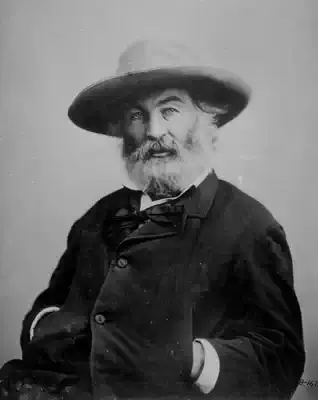
Walt Whitman
Virgil Strange I Kept On The Field
Virgil Strange I Kept On The Field
VIGIL strange I kept on the field one night:
When you, my son and my comrade, dropt at my side that day,
One look I but gave, which your dear eyes return'd, with a look I
shall never forget;
One touch of your hand to mine, O boy, reach'd up as you lay on the
ground;
Then onward I sped in the battle, the even-contested battle;
Till late in the night reliev'd, to the place at last again I made my
way;
Found you in death so cold, dear comrade--found your body, son of
responding kisses, (never again on earth responding;)
Bared your face in the starlight--curious the scene--cool blew the
moderate night-wind;
Long there and then in vigil I stood, dimly around me the battlefield
spreading;
Vigil wondrous and vigil sweet, there in the fragrant silent
night; 10
But not a tear fell, not even a long-drawn sigh--Long, long I gazed;
Then on the earth partially reclining, sat by your side, leaning my
chin in my hands;
Passing sweet hours, immortal and mystic hours with you, dearest
comrade--Not a tear, not a word;
Vigil of silence, love and death--vigil for you my son and my
soldier,
As onward silently stars aloft, eastward new ones upward stole;
Vigil final for you, brave boy, (I could not save you, swift was your
death,
I faithfully loved you and cared for you living--I think we shall
surely meet again;)
Till at latest lingering of the night, indeed just as the dawn
appear'd,
My comrade I wrapt in his blanket, envelop'd well his form,
Folded the blanket well, tucking it carefully over head, and
carefully under feet; 20
And there and then, and bathed by the rising sun, my son in his
grave, in his rude-dug grave I deposited;
Ending my vigil strange with that--vigil of night and battlefield
dim;
Vigil for boy of responding kisses, (never again on earth
responding;)
Vigil for comrade swiftly slain--vigil I never forget, how as day
brighten'd,
I rose from the chill ground, and folded my soldier well in his
blanket,
And buried him where he fell.
VIGIL strange I kept on the field one night:
When you, my son and my comrade, dropt at my side that day,
One look I but gave, which your dear eyes return'd, with a look I
shall never forget;
One touch of your hand to mine, O boy, reach'd up as you lay on the
ground;
Then onward I sped in the battle, the even-contested battle;
Till late in the night reliev'd, to the place at last again I made my
way;
Found you in death so cold, dear comrade--found your body, son of
responding kisses, (never again on earth responding;)
Bared your face in the starlight--curious the scene--cool blew the
moderate night-wind;
Long there and then in vigil I stood, dimly around me the battlefield
spreading;
Vigil wondrous and vigil sweet, there in the fragrant silent
night; 10
But not a tear fell, not even a long-drawn sigh--Long, long I gazed;
Then on the earth partially reclining, sat by your side, leaning my
chin in my hands;
Passing sweet hours, immortal and mystic hours with you, dearest
comrade--Not a tear, not a word;
Vigil of silence, love and death--vigil for you my son and my
soldier,
As onward silently stars aloft, eastward new ones upward stole;
Vigil final for you, brave boy, (I could not save you, swift was your
death,
I faithfully loved you and cared for you living--I think we shall
surely meet again;)
Till at latest lingering of the night, indeed just as the dawn
appear'd,
My comrade I wrapt in his blanket, envelop'd well his form,
Folded the blanket well, tucking it carefully over head, and
carefully under feet; 20
And there and then, and bathed by the rising sun, my son in his
grave, in his rude-dug grave I deposited;
Ending my vigil strange with that--vigil of night and battlefield
dim;
Vigil for boy of responding kisses, (never again on earth
responding;)
Vigil for comrade swiftly slain--vigil I never forget, how as day
brighten'd,
I rose from the chill ground, and folded my soldier well in his
blanket,
And buried him where he fell.
360
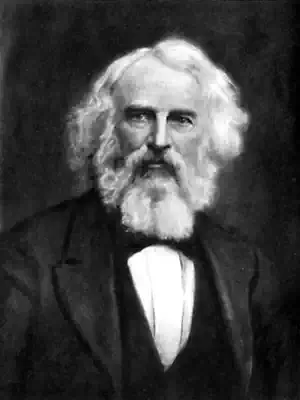
Henry Wadsworth Longfellow
To The River Yvette. (Birds Of Passage. Flight The Fifth)
To The River Yvette. (Birds Of Passage. Flight The Fifth)
O lovely river of Yvette!
O darling river! like a bride,
Some dimpled, bashful, fair Lisette,
Thou goest to wed the Orge's tide.
Maincourt, and lordly Dampierre,
See and salute thee on thy way,
And, with a blessing and a prayer,
Ring the sweet bells of St. Forget.
The valley of Chevreuse in vain
Would hold thee in its fond embrace;
Thou glidest from its arms again
And hurriest on with swifter pace.
Thou wilt not stay; with restless feet,
Pursuing still thine onward flight,
Thou goest as one in haste to meet
Her sole desire, her heart's delight.
O lovely river of Yvette!
O darling stream! on balanced wings
The wood-birds sang the chansonnette
That here a wandering poet sings.
O lovely river of Yvette!
O darling river! like a bride,
Some dimpled, bashful, fair Lisette,
Thou goest to wed the Orge's tide.
Maincourt, and lordly Dampierre,
See and salute thee on thy way,
And, with a blessing and a prayer,
Ring the sweet bells of St. Forget.
The valley of Chevreuse in vain
Would hold thee in its fond embrace;
Thou glidest from its arms again
And hurriest on with swifter pace.
Thou wilt not stay; with restless feet,
Pursuing still thine onward flight,
Thou goest as one in haste to meet
Her sole desire, her heart's delight.
O lovely river of Yvette!
O darling stream! on balanced wings
The wood-birds sang the chansonnette
That here a wandering poet sings.
319
Walt Whitman
Vicouac On A Mountain Side
Vicouac On A Mountain Side
I SEE before me now, a traveling army halting;
Below, a fertile valley spread, with barns, and the orchards of
summer;
Behind, the terraced sides of a mountain, abrupt in places, rising
high;
Broken, with rocks, with clinging cedars, with tall shapes, dingily
seen;
The numerous camp-fires scatter'd near and far, some away up on the
mountain;
The shadowy forms of men and horses, looming, large-sized flickering;
And over all, the sky--the sky! far, far out of reach, studded,
breaking out, the eternal stars.
I SEE before me now, a traveling army halting;
Below, a fertile valley spread, with barns, and the orchards of
summer;
Behind, the terraced sides of a mountain, abrupt in places, rising
high;
Broken, with rocks, with clinging cedars, with tall shapes, dingily
seen;
The numerous camp-fires scatter'd near and far, some away up on the
mountain;
The shadowy forms of men and horses, looming, large-sized flickering;
And over all, the sky--the sky! far, far out of reach, studded,
breaking out, the eternal stars.
379
Siegfried Sassoon
Prelude to an Unwritten Masterpiece
Prelude to an Unwritten Masterpiece
You like my bird-sung gardens: wings and flowers;
Calm landscapes for emotion; star-lit lawns;
And Youth against the sun-rise ... ‘Not profound;
‘But such a haunting music in the sound:
‘Do it once more; it helps us to forget’.
Last night I dreamt an old recurring scene—
Some complex out of childhood; (sex, of course!)
I can’t remember how the trouble starts;
And then I’m running blindly in the sun
Down the old orchard, and there’s something cruel
Chasing me; someone roused to a grim pursuit
Of clumsy anger ... Crash! I’m through the fence
And thrusting wildly down the wood that’s dense
With woven green of safety; paths that wind
Moss-grown from glade to glade; and far behind,
One thwarted yell; then silence. I’ve escaped.
That’s where it used to stop. Last night I went
Onward until the trees were dark and huge,
And I was lost, cut off from all return
By swamps and birdless jungles. I’d no chance
Of getting home for tea. I woke with shivers,
And thought of crocodiles in crawling rivers.
Some day I’ll build (more ruggedly than Doughty)
A dark tremendous song you’ll never hear.
My beard will be a snow-storm, drifting whiter
On bowed, prophetic shoulders, year by year.
And some will say, ‘His work has grown so dreary.’
Others, ‘He used to be a charming writer’.
And you, my friend, will query—
‘Why can’t you cut it short, you pompous blighter?’
You like my bird-sung gardens: wings and flowers;
Calm landscapes for emotion; star-lit lawns;
And Youth against the sun-rise ... ‘Not profound;
‘But such a haunting music in the sound:
‘Do it once more; it helps us to forget’.
Last night I dreamt an old recurring scene—
Some complex out of childhood; (sex, of course!)
I can’t remember how the trouble starts;
And then I’m running blindly in the sun
Down the old orchard, and there’s something cruel
Chasing me; someone roused to a grim pursuit
Of clumsy anger ... Crash! I’m through the fence
And thrusting wildly down the wood that’s dense
With woven green of safety; paths that wind
Moss-grown from glade to glade; and far behind,
One thwarted yell; then silence. I’ve escaped.
That’s where it used to stop. Last night I went
Onward until the trees were dark and huge,
And I was lost, cut off from all return
By swamps and birdless jungles. I’d no chance
Of getting home for tea. I woke with shivers,
And thought of crocodiles in crawling rivers.
Some day I’ll build (more ruggedly than Doughty)
A dark tremendous song you’ll never hear.
My beard will be a snow-storm, drifting whiter
On bowed, prophetic shoulders, year by year.
And some will say, ‘His work has grown so dreary.’
Others, ‘He used to be a charming writer’.
And you, my friend, will query—
‘Why can’t you cut it short, you pompous blighter?’
109

Robert W. Service
The Healer
The Healer
"Tuberculosis should not be,"
The old professor said.
"If folks would hearken unto me
'Twould save a million dead.
Nay, no consumptive needs to die,
--A cure have I.
"From blood of turtle I've distilled
An elixir of worth;
Let every sufferer be thrilled
And sing for joy of earth;
Yet every doctor turns his back
And calls me quack.
"Alas! They do not want to cure,
For sickness is their meat;
So persecution I endure,
And die in dark defeat:
Ye lungers, listen to my call!
--I'll save you all."
The old Professor now is dead,
And turtles of the sea,
Knowing their blood they need not shed,
Are festive in their glee:
While sanitoriums are crammed
With legions dammed.
"Tuberculosis should not be,"
The old professor said.
"If folks would hearken unto me
'Twould save a million dead.
Nay, no consumptive needs to die,
--A cure have I.
"From blood of turtle I've distilled
An elixir of worth;
Let every sufferer be thrilled
And sing for joy of earth;
Yet every doctor turns his back
And calls me quack.
"Alas! They do not want to cure,
For sickness is their meat;
So persecution I endure,
And die in dark defeat:
Ye lungers, listen to my call!
--I'll save you all."
The old Professor now is dead,
And turtles of the sea,
Knowing their blood they need not shed,
Are festive in their glee:
While sanitoriums are crammed
With legions dammed.
243
Walt Whitman
Unfolded Out Of The Folds
Unfolded Out Of The Folds
UNFOLDED out of the folds of the woman, man comes unfolded, and is
always to come unfolded;
Unfolded only out of the superbest woman of the earth, is to come the
superbest man of the earth;
Unfolded out of the friendliest woman, is to come the friendliest
man;
Unfolded only out of the perfect body of a woman, can a man be form'd
of perfect body;
Unfolded only out of the inimitable poem of the woman, can come the
poems of man--(only thence have my poems come;)
Unfolded out of the strong and arrogant woman I love, only thence can
appear the strong and arrogant man I love;
Unfolded by brawny embraces from the well-muscled woman I love, only
thence come the brawny embraces of the man;
Unfolded out of the folds of the woman's brain, come all the folds of
the man's brain, duly obedient;
Unfolded out of the justice of the woman, all justice is unfolded;
Unfolded out of the sympathy of the woman is all sympathy: 10
A man is a great thing upon the earth, and through eternity--but
every jot of the greatness of man is unfolded out of woman,
First the man is shaped in the woman, he can then be shaped in
himself.
UNFOLDED out of the folds of the woman, man comes unfolded, and is
always to come unfolded;
Unfolded only out of the superbest woman of the earth, is to come the
superbest man of the earth;
Unfolded out of the friendliest woman, is to come the friendliest
man;
Unfolded only out of the perfect body of a woman, can a man be form'd
of perfect body;
Unfolded only out of the inimitable poem of the woman, can come the
poems of man--(only thence have my poems come;)
Unfolded out of the strong and arrogant woman I love, only thence can
appear the strong and arrogant man I love;
Unfolded by brawny embraces from the well-muscled woman I love, only
thence come the brawny embraces of the man;
Unfolded out of the folds of the woman's brain, come all the folds of
the man's brain, duly obedient;
Unfolded out of the justice of the woman, all justice is unfolded;
Unfolded out of the sympathy of the woman is all sympathy: 10
A man is a great thing upon the earth, and through eternity--but
every jot of the greatness of man is unfolded out of woman,
First the man is shaped in the woman, he can then be shaped in
himself.
387
Siegfried Sassoon
Parted
Parted
Sleepless I listen to the surge and drone
And drifting roar of the town’s undertone;
Till through quiet falling rain I hear the bells
Tolling and chiming their brief tune that tells
Day’s midnight end. And from the day that’s over
No flashes of delight I can recover;
But only dreary winter streets, and faces
Of people moving in loud clanging places:
And I in my loneliness, longing for you...
For all I did to-day, and all I’ll do
To-morrow, in this city of intense
Arteried activities that throb and strive,
Is but a beating down of that suspense
Which holds me from your arms.
I am alive
Only that I may find you at the end
Of these slow-striking hours I toil to spend,
Putting each one behind me, knowing but this—
That all my days are turning toward your kiss;
That all expectancy awaits the deep
Consoling passion of your eyes, that keep
Their radiance for my coming, and their peace
For when I find in you my love’s release.
Sleepless I listen to the surge and drone
And drifting roar of the town’s undertone;
Till through quiet falling rain I hear the bells
Tolling and chiming their brief tune that tells
Day’s midnight end. And from the day that’s over
No flashes of delight I can recover;
But only dreary winter streets, and faces
Of people moving in loud clanging places:
And I in my loneliness, longing for you...
For all I did to-day, and all I’ll do
To-morrow, in this city of intense
Arteried activities that throb and strive,
Is but a beating down of that suspense
Which holds me from your arms.
I am alive
Only that I may find you at the end
Of these slow-striking hours I toil to spend,
Putting each one behind me, knowing but this—
That all my days are turning toward your kiss;
That all expectancy awaits the deep
Consoling passion of your eyes, that keep
Their radiance for my coming, and their peace
For when I find in you my love’s release.
75
Henry Wadsworth Longfellow
To the River Charles
To the River Charles
River! that in silence windest
Through the meadows, bright and free,
Till at length thy rest thou findest
In the bosom of the sea!
Four long years of mingled feeling,
Half in rest, and half in strife,
I have seen thy waters stealing
Onward, like the stream of life.
Thou hast taught me, Silent River!
Many a lesson, deep and long;
Thou hast been a generous giver;
I can give thee but a song.
Oft in sadness and in illness,
I have watched thy current glide,
Till the beauty of its stillness
Overflowed me, like a tide.
And in better hours and brighter,
When I saw thy waters gleam,
I have felt my heart beat lighter,
And leap onward with thy stream.
Not for this alone I love thee,
Nor because thy waves of blue
From celestial seas above thee
Take their own celestial hue.
Where yon shadowy woodlands hide thee,
And thy waters disappear,
Friends I love have dwelt beside thee,
And have made thy margin dear.
More than this;--thy name reminds me
Of three friends, all true and tried;
And that name, like magic, binds me
Closer, closer to thy side.
Friends my soul with joy remembers!
How like quivering flames they start,
When I fan the living embers
On the hearth-stone of my heart!
'T is for this, thou Silent River!
That my spirit leans to thee;
Thou hast been a generous giver,
Take this idle song from me.
River! that in silence windest
Through the meadows, bright and free,
Till at length thy rest thou findest
In the bosom of the sea!
Four long years of mingled feeling,
Half in rest, and half in strife,
I have seen thy waters stealing
Onward, like the stream of life.
Thou hast taught me, Silent River!
Many a lesson, deep and long;
Thou hast been a generous giver;
I can give thee but a song.
Oft in sadness and in illness,
I have watched thy current glide,
Till the beauty of its stillness
Overflowed me, like a tide.
And in better hours and brighter,
When I saw thy waters gleam,
I have felt my heart beat lighter,
And leap onward with thy stream.
Not for this alone I love thee,
Nor because thy waves of blue
From celestial seas above thee
Take their own celestial hue.
Where yon shadowy woodlands hide thee,
And thy waters disappear,
Friends I love have dwelt beside thee,
And have made thy margin dear.
More than this;--thy name reminds me
Of three friends, all true and tried;
And that name, like magic, binds me
Closer, closer to thy side.
Friends my soul with joy remembers!
How like quivering flames they start,
When I fan the living embers
On the hearth-stone of my heart!
'T is for this, thou Silent River!
That my spirit leans to thee;
Thou hast been a generous giver,
Take this idle song from me.
344
Siegfried Sassoon
Noah
Noah
When old Noah stared across the floods,
Sky and water melted into one
Looking-glass of shifting tides and sun.
Mountain-tops were few: the ship was foul:
All the morn old Noah marvelled greatly
At this weltering world that shone so stately,
Drowning deep the rivers and the plains.
Through the stillness came a rippling breeze;
Noah sighed, remembering the green trees.
Clear along the morning stooped a bird,—
Lit beside him with a blossomed sprig.
Earth was saved; and Noah danced a jig.
When old Noah stared across the floods,
Sky and water melted into one
Looking-glass of shifting tides and sun.
Mountain-tops were few: the ship was foul:
All the morn old Noah marvelled greatly
At this weltering world that shone so stately,
Drowning deep the rivers and the plains.
Through the stillness came a rippling breeze;
Noah sighed, remembering the green trees.
Clear along the morning stooped a bird,—
Lit beside him with a blossomed sprig.
Earth was saved; and Noah danced a jig.
64
Walt Whitman
Turn, O Libertad
Turn, O Libertad
TURN, O Libertad, for the war is over,
(From it and all henceforth expanding, doubting no more, resolute,
sweeping the world,)
Turn from lands retrospective, recording proofs of the past;
From the singers that sing the trailing glories of the past;
From the chants of the feudal world--the triumphs of kings, slavery,
caste;
Turn to the world, the triumphs reserv'd and to come--give up that
backward world;
Leave to the singers of hitherto--give them the trailing past;
But what remains, remains for singers for you--wars to come are for
you;
(Lo! how the wars of the past have duly inured to you--and the wars
of the present also inure:)
--Then turn, and be not alarm'd, O Libertad--turn your undying
face, 10
To where the future, greater than all the past,
Is swiftly, surely preparing for you.
TURN, O Libertad, for the war is over,
(From it and all henceforth expanding, doubting no more, resolute,
sweeping the world,)
Turn from lands retrospective, recording proofs of the past;
From the singers that sing the trailing glories of the past;
From the chants of the feudal world--the triumphs of kings, slavery,
caste;
Turn to the world, the triumphs reserv'd and to come--give up that
backward world;
Leave to the singers of hitherto--give them the trailing past;
But what remains, remains for singers for you--wars to come are for
you;
(Lo! how the wars of the past have duly inured to you--and the wars
of the present also inure:)
--Then turn, and be not alarm'd, O Libertad--turn your undying
face, 10
To where the future, greater than all the past,
Is swiftly, surely preparing for you.
452
Robert W. Service
The Hat
The Hat
In city shop a hat I saw
That to my fancy seemed to strike,
I gave my wage to buy the straw,
And make myself a one the like.
I wore it to the village fair;
Oh proud I was, though poor was I.
The maids looked at me with a stare,
The lads looked at me with a sigh.
I wore it Sunday to the Mass.
The other girls wore handkerchiefs.
I saw them darkly watch and pass,
With sullen smiles, with hidden griefs.
And then with sobbing fear I fled,
But they waylayed me on the street,
And tore the hat from off my head,
And trampled it beneath their feet.
I sought the Church; my grief was wild,
And by my mother's grave I sat:
. . . I've never cried for clay-cold child,
As I wept for that ruined hat.
In city shop a hat I saw
That to my fancy seemed to strike,
I gave my wage to buy the straw,
And make myself a one the like.
I wore it to the village fair;
Oh proud I was, though poor was I.
The maids looked at me with a stare,
The lads looked at me with a sigh.
I wore it Sunday to the Mass.
The other girls wore handkerchiefs.
I saw them darkly watch and pass,
With sullen smiles, with hidden griefs.
And then with sobbing fear I fled,
But they waylayed me on the street,
And tore the hat from off my head,
And trampled it beneath their feet.
I sought the Church; my grief was wild,
And by my mother's grave I sat:
. . . I've never cried for clay-cold child,
As I wept for that ruined hat.
167
Walt Whitman
To You
To You
STRANGER! if you, passing, meet me, and desire to speak to me, why
should you not speak to me?
And why should I not speak to you?
STRANGER! if you, passing, meet me, and desire to speak to me, why
should you not speak to me?
And why should I not speak to you?
473
Siegfried Sassoon
Night-Piece
Night-Piece
Ye hooded witches, baleful shapes that moan,
Quench your fantastic lanterns and be still;
For now the moon through heaven sails alone,
Shedding her peaceful rays from hill to hill.
The faun from out his dim and secret place
Draws nigh the darkling pool and from his dream
Half-wakens, seeing there his sylvan face
Reflected, and the wistful eyes that gleam.
To his cold lips he sets the pipe to blow
Some drowsy note that charms the listening air:
The dryads from their trees come down and creep
Near to his side; monotonous and low,
He plays and plays till at the woodside there
Stirs to the voice of everlasting sleep.
Ye hooded witches, baleful shapes that moan,
Quench your fantastic lanterns and be still;
For now the moon through heaven sails alone,
Shedding her peaceful rays from hill to hill.
The faun from out his dim and secret place
Draws nigh the darkling pool and from his dream
Half-wakens, seeing there his sylvan face
Reflected, and the wistful eyes that gleam.
To his cold lips he sets the pipe to blow
Some drowsy note that charms the listening air:
The dryads from their trees come down and creep
Near to his side; monotonous and low,
He plays and plays till at the woodside there
Stirs to the voice of everlasting sleep.
94
Henry Wadsworth Longfellow
To The Driving Cloud
To The Driving Cloud
Gloomy and dark art thou, O chief of the mighty Omahas;
Gloomy and dark as the driving cloud, whose name thou hast taken!
Wrapped in thy scarlet blanket, I see thee stalk through the city's
Narrow and populous streets, as once by the margin of rivers
Stalked those birds unknown, that have left us only their
footprints.
What, in a few short years, will remain of thy race but the
footprints?
How canst thou walk these streets, who hast trod the green turf
of the prairies!
How canst thou breathe this air, who hast breathed the sweet air
of the mountains!
Ah! 'tis in vain that with lordly looks of disdain thou dost
challenge
Looks of disdain in return, and question these walls and these
pavements,
Claiming the soil for thy hunting-grounds, while down-trodden
millions
Starve in the garrets of Europe, and cry from its caverns that
they, too,
Have been created heirs of the earth, and claim its division!
Back, then, back to thy woods in the regions west of the Wabash!
There as a monarch thou reignest. In autumn the leaves of the
maple
Pave the floors of thy palace-halls with gold, and in summer
Pine-trees waft through its chambers the odorous breath of their
branches.
There thou art strong and great, a hero, a tamer of horses!
There thou chasest the stately stag on the banks of the Elkhorn,
Or by the roar of the Running-Water, or where the Omaha
Calls thee, and leaps through the wild ravine like a brave of the
Blackfeet!
Hark! what murmurs arise from the heart of those mountainous
deserts?
Is it the cry of the Foxes and Crows, or the mighty Behemoth,
Who, unharmed, on his tusks once caught the bolts of the thunder,
And now lurks in his lair to destroy the race of the red man?
Far more fatal to thee and thy race than the Crows and the Foxes,
Far more fatal to thee and thy race than the tread of Behemoth,
Lo! the big thunder-canoe, that steadily breasts the Missouri's
Merciless current! and yonder, afar on the prairies, the
camp-fires
Gleam through the night; and the cloud of dust in the gray of the
daybreak
Marks not the buffalo's track, nor the Mandan's dexterous
horse-race;
It is a caravan, whitening the desert where dwell the Camanches!
Ha! how the breath of these Saxons and Celts, like the blast of
the east-wind,
Drifts evermore to the west the scanty smokes of thy wigwams!
Gloomy and dark art thou, O chief of the mighty Omahas;
Gloomy and dark as the driving cloud, whose name thou hast taken!
Wrapped in thy scarlet blanket, I see thee stalk through the city's
Narrow and populous streets, as once by the margin of rivers
Stalked those birds unknown, that have left us only their
footprints.
What, in a few short years, will remain of thy race but the
footprints?
How canst thou walk these streets, who hast trod the green turf
of the prairies!
How canst thou breathe this air, who hast breathed the sweet air
of the mountains!
Ah! 'tis in vain that with lordly looks of disdain thou dost
challenge
Looks of disdain in return, and question these walls and these
pavements,
Claiming the soil for thy hunting-grounds, while down-trodden
millions
Starve in the garrets of Europe, and cry from its caverns that
they, too,
Have been created heirs of the earth, and claim its division!
Back, then, back to thy woods in the regions west of the Wabash!
There as a monarch thou reignest. In autumn the leaves of the
maple
Pave the floors of thy palace-halls with gold, and in summer
Pine-trees waft through its chambers the odorous breath of their
branches.
There thou art strong and great, a hero, a tamer of horses!
There thou chasest the stately stag on the banks of the Elkhorn,
Or by the roar of the Running-Water, or where the Omaha
Calls thee, and leaps through the wild ravine like a brave of the
Blackfeet!
Hark! what murmurs arise from the heart of those mountainous
deserts?
Is it the cry of the Foxes and Crows, or the mighty Behemoth,
Who, unharmed, on his tusks once caught the bolts of the thunder,
And now lurks in his lair to destroy the race of the red man?
Far more fatal to thee and thy race than the Crows and the Foxes,
Far more fatal to thee and thy race than the tread of Behemoth,
Lo! the big thunder-canoe, that steadily breasts the Missouri's
Merciless current! and yonder, afar on the prairies, the
camp-fires
Gleam through the night; and the cloud of dust in the gray of the
daybreak
Marks not the buffalo's track, nor the Mandan's dexterous
horse-race;
It is a caravan, whitening the desert where dwell the Camanches!
Ha! how the breath of these Saxons and Celts, like the blast of
the east-wind,
Drifts evermore to the west the scanty smokes of thy wigwams!
330
Walt Whitman
To Thee, Old Cause!
To Thee, Old Cause!
TO thee, old Cause!
Thou peerless, passionate, good cause!
Thou stern, remorseless, sweet Idea!
Deathless throughout the ages, races, lands!
After a strange, sad war--great war for thee,
(I think all war through time was really fought, and ever will be
really fought, for thee;)
These chants for thee--the eternal march of thee.
Thou orb of many orbs!
Thou seething principle! Thou well-kept, latent germ! Thou centre!
Around the idea of thee the strange sad war revolving, 10
With all its angry and vehement play of causes,
(With yet unknown results to come, for thrice a thousand years,)
These recitatives for thee--my Book and the War are one,
Merged in its spirit I and mine--as the contest hinged on thee,
As a wheel on its axis turns, this Book, unwitting to itself,
Around the Idea of thee.
TO thee, old Cause!
Thou peerless, passionate, good cause!
Thou stern, remorseless, sweet Idea!
Deathless throughout the ages, races, lands!
After a strange, sad war--great war for thee,
(I think all war through time was really fought, and ever will be
really fought, for thee;)
These chants for thee--the eternal march of thee.
Thou orb of many orbs!
Thou seething principle! Thou well-kept, latent germ! Thou centre!
Around the idea of thee the strange sad war revolving, 10
With all its angry and vehement play of causes,
(With yet unknown results to come, for thrice a thousand years,)
These recitatives for thee--my Book and the War are one,
Merged in its spirit I and mine--as the contest hinged on thee,
As a wheel on its axis turns, this Book, unwitting to itself,
Around the Idea of thee.
374
Siegfried Sassoon
Morning-Land
Morning-Land
Old English songs, you bring to me
A simple sweetness somewhat kin
To birds that through the mystery
Of earliest morn make tuneful din,
While hamlet steeples sleepily
At cock-crow chime out three and four,
Till maids get up betime and go
With faces like the red sun low
Clattering about the dairy floor.
Old English songs, you bring to me
A simple sweetness somewhat kin
To birds that through the mystery
Of earliest morn make tuneful din,
While hamlet steeples sleepily
At cock-crow chime out three and four,
Till maids get up betime and go
With faces like the red sun low
Clattering about the dairy floor.
88
Robert W. Service
The Hand
The Hand
Throughout my life I see
A guiding hand;
The pitfalls set for me
Were grimly planned.
But always when and where
They opened wide,
Someone who seemed to care
Stood by my side.
When up the pathway dark
I stumbled on,
Afar, ahead a spark
Of guidance shone.
When forked the tragic trail
And sad my plight,
My guardian without fail
Would lead me right.
How merciful a Mind
my life has planned!
Aye, though mine eyes were blind
I touched the Hand;
Though weary ways and wan
My feet have trod,
Always it led me on,
Starways to God.
Throughout my life I see
A guiding hand;
The pitfalls set for me
Were grimly planned.
But always when and where
They opened wide,
Someone who seemed to care
Stood by my side.
When up the pathway dark
I stumbled on,
Afar, ahead a spark
Of guidance shone.
When forked the tragic trail
And sad my plight,
My guardian without fail
Would lead me right.
How merciful a Mind
my life has planned!
Aye, though mine eyes were blind
I touched the Hand;
Though weary ways and wan
My feet have trod,
Always it led me on,
Starways to God.
219
Siegfried Sassoon
Morning Express
Morning Express
Along the wind-swept platform, pinched and white,
The travellers stand in pools of wintry light,
Offering themselves to morn’s long, slanting arrows.
The train’s due; porters trundle laden barrows.
The train steams in, volleying resplendent clouds
Of sun-blown vapour. Hither and about,
Scared people hurry, storming the doors in crowds.
The officials seem to waken with a shout,
Resolved to hoist and plunder; some to the vans
Leap; others rumble the milk in gleaming cans.
Boys, indolent-eyed, from baskets leaning back,
Question each face; a man with a hammer steals
Stooping from coach to coach; with clang and clack
Touches and tests, and listens to the wheels.
Guard sounds a warning whistle, points to the clock
With brandished flag, and on his folded flock
Claps the last door: the monster grunts: ‘Enough!’
Tightening his load of links with pant and puff.
Under the arch, then forth into blue day,
Glide the processional windows on their way,
And glimpse the stately folk who sit at ease
To view the world like kings taking the seas
in prosperous weather: drifting banners tell
Their progress to the counties; with them goes
The clamour of their journeying; while those
Who sped them stand to wave a last farewell.
Along the wind-swept platform, pinched and white,
The travellers stand in pools of wintry light,
Offering themselves to morn’s long, slanting arrows.
The train’s due; porters trundle laden barrows.
The train steams in, volleying resplendent clouds
Of sun-blown vapour. Hither and about,
Scared people hurry, storming the doors in crowds.
The officials seem to waken with a shout,
Resolved to hoist and plunder; some to the vans
Leap; others rumble the milk in gleaming cans.
Boys, indolent-eyed, from baskets leaning back,
Question each face; a man with a hammer steals
Stooping from coach to coach; with clang and clack
Touches and tests, and listens to the wheels.
Guard sounds a warning whistle, points to the clock
With brandished flag, and on his folded flock
Claps the last door: the monster grunts: ‘Enough!’
Tightening his load of links with pant and puff.
Under the arch, then forth into blue day,
Glide the processional windows on their way,
And glimpse the stately folk who sit at ease
To view the world like kings taking the seas
in prosperous weather: drifting banners tell
Their progress to the counties; with them goes
The clamour of their journeying; while those
Who sped them stand to wave a last farewell.
72
Walt Whitman
To The Reader At Parting
To The Reader At Parting
NOW, dearest comrade, lift me to your face,
We must separate awhile--Here! take from my lips this kiss.
Whoever you are, I give it especially to you;
So long!--And I hope we shall meet again.
NOW, dearest comrade, lift me to your face,
We must separate awhile--Here! take from my lips this kiss.
Whoever you are, I give it especially to you;
So long!--And I hope we shall meet again.
379
Henry Wadsworth Longfellow
To Italy. (From Filicaja)
To Italy. (From Filicaja)
Italy! Italy! thou who'rt doomed to wear
The fatal gift of beauty and possess
The dower funest of infinite wretchedness
Written upon thy forehead by despair;
Ah! would that thou wert stronger or less fair,
That they might fear thee more or love thee less,
Who in the splendour of thy loveliness
Seem wasting, yet to mortal combat dare!
Then from the Alps I should not see descending
Such torrents of armed men, nor Gallic horde
Drinking the wave of Po, distained with gore,
Nor should I see thee girded with a sword
Not thine, and with the stranger's arm contending,
Victor or vanquished, slave for evermore.
Italy! Italy! thou who'rt doomed to wear
The fatal gift of beauty and possess
The dower funest of infinite wretchedness
Written upon thy forehead by despair;
Ah! would that thou wert stronger or less fair,
That they might fear thee more or love thee less,
Who in the splendour of thy loveliness
Seem wasting, yet to mortal combat dare!
Then from the Alps I should not see descending
Such torrents of armed men, nor Gallic horde
Drinking the wave of Po, distained with gore,
Nor should I see thee girded with a sword
Not thine, and with the stranger's arm contending,
Victor or vanquished, slave for evermore.
282
Walt Whitman
To The Leaven'd Soil They Trod
To The Leaven'd Soil They Trod
TO the leaven'd soil they trod, calling, I sing, for the last;
(Not cities, nor man alone, nor war, nor the dead,
But forth from my tent emerging for good--loosing, untying the tent
ropes;)
In the freshness, the forenoon air, in the far-stretching circuits
and vistas, again to peace restored,
To the fiery fields emanative, and the endless vistas beyond--to the
south and the north;
To the leaven'd soil of the general western world, to attest my
songs,
(To the average earth, the wordless earth, witness of war and peace,)
To the Alleghanian hills, and the tireless Mississippi,
To the rocks I, calling, sing, and all the trees in the woods,
To the plain of the poems of heroes, to the prairie spreading
wide, 10
To the far-off sea, and the unseen winds, and the same impalpable
air;
... And responding, they answer all, (but not in words,)
The average earth, the witness of war and peace, acknowledges mutely;
The prairie draws me close, as the father, to bosom broad, the son;
The Northern ice and rain, that began me, nourish me to the end;
But the hot sun of the South is to ripen my songs.
TO the leaven'd soil they trod, calling, I sing, for the last;
(Not cities, nor man alone, nor war, nor the dead,
But forth from my tent emerging for good--loosing, untying the tent
ropes;)
In the freshness, the forenoon air, in the far-stretching circuits
and vistas, again to peace restored,
To the fiery fields emanative, and the endless vistas beyond--to the
south and the north;
To the leaven'd soil of the general western world, to attest my
songs,
(To the average earth, the wordless earth, witness of war and peace,)
To the Alleghanian hills, and the tireless Mississippi,
To the rocks I, calling, sing, and all the trees in the woods,
To the plain of the poems of heroes, to the prairie spreading
wide, 10
To the far-off sea, and the unseen winds, and the same impalpable
air;
... And responding, they answer all, (but not in words,)
The average earth, the witness of war and peace, acknowledges mutely;
The prairie draws me close, as the father, to bosom broad, the son;
The Northern ice and rain, that began me, nourish me to the end;
But the hot sun of the South is to ripen my songs.
378
Siegfried Sassoon
Middle-Ages
Middle-Ages
I heard a clash, and a cry,
And a horseman fleeing the wood.
The moon hid in a cloud.
Deep in shadow I stood.
‘Ugly work!’ thought I,
Holding my breath.
‘Men must be cruel and proud,
‘Jousting for death’.
With gusty glimmering shone
The moon; and the wind blew colder.
A man went over the hill,
Bent to his horse’s shoulder.
‘Time for me to be gone’...
Darkly I fled.
Owls in the wood were shrill,
And the moon sank red.
I heard a clash, and a cry,
And a horseman fleeing the wood.
The moon hid in a cloud.
Deep in shadow I stood.
‘Ugly work!’ thought I,
Holding my breath.
‘Men must be cruel and proud,
‘Jousting for death’.
With gusty glimmering shone
The moon; and the wind blew colder.
A man went over the hill,
Bent to his horse’s shoulder.
‘Time for me to be gone’...
Darkly I fled.
Owls in the wood were shrill,
And the moon sank red.
101
Robert W. Service
The Great Recall
The Great Recall
I've wearied of so many things
Adored in youthful days;
Music no more my spirit wings,
E'en when Master play.
For stage and screen I have no heart,
Great paintings leave me cold;
Alas! I've lost the love of Art
That raptured me of old.
Only my love of books is left,
Yet that begins to pall;
And if of it I am bereft,
I'll read no more at all.
Then when I am too frail to walk
I'll sit out in the sun,
And there with Nature I will talk . . .
Last friend and dearest one.
For Nature's all in all to me;
My other loves are vain;
Her bosom brought me forth and she
Will take me back again.
So I will let her have her way,
For I've a feeling odd,
Whatever wiser men may say,
That she herself is GOD.
I've wearied of so many things
Adored in youthful days;
Music no more my spirit wings,
E'en when Master play.
For stage and screen I have no heart,
Great paintings leave me cold;
Alas! I've lost the love of Art
That raptured me of old.
Only my love of books is left,
Yet that begins to pall;
And if of it I am bereft,
I'll read no more at all.
Then when I am too frail to walk
I'll sit out in the sun,
And there with Nature I will talk . . .
Last friend and dearest one.
For Nature's all in all to me;
My other loves are vain;
Her bosom brought me forth and she
Will take me back again.
So I will let her have her way,
For I've a feeling odd,
Whatever wiser men may say,
That she herself is GOD.
153