
Poems List
Explore poems from our collection

Siegfried Sassoon
The Rear-Guard
The Rear-Guard
Groping along the tunnel, step by step,
He winked his prying torch with patching glare
From side to side, and sniffed the unwholesome air.
Tins, boxes, bottles, shapes too vague to know,
A mirror smashed, the mattress from a bed;
And he, exploring fifty feet below
The rosy gloom of battle overhead.
Tripping, he grapped the wall; saw someone lie
Humped at his feet, half-hidden by a rug,
And stooped to give the sleeper's arm a tug.
"I'm looking for headquarters." No reply.
"God blast your neck!" (For days he'd had no sleep.)
"Get up and guide me through this stinking place."
Savage, he kicked a soft, unanswering heap,
And flashed his beam across the livid face
Terribly glaring up, whose eyes yet wore
Agony dying hard ten days before;
And fists of fingers clutched a blackening wound.
Alone he staggered on until he found
Dawn's ghost that filtered down a shafted stair
To the dazed, muttering creatures underground
Who hear the boom of shells in muffled sound.
At last, with sweat of horror in his hair,
He climbed through darkness to the twilight air,
Unloading hell behind him step by step.
Groping along the tunnel, step by step,
He winked his prying torch with patching glare
From side to side, and sniffed the unwholesome air.
Tins, boxes, bottles, shapes too vague to know,
A mirror smashed, the mattress from a bed;
And he, exploring fifty feet below
The rosy gloom of battle overhead.
Tripping, he grapped the wall; saw someone lie
Humped at his feet, half-hidden by a rug,
And stooped to give the sleeper's arm a tug.
"I'm looking for headquarters." No reply.
"God blast your neck!" (For days he'd had no sleep.)
"Get up and guide me through this stinking place."
Savage, he kicked a soft, unanswering heap,
And flashed his beam across the livid face
Terribly glaring up, whose eyes yet wore
Agony dying hard ten days before;
And fists of fingers clutched a blackening wound.
Alone he staggered on until he found
Dawn's ghost that filtered down a shafted stair
To the dazed, muttering creatures underground
Who hear the boom of shells in muffled sound.
At last, with sweat of horror in his hair,
He climbed through darkness to the twilight air,
Unloading hell behind him step by step.
84
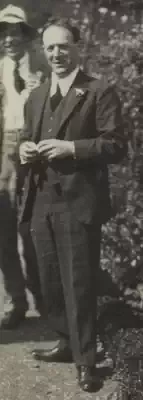
Walter de la Mare
A Song of Enchantment
A Song of Enchantment
A song of Enchantment I sang me there,
In a green-green wood, by waters fair,
Just as the words came up to me
I sang it under the wild wood tree.
Widdershins turned I, singing it low,
Watching the wild birds come and go;
No cloud in the deep dark blue to be seen
Under the thick-thatched branches green.
Twilight came: silence came:
The planet of Evening's silver flame;
By darkening paths I wandered through
Thickets trembling with drops of dew.
But the music is lost and the words are gone
Of the song I sang as I sat alone,
Ages and ages have fallen on me -
On the wood and the pool and the elder tree.
A song of Enchantment I sang me there,
In a green-green wood, by waters fair,
Just as the words came up to me
I sang it under the wild wood tree.
Widdershins turned I, singing it low,
Watching the wild birds come and go;
No cloud in the deep dark blue to be seen
Under the thick-thatched branches green.
Twilight came: silence came:
The planet of Evening's silver flame;
By darkening paths I wandered through
Thickets trembling with drops of dew.
But the music is lost and the words are gone
Of the song I sang as I sat alone,
Ages and ages have fallen on me -
On the wood and the pool and the elder tree.
250
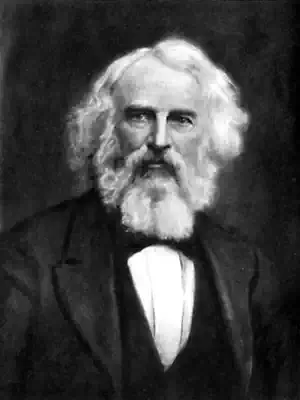
Henry Wadsworth Longfellow
Ultima Thule: Robert Burns
Ultima Thule: Robert Burns
I see amid the fields of Ayr
A ploughman, who, in foul and fair,
Sings at his task
So clear, we know not if it is
The laverock's song we hear, or his,
Nor care to ask.
For him the ploughing of those fields
A more ethereal harvest yields
Than sheaves of grain;
Songs flush with purple bloom the rye,
The plover's call, the curlew's cry,
Sing in his brain.
Touched by his hand, the wayside weed
Becomes a flower; the lowliest reed
Beside the stream
Is clothed with beauty; gorse and grass
And heather, where his footsteps pass,
The brighter seem.
He sings of love, whose flame illumes
The darkness of lone cottage rooms;
He feels the force,
The treacherous undertow and stress
Of wayward passions, and no less
The keen remorse.
At moments, wrestling with his fate,
His voice is harsh, but not with hate;
The brushwood, hung
Above the tavern door, lets fall
Its bitter leaf, its drop of gall
Upon his tongue.
But still the music of his song
Rises o'er all, elate and strong;
Its master-chords
Are Manhood, Freedom, Brotherhood,
Its discords but an interlude
Between the words.
And then to die so young and leave
Unfinished what he might achieve!
Yet better sure
Is this, than wandering up and down
An old man in a country town,
Infirm and poor.
For now he haunts his native land
As an immortal youth; his hand
Guides every plough;
He sits beside each ingle-nook,
His voice is in each rushing brook,
Each rustling bough.
His presence haunts this room to-night,
A form of mingled mist and light
From that far coast.
Welcome beneath this roof of mine!
Welcome! this vacant chair is thine,
Dear guest and ghost!
I see amid the fields of Ayr
A ploughman, who, in foul and fair,
Sings at his task
So clear, we know not if it is
The laverock's song we hear, or his,
Nor care to ask.
For him the ploughing of those fields
A more ethereal harvest yields
Than sheaves of grain;
Songs flush with purple bloom the rye,
The plover's call, the curlew's cry,
Sing in his brain.
Touched by his hand, the wayside weed
Becomes a flower; the lowliest reed
Beside the stream
Is clothed with beauty; gorse and grass
And heather, where his footsteps pass,
The brighter seem.
He sings of love, whose flame illumes
The darkness of lone cottage rooms;
He feels the force,
The treacherous undertow and stress
Of wayward passions, and no less
The keen remorse.
At moments, wrestling with his fate,
His voice is harsh, but not with hate;
The brushwood, hung
Above the tavern door, lets fall
Its bitter leaf, its drop of gall
Upon his tongue.
But still the music of his song
Rises o'er all, elate and strong;
Its master-chords
Are Manhood, Freedom, Brotherhood,
Its discords but an interlude
Between the words.
And then to die so young and leave
Unfinished what he might achieve!
Yet better sure
Is this, than wandering up and down
An old man in a country town,
Infirm and poor.
For now he haunts his native land
As an immortal youth; his hand
Guides every plough;
He sits beside each ingle-nook,
His voice is in each rushing brook,
Each rustling bough.
His presence haunts this room to-night,
A form of mingled mist and light
From that far coast.
Welcome beneath this roof of mine!
Welcome! this vacant chair is thine,
Dear guest and ghost!
324
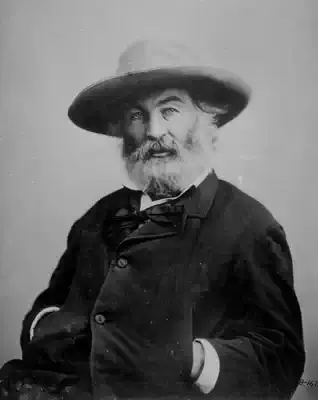
Walt Whitman
Years Of The Modern
Years Of The Modern
YEARS of the modern! years of the unperform'd!
Your horizon rises--I see it parting away for more august dramas;
I see not America only--I see not only Liberty's nation, but other
nations preparing;
I see tremendous entrances and exits--I see new combinations--I see
the solidarity of races;
I see that force advancing with irresistible power on the world's
stage;
(Have the old forces, the old wars, played their parts? are the acts
suitable to them closed?)
I see Freedom, completely arm'd, and victorious, and very haughty,
with Law on one side, and Peace on the other,
A stupendous Trio, all issuing forth against the idea of caste;
--What historic denouements are these we so rapidly approach?
I see men marching and countermarching by swift millions; 10
I see the frontiers and boundaries of the old aristocracies broken;
I see the landmarks of European kings removed;
I see this day the People beginning their landmarks, (all others give
way;)
--Never were such sharp questions ask'd as this day;
Never was average man, his soul, more energetic, more like a God;
Lo! how he urges and urges, leaving the masses no rest;
His daring foot is on land and sea everywhere--he colonizes the
Pacific, the archipelagoes;
With the steam-ship, the electric telegraph, the newspaper, the
wholesale engines of war,
With these, and the world-spreading factories, he interlinks all
geography, all lands;
--What whispers are these, O lands, running ahead of you, passing
under the seas? 20
Are all nations communing? is there going to be but one heart to the
globe?
Is humanity forming, en-masse?--for lo! tyrants tremble, crowns grow
dim;
The earth, restive, confronts a new era, perhaps a general divine
war;
No one knows what will happen next--such portents fill the days and
nights;
Years prophetical! the space ahead as I walk, as I vainly try to
pierce it, is full of phantoms;
Unborn deeds, things soon to be, project their shapes around me;
This incredible rush and heat--this strange extatic fever of dreams,
O years!
Your dreams, O year, how they penetrate through me! (I know not
whether I sleep or wake!)
The perform'd America and Europe grow dim, retiring in shadow behind
me,
The unperform'd, more gigantic than ever, advance, advance upon
me. 30
YEARS of the modern! years of the unperform'd!
Your horizon rises--I see it parting away for more august dramas;
I see not America only--I see not only Liberty's nation, but other
nations preparing;
I see tremendous entrances and exits--I see new combinations--I see
the solidarity of races;
I see that force advancing with irresistible power on the world's
stage;
(Have the old forces, the old wars, played their parts? are the acts
suitable to them closed?)
I see Freedom, completely arm'd, and victorious, and very haughty,
with Law on one side, and Peace on the other,
A stupendous Trio, all issuing forth against the idea of caste;
--What historic denouements are these we so rapidly approach?
I see men marching and countermarching by swift millions; 10
I see the frontiers and boundaries of the old aristocracies broken;
I see the landmarks of European kings removed;
I see this day the People beginning their landmarks, (all others give
way;)
--Never were such sharp questions ask'd as this day;
Never was average man, his soul, more energetic, more like a God;
Lo! how he urges and urges, leaving the masses no rest;
His daring foot is on land and sea everywhere--he colonizes the
Pacific, the archipelagoes;
With the steam-ship, the electric telegraph, the newspaper, the
wholesale engines of war,
With these, and the world-spreading factories, he interlinks all
geography, all lands;
--What whispers are these, O lands, running ahead of you, passing
under the seas? 20
Are all nations communing? is there going to be but one heart to the
globe?
Is humanity forming, en-masse?--for lo! tyrants tremble, crowns grow
dim;
The earth, restive, confronts a new era, perhaps a general divine
war;
No one knows what will happen next--such portents fill the days and
nights;
Years prophetical! the space ahead as I walk, as I vainly try to
pierce it, is full of phantoms;
Unborn deeds, things soon to be, project their shapes around me;
This incredible rush and heat--this strange extatic fever of dreams,
O years!
Your dreams, O year, how they penetrate through me! (I know not
whether I sleep or wake!)
The perform'd America and Europe grow dim, retiring in shadow behind
me,
The unperform'd, more gigantic than ever, advance, advance upon
me. 30
395
Siegfried Sassoon
The One-Legged Man
The One-Legged Man
Propped on a stick he viewed the August weald;
Squat orchard trees and oasts with painted cowls;
A homely, tangled hedge, a corn-stalked field,
And sound of barking dogs and farmyard fowls.
And he’d come home again to find it more
Desirable than ever it was before.
How right it seemed that he should reach the span
Of comfortable years allowed to man!
Splendid to eat and sleep and choose a wife,
Safe with his wound, a citizen of life.
He hobbled blithely through the garden gate,
And thought: ‘Thank God they had to amputate!’
Propped on a stick he viewed the August weald;
Squat orchard trees and oasts with painted cowls;
A homely, tangled hedge, a corn-stalked field,
And sound of barking dogs and farmyard fowls.
And he’d come home again to find it more
Desirable than ever it was before.
How right it seemed that he should reach the span
Of comfortable years allowed to man!
Splendid to eat and sleep and choose a wife,
Safe with his wound, a citizen of life.
He hobbled blithely through the garden gate,
And thought: ‘Thank God they had to amputate!’
83

Robert W. Service
The Last Supper
The Last Supper
Marie Vaux of the Painted Lips,
And the mouth so mocking gay,
A wanton you to the finger-tips,
Who break men's hearts in play;
A thing of dust I have striven for,
Honour and manhood given for,
Headlong to ruin driven for,
And this is the last, you say. . . .
Drinking your wine with dainty sips,
Marie Vaux of the Painted Lips.
Marie Vaux of the Painted Lips,
ong have you held your sway;
I have laughed at your merry quips -
Now is my time to pay.
What we sow we must reap again;
When we laugh we must weep again;
So to-night we will sleep again,
Nor wake until Judgement Day. . . .
'Tis a poisoned wine that your palate lips,
Marie Vaux of the Painted Lips.
Marie Vaux of the Painted Lips,
Down on your knees and pray;
Pray your last ere the moment slips,
Pray ere the dark and the terror grips,
And the bright world fades away.
Pray for the peace and the rest of us:
Here comes the Shape in quest of us,
Now we must go away. . . .
You and I in the grave's eclipse,
Marie Vaux of the painted Lips.
Marie Vaux of the Painted Lips,
And the mouth so mocking gay,
A wanton you to the finger-tips,
Who break men's hearts in play;
A thing of dust I have striven for,
Honour and manhood given for,
Headlong to ruin driven for,
And this is the last, you say. . . .
Drinking your wine with dainty sips,
Marie Vaux of the Painted Lips.
Marie Vaux of the Painted Lips,
ong have you held your sway;
I have laughed at your merry quips -
Now is my time to pay.
What we sow we must reap again;
When we laugh we must weep again;
So to-night we will sleep again,
Nor wake until Judgement Day. . . .
'Tis a poisoned wine that your palate lips,
Marie Vaux of the Painted Lips.
Marie Vaux of the Painted Lips,
Down on your knees and pray;
Pray your last ere the moment slips,
Pray ere the dark and the terror grips,
And the bright world fades away.
Pray for the peace and the rest of us:
Here comes the Shape in quest of us,
Now we must go away. . . .
You and I in the grave's eclipse,
Marie Vaux of the painted Lips.
117
Walt Whitman
Year Of Meteors, 1859 '60
Year Of Meteors, 1859 '60
YEAR of meteors! brooding year!
I would bind in words retrospective, some of your deeds and signs;
I would sing your contest for the 19th Presidentiad;
I would sing how an old man, tall, with white hair, mounted the
scaffold in Virginia;
(I was at hand--silent I stood, with teeth shut close--I watch'd;
I stood very near you, old man, when cool and indifferent, but
trembling with age and your unheal'd wounds, you mounted the
scaffold;)
--I would sing in my copious song your census returns of The States,
The tables of population and products--I would sing of your ships and
their cargoes,
The proud black ships of Manhattan, arriving, some fill'd with
immigrants, some from the isthmus with cargoes of gold;
Songs thereof would I sing--to all that hitherward comes would I
welcome give; 10
And you would I sing, fair stripling! welcome to you from me, sweet
boy of England!
Remember you surging Manhattan's crowds, as you pass'd with your
cortege of nobles?
There in the crowds stood I, and singled you out with attachment;
I know not why, but I loved you... (and so go forth little song,
Far over sea speed like an arrow, carrying my love all folded,
And find in his palace the youth I love, and drop these lines at his
feet;)
--Nor forget I to sing of the wonder, the ship as she swam up my bay,
Well-shaped and stately the Great Eastern swam up my bay, she was 600
feet long,
Her, moving swiftly, surrounded by myriads of small craft, I forget
not to sing;
--Nor the comet that came unannounced out of the north, flaring in
heaven; 20
Nor the strange huge meteor procession, dazzling and clear, shooting
over our heads,
(A moment, a moment long, it sail'd its balls of unearthly light over
our heads,
Then departed, dropt in the night, and was gone;)
--Of such, and fitful as they, I sing--with gleams from them would I
gleam and patch these chants;
Your chants, O year all mottled with evil and good! year of
forebodings! year of the youth I love!
Year of comets and meteors transient and strange!--lo! even here, one
equally transient and strange!
As I flit through you hastily, soon to fall and be gone, what is this
book,
What am I myself but one of your meteors?
YEAR of meteors! brooding year!
I would bind in words retrospective, some of your deeds and signs;
I would sing your contest for the 19th Presidentiad;
I would sing how an old man, tall, with white hair, mounted the
scaffold in Virginia;
(I was at hand--silent I stood, with teeth shut close--I watch'd;
I stood very near you, old man, when cool and indifferent, but
trembling with age and your unheal'd wounds, you mounted the
scaffold;)
--I would sing in my copious song your census returns of The States,
The tables of population and products--I would sing of your ships and
their cargoes,
The proud black ships of Manhattan, arriving, some fill'd with
immigrants, some from the isthmus with cargoes of gold;
Songs thereof would I sing--to all that hitherward comes would I
welcome give; 10
And you would I sing, fair stripling! welcome to you from me, sweet
boy of England!
Remember you surging Manhattan's crowds, as you pass'd with your
cortege of nobles?
There in the crowds stood I, and singled you out with attachment;
I know not why, but I loved you... (and so go forth little song,
Far over sea speed like an arrow, carrying my love all folded,
And find in his palace the youth I love, and drop these lines at his
feet;)
--Nor forget I to sing of the wonder, the ship as she swam up my bay,
Well-shaped and stately the Great Eastern swam up my bay, she was 600
feet long,
Her, moving swiftly, surrounded by myriads of small craft, I forget
not to sing;
--Nor the comet that came unannounced out of the north, flaring in
heaven; 20
Nor the strange huge meteor procession, dazzling and clear, shooting
over our heads,
(A moment, a moment long, it sail'd its balls of unearthly light over
our heads,
Then departed, dropt in the night, and was gone;)
--Of such, and fitful as they, I sing--with gleams from them would I
gleam and patch these chants;
Your chants, O year all mottled with evil and good! year of
forebodings! year of the youth I love!
Year of comets and meteors transient and strange!--lo! even here, one
equally transient and strange!
As I flit through you hastily, soon to fall and be gone, what is this
book,
What am I myself but one of your meteors?
413
Siegfried Sassoon
The Last Meeting
The Last Meeting
I
Because the night was falling warm and still
Upon a golden day at April’s end,
I thought; I will go up the hill once more
To find the face of him that I have lost,
And speak with him before his ghost has flown
Far from the earth that might not keep him long.
So down the road I went, pausing to see
How slow the dusk drew on, and how the folk
Loitered about their doorways, well-content
With the fine weather and the waxing year.
The miller’s house, that glimmered with grey walls,
Turned me aside; and for a while I leaned
Along the tottering rail beside the bridge
To watch the dripping mill-wheel green with damp.
The miller peered at me with shadowed eyes
And pallid face: I could not hear his voice
For sound of the weir’s plunging. He was old.
His days went round with the unhurrying wheel.
Moving along the street, each side I saw
The humble, kindly folk in lamp-lit rooms;
Children at table; simple, homely wives;
Strong, grizzled men; and soldiers back from war,
Scaring the gaping elders with loud talk.
Soon all the jumbled roofs were down the hill,
And I was turning up the grassy lane
That goes to the big, empty house that stands
Above the town, half-hid by towering trees.
I looked below and saw the glinting lights:
I heard the treble cries of bustling life,
And mirth, and scolding; and the grind of wheels.
An engine whistled, piercing-shrill, and called
High echoes from the sombre slopes afar;
Then a long line of trucks began to move.
It was quite still; the columned chestnuts stood
Dark in their noble canopies of leaves.
I thought: ‘A little longer I’ll delay,
And then he’ll be more glad to hear my feet,
And with low laughter ask me why I’m late.
The place will be too dim to show his eyes,
But he will loom above me like a tree,
With lifted arms and body tall and strong.’
There stood the empty house; a ghostly hulk
Becalmed and huge, massed in the mantling dark,
As builders left it when quick-shattering war
Leapt upon France and called her men to fight.
Lightly along the terraces I trod,
Crunching the rubble till I found the door
That gaped in twilight, framing inward gloom.
An owl flew out from under the high eaves
To vanish secretly among the firs,
Where lofty boughs netted the gleam of stars.
I stumbled in; the dusty floors were strewn
With cumbering piles of planks and props and beams;
Tall windows gapped the walls; the place was free
To every searching gust and jousting gale;
But now they slept; I was afraid to speak,
And heavily the shadows crowded in.
I called him, once; then listened: nothing moved:
Only my thumping heart beat out the time.
Whispering his name, I groped from room to room.
Quite empty was that house; it could not hold
His human ghost, remembered in the love
That strove in vain to be companioned still.
II
Blindly I sought the woods that I had known
So beautiful with morning when I came
Amazed with spring that wove the hazel twigs
With misty raiment of awakening green.
I found a holy dimness, and the peace
Of sanctuary, austerely built of trees,
And wonder stooping from the tranquil sky.
Ah! but there was no need to call his name.
He was beside me now, as swift as light.
I knew him crushed to earth in scentless flowers,
And lifted in the rapture of dark pines.
‘For now,’ he said, ‘my spirit has more eyes
Than heaven has stars; and they are lit by love.
My body is the magic of the world,
And dawn and sunset flame with my spilt blood.
My breath is the great wind, and I am filled
With molten power and surge of the bright waves
That chant my doom along the ocean’s edge.
‘Look in the faces of the flowers and find
The innocence that shrives me; stoop to the stream
That you may share the wisdom of my peace.
For talking water travels undismayed.
The luminous willows lean to it with tales
Of the young earth; and swallows dip their wings
Where showering hawthorn strews the lanes of light.
‘I can remember summer in one thought
Of wind-swept green, and deeps of melting blue,
And scent of limes in bloom; and I can hear
Distinct the early mower in the grass,
Whetting his blade along some morn of June.
‘For I was born to the round world’s delight,
And knowledge of enfolding motherhood,
Whose tenderness, that shines through constant toil,
Gathers the naked children to her knees.
In death I can remember how she came
To kiss me while I slept; still I can share
The glee of childhood; and the fleeting gloom
When all my flowers were washed with rain of tears.
‘I triumph in the choruses of birds,
Bursting like April buds in gyres of song.
My meditations are the blaze of noon
On silent woods, where glory burns the leaves.
I have shared breathless vigils; I have slaked
The thirst of my desires in bounteous rain
Pouring and splashing downward through the dark.
Loud storm has roused me with its winking glare,
And voice of doom that crackles overhead.
I have been tired and watchful, craving rest,
Till the slow-footed hours have touched my brows
And laid me on the breast of sundering sleep.’
III
I know that he is lost among the stars,
And may return no more but in their light.
Though his hushed voice may call me in the stir
Of whispering trees, I shall not understand.
Men may not speak with stillness; and the joy
Of brooks that leap and tumble down green hills
Is faster than their feet; and all their thoughts
Can win no meaning from the talk of birds.
My heart is fooled with fancies, being wise;
For fancy is the gleaming of wet flowers
When the hid sun looks forth with golden stare.
Thus, when I find new loveliness to praise,
And things long-known shine out in sudden grace,
Then will I think: ‘He moves before me now.’
So he will never come but in delight,
And, as it was in life, his name shall be
Wonder awaking in a summer dawn,
And youth, that dying, touched my lips to song.
Flixécourt. May .
I
Because the night was falling warm and still
Upon a golden day at April’s end,
I thought; I will go up the hill once more
To find the face of him that I have lost,
And speak with him before his ghost has flown
Far from the earth that might not keep him long.
So down the road I went, pausing to see
How slow the dusk drew on, and how the folk
Loitered about their doorways, well-content
With the fine weather and the waxing year.
The miller’s house, that glimmered with grey walls,
Turned me aside; and for a while I leaned
Along the tottering rail beside the bridge
To watch the dripping mill-wheel green with damp.
The miller peered at me with shadowed eyes
And pallid face: I could not hear his voice
For sound of the weir’s plunging. He was old.
His days went round with the unhurrying wheel.
Moving along the street, each side I saw
The humble, kindly folk in lamp-lit rooms;
Children at table; simple, homely wives;
Strong, grizzled men; and soldiers back from war,
Scaring the gaping elders with loud talk.
Soon all the jumbled roofs were down the hill,
And I was turning up the grassy lane
That goes to the big, empty house that stands
Above the town, half-hid by towering trees.
I looked below and saw the glinting lights:
I heard the treble cries of bustling life,
And mirth, and scolding; and the grind of wheels.
An engine whistled, piercing-shrill, and called
High echoes from the sombre slopes afar;
Then a long line of trucks began to move.
It was quite still; the columned chestnuts stood
Dark in their noble canopies of leaves.
I thought: ‘A little longer I’ll delay,
And then he’ll be more glad to hear my feet,
And with low laughter ask me why I’m late.
The place will be too dim to show his eyes,
But he will loom above me like a tree,
With lifted arms and body tall and strong.’
There stood the empty house; a ghostly hulk
Becalmed and huge, massed in the mantling dark,
As builders left it when quick-shattering war
Leapt upon France and called her men to fight.
Lightly along the terraces I trod,
Crunching the rubble till I found the door
That gaped in twilight, framing inward gloom.
An owl flew out from under the high eaves
To vanish secretly among the firs,
Where lofty boughs netted the gleam of stars.
I stumbled in; the dusty floors were strewn
With cumbering piles of planks and props and beams;
Tall windows gapped the walls; the place was free
To every searching gust and jousting gale;
But now they slept; I was afraid to speak,
And heavily the shadows crowded in.
I called him, once; then listened: nothing moved:
Only my thumping heart beat out the time.
Whispering his name, I groped from room to room.
Quite empty was that house; it could not hold
His human ghost, remembered in the love
That strove in vain to be companioned still.
II
Blindly I sought the woods that I had known
So beautiful with morning when I came
Amazed with spring that wove the hazel twigs
With misty raiment of awakening green.
I found a holy dimness, and the peace
Of sanctuary, austerely built of trees,
And wonder stooping from the tranquil sky.
Ah! but there was no need to call his name.
He was beside me now, as swift as light.
I knew him crushed to earth in scentless flowers,
And lifted in the rapture of dark pines.
‘For now,’ he said, ‘my spirit has more eyes
Than heaven has stars; and they are lit by love.
My body is the magic of the world,
And dawn and sunset flame with my spilt blood.
My breath is the great wind, and I am filled
With molten power and surge of the bright waves
That chant my doom along the ocean’s edge.
‘Look in the faces of the flowers and find
The innocence that shrives me; stoop to the stream
That you may share the wisdom of my peace.
For talking water travels undismayed.
The luminous willows lean to it with tales
Of the young earth; and swallows dip their wings
Where showering hawthorn strews the lanes of light.
‘I can remember summer in one thought
Of wind-swept green, and deeps of melting blue,
And scent of limes in bloom; and I can hear
Distinct the early mower in the grass,
Whetting his blade along some morn of June.
‘For I was born to the round world’s delight,
And knowledge of enfolding motherhood,
Whose tenderness, that shines through constant toil,
Gathers the naked children to her knees.
In death I can remember how she came
To kiss me while I slept; still I can share
The glee of childhood; and the fleeting gloom
When all my flowers were washed with rain of tears.
‘I triumph in the choruses of birds,
Bursting like April buds in gyres of song.
My meditations are the blaze of noon
On silent woods, where glory burns the leaves.
I have shared breathless vigils; I have slaked
The thirst of my desires in bounteous rain
Pouring and splashing downward through the dark.
Loud storm has roused me with its winking glare,
And voice of doom that crackles overhead.
I have been tired and watchful, craving rest,
Till the slow-footed hours have touched my brows
And laid me on the breast of sundering sleep.’
III
I know that he is lost among the stars,
And may return no more but in their light.
Though his hushed voice may call me in the stir
Of whispering trees, I shall not understand.
Men may not speak with stillness; and the joy
Of brooks that leap and tumble down green hills
Is faster than their feet; and all their thoughts
Can win no meaning from the talk of birds.
My heart is fooled with fancies, being wise;
For fancy is the gleaming of wet flowers
When the hid sun looks forth with golden stare.
Thus, when I find new loveliness to praise,
And things long-known shine out in sudden grace,
Then will I think: ‘He moves before me now.’
So he will never come but in delight,
And, as it was in life, his name shall be
Wonder awaking in a summer dawn,
And youth, that dying, touched my lips to song.
Flixécourt. May .
75
Henry Wadsworth Longfellow
Ultima Thule: Night
Ultima Thule: Night
Into the darkness and the hush of night
Slowly the landscape sinks, and fades away,
And with it fade the phantoms of the day,
The ghosts of men and things, that haunt the light,
The crowd, the clamor, the pursuit, the flight,
The unprofitable splendor and display,
The agitations, and the cares that prey
Upon our hearts, all vanish out of sight.
The better life begins; the world no more
Molests us; all its records we erase
From the dull commonplace book of our lives,
That like a palimpsest is written o'er
With trivial incidents of time and place,
And lo! the ideal, hidden beneath, revives.
Into the darkness and the hush of night
Slowly the landscape sinks, and fades away,
And with it fade the phantoms of the day,
The ghosts of men and things, that haunt the light,
The crowd, the clamor, the pursuit, the flight,
The unprofitable splendor and display,
The agitations, and the cares that prey
Upon our hearts, all vanish out of sight.
The better life begins; the world no more
Molests us; all its records we erase
From the dull commonplace book of our lives,
That like a palimpsest is written o'er
With trivial incidents of time and place,
And lo! the ideal, hidden beneath, revives.
307
Siegfried Sassoon
The Investiture
The Investiture
GOD with a Roll of Honour in His hand
Sits welcoming the heroes who have died,
While sorrowless angels ranked on either side
Stand easy in Elysium’s meadow-land.
Then you come shyly through the garden gate,
Wearing a blood-soaked bandage on your head;
And God says something kind because you’re dead,
And homesick, discontented with your fate.
If I were there we’d snowball Death with skulls;
Or ride away to hunt in Devil’s Wood
With ghosts of puppies that we walked of old.
But you’re alone; and solitude annuls
Our earthly jokes; and strangely wise and good
You roam forlorn along the streets of gold.
GOD with a Roll of Honour in His hand
Sits welcoming the heroes who have died,
While sorrowless angels ranked on either side
Stand easy in Elysium’s meadow-land.
Then you come shyly through the garden gate,
Wearing a blood-soaked bandage on your head;
And God says something kind because you’re dead,
And homesick, discontented with your fate.
If I were there we’d snowball Death with skulls;
Or ride away to hunt in Devil’s Wood
With ghosts of puppies that we walked of old.
But you’re alone; and solitude annuls
Our earthly jokes; and strangely wise and good
You roam forlorn along the streets of gold.
97
Walt Whitman
With Antecedents
With Antecedents
WITH antecedents;
With my fathers and mothers, and the accumulations of past ages;
With all which, had it not been, I would not now be here, as I am:
With Egypt, India, Phenicia, Greece and Rome;
With the Kelt, the Scandinavian, the Alb, and the Saxon;
With antique maritime ventures,--with laws, artizanship, wars and
journeys;
With the poet, the skald, the saga, the myth, and the oracle;
With the sale of slaves--with enthusiasts--with the troubadour, the
crusader, and the monk;
With those old continents whence we have come to this new continent;
With the fading kingdoms and kings over there; 10
With the fading religions and priests;
With the small shores we look back to from our own large and present
shores;
With countless years drawing themselves onward, and arrived at these
years;
You and Me arrived--America arrived, and making this year;
This year! sending itself ahead countless years to come.
O but it is not the years--it is I--it is You;
We touch all laws, and tally all antecedents;
We are the skald, the oracle, the monk, and the knight--we easily
include them, and more;
We stand amid time, beginningless and endless--we stand amid evil and
good;
All swings around us--there is as much darkness as light; 20
The very sun swings itself and its system of planets around us;
Its sun, and its again, all swing around us.
As for me, (torn, stormy, even as I, amid these vehement days,)
I have the idea of all, and am all, and believe in all;
I believe materialism is true, and spiritualism is true--I reject no
part.
Have I forgotten any part?
Come to me, whoever and whatever, till I give you recognition.
I respect Assyria, China, Teutonia, and the Hebrews;
I adopt each theory, myth, god, and demi-god;
I see that the old accounts, bibles, genealogies, are true, without
exception; 30
I assert that all past days were what they should have been;
And that they could no-how have been better than they were,
And that to-day is what it should be--and that America is,
And that to-day and America could no-how be better than they are.
In the name of These States, and in your and my name, the Past,
And in the name of These States, and in your and my name, the Present
time.
I know that the past was great, and the future will be great,
And I know that both curiously conjoint in the present time,
(For the sake of him I typify--for the common average man's sake-
your sake, if you are he;)
And that where I am, or you are, this present day, there is the
centre of all days, all races, 40
And there is the meaning, to us, of all that has ever come of races
and days, or ever will come.
WITH antecedents;
With my fathers and mothers, and the accumulations of past ages;
With all which, had it not been, I would not now be here, as I am:
With Egypt, India, Phenicia, Greece and Rome;
With the Kelt, the Scandinavian, the Alb, and the Saxon;
With antique maritime ventures,--with laws, artizanship, wars and
journeys;
With the poet, the skald, the saga, the myth, and the oracle;
With the sale of slaves--with enthusiasts--with the troubadour, the
crusader, and the monk;
With those old continents whence we have come to this new continent;
With the fading kingdoms and kings over there; 10
With the fading religions and priests;
With the small shores we look back to from our own large and present
shores;
With countless years drawing themselves onward, and arrived at these
years;
You and Me arrived--America arrived, and making this year;
This year! sending itself ahead countless years to come.
O but it is not the years--it is I--it is You;
We touch all laws, and tally all antecedents;
We are the skald, the oracle, the monk, and the knight--we easily
include them, and more;
We stand amid time, beginningless and endless--we stand amid evil and
good;
All swings around us--there is as much darkness as light; 20
The very sun swings itself and its system of planets around us;
Its sun, and its again, all swing around us.
As for me, (torn, stormy, even as I, amid these vehement days,)
I have the idea of all, and am all, and believe in all;
I believe materialism is true, and spiritualism is true--I reject no
part.
Have I forgotten any part?
Come to me, whoever and whatever, till I give you recognition.
I respect Assyria, China, Teutonia, and the Hebrews;
I adopt each theory, myth, god, and demi-god;
I see that the old accounts, bibles, genealogies, are true, without
exception; 30
I assert that all past days were what they should have been;
And that they could no-how have been better than they were,
And that to-day is what it should be--and that America is,
And that to-day and America could no-how be better than they are.
In the name of These States, and in your and my name, the Past,
And in the name of These States, and in your and my name, the Present
time.
I know that the past was great, and the future will be great,
And I know that both curiously conjoint in the present time,
(For the sake of him I typify--for the common average man's sake-
your sake, if you are he;)
And that where I am, or you are, this present day, there is the
centre of all days, all races, 40
And there is the meaning, to us, of all that has ever come of races
and days, or ever will come.
422
Robert W. Service
The Land Of Beyond
The Land Of Beyond
Have ever you heard of the Land of Beyond,
That dreams at the gates of the day?
Alluring it lies at the skirts of the skies,
And ever so far away;
Alluring it calls: O ye the yoke galls,
And ye of the trail overfond,
With saddle and pack, by paddle and track,
Let's go to the Land of Beyond!
Have ever you stood where the silences brood,
And vast the horizons begin,
At the dawn of the day to behold far away
The goal you would strive for and win?
Yet ah! in the night when you gain to the height,
With the vast pool of heaven star-spawned,
Afar and agleam, like a valley of dream,
Still mocks you a Land of Beyond.
Thank God! there is always a Land of Beyond
For us who are true to the trail;
A vision to seek, a beckoning peak,
A farness that never will fail;
A pride in our soul that mocks at a goal,
A manhood that irks at a bond,
And try how we will, unattainable still,
Behold it, our Land of Beyond!
Have ever you heard of the Land of Beyond,
That dreams at the gates of the day?
Alluring it lies at the skirts of the skies,
And ever so far away;
Alluring it calls: O ye the yoke galls,
And ye of the trail overfond,
With saddle and pack, by paddle and track,
Let's go to the Land of Beyond!
Have ever you stood where the silences brood,
And vast the horizons begin,
At the dawn of the day to behold far away
The goal you would strive for and win?
Yet ah! in the night when you gain to the height,
With the vast pool of heaven star-spawned,
Afar and agleam, like a valley of dream,
Still mocks you a Land of Beyond.
Thank God! there is always a Land of Beyond
For us who are true to the trail;
A vision to seek, a beckoning peak,
A farness that never will fail;
A pride in our soul that mocks at a goal,
A manhood that irks at a bond,
And try how we will, unattainable still,
Behold it, our Land of Beyond!
253
Walt Whitman
Whoever You Are, Holding Me Now In Hand
Whoever You Are, Holding Me Now In Hand
WHOEVER you are, holding me now in hand,
Without one thing, all will be useless,
I give you fair warning, before you attempt me further,
I am not what you supposed, but far different.
Who is he that would become my follower?
Who would sign himself a candidate for my affections?
The way is suspicious--the result uncertain, perhaps destructive;
You would have to give up all else--I alone would expect to be your
God, sole and exclusive,
Your novitiate would even then be long and exhausting,
The whole past theory of your life, and all conformity to the lives
around you, would have to be abandon'd; 10
Therefore release me now, before troubling yourself any further--Let
go your hand from my shoulders,
Put me down, and depart on your way.
Or else, by stealth, in some wood, for trial,
Or back of a rock, in the open air,
(For in any roof'd room of a house I emerge not--nor in company,
And in libraries I lie as one dumb, a gawk, or unborn, or dead,)
But just possibly with you on a high hill--first watching lest any
person, for miles around, approach unawares,
Or possibly with you sailing at sea, or on the beach of the sea, or
some quiet island,
Here to put your lips upon mine I permit you,
With the comrade's long-dwelling kiss, or the new husband's kiss, 20
For I am the new husband, and I am the comrade.
Or, if you will, thrusting me beneath your clothing,
Where I may feel the throbs of your heart, or rest upon your hip,
Carry me when you go forth over land or sea;
For thus, merely touching you, is enough--is best,
And thus, touching you, would I silently sleep and be carried
eternally.
But these leaves conning, you con at peril,
For these leaves, and me, you will not understand,
They will elude you at first, and still more afterward--I will
certainly elude you,
Even while you should think you had unquestionably caught me,
behold! 30
Already you see I have escaped from you.
For it is not for what I have put into it that I have written this
book,
Nor is it by reading it you will acquire it,
Nor do those know me best who admire me, and vauntingly praise me,
Nor will the candidates for my love, (unless at most a very few,)
prove victorious,
Nor will my poems do good only--they will do just as much evil,
perhaps more;
For all is useless without that which you may guess at many times and
not hit--that which I hinted at;
Therefore release me, and depart on your way.
WHOEVER you are, holding me now in hand,
Without one thing, all will be useless,
I give you fair warning, before you attempt me further,
I am not what you supposed, but far different.
Who is he that would become my follower?
Who would sign himself a candidate for my affections?
The way is suspicious--the result uncertain, perhaps destructive;
You would have to give up all else--I alone would expect to be your
God, sole and exclusive,
Your novitiate would even then be long and exhausting,
The whole past theory of your life, and all conformity to the lives
around you, would have to be abandon'd; 10
Therefore release me now, before troubling yourself any further--Let
go your hand from my shoulders,
Put me down, and depart on your way.
Or else, by stealth, in some wood, for trial,
Or back of a rock, in the open air,
(For in any roof'd room of a house I emerge not--nor in company,
And in libraries I lie as one dumb, a gawk, or unborn, or dead,)
But just possibly with you on a high hill--first watching lest any
person, for miles around, approach unawares,
Or possibly with you sailing at sea, or on the beach of the sea, or
some quiet island,
Here to put your lips upon mine I permit you,
With the comrade's long-dwelling kiss, or the new husband's kiss, 20
For I am the new husband, and I am the comrade.
Or, if you will, thrusting me beneath your clothing,
Where I may feel the throbs of your heart, or rest upon your hip,
Carry me when you go forth over land or sea;
For thus, merely touching you, is enough--is best,
And thus, touching you, would I silently sleep and be carried
eternally.
But these leaves conning, you con at peril,
For these leaves, and me, you will not understand,
They will elude you at first, and still more afterward--I will
certainly elude you,
Even while you should think you had unquestionably caught me,
behold! 30
Already you see I have escaped from you.
For it is not for what I have put into it that I have written this
book,
Nor is it by reading it you will acquire it,
Nor do those know me best who admire me, and vauntingly praise me,
Nor will the candidates for my love, (unless at most a very few,)
prove victorious,
Nor will my poems do good only--they will do just as much evil,
perhaps more;
For all is useless without that which you may guess at many times and
not hit--that which I hinted at;
Therefore release me, and depart on your way.
402
Siegfried Sassoon
The Heritage
The Heritage
Cry out on Time that he may take away
Your cold philosophies that give no hint
Of spirit-quickened flesh; fall down and pray
That Death come never with a face of flint:
Death is our heritage; with Life we share
The sunlight that must own his darkening hour:
Within his very presence yet we dare
To gather gladness like a fading flower.
For even as this, our joy not long may live
Perfect; and most in change the heart can trace
The miracle of life and human things:
All we have held to destiny we give;
Dawn glimmers on the soul-forsaken face;
Not we, but others, hear the bird that sings.
Cry out on Time that he may take away
Your cold philosophies that give no hint
Of spirit-quickened flesh; fall down and pray
That Death come never with a face of flint:
Death is our heritage; with Life we share
The sunlight that must own his darkening hour:
Within his very presence yet we dare
To gather gladness like a fading flower.
For even as this, our joy not long may live
Perfect; and most in change the heart can trace
The miracle of life and human things:
All we have held to destiny we give;
Dawn glimmers on the soul-forsaken face;
Not we, but others, hear the bird that sings.
90
Henry Wadsworth Longfellow
Ultima Thule: Jugurtha
Ultima Thule: Jugurtha
How cold are thy baths, Apollo!
Cried the African monarch, the splendid,
As down to his death in the hollow
Dark dungeons of Rome he descended,
Uncrowned, unthroned, unattended;
How cold are thy baths, Apollo!
How cold are thy baths, Apollo!
Cried the Poet, unknown, unbefriended,
As the vision, that lured him to follow,
With the mist and the darkness blended,
And the dream of his life was ended;
How cold are thy baths, Apollo!
How cold are thy baths, Apollo!
Cried the African monarch, the splendid,
As down to his death in the hollow
Dark dungeons of Rome he descended,
Uncrowned, unthroned, unattended;
How cold are thy baths, Apollo!
How cold are thy baths, Apollo!
Cried the Poet, unknown, unbefriended,
As the vision, that lured him to follow,
With the mist and the darkness blended,
And the dream of his life was ended;
How cold are thy baths, Apollo!
233
Walt Whitman
Who Is Now Reading This?
Who Is Now Reading This?
May-be one is now reading this who knows some wrong-doing of my past
life,
Or may-be a stranger is reading this who has secretly loved me,
Or may-be one who meets all my grand assumptions and egotisms with
derision,
Or may-be one who is puzzled at me.
As if I were not puzzled at myself!
Or as if I never deride myself! (O conscience-struck! O selfconvicted!)
Or as if I do not secretly love strangers! (O tenderly, a long time,
and never avow it;)
Or as if I did not see, perfectly well, interior in myself, the stuff
of wrong-doing,
Or as if it could cease transpiring from me until it must cease. 10
May-be one is now reading this who knows some wrong-doing of my past
life,
Or may-be a stranger is reading this who has secretly loved me,
Or may-be one who meets all my grand assumptions and egotisms with
derision,
Or may-be one who is puzzled at me.
As if I were not puzzled at myself!
Or as if I never deride myself! (O conscience-struck! O selfconvicted!)
Or as if I do not secretly love strangers! (O tenderly, a long time,
and never avow it;)
Or as if I did not see, perfectly well, interior in myself, the stuff
of wrong-doing,
Or as if it could cease transpiring from me until it must cease. 10
511
Siegfried Sassoon
The Goldsmith
The Goldsmith
This job’s the best I’ve done.’ He bent his head
Over the golden vessel that he’d wrought.
A bird was singing. But the craftsman’s thought
Is a forgotten language, lost and dead.
He sighed and stretch’d brown arms. His friend came in
And stood beside him in the morning sun.
The goldwork glitter’d.... ‘That’s the best I’ve done.
‘And now I’ve got a necklace to begin.’
This was at Gnossos, in the isle of Crete...
A girl was selling flowers along the street.
This job’s the best I’ve done.’ He bent his head
Over the golden vessel that he’d wrought.
A bird was singing. But the craftsman’s thought
Is a forgotten language, lost and dead.
He sighed and stretch’d brown arms. His friend came in
And stood beside him in the morning sun.
The goldwork glitter’d.... ‘That’s the best I’ve done.
‘And now I’ve got a necklace to begin.’
This was at Gnossos, in the isle of Crete...
A girl was selling flowers along the street.
92
Robert W. Service
The Key Of The Street
The Key Of The Street
"Miss Rosemary," I dourly said,
"Our balance verges on the red,
We must cut down our overhead.
One of the staff will have to go.
There's Mister Jones, he's mighty slow,
Although he does his best, I know.
"A deer old man; I like him well,
But age, alas! will always tell.
Miss Rosemary, please ring the bell
And tell old Jones to step this way . . .
Oh dear, oh dear, it isn't gay
To say the things I have to say.
"Come in and sit down, Mister Jones."
He thanks me in sepulchral tones.
Poor chap! I hear his creaking bones.
"Have a cigar? And how's your wife?
What's that! You're fearing for her life -
A cancer and the surgeon's knife. . . .
"Yes, operations are so dear,
But it's your comfort and your cheer
To know your job's so steady here."
These are his words; so meek and mild,
He looks just like a simple child . . .
Go! darn it! Suddenly I'm riled.
And so I say: "That's just too bad.
But Mister Jones. it's very sad,
You know what losses we have had.
We must cut down in times like these,
So here's a cheque, Oh take it please '
Twill help to pay your doctor's fees.
"And just to show how I appraise
Your work - despite these doleful days
I'm giving you . . . a little raise."
Said Rosemary: "Old Jones is crying."
Thought I: "Yes, each week I'll be sighing,
When from my pocket I am prying
Ten bucks to keep his wife from dying."
"Miss Rosemary," I dourly said,
"Our balance verges on the red,
We must cut down our overhead.
One of the staff will have to go.
There's Mister Jones, he's mighty slow,
Although he does his best, I know.
"A deer old man; I like him well,
But age, alas! will always tell.
Miss Rosemary, please ring the bell
And tell old Jones to step this way . . .
Oh dear, oh dear, it isn't gay
To say the things I have to say.
"Come in and sit down, Mister Jones."
He thanks me in sepulchral tones.
Poor chap! I hear his creaking bones.
"Have a cigar? And how's your wife?
What's that! You're fearing for her life -
A cancer and the surgeon's knife. . . .
"Yes, operations are so dear,
But it's your comfort and your cheer
To know your job's so steady here."
These are his words; so meek and mild,
He looks just like a simple child . . .
Go! darn it! Suddenly I'm riled.
And so I say: "That's just too bad.
But Mister Jones. it's very sad,
You know what losses we have had.
We must cut down in times like these,
So here's a cheque, Oh take it please '
Twill help to pay your doctor's fees.
"And just to show how I appraise
Your work - despite these doleful days
I'm giving you . . . a little raise."
Said Rosemary: "Old Jones is crying."
Thought I: "Yes, each week I'll be sighing,
When from my pocket I am prying
Ten bucks to keep his wife from dying."
227
Walt Whitman
When Lilacs Last in the Dooryard Bloom'd
When Lilacs Last in the Dooryard Bloom'd
from Memories of President Lincoln
1
When lilacs last in the dooryard bloom'd,
And the great star early droop'd in the western sky in the night,
I mourn'd, and yet shall mourn with ever-returning spring.
Ever-returning spring, trinity sure to me you bring,
Lilac blooming perennial and drooping star in the west,
And thought of him I love.
2
O powerful western fallen star!
O shades of night -- O moody, tearful night!
O great star disappear'd -- O the black murk that hides the star!
O cruel hands that hold me powerless -- O helpless soul of me!
O harsh surrounding cloud that will not free my soul.
3
In the dooryard fronting an old farm-house near the white-wash'd palings,
Stands the lilac-bush tall-growing with heart-shaped leaves of rich green,
With many a pointed blossom rising delicate, with the perfume strong I love,
With every leaf a miracle -- and from this bush in the dooryard,
With delicate-color'd blossoms and heart-shaped leaves of rich green,
A sprig with its flower I break.
4
In the swamp in secluded recesses,
A shy and hidden bird is warbling a song.
Solitary the thrush,
The hermit withdrawn to himself, avoiding the settlements,
Sings by himself a song.
Song of the bleeding throat,
Death's outlet song of life, (for well dear brother I know,
If thou wast not granted to sing, thou would'st surely die.)
5
Over the breast of the spring, the land, amid cities,
Amid lanes and through old woods, where lately the violets peep'd from the ground,
spotting the gray debris,
Amid the grass in the fields each side of the lanes, passing the endless grass,
Passing the yellow-spear'd wheat, every grain from its shroud in the dark-brown fields
uprisen,
Passing the apple-tree blows of white and pink in the orchards,
Carrying a corpse to where it shall rest in the grave,
Night and day journeys a coffin.
6
Coffin that passes through lanes and streets,
Through day and night with the great cloud darkening the land,
With the pomp of the inloop'd flags with the cities draped in black,
With the show of the States themselves as of crepe-veil'd women standing,
With processions long and winding and the flambeaus of the night,
With the countless torches lit, with the silent sea of faces and the unbared heads,
With the waiting depot, the arriving coffin, and the sombre faces,
With dirges through the night, with the thousand voices rising strong and solemn,
With all the mournful voices of the dirges pour'd around the coffin,
The dim-lit churches and the shuddering organs -- where amid these you journey,
With the tolling bells' perpetual clang,
Here, coffin that slowly passes,
I give you a sprig of lilac.
7
(Nor for you, for one alone,
Blossoms and branches green to coffins all I bring,
For fresh as the morning, thus would I chant a song for you O sane and sacred death.
All over bouquets of roses,
O death, I cover you with roses and early lilies,
But mostly and now the lilac that blooms the first,
Copious I break, I break the sprigs from the bushes,
With loaded arms I come, pouring for you,
For you and the coffins all of you, O death.)
8
O western orb sailing the heaven,
Now I know what you must have meant as a month since I walk'd,
As I walk'd in silence the transparent shadowy night,
As I saw you had something to tell as you bent to me night after night,
As you droop'd from the sky low down as if to my side, (while the other stars all look'd
on,)
As we wander'd together the solemn night, (for something I know not what kept me
from sleep,)
As the night advanced, and I saw on the rim of the west how full you were of woe,
As I stood on the rising ground in the breeze in the cool transparent night,
As I watch'd where you pass'd and was lost in the netherward black of the night,
As my soul in its trouble dissatisfied sank, as where you sad orb,
Concluded, dropt in the night, and was gone.
9
Sing on there in the swamp,
O singer bashful and tender, I hear your notes, I hear your call,
I hear, I come presently, I understand you,
But a moment I linger, for the lustrous star has detain'd me,
The star my departing comrade holds and detains me.
10
O how shall I warble myself for the dead one there I loved?
And how shall I deck my soul for the large sweet soul that has gone?
And what shall my perfume be for the grave of him I love?
Sea-winds blown from the east and west,
Blown from the Eastern sea and blown from the Western sea, till there on the prairies
meeting,
These and with these and the breath of my chant,
I'll perfume the grave of him I love.
11
O what shall I hang on the chamber walls?
And what shall the pictures be that I hang on the walls,
To adorn the burial-house of him I love?
Pictures of growing spring and farms and homes,
With the Fourth-month eve at sundown, and the gray smoke lucid and bright,
With floods of the yellow gold of the gorgeous, indolent, sinking sun, burning,
expanding the air,
With the fresh sweet herbage under foot, and the pale green leaves of the trees
prolific,
In the distance of the flowing glaze, the breast of the river, with a wind-dapple here
and there,
With ranging hills on the banks, with many a line against the sky, and shadows,
And the city at hand with dwellings so dense, and stacks of chimneys,
And all the scenes of life and the workshops, and the workmen homeward returning.
12
Lo, body and soul -- this land,
My own Manhattan with spires, and the sparkling and hurrying tides, and the ships,
The varied and ample land, the South and the North in the light, Ohio's shores and
flashing Missouri,
And ever the far-spreading prairies cover'd with grass and corn.
Lo, the most excellent sun so calm and haughty,
The violet and purple morn with just-felt breezes,
The gentle soft-born measureless light,
The miracle spreading bathing all, the fulfill'd noon,
The coming eve delicious, the welcome night and the stars,
Over my cities shining all, enveloping man and land.
13
Sing on, sing on, you gray-brown bird,
Sing from the swamps, the recesses, pour your chant from the bushes,
Limitless out of the dusk, out of the cedars and pines.
Sing on dearest brother, warble your reedy song,
Loud human song, with voice of uttermost woe.
O liquid and free and tender!
O wild and loose to my soul -- O wondrous singer!
You only I hear -- yet the star holds me, (but will soon depart,)
Yet the lilac with mastering odor holds me.
14
Now while I sat in the day and look'd forth,
In the close of the day with its light and the fields of spring, and the farmers preparing
their crops,
In the large unconscious scenery of my land with its lakes and forests,
In the heavenly aerial beauty, (after the perturb'd winds and storms,)
Under the arching heavens of the afternoon swift passing, and the voices of children
and women,
The many-moving sea-tides, and I saw the ships how they sail'd,
And the summer approaching with richness, and the fields all busy with labor,
And the infinite separate houses, how they all went on, each with its meals and minutia
of daily usages,
And the streets how their throbbings throbb'd, and the cities pent -- lo, then and there,
Falling upon them all and among them all, enveloping me with the rest,
Appear'd the cloud, appear'd the long black trail,
And I knew death, its thought, and the sacred knowledge of death.
Then with the knowledge of death as walking one side of me,
And the thought of death close-walking the other side of me,
And I in the middle as with companions, and as holding the hands of companions,
I fled forth to the hiding receiving night that talks not,
Down to the shores of the water, the path by the swamp in the dimness,
To the solemn shadowy cedars and the ghostly pines so still.
And the singer so shy to the rest receiv'd me,
The gray-brown bird I know received us comrades three,
And he sang the carol of death, and a verse for him I love.
>From deep secluded recesses,
>From the fragrant cedars and the ghostly pines so still,
Came the carol of the bird.
And the charm of the carol rapt me,
As I held as if by their hands my comrades in the night,
And the voice of my spirit tallied the song of the bird.
Come lovely and soothing death,
Undulate round the world, serenely arriving, arriving,
In the day, in the night, to all, to each,
Sooner or later delicate death.
Prais'd be the fathomless universe,
For life and joy, and for objects and knowledge curious,
And for love, sweet love -- but praise! praise! praise!
For the sure-enwinding arms of cool-enfolding death.
Dark mother always gliding near with soft feet,
Have none chanted for thee a chant of fullest welcome?
Then I chant it for thee, I glorify thee above all,
I bring thee a song that when thou must indeed come, come unfalteringly.
Approach strong deliveress,
When it is so, when you have taken them I joyously sing the dead,
Lost in the loving floating ocean of thee,
Laved in the flood of thy bliss, O death.
From me to thee glad serenades,
Dances for thee I propose saluting thee, adornments and feastings for thee,
And the sights of the open landscape and the high-spread sky are fitting,
And life and the fields, and the huge and thoughtful night.
The night in silence under many a star,
The ocean shore and the husky whispering wave whose voice I know,
And the soul turning to thee O vast and well-veil'd death,
And the body gratefully nestling close to thee.
Over the treetops I float thee a song,
Over the rising and sinking waves, over the myriad fields and the prairies wide,
Over the dense-packed cities and all the teeming wharves and ways,
I float this carol with joy, with joy to thee O death.
15
To the tally of my soul,
Loud and strong kept up the gray-brown bird,
With pure deliberate notes spreading filling the night.
Loud in the pines and cedars dim,
Clear in the freshness moist and the swamp-perfume,
And I with my comrades there in the night.
While my sight that was bound in my eyes unclosed,
As to long panoramas of visions.
And I saw askant the armies,
I saw as in noiseless dreams hundreds of battle-flags,
Borne through the smoke of the battles and pierced with missiles I saw them,
And carried hither and yon through the smoke and torn and bloody,
And at last but a few shreds left on the staffs, (all in silence,)
And the staffs all splinter'd and broken.
I saw battle-corpses, myriads of them,
And the white skeletons of young men, I saw them,
I saw the debris and debris of all the dead soldiers of the war,
But I saw they were not as was thought,
They themselves were fully at rest, they suffer'd not,
The living remain'd and suffer'd, the mother suffer'd,
And the wife and the child and the musing comrade suffer'd,
And the armies that remain'd suffer'd.
16
Passing the visions, passing the night,
Passing, unloosing the hold of my comrades' hands,
Passing the song of the hermit bird and the tallying song of my soul,
Victorious song, death's outlet song, yet varying ever-altering song,
As low and wailing, yet clear the notes, rising and falling, flooding the night,
Sadly sinking and fainting, as warning and warning, and yet again bursting with joy,
Covering the earth and filling the spread of the heaven,
As that powerful psalm in the night I heard from recesses,
Passing, I leave thee lilac with heart-shaped leaves,
I leave thee there in the door-yard, blooming, returning with spring.
I cease from my song for thee,
From my gaze on thee in the west, fronting the west, communing with thee,
O comrade lustrous with silver face in the night.
Yet each to keep and all, retrievements out of the night,
The song, the wondrous chant of the gray-brown bird,
And the tallying chant, the echo arous'd in my soul,
With the lustrous and drooping star with the countenance full of woe,
With the holders holding my hand nearing the call of the bird,
Comrades mine and I in the midst, and their memory ever to keep for the dead I loved
so well,
For the sweetest, wisest soul of all my days and lands -- and this for his dear sake,
Lilac and star and bird twined with the chant of my soul,
There in the fragrant pines and the cedars dusk and dim.
from Memories of President Lincoln
1
When lilacs last in the dooryard bloom'd,
And the great star early droop'd in the western sky in the night,
I mourn'd, and yet shall mourn with ever-returning spring.
Ever-returning spring, trinity sure to me you bring,
Lilac blooming perennial and drooping star in the west,
And thought of him I love.
2
O powerful western fallen star!
O shades of night -- O moody, tearful night!
O great star disappear'd -- O the black murk that hides the star!
O cruel hands that hold me powerless -- O helpless soul of me!
O harsh surrounding cloud that will not free my soul.
3
In the dooryard fronting an old farm-house near the white-wash'd palings,
Stands the lilac-bush tall-growing with heart-shaped leaves of rich green,
With many a pointed blossom rising delicate, with the perfume strong I love,
With every leaf a miracle -- and from this bush in the dooryard,
With delicate-color'd blossoms and heart-shaped leaves of rich green,
A sprig with its flower I break.
4
In the swamp in secluded recesses,
A shy and hidden bird is warbling a song.
Solitary the thrush,
The hermit withdrawn to himself, avoiding the settlements,
Sings by himself a song.
Song of the bleeding throat,
Death's outlet song of life, (for well dear brother I know,
If thou wast not granted to sing, thou would'st surely die.)
5
Over the breast of the spring, the land, amid cities,
Amid lanes and through old woods, where lately the violets peep'd from the ground,
spotting the gray debris,
Amid the grass in the fields each side of the lanes, passing the endless grass,
Passing the yellow-spear'd wheat, every grain from its shroud in the dark-brown fields
uprisen,
Passing the apple-tree blows of white and pink in the orchards,
Carrying a corpse to where it shall rest in the grave,
Night and day journeys a coffin.
6
Coffin that passes through lanes and streets,
Through day and night with the great cloud darkening the land,
With the pomp of the inloop'd flags with the cities draped in black,
With the show of the States themselves as of crepe-veil'd women standing,
With processions long and winding and the flambeaus of the night,
With the countless torches lit, with the silent sea of faces and the unbared heads,
With the waiting depot, the arriving coffin, and the sombre faces,
With dirges through the night, with the thousand voices rising strong and solemn,
With all the mournful voices of the dirges pour'd around the coffin,
The dim-lit churches and the shuddering organs -- where amid these you journey,
With the tolling bells' perpetual clang,
Here, coffin that slowly passes,
I give you a sprig of lilac.
7
(Nor for you, for one alone,
Blossoms and branches green to coffins all I bring,
For fresh as the morning, thus would I chant a song for you O sane and sacred death.
All over bouquets of roses,
O death, I cover you with roses and early lilies,
But mostly and now the lilac that blooms the first,
Copious I break, I break the sprigs from the bushes,
With loaded arms I come, pouring for you,
For you and the coffins all of you, O death.)
8
O western orb sailing the heaven,
Now I know what you must have meant as a month since I walk'd,
As I walk'd in silence the transparent shadowy night,
As I saw you had something to tell as you bent to me night after night,
As you droop'd from the sky low down as if to my side, (while the other stars all look'd
on,)
As we wander'd together the solemn night, (for something I know not what kept me
from sleep,)
As the night advanced, and I saw on the rim of the west how full you were of woe,
As I stood on the rising ground in the breeze in the cool transparent night,
As I watch'd where you pass'd and was lost in the netherward black of the night,
As my soul in its trouble dissatisfied sank, as where you sad orb,
Concluded, dropt in the night, and was gone.
9
Sing on there in the swamp,
O singer bashful and tender, I hear your notes, I hear your call,
I hear, I come presently, I understand you,
But a moment I linger, for the lustrous star has detain'd me,
The star my departing comrade holds and detains me.
10
O how shall I warble myself for the dead one there I loved?
And how shall I deck my soul for the large sweet soul that has gone?
And what shall my perfume be for the grave of him I love?
Sea-winds blown from the east and west,
Blown from the Eastern sea and blown from the Western sea, till there on the prairies
meeting,
These and with these and the breath of my chant,
I'll perfume the grave of him I love.
11
O what shall I hang on the chamber walls?
And what shall the pictures be that I hang on the walls,
To adorn the burial-house of him I love?
Pictures of growing spring and farms and homes,
With the Fourth-month eve at sundown, and the gray smoke lucid and bright,
With floods of the yellow gold of the gorgeous, indolent, sinking sun, burning,
expanding the air,
With the fresh sweet herbage under foot, and the pale green leaves of the trees
prolific,
In the distance of the flowing glaze, the breast of the river, with a wind-dapple here
and there,
With ranging hills on the banks, with many a line against the sky, and shadows,
And the city at hand with dwellings so dense, and stacks of chimneys,
And all the scenes of life and the workshops, and the workmen homeward returning.
12
Lo, body and soul -- this land,
My own Manhattan with spires, and the sparkling and hurrying tides, and the ships,
The varied and ample land, the South and the North in the light, Ohio's shores and
flashing Missouri,
And ever the far-spreading prairies cover'd with grass and corn.
Lo, the most excellent sun so calm and haughty,
The violet and purple morn with just-felt breezes,
The gentle soft-born measureless light,
The miracle spreading bathing all, the fulfill'd noon,
The coming eve delicious, the welcome night and the stars,
Over my cities shining all, enveloping man and land.
13
Sing on, sing on, you gray-brown bird,
Sing from the swamps, the recesses, pour your chant from the bushes,
Limitless out of the dusk, out of the cedars and pines.
Sing on dearest brother, warble your reedy song,
Loud human song, with voice of uttermost woe.
O liquid and free and tender!
O wild and loose to my soul -- O wondrous singer!
You only I hear -- yet the star holds me, (but will soon depart,)
Yet the lilac with mastering odor holds me.
14
Now while I sat in the day and look'd forth,
In the close of the day with its light and the fields of spring, and the farmers preparing
their crops,
In the large unconscious scenery of my land with its lakes and forests,
In the heavenly aerial beauty, (after the perturb'd winds and storms,)
Under the arching heavens of the afternoon swift passing, and the voices of children
and women,
The many-moving sea-tides, and I saw the ships how they sail'd,
And the summer approaching with richness, and the fields all busy with labor,
And the infinite separate houses, how they all went on, each with its meals and minutia
of daily usages,
And the streets how their throbbings throbb'd, and the cities pent -- lo, then and there,
Falling upon them all and among them all, enveloping me with the rest,
Appear'd the cloud, appear'd the long black trail,
And I knew death, its thought, and the sacred knowledge of death.
Then with the knowledge of death as walking one side of me,
And the thought of death close-walking the other side of me,
And I in the middle as with companions, and as holding the hands of companions,
I fled forth to the hiding receiving night that talks not,
Down to the shores of the water, the path by the swamp in the dimness,
To the solemn shadowy cedars and the ghostly pines so still.
And the singer so shy to the rest receiv'd me,
The gray-brown bird I know received us comrades three,
And he sang the carol of death, and a verse for him I love.
>From deep secluded recesses,
>From the fragrant cedars and the ghostly pines so still,
Came the carol of the bird.
And the charm of the carol rapt me,
As I held as if by their hands my comrades in the night,
And the voice of my spirit tallied the song of the bird.
Come lovely and soothing death,
Undulate round the world, serenely arriving, arriving,
In the day, in the night, to all, to each,
Sooner or later delicate death.
Prais'd be the fathomless universe,
For life and joy, and for objects and knowledge curious,
And for love, sweet love -- but praise! praise! praise!
For the sure-enwinding arms of cool-enfolding death.
Dark mother always gliding near with soft feet,
Have none chanted for thee a chant of fullest welcome?
Then I chant it for thee, I glorify thee above all,
I bring thee a song that when thou must indeed come, come unfalteringly.
Approach strong deliveress,
When it is so, when you have taken them I joyously sing the dead,
Lost in the loving floating ocean of thee,
Laved in the flood of thy bliss, O death.
From me to thee glad serenades,
Dances for thee I propose saluting thee, adornments and feastings for thee,
And the sights of the open landscape and the high-spread sky are fitting,
And life and the fields, and the huge and thoughtful night.
The night in silence under many a star,
The ocean shore and the husky whispering wave whose voice I know,
And the soul turning to thee O vast and well-veil'd death,
And the body gratefully nestling close to thee.
Over the treetops I float thee a song,
Over the rising and sinking waves, over the myriad fields and the prairies wide,
Over the dense-packed cities and all the teeming wharves and ways,
I float this carol with joy, with joy to thee O death.
15
To the tally of my soul,
Loud and strong kept up the gray-brown bird,
With pure deliberate notes spreading filling the night.
Loud in the pines and cedars dim,
Clear in the freshness moist and the swamp-perfume,
And I with my comrades there in the night.
While my sight that was bound in my eyes unclosed,
As to long panoramas of visions.
And I saw askant the armies,
I saw as in noiseless dreams hundreds of battle-flags,
Borne through the smoke of the battles and pierced with missiles I saw them,
And carried hither and yon through the smoke and torn and bloody,
And at last but a few shreds left on the staffs, (all in silence,)
And the staffs all splinter'd and broken.
I saw battle-corpses, myriads of them,
And the white skeletons of young men, I saw them,
I saw the debris and debris of all the dead soldiers of the war,
But I saw they were not as was thought,
They themselves were fully at rest, they suffer'd not,
The living remain'd and suffer'd, the mother suffer'd,
And the wife and the child and the musing comrade suffer'd,
And the armies that remain'd suffer'd.
16
Passing the visions, passing the night,
Passing, unloosing the hold of my comrades' hands,
Passing the song of the hermit bird and the tallying song of my soul,
Victorious song, death's outlet song, yet varying ever-altering song,
As low and wailing, yet clear the notes, rising and falling, flooding the night,
Sadly sinking and fainting, as warning and warning, and yet again bursting with joy,
Covering the earth and filling the spread of the heaven,
As that powerful psalm in the night I heard from recesses,
Passing, I leave thee lilac with heart-shaped leaves,
I leave thee there in the door-yard, blooming, returning with spring.
I cease from my song for thee,
From my gaze on thee in the west, fronting the west, communing with thee,
O comrade lustrous with silver face in the night.
Yet each to keep and all, retrievements out of the night,
The song, the wondrous chant of the gray-brown bird,
And the tallying chant, the echo arous'd in my soul,
With the lustrous and drooping star with the countenance full of woe,
With the holders holding my hand nearing the call of the bird,
Comrades mine and I in the midst, and their memory ever to keep for the dead I loved
so well,
For the sweetest, wisest soul of all my days and lands -- and this for his dear sake,
Lilac and star and bird twined with the chant of my soul,
There in the fragrant pines and the cedars dusk and dim.
341
Siegfried Sassoon
The Fathers
The Fathers
Snug at the club two fathers sat,
Gross, goggle-eyed, and full of chat.
One of them said: ‘My eldest lad
Writes cheery letters from Bagdad.
But Arthur’s getting all the fun
At Arras with his nine-inch gun.’
‘Yes,’ wheezed the other, ‘that’s the luck!
My boy’s quite broken-hearted, stuck
In England training all this year.
Still, if there’s truth in what we hear,
The Huns intend to ask for more
Before they bolt across the Rhine.’
I watched them toddle through the door—
These impotent old friends of mine.
Snug at the club two fathers sat,
Gross, goggle-eyed, and full of chat.
One of them said: ‘My eldest lad
Writes cheery letters from Bagdad.
But Arthur’s getting all the fun
At Arras with his nine-inch gun.’
‘Yes,’ wheezed the other, ‘that’s the luck!
My boy’s quite broken-hearted, stuck
In England training all this year.
Still, if there’s truth in what we hear,
The Huns intend to ask for more
Before they bolt across the Rhine.’
I watched them toddle through the door—
These impotent old friends of mine.
75
Henry Wadsworth Longfellow
Ultima Thule: Elegiac
Ultima Thule: Elegiac
Dark is the morning with mist; in the narrow mouth of the harbor
Motionless lies the sea, under its curtain of cloud;
Dreamily glimmer the sails of ships on the distant horizon,
Like to the towers of a town, built on the verge of the sea.
Slowly and stately and still, they sail forth into the ocean;
With them sail my thoughts over the limitless deep,
Farther and farther away, borne on by unsatisfied longings,
Unto Hesperian isles, unto Ausonian shores.
Now they have vanished away, have disappeared in the ocean;
Sunk are the towers of the town into the depths of the sea!
All have vanished but those that, moored in the neighboring
roadstead,
Sailless at anchor ride, looming so large in the mist.
Vanished, too, are the thoughts, the dim, unsatisfied longings;
Sunk are the turrets of cloud into the ocean of dreams;
While in a haven of rest my heart is riding at anchor,
Held by the chains of love, held by the anchors of trust!
Dark is the morning with mist; in the narrow mouth of the harbor
Motionless lies the sea, under its curtain of cloud;
Dreamily glimmer the sails of ships on the distant horizon,
Like to the towers of a town, built on the verge of the sea.
Slowly and stately and still, they sail forth into the ocean;
With them sail my thoughts over the limitless deep,
Farther and farther away, borne on by unsatisfied longings,
Unto Hesperian isles, unto Ausonian shores.
Now they have vanished away, have disappeared in the ocean;
Sunk are the towers of the town into the depths of the sea!
All have vanished but those that, moored in the neighboring
roadstead,
Sailless at anchor ride, looming so large in the mist.
Vanished, too, are the thoughts, the dim, unsatisfied longings;
Sunk are the turrets of cloud into the ocean of dreams;
While in a haven of rest my heart is riding at anchor,
Held by the chains of love, held by the anchors of trust!
304
Walt Whitman
When I Peruse The Conquer'd Fame
When I Peruse The Conquer'd Fame
WHEN I peruse the conquer'd fame of heroes, and the victories of
mighty generals, I do not envy the generals,
Nor the President in his Presidency, nor the rich in his great house;
But when I hear of the brotherhood of lovers, how it was with them,
How through life, through dangers, odium, unchanging, long and long,
Through youth, and through middle and old age, how unfaltering, how
affectionate and faithful they were,
Then I am pensive--I hastily walk away, fill'd with the bitterest
envy.
WHEN I peruse the conquer'd fame of heroes, and the victories of
mighty generals, I do not envy the generals,
Nor the President in his Presidency, nor the rich in his great house;
But when I hear of the brotherhood of lovers, how it was with them,
How through life, through dangers, odium, unchanging, long and long,
Through youth, and through middle and old age, how unfaltering, how
affectionate and faithful they were,
Then I am pensive--I hastily walk away, fill'd with the bitterest
envy.
342
Siegfried Sassoon
The Dug-out
The Dug-out
Why do you lie with your legs ungainly huddled,
And one arm bent across your sullen, cold,
Exhausted face? It hurts my heart to watch you,
Deep-shadowed from the candle's guttering gold;
And you wonder why I shake you by the shoulder;
Drowsy, you mumble and sigh and turn your head...
You are too young to fall asleep for ever;
And when you sleep you remind me of the dead.
Why do you lie with your legs ungainly huddled,
And one arm bent across your sullen, cold,
Exhausted face? It hurts my heart to watch you,
Deep-shadowed from the candle's guttering gold;
And you wonder why I shake you by the shoulder;
Drowsy, you mumble and sigh and turn your head...
You are too young to fall asleep for ever;
And when you sleep you remind me of the dead.
58
Robert W. Service
The Judgement
The Judgement
The Judge looked down, his face was grim,
He scratched his ear;
The gangster's moll looked up at him
With eyes of fear.
She thought: 'This guy in velvet gown,
With balding pate,
Who now on me is looking down,
Can seal my fate.'
The Judge thought: 'Fifteen years or ten
I might decree.
Just let me say the word and then
Go home to tea.
But then this poor wretch might not be
So long alive . . .'
So with surprise he heard that he
Was saying 'Five'.
The Judge went home. His daughter's child
Was five that day;
And with sweet gifts around her piled
She laughed in play.
Then mused the Judge: 'Life oft bestows
Such evil odds.
May he who human mercy shows
Not count on God's?'
The Judge looked down, his face was grim,
He scratched his ear;
The gangster's moll looked up at him
With eyes of fear.
She thought: 'This guy in velvet gown,
With balding pate,
Who now on me is looking down,
Can seal my fate.'
The Judge thought: 'Fifteen years or ten
I might decree.
Just let me say the word and then
Go home to tea.
But then this poor wretch might not be
So long alive . . .'
So with surprise he heard that he
Was saying 'Five'.
The Judge went home. His daughter's child
Was five that day;
And with sweet gifts around her piled
She laughed in play.
Then mused the Judge: 'Life oft bestows
Such evil odds.
May he who human mercy shows
Not count on God's?'
225