
Poems List
Explore poems from our collection

Siegfried Sassoon
Today
Today
This is To-day, a child in white and blue
Running to meet me out of Night who stilled
The ghost of Yester-eve; this is fair Morn
The mother of To-morrow. And these clouds
That chase the sunshine over gleaming hills
Are thoughts, delighting in the golden change
And the ceremony of their drifting state.
This is To-day. To-morrow might bring death,—
And Life, the gleeful madrigal of birds,
Be drowned in glimmer of sleep. To-day I know
How sweet it is to spend these eyes, and boast
This bubble of vistaed memory and sense
Blown by my joy aloft the glittering airs
Of heavenly peace. Oh take me to yourselves,
Earth, sky, and spirit! Let me stand within
The circle of your transience, that my voice
May thrill the lonely silences with song.
This is To-day, a child in white and blue
Running to meet me out of Night who stilled
The ghost of Yester-eve; this is fair Morn
The mother of To-morrow. And these clouds
That chase the sunshine over gleaming hills
Are thoughts, delighting in the golden change
And the ceremony of their drifting state.
This is To-day. To-morrow might bring death,—
And Life, the gleeful madrigal of birds,
Be drowned in glimmer of sleep. To-day I know
How sweet it is to spend these eyes, and boast
This bubble of vistaed memory and sense
Blown by my joy aloft the glittering airs
Of heavenly peace. Oh take me to yourselves,
Earth, sky, and spirit! Let me stand within
The circle of your transience, that my voice
May thrill the lonely silences with song.
75
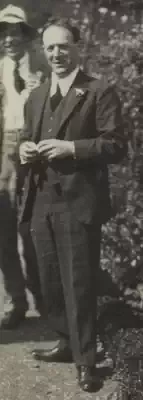
Walter de la Mare
Music
Music
When music sounds, gone is the earth I know,
And all her lovely things even lovelier grow;
Her flowers in vision flame, her forest trees
Lift burdened branches, stilled with ecstasies.
When music sounds, out of the water rise
Naiads whose beauty dims my waking eyes,
Rapt in strange dreams burns each enchanted face,
With solemn echoing stirs their dwelling-place.
When music sounds, all that I was I am
Ere to this haunt of brooding dust I came;
And from Time's woods break into distant song
The swift-winged hours, as I hasten along.
When music sounds, gone is the earth I know,
And all her lovely things even lovelier grow;
Her flowers in vision flame, her forest trees
Lift burdened branches, stilled with ecstasies.
When music sounds, out of the water rise
Naiads whose beauty dims my waking eyes,
Rapt in strange dreams burns each enchanted face,
With solemn echoing stirs their dwelling-place.
When music sounds, all that I was I am
Ere to this haunt of brooding dust I came;
And from Time's woods break into distant song
The swift-winged hours, as I hasten along.
327
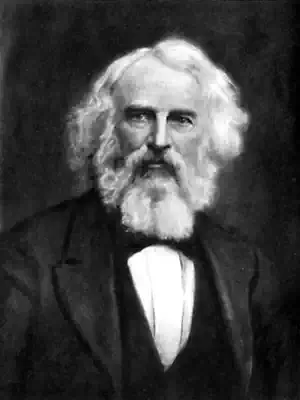
Henry Wadsworth Longfellow
Village Blacksmith, The
Village Blacksmith, The
Under a spreading chestnut tree
The village smithy stands;
The Smith, a mighty man is he,
With large and sinewy hands;
And the muscles of his brawny arms
Are strong as iron bands.
His hair is crisp, and black, and long,
His face is like the tan;
His brow is wet with honest sweat,
He earns whate'er he can
And looks the whole world in the face
For he owes not any man.
Week in, week out, from morn till night,
You can hear his bellows blow;
You can hear him swing his heavy sledge,
With measured beat and slow,
Like a sexton ringing the village bell,
When the evening sun is low.
And children coming home from school
Look in at the open door;
They love to see the flaming furge,
And hear the bellows roar,
And catch the burning sparks that fly
Like chaff from a threshing floor.
He goes on Sunday to the church
and sits among his boys;
He hears the parson pray and preach.
He hears his daughter's voice
singing in the village choir,
And it makes his heart rejoice.
It sounds to him like her mother's voice,
Singing in Paradise!
He needs must think of her once more,
How in the grave she lies;
And with his hard, rough hand he wipes
A tear out of his eyes.
Toiling, rejoicing,-sorrowing,
Onward through life he goes;
Each morning sees some task begin,
Each evening sees it close;
Something attempted, something done,
Has earned a night's repose.
Thanks, thanks to thee, my worthy friend
For the lesson thou hast taught!
Thus at the flaming forge of life
Our fortunes must be wrought;
Thus on its sounding anvil shaped
Each burning deed and thought!
Under a spreading chestnut tree
The village smithy stands;
The Smith, a mighty man is he,
With large and sinewy hands;
And the muscles of his brawny arms
Are strong as iron bands.
His hair is crisp, and black, and long,
His face is like the tan;
His brow is wet with honest sweat,
He earns whate'er he can
And looks the whole world in the face
For he owes not any man.
Week in, week out, from morn till night,
You can hear his bellows blow;
You can hear him swing his heavy sledge,
With measured beat and slow,
Like a sexton ringing the village bell,
When the evening sun is low.
And children coming home from school
Look in at the open door;
They love to see the flaming furge,
And hear the bellows roar,
And catch the burning sparks that fly
Like chaff from a threshing floor.
He goes on Sunday to the church
and sits among his boys;
He hears the parson pray and preach.
He hears his daughter's voice
singing in the village choir,
And it makes his heart rejoice.
It sounds to him like her mother's voice,
Singing in Paradise!
He needs must think of her once more,
How in the grave she lies;
And with his hard, rough hand he wipes
A tear out of his eyes.
Toiling, rejoicing,-sorrowing,
Onward through life he goes;
Each morning sees some task begin,
Each evening sees it close;
Something attempted, something done,
Has earned a night's repose.
Thanks, thanks to thee, my worthy friend
For the lesson thou hast taught!
Thus at the flaming forge of life
Our fortunes must be wrought;
Thus on its sounding anvil shaped
Each burning deed and thought!
674
Walter de la Mare
Melmillo
Melmillo
Three and thirty birds there stood
In an elder in a wood;
Called Melmillo -- flew off three,
Leaving thirty in the tree;
Called Melmillo -- nine now gone,
And the boughs held twenty-one;
Called Melmillo -- and eighteen
Left but three to nod and preen;
Called Melmillo -- three--two--one--
Now of birds were feathers none.
Then stole slim Me.millo in
To that wood all dusk and green,
And with lean long palms outspread
Softly a strange dance did tread;
Not a note of music she
Had for echoing company;
All the birds were flown to rest
In the hollow of her breast;
In the wood -- thorn, elder willow --
Danced alone -- lone danced Melmillo.
Three and thirty birds there stood
In an elder in a wood;
Called Melmillo -- flew off three,
Leaving thirty in the tree;
Called Melmillo -- nine now gone,
And the boughs held twenty-one;
Called Melmillo -- and eighteen
Left but three to nod and preen;
Called Melmillo -- three--two--one--
Now of birds were feathers none.
Then stole slim Me.millo in
To that wood all dusk and green,
And with lean long palms outspread
Softly a strange dance did tread;
Not a note of music she
Had for echoing company;
All the birds were flown to rest
In the hollow of her breast;
In the wood -- thorn, elder willow --
Danced alone -- lone danced Melmillo.
270
Siegfried Sassoon
To My Brother
To My Brother
Give me your hand, my brother, search my face;
Look in these eyes lest I should think of shame;
For we have made an end of all things base.
We are returning by the road we came.
Your lot is with the ghosts of soldiers dead,
And I am in the field where men must fight.
But in the gloom I see your laurell’d head
And through your victory I shall win the light.
Give me your hand, my brother, search my face;
Look in these eyes lest I should think of shame;
For we have made an end of all things base.
We are returning by the road we came.
Your lot is with the ghosts of soldiers dead,
And I am in the field where men must fight.
But in the gloom I see your laurell’d head
And through your victory I shall win the light.
89

Robert W. Service
The Living Dead
The Living Dead
Since I have come to years sedate
I see with more and more acumen
The bitter irony of Fate,
The vanity of all things human.
Why, just to-day some fellow said,
As I surveyed Fame's outer portal:
"By gad! I thought that you were dead."
Poor me, who dreamed to be immortal!
But that's the way with many men
Whose name one fancied time-defying;
We thought that they were dust and then
We found them living by their dying.
Like dogs we penmen have our day,
To brief best-sellerdom elected;
And then, "thumbs down," we slink away
And die forgotten and neglected.
Ah well, my lyric fling I've had;
A thousand bits of verse I've minted;
And some, alas! were very bad,
And some, alack! were best unprinted.
But if I've made my muse a bawd
(Since I am earthy as a ditch is),
I'll answer humbly to my God:
Most men at times have toyed with bitches.
Yes, I have played with Lady Rhyme,
And had a long and lovely innings;
And when the Umpire calls my time
I'll blandly quit and take my winnings.
I'll hie me to some Sleepydale,
And feed the ducks and pat the poodles,
And prime my paunch with cakes and ale,
And blether with the village noodles.
And then some day you'll idly scan
The Times obituary column,
And say: "Dear me, the poor old man!"
And for a moment you'll look solemn.
"So all this time he's been alive -
In realms of rhyme a second-rater . . .
But gad! to live to ninety-five:
Let's toast his ghost - a sherry, waiter!"
Since I have come to years sedate
I see with more and more acumen
The bitter irony of Fate,
The vanity of all things human.
Why, just to-day some fellow said,
As I surveyed Fame's outer portal:
"By gad! I thought that you were dead."
Poor me, who dreamed to be immortal!
But that's the way with many men
Whose name one fancied time-defying;
We thought that they were dust and then
We found them living by their dying.
Like dogs we penmen have our day,
To brief best-sellerdom elected;
And then, "thumbs down," we slink away
And die forgotten and neglected.
Ah well, my lyric fling I've had;
A thousand bits of verse I've minted;
And some, alas! were very bad,
And some, alack! were best unprinted.
But if I've made my muse a bawd
(Since I am earthy as a ditch is),
I'll answer humbly to my God:
Most men at times have toyed with bitches.
Yes, I have played with Lady Rhyme,
And had a long and lovely innings;
And when the Umpire calls my time
I'll blandly quit and take my winnings.
I'll hie me to some Sleepydale,
And feed the ducks and pat the poodles,
And prime my paunch with cakes and ale,
And blether with the village noodles.
And then some day you'll idly scan
The Times obituary column,
And say: "Dear me, the poor old man!"
And for a moment you'll look solemn.
"So all this time he's been alive -
In realms of rhyme a second-rater . . .
But gad! to live to ninety-five:
Let's toast his ghost - a sherry, waiter!"
231
Siegfried Sassoon
To His Dead Body
To His Dead Body
When roaring gloom surged inward and you cried,
Groping for friendly hands, and clutched, and died,
Like racing smoke, swift from your lolling head
phantoms of thought and memory thinned and fled.
Yet, though my dreams that throng the darkened stair
Can bring me no report of how you fare,
Safe quit of wars, I speed you on your way
Up lonely, glimmering fields to find new day,
Slow-rising, saintless, confident and kind—
Dear, red-faced father God who lit your mind.
When roaring gloom surged inward and you cried,
Groping for friendly hands, and clutched, and died,
Like racing smoke, swift from your lolling head
phantoms of thought and memory thinned and fled.
Yet, though my dreams that throng the darkened stair
Can bring me no report of how you fare,
Safe quit of wars, I speed you on your way
Up lonely, glimmering fields to find new day,
Slow-rising, saintless, confident and kind—
Dear, red-faced father God who lit your mind.
78
Walter de la Mare
How Sleep the Brave
How Sleep the Brave
Nay, nay, sweet England, do not grieve!
Not one of these poor men who died
But did within his soul believe
That death for thee was glorified.
Ever they watched it hovering near
That mystery 'yond thought to plumb,
Perchance sometimes in loathèd fear
They heard cold Danger whisper, Come! --
Heard and obeyed. O, if thou weep
Such courage and honour, beauty, care,
Be it for joy that those who sleep
Only thy joy could share.
Nay, nay, sweet England, do not grieve!
Not one of these poor men who died
But did within his soul believe
That death for thee was glorified.
Ever they watched it hovering near
That mystery 'yond thought to plumb,
Perchance sometimes in loathèd fear
They heard cold Danger whisper, Come! --
Heard and obeyed. O, if thou weep
Such courage and honour, beauty, care,
Be it for joy that those who sleep
Only thy joy could share.
260
Henry Wadsworth Longfellow
Venice
Venice
White swan of cities, slumbering in thy nest
So wonderfully built among the reeds
Of the lagoon, that fences thee and feeds,
As sayeth thy old historian and thy guest!
White water-lily, cradled and caressed
By ocean streams, and from the silt and weeds
Lifting thy golden filaments and seeds,
Thy sun-illumined spires, thy crown and crest!
White phantom city, whose untrodden streets
Are rivers, and whose pavements are the shifting
Shadows of palaces and strips of sky;
I wait to see thee vanish like the fleets
Seen in mirage, or towers of cloud uplifting
In air their unsubstantial masonry.
White swan of cities, slumbering in thy nest
So wonderfully built among the reeds
Of the lagoon, that fences thee and feeds,
As sayeth thy old historian and thy guest!
White water-lily, cradled and caressed
By ocean streams, and from the silt and weeds
Lifting thy golden filaments and seeds,
Thy sun-illumined spires, thy crown and crest!
White phantom city, whose untrodden streets
Are rivers, and whose pavements are the shifting
Shadows of palaces and strips of sky;
I wait to see thee vanish like the fleets
Seen in mirage, or towers of cloud uplifting
In air their unsubstantial masonry.
303
Walter de la Mare
Full Moon
Full Moon
One night as Dick lay half asleep,
Into his drowsy eyes
A great still light began to creep
From out the silent skies.
It was the lovely moon's, for when
He raised his dreamy head,
Her surge of silver filled the pane
And streamed across his bed.
So, for a while, each gazed at each --
Dick and the solemn moon --
Till, climbing slowly on her way,
She vanished, and was gone.
One night as Dick lay half asleep,
Into his drowsy eyes
A great still light began to creep
From out the silent skies.
It was the lovely moon's, for when
He raised his dreamy head,
Her surge of silver filled the pane
And streamed across his bed.
So, for a while, each gazed at each --
Dick and the solemn moon --
Till, climbing slowly on her way,
She vanished, and was gone.
280
Siegfried Sassoon
To a Very Wise Man
To a Very Wise Man
I
Fires in the dark you build; tall quivering flames
In the huge midnight forest of the unknown.
Your soul is full of cities with dead names,
And blind-faced, earth-bound gods of bronze and stone
Whose priests and kings and lust-begotten lords
Watch the procession of their thundering hosts,
Or guard relentless fanes with flickering swords
And wizardry of ghosts.
II
In a strange house I woke; heard overhead
Hastily-thudding feet and a muffled scream...
(Is death like that?) ... I quaked uncomforted,
Striving to frame to-morrow in a dream
Of woods and sliding pools and cloudless day.
(You know how bees come into a twilight room
From dazzling afternoon, then sail away
Out of the curtained gloom.)
III
You understand my thoughts; though, when you think,
You’re out beyond the boundaries of my brain.
I’m but a bird at dawn that cries ‘chink, chink’—
A garden-bird that warbles in the rain.
And you’re the flying-man, the speck that steers
A careful course far down the verge of day,
Half-way across the world. Above the years
You soar ... Is death so bad? ... I wish you’d say.
I
Fires in the dark you build; tall quivering flames
In the huge midnight forest of the unknown.
Your soul is full of cities with dead names,
And blind-faced, earth-bound gods of bronze and stone
Whose priests and kings and lust-begotten lords
Watch the procession of their thundering hosts,
Or guard relentless fanes with flickering swords
And wizardry of ghosts.
II
In a strange house I woke; heard overhead
Hastily-thudding feet and a muffled scream...
(Is death like that?) ... I quaked uncomforted,
Striving to frame to-morrow in a dream
Of woods and sliding pools and cloudless day.
(You know how bees come into a twilight room
From dazzling afternoon, then sail away
Out of the curtained gloom.)
III
You understand my thoughts; though, when you think,
You’re out beyond the boundaries of my brain.
I’m but a bird at dawn that cries ‘chink, chink’—
A garden-bird that warbles in the rain.
And you’re the flying-man, the speck that steers
A careful course far down the verge of day,
Half-way across the world. Above the years
You soar ... Is death so bad? ... I wish you’d say.
76
Robert W. Service
The Little Old Log Cabin
The Little Old Log Cabin
When a man gits on his uppers in a hard-pan sort of town,
An' he ain't got nothin' comin' an' he can't afford ter eat,
An' he's in a fix for lodgin' an' he wanders up an' down,
An' you'd fancy he'd been boozin', he's so locoed 'bout the feet;
When he's feelin' sneakin' sorry an' his belt is hangin' slack,
An' his face is peaked an' gray-like an' his heart gits down an' whines,
Then he's apt ter git a-thinkin' an' a-wishin' he was back
In the little ol' log cabin in the shadder of the pines.
When he's on the blazin' desert an' his canteen's sprung a leak,
An' he's all alone an' crazy an' he's crawlin' like a snail,
An' his tongue's so black an' swollen that it hurts him fer to speak,
An' he gouges down fer water an' the raven's on his trail;
When he's done with care and cursin' an' he feels more like to cry,
An' he sees ol' Death a-grinnin' an' he thinks upon his crimes,
Then he's like ter hev' a vision, as he settles down ter die,
Of the little ol' log cabin an' the roses an' the vines.
Oh, the little ol' log cabin, it's a solemn shinin' mark,
When a feller gits ter sinnin' an' a-goin' ter the wall,
An' folks don't understand him an' he's gropin' in the dark,
An' he's sick of bein' cursed at an' he's longin' fer his call!
When the sun of life's a-sinkin' you can see it 'way above,
On the hill from out the shadder in a glory 'gin the sky,
An' your mother's voice is callin', an' her arms are stretched in love,
An' somehow you're glad you're goin', an' you ain't a-scared to die;
When you'll be like a kid again an' nestle to her breast,
An' never leave its shelter, an' forget, an' love, an' rest.
When a man gits on his uppers in a hard-pan sort of town,
An' he ain't got nothin' comin' an' he can't afford ter eat,
An' he's in a fix for lodgin' an' he wanders up an' down,
An' you'd fancy he'd been boozin', he's so locoed 'bout the feet;
When he's feelin' sneakin' sorry an' his belt is hangin' slack,
An' his face is peaked an' gray-like an' his heart gits down an' whines,
Then he's apt ter git a-thinkin' an' a-wishin' he was back
In the little ol' log cabin in the shadder of the pines.
When he's on the blazin' desert an' his canteen's sprung a leak,
An' he's all alone an' crazy an' he's crawlin' like a snail,
An' his tongue's so black an' swollen that it hurts him fer to speak,
An' he gouges down fer water an' the raven's on his trail;
When he's done with care and cursin' an' he feels more like to cry,
An' he sees ol' Death a-grinnin' an' he thinks upon his crimes,
Then he's like ter hev' a vision, as he settles down ter die,
Of the little ol' log cabin an' the roses an' the vines.
Oh, the little ol' log cabin, it's a solemn shinin' mark,
When a feller gits ter sinnin' an' a-goin' ter the wall,
An' folks don't understand him an' he's gropin' in the dark,
An' he's sick of bein' cursed at an' he's longin' fer his call!
When the sun of life's a-sinkin' you can see it 'way above,
On the hill from out the shadder in a glory 'gin the sky,
An' your mother's voice is callin', an' her arms are stretched in love,
An' somehow you're glad you're goin', an' you ain't a-scared to die;
When you'll be like a kid again an' nestle to her breast,
An' never leave its shelter, an' forget, an' love, an' rest.
184
Walter de la Mare
Bones
Bones
Said Mr. Smith, “I really cannot
Tell you, Dr. Jones—
The most peculiar pain I’m in—
I think it’s in my bones.”
Said Dr. Jones, “Oh, Mr. Smith,
That’s nothing. Without doubt
We have a simple cure for that;
It is to take them out.”
He laid forthwith poor Mr. Smith
Close-clamped upon the table,
And, cold as stone, took out his bones
As fast as he was able.
Smith said, “Thank you, thank you, thank you,”
And wished him a good-day;
And with his parcel ‘neath his arm
He slowly moved away.
Said Mr. Smith, “I really cannot
Tell you, Dr. Jones—
The most peculiar pain I’m in—
I think it’s in my bones.”
Said Dr. Jones, “Oh, Mr. Smith,
That’s nothing. Without doubt
We have a simple cure for that;
It is to take them out.”
He laid forthwith poor Mr. Smith
Close-clamped upon the table,
And, cold as stone, took out his bones
As fast as he was able.
Smith said, “Thank you, thank you, thank you,”
And wished him a good-day;
And with his parcel ‘neath his arm
He slowly moved away.
243
Siegfried Sassoon
Thrushes
Thrushes
Tossed on the glittering air they soar and skim,
Whose voices make the emptiness of light
A windy palace. Quavering from the brim
Of dawn, and bold with song at edge of night,
They clutch their leafy pinnacles and sing
Scornful of man, and from his toils aloof
Whose heart's a haunted woodland whispering;
Whose thoughts return on tempest-baffled wing;
Who hears the cry of God in everything,
And storms the gate of nothingness for proof.
Tossed on the glittering air they soar and skim,
Whose voices make the emptiness of light
A windy palace. Quavering from the brim
Of dawn, and bold with song at edge of night,
They clutch their leafy pinnacles and sing
Scornful of man, and from his toils aloof
Whose heart's a haunted woodland whispering;
Whose thoughts return on tempest-baffled wing;
Who hears the cry of God in everything,
And storms the gate of nothingness for proof.
73
Henry Wadsworth Longfellow
Ultima Thule: The Tide Rises, The Tide Falls
Ultima Thule: The Tide Rises, The Tide Falls
The tide rises, the tide falls,
The twilight darkens, the curlew calls;
Along the sea-sands damp and brown
The traveller hastens toward the town,
And the tide rises, the tide falls.
Darkness settles on roofs and walls,
But the sea, the sea in the darkness calls;
The little waves, with their soft, white hands,
Efface the footprints in the sands,
And the tide rises, the tide falls.
The morning breaks; the steeds in their stalls
Stamp and neigh, as the hostler calls;
The day returns, but nevermore
Returns the traveller to the shore,
And the tide rises, the tide falls.
The tide rises, the tide falls,
The twilight darkens, the curlew calls;
Along the sea-sands damp and brown
The traveller hastens toward the town,
And the tide rises, the tide falls.
Darkness settles on roofs and walls,
But the sea, the sea in the darkness calls;
The little waves, with their soft, white hands,
Efface the footprints in the sands,
And the tide rises, the tide falls.
The morning breaks; the steeds in their stalls
Stamp and neigh, as the hostler calls;
The day returns, but nevermore
Returns the traveller to the shore,
And the tide rises, the tide falls.
196
Siegfried Sassoon
Their Frailty
Their Frailty
He's got a Blighty wound. He’s safe; and then
War’s fine and bold and bright.
She can forget the doomed and prisoned men
Who agonize and fight.
He’s back in France. She loathes the listless strain
And peril of his plight,
Beseeching Heaven to send him home again,
She prays for peace each night.
Husbands and sons and lovers; everywhere
They die; War bleeds us white
Mothers and wives and sweethearts,—they don’t care
So long as He’s all right.
He's got a Blighty wound. He’s safe; and then
War’s fine and bold and bright.
She can forget the doomed and prisoned men
Who agonize and fight.
He’s back in France. She loathes the listless strain
And peril of his plight,
Beseeching Heaven to send him home again,
She prays for peace each night.
Husbands and sons and lovers; everywhere
They die; War bleeds us white
Mothers and wives and sweethearts,—they don’t care
So long as He’s all right.
79
Walter de la Mare
Arabia
Arabia
Far are the shades of Arabia,
Where the Princes ride at noon,
'Mid the verdurous vales and thickets,
Under the ghost of the moon;
And so dark is that vaulted purple
Flowers in the forest rise
And toss into blossom 'gainst the phantom stars
Pale in the noonday skies.
Sweet is the music of Arabia
In my heart, when out of dreams
I still in the thin clear mirk of dawn
Descry her gliding streams;
Hear her strange lutes on the green banks
Ring loud with the grief and delight
Of the dim-silked, dark-haired Musicians
In the brooding silence of night.
They haunt me -- her lutes and her forests;
No beauty on earth I see
But shadowed with that dream recalls
Her loveliness to me:
Still eyes look coldly upon me,
Cold voices whisper and say --
'He is crazed with the spell of far Arabia,
They have stolen his wits away.'
Far are the shades of Arabia,
Where the Princes ride at noon,
'Mid the verdurous vales and thickets,
Under the ghost of the moon;
And so dark is that vaulted purple
Flowers in the forest rise
And toss into blossom 'gainst the phantom stars
Pale in the noonday skies.
Sweet is the music of Arabia
In my heart, when out of dreams
I still in the thin clear mirk of dawn
Descry her gliding streams;
Hear her strange lutes on the green banks
Ring loud with the grief and delight
Of the dim-silked, dark-haired Musicians
In the brooding silence of night.
They haunt me -- her lutes and her forests;
No beauty on earth I see
But shadowed with that dream recalls
Her loveliness to me:
Still eyes look coldly upon me,
Cold voices whisper and say --
'He is crazed with the spell of far Arabia,
They have stolen his wits away.'
650
Robert W. Service
The Learner
The Learner
I've learned--Of all the friends I've won
Dame Nature is the best,
And to her like a child I run
Craving her mother breast
To comfort me in soul distress,
And in green glade to find
Far from the world's unloveliness
Pure peace of mind.
I've learned--the worth of simple ways,
And though I've loved to roam,
I know the glow of hearth ablaze,
The bliss of coming home.
I'd rather wear old clothes than new,
I'd rather walk than drive,
And as my wants are oh so few
I joy to be alive.
I've learned--that happiness is all,
A sweetness of the mind;
And would you purge your heart of gall,-Try
being kind.
Then when some weaker one you aid,
Believe it true
'Tis God Himself will make the grade
Less hard for you.
I've learned--Of all the friends I've won
Dame Nature is the best,
And to her like a child I run
Craving her mother breast
To comfort me in soul distress,
And in green glade to find
Far from the world's unloveliness
Pure peace of mind.
I've learned--the worth of simple ways,
And though I've loved to roam,
I know the glow of hearth ablaze,
The bliss of coming home.
I'd rather wear old clothes than new,
I'd rather walk than drive,
And as my wants are oh so few
I joy to be alive.
I've learned--that happiness is all,
A sweetness of the mind;
And would you purge your heart of gall,-Try
being kind.
Then when some weaker one you aid,
Believe it true
'Tis God Himself will make the grade
Less hard for you.
232
Walter de la Mare
Alone
Alone
The abode of the nightingale is bare,
Flowered frost congeals in the gelid air,
The fox howls from his frozen lair:
Alas, my loved one is gone,
I am alone:
It is winter.
Once the pink cast a winy smell,
The wild bee hung in the hyacinth bell,
Light in effulgence of beauty fell:
I am alone:
It is winter.
My candle a silent fire doth shed,
Starry Orion hunts o'erhead;
Come moth, come shadow, the world is dead:
Alas, my loved one is gone,
I am alone;
It is winter.
The abode of the nightingale is bare,
Flowered frost congeals in the gelid air,
The fox howls from his frozen lair:
Alas, my loved one is gone,
I am alone:
It is winter.
Once the pink cast a winy smell,
The wild bee hung in the hyacinth bell,
Light in effulgence of beauty fell:
I am alone:
It is winter.
My candle a silent fire doth shed,
Starry Orion hunts o'erhead;
Come moth, come shadow, the world is dead:
Alas, my loved one is gone,
I am alone;
It is winter.
260
Siegfried Sassoon
The Troops
The Troops
Dim, gradual thinning of the shapeless gloom
Shudders to drizzling daybreak that reveals
Disconsolate men who stamp their sodden boots
And turn dulled, sunken faces to the sky
Haggard and hopeless. They, who have beaten down
The stale despair of night, must now renew
Their desolation in the truce of dawn,
Murdering the livid hours that grope for peace.
Yet these, who cling to life with stubborn hands,
Can grin through storms of death and find a gap
In the clawed, cruel tangles of his defence.
They march from safety, and the bird-sung joy
Of grass-green thickets, to the land where all
Is ruin, and nothing blossoms but the sky
That hastens over them where they endure
Sad, smoking, flat horizons, reeking woods,
And foundered trench-lines volleying doom for doom.
O my brave brown companions, when your souls
Flock silently away, and the eyeless dead
Shame the wild beast of battle on the ridge,
Death will stand grieving in that field of war
Since your unvanquished hardihood is spent.
And through some mooned Valhalla there will pass
Battalions and battalions, scarred from hell;
The unreturning army that was youth;
The legions who have suffered and are dust.
Dim, gradual thinning of the shapeless gloom
Shudders to drizzling daybreak that reveals
Disconsolate men who stamp their sodden boots
And turn dulled, sunken faces to the sky
Haggard and hopeless. They, who have beaten down
The stale despair of night, must now renew
Their desolation in the truce of dawn,
Murdering the livid hours that grope for peace.
Yet these, who cling to life with stubborn hands,
Can grin through storms of death and find a gap
In the clawed, cruel tangles of his defence.
They march from safety, and the bird-sung joy
Of grass-green thickets, to the land where all
Is ruin, and nothing blossoms but the sky
That hastens over them where they endure
Sad, smoking, flat horizons, reeking woods,
And foundered trench-lines volleying doom for doom.
O my brave brown companions, when your souls
Flock silently away, and the eyeless dead
Shame the wild beast of battle on the ridge,
Death will stand grieving in that field of war
Since your unvanquished hardihood is spent.
And through some mooned Valhalla there will pass
Battalions and battalions, scarred from hell;
The unreturning army that was youth;
The legions who have suffered and are dust.
102
Henry Wadsworth Longfellow
Ultima Thule: The Poet And His Songs
Ultima Thule: The Poet And His Songs
As the birds come in the Spring,
We know not from where;
As the stars come at evening
From depths of the air;
As the rain comes from the cloud,
And the brook from the ground;
As suddenly, low or loud,
Out of silence a sound;
As the grape comes to the vine,
The fruit to the tree;
As the wind comes to the pine,
And the tide to the sea;
As come the white sails of ships
O'er the ocean's verge;
As comes the smile to the lips,
The foam to the surge;
So come to the Poet his songs,
All hitherward blown
From the misty realm, that belongs
To the vast Unknown.
His, and not his, are the lays
He sings; and their fame
Is his, and not his; and the praise
And the pride of a name.
For voices pursue him by day,
And haunt him by night,
And he listens, and needs must obey,
When the Angel says: 'Write!'
As the birds come in the Spring,
We know not from where;
As the stars come at evening
From depths of the air;
As the rain comes from the cloud,
And the brook from the ground;
As suddenly, low or loud,
Out of silence a sound;
As the grape comes to the vine,
The fruit to the tree;
As the wind comes to the pine,
And the tide to the sea;
As come the white sails of ships
O'er the ocean's verge;
As comes the smile to the lips,
The foam to the surge;
So come to the Poet his songs,
All hitherward blown
From the misty realm, that belongs
To the vast Unknown.
His, and not his, are the lays
He sings; and their fame
Is his, and not his; and the praise
And the pride of a name.
For voices pursue him by day,
And haunt him by night,
And he listens, and needs must obey,
When the Angel says: 'Write!'
304
Siegfried Sassoon
The Road
The Road
The road is thronged with women; soldiers pass
And halt, but never see them; yet they’re here—
A patient crowd along the sodden grass,
Silent, worn out with waiting, sick with fear.
The road goes crawling up a long hillside,
All ruts and stones and sludge, and the emptied dregs
Of battle thrown in heaps. Here where they died
Are stretched big-bellied horses with stiff legs,
And dead men, bloody-fingered from the fight,
Stare up at caverned darkness winking white.
You in the bomb-scorched kilt, poor sprawling Jock,
You tottered here and fell, and stumbled on,
Half dazed for want of sleep. No dream would mock
Your reeling brain with comforts lost and gone.
You did not feel her arms about your knees,
Her blind caress, her lips upon your head.
Too tired for thoughts of home and love and ease,
The road would serve you well enough for bed.
The road is thronged with women; soldiers pass
And halt, but never see them; yet they’re here—
A patient crowd along the sodden grass,
Silent, worn out with waiting, sick with fear.
The road goes crawling up a long hillside,
All ruts and stones and sludge, and the emptied dregs
Of battle thrown in heaps. Here where they died
Are stretched big-bellied horses with stiff legs,
And dead men, bloody-fingered from the fight,
Stare up at caverned darkness winking white.
You in the bomb-scorched kilt, poor sprawling Jock,
You tottered here and fell, and stumbled on,
Half dazed for want of sleep. No dream would mock
Your reeling brain with comforts lost and gone.
You did not feel her arms about your knees,
Her blind caress, her lips upon your head.
Too tired for thoughts of home and love and ease,
The road would serve you well enough for bed.
113
Walter de la Mare
Alexander
Alexander
It was the Great Alexander,
Capped with a golden helm,
Sate in the ages, in his floating ship,
In a dead calm.
Voices of sea-maids singing
Wandered across the deep:
The sailors labouring on their oars
Rowed as in sleep.
All the high pomp of Asia,
Charmed by that siren lay,
Out of their weary and dreaming minds
Faded away.
Like a bold boy sate their Captain,
His glamour withered and gone,
In the souls of his brooding mariners,
While the song pined on.
Time like a falling dew,
Life like the scene of a dream
Laid between slumber and slumber
Only did seem. . . .
O Alexander, then,
In all us mortals too,
Wax not so overbold
On the wave dark-blue!
Come the calm starry night,
Who then will hear
Aught save the singing
Of the sea-maids clear?
It was the Great Alexander,
Capped with a golden helm,
Sate in the ages, in his floating ship,
In a dead calm.
Voices of sea-maids singing
Wandered across the deep:
The sailors labouring on their oars
Rowed as in sleep.
All the high pomp of Asia,
Charmed by that siren lay,
Out of their weary and dreaming minds
Faded away.
Like a bold boy sate their Captain,
His glamour withered and gone,
In the souls of his brooding mariners,
While the song pined on.
Time like a falling dew,
Life like the scene of a dream
Laid between slumber and slumber
Only did seem. . . .
O Alexander, then,
In all us mortals too,
Wax not so overbold
On the wave dark-blue!
Come the calm starry night,
Who then will hear
Aught save the singing
Of the sea-maids clear?
321
Robert W. Service
The Law Of The Yukon
The Law Of The Yukon
This is the law of the Yukon, and ever she makes it plain:
"Send not your foolish and feeble; send me your strong and your sane --
Strong for the red rage of battle; sane for I harry them sore;
Send me men girt for the combat, men who are grit to the core;
Swift as the panther in triumph, fierce as the bear in defeat,
Sired of a bulldog parent, steeled in the furnace heat.
Send me the best of your breeding, lend me your chosen ones;
Them will I take to my bosom, them will I call my sons;
Them will I gild with my treasure, them will I glut with my meat;
But the others -- the misfits, the failures -- I trample under my feet.
Dissolute, damned and despairful, crippled and palsied and slain,
Ye would send me the spawn of your gutters -- Go! take back your spawn again.
"Wild and wide are my borders, stern as death is my sway;
From my ruthless throne I have ruled alone for a million years and a day;
Hugging my mighty treasure, waiting for man to come,
Till he swept like a turbid torrent, and after him swept -- the scum.
The pallid pimp of the dead-line, the enervate of the pen,
One by one I weeded them out, for all that I sought was -- Men.
One by one I dismayed them, frighting them sore with my glooms;
One by one I betrayed them unto my manifold dooms.
Drowned them like rats in my rivers, starved them like curs on my plains,
Rotted the flesh that was left them, poisoned the blood in their veins;
Burst with my winter upon them, searing forever their sight,
Lashed them with fungus-white faces, whimpering wild in the night;
"Staggering blind through the storm-whirl, stumbling mad through the snow,
Frozen stiff in the ice-pack, brittle and bent like a bow;
Featureless, formless, forsaken, scented by wolves in their flight,
Left for the wind to make music through ribs that are glittering white;
Gnawing the black crust of failure, searching the pit of despair,
Crooking the toe in the trigger, trying to patter a prayer;
Going outside with an escort, raving with lips all afoam,
Writing a cheque for a million, driveling feebly of home;
Lost like a louse in the burning . . . or else in the tented town
Seeking a drunkard's solace, sinking and sinking down;
Steeped in the slime at the bottom, dead to a decent world,
Lost 'mid the human flotsam, far on the frontier hurled;
In the camp at the bend of the river, with its dozen saloons aglare,
Its gambling dens ariot, its gramophones all ablare;
Crimped with the crimes of a city, sin-ridden and bridled with lies,
In the hush of my mountained vastness, in the flush of my midnight skies.
Plague-spots, yet tools of my purpose, so natheless I suffer them thrive,
Crushing my Weak in their clutches, that only my Strong may survive.
"But the others, the men of my mettle, the men who would 'stablish my fame
Unto its ultimate issue, winning me honor, not shame;
Searching my uttermost valleys, fighting each step as they go,
Shooting the wrath of my rapids, scaling my ramparts of snow;
Ripping the guts of my mountains, looting the beds of my creeks,
Them will I take to my bosom, and speak as a mother speaks.
I am the land that listens, I am the land that broods;
Steeped in eternal beauty, crystalline waters and woods.
Long have I waited lonely, shunned as a thing accurst,
Monstrous, moody, pathetic, the last of the lands and the first;
Visioning camp-fires at twilight, sad with a longing forlorn,
Feeling my womb o'er-pregnant with the seed of cities unborn.
Wild and wide are my borders, stern as death is my sway,
And I wait for the men who will win me -- and I will not be won in a day;
And I will not be won by weaklings, subtle, suave and mild,
But by men with the hearts of vikings, and the simple faith of a child;
Desperate, strong and resistless, unthrottled by fear or defeat,
Them will I gild with my treasure, them will I glut with my meat.
"Lofty I stand from each sister land, patient and wearily wise,
With the weight of a world of sadness in my quiet, passionless eyes;
Dreaming alone of a people, dreaming alone of a day,
When men shall not rape my riches, and curse me and go away;
Making a bawd of my bounty, fouling the hand that gave --
Till I rise in my wrath and I sweep on their path and I stamp them into a grave.
Dreaming of men who will bless me, of women esteeming me good,
Of children born in my borders of radiant motherhood,
Of cities leaping to stature, of fame like a flag unfurled,
As I pour the tide of my riches in the eager lap of the world."
This is the Law of the Yukon, that only the Strong shall thrive;
That surely the Weak shall perish, and only the Fit survive.
Dissolute, damned and despairful, crippled and palsied and slain,
This is the Will of the Yukon, -- Lo, how she makes it plain!
This is the law of the Yukon, and ever she makes it plain:
"Send not your foolish and feeble; send me your strong and your sane --
Strong for the red rage of battle; sane for I harry them sore;
Send me men girt for the combat, men who are grit to the core;
Swift as the panther in triumph, fierce as the bear in defeat,
Sired of a bulldog parent, steeled in the furnace heat.
Send me the best of your breeding, lend me your chosen ones;
Them will I take to my bosom, them will I call my sons;
Them will I gild with my treasure, them will I glut with my meat;
But the others -- the misfits, the failures -- I trample under my feet.
Dissolute, damned and despairful, crippled and palsied and slain,
Ye would send me the spawn of your gutters -- Go! take back your spawn again.
"Wild and wide are my borders, stern as death is my sway;
From my ruthless throne I have ruled alone for a million years and a day;
Hugging my mighty treasure, waiting for man to come,
Till he swept like a turbid torrent, and after him swept -- the scum.
The pallid pimp of the dead-line, the enervate of the pen,
One by one I weeded them out, for all that I sought was -- Men.
One by one I dismayed them, frighting them sore with my glooms;
One by one I betrayed them unto my manifold dooms.
Drowned them like rats in my rivers, starved them like curs on my plains,
Rotted the flesh that was left them, poisoned the blood in their veins;
Burst with my winter upon them, searing forever their sight,
Lashed them with fungus-white faces, whimpering wild in the night;
"Staggering blind through the storm-whirl, stumbling mad through the snow,
Frozen stiff in the ice-pack, brittle and bent like a bow;
Featureless, formless, forsaken, scented by wolves in their flight,
Left for the wind to make music through ribs that are glittering white;
Gnawing the black crust of failure, searching the pit of despair,
Crooking the toe in the trigger, trying to patter a prayer;
Going outside with an escort, raving with lips all afoam,
Writing a cheque for a million, driveling feebly of home;
Lost like a louse in the burning . . . or else in the tented town
Seeking a drunkard's solace, sinking and sinking down;
Steeped in the slime at the bottom, dead to a decent world,
Lost 'mid the human flotsam, far on the frontier hurled;
In the camp at the bend of the river, with its dozen saloons aglare,
Its gambling dens ariot, its gramophones all ablare;
Crimped with the crimes of a city, sin-ridden and bridled with lies,
In the hush of my mountained vastness, in the flush of my midnight skies.
Plague-spots, yet tools of my purpose, so natheless I suffer them thrive,
Crushing my Weak in their clutches, that only my Strong may survive.
"But the others, the men of my mettle, the men who would 'stablish my fame
Unto its ultimate issue, winning me honor, not shame;
Searching my uttermost valleys, fighting each step as they go,
Shooting the wrath of my rapids, scaling my ramparts of snow;
Ripping the guts of my mountains, looting the beds of my creeks,
Them will I take to my bosom, and speak as a mother speaks.
I am the land that listens, I am the land that broods;
Steeped in eternal beauty, crystalline waters and woods.
Long have I waited lonely, shunned as a thing accurst,
Monstrous, moody, pathetic, the last of the lands and the first;
Visioning camp-fires at twilight, sad with a longing forlorn,
Feeling my womb o'er-pregnant with the seed of cities unborn.
Wild and wide are my borders, stern as death is my sway,
And I wait for the men who will win me -- and I will not be won in a day;
And I will not be won by weaklings, subtle, suave and mild,
But by men with the hearts of vikings, and the simple faith of a child;
Desperate, strong and resistless, unthrottled by fear or defeat,
Them will I gild with my treasure, them will I glut with my meat.
"Lofty I stand from each sister land, patient and wearily wise,
With the weight of a world of sadness in my quiet, passionless eyes;
Dreaming alone of a people, dreaming alone of a day,
When men shall not rape my riches, and curse me and go away;
Making a bawd of my bounty, fouling the hand that gave --
Till I rise in my wrath and I sweep on their path and I stamp them into a grave.
Dreaming of men who will bless me, of women esteeming me good,
Of children born in my borders of radiant motherhood,
Of cities leaping to stature, of fame like a flag unfurled,
As I pour the tide of my riches in the eager lap of the world."
This is the Law of the Yukon, that only the Strong shall thrive;
That surely the Weak shall perish, and only the Fit survive.
Dissolute, damned and despairful, crippled and palsied and slain,
This is the Will of the Yukon, -- Lo, how she makes it plain!
182