
Poems List
Explore poems from our collection

Emily Dickinson
The Doomed—regard the Sunrise
The Doomed—regard the Sunrise
294
The Doomed—regard the Sunrise
With different Delight—
Because—when next it burns abroad
They doubt to witness it—
The Man—to die—tomorrow—
Harks for the Meadow Bird—
Because its Music stirs the Axe
That clamors for his head—
Joyful—to whom the Sunrise
Precedes Enamored—Day—
Joyful—for whom the Meadow Bird
Has ought but Elegy!
294
The Doomed—regard the Sunrise
With different Delight—
Because—when next it burns abroad
They doubt to witness it—
The Man—to die—tomorrow—
Harks for the Meadow Bird—
Because its Music stirs the Axe
That clamors for his head—
Joyful—to whom the Sunrise
Precedes Enamored—Day—
Joyful—for whom the Meadow Bird
Has ought but Elegy!
205
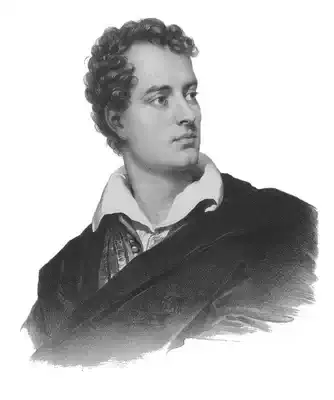
Lord Byron
Thoughts Suggested By A College Examination
Thoughts Suggested By A College Examination
High in the midst, surrounded by his peers,
MAGNUS his ample front sublime up rears:
Placed on his chair of state, he seems a god.
While Sophs and Freshmen tremble at his nod.
As all around sit wrapt in speechless gloom,
His voice in thunder shakes the sounding dome;
Denouncing dire reproach to luckless fools,
Unskill'd to plod in mathematic rules.
Happy the youth in Euclid's axiorn tried,
Though littie versed in any art beside;
Who, scarcely skill'd an English line tc pen,
Scans Attic metres with a critic's ken.
What, though he knows not how his fathers bled,
When civil discord piled the fields with dead,
When Edward bade his conquering bands advance
Or Henry trampled on the crest of France.
Though marvelling at the name of Magna Charta,
Yet well he recollects the laws of Sparta;
Can tell what edicts sage Lycurgus made,
While Blackstone's on the shelf neglected laid;
Of Grecian dramas vaunts the deathless fame,
Of Avon's bard remembering scarce the name.
Such is the youth whose scientific pate
Classhonours,
medals, fellowships, await
Or even, perhaps, the declamation prize
If to such glorious height he lifts his eyes.
But lo! no common orator can hope
The envied silver cup within his scope.
Not that our heads much eloquence require,
Th' ATHENIAN'S glowing style, or Tully's fire.
A manner clear or warm is useless, since
We do not try by speaking to convince.
Be other orators of pleasing proud,We
speak to please ourselves, not move the crowd:
Our gravity prefers the muttering tone,
A proper mixture of the squeak and groan:
No borrow'd grace of action must he seen;
The slightest motion would displease the Dean;
Whilst everv staring graduate would prate
Against what he could never imitate.
The man who hopes t' obtain the promised cup
Must in one posture stand, and ne'er look up;
Nor stop, but rattle over every word No
matter what, so it can not be heard.
Thus let him hurry on, nor think to rest:
Who speaks the fastest's sure to speak the best;
Who utters most within the shortest space
May safely hope to win the wordy race.
The sons of science these, who, thus repaid,
Linger in ease in Granta's sluggish shade;
Where on Cam's sedgy banks supine they lie,
Unknown, unhonour'd live, unweptfor
die:
Dull as the pictures which adorn their halls,
They think all learning fix'd within their walls:
In manners rude, in foolish forms precise,
All modern arts affecting to despise;
Yet prizing Bentley's, Brunck's, or Porson's note,
More than the verse on which the critic wrote:
Vain as their honours, heavy as their ale,
Sad as their wit, and tedious as their tale;
To friendship dead, though not untaught to feel
When Self and Church demand a bigot zeal.
With eager haste they court the lord of power,
Whether 'tis Pitt or Petty rules the hour;
To him, with suppliant smiles, they bend the head,
While distant mitres to their eyes are spread.
But should a storm o'erwhelm him with disgrace,
They'd fly to seek the next who fill'd his place.
Such are the men who learning's treasures guard!
Such is their practice, such is their reward!
This much, at least, we may presume to say The
premium can't exceed the price they pay.
High in the midst, surrounded by his peers,
MAGNUS his ample front sublime up rears:
Placed on his chair of state, he seems a god.
While Sophs and Freshmen tremble at his nod.
As all around sit wrapt in speechless gloom,
His voice in thunder shakes the sounding dome;
Denouncing dire reproach to luckless fools,
Unskill'd to plod in mathematic rules.
Happy the youth in Euclid's axiorn tried,
Though littie versed in any art beside;
Who, scarcely skill'd an English line tc pen,
Scans Attic metres with a critic's ken.
What, though he knows not how his fathers bled,
When civil discord piled the fields with dead,
When Edward bade his conquering bands advance
Or Henry trampled on the crest of France.
Though marvelling at the name of Magna Charta,
Yet well he recollects the laws of Sparta;
Can tell what edicts sage Lycurgus made,
While Blackstone's on the shelf neglected laid;
Of Grecian dramas vaunts the deathless fame,
Of Avon's bard remembering scarce the name.
Such is the youth whose scientific pate
Classhonours,
medals, fellowships, await
Or even, perhaps, the declamation prize
If to such glorious height he lifts his eyes.
But lo! no common orator can hope
The envied silver cup within his scope.
Not that our heads much eloquence require,
Th' ATHENIAN'S glowing style, or Tully's fire.
A manner clear or warm is useless, since
We do not try by speaking to convince.
Be other orators of pleasing proud,We
speak to please ourselves, not move the crowd:
Our gravity prefers the muttering tone,
A proper mixture of the squeak and groan:
No borrow'd grace of action must he seen;
The slightest motion would displease the Dean;
Whilst everv staring graduate would prate
Against what he could never imitate.
The man who hopes t' obtain the promised cup
Must in one posture stand, and ne'er look up;
Nor stop, but rattle over every word No
matter what, so it can not be heard.
Thus let him hurry on, nor think to rest:
Who speaks the fastest's sure to speak the best;
Who utters most within the shortest space
May safely hope to win the wordy race.
The sons of science these, who, thus repaid,
Linger in ease in Granta's sluggish shade;
Where on Cam's sedgy banks supine they lie,
Unknown, unhonour'd live, unweptfor
die:
Dull as the pictures which adorn their halls,
They think all learning fix'd within their walls:
In manners rude, in foolish forms precise,
All modern arts affecting to despise;
Yet prizing Bentley's, Brunck's, or Porson's note,
More than the verse on which the critic wrote:
Vain as their honours, heavy as their ale,
Sad as their wit, and tedious as their tale;
To friendship dead, though not untaught to feel
When Self and Church demand a bigot zeal.
With eager haste they court the lord of power,
Whether 'tis Pitt or Petty rules the hour;
To him, with suppliant smiles, they bend the head,
While distant mitres to their eyes are spread.
But should a storm o'erwhelm him with disgrace,
They'd fly to seek the next who fill'd his place.
Such are the men who learning's treasures guard!
Such is their practice, such is their reward!
This much, at least, we may presume to say The
premium can't exceed the price they pay.
367
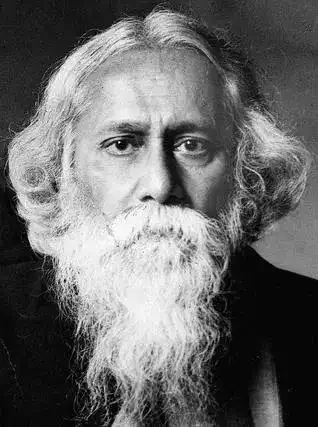
Rabindranath Tagore
The Unheeded Pageant
The Unheeded Pageant
Ah, who was it coloured that little frock, my child, and covered
your sweet limbs with that little red tunic?
You have come out in the morning to play in the courtyard,
tottering and tumbling as you run.
But who was it coloured that little frock, my child?
What is it makes you laugh, my little life-bud?
Mother smiles at you standing on the threshold.
She claps her hands and her bracelets jingle, and you dance
with your bamboo stick in your hand like a tiny little shepherd.
But what is it makes you laugh, my little life-bud?
O beggar, what do you bed for, clinging to your mother's neck
with both your hands?
O greedy heart, shall I pluck the world like a fruit from the
sky to place it on your little rosy palm?
O beggar, what are you begging for?
The wind carries away in glee the tinkling of your anklet
bells.
The sun smiles and watches your toilet.
The sky watches over you when you sleep in your mother's arms,
and the morning comes tiptoe to your bed and kisses your eyes.
The wind carried away in glee the tinkling of your anklet
bells.
The fairy mistress of dreams is coming towards you, flying
through the twilight sky.
The world-mother keeps her seat by you in your mother's heart.
He who plays his music to the stars is standing at your window
with his flute.
And the fairy mistress of dreams is coming towards you, flying
through the twilight sky.
Ah, who was it coloured that little frock, my child, and covered
your sweet limbs with that little red tunic?
You have come out in the morning to play in the courtyard,
tottering and tumbling as you run.
But who was it coloured that little frock, my child?
What is it makes you laugh, my little life-bud?
Mother smiles at you standing on the threshold.
She claps her hands and her bracelets jingle, and you dance
with your bamboo stick in your hand like a tiny little shepherd.
But what is it makes you laugh, my little life-bud?
O beggar, what do you bed for, clinging to your mother's neck
with both your hands?
O greedy heart, shall I pluck the world like a fruit from the
sky to place it on your little rosy palm?
O beggar, what are you begging for?
The wind carries away in glee the tinkling of your anklet
bells.
The sun smiles and watches your toilet.
The sky watches over you when you sleep in your mother's arms,
and the morning comes tiptoe to your bed and kisses your eyes.
The wind carried away in glee the tinkling of your anklet
bells.
The fairy mistress of dreams is coming towards you, flying
through the twilight sky.
The world-mother keeps her seat by you in your mother's heart.
He who plays his music to the stars is standing at your window
with his flute.
And the fairy mistress of dreams is coming towards you, flying
through the twilight sky.
529
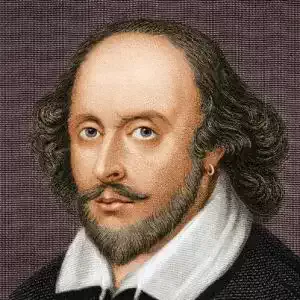
William Shakespeare
Sonnet 2:
Sonnet 2:
When forty winters shall besiege thy brow,
And dig deep trenches in thy beauty's field,
Thy youth's proud livery, so gazed on now,
Will be a tatter'd weed, of small worth held:
Then being ask'd where all thy beauty lies,
Where all the treasure of thy lusty days,
To say, within thine own deep-sunken eyes,
Were an all-eating shame and thriftless praise.
How much more praise deserved thy beauty's use,
If thou couldst answer 'This fair child of mine
Shall sum my count and make my old excuse,'
Proving his beauty by succession thine!
This were to be new made when thou art old,
And see thy blood warm when thou feel'st it cold.
When forty winters shall besiege thy brow,
And dig deep trenches in thy beauty's field,
Thy youth's proud livery, so gazed on now,
Will be a tatter'd weed, of small worth held:
Then being ask'd where all thy beauty lies,
Where all the treasure of thy lusty days,
To say, within thine own deep-sunken eyes,
Were an all-eating shame and thriftless praise.
How much more praise deserved thy beauty's use,
If thou couldst answer 'This fair child of mine
Shall sum my count and make my old excuse,'
Proving his beauty by succession thine!
This were to be new made when thou art old,
And see thy blood warm when thou feel'st it cold.
469

Edward Lear
Limerick: There was an Old Man of the South
Limerick: There was an Old Man of the South
There was an Old Man of the South,
Who had an immederate mouth;
But in swallowing a dish,
That was quite full of fish,
He was choked, that Old Man of the South.
There was an Old Man of the South,
Who had an immederate mouth;
But in swallowing a dish,
That was quite full of fish,
He was choked, that Old Man of the South.
186
Lord Byron
There Was A Time, I Need Not Name
There Was A Time, I Need Not Name
There was a time, I need not name,
Since it will ne'er forgotten be,
When all our feelings were the same
As still my soul hath been to thee.
And from that hour when first thy tongue
Confess'd a love which equall'd mine,
Though many a grief my heart hath wrung,
Unknown, and thus unfelt, by thine,
None, none hath sunk so deep as thisTo
think how all that love hath flown;
Transient as every faithless kiss,
But transient in thy breast alone.
And yet my heart some solace knew,
When late I heard thy lips declare,
In accents once imagined true,
Remembrance of the days that were.
Yes! my adored, yet most unkind!
Though thou wilt never love again,
To me 'tis doubly sweet to find
Remembrance of that love remain.
Yes! 'tis a glorious thought to me,
Nor longer shall my soul repine,
Whate'er thou art or e'er shalt be,
Thou hast been dearly, solely mine.
There was a time, I need not name,
Since it will ne'er forgotten be,
When all our feelings were the same
As still my soul hath been to thee.
And from that hour when first thy tongue
Confess'd a love which equall'd mine,
Though many a grief my heart hath wrung,
Unknown, and thus unfelt, by thine,
None, none hath sunk so deep as thisTo
think how all that love hath flown;
Transient as every faithless kiss,
But transient in thy breast alone.
And yet my heart some solace knew,
When late I heard thy lips declare,
In accents once imagined true,
Remembrance of the days that were.
Yes! my adored, yet most unkind!
Though thou wilt never love again,
To me 'tis doubly sweet to find
Remembrance of that love remain.
Yes! 'tis a glorious thought to me,
Nor longer shall my soul repine,
Whate'er thou art or e'er shalt be,
Thou hast been dearly, solely mine.
518
Emily Dickinson
The Definition of Beauty is
The Definition of Beauty is
988
The Definition of Beauty is
That Definition is none-
Of Heaven, easing Analysis,
Since Heaven and He are one.
988
The Definition of Beauty is
That Definition is none-
Of Heaven, easing Analysis,
Since Heaven and He are one.
365

Ella Wheeler Wilcox
Two Sunsets
Two Sunsets
In the fair morning of his life,
When his pure heart lay in his breast,
Panting, with all that wild unrest
To plunge into the great world's strife
That fills young hearts with mad desire,
He saw a sunset. Red and gold
The burning billows surged and rolled,
And upward tossed their caps of fire.
He looked. And as he looked the sight
Sent from his soul through breast and brain
Such intense joy, it hurt like pain.
His heart seemed bursting with delight.
So near the Unknown seemed, so close
He might have grasped it with his hand.
He felt his inmost soul expand,
As sunlight will expand a rose.
One day he heard a singing strain--
A human voice, in bird-like trills.
He paused, and little rapture-rills
Went trickling downward through each vein.
And in his heart the whole day long,
As in a temple veiled and dim,
He kept and bore about with him
The beauty of that singer's song.
And then? But why relate what then?
His smoldering heart flamed into fire--
He had his one supreme desire,
And plunged into the world of men.
For years queen Folly held her sway.
With pleasures of the grosser kind
She fed his flesh and drugged his mind,
Till, shamed, he sated turned away.
He sought his boyhood's home. That hour
Triumphant should have been, in sooth,
Since he went forth an unknown youth,
And came back crowned with wealth and power.
The clouds made day a gorgeous bed;
He saw the splendor of the sky
With unmoved heart and stolid eye;
He knew only West was red.
Then suddenly a fresh young voice
Rose, bird-like, from some hidden place,
He did not even turn his face;
It struck him simply as a noise.
He trod the old paths up and down.
Their ruch-hued leaves by Fall winds whirled--
How dull they were--how dull the world--
Dull even in the pulsing town.
O! worst of punishments, that brings
A blunting of all finer sense,
A loss of feelings keen, intense,
And dulls us to the higher things.
O! penalty most dire, most sure,
Swift following after gross delights,
That we no more see beauteous sights,
Or hear as hear the good and pure.
O! shape more hideous and more dread
Than Vengeance takes in creed-taught minds,
This certain doom that blunts and blinds,
And strikes the holiest feelings dead.
In the fair morning of his life,
When his pure heart lay in his breast,
Panting, with all that wild unrest
To plunge into the great world's strife
That fills young hearts with mad desire,
He saw a sunset. Red and gold
The burning billows surged and rolled,
And upward tossed their caps of fire.
He looked. And as he looked the sight
Sent from his soul through breast and brain
Such intense joy, it hurt like pain.
His heart seemed bursting with delight.
So near the Unknown seemed, so close
He might have grasped it with his hand.
He felt his inmost soul expand,
As sunlight will expand a rose.
One day he heard a singing strain--
A human voice, in bird-like trills.
He paused, and little rapture-rills
Went trickling downward through each vein.
And in his heart the whole day long,
As in a temple veiled and dim,
He kept and bore about with him
The beauty of that singer's song.
And then? But why relate what then?
His smoldering heart flamed into fire--
He had his one supreme desire,
And plunged into the world of men.
For years queen Folly held her sway.
With pleasures of the grosser kind
She fed his flesh and drugged his mind,
Till, shamed, he sated turned away.
He sought his boyhood's home. That hour
Triumphant should have been, in sooth,
Since he went forth an unknown youth,
And came back crowned with wealth and power.
The clouds made day a gorgeous bed;
He saw the splendor of the sky
With unmoved heart and stolid eye;
He knew only West was red.
Then suddenly a fresh young voice
Rose, bird-like, from some hidden place,
He did not even turn his face;
It struck him simply as a noise.
He trod the old paths up and down.
Their ruch-hued leaves by Fall winds whirled--
How dull they were--how dull the world--
Dull even in the pulsing town.
O! worst of punishments, that brings
A blunting of all finer sense,
A loss of feelings keen, intense,
And dulls us to the higher things.
O! penalty most dire, most sure,
Swift following after gross delights,
That we no more see beauteous sights,
Or hear as hear the good and pure.
O! shape more hideous and more dread
Than Vengeance takes in creed-taught minds,
This certain doom that blunts and blinds,
And strikes the holiest feelings dead.
319
William Shakespeare
Sonnet 18: Shall I compare thee to a summer's day?
Sonnet 18: Shall I compare thee to a summer's day?
Shall I compare thee to a summer's day?
Thou art more lovely and more temperate.
Rough winds do shake the darling buds of May,
And summer's lease hath all too short a date.
Sometime too hot the eye of heaven shines,
And often is his gold complexion dimmed;
And every fair from fair sometime declines,
By chance, or nature's changing course untrimmed.
But thy eternal summer shall not fade
Nor lose possession of that fair thou ow'st;
Nor shall death brag thou wand'rest in his shade,
When in eternal lines to time thou grow'st,
So long as men can breathe or eyes can see,
So long lives this, and this gives life to thee.
Shall I compare thee to a summer's day?
Thou art more lovely and more temperate.
Rough winds do shake the darling buds of May,
And summer's lease hath all too short a date.
Sometime too hot the eye of heaven shines,
And often is his gold complexion dimmed;
And every fair from fair sometime declines,
By chance, or nature's changing course untrimmed.
But thy eternal summer shall not fade
Nor lose possession of that fair thou ow'st;
Nor shall death brag thou wand'rest in his shade,
When in eternal lines to time thou grow'st,
So long as men can breathe or eyes can see,
So long lives this, and this gives life to thee.
228
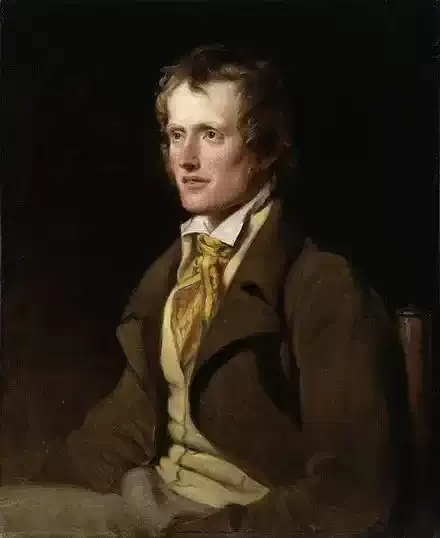
John Clare
The Shepherd's Calendar - October
The Shepherd's Calendar - October
Nature now spreads around in dreary hue
A pall to cover all that summer knew
Yet in the poets solitary way
Some pleasing objects for his praise delay
Somthing that makes him pause and turn again
As every trifle will his eye detain
The free horse rustling through the stubble land
And bawling herd boy with his motly band
Of hogs and sheep and cows who feed their fill
Oer cleard fields rambling where so ere they will
The geese flock gabbling in the splashy fields
And quaking ducks in pondweeds half conseald
Or seeking worms along the homclose sward
Right glad of freedom from the prison yard
While every cart rut dribbles its low tide
And every hollow splashing sports provide
The hedger stopping gaps wi pointed bough
Made by intruding horse and blundering cow
The milk maid tripping on her morning way
And fodderers oft tho early cutting hay
Dropping the littering forkfulls from his back
Side where the thorn fence circles round the stack
The cotter journying wi his noisev swine
Along the wood side where the brambles twine
Shaking from dinted cups the acorns brown
And from the hedges red awes dashing down
And nutters rustling in the yellow woods
Scaring from their snug lairs the pheasant broods
And squirrels secret toils oer winter dreams
Picking the brown nuts from the yellow beams
And hunters from the thickets avenue
In scarlet jackets startling on the view
Skiming a moment oer the russet plain
Then hiding in the colord woods again
The ploping guns sharp momentary shock
Which eccho bustles from her cave to mock
The sticking groups in many a ragged set
Brushing the woods their harmless loads to get
And gipseys camps in some snug shelterd nook
Where old lane hedges like the pasture brook
Run crooking as they will by wood and dell
In such lone spots these wild wood roamers dwell
On commons where no farmers claims appear
Nor tyrant justice rides to interfere
Such the abodes neath hedge or spreading oak
And but discovered by its curling smoak
Puffing and peeping up as wills the breeze
Between the branches of the colord trees
Such are the pictures that october yields
To please the poet as he walks the fields
Oft dames in faded cloak of red or grey
Loiters along the mornings dripping way
Wi wicker basket on their witherd arms
Searching the hedges of home close or farms
Where brashy elder trees to autum fade
Each cotters mossy hut and garden shade
Whose glossy berrys picturesquly weaves
Their swathy bunches mid the yellow leaves
Where the pert sparrow stains his little bill
And tutling robin picks his meals at will
Black ripening to the wan suns misty ray
Here the industrious huswives wend their way
Pulling the brittle branches carefull down
And hawking loads of berrys to the town
Wi unpretending skill yet half divine
To press and make their eldern berry wine
That bottld up becomes a rousing charm
To kindle winters icy bosom warm
That wi its merry partner nut brown beer
Makes up the peasants christmass keeping cheer
While nature like fair woman in decay
Which pale consumption hourly wastes away
Upon her waining features pale and chill
Wears dreams of beauty that seem lovely still
Among the heath furze still delights to dwell
Quaking as if with cold the harvest bell
The mushroom buttons each moist morning brings
Like spots of snow in the green tawney rings
And fuzz balls swelld like bladders in the grass
Which oft the merry laughing milking lass
Will stoop to gather in her sportive airs
And slive in mimickd fondness unawares
To smut the brown cheek of the teazing swain
Wi the black powder which their balls contain
Who feigns offence at first that love may speed
Then charms a kiss to recompence the deed
The flying clouds urged on in swiftest pace
Like living things as if they runned a race
The winds that oer each coming tempest broods
Waking like spirits in their startling moods
Fluttering the sear leaves on the blasting lea
That litters under every fading tree
And pausing oft as falls the pattering rain
Then gathering strength and twirling them again
The startld stockdove hurried wizzing bye
As the still hawk hangs oer him in the sky
Crows from the oak trees qawking as they spring
Dashing the acorns down wi beating wing
Waking the woodlands sleep in noises low
Pattring on crimpt brakes withering brown below
While from their hollow nest the squirrels (pop)
Adown the tree to pick them as they drop
The starnel crowds that dim the muddy light
The crows and jackdaws flapping home at night
And puddock circling round its lazy flight
Round the wild sweeing wood in motion slow
Before it perches on the oaks below
And hugh black beetles revelling alone
In the dull evening with their heavy drone
Buzzing from barn door straw and hovel sides
Where fodderd cattle from the night abides
These pictures linger thro the shortning day
And cheer the lone bards mellancholy way
And now and then a solitary boy
Journeying and muttering oer his dreams of joy
Nature now spreads around in dreary hue
A pall to cover all that summer knew
Yet in the poets solitary way
Some pleasing objects for his praise delay
Somthing that makes him pause and turn again
As every trifle will his eye detain
The free horse rustling through the stubble land
And bawling herd boy with his motly band
Of hogs and sheep and cows who feed their fill
Oer cleard fields rambling where so ere they will
The geese flock gabbling in the splashy fields
And quaking ducks in pondweeds half conseald
Or seeking worms along the homclose sward
Right glad of freedom from the prison yard
While every cart rut dribbles its low tide
And every hollow splashing sports provide
The hedger stopping gaps wi pointed bough
Made by intruding horse and blundering cow
The milk maid tripping on her morning way
And fodderers oft tho early cutting hay
Dropping the littering forkfulls from his back
Side where the thorn fence circles round the stack
The cotter journying wi his noisev swine
Along the wood side where the brambles twine
Shaking from dinted cups the acorns brown
And from the hedges red awes dashing down
And nutters rustling in the yellow woods
Scaring from their snug lairs the pheasant broods
And squirrels secret toils oer winter dreams
Picking the brown nuts from the yellow beams
And hunters from the thickets avenue
In scarlet jackets startling on the view
Skiming a moment oer the russet plain
Then hiding in the colord woods again
The ploping guns sharp momentary shock
Which eccho bustles from her cave to mock
The sticking groups in many a ragged set
Brushing the woods their harmless loads to get
And gipseys camps in some snug shelterd nook
Where old lane hedges like the pasture brook
Run crooking as they will by wood and dell
In such lone spots these wild wood roamers dwell
On commons where no farmers claims appear
Nor tyrant justice rides to interfere
Such the abodes neath hedge or spreading oak
And but discovered by its curling smoak
Puffing and peeping up as wills the breeze
Between the branches of the colord trees
Such are the pictures that october yields
To please the poet as he walks the fields
Oft dames in faded cloak of red or grey
Loiters along the mornings dripping way
Wi wicker basket on their witherd arms
Searching the hedges of home close or farms
Where brashy elder trees to autum fade
Each cotters mossy hut and garden shade
Whose glossy berrys picturesquly weaves
Their swathy bunches mid the yellow leaves
Where the pert sparrow stains his little bill
And tutling robin picks his meals at will
Black ripening to the wan suns misty ray
Here the industrious huswives wend their way
Pulling the brittle branches carefull down
And hawking loads of berrys to the town
Wi unpretending skill yet half divine
To press and make their eldern berry wine
That bottld up becomes a rousing charm
To kindle winters icy bosom warm
That wi its merry partner nut brown beer
Makes up the peasants christmass keeping cheer
While nature like fair woman in decay
Which pale consumption hourly wastes away
Upon her waining features pale and chill
Wears dreams of beauty that seem lovely still
Among the heath furze still delights to dwell
Quaking as if with cold the harvest bell
The mushroom buttons each moist morning brings
Like spots of snow in the green tawney rings
And fuzz balls swelld like bladders in the grass
Which oft the merry laughing milking lass
Will stoop to gather in her sportive airs
And slive in mimickd fondness unawares
To smut the brown cheek of the teazing swain
Wi the black powder which their balls contain
Who feigns offence at first that love may speed
Then charms a kiss to recompence the deed
The flying clouds urged on in swiftest pace
Like living things as if they runned a race
The winds that oer each coming tempest broods
Waking like spirits in their startling moods
Fluttering the sear leaves on the blasting lea
That litters under every fading tree
And pausing oft as falls the pattering rain
Then gathering strength and twirling them again
The startld stockdove hurried wizzing bye
As the still hawk hangs oer him in the sky
Crows from the oak trees qawking as they spring
Dashing the acorns down wi beating wing
Waking the woodlands sleep in noises low
Pattring on crimpt brakes withering brown below
While from their hollow nest the squirrels (pop)
Adown the tree to pick them as they drop
The starnel crowds that dim the muddy light
The crows and jackdaws flapping home at night
And puddock circling round its lazy flight
Round the wild sweeing wood in motion slow
Before it perches on the oaks below
And hugh black beetles revelling alone
In the dull evening with their heavy drone
Buzzing from barn door straw and hovel sides
Where fodderd cattle from the night abides
These pictures linger thro the shortning day
And cheer the lone bards mellancholy way
And now and then a solitary boy
Journeying and muttering oer his dreams of joy
315
Emily Dickinson
The Day that I was crowned
The Day that I was crowned
356
The Day that I was crowned
Was like the other Days-
Until the Coronation came-
And then-'twas Otherwise-
As Carbon in the Coal
And Carbon in the Gem
Are One-and yet the former
Were dull for Diadem-
I rose, and all was plain-
But when the Day declined
Myself and It, in Majesty
Were equally-adorned-
The Grace that I-was chose-
To Me-surpassed the Crown
That was the Witness for the Grace'
Twas even that 'twas Mine-
356
The Day that I was crowned
Was like the other Days-
Until the Coronation came-
And then-'twas Otherwise-
As Carbon in the Coal
And Carbon in the Gem
Are One-and yet the former
Were dull for Diadem-
I rose, and all was plain-
But when the Day declined
Myself and It, in Majesty
Were equally-adorned-
The Grace that I-was chose-
To Me-surpassed the Crown
That was the Witness for the Grace'
Twas even that 'twas Mine-
253
Lord Byron
There Be None of Beauty's Daughters
There Be None of Beauty's Daughters
There be none of Beauty's daughters
With a magic like Thee;
And like music on the waters
Is thy sweet voice to me:
When, as if its sound were causing
The charméd ocean's pausing,
The waves lie still and gleaming,
And the lull'd winds seem dreaming:
And the midnight moon is weaving
Her bright chain o'er the deep,
Whose breast is gently heaving
As an infant's asleep:
So the spirit bows before thee
To listen and adore thee;
With a full but soft emotion,
Like the swell of Summer's ocean.
There be none of Beauty's daughters
With a magic like Thee;
And like music on the waters
Is thy sweet voice to me:
When, as if its sound were causing
The charméd ocean's pausing,
The waves lie still and gleaming,
And the lull'd winds seem dreaming:
And the midnight moon is weaving
Her bright chain o'er the deep,
Whose breast is gently heaving
As an infant's asleep:
So the spirit bows before thee
To listen and adore thee;
With a full but soft emotion,
Like the swell of Summer's ocean.
415
Rabindranath Tagore
The Sailor
The Sailor
The boat of the boatman Madhu is moored at the wharf of Rajgunj.
It is uselessly laden with jute, and has been lying there idle
for ever so long.
If he would only lend me his boat, I should man her with a
hundred oars, and hoist sails, five or six or seven.
I should never steer her to stupid markets.
I should sail the seven seas and the thirteen rivers of
fairyland.
But, mother, you won't weep for me in a corner.
I am not going into the forest like Ramachandra to come back
only after fourteen years.
I shall become the prince of the story, and fill my boat with
whatever I like.
I shall take my friend Ashu with me. We shall sail merrily
across the ever seas and the thirteen rivers of fairyland.
We shall set sail in the early morning light.
When at noontide you are bathing at the pond, we shall be in
the land of a strange king.
We shall pass the ford of Tirpurni, and leave behind us the
desert of Tepantar.
When we come back it will be getting dark, and I shall tell
you of all that we have seen.
I shall cross the seven seas and the thirteen rivers of
fairyland.
The boat of the boatman Madhu is moored at the wharf of Rajgunj.
It is uselessly laden with jute, and has been lying there idle
for ever so long.
If he would only lend me his boat, I should man her with a
hundred oars, and hoist sails, five or six or seven.
I should never steer her to stupid markets.
I should sail the seven seas and the thirteen rivers of
fairyland.
But, mother, you won't weep for me in a corner.
I am not going into the forest like Ramachandra to come back
only after fourteen years.
I shall become the prince of the story, and fill my boat with
whatever I like.
I shall take my friend Ashu with me. We shall sail merrily
across the ever seas and the thirteen rivers of fairyland.
We shall set sail in the early morning light.
When at noontide you are bathing at the pond, we shall be in
the land of a strange king.
We shall pass the ford of Tirpurni, and leave behind us the
desert of Tepantar.
When we come back it will be getting dark, and I shall tell
you of all that we have seen.
I shall cross the seven seas and the thirteen rivers of
fairyland.
598
William Shakespeare
Sonnet 16: But wherefore do not you a mightier way
Sonnet 16: But wherefore do not you a mightier way
But wherefore do not you a mightier way
Make war upon this bloody tyrant, Time,
And fortify your self in your decay
With means more blessèd than my barren rhyme?
Now stand you on the top of happy hours,
And many maiden gardens yet unset,
With virtuous wish would bear you living flowers,
Much liker than your painted counterfeit:
So should the lines of life that life repair
Which this, Time's pencil, or my pupil pen
Neither in inward worth nor outward fair
Can make you live your self in eyes of men.
To give away your self keeps your self still,
And you must live drawn by your own sweet skill.
But wherefore do not you a mightier way
Make war upon this bloody tyrant, Time,
And fortify your self in your decay
With means more blessèd than my barren rhyme?
Now stand you on the top of happy hours,
And many maiden gardens yet unset,
With virtuous wish would bear you living flowers,
Much liker than your painted counterfeit:
So should the lines of life that life repair
Which this, Time's pencil, or my pupil pen
Neither in inward worth nor outward fair
Can make you live your self in eyes of men.
To give away your self keeps your self still,
And you must live drawn by your own sweet skill.
200
Edward Lear
Limerick: There was an Old Man of the Nile,
Limerick: There was an Old Man of the Nile,
There was an Old Man of the Nile,
Who sharpened his nails with a file,
Till he cut out his thumbs,
And said calmly, 'This comes
Of sharpening one's nails with a file!'
There was an Old Man of the Nile,
Who sharpened his nails with a file,
Till he cut out his thumbs,
And said calmly, 'This comes
Of sharpening one's nails with a file!'
165
Lord Byron
The Vision of Judgment
The Vision of Judgment
I
Saint Peter sat by the celestial gate:
His keys were rusty, and the lock was dull,
So little trouble had been given of late;
Not that the place by any means was full,
But since the Gallic era 'eighteight'
The devils had ta'en a longer, stronger pull,
And 'a pull altogether,' as they say
At sea — which drew most souls another way.
II
The angels all were singing out of tune,
And hoarse with having little else to do,
Excepting to wind up the sun and moon,
Or curb a runaway young star or two,
Or wild colt of a comet, which too soon
Broke out of bounds o'er th' ethereal blue,
Splitting some planet with its playful tail,
As boats are sometimes by a wanton whale.
III
The guardian seraphs had retired on high,
Finding their charges past all care below;
Terrestrial business fill'd nought in the sky
Save the recording angel's black bureau;
Who found, indeed, the facts to multiply
With such rapidity of vice and woe,
That he had stripp'd off both his wings in quills,
And yet was in arrear of human ills.
IV
His business so augmented of late years,
That he was forced, against his will no doubt,
(Just like those cherubs, earthly ministers,)
For some resource to turn himself about,
And claim the help of his celestial peers,
To aid him ere he should be quite worn out
By the increased demand for his remarks:
Six angels and twelve saints were named his clerks.
V
This was a handsome board — at least for heaven;
And yet they had even then enough to do,
So many conqueror's cars were daily driven,
So many kingdoms fitted up anew;
Each day too slew its thousands six or seven,
Till at the crowning carnage, Waterloo,
They threw their pens down in divine disgust —
The page was so besmear'd with blood and dust.
VI
This by the way: 'tis not mine to record
What angels shrink Wrom: ZAAFXISHJEXXIMQZUIVO
On this occasion his own work abhorr'd,
So surfeited with the infernal revel:
Though he himself had sharpen'd every sword,
It almost quench'd his innate thirst of evil.
(Here Satan's sole good work deserves insertion —
'Tis, that he has both generals in reveration.)
VII
Let's skip a few short years of hollow peace,
Which peopled earth no better, hell as wont,
And heaven none — they form the tyrant's lease,
With nothing but new names subscribed upon't;
'Twill one day finish: meantime they increase,
'With seven heads and ten horns,' and all in front,
Like Saint John's foretold beast; but ours are born
Less formidable in the head than horn.
VIII
In the first year of freedom's second dawn
Died George the Third; although no tyrant, one
Who shielded tyrants, till each sense withdrawn
Left him nor mental nor external sun:
A better farmer ne'er brush'd dew from lawn,
A worse king never left a realm undone!
He died — but left his subjects still behind,
One half as mad — and t'other no less blind.
IX
He died! his death made no great stir on earth:
His burial made some pomp; there was profusion
Of velvet, gilding, brass, and no great dearth
Of aught but tears — save those shed by collusion.
For these things may be bought at their true worth;
Of elegy there was the due infusion —
Bought also; and the torches, cloaks, and banners,
Heralds, and relics of old Gothic manners,
X
Form'd a sepulchral melodrame.
Of all
The fools who flack's to swell or see the show,
Who cared about the corpse? The funeral
Made the attraction, and the black the woe.
There throbbed not there a thought which pierced the pall;
And when the gorgeous coffin was laid low,
It seamed the mockery of hell to fold
The rottenness of eighty years in gold.
XI
So mix his body with the dust! It might
Return to what it must far sooner, were
The natural compound left alone to fight
Its way back into earth, and fire, and air;
But the unnatural balsams merely blight
What nature made him at his birth, as bare
As the mere million's base unmarried clay —
Yet all his spices but prolong decay.
XII
He's dead — and upper earth with him has done;
He's buried; save the undertaker's bill,
Or lapidary scrawl, the world is gone
For him, unless he left a German will:
But where's the proctor who will ask his son?
In whom his qualities are reigning still,
Except that household virtue, most uncommon,
Of constancy to a bad, ugly woman.
XIII
'God save the king!' It is a large economy
In God to save the like; but if he will
Be saving, all the better; for not one am I
Of those who think damnation better still:
I hardly know too if not quite alone am I
In this small hope of bettering future ill
By circumscribing, with some slight restriction,
The eternity of hell's hot jurisdiction.
XIV
I know this is unpopular; I know
'Tis blasphemous; I know one may be damned
For hoping no one else may ever be so;
I know my catechism; I know we're caromed
With the best doctrines till we quite o'erflow;
I know that all save England's church have shamm'd,
And that the other twice two hundred churches
And synagogues have made a damn'd bad purchase.
XV
God help us all! God help me too! I am,
God knows, as helpless as the devil can wish,
And not a whit more difficult to damn,
Than is to bring to land a latehook'd
fish,
Or to the butcher to purvey the lamb;
Not that I'm fit for such a noble dish,
As one day will be that immortal fry
Of almost everybody born to die.
XVI
Saint Peter sat by the celestial gate,
And nodded o'er his keys; when, lo! there came
A wondrous noise he had not heard of late —
A rushing sound of wind, and stream, and flame;
In short, a roar of things extremely great,
Which would have made aught save a saint exclaim;
But he, with first a start and then a wink,
Said, 'There's another star gone out, I think!'
XVII
But ere he could return to his repose,
A cherub flapp'd his right wing o'er his eyes —
At which St. Peter yawn'd, and rubb'd his hose:
'Saint porter,' said the angel, 'prithee rise!'
Waving a goodly wing, which glow'd, as glows
An earthly peacock's tail, with heavenly dyes;
To which the saint replied, 'Well, what's the matter?
'Is Lucifer come back with all this clatter?'
XVIII
'No,' quoth the cherub; 'George the Third is dead.'
'And who is George the Third?' replied the apostle;
'What George? what Third?' 'The king of England,' said
The angel. 'Well, he won't find kings to jostle
Him on his way; but does he wear his head?
Because the last we saw here had a tussle,
And ne'er would have got into heaven's good graces,
Had he not flung his head in all our faces.
XIX
'He was, if I remember, king of France;
That head of his, which could not keep a crown
On earth, yet ventured in my face to advance
A claim to those of martyrs — like my own:
If I had had my sword, as I had once
When I cut ears off, I had cut him down;
But having but my keys, and not my brand,
I only knock'd his head from out his hand.
XX
'And then he set up such a headless howl,
That all the saints came out and took him in;
And there he sits by St. Paul, cheek by jowl;
That fellow Paul— the parvenù! The skin
Of St. Bartholomew, which makes his cowl
In heaven, and upon earth redeem'd his sin,
So as to make a martyr, never sped
Better than did this weak and wooden head.
XXI
'But had it come up here upon its shoulders,
There would have been a different tale to tell;
The fellowfeeling
in the saint's beholders
Seems to have acted on them like a spell,
And so this very foolish head heaven solders
Back on its trunk: it may be very well,
And seems the custom here to overthrow
Whatever has been wisely done below.'
XXII
The angel answer'd, 'Peter! do not pout:
The king who comes has head and all entire,
And never knew much what it was about —
He did as doth the puppet — by its wire,
And will be judged like all the rest, no doubt:
My business and your own is not to inquire
Into such matters, but to mind our cue —
Which is to act as we are bid to do.'
XXIII
While thus they spake, the angelic caravan,
Arriving like a rush of mighty wind,
Cleaving the fields of space, as doth the swan
Some silver stream (say Ganges, Nile, or Inde,
Or Thames, or Tweed), and 'midst them an old man
With an old soul, and both extremely blind,
Halted before the gate, and in his shroud
Seated their fellow traveller on a cloud.
XXIV
But bringing up the rear of this bright host
A Spirit of a different aspect waves
His wings, like thunderclouds
above some coast
Whose barren beach with frequent wrecks is paved;
His brow was like the deep when tempesttoss'd;
Fierce and unfathomable thoughts engraved
Eternal wrath on his immortal face,
And where he gazed a gloom pervaded space.
XXV
As he drew near, he gazed upon the gate
Ne'er to be enter'd more by him or Sin,
With such a glance of supernatural hate,
As made Saint Peter wish himself within;
He potter'd with his keys at a great rate,
And sweated through his apostolic skin:
Of course his perspiration was but ichor,
Or some such other spiritual liquor.
XXIV
The very cherubs huddled all together,
Like birds when soars the falcon; and they felt
A tingling to the top of every feather,
And form'd a circle like Orion's belt
Around their poor old charge; who scarce knew whither
His guards had led him, though they gently dealt
With royal manes (for by many stories,
And true, we learn the angels all are Tories.)
XXVII
As things were in this posture, the gate flew
Asunder, and the flashing of its hinges
Flung over space an universal hue
Of manycolour'd
flame, until its tinges
Reach'd even our speck of earth, and made a new
Aurora borealis spread its fringes
O'er the North Pole; the same seen, when icebound,
By Captain Parry's crew, in 'Melville's Sound.'
XXVIII
And from the gate thrown open issued beaming
A beautiful and mighty Thing of Light,
Radiant with glory, like a banner streaming
Victorious from some worldo'erthrowing
fight:
My poor comparisons must needs be teeming
With earthly likenesses, for here the night
Of clay obscures our best conceptions, saving
Johanna Southcote, or Bob Southey raving.
XXIX
'Twas the archangel Michael; all men know
The make of angels and archangels, since
There's scarce a scribbler has not one to show,
From the fiends' leader to the angels' prince;
There also are some altarpieces,
though
I really can't say that they much evince
One's inner notions of immortal spirits;
But let the connoisseurs explain their merits.
XXX
Michael flew forth in glory and in good;
A goodly work of him from whom all glory
And good arise; the portal past — he stood;
Before him the young cherubs and saints hoary —
(I say young, begging to be understood
By looks, not years; and should be very sorry
To state, they were not older than St. Peter,
But merely that they seem'd a little sweeter.
XXXI
The cherubs and the saints bow'd down before
That archangelic
Hierarch, the first
Of essences angelical, who wore
The aspect of a god; but this ne'er nursed
Pride in his heavenly bosom, in whose core
No thought, save for his Master's service, durst
Intrude, however glorified and high;
He knew him but the viceroy of the sky.
XXXII
He and the sombre, silent Spirit met —
They knew each other both for good and ill;
Such was their power, that neither could forget
His former friend and future foe; but still
There was a high, immortal, proud regret
In either's eye, as if 'twere less their will
Than destiny to make the eternal years
Their date of war, and their 'champ clos' the spheres.
XXXIII
But here they were in neutral space: we know
From Job, that Satan hath the power to pay
A heavenly visit thrice a year or so;
And that the 'sons of God', like those of clay,
Must keep him company; and we might show
From the same book, in how polite a way
The dialogue is held between the Powers
Of Good and Evil — but 'twould take up hours.
XXXIV
And this is not a theologic tract,
To prove with Hebrew and with Arabic,
If Job be allegory or a fact,
But a true narrative; and thus I pick
From out the whole but such and such an act
As sets aside the slightest thought of trick.
'Tis every tittle true, beyond suspicion,
And accurate as any other vision.
XXXV
The spirits were in neutral space, before
The gates of heaven; like eastern thresholds is
The place where Death's grand cause is argued o'er,
And souls despatch'd to that world or to this;
And therefore Michael and the other wore
A civil aspect: though they did not kiss,
Yet still between his Darkness and his Brightness
There pass'd a mutual glance of great politeness.
XXXVI
The Archangel bow'd, not like a modern beau,
But with a graceful Oriental bend,
Pressing one radiant arm just where below
The heart in good men is supposed to tend;
He turn'd as to an equal, not too low,
But kindly; Satan met his ancient friend
With more hauteur, as might an old Castilian
Poor noble meet a mushroom rich civilian.
XXXVII
He merely bent his diabolic brow
An instant; and then raising it, he stood
In act to assert his right or wrong, and show
Cause why King George by no means could or should
Make out a case to be exempt from woe
Eternal, more than other kings, endued
With better sense and hearts, whom history mentions,
Who long have 'paved hell with their good intentions.'
XXXVIII
Michael began: 'What wouldst thou with this man,
Now dead, and brought before the Lord? What ill
Hath he wrought since his mortal race began,
That thou cans't claim him? Speak! and do thy will,
If it be just: if in this earthly span
He hath been greatly failing to fulfil
His duties as a king and mortal, say,
And he is thine; if not, let him have way.'
XXXIX
'Michael!' replied the Prince of Air, 'even here,
Before the Gate of him thou servest, must
I claim my subject: and will make appear
That as he was my worshipper in dust,
So shall he be in spirit, although dear
To thee and thine, because nor wine nor lust
Were of his weaknesses; yet on the throne
He reign'd o'er millions to serve me alone.
XL
'Look to our earth, or rather mine; it was,
Once, more thy master's: but I triumph not
In this poor planet's conquest; nor, alas!
Need he thou servest envy me my lot:
With all the myriads of bright worlds which pass
In worship round him, he may have forgot
Yon weak creation of such paltry things;
I think few worth damnation save their kings, —
XLI
'And these but as a kind of quitrent,
to
Assert my right as lord: and even had
I such an inclination, 'twere (as you
Well know) superfluous; they are grown so bad,
That hell has nothing better left to do
Than leave them to themselves: so much more mad
And evil by their own internal curse,
Heaven cannot make them better, nor I worse.
XLII
'Look to the earth, I said, and say again:
When this old, blind, mad, helpless, weak, poor worm
Began in youth's first bloom and flush to reign,
The world and he both wore a different form,
And must of earth and all the watery plain
Of ocean call'd him king: through many a storm
His isles had floated on the abyss of time;
For the rough virtues chose them for their clime.
XLIII
'He came to his sceptre young: he leaves it old:
Look to the state in which he found his realm,
And left it; and his annals too behold,
How to a minion first he gave the helm;
How grew upon his heart a thirst for gold,
The beggar's vice, which can but overwhelm
The meanest of hearts; and for the rest, but glance
Thine eye along America and France.
XLIV
'Tis true, he was a tool from first to last
(I have the workmen safe); but as a tool
So let him be consumed. From out the past
Of ages, since mankind have known the rule
Of monarchs — from the bloody rolls amass'd
Of sin and slaughter — from the Cæsar's school,
Take the worst pupil; and produce a reign
More drench'd with gore, more cumber'd with the slain.
XLV
'He ever warr'd with freedom and the free:
Nations as men, home subjects, foreign foes,
So that they utter'd the word "Liberty!"
Found George the Third their first opponent. Whose
History was ever stain'd as his will be
With national and individual woes?
I grant his household abstinence; I grant
His neutral virtues, which most monarchs want;
XLVI
'I know he was a constant consort; own
He was a decent sire, and middling lord.
All this is much, and most upon a throne;
As temperance, if at Apicius' board,
Is more than at an anchorite's supper shown.
I grant him all the kindest can accord;
And this was well for him, but not for those
Millions who found him what oppression chose.
XLVII
'The New World shook him off; the Old yet groans
Beneath what he and his prepared, if not
Completed: he leaves heirs on many thrones
To all his vices, without what begot
Compassion for him — his tame virtues; drones
Who sleep, or despots who have not forgot
A lesson which shall be retaught
them, wake
Upon the thrones of earth; but let them quake!
XLVIII
'Five millions of the primitive, who hold
The faith which makes ye great on earth, implored
A part of that vast all they held of old, —
Freedom to worship — not alone your Lord,
Michael, but you, and you, Saint Peter! Cold
Must be your souls, if you have not abhorr'd
The foe to Catholic participation
In all the license of a Christian nation.
XLIX
'True! he allow'd them to pray God; but as
A consequence of prayer, refused the law
Which would have placed them upon the same base
With those who did not hold the saints in awe.'
But here Saint Peter started from his place,
And cried, 'You may the prisoner withdraw:
Ere heaven shall ope her portals to this Guelph,
While I am guard, may I be damn'd myself!
L
'Sooner will I with Cerberus exchange
My office (and his no sinecure)
Than see this royal Bedlam bigot range
The azure fields of heaven, of that be sure!'
'Saint!' replied Satan, 'you do well to avenge
The wrongs he made your satellites endure;
And if to this exchange you should be given,
I'll try to coax our Cerberus up to heaven!'
LI
Here Michael interposed: 'Good saint! and devil!
Pray, not so fast; you both outrun discretion.
Saint Peter! you were wont to be more civil!
Satan! excuse this warmth of his expression,
And condescension to the vulgar's level:
Event saints sometimes forget themselves in session.
Have you got more to say?' — 'No.' — If you please
I'll trouble you to call your witnesses.'
LII
Then Satan turn'd and waved his swarthy hand,
Which stirr'd with its electric qualities
Clouds farther off than we can understand,
Although we find him sometimes in our skies;
Infernal thunder shook both sea and land
In all the planets, and hell's batteries
Let off the artillery, which Milton mentions
As one of Satan's most sublime inventions.
LIII
This was a signal unto such damn'd souls
As have the privilege of their damnation
Extended far beyond the mere controls
Of worlds past, present, or to come; no station
Is theirs particularly in the rolls
Of hell assign'd; but where their inclination
Or business carries them in search of game,
They may range freely — being damn'd the same.
LIV
They're proud of this — as very well they may,
It being a sort of knighthood, or gilt key
Stuck in their loins; or like to an 'entré'
Up the back stairs, or such freemasonry.
I borrow my comparisons from clay,
Being clay myself. Let not those spirits be
Offended with such base low likenesses;
We know their posts are nobler far than these.
LV
When the great signal ran from heaven to hell —
About ten million times the distance reckon'd
From our sun to its earth, as we can tell
How much time it takes up, even to a second,
For every ray that travels to dispel
The fogs of London, through which, dimly beacon'd,
The weathercocks are gilt some thrice a year,
If that the summer is not too severe;
LVI
I say that I can tell — 'twas half a minute;
I know the solar beams take up more time
Ere, pack'd up for their journey, they begin it;
But then their telegraph is less sublime,
And if they ran a race, they would not win it
'Gainst Satan's couriers bound for their own clime.
The sun takes up some years for every ray
To reach its goal — the devil not half a day.
LVII
Upon the verge of space, about the size
Of halfacrown,
a little speck appear'd
(I've seen a something like it in the skies
In the Ægean, ere a squall); it near'd,
And growing bigger, took another guise;
Like an aërial ship it tack'd, and steer'd,
Or was steer'd (I am doubtful of the grammar
Of the last phrase, which makes the stanza stammer; —
LVIII
But take your choice): and then it grew a cloud;
And so it was — a cloud of witnesses.
But such a cloud! No land e'er saw a crowd
Of locusts numerous as the heavens saw these;
They shadow'd with their myriads space; their loud
And varied cries were like those of wild geese
(If nations may be liken'd to a goose),
And realised the phrase of 'hell broke loose.'
LIX
Here crash'd a sturdy oath of stout John Bull,
Who damn'd away his eyes as heretofore:
There Paddy brogued, 'By Jasus!' — 'What's your wull?'
The temperate Scot exclaim'd: the French ghost swore
In certain terms I shan't translate in full,
As the first coachman will; and 'midst the roar,
The voice of Jonathan was heard to express,
'Our president is going to war, I guess.'
LX
Besides there were the Spaniard, Dutch, and Dane;
In short, an universal shoal of shades,
From Otaheite's isle to Salisbury Plain,
Of all climes and professions, years and trades,
Ready to swear against the good king's reign,
Bitter as clubs in cards are against spades:
All summon'd by this grand 'subpoena,' to
Try if kings mayn't be damn'd like me or you.
LXI
When Michael saw this host, he first grew pale,
As angels can; next, like Italian twilight,
He turn'd all colours — as a peacock's tail,
Or sunset streaming through a Gothic skylight
In some old abbey, or a trout not stale,
Or distant lightning on the horizon by night,
Or a fresh rainbow, or a grand review
Of thirty regiments in red, green, and blue.
LXII
Then he address'd himself to Satan: 'Why —
My good old friend, for such I deem you, though
Our different parties make us fight so shy,
I ne'er mistake you for a personal foe;
Our difference is political, and I
Trust that, whatever may occur below,
You know my great respect for you; and this
Makes me regret whate'er you do amiss —
LXIII
'Why, my dear Lucifer, would you abuse
My call for witnesses? I did not mean
That you should half of earth and hell produce;
'Tis even superfluous, since two honest, clean
True testimonies are enough: we lose
Our time, nay, our eternity, between
The accusation and defence: if we
Hear both, 'twill stretch our immortality.'
LXIV
Satan replied, 'To me the matter is
Indifferent, in a personal point of view;
I can have fifty better souls than this
With far less trouble than we have gone through
Already; and I merely argued his
Late majesty of Britain's case with you
Upon a point of form: you may dispose
Of him; I've kings enough below, God knows!'
LXV
Thus spoke the Demon (late call'd 'multifaced'
By multoscribbling
Southey). 'Then we'll call
One or two persons of the myriads placed
Around our congress, and dispense with all
The rest,' quoth Michael: 'Who may be so graced
As to speak first? there's choice enough — who shall
It be?' Then Satan answer'd, 'There are many;
But you may choose Jack Wilkes as well as any.'
LXVI
A merry, cockeyed,
curiouslooking
sprite
Upon the instant started from the throng,
Dress'd in a fashion now forgotten quite;
For all the fashions of the flesh stick long
By people in the next world; where unite
All the costumes since Adam's, right or wrong,
From Eve's figleaf
down to the petticoat,
Almost as scanty, of days less remote.
LXVII
The spirit look'd around upon the crowds
Assembled, and exclaim'd, 'My friends of all
The spheres, we shall catch cold amongst these clouds;
So let's to business: why this general call?
If those are freeholders I see in shrouds,
And 'tis for an election that they bawl,
Behold a candidate with unturn'd coat!
Saint Peter, may I count upon your vote?'
LXVIII
'Sir,' replied Michael, 'you mistake; these things
Are of a former life, and what we do
Above is more august; to judge of kings
Is the tribunal met: so now you know.'
'Then I presume those gentlemen with wings,'
Said Wilkes, 'are cherubs; and that soul below
Looks much like George the Third, but to my mind
A good deal older — Bless me! is he blind?'
LXIX
'He is what you behold him, and his doom
Depends upon his deeds,' the Angel said;
'If you have aught to arraign in him, the tomb
Give licence to the humblest beggar's head
To lift itself against the loftiest.' — 'Some,'
Said Wilkes, 'don't wait to see them laid in lead,
For such a liberty — and I, for one,
Have told them what I though beneath the sun.'
LXX
'Above the sun repeat, then, what thou hast
To urge against him,' said the Archangel. 'Why,'
Replied the spirit, 'since old scores are past,
Must I turn evidence? In faith, not I.
Besides, I beat him hollow at the last,
With all his Lords and Commons: in the sky
I don't like ripping up old stories, since
His conduct was but natural in a prince.
LXXI
'Foolish, no doubt, and wicked, to oppress
A poor unlucky devil without a shilling;
But then I blame the man himself much less
Than Bute and Grafton, and shall be unwilling
To see him punish'd here for their excess,
Since they were both damn'd long ago, and still in
Their place below: for me, I have forgiven,
And vote his "habeas corpus" into heaven.'
LXXII
'Wilkes,' said the Devil, 'I understand all this;
You turn'd to half a courtier ere you died,
And seem to think it would not be amiss
To grow a whole one on the other side
Of Charon's ferry; you forget that his
Reign is concluded; whatso'er betide,
He won't be sovereign more: you've lost your labor,
For at the best he will be but your neighbour.
LXXIII
'However, I knew what to think of it,
When I beheld you in your jesting way,
Flitting and whispering round about the spit
Where Belial, upon duty for the day,
With Fox's lard was basting William Pitt,
His pupil; I knew what to think, I say:
That fellow even in hell breeds farther ills;
I'll have him gagg'd — 'twas one of his own bills.
LXXIV
'Call Junius!' From the crowd a shadow stalk'd,
And at the same there was a general squeeze,
So that the very ghosts no longer walk'd
In comfort, at their own aërial ease,
But were all ramm'd, and jamm'd (but to be balk'd,
As we shall see), and jostled hands and knees,
Like wind compress'd and pent within a bladder,
Or like a human colic, which is sadder.
LXXV
The shadow came — a tall, thin, greyhair'd
figure,
That look'd as it had been a shade on earth;
Quick in it motions, with an air of vigour,
But nought to mar its breeding or its birth;
Now it wax'd little, then again grew bigger,
With now an air of gloom, or savage mirth;
But as you gazed upon its features, they
Changed every instant — to what, none could say.
LXXVI
The more intently the ghosts gazed, the less
Could they distinguish whose the features were;
The Devil himself seem'd puzzled even to guess;
They varied like a dream — now here, now there;
And several people swore from out the press
They knew him perfectly; and one could swear
He was his father: upon which another
Was sure he was his mother's cousin's brother:
LXXVII
Another, that he was a duke, or a knight,
An orator, a lawyer, or a priest,
A nabob, a manmidwife;
but the wight
Mysterious changed his countenance at least
As oft as they their minds; though in full sight
He stood, the puzzle only was increased;
The man was a phantasmagoria in
Himself — he was so volatile and thin.
LXXVIII
The moment that you had pronounce him one,
Presto! his face change'd and he was another;
And when that change was hardly well put on,
It varied, till I don't think his own mother
(If that he had a mother) would her son
Have known, he shifted so from one to t'other;
Till guessing from a pleasure grew a task,
At this epistolary 'Iron Mask.'
LXXIX
For sometimes he like Cerberus would seem —
'Three gentlemen at once' (as sagely says
Good Mrs. Malaprop); then you might deem
That he was not even one; now many rays
Were flashing round him; and now a thick steam
Hid him from sight — like fogs on London days:
Now Burke, now Tooke he grew to people's fancies,
And certes often like Sir Philip Francis.
LXXX
I've an hypothesis — 'tis quite my own;
I never let it out till now, for fear
Of doing people harm about the throne,
And injuring some minister or peer,
On whom the stigma might perhaps be blown;
It is — my gentle public, lend thine ear!
'Tis, that what Junius we are wont to call
Was really, truly, nobody at all.
LXXXI
I don't see wherefore letters should not be
Written without hands, since we daily view
Them written without heads; and books, we see,
Are fill'd as well without the latter too:
And really till we fix on somebody
For certain sure to claim them as his due,
Their author, like the Niger's mouth, will bother
The world to say if there be mouth or author.
LXXXII
'And who and what art thou?' the Archangel said.
'For that you may consult my titlepage,'
Replied this mighty shadow of a shade:
'If I have kept my secret half an age,
I scarce shall tell it now.' — 'Canst thou upbraid,'
Continued Michael, 'George Rex, or allege
Aught further?' Junius answer'd, 'You had better
First ask him for his answer to my letter:
LXXXIII
'My charges upon record will outlast
The brass of both his epitaph and tomb.'
'Repent'st thou not,' said Michael, 'of some past
Exaggeration? something which may doom
Thyself if false, as him if true? Thou wast
Too bitter — is it not so? — in thy gloom
Of passion?' — 'Passion!' cried the phantom dim,
'I loved my country, and I hated him.
LXXXIV
'What I have written, I have written: let
The rest be on his head or mine!' So spoke
Old 'Nominis Umbra'; and while speaking yet,
Away he melted in celestial smoke.
Then Satan said to Michael, 'Don't forget
To call George Washington, and John Horne Tooke,
And Franklin;' — but at this time was heard
A cry for room, though not a phantom stirr'd.
LXXXV
At length with jostling, elbowing, and the aid
Of cherubim appointed to that post,
The devil Asmodeus to the circle made
His way, and look'd as if his journey cost
Some trouble. When his burden down he laid,
'What's this?' cried Michael; 'why, 'tis not a ghost?'
'I know it,' quoth the incubus; 'but he
Shall be one, if you leave the affair to me.
LXXXVI
'Confound the renegado! I have sprain'd
My left wing, he's so heavy; one would think
Some of his works about his neck were chain'd.
But to the point; while hovering o'er the brink
Of Skiddaw (where as usual it still rain'd),
I saw a taper, far below me, wink,
And stooping, caught this fellow at a libel —
No less on history than the Holy Bible.
LXXXVII
'The former is the devil's scripture, and
The latter yours, good Michael: so the affair
Belongs to all of us, you understand.
I snatch'd him up just as you see him there,
And brought him off for sentence out of hand:
I've scarcely been ten minutes in the air —
At least a quarter it can hardly be:
I dare say that his wife is still at tea.'
LXXXVIII
Here Satan said, 'I know this man of old,
And have expected him for some time here;
A sillier fellow you will scarce behold,
Or more conceited in his petty sphere:
But surely it was not worth while to fold
Such trash below your wing, Asmodeus dear:
We had the poor wretch safe (without being bored
With carriage) coming of his own accord.
LXXXIX
'But since he's here, let's see what he has done.'
'Done!' cried Asmodeus, 'he anticipates
The very business you are now upon,
And scribbles as if head clerk to the Fates,
Who knows to what his ribaldry may run,
When such an ass as this, like Balaam's, prates?'
'Let's hear,' quoth Michael, 'what he has to say;
You know we're bound to that in every way.'
XC
Now the bard, glad to get an audience which
By no means oft was his case below,
Began to cough, and hawk, and hem, and pitch
His voice into that awful note of woe
To all unhappy hearers within reach
Of poets when the tide of rhyme's in flow;
But stuck fast with his first hexameter,
Not one of all whose gouty feet would stir.
XCI
But ere the spavin'd dactyls could be spurr'd
Into recitative, in great dismay
Both cherubim and seraphim were heard
To murmur loudly through their long array:
And Michael rose ere he could get a word
Of all his founder'd verses under way.
And cried, 'For God's sake stop, my friend! 'twere best —
Non Di, non homines —you
know the rest.'
XCII
A general bustle spread throughout the throng.
Which seem'd to hold all verse in detestation;
The angels had of course enough of song
When upon service; and the generation
Of ghosts had heard too much in life, not long
Before, to profit by a new occasion;
The monarch, mute till then, exclaim'd, 'What! What!
Pye come again? No more — no more of that!'
XCIII
The tumult grew; an universal cough
Convulsed the skies, as during a debate
When Castlereagh has been up long enough
(Before he was first minister of state,
I mean — the slaves hear now); some cried 'off, off!'
As at a farce; till, grown quite desperate,
The bard Saint Peter pray'd to interpose
(Himself an author) only for his prose.
XCIV
The varlet was not an illfavour'd
knave;
A good deal like a vulture in the face,
With a hook nose and a hawk'd eye, which gave
A smart and sharperlooking
sort of grace
To his whole aspect, which, though rather grave,
Was by no means so ugly as his case;
But that, indeed, was hopeless as can be,
Quite a poetic felony, 'de se.'
XCV
Then Michael blew his trump, and still'd the noise
With one still greater, as is yet the mode
On earth besides; except some grumbling voice,
Which now and then will make a slight inroad
Upon decorous silence, few will twice
Lift up their lungs when fairly overcrow'd;
And now the bard could plead his own bad cause,
With all the attitudes of selfapplause.
XCVI
He said — (I only give the heads) — he said,
He meant no harm in scribbling; 'twas his way
Upon all topics; 'twas, besides, his bread,
Of which he butter'd both sides; 'twould delay
Too long the assembly (he was pleased to dread),
And take up rather more time than a day,
To name his works — he would but cite a few —
'Wat Tyler' — 'Rhymes on Blenheim' — 'Waterloo.'
XCVII
He had written praises of a regicide:
He had written praises of all kings whatever;
He had written for republics far and wide;
And then against them bitterer than ever;
For pantisocracy he once had cried
Aloud, a scheme less moral than 'twas clever;
Then grew a hearty antiJacobin
—
Had turn'd his coat — and would have turn'd his skin.
XCVIII
He had sung against all battles, and again
In their high praise and glory; he had call'd
Reviewing (1)'the ungentle craft,' and then
Become as base a critic as e'er crawl'd —
Fed, paid, and pamper'd by the very men
By whom his muse and morals had been maul'd:
He had written much blank verse, and blanker prose,
And more of both than anybody knows.
XCIX
He had written Wesley's life: — here turning round
To Satan, 'Sir, I'm ready to write yours,
In two octavo volumes, nicely bound,
With notes and preface, all that most allures
The pious purchaser; and there's no ground
For fear, for I can choose my own reviews:
So let me have the proper documents,
That I may add you to my other saints.'
C
Satan bow'd, and was silent. 'Well, if you,
With amiable modesty, decline
My offer, what says Michael? There are few
Whose memoirs could be render'd more divine.
Mine is a pen of all work; not so new
As it once was, but I would make you shine
Like your own trumpet. By the way, my own
Has more of brass in it, and is as well blown.
CI
'But talking about trumpets, here's my Vision!
Now you shall judge, all people; yes, you shall
Judge with my judgment, and by my decision
Be guided who shall enter heaven or fall.
I settle all these things by intuition,
Times present, past, to come, heaven, hell, and all,
Like King Alfonso(2). When I thus see double,
I save the Deity some worlds of trouble.'
CII
He ceased, and drew forth an MS.; and no
Persuasion on the part of devils, saints,
Or angels, now could stop the torrent; so
He read the first three lines of the contents;
But at the fourth, the whole spiritual show
Had vanish'd, with variety of scents,
Ambrosial and sulphureous, as they sprang,
Like lightning, off from his 'melodious twang.' (3)
CIII
Those grand heroics acted as a spell:
The angels stopp'd their ears and plied their pinions;
The devils ran howling, deafen'd, down to hell;
The ghosts fled, gibbering, for their own dominions —
(For 'tis not yet decided where they dwell,
And I leave every man to his opinions);
Michael took refuge in his trump — but, lo!
His teeth were set on edge, he could not blow!
CIV
Saint Peter, who has hitherto been known
For an impetuous saint, upraised his keys,
And at the fifth line knock'd the poet down;
Who fell like Phaeton, but more at ease,
Into his lake, for there he did not drown;
A different web being by the Destinies
Woven for the Laureate's final wreath, whene'er
Reform shall happen either here or there.
CV
He first sank to the bottom like
his works,
But soon rose to the surface — like himself;
For all corrupted things are bouy'd like corks,(4)
By their own rottenness, light as an elf,
Or wisp that flits o'er a morass: he lurks,
It may be, still, like dull books on a shelf,
In his own den, to scrawl some 'Life' or 'Vision,'
As Welborn says — 'the devil turn'd precisian.'
CVI
As for the rest, to come to the conclusion
Of this true dream, the telescope is gone
Which kept my optics free from all delusion,
And show'd me what I in my turn have shown;
All I saw farther, in the last confusion,
Was, that King George slipp'd into heaven for one;
And when the tumult dwindled to a calm,
I left him practising the hundredth psalm.
I
Saint Peter sat by the celestial gate:
His keys were rusty, and the lock was dull,
So little trouble had been given of late;
Not that the place by any means was full,
But since the Gallic era 'eighteight'
The devils had ta'en a longer, stronger pull,
And 'a pull altogether,' as they say
At sea — which drew most souls another way.
II
The angels all were singing out of tune,
And hoarse with having little else to do,
Excepting to wind up the sun and moon,
Or curb a runaway young star or two,
Or wild colt of a comet, which too soon
Broke out of bounds o'er th' ethereal blue,
Splitting some planet with its playful tail,
As boats are sometimes by a wanton whale.
III
The guardian seraphs had retired on high,
Finding their charges past all care below;
Terrestrial business fill'd nought in the sky
Save the recording angel's black bureau;
Who found, indeed, the facts to multiply
With such rapidity of vice and woe,
That he had stripp'd off both his wings in quills,
And yet was in arrear of human ills.
IV
His business so augmented of late years,
That he was forced, against his will no doubt,
(Just like those cherubs, earthly ministers,)
For some resource to turn himself about,
And claim the help of his celestial peers,
To aid him ere he should be quite worn out
By the increased demand for his remarks:
Six angels and twelve saints were named his clerks.
V
This was a handsome board — at least for heaven;
And yet they had even then enough to do,
So many conqueror's cars were daily driven,
So many kingdoms fitted up anew;
Each day too slew its thousands six or seven,
Till at the crowning carnage, Waterloo,
They threw their pens down in divine disgust —
The page was so besmear'd with blood and dust.
VI
This by the way: 'tis not mine to record
What angels shrink Wrom: ZAAFXISHJEXXIMQZUIVO
On this occasion his own work abhorr'd,
So surfeited with the infernal revel:
Though he himself had sharpen'd every sword,
It almost quench'd his innate thirst of evil.
(Here Satan's sole good work deserves insertion —
'Tis, that he has both generals in reveration.)
VII
Let's skip a few short years of hollow peace,
Which peopled earth no better, hell as wont,
And heaven none — they form the tyrant's lease,
With nothing but new names subscribed upon't;
'Twill one day finish: meantime they increase,
'With seven heads and ten horns,' and all in front,
Like Saint John's foretold beast; but ours are born
Less formidable in the head than horn.
VIII
In the first year of freedom's second dawn
Died George the Third; although no tyrant, one
Who shielded tyrants, till each sense withdrawn
Left him nor mental nor external sun:
A better farmer ne'er brush'd dew from lawn,
A worse king never left a realm undone!
He died — but left his subjects still behind,
One half as mad — and t'other no less blind.
IX
He died! his death made no great stir on earth:
His burial made some pomp; there was profusion
Of velvet, gilding, brass, and no great dearth
Of aught but tears — save those shed by collusion.
For these things may be bought at their true worth;
Of elegy there was the due infusion —
Bought also; and the torches, cloaks, and banners,
Heralds, and relics of old Gothic manners,
X
Form'd a sepulchral melodrame.
Of all
The fools who flack's to swell or see the show,
Who cared about the corpse? The funeral
Made the attraction, and the black the woe.
There throbbed not there a thought which pierced the pall;
And when the gorgeous coffin was laid low,
It seamed the mockery of hell to fold
The rottenness of eighty years in gold.
XI
So mix his body with the dust! It might
Return to what it must far sooner, were
The natural compound left alone to fight
Its way back into earth, and fire, and air;
But the unnatural balsams merely blight
What nature made him at his birth, as bare
As the mere million's base unmarried clay —
Yet all his spices but prolong decay.
XII
He's dead — and upper earth with him has done;
He's buried; save the undertaker's bill,
Or lapidary scrawl, the world is gone
For him, unless he left a German will:
But where's the proctor who will ask his son?
In whom his qualities are reigning still,
Except that household virtue, most uncommon,
Of constancy to a bad, ugly woman.
XIII
'God save the king!' It is a large economy
In God to save the like; but if he will
Be saving, all the better; for not one am I
Of those who think damnation better still:
I hardly know too if not quite alone am I
In this small hope of bettering future ill
By circumscribing, with some slight restriction,
The eternity of hell's hot jurisdiction.
XIV
I know this is unpopular; I know
'Tis blasphemous; I know one may be damned
For hoping no one else may ever be so;
I know my catechism; I know we're caromed
With the best doctrines till we quite o'erflow;
I know that all save England's church have shamm'd,
And that the other twice two hundred churches
And synagogues have made a damn'd bad purchase.
XV
God help us all! God help me too! I am,
God knows, as helpless as the devil can wish,
And not a whit more difficult to damn,
Than is to bring to land a latehook'd
fish,
Or to the butcher to purvey the lamb;
Not that I'm fit for such a noble dish,
As one day will be that immortal fry
Of almost everybody born to die.
XVI
Saint Peter sat by the celestial gate,
And nodded o'er his keys; when, lo! there came
A wondrous noise he had not heard of late —
A rushing sound of wind, and stream, and flame;
In short, a roar of things extremely great,
Which would have made aught save a saint exclaim;
But he, with first a start and then a wink,
Said, 'There's another star gone out, I think!'
XVII
But ere he could return to his repose,
A cherub flapp'd his right wing o'er his eyes —
At which St. Peter yawn'd, and rubb'd his hose:
'Saint porter,' said the angel, 'prithee rise!'
Waving a goodly wing, which glow'd, as glows
An earthly peacock's tail, with heavenly dyes;
To which the saint replied, 'Well, what's the matter?
'Is Lucifer come back with all this clatter?'
XVIII
'No,' quoth the cherub; 'George the Third is dead.'
'And who is George the Third?' replied the apostle;
'What George? what Third?' 'The king of England,' said
The angel. 'Well, he won't find kings to jostle
Him on his way; but does he wear his head?
Because the last we saw here had a tussle,
And ne'er would have got into heaven's good graces,
Had he not flung his head in all our faces.
XIX
'He was, if I remember, king of France;
That head of his, which could not keep a crown
On earth, yet ventured in my face to advance
A claim to those of martyrs — like my own:
If I had had my sword, as I had once
When I cut ears off, I had cut him down;
But having but my keys, and not my brand,
I only knock'd his head from out his hand.
XX
'And then he set up such a headless howl,
That all the saints came out and took him in;
And there he sits by St. Paul, cheek by jowl;
That fellow Paul— the parvenù! The skin
Of St. Bartholomew, which makes his cowl
In heaven, and upon earth redeem'd his sin,
So as to make a martyr, never sped
Better than did this weak and wooden head.
XXI
'But had it come up here upon its shoulders,
There would have been a different tale to tell;
The fellowfeeling
in the saint's beholders
Seems to have acted on them like a spell,
And so this very foolish head heaven solders
Back on its trunk: it may be very well,
And seems the custom here to overthrow
Whatever has been wisely done below.'
XXII
The angel answer'd, 'Peter! do not pout:
The king who comes has head and all entire,
And never knew much what it was about —
He did as doth the puppet — by its wire,
And will be judged like all the rest, no doubt:
My business and your own is not to inquire
Into such matters, but to mind our cue —
Which is to act as we are bid to do.'
XXIII
While thus they spake, the angelic caravan,
Arriving like a rush of mighty wind,
Cleaving the fields of space, as doth the swan
Some silver stream (say Ganges, Nile, or Inde,
Or Thames, or Tweed), and 'midst them an old man
With an old soul, and both extremely blind,
Halted before the gate, and in his shroud
Seated their fellow traveller on a cloud.
XXIV
But bringing up the rear of this bright host
A Spirit of a different aspect waves
His wings, like thunderclouds
above some coast
Whose barren beach with frequent wrecks is paved;
His brow was like the deep when tempesttoss'd;
Fierce and unfathomable thoughts engraved
Eternal wrath on his immortal face,
And where he gazed a gloom pervaded space.
XXV
As he drew near, he gazed upon the gate
Ne'er to be enter'd more by him or Sin,
With such a glance of supernatural hate,
As made Saint Peter wish himself within;
He potter'd with his keys at a great rate,
And sweated through his apostolic skin:
Of course his perspiration was but ichor,
Or some such other spiritual liquor.
XXIV
The very cherubs huddled all together,
Like birds when soars the falcon; and they felt
A tingling to the top of every feather,
And form'd a circle like Orion's belt
Around their poor old charge; who scarce knew whither
His guards had led him, though they gently dealt
With royal manes (for by many stories,
And true, we learn the angels all are Tories.)
XXVII
As things were in this posture, the gate flew
Asunder, and the flashing of its hinges
Flung over space an universal hue
Of manycolour'd
flame, until its tinges
Reach'd even our speck of earth, and made a new
Aurora borealis spread its fringes
O'er the North Pole; the same seen, when icebound,
By Captain Parry's crew, in 'Melville's Sound.'
XXVIII
And from the gate thrown open issued beaming
A beautiful and mighty Thing of Light,
Radiant with glory, like a banner streaming
Victorious from some worldo'erthrowing
fight:
My poor comparisons must needs be teeming
With earthly likenesses, for here the night
Of clay obscures our best conceptions, saving
Johanna Southcote, or Bob Southey raving.
XXIX
'Twas the archangel Michael; all men know
The make of angels and archangels, since
There's scarce a scribbler has not one to show,
From the fiends' leader to the angels' prince;
There also are some altarpieces,
though
I really can't say that they much evince
One's inner notions of immortal spirits;
But let the connoisseurs explain their merits.
XXX
Michael flew forth in glory and in good;
A goodly work of him from whom all glory
And good arise; the portal past — he stood;
Before him the young cherubs and saints hoary —
(I say young, begging to be understood
By looks, not years; and should be very sorry
To state, they were not older than St. Peter,
But merely that they seem'd a little sweeter.
XXXI
The cherubs and the saints bow'd down before
That archangelic
Hierarch, the first
Of essences angelical, who wore
The aspect of a god; but this ne'er nursed
Pride in his heavenly bosom, in whose core
No thought, save for his Master's service, durst
Intrude, however glorified and high;
He knew him but the viceroy of the sky.
XXXII
He and the sombre, silent Spirit met —
They knew each other both for good and ill;
Such was their power, that neither could forget
His former friend and future foe; but still
There was a high, immortal, proud regret
In either's eye, as if 'twere less their will
Than destiny to make the eternal years
Their date of war, and their 'champ clos' the spheres.
XXXIII
But here they were in neutral space: we know
From Job, that Satan hath the power to pay
A heavenly visit thrice a year or so;
And that the 'sons of God', like those of clay,
Must keep him company; and we might show
From the same book, in how polite a way
The dialogue is held between the Powers
Of Good and Evil — but 'twould take up hours.
XXXIV
And this is not a theologic tract,
To prove with Hebrew and with Arabic,
If Job be allegory or a fact,
But a true narrative; and thus I pick
From out the whole but such and such an act
As sets aside the slightest thought of trick.
'Tis every tittle true, beyond suspicion,
And accurate as any other vision.
XXXV
The spirits were in neutral space, before
The gates of heaven; like eastern thresholds is
The place where Death's grand cause is argued o'er,
And souls despatch'd to that world or to this;
And therefore Michael and the other wore
A civil aspect: though they did not kiss,
Yet still between his Darkness and his Brightness
There pass'd a mutual glance of great politeness.
XXXVI
The Archangel bow'd, not like a modern beau,
But with a graceful Oriental bend,
Pressing one radiant arm just where below
The heart in good men is supposed to tend;
He turn'd as to an equal, not too low,
But kindly; Satan met his ancient friend
With more hauteur, as might an old Castilian
Poor noble meet a mushroom rich civilian.
XXXVII
He merely bent his diabolic brow
An instant; and then raising it, he stood
In act to assert his right or wrong, and show
Cause why King George by no means could or should
Make out a case to be exempt from woe
Eternal, more than other kings, endued
With better sense and hearts, whom history mentions,
Who long have 'paved hell with their good intentions.'
XXXVIII
Michael began: 'What wouldst thou with this man,
Now dead, and brought before the Lord? What ill
Hath he wrought since his mortal race began,
That thou cans't claim him? Speak! and do thy will,
If it be just: if in this earthly span
He hath been greatly failing to fulfil
His duties as a king and mortal, say,
And he is thine; if not, let him have way.'
XXXIX
'Michael!' replied the Prince of Air, 'even here,
Before the Gate of him thou servest, must
I claim my subject: and will make appear
That as he was my worshipper in dust,
So shall he be in spirit, although dear
To thee and thine, because nor wine nor lust
Were of his weaknesses; yet on the throne
He reign'd o'er millions to serve me alone.
XL
'Look to our earth, or rather mine; it was,
Once, more thy master's: but I triumph not
In this poor planet's conquest; nor, alas!
Need he thou servest envy me my lot:
With all the myriads of bright worlds which pass
In worship round him, he may have forgot
Yon weak creation of such paltry things;
I think few worth damnation save their kings, —
XLI
'And these but as a kind of quitrent,
to
Assert my right as lord: and even had
I such an inclination, 'twere (as you
Well know) superfluous; they are grown so bad,
That hell has nothing better left to do
Than leave them to themselves: so much more mad
And evil by their own internal curse,
Heaven cannot make them better, nor I worse.
XLII
'Look to the earth, I said, and say again:
When this old, blind, mad, helpless, weak, poor worm
Began in youth's first bloom and flush to reign,
The world and he both wore a different form,
And must of earth and all the watery plain
Of ocean call'd him king: through many a storm
His isles had floated on the abyss of time;
For the rough virtues chose them for their clime.
XLIII
'He came to his sceptre young: he leaves it old:
Look to the state in which he found his realm,
And left it; and his annals too behold,
How to a minion first he gave the helm;
How grew upon his heart a thirst for gold,
The beggar's vice, which can but overwhelm
The meanest of hearts; and for the rest, but glance
Thine eye along America and France.
XLIV
'Tis true, he was a tool from first to last
(I have the workmen safe); but as a tool
So let him be consumed. From out the past
Of ages, since mankind have known the rule
Of monarchs — from the bloody rolls amass'd
Of sin and slaughter — from the Cæsar's school,
Take the worst pupil; and produce a reign
More drench'd with gore, more cumber'd with the slain.
XLV
'He ever warr'd with freedom and the free:
Nations as men, home subjects, foreign foes,
So that they utter'd the word "Liberty!"
Found George the Third their first opponent. Whose
History was ever stain'd as his will be
With national and individual woes?
I grant his household abstinence; I grant
His neutral virtues, which most monarchs want;
XLVI
'I know he was a constant consort; own
He was a decent sire, and middling lord.
All this is much, and most upon a throne;
As temperance, if at Apicius' board,
Is more than at an anchorite's supper shown.
I grant him all the kindest can accord;
And this was well for him, but not for those
Millions who found him what oppression chose.
XLVII
'The New World shook him off; the Old yet groans
Beneath what he and his prepared, if not
Completed: he leaves heirs on many thrones
To all his vices, without what begot
Compassion for him — his tame virtues; drones
Who sleep, or despots who have not forgot
A lesson which shall be retaught
them, wake
Upon the thrones of earth; but let them quake!
XLVIII
'Five millions of the primitive, who hold
The faith which makes ye great on earth, implored
A part of that vast all they held of old, —
Freedom to worship — not alone your Lord,
Michael, but you, and you, Saint Peter! Cold
Must be your souls, if you have not abhorr'd
The foe to Catholic participation
In all the license of a Christian nation.
XLIX
'True! he allow'd them to pray God; but as
A consequence of prayer, refused the law
Which would have placed them upon the same base
With those who did not hold the saints in awe.'
But here Saint Peter started from his place,
And cried, 'You may the prisoner withdraw:
Ere heaven shall ope her portals to this Guelph,
While I am guard, may I be damn'd myself!
L
'Sooner will I with Cerberus exchange
My office (and his no sinecure)
Than see this royal Bedlam bigot range
The azure fields of heaven, of that be sure!'
'Saint!' replied Satan, 'you do well to avenge
The wrongs he made your satellites endure;
And if to this exchange you should be given,
I'll try to coax our Cerberus up to heaven!'
LI
Here Michael interposed: 'Good saint! and devil!
Pray, not so fast; you both outrun discretion.
Saint Peter! you were wont to be more civil!
Satan! excuse this warmth of his expression,
And condescension to the vulgar's level:
Event saints sometimes forget themselves in session.
Have you got more to say?' — 'No.' — If you please
I'll trouble you to call your witnesses.'
LII
Then Satan turn'd and waved his swarthy hand,
Which stirr'd with its electric qualities
Clouds farther off than we can understand,
Although we find him sometimes in our skies;
Infernal thunder shook both sea and land
In all the planets, and hell's batteries
Let off the artillery, which Milton mentions
As one of Satan's most sublime inventions.
LIII
This was a signal unto such damn'd souls
As have the privilege of their damnation
Extended far beyond the mere controls
Of worlds past, present, or to come; no station
Is theirs particularly in the rolls
Of hell assign'd; but where their inclination
Or business carries them in search of game,
They may range freely — being damn'd the same.
LIV
They're proud of this — as very well they may,
It being a sort of knighthood, or gilt key
Stuck in their loins; or like to an 'entré'
Up the back stairs, or such freemasonry.
I borrow my comparisons from clay,
Being clay myself. Let not those spirits be
Offended with such base low likenesses;
We know their posts are nobler far than these.
LV
When the great signal ran from heaven to hell —
About ten million times the distance reckon'd
From our sun to its earth, as we can tell
How much time it takes up, even to a second,
For every ray that travels to dispel
The fogs of London, through which, dimly beacon'd,
The weathercocks are gilt some thrice a year,
If that the summer is not too severe;
LVI
I say that I can tell — 'twas half a minute;
I know the solar beams take up more time
Ere, pack'd up for their journey, they begin it;
But then their telegraph is less sublime,
And if they ran a race, they would not win it
'Gainst Satan's couriers bound for their own clime.
The sun takes up some years for every ray
To reach its goal — the devil not half a day.
LVII
Upon the verge of space, about the size
Of halfacrown,
a little speck appear'd
(I've seen a something like it in the skies
In the Ægean, ere a squall); it near'd,
And growing bigger, took another guise;
Like an aërial ship it tack'd, and steer'd,
Or was steer'd (I am doubtful of the grammar
Of the last phrase, which makes the stanza stammer; —
LVIII
But take your choice): and then it grew a cloud;
And so it was — a cloud of witnesses.
But such a cloud! No land e'er saw a crowd
Of locusts numerous as the heavens saw these;
They shadow'd with their myriads space; their loud
And varied cries were like those of wild geese
(If nations may be liken'd to a goose),
And realised the phrase of 'hell broke loose.'
LIX
Here crash'd a sturdy oath of stout John Bull,
Who damn'd away his eyes as heretofore:
There Paddy brogued, 'By Jasus!' — 'What's your wull?'
The temperate Scot exclaim'd: the French ghost swore
In certain terms I shan't translate in full,
As the first coachman will; and 'midst the roar,
The voice of Jonathan was heard to express,
'Our president is going to war, I guess.'
LX
Besides there were the Spaniard, Dutch, and Dane;
In short, an universal shoal of shades,
From Otaheite's isle to Salisbury Plain,
Of all climes and professions, years and trades,
Ready to swear against the good king's reign,
Bitter as clubs in cards are against spades:
All summon'd by this grand 'subpoena,' to
Try if kings mayn't be damn'd like me or you.
LXI
When Michael saw this host, he first grew pale,
As angels can; next, like Italian twilight,
He turn'd all colours — as a peacock's tail,
Or sunset streaming through a Gothic skylight
In some old abbey, or a trout not stale,
Or distant lightning on the horizon by night,
Or a fresh rainbow, or a grand review
Of thirty regiments in red, green, and blue.
LXII
Then he address'd himself to Satan: 'Why —
My good old friend, for such I deem you, though
Our different parties make us fight so shy,
I ne'er mistake you for a personal foe;
Our difference is political, and I
Trust that, whatever may occur below,
You know my great respect for you; and this
Makes me regret whate'er you do amiss —
LXIII
'Why, my dear Lucifer, would you abuse
My call for witnesses? I did not mean
That you should half of earth and hell produce;
'Tis even superfluous, since two honest, clean
True testimonies are enough: we lose
Our time, nay, our eternity, between
The accusation and defence: if we
Hear both, 'twill stretch our immortality.'
LXIV
Satan replied, 'To me the matter is
Indifferent, in a personal point of view;
I can have fifty better souls than this
With far less trouble than we have gone through
Already; and I merely argued his
Late majesty of Britain's case with you
Upon a point of form: you may dispose
Of him; I've kings enough below, God knows!'
LXV
Thus spoke the Demon (late call'd 'multifaced'
By multoscribbling
Southey). 'Then we'll call
One or two persons of the myriads placed
Around our congress, and dispense with all
The rest,' quoth Michael: 'Who may be so graced
As to speak first? there's choice enough — who shall
It be?' Then Satan answer'd, 'There are many;
But you may choose Jack Wilkes as well as any.'
LXVI
A merry, cockeyed,
curiouslooking
sprite
Upon the instant started from the throng,
Dress'd in a fashion now forgotten quite;
For all the fashions of the flesh stick long
By people in the next world; where unite
All the costumes since Adam's, right or wrong,
From Eve's figleaf
down to the petticoat,
Almost as scanty, of days less remote.
LXVII
The spirit look'd around upon the crowds
Assembled, and exclaim'd, 'My friends of all
The spheres, we shall catch cold amongst these clouds;
So let's to business: why this general call?
If those are freeholders I see in shrouds,
And 'tis for an election that they bawl,
Behold a candidate with unturn'd coat!
Saint Peter, may I count upon your vote?'
LXVIII
'Sir,' replied Michael, 'you mistake; these things
Are of a former life, and what we do
Above is more august; to judge of kings
Is the tribunal met: so now you know.'
'Then I presume those gentlemen with wings,'
Said Wilkes, 'are cherubs; and that soul below
Looks much like George the Third, but to my mind
A good deal older — Bless me! is he blind?'
LXIX
'He is what you behold him, and his doom
Depends upon his deeds,' the Angel said;
'If you have aught to arraign in him, the tomb
Give licence to the humblest beggar's head
To lift itself against the loftiest.' — 'Some,'
Said Wilkes, 'don't wait to see them laid in lead,
For such a liberty — and I, for one,
Have told them what I though beneath the sun.'
LXX
'Above the sun repeat, then, what thou hast
To urge against him,' said the Archangel. 'Why,'
Replied the spirit, 'since old scores are past,
Must I turn evidence? In faith, not I.
Besides, I beat him hollow at the last,
With all his Lords and Commons: in the sky
I don't like ripping up old stories, since
His conduct was but natural in a prince.
LXXI
'Foolish, no doubt, and wicked, to oppress
A poor unlucky devil without a shilling;
But then I blame the man himself much less
Than Bute and Grafton, and shall be unwilling
To see him punish'd here for their excess,
Since they were both damn'd long ago, and still in
Their place below: for me, I have forgiven,
And vote his "habeas corpus" into heaven.'
LXXII
'Wilkes,' said the Devil, 'I understand all this;
You turn'd to half a courtier ere you died,
And seem to think it would not be amiss
To grow a whole one on the other side
Of Charon's ferry; you forget that his
Reign is concluded; whatso'er betide,
He won't be sovereign more: you've lost your labor,
For at the best he will be but your neighbour.
LXXIII
'However, I knew what to think of it,
When I beheld you in your jesting way,
Flitting and whispering round about the spit
Where Belial, upon duty for the day,
With Fox's lard was basting William Pitt,
His pupil; I knew what to think, I say:
That fellow even in hell breeds farther ills;
I'll have him gagg'd — 'twas one of his own bills.
LXXIV
'Call Junius!' From the crowd a shadow stalk'd,
And at the same there was a general squeeze,
So that the very ghosts no longer walk'd
In comfort, at their own aërial ease,
But were all ramm'd, and jamm'd (but to be balk'd,
As we shall see), and jostled hands and knees,
Like wind compress'd and pent within a bladder,
Or like a human colic, which is sadder.
LXXV
The shadow came — a tall, thin, greyhair'd
figure,
That look'd as it had been a shade on earth;
Quick in it motions, with an air of vigour,
But nought to mar its breeding or its birth;
Now it wax'd little, then again grew bigger,
With now an air of gloom, or savage mirth;
But as you gazed upon its features, they
Changed every instant — to what, none could say.
LXXVI
The more intently the ghosts gazed, the less
Could they distinguish whose the features were;
The Devil himself seem'd puzzled even to guess;
They varied like a dream — now here, now there;
And several people swore from out the press
They knew him perfectly; and one could swear
He was his father: upon which another
Was sure he was his mother's cousin's brother:
LXXVII
Another, that he was a duke, or a knight,
An orator, a lawyer, or a priest,
A nabob, a manmidwife;
but the wight
Mysterious changed his countenance at least
As oft as they their minds; though in full sight
He stood, the puzzle only was increased;
The man was a phantasmagoria in
Himself — he was so volatile and thin.
LXXVIII
The moment that you had pronounce him one,
Presto! his face change'd and he was another;
And when that change was hardly well put on,
It varied, till I don't think his own mother
(If that he had a mother) would her son
Have known, he shifted so from one to t'other;
Till guessing from a pleasure grew a task,
At this epistolary 'Iron Mask.'
LXXIX
For sometimes he like Cerberus would seem —
'Three gentlemen at once' (as sagely says
Good Mrs. Malaprop); then you might deem
That he was not even one; now many rays
Were flashing round him; and now a thick steam
Hid him from sight — like fogs on London days:
Now Burke, now Tooke he grew to people's fancies,
And certes often like Sir Philip Francis.
LXXX
I've an hypothesis — 'tis quite my own;
I never let it out till now, for fear
Of doing people harm about the throne,
And injuring some minister or peer,
On whom the stigma might perhaps be blown;
It is — my gentle public, lend thine ear!
'Tis, that what Junius we are wont to call
Was really, truly, nobody at all.
LXXXI
I don't see wherefore letters should not be
Written without hands, since we daily view
Them written without heads; and books, we see,
Are fill'd as well without the latter too:
And really till we fix on somebody
For certain sure to claim them as his due,
Their author, like the Niger's mouth, will bother
The world to say if there be mouth or author.
LXXXII
'And who and what art thou?' the Archangel said.
'For that you may consult my titlepage,'
Replied this mighty shadow of a shade:
'If I have kept my secret half an age,
I scarce shall tell it now.' — 'Canst thou upbraid,'
Continued Michael, 'George Rex, or allege
Aught further?' Junius answer'd, 'You had better
First ask him for his answer to my letter:
LXXXIII
'My charges upon record will outlast
The brass of both his epitaph and tomb.'
'Repent'st thou not,' said Michael, 'of some past
Exaggeration? something which may doom
Thyself if false, as him if true? Thou wast
Too bitter — is it not so? — in thy gloom
Of passion?' — 'Passion!' cried the phantom dim,
'I loved my country, and I hated him.
LXXXIV
'What I have written, I have written: let
The rest be on his head or mine!' So spoke
Old 'Nominis Umbra'; and while speaking yet,
Away he melted in celestial smoke.
Then Satan said to Michael, 'Don't forget
To call George Washington, and John Horne Tooke,
And Franklin;' — but at this time was heard
A cry for room, though not a phantom stirr'd.
LXXXV
At length with jostling, elbowing, and the aid
Of cherubim appointed to that post,
The devil Asmodeus to the circle made
His way, and look'd as if his journey cost
Some trouble. When his burden down he laid,
'What's this?' cried Michael; 'why, 'tis not a ghost?'
'I know it,' quoth the incubus; 'but he
Shall be one, if you leave the affair to me.
LXXXVI
'Confound the renegado! I have sprain'd
My left wing, he's so heavy; one would think
Some of his works about his neck were chain'd.
But to the point; while hovering o'er the brink
Of Skiddaw (where as usual it still rain'd),
I saw a taper, far below me, wink,
And stooping, caught this fellow at a libel —
No less on history than the Holy Bible.
LXXXVII
'The former is the devil's scripture, and
The latter yours, good Michael: so the affair
Belongs to all of us, you understand.
I snatch'd him up just as you see him there,
And brought him off for sentence out of hand:
I've scarcely been ten minutes in the air —
At least a quarter it can hardly be:
I dare say that his wife is still at tea.'
LXXXVIII
Here Satan said, 'I know this man of old,
And have expected him for some time here;
A sillier fellow you will scarce behold,
Or more conceited in his petty sphere:
But surely it was not worth while to fold
Such trash below your wing, Asmodeus dear:
We had the poor wretch safe (without being bored
With carriage) coming of his own accord.
LXXXIX
'But since he's here, let's see what he has done.'
'Done!' cried Asmodeus, 'he anticipates
The very business you are now upon,
And scribbles as if head clerk to the Fates,
Who knows to what his ribaldry may run,
When such an ass as this, like Balaam's, prates?'
'Let's hear,' quoth Michael, 'what he has to say;
You know we're bound to that in every way.'
XC
Now the bard, glad to get an audience which
By no means oft was his case below,
Began to cough, and hawk, and hem, and pitch
His voice into that awful note of woe
To all unhappy hearers within reach
Of poets when the tide of rhyme's in flow;
But stuck fast with his first hexameter,
Not one of all whose gouty feet would stir.
XCI
But ere the spavin'd dactyls could be spurr'd
Into recitative, in great dismay
Both cherubim and seraphim were heard
To murmur loudly through their long array:
And Michael rose ere he could get a word
Of all his founder'd verses under way.
And cried, 'For God's sake stop, my friend! 'twere best —
Non Di, non homines —you
know the rest.'
XCII
A general bustle spread throughout the throng.
Which seem'd to hold all verse in detestation;
The angels had of course enough of song
When upon service; and the generation
Of ghosts had heard too much in life, not long
Before, to profit by a new occasion;
The monarch, mute till then, exclaim'd, 'What! What!
Pye come again? No more — no more of that!'
XCIII
The tumult grew; an universal cough
Convulsed the skies, as during a debate
When Castlereagh has been up long enough
(Before he was first minister of state,
I mean — the slaves hear now); some cried 'off, off!'
As at a farce; till, grown quite desperate,
The bard Saint Peter pray'd to interpose
(Himself an author) only for his prose.
XCIV
The varlet was not an illfavour'd
knave;
A good deal like a vulture in the face,
With a hook nose and a hawk'd eye, which gave
A smart and sharperlooking
sort of grace
To his whole aspect, which, though rather grave,
Was by no means so ugly as his case;
But that, indeed, was hopeless as can be,
Quite a poetic felony, 'de se.'
XCV
Then Michael blew his trump, and still'd the noise
With one still greater, as is yet the mode
On earth besides; except some grumbling voice,
Which now and then will make a slight inroad
Upon decorous silence, few will twice
Lift up their lungs when fairly overcrow'd;
And now the bard could plead his own bad cause,
With all the attitudes of selfapplause.
XCVI
He said — (I only give the heads) — he said,
He meant no harm in scribbling; 'twas his way
Upon all topics; 'twas, besides, his bread,
Of which he butter'd both sides; 'twould delay
Too long the assembly (he was pleased to dread),
And take up rather more time than a day,
To name his works — he would but cite a few —
'Wat Tyler' — 'Rhymes on Blenheim' — 'Waterloo.'
XCVII
He had written praises of a regicide:
He had written praises of all kings whatever;
He had written for republics far and wide;
And then against them bitterer than ever;
For pantisocracy he once had cried
Aloud, a scheme less moral than 'twas clever;
Then grew a hearty antiJacobin
—
Had turn'd his coat — and would have turn'd his skin.
XCVIII
He had sung against all battles, and again
In their high praise and glory; he had call'd
Reviewing (1)'the ungentle craft,' and then
Become as base a critic as e'er crawl'd —
Fed, paid, and pamper'd by the very men
By whom his muse and morals had been maul'd:
He had written much blank verse, and blanker prose,
And more of both than anybody knows.
XCIX
He had written Wesley's life: — here turning round
To Satan, 'Sir, I'm ready to write yours,
In two octavo volumes, nicely bound,
With notes and preface, all that most allures
The pious purchaser; and there's no ground
For fear, for I can choose my own reviews:
So let me have the proper documents,
That I may add you to my other saints.'
C
Satan bow'd, and was silent. 'Well, if you,
With amiable modesty, decline
My offer, what says Michael? There are few
Whose memoirs could be render'd more divine.
Mine is a pen of all work; not so new
As it once was, but I would make you shine
Like your own trumpet. By the way, my own
Has more of brass in it, and is as well blown.
CI
'But talking about trumpets, here's my Vision!
Now you shall judge, all people; yes, you shall
Judge with my judgment, and by my decision
Be guided who shall enter heaven or fall.
I settle all these things by intuition,
Times present, past, to come, heaven, hell, and all,
Like King Alfonso(2). When I thus see double,
I save the Deity some worlds of trouble.'
CII
He ceased, and drew forth an MS.; and no
Persuasion on the part of devils, saints,
Or angels, now could stop the torrent; so
He read the first three lines of the contents;
But at the fourth, the whole spiritual show
Had vanish'd, with variety of scents,
Ambrosial and sulphureous, as they sprang,
Like lightning, off from his 'melodious twang.' (3)
CIII
Those grand heroics acted as a spell:
The angels stopp'd their ears and plied their pinions;
The devils ran howling, deafen'd, down to hell;
The ghosts fled, gibbering, for their own dominions —
(For 'tis not yet decided where they dwell,
And I leave every man to his opinions);
Michael took refuge in his trump — but, lo!
His teeth were set on edge, he could not blow!
CIV
Saint Peter, who has hitherto been known
For an impetuous saint, upraised his keys,
And at the fifth line knock'd the poet down;
Who fell like Phaeton, but more at ease,
Into his lake, for there he did not drown;
A different web being by the Destinies
Woven for the Laureate's final wreath, whene'er
Reform shall happen either here or there.
CV
He first sank to the bottom like
his works,
But soon rose to the surface — like himself;
For all corrupted things are bouy'd like corks,(4)
By their own rottenness, light as an elf,
Or wisp that flits o'er a morass: he lurks,
It may be, still, like dull books on a shelf,
In his own den, to scrawl some 'Life' or 'Vision,'
As Welborn says — 'the devil turn'd precisian.'
CVI
As for the rest, to come to the conclusion
Of this true dream, the telescope is gone
Which kept my optics free from all delusion,
And show'd me what I in my turn have shown;
All I saw farther, in the last confusion,
Was, that King George slipp'd into heaven for one;
And when the tumult dwindled to a calm,
I left him practising the hundredth psalm.
1,012
Emily Dickinson
The Daisy follows soft the Sun
The Daisy follows soft the Sun
106
The Daisy follows soft the Sun-
And when his golden walk is done-
Sits shyly at his feetHe-
waking-finds the flower thereWherefore-
Marauder-art thou here?
Because, Sir, love is sweet!
We are the Flower-Thou the Sun!
Forgive us, if as days decline-
We nearer steal to Thee!
Enamored of the parting West-
The peace-the flight-the AmethystNight's
possibility!
106
The Daisy follows soft the Sun-
And when his golden walk is done-
Sits shyly at his feetHe-
waking-finds the flower thereWherefore-
Marauder-art thou here?
Because, Sir, love is sweet!
We are the Flower-Thou the Sun!
Forgive us, if as days decline-
We nearer steal to Thee!
Enamored of the parting West-
The peace-the flight-the AmethystNight's
possibility!
308
Ella Wheeler Wilcox
Two Roses
Two Roses
A humble wild-rose, pink and slender,
Was plucked and placed in a bright bouquet,
Beside a Jacqueminot’s royal splendour,
And both in my lady’s boudoir lay.
Said the haughty bud, in a tone of scorning,
‘I wonder why you are called a rose?
Your leaves will fade in a single morning;
No blood of mine in your pale cheek glows.
‘Your course green stalk shows dust of the highway,
You have no depths of fragrant bloom;
And what could you learn in a rustic byway
To fit you to lie in my lady’s room?
‘If called to adorn her warm, white bosom,
What have you to offer for such a place,
Beside my fragrant and splendid blossom,
Ripe with colour and rich with grace?
Said the sweet wild-rose, ‘Despite your dower
Of finer breeding and deeper hue,
Despite your beauty, fair, high-bred flower,
It is I who should lie on her breast, not you.
‘For small account is your hot-house glory
Beside the knowledge that came to me
When I heard by the wayside love’s old story
And felt the kiss of the amorous bee.’
A humble wild-rose, pink and slender,
Was plucked and placed in a bright bouquet,
Beside a Jacqueminot’s royal splendour,
And both in my lady’s boudoir lay.
Said the haughty bud, in a tone of scorning,
‘I wonder why you are called a rose?
Your leaves will fade in a single morning;
No blood of mine in your pale cheek glows.
‘Your course green stalk shows dust of the highway,
You have no depths of fragrant bloom;
And what could you learn in a rustic byway
To fit you to lie in my lady’s room?
‘If called to adorn her warm, white bosom,
What have you to offer for such a place,
Beside my fragrant and splendid blossom,
Ripe with colour and rich with grace?
Said the sweet wild-rose, ‘Despite your dower
Of finer breeding and deeper hue,
Despite your beauty, fair, high-bred flower,
It is I who should lie on her breast, not you.
‘For small account is your hot-house glory
Beside the knowledge that came to me
When I heard by the wayside love’s old story
And felt the kiss of the amorous bee.’
337
William Shakespeare
Sonnet 153: Cupid laid by his brand and fell asleep
Sonnet 153: Cupid laid by his brand and fell asleep
Cupid laid by his brand and fell asleep,
A maid of Dian's this advantage found,
And his love-kindling fire did quickly steep
In a cold valley-fountain of that ground;
Which borrowed from this holy fire of Love
A dateless lively heat still to endure,
And grew a seeting bath, which yet men prove
Against strange maladies a sovereign cure.
But at my mistress' eye Love's brand new-fired,
The boy for trial needs would touch my breast;
I, sick withal, the help of bath desired,
And thither hied a sad distempered guest,
But found no cure. The bath for my help lies
Where Cupid got new fire—my mistress' eyes.
Cupid laid by his brand and fell asleep,
A maid of Dian's this advantage found,
And his love-kindling fire did quickly steep
In a cold valley-fountain of that ground;
Which borrowed from this holy fire of Love
A dateless lively heat still to endure,
And grew a seeting bath, which yet men prove
Against strange maladies a sovereign cure.
But at my mistress' eye Love's brand new-fired,
The boy for trial needs would touch my breast;
I, sick withal, the help of bath desired,
And thither hied a sad distempered guest,
But found no cure. The bath for my help lies
Where Cupid got new fire—my mistress' eyes.
279
John Clare
The Shepherds Calendar - May
The Shepherds Calendar - May
Come queen of months in company
Wi all thy merry minstrelsy
The restless cuckoo absent long
And twittering swallows chimney song
And hedge row crickets notes that run
From every bank that fronts the sun
And swathy bees about the grass
That stops wi every bloom they pass
And every minute every hour
Keep teazing weeds that wear a flower
And toil and childhoods humming joys
For there is music in the noise
The village childern mad for sport
In school times leisure ever short
That crick and catch the bouncing ball
And run along the church yard wall
Capt wi rude figured slabs whose claims
In times bad memory hath no names
Oft racing round the nookey church
Or calling ecchos in the porch
And jilting oer the weather cock
Viewing wi jealous eyes the clock
Oft leaping grave stones leaning hights
Uncheckt wi mellancholy sights
The green grass swelld in many a heap
Where kin and friends and parents sleep
Unthinking in their jovial cry
That time shall come when they shall lye
As lowly and as still as they
While other boys above them play
Heedless as they do now to know
The unconcious dust that lies below
The shepherd goes wi happy stride
Wi moms long shadow by his side
Down the dryd lanes neath blooming may
That once was over shoes in clay
While martins twitter neath his eves
Which he at early morning leaves
The driving boy beside his team
Will oer the may month beauty dream
And cock his hat and turn his eye
On flower and tree and deepning skye
And oft bursts loud in fits of song
And whistles as he reels along
Crack[ing] his whip in starts of joy
A happy dirty driving boy
The youth who leaves his corner stool
Betimes for neighbouring village school
While as a mark to urge him right
The church spires all the way in sight
Wi cheerings from his parents given
Starts neath the joyous smiles of heaven
And sawns wi many an idle stand
Wi bookbag swinging in his hand
And gazes as he passes bye
On every thing that meets his eye
Young lambs seem tempting him to play
Dancing and bleating in his way
Wi trembling tails and pointed ears
They follow him and loose their fears
He smiles upon their sunny faces
And feign woud join their happy races
The birds that sing on bush and tree
Seem chirping for his company
And all in fancys idle whim
Seem keeping holiday but him
He lolls upon each resting stile
To see the fields so sweetly smile
To see the wheat grow green and long
And list the weeders toiling song
Or short not[e] of the changing thrush
Above him in the white thorn bush
That oer the leaning stile bends low
Loaded wi mockery of snow
Mozzld wi many a lushing thread
Of crab tree blossoms delicate red
He often bends wi many a wish
Oer the brig rail to view the fish
Go sturting by in sunny gleams
And chucks in the eye dazzld streams
Crumbs from his pocket oft to watch
The swarming struttle come to catch
Them where they to the bottom sile
Sighing in fancys joy the while
Hes cautiond not to stand so nigh
By rosey milkmaid tripping bye
Where he admires wi fond delight
And longs to be there mute till night
He often ventures thro the day
At truant now and then to play
Rambling about the field and plain
Seeking larks nests in the grain
And picking flowers and boughs of may
To hurd awhile and throw away
Lurking neath bushes from the sight
Of tell tale eyes till schools noon night
Listing each hour for church clocks hum
To know the hour to wander home
That parents may not think him long
Nor dream of his rude doing wrong
Dreading thro the night wi dreaming pain
To meet his masters wand again
Each hedge is loaded thick wi green
And where the hedger late hath been
Tender shoots begin to grow
From the mossy stumps below
While sheep and cow that teaze the grain
will nip them to the root again
They lay their bill and mittens bye
And on to other labours hie
While wood men still on spring intrudes
And thins the shadow solitudes
Wi sharpend axes felling down
The oak trees budding into brown
Where as they crash upon the ground
A crowd of labourers gather round
And mix among the shadows dark
To rip the crackling staining bark
From off the tree and lay when done
The rolls in lares to meet the sun
Depriving yearly where they come
The green wood pecker of its home
That early in the spring began
Far from the sight of troubling man
And bord their round holes in each tree
In fancys sweet security
Till startld wi the woodmans noise
It wakes from all its dreaming joys
The blue bells too that thickly bloom
Where man was never feared to come
And smell smocks that from view retires
Mong rustling leaves and bowing briars
And stooping lilys of the valley
That comes wi shades and dews to dally
White beady drops on slender threads
Wi broad hood leaves above their heads
Like white robd maids in summer hours
Neath umberellas shunning showers
These neath the barkmens crushing treads
Oft perish in their blooming beds
Thus stript of boughs and bark in white
Their trunks shine in the mellow light
Beneath the green surviving trees
That wave above them in the breeze
And waking whispers slowly bends
As if they mournd their fallen friends
Each morning now the weeders meet
To cut the thistle from the wheat
And ruin in the sunny hours
Full many wild weeds of their flowers
Corn poppys that in crimson dwell
Calld 'head achs' from their sickly smell
And carlock yellow as the sun
That oer the may fields thickly run
And 'iron weed' content to share
The meanest spot that spring can spare
Een roads where danger hourly comes
Is not wi out its purple blooms
And leaves wi points like thistles round
Thickset that have no strength to wound
That shrink to childhoods eager hold
Like hair-and with its eye of gold
And scarlet starry points of flowers
Pimpernel dreading nights and showers
Oft calld 'the shepherds weather glass'
That sleep till suns have dyd the grass
Then wakes and spreads its creeping bloom
Till clouds or threatning shadows come
Then close it shuts to sleep again
Which weeders see and talk of rain
And boys that mark them shut so soon
will call them 'John go bed at noon
And fumitory too a name
That superstition holds to fame
Whose red and purple mottled flowers
Are cropt by maids in weeding hours
To boil in water milk and way1
For washes on an holiday
To make their beauty fair and sleak
And scour the tan from summers cheek
And simple small forget me not
Eyd wi a pinshead yellow spot
I'th'2 middle of its tender blue
That gains from poets notice due
These flowers the toil by crowds destroys
And robs them of their lowly joys
That met the may wi hopes as sweet
As those her suns in gardens meet
And oft the dame will feel inclind
As childhoods memory comes to mind
To turn her hook away and spare
The blooms it lovd to gather there
My wild field catalogue of flowers
Grows in my ryhmes as thick as showers
Tedious and long as they may be
To some, they never weary me
The wood and mead and field of grain
I coud hunt oer and oer again
And talk to every blossom wild
Fond as a parent to a child
And cull them in my childish joy
By swarms and swarms and never cloy
When their lank shades oer morning pearls
Shrink from their lengths to little girls
And like the clock hand pointing one
Is turnd and tells the morning gone
They leave their toils for dinners hour
Beneath some hedges bramble bower
And season sweet their savory meals
Wi joke and tale and merry peals
Of ancient tunes from happy tongues
While linnets join their fitful songs
Perchd oer their heads in frolic play
Among the tufts of motling may
The young girls whisper things of love
And from the old dames hearing move
Oft making 'love knotts' in the shade
Of blue green oat or wheaten blade
And trying simple charms and spells
That rural superstition tells
They pull the little blossom threads
From out the knapweeds button heads
And put the husk wi many a smile
In their white bosoms for awhile
Who if they guess aright the swain
That loves sweet fancys trys to gain
Tis said that ere its lain an hour
Twill blossom wi a second flower
And from her white breasts hankerchief
Bloom as they ne'er had lost a leaf
When signs appear that token wet
As they are neath the bushes met
The girls are glad wi hopes of play
And harping of the holiday
A hugh blue bird will often swim
Along the wheat when skys grow dim
Wi clouds-slow as the gales of spring
In motion wi dark shadowd wing
Beneath the coming storm it sails
And lonly chirps the wheat hid quails
That came to live wi spring again
And start when summer browns the grain
They start the young girls joys afloat
Wi 'wet my foot' its yearly note
So fancy doth the sound explain
And proves it oft a sign of rain
About the moor 'mong sheep and cow
The boy or old man wanders now
Hunting all day wi hopful pace
Each thick sown rushy thistly place
For plover eggs while oer them flye
The fearful birds wi teazing cry
Trying to lead their steps astray
And coying him another way
And be the weather chill or warm
Wi brown hats truckd beneath his arm
Holding each prize their search has won
They plod bare headed to the sun
Now dames oft bustle from their wheels
Wi childern scampering at their heels
To watch the bees that hang and swive
In clumps about each thronging hive
And flit and thicken in the light
While the old dame enjoys the sight
And raps the while their warming pans
A spell that superstition plans
To coax them in the garden bounds
As if they lovd the tinkling sounds
And oft one hears the dinning noise
Which dames believe each swarm decoys
Around each village day by day
Mingling in the warmth of may
Sweet scented herbs her skill contrives
To rub the bramble platted hives
Fennels thread leaves and crimpld balm
To scent the new house of the swarm
The thresher dull as winter days
And lost to all that spring displays
Still mid his barn dust forcd to stand
Swings his frail round wi weary hand
While oer his head shades thickly creep
And hides the blinking owl asleep
And bats in cobweb corners bred
Sharing till night their murky bed
The sunshine trickles on the floor
Thro every crevice of the door
And makes his barn where shadows dwell
As irksome as a prisoners cell
And as he seeks his daily meal
As schoolboys from their tasks will steal
ile often stands in fond delay
To see the daisy in his way
And wild weeds flowering on the wall
That will his childish sports recall
Of all the joys that came wi spring
The twirling top the marble ring
The gingling halfpence hussld up
At pitch and toss the eager stoop
To pick up heads, the smuggeld plays
Neath hovels upon sabbath days
When parson he is safe from view
And clerk sings amen in his pew
The sitting down when school was oer
Upon the threshold by his door
Picking from mallows sport to please
Each crumpld seed he calld a cheese
And hunting from the stackyard sod
The stinking hen banes belted pod
By youths vain fancys sweetly fed
Christning them his loaves of bread
He sees while rocking down the street
Wi weary hands and crimpling feet
Young childern at the self same games
And hears the self same simple names
Still floating on each happy tongue
Touchd wi the simple scene so strong
Tears almost start and many a sigh
Regrets the happiness gone bye
And in sweet natures holiday
His heart is sad while all is gay
How lovly now are lanes and balks
For toils and lovers sunday walks
The daisey and the buttercup
For which the laughing childern stoop
A hundred times throughout the day
In their rude ramping summer play
So thickly now the pasture crowds
In gold and silver sheeted clouds
As if the drops in april showers
Had woo'd the sun and swoond to flowers
The brook resumes its summer dresses
Purling neath grass and water cresses
And mint and flag leaf swording high
Their blooms to the unheeding eye
And taper bowbent hanging rushes
And horse tail childerns bottle brushes
And summer tracks about its brink
Is fresh again where cattle drink
And on its sunny bank the swain
Stretches his idle length again
Soon as the sun forgets the day
The moon looks down on the lovly may
And the little star his friend and guide
Travelling together side by side
And the seven stars and charleses wain1
Hangs smiling oer green woods agen
The heaven rekindles all alive
Wi light the may bees round the hive
Swarm not so thick in mornings eye
As stars do in the evening skye
All all are nestling in their joys
The flowers and birds and pasture boys
The firetail, long a stranger, comes
To his last summer haunts and homes
To hollow tree and crevisd wall
And in the grass the rails odd call
That featherd spirit stops the swain
To listen to his note again
And school boy still in vain retraces
The secrets of his hiding places
In the black thorns crowded cops~e1
Thro its varied turns and stops
The nightingale its ditty weaves
Hid in a multitude of leaves
The boy stops short to hear the strain
And 'sweet jug jug' he mocks again
The yellow hammer builds its nest
By banks where sun beams earliest rest
That drys the dews from off the grass
Shading it from all that pass
Save the rude boy wi ferret gaze
That hunts thro evry secret maze
He finds its pencild eggs agen
All streakd wi lines as if a pen
By natures freakish hand was took
To scrawl them over like a book
And from these many mozzling marks
The school boy names them 'writing larks'
Bum barrels twit on bush and tree
Scarse bigger then a bumble bee
And in a white thorns leafy rest
It builds its curious pudding-nest
Wi hole beside as if a mouse
Had built the little barrel house
Toiling full many a lining feather
And bits of grey tree moss together
Amid the noisey rooky park
Beneath the firdales branches dark
The little golden crested wren
Hangs up his glowing nest agen
And sticks it to the furry leaves
As martins theirs beneath the eaves
The old hens leave the roost betimes
And oer the garden pailing climbs
To scrat the gardens fresh turnd soil
And if unwatchd his crops to spoil
Oft cackling from the prison yard
To peck about the houseclose sward
Catching at butterflys and things
Ere they have time to try their wings
The cattle feels the breath of may
And kick and toss their heads in play
The ass beneath his bags of sand
Oft jerks the string from leaders hand
And on the road will eager stoop
To pick the sprouting thistle up
Oft answering on his weary way
Some distant neighbours sobbing bray
Dining the ears of driving boy
As if he felt a fit of joy
Wi in its pinfold circle left
Of all its company bereft
Starvd stock no longer noising round
Lone in the nooks of foddering ground
Each skeleton of lingering stack
By winters tempests beaten black
Nodds upon props or bolt upright
Stands swarthy in the summer light
And oer the green grass seems to lower
Like stump of old time wasted tower
All that in winter lookd for hay
Spread from their batterd haunts away
To pick the grass or lye at lare
Beneath the mild hedge shadows there
Sweet month that gives a welcome call
To toil and nature and to all
Yet one day mid thy many joys
Is dead to all its sport and noise
Old may day where's thy glorys gone
All fled and left thee every one
Thou comst to thy old haunts and homes
Unnoticd as a stranger comes
No flowers are pluckt to hail the now
Nor cotter seeks a single bough
The maids no more on thy sweet morn
Awake their thresholds to adorn
Wi dewey flowers-May locks new come
And princifeathers cluttering bloom
And blue bells from the woodland moss
And cowslip cucking balls to toss
Above the garlands swinging hight
Hang in the soft eves sober light
These maid and child did yearly pull
By many a folded apron full
But all is past the merry song
Of maidens hurrying along
To crown at eve the earliest cow
Is gone and dead and silent now
The laugh raisd at the mocking thorn
Tyd to the cows tail last that morn
The kerchief at arms length displayd
Held up by pairs of swain and maid
While others bolted underneath
Bawling loud wi panting breath
'Duck under water' as they ran
Alls ended as they ne'er began
While the new thing that took thy place
Wears faded smiles upon its face
And where enclosure has its birth
It spreads a mildew oer her mirth
The herd no longer one by one
Goes plodding on her morning way
And garlands lost and sports nigh gone
Leaves her like thee a common day
Yet summer smiles upon thee still
Wi natures sweet unalterd will
And at thy births unworshipd hours
Fills her green lap wi swarms of flowers
To crown thee still as thou hast been
Of spring and summer months the queen.
Come queen of months in company
Wi all thy merry minstrelsy
The restless cuckoo absent long
And twittering swallows chimney song
And hedge row crickets notes that run
From every bank that fronts the sun
And swathy bees about the grass
That stops wi every bloom they pass
And every minute every hour
Keep teazing weeds that wear a flower
And toil and childhoods humming joys
For there is music in the noise
The village childern mad for sport
In school times leisure ever short
That crick and catch the bouncing ball
And run along the church yard wall
Capt wi rude figured slabs whose claims
In times bad memory hath no names
Oft racing round the nookey church
Or calling ecchos in the porch
And jilting oer the weather cock
Viewing wi jealous eyes the clock
Oft leaping grave stones leaning hights
Uncheckt wi mellancholy sights
The green grass swelld in many a heap
Where kin and friends and parents sleep
Unthinking in their jovial cry
That time shall come when they shall lye
As lowly and as still as they
While other boys above them play
Heedless as they do now to know
The unconcious dust that lies below
The shepherd goes wi happy stride
Wi moms long shadow by his side
Down the dryd lanes neath blooming may
That once was over shoes in clay
While martins twitter neath his eves
Which he at early morning leaves
The driving boy beside his team
Will oer the may month beauty dream
And cock his hat and turn his eye
On flower and tree and deepning skye
And oft bursts loud in fits of song
And whistles as he reels along
Crack[ing] his whip in starts of joy
A happy dirty driving boy
The youth who leaves his corner stool
Betimes for neighbouring village school
While as a mark to urge him right
The church spires all the way in sight
Wi cheerings from his parents given
Starts neath the joyous smiles of heaven
And sawns wi many an idle stand
Wi bookbag swinging in his hand
And gazes as he passes bye
On every thing that meets his eye
Young lambs seem tempting him to play
Dancing and bleating in his way
Wi trembling tails and pointed ears
They follow him and loose their fears
He smiles upon their sunny faces
And feign woud join their happy races
The birds that sing on bush and tree
Seem chirping for his company
And all in fancys idle whim
Seem keeping holiday but him
He lolls upon each resting stile
To see the fields so sweetly smile
To see the wheat grow green and long
And list the weeders toiling song
Or short not[e] of the changing thrush
Above him in the white thorn bush
That oer the leaning stile bends low
Loaded wi mockery of snow
Mozzld wi many a lushing thread
Of crab tree blossoms delicate red
He often bends wi many a wish
Oer the brig rail to view the fish
Go sturting by in sunny gleams
And chucks in the eye dazzld streams
Crumbs from his pocket oft to watch
The swarming struttle come to catch
Them where they to the bottom sile
Sighing in fancys joy the while
Hes cautiond not to stand so nigh
By rosey milkmaid tripping bye
Where he admires wi fond delight
And longs to be there mute till night
He often ventures thro the day
At truant now and then to play
Rambling about the field and plain
Seeking larks nests in the grain
And picking flowers and boughs of may
To hurd awhile and throw away
Lurking neath bushes from the sight
Of tell tale eyes till schools noon night
Listing each hour for church clocks hum
To know the hour to wander home
That parents may not think him long
Nor dream of his rude doing wrong
Dreading thro the night wi dreaming pain
To meet his masters wand again
Each hedge is loaded thick wi green
And where the hedger late hath been
Tender shoots begin to grow
From the mossy stumps below
While sheep and cow that teaze the grain
will nip them to the root again
They lay their bill and mittens bye
And on to other labours hie
While wood men still on spring intrudes
And thins the shadow solitudes
Wi sharpend axes felling down
The oak trees budding into brown
Where as they crash upon the ground
A crowd of labourers gather round
And mix among the shadows dark
To rip the crackling staining bark
From off the tree and lay when done
The rolls in lares to meet the sun
Depriving yearly where they come
The green wood pecker of its home
That early in the spring began
Far from the sight of troubling man
And bord their round holes in each tree
In fancys sweet security
Till startld wi the woodmans noise
It wakes from all its dreaming joys
The blue bells too that thickly bloom
Where man was never feared to come
And smell smocks that from view retires
Mong rustling leaves and bowing briars
And stooping lilys of the valley
That comes wi shades and dews to dally
White beady drops on slender threads
Wi broad hood leaves above their heads
Like white robd maids in summer hours
Neath umberellas shunning showers
These neath the barkmens crushing treads
Oft perish in their blooming beds
Thus stript of boughs and bark in white
Their trunks shine in the mellow light
Beneath the green surviving trees
That wave above them in the breeze
And waking whispers slowly bends
As if they mournd their fallen friends
Each morning now the weeders meet
To cut the thistle from the wheat
And ruin in the sunny hours
Full many wild weeds of their flowers
Corn poppys that in crimson dwell
Calld 'head achs' from their sickly smell
And carlock yellow as the sun
That oer the may fields thickly run
And 'iron weed' content to share
The meanest spot that spring can spare
Een roads where danger hourly comes
Is not wi out its purple blooms
And leaves wi points like thistles round
Thickset that have no strength to wound
That shrink to childhoods eager hold
Like hair-and with its eye of gold
And scarlet starry points of flowers
Pimpernel dreading nights and showers
Oft calld 'the shepherds weather glass'
That sleep till suns have dyd the grass
Then wakes and spreads its creeping bloom
Till clouds or threatning shadows come
Then close it shuts to sleep again
Which weeders see and talk of rain
And boys that mark them shut so soon
will call them 'John go bed at noon
And fumitory too a name
That superstition holds to fame
Whose red and purple mottled flowers
Are cropt by maids in weeding hours
To boil in water milk and way1
For washes on an holiday
To make their beauty fair and sleak
And scour the tan from summers cheek
And simple small forget me not
Eyd wi a pinshead yellow spot
I'th'2 middle of its tender blue
That gains from poets notice due
These flowers the toil by crowds destroys
And robs them of their lowly joys
That met the may wi hopes as sweet
As those her suns in gardens meet
And oft the dame will feel inclind
As childhoods memory comes to mind
To turn her hook away and spare
The blooms it lovd to gather there
My wild field catalogue of flowers
Grows in my ryhmes as thick as showers
Tedious and long as they may be
To some, they never weary me
The wood and mead and field of grain
I coud hunt oer and oer again
And talk to every blossom wild
Fond as a parent to a child
And cull them in my childish joy
By swarms and swarms and never cloy
When their lank shades oer morning pearls
Shrink from their lengths to little girls
And like the clock hand pointing one
Is turnd and tells the morning gone
They leave their toils for dinners hour
Beneath some hedges bramble bower
And season sweet their savory meals
Wi joke and tale and merry peals
Of ancient tunes from happy tongues
While linnets join their fitful songs
Perchd oer their heads in frolic play
Among the tufts of motling may
The young girls whisper things of love
And from the old dames hearing move
Oft making 'love knotts' in the shade
Of blue green oat or wheaten blade
And trying simple charms and spells
That rural superstition tells
They pull the little blossom threads
From out the knapweeds button heads
And put the husk wi many a smile
In their white bosoms for awhile
Who if they guess aright the swain
That loves sweet fancys trys to gain
Tis said that ere its lain an hour
Twill blossom wi a second flower
And from her white breasts hankerchief
Bloom as they ne'er had lost a leaf
When signs appear that token wet
As they are neath the bushes met
The girls are glad wi hopes of play
And harping of the holiday
A hugh blue bird will often swim
Along the wheat when skys grow dim
Wi clouds-slow as the gales of spring
In motion wi dark shadowd wing
Beneath the coming storm it sails
And lonly chirps the wheat hid quails
That came to live wi spring again
And start when summer browns the grain
They start the young girls joys afloat
Wi 'wet my foot' its yearly note
So fancy doth the sound explain
And proves it oft a sign of rain
About the moor 'mong sheep and cow
The boy or old man wanders now
Hunting all day wi hopful pace
Each thick sown rushy thistly place
For plover eggs while oer them flye
The fearful birds wi teazing cry
Trying to lead their steps astray
And coying him another way
And be the weather chill or warm
Wi brown hats truckd beneath his arm
Holding each prize their search has won
They plod bare headed to the sun
Now dames oft bustle from their wheels
Wi childern scampering at their heels
To watch the bees that hang and swive
In clumps about each thronging hive
And flit and thicken in the light
While the old dame enjoys the sight
And raps the while their warming pans
A spell that superstition plans
To coax them in the garden bounds
As if they lovd the tinkling sounds
And oft one hears the dinning noise
Which dames believe each swarm decoys
Around each village day by day
Mingling in the warmth of may
Sweet scented herbs her skill contrives
To rub the bramble platted hives
Fennels thread leaves and crimpld balm
To scent the new house of the swarm
The thresher dull as winter days
And lost to all that spring displays
Still mid his barn dust forcd to stand
Swings his frail round wi weary hand
While oer his head shades thickly creep
And hides the blinking owl asleep
And bats in cobweb corners bred
Sharing till night their murky bed
The sunshine trickles on the floor
Thro every crevice of the door
And makes his barn where shadows dwell
As irksome as a prisoners cell
And as he seeks his daily meal
As schoolboys from their tasks will steal
ile often stands in fond delay
To see the daisy in his way
And wild weeds flowering on the wall
That will his childish sports recall
Of all the joys that came wi spring
The twirling top the marble ring
The gingling halfpence hussld up
At pitch and toss the eager stoop
To pick up heads, the smuggeld plays
Neath hovels upon sabbath days
When parson he is safe from view
And clerk sings amen in his pew
The sitting down when school was oer
Upon the threshold by his door
Picking from mallows sport to please
Each crumpld seed he calld a cheese
And hunting from the stackyard sod
The stinking hen banes belted pod
By youths vain fancys sweetly fed
Christning them his loaves of bread
He sees while rocking down the street
Wi weary hands and crimpling feet
Young childern at the self same games
And hears the self same simple names
Still floating on each happy tongue
Touchd wi the simple scene so strong
Tears almost start and many a sigh
Regrets the happiness gone bye
And in sweet natures holiday
His heart is sad while all is gay
How lovly now are lanes and balks
For toils and lovers sunday walks
The daisey and the buttercup
For which the laughing childern stoop
A hundred times throughout the day
In their rude ramping summer play
So thickly now the pasture crowds
In gold and silver sheeted clouds
As if the drops in april showers
Had woo'd the sun and swoond to flowers
The brook resumes its summer dresses
Purling neath grass and water cresses
And mint and flag leaf swording high
Their blooms to the unheeding eye
And taper bowbent hanging rushes
And horse tail childerns bottle brushes
And summer tracks about its brink
Is fresh again where cattle drink
And on its sunny bank the swain
Stretches his idle length again
Soon as the sun forgets the day
The moon looks down on the lovly may
And the little star his friend and guide
Travelling together side by side
And the seven stars and charleses wain1
Hangs smiling oer green woods agen
The heaven rekindles all alive
Wi light the may bees round the hive
Swarm not so thick in mornings eye
As stars do in the evening skye
All all are nestling in their joys
The flowers and birds and pasture boys
The firetail, long a stranger, comes
To his last summer haunts and homes
To hollow tree and crevisd wall
And in the grass the rails odd call
That featherd spirit stops the swain
To listen to his note again
And school boy still in vain retraces
The secrets of his hiding places
In the black thorns crowded cops~e1
Thro its varied turns and stops
The nightingale its ditty weaves
Hid in a multitude of leaves
The boy stops short to hear the strain
And 'sweet jug jug' he mocks again
The yellow hammer builds its nest
By banks where sun beams earliest rest
That drys the dews from off the grass
Shading it from all that pass
Save the rude boy wi ferret gaze
That hunts thro evry secret maze
He finds its pencild eggs agen
All streakd wi lines as if a pen
By natures freakish hand was took
To scrawl them over like a book
And from these many mozzling marks
The school boy names them 'writing larks'
Bum barrels twit on bush and tree
Scarse bigger then a bumble bee
And in a white thorns leafy rest
It builds its curious pudding-nest
Wi hole beside as if a mouse
Had built the little barrel house
Toiling full many a lining feather
And bits of grey tree moss together
Amid the noisey rooky park
Beneath the firdales branches dark
The little golden crested wren
Hangs up his glowing nest agen
And sticks it to the furry leaves
As martins theirs beneath the eaves
The old hens leave the roost betimes
And oer the garden pailing climbs
To scrat the gardens fresh turnd soil
And if unwatchd his crops to spoil
Oft cackling from the prison yard
To peck about the houseclose sward
Catching at butterflys and things
Ere they have time to try their wings
The cattle feels the breath of may
And kick and toss their heads in play
The ass beneath his bags of sand
Oft jerks the string from leaders hand
And on the road will eager stoop
To pick the sprouting thistle up
Oft answering on his weary way
Some distant neighbours sobbing bray
Dining the ears of driving boy
As if he felt a fit of joy
Wi in its pinfold circle left
Of all its company bereft
Starvd stock no longer noising round
Lone in the nooks of foddering ground
Each skeleton of lingering stack
By winters tempests beaten black
Nodds upon props or bolt upright
Stands swarthy in the summer light
And oer the green grass seems to lower
Like stump of old time wasted tower
All that in winter lookd for hay
Spread from their batterd haunts away
To pick the grass or lye at lare
Beneath the mild hedge shadows there
Sweet month that gives a welcome call
To toil and nature and to all
Yet one day mid thy many joys
Is dead to all its sport and noise
Old may day where's thy glorys gone
All fled and left thee every one
Thou comst to thy old haunts and homes
Unnoticd as a stranger comes
No flowers are pluckt to hail the now
Nor cotter seeks a single bough
The maids no more on thy sweet morn
Awake their thresholds to adorn
Wi dewey flowers-May locks new come
And princifeathers cluttering bloom
And blue bells from the woodland moss
And cowslip cucking balls to toss
Above the garlands swinging hight
Hang in the soft eves sober light
These maid and child did yearly pull
By many a folded apron full
But all is past the merry song
Of maidens hurrying along
To crown at eve the earliest cow
Is gone and dead and silent now
The laugh raisd at the mocking thorn
Tyd to the cows tail last that morn
The kerchief at arms length displayd
Held up by pairs of swain and maid
While others bolted underneath
Bawling loud wi panting breath
'Duck under water' as they ran
Alls ended as they ne'er began
While the new thing that took thy place
Wears faded smiles upon its face
And where enclosure has its birth
It spreads a mildew oer her mirth
The herd no longer one by one
Goes plodding on her morning way
And garlands lost and sports nigh gone
Leaves her like thee a common day
Yet summer smiles upon thee still
Wi natures sweet unalterd will
And at thy births unworshipd hours
Fills her green lap wi swarms of flowers
To crown thee still as thou hast been
Of spring and summer months the queen.
343
Lord Byron
The Spell Is Broke, The Charm Is Flown!
The Spell Is Broke, The Charm Is Flown!
The spell is broke; the charm is flown!
Thus is it with life's fitful fever:
We madly smile when we should groan:
Delirium is our best deceiver.
Each lucid interval of thought
Recalls the woes of Nature's charter;
And he that acts as wise men ought,
But lives, as saints have died, a martyr.
The spell is broke; the charm is flown!
Thus is it with life's fitful fever:
We madly smile when we should groan:
Delirium is our best deceiver.
Each lucid interval of thought
Recalls the woes of Nature's charter;
And he that acts as wise men ought,
But lives, as saints have died, a martyr.
360
Emily Dickinson
The Court is far away
The Court is far away
235
The Court is far away-
No Umpire-have I-
My Sovereign is offended-
To gain his grace-I'd die!
I'll seek his royal feetI'll
say-Remember-King-
Thou shalt-thyself-one day-a Child-
Implore a larger-thing-
That Empire-is of Czars-
As small-they say-as I-
Grant me-that day-the royalty-
To intercede-for Thee-
235
The Court is far away-
No Umpire-have I-
My Sovereign is offended-
To gain his grace-I'd die!
I'll seek his royal feetI'll
say-Remember-King-
Thou shalt-thyself-one day-a Child-
Implore a larger-thing-
That Empire-is of Czars-
As small-they say-as I-
Grant me-that day-the royalty-
To intercede-for Thee-
263
Rabindranath Tagore
The Rainy Day
The Rainy Day
Sullen clouds are gathering fast over the black fringe of the
forest.
O child, do not go out!
The palm trees in a row by the lake are smiting their heads
against the dismal sky; the crows with their dragged wings are
silent on the tamarind branches, and the eastern bank of the river
is haunted by a deepening gloom.
Our cow is lowing loud, ties at the fence.
O child, wait here till I bring her into the stall.
Men have crowded into the flooded field to catch the fishes
as they escape from the overflowing ponds; the rain-water is
running in rills through the narrow lanes like a laughing boy who
has run away from his mother to tease her.
Listen, someone is shouting for the boatman at the ford.
O child, the daylight is dim, and the crossing at the ferry
is closed.
The sky seems to ride fast upon the madly rushing rain; the
water in the river is loud and impatient; women have hastened home
early from the Ganges with their filled pitchers.
The evening lamps must be made ready.
O child, do not go out!
The road to the market is desolate, the lane to the river is
slippery. The wind is roaring and struggling among the bamboo
branches like a wild beast tangled in a net.
Sullen clouds are gathering fast over the black fringe of the
forest.
O child, do not go out!
The palm trees in a row by the lake are smiting their heads
against the dismal sky; the crows with their dragged wings are
silent on the tamarind branches, and the eastern bank of the river
is haunted by a deepening gloom.
Our cow is lowing loud, ties at the fence.
O child, wait here till I bring her into the stall.
Men have crowded into the flooded field to catch the fishes
as they escape from the overflowing ponds; the rain-water is
running in rills through the narrow lanes like a laughing boy who
has run away from his mother to tease her.
Listen, someone is shouting for the boatman at the ford.
O child, the daylight is dim, and the crossing at the ferry
is closed.
The sky seems to ride fast upon the madly rushing rain; the
water in the river is loud and impatient; women have hastened home
early from the Ganges with their filled pitchers.
The evening lamps must be made ready.
O child, do not go out!
The road to the market is desolate, the lane to the river is
slippery. The wind is roaring and struggling among the bamboo
branches like a wild beast tangled in a net.
600
William Shakespeare
Sonnet 151: Love is too young to know what conscience is
Sonnet 151: Love is too young to know what conscience is
Love is too young to know what conscience is;
Yet who knows not conscience is born of love?
Then, gentle cheater, urge not my amiss,
Lest guilty of my faults thy sweet self prove.
For thou betraying me, I do betray
My nobler part to my gross body's treason;
My soul doth tell my body that he may
Triumph in love; flesh stays no farther reason,
But, rising at thy name, doth point out thee
As his triumphant prize. Proud of this pride,
He is contented thy poor drudge to be,
To stand in thy affairs, fall by thy side.
No want of conscience hold it that I call,
Her "love" for whose dear love I rise and fall.
Love is too young to know what conscience is;
Yet who knows not conscience is born of love?
Then, gentle cheater, urge not my amiss,
Lest guilty of my faults thy sweet self prove.
For thou betraying me, I do betray
My nobler part to my gross body's treason;
My soul doth tell my body that he may
Triumph in love; flesh stays no farther reason,
But, rising at thy name, doth point out thee
As his triumphant prize. Proud of this pride,
He is contented thy poor drudge to be,
To stand in thy affairs, fall by thy side.
No want of conscience hold it that I call,
Her "love" for whose dear love I rise and fall.
287