
Poems List
Explore poems from our collection

Emily Dickinson
The Future—never spoke
The Future—never spoke
672
The Future—never spoke—
Nor will He—like the Dumb—
Reveal by sign—a syllable
Of His Profound To Come—
But when the News be ripe—
Presents it—in the Act—
Forestalling Preparation—
Escape—or Substitute—
Indifference to Him—
The Dower—as the Doom—
His Office—but to execute
Fate's—Telegram—to Him—
672
The Future—never spoke—
Nor will He—like the Dumb—
Reveal by sign—a syllable
Of His Profound To Come—
But when the News be ripe—
Presents it—in the Act—
Forestalling Preparation—
Escape—or Substitute—
Indifference to Him—
The Dower—as the Doom—
His Office—but to execute
Fate's—Telegram—to Him—
223

Ella Wheeler Wilcox
Until The Night
Until The Night
Over the ocean of life’s commotion
We sail till the night comes on.
Sail and sail in a tiny boat,
Drifting wherever the billows go.
Out on the treacherous sea afloat,
Beat by the cruel winds that blow,
Hither and thither our boat is drawn,
Till the day dies out and the night comes on.
Over a meadow of light and shadow
We wander with weary feet,
Seeking a bauble men call “Fame, ”
Grasping the dead-sea fruit named “wealth, ”
Finding each but an empty name,
And the night – the night steals on by stealth,
And we count the season of slumber sweet,
When hope lies dead in the arms of defeat.
Over the river a great Forever
Stretches beyond our sight.
But I know by the glistening pearly gates
Afar from the region of strife and sin,
A beautiful angel always waits
To welcome the sheep of the shepherd in.
And out of the shadows of gloom and night,
They enter the mansion of peace and light.
Over the ocean of life’s commotion
We sail till the night comes on.
Sail and sail in a tiny boat,
Drifting wherever the billows go.
Out on the treacherous sea afloat,
Beat by the cruel winds that blow,
Hither and thither our boat is drawn,
Till the day dies out and the night comes on.
Over a meadow of light and shadow
We wander with weary feet,
Seeking a bauble men call “Fame, ”
Grasping the dead-sea fruit named “wealth, ”
Finding each but an empty name,
And the night – the night steals on by stealth,
And we count the season of slumber sweet,
When hope lies dead in the arms of defeat.
Over the river a great Forever
Stretches beyond our sight.
But I know by the glistening pearly gates
Afar from the region of strife and sin,
A beautiful angel always waits
To welcome the sheep of the shepherd in.
And out of the shadows of gloom and night,
They enter the mansion of peace and light.
374

William Shakespeare
Sonnet 27: Weary with toil, I haste me to my bed
Sonnet 27: Weary with toil, I haste me to my bed
Weary with toil, I haste me to my bed,
The dear respose for limbs with travel tirèd;
But then begins a journey in my head
To work my mind, when body's work's expirèd.
For then my thoughts, from far where I abide,
Intend a zealous pilgrimage to thee,
And keep my drooping eyelids open wide,
Looking on darkness which the blind do see;
Save that my soul's imaginary sight
Presents thy shadow to my sightless view,
Which like a jewel, hung in ghastly night,
Makes black night beauteous, and her old face new.
Lo thus by day my limbs, by night my mind,
For thee and for myself no quiet find.
Weary with toil, I haste me to my bed,
The dear respose for limbs with travel tirèd;
But then begins a journey in my head
To work my mind, when body's work's expirèd.
For then my thoughts, from far where I abide,
Intend a zealous pilgrimage to thee,
And keep my drooping eyelids open wide,
Looking on darkness which the blind do see;
Save that my soul's imaginary sight
Presents thy shadow to my sightless view,
Which like a jewel, hung in ghastly night,
Makes black night beauteous, and her old face new.
Lo thus by day my limbs, by night my mind,
For thee and for myself no quiet find.
338
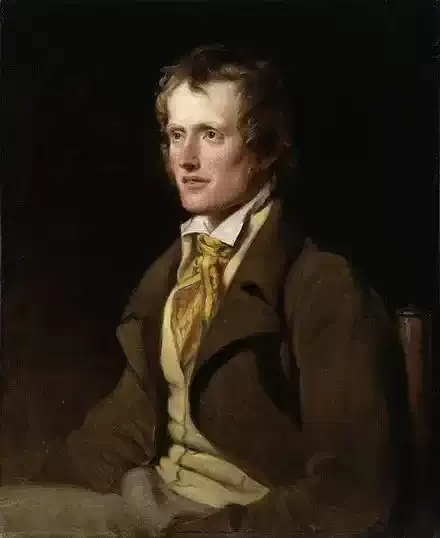
John Clare
The Stranger
The Stranger
When trouble haunts me, need I sigh?
No, rather smile away despair;
For those have been more sad than I,
With burthens more than I could bear;
Aye, gone rejoicing under care
Where I had sunk in black despair.
When pain disturbs my peace and rest,
Am I a hopeless grief to keep,
When some have slept on torture's breast
And smiled as in the sweetest sleep,
Aye, peace on thorns, in faith forgiven,
And pillowed on the hope of heaven?
Though low and poor and broken down,
Am I to think myself distrest?
No, rather laugh where others frown
And think my being truly blest;
For others I can daily see
More worthy riches worse than me.
Aye, once a stranger blest the earth
Who never caused a heart to mourn,
Whose very voice gave sorrow mirth--
And how did earth his worth return?
It spurned him from its lowliest lot,
The meanest station owned him not;
An outcast thrown in sorrow's way,
A fugitive that knew no sin,
Yet in lone places forced to stray--
Men would not take the stranger in.
Yet peace, though much himself he mourned,
Was all to others he returned.
* * * * *
His presence was a peace to all,
He bade the sorrowful rejoice.
Pain turned to pleasure at his call,
Health lived and issued from his voice.
He healed the sick and sent abroad
The dumb rejoicing in the Lord.
The blind met daylight in his eye,
The joys of everlasting day;
The sick found health in his reply;
The cripple threw his crutch away.
Yet he with troubles did remain
And suffered poverty and pain.
Yet none could say of wrong he did,
And scorn was ever standing bye;
Accusers by their conscience chid,
When proof was sought, made no reply.
Yet without sin he suffered more
Than ever sinners did before.
When trouble haunts me, need I sigh?
No, rather smile away despair;
For those have been more sad than I,
With burthens more than I could bear;
Aye, gone rejoicing under care
Where I had sunk in black despair.
When pain disturbs my peace and rest,
Am I a hopeless grief to keep,
When some have slept on torture's breast
And smiled as in the sweetest sleep,
Aye, peace on thorns, in faith forgiven,
And pillowed on the hope of heaven?
Though low and poor and broken down,
Am I to think myself distrest?
No, rather laugh where others frown
And think my being truly blest;
For others I can daily see
More worthy riches worse than me.
Aye, once a stranger blest the earth
Who never caused a heart to mourn,
Whose very voice gave sorrow mirth--
And how did earth his worth return?
It spurned him from its lowliest lot,
The meanest station owned him not;
An outcast thrown in sorrow's way,
A fugitive that knew no sin,
Yet in lone places forced to stray--
Men would not take the stranger in.
Yet peace, though much himself he mourned,
Was all to others he returned.
* * * * *
His presence was a peace to all,
He bade the sorrowful rejoice.
Pain turned to pleasure at his call,
Health lived and issued from his voice.
He healed the sick and sent abroad
The dumb rejoicing in the Lord.
The blind met daylight in his eye,
The joys of everlasting day;
The sick found health in his reply;
The cripple threw his crutch away.
Yet he with troubles did remain
And suffered poverty and pain.
Yet none could say of wrong he did,
And scorn was ever standing bye;
Accusers by their conscience chid,
When proof was sought, made no reply.
Yet without sin he suffered more
Than ever sinners did before.
419
Emily Dickinson
The first Day's Night had come
The first Day's Night had come
410
The first Day's Night had come-
And grateful that a thing
So terrible-had been endured-
I told my Soul to sing-
She said her Strings were snapt-
Her Bow-to Atoms blown-
And so to mend her-gave me work
Until another Morn-
And then-a Day as huge
As Yesterdays in pairs,
Unrolled its horror in my face-
Until it blocked my eyes-
My Brain-begun to laugh-
I mumbled-like a fool-
And tho' 'tis Years ago-that Day-
My Brain keeps giggling-still.
And Something's odd-within-
That person that I was-
And this One-do not feel the same-
Could it be Madness-this?
410
The first Day's Night had come-
And grateful that a thing
So terrible-had been endured-
I told my Soul to sing-
She said her Strings were snapt-
Her Bow-to Atoms blown-
And so to mend her-gave me work
Until another Morn-
And then-a Day as huge
As Yesterdays in pairs,
Unrolled its horror in my face-
Until it blocked my eyes-
My Brain-begun to laugh-
I mumbled-like a fool-
And tho' 'tis Years ago-that Day-
My Brain keeps giggling-still.
And Something's odd-within-
That person that I was-
And this One-do not feel the same-
Could it be Madness-this?
337
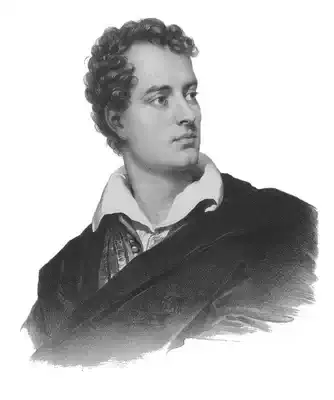
Lord Byron
To A Vain Lady
To A Vain Lady
Ah! heedless girl! why thus disclose
What ne'er was meant for other ears:
Why thus destroy thine own repose
And dig the source of future tears?
Oh, thou wilt weep, imprudent maid,
While lurking envious foes will smile,
For all the follies thou hast said
Of those who spoke but to beguile.
Vain girl! thy ling'ring woes are nigh,
If thou believ'st what striplings say:
Oh, from the deep temptation fly,
Nor fall the specious spoiler's prey.
Dost thou repeat, in childish boast,
The words man utters to deceive?
Thy peace, thy hope, thy all is lost,
If thou canst venture to believe.
While now amongst thy female peers
Thou tell'st again the soothing tale,
Canst thou not mark the rising sneers
Duplicity in vain would veil?
These tales in secret silence hush,
Nor make thyself the public gaze:
What modest maid without a blush
Recounts a flattering coxcomb's praise?
Will not the laughing boy despise
Her who relates each fond conceit Who,
thinking Heaven is in her eyes,
Yet cannot see the slight deceit?
For she who takes a soft delight
These amorous nothings in revealing,
Must credit all we say or write,
While vanity prevents concealing.
Cease, if you prize your beauty's reign!
No jealousy bids me reprove:
One, who is thus from nature vain,
I pity, but I cannot love.
January 15,1807.
Ah! heedless girl! why thus disclose
What ne'er was meant for other ears:
Why thus destroy thine own repose
And dig the source of future tears?
Oh, thou wilt weep, imprudent maid,
While lurking envious foes will smile,
For all the follies thou hast said
Of those who spoke but to beguile.
Vain girl! thy ling'ring woes are nigh,
If thou believ'st what striplings say:
Oh, from the deep temptation fly,
Nor fall the specious spoiler's prey.
Dost thou repeat, in childish boast,
The words man utters to deceive?
Thy peace, thy hope, thy all is lost,
If thou canst venture to believe.
While now amongst thy female peers
Thou tell'st again the soothing tale,
Canst thou not mark the rising sneers
Duplicity in vain would veil?
These tales in secret silence hush,
Nor make thyself the public gaze:
What modest maid without a blush
Recounts a flattering coxcomb's praise?
Will not the laughing boy despise
Her who relates each fond conceit Who,
thinking Heaven is in her eyes,
Yet cannot see the slight deceit?
For she who takes a soft delight
These amorous nothings in revealing,
Must credit all we say or write,
While vanity prevents concealing.
Cease, if you prize your beauty's reign!
No jealousy bids me reprove:
One, who is thus from nature vain,
I pity, but I cannot love.
January 15,1807.
449
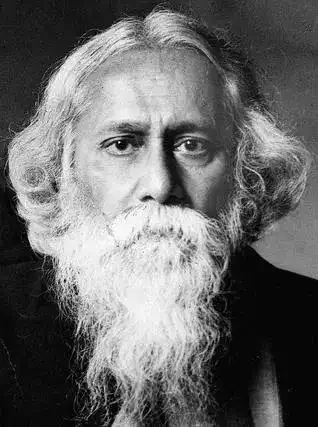
Rabindranath Tagore
Unending Love
Unending Love
I seem to have loved you in numberless forms, numberless times…
In life after life, in age after age, forever.
My spellbound heart has made and remade the necklace of songs,
That you take as a gift, wear round your neck in your many forms,
In life after life, in age after age, forever.
Whenever I hear old chronicles of love, it's age-old pain,
It's ancient tale of being apart or together.
As I stare on and on into the past, in the end you emerge,
Clad in the light of a pole-star piercing the darkness of time:
You become an image of what is remembered forever.
You and I have floated here on the stream that brings from the fount.
At the heart of time, love of one for another.
We have played along side millions of lovers, shared in the same
Shy sweetness of meeting, the same distressful tears of farewell-
Old love but in shapes that renew and renew forever.
Today it is heaped at your feet, it has found its end in you
The love of all man’s days both past and forever:
Universal joy, universal sorrow, universal life.
The memories of all loves merging with this one love of ours –
And the songs of every poet past and forever.
I seem to have loved you in numberless forms, numberless times…
In life after life, in age after age, forever.
My spellbound heart has made and remade the necklace of songs,
That you take as a gift, wear round your neck in your many forms,
In life after life, in age after age, forever.
Whenever I hear old chronicles of love, it's age-old pain,
It's ancient tale of being apart or together.
As I stare on and on into the past, in the end you emerge,
Clad in the light of a pole-star piercing the darkness of time:
You become an image of what is remembered forever.
You and I have floated here on the stream that brings from the fount.
At the heart of time, love of one for another.
We have played along side millions of lovers, shared in the same
Shy sweetness of meeting, the same distressful tears of farewell-
Old love but in shapes that renew and renew forever.
Today it is heaped at your feet, it has found its end in you
The love of all man’s days both past and forever:
Universal joy, universal sorrow, universal life.
The memories of all loves merging with this one love of ours –
And the songs of every poet past and forever.
1,075
William Shakespeare
Sonnet 25: Let those who are in favour with their stars
Sonnet 25: Let those who are in favour with their stars
Let those who are in favour with their stars
Of public honour and proud titles boast,
Whilst I, whom fortune of such triumph bars,
Unlooked for joy in that I honour most.
Great princes' favourites their fair leaves spread,
But as the marigold at the sun's eye,
And in themselves their pride lies burièd,
For at a frown they in their glory die.
The painful warrior famousèd for fight,
After a thousand victories once foiled,
Is from the book of honour razèd quite,
And all the rest forgot for which he toiled.
Then happy I that love and am beloved
Where I may not remove nor be removed.
Let those who are in favour with their stars
Of public honour and proud titles boast,
Whilst I, whom fortune of such triumph bars,
Unlooked for joy in that I honour most.
Great princes' favourites their fair leaves spread,
But as the marigold at the sun's eye,
And in themselves their pride lies burièd,
For at a frown they in their glory die.
The painful warrior famousèd for fight,
After a thousand victories once foiled,
Is from the book of honour razèd quite,
And all the rest forgot for which he toiled.
Then happy I that love and am beloved
Where I may not remove nor be removed.
264

Edward Lear
Limerick: There was an Old Man of Vesuvius,
Limerick: There was an Old Man of Vesuvius,
There was an Old Man of Vesuvius,
Who studied the works of Vitruvius;
When the flames burnt his book,
To drinking he took,
That morbid Old Man of Vesuvius.
There was an Old Man of Vesuvius,
Who studied the works of Vitruvius;
When the flames burnt his book,
To drinking he took,
That morbid Old Man of Vesuvius.
204
Lord Byron
To A Lady, Who Presented The Author With The Velvet Band Which Bound Her
To A Lady, Who Presented The Author With The Velvet Band Which Bound Her
Tresses
This Band, which bound thy yellow hair,
Is mine, sweet girl! Thy pledge of love;
It claims my warmest, dearest care,
Like relics left of saints above.
Oh! I will wear it next my heart;
'Twill blind my soul in bonds to thee;
From me again 't will ne'er depart,
But mingle in the grave with me.
The dew I gather from thy lip
Is not so dear to me as this;
That I but for a moment sip,
And banquet on a transient bliss:
This will recall each youthful scene,
E'en when our lives are on the wane;
The leaves of Love will still be green
When Memory bids them bud again.
Oh! little lock of golden hue,
In gently waving ringlet curl'd
By the dear head on which you grow,
I would not lose you for a world.
Not though a thousand more adorn
The polish'd brow where once you shone,
Like rays which gild a cloudless morn,
Beneath Columbia's fervid zone.
Tresses
This Band, which bound thy yellow hair,
Is mine, sweet girl! Thy pledge of love;
It claims my warmest, dearest care,
Like relics left of saints above.
Oh! I will wear it next my heart;
'Twill blind my soul in bonds to thee;
From me again 't will ne'er depart,
But mingle in the grave with me.
The dew I gather from thy lip
Is not so dear to me as this;
That I but for a moment sip,
And banquet on a transient bliss:
This will recall each youthful scene,
E'en when our lives are on the wane;
The leaves of Love will still be green
When Memory bids them bud again.
Oh! little lock of golden hue,
In gently waving ringlet curl'd
By the dear head on which you grow,
I would not lose you for a world.
Not though a thousand more adorn
The polish'd brow where once you shone,
Like rays which gild a cloudless morn,
Beneath Columbia's fervid zone.
468
Emily Dickinson
The Fingers of the Light
The Fingers of the Light
1000
The Fingers of the Light
Tapped soft upon the Town
With "I am great and cannot wait
So therefore let me in."
"You're soon," the Town replied,
"My Faces are asleep-
But swear, and I will let you by,
You will not wake them up."
The easy Guest complied
But once within the Town
The transport of His Countenance
Awakened Maid and Man
The Neighbor in the Pool
Upon His Hip elate
Made loud obeisance and the Gnat
Held up His Cup for Light.
1000
The Fingers of the Light
Tapped soft upon the Town
With "I am great and cannot wait
So therefore let me in."
"You're soon," the Town replied,
"My Faces are asleep-
But swear, and I will let you by,
You will not wake them up."
The easy Guest complied
But once within the Town
The transport of His Countenance
Awakened Maid and Man
The Neighbor in the Pool
Upon His Hip elate
Made loud obeisance and the Gnat
Held up His Cup for Light.
231
Ella Wheeler Wilcox
Uncontrolled
Uncontrolled
The mighty forces of mysterious space
Are one by one subdued by lordly man.
The awful lightning that for eons ran
Their devastating and untrammeled race,
Now bear his messages from place to place
Like carrier doves. The winds lead on his van;
The lawless elements no longer can
Resist his strength, but yield with sullen grace.
His bold feet scaling heights before untrod,
Light, darkness, air and water, heat and cold
He bids go forth and bring him power and pelf.
And yet though ruler, king and demi-god
He walks with his fierce passions uncontrolled
The conquerer of all things – save himself.
The mighty forces of mysterious space
Are one by one subdued by lordly man.
The awful lightning that for eons ran
Their devastating and untrammeled race,
Now bear his messages from place to place
Like carrier doves. The winds lead on his van;
The lawless elements no longer can
Resist his strength, but yield with sullen grace.
His bold feet scaling heights before untrod,
Light, darkness, air and water, heat and cold
He bids go forth and bring him power and pelf.
And yet though ruler, king and demi-god
He walks with his fierce passions uncontrolled
The conquerer of all things – save himself.
374
William Shakespeare
Sonnet 24: “Mine eye hath played the painter and hath stelled…”
Sonnet 24: “Mine eye hath played the painter and hath stelled…”
Mine eye hath played the painter and hath stelled,
Thy beauty's form in table of my heart,
My body is the frame wherein 'tis held,
And perspective it is best painter's art.
For through the painter must you see his skill,
To find where your true image pictured lies,
Which in my bosom's shop is hanging still,
That hath his windows glazed with thine eyes:
Now see what good turns eyes for eyes have done,
Mine eyes have drawn thy shape, and thine for me
Are windows to my breast, where-through the sun
Delights to peep, to gaze therein on thee;
Yet eyes this cunning want to grace their art,
They draw but what they see, know not the heart.
Mine eye hath played the painter and hath stelled,
Thy beauty's form in table of my heart,
My body is the frame wherein 'tis held,
And perspective it is best painter's art.
For through the painter must you see his skill,
To find where your true image pictured lies,
Which in my bosom's shop is hanging still,
That hath his windows glazed with thine eyes:
Now see what good turns eyes for eyes have done,
Mine eyes have drawn thy shape, and thine for me
Are windows to my breast, where-through the sun
Delights to peep, to gaze therein on thee;
Yet eyes this cunning want to grace their art,
They draw but what they see, know not the heart.
279
John Clare
The Sleep Of Spring
The Sleep Of Spring
O for that sweet, untroubled rest
That poets oft have sung!--
The babe upon its mother's breast,
The bird upon its young,
The heart asleep without a pain--
When shall I know that sleep again?
When shall I be as I have been
Upon my mother's breast
Sweet Nature's garb of verdant green
To woo to perfect rest--
Love in the meadow, field, and glen,
And in my native wilds again?
The sheep within the fallow field,
The herd upon the green,
The larks that in the thistle shield,
And pipe from morn to e'en--
O for the pasture, fields, and fen!
When shall I see such rest again?
I love the weeds along the fen,
More sweet than garden flowers,
For freedom haunts the humble glen
That blest my happiest hours.
Here prison injures health and me:
I love sweet freedom and the free.
The crows upon the swelling hills,
The cows upon the lea,
Sheep feeding by the pasture rills,
Are ever dear to me,
Because sweet freedom is their mate,
While I am lone and desolate.
I loved the winds when I was young,
When life was dear to me;
I loved the song which Nature sung,
Endearing liberty;
I loved the wood, the vale, the stream,
For there my boyhood used to dream.
There even toil itself was play;
Twas pleasure een to weep;
Twas joy to think of dreams by day,
The beautiful of sleep.
When shall I see the wood and plain,
And dream those happy dreams again?
O for that sweet, untroubled rest
That poets oft have sung!--
The babe upon its mother's breast,
The bird upon its young,
The heart asleep without a pain--
When shall I know that sleep again?
When shall I be as I have been
Upon my mother's breast
Sweet Nature's garb of verdant green
To woo to perfect rest--
Love in the meadow, field, and glen,
And in my native wilds again?
The sheep within the fallow field,
The herd upon the green,
The larks that in the thistle shield,
And pipe from morn to e'en--
O for the pasture, fields, and fen!
When shall I see such rest again?
I love the weeds along the fen,
More sweet than garden flowers,
For freedom haunts the humble glen
That blest my happiest hours.
Here prison injures health and me:
I love sweet freedom and the free.
The crows upon the swelling hills,
The cows upon the lea,
Sheep feeding by the pasture rills,
Are ever dear to me,
Because sweet freedom is their mate,
While I am lone and desolate.
I loved the winds when I was young,
When life was dear to me;
I loved the song which Nature sung,
Endearing liberty;
I loved the wood, the vale, the stream,
For there my boyhood used to dream.
There even toil itself was play;
Twas pleasure een to weep;
Twas joy to think of dreams by day,
The beautiful of sleep.
When shall I see the wood and plain,
And dream those happy dreams again?
367
Lord Byron
To A Lady
To A Lady
O! had my Fate been join'd with thine,
As once this pledge appear'd a token,
These follies had not, then, been mine,
For, then, my peace had not been broken.
To thee, these early faults I owe,
To thee, the wise and old reproving:
They know my sins, but do not know
'Twas thine to break the bonds of loving.
For once my soul, like thine, was pure,
And all its rising fires could smother;
But, now, thy vows no more endure,
Bestow'd by thee upon another.
Perhaps, his peace I could destroy,
And spoil the blisses that await him;
Yet let my Rival smile in joy,
For thy dear sake, I cannot hate him.
Ah! since thy angel form is gone,
My heart no more can rest with any;
But what it sought in thee alone,
Attempts, alas! to find in many.
Then, fare thee well, deceitful Maid!
'Twere vain and fruitless to regret thee;
Nor Hope, nor Memory yield their aid,
But Pride may teach me to forget thee.
Yet all this giddy waste of years,
This tiresome round of palling pleasures;
These varied loves, these matrons' fears,
These thoughtless strains to Passion's measures
If thou wert mine, had all been hush'd:This
cheek, now pale from early riot,
With Passion's hectic ne'er had flush'd,
But bloom'd in calm domestic quiet.
Yes, once the rural Scene was sweet,
For Nature seem'd to smile before thee;
And once my Breast abhorr'd deceit,For
then it beat but to adore thee.
But, now, I seek for other joysTo
think, would drive my soul to madness;
In thoughtless throngs, and empty noise,
I conquer half my Bosom's sadness.
Yet, even in these, a thought will steal,
In spite of every vain endeavor;
And fiends might pity what I feelTo
know that thou art lost for ever.
O! had my Fate been join'd with thine,
As once this pledge appear'd a token,
These follies had not, then, been mine,
For, then, my peace had not been broken.
To thee, these early faults I owe,
To thee, the wise and old reproving:
They know my sins, but do not know
'Twas thine to break the bonds of loving.
For once my soul, like thine, was pure,
And all its rising fires could smother;
But, now, thy vows no more endure,
Bestow'd by thee upon another.
Perhaps, his peace I could destroy,
And spoil the blisses that await him;
Yet let my Rival smile in joy,
For thy dear sake, I cannot hate him.
Ah! since thy angel form is gone,
My heart no more can rest with any;
But what it sought in thee alone,
Attempts, alas! to find in many.
Then, fare thee well, deceitful Maid!
'Twere vain and fruitless to regret thee;
Nor Hope, nor Memory yield their aid,
But Pride may teach me to forget thee.
Yet all this giddy waste of years,
This tiresome round of palling pleasures;
These varied loves, these matrons' fears,
These thoughtless strains to Passion's measures
If thou wert mine, had all been hush'd:This
cheek, now pale from early riot,
With Passion's hectic ne'er had flush'd,
But bloom'd in calm domestic quiet.
Yes, once the rural Scene was sweet,
For Nature seem'd to smile before thee;
And once my Breast abhorr'd deceit,For
then it beat but to adore thee.
But, now, I seek for other joysTo
think, would drive my soul to madness;
In thoughtless throngs, and empty noise,
I conquer half my Bosom's sadness.
Yet, even in these, a thought will steal,
In spite of every vain endeavor;
And fiends might pity what I feelTo
know that thou art lost for ever.
531
Emily Dickinson
The face I carry with me—last
The face I carry with me—last
336
The face I carry with me—last—
When I go out of Time—
To take my Rank—by—in the West—
That face—will just be thine—
I'll hand it to the Angel—
That—Sir—was my Degree—
In Kingdoms—you have heard the Raised—
Refer to—possibly.
He'll take it—scan it—step aside—
Return—with such a crown
As Gabriel—never capered at—
And beg me put it on—
And then—he'll turn me round and round—
To an admiring sky—
As one that bore her Master's name—
Sufficient Royalty!
336
The face I carry with me—last—
When I go out of Time—
To take my Rank—by—in the West—
That face—will just be thine—
I'll hand it to the Angel—
That—Sir—was my Degree—
In Kingdoms—you have heard the Raised—
Refer to—possibly.
He'll take it—scan it—step aside—
Return—with such a crown
As Gabriel—never capered at—
And beg me put it on—
And then—he'll turn me round and round—
To an admiring sky—
As one that bore her Master's name—
Sufficient Royalty!
243
Rabindranath Tagore
Threshold
Threshold
I was not aware of the moment
when I first crossed the threshold of this life.
What was the power that made me open out into this vast mystery
like a bud in the forest at midnight!
When in the morning I looked upon the light
I felt in a moment that I was no stranger in this world,
that the inscrutable without name and form
had taken me in its arms in the form of my own mother.
Even so, in death the same unknown will appear as ever known to me.
And because I love this life,
I know I shall love death as well.
The child cries out
when from the right breast the mother takes it away,
in the very next moment to find in the left one its consolation.
I was not aware of the moment
when I first crossed the threshold of this life.
What was the power that made me open out into this vast mystery
like a bud in the forest at midnight!
When in the morning I looked upon the light
I felt in a moment that I was no stranger in this world,
that the inscrutable without name and form
had taken me in its arms in the form of my own mother.
Even so, in death the same unknown will appear as ever known to me.
And because I love this life,
I know I shall love death as well.
The child cries out
when from the right breast the mother takes it away,
in the very next moment to find in the left one its consolation.
540
William Shakespeare
Sonnet 22: My glass shall not persuade me I am old
Sonnet 22: My glass shall not persuade me I am old
My glass shall not persuade me I am old
So long as youth and thou are of one date;
But when in thee Time's furrows I behold,
Then look I death my days should expiate.
For all that beauty that doth cover thee
Is but the seemly raiment of my heart,
Which in thy breast doth live, as thine in me.
How can I then be elder than thou art?
O, therefore, love, be of thyself so wary
As I not for myself, but for thee will,
Bearing thy heart, which I will keep so chary
As tender nurse her babe from faring ill.
Presume not on thy heart when mine is slain;
Thou gav'st me thine, not to give back again.
My glass shall not persuade me I am old
So long as youth and thou are of one date;
But when in thee Time's furrows I behold,
Then look I death my days should expiate.
For all that beauty that doth cover thee
Is but the seemly raiment of my heart,
Which in thy breast doth live, as thine in me.
How can I then be elder than thou art?
O, therefore, love, be of thyself so wary
As I not for myself, but for thee will,
Bearing thy heart, which I will keep so chary
As tender nurse her babe from faring ill.
Presume not on thy heart when mine is slain;
Thou gav'st me thine, not to give back again.
265
Edward Lear
Limerick: There was an Old Man of the Wrekin
Limerick: There was an Old Man of the Wrekin
There was an Old Man of the Wrekin
Whose shoes made a horrible creaking
But they said, 'Tell us whether,
Your shoes are of leather,
Or of what, you Old Man of the Wrekin?'
There was an Old Man of the Wrekin
Whose shoes made a horrible creaking
But they said, 'Tell us whether,
Your shoes are of leather,
Or of what, you Old Man of the Wrekin?'
169
Emily Dickinson
The Dust behind I strove to join
The Dust behind I strove to join
992
The Dust behind I strove to join
Unto the Disk before-
But Sequence ravelled out of Sound
Like Balls upon a Floor-
992
The Dust behind I strove to join
Unto the Disk before-
But Sequence ravelled out of Sound
Like Balls upon a Floor-
236
Lord Byron
To-- : From The French
To-- : From The French
Must thou go, my glorious Chief,
Sever'd from thy faithful few?
Who can tell thy warrior's grief,
Maddening o'er that long adieu?
Woman's love, and friendship's zeal,
Dear as both have been to meWhat
are they to all I feel,
With a soldier's faith for thee?
Idol of the soldier's soul!
First in fight, but mightiest now;
Many could a world control;
Thee alone no doom can bow.
By thy side for years I dared
Death; and envied those who fell,
When their dying shout was heard,
Blessing him they served so well.
Would that I were cold with those,
Since this hour I live to see;
When the doubts of coward foes
Scarce dare trust a man with thee,
Dreading each should set thee free!
Oh! although in dungeons pent,
All their chains were light to me,
Gazing on thy soul unbent.
Would the sycophants of him
Now so deaf to duty's prayer,
Were his borrow'd glories dim,
In his native darkness share?
Were that world this hour his own,
All thou calmly dost resign,
Could he purchase with that throne
Hearts like those which still are thine?
My chief, my king, my friend, adieu!
Never did I droop before;
Never to my sovereign sue,
As his foes I now implore:
All I ask is to divide
Every peril he must brave;
Sharing by the hero's side
His fall, his exile, and his grave.
Must thou go, my glorious Chief,
Sever'd from thy faithful few?
Who can tell thy warrior's grief,
Maddening o'er that long adieu?
Woman's love, and friendship's zeal,
Dear as both have been to meWhat
are they to all I feel,
With a soldier's faith for thee?
Idol of the soldier's soul!
First in fight, but mightiest now;
Many could a world control;
Thee alone no doom can bow.
By thy side for years I dared
Death; and envied those who fell,
When their dying shout was heard,
Blessing him they served so well.
Would that I were cold with those,
Since this hour I live to see;
When the doubts of coward foes
Scarce dare trust a man with thee,
Dreading each should set thee free!
Oh! although in dungeons pent,
All their chains were light to me,
Gazing on thy soul unbent.
Would the sycophants of him
Now so deaf to duty's prayer,
Were his borrow'd glories dim,
In his native darkness share?
Were that world this hour his own,
All thou calmly dost resign,
Could he purchase with that throne
Hearts like those which still are thine?
My chief, my king, my friend, adieu!
Never did I droop before;
Never to my sovereign sue,
As his foes I now implore:
All I ask is to divide
Every peril he must brave;
Sharing by the hero's side
His fall, his exile, and his grave.
494
Ella Wheeler Wilcox
Unanswered Prayers
Unanswered Prayers
Like some school master, kind in being stern,
Who hears the children crying o’er their slates
And calling, “Help me master! ” yet helps not,
Since in his silence and refusal lies
Their self-development, so God abides
Unheeding many prayers. He is not deaf
To any cry sent up from earnest hearts,
He hears and strengthens when He must deny.
He sees us weeping over life’s hard sums
But should He give us the key and dry our tears
What would it profit us when school were done
And not one lesson mastered?
What a world
Where this if all our prayers were answered. Not
In famed Pandora’s box were such vast ills
As lie in human hearts. Should our desires
Voiced one by one in prayer ascend to God
And come back as events shaped to our wish
What chaos would result!
In my fierce youth
I sighed out a breath enough to move a fleet
Voicing wild prayers to heaven for fancied boons
Which were denied; and that denial bends
My knee to prayers of gratitude each day
Of my maturer years. Yet from those prayers
I rose always regirded for the strife
And conscious of new strength. Pray on, sad heart,
That which thou pleadest for may not be given
But in the lofty altitude where souls
Who supplicate God’s grace are lifted there
Thou shalt find help to bear thy daily lot
Which is not elsewhere found.
Like some school master, kind in being stern,
Who hears the children crying o’er their slates
And calling, “Help me master! ” yet helps not,
Since in his silence and refusal lies
Their self-development, so God abides
Unheeding many prayers. He is not deaf
To any cry sent up from earnest hearts,
He hears and strengthens when He must deny.
He sees us weeping over life’s hard sums
But should He give us the key and dry our tears
What would it profit us when school were done
And not one lesson mastered?
What a world
Where this if all our prayers were answered. Not
In famed Pandora’s box were such vast ills
As lie in human hearts. Should our desires
Voiced one by one in prayer ascend to God
And come back as events shaped to our wish
What chaos would result!
In my fierce youth
I sighed out a breath enough to move a fleet
Voicing wild prayers to heaven for fancied boons
Which were denied; and that denial bends
My knee to prayers of gratitude each day
Of my maturer years. Yet from those prayers
I rose always regirded for the strife
And conscious of new strength. Pray on, sad heart,
That which thou pleadest for may not be given
But in the lofty altitude where souls
Who supplicate God’s grace are lifted there
Thou shalt find help to bear thy daily lot
Which is not elsewhere found.
300
William Shakespeare
Sonnet 20: A woman's face with Nature's own hand painted
Sonnet 20: A woman's face with Nature's own hand painted
A woman's face with Nature's own hand painted
Hast thou, the master-mistress of my passion;
A woman's gentle heart, but not acquainted
With shifting change, as is false women's fashion;
An eye more bright than theirs, less false in rolling,
Gilding the object whereupon it gazeth;
A man in hue, all hues in his controlling,
Which steals men's eyes and women's souls amazeth.
And for a woman wert thou first created,
Till Nature, as she wrought thee, fell a-doting,
And by addition me of thee defeated,
By adding one thing to my purpose nothing.
But since she pricked thee out for women's pleasure,
Mine be thy love and thy love's use their treasure.
A woman's face with Nature's own hand painted
Hast thou, the master-mistress of my passion;
A woman's gentle heart, but not acquainted
With shifting change, as is false women's fashion;
An eye more bright than theirs, less false in rolling,
Gilding the object whereupon it gazeth;
A man in hue, all hues in his controlling,
Which steals men's eyes and women's souls amazeth.
And for a woman wert thou first created,
Till Nature, as she wrought thee, fell a-doting,
And by addition me of thee defeated,
By adding one thing to my purpose nothing.
But since she pricked thee out for women's pleasure,
Mine be thy love and thy love's use their treasure.
297
John Clare
The Shepherd's Tree
The Shepherd's Tree
Huge elm, with rifted trunk all notched and scarred,
Like to a warrior's destiny! I love
To stretch me often on thy shadowed sward,
And hear the laugh of summer leaves above;
Or on thy buttressed roots to sit, and lean
In careless attitude, and there reflect
On times and deeds and darings that have been -
Old castaways, now swallowed in neglect, -
While thou art towering in thy strength of heart,
Stirring the soul to vain imaginings
In which life's sordid being hath no part.
The wind of that eternal ditty sings,
Humming of future things, that burn the mind
To leave some fragment of itself behind.
Huge elm, with rifted trunk all notched and scarred,
Like to a warrior's destiny! I love
To stretch me often on thy shadowed sward,
And hear the laugh of summer leaves above;
Or on thy buttressed roots to sit, and lean
In careless attitude, and there reflect
On times and deeds and darings that have been -
Old castaways, now swallowed in neglect, -
While thou art towering in thy strength of heart,
Stirring the soul to vain imaginings
In which life's sordid being hath no part.
The wind of that eternal ditty sings,
Humming of future things, that burn the mind
To leave some fragment of itself behind.
357