
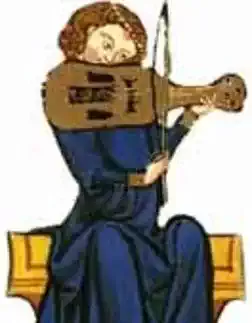
Raimbaut de Vaqueiras
1155–1207
· vivió 52 años
 FR
FR
FR
Raimbaut de Vaqueiras was a Provençal troubadour of the Middle Ages, known for his mastery of courtly poetry and his participation in crusades. His work stands out for its metric complexity and the exploration of themes such as courtly love, war, and honor, reflecting the social and military environment of his time. He is considered one of the most important poets of the Galician-Portuguese and Occitan lyric.
n. 1155-01-01, Vacqueyras · m. 1207-09-04, Ródope
5
Visualizaciones
Biografía
Identification and basic context
Raimbaut de Vaqueiras was a Provençal troubadour who lived in the 12th and early 13th centuries. Although there are no records of pseudonyms or heteronyms, his name is widely recognized. The exact date and place of his birth and death are uncertain, but it is estimated that he lived between 1180 and 1207. Originating from a family of knights, likely of noble origin, his cultural context was deeply linked to the courtly culture of southern France. He was of Provençal nationality and wrote in the Occitan language.Childhood and education
Little is known about Raimbaut de Vaqueiras' childhood and education. It is presumed that, given his social origin, he received an education suitable for the nobility of the time, possibly focusing on military and literary arts. Initial influences in his youth may have been the songs of troubadours who frequented the courts, as well as the ideals of chivalry and epic narratives. It is likely that he absorbed the tradition of Provençal lyric poetry.Literary career
Raimbaut de Vaqueiras' writing career began linked to his life as a knight and troubadour. His work evolved over time, remaining faithful to the canons of courtly poetry, but demonstrating increasing technical and thematic sophistication. He composed several 'canso' (courtly love songs), 'ensenhamen' (didactic poetic essays), and poems of a more personal and occasional nature. He participated in important military events, such as the Fourth Crusade, which inspired some of his best-known poems.Work, style, and literary characteristics
Raimbaut de Vaqueiras' main work includes 'Kalenda maya' (one of the most famous medieval 'albas'), 'Pos tornatz sia,' and 'Farai un vers de dreit nien.' The dominant themes are courtly love, amorous vassalage, war, and honor. He stands out for his skill with complex poetic forms, such as the sonnet, and for metric experimentation, being one of the precursors of the use of more elaborate stanzas. He used poetic resources rich in metaphors and with strong musicality, characteristic of troubadour poetry. The poetic tone varies between the lyrical and the epic, with a confessional and somewhat aristocratic voice. His language is refined, and his style is dense with imagery. He introduced innovations in the form and content of courtly poetry, engaging with tradition and anticipating future trends. He is associated with the Occitan troubadour poetry movement.Work, style, and literary characteristics
Cultural and historical context Raimbaut de Vaqueiras lived in a period of intense transformations in Europe, marked by crusades and feudal conflicts. His work reflects the context of the court of Boniface I of Montferrat, where he served as a knight and poet. He belonged to the generation of troubadours who consolidated courtly poetry in Provence. His position as a knight-poet allowed him a unique perspective on historical events and court life, influencing his literary production.Work, style, and literary characteristics
Personal life Information about Raimbaut de Vaqueiras' personal life is scarce. It is known that he was a knight and served important figures of the time, such as Boniface I of Montferrat. His emotional and family relationships are not well documented, but his poetry reveals a deep devotion to courtly love. His literary friendships and rivalries are also little known. His participation in crusades suggests a life marked by adventure and military loyalty.Work, style, and literary characteristics
Recognition and reception Raimbaut de Vaqueiras is recognized as one of the most important troubadours of the Middle Ages, with a prominent place in Occitan and Galician-Portuguese literature. His work was admired for its technical complexity and lyrical expressiveness, being copied and transmitted through manuscripts. Although there were no formal awards or distinctions at the time, his recognition was manifested in the dissemination of his poetry and its inclusion in songbooks.Work, style, and literary characteristics
Influences and legacy Previous troubadours and the tradition of courtly poetry were central influences for Raimbaut de Vaqueiras. His work, in turn, influenced later generations of Provençal poets and poets from other lyrical traditions. His legacy lies in the sophistication of poetic form and thematic exploration, contributing to the evolution of European lyric poetry. His inclusion in songbooks attests to his importance and dissemination.Work, style, and literary characteristics
Interpretation and critical analysis Raimbaut de Vaqueiras' work has been the subject of critical analysis for its formal mastery and the depth of the themes addressed, such as idealized love and the complexity of social relationships at court. The interpretation of his songs reveals a deep knowledge of the human soul and the codes of conduct of the time.Work, style, and literary characteristics
Curiosities and lesser-known aspects A curiosity about Raimbaut de Vaqueiras is his active participation in the Fourth Crusade, where his war experience intertwines with his poetic art. His song 'Farai un vers de dreit nien' is an example of occasional poetry and technical virtuosity. The manuscripts that preserve his work are valuable testimonies of medieval literary production.Work, style, and literary characteristics
Death and memory The exact circumstances of Raimbaut de Vaqueiras' death remain a mystery. His memory is preserved through the manuscripts containing his poems, which continue to be studied and appreciated for their historical and literary importance.Poemas
0No se encontraron poemas
Comentarios (0)
Iniciar sesión
para publicar un comentario.
Aún no hay comentarios. Sé el primero en comentar.