
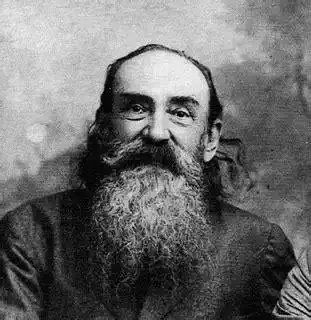
Wenceslau de Morais
 PT
PT
Wenceslau de Morais was a Portuguese writer and poet known for his works that portray the life and culture of the East, especially Japan, where he lived for many years. His writing is marked by a deep admiration for Asian culture, an ethnographic perspective, and a rich and evocative language. He explored themes such as exoticism, Eastern mysticism, intercultural relations, and the search for an alternative spirituality. His work, which bridges fiction, essay, and poetry, is a unique testament to his life experience in the East, offering a unique perspective on the encounter between West and East. Wenceslau de Morais is an unparalleled figure in Portuguese literature, a pioneer in approaching Eastern themes with such depth and passion.
n. 1854-05-30, Lisboa · m. 1929-07-01, Tokushima
Bio
Identification and basic context
Wenceslau José de Lauriano de Morais, known as Wenceslau de Morais, was a Portuguese writer, poet, and diplomat. He was born in 1854 and died in 1929. He is a unique figure in Portuguese literature, recognized for his deep connection and work dedicated to the East, particularly Japan.Childhood and education
Born into a middle-class family, Wenceslau de Morais had a childhood marked by the environment of Lisbon. He was a student at the Colégio dos Órfãos de D. João V and later studied Law at the University of Coimbra, where he graduated in 1876. During this period, he absorbed literary and philosophical influences of the time, but his destiny was to be shaped by his passion for the East.Literary career
Wenceslau de Morais' literary career began with the publication of works that reflected his interest in the East. His move to Japan in 1888, as Portugal's consul, was the turning point that led him to dedicate his life to exploring and disseminating Eastern culture in his work. He published books of fiction, poetry, and essays, collaborating with various publications.Work, style, and literary characteristics
Wenceslau de Morais' work is predominantly dedicated to the description and interpretation of Eastern culture, customs, and mentality, with a special focus on Japan. Themes such as exoticism, love for geishas, Eastern mysticism, spirituality, melancholy, and the search for a simpler life in harmony with nature are central. His style is rich, descriptive, and sometimes lyrical and melancholic. He uses an engaging language full of sensations, seeking to convey the atmosphere of the East to the reader. His ability to merge detailed observation with sentimental and philosophical projection is noteworthy. Poems like "Oração aos Peixes" demonstrate his lyrical vein and his deep connection with the natural world.Work, style, and literary characteristics
Cultural and historical context Wenceslau de Morais lived in a time of great European expansion and intense contact with non-Western cultures. His work is part of the context of Orientalism, but with an approach that distinguishes itself by its immersion and respect for the cultures it describes. He was a contemporary of other writers who were also interested in the "exotic," but his direct and prolonged experience in Japan gives him a unique authenticity. His work, sometimes controversial, reflected the debates and curiosities of European society about the East.Work, style, and literary characteristics
Personal life Wenceslau de Morais' life was marked by his almost exclusive dedication to Japan. His relationships, particularly with Japanese women, and his adaptation to local customs were central aspects of his life. He lived discreetly and immersed in the culture he loved so much, largely distancing himself from the Portuguese literary scene. His personal experiences in the East were the raw material of his writing.Work, style, and literary characteristics
Recognition and reception Although during his lifetime he had limited recognition in Portugal, Wenceslau de Morais' work was gradually rediscovered and valued. His originality and his deep exploration of the Eastern theme secured him a distinguished place in Portuguese literature. Today, he is considered a precursor in the literary approach to Japan and Eastern culture.Work, style, and literary characteristics
Influences and legacy Wenceslau de Morais' influences include writers who explored the exotic and Orientalism, but his work transcends this current through its authenticity and depth. He primarily influenced the way the East would be seen and portrayed in Portuguese literature. His legacy lies in his ability to open a window to a fascinating world, with a sensitive and respectful gaze.Work, style, and literary characteristics
Interpretation and critical analysis Wenceslau de Morais' work has been the subject of critical analysis that explores his relationship with Orientalism, his representation of the Eastern feminine, and his search for spirituality. He is seen as an author who sought transcendence through immersion in a different culture, questioning Western values.Work, style, and literary characteristics
Curiosities and lesser-known aspects A curiosity about Wenceslau de Morais is his deep adaptation to Japanese customs, even dressing and living like an Oriental, which distinguished him from many other Europeans of his time. His decision to remain in Japan for many years, far from his homeland, is also a striking aspect of his life.Work, style, and literary characteristics
Death and memory Wenceslau de Morais died in Japan in 1929. His work, which for some time remained forgotten or marginalized, has been gradually rescued and studied, consolidating his importance in the Portuguese literary landscape and as a bridge between cultures.Poems
0No poems found
Comments (0)
No comments yet. Be the first to comment.