Identification and Basic Context
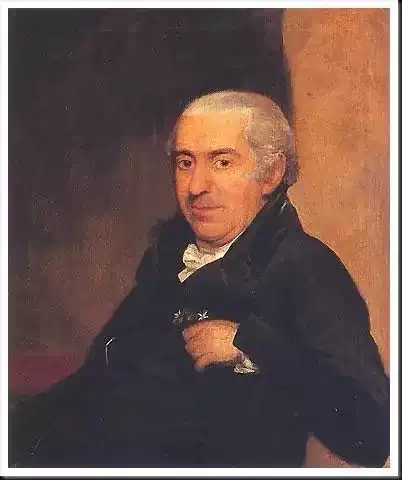
The Abbot of Jazente is the pseudonym of Manuel Maria Barbosa du Bocage, one of the most important Portuguese poets of the 18th century, a prominent figure of Portuguese Arcadianism. He was born in Setúbal, Portugal, on September 25, 1765, and died in Lisbon, Portugal, on December 21, 1805. He was known for his bohemian life and his critical opinions.
Childhood and Education
Bocage had a childhood marked by some difficulties, despite belonging to a family of some distinction. He received a meticulous education, having studied Law at the University of Coimbra. During his education, he demonstrated a rebellious spirit and an inclination for satire and social criticism, absorbing the influences of the Arcadian movement, which valued reason, nature, and simplicity, but also the satirical tone.
Literary Career
The beginning of his literary activity occurred with the publication of poems in gazettes and periodicals of the time. His career was marked by a stylistic evolution that, starting from Arcadian ideals, deepened into a personal and sometimes transgressive expression. His work was disseminated in various publications, often in a fragmented manner, which contributed to his fame and notoriety. He also worked as a translator.
Work, Style, and Literary Characteristics
Bocage's main works include "Rimas" (published in several volumes throughout his life and posthumously), "Poemas," and "Sonetos." The dominant themes in his work are love (often with a sensual and rebellious tone), social and political criticism, the ephemerality of life, nature, and reflection on the human condition. Bocage was a master of poetic form, excelling in the use of the sonnet, but he also explored free verse and other forms. His poetic resources include rich metaphors, accentuated rhythm, and engaging musicality. His poetic tone varies between the lyrical, the satirical, the elegiac, and the ironic. His language is cultured, but lively and expressive, with a vocabulary that reflects his erudition and his attentive observation of reality. He introduced a new subjectivity and a critical spirit into Portuguese poetry, moving away from a certain Arcadian formalism.
Cultural and Historical Context
Bocage lived in a period of great transformations in Portugal and Europe, the late 18th century, marked by the Enlightenment, the Napoleonic Wars, and a climate of political instability. He belonged to the "Generation of 1790" or "Late Arcadianism," a group of poets who, although linked to Arcadianism, foreshadowed Romanticism with their subjectivity and more personal tone. His critical stance and bohemian life put him in conflict with the authorities, resulting in arrests and exiles.
Personal Life
Bocage's personal life was extremely turbulent and deeply marked his work. He had intense and troubled love affairs, which are reflected in his love poems. He had many friends, but also literary and personal rivals. He suffered several arrests and exiles due to his ideas and his behavior, considered scandalous. His main profession was that of a poet and writer, but his financial difficulties were constant.
Recognition and Reception
Bocage achieved great fame during his lifetime, despite the controversies his figure and work generated. He was recognized as one of the greatest Portuguese poets of his time. The critical reception of his work has been consistently positive over time, and he is considered an essential poet for understanding the evolution of Portuguese poetry.
Influences and Legacy
Bocage was influenced by classical poets such as Camões and Virgil, as well as by Arcadian and Enlightenment authors. His work, in turn, influenced later poets, especially regarding the exploration of love, social criticism, and formal freedom. His legacy lies in the renewal of poetic language and the introduction of a more personal and critical tone in Portuguese poetry.
Interpretation and Critical Analysis
Bocage's work has been the subject of numerous interpretations, highlighting the analysis of his amorous lyricism, his satirical vein, and his pessimistic view of life. The duality between the Arcadian ideal and the turbulent reality of his existence is a central point of discussion.
Curiosities and Lesser-Known Aspects
A curiosity about Bocage is his pseudonym "Abbot of Jazente," which he chose as an ironic allusion to his bohemian life and his conflicts with the Church. Known for his intelligence and acid humor, Bocage left a legacy of manuscripts, diaries, and correspondence that continue to be studied by specialists.
Death and Memory
Manuel Maria Barbosa du Bocage died prematurely, at the age of 40, from tuberculosis. His work, however, endured and consolidated itself as a landmark in Portuguese literature. Posthumous publications continued to bring his vast poetic legacy to light, ensuring his memory and literary importance.

 PT
PT