
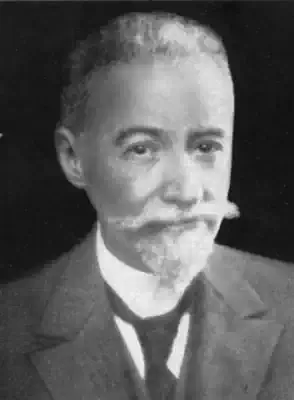
Vicente de Carvalho
1866–1924
· lived 58 years
 BR
BR
BR
Vicente de Carvalho was a Brazilian poet, journalist, and politician, known as the "Poeta do Amor" (Poet of Love) or "Poeta da Saudade" (Poet of Longing). His work, strongly influenced by Romanticism and Parnassianism, explored themes such as idealized love, saudade, nature, and patriotism with an elegant and musical language. He was one of the founders of the Brazilian Academy of Letters and had an active career in public life, also being known for his oratory and his defense of the Portuguese language.
n. 1866-04-05, Santos · m. 1924-04-22, São Paulo
6
Views
Bio
Identification and basic context
Vicente de Carvalho was a Brazilian poet, journalist, politician, and orator, widely known by the epithets "Poeta do Amor" and "Poeta da Saudade". Born in Rio de Janeiro, he dedicated much of his life to literature and public life. His work is written in Portuguese and falls within the transition period between Romanticism and Parnassianism in Brazil, a time of consolidation of national literary identity.Childhood and education
Vicente de Carvalho had a solid intellectual education, which prepared him for his work in the arts and politics. The cultural atmosphere of Rio de Janeiro in the 19th century, the center of intellectual and political life of the Empire, certainly influenced his first steps in literature. His formal education provided him with the basis for writing, while his sensitivity drove him to explore universal themes such as love and saudade.Literary career
Vicente de Carvalho's literary career began with the publication of his poems in newspapers and magazines of the time, quickly gaining recognition for his refined lyricism. His work, although marked by Romantic and Parnassian influences, developed its own style, focused on sentimental expression and formal beauty. He was one of the founders of the Brazilian Academy of Letters in 1897, occupying chair number 37, which demonstrates his prestige in the literary scene. Besides being a poet, he worked as a journalist and politician, demonstrating a multifaceted engagement with the society of his time.Work, style, and literary characteristics
Vicente de Carvalho's best-known works include "Sereias" (1896), "Arcádia" (1901), and "Poemas e Baladas" (1909). His dominant themes are love, often idealized and accompanied by a deep saudade, nature as a setting for his emotions, patriotism, and religiosity. In terms of form, his poetry transitions between the heritage of Romanticism, with its subjectivity and sentimentalism, and the formal requirements of Parnassianism, with the pursuit of metrical perfection and the sonority of verses. He used resources such as metaphor, hyperbole, and carefully crafted language to evoke feelings and landscapes. The poetic voice is predominantly lyrical, tender, and at times elegiac, expressing the melancholy of absence and the beauty of love. Vicente de Carvalho's style is marked by clarity, musicality, and a certain "sweetness" that earned him the title of "Poeta da Saudade". His work dialogues with literary tradition, but also distinguishes itself by the intensity of his feelings and his dedication to form.Cultural and historical context
Vicente de Carvalho lived in a period of great transformations in Brazil, with the Proclamation of the Republic, the consolidation of new institutions, and debates about national identity. His involvement in the Brazilian Academy of Letters placed him at the center of the literary debate of the time, while his participation in politics brought him closer to discussions about the country's future. He was part of a generation of intellectuals who sought to define the direction of Brazilian culture.Personal life
Vicente de Carvalho was a public and respected figure. His personal life, although not extensively documented in terms of scandals or dramas, was marked by his dedication to poetry, journalism, and politics. His oratory was known and admired, demonstrating his communication skills and influence.Recognition and reception
Vicente de Carvalho was widely recognized in his time, both for his poetic production and his public career. His election and active participation in the Brazilian Academy of Letters attest to the prestige he enjoyed. His work, with its sensitivity and formal elegance, earned a prominent place in the canon of Brazilian poetry.Influences and legacy
Vicente de Carvalho was influenced by Brazilian and foreign Romantic and Parnassian poets. His legacy lies in his ability to translate deep feelings, such as love and saudade, into verses of great formal and expressive beauty. He contributed to the consolidation of lyrical poetry in Brazil, focusing on the exploration of emotions and the perfection of form.Interpretation and critical analysis
Vicente de Carvalho's poetry is often analyzed for its lyrical expressiveness and its ability to evoke universal feelings. The duality between idealized love and the pain of saudade is a central point of his reflections, inviting analyses of the nature of desire and loss.Curiosities and lesser-known aspects
The epithet "Poeta da Saudade" reflects the indelible mark his work left on the Brazilian poetic imagination, associating him with melancholy and the beauty of absence.Death and memory
Vicente de Carvalho passed away in Rio de Janeiro. His memory is preserved by his work, which continues to be studied and appreciated, and by his fundamental role in the founding and consolidation of the Brazilian Academy of Letters.Poems
0No poems found
Comments (0)
Log in
to post a comment.
No comments yet. Be the first to comment.