Identification and basic context
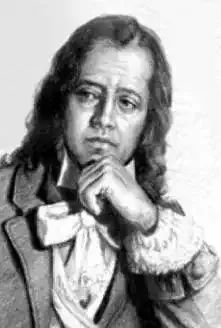
Tomás Antônio Gonzaga, also known by his pseudonym Dirceu in "Marília de Dirceu," was born in Vila de São João del Rei, then captaincy of Minas Gerais, on August 11, 1744, and died in Macaé, Rio de Janeiro, in 1810. He was the son of Dr. João Gonzaga da Costa, a judge, and D. Ana de Brito Peixoto de Alarcão. His family background was from the Portuguese-Brazilian colonial elite.
Childhood and education
He spent part of his childhood in Portugal, where he was taken by his father in 1753. He completed his humanities studies in Lisbon and later graduated in Law from the University of Coimbra in 1768. During his studies, he absorbed the ideals of the Enlightenment and Neoclassicism, philosophical and artistic currents that would mark his work. His experience in Coimbra and his interaction with Portuguese intellectuals were fundamental to his education.
Literary career
Gonzaga's writing began in his youth and during his education in Portugal, where he started composing poems inspired by classical and Arcadian models. His most expressive work, "Marília de Dirceu," was published in two parts, in 1792 and 1799, after his return to Brazil and his involvement in the Inconfidência Mineira. In 1789, he was arrested and deported to Mozambique, where he remained in exile until 1792. His career as a jurist and man of law also marked his path, alternating with his literary production.
Work, style, and literary characteristics
Tomás Antônio Gonzaga's main work is "Marília de Dirceu," a novel in verse divided into three parts, which portrays an idealized love for a muse, Marília. The style is markedly Arcadian, with themes such as pastoral love, nature, simplicity, and criticism of urban life. He frequently uses sonnets and decasyllabic verses, with a cultured, yet musical and fluid language. The poetic voice is lyrical and confessional, expressing the feelings of the poetic "I."
Gonzaga also wrote "Cartas Chilenas" (Chilean Letters), a satirical work that criticizes the administration of Governor Luís da Cunha Meneses in Minas Gerais, using the pseudonym Critilo. In this work, the tone is ironic and critical, and the style demonstrates a mastery of poetic form for purposes of social and political denunciation.
Work, style, and literary characteristics
Cultural and historical context
Tomás Antônio Gonzaga lived in a period of great transformations, both in Portugal and Brazil. He was a contemporary of the Inconfidência Mineira, a movement that directly influenced him, leading to his exile. Arcadismo, the literary movement to which he belonged, sought imitation of the classics, idealization of country life, and simplicity, in opposition to the excesses of the Baroque. His work engages with Enlightenment ideas of freedom and reason, but also with sentiment and melancholy.
Work, style, and literary characteristics
Personal life
Gonzaga's life was marked by his involvement in the Inconfidência Mineira, which resulted in his arrest and exile in Mozambique. This period of suffering and separation from his beloved, to whom he dedicated "Marília de Dirceu," gave his poetry an elegiac and personal tone. He was a man of law, serving as an ombudsman in São João del Rei before his arrest. His personal life and the hardships he suffered had a profound impact on his work.
Work, style, and literary characteristics
Recognition and reception
"Marília de Dirceu" achieved great popularity during his lifetime and established Tomás Antônio Gonzaga as one of the greatest lyric poets in Brazilian literature. His work was fundamental to the transition from Baroque to Arcadismo and, subsequently, to Romanticism in Brazil. He is recognized as one of the pillars of Brazilian poetry, with his work studied and admired to this day.
Work, style, and literary characteristics
Influences and legacy
Gonzaga was influenced by classical poets such as Virgil and Horace, and by Portuguese Arcadian poets such as Bocage. His legacy lies in the introduction of more personal, lyrical, and sentimental poetry in Brazil, paving the way for Romanticism. His work inspired numerous Brazilian poets and is considered an essential element of the Brazilian literary canon.
Work, style, and literary characteristics
Interpretation and critical analysis
Gonzaga's work is often analyzed from the perspective of love and idealization, but also as a reflection of the social and political tensions of his time. "Marília de Dirceu" can be interpreted as the expression of an impossible love, but also as a metaphor for the lost homeland and freedom. "Cartas Chilenas" are seen as an important document of social and political criticism.
Work, style, and literary characteristics
Curiosities and lesser-known aspects
A curious aspect is the duality of his work: the amorous lyricism of "Marília de Dirceu" contrasts with the political and social satire of "Cartas Chilenas." It is believed that Marília, the inspiring muse of his most famous work, may have been a real figure, or an idealization of an impossible love. His exile in Mozambique, where he married and had children, is a less explored chapter of his life.
Work, style, and literary characteristics
Death and memory
Tomás Antônio Gonzaga died in Macaé, Rio de Janeiro, in 1810, after returning from exile. His work continued to be published and reissued, solidifying his memory as one of the greatest poets in Brazilian literature. The legacy of "Marília de Dirceu" is undeniable in Lusophone poetry.

 PT
PT