
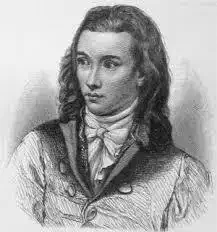
Soares de Passos
1826–1860
· lived 33 years
 PT
PT
PT
Soares de Passos was a Portuguese poet of the 19th century, a prominent figure of Ultra-Romanticism in Portugal. His work is marked by a deep pessimism, existential discontent, and an attraction to death and the melancholic, characteristics that made him one of the most distinctive representatives of his generation. His poetry, although sometimes considered excessively somber, reveals an intense sensibility and a lyrical skill that place him as a notable poet in Portuguese literature.
n. 1826-11-27, Porto · m. 1860-02-08, Porto
5
Views
Bio
Identification and basic context
Soares de Passos, poet name of Francisco de São Boaventura de Soares de Passos, was born in Ponte de Lima on March 17, 1825, and died in Porto on April 30, 1849. He was one of the most important Portuguese poets of the second generation of Romanticism, Ultra-Romanticism.Childhood and education
Soares de Passos had a childhood marked by fragile health and exacerbated sensibility. He attended the Seminary of Viana do Castelo, but his restless temperament and inclination for poetry led him to abandon the priesthood. Later, he studied Law at the University of Coimbra, where he stood out for his intelligence and bohemian personality.Literary career
His literary career was brief but intense. He began writing poetry in his youth, showing an early strong inclination for somber and melancholic themes. In Coimbra, he associated with other students who shared his ideas and sensibilities, forming a group that would become known as the "Generation of 40" or the "Ultra-Romantics."Work, style, and literary characteristics
Work, style, and literary characteristics Soares de Passos's work, collected in the anthology "Nuss," published posthumously in 1862, is an exponent of Ultra-Romanticism. The dominant themes are existential boredom, romantic disillusionment, attraction to death, suffering, solitude, and discontent with society. His style is characterized by exacerbated lyricism, a confessional and sometimes dramatic tone, with the use of language loaded with emotion and dark imagery. He frequently explores the sonnet form, but also uses free verse.Work, style, and literary characteristics
Cultural and historical context Soares de Passos lived in a time of great upheaval in Portugal and Europe. Romanticism was at its peak, and in Portugal, the second romantic generation, to which he belonged, manifested a deep pessimism and a fascination with the macabre and the unusual, in contrast to the optimism and nationalism of the first generation.Work, style, and literary characteristics
Personal life Soares de Passos's personal life was marked by illness, suffering, and an intense bohemian life, especially in Coimbra. His romantic relationships were often tumultuous and a source of inspiration for his poetry.Work, style, and literary characteristics
Recognition and reception During his lifetime, Soares de Passos did not achieve great public recognition, partly due to his premature death and the controversial nature of his work for the time. However, after the posthumous publication of "Nuss," his work began to be more valued by critics, who recognized his importance as one of the most authentic representatives of Portuguese Ultra-Romanticism.Work, style, and literary characteristics
Influences and legacy Soares de Passos was influenced by poets such as Lord Byron and Alfred de Musset. His legacy lies in his contribution to Portuguese Ultra-Romanticism, paving the way for greater exploration of pessimism and suffering in national poetry. He influenced later generations of poets who delved into existential themes.Work, style, and literary characteristics
Interpretation and critical analysis Soares de Passos's work is often interpreted as a reflection of his inner torment and the existential anguish of his time. His poetry is a testament to the search for an unattainable ideal and disillusionment with reality.Work, style, and literary characteristics
Curiosities and lesser-known aspects Soares de Passos was known for his eccentric personality and bohemian lifestyle. He had a particular fascination with death, which is reflected in his poetry.Work, style, and literary characteristics
Death and memory Soares de Passos died prematurely at the age of 24, from tuberculosis, a common disease at the time. His premature death contributed to his aura as a tragic poet and to the fascination that his work later exerted.Poems
0No poems found
Comments (0)
Log in
to post a comment.
No comments yet. Be the first to comment.