Identification and basic context
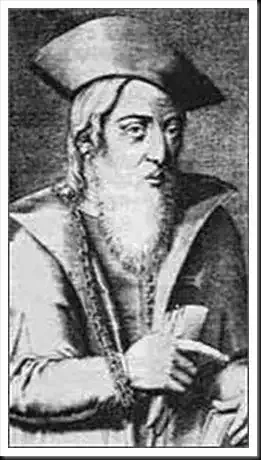
Francisco de Sá de Miranda was an influential Portuguese poet and playwright. He was born in 1495 and died in 1558. He is widely recognized as one of the introducers of the literary Renaissance in Portugal, especially for adapting Italian poetic forms.
Childhood and education
Sá de Miranda was born into a noble family and had access to a privileged education. He attended the University of Coimbra, where he studied Law and Arts. It was in his youth that he came into contact with classical and humanist culture, which would profoundly mark his work. He traveled extensively throughout Europe, including Italy, where he deepened his knowledge of Renaissance literature and Italian poets.
Literary career
Sá de Miranda's literary career is marked by the introduction of formal innovations in Portuguese poetry. He began writing poetry influenced by classical and Italian models. His work evolved towards greater formal and thematic sophistication, adapting Italian meter and forms to the Portuguese language. He published several works, but many were released posthumously. He also dedicated himself to theater, writing comedies.
Work, style, and literary characteristics
Sá de Miranda's main works include his "Poetic Works" (published posthumously in 1595). The dominant themes in his poetry are love (with Petrarchan influences), idealized nature, the fleetingness of time (tempus fugit), moral reflection, and social criticism. He introduced the sonnet, the eclogue, the epistle, and the ode to Portugal, forms inspired by Italian models such as Petrarch and Ariosto. His style is characterized by clarity, elegance, and formal rigor, with an erudite vocabulary and an often reflective and melancholic tone. He is associated with Classicism and the Renaissance.
Cultural and historical context
Sá de Miranda lived in a transitional era, the Renaissance, a period of great cultural and intellectual effervescence in Portugal and Europe. Portugal was a maritime power, and the Discoveries were in full swing, although his work focused more on humanist and classical values than on the exaltation of conquests. He was a contemporary of other great figures in Portuguese literature, such as Camões (whom he influenced). His social and cultural position allowed him to absorb European humanist currents and adapt them to the Portuguese reality.
Personal life
Sá de Miranda belonged to the high nobility and served at court. His travels in Europe, especially to Italy, were fundamental to his education and his openness to new ideas and literary aesthetics. He maintained relationships with other intellectuals of the time and dedicated himself to poetry and theater.
Recognition and reception
Sá de Miranda's recognition as one of the fathers of Portuguese Renaissance poetry was consolidated posthumously. His introduction of new poetic forms was revolutionary and profoundly marked subsequent Portuguese poetry, being widely studied and admired by generations of poets and literary critics.
Influences and legacy
Sá de Miranda was strongly influenced by classical Greco-Latin literature and by Italian Renaissance poets such as Petrarch, Dante, and Ariosto. In turn, he bequeathed a vast legacy to Portuguese poetry, paving the way for authors like Camões and establishing a new aesthetic standard that would dominate lyric poetry for centuries. He is considered one of the pillars of Portuguese-language literature.
Interpretation and critical analysis
Sá de Miranda's work is often analyzed from the perspective of Renaissance humanism, with an emphasis on the pursuit of formal perfection, reflection on the human condition, and the reconciliation between classical tradition and new sensibilities.
Curiosities and lesser-known aspects
His dedication to introducing new poetic forms, often with an experimental character for the time in Portugal, demonstrates remarkable creative daring. Although belonging to the nobility, his literary output reflects a deep concern with universal values and art.
Death and memory
Sá de Miranda passed away in 1558. His work continued to be valued and studied, and the memory of his importance to Portuguese poetry and the introduction of the Renaissance in the country remains alive in literary history.

 PT
PT