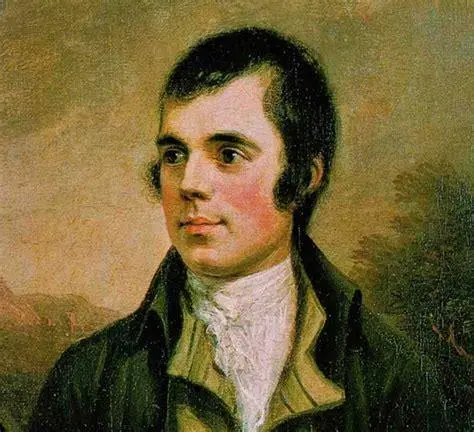
The Gloomy Night Is Gath'ring Fast
The Gloomy Night Is Gath'ring Fast
The gloomy night is gath'ring fast,
Loud roars the wild inconstant blast;
Yon murky cloud is filled with rain,
I see it driving o'er the plain;
The hunter now has left the moor,
The scatt'red coveys meet secure;
While here I wander, prest with care,
Along the lonely banks of Ayr.
The Autumn mourns her rip'ning corn
By early Winter's ravage torn;
Across her placid, azure sky,
She sees the scowling tempest fly;
Chill runs my blood to hear it rave:
I think upon the stormy wave,
Where many a danger I must dare,
Far from the bonie banks of Ayr.
'Tis not the surging billows' roar,
'Tis not the fatal, deadly shore;
Tho' death inev'ry shape appear,
The wretched have no more to fear:
But round my heart the ties are bound,
That heart transpierc'd with many a wound;
These bleed afresh, those ties I tear,
To leave the bonie banks of Ayr.
Farewell, old Coila's hills and dales,
Her heathy moors and winding vales;
The scenes where wretched Fancy roves,
Pursuing past, unhappy loves!
Farewell my friends! Farewell my foes!
My peace with these, my love with those--
The bursting tears my heart declare,
Farewell, my bonie banks of Ayr.
The Lass That Made the Bed to Me
The Lass That Made the Bed to Me
When Januar' wind was blawing cauld,
As to the north I took my way,
The mirksome night did me enfauld,
I knew na whare to lodge till day:
By my gude luck a maid I met,
Just in the middle o' my care,
And Kindly she did me invite
To walk into a chamber fair.
I bow'd fu' low unto this maid,
And thank'd her for her courtesie;
I bow'd fu' low unto this maid,
An bade her make a bed to me;
She made the bed baith large and wide,
Wi' twa white hands she spread it doun;
She put the cup to her rosy lips,
And drank - "Young man, now sleep ye soun'."
Chorus - The bonie lass made the bed to me,
The braw lass made the bed to me,
I'll ne'er forget till the day I die,
The lass that made the bed to me.
She snatch'd the candle in her hand,
And frae my chamber went wi' speed;
But I call'd her quickly back again,
To lay some mair below my head:
A cod she laid below my head,
And served me with due respect,
And, to salute her wi' a kis,
I put my arms about her neck.
Chorus: -...
"Haud aff your hands, young man! she said,
"And dinna sae uncivil be;
Gif ye hae ony luve for me,
O wrang ma my virginitie."
Her hair was like the links o' gowd,
Her teeth were like the ivorie,
Her cheeks like lilies dipt in wine,
The lass that made the bed to me.
Chorus: -...
Her bosom was the driven snaw,
Twa drifted heaps sae fair to see;
Her limbs the polish'd marble stane,
The lass that made the bed to me.
I kiss'd her o'er and o'er again,
And aye she wist na what to say:
I laid her 'tween me and the wa';
�
The lassie thocht na lang till day.
Chorus: -...
Upon the morrow when we raise,
I thank'd her for her courtesie;
But aye she blush'd and aye she sigh'd,
And said, "Alas, ye've ruin'd me."
I clasp'd her waist, and kiss'd her syne,
While the tear stood twinklin' in her e'e;
I said, "My lassie, dinna cry,
For ye aye shall make the bed to me."
Chorus: - ...
She took her mither's holland sheets,
An' made them a' in sarks to me;
Blythe and merry may she be,
The lass that made the bed to me.
Chorus: -...
The Death and Dying Words of Poor Mailie
The Death and Dying Words of Poor Mailie
The Author's Only Pet Yowe
An Unco Mournfu' Tale
As Mailie, an' her lambs thegither,
Was ae day nibbling on the tether,
Upon her cloot she coost a hitch,
An owre she warsl'd in the ditch:
There, groaning, dying, she did lie,
When Hughoc he cam doytin by.
Wi' glowrin een, and lifted han's
Poor Hughoc like a statue stan's;
He saw her days were near-hand ended,
But, wae's my heart! he could na mend it!
He gaped wide, but naething spak,
At length poor Mailie silence brak.
"O thou, whase lamentable face
Appears to mourn my woefu' case!
My dying words attentive hear,
An' bear them to my Master dear.
"Tell him, if e'er again he keep
As muckle gear as buy a sheep -
O, bid him never tie them mair,
Wi' wicked strings o' hemp or hair!
But ca' them out to park or hill,
An' let them wander at their will:
So may his flock increase, an' grow
To scores o' lambs, an' packs o' woo'!
"Tell him, he was a Master kin',
An' aye was guid to me an' mine;
An now my dying charge I gie him,
My helpless lambs, I trust them wi' him.
"O, bid him save their harmless lives,
Frae dogs, an' tods, an' butchers' knives!
But gie them guid cow-milk their fill,
Till they be fit to fend themsel';
An' tent them duly, e'en an' morn,
Wi' taets o' hay an' ripps o' corn.
"An' may they never learn the gates,
Of ither vile, wanrestfu' pets -
To slink thro' slaps, an' reave an' steal
At stacks o' pease, or stocks o' kail!
So may they, like their great forbears,
For mony a year come thro' the shears:
So wives will gie them bits o' bread,
An bairns greet for them when they're dead.
�
"My poor toop-lamb, my son an' heir,
O, bid him breed him up wi' care!
An' if he live to be a beast,
To pit some havins in his breast!
An' warn him - what I winna name -
To stay content wi' yowes at hame;
An' no to rin an' wear his cloots,
Like ither meseless, graceless brutes.
"An' neist, my yowie, silly thing,
Gude keep thee frae a tether string!
O, may thou ne'er forgather up,
Wi' ony blastit, moorland toop;
But aye keep mind to moop an' mell,
Wi' sheep o' credit like thysel'!
"And now, my bairns, wi' my last breath,
I lea'e my blessin wi' you baith:
An' when you think upo' your mither,
Mind to be kind to ane anither.
"Now, honest Hughoc, dinna fail,
To tell my master a' my tale;
An' bid him burn this cursed tether,
An' for thy pains thou'se get my blather."
This said, poor Mailie turn'd her head,
An' closed her een amang the dead!
The Bonie Wee Thing
The Bonie Wee Thing
Wishfully I look and languish
In that bonie face o' thine,
And my heart it sounds wi' anguish,
Lest my wee thing be na mine.
[Chorus] Bonie wee thing, cannie wee thing,
Lovely wee thing, wert thou mine,
I wad wear thee in my bosom,
Lest my jewel it should tine.
Wit and Grace, and Love, and Beauty,
In ae constellation shine;
To adore thee in my duty,
Goddess o' this soul o' mine!
[Chorus]
The Auld Farmer's New-Year-Morning Salutation to His Auld Mare , Maggie
The Auld Farmer's New-Year-Morning Salutation to His Auld Mare , Maggie
A Guide New-year I wish thee, Maggie!
Hae, there's a ripp to thy auld baggie:
Tho' thou's howe-backit now, an' knaggie,
I've seen the day
There could hae gaen like ony staggie,
Out-owre the lay.
Tho' now thou's dowie, stiff an' crazy,
An' thy auld hide as white's a daisie,
I've seen the dappl't, sleek an' glaizie,
A bonie gray:
He should been tight that daur't to raize thee,
Ance in a day.
Thou ance was i' the foremost rank,
A filly buirdly, steeve an' swank;
An' set weel down a shapely shank,
As e'er tread yird;
An' could hae flown out-owre a stank,
Like ony bird.
It's now some nine-an'-twenty year,
Sin' thou was my guid-father's mear;
He gied me thee, o' tocher clear,
An' fifty mark;
Tho' it was sma', 'twas weel-won gear,
An' thou was stark.
When first I gaed to woo my Jenny,
Ye then was trotting wi' your minnie:
Tho' ye was trickie, slee, an funnie,
Ye ne'er was donsie;
But hamely, tawie, quiet, an' cannie,
An' unco sonsie.
That day, ye pranc'd wi' muckle pride,
When ye bure hame my bonie bride:
An' sweet an' gracefu' she did ride,
Wi' maiden air!
Kyle-Stewart I could bragged wide
For sic a pair.
Tho' now ye dow but hoyte and hobble,
An' wintle like a saumont coble,
That day, ye was a jinker noble,
For heels an' win'!
An' ran them till they a' did wauble,
Far, far, behin'!
When thou an' I were young an' skeigh
An' stable-meals at fairs were dreigh,
How thou wad prance, and snore, an' skreigh
�
An' tak the road!
Town's-bodies ran, an' stood abeigh,
An' ca't thee mad.
When thou was corn't, an' I was mellow,
We took the road aye like a swallow:
At brooses thou had ne'er a fellow,
For pith an' speed;
But ev'ry tail thou pay't them hollow,
Whare'er thou gaed.
The sma', droop-rumpl't, hunter cattle
Might aiblins waurt thee for a brattle;
But sax Scotch mile, thou try't their mettle,
An' gar't them whaizle:
Nae whip nor spur, but just a wattle
O' saugh or hazel.
Thou was a noble fittie-lan',
As e'er in tug or tow was drawn!
Aft thee an' I, in aught hours' gaun,
In guid March-weather,
Hae turn'd sax rood beside our han',
For days thegither.
Thou never braing't, an' fetch't, an' fliskit;
But thy auld tail thou wad hae whiskit,
An' spread abreed thy weel-fill'd brisket,
Wi' pith an' power;
Till sprittie knowes wad rair't an' riskit
An' slypet owre.
When frosts lay lang, an' snaws were deep,
An' threaten'd labour back to keep,
I gied thy cog a wee bit heap
Aboon the timmer:
I ken'd my Maggie wad na sleep,
For that, or simmer.
In cart or car thou never reestit;
The steyest brae thou wad hae fac't it;
Thou never lap, an' sten't, and breastit,
Then stood to blaw;
But just thy step a wee thing hastit,
Thou snoov't awa.
My pleugh is now thy bairn-time a',
Four gallant brutes as e'er did draw;
Forbye sax mae I've sell't awa,
That thou hast nurst:
They drew me thretteen pund an' twa,
The vera warst.
�
Mony a sair daurk we twa hae wrought,
An' wi' the weary warl' fought!
An' mony an anxious day, I thought
We wad be beat!
Yet here to crazy age we're brought,
Wi' something yet.
An' think na', my auld trusty servan',
That now perhaps thou's less deservin,
An' thy auld days may end in starvin;
For my last fow,
A heapit stimpart, I'll reserve ane
Laid by for you.
We've worn to crazy years thegither;
We'll toyte about wi' ane anither;
Wi' tentie care I'll flit thy tether
To some hain'd rig,
Whare ye may nobly rax your leather,
Wi' sma' fatigue.
The Battle Of Sherramuir
The Battle Of Sherramuir
"O cam ye here the fight to shun,
Or herd the sheep wi' me, man?
Or were ye at the Sherra-moor,
Or did the battle see, man?"
"I saw the battle, sair and teugh
And reekin-red ran monie a sheugh;
My heart, for fear, gae sough for sough,
To hear the thuds, and see the cluds
O clans frae woods in tartan duds
Wha glaum'd at icingdoms three, man.
"The red-coat lads wi' black cockauds,
To meet them were na slaw, man;
They rush'd and push'd, and bluid outgush'd,
And monie a bouk did fa', man!
The great Argyle led on his files,
I wat they glanc'd for twenty miles;
They hough'd the clans like nine-pin kyles,
They hack'd and hash'd, while braid-swords clashed,
And thro they dash'd, and hew'd and smash'd,
Till fey men died awa, man.
"But had ye seen the philibegs,
And skyrin tartan trews, man;
When in the teeth they daur'd our Whigs,
And Covenant trueblues, man!
In lines extended lang and large,
When baig'nets o'erpower'd the targe,
And thousands hasten'd to the charge,
Wi' Highland wrath and frac the sheath
Drew blades o' death, till, out o' breath.
They fled like frightened dows, man!"
"O, how Deil, Tam, can that be true?
The chase gaed frae the north, man!
I saw mysel, they did pursue
The horseman back to Forth, man:
And at Dunblane, in my ain sight,
They took the brig wi a' their might
And straught to Stirling wing'd their flight;
But, cursed lot! the gates were shut,
And monie a huntit poor red-coat,
For fear amaist did swarf, man!"
My sister Kate came up the gate
Wi' crowdie unto me, man:
She swoor she saw some rebels run
To Perth and to Dundee, man!
Their left-hand general had nae skill;
The Angus lads had nae good will
That day their neebors' bluid to spill;
For fear, by foes, that they should lose
�
Their cogs o brose; they scar'd at blows,
And hameward fast did flee, man.
"They've lost some gallant gentlemen,
Amang the Highland clans, man!
I fear my Lord Panmure is slain,
Or in his en'mies' hands, man.
Now wad ye sing this double flight,
Some fell for wrang, and some for right,
But monie bade the world guid-night;
Say, pell and mell, wi' muskets' knell
How Tories feil, and Whigs to Hell
Flew off in frightened bands, man!"
Tarbolton Lasses, The
Tarbolton Lasses, The
If ye gae up to yon hill-tap,
Ye'll there see bonie Peggy;
She kens her father is a laird,
And she forsooth's a leddy.
There Sophy tight, a lassie bright,
Besides a handsome fortune:
Wha canna win her in a night,
Has little art in courtin'.
Gae down by Faile, and taste the ale,
And tak a look o' Mysie;
She's dour and din, a deil within,
But aiblins she may please ye.
If she be shy, her sister try,
Ye'll maybe fancy Jenny;
If ye'll dispense wi' want o' sense-
She kens hersel she's bonie.
As ye gae up by yon hillside,
Speir in for bonie Bessy;
She'll gie ye a beck, and bid ye light,
And handsomely address ye.
There's few sae bonie, nane sae guid,
In a' King George' dominion;
If ye should doubt the truth o' this-
It's Bessy's ain opinion!
Tam O' Shanter
Tam O' Shanter
A Tale
"Of Brownyis and of Bogillis full is this Buke."
Gawin Douglas.
When chapman billies leave the street,
And drouthy neibors neibors meet;
As market days are wearing late,
And folk begin to tak the gate,
While we sit bousing at the nappy,
An' getting fou and unco happy,
We think na on the lang Scots miles,
The mosses, waters, slaps and stiles,
That lie between us and our hame,
Where sits our sulky, sullen dame,
Gathering her brows like gathering storm,
Nursing her wrath to keep it warm.
This truth fand honest Tam o' Shanter,
As he frae Ayr ae night did canter:
(Auld Ayr, wham ne'er a town surpasses,
For honest men and bonie lasses).
O Tam! had'st thou but been sae wise,
As taen thy ain wife Kate's advice!
She tauld thee weel thou was a skellum,
A blethering, blustering, drunken blellum;
That frae November till October,
Ae market-day thou was na sober;
That ilka melder wi' the Miller,
Thou sat as lang as thou had siller;
That ev'ry naig was ca'd a shoe on
The Smith and thee gat roarin fou on;
That at the Lord's house, ev'n on Sunday,
Thou drank wi' Kirkton Jean till Monday;
She prophesied that late or soon,
Thou wad be found, deep drown'd in Doon,
Or catch'd wi' warlocks in the mirk,
By Alloway's auld, haunted kirk.
Ah, gentle dames! it gars me greet,
To think how mony counsels sweet,
How mony lengthen'd, sage advices,
The husband frae the wife despises!
But to our tale: - Ae market night,
Tam had got planted unco right,
Fast by the ingle, bleezing finely,
Wi' reaming swats that drank divinely;
And at his elbow, Souter Johnie,
His ancient, trusty, drouthy crony:
Tam lo'ed him like a very brither;
They had been fou for weeks thegither.
�
The night drave on wi' sangs an' clatter;
And aye the ale was growing better:
The Landlady and Tam grew gracious,
Wi' favours secret, sweet and precious:
The Souter tauld his queerest stories;
The Landlord's laugh was ready chorus:
The storm without might rair and rustle,
Tam did na mind the storm a whistle.
Care, mad to see a man sae happy,
E'en drown'd himsel amang the nappy.
As bees flee hame wi' lades o' treasure,
The minutes wing'd their way wi' pleasure:
Kings may be blest, but Tam was glorious,
O'er a' the ills o' life victorious!
But pleasures are like poppies spread,
You seize the flow'r, its bloom is shed;
Or like the snow falls in the river,
A moment white - then melts for ever;
Or like the Borealis race,
That flit ere you can point their place;
Or like the Rainbow's lovely form
Evanishing amid the storm. -
Nae man can tecther Time nor Tide,
The hour approaches Tam maun ride;
That hour, o' night's black arch the key-stane,
That dreary hour he mounts his beast in;
And sic a night he taks the road in,
As ne'er poor sinner was abroad in.
The wind blew as 'twad blawn its last;
The rattling showers rose on the blast;
The speedy gleams the darkness swallow'd;
Loud, deep, and lang the thunder bellow'd:
That night, a child might understand,
The deil had business on his hand.
Weel-mounted on his grey mare Meg,
A better never leg,
Tam skelpit on thro' dub and mire,
Despising wind, and rain, and fire;
Whiles holding fast his gude blue bonnett,
Whiles crooning o'er some auld Scots sonnet,
Whiles glow'rin round wi' prudent cares,
Lest bogles catch him unawares;
Kirk-Alloway was drawing nigh,
Where ghaists and houlets nightly cry.
By this time he was cross the ford,
Where in the snaw the chapman smoor'd;
�
And past the birks and meikle stane,
Where drunken Charlie brak's neck-bane;
And thro' the whins, and by the cairn,
Where hunters fand the murder'd bairn;
And near the thorn, aboon the well,
Where Mungo's mither hang'd hersel'.
Before him Doon pours all his floods,
The doubling storm roars thro' the woods,
The lightnings flash from pole to pole,
Near and more near the thunders roll,
When, glimmering thro' the groaning trees,
Kirk-Alloway seem'd in a bleeze,
Thro' ilka bore the beams were glancing,
And loud resounded mirth and dancing.
Inspiring bold John Barleycorn!
What dangers thou canst make us scorn!
Wi' tippeny, we fear nae evil;
Wi' usquabae, we'll face the devil!
The swats sae ream'd in Tammie's noddle,
Fair play, he car'd na deils a boddle,
But Maggie stood, right sair astonish'd,
Till, by the heel and hand admonish'd,
She ventur'd forward on the light;
And wow! Tam saw an unco sight!
Warlocks and witches in a dance:
Nae cotillon, brent new frae France,
But hornpipes, jigs, strathspeys, and reels,
Put life and mettle in their heels.
A winnock-bunker in the east,
There sat auld Nick, in shape o' beast;
A tousie tyke, black, grim, and large,
To gie them music was his charge.
He screw'd the pipes and gart them skirl,
Till roof and rafters a' did dirl. -
Coffins stood round, like open presses,
That shaw'd the Dead in their last dresses;
And (by some devilish cantraip sleight)
Each in its cauld hand held a light.
By which heroic Tam was able
To note upon the haly table,
A murderer's banes, in gibbet-airns;
Twa span-lang, wee, unchristened bairns;
A thief, new-cutted frae a rape,
Wi' his last gasp his gab did gape;
Five tomahawks, wi' blude red-rusted:
Five scimitars, wi' murder crusted;
A garter which a babe had strangled:
A knife, a father's throat had mangled,
Whom his ain son of life bereft,
The grey hairs yet stack to the heft;
�
Wi' mair of horrible and awfu',
Which even to name was be unlawfu'.
As Tammie glowr'd, amaz'd, and curious,
The mirth and fun grew fast and furious;
The Piper loud and louder blew,
The dancers quick and quicker flew,
They reel'd, they set, they cross'd, they cleekit,
Till ilka carlin swat and reekit,
And coost her duddies to the wark,
And linkit at it in her sark!
Now Tam, O Tam! had they been queans,
A' plump and strapping in their teens!
Their sarks, instead o' creeshie flainen,
Been snaw-white seventeen-hunder linen! -
Thir breeks o' mine, my only pair,
That aince were plush, o' guid blue hair,
I wud hae gien them off my hurdies,
For ae blink o' the bonie burdies!
But wither'd beldams, auld and droll,
Rigwoodie hags wad spean a foal,
Louping an' flinging on a crummock,
I wonder did na turn thy stomach.
But Tam kent what was what fu' brawlie:
There was ae winsome wench and waulie
That night enlisted in the core,
Lang after ken'd on Carrick shore
(For mony a beast to dead she shot,
And perish'd mony a bonie boat,
And shook baith meikle corn and bear,
And kept the country-side in fear);
Her cutty sark, o' Paisley harn,
That while a lassie she had worn,
In longitude tho' sorely scanty,
It was her best, and she was vauntie.
Ah! little ken'd thy reverend grannie,
That sark she coft for her wee Nannie,
Wi' twa pund Scots ('twas a' her riches),
Wad ever grac'd a dance of witches!
But here my Muse her wing maun cour,
Sic flights are far beyond her power;
To sing how Nannie lap and flang
(A souple jade she was and strang),
And how Tam stood, like ane bewitch'd,
And thought his very een enrich'd:
Even Satan glowr'd, and fidg'd fu' fain,
And hotch'd and blew wi' might and main:
Till first ae caper, syne anither,
Tam tint his reason a' thegither,
�
And roars out, "Weel done, Cutty-sark!"
And in an instant all was dark:
And scarcely had he Maggie rallied,
When out the hellish legion sallied.
As bees bizz out wi' angry fyke,
When plundering herds assail their byke;
As open pussie's mortal foes,
When, pop! she starts before their nose;
As eager runs the market-crowd,
When "Catch the thief!" resounds aloud;
So Maggie runs, the witches follow,
Wi' mony an eldritch skreich and hollo.
Ah, Tam! Ah, Tam! thou'll get thy fairin!
In hell they'll roast thee like a herrin!
In vain thy Kate awaits thy comin!
Kate soon will be a woefu' woman!
Now, do thy speedy utmost, Meg,
And win the key-stane o' the brig;
There, at them thou thy tail may toss,
A running stream they dare ne cross.
But ere the key-stane she could make,
The fient a tail she had to shake!
For Nannie, far before the rest,
Hard upon noble Maggie prest,
And flew at Tam wi' furious ettle;
But little wist she Maggie's mettle!
Ae spring brought off her master hale,
But left behind her ain grey tale:
The carlin claught her by the rump,
And left poor Maggie scarce a stump.
Now, wha this tale o' truth shall read,
Ilk man, and mother's son, take heed:
Whene'er to Drink you are inclin'd,
Or Cutty-sarks rin in your mind,
Think ye may buy the joys o'er dear;
Remember Tam o' Shanter's mare.
Scots, Wha Hae Wi' Wallace Bled
Scots, Wha Hae Wi' Wallace Bled
Scots, wha hae wi' Wallace bled,
Scots, wham Bruce has aften led,
Welcome to your gory bed,
Or to victory!
Now's the day, and now's the hour;
See the front o' battle lour,
See approach proud Edward's power—
Chains and slavery!
Wha will be a traitor-knave?
Wha can fill a coward's grave?
Wha sae base as be a slave?
Let him turn and flee!
Wha for Scotland's king and law
Freedom's sword will strongly draw,
Freeman stand or freeman fa',
Let him follow me!
By oppression's woes and pains,
By your sons in servile chains,
We will drain our dearest veins,
But they shall be free!
Lay the proud usurpers low!
Tyrants fall in ev'ry foe!
Liberty's in ev'ry blow!
Let us do or die!
Scotch Drink
Scotch Drink
Let other poets raise a fracas
Bout vines, and wines, an drucken Bacchus,
An crabbit names an stories wrack us,
An grate our lug:
I sing the juice Scotch bear can mak us,
In glass or Jug.
O thou, my Muse! guid auld Scotch drink!
Whether thro' wimplin worms thou jink,
Or, richly brown, ream owre the brink,
In glorious faem
Inspire me, till I lisp an wink,
To sing thy name!
Let husky wheat the haughs adorn,
An aits set up their awnie horn,
An Pease and beans, at e'en or morn,
Perfume the plain:
Leeze me on thee, John Barleycorn,
Thou king o' grain!
On thee aft Scotland chows her cood,
In souple scones, the wale o' food!
Or tumbling in the boiling flood
Wi' kail an beef;
But when thou pours thy strong heart's blood
There thou shines chief.
Food fills the wame, an keeps us livin;
Tho life's a gift no worth receivin
When heavy-dragg'd wi pine an grievin;
But oil'd by thee
The wheels o' life gae down-hill, scrievin,
Wi' rattlin glee.
Thou clears the head o' doited Lear,
Thou cheers the heart o' drooping Care;
Thou strings the nerves o' Labour sair,
At 's weary toil;
Thou ev'n brightens dark Despair
Wi' gloomy smile.
Aft, clad in massy siller weed,
Wi gentles thou erscts thy head;
Yet humbly kind in time o' need,
The poor man's wine:
His wee drap parritch, or his bread,
Thou kitchens fine.
Thou art the life o' public haunts;
But thee, what were our fairs and rants?
Ev'n godly meetings o' the saunts,
�
By thee inspir'd,
When, gaping, they besiege the tents,
Are doubly fir'd.
That merry night we get the corn in,
O sweetly, then, thou reams the horn
Or reekin on a New-Year mornin
In cog or bicker,
An just a wee drap sp'ritual burn in,
An gusty sucker!
When Vulcan gies his bellows breath,
An ploughmen gather wi their graith,
O rare! to see thee fizz an freath
I' th' lugget caup!
Then Burnewin comes on like death
At every chaup.
Nae mercy, then, for airn or steel:
The brawnie, bainie, ploughman chiel,
Brings hard owrehip, wi sturdy wheel,
The strong forehammer,
Till block an studdie ring an reel,
Wi dinsome clamour.
When skirlin' weanies see the light,
Thou maks the gossips clatter bright,
How fumblin coofs their dearies slight;
Wae worth the name!
Nae howdie gets a social night,
Or plack frae them.
When neebors anger at a plea,
An just as wud as wud can be,
How easy can the barley-brie
Cement the quarrel!
It's aye the cheapest lawyer's fee,
To taste the barrel.
Alake! that e'er my Muse has reason,
To wyte her countrymen wi' treason!
But monie daily weet their weason
Wi' liquors nice,
An hardly, in a winter season,
E'er spier her price.
Wae worth that brandy, burnin trash!
Fell source o' monie a pain an brash!
Twins monie a poor, doylt, drucken hash
O' half his days;
An sends, beside, auld Scotland's cash
To her warst faes.
�
Ye Scots, wha wish auld Scotland well!
Ye chief, to you my tale I tell,
Poor, plackless devils like mysel!
It sets you ill
Wi' bitter, dearthfu' wines to mell,
Or foreign gill.
May gravels round his blather wrench,
An gouts torment him, inch by inch,
Wha twists his gruntle wi' a glunch
O' sour disdain
Out owre a glass o' whisky-punch
Wi honest men!
O Whisky! soul o' plays an pranks!
Accept a Bardie's gratefu thanks!
When wanting thee, what tuneless cranks
Are my poor verses!
Thou comes---they rattle i' their ranks,
At ither's arses!
Thee, Ferintosh! O sadly lost!
Scotland lament frae coast to coast!
Now colic grips, an barkin hoast
May kill us a';
For loyal Eorbes' charter'd boast
Is taen awa!
They curst horse-leeches o' th' Excise,
Wha mak the whisky stells their prize!
Haud up thy han', Deil! ance, twice, thrice!
There, seize the blinkers!
An bake them up in brunstane pies
For poor damn'd drinkers.
Fortune! if thou'll but gie me still
Hale breeks, a scone, an whisky gill,
An rowth o' rhyme to rave at will,
Tak a' the rest,
An deal't about as thy blind skill
Directs thee best.