Identification and basic context
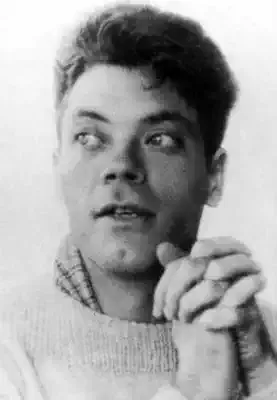
Reinaldo Ferreira was a Brazilian poet, journalist, and literary critic. He was born in Rio de Janeiro on May 22, 1894, and died in São Paulo on November 10, 1957. His work, although concise, is recognized for its avant-garde nature and anticipation of modernist trends. He wrote in Portuguese.
Childhood and education
Reinaldo Ferreira was born into a middle-class family in Rio de Janeiro. His intellectual formation was marked by reading European avant-garde authors and the cultural effervescence of the time. He absorbed the influences of the artistic and literary renewal movements that were beginning to emerge in Europe.
Literary career
Reinaldo Ferreira's writing career began in his youth, a period when he already showed an interest in poetic experimentation. His work evolved towards breaking with traditional aesthetics, seeking new forms of expression. He published in important periodicals and literary magazines of his time, actively participating in the dissemination of new ideas.
Work, style, and literary characteristics
Reinaldo Ferreira's main work is the book "Coração do Vento" (Heart of the Wind) (1921), a landmark in Brazilian poetry. Recurring themes include modern life, the city, melancholy, and introspection. Formally, he explored free verse and innovated in the structure of compositions, seeking a more colloquial and direct language. His poetic tone is often lyrical and reflective. The language is dense with imagery and rhetorical devices, with a clear break from tradition, approaching modernist proposals.
Cultural and historical context
Reinaldo Ferreira lived in a period of great transformations in Brazil and the world, such as the post-World War I era and the beginning of Brazilian Modernism. He interacted with other writers and intellectuals of his generation, actively participating in cultural debates. His work engages with European avant-gardes and reflects the environment of modernization and urbanization in Brazil.
Personal life
Little is known about Reinaldo Ferreira's personal life compared to his work. It is known that his activity as a journalist and literary critic was intense, which put him in contact with the intellectual milieu of his time. Existential crises and the search for new forms of expression seem to have shaped part of his worldview.
Recognition and reception
Although his work is concise, Reinaldo Ferreira gained recognition for his originality and for anticipating modernist trends. His critical reception, especially during his lifetime, may have been limited by the radicality of his proposal, but his value was later consolidated by studies on Brazilian literature.
Influences and legacy
Reinaldo Ferreira was influenced by European avant-gardes, such as Futurism and Cubism. His legacy lies in his contribution to the renewal of Brazilian poetry, opening paths for the modernist poets who succeeded him. His formal and thematic experimentation impacted later generations.
Interpretation and critical analysis
Reinaldo Ferreira's work has been interpreted as a harbinger of Modernism, with a keen sensitivity to urban life and contemporary subjectivity. His poetry provokes debates about the break with tradition and the search for a national identity in art.
Curiosities and lesser-known aspects
Reinaldo Ferreira was known for his intense intellectual activity and his innovative stance. His writing habits and details of his private life are less documented, but his dedication to poetry and literary debate is evident.
Death and memory
Reinaldo Ferreira died in São Paulo in 1957. His memory is preserved by his work, considered fundamental to understanding the transition to Modernism in Brazilian literature. Posthumous publications may have contributed to the dissemination of his texts and the consolidation of his place in literary history.

 PT
PT