
Poems List
Explore poems from our collection
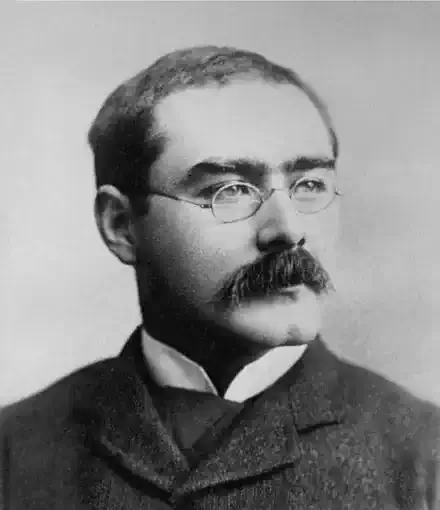
Rudyard Kipling
The Female of the Species
The Female of the Species
When the Himalayan peasant meets the he-bear in his pride,
He shouts to scare the monster who will often turn aside.
But the she-bear thus accosted rends the peasant tooth and nail,
For the female of the species is more deadly than the male.
When Nag, the wayside cobra, hears the careless foot of man,
He will sometimes wriggle sideways and avoid it if he can,
But his mate makes no such motion where she camps beside the trail -
For the female of the species is more deadly than the male.
When the early Jesuit fathers preached to Hurons and Choctaws,
They prayed to be delivered from the vengeance of the squaws -
'Twas the women, not the warriors, turned those stark enthusiasts pale -
For the female of the species is more deadly than the male.
Man's timid heart is bursting with the things he must not say,
For the Woman that God gave him isn't his to give away;
But when hunter meets with husband, each confirms the others tale -
The female of the species is more deadly than the male.
Man, a bear in most relations, worm and savage otherwise,
Man propounds negotiations, Man accepts the compromise;
Very rarely will he squarely push the logic of a fact
To its ultimate conclusion in unmitigated act.
Fear, or foolishness, impels him, ere he lay the wicked low,
To concede some form of trial even to his fiercest foe.
Mirth obscene diverts his anger; Doubt and Pity oft perplex
Him in dealing with an issue - to the scandal of the Sex!
But the Woman that God gave him, every fibre of her frame
Proves her launched for one sole issue, armed and engined for the same,
And to serve that single issue, lest the generations fail,
The female of the species must be deadlier than the male.
She who faces Death by torture for each life beneath her breast
May not deal in doubt or pity - must not swerve for fact or jest.
These be purely male diversions - not in these her honor dwells -
She, the Other Law we live by, is that Law and nothing else!
She can bring no more to living than the powers that make her great
As the Mother of the Infant and the Mistress of the Mate;
And when Babe and Man are lacking and she strides unclaimed to claim
Her right as femme (and baron), her equipment is the same.
She is wedded to convictions - in default of grosser ties;
Her contentions are her children, Heaven help him, who denies!
He will meet no cool discussion, but the instant, white-hot wild
Wakened female of the species warring as for spouse and child.
Unprovoked and awful charges - even so the she-bear fights;
Speech that drips, corrodes and poisons - even so the cobra bites;
Scientific vivisection of one nerve till it is raw,
And the victim writhes with anguish - like the Jesuit with the squaw!
So it comes that Man, the coward, when he gathers to confer
With his fellow-braves in council, dare not leave a place for her
Where, at war with Life and Conscience, he uplifts his erring hands
To some God of abstract justice - which no woman understands.
And Man knows it! Knows, moreover, that the Woman that God gave him
Must command but may not govern; shall enthrall but not enslave him.
And She knows, because She warns him and Her instincts never fail,
That the female of Her species is more deadly than the male!
When the Himalayan peasant meets the he-bear in his pride,
He shouts to scare the monster who will often turn aside.
But the she-bear thus accosted rends the peasant tooth and nail,
For the female of the species is more deadly than the male.
When Nag, the wayside cobra, hears the careless foot of man,
He will sometimes wriggle sideways and avoid it if he can,
But his mate makes no such motion where she camps beside the trail -
For the female of the species is more deadly than the male.
When the early Jesuit fathers preached to Hurons and Choctaws,
They prayed to be delivered from the vengeance of the squaws -
'Twas the women, not the warriors, turned those stark enthusiasts pale -
For the female of the species is more deadly than the male.
Man's timid heart is bursting with the things he must not say,
For the Woman that God gave him isn't his to give away;
But when hunter meets with husband, each confirms the others tale -
The female of the species is more deadly than the male.
Man, a bear in most relations, worm and savage otherwise,
Man propounds negotiations, Man accepts the compromise;
Very rarely will he squarely push the logic of a fact
To its ultimate conclusion in unmitigated act.
Fear, or foolishness, impels him, ere he lay the wicked low,
To concede some form of trial even to his fiercest foe.
Mirth obscene diverts his anger; Doubt and Pity oft perplex
Him in dealing with an issue - to the scandal of the Sex!
But the Woman that God gave him, every fibre of her frame
Proves her launched for one sole issue, armed and engined for the same,
And to serve that single issue, lest the generations fail,
The female of the species must be deadlier than the male.
She who faces Death by torture for each life beneath her breast
May not deal in doubt or pity - must not swerve for fact or jest.
These be purely male diversions - not in these her honor dwells -
She, the Other Law we live by, is that Law and nothing else!
She can bring no more to living than the powers that make her great
As the Mother of the Infant and the Mistress of the Mate;
And when Babe and Man are lacking and she strides unclaimed to claim
Her right as femme (and baron), her equipment is the same.
She is wedded to convictions - in default of grosser ties;
Her contentions are her children, Heaven help him, who denies!
He will meet no cool discussion, but the instant, white-hot wild
Wakened female of the species warring as for spouse and child.
Unprovoked and awful charges - even so the she-bear fights;
Speech that drips, corrodes and poisons - even so the cobra bites;
Scientific vivisection of one nerve till it is raw,
And the victim writhes with anguish - like the Jesuit with the squaw!
So it comes that Man, the coward, when he gathers to confer
With his fellow-braves in council, dare not leave a place for her
Where, at war with Life and Conscience, he uplifts his erring hands
To some God of abstract justice - which no woman understands.
And Man knows it! Knows, moreover, that the Woman that God gave him
Must command but may not govern; shall enthrall but not enslave him.
And She knows, because She warns him and Her instincts never fail,
That the female of Her species is more deadly than the male!
595
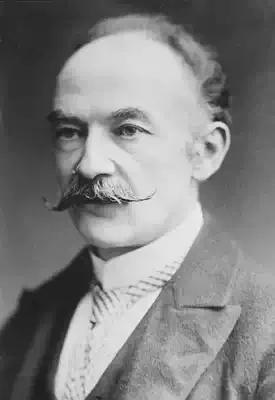
Thomas Hardy
In A Eweleaze Near Weatherbury
In A Eweleaze Near Weatherbury
THE years have gathered grayly
Since I danced upon this leaze
With one who kindled gayly
Love's fitful ecstasies!
But despite the term as teacher,
I remain what I was then
In each essential feature
Of the fantasies of men.
Yet I note the little chisel
Of ever-napping Time,
Defacing ghast and grizzel
The blazon of my prime.
When at night he thinks me sleeping,
I feel him boring sly
Within my bones, and heaping
Quaintest pains for by-and-by.
Still, I'd go the world with Beauty,
I would laugh with her and sing,
I would shun divinest duty
To resume her worshipping.
But she'd scorn my brave endeavor,
She would not balm the breeze
By murmuring, "Thine for ever!"
As she did upon this leaze.
THE years have gathered grayly
Since I danced upon this leaze
With one who kindled gayly
Love's fitful ecstasies!
But despite the term as teacher,
I remain what I was then
In each essential feature
Of the fantasies of men.
Yet I note the little chisel
Of ever-napping Time,
Defacing ghast and grizzel
The blazon of my prime.
When at night he thinks me sleeping,
I feel him boring sly
Within my bones, and heaping
Quaintest pains for by-and-by.
Still, I'd go the world with Beauty,
I would laugh with her and sing,
I would shun divinest duty
To resume her worshipping.
But she'd scorn my brave endeavor,
She would not balm the breeze
By murmuring, "Thine for ever!"
As she did upon this leaze.
192
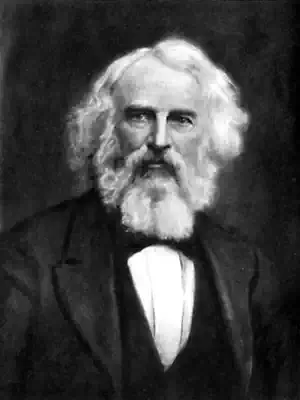
Henry Wadsworth Longfellow
Hiawatha's Lamentation
Hiawatha's Lamentation
In those days the Evil Spirits,
All the Manitos of mischief,
Fearing Hiawatha's wisdom,
And his love for Chibiabos,
Jealous of their faithful friendship,
And their noble words and actions,
Made at length a league against them,
To molest them and destroy them.
Hiawatha, wise and wary,
Often said to Chibiabos,
"O my brother! do not leave me,
Lest the Evil Spirits harm you!"
Chibiabos, young and heedless,
Laughing shook his coal-black tresses,
Answered ever sweet and childlike,
"Do not fear for me, O brother!
Harm and evil come not near me!"
Once when Peboan, the Winter,
Roofed with ice the Big-Sea-Water,
When the snow-flakes, whirling downward,
Hissed among the withered oak-leaves,
Changed the pine-trees into wigwams,
Covered all the earth with silence,
Armed with arrows, shod with snow-shoes,
Heeding not his brother's warning,
Fearing not the Evil Spirits,
Forth to hunt the deer with antlers
All alone went Chibiabos.
Right across the Big-Sea-Water
Sprang with speed the deer before him.
With the wind and snow he followed,
O'er the treacherous ice he followed,
Wild with all the fierce commotion
And the rapture of the hunting.
But beneath, the Evil Spirits
Lay in ambush, waiting for him,
Broke the treacherous ice beneath him,
Dragged him downward to the bottom,
Buried in the sand his body.
Unktahee, the god of water,
He the god of the Dacotahs,
Drowned him in the deep abysses
Of the lake of Gitche Gumee.
From the headlands Hiawatha
Sent forth such a wail of anguish,
Such a fearful lamentation,
That the bison paused to listen,
And the wolves howled from the prairies,
And the thunder in the distance
Starting answered "Baim-wawa!"
Then his face with black he painted,
With his robe his head he covered,
In his wigwam sat lamenting,
Seven long weeks he sat lamenting,
Uttering still this moan of sorrow:
"He is dead, the sweet musician!
He the sweetest of all singers!
He has gone from us forever,
He has moved a little nearer
To the Master of all music,
To the Master of all singing!
O my brother, Chibiabos!"
And the melancholy fir-trees
Waved their dark green fans above him,
Waved their purple cones above him,
Sighing with him to console him,
Mingling with his lamentation
Their complaining, their lamenting.
Came the Spring, and all the forest
Looked in vain for Chibiabos;
Sighed the rivulet, Sebowisha,
Sighed the rushes in the meadow.
From the tree-tops sang the bluebird,
Sang the bluebird, the Owaissa,
"Chibiabos! Chibiabos!
He is dead, the sweet musician!"
From the wigwam sang the robin,
Sang the robin, the Opechee,
"Chibiabos! Chibiabos!
He is dead, the sweetest singer!"
And at night through all the forest
Went the whippoorwill complaining,
Wailing went the Wawonaissa,
"Chibiabos! Chibiabos!
He is dead, the sweet musician!
He the sweetest of all singers!"
Then the Medicine-men, the Medas,
The magicians, the Wabenos,
And the Jossakeeds, the Prophets,
Came to visit Hiawatha;
Built a Sacred Lodge beside him,
To appease him, to console him,
Walked in silent, grave procession,
Bearing each a pouch of healing,
Skin of beaver, lynx, or otter,
Filled with magic roots and simples,
Filled with very potent medicines.
When he heard their steps approaching~,
Hiawatha ceased lamenting,
Called no more on Chibiabos;
Naught he questioned, naught he answered,
But his mournful head uncovered,
From his face the mourning colors
Washed he slowly and in silence,
Slowly and in silence followed
Onward to the Sacred Wigwam.
There a magic drink they gave him,
Made of Nahma-wusk, the spearmint,
And Wabeno-wusk, the yarrow,
Roots of power, and herbs of healing;
Beat their drums, and shook their rattles;
Chanted singly and in chorus,
Mystic songs like these, they chanted.
"I myself, myself! behold me!
`T Is the great Gray Eagle talking;
Come, ye white crows, come and hear him!
The loud-speaking thunder helps me;
All the unseen spirits help me;
I can hear their voices calling,
All around the sky I hear them!
I can blow you strong, my brother,
I can heal you, Hiawatha!"
"Hi-au-ha!" replied the chorus,
"Wayha-way!" the mystic chorus.
Friends of mine are all the serpents!
Hear me shake my skin of hen-hawk!
Mahng, the white loon, I can kill him;
I can shoot your heart and kill it!
I can blow you strong, my brother,
I can heal you, Hiawatha !"
"Hi-au-ha!" replied the chorus,
"Wayhaway!" the mystic chorus.
"I myself, myself! the prophet!
When I speak the wigwam trembles,
Shakes the Sacred Lodge with terror,
Hands unseen begin to shake it!
When I walk, the sky I tread on
Bends and makes a noise beneath me!
I can blow you strong, my brother!
Rise and speak, O Hiawatha!"
"Hi-au-ha!" replied the chorus,
"Way-ha-way!" the mystic chorus.
Then they shook their medicine-pouches
O'er the head of Hiawatha,
Danced their medicine-dance around him;
And upstarting wild and haggard,
Like a man from dreams awakened,
He was healed of all his madness.
As the clouds are swept from heaven,
Straightway from his brain departed
All his moody melancholy;
As the ice is swept from rivers,
Straightway from his heart departed
All his sorrow and affliction.
Then they summoned Chibiabos
From his grave beneath the waters,
From the sands of Gitche Gumee
Summoned Hiawatha's brother.
And so mighty was the magic
Of that cry and invocation,
That he heard it as he lay there
Underneath the Big-Sea-Water;
From the sand he rose and listened,
Heard the music and the singing,
Came, obedient to the summons,
To the doorway of the wigwam,
But to enter they forbade him.
Through a chink a coal they gave him,
Through the door a burning fire-brand;
Ruler in the Land of Spirits,
Ruler o'er the dead, they made him,
Telling him a fire to kindle
For all those that died thereafter,
Camp-fires for their night encampments
On their solitary journey
To the kingdom of Ponemah,
To the land of the Hereafter.
From the village of his childhood,
From the homes of those who knew him,
Passing silent through the forest,
Like a smoke-wreath wafted sideways,
Slowly vanished Chibiabos!
Where he passed, the branches moved not,
Where he trod, the grasses bent not,
And the fallen leaves of last year
Made no sound beneath his footstep.
Four whole days he journeyed onward
Down the pathway of the dead men;
On the dead-man's strawberry feasted,
Crossed the melancholy river,
On the swinging log he crossed it,
Came unto the Lake of Silver,
In the Stone Canoe was carried
To the Islands of the Blessed,
To the land of ghosts and shadows.
On that journey, moving slowly,
Many weary spirits saw he,
Panting under heavy burdens,
Laden with war-clubs, bows and arrows,
Robes of fur, and pots and kettles,
And with food that friends had given
For that solitary journey.
"Ay! why do the living," said they,
"Lay such heavy burdens on us!
Better were it to go naked,
Better were it to go fasting,
Than to bear such heavy burdens
On our long and weary journey!"
Forth then issued Hiawatha,
Wandered eastward, wandered westward,
Teaching men the use of simples
And the antidotes for poisons,
And the cure of all diseases.
Thus was first made known to mortals
All the mystery of Medamin,
All the sacred art of healing.
In those days the Evil Spirits,
All the Manitos of mischief,
Fearing Hiawatha's wisdom,
And his love for Chibiabos,
Jealous of their faithful friendship,
And their noble words and actions,
Made at length a league against them,
To molest them and destroy them.
Hiawatha, wise and wary,
Often said to Chibiabos,
"O my brother! do not leave me,
Lest the Evil Spirits harm you!"
Chibiabos, young and heedless,
Laughing shook his coal-black tresses,
Answered ever sweet and childlike,
"Do not fear for me, O brother!
Harm and evil come not near me!"
Once when Peboan, the Winter,
Roofed with ice the Big-Sea-Water,
When the snow-flakes, whirling downward,
Hissed among the withered oak-leaves,
Changed the pine-trees into wigwams,
Covered all the earth with silence,
Armed with arrows, shod with snow-shoes,
Heeding not his brother's warning,
Fearing not the Evil Spirits,
Forth to hunt the deer with antlers
All alone went Chibiabos.
Right across the Big-Sea-Water
Sprang with speed the deer before him.
With the wind and snow he followed,
O'er the treacherous ice he followed,
Wild with all the fierce commotion
And the rapture of the hunting.
But beneath, the Evil Spirits
Lay in ambush, waiting for him,
Broke the treacherous ice beneath him,
Dragged him downward to the bottom,
Buried in the sand his body.
Unktahee, the god of water,
He the god of the Dacotahs,
Drowned him in the deep abysses
Of the lake of Gitche Gumee.
From the headlands Hiawatha
Sent forth such a wail of anguish,
Such a fearful lamentation,
That the bison paused to listen,
And the wolves howled from the prairies,
And the thunder in the distance
Starting answered "Baim-wawa!"
Then his face with black he painted,
With his robe his head he covered,
In his wigwam sat lamenting,
Seven long weeks he sat lamenting,
Uttering still this moan of sorrow:
"He is dead, the sweet musician!
He the sweetest of all singers!
He has gone from us forever,
He has moved a little nearer
To the Master of all music,
To the Master of all singing!
O my brother, Chibiabos!"
And the melancholy fir-trees
Waved their dark green fans above him,
Waved their purple cones above him,
Sighing with him to console him,
Mingling with his lamentation
Their complaining, their lamenting.
Came the Spring, and all the forest
Looked in vain for Chibiabos;
Sighed the rivulet, Sebowisha,
Sighed the rushes in the meadow.
From the tree-tops sang the bluebird,
Sang the bluebird, the Owaissa,
"Chibiabos! Chibiabos!
He is dead, the sweet musician!"
From the wigwam sang the robin,
Sang the robin, the Opechee,
"Chibiabos! Chibiabos!
He is dead, the sweetest singer!"
And at night through all the forest
Went the whippoorwill complaining,
Wailing went the Wawonaissa,
"Chibiabos! Chibiabos!
He is dead, the sweet musician!
He the sweetest of all singers!"
Then the Medicine-men, the Medas,
The magicians, the Wabenos,
And the Jossakeeds, the Prophets,
Came to visit Hiawatha;
Built a Sacred Lodge beside him,
To appease him, to console him,
Walked in silent, grave procession,
Bearing each a pouch of healing,
Skin of beaver, lynx, or otter,
Filled with magic roots and simples,
Filled with very potent medicines.
When he heard their steps approaching~,
Hiawatha ceased lamenting,
Called no more on Chibiabos;
Naught he questioned, naught he answered,
But his mournful head uncovered,
From his face the mourning colors
Washed he slowly and in silence,
Slowly and in silence followed
Onward to the Sacred Wigwam.
There a magic drink they gave him,
Made of Nahma-wusk, the spearmint,
And Wabeno-wusk, the yarrow,
Roots of power, and herbs of healing;
Beat their drums, and shook their rattles;
Chanted singly and in chorus,
Mystic songs like these, they chanted.
"I myself, myself! behold me!
`T Is the great Gray Eagle talking;
Come, ye white crows, come and hear him!
The loud-speaking thunder helps me;
All the unseen spirits help me;
I can hear their voices calling,
All around the sky I hear them!
I can blow you strong, my brother,
I can heal you, Hiawatha!"
"Hi-au-ha!" replied the chorus,
"Wayha-way!" the mystic chorus.
Friends of mine are all the serpents!
Hear me shake my skin of hen-hawk!
Mahng, the white loon, I can kill him;
I can shoot your heart and kill it!
I can blow you strong, my brother,
I can heal you, Hiawatha !"
"Hi-au-ha!" replied the chorus,
"Wayhaway!" the mystic chorus.
"I myself, myself! the prophet!
When I speak the wigwam trembles,
Shakes the Sacred Lodge with terror,
Hands unseen begin to shake it!
When I walk, the sky I tread on
Bends and makes a noise beneath me!
I can blow you strong, my brother!
Rise and speak, O Hiawatha!"
"Hi-au-ha!" replied the chorus,
"Way-ha-way!" the mystic chorus.
Then they shook their medicine-pouches
O'er the head of Hiawatha,
Danced their medicine-dance around him;
And upstarting wild and haggard,
Like a man from dreams awakened,
He was healed of all his madness.
As the clouds are swept from heaven,
Straightway from his brain departed
All his moody melancholy;
As the ice is swept from rivers,
Straightway from his heart departed
All his sorrow and affliction.
Then they summoned Chibiabos
From his grave beneath the waters,
From the sands of Gitche Gumee
Summoned Hiawatha's brother.
And so mighty was the magic
Of that cry and invocation,
That he heard it as he lay there
Underneath the Big-Sea-Water;
From the sand he rose and listened,
Heard the music and the singing,
Came, obedient to the summons,
To the doorway of the wigwam,
But to enter they forbade him.
Through a chink a coal they gave him,
Through the door a burning fire-brand;
Ruler in the Land of Spirits,
Ruler o'er the dead, they made him,
Telling him a fire to kindle
For all those that died thereafter,
Camp-fires for their night encampments
On their solitary journey
To the kingdom of Ponemah,
To the land of the Hereafter.
From the village of his childhood,
From the homes of those who knew him,
Passing silent through the forest,
Like a smoke-wreath wafted sideways,
Slowly vanished Chibiabos!
Where he passed, the branches moved not,
Where he trod, the grasses bent not,
And the fallen leaves of last year
Made no sound beneath his footstep.
Four whole days he journeyed onward
Down the pathway of the dead men;
On the dead-man's strawberry feasted,
Crossed the melancholy river,
On the swinging log he crossed it,
Came unto the Lake of Silver,
In the Stone Canoe was carried
To the Islands of the Blessed,
To the land of ghosts and shadows.
On that journey, moving slowly,
Many weary spirits saw he,
Panting under heavy burdens,
Laden with war-clubs, bows and arrows,
Robes of fur, and pots and kettles,
And with food that friends had given
For that solitary journey.
"Ay! why do the living," said they,
"Lay such heavy burdens on us!
Better were it to go naked,
Better were it to go fasting,
Than to bear such heavy burdens
On our long and weary journey!"
Forth then issued Hiawatha,
Wandered eastward, wandered westward,
Teaching men the use of simples
And the antidotes for poisons,
And the cure of all diseases.
Thus was first made known to mortals
All the mystery of Medamin,
All the sacred art of healing.
293
Rudyard Kipling
The Fall of Jock Gillespie
The Fall of Jock Gillespie
This fell when dinner-time was done --
'Twixt the first an' the second rub --
That oor mon Jock cam' hame again
To his rooms ahist the Club.
An' syne he laughed, an' syne he sang,
An' syne we thocht him fou,
An' syne he trumped his partner's trick,
An' garred his partner rue.
Then up and spake an elder mon,
That held the Spade its Ace --
God save the lad! Whence comes the licht
"That wimples on his face?"
An' Jock he sniggered, an' Jock he smiled,
An' ower the card-brim wunk: --
"I'm a' too fresh fra' the stirrup-peg,
"May be that I am drunk."
"There's whusky brewed in Galashils
"An' L. L. L. forbye;
"But never liquor lit the lowe
"That keeks fra' oot your eye.
"There's a third o' hair on your dress-coat breast,
"Aboon the heart a wee?"
"Oh! that is fra' the lang-haired Skye
"That slobbers ower me."
"Oh! lang-haired Skyes are lovin' beasts,
"An' terrier dogs are fair,
"But never yet was terrier born,
"Wi' ell-lang gowden hair!
"There's a smirch o' pouther on your breast,
"Below the left lappel?"
"Oh! that is fra' my auld cigar,
"Whenas the stump-end fell."
"Mon Jock, ye smoke the Trichi coarse,
"For ye are short o' cash,
"An' best Havanas Couldna leave
"Sae white an' pure an ash.
"This nicht ye stopped a story braid,
"An' stopped it wi' a curse.
"Last nicht ye told that tale yoursel' --
"An' capped it wi' a worse!
"Oh! we're no fou! Oh! we're no fou!
"But plainly we can ken
"Ye're fallin', fallin' fra the band
"O' cantie single men!"
An' it fell when sirris-shaws were sere,
An' the nichts were lang and mirk,
In braw new breeks, wi' a gowden ring,
Oor Jocke gaed to the Kirk!
This fell when dinner-time was done --
'Twixt the first an' the second rub --
That oor mon Jock cam' hame again
To his rooms ahist the Club.
An' syne he laughed, an' syne he sang,
An' syne we thocht him fou,
An' syne he trumped his partner's trick,
An' garred his partner rue.
Then up and spake an elder mon,
That held the Spade its Ace --
God save the lad! Whence comes the licht
"That wimples on his face?"
An' Jock he sniggered, an' Jock he smiled,
An' ower the card-brim wunk: --
"I'm a' too fresh fra' the stirrup-peg,
"May be that I am drunk."
"There's whusky brewed in Galashils
"An' L. L. L. forbye;
"But never liquor lit the lowe
"That keeks fra' oot your eye.
"There's a third o' hair on your dress-coat breast,
"Aboon the heart a wee?"
"Oh! that is fra' the lang-haired Skye
"That slobbers ower me."
"Oh! lang-haired Skyes are lovin' beasts,
"An' terrier dogs are fair,
"But never yet was terrier born,
"Wi' ell-lang gowden hair!
"There's a smirch o' pouther on your breast,
"Below the left lappel?"
"Oh! that is fra' my auld cigar,
"Whenas the stump-end fell."
"Mon Jock, ye smoke the Trichi coarse,
"For ye are short o' cash,
"An' best Havanas Couldna leave
"Sae white an' pure an ash.
"This nicht ye stopped a story braid,
"An' stopped it wi' a curse.
"Last nicht ye told that tale yoursel' --
"An' capped it wi' a worse!
"Oh! we're no fou! Oh! we're no fou!
"But plainly we can ken
"Ye're fallin', fallin' fra the band
"O' cantie single men!"
An' it fell when sirris-shaws were sere,
An' the nichts were lang and mirk,
In braw new breeks, wi' a gowden ring,
Oor Jocke gaed to the Kirk!
453
Thomas Hardy
I said to Love
I said to Love
I said to Love,
"It is not now as in old days
When men adored thee and thy ways
All else above;
Named thee the Boy, the Bright, the One
Who spread a heaven beneath the sun,"
I said to Love.
I said to him,
"We now know more of thee than then;
We were but weak in judgment when,
With hearts abrim,
We clamoured thee that thou would'st please
Inflict on us thine agonies,"
I said to him.
I said to Love,
"Thou art not young, thou art not fair,
No elfin darts, no cherub air,
Nor swan, nor dove
Are thine; but features pitiless,
And iron daggers of distress,"
I said to Love.
"Depart then, Love!
Man's race shall perish, threatenest thou,
WIthout thy kindling coupling-vow?
The age to come the man of now
Know nothing of?
We fear not such a threat from thee;
We are too old in apathy!
Mankind shall cease.. -
So let it be,"
I said to Love.
I said to Love,
"It is not now as in old days
When men adored thee and thy ways
All else above;
Named thee the Boy, the Bright, the One
Who spread a heaven beneath the sun,"
I said to Love.
I said to him,
"We now know more of thee than then;
We were but weak in judgment when,
With hearts abrim,
We clamoured thee that thou would'st please
Inflict on us thine agonies,"
I said to him.
I said to Love,
"Thou art not young, thou art not fair,
No elfin darts, no cherub air,
Nor swan, nor dove
Are thine; but features pitiless,
And iron daggers of distress,"
I said to Love.
"Depart then, Love!
Man's race shall perish, threatenest thou,
WIthout thy kindling coupling-vow?
The age to come the man of now
Know nothing of?
We fear not such a threat from thee;
We are too old in apathy!
Mankind shall cease.. -
So let it be,"
I said to Love.
259

Robert W. Service
Land Mine
Land Mine
A grey gull hovered overhead,
Then wisely flew away.
'In half a jiffy you'll be dead,'
I thought I heard it say;
As there upon the railway line,
Checking an urge to cough,
I laboured to de-fuse the mine
That had not yet gone off.
I tapped around the time-clock rim,
Then something worried me.
I heard the singing of a hymn:
Nearer my God to Thee.
That damned Salvation Army band!
I phoned back to the boys:
'Please tell them,--they will understand,-Cut
out the bloody noise!'
Silence . . . I went to work anew,
And then I heard a tick
That told me the blast was due,-I
never ran so quick.
I heard the fury-roar behind;
The earth erupted hell,
As hoisted high and stunned and blind
Into a ditch I fell.
Then when at last I crawled from cover,
My hands were bloody raw;
And I was blue and bruised all over,
And this is what I saw:
All pale, but panting with elation,
And very much unstuck,
There was the Army of Salvation
Emerging from the muck.
And then I heard the Captain saying:
''Twas Heaven heard our pleas;
For there anight we all were praying
Down on our bended knees.
'Twas little hope your comrades gave you,
Though we had faith divine . . .
The blessed Lord stooped down to save you,
But Gosh! He cut it fine.'
A grey gull hovered overhead,
Then wisely flew away.
'In half a jiffy you'll be dead,'
I thought I heard it say;
As there upon the railway line,
Checking an urge to cough,
I laboured to de-fuse the mine
That had not yet gone off.
I tapped around the time-clock rim,
Then something worried me.
I heard the singing of a hymn:
Nearer my God to Thee.
That damned Salvation Army band!
I phoned back to the boys:
'Please tell them,--they will understand,-Cut
out the bloody noise!'
Silence . . . I went to work anew,
And then I heard a tick
That told me the blast was due,-I
never ran so quick.
I heard the fury-roar behind;
The earth erupted hell,
As hoisted high and stunned and blind
Into a ditch I fell.
Then when at last I crawled from cover,
My hands were bloody raw;
And I was blue and bruised all over,
And this is what I saw:
All pale, but panting with elation,
And very much unstuck,
There was the Army of Salvation
Emerging from the muck.
And then I heard the Captain saying:
''Twas Heaven heard our pleas;
For there anight we all were praying
Down on our bended knees.
'Twas little hope your comrades gave you,
Though we had faith divine . . .
The blessed Lord stooped down to save you,
But Gosh! He cut it fine.'
248
Rudyard Kipling
The Fabulists
The Fabulists
-
When all the world would keep a matter hid,
Since Truth is seldom Friend to any crowd,
Men write in Fable, as old AEsop did,
Jesting at that which none will name aloud.
And this they needs must do, or it will fall
Unless they please they are not heard at all.
When desperate Folly daily laboureth
To work confusion upon all we have,
When diligent Sloth demandeth Freedom's death,
And banded Fear commandeth Honour's grave--
Even in that certain hour before the fall,
Unless men please they are not heard at all.
Needs must all please, yet some not all for need,
Needs must all toil, yet some not all for gain,
But that men taking pleasure may take heed
Whom present toil shall snatch from later pain.
Thus some have toiled, but their reward was small
Since, though they pleased, they were not heard at all.
This was the lock that lay upon our lips,
This was the yoke that we have undergone,
Denying us all pleasant fellowships
As in our time and generation.
Our pleasures unpursued age past recall,
And for our pains--we are not heard at all.
What man hears aught except the groaning guns?
What man heeds aught save what each instant brings?
When each man's life all imaged life outruns,
What man shall pleasure in imaginings?
So it hath fallen, as it was bound to fall,
We are not, nor we were not, heard at all.
-
When all the world would keep a matter hid,
Since Truth is seldom Friend to any crowd,
Men write in Fable, as old AEsop did,
Jesting at that which none will name aloud.
And this they needs must do, or it will fall
Unless they please they are not heard at all.
When desperate Folly daily laboureth
To work confusion upon all we have,
When diligent Sloth demandeth Freedom's death,
And banded Fear commandeth Honour's grave--
Even in that certain hour before the fall,
Unless men please they are not heard at all.
Needs must all please, yet some not all for need,
Needs must all toil, yet some not all for gain,
But that men taking pleasure may take heed
Whom present toil shall snatch from later pain.
Thus some have toiled, but their reward was small
Since, though they pleased, they were not heard at all.
This was the lock that lay upon our lips,
This was the yoke that we have undergone,
Denying us all pleasant fellowships
As in our time and generation.
Our pleasures unpursued age past recall,
And for our pains--we are not heard at all.
What man hears aught except the groaning guns?
What man heeds aught save what each instant brings?
When each man's life all imaged life outruns,
What man shall pleasure in imaginings?
So it hath fallen, as it was bound to fall,
We are not, nor we were not, heard at all.
506
Thomas Hardy
I have lived with Shades
I have lived with Shades
I
I have lived with Shades so long,
So long have talked to them,
I sped to street and throng,
That sometimes they
In their dim style
Will pause awhile
To hear my say;
II
And take me by the hand,
And lead me through their rooms
In the To-Be, where Dooms
Half-wove and shapeless stand:
And show from there
The dwindled dust
And rot and rust
Of things that were.
III
"Now turn," they said to me
One day: "Look whence we came,
And signify his name
Who gazes thence at thee" --
-- "Nor name nor race
Know I, or can,"
I said, "Of man
So commonplace."
IV
"He moves me not at all:
I note no ray or jot
Of rareness in his lot,
Or star exceptional.
Into the dim
Dead throngs around
He'll sink, nor sound
Be left of him."
V
"Yet," said they, "his frail speech,
Hath accents pitched like thine --
Thy mould and his define
A likeness each to each --
But go! Deep pain
Alas, would be
His name to thee,
And told in vain!"
I
I have lived with Shades so long,
So long have talked to them,
I sped to street and throng,
That sometimes they
In their dim style
Will pause awhile
To hear my say;
II
And take me by the hand,
And lead me through their rooms
In the To-Be, where Dooms
Half-wove and shapeless stand:
And show from there
The dwindled dust
And rot and rust
Of things that were.
III
"Now turn," they said to me
One day: "Look whence we came,
And signify his name
Who gazes thence at thee" --
-- "Nor name nor race
Know I, or can,"
I said, "Of man
So commonplace."
IV
"He moves me not at all:
I note no ray or jot
Of rareness in his lot,
Or star exceptional.
Into the dim
Dead throngs around
He'll sink, nor sound
Be left of him."
V
"Yet," said they, "his frail speech,
Hath accents pitched like thine --
Thy mould and his define
A likeness each to each --
But go! Deep pain
Alas, would be
His name to thee,
And told in vain!"
199
Henry Wadsworth Longfellow
Hiawatha's Fishing
Hiawatha's Fishing
Forth upon the Gitche Gumee,
On the shining Big-Sea-Water,
With his fishing-line of cedar,
Of the twisted bark of cedar,
Forth to catch the sturgeon Nahma,
Mishe-Nahma, King of Fishes,
In his birch canoe exulting
All alone went Hiawatha.
Through the clear, transparent water
He could see the fishes swimming
Far down in the depths below him;
See the yellow perch, the Sahwa,
Like a sunbeam in the water,
See the Shawgashee, the craw-fish,
Like a spider on the bottom,
On the white and sandy bottom.
At the stern sat Hiawatha,
With his fishing-line of cedar;
In his plumes the breeze of morning
Played as in the hemlock branches;
On the bows, with tail erected,
Sat the squirrel, Adjidaumo;
In his fur the breeze of morning
Played as in the prairie grasses.
On the white sand of the bottom
Lay the monster Mishe-Nahma,
Lay the sturgeon, King of Fishes;
Through his gills he breathed the water,
With his fins he fanned and winnowed,
With his tail he swept the sand-floor.
There he lay in all his armor;
On each side a shield to guard him,
Plates of bone upon his forehead,
Down his sides and back and shoulders
Plates of bone with spines projecting
Painted was he with his war-paints,
Stripes of yellow, red, and azure,
Spots of brown and spots of sable;
And he lay there on the bottom,
Fanning with his fins of purple,
As above him Hiawatha
In his birch canoe came sailing,
With his fishing-line of cedar.
"Take my bait," cried Hiawatha,
Dawn into the depths beneath him,
"Take my bait, O Sturgeon, Nahma!
Come up from below the water,
Let us see which is the stronger!"
And he dropped his line of cedar
Through the clear, transparent water,
Waited vainly for an answer,
Long sat waiting for an answer,
And repeating loud and louder,
"Take my bait, O King of Fishes!"
Quiet lay the sturgeon, Nahma,
Fanning slowly in the water,
Looking up at Hiawatha,
Listening to his call and clamor,
His unnecessary tumult,
Till he wearied of the shouting;
And he said to the Kenozha,
To the pike, the Maskenozha,
"Take the bait of this rude fellow,
Break the line of Hiawatha!"
In his fingers Hiawatha
Felt the loose line jerk and tighten,
As he drew it in, it tugged so
That the birch canoe stood endwise,
Like a birch log in the water,
With the squirrel, Adjidaumo,
Perched and frisking on the summit.
Full of scorn was Hiawatha
When he saw the fish rise upward,
Saw the pike, the Maskenozha,
Coming nearer, nearer to him,
And he shouted through the water,
"Esa! esa! shame upon you!
You are but the pike, Kenozha,
You are not the fish I wanted,
You are not the King of Fishes!"
Reeling downward to the bottom
Sank the pike in great confusion,
And the mighty sturgeon, Nahma,
Said to Ugudwash, the sun-fish,
To the bream, with scales of crimson,
"Take the bait of this great boaster,
Break the line of Hiawatha!"
Slowly upward, wavering, gleaming,
Rose the Ugudwash, the sun-fish,
Seized the line of Hiawatha,
Swung with all his weight upon it,
Made a whirlpool in the water,
Whirled the birch canoe in circles,
Round and round in gurgling eddies,
Till the circles in the water
Reached the far-off sandy beaches,
Till the water-flags and rushes
Nodded on the distant margins.
But when Hiawatha saw him
Slowly rising through the water,
Lifting up his disk refulgent,
Loud he shouted in derision,
"Esa! esa! shame upon you!
You are Ugudwash, the sun-fish,
You are not the fish I wanted,
You are not the King of Fishes!"
Slowly downward, wavering, gleaming,
Sank the Ugudwash, the sun-fish,
And again the sturgeon, Nahma,
Heard the shout of Hiawatha,
Heard his challenge of defiance,
The unnecessary tumult,
Ringing far across the water.
From the white sand of the bottom
Up he rose with angry gesture,
Quivering in each nerve and fibre,
Clashing all his plates of armor,
Gleaming bright with all his war-paint;
In his wrath he darted upward,
Flashing leaped into the sunshine,
Opened his great jaws, and swallowed
Both canoe and Hiawatha.
Down into that darksome cavern
Plunged the headlong Hiawatha,
As a log on some black river
Shoots and plunges down the rapids,
Found himself in utter darkness,
Groped about in helpless wonder,
Till he felt a great heart beating,
Throbbing in that utter darkness.
And he smote it in his anger,
With his fist, the heart of Nahma,
Felt the mighty King of Fishes
Shudder through each nerve and fibre,
Heard the water gurgle round him
As he leaped and staggered through it,
Sick at heart, and faint and weary.
Crosswise then did Hiawatha
Drag his birch-canoe for safety,
Lest from out the jaws of Nahma,
In the turmoil and confusion,
Forth he might be hurled and perish.
And the squirrel, Adjidaumo,
Frisked and chatted very gayly,
Toiled and tugged with Hiawatha
Till the labor was completed.
Then said Hiawatha to him,
"O my little friend, the squirrel,
Bravely have you toiled to help me;
Take the thanks of Hiawatha,
And the name which now he gives you;
For hereafter and forever
Boys shall call you Adjidaumo,
Tail-in-air the boys shall call you!"
And again the sturgeon, Nahma,
Gasped and quivered in the water,
Then was still, and drifted landward
Till he grated on the pebbles,
Till the listening Hiawatha
Heard him grate upon the margin,
Felt him strand upon the pebbles,
Knew that Nahma, King of Fishes,
Lay there dead upon the margin.
Then he heard a clang and flapping,
As of many wings assembling,
Heard a screaming and confusion,
As of birds of prey contending,
Saw a gleam of light above him,
Shining through the ribs of Nahma,
Saw the glittering eyes of sea-gulls,
Of Kayoshk, the sea-gulls, peering,
Gazing at him through the opening,
Heard them saying to each other,
"'T is our brother, Hiawatha!"
And he shouted from below them,
Cried exulting from the caverns:
"O ye sea-gulls! O my brothers!
I have slain the sturgeon, Nahma;
Make the rifts a little larger,
With your claws the openings widen,
Set me free from this dark prison,
And henceforward and forever
Men shall speak of your achievements,
Calling you Kayoshk, the sea-gulls,
Yes, Kayoshk, the Noble Scratchers!"
And the wild and clamorous sea-gulls
Toiled with beak and claws together,
Made the rifts and openings wider
In the mighty ribs of Nahma,
And from peril and from prison,
From the body of the sturgeon,
From the peril of the water,
They released my Hiawatha.
He was standing near his wigwam,
On the margin of the water,
And he called to old Nokomis,
Called and beckoned to Nokomis,
Pointed to the sturgeon, Nahma,
Lying lifeless on the pebbles,
With the sea-gulls feeding on him.
"I have slain the Mishe-Nahma,
Slain the King of Fishes!" said he'
"Look! the sea-gulls feed upon him,
Yes, my friends Kayoshk, the sea-gulls;
Drive them not away, Nokomis,
They have saved me from great peril
In the body of the sturgeon,
Wait until their meal is ended,
Till their craws are full with feasting,
Till they homeward fly, at sunset,
To their nests among the marshes;
Then bring all your pots and kettles,
And make oil for us in Winter."
And she waited till the sun set,
Till the pallid moon, the Night-sun,
Rose above the tranquil water,
Till Kayoshk, the sated sea-gulls,
From their banquet rose with clamor,
And across the fiery sunset
Winged their way to far-off islands,
To their nests among the rushes.
To his sleep went Hiawatha,
And Nokomis to her labor,
Toiling patient in the moonlight,
Till the sun and moon changed places,
Till the sky was red with sunrise,
And Kayoshk, the hungry sea-gulls,
Came back from the reedy islands,
Clamorous for their morning banquet.
Three whole days and nights alternate
Old Nokomis and the sea-gulls
Stripped the oily flesh of Nahma,
Till the waves washed through the rib-bones,
Till the sea-gulls came no longer,
And upon the sands lay nothing
But the skeleton of Nahma.
Forth upon the Gitche Gumee,
On the shining Big-Sea-Water,
With his fishing-line of cedar,
Of the twisted bark of cedar,
Forth to catch the sturgeon Nahma,
Mishe-Nahma, King of Fishes,
In his birch canoe exulting
All alone went Hiawatha.
Through the clear, transparent water
He could see the fishes swimming
Far down in the depths below him;
See the yellow perch, the Sahwa,
Like a sunbeam in the water,
See the Shawgashee, the craw-fish,
Like a spider on the bottom,
On the white and sandy bottom.
At the stern sat Hiawatha,
With his fishing-line of cedar;
In his plumes the breeze of morning
Played as in the hemlock branches;
On the bows, with tail erected,
Sat the squirrel, Adjidaumo;
In his fur the breeze of morning
Played as in the prairie grasses.
On the white sand of the bottom
Lay the monster Mishe-Nahma,
Lay the sturgeon, King of Fishes;
Through his gills he breathed the water,
With his fins he fanned and winnowed,
With his tail he swept the sand-floor.
There he lay in all his armor;
On each side a shield to guard him,
Plates of bone upon his forehead,
Down his sides and back and shoulders
Plates of bone with spines projecting
Painted was he with his war-paints,
Stripes of yellow, red, and azure,
Spots of brown and spots of sable;
And he lay there on the bottom,
Fanning with his fins of purple,
As above him Hiawatha
In his birch canoe came sailing,
With his fishing-line of cedar.
"Take my bait," cried Hiawatha,
Dawn into the depths beneath him,
"Take my bait, O Sturgeon, Nahma!
Come up from below the water,
Let us see which is the stronger!"
And he dropped his line of cedar
Through the clear, transparent water,
Waited vainly for an answer,
Long sat waiting for an answer,
And repeating loud and louder,
"Take my bait, O King of Fishes!"
Quiet lay the sturgeon, Nahma,
Fanning slowly in the water,
Looking up at Hiawatha,
Listening to his call and clamor,
His unnecessary tumult,
Till he wearied of the shouting;
And he said to the Kenozha,
To the pike, the Maskenozha,
"Take the bait of this rude fellow,
Break the line of Hiawatha!"
In his fingers Hiawatha
Felt the loose line jerk and tighten,
As he drew it in, it tugged so
That the birch canoe stood endwise,
Like a birch log in the water,
With the squirrel, Adjidaumo,
Perched and frisking on the summit.
Full of scorn was Hiawatha
When he saw the fish rise upward,
Saw the pike, the Maskenozha,
Coming nearer, nearer to him,
And he shouted through the water,
"Esa! esa! shame upon you!
You are but the pike, Kenozha,
You are not the fish I wanted,
You are not the King of Fishes!"
Reeling downward to the bottom
Sank the pike in great confusion,
And the mighty sturgeon, Nahma,
Said to Ugudwash, the sun-fish,
To the bream, with scales of crimson,
"Take the bait of this great boaster,
Break the line of Hiawatha!"
Slowly upward, wavering, gleaming,
Rose the Ugudwash, the sun-fish,
Seized the line of Hiawatha,
Swung with all his weight upon it,
Made a whirlpool in the water,
Whirled the birch canoe in circles,
Round and round in gurgling eddies,
Till the circles in the water
Reached the far-off sandy beaches,
Till the water-flags and rushes
Nodded on the distant margins.
But when Hiawatha saw him
Slowly rising through the water,
Lifting up his disk refulgent,
Loud he shouted in derision,
"Esa! esa! shame upon you!
You are Ugudwash, the sun-fish,
You are not the fish I wanted,
You are not the King of Fishes!"
Slowly downward, wavering, gleaming,
Sank the Ugudwash, the sun-fish,
And again the sturgeon, Nahma,
Heard the shout of Hiawatha,
Heard his challenge of defiance,
The unnecessary tumult,
Ringing far across the water.
From the white sand of the bottom
Up he rose with angry gesture,
Quivering in each nerve and fibre,
Clashing all his plates of armor,
Gleaming bright with all his war-paint;
In his wrath he darted upward,
Flashing leaped into the sunshine,
Opened his great jaws, and swallowed
Both canoe and Hiawatha.
Down into that darksome cavern
Plunged the headlong Hiawatha,
As a log on some black river
Shoots and plunges down the rapids,
Found himself in utter darkness,
Groped about in helpless wonder,
Till he felt a great heart beating,
Throbbing in that utter darkness.
And he smote it in his anger,
With his fist, the heart of Nahma,
Felt the mighty King of Fishes
Shudder through each nerve and fibre,
Heard the water gurgle round him
As he leaped and staggered through it,
Sick at heart, and faint and weary.
Crosswise then did Hiawatha
Drag his birch-canoe for safety,
Lest from out the jaws of Nahma,
In the turmoil and confusion,
Forth he might be hurled and perish.
And the squirrel, Adjidaumo,
Frisked and chatted very gayly,
Toiled and tugged with Hiawatha
Till the labor was completed.
Then said Hiawatha to him,
"O my little friend, the squirrel,
Bravely have you toiled to help me;
Take the thanks of Hiawatha,
And the name which now he gives you;
For hereafter and forever
Boys shall call you Adjidaumo,
Tail-in-air the boys shall call you!"
And again the sturgeon, Nahma,
Gasped and quivered in the water,
Then was still, and drifted landward
Till he grated on the pebbles,
Till the listening Hiawatha
Heard him grate upon the margin,
Felt him strand upon the pebbles,
Knew that Nahma, King of Fishes,
Lay there dead upon the margin.
Then he heard a clang and flapping,
As of many wings assembling,
Heard a screaming and confusion,
As of birds of prey contending,
Saw a gleam of light above him,
Shining through the ribs of Nahma,
Saw the glittering eyes of sea-gulls,
Of Kayoshk, the sea-gulls, peering,
Gazing at him through the opening,
Heard them saying to each other,
"'T is our brother, Hiawatha!"
And he shouted from below them,
Cried exulting from the caverns:
"O ye sea-gulls! O my brothers!
I have slain the sturgeon, Nahma;
Make the rifts a little larger,
With your claws the openings widen,
Set me free from this dark prison,
And henceforward and forever
Men shall speak of your achievements,
Calling you Kayoshk, the sea-gulls,
Yes, Kayoshk, the Noble Scratchers!"
And the wild and clamorous sea-gulls
Toiled with beak and claws together,
Made the rifts and openings wider
In the mighty ribs of Nahma,
And from peril and from prison,
From the body of the sturgeon,
From the peril of the water,
They released my Hiawatha.
He was standing near his wigwam,
On the margin of the water,
And he called to old Nokomis,
Called and beckoned to Nokomis,
Pointed to the sturgeon, Nahma,
Lying lifeless on the pebbles,
With the sea-gulls feeding on him.
"I have slain the Mishe-Nahma,
Slain the King of Fishes!" said he'
"Look! the sea-gulls feed upon him,
Yes, my friends Kayoshk, the sea-gulls;
Drive them not away, Nokomis,
They have saved me from great peril
In the body of the sturgeon,
Wait until their meal is ended,
Till their craws are full with feasting,
Till they homeward fly, at sunset,
To their nests among the marshes;
Then bring all your pots and kettles,
And make oil for us in Winter."
And she waited till the sun set,
Till the pallid moon, the Night-sun,
Rose above the tranquil water,
Till Kayoshk, the sated sea-gulls,
From their banquet rose with clamor,
And across the fiery sunset
Winged their way to far-off islands,
To their nests among the rushes.
To his sleep went Hiawatha,
And Nokomis to her labor,
Toiling patient in the moonlight,
Till the sun and moon changed places,
Till the sky was red with sunrise,
And Kayoshk, the hungry sea-gulls,
Came back from the reedy islands,
Clamorous for their morning banquet.
Three whole days and nights alternate
Old Nokomis and the sea-gulls
Stripped the oily flesh of Nahma,
Till the waves washed through the rib-bones,
Till the sea-gulls came no longer,
And upon the sands lay nothing
But the skeleton of Nahma.
369
Rudyard Kipling
The Explanation
The Explanation
Love and Death once ceased their strife
At the Tavern of Man's Life.
Called for wine, and threw -- alas! --
Each his quiver on the grass.
When the bout was o'er they found
Mingled arrows strewed the ground.
Hastily they gathered then
Each the loves and lives of men.
Ah, the fateful dawn deceived!
Mingled arrows each one sheaved;
Death's dread armoury was stored
With the shafts he most abhorred;
Love's light quiver groaned beneath
Venom-headed darts of Death.
Thus it was they wrought our woe
At the Tavern long ago.
Tell me, do our masters know,
Loosing blindly as they fly,
Old men love while young men die?
Love and Death once ceased their strife
At the Tavern of Man's Life.
Called for wine, and threw -- alas! --
Each his quiver on the grass.
When the bout was o'er they found
Mingled arrows strewed the ground.
Hastily they gathered then
Each the loves and lives of men.
Ah, the fateful dawn deceived!
Mingled arrows each one sheaved;
Death's dread armoury was stored
With the shafts he most abhorred;
Love's light quiver groaned beneath
Venom-headed darts of Death.
Thus it was they wrought our woe
At the Tavern long ago.
Tell me, do our masters know,
Loosing blindly as they fly,
Old men love while young men die?
371
Thomas Hardy
Heredity
Heredity
I am the family face;
Flesh perishes, I live on,
Projecting trait and trace
Through time to times anon,
And leaping from place to place
Over oblivion.
The years-heired feature that can
In curve and voice and eye
Despise the human span
Of durance -- that is I;
The eternal thing in man,
That heeds no call to die
I am the family face;
Flesh perishes, I live on,
Projecting trait and trace
Through time to times anon,
And leaping from place to place
Over oblivion.
The years-heired feature that can
In curve and voice and eye
Despise the human span
Of durance -- that is I;
The eternal thing in man,
That heeds no call to die
177
Robert W. Service
Kings Must Die
Kings Must Die
Alphonso Rex who died in Rome
Was quite a fistful as a kid;
For when I visited his home,
That gorgeous palace in Madrid,
The grinning guide-chap showed me where
He rode his bronco up the stair.
That stairway grand of marbled might,
The most majestic in the land,
In statured splendour, flight on flight,
He urged his steed with whip in hand.
No lackey could restrain him for
He gained the gilded corridor.
He burst into the Royal suite,
And like a cowboy whooped with glee;
Dodging the charger's flying feet
The Chamberlain was shocked to see:
Imagine how it must have been a
Grief to Mother Queen Christina!
And so through sheer magnificence
I roamed from stately room to room,
Yet haunted ever by the sense
Of tragical dynastic doom.
The walls were wailing: Kings must die,
Being plain blokes like you and I.
Well, here's the moral to my rhyme:
When memories more worthy fade
We find that whimsically Time
Conserves some crazy escapade.
So as I left I stood to stare
With humorous enjoyment where
Alphonso crashed the Palace stair.
Alphonso Rex who died in Rome
Was quite a fistful as a kid;
For when I visited his home,
That gorgeous palace in Madrid,
The grinning guide-chap showed me where
He rode his bronco up the stair.
That stairway grand of marbled might,
The most majestic in the land,
In statured splendour, flight on flight,
He urged his steed with whip in hand.
No lackey could restrain him for
He gained the gilded corridor.
He burst into the Royal suite,
And like a cowboy whooped with glee;
Dodging the charger's flying feet
The Chamberlain was shocked to see:
Imagine how it must have been a
Grief to Mother Queen Christina!
And so through sheer magnificence
I roamed from stately room to room,
Yet haunted ever by the sense
Of tragical dynastic doom.
The walls were wailing: Kings must die,
Being plain blokes like you and I.
Well, here's the moral to my rhyme:
When memories more worthy fade
We find that whimsically Time
Conserves some crazy escapade.
So as I left I stood to stare
With humorous enjoyment where
Alphonso crashed the Palace stair.
214
Thomas Hardy
Her Late Husband (King's-Hintock, -.)
Her Late Husband (King's-Hintock, -.)
"No--not where I shall make my own;
But dig his grave just by
The woman's with the initialed stone -
As near as he can lie -
After whose death he seemed to ail,
Though none considered why.
"And when I also claim a nook,
And your feet tread me in,
Bestow me, under my old name,
Among my kith and kin,
That strangers gazing may not dream
I did a husband win."
"Widow, your wish shall be obeyed;
Though, thought I, certainly
You'd lay him where your folk are laid,
And your grave, too, will be,
As custom hath it; you to right,
And on the left hand he."
"Aye, sexton; such the Hintock rule,
And none has said it nay;
But now it haps a native here
Eschews that ancient way . . .
And it may be, some Christmas night,
When angels walk, they'll say:
"'O strange interment! Civilized lands
Afford few types thereof;
Here is a man who takes his rest
Beside his very Love,
Beside the one who was his wife
In our sight up above!'"
"No--not where I shall make my own;
But dig his grave just by
The woman's with the initialed stone -
As near as he can lie -
After whose death he seemed to ail,
Though none considered why.
"And when I also claim a nook,
And your feet tread me in,
Bestow me, under my old name,
Among my kith and kin,
That strangers gazing may not dream
I did a husband win."
"Widow, your wish shall be obeyed;
Though, thought I, certainly
You'd lay him where your folk are laid,
And your grave, too, will be,
As custom hath it; you to right,
And on the left hand he."
"Aye, sexton; such the Hintock rule,
And none has said it nay;
But now it haps a native here
Eschews that ancient way . . .
And it may be, some Christmas night,
When angels walk, they'll say:
"'O strange interment! Civilized lands
Afford few types thereof;
Here is a man who takes his rest
Beside his very Love,
Beside the one who was his wife
In our sight up above!'"
225
Rudyard Kipling
The English Flag
The English Flag
Above the portico a flag-staff, bearing the Union Jack,
remained fluttering in the flames for some time, but ultimately
when it fell the crowds rent the air with shouts,
and seemed to see significance in the incident. -- DAILY PAPERS.
Winds of the World, give answer! They are whimpering to and fro --
And what should they know of England who only England know? --
The poor little street-bred people that vapour and fume and brag,
They are lifting their heads in the stillness to yelp at the English Flag!
Must we borrow a clout from the Boer -- to plaster anew with dirt?
An Irish liar's bandage, or an English coward's shirt?
We may not speak of England; her Flag's to sell or share.
What is the Flag of England? Winds of the World, declare!
The North Wind blew: -- "From Bergen my steel-shod vanguards go;
I chase your lazy whalers home from the Disko floe;
By the great North Lights above me I work the will of God,
And the liner splits on the ice-field or the Dogger fills with cod.
"I barred my gates with iron, I shuttered my doors with flame,
Because to force my ramparts your nutshell navies came;
I took the sun from their presence, I cut them down with my blast,
And they died, but the Flag of England blew free ere the spirit passed.
"The lean white bear hath seen it in the long, long Arctic night,
The musk-ox knows the standard that flouts the Northern Light:
What is the Flag of England? Ye have but my bergs to dare,
Ye have but my drifts to conquer. Go forth, for it is there!"
The South Wind sighed: -- "From the Virgins my mid-sea course was ta'en
Over a thousand islands lost in an idle main,
Where the sea-egg flames on the coral and the long-backed breakers croon
Their endless ocean legends to the lazy, locked lagoon.
"Strayed amid lonely islets, mazed amid outer keys,
I waked the palms to laughter -- I tossed the scud in the breeze --
Never was isle so little, never was sea so lone,
But over the scud and the palm-trees an English flag was flown.
"I have wrenched it free from the halliard to hang for a wisp on the Horn;
I have chased it north to the Lizard -- ribboned and rolled and torn;
I have spread its fold o'er the dying, adrift in a hopeless sea;
I have hurled it swift on the slaver, and seen the slave set free.
"My basking sunfish know it, and wheeling albatross,
Where the lone wave fills with fire beneath the Southern Cross.
What is the Flag of England? Ye have but my reefs to dare,
Ye have but my seas to furrow. Go forth, for it is there!"
The East Wind roared: -- "From the Kuriles, the Bitter Seas, I come,
And me men call the Home-Wind, for I bring the English home.
Look -- look well to your shipping! By the breath of my mad typhoon
I swept your close-packed Praya and beached your best at Kowloon!
"The reeling junks behind me and the racing seas before,
I raped your richest roadstead -- I plundered Singapore!
I set my hand on the Hoogli; as a hooded snake she rose,
And I flung your stoutest steamers to roost with the startled crows.
"Never the lotus closes, never the wild-fowl wake,
But a soul goes out on the East Wind that died for England's sake --
Man or woman or suckling, mother or bride or maid --
Because on the bones of the English the English Flag is stayed.
"The desert-dust hath dimmed it, the flying wild-ass knows,
The scared white leopard winds it across the taintless snows.
What is the Flag of England? Ye have but my sun to dare,
Ye have but my sands to travel. Go forth, for it is there!"
The West Wind called: -- "In squadrons the thoughtless galleons fly
That bear the wheat and cattle lest street-bred people die.
They make my might their porter, they make my house their path,
Till I loose my neck from their rudder and whelm them all in my wrath.
"I draw the gliding fog-bank as a snake is drawn from the hole,
They bellow one to the other, the frighted ship-bells toll,
For day is a drifting terror till I raise the shroud with my breath,
And they see strange bows above them and the two go locked to death.
"But whether in calm or wrack-wreath, whether by dark or day,
I heave them whole to the conger or rip their plates away,
First of the scattered legions, under a shrieking sky,
Dipping between the rollers, the English Flag goes by.
"The dead dumb fog hath wrapped it -- the frozen dews have kissed --
The naked stars have seen it, a fellow-star in the mist.
What is the Flag of England? Ye have but my breath to dare,
Ye have but my waves to conquer. Go forth, for it is there!"
Above the portico a flag-staff, bearing the Union Jack,
remained fluttering in the flames for some time, but ultimately
when it fell the crowds rent the air with shouts,
and seemed to see significance in the incident. -- DAILY PAPERS.
Winds of the World, give answer! They are whimpering to and fro --
And what should they know of England who only England know? --
The poor little street-bred people that vapour and fume and brag,
They are lifting their heads in the stillness to yelp at the English Flag!
Must we borrow a clout from the Boer -- to plaster anew with dirt?
An Irish liar's bandage, or an English coward's shirt?
We may not speak of England; her Flag's to sell or share.
What is the Flag of England? Winds of the World, declare!
The North Wind blew: -- "From Bergen my steel-shod vanguards go;
I chase your lazy whalers home from the Disko floe;
By the great North Lights above me I work the will of God,
And the liner splits on the ice-field or the Dogger fills with cod.
"I barred my gates with iron, I shuttered my doors with flame,
Because to force my ramparts your nutshell navies came;
I took the sun from their presence, I cut them down with my blast,
And they died, but the Flag of England blew free ere the spirit passed.
"The lean white bear hath seen it in the long, long Arctic night,
The musk-ox knows the standard that flouts the Northern Light:
What is the Flag of England? Ye have but my bergs to dare,
Ye have but my drifts to conquer. Go forth, for it is there!"
The South Wind sighed: -- "From the Virgins my mid-sea course was ta'en
Over a thousand islands lost in an idle main,
Where the sea-egg flames on the coral and the long-backed breakers croon
Their endless ocean legends to the lazy, locked lagoon.
"Strayed amid lonely islets, mazed amid outer keys,
I waked the palms to laughter -- I tossed the scud in the breeze --
Never was isle so little, never was sea so lone,
But over the scud and the palm-trees an English flag was flown.
"I have wrenched it free from the halliard to hang for a wisp on the Horn;
I have chased it north to the Lizard -- ribboned and rolled and torn;
I have spread its fold o'er the dying, adrift in a hopeless sea;
I have hurled it swift on the slaver, and seen the slave set free.
"My basking sunfish know it, and wheeling albatross,
Where the lone wave fills with fire beneath the Southern Cross.
What is the Flag of England? Ye have but my reefs to dare,
Ye have but my seas to furrow. Go forth, for it is there!"
The East Wind roared: -- "From the Kuriles, the Bitter Seas, I come,
And me men call the Home-Wind, for I bring the English home.
Look -- look well to your shipping! By the breath of my mad typhoon
I swept your close-packed Praya and beached your best at Kowloon!
"The reeling junks behind me and the racing seas before,
I raped your richest roadstead -- I plundered Singapore!
I set my hand on the Hoogli; as a hooded snake she rose,
And I flung your stoutest steamers to roost with the startled crows.
"Never the lotus closes, never the wild-fowl wake,
But a soul goes out on the East Wind that died for England's sake --
Man or woman or suckling, mother or bride or maid --
Because on the bones of the English the English Flag is stayed.
"The desert-dust hath dimmed it, the flying wild-ass knows,
The scared white leopard winds it across the taintless snows.
What is the Flag of England? Ye have but my sun to dare,
Ye have but my sands to travel. Go forth, for it is there!"
The West Wind called: -- "In squadrons the thoughtless galleons fly
That bear the wheat and cattle lest street-bred people die.
They make my might their porter, they make my house their path,
Till I loose my neck from their rudder and whelm them all in my wrath.
"I draw the gliding fog-bank as a snake is drawn from the hole,
They bellow one to the other, the frighted ship-bells toll,
For day is a drifting terror till I raise the shroud with my breath,
And they see strange bows above them and the two go locked to death.
"But whether in calm or wrack-wreath, whether by dark or day,
I heave them whole to the conger or rip their plates away,
First of the scattered legions, under a shrieking sky,
Dipping between the rollers, the English Flag goes by.
"The dead dumb fog hath wrapped it -- the frozen dews have kissed --
The naked stars have seen it, a fellow-star in the mist.
What is the Flag of England? Ye have but my breath to dare,
Ye have but my waves to conquer. Go forth, for it is there!"
637
Henry Wadsworth Longfellow
Hiawatha's Departure
Hiawatha's Departure
By the shore of Gitche Gumee,
By the shining Big-Sea-Water,
At the doorway of his wigwam,
In the pleasant Summer morning,
Hiawatha stood and waited.
All the air was full of freshness,
All the earth was bright and joyous,
And before him, through the sunshine,
Westward toward the neighboring forest
Passed in golden swarms the Ahmo,
Passed the bees, the honey-makers,
Burning, singing In the sunshine.
Bright above him shone the heavens,
Level spread the lake before him;
From its bosom leaped the sturgeon,
Sparkling, flashing in the sunshine;
On its margin the great forest
Stood reflected in the water,
Every tree-top had its shadow,
Motionless beneath the water.
From the brow of Hiawatha
Gone was every trace of sorrow,
As the fog from off the water,
As the mist from off the meadow.
With a smile of joy and triumph,
With a look of exultation,
As of one who in a vision
Sees what is to be, but is not,
Stood and waited Hiawatha.
Toward the sun his hands were lifted,
Both the palms spread out against it,
And between the parted fingers
Fell the sunshine on his features,
Flecked with light his naked shoulders,
As it falls and flecks an oak-tree
Through the rifted leaves and branches.
O'er the water floating, flying,
Something in the hazy distance,
Something in the mists of morning,
Loomed and lifted from the water,
Now seemed floating, now seemed flying,
Coming nearer, nearer, nearer.
Was it Shingebis the diver?
Or the pelican, the Shada?
Or the heron, the Shuh-shuh-gah?
Or the white goose, Waw-be-wawa,
With the water dripping, flashing,
From its glossy neck and feathers?
It was neither goose nor diver,
Neither pelican nor heron,
O'er the water floating, flying,
Through the shining mist of morning,
But a birch canoe with paddles,
Rising, sinking on the water,
Dripping, flashing in the sunshine;
And within it came a people
From the distant land of Wabun,
From the farthest realms of morning
Came the Black-Robe chief, the Prophet,
He the Priest of Prayer, the Pale-face,
With his guides and his companions.
And the noble Hiawatha,
With his hands aloft extended,
Held aloft in sign of welcome,
Waited, full of exultation,
Till the birch canoe with paddles
Grated on the shining pebbles,
Stranded on the sandy margin,
Till the Black-Robe chief, the Pale-face,
With the cross upon his bosom,
Landed on the sandy margin.
Then the joyous Hiawatha
Cried aloud and spake in this wise:
"Beautiful is the sun, O strangers,
When you come so far to see us!
All our town in peace awaits you,
All our doors stand open for you;
You shall enter all our wigwams,
For the heart's right hand we give you.
"Never bloomed the earth so gayly,
Never shone the sun so brightly,
As to-day they shine and blossom
When you come so far to see us!
Never was our lake so tranquil,
Nor so free from rocks, and sand-bars;
For your birch canoe in passing
Has removed both rock and sand-bar.
"Never before had our tobacco
Such a sweet and pleasant flavor,
Never the broad leaves of our cornfields
Were so beautiful to look on,
As they seem to us this morning,
When you come so far to see us!'
And the Black-Robe chief made answer,
Stammered In his speech a little,
Speaking words yet unfamiliar:
"Peace be with you, Hiawatha,
Peace be with you and your people,
Peace of prayer, and peace of pardon,
Peace of Christ, and joy of Mary!"
Then the generous Hiawatha
Led the strangers to his wigwam,
Seated them on skins of bison,
Seated them on skins of ermine,
And the careful old Nokomis
Brought them food in bowls of basswood,
Water brought in birchen dippers,
And the calumet, the peace-pipe,
Filled and lighted for their smoking.
All the old men of the village,
All the warriors of the nation,
All the Jossakeeds, the Prophets,
The magicians, the Wabenos,
And the Medicine-men, the Medas,
Came to bid the strangers welcome;
"It is well", they said, "O brothers,
That you come so far to see us!"
In a circle round the doorway,
With their pipes they sat In silence,
Waiting to behold the strangers,
Waiting to receive their message;
Till the Black-Robe chief, the Pale-face,
From the wigwam came to greet them,
Stammering in his speech a little,
Speaking words yet unfamiliar;
"It Is well," they said, "O brother,
That you come so far to see us!"
Then the Black-Robe chief, the Prophet,
Told his message to the people,
Told the purport of his mission,
Told them of the Virgin Mary,
And her blessed Son, the Saviour,
How in distant lands and ages
He had lived on earth as we do;
How he fasted, prayed, and labored;
How the Jews, the tribe accursed,
Mocked him, scourged him, crucified him;
How he rose from where they laid him,
Walked again with his disciples,
And ascended into heaven.
And the chiefs made answer, saying:
"We have listened to your message,
We have heard your words of wisdom,
We will think on what you tell us.
It is well for us, O brothers,
That you come so far to see us!"
Then they rose up and departed
Each one homeward to his wigwam,
To the young men and the women
Told the story of the strangers
Whom the Master of Life had sent them
From the shining land of Wabun.
Heavy with the heat and silence
Grew the afternoon of Summer;
With a drowsy sound the forest
Whispered round the sultry wigwam,
With a sound of sleep the water
Rippled on the beach below it;
From the cornfields shrill and ceaseless
Sang the grasshopper, Pah-puk-keena;
And the guests of Hiawatha,
Weary with the heat of Summer,
Slumbered in the sultry wigwam.
Slowly o'er the simmering landscape
Fell the evening's dusk and coolness,
And the long and level sunbeams
Shot their spears into the forest,
Breaking through its shields of shadow,
Rushed into each secret ambush,
Searched each thicket, dingle, hollow;
Still the guests of Hiawatha
Slumbered In the silent wigwam.
From his place rose Hiawatha,
Bade farewell to old Nokomis,
Spake in whispers, spake in this wise,
Did not wake the guests, that slumbered.
"I am going, O Nokomis,
On a long and distant journey,
To the portals of the Sunset.
To the regions of the home-wind,
Of the Northwest-Wind, Keewaydin.
But these guests I leave behind me,
In your watch and ward I leave them;
See that never harm comes near them,
See that never fear molests them,
Never danger nor suspicion,
Never want of food or shelter,
In the lodge of Hiawatha!"
Forth into the village went he,
Bade farewell to all the warriors,
Bade farewell to all the young men,
Spake persuading, spake in this wise:
I am going, O my people,
On a long and distant journey;
Many moons and many winters
Will have come, and will have vanished,
Ere I come again to see you.
But my guests I leave behind me;
Listen to their words of wisdom,
Listen to the truth they tell you,
For the Master of Life has sent them
From the land of light and morning!"
On the shore stood Hiawatha,
Turned and waved his hand at parting;
On the clear and luminous water
Launched his birch canoe for sailing,
From the pebbles of the margin
Shoved it forth into the water;
Whispered to it, "Westward! westward!"
And with speed it darted forward.
And the evening sun descending
Set the clouds on fire with redness,
Burned the broad sky, like a prairie,
Left upon the level water
One long track and trail of splendor,
Down whose stream, as down a river,
Westward, westward Hiawatha
Sailed into the fiery sunset,
Sailed into the purple vapors,
Sailed into the dusk of evening:
And the people from the margin
Watched him floating, rising, sinking,
Till the birch canoe seemed lifted
High into that sea of splendor,
Till it sank into the vapors
Like the new moon slowly, slowly
Sinking in the purple distance.
And they said, "Farewell forever!"
Said, "Farewell, O Hiawatha!"
And the forests, dark and lonely,
Moved through all their depths of darkness,
Sighed, "Farewell, O Hiawatha!"
And the waves upon the margin
Rising, rippling on the pebbles,
Sobbed, "Farewell, O Hiawatha!"
And the heron, the Shuh-shuh-gah,
From her haunts among the fen-lands,
Screamed, "Farewell, O Hiawatha!"
Thus departed Hiawatha,
Hiawatha the Beloved,
In the glory of the sunset,.
In the purple mists of evening,
To the regions of the home-wind,
Of the Northwest-Wind, Keewaydin,
To the Islands of the Blessed,
To the Kingdom of Ponemah,
To the Land of the Hereafter!
By the shore of Gitche Gumee,
By the shining Big-Sea-Water,
At the doorway of his wigwam,
In the pleasant Summer morning,
Hiawatha stood and waited.
All the air was full of freshness,
All the earth was bright and joyous,
And before him, through the sunshine,
Westward toward the neighboring forest
Passed in golden swarms the Ahmo,
Passed the bees, the honey-makers,
Burning, singing In the sunshine.
Bright above him shone the heavens,
Level spread the lake before him;
From its bosom leaped the sturgeon,
Sparkling, flashing in the sunshine;
On its margin the great forest
Stood reflected in the water,
Every tree-top had its shadow,
Motionless beneath the water.
From the brow of Hiawatha
Gone was every trace of sorrow,
As the fog from off the water,
As the mist from off the meadow.
With a smile of joy and triumph,
With a look of exultation,
As of one who in a vision
Sees what is to be, but is not,
Stood and waited Hiawatha.
Toward the sun his hands were lifted,
Both the palms spread out against it,
And between the parted fingers
Fell the sunshine on his features,
Flecked with light his naked shoulders,
As it falls and flecks an oak-tree
Through the rifted leaves and branches.
O'er the water floating, flying,
Something in the hazy distance,
Something in the mists of morning,
Loomed and lifted from the water,
Now seemed floating, now seemed flying,
Coming nearer, nearer, nearer.
Was it Shingebis the diver?
Or the pelican, the Shada?
Or the heron, the Shuh-shuh-gah?
Or the white goose, Waw-be-wawa,
With the water dripping, flashing,
From its glossy neck and feathers?
It was neither goose nor diver,
Neither pelican nor heron,
O'er the water floating, flying,
Through the shining mist of morning,
But a birch canoe with paddles,
Rising, sinking on the water,
Dripping, flashing in the sunshine;
And within it came a people
From the distant land of Wabun,
From the farthest realms of morning
Came the Black-Robe chief, the Prophet,
He the Priest of Prayer, the Pale-face,
With his guides and his companions.
And the noble Hiawatha,
With his hands aloft extended,
Held aloft in sign of welcome,
Waited, full of exultation,
Till the birch canoe with paddles
Grated on the shining pebbles,
Stranded on the sandy margin,
Till the Black-Robe chief, the Pale-face,
With the cross upon his bosom,
Landed on the sandy margin.
Then the joyous Hiawatha
Cried aloud and spake in this wise:
"Beautiful is the sun, O strangers,
When you come so far to see us!
All our town in peace awaits you,
All our doors stand open for you;
You shall enter all our wigwams,
For the heart's right hand we give you.
"Never bloomed the earth so gayly,
Never shone the sun so brightly,
As to-day they shine and blossom
When you come so far to see us!
Never was our lake so tranquil,
Nor so free from rocks, and sand-bars;
For your birch canoe in passing
Has removed both rock and sand-bar.
"Never before had our tobacco
Such a sweet and pleasant flavor,
Never the broad leaves of our cornfields
Were so beautiful to look on,
As they seem to us this morning,
When you come so far to see us!'
And the Black-Robe chief made answer,
Stammered In his speech a little,
Speaking words yet unfamiliar:
"Peace be with you, Hiawatha,
Peace be with you and your people,
Peace of prayer, and peace of pardon,
Peace of Christ, and joy of Mary!"
Then the generous Hiawatha
Led the strangers to his wigwam,
Seated them on skins of bison,
Seated them on skins of ermine,
And the careful old Nokomis
Brought them food in bowls of basswood,
Water brought in birchen dippers,
And the calumet, the peace-pipe,
Filled and lighted for their smoking.
All the old men of the village,
All the warriors of the nation,
All the Jossakeeds, the Prophets,
The magicians, the Wabenos,
And the Medicine-men, the Medas,
Came to bid the strangers welcome;
"It is well", they said, "O brothers,
That you come so far to see us!"
In a circle round the doorway,
With their pipes they sat In silence,
Waiting to behold the strangers,
Waiting to receive their message;
Till the Black-Robe chief, the Pale-face,
From the wigwam came to greet them,
Stammering in his speech a little,
Speaking words yet unfamiliar;
"It Is well," they said, "O brother,
That you come so far to see us!"
Then the Black-Robe chief, the Prophet,
Told his message to the people,
Told the purport of his mission,
Told them of the Virgin Mary,
And her blessed Son, the Saviour,
How in distant lands and ages
He had lived on earth as we do;
How he fasted, prayed, and labored;
How the Jews, the tribe accursed,
Mocked him, scourged him, crucified him;
How he rose from where they laid him,
Walked again with his disciples,
And ascended into heaven.
And the chiefs made answer, saying:
"We have listened to your message,
We have heard your words of wisdom,
We will think on what you tell us.
It is well for us, O brothers,
That you come so far to see us!"
Then they rose up and departed
Each one homeward to his wigwam,
To the young men and the women
Told the story of the strangers
Whom the Master of Life had sent them
From the shining land of Wabun.
Heavy with the heat and silence
Grew the afternoon of Summer;
With a drowsy sound the forest
Whispered round the sultry wigwam,
With a sound of sleep the water
Rippled on the beach below it;
From the cornfields shrill and ceaseless
Sang the grasshopper, Pah-puk-keena;
And the guests of Hiawatha,
Weary with the heat of Summer,
Slumbered in the sultry wigwam.
Slowly o'er the simmering landscape
Fell the evening's dusk and coolness,
And the long and level sunbeams
Shot their spears into the forest,
Breaking through its shields of shadow,
Rushed into each secret ambush,
Searched each thicket, dingle, hollow;
Still the guests of Hiawatha
Slumbered In the silent wigwam.
From his place rose Hiawatha,
Bade farewell to old Nokomis,
Spake in whispers, spake in this wise,
Did not wake the guests, that slumbered.
"I am going, O Nokomis,
On a long and distant journey,
To the portals of the Sunset.
To the regions of the home-wind,
Of the Northwest-Wind, Keewaydin.
But these guests I leave behind me,
In your watch and ward I leave them;
See that never harm comes near them,
See that never fear molests them,
Never danger nor suspicion,
Never want of food or shelter,
In the lodge of Hiawatha!"
Forth into the village went he,
Bade farewell to all the warriors,
Bade farewell to all the young men,
Spake persuading, spake in this wise:
I am going, O my people,
On a long and distant journey;
Many moons and many winters
Will have come, and will have vanished,
Ere I come again to see you.
But my guests I leave behind me;
Listen to their words of wisdom,
Listen to the truth they tell you,
For the Master of Life has sent them
From the land of light and morning!"
On the shore stood Hiawatha,
Turned and waved his hand at parting;
On the clear and luminous water
Launched his birch canoe for sailing,
From the pebbles of the margin
Shoved it forth into the water;
Whispered to it, "Westward! westward!"
And with speed it darted forward.
And the evening sun descending
Set the clouds on fire with redness,
Burned the broad sky, like a prairie,
Left upon the level water
One long track and trail of splendor,
Down whose stream, as down a river,
Westward, westward Hiawatha
Sailed into the fiery sunset,
Sailed into the purple vapors,
Sailed into the dusk of evening:
And the people from the margin
Watched him floating, rising, sinking,
Till the birch canoe seemed lifted
High into that sea of splendor,
Till it sank into the vapors
Like the new moon slowly, slowly
Sinking in the purple distance.
And they said, "Farewell forever!"
Said, "Farewell, O Hiawatha!"
And the forests, dark and lonely,
Moved through all their depths of darkness,
Sighed, "Farewell, O Hiawatha!"
And the waves upon the margin
Rising, rippling on the pebbles,
Sobbed, "Farewell, O Hiawatha!"
And the heron, the Shuh-shuh-gah,
From her haunts among the fen-lands,
Screamed, "Farewell, O Hiawatha!"
Thus departed Hiawatha,
Hiawatha the Beloved,
In the glory of the sunset,.
In the purple mists of evening,
To the regions of the home-wind,
Of the Northwest-Wind, Keewaydin,
To the Islands of the Blessed,
To the Kingdom of Ponemah,
To the Land of the Hereafter!
436
Rudyard Kipling
The 'Eathen
The 'Eathen
The 'eathen in 'is blindness bows down to wood an' stone;
'E don't obey no orders unless they is 'is own;
'E keeps 'is side-arms awful: 'e leaves 'em all about,
An' then comes up the regiment an' pokes the 'eathen out.
All along o' dirtiness, all along o' mess,
All along o' doin' things rather-more-or-less,
All along of abby-nay, kul, an' hazar-ho, *
Mind you keep your rifle an' yourself jus' so!
* abby-nay: Not now. kul: To-morrow. hazar-ho: Wait a bit.
The young recruit is 'aughty -- 'e draf's from Gawd knows where;
They bid 'im show 'is stockin's an' lay 'is mattress square;
'E calls it bloomin' nonsense -- 'e doesn't know no more --
An' then up comes 'is Company an' kicks 'im round the floor!
The young recruit is 'ammered -- 'e takes it very 'ard;
'E 'angs 'is 'ead an' mutters -- 'e sulks about the yard;
'E talks o' "cruel tyrants" 'e'll swing for by-an'-by,
An' the others 'ears an' mocks 'im, an' the boy goes orf to cry.
The young recruit is silly -- 'e thinks o' suicide;
'E's lost 'is gutter-devil; 'e 'asn't got 'is pride;
But day by day they kicks 'im, which 'elps 'im on a bit,
Till 'e finds 'isself one mornin' with a full an' proper kit.
Gettin' clear o' dirtiness, gettin' done with mess,
Gettin' shut o' doin' things rather-more-or-less;
Not so fond of abby-nay, kul, nor hazar-ho,
Learns to keep 'is rifle an' 'isself jus' so!
The young recruit is 'appy -- 'e throws a chest to suit;
You see 'im grow mustaches; you 'ear 'im slap 'is boot;
'E learns to drop the "bloodies" from every word 'e slings,
An' 'e shows an 'ealthy brisket when 'e strips for bars an' rings.
The cruel-tyrant-sergeants they watch 'im 'arf a year;
They watch 'im with 'is comrades, they watch 'im with 'is beer;
They watch 'im with the women at the regimental dance,
And the cruel-tyrant-sergeants send 'is name along for "Lance".
An' now 'e's 'arf o' nothin', an' all a private yet,
'Is room they up an' rags 'im to see what they will get;
They rags 'im low an' cunnin', each dirty trick they can,
But 'e learns to sweat 'is temper an' 'e learns to sweat 'is man.
An', last, a Colour-Sergeant, as such to be obeyed,
'E schools 'is men at cricket, 'e tells 'em on parade;
They sees 'em quick an' 'andy, uncommon set an' smart,
An' so 'e talks to orficers which 'ave the Core at 'eart.
'E learns to do 'is watchin' without it showin' plain;
'E learns to save a dummy, an' shove 'im straight again;
'E learns to check a ranker that's buyin' leave to shirk;
An' 'e learns to make men like 'im so they'll learn to like their work.
An' when it comes to marchin' he'll see their socks are right,
An' when it comes to action 'e shows 'em 'ow to sight;
'E knows their ways of thinkin' and just what's in their mind;
'E knows when they are takin' on an' when they've fell be'ind.
'E knows each talkin' corpril that leads a squad astray;
'E feels 'is innards 'eavin', 'is bowels givin' way;
'E sees the blue-white faces all tryin' 'ard to grin,
An' 'e stands an' waits an' suffers till it's time to cap 'em in.
An' now the hugly bullets come peckin' through the dust,
An' no one wants to face 'em, but every beggar must;
So, like a man in irons which isn't glad to go,
They moves 'em off by companies uncommon stiff an' slow.
Of all 'is five years' schoolin' they don't remember much
Excep' the not retreatin', the step an' keepin' touch.
It looks like teachin' wasted when they duck an' spread an' 'op,
But if 'e 'adn't learned 'em they'd be all about the shop!
An' now it's "'Oo goes backward?" an' now it's "'Oo comes on?"
And now it's "Get the doolies," an' now the captain's gone;
An' now it's bloody murder, but all the while they 'ear
'Is voice, the same as barrick drill, a-shepherdin' the rear.
'E's just as sick as they are, 'is 'eart is like to split,
But 'e works 'em, works 'em, works 'em till he feels 'em take the bit;
The rest is 'oldin' steady till the watchful bugles play,
An' 'e lifts 'em, lifts 'em, lifts 'em through the charge that wins the day!
The 'eathen in 'is blindness bows down to wood an' stone;
'E don't obey no orders unless they is 'is own;
The 'eathen in 'is blindness must end where 'e began,
But the backbone of the Army is the non-commissioned man!
Keep away from dirtiness -- keep away from mess.
Don't get into doin' things rather-more-or-less!
Let's ha' done with abby-nay, kul, an' hazar-ho;
Mind you keep your rifle an' yourself jus' so!
The 'eathen in 'is blindness bows down to wood an' stone;
'E don't obey no orders unless they is 'is own;
'E keeps 'is side-arms awful: 'e leaves 'em all about,
An' then comes up the regiment an' pokes the 'eathen out.
All along o' dirtiness, all along o' mess,
All along o' doin' things rather-more-or-less,
All along of abby-nay, kul, an' hazar-ho, *
Mind you keep your rifle an' yourself jus' so!
* abby-nay: Not now. kul: To-morrow. hazar-ho: Wait a bit.
The young recruit is 'aughty -- 'e draf's from Gawd knows where;
They bid 'im show 'is stockin's an' lay 'is mattress square;
'E calls it bloomin' nonsense -- 'e doesn't know no more --
An' then up comes 'is Company an' kicks 'im round the floor!
The young recruit is 'ammered -- 'e takes it very 'ard;
'E 'angs 'is 'ead an' mutters -- 'e sulks about the yard;
'E talks o' "cruel tyrants" 'e'll swing for by-an'-by,
An' the others 'ears an' mocks 'im, an' the boy goes orf to cry.
The young recruit is silly -- 'e thinks o' suicide;
'E's lost 'is gutter-devil; 'e 'asn't got 'is pride;
But day by day they kicks 'im, which 'elps 'im on a bit,
Till 'e finds 'isself one mornin' with a full an' proper kit.
Gettin' clear o' dirtiness, gettin' done with mess,
Gettin' shut o' doin' things rather-more-or-less;
Not so fond of abby-nay, kul, nor hazar-ho,
Learns to keep 'is rifle an' 'isself jus' so!
The young recruit is 'appy -- 'e throws a chest to suit;
You see 'im grow mustaches; you 'ear 'im slap 'is boot;
'E learns to drop the "bloodies" from every word 'e slings,
An' 'e shows an 'ealthy brisket when 'e strips for bars an' rings.
The cruel-tyrant-sergeants they watch 'im 'arf a year;
They watch 'im with 'is comrades, they watch 'im with 'is beer;
They watch 'im with the women at the regimental dance,
And the cruel-tyrant-sergeants send 'is name along for "Lance".
An' now 'e's 'arf o' nothin', an' all a private yet,
'Is room they up an' rags 'im to see what they will get;
They rags 'im low an' cunnin', each dirty trick they can,
But 'e learns to sweat 'is temper an' 'e learns to sweat 'is man.
An', last, a Colour-Sergeant, as such to be obeyed,
'E schools 'is men at cricket, 'e tells 'em on parade;
They sees 'em quick an' 'andy, uncommon set an' smart,
An' so 'e talks to orficers which 'ave the Core at 'eart.
'E learns to do 'is watchin' without it showin' plain;
'E learns to save a dummy, an' shove 'im straight again;
'E learns to check a ranker that's buyin' leave to shirk;
An' 'e learns to make men like 'im so they'll learn to like their work.
An' when it comes to marchin' he'll see their socks are right,
An' when it comes to action 'e shows 'em 'ow to sight;
'E knows their ways of thinkin' and just what's in their mind;
'E knows when they are takin' on an' when they've fell be'ind.
'E knows each talkin' corpril that leads a squad astray;
'E feels 'is innards 'eavin', 'is bowels givin' way;
'E sees the blue-white faces all tryin' 'ard to grin,
An' 'e stands an' waits an' suffers till it's time to cap 'em in.
An' now the hugly bullets come peckin' through the dust,
An' no one wants to face 'em, but every beggar must;
So, like a man in irons which isn't glad to go,
They moves 'em off by companies uncommon stiff an' slow.
Of all 'is five years' schoolin' they don't remember much
Excep' the not retreatin', the step an' keepin' touch.
It looks like teachin' wasted when they duck an' spread an' 'op,
But if 'e 'adn't learned 'em they'd be all about the shop!
An' now it's "'Oo goes backward?" an' now it's "'Oo comes on?"
And now it's "Get the doolies," an' now the captain's gone;
An' now it's bloody murder, but all the while they 'ear
'Is voice, the same as barrick drill, a-shepherdin' the rear.
'E's just as sick as they are, 'is 'eart is like to split,
But 'e works 'em, works 'em, works 'em till he feels 'em take the bit;
The rest is 'oldin' steady till the watchful bugles play,
An' 'e lifts 'em, lifts 'em, lifts 'em through the charge that wins the day!
The 'eathen in 'is blindness bows down to wood an' stone;
'E don't obey no orders unless they is 'is own;
The 'eathen in 'is blindness must end where 'e began,
But the backbone of the Army is the non-commissioned man!
Keep away from dirtiness -- keep away from mess.
Don't get into doin' things rather-more-or-less!
Let's ha' done with abby-nay, kul, an' hazar-ho;
Mind you keep your rifle an' yourself jus' so!
570
Thomas Hardy
Her Initals
Her Initals
UPON a poet's page I wrote
Of old two letters of her name;
Part seemed she of the effulgent thought
Whence that high singer's rapture came.
--When now I turn the leaf the same
Immortal light illumes the lay
But from the letters of her name
The radiance has died away.
UPON a poet's page I wrote
Of old two letters of her name;
Part seemed she of the effulgent thought
Whence that high singer's rapture came.
--When now I turn the leaf the same
Immortal light illumes the lay
But from the letters of her name
The radiance has died away.
128
Robert W. Service
Katie Drummond
Katie Drummond
My Louis loved me oh so well
And spiered me for his wife;
He would have haled me from the hell
That was my bawdy life:
The mother of his bairns to be,
Daftlike he saw in me.
But I, a hizzie of the town
Just telt him we must part;
Loving too well to drag him down
I tore him from my heart:
To save the honour of his name
I went back to my shame.
They say he soared to starry fame,
Romance flowed from his pen;
A prince of poets he became,
Pride of his fellow men:
My breast was pillow for his head,
Yet naught of his I've read.
Smoking my cutty pipe the while,
In howths of Leith I lag;
* My Louis lies in South Sea isle
As I a sodden hag
Live on . . . Oh Love, by men enskied
The day you went--I died.
*R.L.S.
My Louis loved me oh so well
And spiered me for his wife;
He would have haled me from the hell
That was my bawdy life:
The mother of his bairns to be,
Daftlike he saw in me.
But I, a hizzie of the town
Just telt him we must part;
Loving too well to drag him down
I tore him from my heart:
To save the honour of his name
I went back to my shame.
They say he soared to starry fame,
Romance flowed from his pen;
A prince of poets he became,
Pride of his fellow men:
My breast was pillow for his head,
Yet naught of his I've read.
Smoking my cutty pipe the while,
In howths of Leith I lag;
* My Louis lies in South Sea isle
As I a sodden hag
Live on . . . Oh Love, by men enskied
The day you went--I died.
*R.L.S.
182
Thomas Hardy
Her Dilemma
Her Dilemma
THE two were silent in a sunless church,
Whose mildewed walls, uneven paving-stones,
And wasted carvings passed antique research;
And nothing broke the clock's dull monotones.
Leaning against a wormy poppy-head,
So wan and worn that he could scarcely stand,
--For he was soon to die,--he softly said,
"Tell me you love me!"--holding hard her hand.
She would have given a world to breathe "yes" truly,
So much his life seemed hanging on her mind,
And hence she lied, her heart persuaded throughly,
'Twas worth her soul to be a moment kind.
But the sad need thereof, his nearing death,
So mocked humanity that she shamed to prize
A world conditioned thus, or care for breath
Where Nature such dilemmas could devise.
THE two were silent in a sunless church,
Whose mildewed walls, uneven paving-stones,
And wasted carvings passed antique research;
And nothing broke the clock's dull monotones.
Leaning against a wormy poppy-head,
So wan and worn that he could scarcely stand,
--For he was soon to die,--he softly said,
"Tell me you love me!"--holding hard her hand.
She would have given a world to breathe "yes" truly,
So much his life seemed hanging on her mind,
And hence she lied, her heart persuaded throughly,
'Twas worth her soul to be a moment kind.
But the sad need thereof, his nearing death,
So mocked humanity that she shamed to prize
A world conditioned thus, or care for breath
Where Nature such dilemmas could devise.
248
Rudyard Kipling
The Dutch in the Medway
The Dutch in the Medway
If wars were won by feasting,
Or victory by song,
Or safety found in sleeping sound,
How England would be strong!
But honour and dominion
Are not maintainéd so,
They're only got by sword and shot,
And this the Dutchmen know!
The moneys that should feed us,
You spend on your delight,
How can you then have sailor-men
To aid you in your fight?
Our fish and cheese are rotten,
Which makes the scurvy grow—
We cannot serve you if we starve,
And this the Dutchmen know!
Our ships in every harbour
Be neither whole nor sound,
And, when we seek to mend a leak,
No oakum can be found,
Or, if it is, the caulkers,
And carpenters also,
For lack of pay have gone away,
And this the Dutchmen know!
Mere powder, guns, and bullets,
We scarce can get at all,
Their price was spent in merriment
And revel at Whitehall,
While we in tattered doublets
From ship to ship must row,
Beseeching friends for odds and ends—
And this the Dutchmen know!
No King will heed our warnings,
No Court will pay our claims—
Our King and Court for their disport
Do sell the very Thames!
For, now De Ruyter's topsails,
Off naked Chatham show,
We dare not meet him with our fleet—
And this the Dutchmen know!
If wars were won by feasting,
Or victory by song,
Or safety found in sleeping sound,
How England would be strong!
But honour and dominion
Are not maintainéd so,
They're only got by sword and shot,
And this the Dutchmen know!
The moneys that should feed us,
You spend on your delight,
How can you then have sailor-men
To aid you in your fight?
Our fish and cheese are rotten,
Which makes the scurvy grow—
We cannot serve you if we starve,
And this the Dutchmen know!
Our ships in every harbour
Be neither whole nor sound,
And, when we seek to mend a leak,
No oakum can be found,
Or, if it is, the caulkers,
And carpenters also,
For lack of pay have gone away,
And this the Dutchmen know!
Mere powder, guns, and bullets,
We scarce can get at all,
Their price was spent in merriment
And revel at Whitehall,
While we in tattered doublets
From ship to ship must row,
Beseeching friends for odds and ends—
And this the Dutchmen know!
No King will heed our warnings,
No Court will pay our claims—
Our King and Court for their disport
Do sell the very Thames!
For, now De Ruyter's topsails,
Off naked Chatham show,
We dare not meet him with our fleet—
And this the Dutchmen know!
453
Henry Wadsworth Longfellow
Hiawatha And The Pearl-Feather
Hiawatha And The Pearl-Feather
On the shores of Gitche Gumee,
Of the shining Big-Sea-Water,
Stood Nokomis, the old woman,
Pointing with her finger westward,
O'er the water pointing westward,
To the purple clouds of sunset.
Fiercely the red sun descending
Burned his way along the heavens,
Set the sky on fire behind him,
As war-parties, when retreating,
Burn the prairies on their war-trail;
And the moon, the Night-sun, eastward,
Suddenly starting from his ambush,
Followed fast those bloody footprints,
Followed in that fiery war-trail,
With its glare upon his features.
And Nokomis, the old woman,
Pointing with her finger westward,
Spake these words to Hiawatha:
"Yonder dwells the great Pearl-Feather,
Megissogwon, the Magician,
Manito of Wealth and Wampum,
Guarded by his fiery serpents,
Guarded by the black pitch-water.
You can see his fiery serpents,
The Kenabeek, the great serpents,
Coiling, playing in the water;
You can see the black pitch-water
Stretching far away beyond them,
To the purple clouds of sunset!
"He it was who slew my father,
By his wicked wiles and cunning,
When he from the moon descended,
When he came on earth to seek me.
He, the mightiest of Magicians,
Sends the fever from the marshes,
Sends the pestilential vapors,
Sends the poisonous exhalations,
Sends the white fog from the fen-lands,
Sends disease and death among us!
"Take your bow, O Hiawatha,
Take your arrows, jasper-headed,
Take your war-club, Puggawaugun,
And your mittens, Minjekahwun,
And your birch-canoe for sailing,
And the oil of Mishe-Nahma,
So to smear its sides, that swiftly
You may pass the black pitch-water;
Slay this merciless magician,
Save the people from the fever
That he breathes across the fen-lands,
And avenge my father's murder!"
Straightway then my Hiawatha
Armed himself with all his war-gear,
Launched his birch-canoe for sailing;
With his palm its sides he patted,
Said with glee, "Cheemaun, my darling,
O my Birch-canoe! leap forward,
Where you see the fiery serpents,
Where you see the black pitch-water!"
Forward leaped Cheemaun exulting,
And the noble Hiawatha
Sang his war-song wild and woful,
And above him the war-eagle,
The Keneu, the great war-eagle,
Master of all fowls with feathers,
Screamed and hurtled through the heavens.
Soon he reached the fiery serpents,
The Kenabeek, the great serpents,
Lying huge upon the water,
Sparkling, rippling in the water,
Lying coiled across the passage,
With their blazing crests uplifted,
Breathing fiery fogs and vapors,
So that none could pass beyond them.
But the fearless Hiawatha
Cried aloud, and spake in this wise,
"Let me pass my way, Kenabeek,
Let me go upon my journey!"
And they answered, hissing fiercely,
With their fiery breath made answer:
"Back, go back! O Shaugodaya!
Back to old Nokomis, Faint-heart!"
Then the angry Hiawatha
Raised his mighty bow of ash-tree,
Seized his arrows, jasper-headed,
Shot them fast among the serpents;
Every twanging of the bow-string
Was a war-cry and a death-cry,
Every whizzing of an arrow
Was a death-song of Kenabeek.
Weltering in the bloody water,
Dead lay all the fiery serpents,
And among them Hiawatha
Harmless sailed, and cried exulting:
"Onward, O Cheemaun, my darling!
Onward to the black pitch-water!"
Then he took the oil of Nahma,
And the bows and sides anointed,
Smeared them well with oil, that swiftly
He might pass the black pitch-water.
All night long he sailed upon it,
Sailed upon that sluggish water,
Covered with its mould of ages,
Black with rotting water-rushes,
Rank with flags and leaves of lilies,
Stagnant, lifeless, dreary, dismal,
Lighted by the shimmering moonlight,
And by will-o'-the-wisps illumined,
Fires by ghosts of dead men kindled,
In their weary night-encampments.
All the air was white with moonlight,
All the water black with shadow,
And around him the Suggema,
The mosquito, sang his war-song,
And the fire-flies, Wah-wah-taysee,
Waved their torches to mislead him;
And the bull-frog, the Dahinda,
Thrust his head into the moonlight,
Fixed his yellow eyes upon him,
Sobbed and sank beneath the surface;
And anon a thousand whistles,
Answered over all the fen-lands,
And the heron, the Shuh-shuh-gah,
Far off on the reedy margin,
Heralded the hero's coming.
Westward thus fared Hiawatha,
Toward the realm of Megissogwon,
Toward the land of the Pearl-Feather,
Till the level moon stared at him
In his face stared pale and haggard,
Till the sun was hot behind him,
Till it burned upon his shoulders,
And before him on the upland
He could see the Shining Wigwam
Of the Manito of Wampum,
Of the mightiest of Magicians.
Then once more Cheemaun he patted,
To his birch-canoe said, "Onward!"
And it stirred in all its fibres,
And with one great bound of triumph
Leaped across the water-lilies,
Leaped through tangled flags and rushes,
And upon the beach beyond them
Dry-shod landed Hiawatha.
Straight he took his bow of ash-tree,
On the sand one end he rested,
With his knee he pressed the middle,
Stretched the faithful bow-string tighter,
Took an arrow, jasperheaded,
Shot it at the Shining Wigwam,
Sent it singing as a herald,
As a bearer of his message,
Of his challenge loud and lofty:
"Come forth from your lodge, Pearl-Feather!
Hiawatha waits your coming!"
Straightway from the Shining Wigwam
Came the mighty Megissogwon,
Tall of stature, broad of shoulder,
Dark and terrible in aspect,
Clad from head to foot in wampum,
Armed with all his warlike weapons,
Painted like the sky of morning,
Streaked with crimson, blue, and yellow,
Crested with great eagle-feathers,
Streaming upward, streaming outward.
"Well I know you, Hiawatha!"
Cried he in a voice of thunder,
In a tone of loud derision.
"Hasten back, O Shaugodaya!
Hasten back among the women,
Back to old Nokomis, Faint-heart!
I will slay you as you stand there,
As of old I slew her father!"
But my Hiawatha answered,
Nothing daunted, fearing nothing:
"Big words do not smite like war-clubs,
Boastful breath is not a bow-string,
Taunts are not so sharp as arrows,
Deeds are better things than words are,
Actions mightier than boastings!"
Then began the greatest battle
That the sun had ever looked on,
That the war-birds ever witnessed.
All a Summer's day it lasted,
From the sunrise to the sunset;
For the shafts of Hiawatha
Harmless hit the shirt of wampum,
Harmless fell the blows he dealt it
With his mittens, Minjekahwun,
Harmless fell the heavy war-club;
It could dash the rocks asunder,
But it could not break the meshes
Of that magic shirt of wampum.
Till at sunset Hiawatha,
Leaning on his bow of ash-tree,
Wounded, weary, and desponding,
With his mighty war-club broken,
With his mittens torn and tattered,
And three useless arrows only,
Paused to rest beneath a pine-tree,
From whose branches trailed the mosses,
And whose trunk was coated over
With the Dead-man's Moccasin-leather,
With the fungus white and yellow.
Suddenly from the boughs above him
Sang the Mama, the woodpecker:
"Aim your arrows, Hiawatha,
At the head of Megissogwon,
Strike the tuft of hair upon it,
At their roots the long black tresses;
There alone can he be wounded!"
Winged with feathers, tipped with jasper,
Swift flew Hiawatha's arrow,
Just as Megissogwon, stooping,
Raised a heavy stone to throw it.
Full upon the crown it struck him,
At the roots of his long tresses,
And he reeled and staggered forward,
Plunging like a wounded bison,
Yes, like Pezhekee, the bison,
When the snow is on the prairie.
Swifter flew the second arrow,
In the pathway of the other,
Piercing deeper than the other,
Wounding sorer than the other;
And the knees of Megissogwon
Shook like windy reeds beneath him,
Bent and trembled like the rushes.
But the third and latest arrow
Swiftest flew, and wounded sorest,
And the mighty Megissogwon
Saw the fiery eyes of Pauguk,
Saw the eyes of Death glare at him,
Heard his voice call in the darkness;
At the feet of Hiawatha
Lifeless lay the great Pearl-Feather,
Lay the mightiest of Magicians.
Then the grateful Hiawatha
Called the Mama, the woodpecker,
From his perch among the branches
Of the melancholy pine-tree,
And, in honor of his service,
Stained with blood the tuft of feathers
On the little head of Mama;
Even to this day he wears it,
Wears the tuft of crimson feathers,
As a symbol of his service.
Then he stripped the shirt of wampum
From the back of Megissogwon,
As a trophy of the battle,
As a signal of his conquest.
On the shore he left the body,
Half on land and half in water,
In the sand his feet were buried,
And his face was in the water.
And above him, wheeled and clamored
The Keneu, the great war-eagle,
Sailing round in narrower circles,
Hovering nearer, nearer, nearer.
From the wigwam Hiawatha
Bore the wealth of Megissogwon,
All his wealth of skins and wampum,
Furs of bison and of beaver,
Furs of sable and of ermine,
Wampum belts and strings and pouches,
Quivers wrought with beads of wampum,
Filled with arrows, silver-headed.
Homeward then he sailed exulting,
Homeward through the black pitch-water,
Homeward through the weltering serpents,
With the trophies of the battle,
With a shout and song of triumph.
On the shore stood old Nokomis,
On the shore stood Chibiabos,
And the very strong man, Kwasind,
Waiting for the hero's coming,
Listening to his songs of triumph.
And the people of the village
Welcomed him with songs and dances,
Made a joyous feast, and shouted:
'Honor be to Hiawatha!
He has slain the great Pearl-Feather,
Slain the mightiest of Magicians,
Him, who sent the fiery fever,
Sent the white fog from the fen-lands,
Sent disease and death among us!"
Ever dear to Hiawatha
Was the memory of Mama!
And in token of his friendship,
As a mark of his remembrance,
He adorned and decked his pipe-stem
With the crimson tuft of feathers,
With the blood-red crest of Mama.
But the wealth of Megissogwon,
All the trophies of the battle,
He divided with his people,
Shared it equally among them.
On the shores of Gitche Gumee,
Of the shining Big-Sea-Water,
Stood Nokomis, the old woman,
Pointing with her finger westward,
O'er the water pointing westward,
To the purple clouds of sunset.
Fiercely the red sun descending
Burned his way along the heavens,
Set the sky on fire behind him,
As war-parties, when retreating,
Burn the prairies on their war-trail;
And the moon, the Night-sun, eastward,
Suddenly starting from his ambush,
Followed fast those bloody footprints,
Followed in that fiery war-trail,
With its glare upon his features.
And Nokomis, the old woman,
Pointing with her finger westward,
Spake these words to Hiawatha:
"Yonder dwells the great Pearl-Feather,
Megissogwon, the Magician,
Manito of Wealth and Wampum,
Guarded by his fiery serpents,
Guarded by the black pitch-water.
You can see his fiery serpents,
The Kenabeek, the great serpents,
Coiling, playing in the water;
You can see the black pitch-water
Stretching far away beyond them,
To the purple clouds of sunset!
"He it was who slew my father,
By his wicked wiles and cunning,
When he from the moon descended,
When he came on earth to seek me.
He, the mightiest of Magicians,
Sends the fever from the marshes,
Sends the pestilential vapors,
Sends the poisonous exhalations,
Sends the white fog from the fen-lands,
Sends disease and death among us!
"Take your bow, O Hiawatha,
Take your arrows, jasper-headed,
Take your war-club, Puggawaugun,
And your mittens, Minjekahwun,
And your birch-canoe for sailing,
And the oil of Mishe-Nahma,
So to smear its sides, that swiftly
You may pass the black pitch-water;
Slay this merciless magician,
Save the people from the fever
That he breathes across the fen-lands,
And avenge my father's murder!"
Straightway then my Hiawatha
Armed himself with all his war-gear,
Launched his birch-canoe for sailing;
With his palm its sides he patted,
Said with glee, "Cheemaun, my darling,
O my Birch-canoe! leap forward,
Where you see the fiery serpents,
Where you see the black pitch-water!"
Forward leaped Cheemaun exulting,
And the noble Hiawatha
Sang his war-song wild and woful,
And above him the war-eagle,
The Keneu, the great war-eagle,
Master of all fowls with feathers,
Screamed and hurtled through the heavens.
Soon he reached the fiery serpents,
The Kenabeek, the great serpents,
Lying huge upon the water,
Sparkling, rippling in the water,
Lying coiled across the passage,
With their blazing crests uplifted,
Breathing fiery fogs and vapors,
So that none could pass beyond them.
But the fearless Hiawatha
Cried aloud, and spake in this wise,
"Let me pass my way, Kenabeek,
Let me go upon my journey!"
And they answered, hissing fiercely,
With their fiery breath made answer:
"Back, go back! O Shaugodaya!
Back to old Nokomis, Faint-heart!"
Then the angry Hiawatha
Raised his mighty bow of ash-tree,
Seized his arrows, jasper-headed,
Shot them fast among the serpents;
Every twanging of the bow-string
Was a war-cry and a death-cry,
Every whizzing of an arrow
Was a death-song of Kenabeek.
Weltering in the bloody water,
Dead lay all the fiery serpents,
And among them Hiawatha
Harmless sailed, and cried exulting:
"Onward, O Cheemaun, my darling!
Onward to the black pitch-water!"
Then he took the oil of Nahma,
And the bows and sides anointed,
Smeared them well with oil, that swiftly
He might pass the black pitch-water.
All night long he sailed upon it,
Sailed upon that sluggish water,
Covered with its mould of ages,
Black with rotting water-rushes,
Rank with flags and leaves of lilies,
Stagnant, lifeless, dreary, dismal,
Lighted by the shimmering moonlight,
And by will-o'-the-wisps illumined,
Fires by ghosts of dead men kindled,
In their weary night-encampments.
All the air was white with moonlight,
All the water black with shadow,
And around him the Suggema,
The mosquito, sang his war-song,
And the fire-flies, Wah-wah-taysee,
Waved their torches to mislead him;
And the bull-frog, the Dahinda,
Thrust his head into the moonlight,
Fixed his yellow eyes upon him,
Sobbed and sank beneath the surface;
And anon a thousand whistles,
Answered over all the fen-lands,
And the heron, the Shuh-shuh-gah,
Far off on the reedy margin,
Heralded the hero's coming.
Westward thus fared Hiawatha,
Toward the realm of Megissogwon,
Toward the land of the Pearl-Feather,
Till the level moon stared at him
In his face stared pale and haggard,
Till the sun was hot behind him,
Till it burned upon his shoulders,
And before him on the upland
He could see the Shining Wigwam
Of the Manito of Wampum,
Of the mightiest of Magicians.
Then once more Cheemaun he patted,
To his birch-canoe said, "Onward!"
And it stirred in all its fibres,
And with one great bound of triumph
Leaped across the water-lilies,
Leaped through tangled flags and rushes,
And upon the beach beyond them
Dry-shod landed Hiawatha.
Straight he took his bow of ash-tree,
On the sand one end he rested,
With his knee he pressed the middle,
Stretched the faithful bow-string tighter,
Took an arrow, jasperheaded,
Shot it at the Shining Wigwam,
Sent it singing as a herald,
As a bearer of his message,
Of his challenge loud and lofty:
"Come forth from your lodge, Pearl-Feather!
Hiawatha waits your coming!"
Straightway from the Shining Wigwam
Came the mighty Megissogwon,
Tall of stature, broad of shoulder,
Dark and terrible in aspect,
Clad from head to foot in wampum,
Armed with all his warlike weapons,
Painted like the sky of morning,
Streaked with crimson, blue, and yellow,
Crested with great eagle-feathers,
Streaming upward, streaming outward.
"Well I know you, Hiawatha!"
Cried he in a voice of thunder,
In a tone of loud derision.
"Hasten back, O Shaugodaya!
Hasten back among the women,
Back to old Nokomis, Faint-heart!
I will slay you as you stand there,
As of old I slew her father!"
But my Hiawatha answered,
Nothing daunted, fearing nothing:
"Big words do not smite like war-clubs,
Boastful breath is not a bow-string,
Taunts are not so sharp as arrows,
Deeds are better things than words are,
Actions mightier than boastings!"
Then began the greatest battle
That the sun had ever looked on,
That the war-birds ever witnessed.
All a Summer's day it lasted,
From the sunrise to the sunset;
For the shafts of Hiawatha
Harmless hit the shirt of wampum,
Harmless fell the blows he dealt it
With his mittens, Minjekahwun,
Harmless fell the heavy war-club;
It could dash the rocks asunder,
But it could not break the meshes
Of that magic shirt of wampum.
Till at sunset Hiawatha,
Leaning on his bow of ash-tree,
Wounded, weary, and desponding,
With his mighty war-club broken,
With his mittens torn and tattered,
And three useless arrows only,
Paused to rest beneath a pine-tree,
From whose branches trailed the mosses,
And whose trunk was coated over
With the Dead-man's Moccasin-leather,
With the fungus white and yellow.
Suddenly from the boughs above him
Sang the Mama, the woodpecker:
"Aim your arrows, Hiawatha,
At the head of Megissogwon,
Strike the tuft of hair upon it,
At their roots the long black tresses;
There alone can he be wounded!"
Winged with feathers, tipped with jasper,
Swift flew Hiawatha's arrow,
Just as Megissogwon, stooping,
Raised a heavy stone to throw it.
Full upon the crown it struck him,
At the roots of his long tresses,
And he reeled and staggered forward,
Plunging like a wounded bison,
Yes, like Pezhekee, the bison,
When the snow is on the prairie.
Swifter flew the second arrow,
In the pathway of the other,
Piercing deeper than the other,
Wounding sorer than the other;
And the knees of Megissogwon
Shook like windy reeds beneath him,
Bent and trembled like the rushes.
But the third and latest arrow
Swiftest flew, and wounded sorest,
And the mighty Megissogwon
Saw the fiery eyes of Pauguk,
Saw the eyes of Death glare at him,
Heard his voice call in the darkness;
At the feet of Hiawatha
Lifeless lay the great Pearl-Feather,
Lay the mightiest of Magicians.
Then the grateful Hiawatha
Called the Mama, the woodpecker,
From his perch among the branches
Of the melancholy pine-tree,
And, in honor of his service,
Stained with blood the tuft of feathers
On the little head of Mama;
Even to this day he wears it,
Wears the tuft of crimson feathers,
As a symbol of his service.
Then he stripped the shirt of wampum
From the back of Megissogwon,
As a trophy of the battle,
As a signal of his conquest.
On the shore he left the body,
Half on land and half in water,
In the sand his feet were buried,
And his face was in the water.
And above him, wheeled and clamored
The Keneu, the great war-eagle,
Sailing round in narrower circles,
Hovering nearer, nearer, nearer.
From the wigwam Hiawatha
Bore the wealth of Megissogwon,
All his wealth of skins and wampum,
Furs of bison and of beaver,
Furs of sable and of ermine,
Wampum belts and strings and pouches,
Quivers wrought with beads of wampum,
Filled with arrows, silver-headed.
Homeward then he sailed exulting,
Homeward through the black pitch-water,
Homeward through the weltering serpents,
With the trophies of the battle,
With a shout and song of triumph.
On the shore stood old Nokomis,
On the shore stood Chibiabos,
And the very strong man, Kwasind,
Waiting for the hero's coming,
Listening to his songs of triumph.
And the people of the village
Welcomed him with songs and dances,
Made a joyous feast, and shouted:
'Honor be to Hiawatha!
He has slain the great Pearl-Feather,
Slain the mightiest of Magicians,
Him, who sent the fiery fever,
Sent the white fog from the fen-lands,
Sent disease and death among us!"
Ever dear to Hiawatha
Was the memory of Mama!
And in token of his friendship,
As a mark of his remembrance,
He adorned and decked his pipe-stem
With the crimson tuft of feathers,
With the blood-red crest of Mama.
But the wealth of Megissogwon,
All the trophies of the battle,
He divided with his people,
Shared it equally among them.
384
Thomas Hardy
Heiress And Architect
Heiress And Architect
For A. W. B.
SHE sought the Studios, beckoning to her side
An arch-designer, for she planned to build.
He was of wise contrivance, deeply skilled
In every intervolve of high and wide--
Well fit to be her guide.
"Whatever it be,"
Responded he,
With cold, clear voice, and cold, clear view,
"In true accord with prudent fashionings
For such vicissitudes as living brings,
And thwarting not the law of stable things,
That will I do."
"Shape me," she said, "high walls with tracery
And open ogive-work, that scent and hue
Of buds, and travelling bees, may come in through,
The note of birds, and singings of the sea,
For these are much to me."
"An idle whim!"
Broke forth from him
Whom nought could warm to gallantries:
"Cede all these buds and birds, the zephyr's call,
And scents, and hues, and things that falter all,
And choose as best the close and surly wall,
For winter's freeze."
"Then frame," she cried, "wide fronts of crystal glass,
That I may show my laughter and my light--
Light like the sun's by day, the stars' by night--
Till rival heart-queens, envying, wail, 'Alas,
Her glory!' as they pass."
"O maid misled!"
He sternly said,
Whose facile foresight pierced her dire;
"Where shall abide the soul when, sick of glee,
It shrinks, and hides, and prays no eye may see?
Those house them best who house for secrecy,
For you will tire."
"A little chamber, then, with swan and dove
Ranged thickly, and engrailed with rare device
Of reds and purples, for a Paradise
Wherein my Love may greet me, I my Love,
When he shall know thereof?"
"This, too, is ill,"
He answered still,
The man who swayed her like a shade.
"An hour will come when sight of such sweet nook
Would bring a bitterness too sharp to brook,
When brighter eyes have won away his look;
For you will fade."
Then said she faintly: "O, contrive some way--
Some narrow winding turret, quite mine own,
To reach a loft where I may grieve alone!
It is a slight thing; hence do not, I pray,
This last dear fancy slay!"
"Such winding ways
Fit not your days,"
Said he, the man of measuring eye;
"I must even fashion as my rule declares,
To wit: Give space (since life ends unawares)
To hale a coffined corpse adown the stairs;
For you will die."
For A. W. B.
SHE sought the Studios, beckoning to her side
An arch-designer, for she planned to build.
He was of wise contrivance, deeply skilled
In every intervolve of high and wide--
Well fit to be her guide.
"Whatever it be,"
Responded he,
With cold, clear voice, and cold, clear view,
"In true accord with prudent fashionings
For such vicissitudes as living brings,
And thwarting not the law of stable things,
That will I do."
"Shape me," she said, "high walls with tracery
And open ogive-work, that scent and hue
Of buds, and travelling bees, may come in through,
The note of birds, and singings of the sea,
For these are much to me."
"An idle whim!"
Broke forth from him
Whom nought could warm to gallantries:
"Cede all these buds and birds, the zephyr's call,
And scents, and hues, and things that falter all,
And choose as best the close and surly wall,
For winter's freeze."
"Then frame," she cried, "wide fronts of crystal glass,
That I may show my laughter and my light--
Light like the sun's by day, the stars' by night--
Till rival heart-queens, envying, wail, 'Alas,
Her glory!' as they pass."
"O maid misled!"
He sternly said,
Whose facile foresight pierced her dire;
"Where shall abide the soul when, sick of glee,
It shrinks, and hides, and prays no eye may see?
Those house them best who house for secrecy,
For you will tire."
"A little chamber, then, with swan and dove
Ranged thickly, and engrailed with rare device
Of reds and purples, for a Paradise
Wherein my Love may greet me, I my Love,
When he shall know thereof?"
"This, too, is ill,"
He answered still,
The man who swayed her like a shade.
"An hour will come when sight of such sweet nook
Would bring a bitterness too sharp to brook,
When brighter eyes have won away his look;
For you will fade."
Then said she faintly: "O, contrive some way--
Some narrow winding turret, quite mine own,
To reach a loft where I may grieve alone!
It is a slight thing; hence do not, I pray,
This last dear fancy slay!"
"Such winding ways
Fit not your days,"
Said he, the man of measuring eye;
"I must even fashion as my rule declares,
To wit: Give space (since life ends unawares)
To hale a coffined corpse adown the stairs;
For you will die."
247
Rudyard Kipling
The Disciple
The Disciple
He that hath a Gospel
To loose upon Mankind,
Though he serve it utterly--
Body, soul and mind--
Though he go to Calvary
Daily for its gain--
It is His Disciple
Shall make his labour vain.
He that hath a Gospel
For all earth to own--
Though he etch it on the steel,
Or carve it on the stone--
Not to be misdoubted
Through the after-days--
It is His Disciple
Shall read it many ways.
It is His Disciple
(Ere Those Bones are dust )
Who shall change the Charter,
Who shall split the Trust--
Amplify distinctions,
Rationalize the Claim;
Preaching that the Master
Would have done the same.
It is His Disciple
Who shall tell us how
Much the Master would have scrapped
Had he lived till now--
What he would have modified
Of what he said before.
It is His Disciple
Shall do this and more....
He that hath a Gospel
Whereby Heaven is won
( Carpenter, or cameleer,
Or Maya's dreaming son ),
Many swords shall pierce Him,
Mingling blood with gall;
But His Own Disciple
Shall wound Him worst of all!
He that hath a Gospel
To loose upon Mankind,
Though he serve it utterly--
Body, soul and mind--
Though he go to Calvary
Daily for its gain--
It is His Disciple
Shall make his labour vain.
He that hath a Gospel
For all earth to own--
Though he etch it on the steel,
Or carve it on the stone--
Not to be misdoubted
Through the after-days--
It is His Disciple
Shall read it many ways.
It is His Disciple
(Ere Those Bones are dust )
Who shall change the Charter,
Who shall split the Trust--
Amplify distinctions,
Rationalize the Claim;
Preaching that the Master
Would have done the same.
It is His Disciple
Who shall tell us how
Much the Master would have scrapped
Had he lived till now--
What he would have modified
Of what he said before.
It is His Disciple
Shall do this and more....
He that hath a Gospel
Whereby Heaven is won
( Carpenter, or cameleer,
Or Maya's dreaming son ),
Many swords shall pierce Him,
Mingling blood with gall;
But His Own Disciple
Shall wound Him worst of all!
460
Robert W. Service
Kail Yard Bard
Kail Yard Bard
A very humble pen I ply
Beneath a cottage thatch;
And in the sunny hours I try
To till my cabbage patch;
And in the gloaming glad am I
To lift the latch.
I do not plot to pile up pelf,
With jowl and belly fat;
To simple song I give myself,
And seek no gain at that:
Content if milk is on the shelf
To feed the cat.
I joy that haleness I possess,
Though fame has passed me by;
And see such gold of happiness
A-shining in the sky,
I wonder who has won success,
Proud men or I?
I do not grieve that I am poor,
And by the world unknown;
Free as the wind, serene and sure,
In peace I live alone.
'Tis better to be bard obscure
Than King on Throne.
A very humble pen I ply
Beneath a cottage thatch;
And in the sunny hours I try
To till my cabbage patch;
And in the gloaming glad am I
To lift the latch.
I do not plot to pile up pelf,
With jowl and belly fat;
To simple song I give myself,
And seek no gain at that:
Content if milk is on the shelf
To feed the cat.
I joy that haleness I possess,
Though fame has passed me by;
And see such gold of happiness
A-shining in the sky,
I wonder who has won success,
Proud men or I?
I do not grieve that I am poor,
And by the world unknown;
Free as the wind, serene and sure,
In peace I live alone.
'Tis better to be bard obscure
Than King on Throne.
197