
Poems List
Explore poems from our collection
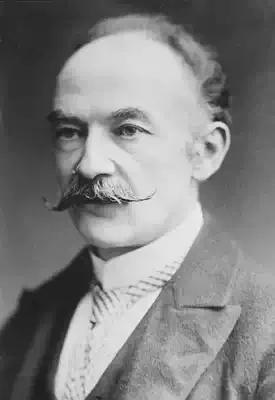
Thomas Hardy
The House of Hospitalities
The House of Hospitalities
Here we broached the Christmas barrel,
Pushed up the charred log-ends;
Here we sang the Christmas carol,
And called in friends.
Time has tired me since we met here
When the folk now dead were young,
And the viands were outset here
And quaint songs sung.
And the worm has bored the viol
That used to lead the tune,
Rust eaten out the dial
That struck night's noon.
Now no Christmas brings in neighbours,
And the New Year comes unlit;
Where we sang the mole now labours,
And spiders knit.
Yet at midnight if here walking,
When the moon sheets wall and tree,
I see forms of old time talking,
Who smile on me.
Here we broached the Christmas barrel,
Pushed up the charred log-ends;
Here we sang the Christmas carol,
And called in friends.
Time has tired me since we met here
When the folk now dead were young,
And the viands were outset here
And quaint songs sung.
And the worm has bored the viol
That used to lead the tune,
Rust eaten out the dial
That struck night's noon.
Now no Christmas brings in neighbours,
And the New Year comes unlit;
Where we sang the mole now labours,
And spiders knit.
Yet at midnight if here walking,
When the moon sheets wall and tree,
I see forms of old time talking,
Who smile on me.
181
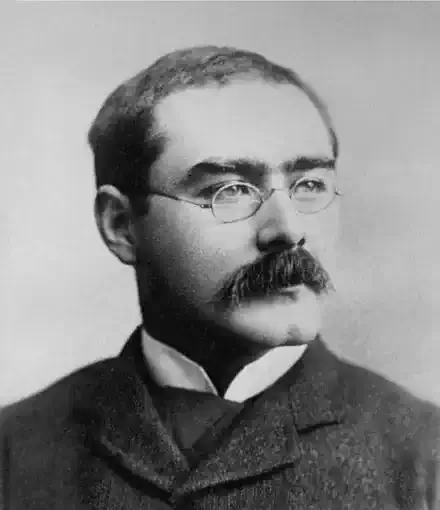
Rudyard Kipling
The Portent
The Portent
Horace, BK. V. Ode .
Oh, late withdrawn from human-kind
And following dreams we never knew!
Varus, what dream has Fate assigned
To trouble you?
Such virtue as commends of law
Of Virtue to the vulgar horde
Suffices not. You needs must draw
A righteous sword;
And, flagrant in well-doing, smite
The priests of Bacchus at their fane,
Lest any worshipper invite
The God again.
Whence public strife and naked crime
And-deadlier than the cup you shun--
A people schooled to mock, in time,
All law--not one.
Cease, then, to fashion State-made sin,
Nor give thy children cause to doubt
That Virtue springs from Iron within--
Not lead without.
Horace, BK. V. Ode .
Oh, late withdrawn from human-kind
And following dreams we never knew!
Varus, what dream has Fate assigned
To trouble you?
Such virtue as commends of law
Of Virtue to the vulgar horde
Suffices not. You needs must draw
A righteous sword;
And, flagrant in well-doing, smite
The priests of Bacchus at their fane,
Lest any worshipper invite
The God again.
Whence public strife and naked crime
And-deadlier than the cup you shun--
A people schooled to mock, in time,
All law--not one.
Cease, then, to fashion State-made sin,
Nor give thy children cause to doubt
That Virtue springs from Iron within--
Not lead without.
429
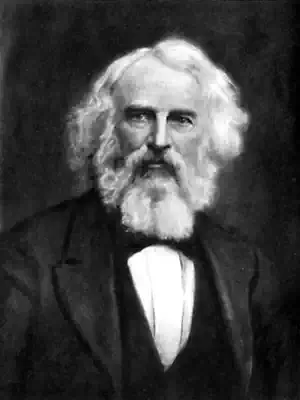
Henry Wadsworth Longfellow
L'Envoi
L'Envoi
Ye voices, that arose
After the Evening's close,
And whispered to my restless heart repose!
Go, breathe it in the ear
Of all who doubt and fear,
And say to them, "Be of good cheer!"
Ye sounds, so low and calm,
That in the groves of balm
Seemed to me like an angel's psalm!
Go, mingle yet once more
With the perpetual roar
Of the pine forest dark and hoar!
Tongues of the dead, not lost
But speaking from deaths frost,
Like fiery tongues at Pentecost!
Glimmer, as funeral lamps,
Amid the chills and darn ps
Of the vast plain where Death encamps!
Ye voices, that arose
After the Evening's close,
And whispered to my restless heart repose!
Go, breathe it in the ear
Of all who doubt and fear,
And say to them, "Be of good cheer!"
Ye sounds, so low and calm,
That in the groves of balm
Seemed to me like an angel's psalm!
Go, mingle yet once more
With the perpetual roar
Of the pine forest dark and hoar!
Tongues of the dead, not lost
But speaking from deaths frost,
Like fiery tongues at Pentecost!
Glimmer, as funeral lamps,
Amid the chills and darn ps
Of the vast plain where Death encamps!
301
Rudyard Kipling
The Playmate
The Playmate
She is not Folly -- that I know.
Her steadfast eyelids tell me so
When, at the hour the lights divide,
She steals as summonsed to my side.
When, finger on the pursed lip
In secret, mirthful fellowship,
She, heralding new -- framed delights,
Breathes, "This shall be a Night of Nights!"
Then, out of Time and out of Space,
Is built an Hour and a Place
Where all an earnest, baffled Earth
Blunders and trips to make us mirth;
Whence from the trivial flux of Things,
Rise inconceived miscarryings,
Outrageous but immortal, shown,
Of Her great love, to me alone...
She is not Wisdom, but, maybe,
Wiser than all the Norns is She:
And more than Wisdom I prefer
To wait on Her, -- to wait on Her!
She is not Folly -- that I know.
Her steadfast eyelids tell me so
When, at the hour the lights divide,
She steals as summonsed to my side.
When, finger on the pursed lip
In secret, mirthful fellowship,
She, heralding new -- framed delights,
Breathes, "This shall be a Night of Nights!"
Then, out of Time and out of Space,
Is built an Hour and a Place
Where all an earnest, baffled Earth
Blunders and trips to make us mirth;
Whence from the trivial flux of Things,
Rise inconceived miscarryings,
Outrageous but immortal, shown,
Of Her great love, to me alone...
She is not Wisdom, but, maybe,
Wiser than all the Norns is She:
And more than Wisdom I prefer
To wait on Her, -- to wait on Her!
421
Thomas Hardy
The Going of the Battery Wives. (Lament)
The Going of the Battery Wives. (Lament)
I
O it was sad enough, weak enough, mad enough -
Light in their loving as soldiers can be -
First to risk choosing them, leave alone losing them
Now, in far battle, beyond the South Sea! . . .
II
- Rain came down drenchingly; but we unblenchingly
Trudged on beside them through mirk and through mire,
They stepping steadily--only too readily! -
Scarce as if stepping brought parting-time nigher.
III
Great guns were gleaming there, living things seeming there,
Cloaked in their tar-cloths, upmouthed to the night;
Wheels wet and yellow from axle to felloe,
Throats blank of sound, but prophetic to sight.
IV
Gas-glimmers drearily, blearily, eerily
Lit our pale faces outstretched for one kiss,
While we stood prest to them, with a last quest to them
Not to court perils that honour could miss.
V
Sharp were those sighs of ours, blinded these eyes of ours,
When at last moved away under the arch
All we loved. Aid for them each woman prayed for them,
Treading back slowly the track of their march.
VI
Someone said: "Nevermore will they come: evermore
Are they now lost to us." O it was wrong!
Though may be hard their ways, some Hand will guard their ways,
Bear them through safely, in brief time or long.
VII
- Yet, voices haunting us, daunting us, taunting us,
Hint in the night-time when life beats are low
Other and graver things . . . Hold we to braver things,
Wait we, in trust, what Time's fulness shall show.
I
O it was sad enough, weak enough, mad enough -
Light in their loving as soldiers can be -
First to risk choosing them, leave alone losing them
Now, in far battle, beyond the South Sea! . . .
II
- Rain came down drenchingly; but we unblenchingly
Trudged on beside them through mirk and through mire,
They stepping steadily--only too readily! -
Scarce as if stepping brought parting-time nigher.
III
Great guns were gleaming there, living things seeming there,
Cloaked in their tar-cloths, upmouthed to the night;
Wheels wet and yellow from axle to felloe,
Throats blank of sound, but prophetic to sight.
IV
Gas-glimmers drearily, blearily, eerily
Lit our pale faces outstretched for one kiss,
While we stood prest to them, with a last quest to them
Not to court perils that honour could miss.
V
Sharp were those sighs of ours, blinded these eyes of ours,
When at last moved away under the arch
All we loved. Aid for them each woman prayed for them,
Treading back slowly the track of their march.
VI
Someone said: "Nevermore will they come: evermore
Are they now lost to us." O it was wrong!
Though may be hard their ways, some Hand will guard their ways,
Bear them through safely, in brief time or long.
VII
- Yet, voices haunting us, daunting us, taunting us,
Hint in the night-time when life beats are low
Other and graver things . . . Hold we to braver things,
Wait we, in trust, what Time's fulness shall show.
211

Robert W. Service
Moon-Lover
Moon-Lover
I
The Moon is like a ping-pong ball;
I lean against the orchard wall,
And see it soar into the void,
A silky sphere of celluloid.
Then fairy fire enkindles it,
Like gossamer by taper lit,
Until it glows above the trees
As mellow as a Cheddar cheese.
And up and up I watch it press
Into appalling loneliness;
Like realms of ice without a stain,
A corpse Moon come to life again.
Ruthless it drowns a sturdy star
That seeks its regal way to bar;
Seeming with conscious power to grow,
And sweeter, purer, gladder glow.
Dreaming serenely up the sky
Until exultantly on high,
It shimmers with superb delight,
The silver navel of the night.
II
I have a compact to commune
A monthly midnight with the Moon;
Into its face I stare and stare,
And find sweet understanding there.
As quiet as a toad I sit
And tell my tale of days to it;
The tessellated yarn I've spun
In thirty spells of star and sun.
And the Moon listens pensively,
As placid as a lamb to me;
Until I think there's just us two
In silver world of mist and dew.
In all of spangled space, but I
To stare moon-struck into the sky;
Of billion beings I alone
To praise the Moon as still as stone.
And seal a bond between us two,
Closer than mortal ever knew;
For as mute masses I intone
The Moon is mine and mine alone.
III
To know the Moon as few men may,
One must be just a little fey;
And for our friendship's sake I'm glad
That I am just a trifle mad.
And one with all the wild, wise things,
The furtive folk of fur and wings,
That hold the Moon within their eyes,
And make it nightly sacrifice.
O I will watch the maiden Moon
Dance on the sea with silver shoon;
But with the Queen Moon I will keep
My tryst when all the world's asleep.
As I have kept by land and sea
That tryst for half a century;
Entranced in sibylline suspense
Beyond a world of common-sense.
Until one night the Moon alone
Will look upon a graven stone. . . .
I wonder will it miss me then,
Its lover more than other men?
Or will my wistful ghost be there,
Down ages dim to stare and stare,
On silver nights without a stir--
The Moon's Eternal Worshipper?
I
The Moon is like a ping-pong ball;
I lean against the orchard wall,
And see it soar into the void,
A silky sphere of celluloid.
Then fairy fire enkindles it,
Like gossamer by taper lit,
Until it glows above the trees
As mellow as a Cheddar cheese.
And up and up I watch it press
Into appalling loneliness;
Like realms of ice without a stain,
A corpse Moon come to life again.
Ruthless it drowns a sturdy star
That seeks its regal way to bar;
Seeming with conscious power to grow,
And sweeter, purer, gladder glow.
Dreaming serenely up the sky
Until exultantly on high,
It shimmers with superb delight,
The silver navel of the night.
II
I have a compact to commune
A monthly midnight with the Moon;
Into its face I stare and stare,
And find sweet understanding there.
As quiet as a toad I sit
And tell my tale of days to it;
The tessellated yarn I've spun
In thirty spells of star and sun.
And the Moon listens pensively,
As placid as a lamb to me;
Until I think there's just us two
In silver world of mist and dew.
In all of spangled space, but I
To stare moon-struck into the sky;
Of billion beings I alone
To praise the Moon as still as stone.
And seal a bond between us two,
Closer than mortal ever knew;
For as mute masses I intone
The Moon is mine and mine alone.
III
To know the Moon as few men may,
One must be just a little fey;
And for our friendship's sake I'm glad
That I am just a trifle mad.
And one with all the wild, wise things,
The furtive folk of fur and wings,
That hold the Moon within their eyes,
And make it nightly sacrifice.
O I will watch the maiden Moon
Dance on the sea with silver shoon;
But with the Queen Moon I will keep
My tryst when all the world's asleep.
As I have kept by land and sea
That tryst for half a century;
Entranced in sibylline suspense
Beyond a world of common-sense.
Until one night the Moon alone
Will look upon a graven stone. . . .
I wonder will it miss me then,
Its lover more than other men?
Or will my wistful ghost be there,
Down ages dim to stare and stare,
On silver nights without a stir--
The Moon's Eternal Worshipper?
240
Thomas Hardy
The Ghost of the Past
The Ghost of the Past
We two kept house, the Past and I,
The Past and I;
I tended while it hovered nigh,
Leaving me never alone.
It was a spectral housekeeping
Where fell no jarring tone,
As strange, as still a housekeeping
As ever has been known.
As daily I went up the stair,
And down the stair,
I did not mind the Bygone there --
The Present once to me;
Its moving meek companionship
I wished might ever be,
There was in that companionship
Something of ecstasy.
It dwelt with me just as it was,
Just as it was
When first its prospects gave me pause
In wayward wanderings,
Before the years had torn old troths
As they tear all sweet things,
Before gaunt griefs had torn old troths
And dulled old rapturings.
And then its form began to fade,
Began to fade,
Its gentle echoes faintlier played
At eves upon my ear
Than when the autumn's look embrowned
The lonely chambers here,
The autumn's settling shades embrowned
Nooks that it haunted near.
And so with time my vision less,
Yea, less and less
Makes of that Past my housemistress,
It dwindles in my eye;
It looms a far-off skeleton
And not a comrade nigh,
A fitful far-off skeleton
Dimming as days draw by.
We two kept house, the Past and I,
The Past and I;
I tended while it hovered nigh,
Leaving me never alone.
It was a spectral housekeeping
Where fell no jarring tone,
As strange, as still a housekeeping
As ever has been known.
As daily I went up the stair,
And down the stair,
I did not mind the Bygone there --
The Present once to me;
Its moving meek companionship
I wished might ever be,
There was in that companionship
Something of ecstasy.
It dwelt with me just as it was,
Just as it was
When first its prospects gave me pause
In wayward wanderings,
Before the years had torn old troths
As they tear all sweet things,
Before gaunt griefs had torn old troths
And dulled old rapturings.
And then its form began to fade,
Began to fade,
Its gentle echoes faintlier played
At eves upon my ear
Than when the autumn's look embrowned
The lonely chambers here,
The autumn's settling shades embrowned
Nooks that it haunted near.
And so with time my vision less,
Yea, less and less
Makes of that Past my housemistress,
It dwindles in my eye;
It looms a far-off skeleton
And not a comrade nigh,
A fitful far-off skeleton
Dimming as days draw by.
157
Rudyard Kipling
The Penalty
The Penalty
Once in life I watched a Star;
But I whistled, "Let her go!
There are others, fairer far,
Which my favouring skies shall show
Here I lied, and herein I
Stood to pay the penalty.
Marvellous the Planets shone
As I ranged from coast to coast--
But beyond comparison
Rode the Star that I had lost.
I had lied, and only I
Did not guess the penalty! . . .
When my Heavens were turned to blood,
When the dark had filled my day,
Furthest, but most faithful, stood
That lone Star I cast away.
I had loved myself, and I
Have not lived and dare not die!
Once in life I watched a Star;
But I whistled, "Let her go!
There are others, fairer far,
Which my favouring skies shall show
Here I lied, and herein I
Stood to pay the penalty.
Marvellous the Planets shone
As I ranged from coast to coast--
But beyond comparison
Rode the Star that I had lost.
I had lied, and only I
Did not guess the penalty! . . .
When my Heavens were turned to blood,
When the dark had filled my day,
Furthest, but most faithful, stood
That lone Star I cast away.
I had loved myself, and I
Have not lived and dare not die!
421
Henry Wadsworth Longfellow
King Trisanku
King Trisanku
Viswamitra the Magician,
By his spells and incantations,
Up to Indra's realms elysian
Raised Trisanku, king of nations.
Indra and the gods offended
Hurled him downward, and descending
In the air he hung suspended,
With these equal powers contending.
Thus by aspirations lifted,
By misgivings downward driven,
Human hearts are tossed and drifted
Midway between earth and heaven.
Viswamitra the Magician,
By his spells and incantations,
Up to Indra's realms elysian
Raised Trisanku, king of nations.
Indra and the gods offended
Hurled him downward, and descending
In the air he hung suspended,
With these equal powers contending.
Thus by aspirations lifted,
By misgivings downward driven,
Human hearts are tossed and drifted
Midway between earth and heaven.
331
Thomas Hardy
The Fire at Tranter Sweatley’s
The Fire at Tranter Sweatley’s
The Fire at Tranter Sweatley’s
They had long met o’ Zundays—her true love and she—
And at junketings, maypoles, and flings;
But she bode wi’ a thirtover uncle, and he
Swore by noon and by night that her goodman should be
Naibor Sweatley—a gaffer oft weak at the knee
From taking o’ sommat more cheerful than tea—
Who tranted, and moved people’s things.
She cried, “O pray pity me!” Nought would he hear;
Then with wild rainy eyes she obeyed,
She chid when her Love was for clinking off wi’ her.
The pa’son was told, as the season drew near
To throw over pu’pit the names of the peäir
As fitting one flesh to be made.
The wedding-day dawned and the morning drew on;
The couple stood bridegroom and bride;
The evening was passed, and when midnight had gone
The folks horned out, “God save the King,” and anon
The two home-along gloomily hied.
The lover Tim Tankens mourned heart-sick and drear
To be thus of his darling deprived:
He roamed in the dark ath’art field, mound, and mere,
And, a’most without knowing it, found himself near
The house of the tranter, and now of his Dear,
Where the lantern-light showed ’em arrived.
The bride sought her cham’er so calm and so pale
That a Northern had thought her resigned;
But to eyes that had seen her in tide-times of weal,
Like the white cloud o’ smoke, the red battlefield’s vail,
That look spak’ of havoc behind.
The bridegroom yet laitered a beaker to drain,
Then reeled to the linhay for more,
When the candle-snoff kindled some chaff from his grain—
Flames spread, and red vlankers, wi’ might and wi’ main,
And round beams, thatch, and chimley-tun roar.
Young Tim away yond, rafted up by the light,
Through brimble and underwood tears,
Till he comes to the orchet, when crooping thereright
In the lewth of a codlin-tree, bivering wi’ fright,
Wi’ on’y her night-rail to screen her from sight,
His lonesome young Barbree appears.
Her cwold little figure half-naked he views
Played about by the frolicsome breeze,
Her light-tripping totties, her ten little tooes,
All bare and besprinkled wi’ Fall’s chilly dews,
While her great gallied eyes, through her hair hanging loose,
Sheened as stars through a tardle o’ trees.
She eyed en; and, as when a weir-hatch is drawn,
Her tears, penned by terror afore,
With a rushing of sobs in a shower were strawn,
Till her power to pour ’em seemed wasted and gone
From the heft o’ misfortune she bore.
“O Tim, my own Tim I must call ’ee—I will!
All the world ha’ turned round on me so!
Can you help her who loved ’ee, though acting so ill?
Can you pity her misery—feel for her still?
When worse than her body so quivering and chill
Is her heart in its winter o’ woe!
“I think I mid almost ha’ borne it,” she said,
“Had my griefs one by one come to hand;
But O, to be slave to thik husbird for bread,
And then, upon top o’ that, driven to wed,
And then, upon top o’ that, burnt out o’ bed,
Is more than my nater can stand!”
Tim’s soul like a lion ’ithin en outsprung—
(Tim had a great soul when his feelings were wrung)—
“Feel for ’ee, dear Barbree?” he cried;
And his warm working-jacket about her he flung,
Made a back, horsed her up, till behind him she clung
Like a chiel on a gipsy, her figure uphung
By the sleeves that around her he tied.
Over piggeries, and mixens, and apples, and hay,
They lumpered straight into the night;
And finding bylong where a halter-path lay,
At dawn reached Tim’s house, on’y seen on their way
By a naibor or two who were up wi’ the day;
But they gathered no clue to the sight.
Then tender Tim Tankens he searched here and there
For some garment to clothe her fair skin;
But though he had breeches and waistcoats to spare,
He had nothing quite seemly for Barbree to wear,
Who, half shrammed to death, stood and cried on a chair
At the caddle she found herself in.
There was one thing to do, and that one thing he did,
He lent her some clouts of his own,
And she took ’em perforce; and while in ’em she slid,
Tim turned to the winder, as modesty bid,
Thinking, “O that the picter my duty keeps hid
To the sight o’ my eyes mid be shown!”
In the tallet he stowed her; there huddied she lay,
Shortening sleeves, legs, and tails to her limbs;
But most o’ the time in a mortal bad way,
Well knowing that there’d be the divel to pay
If ’twere found that, instead o’ the elements’ prey,
She was living in lodgings at Tim’s.
“Where’s the tranter?” said men and boys; “where can er be?”
“Where’s the tranter?” said Barbree alone.
“Where on e’th is the tranter?” said everybod-y:
They sifted the dust of his perished roof-tree,
And all they could find was a bone.
Then the uncle cried, “Lord, pray have mercy on me!”
And in terror began to repent.
But before ’twas complete, and till sure she was free,
Barbree drew up her loft-ladder, tight turned her key—
Tim bringing up breakfast and dinner and tea—
Till the news of her hiding got vent.
Then followed the custom-kept rout, shout, and flare
Of a skimmington-ride through the naiborhood, ere
Folk had proof o’ wold Sweatley’s decay.
Whereupon decent people all stood in a stare,
Saying Tim and his lodger should risk it, and pair:
So he took her to church. An’ some laughing lads there
Cried to Tim, “After Sweatley!” She said, “I declare
I stand as a maiden to-day!”
The Fire at Tranter Sweatley’s
They had long met o’ Zundays—her true love and she—
And at junketings, maypoles, and flings;
But she bode wi’ a thirtover uncle, and he
Swore by noon and by night that her goodman should be
Naibor Sweatley—a gaffer oft weak at the knee
From taking o’ sommat more cheerful than tea—
Who tranted, and moved people’s things.
She cried, “O pray pity me!” Nought would he hear;
Then with wild rainy eyes she obeyed,
She chid when her Love was for clinking off wi’ her.
The pa’son was told, as the season drew near
To throw over pu’pit the names of the peäir
As fitting one flesh to be made.
The wedding-day dawned and the morning drew on;
The couple stood bridegroom and bride;
The evening was passed, and when midnight had gone
The folks horned out, “God save the King,” and anon
The two home-along gloomily hied.
The lover Tim Tankens mourned heart-sick and drear
To be thus of his darling deprived:
He roamed in the dark ath’art field, mound, and mere,
And, a’most without knowing it, found himself near
The house of the tranter, and now of his Dear,
Where the lantern-light showed ’em arrived.
The bride sought her cham’er so calm and so pale
That a Northern had thought her resigned;
But to eyes that had seen her in tide-times of weal,
Like the white cloud o’ smoke, the red battlefield’s vail,
That look spak’ of havoc behind.
The bridegroom yet laitered a beaker to drain,
Then reeled to the linhay for more,
When the candle-snoff kindled some chaff from his grain—
Flames spread, and red vlankers, wi’ might and wi’ main,
And round beams, thatch, and chimley-tun roar.
Young Tim away yond, rafted up by the light,
Through brimble and underwood tears,
Till he comes to the orchet, when crooping thereright
In the lewth of a codlin-tree, bivering wi’ fright,
Wi’ on’y her night-rail to screen her from sight,
His lonesome young Barbree appears.
Her cwold little figure half-naked he views
Played about by the frolicsome breeze,
Her light-tripping totties, her ten little tooes,
All bare and besprinkled wi’ Fall’s chilly dews,
While her great gallied eyes, through her hair hanging loose,
Sheened as stars through a tardle o’ trees.
She eyed en; and, as when a weir-hatch is drawn,
Her tears, penned by terror afore,
With a rushing of sobs in a shower were strawn,
Till her power to pour ’em seemed wasted and gone
From the heft o’ misfortune she bore.
“O Tim, my own Tim I must call ’ee—I will!
All the world ha’ turned round on me so!
Can you help her who loved ’ee, though acting so ill?
Can you pity her misery—feel for her still?
When worse than her body so quivering and chill
Is her heart in its winter o’ woe!
“I think I mid almost ha’ borne it,” she said,
“Had my griefs one by one come to hand;
But O, to be slave to thik husbird for bread,
And then, upon top o’ that, driven to wed,
And then, upon top o’ that, burnt out o’ bed,
Is more than my nater can stand!”
Tim’s soul like a lion ’ithin en outsprung—
(Tim had a great soul when his feelings were wrung)—
“Feel for ’ee, dear Barbree?” he cried;
And his warm working-jacket about her he flung,
Made a back, horsed her up, till behind him she clung
Like a chiel on a gipsy, her figure uphung
By the sleeves that around her he tied.
Over piggeries, and mixens, and apples, and hay,
They lumpered straight into the night;
And finding bylong where a halter-path lay,
At dawn reached Tim’s house, on’y seen on their way
By a naibor or two who were up wi’ the day;
But they gathered no clue to the sight.
Then tender Tim Tankens he searched here and there
For some garment to clothe her fair skin;
But though he had breeches and waistcoats to spare,
He had nothing quite seemly for Barbree to wear,
Who, half shrammed to death, stood and cried on a chair
At the caddle she found herself in.
There was one thing to do, and that one thing he did,
He lent her some clouts of his own,
And she took ’em perforce; and while in ’em she slid,
Tim turned to the winder, as modesty bid,
Thinking, “O that the picter my duty keeps hid
To the sight o’ my eyes mid be shown!”
In the tallet he stowed her; there huddied she lay,
Shortening sleeves, legs, and tails to her limbs;
But most o’ the time in a mortal bad way,
Well knowing that there’d be the divel to pay
If ’twere found that, instead o’ the elements’ prey,
She was living in lodgings at Tim’s.
“Where’s the tranter?” said men and boys; “where can er be?”
“Where’s the tranter?” said Barbree alone.
“Where on e’th is the tranter?” said everybod-y:
They sifted the dust of his perished roof-tree,
And all they could find was a bone.
Then the uncle cried, “Lord, pray have mercy on me!”
And in terror began to repent.
But before ’twas complete, and till sure she was free,
Barbree drew up her loft-ladder, tight turned her key—
Tim bringing up breakfast and dinner and tea—
Till the news of her hiding got vent.
Then followed the custom-kept rout, shout, and flare
Of a skimmington-ride through the naiborhood, ere
Folk had proof o’ wold Sweatley’s decay.
Whereupon decent people all stood in a stare,
Saying Tim and his lodger should risk it, and pair:
So he took her to church. An’ some laughing lads there
Cried to Tim, “After Sweatley!” She said, “I declare
I stand as a maiden to-day!”
196
Rudyard Kipling
The Palace
The Palace
When I was a King and a Mason -- a Master proven and skilled --
I cleared me ground for a Palace such as a King should build.
I decreed and dug down to my levels. Presently, under the silt,
I came on the wreck of a Palace such as a King had built.
There was no worth in the fashion -- there was no wit in the plan --
Hither and thither, aimless, the ruined footings ran --
Masonry, brute, mishandled, but carven on every stone:
"After me cometh a Builder. Tell him, I too have known."
Swift to my use in my trenches, where my well-planned ground-works grew,
I tumbled his quoins and his ashlars, and cut and reset them anew.
Lime I milled of his marbles; burned it, slacked it, and spread;
Taking and leaving at pleasure the gifts of the humble dead.
Yet I despised not nor gloried; yet, as we wrenched them apart,
I read in the razed foundations the heart of that builder's heart.
As he had risen and pleaded, so did I understand
The form of the dream he had followed in the face of the thing he had planned.
* * * * *
When I was a King and a Mason -- in the open noon of my pride,
They sent me a Word from the Darkness. They whispered and called me aside.
They said -- "The end is forbidden." They said -- "Thy use is fulfilled.
"Thy Palace shall stand as that other's -- the spoil of a King who shall build."
I called my men from my trenches, my quarries, my wharves, and my sheers.
All I had wrought I abandoned to the faith of the faithless years.
Only I cut on the timber -- only I carved on the stone:
"After me cometh a Builder. Tell him, I too have known!"
When I was a King and a Mason -- a Master proven and skilled --
I cleared me ground for a Palace such as a King should build.
I decreed and dug down to my levels. Presently, under the silt,
I came on the wreck of a Palace such as a King had built.
There was no worth in the fashion -- there was no wit in the plan --
Hither and thither, aimless, the ruined footings ran --
Masonry, brute, mishandled, but carven on every stone:
"After me cometh a Builder. Tell him, I too have known."
Swift to my use in my trenches, where my well-planned ground-works grew,
I tumbled his quoins and his ashlars, and cut and reset them anew.
Lime I milled of his marbles; burned it, slacked it, and spread;
Taking and leaving at pleasure the gifts of the humble dead.
Yet I despised not nor gloried; yet, as we wrenched them apart,
I read in the razed foundations the heart of that builder's heart.
As he had risen and pleaded, so did I understand
The form of the dream he had followed in the face of the thing he had planned.
* * * * *
When I was a King and a Mason -- in the open noon of my pride,
They sent me a Word from the Darkness. They whispered and called me aside.
They said -- "The end is forbidden." They said -- "Thy use is fulfilled.
"Thy Palace shall stand as that other's -- the spoil of a King who shall build."
I called my men from my trenches, my quarries, my wharves, and my sheers.
All I had wrought I abandoned to the faith of the faithless years.
Only I cut on the timber -- only I carved on the stone:
"After me cometh a Builder. Tell him, I too have known!"
576
Robert W. Service
Montreal Maree
Montreal Maree
You've heard of Belching Billy, likewise known as Windy Bill,
As punk a chunk of Yukon scum as ever robbed a sluice;
A satellite of Soapy Smith, a capper and a shill,
A slimy tribute-taker from the Ladies on the Loose.
But say, you never heard of how he aimed my gore to spill
(That big gorilla gunnin' for a little guy like me,)
A-howlin' like a malamute an' ravin' he would drill
Me full of holes and all because of Montreal Maree.
Now Spike Mahoney's Bar was stiff with roarin' drunks,
And I was driftin' lonesome-like, scarce knowin' what to do,
So come I joined a poker game and dropped a hundred plunks,
And bein' broke I begged of Spike to take my I.O.U.
Says he: "Me lad, I'll help ye out, but let me make this clear:
If you you don't pay by New year's day your wage I'll garnishee."
So I was broodin' when I heard a whisper in my ear:
"What ees zee trouble, leetle boy?" said Montreal Maree.
Now dance-hall gels is good and bad, but most is in between;
Yeh, some is scum and some is dumb, and some is just plumb cold;
But of straight-shootin' Dawson dames Maree was rated queen,
As pretty as a pansy, wi' a heart o' Hunker gold.
And so although I didn't know her more that passin' by,
I told how Spike would seek my Boss, and jobless I would be;
She listened sympathetic like: "Zut! Baby, don't you cry;
I lend to you zee hundred bucks," said Montreal Maree.
Now though I zippered up my mug somehow the story spread
That I was playin' poker and my banker was Maree;
And when it got to Windy Bill, by Golly, he saw red,
And reachin' for his shootin' iron he started after me.
For he was batty for that babe and tried to fence her in.
And if a guy got in his way, say, he was set to kill;
So fortified with barbwire hooch and wickeder than sin;
"I'll plug that piker full of lead," exploded Windy Bill.
That night, a hundred smackers saved, with joy I started out
To seek my scented saviour in her cabin on the hill;
But barely had I paid my debt, when suddenly a shout . . .
I peered from out the window, and behold! 'twas Windy Bill.
He whooped and swooped and raved and waved his gun as he drew near.
Now he was kickin' in the door, no time was there to flee;
No place to hide: my doom was sealed . . . then sotly in my ear:
"Quick! creep beneez my petticoat," said Montreal Maree.
So pale as death I held my breath below that billowed skirt,
And a she sat I wondered at her voice so calm and clear;
Serene and still she spoke to Bill like he was so much dirt:
"Espèce de skunk! You jus' beeeg drunk. You see no man in here."
Then Bill began to cuss and ran wild shootin' down the hiss,
And all was hushed, and how I wished that bliss could ever be,
When up she rose in dainty pose beside the window sill:
"He spill hees gun, run Baby, run," cried Montreal Maree.
I've heard it said that she got wed and made a wonder wife.
I guess she did; that careless kid had mother in her heart.
But anyway I'll always say she saved my blasted life,
For other girls may come and go, and each may play their part:
But if I live a hundred years I'll not forget the thrill,
The rapture of that moment when I kissed a dimpled knee,
And safely mocked the murderous menace of Windy Bill,
Snug hid beneath the petticoat of Montreal Maree.
You've heard of Belching Billy, likewise known as Windy Bill,
As punk a chunk of Yukon scum as ever robbed a sluice;
A satellite of Soapy Smith, a capper and a shill,
A slimy tribute-taker from the Ladies on the Loose.
But say, you never heard of how he aimed my gore to spill
(That big gorilla gunnin' for a little guy like me,)
A-howlin' like a malamute an' ravin' he would drill
Me full of holes and all because of Montreal Maree.
Now Spike Mahoney's Bar was stiff with roarin' drunks,
And I was driftin' lonesome-like, scarce knowin' what to do,
So come I joined a poker game and dropped a hundred plunks,
And bein' broke I begged of Spike to take my I.O.U.
Says he: "Me lad, I'll help ye out, but let me make this clear:
If you you don't pay by New year's day your wage I'll garnishee."
So I was broodin' when I heard a whisper in my ear:
"What ees zee trouble, leetle boy?" said Montreal Maree.
Now dance-hall gels is good and bad, but most is in between;
Yeh, some is scum and some is dumb, and some is just plumb cold;
But of straight-shootin' Dawson dames Maree was rated queen,
As pretty as a pansy, wi' a heart o' Hunker gold.
And so although I didn't know her more that passin' by,
I told how Spike would seek my Boss, and jobless I would be;
She listened sympathetic like: "Zut! Baby, don't you cry;
I lend to you zee hundred bucks," said Montreal Maree.
Now though I zippered up my mug somehow the story spread
That I was playin' poker and my banker was Maree;
And when it got to Windy Bill, by Golly, he saw red,
And reachin' for his shootin' iron he started after me.
For he was batty for that babe and tried to fence her in.
And if a guy got in his way, say, he was set to kill;
So fortified with barbwire hooch and wickeder than sin;
"I'll plug that piker full of lead," exploded Windy Bill.
That night, a hundred smackers saved, with joy I started out
To seek my scented saviour in her cabin on the hill;
But barely had I paid my debt, when suddenly a shout . . .
I peered from out the window, and behold! 'twas Windy Bill.
He whooped and swooped and raved and waved his gun as he drew near.
Now he was kickin' in the door, no time was there to flee;
No place to hide: my doom was sealed . . . then sotly in my ear:
"Quick! creep beneez my petticoat," said Montreal Maree.
So pale as death I held my breath below that billowed skirt,
And a she sat I wondered at her voice so calm and clear;
Serene and still she spoke to Bill like he was so much dirt:
"Espèce de skunk! You jus' beeeg drunk. You see no man in here."
Then Bill began to cuss and ran wild shootin' down the hiss,
And all was hushed, and how I wished that bliss could ever be,
When up she rose in dainty pose beside the window sill:
"He spill hees gun, run Baby, run," cried Montreal Maree.
I've heard it said that she got wed and made a wonder wife.
I guess she did; that careless kid had mother in her heart.
But anyway I'll always say she saved my blasted life,
For other girls may come and go, and each may play their part:
But if I live a hundred years I'll not forget the thrill,
The rapture of that moment when I kissed a dimpled knee,
And safely mocked the murderous menace of Windy Bill,
Snug hid beneath the petticoat of Montreal Maree.
230
Rudyard Kipling
The Outlaws
The Outlaws
Through learned and laborious years
They set themselves to find
Fresh terrors and undreamed-of fears
To heap upon mankind.
ALl that they drew from Heaven above
Or digged from earth beneath,
They laid into their treasure-trove
And arsenals of death:
While, for well-weighed advantage sake,
Ruler and ruled alike
Built up the faith they meant to break
When the fit hour should strike.
They traded with the careless earth,
And good return it gave:
They plotted by their neighbour's hearth
The means to make him slave.
When all was ready to their hand
They loosed their hidden sword,
And utterly laid waste a land
Their oath was pledged to guard.
Coldly they went about to raise
To life and make more dread
Abominations of old days,
That men believed were dead.
They paid the price to reach their goal
Across a world in flame;
But their own hate slew their own soul
Before that victory came.
Through learned and laborious years
They set themselves to find
Fresh terrors and undreamed-of fears
To heap upon mankind.
ALl that they drew from Heaven above
Or digged from earth beneath,
They laid into their treasure-trove
And arsenals of death:
While, for well-weighed advantage sake,
Ruler and ruled alike
Built up the faith they meant to break
When the fit hour should strike.
They traded with the careless earth,
And good return it gave:
They plotted by their neighbour's hearth
The means to make him slave.
When all was ready to their hand
They loosed their hidden sword,
And utterly laid waste a land
Their oath was pledged to guard.
Coldly they went about to raise
To life and make more dread
Abominations of old days,
That men believed were dead.
They paid the price to reach their goal
Across a world in flame;
But their own hate slew their own soul
Before that victory came.
397
Thomas Hardy
The Dream-Follower
The Dream-Follower
A dream of mine flew over the mead
To the halls where my old Love reigns;
And it drew me on to follow its lead:
And I stood at her window-panes;
And I saw but a thing of flesh and bone
Speeding on to its cleft in the clay;
And my dream was scared, and expired on a moan,
And I whitely hastened away.
A dream of mine flew over the mead
To the halls where my old Love reigns;
And it drew me on to follow its lead:
And I stood at her window-panes;
And I saw but a thing of flesh and bone
Speeding on to its cleft in the clay;
And my dream was scared, and expired on a moan,
And I whitely hastened away.
204
Henry Wadsworth Longfellow
Kéramos
Kéramos
Turn, turn, my wheel? Turn round and round
Without a pause, without a sound:
So spins the flying world away!
This clay, well mixed with marl and sand,
Follows the motion of my hand;
Far some must follow, and some command,
Though all are made of clay!
Thus sang the Potter at his task
Beneath the blossoming hawthorn-tree,
While o'er his features, like a mask,
The quilted sunshine and leaf-shade
Moved, as the boughs above him swayed,
And clothed him, till he seemed to be
A figure woven in tapestry,
So sumptuously was he arrayed
In that magnificent attire
Of sable tissue flaked with fire.
Like a magician he appeared,
A conjurer without book or beard;
And while he plied his magic art--
For it was magical to me--
I stood in silence and apart,
And wondered more and more to see
That shapeless, lifeless mass of clay
Rise up to meet the master's hand,
And now contract and now expand,
And even his slightest touch obey;
While ever in a thoughtful mood
He sang his ditty, and at times
Whistled a tune between the rhymes,
As a melodious interlude.
Turn, turn, my wheel! All things must change
To something new, to something strange;
Nothing that is can pause or stay;
The moon will wax, the moon will wane,
The mist and cloud will turn to rain,
The rain to mist and cloud again,
To-morrow be to-day.
Thus still the Potter sang, and still,
By some unconscious act of will,
The melody and even the words
Were intermingled with my thought
As bits of colored thread are caught
And woven into nests of birds.
And thus to regions far remote,
Beyond the ocean's vast expanse,
This wizard in the motley coat
Transported me on wings of song,
And by the northern shores of France
Bore me with restless speed along.
What land is this that seems to be
A mingling of the land and sea?
This land of sluices, dikes, and dunes?
This water-net, that tessellates
The landscape? this unending maze
Of gardens, through whose latticed gates
The imprisoned pinks and tulips gaze;
Where in long summer afternoons
The sunshine, softened by the haze,
Comes streaming down as through a screen;
Where over fields and pastures green
The painted ships float high in air,
And over all and everywhere
The sails of windmills sink and soar
Like wings of sea-gulls on the shore?
What land is this? Yon pretty town
Is Delft, with all its wares displayed;
The pride, the market-place, the crown
And centre of the Potter's trade.
See! every house and room is bright
With glimmers of reflected light
From plates that on the dresser shine;
Flagons to foam with Flemish beer,
Or sparkle with the Rhenish wine,
And pilgrim flasks with fleurs-de-lis,
And ships upon a rolling sea,
And tankards pewter topped, and queer
With comic mask and musketeer!
Each hospitable chimney smiles
A welcome from its painted tiles;
The parlor walls, the chamber floors,
The stairways and the corridors,
The borders of the garden walks,
Are beautiful with fadeless flowers,
That never droop in winds or showers,
And never wither on their stalks.
Turn, turn, my wheel! All life is brief;
What now is bud wilt soon be leaf,
What now is leaf will soon decay;
The wind blows east, the wind blows west;
The blue eyes in the robin's nest
Will soon have wings and beak and breast,
And flutter and fly away.
Now southward through the air I glide,
The song my only pursuivant,
And see across the landscape wide
The blue Charente, upon whose tide
The belfries and the spires of Saintes
Ripple and rock from side to side,
As, when an earthquake rends its walls,
A crumbling city reels and falls.
Who is it in the suburbs here,
This Potter, working with such cheer,
In this mean house, this mean attire,
His manly features bronzed with fire,
Whose figulines and rustic wares
Scarce find him bread from day to day?
This madman, as the people say,
Who breaks his tables and his chairs
To feed his furnace fires, nor cares
Who goes unfed if they are fed,
Nor who may live if they are dead?
This alchemist with hollow cheeks
And sunken, searching eyes, who seeks,
By mingled earths and ores combined
With potency of fire, to find
Some new enamel, hard and bright,
His dream, his passion, his delight?
O Palissy! within thy breast
Burned the hot fever of unrest;
Thine was the prophets vision, thine
The exultation, the divine
Insanity of noble minds,
That never falters nor abates,
But labors and endures and waits,
Till all that it foresees it finds,
Or what it cannot find creates!
Turn, turn, my wheel! This earthen jar
A touch can make, a touch can mar;
And shall it to the Potter say,
What makest thou. Thou hast no hand?
As men who think to understand
A world by their Creator planned,
Who wiser is than they.
Still guided by the dreamy song,
As in a trance I float along
Above the Pyrenean chain,
Above the fields and farms of Spain,
Above the bright Majorcan isle,
That lends its softened name to art,--
A spot, a dot upon the chart,
Whose little towns, red-roofed with tile,
Are ruby-lustred with the light
Of blazing furnaces by night,
And crowned by day with wreaths of smoke.
Then eastward, wafted in my flight
On my enchanter's magic cloak,
I sail across the Tyrrhene Sea
Into the land of Italy,
And o'er the windy Apennines,
Mantled and musical with pines.
The palaces, the princely halls,
The doors of houses and the walls
Of churches and of belfry towers,
Cloister and castle, street and mart,
Are garlanded and gay with flowers
That blossom in the fields of art.
Here Gubbio's workshops gleam and glow
With brilliant, iridescent dyes,
The dazzling whiteness of the snow,
The cobalt blue of summer skies;
And vase and scutcheon, cup and plate,
In perfect finish emulate
Faenza, Florence, Pesaro.
Forth from Urbino's gate there came
A youth with the angelic name
Of Raphael, in form and face
Himself angelic, and divine
In arts of color and design.
From him Francesco Xanto caught
Something of his transcendent grace,
And into fictile fabrics wrought
Suggestions of the master's thought.
Nor less Maestro Giorgio shines
With madre-perl and golden lines
Of arabesques, and interweaves
His birds and fruits and flowers and leaves
About some landscape, shaded brown,
With olive tints on rock and town.
Behold this cup within whose bowl,
Upon a ground of deepest blue
With yellow-lustred stars o'erlaid,
Colors of every tint and hue
Mingle in one harmonious whole!
With large blue eyes and steadfast gaze,
Her yellow hair in net and braid,
Necklace and ear-rings all ablaze
With golden lustre o'er the glaze,
A woman's portrait; on the scroll,
Cana, the Beautiful! A name
Forgotten save for such brief fame
As this memorial can bestow,--
A gift some lover long ago
Gave with his heart to this fair dame.
A nobler title to renown
Is thine, O pleasant Tuscan town,
Seated beside the Arno's stream;
For Lucca della Robbia there
Created forms so wondrous fair,
They made thy sovereignty supreme.
These choristers with lips of stone,
Whose music is not heard, but seen,
Still chant, as from their organ-screen,
Their Maker's praise; nor these alone,
But the more fragile forms of clay,
Hardly less beautiful than they,
These saints and angels that adorn
The walls of hospitals, and tell
The story of good deeds so well
That poverty seems less forlorn,
And life more like a holiday.
Here in this old neglected church,
That long eludes the traveller's search,
Lies the dead bishop on his tomb;
Earth upon earth he slumbering lies,
Life-like and death-like in the gloom;
Garlands of fruit and flowers in bloom
And foliage deck his resting place;
A shadow in the sightless eyes,
A pallor on the patient face,
Made perfect by the furnace heat;
All earthly passions and desires
Burnt out by purgatorial fires;
Seeming to say, 'Our years are fleet,
And to the weary death is sweet.'
But the most wonderful of all
The ornaments on tomb or wall
That grace the fair Ausonian shores
Are those the faithful earth restores,
Near some Apulian town concealed,
In vineyard or in harvest field,--
Vases and urns and bas-reliefs,
Memorials of forgotten griefs,
Or records of heroic deeds
Of demigods and mighty chiefs:
Figures that almost move and speak,
And, buried amid mould and weeds,
Still in their attitudes attest
The presence of the graceful Greek,--
Achilles in his armor dressed,
Alcides with the Cretan bull,
And Aphrodite with her boy,
Or lovely Helena of Troy,
Still living and still beautiful.
Turn, turn, my wheel! 'T is nature's plan
The child should grow into the man,
The man grow wrinkled, old, and gray;
In youth the heart exults and sings,
The pulses leap, the feet have wings;
In age the cricket chirps, and brings
The harvest home of day.
And now the winds that southward blow,
And cool the hot Sicilian isle,
Bear me away. I see below
The long line of the Libyan Nile,
Flooding and feeding the parched land
With annual ebb and overflow,
A fallen palm whose branches lie
Beneath the Abyssinian sky,
Whose roots are in Egyptian sands,
On either bank huge water-wheels,
Belted with jars and dripping weeds,
Send forth their melancholy moans,
As if, in their gray mantles hid,
Dead anchorites of the Thebaid
Knelt on the shore and told their beads,
Beating their breasts with loud appeals
And penitential tears and groans.
This city, walled and thickly set
With glittering mosque and minaret,
Is Cairo, in whose gay bazaars
The dreaming traveller first inhales
The perfume of Arabian gales,
And sees the fabulous earthen jars,
Huge as were those wherein the maid
Morgiana found the Forty Thieves
Concealed in midnight ambuscade;
And seeing, more than half believes
The fascinating tales that run
Through all the Thousand Nights and One,
Told by the fair Scheherezade.
More strange and wonderful than these
Are the Egyptian deities,
Ammonn, and Emeth, and the grand
Osiris, holding in his hand
The lotus; Isis, crowned and veiled;
The sacred Ibis, and the Sphinx;
Bracelets with blue enamelled links;
The Scarabee in emerald mailed,
Or spreading wide his funeral wings;
Lamps that perchance their night-watch kept
O'er Cleopatra while she slept,--
All plundered from the tombs of kings.
Turn, turn, my wheel! The human race,
Of every tongue, of every place,
Caucasian, Coptic, or Malay,
All that inhabit this great earth,
Whatever be their rank or worth,
Are kindred and allied by birth,
And made of the same clay.
O'er desert sands, o'er gulf and bay,
O'er Ganges and o'er Himalay,
Bird-like I fly, and flying sing,
To flowery kingdoms of Cathay,
And bird-like poise on balanced wing
Above the town of King-te-tching,
A burning town, or seeming so,--
Three thousand furnaces that glow
Incessantly, and fill the air
With smoke uprising, gyre on gyre
And painted by the lurid glare,
Of jets and flashes of red fire.
As leaves that in the autumn fall,
Spotted and veined with various hues,
Are swept along the avenues,
And lie in heaps by hedge and wall,
So from this grove of chimneys whirled
To all the markets of the world,
These porcelain leaves are wafted on,--
Light yellow leaves with spots and stains
Of violet and of crimson dye,
Or tender azure of a sky
Just washed by gentle April rains,
And beautiful with celadon.
Nor less the coarser household wares,--
The willow pattern, that we knew
In childhood, with its bridge of blue
Leading to unknown thoroughfares;
The solitary man who stares
At the white river flowing through
Its arches, the fantastic trees
And wild perspective of the view;
And intermingled among these
The tiles that in our nurseries
Filled us with wonder and delight,
Or haunted us in dreams at night.
And yonder by Nankin, behold!
The Tower of Porcelain, strange and old,
Uplifting to the astonished skies
Its ninefold painted balconies,
With balustrades of twining leaves,
And roofs of tile, beneath whose eaves
Hang porcelain bells that all the time
Ring with a soft, melodious chime;
While the whole fabric is ablaze
With varied tints, all fused in one
Great mass of color, like a maze
Of flowers illumined by the sun.
Turn, turn, my wheel! What is begun
At daybreak must at dark be done,
To-morrow will be another day;
To-morrow the hot furnace flame
Will search the heart and try the frame,
And stamp with honor or with shame
These vessels made of clay.
Cradled and rocked in Eastern seas,
The islands of the Japanese
Beneath me lie; o'er lake and plain
The stork, the heron, and the crane
Through the clear realms of azure drift,
And on the hillside I can see
The villages of Imari,
Whose thronged and flaming workshops lift
Their twisted columns of smoke on high,
Cloud cloisters that in ruins lie,
With sunshine streaming through each rift,
And broken arches of blue sky.
All the bright flowers that fill the land,
Ripple of waves on rock or sand,
The snow on Fusiyama's cone,
The midnight heaven so thickly sown
With constellations of bright stars,
The leaves that rustle, the reeds that make
A whisper by each stream and lake,
The saffron dawn, the sunset red,
Are painted on these lovely jars;
Again the skylark sings, again
The stork, the heron, and the crane
Float through the azure overhead,
The counterfeit and counterpart
Of Nature reproduced in Art.
Art is the child of Nature; yes,
Her darling child, in whom we trace
The features of the mother's face,
Her aspect and her attitude,
All her majestic loveliness
Chastened and softened and subdued
Into a more attractive grace,
And with a human sense imbued.
He is the greatest artist, then,
Whether of pencil or of pen,
Who follows Nature. Never man,
As artist or as artisan,
Pursuing his own fantasies,
Can touch the human heart, or please,
Or satisfy our nobler needs,
As he who sets his willing feet
In Nature's footprints, light and fleet,
And follows fearless where she leads.
Thus mused I on that morn in May,
Wrapped in my visions like the Seer,
Whose eyes behold not what is near,
But only what is far away,
When, suddenly sounding peal on peal,
The church-bell from the neighboring town
Proclaimed the welcome hour of noon.
The Potter heard, and stopped his wheel,
His apron on the grass threw down,
Whistled his quiet little tune,
Not overloud nor overlong,
And ended thus his simple song:
Stop, stop, my wheel! Too soon, too soon
The noon will be the afternoon,
Too soon to-day be yesterday;
Behind us in our path we cast
The broken potsherds of the past,
And all are ground to dust a last,
And trodden into clay!
Turn, turn, my wheel? Turn round and round
Without a pause, without a sound:
So spins the flying world away!
This clay, well mixed with marl and sand,
Follows the motion of my hand;
Far some must follow, and some command,
Though all are made of clay!
Thus sang the Potter at his task
Beneath the blossoming hawthorn-tree,
While o'er his features, like a mask,
The quilted sunshine and leaf-shade
Moved, as the boughs above him swayed,
And clothed him, till he seemed to be
A figure woven in tapestry,
So sumptuously was he arrayed
In that magnificent attire
Of sable tissue flaked with fire.
Like a magician he appeared,
A conjurer without book or beard;
And while he plied his magic art--
For it was magical to me--
I stood in silence and apart,
And wondered more and more to see
That shapeless, lifeless mass of clay
Rise up to meet the master's hand,
And now contract and now expand,
And even his slightest touch obey;
While ever in a thoughtful mood
He sang his ditty, and at times
Whistled a tune between the rhymes,
As a melodious interlude.
Turn, turn, my wheel! All things must change
To something new, to something strange;
Nothing that is can pause or stay;
The moon will wax, the moon will wane,
The mist and cloud will turn to rain,
The rain to mist and cloud again,
To-morrow be to-day.
Thus still the Potter sang, and still,
By some unconscious act of will,
The melody and even the words
Were intermingled with my thought
As bits of colored thread are caught
And woven into nests of birds.
And thus to regions far remote,
Beyond the ocean's vast expanse,
This wizard in the motley coat
Transported me on wings of song,
And by the northern shores of France
Bore me with restless speed along.
What land is this that seems to be
A mingling of the land and sea?
This land of sluices, dikes, and dunes?
This water-net, that tessellates
The landscape? this unending maze
Of gardens, through whose latticed gates
The imprisoned pinks and tulips gaze;
Where in long summer afternoons
The sunshine, softened by the haze,
Comes streaming down as through a screen;
Where over fields and pastures green
The painted ships float high in air,
And over all and everywhere
The sails of windmills sink and soar
Like wings of sea-gulls on the shore?
What land is this? Yon pretty town
Is Delft, with all its wares displayed;
The pride, the market-place, the crown
And centre of the Potter's trade.
See! every house and room is bright
With glimmers of reflected light
From plates that on the dresser shine;
Flagons to foam with Flemish beer,
Or sparkle with the Rhenish wine,
And pilgrim flasks with fleurs-de-lis,
And ships upon a rolling sea,
And tankards pewter topped, and queer
With comic mask and musketeer!
Each hospitable chimney smiles
A welcome from its painted tiles;
The parlor walls, the chamber floors,
The stairways and the corridors,
The borders of the garden walks,
Are beautiful with fadeless flowers,
That never droop in winds or showers,
And never wither on their stalks.
Turn, turn, my wheel! All life is brief;
What now is bud wilt soon be leaf,
What now is leaf will soon decay;
The wind blows east, the wind blows west;
The blue eyes in the robin's nest
Will soon have wings and beak and breast,
And flutter and fly away.
Now southward through the air I glide,
The song my only pursuivant,
And see across the landscape wide
The blue Charente, upon whose tide
The belfries and the spires of Saintes
Ripple and rock from side to side,
As, when an earthquake rends its walls,
A crumbling city reels and falls.
Who is it in the suburbs here,
This Potter, working with such cheer,
In this mean house, this mean attire,
His manly features bronzed with fire,
Whose figulines and rustic wares
Scarce find him bread from day to day?
This madman, as the people say,
Who breaks his tables and his chairs
To feed his furnace fires, nor cares
Who goes unfed if they are fed,
Nor who may live if they are dead?
This alchemist with hollow cheeks
And sunken, searching eyes, who seeks,
By mingled earths and ores combined
With potency of fire, to find
Some new enamel, hard and bright,
His dream, his passion, his delight?
O Palissy! within thy breast
Burned the hot fever of unrest;
Thine was the prophets vision, thine
The exultation, the divine
Insanity of noble minds,
That never falters nor abates,
But labors and endures and waits,
Till all that it foresees it finds,
Or what it cannot find creates!
Turn, turn, my wheel! This earthen jar
A touch can make, a touch can mar;
And shall it to the Potter say,
What makest thou. Thou hast no hand?
As men who think to understand
A world by their Creator planned,
Who wiser is than they.
Still guided by the dreamy song,
As in a trance I float along
Above the Pyrenean chain,
Above the fields and farms of Spain,
Above the bright Majorcan isle,
That lends its softened name to art,--
A spot, a dot upon the chart,
Whose little towns, red-roofed with tile,
Are ruby-lustred with the light
Of blazing furnaces by night,
And crowned by day with wreaths of smoke.
Then eastward, wafted in my flight
On my enchanter's magic cloak,
I sail across the Tyrrhene Sea
Into the land of Italy,
And o'er the windy Apennines,
Mantled and musical with pines.
The palaces, the princely halls,
The doors of houses and the walls
Of churches and of belfry towers,
Cloister and castle, street and mart,
Are garlanded and gay with flowers
That blossom in the fields of art.
Here Gubbio's workshops gleam and glow
With brilliant, iridescent dyes,
The dazzling whiteness of the snow,
The cobalt blue of summer skies;
And vase and scutcheon, cup and plate,
In perfect finish emulate
Faenza, Florence, Pesaro.
Forth from Urbino's gate there came
A youth with the angelic name
Of Raphael, in form and face
Himself angelic, and divine
In arts of color and design.
From him Francesco Xanto caught
Something of his transcendent grace,
And into fictile fabrics wrought
Suggestions of the master's thought.
Nor less Maestro Giorgio shines
With madre-perl and golden lines
Of arabesques, and interweaves
His birds and fruits and flowers and leaves
About some landscape, shaded brown,
With olive tints on rock and town.
Behold this cup within whose bowl,
Upon a ground of deepest blue
With yellow-lustred stars o'erlaid,
Colors of every tint and hue
Mingle in one harmonious whole!
With large blue eyes and steadfast gaze,
Her yellow hair in net and braid,
Necklace and ear-rings all ablaze
With golden lustre o'er the glaze,
A woman's portrait; on the scroll,
Cana, the Beautiful! A name
Forgotten save for such brief fame
As this memorial can bestow,--
A gift some lover long ago
Gave with his heart to this fair dame.
A nobler title to renown
Is thine, O pleasant Tuscan town,
Seated beside the Arno's stream;
For Lucca della Robbia there
Created forms so wondrous fair,
They made thy sovereignty supreme.
These choristers with lips of stone,
Whose music is not heard, but seen,
Still chant, as from their organ-screen,
Their Maker's praise; nor these alone,
But the more fragile forms of clay,
Hardly less beautiful than they,
These saints and angels that adorn
The walls of hospitals, and tell
The story of good deeds so well
That poverty seems less forlorn,
And life more like a holiday.
Here in this old neglected church,
That long eludes the traveller's search,
Lies the dead bishop on his tomb;
Earth upon earth he slumbering lies,
Life-like and death-like in the gloom;
Garlands of fruit and flowers in bloom
And foliage deck his resting place;
A shadow in the sightless eyes,
A pallor on the patient face,
Made perfect by the furnace heat;
All earthly passions and desires
Burnt out by purgatorial fires;
Seeming to say, 'Our years are fleet,
And to the weary death is sweet.'
But the most wonderful of all
The ornaments on tomb or wall
That grace the fair Ausonian shores
Are those the faithful earth restores,
Near some Apulian town concealed,
In vineyard or in harvest field,--
Vases and urns and bas-reliefs,
Memorials of forgotten griefs,
Or records of heroic deeds
Of demigods and mighty chiefs:
Figures that almost move and speak,
And, buried amid mould and weeds,
Still in their attitudes attest
The presence of the graceful Greek,--
Achilles in his armor dressed,
Alcides with the Cretan bull,
And Aphrodite with her boy,
Or lovely Helena of Troy,
Still living and still beautiful.
Turn, turn, my wheel! 'T is nature's plan
The child should grow into the man,
The man grow wrinkled, old, and gray;
In youth the heart exults and sings,
The pulses leap, the feet have wings;
In age the cricket chirps, and brings
The harvest home of day.
And now the winds that southward blow,
And cool the hot Sicilian isle,
Bear me away. I see below
The long line of the Libyan Nile,
Flooding and feeding the parched land
With annual ebb and overflow,
A fallen palm whose branches lie
Beneath the Abyssinian sky,
Whose roots are in Egyptian sands,
On either bank huge water-wheels,
Belted with jars and dripping weeds,
Send forth their melancholy moans,
As if, in their gray mantles hid,
Dead anchorites of the Thebaid
Knelt on the shore and told their beads,
Beating their breasts with loud appeals
And penitential tears and groans.
This city, walled and thickly set
With glittering mosque and minaret,
Is Cairo, in whose gay bazaars
The dreaming traveller first inhales
The perfume of Arabian gales,
And sees the fabulous earthen jars,
Huge as were those wherein the maid
Morgiana found the Forty Thieves
Concealed in midnight ambuscade;
And seeing, more than half believes
The fascinating tales that run
Through all the Thousand Nights and One,
Told by the fair Scheherezade.
More strange and wonderful than these
Are the Egyptian deities,
Ammonn, and Emeth, and the grand
Osiris, holding in his hand
The lotus; Isis, crowned and veiled;
The sacred Ibis, and the Sphinx;
Bracelets with blue enamelled links;
The Scarabee in emerald mailed,
Or spreading wide his funeral wings;
Lamps that perchance their night-watch kept
O'er Cleopatra while she slept,--
All plundered from the tombs of kings.
Turn, turn, my wheel! The human race,
Of every tongue, of every place,
Caucasian, Coptic, or Malay,
All that inhabit this great earth,
Whatever be their rank or worth,
Are kindred and allied by birth,
And made of the same clay.
O'er desert sands, o'er gulf and bay,
O'er Ganges and o'er Himalay,
Bird-like I fly, and flying sing,
To flowery kingdoms of Cathay,
And bird-like poise on balanced wing
Above the town of King-te-tching,
A burning town, or seeming so,--
Three thousand furnaces that glow
Incessantly, and fill the air
With smoke uprising, gyre on gyre
And painted by the lurid glare,
Of jets and flashes of red fire.
As leaves that in the autumn fall,
Spotted and veined with various hues,
Are swept along the avenues,
And lie in heaps by hedge and wall,
So from this grove of chimneys whirled
To all the markets of the world,
These porcelain leaves are wafted on,--
Light yellow leaves with spots and stains
Of violet and of crimson dye,
Or tender azure of a sky
Just washed by gentle April rains,
And beautiful with celadon.
Nor less the coarser household wares,--
The willow pattern, that we knew
In childhood, with its bridge of blue
Leading to unknown thoroughfares;
The solitary man who stares
At the white river flowing through
Its arches, the fantastic trees
And wild perspective of the view;
And intermingled among these
The tiles that in our nurseries
Filled us with wonder and delight,
Or haunted us in dreams at night.
And yonder by Nankin, behold!
The Tower of Porcelain, strange and old,
Uplifting to the astonished skies
Its ninefold painted balconies,
With balustrades of twining leaves,
And roofs of tile, beneath whose eaves
Hang porcelain bells that all the time
Ring with a soft, melodious chime;
While the whole fabric is ablaze
With varied tints, all fused in one
Great mass of color, like a maze
Of flowers illumined by the sun.
Turn, turn, my wheel! What is begun
At daybreak must at dark be done,
To-morrow will be another day;
To-morrow the hot furnace flame
Will search the heart and try the frame,
And stamp with honor or with shame
These vessels made of clay.
Cradled and rocked in Eastern seas,
The islands of the Japanese
Beneath me lie; o'er lake and plain
The stork, the heron, and the crane
Through the clear realms of azure drift,
And on the hillside I can see
The villages of Imari,
Whose thronged and flaming workshops lift
Their twisted columns of smoke on high,
Cloud cloisters that in ruins lie,
With sunshine streaming through each rift,
And broken arches of blue sky.
All the bright flowers that fill the land,
Ripple of waves on rock or sand,
The snow on Fusiyama's cone,
The midnight heaven so thickly sown
With constellations of bright stars,
The leaves that rustle, the reeds that make
A whisper by each stream and lake,
The saffron dawn, the sunset red,
Are painted on these lovely jars;
Again the skylark sings, again
The stork, the heron, and the crane
Float through the azure overhead,
The counterfeit and counterpart
Of Nature reproduced in Art.
Art is the child of Nature; yes,
Her darling child, in whom we trace
The features of the mother's face,
Her aspect and her attitude,
All her majestic loveliness
Chastened and softened and subdued
Into a more attractive grace,
And with a human sense imbued.
He is the greatest artist, then,
Whether of pencil or of pen,
Who follows Nature. Never man,
As artist or as artisan,
Pursuing his own fantasies,
Can touch the human heart, or please,
Or satisfy our nobler needs,
As he who sets his willing feet
In Nature's footprints, light and fleet,
And follows fearless where she leads.
Thus mused I on that morn in May,
Wrapped in my visions like the Seer,
Whose eyes behold not what is near,
But only what is far away,
When, suddenly sounding peal on peal,
The church-bell from the neighboring town
Proclaimed the welcome hour of noon.
The Potter heard, and stopped his wheel,
His apron on the grass threw down,
Whistled his quiet little tune,
Not overloud nor overlong,
And ended thus his simple song:
Stop, stop, my wheel! Too soon, too soon
The noon will be the afternoon,
Too soon to-day be yesterday;
Behind us in our path we cast
The broken potsherds of the past,
And all are ground to dust a last,
And trodden into clay!
328
Thomas Hardy
The Dead Drummer.
The Dead Drummer.
I
They throw in Drummer Hodge, to rest
Uncoffined--just as found:
His landmark is a kopje-crest
That breaks the veldt around;
And foreign constellations west
Each night above his mound.
II
Young Hodge the Drummer never knew -
Fresh from his Wessex home -
The meaning of the broad Karoo,
The Bush, the dusty loam,
And why uprose to nightly view
Strange stars amid the gloam.
III
Yet portion of that unknown plain
Will Hodge for ever be;
His homely Northern breast and brain
Grow up a Southern tree.
And strange-eyed constellations reign
His stars eternally.
I
They throw in Drummer Hodge, to rest
Uncoffined--just as found:
His landmark is a kopje-crest
That breaks the veldt around;
And foreign constellations west
Each night above his mound.
II
Young Hodge the Drummer never knew -
Fresh from his Wessex home -
The meaning of the broad Karoo,
The Bush, the dusty loam,
And why uprose to nightly view
Strange stars amid the gloam.
III
Yet portion of that unknown plain
Will Hodge for ever be;
His homely Northern breast and brain
Grow up a Southern tree.
And strange-eyed constellations reign
His stars eternally.
206
Rudyard Kipling
The Only Son
The Only Son
She dropped the bar, she shot the bolt, she fed the fire anew
For she heard a whimper under the sill and a great grey paw came through.
The fresh flame comforted the hut and shone on the roof-beam,
And the Only Son lay down again and dreamed that he dreamed a dream.
The last ash fell from the withered log with the click of a falling spark,
And the Only Son woke up again, and called across the dark:--
"Now was I born of womankind and laid in a mother's breast?
For I have dreamed of a shaggy hide whereon I went to rest.
And was I born of womankind and laid on a father's arm?
For I have dreamed of clashing teeth that guarded me from harm.
And was I born an Only Son and did I play alone?
For I have dreamed of comrades twain that bit me to the bone.
And did I break the barley-cake and steep it in the tyre?
For I have dreamed of a youngling kid new-riven from the byre:
For I have dreamed of a midnight sky and a midnight call to blood
And red-mouthed shadows racing by, that thrust me from my food.
'Tis an hour yet and an hour yet to the rising of the moon,
But I can see the black roof-tree as plain as it were noon.
'Tis a league and a league to the Lena Falls where the trooping blackbuck go;
But I can hear the little fawn that bleats behind the doe.
'Tis a league and a league to the Lena Falls where the crop and the upland meet,
But I Can smell the wet dawn-wind that wakes the sprouting wheat.
Unbar the door. I may not bide, but I must out and see
If those are wolves that wait outside or my own kin to me!"
. . . . .
She loosed the bar, she slid the bolt, she opened the door anon,
And a grey bitch-wolf came out of the dark and fawned on the Only Son!
She dropped the bar, she shot the bolt, she fed the fire anew
For she heard a whimper under the sill and a great grey paw came through.
The fresh flame comforted the hut and shone on the roof-beam,
And the Only Son lay down again and dreamed that he dreamed a dream.
The last ash fell from the withered log with the click of a falling spark,
And the Only Son woke up again, and called across the dark:--
"Now was I born of womankind and laid in a mother's breast?
For I have dreamed of a shaggy hide whereon I went to rest.
And was I born of womankind and laid on a father's arm?
For I have dreamed of clashing teeth that guarded me from harm.
And was I born an Only Son and did I play alone?
For I have dreamed of comrades twain that bit me to the bone.
And did I break the barley-cake and steep it in the tyre?
For I have dreamed of a youngling kid new-riven from the byre:
For I have dreamed of a midnight sky and a midnight call to blood
And red-mouthed shadows racing by, that thrust me from my food.
'Tis an hour yet and an hour yet to the rising of the moon,
But I can see the black roof-tree as plain as it were noon.
'Tis a league and a league to the Lena Falls where the trooping blackbuck go;
But I can hear the little fawn that bleats behind the doe.
'Tis a league and a league to the Lena Falls where the crop and the upland meet,
But I Can smell the wet dawn-wind that wakes the sprouting wheat.
Unbar the door. I may not bide, but I must out and see
If those are wolves that wait outside or my own kin to me!"
. . . . .
She loosed the bar, she slid the bolt, she opened the door anon,
And a grey bitch-wolf came out of the dark and fawned on the Only Son!
418
Robert W. Service
Missis Moriarty's Boy
Missis Moriarty's Boy
Missis Moriarty called last week, and says she to me, says she:
"Sure the heart of me's broken entirely now -- it's the fortunate woman you are;
You've still got your Dinnis to cheer up your home, but me Patsy boy where is he?
Lyin' alone, cold as a stone, kilt in the weariful wahr.
Oh, I'm seein' him now as I looked on him last, wid his hair all curly and bright,
And the wonderful, tenderful heart he had, and his eyes as he wint away,
Shinin' and lookin' down on me from the pride of his proper height:
Sure I'll remember me boy like that if I live to me dyin' day."
And just as she spoke them very same words me Dinnis came in at the door,
Came in from McGonigle's ould shebeen, came in from drinkin' his pay;
And Missis Moriarty looked at him, and she didn't say anny more,
And she wrapped her head in her ould black shawl, and she quietly wint away.
And what was I thinkin', I ask ye now, as I put me Dinnis to bed,
Wid him ravin' and cursin' one half of the night, as cold by his side I sat;
Was I thinkin' the poor ould woman she was wid her Patsy slaughtered and dead?
Was I weepin' for Missis Moriarty? I'm not so sure about that.
Missis Moriarty goes about wid a shinin' look on her face;
Wid her grey hair under her ould black shawl, and the eyes of her mother-mild;
Some say she's a little bit off her head; but annyway it's the case,
Her timper's so swate that you nivver would tell she'd be losin' her only child.
And I think, as I wait up ivery night for me Dinnis to come home blind,
And I'm hearin' his stumblin' foot on the stair along about half-past three:
Sure there's many a way of breakin' a heart, and I haven't made up me mind -Would
I be Missis Moriarty, or Missis Moriarty me?
Missis Moriarty called last week, and says she to me, says she:
"Sure the heart of me's broken entirely now -- it's the fortunate woman you are;
You've still got your Dinnis to cheer up your home, but me Patsy boy where is he?
Lyin' alone, cold as a stone, kilt in the weariful wahr.
Oh, I'm seein' him now as I looked on him last, wid his hair all curly and bright,
And the wonderful, tenderful heart he had, and his eyes as he wint away,
Shinin' and lookin' down on me from the pride of his proper height:
Sure I'll remember me boy like that if I live to me dyin' day."
And just as she spoke them very same words me Dinnis came in at the door,
Came in from McGonigle's ould shebeen, came in from drinkin' his pay;
And Missis Moriarty looked at him, and she didn't say anny more,
And she wrapped her head in her ould black shawl, and she quietly wint away.
And what was I thinkin', I ask ye now, as I put me Dinnis to bed,
Wid him ravin' and cursin' one half of the night, as cold by his side I sat;
Was I thinkin' the poor ould woman she was wid her Patsy slaughtered and dead?
Was I weepin' for Missis Moriarty? I'm not so sure about that.
Missis Moriarty goes about wid a shinin' look on her face;
Wid her grey hair under her ould black shawl, and the eyes of her mother-mild;
Some say she's a little bit off her head; but annyway it's the case,
Her timper's so swate that you nivver would tell she'd be losin' her only child.
And I think, as I wait up ivery night for me Dinnis to come home blind,
And I'm hearin' his stumblin' foot on the stair along about half-past three:
Sure there's many a way of breakin' a heart, and I haven't made up me mind -Would
I be Missis Moriarty, or Missis Moriarty me?
215
Thomas Hardy
The Darkling Thrush
The Darkling Thrush
The Darkling Thrush
I leant upon a coppice gate,
When Frost was spectre-gray,
And Winter's dregs made desolate
The weakening eye of day.
The tangled vine-stems scored the sky
Like strings of broken lyres,
And all mankind that haunted nigh
Had sought their household fires.
The land's sharp features seemed to me
The Century's corpse outleant,
Its crypt the cloudy canopy,
The wind its death-lament.
The ancient pulse of germ and birth
Was shrunken hard and dry,
And every spirit upon earth
Seemed fervorless as I.
At once a voice arose among
The bleak twigs overhead,
In a full-throated evensong
Of joy illimited.
An ancient thrush, frail, gaunt and small,
With blast-beruffled plume,
Had chosen thus to fling his soul
Upon the growing gloom.
So little cause for carolings
Of such ecstatic sound
Was written on terrestrial things
Afar or nigh around,
That I could think there trembled through
His happy good-night air
Some blessed Hope, whereof he knew,
And I was unaware.
The Darkling Thrush
I leant upon a coppice gate,
When Frost was spectre-gray,
And Winter's dregs made desolate
The weakening eye of day.
The tangled vine-stems scored the sky
Like strings of broken lyres,
And all mankind that haunted nigh
Had sought their household fires.
The land's sharp features seemed to me
The Century's corpse outleant,
Its crypt the cloudy canopy,
The wind its death-lament.
The ancient pulse of germ and birth
Was shrunken hard and dry,
And every spirit upon earth
Seemed fervorless as I.
At once a voice arose among
The bleak twigs overhead,
In a full-throated evensong
Of joy illimited.
An ancient thrush, frail, gaunt and small,
With blast-beruffled plume,
Had chosen thus to fling his soul
Upon the growing gloom.
So little cause for carolings
Of such ecstatic sound
Was written on terrestrial things
Afar or nigh around,
That I could think there trembled through
His happy good-night air
Some blessed Hope, whereof he knew,
And I was unaware.
205
Rudyard Kipling
The Old Issue
The Old Issue
October , -- Outbreak of Boer War
Here is nothing new nor aught unproven," say the Trumpets,
"Many feet have worn it and the road is old indeed.
"It is the King--the King we schooled aforetime! "
(Trumpets in the marshes-in the eyot at Runnymede!)
"Here is neither haste, nor hate, nor anger," peal the Trumpets,
"Pardon for his penitence or pity for his fall.
"It is the King!"--inexorable Trumpets--
(Trumpets round the scaffold af the dawning by Whitehall!)
. . . . . . .
"He hath veiled the Crown And hid the Scepter," warn (he Trum pets,
"He hath changed the fashion of the lies that cloak his will.
"Hard die the Kings--ah hard--dooms hard!" declare the Trumpets,
Trumpets at the gang-plank where the brawling troop-decks fill!
Ancient and Unteachable, abide--abide the Trumpets!
Once again the Trumpets, for the shuddering ground-swell brings
Clamour over ocean of the harsh, pursuing Trumpets--
Trumpets of the Vanguard that have sworn no truce with Kings!
All we have of freedom, all we use or know--
This our fathers bought for us long and long ago.
Ancient Right unnoticed as the breath we draw--
Leave to live by no man's leave, underneath the Law.
Lance and torch and tumult, steel and grey-goose wing
Wrenched it, inch and ell and all, slowly from the king.
Till our fathers 'stablished,, after bloody years,
How our King is one with us, first among his peers.
So they bought us freedom-not at little cost--
Wherefore must we watch the King, lest our gain be lost.
Over all things certain, this is sure indeed,
Suffer not the old King: for we know the breed.
Give no ear to bondsmen bidding us endure.
Whining "He is weak and far"; crying "Time will cure."
(Time himself is witness, till the battle joins,
Deeper strikes the rottenness in the people's loins.)
Give no heed to bondsmen masking war with peace.
Suffer not the old King here or overseas.
They that beg us barter--wait his yielding mood--
Pledge the years we hold in trust-pawn our brother's blood--
Howso' great their clamour, whatsoe'er their claim,
Suffer not the old King under any name!
Here is naught unproven--here is naught to learn.
It is written what shall fall if the King return.
He shall mark our goings, question whence we came,
Set his guards about us, as in Freedom's name.
He shall take a tribute, toll of all our ware;
He shall change our gold for arms--arms we may not bear.
He shall break his Judges if they cross his word;
He shall rule above the Law calling on the Lord.
He shall peep and mutter; and the night shall bring
Watchers 'neath our window, lest we mock the King --
Hate and all division; hosts of hurrying spies;
Money poured in secret, carrion breeding flies.
Strangers of his counsel, hirelings of his pay,
These shall deal our Justice: sell-deny-delay.
We shall drink dishonour, we shall eat abuse
For the Land we look to--for the Tongue we use.
We shall take our station, dirt beneath his feet,
While his hired captains jeer us in the street.
Cruel in the shadow, crafty in the sun,
Far beyond his borders shall his teachings run.
Sloven, sullen, savage, secret, uncontrolled,
Laying on a new land evil of the old--
Long-forgotten bondage, dwarfing heart and brain--
All our fathers died to loose he shall bind again.
Here is nought at venture, random nor untrue
Swings the wheel full-circle, brims the cup anew.
Here is naught unproven, here is nothing hid:
Step for step and word for word--so the old Kings did!
Step by step, and word by word: who is ruled may read.
Suffer not the old Kings: for we know the breed--
All the right they promise--all the wrong they bring.
Stewards of the Judgment, suffer not this King!
October , -- Outbreak of Boer War
Here is nothing new nor aught unproven," say the Trumpets,
"Many feet have worn it and the road is old indeed.
"It is the King--the King we schooled aforetime! "
(Trumpets in the marshes-in the eyot at Runnymede!)
"Here is neither haste, nor hate, nor anger," peal the Trumpets,
"Pardon for his penitence or pity for his fall.
"It is the King!"--inexorable Trumpets--
(Trumpets round the scaffold af the dawning by Whitehall!)
. . . . . . .
"He hath veiled the Crown And hid the Scepter," warn (he Trum pets,
"He hath changed the fashion of the lies that cloak his will.
"Hard die the Kings--ah hard--dooms hard!" declare the Trumpets,
Trumpets at the gang-plank where the brawling troop-decks fill!
Ancient and Unteachable, abide--abide the Trumpets!
Once again the Trumpets, for the shuddering ground-swell brings
Clamour over ocean of the harsh, pursuing Trumpets--
Trumpets of the Vanguard that have sworn no truce with Kings!
All we have of freedom, all we use or know--
This our fathers bought for us long and long ago.
Ancient Right unnoticed as the breath we draw--
Leave to live by no man's leave, underneath the Law.
Lance and torch and tumult, steel and grey-goose wing
Wrenched it, inch and ell and all, slowly from the king.
Till our fathers 'stablished,, after bloody years,
How our King is one with us, first among his peers.
So they bought us freedom-not at little cost--
Wherefore must we watch the King, lest our gain be lost.
Over all things certain, this is sure indeed,
Suffer not the old King: for we know the breed.
Give no ear to bondsmen bidding us endure.
Whining "He is weak and far"; crying "Time will cure."
(Time himself is witness, till the battle joins,
Deeper strikes the rottenness in the people's loins.)
Give no heed to bondsmen masking war with peace.
Suffer not the old King here or overseas.
They that beg us barter--wait his yielding mood--
Pledge the years we hold in trust-pawn our brother's blood--
Howso' great their clamour, whatsoe'er their claim,
Suffer not the old King under any name!
Here is naught unproven--here is naught to learn.
It is written what shall fall if the King return.
He shall mark our goings, question whence we came,
Set his guards about us, as in Freedom's name.
He shall take a tribute, toll of all our ware;
He shall change our gold for arms--arms we may not bear.
He shall break his Judges if they cross his word;
He shall rule above the Law calling on the Lord.
He shall peep and mutter; and the night shall bring
Watchers 'neath our window, lest we mock the King --
Hate and all division; hosts of hurrying spies;
Money poured in secret, carrion breeding flies.
Strangers of his counsel, hirelings of his pay,
These shall deal our Justice: sell-deny-delay.
We shall drink dishonour, we shall eat abuse
For the Land we look to--for the Tongue we use.
We shall take our station, dirt beneath his feet,
While his hired captains jeer us in the street.
Cruel in the shadow, crafty in the sun,
Far beyond his borders shall his teachings run.
Sloven, sullen, savage, secret, uncontrolled,
Laying on a new land evil of the old--
Long-forgotten bondage, dwarfing heart and brain--
All our fathers died to loose he shall bind again.
Here is nought at venture, random nor untrue
Swings the wheel full-circle, brims the cup anew.
Here is naught unproven, here is nothing hid:
Step for step and word for word--so the old Kings did!
Step by step, and word by word: who is ruled may read.
Suffer not the old Kings: for we know the breed--
All the right they promise--all the wrong they bring.
Stewards of the Judgment, suffer not this King!
453
Henry Wadsworth Longfellow
Jugurtha
Jugurtha
How cold are thy baths, Apollo!
Cried the African monarch, the splendid,
As down to his death in the hollow
Dark dungeons of Rome he descended,
Uncrowned, unthroned, unattended;
How cold are thy baths, Apollo!
How cold are thy baths, Apollo!
Cried the Poet, unknown, unbefriended,
As the vision, that lured him to follow,
With the mist and the darkness blended,
And the dream of his life was ended;
How cold are thy baths, Apollo!
How cold are thy baths, Apollo!
Cried the African monarch, the splendid,
As down to his death in the hollow
Dark dungeons of Rome he descended,
Uncrowned, unthroned, unattended;
How cold are thy baths, Apollo!
How cold are thy baths, Apollo!
Cried the Poet, unknown, unbefriended,
As the vision, that lured him to follow,
With the mist and the darkness blended,
And the dream of his life was ended;
How cold are thy baths, Apollo!
383
Thomas Hardy
The Dame of Athelhall
The Dame of Athelhall
I
"Soul! Shall I see thy face," she said,
"In one brief hour?
And away with thee from a loveless bed
To a far-off sun, to a vine-wrapt bower,
And be thine own unseparated,
And challenge the world's white glower?
II
She quickened her feet, and met him where
They had predesigned:
And they clasped, and mounted, and cleft the air
Upon whirling wheels; till the will to bind
Her life with his made the moments there
Efface the years behind.
III
Miles slid, and the sight of the port upgrew
As they sped on;
When slipping its bond the bracelet flew
From her fondled arm. Replaced anon,
Its cameo of the abjured one drew
Her musings thereupon.
IV
The gaud with his image once had been
A gift from him:
And so it was that its carving keen
Refurbished memories wearing dim,
Which set in her soul a throe of teen,
And a tear on her lashes' brim.
V
"I may not go!" she at length upspake,
"Thoughts call me back -
I would still lose all for your dear, dear sake;
My heart is thine, friend! But my track
I home to Athelhall must take
To hinder household wrack!"
VI
He appealed. But they parted, weak and wan:
And he left the shore;
His ship diminished, was low, was gone;
And she heard in the waves as the daytide wore,
And read in the leer of the sun that shone,
That they parted for evermore.
VII
She homed as she came, at the dip of eve
On Athel Coomb
Regaining the Hall she had sworn to leave . . .
The house was soundless as a tomb,
And she entered her chamber, there to grieve
Lone, kneeling, in the gloom.
VIII
From the lawn without rose her husband's voice
To one his friend:
"Another her Love, another my choice,
Her going is good. Our conditions mend;
In a change of mates we shall both rejoice;
I hoped that it thus might end!
IX
"A quick divorce; she will make him hers,
And I wed mine.
So Time rights all things in long, long years -
Or rather she, by her bold design!
I admire a woman no balk deters:
She has blessed my life, in fine.
X
"I shall build new rooms for my new true bride,
Let the bygone be:
By now, no doubt, she has crossed the tide
With the man to her mind. Far happier she
In some warm vineland by his side
Than ever she was with me."
I
"Soul! Shall I see thy face," she said,
"In one brief hour?
And away with thee from a loveless bed
To a far-off sun, to a vine-wrapt bower,
And be thine own unseparated,
And challenge the world's white glower?
II
She quickened her feet, and met him where
They had predesigned:
And they clasped, and mounted, and cleft the air
Upon whirling wheels; till the will to bind
Her life with his made the moments there
Efface the years behind.
III
Miles slid, and the sight of the port upgrew
As they sped on;
When slipping its bond the bracelet flew
From her fondled arm. Replaced anon,
Its cameo of the abjured one drew
Her musings thereupon.
IV
The gaud with his image once had been
A gift from him:
And so it was that its carving keen
Refurbished memories wearing dim,
Which set in her soul a throe of teen,
And a tear on her lashes' brim.
V
"I may not go!" she at length upspake,
"Thoughts call me back -
I would still lose all for your dear, dear sake;
My heart is thine, friend! But my track
I home to Athelhall must take
To hinder household wrack!"
VI
He appealed. But they parted, weak and wan:
And he left the shore;
His ship diminished, was low, was gone;
And she heard in the waves as the daytide wore,
And read in the leer of the sun that shone,
That they parted for evermore.
VII
She homed as she came, at the dip of eve
On Athel Coomb
Regaining the Hall she had sworn to leave . . .
The house was soundless as a tomb,
And she entered her chamber, there to grieve
Lone, kneeling, in the gloom.
VIII
From the lawn without rose her husband's voice
To one his friend:
"Another her Love, another my choice,
Her going is good. Our conditions mend;
In a change of mates we shall both rejoice;
I hoped that it thus might end!
IX
"A quick divorce; she will make him hers,
And I wed mine.
So Time rights all things in long, long years -
Or rather she, by her bold design!
I admire a woman no balk deters:
She has blessed my life, in fine.
X
"I shall build new rooms for my new true bride,
Let the bygone be:
By now, no doubt, she has crossed the tide
With the man to her mind. Far happier she
In some warm vineland by his side
Than ever she was with me."
217
Rudyard Kipling
The North Sea Patrol
The North Sea Patrol
- -- Sea Warfare
Where the East wind is brewed fresh and fresh every morning,
And the balmy night-breezes blow straight from the Pole,
I heard a Destroyer sing: "What an enjoyable
life does one lead on the North Sea Patrol!
"To blow things to bits is our business (and Fritz's),
Which means there are mine-fields wherever you stroll.
Unless you've particular wish to die quick, you'll avoid
steering close to the North Sea Patrol.
"We warn from disaster the mercantile master
Who takes in high Dudgeon our life-saving role,
For every one's grousing at Docking and Dowsing
The marks and the lights on the North Sea Patrol."
[Twelve verses omitted.]
So swept but surviving, half drowned but still driving
I watched her head out through the swell off the shoal,
And I heard her propellers roar- "Write to poor fellers
Who run such a Hell as the North Sea Patrol!"
- -- Sea Warfare
Where the East wind is brewed fresh and fresh every morning,
And the balmy night-breezes blow straight from the Pole,
I heard a Destroyer sing: "What an enjoyable
life does one lead on the North Sea Patrol!
"To blow things to bits is our business (and Fritz's),
Which means there are mine-fields wherever you stroll.
Unless you've particular wish to die quick, you'll avoid
steering close to the North Sea Patrol.
"We warn from disaster the mercantile master
Who takes in high Dudgeon our life-saving role,
For every one's grousing at Docking and Dowsing
The marks and the lights on the North Sea Patrol."
[Twelve verses omitted.]
So swept but surviving, half drowned but still driving
I watched her head out through the swell off the shoal,
And I heard her propellers roar- "Write to poor fellers
Who run such a Hell as the North Sea Patrol!"
517
Robert W. Service
Miracles
Miracles
Each time that I switch on the light
A Miracle it seems to me
That I should rediscover sight
And banish dark so utterly.
One moment I am bleakly blind,
The next--exultant life I find.
Below the sable of the sky
My eyelids double darkness make.
Sleep is divine, yet oh how I
Am glad with wonder to awake!
To welcome, glimmery and wan
The mighty Miracle of Dawn.
For I've mad moments when I seem,
With all the marvel of a child,
To dwell within a world of dream,
To sober fact unreconciled.
Each simple act has struck me thus--
Incredibly miraculous.
When everything I see and do
So magical can seem to me,
How vain it is to seek the True,
The riddle of Reality . . .
So let me with joy lyrical
Proclaim all Life a Miracle!
Each time that I switch on the light
A Miracle it seems to me
That I should rediscover sight
And banish dark so utterly.
One moment I am bleakly blind,
The next--exultant life I find.
Below the sable of the sky
My eyelids double darkness make.
Sleep is divine, yet oh how I
Am glad with wonder to awake!
To welcome, glimmery and wan
The mighty Miracle of Dawn.
For I've mad moments when I seem,
With all the marvel of a child,
To dwell within a world of dream,
To sober fact unreconciled.
Each simple act has struck me thus--
Incredibly miraculous.
When everything I see and do
So magical can seem to me,
How vain it is to seek the True,
The riddle of Reality . . .
So let me with joy lyrical
Proclaim all Life a Miracle!
219