
Poems List
Explore poems from our collection
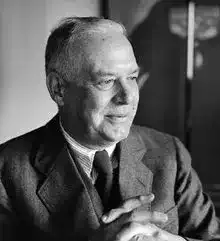
Wallace Stevens
Continual Conversation With A Silent Man
Continual Conversation With A Silent Man
The old brown hen and the old blue sky,
Between the two we live and die--
The broken cartwheel on the hill.
As if, in the presence of the sea,
We dried our nets and mended sail
And talked of never-ending things,
Of the never-ending storm of will,
One will and many wills, and the wind,
Of many meanings in the leaves,
Brought down to one below the eaves,
Link, of that tempest, to the farm,
The chain of the turquoise hen and sky
And the wheel that broke as the cart went by.
It is not a voice that is under the eaves.
It is not speech, the sound we hear
In this conversation, but the sound
Of things and their motion: the other man,
A turquoise monster moving round.
The old brown hen and the old blue sky,
Between the two we live and die--
The broken cartwheel on the hill.
As if, in the presence of the sea,
We dried our nets and mended sail
And talked of never-ending things,
Of the never-ending storm of will,
One will and many wills, and the wind,
Of many meanings in the leaves,
Brought down to one below the eaves,
Link, of that tempest, to the farm,
The chain of the turquoise hen and sky
And the wheel that broke as the cart went by.
It is not a voice that is under the eaves.
It is not speech, the sound we hear
In this conversation, but the sound
Of things and their motion: the other man,
A turquoise monster moving round.
326

Safo
Anactoria
Anactoria
Yes, Atthis, you may be sure
Even in Sardis
Anactoria will think often of us
of the life we shared here, when you seemed
the Goddess incarnate
to her and your singing pleased her best
Now among Lydian women she in her
turn stands first as the redfingered
moon rising at sunset takes
precedence over stars around her;
her light spreads equally
on the salt sea and fields thick with bloom
Delicious dew pours down to freshen
roses, delicate thyme
and blossoming sweet clover; she wanders
aimlessly, thinking of gentle
Atthis, her heart hanging
heavy with longing in her little breast
She shouts aloud, Come! we know it;
thousand-eared night repeats that cry
across the sea shining between us
Sappho
tr. Barnard
Yes, Atthis, you may be sure
Even in Sardis
Anactoria will think often of us
of the life we shared here, when you seemed
the Goddess incarnate
to her and your singing pleased her best
Now among Lydian women she in her
turn stands first as the redfingered
moon rising at sunset takes
precedence over stars around her;
her light spreads equally
on the salt sea and fields thick with bloom
Delicious dew pours down to freshen
roses, delicate thyme
and blossoming sweet clover; she wanders
aimlessly, thinking of gentle
Atthis, her heart hanging
heavy with longing in her little breast
She shouts aloud, Come! we know it;
thousand-eared night repeats that cry
across the sea shining between us
Sappho
tr. Barnard
523
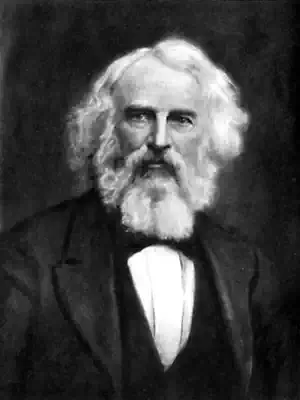
Henry Wadsworth Longfellow
Tales Of A Wayside Inn : Part 3. The Spanish Jew's Tale; Azrael
Tales Of A Wayside Inn : Part 3. The Spanish Jew's Tale; Azrael
King Solomon, before his palace gate
At evening, on the pavement tessellate
Was walking with a stranger from the East,
Arrayed in rich attire as for a feast,
The mighty Runjeet-Sing, a learned man,
And Rajah of the realms of Hindostan.
And as they walked the guest became aware
Of a white figure in the twilight air,
Gazing intent, as one who with surprise
His form and features seemed to recognize;
And in a whisper to the king he said:
'What is yon shape, that, pallid as the dead,
Is watching me, as if he sought to trace_
In the dim light the features of my face?'
The king looked, and replied: 'I know him well;
It is the Angel men call Azrael,
'T is the Death Angel; what hast thou to fear?'
And the guest answered: 'Lest he should come near,
And speak to me, and take away my breath!
Save me from Azrael, save me from death!
O king, that hast dominion o'er the wind,
Bid it arise and bear me hence to Ind.'
The king gazed upward at the cloudless sky,
Whispered a word, and raised his hand on high,
And lo! the signet-ring of chrysoprase
On his uplifted finger seemed to blaze
With hidden fire, and rushing from the west
There came a mighty wind, and seized the guest
And lifted him from earth, and on they passed,
His shining garments streaming in the blast,
A silken banner o'er the walls upreared,
A purple cloud, that gleamed and disappeared.
Then said the Angel, smiling: 'If this man
Be Rajah Runjeet-Sing of Hindostan,
Thou hast done well in listening to his prayer;
I was upon my way to seek him there.'
King Solomon, before his palace gate
At evening, on the pavement tessellate
Was walking with a stranger from the East,
Arrayed in rich attire as for a feast,
The mighty Runjeet-Sing, a learned man,
And Rajah of the realms of Hindostan.
And as they walked the guest became aware
Of a white figure in the twilight air,
Gazing intent, as one who with surprise
His form and features seemed to recognize;
And in a whisper to the king he said:
'What is yon shape, that, pallid as the dead,
Is watching me, as if he sought to trace_
In the dim light the features of my face?'
The king looked, and replied: 'I know him well;
It is the Angel men call Azrael,
'T is the Death Angel; what hast thou to fear?'
And the guest answered: 'Lest he should come near,
And speak to me, and take away my breath!
Save me from Azrael, save me from death!
O king, that hast dominion o'er the wind,
Bid it arise and bear me hence to Ind.'
The king gazed upward at the cloudless sky,
Whispered a word, and raised his hand on high,
And lo! the signet-ring of chrysoprase
On his uplifted finger seemed to blaze
With hidden fire, and rushing from the west
There came a mighty wind, and seized the guest
And lifted him from earth, and on they passed,
His shining garments streaming in the blast,
A silken banner o'er the walls upreared,
A purple cloud, that gleamed and disappeared.
Then said the Angel, smiling: 'If this man
Be Rajah Runjeet-Sing of Hindostan,
Thou hast done well in listening to his prayer;
I was upon my way to seek him there.'
276
Safo
Although they are
Although they are
Although they are
only breath, words
which I command
are immortal
Although they are
only breath, words
which I command
are immortal
566
Wallace Stevens
Anecdote of the Jar
Anecdote of the Jar
I placed a jar in Tennessee,
And round it was, upon a hill.
It made the slovenly wilderness
Surround that hill.
The wilderness rose up to it,
And sprawled around, no longer wild.
The jar was round upon the ground
And tall and of a port in air.
It took dominion everywhere.
The jar was gray and bare.
It did not give of bird or bush,
Like nothing else in Tennessee.
I placed a jar in Tennessee,
And round it was, upon a hill.
It made the slovenly wilderness
Surround that hill.
The wilderness rose up to it,
And sprawled around, no longer wild.
The jar was round upon the ground
And tall and of a port in air.
It took dominion everywhere.
The jar was gray and bare.
It did not give of bird or bush,
Like nothing else in Tennessee.
224

Robert W. Service
Property
Property
The red-roofed house of dream design
Looks three ways on the sea;
For fifty years I've made it mine,
And held it part of me.
The pines I planted in my youth
Triumpantly are tall . . .
Yet now I know with sorry sooth
I have to leave it all.
Hard-hewn from out the living rock
And salty from the tide,
My house has braved the tempest shock
With hardihood and pride.
Each nook is memoried to me;
I've loved its every stone,
And cried to it exultantly:
"My own, my very own!"
Poor fool! To think that I possess.
I have but cannot hold;
And all that's mine is less and less
My own as I grow old.
My home shall ring with childish cheers
When I shall leave it lone;
My house will bide a hundred years
When I am in the bone.
Alas! No thing can be my own:
At most a life-long lease
Is all I hold, a little loan
From Time, that soon will cease.
For now by faint and failing breath
I feel that I must go . . .
Old House! You've never known a death,-Well,
now's your hour to know.
The red-roofed house of dream design
Looks three ways on the sea;
For fifty years I've made it mine,
And held it part of me.
The pines I planted in my youth
Triumpantly are tall . . .
Yet now I know with sorry sooth
I have to leave it all.
Hard-hewn from out the living rock
And salty from the tide,
My house has braved the tempest shock
With hardihood and pride.
Each nook is memoried to me;
I've loved its every stone,
And cried to it exultantly:
"My own, my very own!"
Poor fool! To think that I possess.
I have but cannot hold;
And all that's mine is less and less
My own as I grow old.
My home shall ring with childish cheers
When I shall leave it lone;
My house will bide a hundred years
When I am in the bone.
Alas! No thing can be my own:
At most a life-long lease
Is all I hold, a little loan
From Time, that soon will cease.
For now by faint and failing breath
I feel that I must go . . .
Old House! You've never known a death,-Well,
now's your hour to know.
244
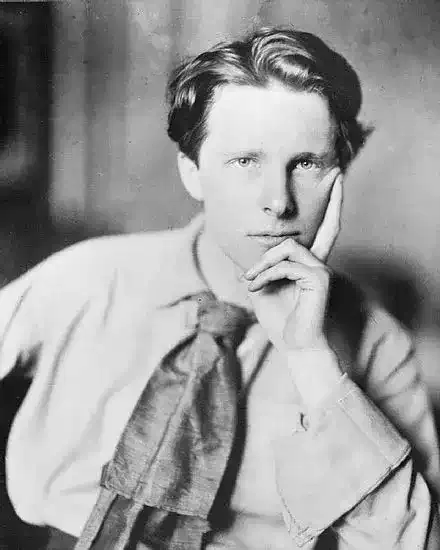
Rupert Brooke
Way That Lovers Use, The
Way That Lovers Use, The
The way that lovers use is this;
They bow, catch hands, with never a word,
And their lips meet, and they do kiss,
-- So I have heard.
They queerly find some healing so,
And strange attainment in the touch;
There is a secret lovers know,
-- I have read as much.
And theirs no longer joy nor smart,
Changing or ending, night or day;
But mouth to mouth, and heart on heart,
-- So lovers say.
The way that lovers use is this;
They bow, catch hands, with never a word,
And their lips meet, and they do kiss,
-- So I have heard.
They queerly find some healing so,
And strange attainment in the touch;
There is a secret lovers know,
-- I have read as much.
And theirs no longer joy nor smart,
Changing or ending, night or day;
But mouth to mouth, and heart on heart,
-- So lovers say.
173
Wallace Stevens
A High-Toned Old Christian Woman
A High-Toned Old Christian Woman
Poetry is the supreme fiction, madame.
Take the moral law and make a nave of it
And from the nave build haunted heaven. Thus,
The conscience is converted into palms,
Like windy citherns hankering for hymns.
We agree in principle. That's clear. But take
The opposing law and make a peristyle,
And from the peristyle project a masque
Beyond the planets. Thus, our bawdiness,
Unpurged by epitaph, indulged at last,
Is equally converted into palms,
Squiggling like saxophones. And palm for palm,
Madame, we are where we began. Allow,
Therefore, that in the planetary scene
Your disaffected flagellants, well-stuffed,
Smacking their muzzy bellies in parade,
Proud of such novelties of the sublime,
Such tink and tank and tunk-a-tunk-tunk,
May, merely may, madame, whip from themselves
A jovial hullabaloo among the spheres.
This will make widows wince. But fictive things
Wink as they will. Wink most when widows wince.
Poetry is the supreme fiction, madame.
Take the moral law and make a nave of it
And from the nave build haunted heaven. Thus,
The conscience is converted into palms,
Like windy citherns hankering for hymns.
We agree in principle. That's clear. But take
The opposing law and make a peristyle,
And from the peristyle project a masque
Beyond the planets. Thus, our bawdiness,
Unpurged by epitaph, indulged at last,
Is equally converted into palms,
Squiggling like saxophones. And palm for palm,
Madame, we are where we began. Allow,
Therefore, that in the planetary scene
Your disaffected flagellants, well-stuffed,
Smacking their muzzy bellies in parade,
Proud of such novelties of the sublime,
Such tink and tank and tunk-a-tunk-tunk,
May, merely may, madame, whip from themselves
A jovial hullabaloo among the spheres.
This will make widows wince. But fictive things
Wink as they will. Wink most when widows wince.
281
Henry Wadsworth Longfellow
Tales Of A Wayside Inn : Part 3. The Sicilian's Tale; The Monk of
Tales Of A Wayside Inn : Part 3. The Sicilian's Tale; The Monk of
Casal-Maggiore
Once on a time, some centuries ago,
In the hot sunshine two Franciscan friars
Wended their weary way, with footsteps slow
Back to their convent, whose white walls and spires
Gleamed on the hillside like a patch of snow;
Covered with dust they were, and torn by briers,
And bore like sumpter-mules upon their backs
The badge of poverty, their beggar's sacks.
The first was Brother Anthony, a spare
And silent man, with pallid cheeks and thin,
Much given to vigils, penance, fasting, prayer,
Solemn and gray, and worn with discipline,
As if his body but white ashes were,
Heaped on the living coals that glowed within;
A simple monk, like many of his day,
Whose instinct was to listen and obey.
A different man was Brother Timothy,
Of larger mould and of a coarser paste;
A rubicund and stalwart monk was he,
Broad in the shoulders, broader in the waist,
Who often filled the dull refectory
With noise by which the convent was disgraced,
But to the mass-book gave but little heed,
By reason he had never learned to read.
Now, as they passed the outskirts of a wood,
They saw, with mingled pleasure and surprise,
Fast tethered to a tree an ass, that stood
Lazily winking his large, limpid eyes.
The farmer Gilbert of that neighborhood
His owner was, who, looking for supplies
Of fagots, deeper in the wood had strayed,
Leaving his beast to ponder in the shade.
As soon as Brother Timothy espied
The patient animal, he said: 'Good-lack!
Thus for our needs doth Providence provide;
We'll lay our wallets on the creature's back.'
This being done, he leisurely untied
From head and neck the halter of the jack,
And put it round his own, and to the tree
Stood tethered fast as if the ass were he.
And, bursting forth into a merry laugh,
He cried to Brother Anthony: 'Away!
And drive the ass before you with your staff;
And when you reach the convent you may say
You left me at a farm, half tired and half
Ill with a fever, for a night and day,
And that the farmer lent this ass to bear
Our wallets, that are heavy with good fare.'
Now Brother Anthony, who knew the pranks
Of Brother Timothy, would not persuade
Or reason with him on his quirks and cranks,
But, being obedient, silently obeyed;
And, smiting with his staff the ass's flanks,
Drove him before him over hill and glade,
Safe with his provend to the convent gate,
Leaving poor Brother Timothy to his fate.
Then Gilbert, laden with fagots for his fire,
Forth issued from the wood, and stood aghast
To see the ponderous body of the friar
Standing where he had left his donkey last.
Trembling he stood, and dared not venture nigher,
But stared, and gaped, and crossed himself full fast;
For, being credulous and of little wit,
He thought it was some demon from the pit.
While speechless and bewildered thus he gazed,
And dropped his load of fagots on the ground,
Quoth Brother Timothy: 'Be not amazed
That where you left a donkey should be found
A poor Franciscan friar, half-starved and crazed,
Standing demure and with a halter bound;
But set me free, and hear the piteous story
Of Brother Timothy of Casal-Maggiore.
'I am a sinful man, although you see
I wear the consecrated cowl and cape;
You never owned an ass, but you owned me,
Changed and transformed from my own natural shape
All for the deadly sin of gluttony,
From which I could not otherwise escape,
Than by this penance, dieting on grass,
And being worked and beaten as an ass.
'Think of the ignominy I endured;
Think of the miserable life I led,
The toil and blows to which I was inured,
My wretched lodging in a windy shed,
My scanty fare so grudgingly procured,
The damp and musty straw that formed my bed!
But, having done this penance for my sins,
My life as man and monk again begins.'
The simple Gilbert, hearing words like these,
Was conscience-stricken, and fell down apace
Before the friar upon his bended knees,
And with a suppliant voice implored his grace;
And the good monk, now very much at ease,
Granted him pardon with a smiling face,
Nor could refuse to be that night his guest,
It being late, and he in need of rest.
Upon a hillside, where the olive thrives,
With figures painted on its white-washed walls,
The cottage stood; and near the humming hives
Made murmurs as of far-off waterfalls;
A place where those who love secluded lives
Might live content, and, free from noise and brawls,
Like Claudian's Old Man of Verona here
Measure by fruits the slow-revolving year.
And, coming to this cottage of content
They found his children, and the buxom wench
His wife, Dame Cicely, and his father, bent
With years and labor, seated on a bench,
Repeating over some obscure event
In the old wars of Milanese and French;
All welcomed the Franciscan, with a sense
Of sacred awe and humble reverence.
When Gilbert told them what had come to pass,
How beyond question, cavil, or surmise,
Good Brother Timothy had been their ass,
You should have seen the wonder in their eyes;
You should have heard them cry, 'Alas! alas!
Have heard their lamentations and their sighs!
For all believed the story, and began
To see a saint in this afflicted man.
Forthwith there was prepared a grand repast,
To satisfy the craving of the friar
After so rigid and prolonged a fast;
The bustling housewife stirred the kitchen fire;
Then her two barn-yard fowls, her best and last,
Were put to death, at her express desire,
And served up with a salad in a bowl,
And flasks of country wine to crown the whole.
It would not be believed should I repeat
How hungry Brother Timothy appeared;
It was a pleasure but to see him eat,
His white teeth flashing through his russet beard,
His face aglow and flushed with wine and meat,
His roguish eyes that rolled and laughed and leered!
Lord! how he drank the blood-red country wine
As if the village vintage were divine!
And all the while he talked without surcease,
And told his merry tales with jovial glee
That never flagged, but rather did increase,
And laughed aloud as if insane were he,
And wagged his red beard, matted like a fleece,
And cast such glances at Dame Cicely
That Gilbert now grew angry with his guest,
And thus in words his rising wrath expressed.
'Good father,' said he, 'easily we see
How needful in some persons, and how right,
Mortification of the flesh may be.
The indulgence you have given it to-night,
After long penance, clearly proves to me
Your strength against temptation is but slight,
And shows the dreadful peril you are in
Of a relapse into your deadly sin.
'To-morrow morning, with the rising sun,
Go back unto your convent, nor refrain
From fasting and from scourging, for you run
Great danger to become an ass again,
Since monkish flesh and asinine are one;
Therefore be wise, nor longer here remain,
Unless you wish the scourge should be applied
By other hands, that will not spare your hide.'
When this the monk had heard, his color fled
And then returned, like lightning in the air,
Till he was all one blush from foot to head,
And even the bald spot in his russet hair
Turned from its usual pallor to bright red!
The old man was asleep upon his chair.
Then all retired, and sank into the deep
And helpless imbecility of sleep.
They slept until the dawn of day drew near,
Till the cock should have crowed, but did not crow,
For they had slain the shining chanticleer
And eaten him for supper, as you know.
The monk was up betimes and of good cheer,
And, having breakfasted, made haste to go,
As if he heard the distant matin bell,
And had but little time to say farewell.
Fresh was the morning as the breath of kine;
Odors of herbs commingled with the sweet
Balsamic exhalations of the pine;
A haze was in the air presaging heat;
Uprose the sun above the Apennine,
And all the misty valleys at its feet
Were full of the delirious song of birds,
Voices of men, and bells, and low of herds.
All this to Brother Timothy was naught;
He did not care for scenery, nor here
His busy fancy found the thing it sought;
But when he saw the convent walls appear,
And smoke from kitchen chimneys upward caught
And whirled aloft into the atmosphere,
He quickened his slow footsteps, like a beast
That scents the stable a league off at least.
And as he entered through the convent gate
He saw there in the court the ass, who stood
Twirling his ears about, and seemed to wait,
Just as he found him waiting in the wood;
And told the Prior that, to alleviate
The daily labors of the brotherhood,
The owner, being a man of means and thrift,
Bestowed him on the convent as a gift.
And thereupon the Prior for many days
Revolved this serious matter in his mind,
And turned it over many different ways,
Hoping that some safe issue he might find;
But stood in fear of what the world would say,
If he accepted presents of this kind,
Employing beasts of burden for the packs,
That lazy monks should carry on their backs.
Then, to avoid all scandal of the sort,
And stop the mouth of cavil, he decreed
That he would cut the tedious matter short,
And sell the ass with all convenient speed,
Thus saving the expense of his support,
And hoarding something for a time of need.
So he despatched him to the neighboring Fair,
And freed himself from cumber and from care.
It happened now by chance, as some might say,
Others perhaps would call it destiny,
Gilbert was at the Fair; and heard a bray,
And nearer came, and saw that it was he,
And whispered in his ear, 'Ah, lackaday!
Good father, the rebellious flesh, I see,
Has changed you back into an ass again,
And all my admonitions were in vain.'
The ass, who felt this breathing in his ear,
Did not turn round to look, but shook his head,
As if he were not pleased these words to hear,
And contradicted all that had been said.
And this made Gilbert cry in voice more clear,
'I know you well; your hair is russet-red;
Do not deny it; for you are the same
Franciscan friar, and Timothy by name.'
The ass, though now the secret had come out,
Was obstinate, and shook his head again;
Until a crowd was gathered round about
To hear this dialogue between the twain;
And raised their voices in a noisy shout
When Gilbert tried to make the matter plain,
And flouted him and mocked him all day long
With laughter and with jibes and scraps of song.
'If this be Brother Timothy,' they cried,
'Buy him, and feed him on the tenderest grass;
Thou canst not do too much for one so tried
As to be twice transformed into an ass.'
So simple Gilbert bought him, and untied
His halter, and o'er mountain and morass
He led him homeward, talking as he went
Of good behavior and a mind content.
The children saw them coming, and advanced,
Shouting with joy, and hung about his neck,--
Not Gilbert's, but the ass's,--round him danced,
And wove green garlands where-withal to deck
His sacred person; for again it chanced
Their childish feelings, without rein or check,
Could not discriminate in any way
A donkey from a friar of Orders Gray.
'O Brother Timothy,' the children said,
'You have come back to us just as before;
We were afraid, and thought that you were dead,
And we should never see you any more.'
And then they kissed the white star on his head,
That like a birth-mark or a badge he wore,
And patted him upon the neck and face,
And said a thousand things with childish grace.
Thenceforward and forever he was known
As Brother Timothy, and led always
A life of luxury, till he had grown
Ungrateful being stuffed with corn and hay,
And very vicious. Then in angry tone,
Rousing himself, poor Gilbert said one day
'When simple kindness is misunderstood
A little flagellation may do good.'
His many vices need not here be told;
Among them was a habit that he had
Of flinging up his heels at young and old,
Breaking his halter, running off like mad
O'er pasture-lands and meadow, wood and wold,
And other misdemeanors quite as bad;
But worst of all was breaking from his shed
At night, and ravaging the cabbage-bed.
So Brother Timothy went back once more
To his old life of labor and distress;
Was beaten worse than he had been before.
And now, instead of comfort and caress,
Came labors manifold and trials sore;
And as his toils increased his food grew less,
Until at last the great consoler, Death,
Ended his many sufferings with his breath.
Great was the lamentation when he died;
And mainly that he died impenitent;
Dame Cicely bewailed, the children cried,
The old man still remembered the event
In the French war, and Gilbert magnified
His many virtues, as he came and went,
And said: 'Heaven pardon Brother Timothy,
And keep us from the sin of gluttony.'
Casal-Maggiore
Once on a time, some centuries ago,
In the hot sunshine two Franciscan friars
Wended their weary way, with footsteps slow
Back to their convent, whose white walls and spires
Gleamed on the hillside like a patch of snow;
Covered with dust they were, and torn by briers,
And bore like sumpter-mules upon their backs
The badge of poverty, their beggar's sacks.
The first was Brother Anthony, a spare
And silent man, with pallid cheeks and thin,
Much given to vigils, penance, fasting, prayer,
Solemn and gray, and worn with discipline,
As if his body but white ashes were,
Heaped on the living coals that glowed within;
A simple monk, like many of his day,
Whose instinct was to listen and obey.
A different man was Brother Timothy,
Of larger mould and of a coarser paste;
A rubicund and stalwart monk was he,
Broad in the shoulders, broader in the waist,
Who often filled the dull refectory
With noise by which the convent was disgraced,
But to the mass-book gave but little heed,
By reason he had never learned to read.
Now, as they passed the outskirts of a wood,
They saw, with mingled pleasure and surprise,
Fast tethered to a tree an ass, that stood
Lazily winking his large, limpid eyes.
The farmer Gilbert of that neighborhood
His owner was, who, looking for supplies
Of fagots, deeper in the wood had strayed,
Leaving his beast to ponder in the shade.
As soon as Brother Timothy espied
The patient animal, he said: 'Good-lack!
Thus for our needs doth Providence provide;
We'll lay our wallets on the creature's back.'
This being done, he leisurely untied
From head and neck the halter of the jack,
And put it round his own, and to the tree
Stood tethered fast as if the ass were he.
And, bursting forth into a merry laugh,
He cried to Brother Anthony: 'Away!
And drive the ass before you with your staff;
And when you reach the convent you may say
You left me at a farm, half tired and half
Ill with a fever, for a night and day,
And that the farmer lent this ass to bear
Our wallets, that are heavy with good fare.'
Now Brother Anthony, who knew the pranks
Of Brother Timothy, would not persuade
Or reason with him on his quirks and cranks,
But, being obedient, silently obeyed;
And, smiting with his staff the ass's flanks,
Drove him before him over hill and glade,
Safe with his provend to the convent gate,
Leaving poor Brother Timothy to his fate.
Then Gilbert, laden with fagots for his fire,
Forth issued from the wood, and stood aghast
To see the ponderous body of the friar
Standing where he had left his donkey last.
Trembling he stood, and dared not venture nigher,
But stared, and gaped, and crossed himself full fast;
For, being credulous and of little wit,
He thought it was some demon from the pit.
While speechless and bewildered thus he gazed,
And dropped his load of fagots on the ground,
Quoth Brother Timothy: 'Be not amazed
That where you left a donkey should be found
A poor Franciscan friar, half-starved and crazed,
Standing demure and with a halter bound;
But set me free, and hear the piteous story
Of Brother Timothy of Casal-Maggiore.
'I am a sinful man, although you see
I wear the consecrated cowl and cape;
You never owned an ass, but you owned me,
Changed and transformed from my own natural shape
All for the deadly sin of gluttony,
From which I could not otherwise escape,
Than by this penance, dieting on grass,
And being worked and beaten as an ass.
'Think of the ignominy I endured;
Think of the miserable life I led,
The toil and blows to which I was inured,
My wretched lodging in a windy shed,
My scanty fare so grudgingly procured,
The damp and musty straw that formed my bed!
But, having done this penance for my sins,
My life as man and monk again begins.'
The simple Gilbert, hearing words like these,
Was conscience-stricken, and fell down apace
Before the friar upon his bended knees,
And with a suppliant voice implored his grace;
And the good monk, now very much at ease,
Granted him pardon with a smiling face,
Nor could refuse to be that night his guest,
It being late, and he in need of rest.
Upon a hillside, where the olive thrives,
With figures painted on its white-washed walls,
The cottage stood; and near the humming hives
Made murmurs as of far-off waterfalls;
A place where those who love secluded lives
Might live content, and, free from noise and brawls,
Like Claudian's Old Man of Verona here
Measure by fruits the slow-revolving year.
And, coming to this cottage of content
They found his children, and the buxom wench
His wife, Dame Cicely, and his father, bent
With years and labor, seated on a bench,
Repeating over some obscure event
In the old wars of Milanese and French;
All welcomed the Franciscan, with a sense
Of sacred awe and humble reverence.
When Gilbert told them what had come to pass,
How beyond question, cavil, or surmise,
Good Brother Timothy had been their ass,
You should have seen the wonder in their eyes;
You should have heard them cry, 'Alas! alas!
Have heard their lamentations and their sighs!
For all believed the story, and began
To see a saint in this afflicted man.
Forthwith there was prepared a grand repast,
To satisfy the craving of the friar
After so rigid and prolonged a fast;
The bustling housewife stirred the kitchen fire;
Then her two barn-yard fowls, her best and last,
Were put to death, at her express desire,
And served up with a salad in a bowl,
And flasks of country wine to crown the whole.
It would not be believed should I repeat
How hungry Brother Timothy appeared;
It was a pleasure but to see him eat,
His white teeth flashing through his russet beard,
His face aglow and flushed with wine and meat,
His roguish eyes that rolled and laughed and leered!
Lord! how he drank the blood-red country wine
As if the village vintage were divine!
And all the while he talked without surcease,
And told his merry tales with jovial glee
That never flagged, but rather did increase,
And laughed aloud as if insane were he,
And wagged his red beard, matted like a fleece,
And cast such glances at Dame Cicely
That Gilbert now grew angry with his guest,
And thus in words his rising wrath expressed.
'Good father,' said he, 'easily we see
How needful in some persons, and how right,
Mortification of the flesh may be.
The indulgence you have given it to-night,
After long penance, clearly proves to me
Your strength against temptation is but slight,
And shows the dreadful peril you are in
Of a relapse into your deadly sin.
'To-morrow morning, with the rising sun,
Go back unto your convent, nor refrain
From fasting and from scourging, for you run
Great danger to become an ass again,
Since monkish flesh and asinine are one;
Therefore be wise, nor longer here remain,
Unless you wish the scourge should be applied
By other hands, that will not spare your hide.'
When this the monk had heard, his color fled
And then returned, like lightning in the air,
Till he was all one blush from foot to head,
And even the bald spot in his russet hair
Turned from its usual pallor to bright red!
The old man was asleep upon his chair.
Then all retired, and sank into the deep
And helpless imbecility of sleep.
They slept until the dawn of day drew near,
Till the cock should have crowed, but did not crow,
For they had slain the shining chanticleer
And eaten him for supper, as you know.
The monk was up betimes and of good cheer,
And, having breakfasted, made haste to go,
As if he heard the distant matin bell,
And had but little time to say farewell.
Fresh was the morning as the breath of kine;
Odors of herbs commingled with the sweet
Balsamic exhalations of the pine;
A haze was in the air presaging heat;
Uprose the sun above the Apennine,
And all the misty valleys at its feet
Were full of the delirious song of birds,
Voices of men, and bells, and low of herds.
All this to Brother Timothy was naught;
He did not care for scenery, nor here
His busy fancy found the thing it sought;
But when he saw the convent walls appear,
And smoke from kitchen chimneys upward caught
And whirled aloft into the atmosphere,
He quickened his slow footsteps, like a beast
That scents the stable a league off at least.
And as he entered through the convent gate
He saw there in the court the ass, who stood
Twirling his ears about, and seemed to wait,
Just as he found him waiting in the wood;
And told the Prior that, to alleviate
The daily labors of the brotherhood,
The owner, being a man of means and thrift,
Bestowed him on the convent as a gift.
And thereupon the Prior for many days
Revolved this serious matter in his mind,
And turned it over many different ways,
Hoping that some safe issue he might find;
But stood in fear of what the world would say,
If he accepted presents of this kind,
Employing beasts of burden for the packs,
That lazy monks should carry on their backs.
Then, to avoid all scandal of the sort,
And stop the mouth of cavil, he decreed
That he would cut the tedious matter short,
And sell the ass with all convenient speed,
Thus saving the expense of his support,
And hoarding something for a time of need.
So he despatched him to the neighboring Fair,
And freed himself from cumber and from care.
It happened now by chance, as some might say,
Others perhaps would call it destiny,
Gilbert was at the Fair; and heard a bray,
And nearer came, and saw that it was he,
And whispered in his ear, 'Ah, lackaday!
Good father, the rebellious flesh, I see,
Has changed you back into an ass again,
And all my admonitions were in vain.'
The ass, who felt this breathing in his ear,
Did not turn round to look, but shook his head,
As if he were not pleased these words to hear,
And contradicted all that had been said.
And this made Gilbert cry in voice more clear,
'I know you well; your hair is russet-red;
Do not deny it; for you are the same
Franciscan friar, and Timothy by name.'
The ass, though now the secret had come out,
Was obstinate, and shook his head again;
Until a crowd was gathered round about
To hear this dialogue between the twain;
And raised their voices in a noisy shout
When Gilbert tried to make the matter plain,
And flouted him and mocked him all day long
With laughter and with jibes and scraps of song.
'If this be Brother Timothy,' they cried,
'Buy him, and feed him on the tenderest grass;
Thou canst not do too much for one so tried
As to be twice transformed into an ass.'
So simple Gilbert bought him, and untied
His halter, and o'er mountain and morass
He led him homeward, talking as he went
Of good behavior and a mind content.
The children saw them coming, and advanced,
Shouting with joy, and hung about his neck,--
Not Gilbert's, but the ass's,--round him danced,
And wove green garlands where-withal to deck
His sacred person; for again it chanced
Their childish feelings, without rein or check,
Could not discriminate in any way
A donkey from a friar of Orders Gray.
'O Brother Timothy,' the children said,
'You have come back to us just as before;
We were afraid, and thought that you were dead,
And we should never see you any more.'
And then they kissed the white star on his head,
That like a birth-mark or a badge he wore,
And patted him upon the neck and face,
And said a thousand things with childish grace.
Thenceforward and forever he was known
As Brother Timothy, and led always
A life of luxury, till he had grown
Ungrateful being stuffed with corn and hay,
And very vicious. Then in angry tone,
Rousing himself, poor Gilbert said one day
'When simple kindness is misunderstood
A little flagellation may do good.'
His many vices need not here be told;
Among them was a habit that he had
Of flinging up his heels at young and old,
Breaking his halter, running off like mad
O'er pasture-lands and meadow, wood and wold,
And other misdemeanors quite as bad;
But worst of all was breaking from his shed
At night, and ravaging the cabbage-bed.
So Brother Timothy went back once more
To his old life of labor and distress;
Was beaten worse than he had been before.
And now, instead of comfort and caress,
Came labors manifold and trials sore;
And as his toils increased his food grew less,
Until at last the great consoler, Death,
Ended his many sufferings with his breath.
Great was the lamentation when he died;
And mainly that he died impenitent;
Dame Cicely bewailed, the children cried,
The old man still remembered the event
In the French war, and Gilbert magnified
His many virtues, as he came and went,
And said: 'Heaven pardon Brother Timothy,
And keep us from the sin of gluttony.'
241

Vikram Seth
Time Zones
Time Zones
I willed my love to dream of me last night, that we might lie
at peace, if not beneath a single sheet, under one sky.
I dreamed of her but she could not alas humour my will;
it struck me suddenly that where she was was daylight still.
I willed my love to dream of me last night, that we might lie
at peace, if not beneath a single sheet, under one sky.
I dreamed of her but she could not alas humour my will;
it struck me suddenly that where she was was daylight still.
638
Rupert Brooke
Wagner
Wagner
Creeps in half wanton, half asleep,
One with a fat wide hairless face.
He likes love-music that is cheap;
Likes women in a crowded place;
And wants to hear the noise they're making.
His heavy eyelids droop half-over,
Great pouches swing beneath his eyes.
He listens, thinks himself the lover,
Heaves from his stomach wheezy sighs;
He likes to feel his heart's a-breaking.
The music swells. His gross legs quiver.
His little lips are bright with slime.
The music swells. The women shiver.
And all the while, in perfect time,
His pendulous stomach hangs a-shaking.
Creeps in half wanton, half asleep,
One with a fat wide hairless face.
He likes love-music that is cheap;
Likes women in a crowded place;
And wants to hear the noise they're making.
His heavy eyelids droop half-over,
Great pouches swing beneath his eyes.
He listens, thinks himself the lover,
Heaves from his stomach wheezy sighs;
He likes to feel his heart's a-breaking.
The music swells. His gross legs quiver.
His little lips are bright with slime.
The music swells. The women shiver.
And all the while, in perfect time,
His pendulous stomach hangs a-shaking.
199
Robert W. Service
Procreation
Procreation
It hurts my pride that I should be
The issue of a night of lust;
Yet even Bishops, you'll agree,
Obey the biologic 'must';
Though no doubt with more dignity
Than we of layman dust.
I think the Lord made a mistake
When he designed the human race,
That man and angel in the make
Should have brutality for base.
Jehovah might have planned at least
Not to confound us with the beast.
So with humiliation I
Think of my basic origin;
And yet with some relief I sigh,-I
might have been conceived in sin;
Instead of being, I believe,
The offspring of a nuptial eve.
So when I look in beauty's face,
Or that of king or saint or sage,
It seems to me I darkly trace
Their being to a rutting rage . . .
Had I been Deity's adviser
Meseems I might have planned it wiser.
It hurts my pride that I should be
The issue of a night of lust;
Yet even Bishops, you'll agree,
Obey the biologic 'must';
Though no doubt with more dignity
Than we of layman dust.
I think the Lord made a mistake
When he designed the human race,
That man and angel in the make
Should have brutality for base.
Jehovah might have planned at least
Not to confound us with the beast.
So with humiliation I
Think of my basic origin;
And yet with some relief I sigh,-I
might have been conceived in sin;
Instead of being, I believe,
The offspring of a nuptial eve.
So when I look in beauty's face,
Or that of king or saint or sage,
It seems to me I darkly trace
Their being to a rutting rage . . .
Had I been Deity's adviser
Meseems I might have planned it wiser.
227
Rupert Brooke
Vision Of The Archangels, The
Vision Of The Archangels, The
Slowly up silent peaks, the white edge of the world,
Trod four archangels, clear against the unheeding sky,
Bearing, with quiet even steps, and great wings furled,
A little dingy coffin; where a child must lie,
It was so tiny. (Yet, you had fancied, God could never
Have bidden a child turn from the spring and the sunlight,
And shut him in that lonely shell, to drop for ever
Into the emptiness and silence, into the night. . . .)
They then from the sheer summit cast, and watched it fall,
Through unknown glooms, that frail black coffin -- and therein
God's little pitiful Body lying, worn and thin,
And curled up like some crumpled, lonely flower-petal --
Till it was no more visible; then turned again
With sorrowful quiet faces downward to the plain.
Slowly up silent peaks, the white edge of the world,
Trod four archangels, clear against the unheeding sky,
Bearing, with quiet even steps, and great wings furled,
A little dingy coffin; where a child must lie,
It was so tiny. (Yet, you had fancied, God could never
Have bidden a child turn from the spring and the sunlight,
And shut him in that lonely shell, to drop for ever
Into the emptiness and silence, into the night. . . .)
They then from the sheer summit cast, and watched it fall,
Through unknown glooms, that frail black coffin -- and therein
God's little pitiful Body lying, worn and thin,
And curled up like some crumpled, lonely flower-petal --
Till it was no more visible; then turned again
With sorrowful quiet faces downward to the plain.
211
Vikram Seth
Song 'Coast Starlight'
Song 'Coast Starlight'
Some days I feel a sadness not of grief
The shadows lengthen on the earth's relief
Salinas flows by like a silver shawl
A girl waves from the mission wall.
Some days I feel a sadness not of grief
The shadows lengthen on the earth's relief
Salinas flows by like a silver shawl
A girl waves from the mission wall.
516
Henry Wadsworth Longfellow
Tales Of A Wayside Inn : Part 3. The Musician's Tale; The Mother's Ghost
Tales Of A Wayside Inn : Part 3. The Musician's Tale; The Mother's Ghost
Svend Dyring he rideth adown the glade;
I myself was young!
There he hath wooed him so winsome a maid;
Fair words gladden so many a heart.
Together were they for seven years,
And together children six were theirs.
Then came Death abroad through the land,
And blighted the beautiful lily-wand.
Svend Dyring he rideth adown the glade,
And again hath he wooed him another maid,
He hath wooed him a maid and brought home a bride,
But she was bitter and full of pride.
When she came driving into the yard,
There stood the six children weeping so hard.
There stood the small children with sorrowful heart;
From before her feet she thrust them apart.
She gave to them neither ale nor bread;
'Ye shall suffer hunger and hate,' she said.
She took from them their quilts of blue,
And said: 'Ye shall lie on the straw we strew.'
She took from them the great waxlight;
'Now ye shall lie in the dark at night.'
In the evening late they cried with cold;
The mother heard it under the mould.
The woman heard it the earth below:
'To my little children I must go.'
She standeth before the Lord of all:
'And may I go to my children small?'
She prayed him so long, and would not cease,
Until he bade her depart in peace.
'At cock-crow thou shalt return again;
Longer thou shalt not there remain!'
She girded up her sorrowful bones,
And rifted the walls and the marble stones.
As through the village she flitted by,
The watch-dogs howled aloud to the sky.
When she came to the castle gate,
There stood her eldest daughter in wait.
'Why standest thou here, dear daughter mine?
How fares it with brothers and sisters thine?'
'Never art thou mother of mine,
For my mother was both fair and fine.
'My mother was white, with cheeks of red,
But thou art pale, and like to the dead.'
'How should I be fair and fine?
I have been dead; pale cheeks are mine.
'How should I be white and red,
So long, so long have I been dead?'
When she came in at the chamber door,
There stood the small children weeping sore.
One she braided, another she brushed,
The third she lifted, the fourth she hushed.
The fifth she took on her lap and pressed,
As if she would suckle it at her breast.
Then to her eldest daughter said she,
'Do thou bid Svend Dyring come hither to me.'
Into the chamber when he came
She spake to him in anger and shame.
'I left behind me both ale and bread;
My children hunger and are not fed.
'I left behind me quilts of blue;
My children lie on the straw ye strew.
'I left behind me the great waxlight;
My children lie in the dark at night.
'If I come again unto your hall,
As cruel a fate shall you befall!
'Now crows the cock with feathers red;
Back to the earth must all the dead.
'Now crows the cock with feathers swart;
The gates of heaven fly wide apart.
'Now crows the cock with feathers white;
I can abide no longer to-night.'
Whenever they heard the watch-dogs wail,
They gave the children bread and ale.
Whenever they heard the watch-dogs bay,
They feared lest the dead were on their way.
Whenever they heard the watch-dogs bark;
I myself was young!
They feared the dead out there in the dark.
Fair words gladden so many a heart.
Svend Dyring he rideth adown the glade;
I myself was young!
There he hath wooed him so winsome a maid;
Fair words gladden so many a heart.
Together were they for seven years,
And together children six were theirs.
Then came Death abroad through the land,
And blighted the beautiful lily-wand.
Svend Dyring he rideth adown the glade,
And again hath he wooed him another maid,
He hath wooed him a maid and brought home a bride,
But she was bitter and full of pride.
When she came driving into the yard,
There stood the six children weeping so hard.
There stood the small children with sorrowful heart;
From before her feet she thrust them apart.
She gave to them neither ale nor bread;
'Ye shall suffer hunger and hate,' she said.
She took from them their quilts of blue,
And said: 'Ye shall lie on the straw we strew.'
She took from them the great waxlight;
'Now ye shall lie in the dark at night.'
In the evening late they cried with cold;
The mother heard it under the mould.
The woman heard it the earth below:
'To my little children I must go.'
She standeth before the Lord of all:
'And may I go to my children small?'
She prayed him so long, and would not cease,
Until he bade her depart in peace.
'At cock-crow thou shalt return again;
Longer thou shalt not there remain!'
She girded up her sorrowful bones,
And rifted the walls and the marble stones.
As through the village she flitted by,
The watch-dogs howled aloud to the sky.
When she came to the castle gate,
There stood her eldest daughter in wait.
'Why standest thou here, dear daughter mine?
How fares it with brothers and sisters thine?'
'Never art thou mother of mine,
For my mother was both fair and fine.
'My mother was white, with cheeks of red,
But thou art pale, and like to the dead.'
'How should I be fair and fine?
I have been dead; pale cheeks are mine.
'How should I be white and red,
So long, so long have I been dead?'
When she came in at the chamber door,
There stood the small children weeping sore.
One she braided, another she brushed,
The third she lifted, the fourth she hushed.
The fifth she took on her lap and pressed,
As if she would suckle it at her breast.
Then to her eldest daughter said she,
'Do thou bid Svend Dyring come hither to me.'
Into the chamber when he came
She spake to him in anger and shame.
'I left behind me both ale and bread;
My children hunger and are not fed.
'I left behind me quilts of blue;
My children lie on the straw ye strew.
'I left behind me the great waxlight;
My children lie in the dark at night.
'If I come again unto your hall,
As cruel a fate shall you befall!
'Now crows the cock with feathers red;
Back to the earth must all the dead.
'Now crows the cock with feathers swart;
The gates of heaven fly wide apart.
'Now crows the cock with feathers white;
I can abide no longer to-night.'
Whenever they heard the watch-dogs wail,
They gave the children bread and ale.
Whenever they heard the watch-dogs bay,
They feared lest the dead were on their way.
Whenever they heard the watch-dogs bark;
I myself was young!
They feared the dead out there in the dark.
Fair words gladden so many a heart.
263
Vikram Seth
Round and Round
Round and Round
After a long and wretched flight
That stretched from daylight into night,
Where babies wept and tempers shattered
And the plane lurched and whiskey splattered
Over my plastic food, I came
To claim my bags from Baggage Claim
Around, the carousel went around
The anxious travelers sought and found
Their bags, intact or gently battered,
But to my foolish eyes what mattered
Was a brave suitcase, red and small,
That circled round, not mine at all.
I knew that bag. It must be hers.
We hadnt met in seven years!
And as the metal plates squealed and clattered
My happy memories chimed and chattered.
An old man pulled it of the Claim.
My bags appeared: I did the same.
After a long and wretched flight
That stretched from daylight into night,
Where babies wept and tempers shattered
And the plane lurched and whiskey splattered
Over my plastic food, I came
To claim my bags from Baggage Claim
Around, the carousel went around
The anxious travelers sought and found
Their bags, intact or gently battered,
But to my foolish eyes what mattered
Was a brave suitcase, red and small,
That circled round, not mine at all.
I knew that bag. It must be hers.
We hadnt met in seven years!
And as the metal plates squealed and clattered
My happy memories chimed and chattered.
An old man pulled it of the Claim.
My bags appeared: I did the same.
889
Rupert Brooke
V. The Soldier
V. The Soldier
If I should die, think only this of me:
That there's some corner of a foreign field
That is for ever England. There shall be
In that rich earth a richer dust concealed;
A dust whom England bore, shaped, made aware,
Gave, once, her flowers to love, her ways to roam,
A body of England's, breathing English air,
Washed by the rivers, blest by suns of home.
And think, this heart, all evil shed away,
A pulse in the eternal mind, no less
Gives somewhere back the thoughts by England given;
Her sights and sounds; dreams happy as her day;
And laughter, learnt of friends; and gentleness,
In hearts at peace, under an English heaven.
If I should die, think only this of me:
That there's some corner of a foreign field
That is for ever England. There shall be
In that rich earth a richer dust concealed;
A dust whom England bore, shaped, made aware,
Gave, once, her flowers to love, her ways to roam,
A body of England's, breathing English air,
Washed by the rivers, blest by suns of home.
And think, this heart, all evil shed away,
A pulse in the eternal mind, no less
Gives somewhere back the thoughts by England given;
Her sights and sounds; dreams happy as her day;
And laughter, learnt of friends; and gentleness,
In hearts at peace, under an English heaven.
197
Robert W. Service
Priscilla
Priscilla
Jerry MacMullen, the millionaire,
Driving a red-meat bus out there --
How did he win his Croix de Guerre?
Bless you, that's all old stuff:
Beast of a night on the Verdun road,
Jerry stuck with a woeful load,
Stalled in the mud where the red lights glowed,
Prospect devilish tough.
"Little Priscilla" he called his car,
Best of our battered bunch by far,
Branded with many a bullet scar,
Yet running so sweet and true.
Jerry he loved her, knew her tricks;
Swore: "She's the beat of the best big six,
And if ever I get in a deuce of a fix
Priscilla will pull me through."
"Looks pretty rotten right now," says he;
"Hanged if the devil himself could see.
Priscilla, it's up to you and me
To show 'em what we can do."
Seemed that Priscilla just took the word;
Up with a leap like a horse that's spurred,
On with the joy of a homing bird,
Swift as the wind she flew.
Shell-holes shoot at them out of the night;
A lurch to the left, a wrench to the right,
Hands grim-gripping and teeth clenched tight,
Eyes that glare through the dark.
"Priscilla, you're doing me proud this day;
Hospital's only a league away,
And, honey, I'm longing to hit the hay,
So hurry, old girl. . . . But hark!"
Howl of a shell, harsh, sudden, dread;
Another . . . another. . . . "Strike me dead
If the Huns ain't strafing the road ahead
So the convoy can't get through!
A barrage of shrap, and us alone;
Four rush-cases -- you hear 'em moan?
Fierce old messes of blood and bone. . . .
Priscilla, what shall we do?"
Again it seems that Priscilla hears.
With a rush and a roar her way she clears,
Straight at the hell of flame she steers,
Full at its heart of wrath.
Fury of death and dust and din!
Havoc and horror! She's in, she's in;
She's almost over, she'll win, she'll win!
Woof! Crump! right in the path.
Little Priscilla skids and stops,
Jerry MacMullen sways and flops;
Bang in his map the crash he cops;
Shriek from the car: "Mon Dieu!"
One of the blessés hears him say,
Just at the moment he faints away:
"Reckon this isn't my lucky day,
Priscilla, it's up to you."
Sergeant raps on the doctor's door;
"Car in the court with couchés four;
Driver dead on the dashboard floor;
Strange how the bunch got here."
"No," says the Doc, "this chap's alive;
But tell me, how could a man contrive
With both arms broken, a car to drive?
Thunder of God! it's queer."
Same little blessé makes a spiel;
Says he: "When I saw our driver reel,
A Strange Shape leapt to the driving wheel
And sped us safe through the night."
But Jerry, he says in his drawling tone:
"Rats! Why, Priscilla came in on her own.
Bless her, she did it alone, alone. . . ."
Hanged if I know who's right.
Jerry MacMullen, the millionaire,
Driving a red-meat bus out there --
How did he win his Croix de Guerre?
Bless you, that's all old stuff:
Beast of a night on the Verdun road,
Jerry stuck with a woeful load,
Stalled in the mud where the red lights glowed,
Prospect devilish tough.
"Little Priscilla" he called his car,
Best of our battered bunch by far,
Branded with many a bullet scar,
Yet running so sweet and true.
Jerry he loved her, knew her tricks;
Swore: "She's the beat of the best big six,
And if ever I get in a deuce of a fix
Priscilla will pull me through."
"Looks pretty rotten right now," says he;
"Hanged if the devil himself could see.
Priscilla, it's up to you and me
To show 'em what we can do."
Seemed that Priscilla just took the word;
Up with a leap like a horse that's spurred,
On with the joy of a homing bird,
Swift as the wind she flew.
Shell-holes shoot at them out of the night;
A lurch to the left, a wrench to the right,
Hands grim-gripping and teeth clenched tight,
Eyes that glare through the dark.
"Priscilla, you're doing me proud this day;
Hospital's only a league away,
And, honey, I'm longing to hit the hay,
So hurry, old girl. . . . But hark!"
Howl of a shell, harsh, sudden, dread;
Another . . . another. . . . "Strike me dead
If the Huns ain't strafing the road ahead
So the convoy can't get through!
A barrage of shrap, and us alone;
Four rush-cases -- you hear 'em moan?
Fierce old messes of blood and bone. . . .
Priscilla, what shall we do?"
Again it seems that Priscilla hears.
With a rush and a roar her way she clears,
Straight at the hell of flame she steers,
Full at its heart of wrath.
Fury of death and dust and din!
Havoc and horror! She's in, she's in;
She's almost over, she'll win, she'll win!
Woof! Crump! right in the path.
Little Priscilla skids and stops,
Jerry MacMullen sways and flops;
Bang in his map the crash he cops;
Shriek from the car: "Mon Dieu!"
One of the blessés hears him say,
Just at the moment he faints away:
"Reckon this isn't my lucky day,
Priscilla, it's up to you."
Sergeant raps on the doctor's door;
"Car in the court with couchés four;
Driver dead on the dashboard floor;
Strange how the bunch got here."
"No," says the Doc, "this chap's alive;
But tell me, how could a man contrive
With both arms broken, a car to drive?
Thunder of God! it's queer."
Same little blessé makes a spiel;
Says he: "When I saw our driver reel,
A Strange Shape leapt to the driving wheel
And sped us safe through the night."
But Jerry, he says in his drawling tone:
"Rats! Why, Priscilla came in on her own.
Bless her, she did it alone, alone. . . ."
Hanged if I know who's right.
286
Rupert Brooke
Treasure, The
Treasure, The
When colour goes home into the eyes,
And lights that shine are shut again
With dancing girls and sweet birds' cries
Behind the gateways of the brain;
And that no-place which gave them birth, shall close
The rainbow and the rose: --
Still may Time hold some golden space
Where I'll unpack that scented store
Of song and flower and sky and face,
And count, and touch, and turn them o'er,
Musing upon them; as a mother, who
Has watched her children all the rich day through
Sits, quiet-handed, in the fading light,
When children sleep, ere night.
When colour goes home into the eyes,
And lights that shine are shut again
With dancing girls and sweet birds' cries
Behind the gateways of the brain;
And that no-place which gave them birth, shall close
The rainbow and the rose: --
Still may Time hold some golden space
Where I'll unpack that scented store
Of song and flower and sky and face,
And count, and touch, and turn them o'er,
Musing upon them; as a mother, who
Has watched her children all the rich day through
Sits, quiet-handed, in the fading light,
When children sleep, ere night.
175
Vikram Seth
Protocols
Protocols
What can I say to you? How can I retract
All that that fool my voice has spoken -
Now that the facts are plain, the placid surface cracked,
The protocols of friendship broken?
I cannot walk by day as now I walk at dawn
Past the still house where you lie sleeping.
May the sun burn these footprints on the lawn
And hold you in its warmth and keeping.
What can I say to you? How can I retract
All that that fool my voice has spoken -
Now that the facts are plain, the placid surface cracked,
The protocols of friendship broken?
I cannot walk by day as now I walk at dawn
Past the still house where you lie sleeping.
May the sun burn these footprints on the lawn
And hold you in its warmth and keeping.
558
Henry Wadsworth Longfellow
Tales Of A Wayside Inn : Part 3. Prelude
Tales Of A Wayside Inn : Part 3. Prelude
The evening came; the golden vane
A moment in the sunset glanced,
Then darkened, and then gleamed again,
As from the east the moon advanced
And touched it with a softer light;
While underneath, with flowing mane,
Upon the sign the Red Horse pranced,
And galloped forth into the night.
But brighter than the afternoon
That followed the dark day of rain,
And brighter than the golden vane
That glistened in the rising moon,
Within the ruddy fire-light gleamed;
And every separate window-pane,
Backed by the outer darkness, showed
A mirror, where the flamelets gleamed
And flickered to and fro, and seemed
A bonfire lighted in the road.
Amid the hospitable glow,
Like an old actor on the stage,
With the uncertain voice of age,
The singing chimney chanted low
The homely songs of long ago.
The voice that Ossian heard of yore,
When midnight winds were in his hall;
A ghostly and appealing call,
A sound of days that are no more!
And dark as Ossian sat the Jew,
And listened to the sound, and knew
The passing of the airy hosts,
The gray and misty cloud of ghosts
In their interminable flight;
And listening muttered in his beard,
With accent indistinct and weird,
'Who are ye, children of the Night?'
Beholding his mysterious face,
'Tell me,' the gay Sicilian said,
'Why was it that in breaking bread
At supper, you bent down your head
And, musing, paused a little space,
As one who says a silent grace?'
The Jew replied, with solemn air,
'I said the Manichaean's prayer.
It was his faith,--perhaps is mine,--
That life in all its forms is one,
And that its secret conduits run
Unseen, but in unbroken line,
From the great fountain-head divine
Through man and beast, through grain and grass.
Howe'er we struggle, strive, and cry,
From death there can be no escape,
And no escape from life, alas
Because we cannot die, but pass
From one into another shape:
It is but into life we die.
'Therefore the Manichaean said
This simple prayer on breaking bread,
Lest he with hasty hand or knife
Might wound the incarcerated life,
The soul in things that we call dead:
'I did not reap thee, did not bind thee,
I did not thrash thee, did not grind thee,
Nor did I in the oven bake thee!
It was not I, it was another
Did these things unto thee, O brother;
I only have thee, hold thee, break thee!''
'That birds have souls I can concede,'
The Poet cried, with glowing cheeks;
'The flocks that from their beds of reed
Uprising north or southward fly,
And flying write upon the sky
The biforked letter of the Greeks,
As hath been said by Rucellai;
All birds that sing or chirp or cry,
Even those migratory bands,
The minor poets of the air,
The plover, peep, and sanderling,
That hardly can be said to sing,
But pipe along the barren sands,--
All these have souls akin to ours;
So hath the lovely race of flowers:
Thus much I grant, but nothing more.
The rusty hinges of a door
Are not alive because they creak;
This chimney, with its dreary roar,
These rattling windows, do not speak!'
'To me they speak,' the Jew replied;
'And in the sounds that sink and soar,
I hear the voices of a tide
That breaks upon an unknown shore!'
Here the Sicilian interfered:
'That was your dream, then, as you dozed
A moment since, with eyes half-closed,
And murmured something in your beard.'
The Hebrew smiled, and answered, 'Nay;
Not that, but something very near;
Like, and yet not the same, may seem
The vision of my waking dream;
Before it wholly dies away,
Listen to me, and you shall hear.'
The evening came; the golden vane
A moment in the sunset glanced,
Then darkened, and then gleamed again,
As from the east the moon advanced
And touched it with a softer light;
While underneath, with flowing mane,
Upon the sign the Red Horse pranced,
And galloped forth into the night.
But brighter than the afternoon
That followed the dark day of rain,
And brighter than the golden vane
That glistened in the rising moon,
Within the ruddy fire-light gleamed;
And every separate window-pane,
Backed by the outer darkness, showed
A mirror, where the flamelets gleamed
And flickered to and fro, and seemed
A bonfire lighted in the road.
Amid the hospitable glow,
Like an old actor on the stage,
With the uncertain voice of age,
The singing chimney chanted low
The homely songs of long ago.
The voice that Ossian heard of yore,
When midnight winds were in his hall;
A ghostly and appealing call,
A sound of days that are no more!
And dark as Ossian sat the Jew,
And listened to the sound, and knew
The passing of the airy hosts,
The gray and misty cloud of ghosts
In their interminable flight;
And listening muttered in his beard,
With accent indistinct and weird,
'Who are ye, children of the Night?'
Beholding his mysterious face,
'Tell me,' the gay Sicilian said,
'Why was it that in breaking bread
At supper, you bent down your head
And, musing, paused a little space,
As one who says a silent grace?'
The Jew replied, with solemn air,
'I said the Manichaean's prayer.
It was his faith,--perhaps is mine,--
That life in all its forms is one,
And that its secret conduits run
Unseen, but in unbroken line,
From the great fountain-head divine
Through man and beast, through grain and grass.
Howe'er we struggle, strive, and cry,
From death there can be no escape,
And no escape from life, alas
Because we cannot die, but pass
From one into another shape:
It is but into life we die.
'Therefore the Manichaean said
This simple prayer on breaking bread,
Lest he with hasty hand or knife
Might wound the incarcerated life,
The soul in things that we call dead:
'I did not reap thee, did not bind thee,
I did not thrash thee, did not grind thee,
Nor did I in the oven bake thee!
It was not I, it was another
Did these things unto thee, O brother;
I only have thee, hold thee, break thee!''
'That birds have souls I can concede,'
The Poet cried, with glowing cheeks;
'The flocks that from their beds of reed
Uprising north or southward fly,
And flying write upon the sky
The biforked letter of the Greeks,
As hath been said by Rucellai;
All birds that sing or chirp or cry,
Even those migratory bands,
The minor poets of the air,
The plover, peep, and sanderling,
That hardly can be said to sing,
But pipe along the barren sands,--
All these have souls akin to ours;
So hath the lovely race of flowers:
Thus much I grant, but nothing more.
The rusty hinges of a door
Are not alive because they creak;
This chimney, with its dreary roar,
These rattling windows, do not speak!'
'To me they speak,' the Jew replied;
'And in the sounds that sink and soar,
I hear the voices of a tide
That breaks upon an unknown shore!'
Here the Sicilian interfered:
'That was your dream, then, as you dozed
A moment since, with eyes half-closed,
And murmured something in your beard.'
The Hebrew smiled, and answered, 'Nay;
Not that, but something very near;
Like, and yet not the same, may seem
The vision of my waking dream;
Before it wholly dies away,
Listen to me, and you shall hear.'
211
Vikram Seth
Progress Report
Progress Report
My need has frayed with time; you said it would.
It has; I can walk again across the flood
Of gold sil popples on the straw-gold hills
Under a deep Californian sky that expels
All truant clouds; watch squads of cattle graze
By the radio-telescope; blue-battered jays
Flash raucous squaking by my swivelling head
While squirrels sine-wave past over the dead
Oak-leaves, and not miss you_although I may
Admit that near the telescope yesterday
By a small bushcovered gully I blundered on
Five golden fox-cubs playing in the sun
And wished you had been there to see them play;
But that I only mention by the way.
My need has frayed with time; you said it would.
It has; I can walk again across the flood
Of gold sil popples on the straw-gold hills
Under a deep Californian sky that expels
All truant clouds; watch squads of cattle graze
By the radio-telescope; blue-battered jays
Flash raucous squaking by my swivelling head
While squirrels sine-wave past over the dead
Oak-leaves, and not miss you_although I may
Admit that near the telescope yesterday
By a small bushcovered gully I blundered on
Five golden fox-cubs playing in the sun
And wished you had been there to see them play;
But that I only mention by the way.
1,050
Rupert Brooke
Tiare Tahiti
Tiare Tahiti
Mamua, when our laughter ends,
And hearts and bodies, brown as white,
Are dust about the doors of friends,
Or scent ablowing down the night,
Then, oh! then, the wise agree,
Comes our immortality.
Mamua, there waits a land
Hard for us to understand.
Out of time, beyond the sun,
All are one in Paradise,
You and Pupure are one,
And Tau, and the ungainly wise.
There the Eternals are, and there
The Good, the Lovely, and the True,
And Types, whose earthly copies were
The foolish broken things we knew;
There is the Face, whose ghosts we are;
The real, the never-setting Star;
And the Flower, of which we love
Faint and fading shadows here;
Never a tear, but only Grief;
Dance, but not the limbs that move;
Songs in Song shall disappear;
Instead of lovers, Love shall be;
For hearts, Immutability;
And there, on the Ideal Reef,
Thunders the Everlasting Sea!
And my laughter, and my pain,
Shall home to the Eternal Brain.
And all lovely things, they say,
Meet in Loveliness again;
Miri's laugh, Teipo's feet,
And the hands of Matua,
Stars and sunlight there shall meet,
Coral's hues and rainbows there,
And Teura's braided hair;
And with the starred `tiare's' white,
And white birds in the dark ravine,
And `flamboyants' ablaze at night,
And jewels, and evening's after-green,
And dawns of pearl and gold and red,
Mamua, your lovelier head!
And there'll no more be one who dreams
Under the ferns, of crumbling stuff,
Eyes of illusion, mouth that seems,
All time-entangled human love.
And you'll no longer swing and sway
Divinely down the scented shade,
Where feet to Ambulation fade,
And moons are lost in endless Day.
How shall we wind these wreaths of ours,
Where there are neither heads nor flowers?
Oh, Heaven's Heaven! -- but we'll be missing
The palms, and sunlight, and the south;
And there's an end, I think, of kissing,
When our mouths are one with Mouth. . . .
`Tau here', Mamua,
Crown the hair, and come away!
Hear the calling of the moon,
And the whispering scents that stray
About the idle warm lagoon.
Hasten, hand in human hand,
Down the dark, the flowered way,
Along the whiteness of the sand,
And in the water's soft caress,
Wash the mind of foolishness,
Mamua, until the day.
Spend the glittering moonlight there
Pursuing down the soundless deep
Limbs that gleam and shadowy hair,
Or floating lazy, half-asleep.
Dive and double and follow after,
Snare in flowers, and kiss, and call,
With lips that fade, and human laughter
And faces individual,
Well this side of Paradise! . . .
There's little comfort in the wise.
Papeete, February
Mamua, when our laughter ends,
And hearts and bodies, brown as white,
Are dust about the doors of friends,
Or scent ablowing down the night,
Then, oh! then, the wise agree,
Comes our immortality.
Mamua, there waits a land
Hard for us to understand.
Out of time, beyond the sun,
All are one in Paradise,
You and Pupure are one,
And Tau, and the ungainly wise.
There the Eternals are, and there
The Good, the Lovely, and the True,
And Types, whose earthly copies were
The foolish broken things we knew;
There is the Face, whose ghosts we are;
The real, the never-setting Star;
And the Flower, of which we love
Faint and fading shadows here;
Never a tear, but only Grief;
Dance, but not the limbs that move;
Songs in Song shall disappear;
Instead of lovers, Love shall be;
For hearts, Immutability;
And there, on the Ideal Reef,
Thunders the Everlasting Sea!
And my laughter, and my pain,
Shall home to the Eternal Brain.
And all lovely things, they say,
Meet in Loveliness again;
Miri's laugh, Teipo's feet,
And the hands of Matua,
Stars and sunlight there shall meet,
Coral's hues and rainbows there,
And Teura's braided hair;
And with the starred `tiare's' white,
And white birds in the dark ravine,
And `flamboyants' ablaze at night,
And jewels, and evening's after-green,
And dawns of pearl and gold and red,
Mamua, your lovelier head!
And there'll no more be one who dreams
Under the ferns, of crumbling stuff,
Eyes of illusion, mouth that seems,
All time-entangled human love.
And you'll no longer swing and sway
Divinely down the scented shade,
Where feet to Ambulation fade,
And moons are lost in endless Day.
How shall we wind these wreaths of ours,
Where there are neither heads nor flowers?
Oh, Heaven's Heaven! -- but we'll be missing
The palms, and sunlight, and the south;
And there's an end, I think, of kissing,
When our mouths are one with Mouth. . . .
`Tau here', Mamua,
Crown the hair, and come away!
Hear the calling of the moon,
And the whispering scents that stray
About the idle warm lagoon.
Hasten, hand in human hand,
Down the dark, the flowered way,
Along the whiteness of the sand,
And in the water's soft caress,
Wash the mind of foolishness,
Mamua, until the day.
Spend the glittering moonlight there
Pursuing down the soundless deep
Limbs that gleam and shadowy hair,
Or floating lazy, half-asleep.
Dive and double and follow after,
Snare in flowers, and kiss, and call,
With lips that fade, and human laughter
And faces individual,
Well this side of Paradise! . . .
There's little comfort in the wise.
Papeete, February
210
Robert W. Service
Prelude
Prelude
To smite Apollo's lyre I am unable;
Of loveliness, alas! I cannot sing.
My lot it i, across the tavern table,
To start a chorus to the strumming string.
I have no gift to touch your heart to pity;
I have no power to ring the note of pain:
All I can do is pipe a pot-house ditty,
Or roar a Rabelaisian refrain.
Behold yon minstrel of the empty belly,
Who seeks to please the bored and waiting throng,
Outside the Opera with ukulele,
And raucous strains of syncopated song.
His rag-time mocks their eager hearts a-hunger
For golden voices, melody divine:
Yet . . . throw a penny to the ballad-monger;
Yet . . . listen idly to this song of mine.
For with a humble heart I clank rhyme's fetters,
And bare my buttocks to the critic knout;
A graceless hobo in the Land of Letters,
Piping my ditties of the down-and-out.
A bar-room bard . . . so if a coin you're flinging,
Pay me a pot, and let me dream and booze;
To stars of scorn my dour defiance ringing,
With battered banjo and a strumpet Muse.
To smite Apollo's lyre I am unable;
Of loveliness, alas! I cannot sing.
My lot it i, across the tavern table,
To start a chorus to the strumming string.
I have no gift to touch your heart to pity;
I have no power to ring the note of pain:
All I can do is pipe a pot-house ditty,
Or roar a Rabelaisian refrain.
Behold yon minstrel of the empty belly,
Who seeks to please the bored and waiting throng,
Outside the Opera with ukulele,
And raucous strains of syncopated song.
His rag-time mocks their eager hearts a-hunger
For golden voices, melody divine:
Yet . . . throw a penny to the ballad-monger;
Yet . . . listen idly to this song of mine.
For with a humble heart I clank rhyme's fetters,
And bare my buttocks to the critic knout;
A graceless hobo in the Land of Letters,
Piping my ditties of the down-and-out.
A bar-room bard . . . so if a coin you're flinging,
Pay me a pot, and let me dream and booze;
To stars of scorn my dour defiance ringing,
With battered banjo and a strumpet Muse.
176