
Poems List
Explore poems from our collection

Wilfred Owen
Miners
Miners
There was a whispering in my hearth,
A sigh of the coal.
Grown wistful of a former earth
It might recall.
I listened for a tale of leaves
And smothered ferns,
Frond-forests; and the low, sly lives
Before the fawns.
My fire might show steam-phantoms simmer
From Time's old cauldron,
Before the birds made nests in summer,
Or men had children.
But the coals were murmuring of their mine,
And moans down there
Of boys that slept wry sleep, and men
Writhing for air.
And I saw white bones in the cinder-shard,
Bones without number.
For many hearts with coal are charred,
And few remember.
I thought of all that worked dark pits
Of war, and died
Digging the rock where Death reputes
Peace lies indeed.
Comforted years will sit soft-chaired
In rooms of amber;
The years will stretch their hands, well-cheered
By our lifes' ember.
The centuries will burn rich loads
With which we groaned,
Whose warmth shall lull their dreaming lids,
While songs are crooned.
But they will not dream of us poor lads
Left in the ground.
There was a whispering in my hearth,
A sigh of the coal.
Grown wistful of a former earth
It might recall.
I listened for a tale of leaves
And smothered ferns,
Frond-forests; and the low, sly lives
Before the fawns.
My fire might show steam-phantoms simmer
From Time's old cauldron,
Before the birds made nests in summer,
Or men had children.
But the coals were murmuring of their mine,
And moans down there
Of boys that slept wry sleep, and men
Writhing for air.
And I saw white bones in the cinder-shard,
Bones without number.
For many hearts with coal are charred,
And few remember.
I thought of all that worked dark pits
Of war, and died
Digging the rock where Death reputes
Peace lies indeed.
Comforted years will sit soft-chaired
In rooms of amber;
The years will stretch their hands, well-cheered
By our lifes' ember.
The centuries will burn rich loads
With which we groaned,
Whose warmth shall lull their dreaming lids,
While songs are crooned.
But they will not dream of us poor lads
Left in the ground.
219
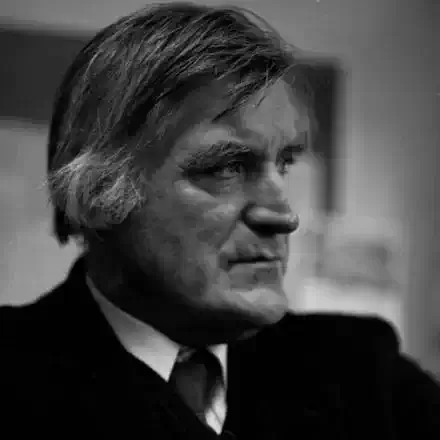
Ted Hughes
September
September
We sit late, watching the dark slowly unfold:
No clock counts this.
When kisses are repeated and the arms hold
There is no telling where time is.
It is midsummer: the leaves hang big and still:
Behind the eye a star,
Under the silk of the wrist a sea, tell
Time is nowhere.
We stand; leaves have not timed the summer.
No clock now needs
Tell we have only what we remember:
Minutes uproaring with our heads
Like an unfortunate King's and his Queen's
When the senseless mob rules;
And quietly the trees casting their crowns
Into the pools.
We sit late, watching the dark slowly unfold:
No clock counts this.
When kisses are repeated and the arms hold
There is no telling where time is.
It is midsummer: the leaves hang big and still:
Behind the eye a star,
Under the silk of the wrist a sea, tell
Time is nowhere.
We stand; leaves have not timed the summer.
No clock now needs
Tell we have only what we remember:
Minutes uproaring with our heads
Like an unfortunate King's and his Queen's
When the senseless mob rules;
And quietly the trees casting their crowns
Into the pools.
386
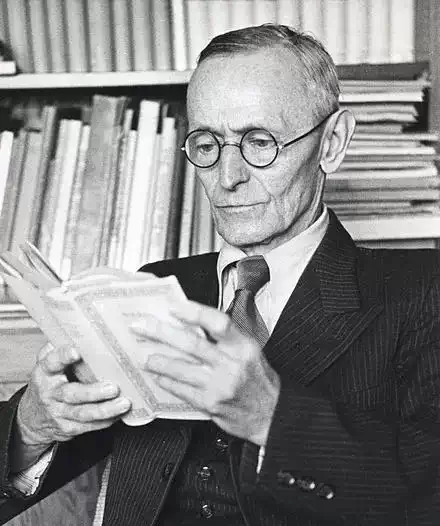
Hermann Hesse
Lying In Grass
Lying In Grass
Is this everything now, the quick delusions of flowers,
And the down colors of the bright summer meadow,
The soft blue spread of heaven, the bees' song,
Is this everything only a god's
Groaning dream,
The cry of unconscious powers for deliverance?
The distant line of the mountain,
That beautifully and courageously rests in the blue,
Is this too only a convulsion,
Only the wild strain of fermenting nature,
Only grief, only agony, only meaningless fumbling,
Never resting, never a blessed movement?
No! Leave me alone, you impure dream
Of the world in suffering!
The dance of tiny insects cradles you in an evening radiance,
The bird's cry cradles you,
A breath of wind cools my forehead
With consolation.
Leave me alone, you unendurably old human grief!
Let it all be pain.
Let it all be suffering, let it be wretched-
But not this one sweet hour in the summer,
And not the fragrance of the red clover,
And not the deep tender pleasure
In my soul.
Translated by James Wright
Submitted by Holt
Is this everything now, the quick delusions of flowers,
And the down colors of the bright summer meadow,
The soft blue spread of heaven, the bees' song,
Is this everything only a god's
Groaning dream,
The cry of unconscious powers for deliverance?
The distant line of the mountain,
That beautifully and courageously rests in the blue,
Is this too only a convulsion,
Only the wild strain of fermenting nature,
Only grief, only agony, only meaningless fumbling,
Never resting, never a blessed movement?
No! Leave me alone, you impure dream
Of the world in suffering!
The dance of tiny insects cradles you in an evening radiance,
The bird's cry cradles you,
A breath of wind cools my forehead
With consolation.
Leave me alone, you unendurably old human grief!
Let it all be pain.
Let it all be suffering, let it be wretched-
But not this one sweet hour in the summer,
And not the fragrance of the red clover,
And not the deep tender pleasure
In my soul.
Translated by James Wright
Submitted by Holt
625
Wilfred Owen
Le Christianisme
Le Christianisme
So the church Christ was hit and buried
Under its rubbish and its rubble.
In cellars, packed-up saints long serried,
Well out of hearing of our trouble.
One Virgin still immaculate
Smiles on for war to flatter her.
She's halo'd with an old tin hat,
But a piece of hell will batter her.
So the church Christ was hit and buried
Under its rubbish and its rubble.
In cellars, packed-up saints long serried,
Well out of hearing of our trouble.
One Virgin still immaculate
Smiles on for war to flatter her.
She's halo'd with an old tin hat,
But a piece of hell will batter her.
135
Ted Hughes
Pike
Pike
Pike, three inches long, perfect
Pike in all parts, green tigering the gold.
Killers from the egg: the malevolent aged grin.
They dance on the surface among the flies.
Or move, stunned by their own grandeur,
Over a bed of emerald, silhouette
Of submarine delicacy and horror.
A hundred feet long in their world.
In ponds, under the heat-struck lily pads-
Gloom of their stillness:
Logged on last year's black leaves, watching upwards.
Or hung in an amber cavern of weeds
The jaws' hooked clamp and fangs
Not to be changed at this date:
A life subdued to its instrument;
The gills kneading quietly, and the pectorals.
Three we kept behind glass,
Jungled in weed: three inches, four,
And four and a half: red fry to them-
Suddenly there were two. Finally one
With a sag belly and the grin it was born with.
And indeed they spare nobody.
Two, six pounds each, over two feet long
High and dry and dead in the willow-herb-
One jammed past its gills down the other's gullet:
The outside eye stared: as a vice locks-
The same iron in this eye
Though its film shrank in death.
A pond I fished, fifty yards across,
Whose lilies and muscular tench
Had outlasted every visible stone
Of the monastery that planted them-
Stilled legendary depth:
It was as deep as England. It held
Pike too immense to stir, so immense and old
That past nightfall I dared not cast
But silently cast and fished
With the hair frozen on my head
For what might move, for what eye might move.
The still splashes on the dark pond,
Owls hushing the floating woods
Frail on my ear against the dream
Darkness beneath night's darkness had freed,
That rose slowly toward me, watching.
Pike, three inches long, perfect
Pike in all parts, green tigering the gold.
Killers from the egg: the malevolent aged grin.
They dance on the surface among the flies.
Or move, stunned by their own grandeur,
Over a bed of emerald, silhouette
Of submarine delicacy and horror.
A hundred feet long in their world.
In ponds, under the heat-struck lily pads-
Gloom of their stillness:
Logged on last year's black leaves, watching upwards.
Or hung in an amber cavern of weeds
The jaws' hooked clamp and fangs
Not to be changed at this date:
A life subdued to its instrument;
The gills kneading quietly, and the pectorals.
Three we kept behind glass,
Jungled in weed: three inches, four,
And four and a half: red fry to them-
Suddenly there were two. Finally one
With a sag belly and the grin it was born with.
And indeed they spare nobody.
Two, six pounds each, over two feet long
High and dry and dead in the willow-herb-
One jammed past its gills down the other's gullet:
The outside eye stared: as a vice locks-
The same iron in this eye
Though its film shrank in death.
A pond I fished, fifty yards across,
Whose lilies and muscular tench
Had outlasted every visible stone
Of the monastery that planted them-
Stilled legendary depth:
It was as deep as England. It held
Pike too immense to stir, so immense and old
That past nightfall I dared not cast
But silently cast and fished
With the hair frozen on my head
For what might move, for what eye might move.
The still splashes on the dark pond,
Owls hushing the floating woods
Frail on my ear against the dream
Darkness beneath night's darkness had freed,
That rose slowly toward me, watching.
731

Robert W. Service
The Parson's Son
The Parson's Son
This is the song of the parson's son, as he squats in his shack alone,
On the wild, weird nights, when the Northern Lights shoot up from the frozen zone,
And it's sixty below, and couched in the snow the hungry huskies moan:
"I'm one of the Arctic brotherhood, I'm an old-time pioneer.
I came with the first -- O God! how I've cursed this Yukon -- but still I'm here.
I've sweated athirst in its summer heat, I've frozen and starved in its cold;
I've followed my dreams by its thousand streams, I've toiled and moiled for its gold.
"Look at my eyes -- been snow-blind twice; look where my foot's half gone;
And that gruesome scar on my left cheek, where the frost-fiend bit to the bone.
Each one a brand of this devil's land, where I've played and I've lost the game,
A broken wreck with a craze for `hooch', and never a cent to my name.
"This mining is only a gamble; the worst is as good as the best;
I was in with the bunch and I might have come out right on top with the rest;
With Cormack, Ladue and Macdonald -- O God! but it's hell to think
Of the thousands and thousands I've squandered on cards and women and drink.
"In the early days we were just a few, and we hunted and fished around,
Nor dreamt by our lonely camp-fires of the wealth that lay under the ground.
We traded in skins and whiskey, and I've often slept under the shade
Of that lone birch tree on Bonanza, where the first big find was made.
"We were just like a great big family, and every man had his squaw,
And we lived such a wild, free, fearless life beyond the pale of the law;
Till sudden there came a whisper, and it maddened us every man,
And I got in on Bonanza before the big rush began.
"Oh, those Dawson days, and the sin and the blaze, and the town all open wide!
(If God made me in His likeness, sure He let the devil inside.)
But we all were mad, both the good and the bad, and as for the women, well --
No spot on the map in so short a space has hustled more souls to hell.
"Money was just like dirt there, easy to get and to spend.
I was all caked in on a dance-hall jade, but she shook me in the end.
It put me queer, and for near a year I never drew sober breath,
Till I found myself in the bughouse ward with a claim staked out on death.
"Twenty years in the Yukon, struggling along its creeks;
Roaming its giant valleys, scaling its god-like peaks;
Bathed in its fiery sunsets, fighting its fiendish cold --
Twenty years in the Yukon . . . twenty years -- and I'm old.
"Old and weak, but no matter, there's `hooch' in the bottle still.
I'll hitch up the dogs to-morrow, and mush down the trail to Bill.
It's so long dark, and I'm lonesome -- I'll just lay down on the bed;
To-morrow I'll go . . . to-morrow . . . I guess I'll play on the red.
". . . Come, Kit, your pony is saddled. I'm waiting, dear, in the court . . .
. . . Minnie, you devil, I'll kill you if you skip with that flossy sport . . .
. . . How much does it go to the pan, Bill? . . . play up, School, and play the game . . .
. . . Our Father, which art in heaven, hallowed be Thy name . . ."
This was the song of the parson's son, as he lay in his bunk alone,
Ere the fire went out and the cold crept in, and his blue lips ceased to moan,
And the hunger-maddened malamutes had torn him flesh from bone.
This is the song of the parson's son, as he squats in his shack alone,
On the wild, weird nights, when the Northern Lights shoot up from the frozen zone,
And it's sixty below, and couched in the snow the hungry huskies moan:
"I'm one of the Arctic brotherhood, I'm an old-time pioneer.
I came with the first -- O God! how I've cursed this Yukon -- but still I'm here.
I've sweated athirst in its summer heat, I've frozen and starved in its cold;
I've followed my dreams by its thousand streams, I've toiled and moiled for its gold.
"Look at my eyes -- been snow-blind twice; look where my foot's half gone;
And that gruesome scar on my left cheek, where the frost-fiend bit to the bone.
Each one a brand of this devil's land, where I've played and I've lost the game,
A broken wreck with a craze for `hooch', and never a cent to my name.
"This mining is only a gamble; the worst is as good as the best;
I was in with the bunch and I might have come out right on top with the rest;
With Cormack, Ladue and Macdonald -- O God! but it's hell to think
Of the thousands and thousands I've squandered on cards and women and drink.
"In the early days we were just a few, and we hunted and fished around,
Nor dreamt by our lonely camp-fires of the wealth that lay under the ground.
We traded in skins and whiskey, and I've often slept under the shade
Of that lone birch tree on Bonanza, where the first big find was made.
"We were just like a great big family, and every man had his squaw,
And we lived such a wild, free, fearless life beyond the pale of the law;
Till sudden there came a whisper, and it maddened us every man,
And I got in on Bonanza before the big rush began.
"Oh, those Dawson days, and the sin and the blaze, and the town all open wide!
(If God made me in His likeness, sure He let the devil inside.)
But we all were mad, both the good and the bad, and as for the women, well --
No spot on the map in so short a space has hustled more souls to hell.
"Money was just like dirt there, easy to get and to spend.
I was all caked in on a dance-hall jade, but she shook me in the end.
It put me queer, and for near a year I never drew sober breath,
Till I found myself in the bughouse ward with a claim staked out on death.
"Twenty years in the Yukon, struggling along its creeks;
Roaming its giant valleys, scaling its god-like peaks;
Bathed in its fiery sunsets, fighting its fiendish cold --
Twenty years in the Yukon . . . twenty years -- and I'm old.
"Old and weak, but no matter, there's `hooch' in the bottle still.
I'll hitch up the dogs to-morrow, and mush down the trail to Bill.
It's so long dark, and I'm lonesome -- I'll just lay down on the bed;
To-morrow I'll go . . . to-morrow . . . I guess I'll play on the red.
". . . Come, Kit, your pony is saddled. I'm waiting, dear, in the court . . .
. . . Minnie, you devil, I'll kill you if you skip with that flossy sport . . .
. . . How much does it go to the pan, Bill? . . . play up, School, and play the game . . .
. . . Our Father, which art in heaven, hallowed be Thy name . . ."
This was the song of the parson's son, as he lay in his bunk alone,
Ere the fire went out and the cold crept in, and his blue lips ceased to moan,
And the hunger-maddened malamutes had torn him flesh from bone.
202
Wilfred Owen
Insensibility
Insensibility
I
Happy are men who yet before they are killed
Can let their veins run cold.
Whom no compassion fleers
Or makes their feet
Sore on the alleys cobbled with their brothers.
The front line withers,
But they are troops who fade, not flowers
For poets' tearful fooling:
Men, gaps for filling
Losses who might have fought
Longer; but no one bothers.
II
And some cease feeling
Even themselves or for themselves.
Dullness best solves
The tease and doubt of shelling,
And Chance's strange arithmetic
Comes simpler than the reckoning of their shilling.
They keep no check on Armies' decimation.
III
Happy are these who lose imagination:
They have enough to carry with ammunition.
Their spirit drags no pack.
Their old wounds save with cold can not more ache.
Having seen all things red,
Their eyes are rid
Of the hurt of the colour of blood for ever.
And terror's first constriction over,
Their hearts remain small drawn.
Their senses in some scorching cautery of battle
Now long since ironed,
Can laugh among the dying, unconcerned.
IV
Happy the soldier home, with not a notion
How somewhere, every dawn, some men attack,
And many sighs are drained.
Happy the lad whose mind was never trained:
His days are worth forgetting more than not.
He sings along the march
Which we march taciturn, because of dusk,
The long, forlorn, relentless trend
From larger day to huger night.
V
We wise, who with a thought besmirch
Blood over all our soul,
How should we see our task
But through his blunt and lashless eyes?
Alive, he is not vital overmuch;
Dying, not mortal overmuch;
Nor sad, nor proud,
Nor curious at all.
He cannot tell
Old men's placidity from his.
VI
But cursed are dullards whom no cannon stuns,
That they should be as stones.
Wretched are they, and mean
With paucity that never was simplicity.
By choice they made themselves immune
To pity and whatever mourns in man
Before the last sea and the hapless stars;
Whatever mourns when many leave these shores;
Whatever shares
The eternal reciprocity of tears.
I
Happy are men who yet before they are killed
Can let their veins run cold.
Whom no compassion fleers
Or makes their feet
Sore on the alleys cobbled with their brothers.
The front line withers,
But they are troops who fade, not flowers
For poets' tearful fooling:
Men, gaps for filling
Losses who might have fought
Longer; but no one bothers.
II
And some cease feeling
Even themselves or for themselves.
Dullness best solves
The tease and doubt of shelling,
And Chance's strange arithmetic
Comes simpler than the reckoning of their shilling.
They keep no check on Armies' decimation.
III
Happy are these who lose imagination:
They have enough to carry with ammunition.
Their spirit drags no pack.
Their old wounds save with cold can not more ache.
Having seen all things red,
Their eyes are rid
Of the hurt of the colour of blood for ever.
And terror's first constriction over,
Their hearts remain small drawn.
Their senses in some scorching cautery of battle
Now long since ironed,
Can laugh among the dying, unconcerned.
IV
Happy the soldier home, with not a notion
How somewhere, every dawn, some men attack,
And many sighs are drained.
Happy the lad whose mind was never trained:
His days are worth forgetting more than not.
He sings along the march
Which we march taciturn, because of dusk,
The long, forlorn, relentless trend
From larger day to huger night.
V
We wise, who with a thought besmirch
Blood over all our soul,
How should we see our task
But through his blunt and lashless eyes?
Alive, he is not vital overmuch;
Dying, not mortal overmuch;
Nor sad, nor proud,
Nor curious at all.
He cannot tell
Old men's placidity from his.
VI
But cursed are dullards whom no cannon stuns,
That they should be as stones.
Wretched are they, and mean
With paucity that never was simplicity.
By choice they made themselves immune
To pity and whatever mourns in man
Before the last sea and the hapless stars;
Whatever mourns when many leave these shores;
Whatever shares
The eternal reciprocity of tears.
155
Ted Hughes
Macaw and Little Miss
Macaw and Little Miss
In a cage of wire-ribs
The size of a man's head, the macaw bristles in a staring
Combustion, suffers the stoking devils of his eyes.
In the old lady's parlour, where an aspidistra succumbs
To the musk of faded velvet, he hangs in clear flames,
Like a torturer's iron instrument preparing
With dense slow shudderings of greens, yellows, blues,
Crimsoning into the barbs:
Or like the smouldering head that hung
In Killdevil's brass kitchen, in irons, who had been
Volcano swearing to vomit the world away in black ash,
And would, one day; or a fugitive aristocrat
From some thunderous mythological hierarchy, caught
By a little boy with a crust and a bent pin,
Or snare of horsehair set for a song-thrush,
And put in a cage to sing.
The old lady who feeds him seeds
Has a grand-daughter. The girl calls him 'Poor Polly', pokes fun.
'Jolly Mop.' But lies under every full moon,
The spun glass of her body bared and so gleam-still
Her brimming eyes do not tremble or spill
The dream where the warrior comes, lightning and iron,
Smashing and burning and rending towards her loin:
Deep into her pillow her silence pleads.
All day he stares at his furnace
With eyes red-raw, but when she comes they close.
'Polly. Pretty Poll', she cajoles, and rocks him gently.
She caresses, whispers kisses. The blue lids stay shut.
She strikes the cage in a tantrum and swirls out:
Instantly beak, wings, talons crash
The bars in conflagration and frenzy,
And his shriek shakes the house.
In a cage of wire-ribs
The size of a man's head, the macaw bristles in a staring
Combustion, suffers the stoking devils of his eyes.
In the old lady's parlour, where an aspidistra succumbs
To the musk of faded velvet, he hangs in clear flames,
Like a torturer's iron instrument preparing
With dense slow shudderings of greens, yellows, blues,
Crimsoning into the barbs:
Or like the smouldering head that hung
In Killdevil's brass kitchen, in irons, who had been
Volcano swearing to vomit the world away in black ash,
And would, one day; or a fugitive aristocrat
From some thunderous mythological hierarchy, caught
By a little boy with a crust and a bent pin,
Or snare of horsehair set for a song-thrush,
And put in a cage to sing.
The old lady who feeds him seeds
Has a grand-daughter. The girl calls him 'Poor Polly', pokes fun.
'Jolly Mop.' But lies under every full moon,
The spun glass of her body bared and so gleam-still
Her brimming eyes do not tremble or spill
The dream where the warrior comes, lightning and iron,
Smashing and burning and rending towards her loin:
Deep into her pillow her silence pleads.
All day he stares at his furnace
With eyes red-raw, but when she comes they close.
'Polly. Pretty Poll', she cajoles, and rocks him gently.
She caresses, whispers kisses. The blue lids stay shut.
She strikes the cage in a tantrum and swirls out:
Instantly beak, wings, talons crash
The bars in conflagration and frenzy,
And his shriek shakes the house.
340
Hermann Hesse
In Secret We Thirst
In Secret We Thirst
Graceful, spiritual,
with the gentleness of arabesques
our life is similar
to the existence of fairies
that spin in soft cadence
around nothingness
to which we sacrifice
the here and now
Dreams of beauty, youthful joy
like a breath in pure harmony
with the depth of your young surface
where sparkles the longing for the night
for blood and barbarity
In the emptiness, spinning, without aims or needs
dance free our lives
always ready for the game
yet, secretly, we thirst for reality
for the conceiving, for the birth
we are thirst for sorrows and death
Graceful, spiritual,
with the gentleness of arabesques
our life is similar
to the existence of fairies
that spin in soft cadence
around nothingness
to which we sacrifice
the here and now
Dreams of beauty, youthful joy
like a breath in pure harmony
with the depth of your young surface
where sparkles the longing for the night
for blood and barbarity
In the emptiness, spinning, without aims or needs
dance free our lives
always ready for the game
yet, secretly, we thirst for reality
for the conceiving, for the birth
we are thirst for sorrows and death
588
Wilfred Owen
I Know the Music
I Know the Music
All sounds have been as music to my listening:
Pacific lamentations of slow bells,
The crunch of boots on blue snow rosy-glistening,
Shuffle of autumn leaves; and all farewells:
Bugles that sadden all the evening air,
And country bells clamouring their last appeals
Before [the] music of the evening prayer;
Bridges, sonorous under carriage wheels.
Gurgle of sluicing surge through hollow rocks,
The gluttonous lapping of the waves on weeds,
Whisper of grass; the myriad-tinkling flocks,
The warbling drawl of flutes and shepherds' reeds.
The orchestral noises of October nights
Blowing ( ) symphonetic storms
Of startled clarions ( )
Drums, rumbling and rolling thunderous and ( ).
Thrilling of throstles in the keen blue dawn,
Bees fumbling and fuming over sainfoin-fields.
All sounds have been as music to my listening:
Pacific lamentations of slow bells,
The crunch of boots on blue snow rosy-glistening,
Shuffle of autumn leaves; and all farewells:
Bugles that sadden all the evening air,
And country bells clamouring their last appeals
Before [the] music of the evening prayer;
Bridges, sonorous under carriage wheels.
Gurgle of sluicing surge through hollow rocks,
The gluttonous lapping of the waves on weeds,
Whisper of grass; the myriad-tinkling flocks,
The warbling drawl of flutes and shepherds' reeds.
The orchestral noises of October nights
Blowing ( ) symphonetic storms
Of startled clarions ( )
Drums, rumbling and rolling thunderous and ( ).
Thrilling of throstles in the keen blue dawn,
Bees fumbling and fuming over sainfoin-fields.
123
Ted Hughes
Lineage
Lineage
In the beginning was Scream
Who begat Blood
Who begat Eye
Who begat Fear
Who begat Wing
Who begat Bone
Who begat Granite
Who begat Violet
Who begat Guitar
Who begat Sweat
Who begat Adam
Who begat Mary
Who begat God
Who begat Nothing
Who begat Never
Never Never Never
Who begat Crow
Screaming for Blood
Grubs, crusts
Anything
Trembling featherless elbows in the nest's filth
In the beginning was Scream
Who begat Blood
Who begat Eye
Who begat Fear
Who begat Wing
Who begat Bone
Who begat Granite
Who begat Violet
Who begat Guitar
Who begat Sweat
Who begat Adam
Who begat Mary
Who begat God
Who begat Nothing
Who begat Never
Never Never Never
Who begat Crow
Screaming for Blood
Grubs, crusts
Anything
Trembling featherless elbows in the nest's filth
252
Robert W. Service
The Outlaw
The Outlaw
A wild and woeful race he ran
Of lust and sin by land and sea;
Until, abhorred of God and man,
They swung him from the gallows-tree.
And then he climbed the Starry Stair,
And dumb and naked and alone,
With head unbowed and brazen glare,
He stood before the Judgment Throne.
The Keeper of the Records spoke:
"This man, O Lord, has mocked Thy Name.
The weak have wept beneath his yoke,
The strong have fled before his flame.
The blood of babes is on his sword;
His life is evil to the brim:
Look down, decree his doom, O Lord!
Lo! there is none will speak for him."
The golden trumpets blew a blast
That echoed in the crypts of Hell,
For there was Judgment to be passed,
And lips were hushed and silence fell.
The man was mute; he made no stir,
Erect before the Judgment Seat . . .
When all at once a mongrel cur
Crept out and cowered and licked his feet.
It licked his feet with whining cry.
Come Heav'n, come Hell, what did it care?
It leapt, it tried to catch his eye;
Its master, yea, its God was there.
Then, as a thrill of wonder sped
Through throngs of shining seraphim,
The Judge of All looked down and said:
"Lo! here is ONE who pleads for him.
"And who shall love of these the least,
And who by word or look or deed
Shall pity show to bird or beast,
By Me shall have a friend in need.
Aye, though his sin be black as night,
And though he stand 'mid men alone,
He shall be softened in My sight,
And find a pleader by My Throne.
"So let this man to glory win;
From life to life salvation glean;
By pain and sacrifice and sin,
Until he stand before Me -- clean.
For he who loves the least of these
(And here I say and here repeat)
Shall win himself an angel's pleas
For Mercy at My Judgment Seat."
A wild and woeful race he ran
Of lust and sin by land and sea;
Until, abhorred of God and man,
They swung him from the gallows-tree.
And then he climbed the Starry Stair,
And dumb and naked and alone,
With head unbowed and brazen glare,
He stood before the Judgment Throne.
The Keeper of the Records spoke:
"This man, O Lord, has mocked Thy Name.
The weak have wept beneath his yoke,
The strong have fled before his flame.
The blood of babes is on his sword;
His life is evil to the brim:
Look down, decree his doom, O Lord!
Lo! there is none will speak for him."
The golden trumpets blew a blast
That echoed in the crypts of Hell,
For there was Judgment to be passed,
And lips were hushed and silence fell.
The man was mute; he made no stir,
Erect before the Judgment Seat . . .
When all at once a mongrel cur
Crept out and cowered and licked his feet.
It licked his feet with whining cry.
Come Heav'n, come Hell, what did it care?
It leapt, it tried to catch his eye;
Its master, yea, its God was there.
Then, as a thrill of wonder sped
Through throngs of shining seraphim,
The Judge of All looked down and said:
"Lo! here is ONE who pleads for him.
"And who shall love of these the least,
And who by word or look or deed
Shall pity show to bird or beast,
By Me shall have a friend in need.
Aye, though his sin be black as night,
And though he stand 'mid men alone,
He shall be softened in My sight,
And find a pleader by My Throne.
"So let this man to glory win;
From life to life salvation glean;
By pain and sacrifice and sin,
Until he stand before Me -- clean.
For he who loves the least of these
(And here I say and here repeat)
Shall win himself an angel's pleas
For Mercy at My Judgment Seat."
184
Wilfred Owen
Hospital Barge
Hospital Barge
Budging the sluggard ripples of the Somme,
A barge round old Cérisy slowly slewed.
Softly her engines down the current screwed,
And chuckled softly with contented hum,
Till fairy tinklings struck their croonings dumb.
The waters rumpling at the stern subdued;
The lock-gate took her bulging amplitude;
Gently from out the gurgling lock she swum.
One reading by that calm bank shaded eyes
To watch her lessening westward quietly.
Then, as she neared the bend, her funnel screamed.
And that long lamentation made him wise
How unto Avalon, in agony,
Kings passed in the dark barge, which Merlin dreamed.
Budging the sluggard ripples of the Somme,
A barge round old Cérisy slowly slewed.
Softly her engines down the current screwed,
And chuckled softly with contented hum,
Till fairy tinklings struck their croonings dumb.
The waters rumpling at the stern subdued;
The lock-gate took her bulging amplitude;
Gently from out the gurgling lock she swum.
One reading by that calm bank shaded eyes
To watch her lessening westward quietly.
Then, as she neared the bend, her funnel screamed.
And that long lamentation made him wise
How unto Avalon, in agony,
Kings passed in the dark barge, which Merlin dreamed.
149
Ted Hughes
Hawk Roosting
Hawk Roosting
I sit in the top of the wood, my eyes closed.
Inaction, no falsifying dream
Between my hooked head and hooked feet:
Or in sleep rehearse perfect kills and eat.
The convenience of the high trees!
The air's buoyancy and the sun's ray
Are of advantage to me;
And the earth's face upward for my inspection.
My feet are locked upon the rough bark.
It took the whole of Creation
To produce my foot, my each feather:
Now I hold Creation in my foot
Or fly up, and revolve it all slowly -
I kill where I please because it is all mine.
There is no sophistry in my body:
My manners are tearing off heads -
The allotment of death.
For the one path of my flight is direct
Through the bones of the living.
No arguments assert my right:
The sun is behind me.
Nothing has changed since I began.
My eye has permitted no change.
I am going to keep things like this.
I sit in the top of the wood, my eyes closed.
Inaction, no falsifying dream
Between my hooked head and hooked feet:
Or in sleep rehearse perfect kills and eat.
The convenience of the high trees!
The air's buoyancy and the sun's ray
Are of advantage to me;
And the earth's face upward for my inspection.
My feet are locked upon the rough bark.
It took the whole of Creation
To produce my foot, my each feather:
Now I hold Creation in my foot
Or fly up, and revolve it all slowly -
I kill where I please because it is all mine.
There is no sophistry in my body:
My manners are tearing off heads -
The allotment of death.
For the one path of my flight is direct
Through the bones of the living.
No arguments assert my right:
The sun is behind me.
Nothing has changed since I began.
My eye has permitted no change.
I am going to keep things like this.
561
Hermann Hesse
How Heavy The Days
How Heavy The Days
How heavy the days are.
There's not a fire that can warm me,
Not a sun to laugh with me,
Everything bare,
Everything cold and merciless,
And even the beloved, clear
Stars look desolately down,
Since I learned in my heart that
Love can die.
Translated by James Wright
Submitted by Holt
How heavy the days are.
There's not a fire that can warm me,
Not a sun to laugh with me,
Everything bare,
Everything cold and merciless,
And even the beloved, clear
Stars look desolately down,
Since I learned in my heart that
Love can die.
Translated by James Wright
Submitted by Holt
534
Wilfred Owen
Happiness
Happiness
Ever again to breathe pure happiness,
So happy that we gave away our toy?
We smiled at nothings, needing no caress?
Have we not laughed too often since with Joy?
Have we not stolen too strange and sorrowful wrongs
For her hands' pardoning? The sun may cleanse,
And time, and starlight. Life will sing great songs,
And gods will show us pleasures more than men's.
Yet heaven looks smaller than the old doll's-home,
No nestling place is left in bluebell bloom,
And the wide arms of trees have lost their scope.
The former happiness is unreturning:
Boys' griefs are not so grievous as our yearning,
Boys have no sadness sadder than our hope.
Ever again to breathe pure happiness,
So happy that we gave away our toy?
We smiled at nothings, needing no caress?
Have we not laughed too often since with Joy?
Have we not stolen too strange and sorrowful wrongs
For her hands' pardoning? The sun may cleanse,
And time, and starlight. Life will sing great songs,
And gods will show us pleasures more than men's.
Yet heaven looks smaller than the old doll's-home,
No nestling place is left in bluebell bloom,
And the wide arms of trees have lost their scope.
The former happiness is unreturning:
Boys' griefs are not so grievous as our yearning,
Boys have no sadness sadder than our hope.
152
Ted Hughes
Examination at the Womb-Door
Examination at the Womb-Door
Who owns those scrawny little feet? Death.
Who owns this bristly scorched-looking face? Death.
Who owns these still-working lungs? Death.
Who owns this utility coat of muscles? Death.
Who owns these unspeakable guts? Death.
Who owns these questionable brains? Death.
All this messy blood? Death.
These minimum-efficiency eyes? Death.
This wicked little tongue? Death.
This occasional wakefulness? Death.
Given, stolen, or held pending trial?
Held.
Who owns the whole rainy, stony earth? Death.
Who owns all of space? Death.
Who is stronger than hope? Death.
Who is stronger than the will? Death.
Stronger than love? Death.
Stronger than life? Death.
But who is stronger than Death?
Me, evidently.
Pass, Crow.
Who owns those scrawny little feet? Death.
Who owns this bristly scorched-looking face? Death.
Who owns these still-working lungs? Death.
Who owns this utility coat of muscles? Death.
Who owns these unspeakable guts? Death.
Who owns these questionable brains? Death.
All this messy blood? Death.
These minimum-efficiency eyes? Death.
This wicked little tongue? Death.
This occasional wakefulness? Death.
Given, stolen, or held pending trial?
Held.
Who owns the whole rainy, stony earth? Death.
Who owns all of space? Death.
Who is stronger than hope? Death.
Who is stronger than the will? Death.
Stronger than love? Death.
Stronger than life? Death.
But who is stronger than Death?
Me, evidently.
Pass, Crow.
656
Robert W. Service
The Ordinary Man
The Ordinary Man
If you and I should chance to meet,
I guess you wouldn't care;
I'm sure you'd pass me in the street
As if I wasn't there;
You'd never look me in the face,
My modest mug to scan,
Because I'm just a commonplace
And Ordinary Man.
But then, it may be, you are too
A guy of every day,
Who does the job he's told to do
And takes the wife his pay;
Who makes a home and kids his care,
And works with pick or pen. . . .
Why, Pal, I guess we're just a pair
Of Ordinary Men.
We plug away and make no fuss,
Our feats are never crowned;
And yet it's common coves like us
Who make the world go round.
And as we steer a steady course
By God's predestined plan,
Hats off to that almighty Force:
THE ORDINARY MAN.
If you and I should chance to meet,
I guess you wouldn't care;
I'm sure you'd pass me in the street
As if I wasn't there;
You'd never look me in the face,
My modest mug to scan,
Because I'm just a commonplace
And Ordinary Man.
But then, it may be, you are too
A guy of every day,
Who does the job he's told to do
And takes the wife his pay;
Who makes a home and kids his care,
And works with pick or pen. . . .
Why, Pal, I guess we're just a pair
Of Ordinary Men.
We plug away and make no fuss,
Our feats are never crowned;
And yet it's common coves like us
Who make the world go round.
And as we steer a steady course
By God's predestined plan,
Hats off to that almighty Force:
THE ORDINARY MAN.
214
Wilfred Owen
Futility
Futility
Move him into the sun--
Gently its touch awoke him once,
At home, whispering of fields unsown.
Always it awoke him, even in France,
Until this morning and this snow.
If anything might rouse him now
The kind old sun will know.
Think how it wakes the seeds--
Woke, once, the clays of a cold star.
Are limbs so dear-achieved, are sides
Full-nerved,--still warm,--too hard to stir?
Was it for this the clay grew tall?
--O what made fatuous sunbeams toil
To break earth's sleep at all?
Move him into the sun--
Gently its touch awoke him once,
At home, whispering of fields unsown.
Always it awoke him, even in France,
Until this morning and this snow.
If anything might rouse him now
The kind old sun will know.
Think how it wakes the seeds--
Woke, once, the clays of a cold star.
Are limbs so dear-achieved, are sides
Full-nerved,--still warm,--too hard to stir?
Was it for this the clay grew tall?
--O what made fatuous sunbeams toil
To break earth's sleep at all?
351
Ted Hughes
Crow's Nerve Fails
Crow's Nerve Fails
Crow, feeling his brain slip,
Finds his every feather the fossil of a murder.
Who murdered all these?
These living dead, that root in his nerves and his blood
Till he is visibly black?
How can he fly from his feathers?
And why have they homed on him?
Is he the archive of their accusations?
Or their ghostly purpose, their pining vengeance?
Or their unforgiven prisoner?
He cannot be forgiven.
His prison is the earth. Clothed in his conviction,
Trying to remember his crimes
Heavily he flies.
Crow, feeling his brain slip,
Finds his every feather the fossil of a murder.
Who murdered all these?
These living dead, that root in his nerves and his blood
Till he is visibly black?
How can he fly from his feathers?
And why have they homed on him?
Is he the archive of their accusations?
Or their ghostly purpose, their pining vengeance?
Or their unforgiven prisoner?
He cannot be forgiven.
His prison is the earth. Clothed in his conviction,
Trying to remember his crimes
Heavily he flies.
347
Hermann Hesse
Across The Fields
Across The Fields
Across the sky, the clouds move,
Across the fields, the wind,
Across the fields the lost child
Of my mother wanders.
Across the street, leaves blow,
Across the trees, birds cry --
Across the mountains, far away,
My home must be.
Across the sky, the clouds move,
Across the fields, the wind,
Across the fields the lost child
Of my mother wanders.
Across the street, leaves blow,
Across the trees, birds cry --
Across the mountains, far away,
My home must be.
650
Ted Hughes
Bride and Groom Lie Hidden for Three Days
Bride and Groom Lie Hidden for Three Days
She gives him his eyes, she found them
Among some rubble, among some beetles
He gives her her skin
He just seemed to pull it down out of the air and lay it over her
She weeps with fearfulness and astonishment
She has found his hands for him, and fitted them freshly at the wrists
They are amazed at themselves, they go feeling all over her
He has assembled her spine, he cleaned each piece carefully
And sets them in perfect order
A superhuman puzzle but he is inspired
She leans back twisting this way and that, using it and laughing
Incredulous
Now she has brought his feet, she is connecting them
So that his whole body lights up
And he has fashioned her new hips
With all fittings complete and with newly wound coils, all shiningly oiled
He is polishing every part, he himself can hardly believe it
They keep taking each other to the sun, they find they can easily
To test each new thing at each new step
And now she smoothes over him the plates of his skull
So that the joints are invisible
And now he connects her throat, her breasts and the pit of her stomach
With a single wire
She gives him his teeth, tying the the roots to the centrepin of his body
He sets the little circlets on her fingertips
She stiches his body here and there with steely purple silk
He oils the delicate cogs of her mouth
She inlays with deep cut scrolls the nape of his neck
He sinks into place the inside of her thighs
So, gasping with joy, with cries of wonderment
Like two gods of mud
Sprawling in the dirt, but with infinite care
They bring each other to perfection.
She gives him his eyes, she found them
Among some rubble, among some beetles
He gives her her skin
He just seemed to pull it down out of the air and lay it over her
She weeps with fearfulness and astonishment
She has found his hands for him, and fitted them freshly at the wrists
They are amazed at themselves, they go feeling all over her
He has assembled her spine, he cleaned each piece carefully
And sets them in perfect order
A superhuman puzzle but he is inspired
She leans back twisting this way and that, using it and laughing
Incredulous
Now she has brought his feet, she is connecting them
So that his whole body lights up
And he has fashioned her new hips
With all fittings complete and with newly wound coils, all shiningly oiled
He is polishing every part, he himself can hardly believe it
They keep taking each other to the sun, they find they can easily
To test each new thing at each new step
And now she smoothes over him the plates of his skull
So that the joints are invisible
And now he connects her throat, her breasts and the pit of her stomach
With a single wire
She gives him his teeth, tying the the roots to the centrepin of his body
He sets the little circlets on her fingertips
She stiches his body here and there with steely purple silk
He oils the delicate cogs of her mouth
She inlays with deep cut scrolls the nape of his neck
He sinks into place the inside of her thighs
So, gasping with joy, with cries of wonderment
Like two gods of mud
Sprawling in the dirt, but with infinite care
They bring each other to perfection.
279
Wilfred Owen
Elegy in April and September
Elegy in April and September
Hush, thrush! Hush, missen-thrush, I listen...
I heard the flush of footsteps through the loose leaves,
And a low whistle by the water's brim.
Still! Daffodil! Nay, hail me not so gaily,-
Your gay gold lily daunts me and deceives,
Who follow gleams more golden and more slim.
Look, brook! O run and look, O run!
The vain reeds shook? - Yet search till gray sea heaves,
And I will stray among these fields for him.
Gaze, daisy! Stare through haze and glare,
And mark the hazardous stars all dawns and eves,
For my eye withers, and his star wanes dim.
Close, rose, and droop, heliotrope,
And shudder, hope! The shattering winter blows.
Drop, heliotrope, and close, rose...
Mourn, corn, and sigh, rye.
Men garner you, but youth's head lies forlorn.
Sigh, rye, and mourn, corn...
Brood, wood, and muse, yews,
The ways gods use we have not understood.
Muse, yews, and brood, wood...
Hush, thrush! Hush, missen-thrush, I listen...
I heard the flush of footsteps through the loose leaves,
And a low whistle by the water's brim.
Still! Daffodil! Nay, hail me not so gaily,-
Your gay gold lily daunts me and deceives,
Who follow gleams more golden and more slim.
Look, brook! O run and look, O run!
The vain reeds shook? - Yet search till gray sea heaves,
And I will stray among these fields for him.
Gaze, daisy! Stare through haze and glare,
And mark the hazardous stars all dawns and eves,
For my eye withers, and his star wanes dim.
Close, rose, and droop, heliotrope,
And shudder, hope! The shattering winter blows.
Drop, heliotrope, and close, rose...
Mourn, corn, and sigh, rye.
Men garner you, but youth's head lies forlorn.
Sigh, rye, and mourn, corn...
Brood, wood, and muse, yews,
The ways gods use we have not understood.
Muse, yews, and brood, wood...
146
Robert W. Service
The Old Armchair
The Old Armchair
In all the pubs from Troon to Ayr
Grandfather's father would repair
With Bobby Burns, a drouthy pair,
The glass to clink;
And oftenwhiles, when not too "fou,"
They'd roar a bawdy stave or two,
From midnight muk to morning dew,
And drink and drink.
And Grandfather, with eye aglow
And proper pride, would often show
An old armchair where long ago
The Bard would sit;
Reciting there with pawky glee
"The Lass that Made the Bed for Me;"
Or whiles a rhyme about the flea
That ne'er was writ.
Then I would seek the Poet's chair
And plant my kilted buttocks there,
And read with joy the Bard of Ayr
In my own tongue;
The Diel, the Daisy and the Louse
The Hare, the Haggis and the Mouse,
(What fornication and carouse!)
When I was young.
Though Kipling, Hardy, Stevenson
Have each my admiration won,
Today, my rhyme-race almost run,
My fancy turns
To him who did Pegasus prod
For me, Bard of my native sod,
The sinner best-loved of God
Rare Robbie Burns.
In all the pubs from Troon to Ayr
Grandfather's father would repair
With Bobby Burns, a drouthy pair,
The glass to clink;
And oftenwhiles, when not too "fou,"
They'd roar a bawdy stave or two,
From midnight muk to morning dew,
And drink and drink.
And Grandfather, with eye aglow
And proper pride, would often show
An old armchair where long ago
The Bard would sit;
Reciting there with pawky glee
"The Lass that Made the Bed for Me;"
Or whiles a rhyme about the flea
That ne'er was writ.
Then I would seek the Poet's chair
And plant my kilted buttocks there,
And read with joy the Bard of Ayr
In my own tongue;
The Diel, the Daisy and the Louse
The Hare, the Haggis and the Mouse,
(What fornication and carouse!)
When I was young.
Though Kipling, Hardy, Stevenson
Have each my admiration won,
Today, my rhyme-race almost run,
My fancy turns
To him who did Pegasus prod
For me, Bard of my native sod,
The sinner best-loved of God
Rare Robbie Burns.
185