

Poems List
Explore poems from our collection
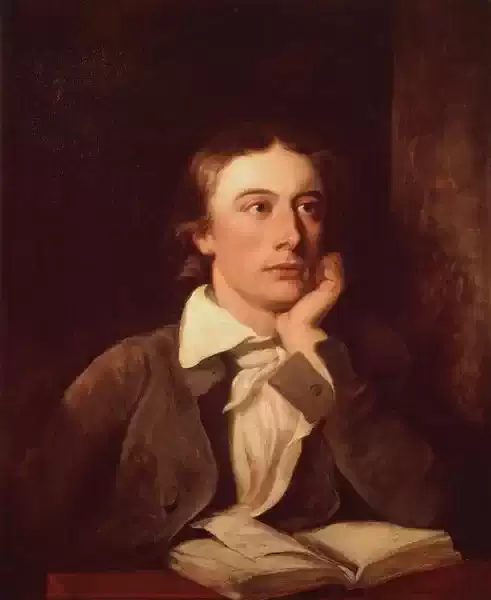
John Keats
Sonnet To The Nile
Sonnet To The Nile
Son of the old Moon-mountains African!
Chief of the Pyramid and Crocodile!
We call thee fruitful, and that very while
A desert fills our seeing's inward span:
Nurse of swart nations since the world began,
Art thou so fruitful? or dost thou beguile
Such men to honour thee, who, worn with toil,
Rest for a space 'twixt Cairo and Decan?
O may dark fancies err! They surely do;
'Tis ignorance that makes a barren waste
Of all beyond itself. Thou dost bedew
Green rushes like our rivers, and dost taste
The pleasant sunrise. Green isles hast thou too,
And to the sea as happily dost haste.
Son of the old Moon-mountains African!
Chief of the Pyramid and Crocodile!
We call thee fruitful, and that very while
A desert fills our seeing's inward span:
Nurse of swart nations since the world began,
Art thou so fruitful? or dost thou beguile
Such men to honour thee, who, worn with toil,
Rest for a space 'twixt Cairo and Decan?
O may dark fancies err! They surely do;
'Tis ignorance that makes a barren waste
Of all beyond itself. Thou dost bedew
Green rushes like our rivers, and dost taste
The pleasant sunrise. Green isles hast thou too,
And to the sea as happily dost haste.
424
John Keats
Sonnet To Sleep
Sonnet To Sleep
O soft embalmer of the still midnight!
Shutting, with careful fingers and benign,
Our gloom-pleas'd eyes, embower'd from the light,
Enshaded in forgetfulness divine;
O soothest Sleep! if so it please thee, close,
In midst of this thine hymn, my willing eyes.
Or wait the Amen, ere thy poppy throws
Around my bed its lulling charities;
Then save me, or the passed day will shine
Upon my pillow, breeding many woes;
Save me from curious conscience, that still hoards
Its strength for darkness, burrowing like a mole;
Turn the key deftly in the oiled wards,
And seal the hushed casket of my soul.
O soft embalmer of the still midnight!
Shutting, with careful fingers and benign,
Our gloom-pleas'd eyes, embower'd from the light,
Enshaded in forgetfulness divine;
O soothest Sleep! if so it please thee, close,
In midst of this thine hymn, my willing eyes.
Or wait the Amen, ere thy poppy throws
Around my bed its lulling charities;
Then save me, or the passed day will shine
Upon my pillow, breeding many woes;
Save me from curious conscience, that still hoards
Its strength for darkness, burrowing like a mole;
Turn the key deftly in the oiled wards,
And seal the hushed casket of my soul.
385
John Keats
Sonnet To John Hamilton Reynolds
Sonnet To John Hamilton Reynolds
O that a week could be an age, and we
Felt parting and warm meeting every week,
Then one poor year a thousand years would be,
The flush of welcome ever on the cheek:
So could we live long life in little space,
So time itself would be annihilate,
So a day's journey in oblivious haze
To serve ourjoys would lengthen and dilate.
O to arrive each Monday morn from Ind!
To land each Tuesday from the rich Levant!
In little time a host of joys to bind,
And keep our souls in one eternal pant!
This morn, my friend, and yester-evening taught
Me how to harbour such a happy thought.
O that a week could be an age, and we
Felt parting and warm meeting every week,
Then one poor year a thousand years would be,
The flush of welcome ever on the cheek:
So could we live long life in little space,
So time itself would be annihilate,
So a day's journey in oblivious haze
To serve ourjoys would lengthen and dilate.
O to arrive each Monday morn from Ind!
To land each Tuesday from the rich Levant!
In little time a host of joys to bind,
And keep our souls in one eternal pant!
This morn, my friend, and yester-evening taught
Me how to harbour such a happy thought.
436
John Keats
Sonnet To George Keats: Written In Sickness
Sonnet To George Keats: Written In Sickness
Brother belov'd if health shall smile again,
Upon this wasted form and fever'd cheek:
If e'er returning vigour bid these weak
And languid limbs their gladsome strength regain,
Well may thy brow the placid glow retain
Of sweet content and thy pleas'd eye may speak
The conscious self applause, but should I seek
To utter what this heart can feel, Ah! vain
Were the attempt! Yet kindest friends while o'er
My couch ye bend, and watch with tenderness
The being whom your cares could e'en restore,
From the cold grasp of Death, say can you guess
The feelings which these lips can ne'er express;
Feelings, deep fix'd in grateful memory's store.
Brother belov'd if health shall smile again,
Upon this wasted form and fever'd cheek:
If e'er returning vigour bid these weak
And languid limbs their gladsome strength regain,
Well may thy brow the placid glow retain
Of sweet content and thy pleas'd eye may speak
The conscious self applause, but should I seek
To utter what this heart can feel, Ah! vain
Were the attempt! Yet kindest friends while o'er
My couch ye bend, and watch with tenderness
The being whom your cares could e'en restore,
From the cold grasp of Death, say can you guess
The feelings which these lips can ne'er express;
Feelings, deep fix'd in grateful memory's store.
397
John Keats
Sonnet To Byron
Sonnet To Byron
Byron! how sweetly sad thy melody!
Attuning still the soul to tenderness,
As if soft Pity, with unusual stress,
Had touch'd her plaintive lute, and thou, being by,
Hadst caught the tones, nor suffer'd them to die.
O'ershadowing sorrow doth not make thee less
Delightful: thou thy griefs dost dress
With a bright halo, shining beamily,
As when a cloud the golden moon doth veil,
Its sides are ting'd with a resplendent glow,
Through the dark robe oft amber rays prevail,
And like fair veins in sable marble flow;
Still warble, dying swan! still tell the tale,
The enchanting tale, the tale of pleasing woe.
Byron! how sweetly sad thy melody!
Attuning still the soul to tenderness,
As if soft Pity, with unusual stress,
Had touch'd her plaintive lute, and thou, being by,
Hadst caught the tones, nor suffer'd them to die.
O'ershadowing sorrow doth not make thee less
Delightful: thou thy griefs dost dress
With a bright halo, shining beamily,
As when a cloud the golden moon doth veil,
Its sides are ting'd with a resplendent glow,
Through the dark robe oft amber rays prevail,
And like fair veins in sable marble flow;
Still warble, dying swan! still tell the tale,
The enchanting tale, the tale of pleasing woe.
499
John Keats
Sonnet IX. Keen, Fitful Gusts Are
Sonnet IX. Keen, Fitful Gusts Are
Keen, fitful gusts are whisp'ring here and there
Among the bushes half leafless, and dry;
The stars look very cold about the sky,
And I have many miles on foot to fare.
Yet feel I little of the cool bleak air,
Or of the dead leaves rustling drearily,
Or of those silver lamps that burn on high,
Or of the distance from home's pleasant lair:
For I am brimfull of the friendliness
That in a little cottage I have found;
Of fair-hair'd Milton's eloquent distress,
And all his love for gentle Lycid drown'd;
Of lovely Laura in her light green dress,
And faithful Petrarch gloriously crown'd.
Keen, fitful gusts are whisp'ring here and there
Among the bushes half leafless, and dry;
The stars look very cold about the sky,
And I have many miles on foot to fare.
Yet feel I little of the cool bleak air,
Or of the dead leaves rustling drearily,
Or of those silver lamps that burn on high,
Or of the distance from home's pleasant lair:
For I am brimfull of the friendliness
That in a little cottage I have found;
Of fair-hair'd Milton's eloquent distress,
And all his love for gentle Lycid drown'd;
Of lovely Laura in her light green dress,
And faithful Petrarch gloriously crown'd.
485
John Keats
Sonnet III. Written On The Day That Mr. Leigh Hunt Left Prison
Sonnet III. Written On The Day That Mr. Leigh Hunt Left Prison
What though, for showing truth to flatter'd state,
Kind Hunt was shut in prison, yet has he,
In his immortal spirit, been as free
As the sky-searching lark, and as elate.
Minion of grandeur! think you he did wait?
Think you he nought but prison-walls did see,
Till, so unwilling, thou unturn'dst the key?
Ah, no! far happier, nobler was his fate!
In Spenser's halls he stray'd, and bowers fair,
Culling enchanted flowers; and he flew
With daring Milton through the fields of air:
To regions of his own his genius true
Took happy flights. Who shall his fame impair
When thou art dead, and all thy wretched crew?
What though, for showing truth to flatter'd state,
Kind Hunt was shut in prison, yet has he,
In his immortal spirit, been as free
As the sky-searching lark, and as elate.
Minion of grandeur! think you he did wait?
Think you he nought but prison-walls did see,
Till, so unwilling, thou unturn'dst the key?
Ah, no! far happier, nobler was his fate!
In Spenser's halls he stray'd, and bowers fair,
Culling enchanted flowers; and he flew
With daring Milton through the fields of air:
To regions of his own his genius true
Took happy flights. Who shall his fame impair
When thou art dead, and all thy wretched crew?
443
John Keats
Sonnet I. To My Brother George
Sonnet I. To My Brother George
Many the wonders I this day have seen:
The sun, when first he kissed away the tears
That filled the eyes of Morn;—the laurelled peers
Who from the feathery gold of evening lean;—
The ocean with its vastness, its blue green,
Its ships, its rocks, its caves, its hopes, its fears,
Its voice mysterious, which whoso hears
Must think on what will be, and what has been.
E'en now, dear George, while this for you I write,
Cynthia is from her silken curtains peeping
So scantly, that it seems her bridal night,
And she her half-discovered revels keeping.
But what, without the social thought of thee,
Would be the wonders of the sky and sea?
Many the wonders I this day have seen:
The sun, when first he kissed away the tears
That filled the eyes of Morn;—the laurelled peers
Who from the feathery gold of evening lean;—
The ocean with its vastness, its blue green,
Its ships, its rocks, its caves, its hopes, its fears,
Its voice mysterious, which whoso hears
Must think on what will be, and what has been.
E'en now, dear George, while this for you I write,
Cynthia is from her silken curtains peeping
So scantly, that it seems her bridal night,
And she her half-discovered revels keeping.
But what, without the social thought of thee,
Would be the wonders of the sky and sea?
394
John Keats
Song. Hush, Hush! Tread Softly!
Song. Hush, Hush! Tread Softly!
1.
Hush, hush! tread softly! hush, hush my dear!
All the house is asleep, but we know very well
That the jealous, the jealous old bald-pate may hear.
Tho' you've padded his night-cap -- O sweet Isabel!
Tho' your feet are more light than a Fairy's feet,
Who dances on bubbles where brooklets meet,--
Hush, hush! soft tiptoe! hush, hush my dear!
For less than a nothing the jealous can hear.
2.
No leaf doth tremble, no ripple is there
On the river, -- all's still, and the night's sleepy eye
Closes up, and forgets all its Lethean care,
Charm'd to death by the drone of the humming May-fly;
And the Moon, whether prudish or complaisant,
Hath fled to her bower, well knowing I want
No light in the dusk, no torch in the gloom,
But my Isabel's eyes, and her lips pulp'd with bloom.
3.
Lift the latch! ah gently! ah tenderly -- sweet!
We are dead if that latchet gives one little chink!
Well done -- now those lips, and a flowery seat --
The old man may sleep, and the planets may wink;
The shut rose shall dream of our loves, and awake
Full blown, and such warmth for the morning's take;
The stock-dove shall hatch her soft brace and shall coo,
While I kiss to the melody, aching all through!
1.
Hush, hush! tread softly! hush, hush my dear!
All the house is asleep, but we know very well
That the jealous, the jealous old bald-pate may hear.
Tho' you've padded his night-cap -- O sweet Isabel!
Tho' your feet are more light than a Fairy's feet,
Who dances on bubbles where brooklets meet,--
Hush, hush! soft tiptoe! hush, hush my dear!
For less than a nothing the jealous can hear.
2.
No leaf doth tremble, no ripple is there
On the river, -- all's still, and the night's sleepy eye
Closes up, and forgets all its Lethean care,
Charm'd to death by the drone of the humming May-fly;
And the Moon, whether prudish or complaisant,
Hath fled to her bower, well knowing I want
No light in the dusk, no torch in the gloom,
But my Isabel's eyes, and her lips pulp'd with bloom.
3.
Lift the latch! ah gently! ah tenderly -- sweet!
We are dead if that latchet gives one little chink!
Well done -- now those lips, and a flowery seat --
The old man may sleep, and the planets may wink;
The shut rose shall dream of our loves, and awake
Full blown, and such warmth for the morning's take;
The stock-dove shall hatch her soft brace and shall coo,
While I kiss to the melody, aching all through!
381
John Keats
Song of the Indian Maid, from 'Endymion'
Song of the Indian Maid, from 'Endymion'
O SORROW!
Why dost borrow
The natural hue of health, from vermeil lips?-
To give maiden blushes
To the white rose bushes?
Or is it thy dewy hand the daisy tips?
O Sorrow!
Why dost borrow
The lustrous passion from a falcon-eye?-To
give the glow-worm light?
Or, on a moonless night,
To tinge, on siren shores, the salt sea-spry?
O Sorrow!
Why dost borrow
The mellow ditties from a mourning tongue?-To
give at evening pale
Unto the nightingale,
That thou mayst listen the cold dews among?
O Sorrow!
Why dost borrow
Heart's lightness from the merriment of May?-A
lover would not tread
A cowslip on the head,
Though he should dance from eve till peep of day-Nor
any drooping flower
Held sacred for thy bower,
Wherever he may sport himself and play.
To Sorrow
I bade good morrow,
And thought to leave her far away behind;
But cheerly, cheerly,
She loves me dearly;
She is so constant to me, and so kind:
I would deceive her
And so leave her,
But ah! she is so constant and so kind.
Beneath my palm-trees, by the river side,
I sat a-weeping: in the whole world wide
There was no one to ask me why I wept,-
And so I kept
Brimming the water-lily cups with tears
Cold as my fears.
Beneath my palm-trees, by the river side,
I sat a-weeping: what enamour'd bride,
Cheated by shadowy wooer from the clouds,
But hides and shrouds
Beneath dark palm-trees by a river side?
And as I sat, over the light blue hills
There came a noise of revellers: the rills
Into the wide stream came of purple hue-
'Twas Bacchus and his crew!
The earnest trumpet spake, and silver thrills
From kissing cymbals made a merry din-
'Twas Bacchus and his kin!
Like to a moving vintage down they came,
Crown'd with green leaves, and faces all on flame;
All madly dancing through the pleasant valley,
To scare thee, Melancholy!
O then, O then, thou wast a simple name!
And I forgot thee, as the berried holly
By shepherds is forgotten, when in June
Tall chestnuts keep away the sun and moon:-
I rush'd into the folly!
Within his car, aloft, young Bacchus stood,
Trifling his ivy-dart, in dancing mood,
With sidelong laughing;
And little rills of crimson wine imbrued
His plump white arms and shoulders, enough white
For Venus' pearly bite;
And near him rode Silenus on his ass,
Pelted with flowers as he on did pass
Tipsily quaffing.
'Whence came ye, merry Damsels! whence came ye,
So many, and so many, and such glee?
Why have ye left your bowers desolate,
Your lutes, and gentler fate?'-'
We follow Bacchus! Bacchus on the wing,
A-conquering!
Bacchus, young Bacchus! good or ill betide,
We dance before him thorough kingdoms wide:--
Come hither, lady fair, and joined be
To our wild minstrelsy!'
'Whence came ye, jolly Satyrs! whence came ye,
So many, and so many, and such glee?
Why have ye left your forest haunts, why left
Your nuts in oak-tree cleft?'-'
For wine, for wine we left our kernel tree;
For wine we left our heath, and yellow brooms,
And cold mushrooms;
For wine we follow Bacchus through the earth;
Great god of breathless cups and chirping mirth!
Come hither, lady fair, and joined be
To our mad minstrelsy!'
Over wide streams and mountains great we went,
And, save when Bacchus kept his ivy tent,
Onward the tiger and the leopard pants,
With Asian elephants:
Onward these myriads--with song and dance,
With zebras striped, and sleek Arabians' prance,
Web-footed alligators, crocodiles,
Bearing upon their scaly backs, in files,
Plump infant laughers mimicking the coil
Of seamen, and stout galley-rowers' toil:
With toying oars and silken sails they glide,
Nor care for wind and tide.
Mounted on panthers' furs and lions' manes,
From rear to van they scour about the plains;
A three days' journey in a moment done;
And always, at the rising of the sun,
About the wilds they hunt with spear and horn,
On spleenful unicorn.
I saw Osirian Egypt kneel adown
Before the vine-wreath crown!
I saw parch'd Abyssinia rouse and sing
To the silver cymbals' ring!
I saw the whelming vintage hotly pierce
Old Tartary the fierce!
The kings of Ind their jewel-sceptres vail,
And from their treasures scatter pearled hail;
Great Brahma from his mystic heaven groans,
And all his priesthood moans,
Before young Bacchus' eye-wink turning pale.
Into these regions came I, following him,
Sick-hearted, weary--so I took a whim
To stray away into these forests drear,
Alone, without a peer:
And I have told thee all thou mayest hear.
Young Stranger!
I've been a ranger
In search of pleasure throughout every clime;
Alas! 'tis not for me!
Bewitch'd I sure must be,
To lose in grieving all my maiden prime.
Come then, Sorrow,
Sweetest Sorrow!
Like an own babe I nurse thee on my breast:
I thought to leave thee,
And deceive thee,
But now of all the world I love thee best.
There is not one,
No, no, not one
But thee to comfort a poor lonely maid;
Thou art her mother,
And her brother,
Her playmate, and her wooer in the shade.
O SORROW!
Why dost borrow
The natural hue of health, from vermeil lips?-
To give maiden blushes
To the white rose bushes?
Or is it thy dewy hand the daisy tips?
O Sorrow!
Why dost borrow
The lustrous passion from a falcon-eye?-To
give the glow-worm light?
Or, on a moonless night,
To tinge, on siren shores, the salt sea-spry?
O Sorrow!
Why dost borrow
The mellow ditties from a mourning tongue?-To
give at evening pale
Unto the nightingale,
That thou mayst listen the cold dews among?
O Sorrow!
Why dost borrow
Heart's lightness from the merriment of May?-A
lover would not tread
A cowslip on the head,
Though he should dance from eve till peep of day-Nor
any drooping flower
Held sacred for thy bower,
Wherever he may sport himself and play.
To Sorrow
I bade good morrow,
And thought to leave her far away behind;
But cheerly, cheerly,
She loves me dearly;
She is so constant to me, and so kind:
I would deceive her
And so leave her,
But ah! she is so constant and so kind.
Beneath my palm-trees, by the river side,
I sat a-weeping: in the whole world wide
There was no one to ask me why I wept,-
And so I kept
Brimming the water-lily cups with tears
Cold as my fears.
Beneath my palm-trees, by the river side,
I sat a-weeping: what enamour'd bride,
Cheated by shadowy wooer from the clouds,
But hides and shrouds
Beneath dark palm-trees by a river side?
And as I sat, over the light blue hills
There came a noise of revellers: the rills
Into the wide stream came of purple hue-
'Twas Bacchus and his crew!
The earnest trumpet spake, and silver thrills
From kissing cymbals made a merry din-
'Twas Bacchus and his kin!
Like to a moving vintage down they came,
Crown'd with green leaves, and faces all on flame;
All madly dancing through the pleasant valley,
To scare thee, Melancholy!
O then, O then, thou wast a simple name!
And I forgot thee, as the berried holly
By shepherds is forgotten, when in June
Tall chestnuts keep away the sun and moon:-
I rush'd into the folly!
Within his car, aloft, young Bacchus stood,
Trifling his ivy-dart, in dancing mood,
With sidelong laughing;
And little rills of crimson wine imbrued
His plump white arms and shoulders, enough white
For Venus' pearly bite;
And near him rode Silenus on his ass,
Pelted with flowers as he on did pass
Tipsily quaffing.
'Whence came ye, merry Damsels! whence came ye,
So many, and so many, and such glee?
Why have ye left your bowers desolate,
Your lutes, and gentler fate?'-'
We follow Bacchus! Bacchus on the wing,
A-conquering!
Bacchus, young Bacchus! good or ill betide,
We dance before him thorough kingdoms wide:--
Come hither, lady fair, and joined be
To our wild minstrelsy!'
'Whence came ye, jolly Satyrs! whence came ye,
So many, and so many, and such glee?
Why have ye left your forest haunts, why left
Your nuts in oak-tree cleft?'-'
For wine, for wine we left our kernel tree;
For wine we left our heath, and yellow brooms,
And cold mushrooms;
For wine we follow Bacchus through the earth;
Great god of breathless cups and chirping mirth!
Come hither, lady fair, and joined be
To our mad minstrelsy!'
Over wide streams and mountains great we went,
And, save when Bacchus kept his ivy tent,
Onward the tiger and the leopard pants,
With Asian elephants:
Onward these myriads--with song and dance,
With zebras striped, and sleek Arabians' prance,
Web-footed alligators, crocodiles,
Bearing upon their scaly backs, in files,
Plump infant laughers mimicking the coil
Of seamen, and stout galley-rowers' toil:
With toying oars and silken sails they glide,
Nor care for wind and tide.
Mounted on panthers' furs and lions' manes,
From rear to van they scour about the plains;
A three days' journey in a moment done;
And always, at the rising of the sun,
About the wilds they hunt with spear and horn,
On spleenful unicorn.
I saw Osirian Egypt kneel adown
Before the vine-wreath crown!
I saw parch'd Abyssinia rouse and sing
To the silver cymbals' ring!
I saw the whelming vintage hotly pierce
Old Tartary the fierce!
The kings of Ind their jewel-sceptres vail,
And from their treasures scatter pearled hail;
Great Brahma from his mystic heaven groans,
And all his priesthood moans,
Before young Bacchus' eye-wink turning pale.
Into these regions came I, following him,
Sick-hearted, weary--so I took a whim
To stray away into these forests drear,
Alone, without a peer:
And I have told thee all thou mayest hear.
Young Stranger!
I've been a ranger
In search of pleasure throughout every clime;
Alas! 'tis not for me!
Bewitch'd I sure must be,
To lose in grieving all my maiden prime.
Come then, Sorrow,
Sweetest Sorrow!
Like an own babe I nurse thee on my breast:
I thought to leave thee,
And deceive thee,
But now of all the world I love thee best.
There is not one,
No, no, not one
But thee to comfort a poor lonely maid;
Thou art her mother,
And her brother,
Her playmate, and her wooer in the shade.
469
John Keats
Sleep And Poetry
Sleep And Poetry
As I lay in my bed slepe full unmete
Was unto me, but why that I ne might
Rest I ne wist, for there n'as erthly wight
[As I suppose] had more of hertis ese
Than I, for I n'ad sicknesse nor disese. ~ Chaucer
What is more gentle than a wind in summer?
What is more soothing than the pretty hummer
That stays one moment in an open flower,
And buzzes cheerily from bower to bower?
What is more tranquil than a musk-rose blowing
In a green island, far from all men's knowing?
More healthful than the leafiness of dales?
More secret than a nest of nightingales?
More serene than Cordelia's countenance?
More full of visions than a high romance?
What, but thee Sleep? Soft closer of our eyes!
Low murmurer of tender lullabies!
Light hoverer around our happy pillows!
Wreather of poppy buds, and weeping willows!
Silent entangler of a beauty's tresses!
Most happy listener! when the morning blesses
Thee for enlivening all the cheerful eyes
That glance so brightly at the new sun-rise.
But what is higher beyond thought than thee?
Fresher than berries of a mountain tree?
More strange, more beautiful, more smooth, more regal,
Than wings of swans, than doves, than dim-seen eagle?
What is it? And to what shall I compare it?
It has a glory, and naught else can share it:
The thought thereof is awful, sweet, and holy,
Chasing away all worldliness and folly;
Coming sometimes like fearful claps of thunder,
Or the low rumblings earth's regions under;
And sometimes like a gentle whispering
Of all the secrets of some wond'rous thing
That breathes about us in the vacant air;
So that we look around with prying stare,
Perhaps to see shapes of light, aerial limning,
And catch soft floatings from a faint-heard hymning;
To see the laurel wreath, on high suspended,
That is to crown our name when life is ended.
Sometimes it gives a glory to the voice,
And from the heart up-springs, rejoice! rejoice!
Sounds which will reach the Framer of all things,
And die away in ardent mutterings.
No one who once the glorious sun has seen,
And all the clouds, and felt his bosom clean
For his great Maker's presence, but must know
What 'tis I mean, and feel his being glow:
Therefore no insult will I give his spirit,
By telling what he sees from native merit.
O Poesy! for thee I hold my pen
That am not yet a glorious denizen
Of thy wide heaven- Should I rather kneel
Upon some mountain-top until I feel
A glowing splendour round about me hung,
And echo back the voice of thine own tongue?
O Poesy! for thee I grasp my pen
That am not yet a glorious denizen
Of thy wide heaven; yet, to my ardent prayer,
Yield from thy sanctuary some clear air,
Smooth'd for intoxication by the breath
Of flowering bays, that I may die a death
Of luxury, and my young spirit follow
The morning sun-beams to the great Apollo
Like a fresh sacrifice; or, if I can bear
The o'erwhelming sweets, 'twill bring to me the fair
Visions of all places: a bowery nook
Will be elysium- an eternal book
Whence I may copy many a lovely saying
About the leaves, and flowers- about the playing
Of nymphs in woods, and fountains; and the shade
Keeping a silence round a sleeping maid;
And many a verse from so strange influence
That we must ever wonder how, and whence
It came. Also imaginings will hover
Round my fire-side, and haply there discover
Vistas of solemn beauty, where I'd wander
In happy silence, like the clear Meander
Through its lone vales; and where I found a spot
Of awfuller shade, or an enchanted grot,
Or a green hill o'erspread with chequer'd dress
Of flowers, and fearful from its loveliness,
Write on my tablets all that was permitted,
All that was for our human senses fitted.
Then the events of this wide world I'd seize
Like a strong giant, and my spirit teaze
Till at its shoulders it should proudly see
Wings to find out an immortality.
Stop and consider! life is but a day;
A fragile dew-drop on its perilous way
From a tree's summit; a poor Indian's sleep
While his boat hastens to the monstrous steep
Of Montmorenci. Why so sad a moan?
Life is the rose's hope while yet unblown;
The reading of an ever-changing tale;
The light uplifting of a maiden's veil;
A pigeon tumbling in clear summer air;
A laughing school-boy, without grief or care,
Riding the springy branches of an elm.
O for ten years, that I may overwhelm
Myself in poesy; so I may do the deed
That my own soul has to itself decreed.
Then will I pass the countries that I see
In long perspective, and continually
Taste their pure fountains. First the realm I'll pass
Of Flora, and old Pan: sleep in the grass,
Feed upon apples red, and strawberries,
And choose each pleasure that my fancy sees;
Catch the white-handed nymphs in shady places,
To woo sweet kisses from averted faces,-
Play with their fingers, touch their shoulders white
Into a pretty shrinking with a bite
As hard as lips can make it: till agreed,
A lovely tale of human life we'll read.
And one will teach a tame dove how it best
May fan the cool air gently o'er my rest;
Another, bending o'er her nimble tread,
Will set a green robe floating round her head,
And still will dance with ever varied ease,
Smiling upon the flowers and the trees:
Another will entice me on, and on
Through almond blossoms and rich cinnamon;
Till in the bosom of a leafy world
We rest in silence, like two gems upcurl'd
In the recesses of a pearly shell.
And can I ever bid these joys farewell?
Yes, I must pass them for a nobler life,
Where I may find the agonies, the strife
Of human hearts: for lo! I see afar,
O'ersailing the blue cragginess, a car
And steeds with streamy manes- the charioteer
Looks out upon the winds with glorious fear:
And now the numerous tramplings quiver lightly
Along a huge cloud's ridge; and now with sprightly
Wheel downward come they into fresher skies,
Tipt round with silver from the sun's bright eyes.
Still downward with capacious whirl they glide;
And now I see them on the green-hill's side
In breezy rest among the nodding stalks.
The charioteer with wond'rous gesture talks
To the trees and mountains; and there soon appear
Shapes of delight, of mystery, and fear,
Passing along before a dusky space
Made by some mighty oaks: as they would chase
Some ever- fleeting music on they sweep.
Lo! how they murmur, laugh, and smile, and weep:
Some with upholden hand and mouth severe;
Some with their faces muffled to the ear
Between their arms; some, clear in youthful bloom,
Go glad and smilingly athwart the gloom;
Some looking back, and some with upward gaze;
Yes, thousands in a thousand different ways
Flit onward- now a lovely wreath of girls
Dancing their sleek hair into tangled curls;
And now broad wings. Most awfully intent
The driver of those steeds is forward bent,
And seems to listen: O that I might know
All that he writes with such a hurrying glow.
The visions all are fled- the car is fled
Into the light of heaven, and in their stead
A sense of real things comes doubly strong,
And, like a muddy stream, would bear along
My soul to nothingness: but I will strive
Against all doubtings, and will keep alive
The thought of that same chariot, and the strange
Journey it went.
Is there so small a range
In the present strength of manhood, that the high
Imagination cannot freely fly
As she was wont of old? prepare her steeds,
Paw up against the light, and do strange deeds
Upon the clouds? Has she not shown us all?
From the clear space of ether, to the small
Breath of new buds unfolding? From the meaning
Of Jove's large eye-brow, to the tender greening
Of April meadows? Here her altar shone,
E'en in this isle; and who could paragon
The fervid choir that lifted up a noise
Of harmony, to where it aye will poise
Its mighty self of convoluting sound,
Huge as a planet, and like that roll round,
Eternally around a dizzy void?
Ay, in those days the Muses were nigh cloy'd
With honors; nor had any other care
Than to sing out and sooth their wavy hair.
Could all this be forgotten? Yes, a schism
Nurtured by foppery and barbarism,
Made great Apollo blush for this his land.
Men were thought wise who could not understand
His glories: with a puling infant's force
They sway'd about upon a rocking horse,
And thought it Pegasus. Ah dismal soul'd!
The winds of heaven blew, the ocean roll'd
Its gathering waves- ye felt it not. The blue
Bared its eternal bosom, and the dew
Of summer nights collected still to make
The morning precious: beauty was awake!
Why were ye not awake? But ye were dead
To things ye knew not of,- were closely wed
To musty laws lined out with wretched rule
And compass vile: so that ye taught a school
Of dolts to smooth, inlay, and clip, and fit,
Till, like the certain wands of Jacob's wit,
Their verses tallied. Easy was the task:
A thousand handicraftsmen wore the mask
Of Poesy. Ill-fated, impious race!
That blasphemed the bright Lyrist to his face,
And did not know it,- no, they went about,
Holding a poor, decrepid standard out
Mark'd with most flimsy mottos, and in large
The name of one Boileau!
O ye whose charge
It is to hover round our pleasant hills!
Whose congregated majesty so fills
My boundly reverence, that I cannot trace
Your hallowed names, in this unholy place,
So near those common folk; did not their shames
Affright you? Did our old lamenting Thames
Delight you? Did ye never cluster round
Delicious Avon, with a mournful sound,
And weep? Or did ye wholly bid adieu
To regions where no more the laurel grew?
Or did ye stay to give a welcoming
To some lone spirits who could proudly sing
Their youth away, and die? 'Twas even so:
But let me think away those times of woe:
Now 'tis a fairer season; ye have breathed
Rich benedictions o'er us; ye have wreathed
Fresh garlands: for sweet music has been heard
In many places;- some has been upstirr'd
From out its crystal dwelling in a lake,
By a swan's ebon bill; from a thick brake,
Nested and quiet in a valley mild,
Bubbles a pipe; fine sounds are floating wild
About the earth: happy are ye and glad.
These things are doubtless: yet in truth we've had
Strange thunders from the potency of song;
Mingled indeed with what is sweet and strong,
From majesty: but in clear truth the themes
Are ugly clubs, the Poets' Polyphemes
Disturbing the grand sea. A drainless shower
Of light is poesy; 'tis the supreme of power;
'Tis might half slumb'ring on its own right arm.
The very archings of her eye-lids charm
A thousand willing agents to obey,
And still she governs with the mildest sway:
But strength alone though of the Muses born
Is like a fallen angel: trees uptorn,
Darkness, and worms, and shrouds, and sepulchres
Delight it; for it feeds upon the burrs,
And thorns of life; forgetting the great end
Of poesy, that it should be a friend
To sooth the cares, and lift the thoughts of man.
Yet I rejoice: a myrtle fairer than
E'er grew in Paphos, from the bitter weeds
Lifts its sweet head into the air, and feeds
A silent space with ever sprouting green.
All tenderest birds there find a pleasant screen,
Creep through the shade with jaunty fluttering,
Nibble the little cupped flowers and sing.
Then let us clear away the choking thorns
From round its gentle stem; let the young fawns,
Yeaned in after times, when we are flown,
Find a fresh sward beneath it, overgrown
With simple flowers: let there nothing be
More boisterous than a lover's bended knee;
Nought more ungentle than the placid look
Of one who leans upon a closed book;
Nought more untranquil than the grassy slopes
Between two hills. All hail delightful hopes!
As she was wont, th' imagination
Into most lovely labyrinths will be gone,
And they shall be accounted poet kings
Who simply tell the most heart-easing things.
O may these joys be ripe before I die.
Will not some say that I presumptuously
Have spoken? that from hastening disgrace
'Twere better far to hide my foolish face?
That whining boyhood should with reverence bow
Ere the dread thunderbolt could reach? How!
If I do hide myself, it sure shall be
In the very fane, the light of Poesy:
If I do fall, at least I will be laid
Beneath the silence of a poplar shade;
And over me the grass shall be smooth shaven;
And there shall be a kind memorial graven.
But off Despondence! miserable bane!
They should not know thee, who athirst to gain
A noble end, are thirsty every hour.
What though I am not wealthy in the dower
Of spanning wisdom; though I do not know
The shiftings of the mighty winds that blow
Hither and thither all the changing thoughts
Of man: though no great minist'ring reason sorts
Out the dark mysteries of human souls
To clear conceiving: yet there ever rolls
A vast idea before me, and I glean
Therefrom my liberty; thence too I've seen
The end and aim of Poesy. 'Tis clear
As anything most true; as that the year
Is made of the four seasons- manifest
As a large cross, some old cathedral's crest,
Lifted to the white clouds. Therefore should I
Be but the essence of deformity,
A coward, did my very eye-lids wink
At speaking out what I have dared to think.
Ah! rather let me like a madman run
Over some precipice; let the hot sun
Melt my Dedalian wings, and drive me down
Convuls'd and headlong! Stay! an inward frown
Of conscience bids me be more calm awhile.
An ocean dim, sprinkled with many an isle,
Spreads awfully before me. How much toil!
How many days! what desperate turmoil!
Ere I can have explored its widenesses.
Ah, what a task! upon my bended knees,
I could unsay those- no, impossible!
Impossible!
For sweet relief I'll dwell
On humbler thoughts, and let this strange assay
Begun in gentleness die so away.
E'en now all tumult from my bosom fades:
I turn full hearted to the friendly aids
That smooth the path of honour; brotherhood,
And friendliness the nurse of mutual good.
The hearty grasp that sends a pleasant sonnet
Into the brain ere one can think upon it;
The silence when some rhymes are coming out;
And when they're come, the very pleasant rout:
The message certain to be done to-morrow.
'Tis perhaps as well that it should be to borrow
Some precious book from out its snug retreat,
To cluster round it when we next shall meet.
Scarce can I scribble on; for lovely airs
Are fluttering round the room like doves in pairs;
Many delights of that glad day recalling,
When first my senses caught their tender falling.
And with these airs come forms of elegance
Stooping their shoulders o'er a horse's prance,
Careless, and grand-fingers soft and round
Parting luxuriant curls;- and the swift bound
Of Bacchus from his chariot, when his eye
Made Ariadne's cheek look blushingly.
Thus I remember all the pleasant flow
Of words at opening a portfolio.
Things such as these are ever harbingers
To trains of peaceful images: the stirs
Of a swan's neck unseen among the rushes:
A linnet starting all about the bushes:
A butterfly, with golden wings broad parted,
Nestling a rose, convuls'd as though it smarted
With over pleasure- many, many more,
Might I indulge at large in all my store
Of luxuries: yet I must not forget
Sleep, quiet with his poppy coronet:
For what there may be worthy in these rhymes
I partly owe to him: and thus, the chimes
Of friendly voices had just given place
To as sweet a silence, when I 'gan retrace
The pleasant day, upon a couch at ease.
It was a poet's house who keeps the keys
Of pleasure's temple. Round about were hung
The glorious features of the bards who sung
In other ages- cold and sacred busts
Smiled at each other. Happy he who trusts
To clear Futurity his darling fame!
Then there were fauns and satyrs taking aim
At swelling apples with a frisky leap
And reaching fingers, 'mid a luscious heap
Of vine-leaves. Then there rose to view a fane
Of liny marble, and thereto a train
Of nymphs approaching fairly o'er the sward:
One, loveliest, holding her white hand toward
The dazzling sun-rise: two sisters sweet
Bending their graceful figures till they meet
Over the trippings of a little child:
And some are hearing, eagerly, the wild
Thrilling liquidity of dewy piping.
See, in another picture, nymphs are wiping
Cherishingly Diana's timorous limbs;-
A fold of lawny mantle dabbling swims
At the bath's edge, and keeps a gentle motion
With the subsiding crystal: as when ocean
Heaves calmly its broad swelling smoothness o'er
Its rocky marge, and balances once more
The patient weeds; that now unshent by foam
Feel all about their undulating home.
Sappho's meek head was there half smiling down
At nothing; just as though the earnest frown
Of over thinking had that moment gone
From off her brow, and left her all alone.
Great Alfred's too, with anxious, pitying eyes,
As if he always listened to the sighs
Of the goaded world; and Kosciusko's worn
By horrid suffrance- mightily forlorn.
Petrarch, outstepping from the shady green,
Starts at the sight of Laura; nor can wean
His eyes from her sweet face. Most happy they!
For over them was seen a free display
Of out-spread wings, and from between them shone
The face of Poesy: from off her throne
She overlook'd things that I scarce could tell.
The very sense of where I was might well
Keep Sleep aloof: but more than that there came
Thought after thought to nourish up the flame
Within my breast; so that the morning light
Surprised me even from a sleepless night;
And up I rose refresh'd, and glad, and gay,
Resolving to begin that very day
These lines; and howsoever they be done,
I leave them as a father does his son.
THE END
As I lay in my bed slepe full unmete
Was unto me, but why that I ne might
Rest I ne wist, for there n'as erthly wight
[As I suppose] had more of hertis ese
Than I, for I n'ad sicknesse nor disese. ~ Chaucer
What is more gentle than a wind in summer?
What is more soothing than the pretty hummer
That stays one moment in an open flower,
And buzzes cheerily from bower to bower?
What is more tranquil than a musk-rose blowing
In a green island, far from all men's knowing?
More healthful than the leafiness of dales?
More secret than a nest of nightingales?
More serene than Cordelia's countenance?
More full of visions than a high romance?
What, but thee Sleep? Soft closer of our eyes!
Low murmurer of tender lullabies!
Light hoverer around our happy pillows!
Wreather of poppy buds, and weeping willows!
Silent entangler of a beauty's tresses!
Most happy listener! when the morning blesses
Thee for enlivening all the cheerful eyes
That glance so brightly at the new sun-rise.
But what is higher beyond thought than thee?
Fresher than berries of a mountain tree?
More strange, more beautiful, more smooth, more regal,
Than wings of swans, than doves, than dim-seen eagle?
What is it? And to what shall I compare it?
It has a glory, and naught else can share it:
The thought thereof is awful, sweet, and holy,
Chasing away all worldliness and folly;
Coming sometimes like fearful claps of thunder,
Or the low rumblings earth's regions under;
And sometimes like a gentle whispering
Of all the secrets of some wond'rous thing
That breathes about us in the vacant air;
So that we look around with prying stare,
Perhaps to see shapes of light, aerial limning,
And catch soft floatings from a faint-heard hymning;
To see the laurel wreath, on high suspended,
That is to crown our name when life is ended.
Sometimes it gives a glory to the voice,
And from the heart up-springs, rejoice! rejoice!
Sounds which will reach the Framer of all things,
And die away in ardent mutterings.
No one who once the glorious sun has seen,
And all the clouds, and felt his bosom clean
For his great Maker's presence, but must know
What 'tis I mean, and feel his being glow:
Therefore no insult will I give his spirit,
By telling what he sees from native merit.
O Poesy! for thee I hold my pen
That am not yet a glorious denizen
Of thy wide heaven- Should I rather kneel
Upon some mountain-top until I feel
A glowing splendour round about me hung,
And echo back the voice of thine own tongue?
O Poesy! for thee I grasp my pen
That am not yet a glorious denizen
Of thy wide heaven; yet, to my ardent prayer,
Yield from thy sanctuary some clear air,
Smooth'd for intoxication by the breath
Of flowering bays, that I may die a death
Of luxury, and my young spirit follow
The morning sun-beams to the great Apollo
Like a fresh sacrifice; or, if I can bear
The o'erwhelming sweets, 'twill bring to me the fair
Visions of all places: a bowery nook
Will be elysium- an eternal book
Whence I may copy many a lovely saying
About the leaves, and flowers- about the playing
Of nymphs in woods, and fountains; and the shade
Keeping a silence round a sleeping maid;
And many a verse from so strange influence
That we must ever wonder how, and whence
It came. Also imaginings will hover
Round my fire-side, and haply there discover
Vistas of solemn beauty, where I'd wander
In happy silence, like the clear Meander
Through its lone vales; and where I found a spot
Of awfuller shade, or an enchanted grot,
Or a green hill o'erspread with chequer'd dress
Of flowers, and fearful from its loveliness,
Write on my tablets all that was permitted,
All that was for our human senses fitted.
Then the events of this wide world I'd seize
Like a strong giant, and my spirit teaze
Till at its shoulders it should proudly see
Wings to find out an immortality.
Stop and consider! life is but a day;
A fragile dew-drop on its perilous way
From a tree's summit; a poor Indian's sleep
While his boat hastens to the monstrous steep
Of Montmorenci. Why so sad a moan?
Life is the rose's hope while yet unblown;
The reading of an ever-changing tale;
The light uplifting of a maiden's veil;
A pigeon tumbling in clear summer air;
A laughing school-boy, without grief or care,
Riding the springy branches of an elm.
O for ten years, that I may overwhelm
Myself in poesy; so I may do the deed
That my own soul has to itself decreed.
Then will I pass the countries that I see
In long perspective, and continually
Taste their pure fountains. First the realm I'll pass
Of Flora, and old Pan: sleep in the grass,
Feed upon apples red, and strawberries,
And choose each pleasure that my fancy sees;
Catch the white-handed nymphs in shady places,
To woo sweet kisses from averted faces,-
Play with their fingers, touch their shoulders white
Into a pretty shrinking with a bite
As hard as lips can make it: till agreed,
A lovely tale of human life we'll read.
And one will teach a tame dove how it best
May fan the cool air gently o'er my rest;
Another, bending o'er her nimble tread,
Will set a green robe floating round her head,
And still will dance with ever varied ease,
Smiling upon the flowers and the trees:
Another will entice me on, and on
Through almond blossoms and rich cinnamon;
Till in the bosom of a leafy world
We rest in silence, like two gems upcurl'd
In the recesses of a pearly shell.
And can I ever bid these joys farewell?
Yes, I must pass them for a nobler life,
Where I may find the agonies, the strife
Of human hearts: for lo! I see afar,
O'ersailing the blue cragginess, a car
And steeds with streamy manes- the charioteer
Looks out upon the winds with glorious fear:
And now the numerous tramplings quiver lightly
Along a huge cloud's ridge; and now with sprightly
Wheel downward come they into fresher skies,
Tipt round with silver from the sun's bright eyes.
Still downward with capacious whirl they glide;
And now I see them on the green-hill's side
In breezy rest among the nodding stalks.
The charioteer with wond'rous gesture talks
To the trees and mountains; and there soon appear
Shapes of delight, of mystery, and fear,
Passing along before a dusky space
Made by some mighty oaks: as they would chase
Some ever- fleeting music on they sweep.
Lo! how they murmur, laugh, and smile, and weep:
Some with upholden hand and mouth severe;
Some with their faces muffled to the ear
Between their arms; some, clear in youthful bloom,
Go glad and smilingly athwart the gloom;
Some looking back, and some with upward gaze;
Yes, thousands in a thousand different ways
Flit onward- now a lovely wreath of girls
Dancing their sleek hair into tangled curls;
And now broad wings. Most awfully intent
The driver of those steeds is forward bent,
And seems to listen: O that I might know
All that he writes with such a hurrying glow.
The visions all are fled- the car is fled
Into the light of heaven, and in their stead
A sense of real things comes doubly strong,
And, like a muddy stream, would bear along
My soul to nothingness: but I will strive
Against all doubtings, and will keep alive
The thought of that same chariot, and the strange
Journey it went.
Is there so small a range
In the present strength of manhood, that the high
Imagination cannot freely fly
As she was wont of old? prepare her steeds,
Paw up against the light, and do strange deeds
Upon the clouds? Has she not shown us all?
From the clear space of ether, to the small
Breath of new buds unfolding? From the meaning
Of Jove's large eye-brow, to the tender greening
Of April meadows? Here her altar shone,
E'en in this isle; and who could paragon
The fervid choir that lifted up a noise
Of harmony, to where it aye will poise
Its mighty self of convoluting sound,
Huge as a planet, and like that roll round,
Eternally around a dizzy void?
Ay, in those days the Muses were nigh cloy'd
With honors; nor had any other care
Than to sing out and sooth their wavy hair.
Could all this be forgotten? Yes, a schism
Nurtured by foppery and barbarism,
Made great Apollo blush for this his land.
Men were thought wise who could not understand
His glories: with a puling infant's force
They sway'd about upon a rocking horse,
And thought it Pegasus. Ah dismal soul'd!
The winds of heaven blew, the ocean roll'd
Its gathering waves- ye felt it not. The blue
Bared its eternal bosom, and the dew
Of summer nights collected still to make
The morning precious: beauty was awake!
Why were ye not awake? But ye were dead
To things ye knew not of,- were closely wed
To musty laws lined out with wretched rule
And compass vile: so that ye taught a school
Of dolts to smooth, inlay, and clip, and fit,
Till, like the certain wands of Jacob's wit,
Their verses tallied. Easy was the task:
A thousand handicraftsmen wore the mask
Of Poesy. Ill-fated, impious race!
That blasphemed the bright Lyrist to his face,
And did not know it,- no, they went about,
Holding a poor, decrepid standard out
Mark'd with most flimsy mottos, and in large
The name of one Boileau!
O ye whose charge
It is to hover round our pleasant hills!
Whose congregated majesty so fills
My boundly reverence, that I cannot trace
Your hallowed names, in this unholy place,
So near those common folk; did not their shames
Affright you? Did our old lamenting Thames
Delight you? Did ye never cluster round
Delicious Avon, with a mournful sound,
And weep? Or did ye wholly bid adieu
To regions where no more the laurel grew?
Or did ye stay to give a welcoming
To some lone spirits who could proudly sing
Their youth away, and die? 'Twas even so:
But let me think away those times of woe:
Now 'tis a fairer season; ye have breathed
Rich benedictions o'er us; ye have wreathed
Fresh garlands: for sweet music has been heard
In many places;- some has been upstirr'd
From out its crystal dwelling in a lake,
By a swan's ebon bill; from a thick brake,
Nested and quiet in a valley mild,
Bubbles a pipe; fine sounds are floating wild
About the earth: happy are ye and glad.
These things are doubtless: yet in truth we've had
Strange thunders from the potency of song;
Mingled indeed with what is sweet and strong,
From majesty: but in clear truth the themes
Are ugly clubs, the Poets' Polyphemes
Disturbing the grand sea. A drainless shower
Of light is poesy; 'tis the supreme of power;
'Tis might half slumb'ring on its own right arm.
The very archings of her eye-lids charm
A thousand willing agents to obey,
And still she governs with the mildest sway:
But strength alone though of the Muses born
Is like a fallen angel: trees uptorn,
Darkness, and worms, and shrouds, and sepulchres
Delight it; for it feeds upon the burrs,
And thorns of life; forgetting the great end
Of poesy, that it should be a friend
To sooth the cares, and lift the thoughts of man.
Yet I rejoice: a myrtle fairer than
E'er grew in Paphos, from the bitter weeds
Lifts its sweet head into the air, and feeds
A silent space with ever sprouting green.
All tenderest birds there find a pleasant screen,
Creep through the shade with jaunty fluttering,
Nibble the little cupped flowers and sing.
Then let us clear away the choking thorns
From round its gentle stem; let the young fawns,
Yeaned in after times, when we are flown,
Find a fresh sward beneath it, overgrown
With simple flowers: let there nothing be
More boisterous than a lover's bended knee;
Nought more ungentle than the placid look
Of one who leans upon a closed book;
Nought more untranquil than the grassy slopes
Between two hills. All hail delightful hopes!
As she was wont, th' imagination
Into most lovely labyrinths will be gone,
And they shall be accounted poet kings
Who simply tell the most heart-easing things.
O may these joys be ripe before I die.
Will not some say that I presumptuously
Have spoken? that from hastening disgrace
'Twere better far to hide my foolish face?
That whining boyhood should with reverence bow
Ere the dread thunderbolt could reach? How!
If I do hide myself, it sure shall be
In the very fane, the light of Poesy:
If I do fall, at least I will be laid
Beneath the silence of a poplar shade;
And over me the grass shall be smooth shaven;
And there shall be a kind memorial graven.
But off Despondence! miserable bane!
They should not know thee, who athirst to gain
A noble end, are thirsty every hour.
What though I am not wealthy in the dower
Of spanning wisdom; though I do not know
The shiftings of the mighty winds that blow
Hither and thither all the changing thoughts
Of man: though no great minist'ring reason sorts
Out the dark mysteries of human souls
To clear conceiving: yet there ever rolls
A vast idea before me, and I glean
Therefrom my liberty; thence too I've seen
The end and aim of Poesy. 'Tis clear
As anything most true; as that the year
Is made of the four seasons- manifest
As a large cross, some old cathedral's crest,
Lifted to the white clouds. Therefore should I
Be but the essence of deformity,
A coward, did my very eye-lids wink
At speaking out what I have dared to think.
Ah! rather let me like a madman run
Over some precipice; let the hot sun
Melt my Dedalian wings, and drive me down
Convuls'd and headlong! Stay! an inward frown
Of conscience bids me be more calm awhile.
An ocean dim, sprinkled with many an isle,
Spreads awfully before me. How much toil!
How many days! what desperate turmoil!
Ere I can have explored its widenesses.
Ah, what a task! upon my bended knees,
I could unsay those- no, impossible!
Impossible!
For sweet relief I'll dwell
On humbler thoughts, and let this strange assay
Begun in gentleness die so away.
E'en now all tumult from my bosom fades:
I turn full hearted to the friendly aids
That smooth the path of honour; brotherhood,
And friendliness the nurse of mutual good.
The hearty grasp that sends a pleasant sonnet
Into the brain ere one can think upon it;
The silence when some rhymes are coming out;
And when they're come, the very pleasant rout:
The message certain to be done to-morrow.
'Tis perhaps as well that it should be to borrow
Some precious book from out its snug retreat,
To cluster round it when we next shall meet.
Scarce can I scribble on; for lovely airs
Are fluttering round the room like doves in pairs;
Many delights of that glad day recalling,
When first my senses caught their tender falling.
And with these airs come forms of elegance
Stooping their shoulders o'er a horse's prance,
Careless, and grand-fingers soft and round
Parting luxuriant curls;- and the swift bound
Of Bacchus from his chariot, when his eye
Made Ariadne's cheek look blushingly.
Thus I remember all the pleasant flow
Of words at opening a portfolio.
Things such as these are ever harbingers
To trains of peaceful images: the stirs
Of a swan's neck unseen among the rushes:
A linnet starting all about the bushes:
A butterfly, with golden wings broad parted,
Nestling a rose, convuls'd as though it smarted
With over pleasure- many, many more,
Might I indulge at large in all my store
Of luxuries: yet I must not forget
Sleep, quiet with his poppy coronet:
For what there may be worthy in these rhymes
I partly owe to him: and thus, the chimes
Of friendly voices had just given place
To as sweet a silence, when I 'gan retrace
The pleasant day, upon a couch at ease.
It was a poet's house who keeps the keys
Of pleasure's temple. Round about were hung
The glorious features of the bards who sung
In other ages- cold and sacred busts
Smiled at each other. Happy he who trusts
To clear Futurity his darling fame!
Then there were fauns and satyrs taking aim
At swelling apples with a frisky leap
And reaching fingers, 'mid a luscious heap
Of vine-leaves. Then there rose to view a fane
Of liny marble, and thereto a train
Of nymphs approaching fairly o'er the sward:
One, loveliest, holding her white hand toward
The dazzling sun-rise: two sisters sweet
Bending their graceful figures till they meet
Over the trippings of a little child:
And some are hearing, eagerly, the wild
Thrilling liquidity of dewy piping.
See, in another picture, nymphs are wiping
Cherishingly Diana's timorous limbs;-
A fold of lawny mantle dabbling swims
At the bath's edge, and keeps a gentle motion
With the subsiding crystal: as when ocean
Heaves calmly its broad swelling smoothness o'er
Its rocky marge, and balances once more
The patient weeds; that now unshent by foam
Feel all about their undulating home.
Sappho's meek head was there half smiling down
At nothing; just as though the earnest frown
Of over thinking had that moment gone
From off her brow, and left her all alone.
Great Alfred's too, with anxious, pitying eyes,
As if he always listened to the sighs
Of the goaded world; and Kosciusko's worn
By horrid suffrance- mightily forlorn.
Petrarch, outstepping from the shady green,
Starts at the sight of Laura; nor can wean
His eyes from her sweet face. Most happy they!
For over them was seen a free display
Of out-spread wings, and from between them shone
The face of Poesy: from off her throne
She overlook'd things that I scarce could tell.
The very sense of where I was might well
Keep Sleep aloof: but more than that there came
Thought after thought to nourish up the flame
Within my breast; so that the morning light
Surprised me even from a sleepless night;
And up I rose refresh'd, and glad, and gay,
Resolving to begin that very day
These lines; and howsoever they be done,
I leave them as a father does his son.
THE END
772
John Keats
Robin Hood
Robin Hood
NO! those days are gone away,
And their hours are old and gray,
And their minutes buried all
Under the down-trodden pall
Ofthe leaves of many years:
Many times have winter's shears,
Frozen North, and chilling East,
Sounded tempests to the feast
Of the forest's whispering fleeces,
Since men knew nor rent nor leases.
No, the bugle sounds no more,
And the twanging bow no more;
Silent is the ivory shrill
Past the heath and up the hill;
There is no mid-forest laugh,
Where lone Echo gives the half
To some wight, amaz'd to hear
Jesting, deep in forest drear.
On the fairest time of June
You may go, with sun or moon,
Or the seven stars to light you,
Or the polar ray to right you;
But you never may behold
Little John, or Robin bold;
Never one, of all the clan,
Thrumming on an empty can
Some old hunting ditty, while
He doth his green way beguile
To fair hostess Merriment,
Down beside the pasture Trent;
For he left the merry tale,
Messenger for spicy ale.
Gone, the merry morris din;
Gone, the song of Gamelyn;
Gone, the tough-belted outlaw
Idling in the "grene shawe";
All are gone away and past!
And if Robin should be cast
Sudden from his turfed grave,
And if Marian should have
Once again her forest days,
She would weep, and he would craze:
He would swear, for all his oaks,
Fall'n beneath the dockyard strokes,
Have rotted on the briny seas;
She would weep that her wild bees
Sang not to her---strange! that honey
Can't be got without hard money!
So it is; yet let us sing
Honour to the old bow-string!
Honour to the bugle-horn!
Honour to the woods unshorn!
Honour to the Lincoln green!
Honour to the archer keen!
Honour to tight little John,
And the horse he rode upon!
Honour to bold Robin Hood,
Sleeping in the underwood!
Honour to maid Marian,
And to all the Sherwood clan!
Though their days have hurried by
Let us two a burden try.
NO! those days are gone away,
And their hours are old and gray,
And their minutes buried all
Under the down-trodden pall
Ofthe leaves of many years:
Many times have winter's shears,
Frozen North, and chilling East,
Sounded tempests to the feast
Of the forest's whispering fleeces,
Since men knew nor rent nor leases.
No, the bugle sounds no more,
And the twanging bow no more;
Silent is the ivory shrill
Past the heath and up the hill;
There is no mid-forest laugh,
Where lone Echo gives the half
To some wight, amaz'd to hear
Jesting, deep in forest drear.
On the fairest time of June
You may go, with sun or moon,
Or the seven stars to light you,
Or the polar ray to right you;
But you never may behold
Little John, or Robin bold;
Never one, of all the clan,
Thrumming on an empty can
Some old hunting ditty, while
He doth his green way beguile
To fair hostess Merriment,
Down beside the pasture Trent;
For he left the merry tale,
Messenger for spicy ale.
Gone, the merry morris din;
Gone, the song of Gamelyn;
Gone, the tough-belted outlaw
Idling in the "grene shawe";
All are gone away and past!
And if Robin should be cast
Sudden from his turfed grave,
And if Marian should have
Once again her forest days,
She would weep, and he would craze:
He would swear, for all his oaks,
Fall'n beneath the dockyard strokes,
Have rotted on the briny seas;
She would weep that her wild bees
Sang not to her---strange! that honey
Can't be got without hard money!
So it is; yet let us sing
Honour to the old bow-string!
Honour to the bugle-horn!
Honour to the woods unshorn!
Honour to the Lincoln green!
Honour to the archer keen!
Honour to tight little John,
And the horse he rode upon!
Honour to bold Robin Hood,
Sleeping in the underwood!
Honour to maid Marian,
And to all the Sherwood clan!
Though their days have hurried by
Let us two a burden try.
548
John Keats
Otho The Great - Act II
Otho The Great - Act II
SCENE I.
An Ante-chamber in the Castle.
Enter LUDOLPH and SIGIFRED.
Ludolph. No more advices, no more cautioning:
I leave it all to fate to any thing!
I cannot square my conduct to time, place,
Or circumstances; to me 'tis all a mist!
Sigifred. I say no more.
Ludolph. It seems I am to wait
Here in the ante-room; that may be a trifle.
You see now how I dance attendance here,
Without that tyrant temper, you so blame,
Snapping the rein. You have medicin'd me
With good advices; and I here remain,
In this most honourable ante-room,
Your patient scholar.
Sigifred. Do not wrong me, Prince.
By Heavens, I'd rather kiss Duke Conrad's slipper,
When in the morning he doth yawn with pride,
Than see you humbled but a half-degree!
Truth is, the Emperor would fain dismiss
The nobles ere he sees you.
Enter GONFRED from the Council-room.
Ludolph. Well, sir! What?
Gonfred. Great honour to the Prince! The Emperor,
Hearing that his brave son had re-appeared,
Instant dismiss 'd the Council from his sight,
As Jove fans off the clouds. Even now they pass.
[Exit.
Enter the Nobles from the Council-room. They cross the stage,
bowing unth respect to LUDOLPH, he frowning on them.
CONRAD follows. Exeunt Nobles.
Ludolph. Not the discoloured poisons of a fen,
Which he who breathes feels warning of his death,
Could taste so nauseous to the bodily sense,
As these prodigious sycophants disgust
The soul's fine palate.
Conrad. Princely Ludolph, hail!
Welcome, thou younger sceptre to the realm!
Strength to thy virgin crownet's golden buds,
That they, against the winter of thy sire,
May burst, and swell, and flourish round thy brows,
Maturing to a weighty diadem!
Yet be that hour far off; and may he live,
Who waits for thee, as the chapp'd earth for rain.
Set my life's star! I have lived long enough,
Since under my glad roof, propitiously,
Father and son each other re-possess.
Ludolph. Fine wording, Duke! but words could never yet
Forestall the fates; have you not learnt that yet?
Let me look well: your features are the same;
Your gait the same; your hair of the same shade;
As one I knew some passed weeks ago,
Who sung far different notes into mine ears.
I have mine own particular comments on 't;
You have your own, perhaps.
Conrad. My gracious Prince,
All men may err. In truth I was deceived
In your great father's nature, as you were.
Had I known that of him I have since known,
And what you soon will learn, I would have turned
My sword to my own throat, rather than held
Its threatening edge against a good King's quiet:
Or with one word fever'd you, gentle Prince,
Who seem'd to me, as rugged times then went,
Indeed too much oppress'd. May I be bold
To tell the Emperor you will haste to him?
Ludolph. Your Dukedom's privilege will grant so much.
[Exit CONRAD
He's very close to Otho, a tight leech!
Your hand I go. Ha! here the thunder comes
Sullen against the wind! If in two angry brows
My safety lies, then Sigifred, I'm safe.
Enter OTHO and CONRAD.
Otho. Will you make Titan play the lackey-page &
To chattering pigmies? I would have you know
That such neglect of our high Majesty
Annuls all feel of kindred. What is son,
Or friend, or brother, or all ties of blood,
When the whole kingdom, centred in ourself,
Is rudely slighted ? Who am I to wait ?
By Peter's chair! I have upon my tongue
A word to fright the proudest spirit here!
Death! and slow tortures to the hardy fool,
Who dares take such large charter from our smiles!
Conrad, we would be private. Sigifred!
Off! And none pass this way on pain of death!
[Exeunt CONRAD and SIGIFRED,
Ludolph. This was but half expected, my good sire,
Yet I am griev'd at it, to the full height,
As though my hopes of favour had been whole.
Otho. How you indulge yourself! What can you hope for?
Ludolph. Nothing, my liege ; I have to hope for nothing.
I come to greet you as a loving son,
And then depart, if I may be so free,
Seeing that blood of yours in my warm veins
Has not yet mitigated into milk.
Otho. What would you, sir?
Ludolph. A lenient banishment;
So please you let me unmolested pass
This Conrad's gates, to the wide air again.
I want no more. A rebel wants no more.
Otho. And shall I let a rebel loose again
To muster kites and eagles 'gainst my head?
No, obstinate boy, you shall be kept cag'd up,
Serv'd with harsh food, with scum for Sunday-drink.
Ludolph. Indeed!
Otho. And chains too heavy for your life:
I'll choose a gaoler, whose swart monstrous face
Shall be a hell to look upon, and she
Ludolph. Ha!
Otho. Shall be your fair Auranthe.
Ludolph. Amaze! Amaze!
Otho. To-day you marry her.
Ludolph. This is a sharp jest!
Otho. No. None at all. When have I said a lie?
Ludolph. If I sleep not, I am a waking wretch.
Otho. Not a word more. Let me embrace my child.
Ludolph. I dare not. 'Twould pollute so good a father!
heavy crime! that your son's blinded eyes
Could not see all his parent's love aright,
As now I see it. Be not kind to me
Punish me not with favour.
Otho. Are you sure,
Ludolph, you have no saving plea in store?
Ludolph. My father, none!
Otho. Then you astonish me.
Ludolph. No, I have no plea. Disobedience,
Rebellion, obstinacy, blasphemy,
Are all my counsellors. If they can make
My crooked deeds show good and plausible,
Then grant me loving pardon, but not else,
Good Gods! not else, in any way, my liege!
Otho. You are a most perplexing, noble boy.
Ludolph. You not less a perplexing noble father.
Otho. Well, you shall have free passport through the gates.
Farewell!
Ludolph. Farewell! and by these tears believe,
And still remember, I repent in pain
All my misdeeds!
Otho. Ludolph, I will! I will!
But, Ludolph, ere you go, I would enquire
If you, in all your wandering, ever met
A certain Arab haunting in these parts.
Ludolph. No, my good lord, I cannot say I did.
Otho. Make not your father blind before his time;
Nor let these arms paternal hunger more
For an embrace, to dull the appetite
Of my great love for thee, my supreme child!
Come close, and let me breathe into thine ear.
knew you through disguise. You are the Arab!
You can't deny it. [Embracing him.
Ludolph. Happiest of days!
Otho. We'll make it so.
Ludolph. 'Stead of one fatted calf
Ten hecatombs shall bellow out their last,
Smote 'twixt the horns by the death-stunning mace
Of Mars, and all the soldiery shall feast
Nobly as Nimrod's masons, when the towers
Of Nineveh new kiss'd the parted clouds!
Otho. Large as a God speak out, where all is thine.
Ludolph. Aye, father, but the fire in my sad breast
Is quench 'd with inward tears! I must rejoice
For you, whose wings so shadow over me
In tender victory, but for myself
I still must mourn. The fair Auranthe mine!
Too great a boon! I prythee let me ask I
What more than I know of could so have changed
Your purpose touching her?
Otho. At a word, this:
In no deed did you give me more offense
Than your rejection of Erminia.
To my appalling, I saw too good proof
Of your keen-eyed suspicion, she is naught!
Ludolph. You are convinced?
Otho. Aye, spite of her sweet looks.
O, that my brother's daughter should so fall!
Her fame has pass'd into the grosser lips
Of soldiers in their cups.
Lndolph. 'Tis very sad.
Otho. No more of her. Auranthe Ludolph, come!
This marriage be the bond of endless peace! [Exeunt.
SCENE II. The Entrance of GERSA'S Tent in the Hungarian Camp.
Enter ERMINIA.
Erminia. Where! where! where shall I find a messenger?
A trusty soul? A good man in the camp?
Shall I go myself? Monstrous wickedness!
O cursed Conrad devilish Auranthe!
Here is proof palpable as the bright sun!
O for a voice to reach the Emperor's ears!
[Shouts in the Camp.
Enter an HUNGARIAN CAPTAIN.
Captain. Fair prisoner, hear you those joyous shouts?
The king aye, now our king, but still your slave,
Young Gersa, from a short captivity
Has just return'd. He bids me say, bright Dame,
That even the homage of his ranged chiefs
Cures not his keen impatience to behold
Such beauty once again. What ails you, lady?
Erminia. Say, is not that a German, yonder? There!
Captain. Methinks by his stout bearing he should be
Yes 'tis one Albert; a brave German knight,
And much in the emperor's favour.
Erminia. I would fain
Enquire of friends and kinsfolk; how they fared
In these rough times. Brave soldier, as you pass
To royal Gersa with my humble thanks,
Will you send yonder knight to me?
Captain. I will. [Exit.
Ermina. Yes, he was ever known to be a man
Frank, open, generous; Albert I may trust.
proof! proof! proof! Albert's an honest man;
Not Ethelbert the monk, if he were here,
Would I hold more trustworthy. Now!
Enter ALBERT.
Albert. Good Gods!
Lady Erminia! are you prisoner
In this beleaguer 'd camp? Or are you here
Of your own will? You pleas'd to send for me.
By Venus, 'tis a pity I knew not
Your plight before, and, by her Son, I swear
To do you every service you can ask.
What would the fairest?
Erminia. Albert, will you swear?
Albert. I have. Well?
Erminia. Albert, you have fame to lose.
If men, in court and camp, lie not outright,
You should be, from a thousand, chosen forth
To do an honest deed. Shall I confide?
Albert. Aye, anything to me, fair creature. Do;
Dictate my task. Sweet woman,
Erminia. Truce with that.
You understand me not; and, in your speech,
see how far the slander is abroad.
Without proof could you think me innocent?
Albert. Lady, I should rejoice to know you so.
Erminia. If you have any pity for a maid,
Suffering a daily death from evil tongues;
Any compassion for that Emperor's niece,
Who, for your bright sword and clear honesty,
Lifted you from the crowd of common men
Into the lap of honour; save me, knight!
Albert. How? Make it clear; if it be possible,
I, by the banner of Saint Maurice, swear
To right you.
Erminia. Possible! Easy. O my heart!
This letter's not so soil'd but you may read it;
Possible! There that letter! Read read it,
[Gives him a letter.
Albert (reading). 'To the Duke Conrad. Forget the threat you
made at parting, and I will forget to send the Emperor letters and
papers of your's I have become possessed of. His life is no trifle to
me; his death you shall find none to yourself.' (Speaks to himself
‘Tis me my life that's pleaded for! (Reads.) 'He, for his
own sake, will be dumb as the grave. Erminia has my shame fix'd
upon her, sure as a wen. We are safe.
AURANTHE.'A she-devil! A dragon! I her imp!
Fire of Hell! Auranthe lewd demon!
Where got you this? Where? When?
Erminia. I found it in the tent, among some spoils
Which, being noble, fell to Gersa's lot.
Come in, and see. [They go in and return.
Albert. Villainy! Villainy!
Conrad's sword, his corslet, and his helm,
And his letter. Caitiff, he shall feel
Erminia. I see you are thunderstruck. Haste, haste away!
Albert. O I am tortured by this villainy.
Erminia. You needs must be. Carry it swift to Otho;
Tell him, moreover, I am prisoner
Here in this camp, where all the sisterhood,
Forc'd from their quiet cells, are parcell'd out
For slaves among these Huns. Away! Away!
Albert. I am gone.
Erminia. Swift be your steed! Within this hour
The Emperor will see it.
Albert. Ere I sleep:
That I can swear. [Hurries out.
Gersa (without). Brave captains! thanks. Enough
Of loyal homage now!
Enter GERSA.
Erminia. Hail, royal Hun!
Gersa. What means this, fair one? Why in such alarm?
Who was it hurried by me so distract?
It seem'd you were in deep discourse together;
Your doctrine has not been so harsh to him
As to my poor deserts. Come, come, be plain.
I am no jealous fool to kill you both,
Or, for such trifles, rob the adorned world
Of such a beauteous vestal.
Erminia. I grieve, my Lord,
To hear you condescend to ribald phrase.
Gersa. This is too much! Hearken, my lady pure!
Erminia. Silence! and hear the magic of a name
Erminia! I am she, the Emperor's niece!
Prais'd be the Heavens, I now dare own myself!
Gersa. Erminia! Indeed! I've heard of her.
Prythee, fair lady, what chance brought you here?
Erminia. Ask your own soldiers.
Gersa. And you dare own your name.
For loveliness you may and for the rest
My vein is not censorious.
Erminia. Alas! poor me!
‘Tis false indeed.
Gersa. Indeed you are too fair:
the swan, soft leaning on her fledgy breast,
When to the stream she launches, looks not back
With such a tender grace ; nor are her wings
So white as your soul is, if that but be
Twin-picture to your face. Erminia!
To-day, for the first day, I am a king,
Yet would I give my unworn crown away
To know you spotless.
Erminia. Trust me one day more,
Generously, without more certain guarantee,
Than this poor face you deign to praise so much;
After that, say and do whate'er you please.
If I have any knowledge of you, sir,
I think, nay I am sure, you will grieve much
To hear my story. O be gentle to me,
For I am sick and faint with many wrongs,
Tir'd out, and weary-worn with contumelies.
Gersa. Poor lady!
Enter ETHELBERT.
Erminia. Gentle Prince, 'tis false indeed.
Good morrow, holy father! I have had
Your prayers, though I look'd for you in vain.
Ethelbert. Blessings upon you, daughter! Sure you look
Too cheerful for these foul pernicious days.
Young man, you heard this virgin say 'twas false,
‘Tis false, I say. What! can you not employ
Your temper elsewhere, 'mong these burly tents,
But you must taunt this dove, for she hath lost
The Eagle Otho to beat off assault?
Fie! fie! But I will be her guard myself;
In the Emperor's name. I here demand of you
Herself, and all her sisterhood. She false!
Gersa. Peace! peace, old man! I cannot think she is.
Ethelbert. Whom I have known from her first infancy,
Baptized her in the bosom of the Church,
Watch'd her, as anxious husbandmen the grain,
From the first shoot till the unripe mid-May,
Then to the tender ear of her June days,
Which, lifting sweet abroad its timid green,
Is blighted by the touch of calumny;
You cannot credit such a monstrous tale.
Gersa. I cannot. Take her. Fair Erminia,
I follow you to Friedburg, is't not so?
Erminia. Aye, so we purpose.
Ethelbert. Daughter, do you so?
How's this? I marvel! Yet you look not mad.
Erminia. I have good news to tell you, Ethelbert.
Gersa. Ho! ho, there! Guards!
Your blessing, father! Sweet Erminia,
Believe me, I am well nigh sure
Erminia . Farewell!
Short time will show. [Enter Chiefs.
Yes, father Ethelbert,
I have news precious as we pass along.
Ethelbert. Dear daughter, you shall guide me.
Erminia. To no ill.
Gersa. Command an escort to the Friedburg lines.
[Exeunt Chiefs.
Pray let me lead. Fair lady, forget not
Gersa, how he believ'd you innocent.
I follow you to Friedburg with all speed. [Exeunt.
SCENE I.
An Ante-chamber in the Castle.
Enter LUDOLPH and SIGIFRED.
Ludolph. No more advices, no more cautioning:
I leave it all to fate to any thing!
I cannot square my conduct to time, place,
Or circumstances; to me 'tis all a mist!
Sigifred. I say no more.
Ludolph. It seems I am to wait
Here in the ante-room; that may be a trifle.
You see now how I dance attendance here,
Without that tyrant temper, you so blame,
Snapping the rein. You have medicin'd me
With good advices; and I here remain,
In this most honourable ante-room,
Your patient scholar.
Sigifred. Do not wrong me, Prince.
By Heavens, I'd rather kiss Duke Conrad's slipper,
When in the morning he doth yawn with pride,
Than see you humbled but a half-degree!
Truth is, the Emperor would fain dismiss
The nobles ere he sees you.
Enter GONFRED from the Council-room.
Ludolph. Well, sir! What?
Gonfred. Great honour to the Prince! The Emperor,
Hearing that his brave son had re-appeared,
Instant dismiss 'd the Council from his sight,
As Jove fans off the clouds. Even now they pass.
[Exit.
Enter the Nobles from the Council-room. They cross the stage,
bowing unth respect to LUDOLPH, he frowning on them.
CONRAD follows. Exeunt Nobles.
Ludolph. Not the discoloured poisons of a fen,
Which he who breathes feels warning of his death,
Could taste so nauseous to the bodily sense,
As these prodigious sycophants disgust
The soul's fine palate.
Conrad. Princely Ludolph, hail!
Welcome, thou younger sceptre to the realm!
Strength to thy virgin crownet's golden buds,
That they, against the winter of thy sire,
May burst, and swell, and flourish round thy brows,
Maturing to a weighty diadem!
Yet be that hour far off; and may he live,
Who waits for thee, as the chapp'd earth for rain.
Set my life's star! I have lived long enough,
Since under my glad roof, propitiously,
Father and son each other re-possess.
Ludolph. Fine wording, Duke! but words could never yet
Forestall the fates; have you not learnt that yet?
Let me look well: your features are the same;
Your gait the same; your hair of the same shade;
As one I knew some passed weeks ago,
Who sung far different notes into mine ears.
I have mine own particular comments on 't;
You have your own, perhaps.
Conrad. My gracious Prince,
All men may err. In truth I was deceived
In your great father's nature, as you were.
Had I known that of him I have since known,
And what you soon will learn, I would have turned
My sword to my own throat, rather than held
Its threatening edge against a good King's quiet:
Or with one word fever'd you, gentle Prince,
Who seem'd to me, as rugged times then went,
Indeed too much oppress'd. May I be bold
To tell the Emperor you will haste to him?
Ludolph. Your Dukedom's privilege will grant so much.
[Exit CONRAD
He's very close to Otho, a tight leech!
Your hand I go. Ha! here the thunder comes
Sullen against the wind! If in two angry brows
My safety lies, then Sigifred, I'm safe.
Enter OTHO and CONRAD.
Otho. Will you make Titan play the lackey-page &
To chattering pigmies? I would have you know
That such neglect of our high Majesty
Annuls all feel of kindred. What is son,
Or friend, or brother, or all ties of blood,
When the whole kingdom, centred in ourself,
Is rudely slighted ? Who am I to wait ?
By Peter's chair! I have upon my tongue
A word to fright the proudest spirit here!
Death! and slow tortures to the hardy fool,
Who dares take such large charter from our smiles!
Conrad, we would be private. Sigifred!
Off! And none pass this way on pain of death!
[Exeunt CONRAD and SIGIFRED,
Ludolph. This was but half expected, my good sire,
Yet I am griev'd at it, to the full height,
As though my hopes of favour had been whole.
Otho. How you indulge yourself! What can you hope for?
Ludolph. Nothing, my liege ; I have to hope for nothing.
I come to greet you as a loving son,
And then depart, if I may be so free,
Seeing that blood of yours in my warm veins
Has not yet mitigated into milk.
Otho. What would you, sir?
Ludolph. A lenient banishment;
So please you let me unmolested pass
This Conrad's gates, to the wide air again.
I want no more. A rebel wants no more.
Otho. And shall I let a rebel loose again
To muster kites and eagles 'gainst my head?
No, obstinate boy, you shall be kept cag'd up,
Serv'd with harsh food, with scum for Sunday-drink.
Ludolph. Indeed!
Otho. And chains too heavy for your life:
I'll choose a gaoler, whose swart monstrous face
Shall be a hell to look upon, and she
Ludolph. Ha!
Otho. Shall be your fair Auranthe.
Ludolph. Amaze! Amaze!
Otho. To-day you marry her.
Ludolph. This is a sharp jest!
Otho. No. None at all. When have I said a lie?
Ludolph. If I sleep not, I am a waking wretch.
Otho. Not a word more. Let me embrace my child.
Ludolph. I dare not. 'Twould pollute so good a father!
heavy crime! that your son's blinded eyes
Could not see all his parent's love aright,
As now I see it. Be not kind to me
Punish me not with favour.
Otho. Are you sure,
Ludolph, you have no saving plea in store?
Ludolph. My father, none!
Otho. Then you astonish me.
Ludolph. No, I have no plea. Disobedience,
Rebellion, obstinacy, blasphemy,
Are all my counsellors. If they can make
My crooked deeds show good and plausible,
Then grant me loving pardon, but not else,
Good Gods! not else, in any way, my liege!
Otho. You are a most perplexing, noble boy.
Ludolph. You not less a perplexing noble father.
Otho. Well, you shall have free passport through the gates.
Farewell!
Ludolph. Farewell! and by these tears believe,
And still remember, I repent in pain
All my misdeeds!
Otho. Ludolph, I will! I will!
But, Ludolph, ere you go, I would enquire
If you, in all your wandering, ever met
A certain Arab haunting in these parts.
Ludolph. No, my good lord, I cannot say I did.
Otho. Make not your father blind before his time;
Nor let these arms paternal hunger more
For an embrace, to dull the appetite
Of my great love for thee, my supreme child!
Come close, and let me breathe into thine ear.
knew you through disguise. You are the Arab!
You can't deny it. [Embracing him.
Ludolph. Happiest of days!
Otho. We'll make it so.
Ludolph. 'Stead of one fatted calf
Ten hecatombs shall bellow out their last,
Smote 'twixt the horns by the death-stunning mace
Of Mars, and all the soldiery shall feast
Nobly as Nimrod's masons, when the towers
Of Nineveh new kiss'd the parted clouds!
Otho. Large as a God speak out, where all is thine.
Ludolph. Aye, father, but the fire in my sad breast
Is quench 'd with inward tears! I must rejoice
For you, whose wings so shadow over me
In tender victory, but for myself
I still must mourn. The fair Auranthe mine!
Too great a boon! I prythee let me ask I
What more than I know of could so have changed
Your purpose touching her?
Otho. At a word, this:
In no deed did you give me more offense
Than your rejection of Erminia.
To my appalling, I saw too good proof
Of your keen-eyed suspicion, she is naught!
Ludolph. You are convinced?
Otho. Aye, spite of her sweet looks.
O, that my brother's daughter should so fall!
Her fame has pass'd into the grosser lips
Of soldiers in their cups.
Lndolph. 'Tis very sad.
Otho. No more of her. Auranthe Ludolph, come!
This marriage be the bond of endless peace! [Exeunt.
SCENE II. The Entrance of GERSA'S Tent in the Hungarian Camp.
Enter ERMINIA.
Erminia. Where! where! where shall I find a messenger?
A trusty soul? A good man in the camp?
Shall I go myself? Monstrous wickedness!
O cursed Conrad devilish Auranthe!
Here is proof palpable as the bright sun!
O for a voice to reach the Emperor's ears!
[Shouts in the Camp.
Enter an HUNGARIAN CAPTAIN.
Captain. Fair prisoner, hear you those joyous shouts?
The king aye, now our king, but still your slave,
Young Gersa, from a short captivity
Has just return'd. He bids me say, bright Dame,
That even the homage of his ranged chiefs
Cures not his keen impatience to behold
Such beauty once again. What ails you, lady?
Erminia. Say, is not that a German, yonder? There!
Captain. Methinks by his stout bearing he should be
Yes 'tis one Albert; a brave German knight,
And much in the emperor's favour.
Erminia. I would fain
Enquire of friends and kinsfolk; how they fared
In these rough times. Brave soldier, as you pass
To royal Gersa with my humble thanks,
Will you send yonder knight to me?
Captain. I will. [Exit.
Ermina. Yes, he was ever known to be a man
Frank, open, generous; Albert I may trust.
proof! proof! proof! Albert's an honest man;
Not Ethelbert the monk, if he were here,
Would I hold more trustworthy. Now!
Enter ALBERT.
Albert. Good Gods!
Lady Erminia! are you prisoner
In this beleaguer 'd camp? Or are you here
Of your own will? You pleas'd to send for me.
By Venus, 'tis a pity I knew not
Your plight before, and, by her Son, I swear
To do you every service you can ask.
What would the fairest?
Erminia. Albert, will you swear?
Albert. I have. Well?
Erminia. Albert, you have fame to lose.
If men, in court and camp, lie not outright,
You should be, from a thousand, chosen forth
To do an honest deed. Shall I confide?
Albert. Aye, anything to me, fair creature. Do;
Dictate my task. Sweet woman,
Erminia. Truce with that.
You understand me not; and, in your speech,
see how far the slander is abroad.
Without proof could you think me innocent?
Albert. Lady, I should rejoice to know you so.
Erminia. If you have any pity for a maid,
Suffering a daily death from evil tongues;
Any compassion for that Emperor's niece,
Who, for your bright sword and clear honesty,
Lifted you from the crowd of common men
Into the lap of honour; save me, knight!
Albert. How? Make it clear; if it be possible,
I, by the banner of Saint Maurice, swear
To right you.
Erminia. Possible! Easy. O my heart!
This letter's not so soil'd but you may read it;
Possible! There that letter! Read read it,
[Gives him a letter.
Albert (reading). 'To the Duke Conrad. Forget the threat you
made at parting, and I will forget to send the Emperor letters and
papers of your's I have become possessed of. His life is no trifle to
me; his death you shall find none to yourself.' (Speaks to himself
‘Tis me my life that's pleaded for! (Reads.) 'He, for his
own sake, will be dumb as the grave. Erminia has my shame fix'd
upon her, sure as a wen. We are safe.
AURANTHE.'A she-devil! A dragon! I her imp!
Fire of Hell! Auranthe lewd demon!
Where got you this? Where? When?
Erminia. I found it in the tent, among some spoils
Which, being noble, fell to Gersa's lot.
Come in, and see. [They go in and return.
Albert. Villainy! Villainy!
Conrad's sword, his corslet, and his helm,
And his letter. Caitiff, he shall feel
Erminia. I see you are thunderstruck. Haste, haste away!
Albert. O I am tortured by this villainy.
Erminia. You needs must be. Carry it swift to Otho;
Tell him, moreover, I am prisoner
Here in this camp, where all the sisterhood,
Forc'd from their quiet cells, are parcell'd out
For slaves among these Huns. Away! Away!
Albert. I am gone.
Erminia. Swift be your steed! Within this hour
The Emperor will see it.
Albert. Ere I sleep:
That I can swear. [Hurries out.
Gersa (without). Brave captains! thanks. Enough
Of loyal homage now!
Enter GERSA.
Erminia. Hail, royal Hun!
Gersa. What means this, fair one? Why in such alarm?
Who was it hurried by me so distract?
It seem'd you were in deep discourse together;
Your doctrine has not been so harsh to him
As to my poor deserts. Come, come, be plain.
I am no jealous fool to kill you both,
Or, for such trifles, rob the adorned world
Of such a beauteous vestal.
Erminia. I grieve, my Lord,
To hear you condescend to ribald phrase.
Gersa. This is too much! Hearken, my lady pure!
Erminia. Silence! and hear the magic of a name
Erminia! I am she, the Emperor's niece!
Prais'd be the Heavens, I now dare own myself!
Gersa. Erminia! Indeed! I've heard of her.
Prythee, fair lady, what chance brought you here?
Erminia. Ask your own soldiers.
Gersa. And you dare own your name.
For loveliness you may and for the rest
My vein is not censorious.
Erminia. Alas! poor me!
‘Tis false indeed.
Gersa. Indeed you are too fair:
the swan, soft leaning on her fledgy breast,
When to the stream she launches, looks not back
With such a tender grace ; nor are her wings
So white as your soul is, if that but be
Twin-picture to your face. Erminia!
To-day, for the first day, I am a king,
Yet would I give my unworn crown away
To know you spotless.
Erminia. Trust me one day more,
Generously, without more certain guarantee,
Than this poor face you deign to praise so much;
After that, say and do whate'er you please.
If I have any knowledge of you, sir,
I think, nay I am sure, you will grieve much
To hear my story. O be gentle to me,
For I am sick and faint with many wrongs,
Tir'd out, and weary-worn with contumelies.
Gersa. Poor lady!
Enter ETHELBERT.
Erminia. Gentle Prince, 'tis false indeed.
Good morrow, holy father! I have had
Your prayers, though I look'd for you in vain.
Ethelbert. Blessings upon you, daughter! Sure you look
Too cheerful for these foul pernicious days.
Young man, you heard this virgin say 'twas false,
‘Tis false, I say. What! can you not employ
Your temper elsewhere, 'mong these burly tents,
But you must taunt this dove, for she hath lost
The Eagle Otho to beat off assault?
Fie! fie! But I will be her guard myself;
In the Emperor's name. I here demand of you
Herself, and all her sisterhood. She false!
Gersa. Peace! peace, old man! I cannot think she is.
Ethelbert. Whom I have known from her first infancy,
Baptized her in the bosom of the Church,
Watch'd her, as anxious husbandmen the grain,
From the first shoot till the unripe mid-May,
Then to the tender ear of her June days,
Which, lifting sweet abroad its timid green,
Is blighted by the touch of calumny;
You cannot credit such a monstrous tale.
Gersa. I cannot. Take her. Fair Erminia,
I follow you to Friedburg, is't not so?
Erminia. Aye, so we purpose.
Ethelbert. Daughter, do you so?
How's this? I marvel! Yet you look not mad.
Erminia. I have good news to tell you, Ethelbert.
Gersa. Ho! ho, there! Guards!
Your blessing, father! Sweet Erminia,
Believe me, I am well nigh sure
Erminia . Farewell!
Short time will show. [Enter Chiefs.
Yes, father Ethelbert,
I have news precious as we pass along.
Ethelbert. Dear daughter, you shall guide me.
Erminia. To no ill.
Gersa. Command an escort to the Friedburg lines.
[Exeunt Chiefs.
Pray let me lead. Fair lady, forget not
Gersa, how he believ'd you innocent.
I follow you to Friedburg with all speed. [Exeunt.
472
John Keats
Otho The Great - Act IV
Otho The Great - Act IV
SCENE I.
AURANTHE'S Apartment.
AURANTHE and CONRAD discovered.
Conrad. Well, well, I know what ugly jeopardy
We are cag'd in; you need not pester that
Into my ears. Prythee, let me be spared
A foolish tongue, that I may bethink me
Of remedies with some deliberation.
You cannot doubt but 'tis in Albert's power
To crush or save us?
Auranthe. No, I cannot doubt.
He has, assure yourself, by some strange means,
My secret ; which I ever hid from him,
Knowing his mawkish honesty.
Conrad. Curs'd slave!
Auranthe. Ay, I could almost curse him now myself.
Wretched impediment! Evil genius!
A glue upon my wings, that cannot spread,
When they should span the provinces! A snake,
A scorpion, sprawling on the first gold step,
Conducting to the throne, high canopied.
Conrad. You would not hear my council, when his life
Might have been trodden out, all sure and hush'd;
Now the dull animal forsooth must be
Intreated, managed! When can you contrive
The interview he demands?
Auranthe. As speedily
It must be done as my brib'd woman can
Unseen conduct him to me; but I fear
Twill be impossible, while the broad day
Comes through the panes with persecuting glare.
Methinks, if 't now were night I could intrigue
With darkness, bring the stars to second me,
And settle all this trouble.
Conrad. Nonsense! Child!
See him immediately; why not now?
Auranthe. Do you forget that even the senseless door-posts
Are on the watch and gape through all the house?
How many whispers there are about,
Hungry for evidence to ruin me ;
Men I have spurn 'd, and women I have taunted?
Besides, the foolish prince sends, minute whiles,
His pages so they tell me to enquire
After my health, entreating, if I please,
To see me.
Conrad. Well, suppose this Albert here;
What is your power with him?
Auranthe. He should be
My echo, my taught parrot! but I fear
He will be cur enough to bark at me ;
Have his own say ; read me some silly creed
'Bout shame and pity.
Conrad. What will you do then?
Auranthe. What I shall do, I know not: what L would
Cannot be done; for see, this chain her-floor
Will not yield to the pick-axe and the spade,
Here is no quiet depth of hollow ground.
Conrad. Sister, you have grown sensible and wise,
Seconding, ere I speak it, what is now,
I hope, resolv'd between us.
Auranthe. Say, what is 't?
Conrad. You need not be his sexton too: a man
May carry that with him shall make him die
Elsewhere, give that to him; pretend the while
You will to-morrow succumb to his wishes,
Be what they may, and send him from the Castle
On some fool's errand; let his latest groan
Frighten the wolves!
Auranthe. Alas! he must not die!
Conrad. Would you were both hears'd up in stifling lead!
Detested
Auranthe. Conrad, hold! I would not bear
The little thunder of your fretful tongue,
Tho; I alone were taken in these toils,
And you could free me; but remember, sir,
You live alone in my security:
So keep your wits at work, for your own sake,
Not mine, and be more mannerly.
Conrad. Thou wasp!
If my domains were emptied of these folk,
And I had thee to starve
Auranthe. O, marvellous!
But Conrad, now be gone; the Host is look'd for;
Cringe to the Emperor, entertain the Lords,
And, do ye mind, above all things, proclaim
My sickness, with a brother's sadden'd eye,
Condoling with Prince Ludolph. In fit time
Return to me.
Conrad. I leave you to your thoughts. [Exit.
Auranthe (sola) Down, down, proud temper! down,
Auranthe's pride!
Why do I anger him when I should kneel?
Conrad! Albert! help! help! What can I do?
wretched woman! lost, wreck'd, swallow'd up,
Accursed, blasted ! O, thou golden Crown,
Orbing along the serene firmament
Of a wide empire, like a glowing moon;
And thou, bright sceptre! lustrous in my eyes,
There as the fabled fair Hesperian tree,
Bearing a fruit more precious! graceful thing.
Delicate, godlike, magic! must I leave
Thee to melt in the visionary air,
Ere, by one grasp, this common hand is made
Imperial? I do not know the time
When I have wept for sorrow; but methinks
I could now sit upon the ground, and shed
Tears, tears of misery. O, the heavy day!
How shall I bear my life till Albert comes?
Ludolph! Erminia! Proofs! O heavy day!
Bring me some mourning weeds, that I may 'tire
Myself, as fits one wailing her own death:
Cut off these curls, and brand this lilly hand,
And throw these jewels from my loathing sight,
Fetch me a missal, and a string of beads,
A cup of bitter'd water, and a crust,
I will confess, O holy Abbot How!
What is this? Auranthe! thou fool, dolt,
Whimpering idiot! up! up! act and quell!
I am safe! Coward! why am I in fear?
Albert! he cannot stickle, chew the cud
In such a fine extreme, impossible!
Who knocks? [Goes to the Door, listens, and opens it.
Enter ALBERT.
Albert, I have been waiting for you here
With such an aching heart, such swooning throbs
On my poor brain, such cruel cruel sorrow,
That I should claim your pity! Art not well?
Albert. Yes, lady, well.
Auranthe. You look not so, alas!
But pale, as if you brought some heavy news.
Albert. You know full well what makes me look so pale.
Auranthe. No! Do I? Surely I am still to learn
Some horror; all I know, this present, is
I am near hustled to a dangerous gulph,
Which you can save me from, and therefore safe,
So trusting in thy love; that should not make
Thee pale, my Albert.
Albert. It doth make me freeze.
Auranthe. Why should it, love?
Albert. You should not ask me that,
But make your own heart monitor, and save
Me the great pain of telling. You must know.
Auranthe. Something has vexed you, Albert. There are times
When simplest things put on a sombre cast;
A melancholy mood will haunt a man,
Until most easy matters take the shape
Of unachievable tasks; small rivulets
Then seem impassable.
Albert. Do not cheat yourself
With hope that gloss of words, or suppliant action,
Or tears, or ravings, or self-threaten 'd death,
Can alter my resolve.
Auranthe. You make me tremble;
Not so much at your threats, as at your voice.
Untun'd. and harsh, and barren of all love.
Albert. You suffocate me! Stop this devil's parley,
And listen to me; know me once for all.
Auranthe. I thought I did. Alas! I am deceiv'd.
Albert. No, you are not deceiv'd. You took me for
A man detesting all inhuman crime;
And therefore kept from me your demon's plot
Against Erminia. Silent? Be so still;
For ever! Speak no more; but hear my words,
Thy fate. Your safety I have bought to-day
By blazoning a lie, which in the dawn
I expiate with truth.
Auranthe. O cruel traitor!
Albert. For I would not set eyes upon thy shame;
I would not see thee dragg'd to death by the hair,
Penanc'd, and taunted on a scaffolding!
To-night, upon the skirts of the blind wood
That blackens northward of these horrid towers,
I wait for you with horses. Choose your fate.
Farewell.
Auranthe. Albert, you jest; I'm sure you must.
You, an ambitious Soldier! I, a Queen,
One who could say, Here, rule these Provinces!
Take tribute from those cities for thyself!
Empty these armouries, these treasuries,
Muster thy warlike thousands at a nod !
Go! conquer Italy!
Albert. Auranthe, you have made
The whole world chaff to me. Your doom is fix'd.
Auranthe. Out, villain! dastard!
Albert. Look there to the door!
Who is it?
Auranthe. Conrad, traitor!
Albert. Let him in.
Enter CONRAD.
Do not affect amazement, hypocrite,
At seeing me in this chamber.
Conrad. Auranthe?
Albert. Talk not with eyes, but speak your curses out
Against me, who would sooner crush and grind
A brace of toads, than league with them to oppress
An innocent lady, gull an Emperor,
More generous to me than autumn's sun
To ripening harvests.
Auranthe. No more insult, sir!
Albert. Aye, clutch your scabbard; but, for prudence sake,
Draw not the sword; 'twould make an uproar, Duke,
You would not hear the end of. At nightfall
Your lady sister, if I guess aright,
Will leave this busy castle. You had best
Take farewell too of worldly vanities.
Conrad. Vassal!
Albert. To-morrow, when the Emperor sends
For loving Conrad, see you fawn on him.
Good even !
Auranthe. You'll be seen!
Albert. See the coast clear then.
Auranthe (as he goes). Remorseless Albert! Cruel,
cruel wretch!
[She lets him out.
Conrad. So, we must lick the dust?
Auranthe. I follow him.
Conrad. How? Where? The plan of your escape?
Auranthe. He waits
For me with horses by the forest-side,
Northward.
Conrad. Good, good! he dies. You go, say you?
Auranthe. Perforce.
Conrad. Be speedy, darkness! Till that comes,
Fiends keep you company! [Exit.
Auranthe. And you! And you!
And all men! Vanish!
[Retires to an inner Apartment.
SCENE II. An Apartment in the Castle.
Enter LUDOLPH and Page.
Page. Still very sick, my Lord; but now I went
Knowing my duty to so good a Prince;
And there her women in a mournful throng
Stood in the passage whispering: if any
Mov'd 'twas with careful steps and hush'd as death;
They bid me stop.
Ludolph. Good fellow, once again
Make soft enquiry; prythee be not stay'd
By any hindrance, but with gentlest force
Break through her weeping servants, till thou com'st
E'en to her chamber door, and there, fair boy,
If with thy mother's milk thou hast suck'd in
Any diviner eloquence ; woo her ears
With plaints for me more tender than the voice
Of dying Echo, echoed.
Page. Kindest master!
To know thee sad thus, will unloose my tongue
In mournful syllables. Let but my words reach
Her ears and she shall take them coupled with
Moans from my heart and sighs not counterfeit.
May I speed better! [Exit Page.
Ludolph. Auranthe! My Life!
Long have I lov'd thee, yet till now not lov'd:
Remembering, as I do, hard-hearted times
When I had heard even of thy death perhaps,
And thoughtless, suffered to pass alone
Into Elysium! now I follow thee
A substance or a shadow, wheresoe'er
Thou leadest me, whether thy white feet press,
With pleasant weight, the amorous-aching earth,
Or thro' the air thou pioneerest me,
A shade! Yet sadly I predestinate!
O unbenignest Love, why wilt thou let
Darkness steal out upon the sleepy world
So wearily; as if night's chariot wheels
Were clog'd in some thick cloud. O, changeful Love,
Let not her steeds with drowsy-footed pace
Pass the high stars, before sweet embassage
Comes from the pillow 'd beauty of that fair
Completion of all delicate nature's wit.
Pout her faint lips anew with rubious health
And with thine infant fingers lift the fringe
Of her sick eyelids ; that those eyes may glow
With wooing light upon me, ere the Morn
Peers with disrelish, grey, barren, and cold.
Enter GERSA and Courtiers.
Otho calls me his Lion should I blush
To be so tam'd, so
Gersa. Do me the courtesy
Gentlemen to pass on.
Courtier. We are your servants.
[Exeunt Courtiers.
Ludolph. It seems then, Sir, you have found out the man
You would confer with; me?
Gersa. If I break not
Too much upon your thoughtful mood, I will
Claim a brief while your patience.
Ludolph. For what cause
Soe'er I shall be honour 'd.
Gersa. I not less.
Ludolph. What may it be? No trifle can take place
Of such deliberate prologue, serious 'haviour.
But be it what it may I cannot fail
To listen with no common interest
For though so new your presence is to me,
I have a soldier's friendship for your fame
Please you explain.
Gersa. As thus for, pardon me,
I cannot in plain terms grossly assault
A noble nature ; and would faintly sketch
What your quick apprehension will fill up
So finely I esteem you.
Ludolph. I attend
Gersa. Your generous Father, most illustrious Otho,
Sits in the Banquet room among his chiefs
His wine is bitter, for you are not there
His eyes are fix'd still on the open doors,
And every passer in he frowns upon
Seeing no Ludolph comes.
Ludolph. I do neglect
Gersa. And for your absence, may I guess the cause?
Ludolph. Stay there! no guess? more princely you must be
Than to make guesses at me. ‘Tis enough,
I'm sorry I can hear no more.
Gersa. And I
As griev'd to force it on you so abrupt;
Yet one day you must know a grief whose sting
Will sharpen more the longer 'tis concealed.
Ludolph. Say it at once, sir, dead, dead, is she dead?
Gersa. Mine is a cruel task : she is not dead
And would for your sake she were innocent
Ludolph. Thou liest! thou amazest me beyond
All scope of thought; convulsest my heart's blood
To deadly churning Gersa you are young
As I am ; let me observe you face to face ;
Not grey-brow'd like the poisonous Ethelbert,
No rheumed eyes, no furrowing of age,
No wrinkles where all vices nestle in
Like crannied vermin no, but fresh and young
And hopeful featured. Ha! by heaven you weep
Tears, human tears Do you repent you then
Of a curs'd torturer's office! Why shouldst join
Tell me, the league of Devils? Confess confess
The Lie.
Gersa. Lie!- but begone all ceremonious points
Of honour battailous. I could not turn
My wrath against thee for the orbed world.
Ludolph. Your wrath, weak boy? Tremble at mine unless
Retraction follow close upon the heels
Of that late stounding insult: why has my sword
Not done already a sheer judgment on thee?
Despair, or eat thy words. Why, thou wast nigh
Whimpering away my reason: hark ye, Sir,
It is no secret; that Erminia,
Erminia, Sir, was hidden in your tent;
O bless 'd asylum! comfortable home!
Begone, I pity thee, thou art a Gull
Erminia's last new puppet
Gersa. Furious fire!
Thou mak'st me boil as hot as thou canst flame!
And in thy teeth I give thee back the lie!
Thou liest! Thou, Auranthe's fool, a wittol
Ludolph. Look! look at this bright sword;
There is no part of it to the very hilt
But shall indulge itself about thine heart
Draw but remember thou must cower thy plumes,
As yesterday the Arab made thee stoop
Gersa. Patience! not here, I would not spill thy blood
Here underneath this roof where Otho breathes,
Thy father almost mine
Ludolph. O faltering coward
Re-enter PAGE.
Stay, stay, here is one I have half a word with
Well What ails thee child?
Page. My lord,
Ludolph. Good fellow
Page. They are fled!
Ludolph. They who?
Page. When anxiously
I hasten 'd back, your grieving messenger,
I found the stairs all dark, the lamps extinct,
And not a foot or whisper to be heard.
I thought her dead, and on the lowest step
Sat listening; when presently came by
Two muffled up, one sighing heavily,
The other cursing low, whose voice I knew
For the Duke Conrad's. Close I follow'd them
Thro' the dark ways they chose to the open air;
And, as I follow'd, heard my lady speak.
Ludolph. Thy life answers the truth!
Page. The chamber's empty!
Ludolph. As I will be of mercy! So, at last,
This nail is in my temples!
Gersa. Be calm in this.
Ludolph. I am.
Gersa. And Albert too has disappeared;
Ere I met you, I sought him everywhere ;
You would not hearken.
Ludolph. Which way went they, boy?
Gersa. I'll hunt with you.
Ludolph. No, no, no. My senses are
Still whole. I have surviv'd. My arm is strong
My appetite sharp for revenge! I'll no sharer
In my feast; my injury is all my own,
And so is my revenge, my lawful chattels!
Terrier, ferret them out! Burn burn the witch!
Trace me their footsteps! Away!
[Exeunt.
SCENE I.
AURANTHE'S Apartment.
AURANTHE and CONRAD discovered.
Conrad. Well, well, I know what ugly jeopardy
We are cag'd in; you need not pester that
Into my ears. Prythee, let me be spared
A foolish tongue, that I may bethink me
Of remedies with some deliberation.
You cannot doubt but 'tis in Albert's power
To crush or save us?
Auranthe. No, I cannot doubt.
He has, assure yourself, by some strange means,
My secret ; which I ever hid from him,
Knowing his mawkish honesty.
Conrad. Curs'd slave!
Auranthe. Ay, I could almost curse him now myself.
Wretched impediment! Evil genius!
A glue upon my wings, that cannot spread,
When they should span the provinces! A snake,
A scorpion, sprawling on the first gold step,
Conducting to the throne, high canopied.
Conrad. You would not hear my council, when his life
Might have been trodden out, all sure and hush'd;
Now the dull animal forsooth must be
Intreated, managed! When can you contrive
The interview he demands?
Auranthe. As speedily
It must be done as my brib'd woman can
Unseen conduct him to me; but I fear
Twill be impossible, while the broad day
Comes through the panes with persecuting glare.
Methinks, if 't now were night I could intrigue
With darkness, bring the stars to second me,
And settle all this trouble.
Conrad. Nonsense! Child!
See him immediately; why not now?
Auranthe. Do you forget that even the senseless door-posts
Are on the watch and gape through all the house?
How many whispers there are about,
Hungry for evidence to ruin me ;
Men I have spurn 'd, and women I have taunted?
Besides, the foolish prince sends, minute whiles,
His pages so they tell me to enquire
After my health, entreating, if I please,
To see me.
Conrad. Well, suppose this Albert here;
What is your power with him?
Auranthe. He should be
My echo, my taught parrot! but I fear
He will be cur enough to bark at me ;
Have his own say ; read me some silly creed
'Bout shame and pity.
Conrad. What will you do then?
Auranthe. What I shall do, I know not: what L would
Cannot be done; for see, this chain her-floor
Will not yield to the pick-axe and the spade,
Here is no quiet depth of hollow ground.
Conrad. Sister, you have grown sensible and wise,
Seconding, ere I speak it, what is now,
I hope, resolv'd between us.
Auranthe. Say, what is 't?
Conrad. You need not be his sexton too: a man
May carry that with him shall make him die
Elsewhere, give that to him; pretend the while
You will to-morrow succumb to his wishes,
Be what they may, and send him from the Castle
On some fool's errand; let his latest groan
Frighten the wolves!
Auranthe. Alas! he must not die!
Conrad. Would you were both hears'd up in stifling lead!
Detested
Auranthe. Conrad, hold! I would not bear
The little thunder of your fretful tongue,
Tho; I alone were taken in these toils,
And you could free me; but remember, sir,
You live alone in my security:
So keep your wits at work, for your own sake,
Not mine, and be more mannerly.
Conrad. Thou wasp!
If my domains were emptied of these folk,
And I had thee to starve
Auranthe. O, marvellous!
But Conrad, now be gone; the Host is look'd for;
Cringe to the Emperor, entertain the Lords,
And, do ye mind, above all things, proclaim
My sickness, with a brother's sadden'd eye,
Condoling with Prince Ludolph. In fit time
Return to me.
Conrad. I leave you to your thoughts. [Exit.
Auranthe (sola) Down, down, proud temper! down,
Auranthe's pride!
Why do I anger him when I should kneel?
Conrad! Albert! help! help! What can I do?
wretched woman! lost, wreck'd, swallow'd up,
Accursed, blasted ! O, thou golden Crown,
Orbing along the serene firmament
Of a wide empire, like a glowing moon;
And thou, bright sceptre! lustrous in my eyes,
There as the fabled fair Hesperian tree,
Bearing a fruit more precious! graceful thing.
Delicate, godlike, magic! must I leave
Thee to melt in the visionary air,
Ere, by one grasp, this common hand is made
Imperial? I do not know the time
When I have wept for sorrow; but methinks
I could now sit upon the ground, and shed
Tears, tears of misery. O, the heavy day!
How shall I bear my life till Albert comes?
Ludolph! Erminia! Proofs! O heavy day!
Bring me some mourning weeds, that I may 'tire
Myself, as fits one wailing her own death:
Cut off these curls, and brand this lilly hand,
And throw these jewels from my loathing sight,
Fetch me a missal, and a string of beads,
A cup of bitter'd water, and a crust,
I will confess, O holy Abbot How!
What is this? Auranthe! thou fool, dolt,
Whimpering idiot! up! up! act and quell!
I am safe! Coward! why am I in fear?
Albert! he cannot stickle, chew the cud
In such a fine extreme, impossible!
Who knocks? [Goes to the Door, listens, and opens it.
Enter ALBERT.
Albert, I have been waiting for you here
With such an aching heart, such swooning throbs
On my poor brain, such cruel cruel sorrow,
That I should claim your pity! Art not well?
Albert. Yes, lady, well.
Auranthe. You look not so, alas!
But pale, as if you brought some heavy news.
Albert. You know full well what makes me look so pale.
Auranthe. No! Do I? Surely I am still to learn
Some horror; all I know, this present, is
I am near hustled to a dangerous gulph,
Which you can save me from, and therefore safe,
So trusting in thy love; that should not make
Thee pale, my Albert.
Albert. It doth make me freeze.
Auranthe. Why should it, love?
Albert. You should not ask me that,
But make your own heart monitor, and save
Me the great pain of telling. You must know.
Auranthe. Something has vexed you, Albert. There are times
When simplest things put on a sombre cast;
A melancholy mood will haunt a man,
Until most easy matters take the shape
Of unachievable tasks; small rivulets
Then seem impassable.
Albert. Do not cheat yourself
With hope that gloss of words, or suppliant action,
Or tears, or ravings, or self-threaten 'd death,
Can alter my resolve.
Auranthe. You make me tremble;
Not so much at your threats, as at your voice.
Untun'd. and harsh, and barren of all love.
Albert. You suffocate me! Stop this devil's parley,
And listen to me; know me once for all.
Auranthe. I thought I did. Alas! I am deceiv'd.
Albert. No, you are not deceiv'd. You took me for
A man detesting all inhuman crime;
And therefore kept from me your demon's plot
Against Erminia. Silent? Be so still;
For ever! Speak no more; but hear my words,
Thy fate. Your safety I have bought to-day
By blazoning a lie, which in the dawn
I expiate with truth.
Auranthe. O cruel traitor!
Albert. For I would not set eyes upon thy shame;
I would not see thee dragg'd to death by the hair,
Penanc'd, and taunted on a scaffolding!
To-night, upon the skirts of the blind wood
That blackens northward of these horrid towers,
I wait for you with horses. Choose your fate.
Farewell.
Auranthe. Albert, you jest; I'm sure you must.
You, an ambitious Soldier! I, a Queen,
One who could say, Here, rule these Provinces!
Take tribute from those cities for thyself!
Empty these armouries, these treasuries,
Muster thy warlike thousands at a nod !
Go! conquer Italy!
Albert. Auranthe, you have made
The whole world chaff to me. Your doom is fix'd.
Auranthe. Out, villain! dastard!
Albert. Look there to the door!
Who is it?
Auranthe. Conrad, traitor!
Albert. Let him in.
Enter CONRAD.
Do not affect amazement, hypocrite,
At seeing me in this chamber.
Conrad. Auranthe?
Albert. Talk not with eyes, but speak your curses out
Against me, who would sooner crush and grind
A brace of toads, than league with them to oppress
An innocent lady, gull an Emperor,
More generous to me than autumn's sun
To ripening harvests.
Auranthe. No more insult, sir!
Albert. Aye, clutch your scabbard; but, for prudence sake,
Draw not the sword; 'twould make an uproar, Duke,
You would not hear the end of. At nightfall
Your lady sister, if I guess aright,
Will leave this busy castle. You had best
Take farewell too of worldly vanities.
Conrad. Vassal!
Albert. To-morrow, when the Emperor sends
For loving Conrad, see you fawn on him.
Good even !
Auranthe. You'll be seen!
Albert. See the coast clear then.
Auranthe (as he goes). Remorseless Albert! Cruel,
cruel wretch!
[She lets him out.
Conrad. So, we must lick the dust?
Auranthe. I follow him.
Conrad. How? Where? The plan of your escape?
Auranthe. He waits
For me with horses by the forest-side,
Northward.
Conrad. Good, good! he dies. You go, say you?
Auranthe. Perforce.
Conrad. Be speedy, darkness! Till that comes,
Fiends keep you company! [Exit.
Auranthe. And you! And you!
And all men! Vanish!
[Retires to an inner Apartment.
SCENE II. An Apartment in the Castle.
Enter LUDOLPH and Page.
Page. Still very sick, my Lord; but now I went
Knowing my duty to so good a Prince;
And there her women in a mournful throng
Stood in the passage whispering: if any
Mov'd 'twas with careful steps and hush'd as death;
They bid me stop.
Ludolph. Good fellow, once again
Make soft enquiry; prythee be not stay'd
By any hindrance, but with gentlest force
Break through her weeping servants, till thou com'st
E'en to her chamber door, and there, fair boy,
If with thy mother's milk thou hast suck'd in
Any diviner eloquence ; woo her ears
With plaints for me more tender than the voice
Of dying Echo, echoed.
Page. Kindest master!
To know thee sad thus, will unloose my tongue
In mournful syllables. Let but my words reach
Her ears and she shall take them coupled with
Moans from my heart and sighs not counterfeit.
May I speed better! [Exit Page.
Ludolph. Auranthe! My Life!
Long have I lov'd thee, yet till now not lov'd:
Remembering, as I do, hard-hearted times
When I had heard even of thy death perhaps,
And thoughtless, suffered to pass alone
Into Elysium! now I follow thee
A substance or a shadow, wheresoe'er
Thou leadest me, whether thy white feet press,
With pleasant weight, the amorous-aching earth,
Or thro' the air thou pioneerest me,
A shade! Yet sadly I predestinate!
O unbenignest Love, why wilt thou let
Darkness steal out upon the sleepy world
So wearily; as if night's chariot wheels
Were clog'd in some thick cloud. O, changeful Love,
Let not her steeds with drowsy-footed pace
Pass the high stars, before sweet embassage
Comes from the pillow 'd beauty of that fair
Completion of all delicate nature's wit.
Pout her faint lips anew with rubious health
And with thine infant fingers lift the fringe
Of her sick eyelids ; that those eyes may glow
With wooing light upon me, ere the Morn
Peers with disrelish, grey, barren, and cold.
Enter GERSA and Courtiers.
Otho calls me his Lion should I blush
To be so tam'd, so
Gersa. Do me the courtesy
Gentlemen to pass on.
Courtier. We are your servants.
[Exeunt Courtiers.
Ludolph. It seems then, Sir, you have found out the man
You would confer with; me?
Gersa. If I break not
Too much upon your thoughtful mood, I will
Claim a brief while your patience.
Ludolph. For what cause
Soe'er I shall be honour 'd.
Gersa. I not less.
Ludolph. What may it be? No trifle can take place
Of such deliberate prologue, serious 'haviour.
But be it what it may I cannot fail
To listen with no common interest
For though so new your presence is to me,
I have a soldier's friendship for your fame
Please you explain.
Gersa. As thus for, pardon me,
I cannot in plain terms grossly assault
A noble nature ; and would faintly sketch
What your quick apprehension will fill up
So finely I esteem you.
Ludolph. I attend
Gersa. Your generous Father, most illustrious Otho,
Sits in the Banquet room among his chiefs
His wine is bitter, for you are not there
His eyes are fix'd still on the open doors,
And every passer in he frowns upon
Seeing no Ludolph comes.
Ludolph. I do neglect
Gersa. And for your absence, may I guess the cause?
Ludolph. Stay there! no guess? more princely you must be
Than to make guesses at me. ‘Tis enough,
I'm sorry I can hear no more.
Gersa. And I
As griev'd to force it on you so abrupt;
Yet one day you must know a grief whose sting
Will sharpen more the longer 'tis concealed.
Ludolph. Say it at once, sir, dead, dead, is she dead?
Gersa. Mine is a cruel task : she is not dead
And would for your sake she were innocent
Ludolph. Thou liest! thou amazest me beyond
All scope of thought; convulsest my heart's blood
To deadly churning Gersa you are young
As I am ; let me observe you face to face ;
Not grey-brow'd like the poisonous Ethelbert,
No rheumed eyes, no furrowing of age,
No wrinkles where all vices nestle in
Like crannied vermin no, but fresh and young
And hopeful featured. Ha! by heaven you weep
Tears, human tears Do you repent you then
Of a curs'd torturer's office! Why shouldst join
Tell me, the league of Devils? Confess confess
The Lie.
Gersa. Lie!- but begone all ceremonious points
Of honour battailous. I could not turn
My wrath against thee for the orbed world.
Ludolph. Your wrath, weak boy? Tremble at mine unless
Retraction follow close upon the heels
Of that late stounding insult: why has my sword
Not done already a sheer judgment on thee?
Despair, or eat thy words. Why, thou wast nigh
Whimpering away my reason: hark ye, Sir,
It is no secret; that Erminia,
Erminia, Sir, was hidden in your tent;
O bless 'd asylum! comfortable home!
Begone, I pity thee, thou art a Gull
Erminia's last new puppet
Gersa. Furious fire!
Thou mak'st me boil as hot as thou canst flame!
And in thy teeth I give thee back the lie!
Thou liest! Thou, Auranthe's fool, a wittol
Ludolph. Look! look at this bright sword;
There is no part of it to the very hilt
But shall indulge itself about thine heart
Draw but remember thou must cower thy plumes,
As yesterday the Arab made thee stoop
Gersa. Patience! not here, I would not spill thy blood
Here underneath this roof where Otho breathes,
Thy father almost mine
Ludolph. O faltering coward
Re-enter PAGE.
Stay, stay, here is one I have half a word with
Well What ails thee child?
Page. My lord,
Ludolph. Good fellow
Page. They are fled!
Ludolph. They who?
Page. When anxiously
I hasten 'd back, your grieving messenger,
I found the stairs all dark, the lamps extinct,
And not a foot or whisper to be heard.
I thought her dead, and on the lowest step
Sat listening; when presently came by
Two muffled up, one sighing heavily,
The other cursing low, whose voice I knew
For the Duke Conrad's. Close I follow'd them
Thro' the dark ways they chose to the open air;
And, as I follow'd, heard my lady speak.
Ludolph. Thy life answers the truth!
Page. The chamber's empty!
Ludolph. As I will be of mercy! So, at last,
This nail is in my temples!
Gersa. Be calm in this.
Ludolph. I am.
Gersa. And Albert too has disappeared;
Ere I met you, I sought him everywhere ;
You would not hearken.
Ludolph. Which way went they, boy?
Gersa. I'll hunt with you.
Ludolph. No, no, no. My senses are
Still whole. I have surviv'd. My arm is strong
My appetite sharp for revenge! I'll no sharer
In my feast; my injury is all my own,
And so is my revenge, my lawful chattels!
Terrier, ferret them out! Burn burn the witch!
Trace me their footsteps! Away!
[Exeunt.
439
John Keats
On Sitting Down to Read King Lear Once Again
On Sitting Down to Read King Lear Once Again
O golden-tongued Romance with serene lute!
Fair plumed Syren! Queen of far away!
Leave melodizing on this wintry day,
Shut up thine olden pages, and be mute:
Adieu! for once again the fierce dispute,
Betwixt damnation and impassion'd clay
Must I burn through; once more humbly assay
The bitter-sweet of this Shakespearian fruit.
Chief Poet! and ye clouds of Albion,
Begetters of our deep eternal theme,
When through the old oak forest I am gone,
Let me not wander in a barren dream,
But when I am consumed in the fire,
Give me new Phoenix wings to fly at my desire.
O golden-tongued Romance with serene lute!
Fair plumed Syren! Queen of far away!
Leave melodizing on this wintry day,
Shut up thine olden pages, and be mute:
Adieu! for once again the fierce dispute,
Betwixt damnation and impassion'd clay
Must I burn through; once more humbly assay
The bitter-sweet of this Shakespearian fruit.
Chief Poet! and ye clouds of Albion,
Begetters of our deep eternal theme,
When through the old oak forest I am gone,
Let me not wander in a barren dream,
But when I am consumed in the fire,
Give me new Phoenix wings to fly at my desire.
379
John Keats
On the Sea
On the Sea
It keeps eternal whisperings around
Desolate shores, and with its mighty swell
Gluts twice ten thousand Caverns, till the spell
Of Hecate leaves them their old shadowy sound.
Often 'tis in such gentle temper found,
That scarcely will the very smallest shell
Be moved for days from where it sometime fell.
When last the winds of Heaven were unbound.
Oh, ye! who have your eyeballs vexed and tired,
Feast them upon the wideness of the Sea;
Oh ye! whose ears are dinned with uproar rude,
Or fed too much with cloying melody---
Sit ye near some old Cavern's Mouth and brood,
Until ye start, as if the sea nymphs quired!
It keeps eternal whisperings around
Desolate shores, and with its mighty swell
Gluts twice ten thousand Caverns, till the spell
Of Hecate leaves them their old shadowy sound.
Often 'tis in such gentle temper found,
That scarcely will the very smallest shell
Be moved for days from where it sometime fell.
When last the winds of Heaven were unbound.
Oh, ye! who have your eyeballs vexed and tired,
Feast them upon the wideness of the Sea;
Oh ye! whose ears are dinned with uproar rude,
Or fed too much with cloying melody---
Sit ye near some old Cavern's Mouth and brood,
Until ye start, as if the sea nymphs quired!
592
John Keats
On Receiving A Laurel Crown From Leigh Hunt
On Receiving A Laurel Crown From Leigh Hunt
MINUTES are flying swiftly, and as yet
Nothing unearthly has enticed my brain
Into a delphic Labyrinth I would fain
Catch an unmortal thought to pay the debt
I owe to the kind Poet who has set
Upon my ambitious head a glorious gain.
Two bending laurel Sprigs 'tis nearly pain
To be conscious of such a Coronet.
Still time is fleeting, and no dream arises
Gorgeous as I would have it only I see
A Trampling down of what the world most prizes
Turbans and Crowns, and blank regality;
And then I run into most wild surmises
Of all the many glories that may be.
MINUTES are flying swiftly, and as yet
Nothing unearthly has enticed my brain
Into a delphic Labyrinth I would fain
Catch an unmortal thought to pay the debt
I owe to the kind Poet who has set
Upon my ambitious head a glorious gain.
Two bending laurel Sprigs 'tis nearly pain
To be conscious of such a Coronet.
Still time is fleeting, and no dream arises
Gorgeous as I would have it only I see
A Trampling down of what the world most prizes
Turbans and Crowns, and blank regality;
And then I run into most wild surmises
Of all the many glories that may be.
465
John Keats
On Leaving Some Friends At An Early Hour
On Leaving Some Friends At An Early Hour
Give me a golden pen, and let me lean
On heaped-up flowers, in regions clear, and far;
Bring me a tablet whiter than a star,
Or hand of hymning angel, when 'tis seen
The silver strings of heavenly harp atween:
And let there glide by many a pearly car
Pink robes, and wavy hair, and diamond jar,
And half-discovered wings, and glances keen.
The while let music wander round my ears,
And as it reaches each delicious ending,
Let me write down a line of glorious tone,
And full of many wonders of the spheres:
For what a height my spirit is contending!
'Tis not content so soon to be alone.
Give me a golden pen, and let me lean
On heaped-up flowers, in regions clear, and far;
Bring me a tablet whiter than a star,
Or hand of hymning angel, when 'tis seen
The silver strings of heavenly harp atween:
And let there glide by many a pearly car
Pink robes, and wavy hair, and diamond jar,
And half-discovered wings, and glances keen.
The while let music wander round my ears,
And as it reaches each delicious ending,
Let me write down a line of glorious tone,
And full of many wonders of the spheres:
For what a height my spirit is contending!
'Tis not content so soon to be alone.
355
John Keats
On Death
On Death
1.
Can death be sleep, when life is but a dream,
And scenes of bliss pass as a phantom by?
The transient pleasures as a vision seem,
And yet we think the greatest pain's to die.
2.
How strange it is that man on earth should roam,
And lead a life of woe, but not forsake
His rugged path; nor dare he view alone
His future doom which is but to awake.
1.
Can death be sleep, when life is but a dream,
And scenes of bliss pass as a phantom by?
The transient pleasures as a vision seem,
And yet we think the greatest pain's to die.
2.
How strange it is that man on earth should roam,
And lead a life of woe, but not forsake
His rugged path; nor dare he view alone
His future doom which is but to awake.
398
John Keats
On First Looking Into Chapman's Homer
On First Looking Into Chapman's Homer
Much have I travell'd in the realms of gold,
And many goodly states and kingdoms seen;
Round many western islands have I been
Which bards in fealty to Apollo hold.
Oft of one wide expanse had I been told
That deep-brow'd Homer ruled as his demesne;
Yet did I never breathe its pure serene
Till I heard Chapman speak out loud and bold:
Then felt I like some watcher of the skies
When a new planet swims into his ken;
Or like stout Cortez when with eagle eyes
He star'd at the Pacific--and all his men
Look'd at each other with a wild surmise-Silent,
upon a peak in Darien.
Much have I travell'd in the realms of gold,
And many goodly states and kingdoms seen;
Round many western islands have I been
Which bards in fealty to Apollo hold.
Oft of one wide expanse had I been told
That deep-brow'd Homer ruled as his demesne;
Yet did I never breathe its pure serene
Till I heard Chapman speak out loud and bold:
Then felt I like some watcher of the skies
When a new planet swims into his ken;
Or like stout Cortez when with eagle eyes
He star'd at the Pacific--and all his men
Look'd at each other with a wild surmise-Silent,
upon a peak in Darien.
519
John Keats
Ode. Written On The Blank Page Before Beaumont And Fletcher's
Ode. Written On The Blank Page Before Beaumont And Fletcher's
Tragi-Comedy 'The Fair Maid Of The Inn'
Bards of Passion and of Mirth,
Ye have left your souls on earth!
Have ye souls in heaven too,
Doubled-lived in regions new?
Yes, and those of heaven commune
With the spheres of sun and moon;
With the noise of fountains wondrous,
And the parle of voices thund'rous;
With the whisper of heaven's trees
And one another, in soft ease
Seated on Elysian lawns
Browsed by none but Dian's fawns;
Underneath large blue-bells tented,
Where the daisies are rose-scented,
And the rose herself has got
Perfume which on earth is not;
Where the nightingale doth sing
Not a senseless, tranced thing,
But divine melodious truth;
Philosophic numbers smooth;
Tales and golden histories
Of heaven and its mysteries.
Thus ye live on high, and then
On the earth ye live again;
And the souls ye left behind you
Teach us, here, the way to find you,
Where your other souls are joying,
Never slumber'd, never cloying.
Here, your earth-born souls still speak
To mortals, of their little week;
Of their sorrows and delights;
Of their passions and their spites;
Of their glory and their shame;
What doth strengthen and what maim.
Thus ye teach us, every day,
Wisdom, though fled far away.
Bards of Passion and of Mirth,
Ye have left your souls on earth!
Ye have souls in heaven too,
Double-lived in regions new!
Tragi-Comedy 'The Fair Maid Of The Inn'
Bards of Passion and of Mirth,
Ye have left your souls on earth!
Have ye souls in heaven too,
Doubled-lived in regions new?
Yes, and those of heaven commune
With the spheres of sun and moon;
With the noise of fountains wondrous,
And the parle of voices thund'rous;
With the whisper of heaven's trees
And one another, in soft ease
Seated on Elysian lawns
Browsed by none but Dian's fawns;
Underneath large blue-bells tented,
Where the daisies are rose-scented,
And the rose herself has got
Perfume which on earth is not;
Where the nightingale doth sing
Not a senseless, tranced thing,
But divine melodious truth;
Philosophic numbers smooth;
Tales and golden histories
Of heaven and its mysteries.
Thus ye live on high, and then
On the earth ye live again;
And the souls ye left behind you
Teach us, here, the way to find you,
Where your other souls are joying,
Never slumber'd, never cloying.
Here, your earth-born souls still speak
To mortals, of their little week;
Of their sorrows and delights;
Of their passions and their spites;
Of their glory and their shame;
What doth strengthen and what maim.
Thus ye teach us, every day,
Wisdom, though fled far away.
Bards of Passion and of Mirth,
Ye have left your souls on earth!
Ye have souls in heaven too,
Double-lived in regions new!
433
John Keats
Ode to Fanny
Ode to Fanny
Physician Nature! Let my spirit blood!
O ease my heart of verse and let me rest;
Throw me upon thy Tripod, till the flood
Of stifling numbers ebbs from my full breast.
A theme! a theme! great nature! give a theme;
Let me begin my dream.
I come -- I see thee, as thou standest there,
Beckon me not into the wintry air.
Ah! dearest love, sweet home of all my fears,
And hopes, and joys, and panting miseries, -To-
night, if I may guess, thy beauty wears
A smile of such delight,
As brilliant and as bright,
As when with ravished, aching, vassal eyes,
Lost in soft amaze,
I gaze, I gaze!
Who now, with greedy looks, eats up my feast?
What stare outfaces now my silver moon!
Ah! keep that hand unravished at the least;
Let, let, the amorous burn --
But pr'ythee, do not turn
The current of your heart from me so soon.
O! save, in charity,
The quickest pulse for me.
Save it for me, sweet love! though music breathe
Voluptuous visions into the warm air;
Though swimming through the dance's dangerous wreath,
Be like an April day,
Smiling and cold and gay,
A temperate lilly, temperate as fair;
Then, Heaven! there will be
A warmer June for me.
Why, this, you'll say, my Fanny! is not true:
Put your soft hand upon your snowy side,
Where the heart beats: confess -- 'tis nothing new --
Must not a woman be
A feather on the sea,
Sway'd to and fro by every wind and tide?
Of as uncertain speed
As blow-ball from the mead?
I know it -- and to know it is despair
To one who loves you as I love, sweet Fanny!
Whose heart goes fluttering for you every where,
Nor, when away you roam,
Dare keep its wretched home,
Love, love alone, his pains severe and many:
Then, loveliest! keep me free,
From torturing jealousy.
Ah! if you prize my subdued soul above
The poor, the fading, brief, pride of an hour;
Let none profane my Holy See of love,
Or with a rude hand break
The sacramental cake:
Let none else touch the just new-budded flower;
If not -- may my eyes close,
Love! on their lost repose.
Physician Nature! Let my spirit blood!
O ease my heart of verse and let me rest;
Throw me upon thy Tripod, till the flood
Of stifling numbers ebbs from my full breast.
A theme! a theme! great nature! give a theme;
Let me begin my dream.
I come -- I see thee, as thou standest there,
Beckon me not into the wintry air.
Ah! dearest love, sweet home of all my fears,
And hopes, and joys, and panting miseries, -To-
night, if I may guess, thy beauty wears
A smile of such delight,
As brilliant and as bright,
As when with ravished, aching, vassal eyes,
Lost in soft amaze,
I gaze, I gaze!
Who now, with greedy looks, eats up my feast?
What stare outfaces now my silver moon!
Ah! keep that hand unravished at the least;
Let, let, the amorous burn --
But pr'ythee, do not turn
The current of your heart from me so soon.
O! save, in charity,
The quickest pulse for me.
Save it for me, sweet love! though music breathe
Voluptuous visions into the warm air;
Though swimming through the dance's dangerous wreath,
Be like an April day,
Smiling and cold and gay,
A temperate lilly, temperate as fair;
Then, Heaven! there will be
A warmer June for me.
Why, this, you'll say, my Fanny! is not true:
Put your soft hand upon your snowy side,
Where the heart beats: confess -- 'tis nothing new --
Must not a woman be
A feather on the sea,
Sway'd to and fro by every wind and tide?
Of as uncertain speed
As blow-ball from the mead?
I know it -- and to know it is despair
To one who loves you as I love, sweet Fanny!
Whose heart goes fluttering for you every where,
Nor, when away you roam,
Dare keep its wretched home,
Love, love alone, his pains severe and many:
Then, loveliest! keep me free,
From torturing jealousy.
Ah! if you prize my subdued soul above
The poor, the fading, brief, pride of an hour;
Let none profane my Holy See of love,
Or with a rude hand break
The sacramental cake:
Let none else touch the just new-budded flower;
If not -- may my eyes close,
Love! on their lost repose.
482
John Keats
Ode To Apollo
Ode To Apollo
1.
In thy western halls of gold
When thou sittest in thy state,
Bards, that erst sublimely told
Heroic deeds, and sang of fate,
With fervour seize their adamantine lyres,
Whose chords are solid rays, and twinkle radiant fires.
2.
Here Homer with his nervous arms
Strikes the twanging harp of war,
And even the western splendour warms,
While the trumpets sound afar:
But, what creates the most intense surprise,
His soul looks out through renovated eyes.
3.
Then, through thy Temple wide, melodious swells
The sweet majestic tone of Maro's lyre:
The soul delighted on each accent dwells,-Enraptur'd
dwells,--not daring to respire,
The while he tells of grief around a funeral pyre.
4.
'Tis awful silence then again;
Expectant stand the spheres;
Breathless the laurell'd peers,
Nor move, till ends the lofty strain,
Nor move till Milton's tuneful thunders cease,
And leave once more the ravish'd heavens in peace.
5.
Thou biddest Shakespeare wave his hand,
And quickly forward spring
The Passions--a terrific band--
And each vibrates the string
That with its tyrant temper best accords,
While from their Master's lips pour forth the inspiring words.
6.
A silver trumpet Spenser blows,
And, as its martial notes to silence flee,
From a virgin chorus flows
A hymn in praise of spotless Chastity.
'Tis still! Wild warblings from the Aeolian lyre
Enchantment softly breathe, and tremblingly expire.
7.
Next thy Tasso's ardent numbers
Float along the pleased air,
Calling youth from idle slumbers,
Rousing them from Pleasure's lair:-www.
PoemHunter.com - The World's Poetry Archive
Then o'er the strings his fingers gently move,
And melt the soul to pity and to love.
8.
But when Thou joinest with the Nine,
And all the powers of song combine,
We listen here on earth:
Thy dying tones that fill the air,
And charm the ear of evening fair,
From thee, great God of Bards, receive their heavenly birth.
1.
In thy western halls of gold
When thou sittest in thy state,
Bards, that erst sublimely told
Heroic deeds, and sang of fate,
With fervour seize their adamantine lyres,
Whose chords are solid rays, and twinkle radiant fires.
2.
Here Homer with his nervous arms
Strikes the twanging harp of war,
And even the western splendour warms,
While the trumpets sound afar:
But, what creates the most intense surprise,
His soul looks out through renovated eyes.
3.
Then, through thy Temple wide, melodious swells
The sweet majestic tone of Maro's lyre:
The soul delighted on each accent dwells,-Enraptur'd
dwells,--not daring to respire,
The while he tells of grief around a funeral pyre.
4.
'Tis awful silence then again;
Expectant stand the spheres;
Breathless the laurell'd peers,
Nor move, till ends the lofty strain,
Nor move till Milton's tuneful thunders cease,
And leave once more the ravish'd heavens in peace.
5.
Thou biddest Shakespeare wave his hand,
And quickly forward spring
The Passions--a terrific band--
And each vibrates the string
That with its tyrant temper best accords,
While from their Master's lips pour forth the inspiring words.
6.
A silver trumpet Spenser blows,
And, as its martial notes to silence flee,
From a virgin chorus flows
A hymn in praise of spotless Chastity.
'Tis still! Wild warblings from the Aeolian lyre
Enchantment softly breathe, and tremblingly expire.
7.
Next thy Tasso's ardent numbers
Float along the pleased air,
Calling youth from idle slumbers,
Rousing them from Pleasure's lair:-www.
PoemHunter.com - The World's Poetry Archive
Then o'er the strings his fingers gently move,
And melt the soul to pity and to love.
8.
But when Thou joinest with the Nine,
And all the powers of song combine,
We listen here on earth:
Thy dying tones that fill the air,
And charm the ear of evening fair,
From thee, great God of Bards, receive their heavenly birth.
488
John Keats
Ode on Melancholy
Ode on Melancholy
No, no! go not to Lethe, neither twist
Wolf's-bane, tight-rooted, for its poisonous wine;
Nor suffer thy pale forehead to be kissed
By nightshade, ruby grape of Proserpine;
Make not your rosary of yew-berries,
Nor let the beetle nor the death-moth be
Your mournful Psyche, nor the downy owl
A partner in your sorrow's mysteries;
For shade to shade will come too drowsily,
And drown the wakeful anguish of the soul.
But when the melancholy fit shall fall
Sudden from heaven like a weeping cloud,
That fosters the droop-headed flowers all,
And hides the green hill in an April shroud;
Then glut thy sorrow on a morning rose,
Or on the rainbow of the salt sand-wave,
Or on the wealth of globed peonies;
Or if thy mistress some rich anger shows,
Emprison her soft hand, and let her rave,
And feed deep, deep upon her peerless eyes.
She dwells with Beauty -- Beauty that must die;
And Joy, whose hand is ever at his lips
Bidding adieu; and aching Pleasure nigh,
Turning to poison while the bee-mouth sips;
Ay, in the very temple of delight
Veiled Melancholy has her sovran shrine,
Though seen of none save him whose strenuous
tongue
Can burst Joy's grape against his palate fine;
His soul shall taste the sadness of her might,
And be among her cloudy trophies hung.
No, no! go not to Lethe, neither twist
Wolf's-bane, tight-rooted, for its poisonous wine;
Nor suffer thy pale forehead to be kissed
By nightshade, ruby grape of Proserpine;
Make not your rosary of yew-berries,
Nor let the beetle nor the death-moth be
Your mournful Psyche, nor the downy owl
A partner in your sorrow's mysteries;
For shade to shade will come too drowsily,
And drown the wakeful anguish of the soul.
But when the melancholy fit shall fall
Sudden from heaven like a weeping cloud,
That fosters the droop-headed flowers all,
And hides the green hill in an April shroud;
Then glut thy sorrow on a morning rose,
Or on the rainbow of the salt sand-wave,
Or on the wealth of globed peonies;
Or if thy mistress some rich anger shows,
Emprison her soft hand, and let her rave,
And feed deep, deep upon her peerless eyes.
She dwells with Beauty -- Beauty that must die;
And Joy, whose hand is ever at his lips
Bidding adieu; and aching Pleasure nigh,
Turning to poison while the bee-mouth sips;
Ay, in the very temple of delight
Veiled Melancholy has her sovran shrine,
Though seen of none save him whose strenuous
tongue
Can burst Joy's grape against his palate fine;
His soul shall taste the sadness of her might,
And be among her cloudy trophies hung.
645