
Poems List
Explore poems from our collection

William Shakespeare
Sonnet 101: O truant Muse, what shall be thy amends
Sonnet 101: O truant Muse, what shall be thy amends
O truant Muse, what shall be thy amends
For thy neglect of truth in beauty dyed?
Both truth and beauty on my love depends;
So dost thou too, and therein dignified.
Make answer, Muse. Wilt thou not haply say,
"Truth needs no colour with his colour fixed,
Beauty no pencil, beauty's truth to lay,
But best is best, if never intermixed"?
Because he needs no praise, wilt thou be dumb?
Excuse not silence so, for't lies in thee
To make him much outlive a gilded tomb
And to be praised of ages yet to be.
Then do thy office, Muse; I teach thee how
To make him seem, long hence, as he shows now.
O truant Muse, what shall be thy amends
For thy neglect of truth in beauty dyed?
Both truth and beauty on my love depends;
So dost thou too, and therein dignified.
Make answer, Muse. Wilt thou not haply say,
"Truth needs no colour with his colour fixed,
Beauty no pencil, beauty's truth to lay,
But best is best, if never intermixed"?
Because he needs no praise, wilt thou be dumb?
Excuse not silence so, for't lies in thee
To make him much outlive a gilded tomb
And to be praised of ages yet to be.
Then do thy office, Muse; I teach thee how
To make him seem, long hence, as he shows now.
323
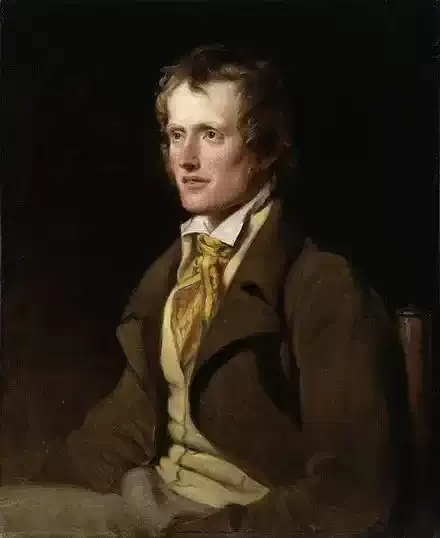
John Clare
The Fens
The Fens
Wandering by the river's edge,
I love to rustle through the sedge
And through the woods of reed to tear
Almost as high as bushes are.
Yet, turning quick with shudder chill,
As danger ever does from ill,
Fear's moment ague quakes the blood,
While plop the snake coils in the flood
And, hissing with a forked tongue,
Across the river winds along.
In coat of orange, green, and blue
Now on a willow branch I view,
Grey waving to the sunny gleam,
Kingfishers watch the ripple stream
For little fish that nimble bye
And in the gravel shallows lie.
Eddies run before the boats,
Gurgling where the fisher floats,
Who takes advantage of the gale
And hoists his handkerchief for sail
On osier twigs that form a mast--
While idly lies, nor wanted more,
The spirit that pushed him on before.
There's not a hill in all the view,
Save that a forked cloud or two
Upon the verge of distance lies
And into mountains cheats the eyes.
And as to trees the willows wear
Lopped heads as high as bushes are;
Some taller things the distance shrouds
That may be trees or stacks or clouds
Or may be nothing; still they wear
A semblance where there's nought to spare.
Among the tawny tasselled reed
The ducks and ducklings float and feed.
With head oft dabbing in the flood
They fish all day the weedy mud,
And tumbler-like are bobbing there,
Heels topsy turvy in the air.
The geese in troops come droving up,
Nibble the weeds, and take a sup;
And, closely puzzled to agree,
Chatter like gossips over tea.
The gander with his scarlet nose
When strife's at height will interpose;
And, stretching neck to that and this,
With now a mutter, now a hiss,
A nibble at the feathers too,
A sort of 'pray be quiet do,'
And turning as the matter mends,
He stills them into mutual friends;
Then in a sort of triumph sings
And throws the water oer his wings.
Ah, could I see a spinney nigh,
A puddock riding in the sky
Above the oaks with easy sail
On stilly wings and forked tail,
Or meet a heath of furze in flower,
I might enjoy a quiet hour,
Sit down at rest, and walk at ease,
And find a many things to please.
But here my fancy's moods admire
The naked levels till they tire,
Nor een a molehill cushion meet
To rest on when I want a seat.
Here's little save the river scene
And grounds of oats in rustling green
And crowded growth of wheat and beans,
That with the hope of plenty leans
And cheers the farmer's gazing brow,
Who lives and triumphs in the plough--
One sometimes meets a pleasant sward
Of swarthy grass; and quickly marred
The plough soon turns it into brown,
And, when again one rambles down
The path, small hillocks burning lie
And smoke beneath a burning sky.
Green paddocks have but little charms
With gain the merchandise of farms;
And, muse and marvel where we may,
Gain mars the landscape every day--
The meadow grass turned up and copt,
The trees to stumpy dotterels lopt,
The hearth with fuel to supply
For rest to smoke and chatter bye;
Giving the joy of home delights,
The warmest mirth on coldest nights.
And so for gain, that joy's repay,
Change cheats the landscape every day,
Nor trees nor bush about it grows
That from the hatchet can repose,
And the horizon stooping smiles
Oer treeless fens of many miles.
Spring comes and goes and comes again
And all is nakedness and fen.
Wandering by the river's edge,
I love to rustle through the sedge
And through the woods of reed to tear
Almost as high as bushes are.
Yet, turning quick with shudder chill,
As danger ever does from ill,
Fear's moment ague quakes the blood,
While plop the snake coils in the flood
And, hissing with a forked tongue,
Across the river winds along.
In coat of orange, green, and blue
Now on a willow branch I view,
Grey waving to the sunny gleam,
Kingfishers watch the ripple stream
For little fish that nimble bye
And in the gravel shallows lie.
Eddies run before the boats,
Gurgling where the fisher floats,
Who takes advantage of the gale
And hoists his handkerchief for sail
On osier twigs that form a mast--
While idly lies, nor wanted more,
The spirit that pushed him on before.
There's not a hill in all the view,
Save that a forked cloud or two
Upon the verge of distance lies
And into mountains cheats the eyes.
And as to trees the willows wear
Lopped heads as high as bushes are;
Some taller things the distance shrouds
That may be trees or stacks or clouds
Or may be nothing; still they wear
A semblance where there's nought to spare.
Among the tawny tasselled reed
The ducks and ducklings float and feed.
With head oft dabbing in the flood
They fish all day the weedy mud,
And tumbler-like are bobbing there,
Heels topsy turvy in the air.
The geese in troops come droving up,
Nibble the weeds, and take a sup;
And, closely puzzled to agree,
Chatter like gossips over tea.
The gander with his scarlet nose
When strife's at height will interpose;
And, stretching neck to that and this,
With now a mutter, now a hiss,
A nibble at the feathers too,
A sort of 'pray be quiet do,'
And turning as the matter mends,
He stills them into mutual friends;
Then in a sort of triumph sings
And throws the water oer his wings.
Ah, could I see a spinney nigh,
A puddock riding in the sky
Above the oaks with easy sail
On stilly wings and forked tail,
Or meet a heath of furze in flower,
I might enjoy a quiet hour,
Sit down at rest, and walk at ease,
And find a many things to please.
But here my fancy's moods admire
The naked levels till they tire,
Nor een a molehill cushion meet
To rest on when I want a seat.
Here's little save the river scene
And grounds of oats in rustling green
And crowded growth of wheat and beans,
That with the hope of plenty leans
And cheers the farmer's gazing brow,
Who lives and triumphs in the plough--
One sometimes meets a pleasant sward
Of swarthy grass; and quickly marred
The plough soon turns it into brown,
And, when again one rambles down
The path, small hillocks burning lie
And smoke beneath a burning sky.
Green paddocks have but little charms
With gain the merchandise of farms;
And, muse and marvel where we may,
Gain mars the landscape every day--
The meadow grass turned up and copt,
The trees to stumpy dotterels lopt,
The hearth with fuel to supply
For rest to smoke and chatter bye;
Giving the joy of home delights,
The warmest mirth on coldest nights.
And so for gain, that joy's repay,
Change cheats the landscape every day,
Nor trees nor bush about it grows
That from the hatchet can repose,
And the horizon stooping smiles
Oer treeless fens of many miles.
Spring comes and goes and comes again
And all is nakedness and fen.
370

Emily Dickinson
Some Rainbow—coming from the Fair!
Some Rainbow—coming from the Fair!
64
Some Rainbow—coming from the Fair!
Some Vision of the World Cashmere—
I confidently see!
Or else a Peacock's purple Train
Feather by feather—on the plain
Fritters itself away!
The dreamy Butterflies bestir!
Lethargic pools resume the whir
Of last year's sundered tune!
From some old Fortress on the sun
Baronial Bees—march—one by one—
In murmuring platoon!
The Robins stand as thick today
As flakes of snow stood yesterday—
On fence—and Roof—and Twig!
The Orchis binds her feather on
For her old lover - Don the Sun!
Revisiting the Bog!
Without Commander! Countless! Still!
The Regiments of Wood and Hill
In bright detachment stand!
Behold! Whose Multitudes are these?
The children of whose turbaned seas—
Or what Circassian Land?
64
Some Rainbow—coming from the Fair!
Some Vision of the World Cashmere—
I confidently see!
Or else a Peacock's purple Train
Feather by feather—on the plain
Fritters itself away!
The dreamy Butterflies bestir!
Lethargic pools resume the whir
Of last year's sundered tune!
From some old Fortress on the sun
Baronial Bees—march—one by one—
In murmuring platoon!
The Robins stand as thick today
As flakes of snow stood yesterday—
On fence—and Roof—and Twig!
The Orchis binds her feather on
For her old lover - Don the Sun!
Revisiting the Bog!
Without Commander! Countless! Still!
The Regiments of Wood and Hill
In bright detachment stand!
Behold! Whose Multitudes are these?
The children of whose turbaned seas—
Or what Circassian Land?
233
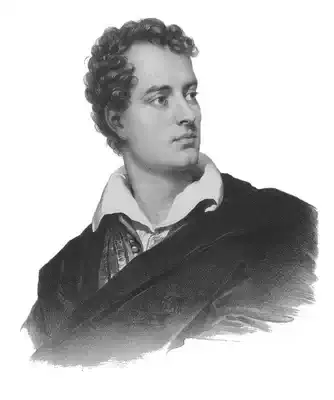
Lord Byron
Remember Thee! Remember Thee!
Remember Thee! Remember Thee!
Remember thee! remember thee!
Till Lethe quench life's burning stream
Remorse and shame shall cling to thee,
And haunt thee like a feverish dream!
Remember thee! Aye, doubt it not.
Thy husband too shall think of thee:
By neither shalt thou be forgot,
Thou false to him, thou fiend to me!
Remember thee! remember thee!
Till Lethe quench life's burning stream
Remorse and shame shall cling to thee,
And haunt thee like a feverish dream!
Remember thee! Aye, doubt it not.
Thy husband too shall think of thee:
By neither shalt thou be forgot,
Thou false to him, thou fiend to me!
392
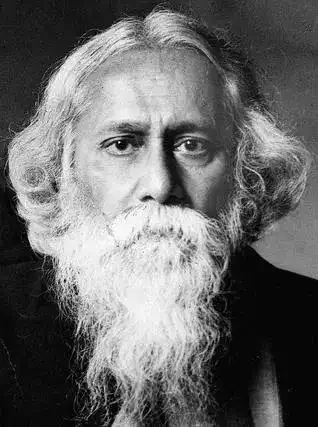
Rabindranath Tagore
The Gardener XLII: O Mad, Superbly Drunk
The Gardener XLII: O Mad, Superbly Drunk
O mad, superbly drunk;
If you kick open your doors and
play the fool in public;
If you empty your bag in a night,
and snap your fingers at prudence;
If you walk in curious paths and
play with useless things;
Reck not rhyme or reason;
If unfurling your sails before the
storm you snap the rudder in two,
Then I will follow you, comrade,
and be drunken and go to the dogs.
I have wasted my days and nights
in the company of steady wise neighbours.
Much knowing has turned my hair
grey, and much watching has made
my sight dim.
For years I have gathered and
heaped up scraps and fragments of
things:
Crush them and dance upon them,
and scatter them all to the winds.
For I know 'tis the height of wisdom
to be drunken and go the dogs.
Let all crooked scruples vanish,
let me hopelessly lose my way.
Let a gust of wild giddiness come
and sweep me away from my anchors.
The world is peopled with worthies,
and workers, useful and clever.
There are men who are easily first,
and men who come decently after.
Let them be happy and prosper,
and let me be foolishly futile.
For I know 'tis the end of all works
to be drunken and go to the dogs.
I swear to surrender this moment
all claims to the ranks of the decent.
I let go my pride of learning and
judgment of right and of wrong.
I'll shatter memory's vessel, scattering
the last drop of tears.
With the foam of the berry-red
wine I will bathe and brighten my
laughter.
The badge of the civil and staid
I'll tear into shreds for the nonce.
I'll take the holy vow to be worthless,
to be drunken and go to the dogs.
O mad, superbly drunk;
If you kick open your doors and
play the fool in public;
If you empty your bag in a night,
and snap your fingers at prudence;
If you walk in curious paths and
play with useless things;
Reck not rhyme or reason;
If unfurling your sails before the
storm you snap the rudder in two,
Then I will follow you, comrade,
and be drunken and go to the dogs.
I have wasted my days and nights
in the company of steady wise neighbours.
Much knowing has turned my hair
grey, and much watching has made
my sight dim.
For years I have gathered and
heaped up scraps and fragments of
things:
Crush them and dance upon them,
and scatter them all to the winds.
For I know 'tis the height of wisdom
to be drunken and go the dogs.
Let all crooked scruples vanish,
let me hopelessly lose my way.
Let a gust of wild giddiness come
and sweep me away from my anchors.
The world is peopled with worthies,
and workers, useful and clever.
There are men who are easily first,
and men who come decently after.
Let them be happy and prosper,
and let me be foolishly futile.
For I know 'tis the end of all works
to be drunken and go to the dogs.
I swear to surrender this moment
all claims to the ranks of the decent.
I let go my pride of learning and
judgment of right and of wrong.
I'll shatter memory's vessel, scattering
the last drop of tears.
With the foam of the berry-red
wine I will bathe and brighten my
laughter.
The badge of the civil and staid
I'll tear into shreds for the nonce.
I'll take the holy vow to be worthless,
to be drunken and go to the dogs.
549
William Shakespeare
Sonnet 10: For shame, deny that thou bear'st love to any
Sonnet 10: For shame, deny that thou bear'st love to any
For shame, deny that thou bear'st love to any
Who for thy self art so unprovident.
Grant, if thou wilt, thou art beloved of many,
But that thou none lov'st is most evident;
For thou art so possessed with murd'rous hate,
That 'gainst thy self thou stick'st not to conspire,
Seeking that beauteous roof to ruinate
Which to repair should be thy chief desire.
O, change thy thought, that I may change my mind!
Shall hate be fairer lodged than gentle love?
Be as thy presence is gracious and kind,
Or to thy self at least kind-hearted prove,
Make thee another self, for love of me,
That beauty still may live in thine or thee.
For shame, deny that thou bear'st love to any
Who for thy self art so unprovident.
Grant, if thou wilt, thou art beloved of many,
But that thou none lov'st is most evident;
For thou art so possessed with murd'rous hate,
That 'gainst thy self thou stick'st not to conspire,
Seeking that beauteous roof to ruinate
Which to repair should be thy chief desire.
O, change thy thought, that I may change my mind!
Shall hate be fairer lodged than gentle love?
Be as thy presence is gracious and kind,
Or to thy self at least kind-hearted prove,
Make thee another self, for love of me,
That beauty still may live in thine or thee.
317

Edward Lear
Limerick: There was a Young Lady whose nose
Limerick: There was a Young Lady whose nose
There was a Young Lady whose nose,
Was so long that it reached to her toes;
So she hired an Old Lady,
Whose conduct was steady,
To carry that wonderful nose.
There was a Young Lady whose nose,
Was so long that it reached to her toes;
So she hired an Old Lady,
Whose conduct was steady,
To carry that wonderful nose.
196
Emily Dickinson
Soil of Flint, if steady tilled
Soil of Flint, if steady tilled
681
Soil of Flint, if steady tilled-
Will refund by Hand-
Seed of Palm, by Libyan Sun
Fructified in Sand-
681
Soil of Flint, if steady tilled-
Will refund by Hand-
Seed of Palm, by Libyan Sun
Fructified in Sand-
301
Lord Byron
Prometheus
Prometheus
Titan! to whose immortal eyes
The sufferings of mortality,
Seen in their sad reality,
Were not as things that gods despise;
What was thy pity's recompense?
A silent suffering, and intense;
The rock, the vulture, and the chain,
All that the proud can feel of pain,
The agony they do not show,
The suffocating sense of woe,
Which speaks but in its loneliness,
And then is jealous lest the sky
Should have a listener, nor will sigh
Until its voice is echoless.
Titan! to thee the strife was given
Between the suffering and the will,
Which torture where they cannot kill;
And the inexorable Heaven,
And the deaf tyranny of Fate,
The ruling principle of Hate,
Which for its pleasure doth create
The things it may annihilate,
Refus'd thee even the boon to die:
The wretched gift Eternity
Was thineand
thou hast borne it well.
All that the Thunderer wrung from thee
Was but the menace which flung back
On him the torments of thy rack;
The fate thou didst so well foresee,
But would not to appease him tell;
And in thy Silence was his Sentence,
And in his Soul a vain repentance,
And evil dread so ill dissembled,
That in his hand the lightnings trembled.
Thy Godlike crime was to be kind,
To render with thy precepts less
The sum of human wretchedness,
And strengthen Man with his own mind;
But baffled as thou wert from high,
Still in thy patient energy,
In the endurance, and repulse
Of thine impenetrable Spirit,
Which Earth and Heaven could not convulse,
A mighty lesson we inherit:
Thou art a symbol and a sign
To Mortals of their fate and force;
Like thee, Man is in part divine,
A troubled stream from a pure source;
And Man in portions can foresee
His own funereal destiny;
His wretchedness, and his resistance,
And his sad unallied existence:
To which his Spirit may oppose
Itselfand
equal to all woes,
And a firm will, and a deep sense,
Which even in torture can descry
Its own concenter'd recompense,
Triumphant where it dares defy,
And making Death a Victory.
Titan! to whose immortal eyes
The sufferings of mortality,
Seen in their sad reality,
Were not as things that gods despise;
What was thy pity's recompense?
A silent suffering, and intense;
The rock, the vulture, and the chain,
All that the proud can feel of pain,
The agony they do not show,
The suffocating sense of woe,
Which speaks but in its loneliness,
And then is jealous lest the sky
Should have a listener, nor will sigh
Until its voice is echoless.
Titan! to thee the strife was given
Between the suffering and the will,
Which torture where they cannot kill;
And the inexorable Heaven,
And the deaf tyranny of Fate,
The ruling principle of Hate,
Which for its pleasure doth create
The things it may annihilate,
Refus'd thee even the boon to die:
The wretched gift Eternity
Was thineand
thou hast borne it well.
All that the Thunderer wrung from thee
Was but the menace which flung back
On him the torments of thy rack;
The fate thou didst so well foresee,
But would not to appease him tell;
And in thy Silence was his Sentence,
And in his Soul a vain repentance,
And evil dread so ill dissembled,
That in his hand the lightnings trembled.
Thy Godlike crime was to be kind,
To render with thy precepts less
The sum of human wretchedness,
And strengthen Man with his own mind;
But baffled as thou wert from high,
Still in thy patient energy,
In the endurance, and repulse
Of thine impenetrable Spirit,
Which Earth and Heaven could not convulse,
A mighty lesson we inherit:
Thou art a symbol and a sign
To Mortals of their fate and force;
Like thee, Man is in part divine,
A troubled stream from a pure source;
And Man in portions can foresee
His own funereal destiny;
His wretchedness, and his resistance,
And his sad unallied existence:
To which his Spirit may oppose
Itselfand
equal to all woes,
And a firm will, and a deep sense,
Which even in torture can descry
Its own concenter'd recompense,
Triumphant where it dares defy,
And making Death a Victory.
520

Ella Wheeler Wilcox
The Winds of Fate
The Winds of Fate
One ship drives east and another drives west
With the selfsame winds that blow.
Tis the set of the sails
And not the gales
Which tells us the way to go.
Like the winds of the seas are the ways of fate,
As we voyage along through the life:
Tis the set of a soul
That decides its goal,
And not the calm or the strife.
One ship drives east and another drives west
With the selfsame winds that blow.
Tis the set of the sails
And not the gales
Which tells us the way to go.
Like the winds of the seas are the ways of fate,
As we voyage along through the life:
Tis the set of a soul
That decides its goal,
And not the calm or the strife.
322
William Shakespeare
Sonnet 1:
Sonnet 1:
From fairest creatures we desire increase,
That thereby beauty's rose might never die,
But as the riper should by time decease,
His tender heir might bear his memory:
But thou, contracted to thine own bright eyes,
Feed'st thy light'st flame with self-substantial fuel,
Making a famine where abundance lies,
Thyself thy foe, to thy sweet self too cruel.
Thou that art now the world's fresh ornament
And only herald to the gaudy spring,
Within thine own bud buriest thy content
And, tender churl, makest waste in niggarding.
Pity the world, or else this glutton be,
To eat the world's due, by the grave and thee.
From fairest creatures we desire increase,
That thereby beauty's rose might never die,
But as the riper should by time decease,
His tender heir might bear his memory:
But thou, contracted to thine own bright eyes,
Feed'st thy light'st flame with self-substantial fuel,
Making a famine where abundance lies,
Thyself thy foe, to thy sweet self too cruel.
Thou that art now the world's fresh ornament
And only herald to the gaudy spring,
Within thine own bud buriest thy content
And, tender churl, makest waste in niggarding.
Pity the world, or else this glutton be,
To eat the world's due, by the grave and thee.
292
John Clare
The Fallen Elm
The Fallen Elm
Old elm that murmured in our chimney top
The sweetest anthem autumn ever made
And into mellow whispering calms would drop
When showers fell on thy many coloured shade
And when dark tempests mimic thunder made -
While darkness came as it would strangle light
With the black tempest of a winter night
That rocked thee like a cradle in thy root -
How did I love to hear the winds upbraid
Thy strength without - while all within was mute.
It seasoned comfort to our hearts' desire,
We felt that kind protection like a friend
And edged our chairs up closer to the fire,
Enjoying comfort that was never penned.
Old favourite tree, thou'st seen time's changes lower,
Though change till now did never injure thee;
For time beheld thee as her sacred dower
And nature claimed thee her domestic tree.
Storms came and shook thee many a weary hour,
Yet stedfast to thy home thy roots have been;
Summers of thirst parched round thy homely bower
Till earth grew iron - still thy leaves were green.
The children sought thee in thy summer shade
And made their playhouse rings of stick and stone;
The mavis sang and felt himself alone
While in thy leaves his early nest was made,
And I did feel his happiness mine own,
Nought heeding that our friendship was betrayed,
Friend not inanimate - though stocks and stones
There are, and many formed of flesh and bones.
Thou owned a language by which hearts are stirred
Deeper than by a feeling clothed in word,
And speakest now what's known of every tongue,
Language of pity and the force of wrong.
What cant assumes, what hypocrites will dare,
Speaks home to truth and shows it what they are.
I see a picture which thy fate displays
And learn a lesson from thy destiny;
Self-interest saw thee stand in freedom's ways -
So thy old shadow must a tyrant be.
Thou'st heard the knave, abusing those in power,
Bawl freedom loud and then oppress the free;
Thou'st sheltered hypocrites in many a shower,
That when in power would never shelter thee.
Thou'st heard the knave supply his canting powers
With wrong's illusions when he wanted friends;
That bawled for shelter when he lived in showers
And when clouds vanished made thy shade amends -
With axe at root he felled thee to the ground
And barked of freedom - O I hate the sound
Time hears its visions speak, - and age sublime
Hath made thee a disciple unto time.
-It grows the cant term of enslaving tools
To wrong another by the name of right;
Thus came enclosure - ruin was its guide,
But freedom's cottage soon was thrust aside
And workhouse prisons raised upon the site.
Een nature's dwellings far away from men,
The common heath, became the spoiler's prey;
The rabbit had not where to make his den
And labour's only cow was drove away.
No matter - wrong was right and right was wrong,
And freedom's bawl was sanction to the song.
-Such was thy ruin, music-making elm;
The right of freedom was to injure thine:
As thou wert served, so would they overwhelm
In freedom's name the little that is mine.
And there are knaves that brawl for better laws
And cant of tyranny in stronger power
Who glut their vile unsatiated maws
And freedom's birthright from the weak devour.
Old elm that murmured in our chimney top
The sweetest anthem autumn ever made
And into mellow whispering calms would drop
When showers fell on thy many coloured shade
And when dark tempests mimic thunder made -
While darkness came as it would strangle light
With the black tempest of a winter night
That rocked thee like a cradle in thy root -
How did I love to hear the winds upbraid
Thy strength without - while all within was mute.
It seasoned comfort to our hearts' desire,
We felt that kind protection like a friend
And edged our chairs up closer to the fire,
Enjoying comfort that was never penned.
Old favourite tree, thou'st seen time's changes lower,
Though change till now did never injure thee;
For time beheld thee as her sacred dower
And nature claimed thee her domestic tree.
Storms came and shook thee many a weary hour,
Yet stedfast to thy home thy roots have been;
Summers of thirst parched round thy homely bower
Till earth grew iron - still thy leaves were green.
The children sought thee in thy summer shade
And made their playhouse rings of stick and stone;
The mavis sang and felt himself alone
While in thy leaves his early nest was made,
And I did feel his happiness mine own,
Nought heeding that our friendship was betrayed,
Friend not inanimate - though stocks and stones
There are, and many formed of flesh and bones.
Thou owned a language by which hearts are stirred
Deeper than by a feeling clothed in word,
And speakest now what's known of every tongue,
Language of pity and the force of wrong.
What cant assumes, what hypocrites will dare,
Speaks home to truth and shows it what they are.
I see a picture which thy fate displays
And learn a lesson from thy destiny;
Self-interest saw thee stand in freedom's ways -
So thy old shadow must a tyrant be.
Thou'st heard the knave, abusing those in power,
Bawl freedom loud and then oppress the free;
Thou'st sheltered hypocrites in many a shower,
That when in power would never shelter thee.
Thou'st heard the knave supply his canting powers
With wrong's illusions when he wanted friends;
That bawled for shelter when he lived in showers
And when clouds vanished made thy shade amends -
With axe at root he felled thee to the ground
And barked of freedom - O I hate the sound
Time hears its visions speak, - and age sublime
Hath made thee a disciple unto time.
-It grows the cant term of enslaving tools
To wrong another by the name of right;
Thus came enclosure - ruin was its guide,
But freedom's cottage soon was thrust aside
And workhouse prisons raised upon the site.
Een nature's dwellings far away from men,
The common heath, became the spoiler's prey;
The rabbit had not where to make his den
And labour's only cow was drove away.
No matter - wrong was right and right was wrong,
And freedom's bawl was sanction to the song.
-Such was thy ruin, music-making elm;
The right of freedom was to injure thine:
As thou wert served, so would they overwhelm
In freedom's name the little that is mine.
And there are knaves that brawl for better laws
And cant of tyranny in stronger power
Who glut their vile unsatiated maws
And freedom's birthright from the weak devour.
395
Lord Byron
Oscar Of Alva: A Tale
Oscar Of Alva: A Tale
How sweetly shines through azure skies,
The lamp of heaven on Lora's shore;
Where Alva's hoary turrets rise,
And hear the din of arms no more!
But often has yon rolling moon
On Alva's casques of silver play'd;
And view'd at midnight's silent noon,
Her chief's in gleaming mail array'd:
And on the crimson'd rocks beneath,
Which scowl o'er ocean's sullen flow,
Pale in the scatter'd runks of death,
She saw the gasping warrior low;
While many an eye which ne'er again
Could mark the rising orb of day,
T'urn'd feebly from the gory plain,
Beheld in death her fading ray.
Once to those eyes the lamp of Love,
They blest her dear propitious light;
But now she glimmer'd from above,
A sad, funereal torch of night.
Faded is Alva's noble race,
And gray her towers are seen afar;
No more her heroes urge the chase,
Or roll the crimson tide of war.
But who was last of Alva's clan?
Why grows the moss on Alva's stone?
Her towers resound no steps of man,
They echo to the gale alone.
And when that gale is fierce and high,
A sound is heard in yonder hall;
It rises hoarsely through the sky,
And vibrates o'er the mould'ring wall.
Yes, when the eddying tempest sighs,
It shakes the shield of Oscar brave;
But there no more his banners rise,
No more his plumes of sable wave.
Fair shone the sun on Oscar's birth,
When Angus hail'd his eldest born
The vassals round their chieftain's hearth
Crowd to applaud the happy morn.
They feast upon the mountain deer,
The pibroch raised its piercing note;
To gladden more their highland cheer,
The strains in martial numbers float:
And they who heard the warnotes
wild
Hoped that one day the pibroch's strain
Should play belore the hero's child
While he should lead the tartan train.
Another year is qulckly past,
And Angus hails another son;
His natal day is like the last,
Nor soon the jocund feast was done.
Taught by their sire to bend the bow,
On Alva's dusky hills of wind,
The boys in childhood chased the roe,
And left their hounds in speed behind.
But ere their years of youth are o'er,
They mingle in the ranks of war;
They lightly wheel the bright claymore
And send the whistling arrow far.
Dark was the flow of Oscar's hair,
Wildly it stream'd along the gale;
But Allan's locks were bright and fair,
And pensive seem'd his cheek, and pale.
But Oscar own'd a hero's soul,
His dark eye shone through beams of truth;
Allan had early learn'd control,
And smooth his words had been from youth.
Both, both were brave; the Saxon spear
Was shiver'd oft beneath their steel;
And Oscar's bosom scorn'd to fear,
But Oscar's bosom knew to feel;
While Allan's soul belied his form,
Unworthy with such charms to dwell:
Keen as the lightning of the storm,
On foe, his deadly vengeance fell.
From high Southannon's distant tower
Arrived a young and noble dame;
With Kenneth's lands to form her dower,
Glenalvon's blueeyed
daughter came;
And Oscar claim'd the beauteous bride,
And Angus on his Oscar srniled:
It soothed the father's feudal pride
Thus to obtain Glenalvon's child.
Hark to the pibroch's pleasing note!
Hark to the swelling nuptial song!
In joyous strains the voices float,
And still the choral peal prolong.
See how the heroes' bloodred
plumes
Assembled wave in Alva's hall;
Each youth his varied plaid assumes,
Attending on thir chieftain's call.
It is not war their aid demands,
The pibroch plays the song of peace;
To Oscar's nuptials throng the bands,
Nor yet the sounds of pleasure cease.
But where is Oscar? sure 'tis late:
Is this a bridegroom's ardent flame?
While thronging guests and ladies wait,
Nor Oscar nor his brother came.
At length young Allan join'd the bride;
'Why comes not Oscar?' Angus said:
Is he not here?' the youth replied;
'With me he roved not o'er the glade:
'Perchance, forgetful of the day,
'Tis his to chase the bounding roe;
Or ocean's waves prolong his stay;
Yet Oscar's bark is seldom slow.'
'Oh, no!' the anguish'd Sire rejoin'd,
'Nor chase nor wave, my boy delay;
Would he to Mora seem unkind?
Would aught to her impede his way?
'Oh, search, ye chiefs! oh, search around!
Allan, with these through Alva fly;
Till Oscar, till my son is found,
Haste, haste, nor dare attempt reply.'
All is confusion — through the vale
The name of Oscar hoarsely rings,
It rises on the murmuring gale,
Till night expands her dusky wings;
It breaks the stillness of the night,
But echoes through her shades in vain;
It sounds through morning's misty light,
But Oscar comes not o'er the plain.
Three days,three sleepless nights, the Chief
For Oscar search'd each mountaln cave:
Then hope is lost; in boundless grief,
His locks in graytorn
ringlets wave.
'Oscar! my son! thou God of heaven,
Restore the prop of sinking age!
Or if that hope no more is given,
Yield his assassin to my rage.
'Yes, on some desert rocky shore
My Oscar's whiten'd bones must lie;
Then grant, thou God! I ask no more,
With him his frantic sire may die!
'Yet he may live, — away, despalr!
Be calm, my soul! he yet may live;
T'arraign my fate, my voice forbear!
O God! my impious prayer forgive.
'What, if he live for me no more,
I sink forgotten in the dust,
The hope of Alva's age is o'er:
Alas! can pangs like these be just?'
Thus did the hapless parent mourn,
Till Time, which soothes severest woe,
Had bade serenity return
And made the teardrop
cease to flow.
For still some latent hope survived
That Oscar might once more appear;
His hope now droop'd and now revived,
Till Time had told a tedious year.
Days roll'd along, the orb of light
Again had run his destined race;
No Oscar bless'd his father's sight,
And sorrow left a fainter trace.
For youthful Allan still remain'd,
And now his father's only joy:
And Mora's heart was quickly gain'd,
For beauty crown'd the fairhair'd
boy.
She thought that Oscar low was laid,
And Allan's face was wondrous fair;
If Oscar lived, some other maid
Had clairn'd his faithless bosom's care.
And Angus said, if one year more
In fruitless hope was pass'd away,
His fondest scruples should be o'er,
And he would name their nuptial day.
Slow roll'd the moons, but blest at last
Arrived the dearly destined morn
The year of anxious trembling past,
What smiles the lovers' cheeks adorn!
Hark to the pibroch's pleasing note!
Hark to the swelling nuptial song!
In joyous strains the voices float,
And still the choral peal prolong.
Again the clan, in festive crowd,
Throng through the gate of Alva's hall;
The sounds of mirth reecho
loud,
And all their former joy recall.
But who is he, whose darken'd brow
Glooms in the midst of general mirth?
Before his eyes' far fiercer glow
The blue flames curdle o'er the hearth.
Dark is the robe which wraps his form,
And tall his plume of gory red;
His voice is like the rising storm,
But light and trackless is his tread.
'Tis noon of night, the pledge goes round,
The bridegroom's health is deeply quaff'd;
With shouts the vaulted roofs resound,
And all combine to hail the draught.
Sudden the strangerchief
arose,
And all the clamorous crowd are hush'd;
And Angus' cheek with wonder glows,
And Mora's tender bosom blush'd
'Old rnan!'he cried,'this pledge is done;
Thou saw'st 'twas duly drank by me;
It hail'd the nuptials of thy son:
Now will I claim a pledge from thee.
'While all around is mirth and joy,
To bless thy Allan's happy lot,
Say, hadst thou ne'er another boy?
Say, why should Oscar be forgot?'
'Alas!' the hapless sire replied,
The big tear starting as he spoke
'When Oscar left my hail, or died,
This aged heart was almost broke,
'Thrice has the earth revolved her course
Since Oscar's form has bless'd my sight;
And Allan is my last resource,
Since martial Oscar's death or flight.'
'Tis well,' replied the stranger stern,
And fiercely flash'd his rolling eye;
'Thy Oscar's fate I fain would learn;
Perhaps the hero did not die.
'Perhaps, if those whom most he loved
Would call, thy Oscar might return;
Perchance the chief has only roved;
For him thy beltane yet may burn.
'Fill high the bowl the table round,
We will not climb the pledge by stealth;
With wine let every cup be crown'd
Pledge me departed Oscar's health.'
'With all my soul,' old Angus said,
And fill'd his goblet to the brim:
'Here's to my boy! alive or dead'
I ne'er shall find a son like him'
'Bravely. old man this health has sped;
But why does Allan trembling stand?
Come, drink remembrance of the dead,
And raise thy cup with firmer hand.'
The crimson glow of Allan's face
Was turn'd at once to ghastly hue;
The drops of death each other chase
Adown in agonizing dew.
Thrice did he raise the goblet high,
And thrice his lips refused to taste;
For thrice he caught the stranger's eye
On his with deadly fury placed.
'And is it thus a brother's hails
A brother's fond remembrance here?
If thus affection's strength prevails'
What might we not expect from fear?'
Roused by the sneer, he raised the bowl,
'Would Oscar now could share our mirth!'
Internal fear appall'd his soul;
He said and dash'd the cap to earth,
'Tis he! I hear my murderer's voice!'
Loud shrieks a darkly gleaming form.
'A murderer's voice!' the roof replies,
And deeply swells the bursting storm,
The tapers wink, the chieftains shrink,
The stranger's gone, — amidst the crew,
A form was seen in tartan green,
And tall the shade terrific grew.
His waist was bound with a broad belt round,
His plume of sable stream'd on high;
But his breast was bare, with the red wounds there,
And fix'd was the glare of his glassy eye.
And thrice he smiled, with his eyes so wild,
On Angus bending low the knee;
And thrice he frown'd on a chief on the ground
Whom shivering crowds with horror see
The bolts loud roll from pole to pole
The thunders through the welkin ring,
And the gleaming form, through the mist of the storm,
Was borne on high by the whirlwind's wing
Cold was the feast, the revel ceased.
Who lies upon the stony floor?
Oblivion press'd old Angus' breast,
At length his lifepulse
throbs once more.
'Away, away! let the leech essay
To pour the light on Allan's eyes;'
His sand is done, – his race is run –
Oh! never more shall Allan rise!
But Oscar's breast is cold as clay,
His locks are lifted by the gale;
And Allan's barbed arrow lay
With him In dark Glentanar's vale.
And whence the dreadful stranger came,
Or who, no mortal wight can tell;
But no one doubts the form of flame,
For Alva's sons knew Oscar well.
Ambition nerved young Allan's hand,
Exulting demons wing'd his dart;
While Envy waved her burnng brand,
And pour'd her venom round his heart.
Swift is the shaft from Allan's bow;
Whose streaming lifeblood
stains his side?
Dark Oscar's sable crest is low,
The dart has drunk his vital tide.
And Mora's eyes could Allan move,
She bade his wounded pride rebel:
Alas! that eyes which beam'd with love
Should urge the soul to deeds of hell.
Lo! seest thou not a lonely tomb
Which rises o'er a warrior dead?
It glimmers through the twilight gloom;
Oh! that is Allan's nuptial bed.
Far distant far, the noble grave
Which held his clan's great ashes stood;
And o'er his corse no banners wave,
For they were stain'd with kindred blood.
What minstrel gray, what hoary bard,
Shall Allan's deeds on harpstrings
raise?
The song is glory's chief reward,
But who can strike a murderer's praise?
Unstrung, untouch'd, th harp must stand,
No minstrel dare the theme awake;
Guilt would benumb his palsied hand,
His harp in shuddering chords would break.
No lyre of fame, no hallow'd verse,
Shall sound his glories high in air:
A dying father's bitter curse,
A brother's deathgroan
echoes there.
How sweetly shines through azure skies,
The lamp of heaven on Lora's shore;
Where Alva's hoary turrets rise,
And hear the din of arms no more!
But often has yon rolling moon
On Alva's casques of silver play'd;
And view'd at midnight's silent noon,
Her chief's in gleaming mail array'd:
And on the crimson'd rocks beneath,
Which scowl o'er ocean's sullen flow,
Pale in the scatter'd runks of death,
She saw the gasping warrior low;
While many an eye which ne'er again
Could mark the rising orb of day,
T'urn'd feebly from the gory plain,
Beheld in death her fading ray.
Once to those eyes the lamp of Love,
They blest her dear propitious light;
But now she glimmer'd from above,
A sad, funereal torch of night.
Faded is Alva's noble race,
And gray her towers are seen afar;
No more her heroes urge the chase,
Or roll the crimson tide of war.
But who was last of Alva's clan?
Why grows the moss on Alva's stone?
Her towers resound no steps of man,
They echo to the gale alone.
And when that gale is fierce and high,
A sound is heard in yonder hall;
It rises hoarsely through the sky,
And vibrates o'er the mould'ring wall.
Yes, when the eddying tempest sighs,
It shakes the shield of Oscar brave;
But there no more his banners rise,
No more his plumes of sable wave.
Fair shone the sun on Oscar's birth,
When Angus hail'd his eldest born
The vassals round their chieftain's hearth
Crowd to applaud the happy morn.
They feast upon the mountain deer,
The pibroch raised its piercing note;
To gladden more their highland cheer,
The strains in martial numbers float:
And they who heard the warnotes
wild
Hoped that one day the pibroch's strain
Should play belore the hero's child
While he should lead the tartan train.
Another year is qulckly past,
And Angus hails another son;
His natal day is like the last,
Nor soon the jocund feast was done.
Taught by their sire to bend the bow,
On Alva's dusky hills of wind,
The boys in childhood chased the roe,
And left their hounds in speed behind.
But ere their years of youth are o'er,
They mingle in the ranks of war;
They lightly wheel the bright claymore
And send the whistling arrow far.
Dark was the flow of Oscar's hair,
Wildly it stream'd along the gale;
But Allan's locks were bright and fair,
And pensive seem'd his cheek, and pale.
But Oscar own'd a hero's soul,
His dark eye shone through beams of truth;
Allan had early learn'd control,
And smooth his words had been from youth.
Both, both were brave; the Saxon spear
Was shiver'd oft beneath their steel;
And Oscar's bosom scorn'd to fear,
But Oscar's bosom knew to feel;
While Allan's soul belied his form,
Unworthy with such charms to dwell:
Keen as the lightning of the storm,
On foe, his deadly vengeance fell.
From high Southannon's distant tower
Arrived a young and noble dame;
With Kenneth's lands to form her dower,
Glenalvon's blueeyed
daughter came;
And Oscar claim'd the beauteous bride,
And Angus on his Oscar srniled:
It soothed the father's feudal pride
Thus to obtain Glenalvon's child.
Hark to the pibroch's pleasing note!
Hark to the swelling nuptial song!
In joyous strains the voices float,
And still the choral peal prolong.
See how the heroes' bloodred
plumes
Assembled wave in Alva's hall;
Each youth his varied plaid assumes,
Attending on thir chieftain's call.
It is not war their aid demands,
The pibroch plays the song of peace;
To Oscar's nuptials throng the bands,
Nor yet the sounds of pleasure cease.
But where is Oscar? sure 'tis late:
Is this a bridegroom's ardent flame?
While thronging guests and ladies wait,
Nor Oscar nor his brother came.
At length young Allan join'd the bride;
'Why comes not Oscar?' Angus said:
Is he not here?' the youth replied;
'With me he roved not o'er the glade:
'Perchance, forgetful of the day,
'Tis his to chase the bounding roe;
Or ocean's waves prolong his stay;
Yet Oscar's bark is seldom slow.'
'Oh, no!' the anguish'd Sire rejoin'd,
'Nor chase nor wave, my boy delay;
Would he to Mora seem unkind?
Would aught to her impede his way?
'Oh, search, ye chiefs! oh, search around!
Allan, with these through Alva fly;
Till Oscar, till my son is found,
Haste, haste, nor dare attempt reply.'
All is confusion — through the vale
The name of Oscar hoarsely rings,
It rises on the murmuring gale,
Till night expands her dusky wings;
It breaks the stillness of the night,
But echoes through her shades in vain;
It sounds through morning's misty light,
But Oscar comes not o'er the plain.
Three days,three sleepless nights, the Chief
For Oscar search'd each mountaln cave:
Then hope is lost; in boundless grief,
His locks in graytorn
ringlets wave.
'Oscar! my son! thou God of heaven,
Restore the prop of sinking age!
Or if that hope no more is given,
Yield his assassin to my rage.
'Yes, on some desert rocky shore
My Oscar's whiten'd bones must lie;
Then grant, thou God! I ask no more,
With him his frantic sire may die!
'Yet he may live, — away, despalr!
Be calm, my soul! he yet may live;
T'arraign my fate, my voice forbear!
O God! my impious prayer forgive.
'What, if he live for me no more,
I sink forgotten in the dust,
The hope of Alva's age is o'er:
Alas! can pangs like these be just?'
Thus did the hapless parent mourn,
Till Time, which soothes severest woe,
Had bade serenity return
And made the teardrop
cease to flow.
For still some latent hope survived
That Oscar might once more appear;
His hope now droop'd and now revived,
Till Time had told a tedious year.
Days roll'd along, the orb of light
Again had run his destined race;
No Oscar bless'd his father's sight,
And sorrow left a fainter trace.
For youthful Allan still remain'd,
And now his father's only joy:
And Mora's heart was quickly gain'd,
For beauty crown'd the fairhair'd
boy.
She thought that Oscar low was laid,
And Allan's face was wondrous fair;
If Oscar lived, some other maid
Had clairn'd his faithless bosom's care.
And Angus said, if one year more
In fruitless hope was pass'd away,
His fondest scruples should be o'er,
And he would name their nuptial day.
Slow roll'd the moons, but blest at last
Arrived the dearly destined morn
The year of anxious trembling past,
What smiles the lovers' cheeks adorn!
Hark to the pibroch's pleasing note!
Hark to the swelling nuptial song!
In joyous strains the voices float,
And still the choral peal prolong.
Again the clan, in festive crowd,
Throng through the gate of Alva's hall;
The sounds of mirth reecho
loud,
And all their former joy recall.
But who is he, whose darken'd brow
Glooms in the midst of general mirth?
Before his eyes' far fiercer glow
The blue flames curdle o'er the hearth.
Dark is the robe which wraps his form,
And tall his plume of gory red;
His voice is like the rising storm,
But light and trackless is his tread.
'Tis noon of night, the pledge goes round,
The bridegroom's health is deeply quaff'd;
With shouts the vaulted roofs resound,
And all combine to hail the draught.
Sudden the strangerchief
arose,
And all the clamorous crowd are hush'd;
And Angus' cheek with wonder glows,
And Mora's tender bosom blush'd
'Old rnan!'he cried,'this pledge is done;
Thou saw'st 'twas duly drank by me;
It hail'd the nuptials of thy son:
Now will I claim a pledge from thee.
'While all around is mirth and joy,
To bless thy Allan's happy lot,
Say, hadst thou ne'er another boy?
Say, why should Oscar be forgot?'
'Alas!' the hapless sire replied,
The big tear starting as he spoke
'When Oscar left my hail, or died,
This aged heart was almost broke,
'Thrice has the earth revolved her course
Since Oscar's form has bless'd my sight;
And Allan is my last resource,
Since martial Oscar's death or flight.'
'Tis well,' replied the stranger stern,
And fiercely flash'd his rolling eye;
'Thy Oscar's fate I fain would learn;
Perhaps the hero did not die.
'Perhaps, if those whom most he loved
Would call, thy Oscar might return;
Perchance the chief has only roved;
For him thy beltane yet may burn.
'Fill high the bowl the table round,
We will not climb the pledge by stealth;
With wine let every cup be crown'd
Pledge me departed Oscar's health.'
'With all my soul,' old Angus said,
And fill'd his goblet to the brim:
'Here's to my boy! alive or dead'
I ne'er shall find a son like him'
'Bravely. old man this health has sped;
But why does Allan trembling stand?
Come, drink remembrance of the dead,
And raise thy cup with firmer hand.'
The crimson glow of Allan's face
Was turn'd at once to ghastly hue;
The drops of death each other chase
Adown in agonizing dew.
Thrice did he raise the goblet high,
And thrice his lips refused to taste;
For thrice he caught the stranger's eye
On his with deadly fury placed.
'And is it thus a brother's hails
A brother's fond remembrance here?
If thus affection's strength prevails'
What might we not expect from fear?'
Roused by the sneer, he raised the bowl,
'Would Oscar now could share our mirth!'
Internal fear appall'd his soul;
He said and dash'd the cap to earth,
'Tis he! I hear my murderer's voice!'
Loud shrieks a darkly gleaming form.
'A murderer's voice!' the roof replies,
And deeply swells the bursting storm,
The tapers wink, the chieftains shrink,
The stranger's gone, — amidst the crew,
A form was seen in tartan green,
And tall the shade terrific grew.
His waist was bound with a broad belt round,
His plume of sable stream'd on high;
But his breast was bare, with the red wounds there,
And fix'd was the glare of his glassy eye.
And thrice he smiled, with his eyes so wild,
On Angus bending low the knee;
And thrice he frown'd on a chief on the ground
Whom shivering crowds with horror see
The bolts loud roll from pole to pole
The thunders through the welkin ring,
And the gleaming form, through the mist of the storm,
Was borne on high by the whirlwind's wing
Cold was the feast, the revel ceased.
Who lies upon the stony floor?
Oblivion press'd old Angus' breast,
At length his lifepulse
throbs once more.
'Away, away! let the leech essay
To pour the light on Allan's eyes;'
His sand is done, – his race is run –
Oh! never more shall Allan rise!
But Oscar's breast is cold as clay,
His locks are lifted by the gale;
And Allan's barbed arrow lay
With him In dark Glentanar's vale.
And whence the dreadful stranger came,
Or who, no mortal wight can tell;
But no one doubts the form of flame,
For Alva's sons knew Oscar well.
Ambition nerved young Allan's hand,
Exulting demons wing'd his dart;
While Envy waved her burnng brand,
And pour'd her venom round his heart.
Swift is the shaft from Allan's bow;
Whose streaming lifeblood
stains his side?
Dark Oscar's sable crest is low,
The dart has drunk his vital tide.
And Mora's eyes could Allan move,
She bade his wounded pride rebel:
Alas! that eyes which beam'd with love
Should urge the soul to deeds of hell.
Lo! seest thou not a lonely tomb
Which rises o'er a warrior dead?
It glimmers through the twilight gloom;
Oh! that is Allan's nuptial bed.
Far distant far, the noble grave
Which held his clan's great ashes stood;
And o'er his corse no banners wave,
For they were stain'd with kindred blood.
What minstrel gray, what hoary bard,
Shall Allan's deeds on harpstrings
raise?
The song is glory's chief reward,
But who can strike a murderer's praise?
Unstrung, untouch'd, th harp must stand,
No minstrel dare the theme awake;
Guilt would benumb his palsied hand,
His harp in shuddering chords would break.
No lyre of fame, no hallow'd verse,
Shall sound his glories high in air:
A dying father's bitter curse,
A brother's deathgroan
echoes there.
577
Emily Dickinson
So the Eyes accost—and sunder
So the Eyes accost—and sunder
752
So the Eyes accost—and sunder
In an Audience—
Stamped—occasionally—forever—
So may Countenance
Entertain—without addressing
Countenance of One
In a Neighboring Horizon—
Gone—as soon as known—
752
So the Eyes accost—and sunder
In an Audience—
Stamped—occasionally—forever—
So may Countenance
Entertain—without addressing
Countenance of One
In a Neighboring Horizon—
Gone—as soon as known—
178
Rabindranath Tagore
The Gardener XIX: You Walked
The Gardener XIX: You Walked
You walked by the riverside path
with the full pitcher upon your hip.
Why did you swiftly turn your face
and peep at me through your fluttering
veil?
That gleaming look from the dark
came upon me like a breeze that sends
a shiver through the rippling water
and sweeps away to the shadowy
shore.
It came to me like the bird of the
evening that hurriedly flies across the
lampless room from the one open
window to the other, and disappears
in the night.
You are hidden as a star behind the
hills, and I am a passer-by upon the
road.
But why did you stop for a moment
and glance at my face through your
veil while you walked by the riverside
path with the full pitcher upon
your hip?
You walked by the riverside path
with the full pitcher upon your hip.
Why did you swiftly turn your face
and peep at me through your fluttering
veil?
That gleaming look from the dark
came upon me like a breeze that sends
a shiver through the rippling water
and sweeps away to the shadowy
shore.
It came to me like the bird of the
evening that hurriedly flies across the
lampless room from the one open
window to the other, and disappears
in the night.
You are hidden as a star behind the
hills, and I am a passer-by upon the
road.
But why did you stop for a moment
and glance at my face through your
veil while you walked by the riverside
path with the full pitcher upon
your hip?
464
William Shakespeare
Silvia
Silvia
WHO is Silvia? What is she?
That all our swains commend her?
Holy, fair, and wise is she;
The heaven such grace did lend her,
That she might admired be.
Is she kind as she is fair?
For beauty lives with kindness:
Love doth to her eyes repair,
To help him of his blindness;
And, being help'd, inhabits there.
Then to Silvia let us sing,
That Silvia is excelling;
She excels each mortal thing
Upon the dull earth dwelling:
To her let us garlands bring.
WHO is Silvia? What is she?
That all our swains commend her?
Holy, fair, and wise is she;
The heaven such grace did lend her,
That she might admired be.
Is she kind as she is fair?
For beauty lives with kindness:
Love doth to her eyes repair,
To help him of his blindness;
And, being help'd, inhabits there.
Then to Silvia let us sing,
That Silvia is excelling;
She excels each mortal thing
Upon the dull earth dwelling:
To her let us garlands bring.
321
Edward Lear
Limerick: There was a Young Lady Whose Bonnet
Limerick: There was a Young Lady Whose Bonnet
There was a Young Lady whose bonnet,
Came untied when the birds sate upon it;
But she said: 'I don't care!
All the birds in the air
Are welcome to sit on my bonnet!'
There was a Young Lady whose bonnet,
Came untied when the birds sate upon it;
But she said: 'I don't care!
All the birds in the air
Are welcome to sit on my bonnet!'
167
Emily Dickinson
So proud she was to die
So proud she was to die
So proud she was to die
It made us all ashamed
That what we cherished, so unknown
To her desire seemed.
So satisfied to go
Where none of us should be,
Immediately, that anguish stooped
Almost to jealousy.
So proud she was to die
It made us all ashamed
That what we cherished, so unknown
To her desire seemed.
So satisfied to go
Where none of us should be,
Immediately, that anguish stooped
Almost to jealousy.
481
Lord Byron
On this Day I Complete my Thirty-Sixth Year
On this Day I Complete my Thirty-Sixth Year
'Tis time the heart should be unmoved,
Since others it hath ceased to move:
Yet, though I cannot be beloved,
Still let me love!
My days are in the yellow leaf;
The flowers and fruits of love are gone;
The worm, the canker, and the grief
Are mine alone!
The fire that on my bosom preys
Is lone as some volcanic isle;
No torch is kindled at its blazeA
funeral pile.
The hope, the fear, the jealous care,
The exalted portion of the pain
And power of love, I cannot share,
But wear the chain.
But 'tis not thusand
'tis not hereSuch
thoughts should shake my soul nor now,
Where glory decks the hero's bier,
Or binds his brow.
The sword, the banner, and the field,
Glory and Greece, around me see!
The Spartan, borne upon his shield,
Was not more free.
Awake! (not Greeceshe
is awake!)
Awake, my spirit! Think through whom
Thy lifeblood
tracks its parent lake,
And then strike home!
Tread those reviving passions down,
Unworthy manhood!unto
thee
Indifferent should the smile or frown
Of beauty be.
If thou regrett'st thy youth, why live?
The land of honourable death
Is here:up
to the field, and give
Away thy breath!
Seek outless
often sought than foundA
soldier's grave, for thee the best;
Then look around, and choose thy ground,
And take thy rest.
'Tis time the heart should be unmoved,
Since others it hath ceased to move:
Yet, though I cannot be beloved,
Still let me love!
My days are in the yellow leaf;
The flowers and fruits of love are gone;
The worm, the canker, and the grief
Are mine alone!
The fire that on my bosom preys
Is lone as some volcanic isle;
No torch is kindled at its blazeA
funeral pile.
The hope, the fear, the jealous care,
The exalted portion of the pain
And power of love, I cannot share,
But wear the chain.
But 'tis not thusand
'tis not hereSuch
thoughts should shake my soul nor now,
Where glory decks the hero's bier,
Or binds his brow.
The sword, the banner, and the field,
Glory and Greece, around me see!
The Spartan, borne upon his shield,
Was not more free.
Awake! (not Greeceshe
is awake!)
Awake, my spirit! Think through whom
Thy lifeblood
tracks its parent lake,
And then strike home!
Tread those reviving passions down,
Unworthy manhood!unto
thee
Indifferent should the smile or frown
Of beauty be.
If thou regrett'st thy youth, why live?
The land of honourable death
Is here:up
to the field, and give
Away thy breath!
Seek outless
often sought than foundA
soldier's grave, for thee the best;
Then look around, and choose thy ground,
And take thy rest.
518
Ella Wheeler Wilcox
The Wheel of the Breast
The Wheel of the Breast
Through rivers of veins on the nameless quest
The tide of my life goes hurriedly sweeping,
Till it reaches that curious wheel o' the breast,
The human heart, which is never at rest.
Faster, faster, it cries, and leaping,
Plunging, dashing, speeding away,
The wheel and the river work night and day.
I know not wherefore, I know not whither,
This strange tide rushes with such mad force:
It glides on hither, it slides on thither,
Over and over the selfsame course,
With never an outlet and never a source;
And it lashes itself to the heat of passion
And whirls the heart in a mill-wheel fashion.
I can hear in the hush of the still, still night,
The ceaseless sound of that mighty river;
I can hear it gushing, gurgling, rushing,
With a wild, delirious, strange delight,
And a conscious pride in its sense of might,
As it hurries and worries my heart forever.
And I wonder oft as I lie awake,
And list to the river that seethes and surges
Over the wheel that it chides and urges—
I wonder oft if that wheel will break
With the mighty pressure it bears, some day,
Or slowly and wearily wear away.
For little by little the heart is wearing,
Like the wheel of the mill, as the tide goes tearing
And plunging hurriedly through my breast,
In a network of veins on a nameless quet,
From and forth, unto unknown oceans,
Bringing its cargoes of fierce emotions,
With never a pause or an hour for rest.
Through rivers of veins on the nameless quest
The tide of my life goes hurriedly sweeping,
Till it reaches that curious wheel o' the breast,
The human heart, which is never at rest.
Faster, faster, it cries, and leaping,
Plunging, dashing, speeding away,
The wheel and the river work night and day.
I know not wherefore, I know not whither,
This strange tide rushes with such mad force:
It glides on hither, it slides on thither,
Over and over the selfsame course,
With never an outlet and never a source;
And it lashes itself to the heat of passion
And whirls the heart in a mill-wheel fashion.
I can hear in the hush of the still, still night,
The ceaseless sound of that mighty river;
I can hear it gushing, gurgling, rushing,
With a wild, delirious, strange delight,
And a conscious pride in its sense of might,
As it hurries and worries my heart forever.
And I wonder oft as I lie awake,
And list to the river that seethes and surges
Over the wheel that it chides and urges—
I wonder oft if that wheel will break
With the mighty pressure it bears, some day,
Or slowly and wearily wear away.
For little by little the heart is wearing,
Like the wheel of the mill, as the tide goes tearing
And plunging hurriedly through my breast,
In a network of veins on a nameless quet,
From and forth, unto unknown oceans,
Bringing its cargoes of fierce emotions,
With never a pause or an hour for rest.
308
William Shakespeare
Orpheus
Orpheus
? or John Fletcher.
ORPHEUS with his lute made trees
And the mountain tops that freeze
Bow themselves when he did sing:
To his music plants and flowers
Ever sprung; as sun and showers
There had made a lasting spring.
Every thing that heard him play,
Even the billows of the sea,
Hung their heads and then lay by.
In sweet music is such art,
Killing care and grief of heart
Fall asleep, or hearing, die.
? or John Fletcher.
ORPHEUS with his lute made trees
And the mountain tops that freeze
Bow themselves when he did sing:
To his music plants and flowers
Ever sprung; as sun and showers
There had made a lasting spring.
Every thing that heard him play,
Even the billows of the sea,
Hung their heads and then lay by.
In sweet music is such art,
Killing care and grief of heart
Fall asleep, or hearing, die.
450
John Clare
The Cuckoo
The Cuckoo
The cuckoo, like a hawk in flight,
With narrow pointed wings
Whews o'er our heads - soon out of sight
And as she flies she sings:
And darting down the hedgerow side
She scares the little bird
Who leaves the nest it cannot hide
While plaintive notes are heard.
I've watched it on an old oak tree
Sing half an hour away
Until its quick eye noticed me
And then it whewed away.
Its mouth when open shone as red
As hips upon the brier,
Like stock doves seemed its winged head
But striving to get higher
It heard me rustle and above leaves
Soon did its flight pursue,
Still waking summer's melodies
And singing as it flew.
So quick it flies from wood to wood
'Tis miles off 'ere you think it gone;
I've thought when I have listening stood
Full twenty sang - when only one.
When summer from the forest starts
Its melody with silence lies,
And, like a bird from foreign parts,
It cannot sing for all it tries.
'Cuck cuck' it cries and mocking boys
Crie 'Cuck' and then it stutters more
Till quick forgot its own sweet voice
It seems to know itself no more.
The cuckoo, like a hawk in flight,
With narrow pointed wings
Whews o'er our heads - soon out of sight
And as she flies she sings:
And darting down the hedgerow side
She scares the little bird
Who leaves the nest it cannot hide
While plaintive notes are heard.
I've watched it on an old oak tree
Sing half an hour away
Until its quick eye noticed me
And then it whewed away.
Its mouth when open shone as red
As hips upon the brier,
Like stock doves seemed its winged head
But striving to get higher
It heard me rustle and above leaves
Soon did its flight pursue,
Still waking summer's melodies
And singing as it flew.
So quick it flies from wood to wood
'Tis miles off 'ere you think it gone;
I've thought when I have listening stood
Full twenty sang - when only one.
When summer from the forest starts
Its melody with silence lies,
And, like a bird from foreign parts,
It cannot sing for all it tries.
'Cuck cuck' it cries and mocking boys
Crie 'Cuck' and then it stutters more
Till quick forgot its own sweet voice
It seems to know itself no more.
453
Emily Dickinson
So has a Daisy vanished
So has a Daisy vanished
28
So has a Daisy vanished
From the fields today-
So tiptoed many a slipper
To Paradise away-
Oozed so in crimson bubbles
Day's departing tideBlooming-
tripping-flowing
Are ye then with God?
28
So has a Daisy vanished
From the fields today-
So tiptoed many a slipper
To Paradise away-
Oozed so in crimson bubbles
Day's departing tideBlooming-
tripping-flowing
Are ye then with God?
320
Lord Byron
On The Death Of Mr. Fox
On The Death Of Mr. Fox
The following iiliberal impromptu appeared in a morning papaer:
'Our nation's foes lament on Fox's death,
But bless the hour when PITT resign'd his breath:
These feelings wide, let sense and truth unclue,
We give the palm where Justice points its due.'
To which the author of these pieces sent the following reply :
Oh factious viper! whose envenom'd tooth
Would mangle still the dead, perverting truth;
What though our 'nation's foes' lament the fate
With generous' feeling, of the good and great'
Shall dastard tongues essay to blast the name
Of him whose meed exists in endless fame?
When PITT expired in plenitude of power,
Though Ilisuccess obscured his dying hour,
Pity her dewy wings before him spread,
For noble spirits 'war not with the dead:'
His friends, in tears, a last sad requiem gave,
As all his errors slumber'd in the grave;
He sunk, an Atlas bending 'neath the weight
Of cares o'erwhelmlng our conflicting state:
When, lo! a Hercules in FOX appear'd
Who for a time the ruin'd fabric rear'd:
He, too, is fall'n, who Britain's loss supplied,
With him our fast reviving hopes have died;
Not one great people only raise his urn,
All Europe's farextended
regions mourn.
'These feelings wide, let sense and truth unclue,
To give the palm where Justice points its due;'
Yet let not canker'd Calumny assail,
Or round our statesman wind her gloomy veil.
FOX o'er whose corse a mourning world must weep,
Whose dear remains in honour'd marble sleep;
For whom, at last, e'en hostile nations groan,
While friends and foes alike his talents own;
FOX shall in Britain's future annals shine,
Nor e'en to PITT the patriot's palm resign;
Which Envy, wearing Candour's sacred mask,
For PITT, and PITT alone, has dared to ask.
The following iiliberal impromptu appeared in a morning papaer:
'Our nation's foes lament on Fox's death,
But bless the hour when PITT resign'd his breath:
These feelings wide, let sense and truth unclue,
We give the palm where Justice points its due.'
To which the author of these pieces sent the following reply :
Oh factious viper! whose envenom'd tooth
Would mangle still the dead, perverting truth;
What though our 'nation's foes' lament the fate
With generous' feeling, of the good and great'
Shall dastard tongues essay to blast the name
Of him whose meed exists in endless fame?
When PITT expired in plenitude of power,
Though Ilisuccess obscured his dying hour,
Pity her dewy wings before him spread,
For noble spirits 'war not with the dead:'
His friends, in tears, a last sad requiem gave,
As all his errors slumber'd in the grave;
He sunk, an Atlas bending 'neath the weight
Of cares o'erwhelmlng our conflicting state:
When, lo! a Hercules in FOX appear'd
Who for a time the ruin'd fabric rear'd:
He, too, is fall'n, who Britain's loss supplied,
With him our fast reviving hopes have died;
Not one great people only raise his urn,
All Europe's farextended
regions mourn.
'These feelings wide, let sense and truth unclue,
To give the palm where Justice points its due;'
Yet let not canker'd Calumny assail,
Or round our statesman wind her gloomy veil.
FOX o'er whose corse a mourning world must weep,
Whose dear remains in honour'd marble sleep;
For whom, at last, e'en hostile nations groan,
While friends and foes alike his talents own;
FOX shall in Britain's future annals shine,
Nor e'en to PITT the patriot's palm resign;
Which Envy, wearing Candour's sacred mask,
For PITT, and PITT alone, has dared to ask.
426