
Quotes
Quotes to inspire and reflect
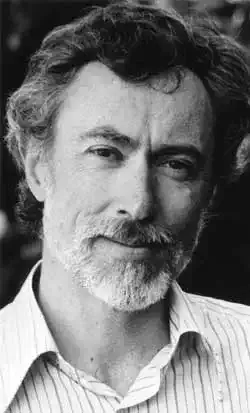
This is not the scene I dreamed of. Like much else nowadays I leave it feeling stupid, like a man who lost his way long ago but presses on along a road that may lead nowhere.

And when He knew for certain only drowning men could see Him
The barbarians come out at night. Before darkness falls the last goat must be brought in, the gates barred, a watch set in every lookout to call the hours. All night, it is said, the barbarians prowl about bent on murder and rapine. Children in their dreams see the shutters part and fierce barbarian faces leer through. “The barbarians are here!” the children scream, and cannot be comforted.
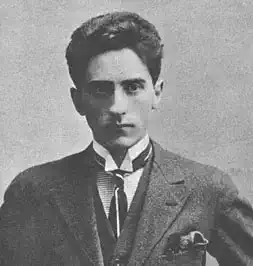
Les choses que je conte
Je suis un mensonge qui dit toujours la vérité .
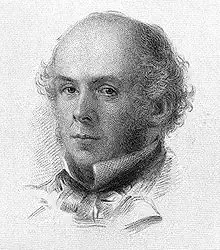
Thou shalt not steal; an empty feat, When it’s so lucrative to cheat.
No graven images may be
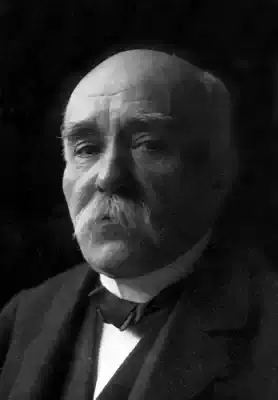
[ Remark during Paris Peace Conference, 1919, about Woodrow Wilson’s “Fourteen Points” :] The Good Lord had only ten.
The Germans may take Paris, but that will not prevent me from going on with the war. We will fight on the Loire, we will fight on the Garonne, we will fight even on the Pyrenees. And if at last we are driven off the Pyrenees, we will continue the war at sea.
[ Upon being told that his son had joined the Communist Party :] My son is 22 years old. If he had not become a Communist at 22, I would have disowned him. If he is still a Communist at 30, I will do it then.
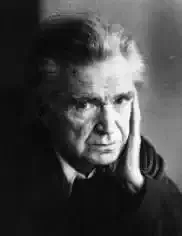
Without the possibility of suicide, I would have killed myself long ago.
My home policy: I wage war; my foreign policy: I wage war. All the time I wage war.
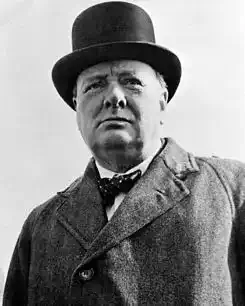
[ To Anthony Eden about a long report from the latter :] As far as I can see you have used every cliché except “God is Love” and “Please adjust your dress before leaving.”
[ Replying to Nancy Astor’s saying “If I were your wife I would put poison in your coffee!” :] And if I were your husband I would drink it.
[ Of Bernard Montgomery :] In defeat unbeatable: in victory unbearable.
[ On his portrait, painted by Graham Sutherland :] I look as if I was having a difficult stool.
[ Describing Clement Attlee :] A sheep in sheep’s clothing.
[ Of Clement Attlee :] A modest man who has a good deal to be modest about.
It is not easy to see how things could be worsened by a parley at the summit, if such a thing were possible.
Meeting jaw to jaw is better than war.
It may almost be said, “Before Alamein we never had a victory. After Alamein we never had a defeat.”
The government of the world must be entrusted to satisfied nations, who wished nothing more for themselves than what they had. . . . Our power placed us above the rest. We were like rich men dwelling at peace within their habitations.
On the night of the tenth of May [1940], at the outset of this mighty battle, I acquired the chief power in the State, which henceforth I wielded in ever-growing measure for five years and three months of world war, at the end of which time, all our enemies having surrendered unconditionally or being about to do so, I was immediately dismissed by the British electorate from all further conduct of their affairs.
For my part, I consider that it will be found much better by all Parties to leave the past to history, especially as I propose to write that history myself.
We should not abandon our special relationship with the United States and Canada about the atomic bomb.
A shadow has fallen upon the scenes so lately lighted by the Allied victory. . . . From Stettin in the Baltic to Trieste in the Adriatic, an iron curtain has descended across the Continent.
On the night of May 10, 1941, with one of the last bombs of the last serious raid our House of Commons was destroyed by the violence of the enemy, and we have now to consider whether we should build it up again, and how, and when. We shape our buildings, and afterwards our buildings shape us.
The proud German army by its sudden collapse, sudden crumbling and breaking up, has once again proved the truth of the saying “The Hun is always either at your throat or at your feet.”
I have not become the King’s First Minister in order to preside over the liquidation of the British Empire.
We have not journeyed all this way across the centuries, across the oceans, across the mountains, across the prairies, because we are made of sugar candy.
The V sign is the symbol of the unconquerable will of the occupied territories, and a portent of the fate awaiting the Nazi tyranny.
Do not let us speak of darker days; let us rather speak of sterner days. These are not dark days: these are great days—the greatest days our country has ever lived; and we must all thank God that we have been allowed, each of us according to our stations, to play a part in making these days memorable in the history of our race.
We are waiting for the long-promised invasion. So are the fishes.
The people of London with one voice would say to Hitler: “You have committed every crime under the sun. . . . We will have no truce or parley with you, or the grisly gang who work your wicked will. You do your worst—and we will do our best.”
What General Weygand called the Battle of France is over. I expect that the Battle of Britain is about to begin.
The gratitude of every home in our Island, in our Empire, and indeed throughout the world, except in the abodes of the guilty, goes out to the British airmen who, undaunted by odds, unwearied in their constant challenge and mortal danger, are turning the tide of the World War by their prowess and their devotion. Never in the field of human conflict was so much owed by so many to so few.
I would say to the House, as I said to those who have joined this Government: “I have nothing to offer but blood, toil, tears, and sweat.”
Their sweat, their tears, their blood bedewed the endless plain.
By being so long in the lowest form [at Harrow] I gained an immense advantage over the cleverer boys. . . . I got into my bones the essential structure of the ordinary British sentence—which is a noble thing.
[ Of Ramsey MacDonald :] I remember, when I was a child, being taken to the celebrated Barnum’s circus, which contained an exhibition of freaks and monstrosities, but the exhibit on the program which I most desired to see was the one described as “The Boneless Wonder.” My parents judged that the spectacle would be too revolting and demoralizing for my youthful eyes, and I have waited 50 years to see the boneless wonder sitting on the Treasury Bench.
Business carried on as usual during alterations on the map of Europe.
[ Responding to criticism that he edited the British Gazette in a biased manner during the General Strike :] I decline utterly to be impartial as between the fire brigade and the fire.
I pass with relief from the tossing sea of Cause and Theory to the firm ground of Result and Fact.
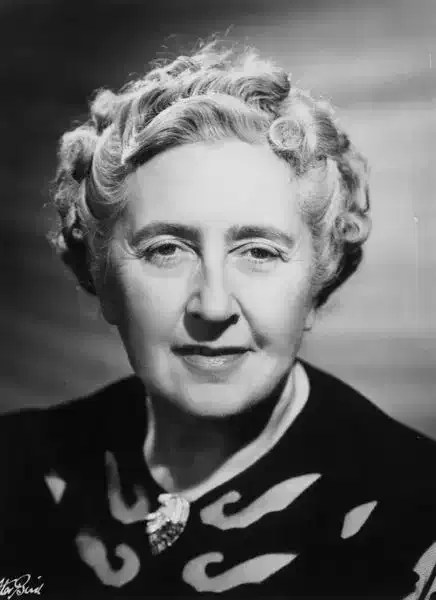
[ On being married to Max Mallowan :] An archeologist is the best husband any woman can get. Just consider: The older she gets, the more he is interested in her.
“My dear Mr. Mayherne,” said Romaine, “you do not see at all. I knew—he was guilty!”
It is completely unimportant. . . . That is why it is so interesting.
[Fictional detective Hercule] Poirot was an extraordinary-looking little man. He was hardly more than five feet four inches, but carried himself with great dignity. His head was exactly the shape of an egg, and he always perched it a little on one side. His moustache was very stiff and military. The neatness of his attire was almost incredible; I believe a speck of dust would have caused him more pain than a bullet wound.
With method and logic one can accomplish anything.