
Quotes
Quotes to inspire and reflect
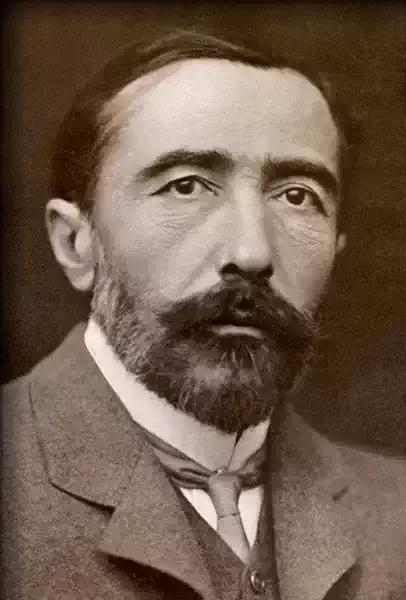
I remember my youth and the feeling that will never come back any more—the feeling that I could last for ever, outlast the sea, the earth, and all men; the deceitful feeling that lures us on to joys, to perils, to love, to vain effort—to death; the triumphant conviction of strength, the heat of life in the handful of dust, the glow in the heart that with every year grows dim, grows cold, grows small, and expires—and expires, too soon, too soon—before life itself.
Only a moment; a moment of strength, of romance, of glamour—of youth! . . . A flick of sunshine upon a strange shore, the time to remember, the time for a sigh, and—good-bye!—Night—Good-bye . . . !”
The offing was barred by a black bank of clouds, and the tranquil waterway leading to the uttermost ends of the earth flowed sombre under an overcast sky—seemed to lead into the heart of an immense darkness.
No fear can stand up to hunger, no patience can wear it out, disgust simply does not exist where hunger is; and as to superstition, beliefs, and what you may call principles, they are less than chaff in a breeze.
I don’t like work—no man does—but I like
To the destructive element submit yourself.
That faculty of beholding at a hint the face of his desire and the shape of his dream, without which the earth would know no lover and no adventurer.
One writes only half the book; the other half is with the reader.
The problem of life seemed too voluminous for the narrow limits of human speech, and by common consent it was abandoned to the great sea that had from the beginning enfolded it in its immense grip; to the sea that knew all, and would in time infallibly unveil to each the wisdom hidden in all the errors, the certitude that lurks in doubts, the realm of safety and peace beyond the frontiers of sorrow and fear.
But the artist appeals to that part of our being which is not dependent on wisdom; to that in us which is a gift and not an acquisition—and, therefore, more permanently enduring. He speaks to our capacity for delight and wonder, to the sense of mystery surrounding our lives: to our sense of pity, and beauty, and pain.
It’s only those who do nothing that make no mistakes, I suppose.
A work that aspires, however humbly, to the condition of art should carry its justification in every line.
No mask like open truth to cover lies,
O fie Miss, you must not kiss and tell.
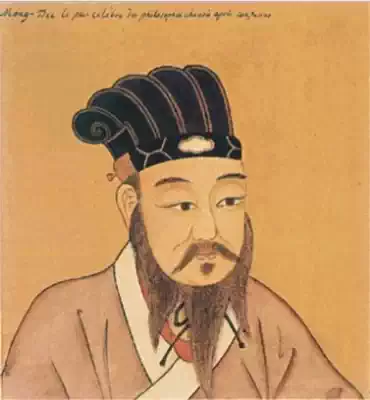
To go too far is the same as not to go far enough.
By nature men are alike. Through practice they have become far apart.
Man is born with uprightness. If one loses it he will be lucky if he escapes with his life.
If we are not yet able to serve man, how can we serve spiritual beings? . . . If we do not yet know about life how can we know about death?
The Way of our Master is none other than conscientiousness of altruism.
A superior man in dealing with the world is not for anything or against anything. He follows righteousness as the standard.
A ruler who governs his state by virtue is like the north polar star, which remains in its place while all the other stars revolve around it.
Is it not a pleasure to learn and to repeat or practice from time to time what has been learned? Is it not delightful to have friends coming from afar? Is one not a superior man if he does not feel hurt even though he does not feel recognized?
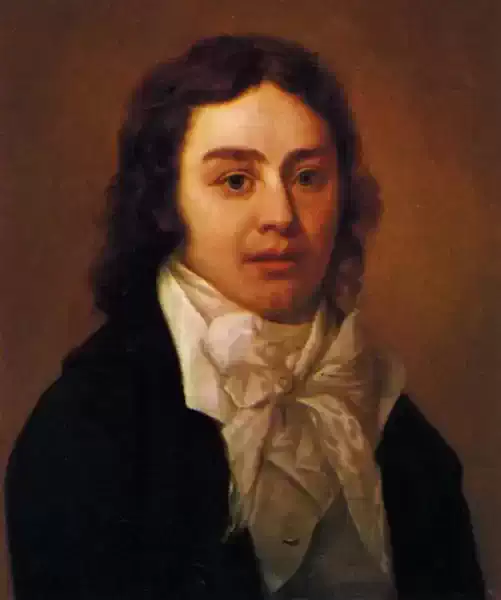
If a man could pass through Paradise in a dream, and have a flower presented to him as a pledge that his soul had really been there, and if he found the flower in his hand when he awoke—Aye! and what then?
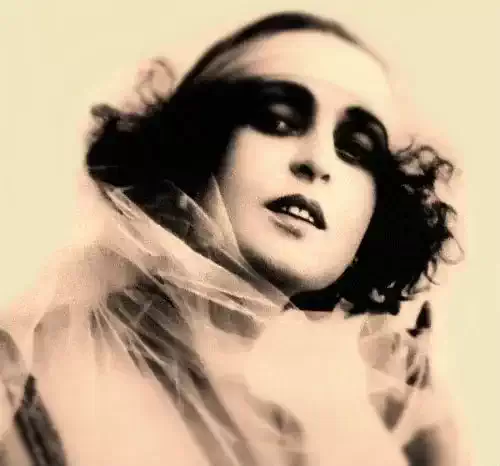
Les femmes libres ne sont pas des femmes . Free women are not women at all.
Shakespeare . . . is of no age—nor of any religion, or party or profession. The body and substance of his works came out of the unfathomable depths of his own oceanic mind.
Iago’s soliloquy—the motive-hunting of motiveless malignity.
Beneath this sod
You abuse snuff! Perhaps it is the final cause of the human nose.
Exclusively of the abstract sciences, the largest and worthiest portion of our knowledge consists of aphorisms; and the greatest and best of men is but an aphorism.
The happiness of life, on the contrary, is made up of minute fractions—the little, soon-forgotten charities of a kiss, a smile, a kind look, a heartfelt compliment in the disguise of playful raillery, and the countless other infinitesimals of pleasurable thought and genial feeling.
Evidences of Christianity! I am weary of the word. Make a man feel the want of it; rouse him, if you can, to the self-knowledge of his need of it; and you may safely trust it to his own Evidence.
In poetry, in which every line, every phrase, may pass the ordeal of deliberation and deliberate choice, it is possible, and barely possible, to attain that ultimatum which I have ventured to propose as the infallible test of a blameless style; namely: its untranslatableness in words of the same language without injury to the meaning.
No man was ever yet a great poet, without being at the same time a profound philosopher.
Our myriad-minded Shakespeare.
On awaking he . . . instantly and eagerly wrote down the lines that are here preserved. At this moment he was unfortunately called out by a person on business from Porlock.
But oh! that deep romantic chasm which slanted
Reviewers are usually people who would have been poets, historians, biographers, &c., if they could; they have tried their talents at one or the other, and have failed; therefore they turn critics.
Poetry is not the proper antithesis to prose, but to science. Poetry is opposed to science, and prose to metre. The proper and immediate object of science is the acquirement, or communication, of truth; the proper and immediate object of poetry is the communication of immediate pleasure.
Alone, alone, all, all alone,
I pass, like night, from land to land;
The very deep did rot: O Christ!
Her lips were red, her looks were free,
The ice was here, the ice was there,
“God save thee, ancient Mariner!

Ring the bells that still can ring.
Everybody knows that the dice are loaded
And you want to travel with her,
Now I’ve heard there was a secret chord