
Quotes
Quotes to inspire and reflect
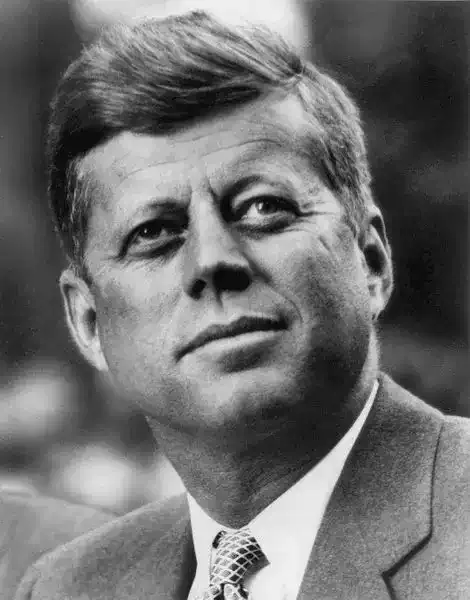
The energy, the faith, the devotion which we bring to this endeavor will light our country and all who serve it—and the glow from that fire can truly light the world.
[ Referring to the Bay of Pigs disaster :] There’s an old saying that victory has 100 fathers and defeat is an orphan.
Now the trumpet summons us again—not as a call to bear arms, though arms we need—not as a call to battle, though embattled we are—but a call to bear the burden of a long twilight struggle, year in and year out, “rejoicing in hope, patient in tribulation”—a struggle against the common enemies of man: tyranny, poverty, disease, and war itself.
In the long history of the world, only a few generations have been granted the role of defending freedom in its hour of maximum danger. I do not shrink from this responsibility—I welcome it.
To our sister republics south of our border, we offer a special pledge—to convert our good words into good deeds—in a new alliance for progress—to assist free men and free governments in casting off the chains of poverty.
If a beach-head of cooperation may push back the jungle of suspicion, let both sides join in creating a new endeavor, not a new balance of power, but a new world of law, where the strong are just and the weak secure and the peace preserved. All this will not be finished in the first one hundred days. Nor will it be finished in the first one thousand days, nor in the life of this Administration, nor even perhaps in our lifetime on this planet. But let us begin.
For those to whom much is given, much is required. And when at some future date the high court of history sits in judgment on each of us—recording whether in our brief span of service we fulfilled our responsibilities to the state—our success or failure, in whatever office we hold, will be measured by the answers to four questions: First, were we truly men of courage. . . . Secondly, were we truly men of judgment. . . . Third, were we truly men of integrity. . . . Finally, were we truly men of dedication.
We do not campaign stressing what our country is going to do for us as a people. We stress what we can do for the country.
We stand today on the edge of a new frontier—the frontier of the Nineteen Sixties—the frontier of unknown opportunities and perils—the frontier of unfulfilled hopes and unfilled threats. . . . The New Frontier of which I speak is not a set of promises—it is a set of challenges. It sums up not what I intend to offer to the American people, but what I intend to ask of them.
This is not a time to keep the facts from the people—to keep them complacent. To sound the alarm is not to panic but to seek action from an aroused public. For, as the poet Dante once said: “The hottest places in hell are reserved for those who, in a time of great moral crisis, maintain their neutrality.”
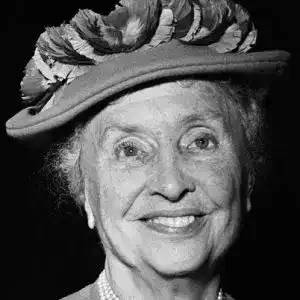
The test of a democracy is not the magnificence of buildings or the speed of automobiles or the efficiency of air transportation, but rather the care given to the welfare of all the people.
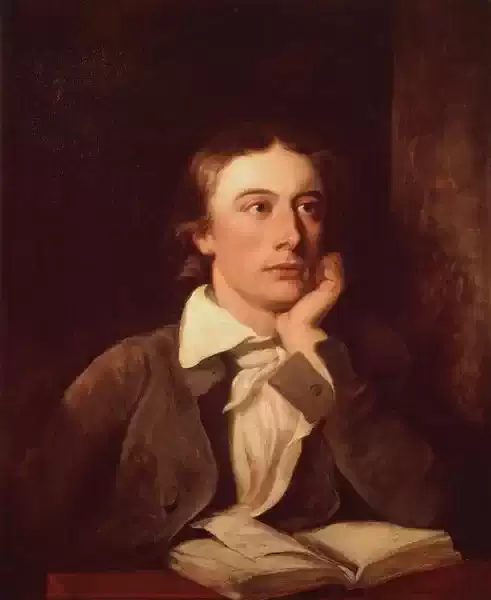
Among the many things he [Keats] has requested of me to-night, this is the principal one,—that on his grave-stone shall be this,—HERE LIES ONE WHOSE NAME WAS WRIT IN WATER.
I always made an awkward bow.
Not charioted by Bacchus and his pards,
I saw pale kings and princes too,
When old age shall this generation waste,
I think I shall be among the English Poets after my death.
At once it struck me, what quality went to form a Man of Achievement especially in Literature & which Shakespeare possessed so enormously—I mean Negative Capability , that is, when man is capable of being in uncertainties, Mysteries, doubts, without any irritable reaching after fact & reason.
Oft of one wide expanse had I been told

“Life is trouble,” Zorba continued. “Death, no. To live—do you know what that means? To undo your belt and look for trouble!”
How simple and frugal a thing is happiness: a glass of wine, a roast chestnut, a wretched little brazier, the sound of the sea. . . . All that is required to feel that here and now is happiness is a simple, frugal heart.

The train came out of the long tunnel into the snow country. The earth lay white under the night sky.

Act so that you use humanity, as much in your own person as in the person of every other, always at the same time as end and never merely as means.
Finally, there is one imperative that, without being grounded on any other aim to be achieved through a certain course of conduct as its condition, commands this conduct immediately. This imperative is categorical . . . . This imperative may be called that of morality .
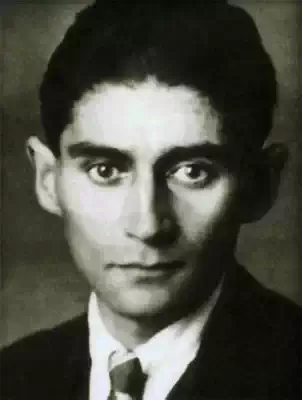
This village belongs to the Castle, and whoever lives here or passes the night here does so in a manner of speaking in the Castle itself. Nobody may do that without the Count’s permission.
There is nothing it is possible to think of anywhere in the world, or indeed anything at all outside it, that can be held to be good without limitation, excepting only a good will .
You may object that it is not a trial at all; you are quite right, for it is only a trial if I recognize it as such.
“Like a dog!” he said: it was as if the shame of it must outlive him.
The Messiah will come only when he is no longer necessary, he will come only one day after his arrival, he will not come on the last day, but on the last day of all.
Only our concept of Time makes it possible for us to speak of the Day of Judgment by that name; in reality it is a summary court in perpetual session.
Everyone strives to reach the Law.
No one else could ever be admitted here, since this gate was made only for you. I am now going to shut it.

Maxima debetur puero reverentia .
Omnia Romae cum pretio .
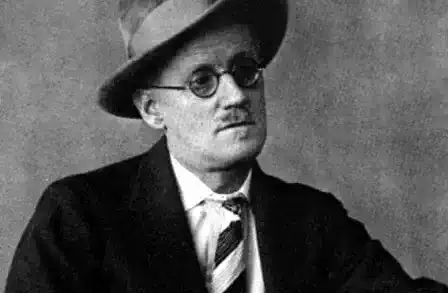
Why all this fuss and bother about the mystery of the unconscious? What about the mystery of the conscious? What do they know about that?
I want to give a picture [in Ulysses ] of Dublin so complete that if the city one day suddenly disappeared from the earth it could be reconstructed out of my book.
When a young man came up to him in Zurich and said, “May I kiss the hand that wrote Ulysses? ” Joyce replied, somewhat like King Lear, “No, it did lots of other things too.”
By an epiphany he meant a sudden spiritual manifestation, whether in vulgarity of speech or of gesture or in a memorable phase of the mind itself.
He kissed me under the Moorish wall and I thought well as well him as another and then I asked him with my eyes to ask again yes and then he asked me would I yes to say yes my mountain flower and first I put my arms around him yes and drew him down to me so he could feel my breasts all perfume yes and his heart was going like mad and yes I said yes I will Yes.
Three quarks for Muster Mark! Sure he hasn’t got much of a bark And sure any he has it’s all beside the mark.
Agenbite of inwit. Conscience.
Lawn Tennyson, gentleman poet.
Old father, old artificer, stand me now and ever in good stead.
Mother is putting my new secondhand clothes in order. She prays now, she says, that I may learn in my own life and away from home and friends what the heart is and what it feels. Amen. So be it.
I will try to express myself in some mode of life or art as freely as I can and as wholly as I can, using for my defense the only arms I allow myself to use, silence, exile, and cunning.
[ Upon being asked whether he intended to become a Protestant :] I said that I had lost the faith, Stephen answered, but not that I had lost self-respect. What kind of liberation would that be to forsake an absurdity which is logical and coherent and to embrace one which is illogical and incoherent?
Pity is the feeling which arrests the mind in the presence of whatsoever is grave and constant in human sufferings and unites it with the human sufferer. Terror is the feeling which arrests the mind in the presence of whatsoever is grave and constant in human sufferings and unites it with the secret cause.
He looked down the slope and, at the base, in the shadow of the wall of the Park, he saw some human figures lying. Those venal and furtive loves filled him with despair. He gnawed the rectitude of his life; he felt that he had been outcast from life’s feast.