Identification and basic context
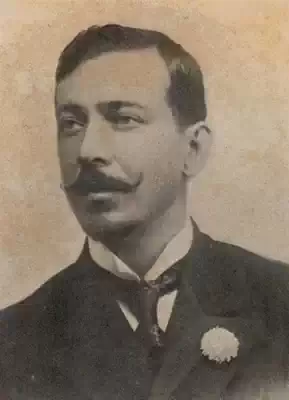
Osório de Assis Duque-Estrada was born in Rio de Janeiro on August 6, 1859, and passed away in the same city on September 20, 1925. He was the son of Francisco de Assis Duque-Estrada and Maria José da Conceição Duque-Estrada. He was a Brazilian poet, journalist, and literary critic, whose work bridges Parnassianism and Pre-Modernism. His nationality was Brazilian, and the language of his writing was Portuguese.
Childhood and education
With little information available about his childhood and specific education, it is known that his formal education was not detailed in accessible sources, suggesting a possible path of self-education or a less conventional upbringing. The initial influences on his work seem to have been the prevailing literary currents in Brazil, with an inclination towards classical poetry and social observation.
Literary career
Osório Duque-Estrada's writing career began during a period of literary effervescence in Brazil, where poetry sought new forms and themes. His work evolved over time, adapting, to some extent, to stylistic changes while maintaining a solid formal foundation. He actively participated in journalistic and literary life, collaborating with various publications and occasionally engaging in criticism.
Work, style, and literary characteristics
Among his main works are "O Grito do Ipiranga" (1877) and "Amsdradam" (1878). Recurring themes in his poetry include love, homeland, nature, and existential reflections. Formally, Duque-Estrada demonstrated mastery of traditional poetic forms, with careful use of meter and rhyme, although he also experimented with freer forms in some of his poems. His style is characterized by erudite, imagery-rich language and a tone that varies from lyrical to satirical, often with irony.
Work, style, and literary characteristics
Cultural and historical context
Osório Duque-Estrada lived during a period of great transformations in Brazil, including the end of the Empire and the beginning of the Republic, as well as significant social and cultural changes. His work partly reflects this context, engaging with the issues of his time. He belonged to a generation that felt the echoes of Parnassianism but already foreshadowed the airs of Modernism.
Work, style, and literary characteristics
Personal life
Detailed information about Osório Duque-Estrada's personal life is scarce. It is known that his career was linked to journalism and intellectual life in Rio de Janeiro. There are no public records of affective or family relationships that explicitly shaped his work, nor of direct political involvement, despite his critical nature.
Work, style, and literary characteristics
Recognition and reception
Although he gained recognition in his time, especially in literary circles, Osório Duque-Estrada did not achieve the notoriety of some of his contemporaries. His work is studied today as an important link between Parnassianism and the new trends that would emerge in Brazilian poetry.
Work, style, and literary characteristics
Influences and legacy
Duque-Estrada was influenced by the classical poetic tradition and the literary movements of his time. His legacy lies in his ability to blend rigorous form with social criticism and lyricism, serving as a bridge to poetic renewal.
Work, style, and literary characteristics
Interpretation and critical analysis
Osório Duque-Estrada's work has been interpreted as a reflection of the tensions between tradition and modernity in Brazilian literature. His poetry sometimes challenges rigid classifications, presenting a thematic and stylistic complexity that invites critical analysis.
Work, style, and literary characteristics
Curiosities and lesser-known aspects
An interesting aspect of his career is the duality between the lyricism and the biting wit of his texts, demonstrating a versatility that distinguishes him. His work in journalism gave him a keen insight into customs and politics, often rendered in critical verses.
Work, style, and literary characteristics
Death and memory
Osório Duque-Estrada died on September 20, 1925, in Rio de Janeiro. There are no reports of significant posthumous publications, but his work continues to be revisited by researchers and admirers of Brazilian poetry.

 BR
BR