
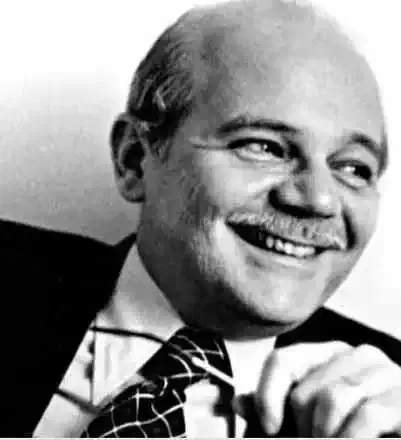
Osman Lins
 BR
BR
Osman Lins was a renowned Brazilian writer whose work stood out for its originality and technical sophistication. With a literary production that includes novels and short stories, he explored the complexities of the human condition, interpersonal relationships, and existential anxieties. His writing is marked by the psychological depth of his characters, formal experimentation, and precise, evocative language. Lins is recognized for his significant contribution to the renewal of Brazilian prose in the second half of the 20th century.
n. 1924-07-05, Vitória de Santo Antão · m. 1978-07-08, São Paulo
Bio
Identification and Basic Context
Osman Lins, artistic name of Osman Martins Lins, was born in Recife, Pernambuco, on July 5, 1924, and passed away in Rio de Janeiro on July 9, 1978. He was a prominent Brazilian novelist, short story writer, and literary critic. Son of Antônio Martins Lins and Maria Amélia Lins, he grew up in a middle-class family environment.Childhood and Education
Osman Lins had a childhood largely spent in his hometown, Recife. His education included Colégio Salesiano and Ginásio Pernambucano. From an early age, he showed an interest in reading and writing, absorbing influences from classical and contemporary literature. Events in his youth, such as World War II, certainly shaped his worldview.Literary Career
Osman Lins' literary career began with the publication of short stories in local newspapers and magazines. His first novel, "O Falso Comentarista" (The False Commentator), was published in 1952. Throughout his career, his work evolved significantly, with phases marked by narrative experimentation and the exploration of increasingly complex themes. Lins also worked as a literary critic, contributing to various media outlets.Work, Style, and Literary Characteristics
Osman Lins' major works include "O Falso Comentarista" (1952), "A Gata Borralheira" (The Cinderella Cat) (1955), "No Corredor" (In the Corridor) (1958), "O Visitante" (The Visitor) (1959), "Avalovara" (1961) – a work considered a milestone in his career for its experimentation –, "A Rainha e os Sete Punhais" (The Queen and the Seven Daggers) (1970), and "Nove, Novena" (Nine, Novena) (1970). His dominant themes revolve around loneliness, incommunicability, existential angst, memory, and the passage of time. Lins explored non-linear narrative forms, fragmentation, multiple points of view, and a sophisticated use of language, with great imagistic density and an often introspective and melancholic tone. His work is associated with Brazilian Modernism, especially the so-called "Generation of the 50s," and he is recognized for his formal and thematic innovations.Cultural and Historical Context
Osman Lins lived and produced during a period of great transformations in Brazil, including the military regime. His work engages with the literature of his time but also distances itself from more politically engaged trends, focusing on interiority and the human condition. He was part of important literary circles and maintained relationships with other writers, being recognized as one of the great names of contemporary Brazilian prose.Personal Life
Osman Lins maintained a private personal life. His dedication to literature was intense, and he faced health problems throughout his life, which sometimes reflected in his work. Married to Maria Helena Lins, his wife was a supportive figure in his career.Recognition and Reception
Osman Lins received significant critical recognition during his lifetime, acclaimed for his originality and formal rigor. His work "Avalovara" earned him important literary awards. Although perhaps not achieving the same massive popularity as other authors, his place in Brazilian literature is consolidated academically and by specialized critics.Influences and Legacy
Among Osman Lins' influences, authors such as William Faulkner, Virginia Woolf, and James Joyce stand out for their narrative experimentation. His legacy is immense, having influenced later generations of Brazilian writers with his refined technique and exploration of subjectivity. His work is frequently studied in universities and features in the canon of Brazilian literature.Interpretation and Critical Analysis
Osman Lins' work is the subject of extensive critical analysis, with readings that explore its narrative complexities, existential themes, and the human condition. His writing is seen as a deep dive into the human psyche, addressing fragility, the search for meaning, and communication difficulties.Curiosities and Lesser-Known Aspects
A curiosity about Osman Lins is his almost monastic dedication to writing, seeking perfection in every sentence. His shyness contrasted with the power of his prose. Accounts indicate that he had rigorous writing habits, dedicating long hours to his literary work. His manuscripts and correspondence are important sources for the study of his work.Death and Memory
Osman Lins died prematurely at the age of 54, a victim of cancer. His death represented a significant loss for Brazilian literature. Posthumous publications and the continuous re-edition of his books ensure his memory and the perpetuation of his work.Poems
0No poems found
Comments (0)
No comments yet. Be the first to comment.