
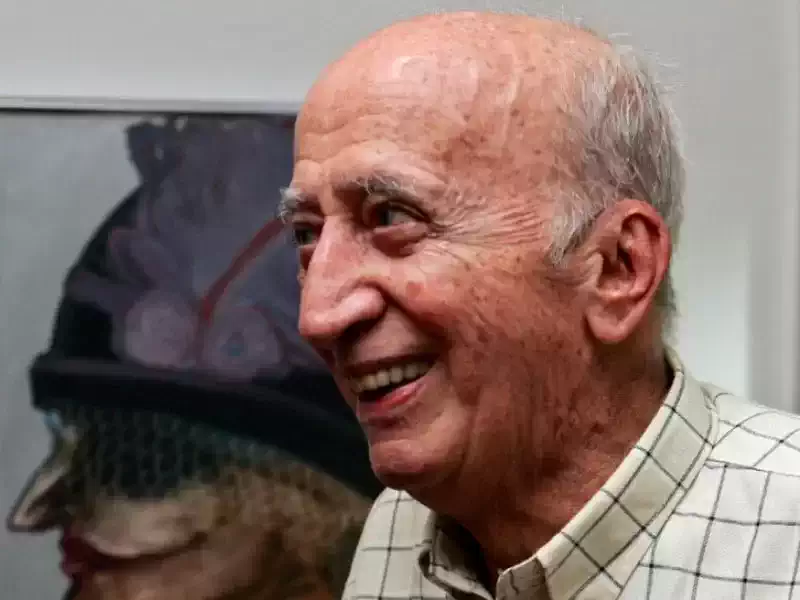
Millôr Fernandes
 BR
BR
Millôr Fernandes was a Brazilian writer, humorist, cartoonist, playwright, and journalist. He stood out for his acidic and critical humor, addressing social, political, and existential themes with insight and irreverence. His work spans various genres, including chronicles, poems, plays, and cartoons, always with accessible language and a sharp eye on the human condition. He was one of the founders and collaborators of widely circulated newspapers and magazines, leaving a legacy of intelligence and irreverence in Brazilian culture.
n. 1923-08-16, Rio de Janeiro · m. 2012-03-27, Bairro de Ipanema
Bio
Identification and basic context
Millôr Fernandes was a prolific Brazilian writer, journalist, playwright, cartoonist, and humorist. Known by his pseudonym Millôr, his work is marked by sharp intelligence, critical humor, and profound reflection on society and the human condition. He was born in Rio de Janeiro, Brazil, and wrote predominantly in Portuguese. He lived through much of the 20th century, a period of intense social, political, and cultural transformations in Brazil and the world.Childhood and education
Millôr was born into a middle-class family and had a childhood marked by reading. From an early age, he showed precocious talent for writing and drawing. Although he did not pursue extensive formal academic training, he was a voracious autodidact, absorbing knowledge from various fields, which was reflected in the breadth and depth of his work. The cultural effervescence of Rio de Janeiro at the time, as well as the literary and artistic influences of the period, shaped his worldview and his style.Literary career
Millôr Fernandes began his career in journalism, where he quickly gained prominence for his humor and critical column. His writing evolved over the decades, moving through different formats such as chronicles, poems, aphorisms, plays, and scripts. He collaborated extensively with widely circulated newspapers and magazines, such as O Cruzeiro, Correio da Manhã, and Folha de S.Paulo, in addition to founding and directing his own publications. His activity as a critic and observer of society made him an influential voice.Work, style, and literary characteristics
Millor's work is vast and diverse, including collections of chronicles ("A Vida é uma Coisa Mais ou Menos", "Millôr Aforismos"), plays ("O Elevador", "Papai Papudo"), and poems. His recurring themes include love, death, loneliness, social hypocrisy, politics, and human nature. Millôr's style is characterized by conciseness, subtle irony, wordplay, and the ability to provoke reflection and laughter in just a few lines. He frequently used free verse in his poems and experimented with language to express his ideas originally. His poetic voice is often personal and confessional, but with universal resonance. The language is direct, accessible, yet loaded with implicit meanings, with a notable use of metaphors and paradoxes. Millôr innovated by bringing intelligent humor and social criticism into the sphere of poetry and chronicles, engaging with Brazilian literary tradition while also pointing towards modernity.Cultural and historical context
Millôr Fernandes lived and worked in a Brazil in constant turmoil, experiencing periods of military dictatorship, redemocratization, and profound social changes. His work reflects this context, often in a veiled or ironic way, criticizing censorship, injustice, and alienation. He interacted with and engaged in dialogue with a generation of intellectuals and artists who sought to renew Brazilian culture, such as members of Teatro de Arena and Cinema Novo. His position as a critical intellectual sometimes put him at odds with the establishment.Personal life
Millôr Fernandes was married and had children, but he kept his personal life relatively private. His vast literary and journalistic output was his main professional activity. He was known for his restless mind, insatiable curiosity, and observational skills. His personal beliefs were centered on a critical and skeptical humanism towards dogmas and institutions.Recognition and reception
Millôr Fernandes earned a prominent place in Brazilian literature and journalism. Although he did not receive major institutional awards on a massive scale, his recognition came from popular appeal and the respect earned among his peers. His work is widely read and studied, considered a landmark of humor and social criticism in Brazil.Influences and legacy
Millôr was influenced by various authors and thinkers, both Brazilian and foreign, who shared a critical view of society. His legacy is immense, impacting generations of writers, cartoonists, and humorists who were inspired by his style and his courage to tackle complex themes with intelligence and irreverence. His work remains relevant, offering keys to understanding contemporary dilemmas.Interpretation and critical analysis
Millôr Fernandes's work is often interpreted as a mirror of Brazilian society, exposing its contradictions and ills with a disarming and provocative humor. His reflections on the human condition touch upon universal philosophical themes, such as the search for meaning, the fragility of existence, and the complexity of interpersonal relationships. His aphorisms, in particular, invite multiple readings and debates.Curiosities and lesser-known aspects
Millôr had a peculiar humor that often led him to question common sense and social conventions. His ability to transform the trivial into profound reflection was remarkable. He maintained an intense and disciplined work rhythm, producing daily. His apartment in Rio de Janeiro was a sanctuary of creativity and knowledge, filled with books and objects that inspired his work.Death and memory
Millôr Fernandes passed away in São Paulo in 2012, after a period of declining health. His death was widely mourned, and his work continues to be published and rediscovered, ensuring his memory and relevance in the Brazilian cultural scene. His posthumous writings and anthologies continue to circulate, keeping his critical voice and unmistakable humor alive.Poems
0No poems found
Comments (0)
No comments yet. Be the first to comment.