Identification and Basic Context
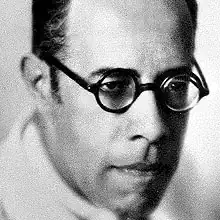
Mário de Andrade, born in Rio de Janeiro, was one of the pillars of Brazilian Modernism and a multifaceted figure: poet, novelist, short story writer, literary critic, musicologist, folklorist, and professor. His work is fundamental to the construction of a Brazilian cultural identity, exploring the country's language, myths, and traditions. His nationality is Brazilian, and the language of writing is Portuguese.
Childhood and Education
Mário de Andrade had a childhood and youth marked by a refined musical education, learning piano and music theory from an early age. He graduated from the Normal School of São Paulo and later from the Faculty of Law of Largo São Francisco, although his greater vocation always lay in literature and culture. He was a voracious autodidact, interested in linguistics, folklore, anthropology, and art history. Early influences included authors from Brazilian and European literature, as well as popular and classical music.
Literary Career
His literary writing began in the late 1910s. His participation in the Modern Art Week of 1922, in São Paulo, was a watershed moment, consolidating him as a leader of the movement. Throughout his career, Mário de Andrade published significant works in various genres: poetry ("Pauliceia Desvairada", 1922; "Losango Cáqui", 1926), prose ("Macunaíma", 1928; "Amar, Verbo Intransitivo", 1927; "O Corregedor", 1960), and short stories ("Contos Novos", 1947). He was also an influential literary and music critic, writing for various newspapers and magazines. His work shows constant evolution in linguistic experimentation and the search for genuinely Brazilian themes.
Work, Style, and Literary Characteristics
Mário de Andrade's most emblematic works include "Macunaíma" (1928), "Pauliceia Desvairada" (1922), and "Amar, Verbo Intransitivo" (1927). The central themes of his work are national identity, Brazilianness, folklore, popular language, modernity, urban life, and Brazil's social contradictions. His style is marked by linguistic experimentation, the fusion of the erudite with the popular, the use of free verse and fragmented prose. He used resources such as irony, humor, parody, and cultural anthropophagy. The poetic voice is multifaceted, shifting between the lyrical, the satirical, the epic, and the confessional. His language is innovative, incorporating regional terms, slang, and bold syntax. He introduced a critical yet loving view of Brazil, engaging with tradition while proposing a break from European models.
Work, Style, and Literary Characteristics
Cultural and Historical Context
Mário de Andrade lived in a period of intense social and political transformations in Brazil, marked by the Old Republic, urbanization, and discussions about national identity. He was a central figure in the "Generation of 1922," which sought to renew Brazilian arts and culture. His philosophical and political stance was one of defending national identity and valuing popular culture, engaging with nationalist ideas but with a critical and anthropophagic perspective.
Work, Style, and Literary Characteristics
Personal Life
Although dedicated to intellectual life, Mário de Andrade maintained important personal relationships and a network of influential friendships in the artistic and literary circles. His life was marked by dedication to research and creation, often at the expense of a conventional family life. He was a passionate defender of Brazilian culture, traveling the country to collect and study folklore and musical manifestations. His sexual orientation was a matter of discretion at the time but is recognized by historians and biographers.
Work, Style, and Literary Characteristics
Recognition and Reception
Mário de Andrade is widely recognized as one of Brazil's greatest writers and intellectuals. During his lifetime, his work generated debates and controversies, but his role in the founding of Brazilian Modernism is unquestionable. After his death, his legacy was consolidated, becoming an object of study in universities and his work a fundamental part of the Brazilian literary canon.
Work, Style, and Literary Characteristics
Influences and Legacy
He was influenced by authors such as Oswald de Andrade, Graça Aranha, and by Brazilian music and folklore. His work, in turn, profoundly influenced later generations of writers, poets, musicians, and visual artists. Mário de Andrade's legacy lies in his ability to synthesize and express the complexity of Brazilian culture, in his linguistic experimentation, and in his search for a genuinely national art.
Work, Style, and Literary Characteristics
Interpretation and Critical Analysis
Mário de Andrade's work allows for diverse analyses, from the perspective of literary and linguistic criticism to anthropological and musicological studies. "Macunaíma," in particular, is fertile ground for interpretations of Brazilian identity, myth, race, and culture.
Work, Style, and Literary Characteristics
Curiosities and Lesser-Known Aspects
Mário de Andrade was known for his humor and vast erudition. He was a collector of Brazilian popular music records and an attentive observer of everyday life, which he often transposed into his work. His interest in folklore and popular manifestations was genuine and profound.
Work, Style, and Literary Characteristics
Death and Memory
Mário de Andrade passed away in São Paulo, victim of cancer. His death was mourned as the loss of one of the greatest exponents of Brazilian culture. Posthumous publications of his writings, such as letters and diaries, continued to enrich the knowledge of his life and work, perpetuating his memory as one of the fathers of Modernism in Brazil.

 BR
BR