
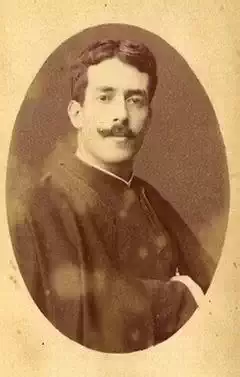
Manuel da Silva Gaio
 PT
PT
Manuel da Silva Gaio is a poet whose verses explore the rural landscape and Portuguese identity with a deep connection to the land and its traditions. His work is marked by rich language and a lyricism that evokes the beauty of the simple and the strength of roots. Gaio celebrates country life, popular religiosity, and the intrinsic values of the Lusitanian soul, creating poems that resonate with nostalgia and love for the homeland. Poet of choice, Silva Gaio dedicated his life to the exaltation of his land and his people. His poetic work, often linked to folklore and oral traditions, reflects a vision deeply rooted in Portuguese popular culture. Through careful and emotional writing, he managed to capture the essence of a more authentic and bucolic Portugal, leaving a valuable legacy for the country's literature.
n. 1860, Coimbra · m. 1934, Coimbra
Bio
Identification and basic context
Manuel da Silva Gaio was a Portuguese poet whose writings celebrate rural identity and the Lusitanian landscape. Born in Ponte de Lima, Portugal, his connection to his homeland was a constant in his life and work. His nationality is Portuguese and he wrote predominantly in Portuguese. He lived in a period of significant transformations in Portugal, including political and social changes that shaped the historical context in which he was situated.Childhood and education
Silva Gaio had a childhood marked by rural life, in an environment that brought him closer to traditions and nature. Although the details of his formal education are less known, it is certain that his experience in the countryside and his absorption of Portuguese popular culture were determining influences on his poetic sensibility. Reading authors who exalted the homeland and simple life may have shaped his early incursions into writing.Literary career
The beginning of Manuel da Silva Gaio's writing was closely linked to his passion for the land and Portuguese folklore. His work evolved over time, maintaining a line of thematic coherence centered on the exaltation of rural life, customs, and national identity. He published in various anthologies and publications of the time, contributing to the dissemination of his poetry to an audience that shared an appreciation for traditional values.Work, style, and literary characteristics
Manuel da Silva Gaio's work is notable for its deep connection to the land, folklore, and Portuguese identity. Themes such as love for the homeland, the beauty of the rural landscape, popular religiosity, and simple life are recurrent in his poems. His style is characterized by genuine lyricism, accessible language rich in imagery and musicality, and a frequently tender and nostalgic tone. He uses traditional poetic forms but also explores free verse, adapting meter to the feeling he intends to express. His poetic voice is personal and confessional, but it transcends the individual to speak of a collective feeling of belonging and love for the land. He is associated with a strand of poetry that values roots and cultural authenticity.Cultural and historical context
Manuel da Silva Gaio lived in a time when nationalism and the appreciation of popular traditions were gaining strength in Portugal. His work is therefore part of a cultural context that sought to affirm national identity through the exaltation of the past and values considered genuine. His poetry dialogued with a sense of Lusitanian belonging and pride, finding an echo in a society rediscovering its roots. His generation, although not formally defined, shared an interest in folklore and popular culture.Personal life
Although the intimate details of Manuel da Silva Gaio's personal life are less explored in biographical sources, his work reveals a deep love for his land and his people. His family and affective relationships, as well as his daily experiences, inevitably shaped his perspective and his writing. His dedication to poetry, often as an activity parallel to his main profession, demonstrates the passion with which he embraced the art of writing.Recognition and reception
Manuel da Silva Gaio's recognition stems from his ability to capture the essence of the Minho and Portuguese soul. Although he may not have achieved the stardom of other renowned national poets, his work has gained appreciation from an audience that identifies with his themes and lyricism. Critical reception, though less documented, values the authenticity and expressiveness of his poetry, which contributes to the Portuguese literary heritage.Influences and legacy
Manuel da Silva Gaio's influences undoubtedly derive from the rich Portuguese oral and literary tradition, with special emphasis on popular poetry and troubadours. His legacy lies in the preservation and exaltation of rural culture and Minho identity, offering a poetic portrait of an authentic Portugal. His work continues to be appreciated by those who value the connection to the land and lyrical simplicity, inspiring future generations of poets to rediscover their roots.Interpretation and critical analysis
Manuel da Silva Gaio's poetry can be interpreted as a celebration of Portuguese identity, a hymn to the land and traditions. Critical analysis of his work focuses on his ability to evoke feelings of belonging and nostalgia, as well as his mastery in capturing the beauty of rural daily life. His work reflects a deep humanism and unconditional love for his homeland.Curiosities and lesser-known aspects
Lesser-known aspects of Manuel da Silva Gaio's life may lie in his relationship with the local community and how his poetry was received and shared. Curious episodes related to his inspiration or writing process could enrich his profile. His connection to specific objects, places, or rituals of his homeland may have played a role in his poetic creation.Death and memory
Manuel da Silva Gaio passed away in 2005. His death left a void in the landscape of poetry that values roots and Portuguese identity. His memory endures through his poetic work, which continues to be read and appreciated, keeping alive the spirit of the land he so loved.Poems
0No poems found
Comments (0)
No comments yet. Be the first to comment.