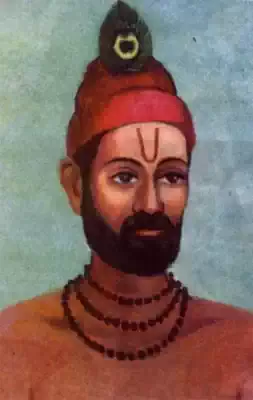
Identification and basic context
Full name: Kabir. He is widely believed to have been born in northern India, likely around the city of Varanasi. He was a mystic, poet, and social reformer. His identity and religious affiliation are subjects of historical debate; he is claimed by both Hindu and Muslim traditions, and his teachings are central to Sikhism. He wrote in the vernacular Hindi (Braj Bhasha) and other dialects. He lived during a period of significant religious and cultural interaction in India.
Childhood and education
According to tradition, Kabir was born to a Muslim weaver family or abandoned and found by a Muslim couple. He may have been influenced by the teachings of the Hindu mystic Ramananda, though the exact nature of their relationship is debated. His education was likely informal, focused on spiritual teachings and the oral tradition rather than formal schooling. His verses reveal a deep understanding of both Hindu and Islamic philosophical concepts, though he often satirized religious rituals and dogma from both traditions.
Literary trajectory
Kabir's literary output consists primarily of devotional poems, songs, and aphorisms, known as *dohas* (couplets) and *padas* (stanzas). His work was not written down in a systematic way during his lifetime but was transmitted orally and later compiled into various collections, most notably the *Kabir Granthavali* and the *Bijak*. His trajectory was that of a spiritual teacher whose verses spread widely through popular devotion and teaching.
Works, style, and literary characteristics
Kabir's works are characterized by their directness, simplicity, and profound spiritual insight. He used everyday metaphors and vernacular language to convey complex theological ideas, making them accessible to the common people. Major themes include the unity of God, the illusory nature of the material world, the importance of inner spiritual experience over external rituals, the critique of the caste system, and the brotherhood of humanity. His style is often direct, sometimes provocative, and marked by a lyrical quality. He employed irony and satire to challenge religious hypocrisy. His innovations lay in his ability to synthesize diverse spiritual traditions and express them in a widely understandable form, advocating for a path of direct devotion (*bhakti*).
Cultural and historical context
Kabir lived during the 15th century, a period marked by the influence of the Bhakti movement, which emphasized devotion to a personal God, and the presence of Sufi mystics in India. This era saw considerable interaction and occasional tension between Hindu and Islamic traditions. Kabir's teachings resonated with a desire for spiritual unity and a critique of the rigid social hierarchies of the time, particularly the caste system. He was a contemporary of other Bhakti saints and challenged the religious establishments of both Hinduism and Islam.
Personal life
Details about Kabir's personal life are scarce and often embellished by legend. It is generally accepted that he was married and had a son, named Kamal. His life as a weaver provided him with a connection to the common people and a perspective from which to critique societal structures. His spiritual path was one of intense personal devotion and a rejection of worldly attachments.
Recognition and reception
Kabir's teachings and poetry gained immense popularity among the masses and were embraced by various religious communities. He is revered as a saint and a guru. His verses form a significant part of the Sikh holy scripture, the Guru Granth Sahib. The Kabir Panth, a religious sect founded in his name, continues to uphold his teachings. His critical stance towards religious dogma and the caste system also garnered him admiration and, at times, opposition from orthodox religious authorities.
Influences and legacy
Kabir was influenced by the devotional traditions of the Bhakti movement and possibly by Sufi mysticism. His own influence has been enormous, shaping the course of Indian spirituality and poetry. He is seen as a precursor to Sikhism and a major figure in the Bhakti tradition. His emphasis on interfaith harmony and direct spiritual experience continues to inspire poets, mystics, and social reformers in India and beyond.
Interpretation and critical analysis
Kabir's work is interpreted as a powerful call for religious pluralism, social justice, and direct spiritual realization. His critique of ritualism and dogma is seen as a timeless appeal for authenticity in faith. Scholars analyze his verses for their philosophical depth, linguistic innovation, and impact on Indian religious and cultural history.
Curiosities and lesser-known aspects
Legends surround Kabir's death, with some claiming that his Hindu and Muslim followers fought over his body, only for it to turn into flowers. This story symbolizes his ability to bridge religious divides. His simple, direct language and his bold pronouncements often surprised and challenged his contemporaries.
Death and memory
While the exact circumstances of Kabir's death are uncertain, it is believed to have occurred in Maghar, near Gorakhpur. His memory is kept alive through the Kabir Panth, the compilation of his verses, and his continued relevance in discussions about spirituality, tolerance, and social reform.