
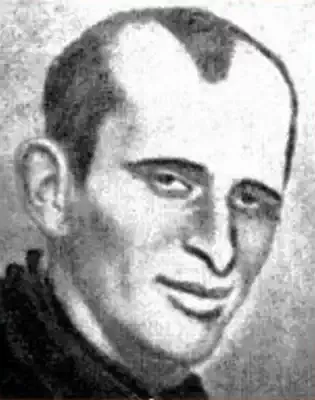
Junqueira Freire
 BR
BR
Junqueira Freire was a Brazilian poet, one of the most expressive of Romanticism in his country, especially associated with the ultraromantic period. His work is intensely marked by exaggerated sentimentalism, melancholy, platonic love, and deep religiosity, often expressed in tones of mysticism and amorous suffering. His poetry, although short in extent, possesses a notable emotional force. With a personal life marked by illness and devotion, Junqueira Freire left a poetic legacy that dialogues with human fragility in the face of love and the divine, consolidating himself as a unique and poignant voice in Brazilian literature.
n. 1832-12-31, Salvador · m. 1855-06-24, Salvador
Bio
Identification and basic context
The Brazilian poet Francisco Otaviano de Almeida Freire, better known as Junqueira Freire, was born on September 24, 1832, in Salvador, Bahia. He is one of the most important names in Brazilian Romanticism, notably in the so-called Ultraromanticism or "mal du siècle" (sickness of the century). His work is intensely lyrical and marked by melancholy and religiosity.Childhood and education
Junqueira Freire was the son of a wealthy landowner and a lady from an affluent family. From an early age, he showed an inclination for studies, being considered a child prodigy. He began his studies in Salvador and later moved to Rio de Janeiro to attend the Law School of São Paulo. However, his fragile health and profound religiosity led him away from formal studies, dedicating himself more to meditation and writing.Literary career
Junqueira Freire's literary career was brief but intense. His poetic work began to be published in Rio de Janeiro, where he maintained contact with other intellectuals and writers of the time. His poems gained notoriety for their originality and emotional charge, placing him in the circle of ultraromantic poets. Despite having a short life, his poetic production left a deep mark on Brazilian literature.Work, style, and literary characteristics
Junqueira Freire's main work is "Dispersão" (1860), a collection that brings together most of his poems. The dominant themes in his work are idealized and unrequited love, the pain of separation, melancholy, death, saudade (longing), and, above all, an intense and sometimes tormented religiosity. His style is marked by exaggerated sentimentalism, deep subjectivity, and an almost mystical lyricism. He frequently used the sonnet, but also free verse, with a language that sought purity and emotional expressiveness.Work, style, and literary characteristics
Cultural and historical context Junqueira Freire wrote during a period of consolidation of the Empire in Brazil and great influence from European Romanticism, especially German and French. The ultraromantic movement, to which he was associated, was characterized by the exaltation of feelings, individualism, and a pessimistic view of life, often linked to themes such as madness and death. He dialogued, in a sense, with other Brazilian romantic poets, but his voice remained unique due to his profound spirituality.Work, style, and literary characteristics
Personal life Junqueira Freire's life was marked by illness. He suffered from tuberculosis, which accompanied him for a large part of his existence and was a constant source of his melancholy and reflection on death. His religious devotion was deep, to the point of considering monastic life at times. He experienced an idealized and platonic love, which became one of the pillars of his poetry.Work, style, and literary characteristics
Recognition and reception Although he had a relatively short published work during his lifetime, Junqueira Freire achieved recognition as one of the great lyrical poets of Brazilian Romanticism. His work was valued for the originality of his voice and the intensity of his feelings, earning him a prominent place among ultraromantic poets.Work, style, and literary characteristics
Influences and legacy Junqueira Freire was influenced by European romantic poetry but managed to impart a personal mark on his work. His legacy lies in the purity of his lyricism, his ability to express the anguish of love and faith, and his contribution to the development of sentimental poetry in Brazil.Work, style, and literary characteristics
Interpretation and critical analysis Junqueira Freire's work is often interpreted as a reflection of his own biography, marked by illness and the search for a transcendent love. His poetry is seen as an expression of the "pain of living" characteristic of Ultraromanticism, but with a spiritual depth that distinguishes it.Work, style, and literary characteristics
Curiosities and lesser-known aspects Junqueira Freire held a deep admiration for Saint Thérèse of Lisieux, even being considered a mystic poet. His relationship with illness was so intrinsic to his work that the figure of the poet is often confused with the suffering being in his verses.Work, style, and literary characteristics
Death and memory Junqueira Freire died prematurely on August 19, 1861, in Rio de Janeiro, a victim of the tuberculosis that afflicted him. His untimely death reinforced the image of the tormented and tragic romantic poet. His work, however, endured as a landmark of Brazilian ultraromantic lyricism.Poems
0No poems found
Comments (0)
No comments yet. Be the first to comment.