Identification and basic context
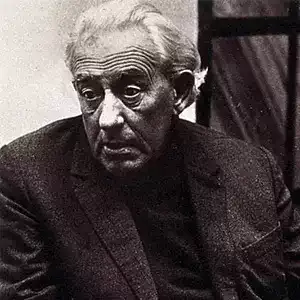
José Gomes Ferreira, born on June 5, 1900, in Vila Real de Santo António, Portugal, was a prominent Portuguese poet, novelist, journalist, and intellectual. Frequently associated with Portuguese Modernism, especially the second generation (or "Geração de 30"), he stood out for his social and political intervention poetry, his anti-fascism, and his forceful criticism of social injustices. His work is marked by a vigorous, ironic, and often colloquial language, seeking proximity to the popular universe and the struggles of the people. He lived and produced during a period of great political instability in Portugal, with the rise of the Estado Novo.
Childhood and education
He showed an early aptitude for writing, but his education was interrupted by economic difficulties and the need to work. He spent part of his youth abroad, particularly in Spain, where he came into contact with different realities and cultural influences. Upon returning to Portugal, he became involved in the country's cultural and political life, actively participating in the intellectual debates of the time. His life experience and contact with the working classes were fundamental in shaping his social and literary vision.
Literary career
Gomes Ferreira's literary career began with the publication of poetry and short stories. He was one of the founders of the magazine "Presença", a landmark of Portuguese Modernism, although he had a sometimes tense relationship with its editors due to his greater inclination towards social intervention. He regularly published works of poetry and prose, and was a frequent chronicler in various newspapers and magazines, where he expressed his political and literary opinions. His work evolved over time, always maintaining a thread of social criticism and defense of the ideals of freedom.
Work, style, and literary characteristics
Among his most significant poetic works are "O Outro": (1929), "A Poesia e a Vida": (1931), "O Mundo": (1933), "Salmodia ao Meu Corpo": (1939), "Grito": (1941), "Viver": (1941), "Ode a Robertino": (1945), "Poesia I" (1944), "Poesia II" (1947), "O Poema ao meu País": (1955), "Poesia III" (1957), "Poema de Natal": (1965), "A Poesia é uma Arma": (1972). In prose, the notable works include "Ferreira de Castro, o Creador da 'Selva'": (1929), "A Negra de 'Sim'": (1934), "O Mundo em Loucura": (1942), "Um Homem Só": (1944), "O Poeta e a Cidade": (1945), "Contos": (1946), "A Confederação do Equador": (1955). The dominant themes in his work include criticism of fascism, war, the exploitation of man by man, solidarity, hope, and resistance. His style is marked by irony, colloquial tone, strong musicality, and direct, interventionist language. He frequently uses free verse, and the poetic form dialogues with prose, approaching orality and popular discourse. His poetry is considered an example of intervention literature, aiming to raise awareness and mobilize the reader.
Work, style, and literary characteristics
Historical and cultural context
José Gomes Ferreira lived most of his life under the dictatorship of the Estado Novo in Portugal, an authoritarian regime that imposed censorship and repression. His work is a direct response to this context, denouncing oppression, misery, and the lack of freedom. He was one of the main representatives of the so-called "Geração de 30" of Portuguese Modernism, a group of writers who, despite the difficulties imposed by the regime, sought to renew literature and express a critical vision of society. He maintained contact with other intellectuals and artists of the time, contributing actively to cultural and political debate.
Work, style, and literary characteristics
Personal life
José Gomes Ferreira's life was marked by his political engagement and dedication to writing. He had a strong connection to the Portuguese Communist Party, although his relationship with the party was complex at times. His experience of exile in Paris during the Spanish Civil War and his constant surveillance by the PIDE (International and State Defence Police) demonstrate the price he paid for his anti-fascist stance and his freedom of expression. He was known for his bohemian lifestyle and irreverence.
Work, style, and literary characteristics
Recognition and reception
Throughout his career, José Gomes Ferreira was recognized as one of the most important and original poets in Portuguese literature. He received several awards, such as the National Poetry Prize in 1957. His work has been the subject of study and admiration by generations of readers and critics, who highlight its originality, expressive power, and social commitment. Although sometimes marginalized by the regime, his poetry has earned a prominent place in the Portuguese literary pantheon, being popular among those who value engaged literature.
Work, style, and literary characteristics
Influences and legacy
Gomes Ferreira was influenced by poets such as Fernando Pessoa and Walt Whitman, and by the currents of European Modernism. His legacy lies in how he managed to combine the aesthetic innovation of Modernism with a strong social and political conscience. He demonstrated that poetry could be at once beautiful and combative, reflective and accessible. He influenced subsequent poets, showing the importance of literature as an instrument of intervention and defense of democratic values. His work continues to be studied and to inspire new readers and writers through its relevance and power.
Work, style, and literary characteristics
Interpretation and critical analysis
Gomes Ferreira's work is often analyzed from the perspective of intervention literature. Critics highlight his ability to translate the anxieties and hopes of the people into poetic language, using irony as a tool of criticism and subversion. Interpretations focus on his worldview, his fight against oppression, and his search for a more just future. His poetry is seen as a mirror of the contradictions and conflicts of 20th-century Portuguese society, but also as a hymn to human resilience and the power of hope.
Work, style, and literary characteristics
Curiosities and lesser-known aspects
An interesting aspect is his facet as a journalist and chronicler, where his interventionist and ironic voice was manifested even more directly. He was one of the few writers who dared to openly challenge the Estado Novo regime, paying the consequences for it. His passion for football and his club, Sporting, was well-known, serving as an example of his connection to the popular universe and his more human and relaxed side.
Work, style, and literary characteristics
Death and memory
José Gomes Ferreira passed away on June 7, 1985, in Lisbon. His death was felt as the loss of a major figure in Portuguese culture. His work continues to be published, studied, and admired, ensuring his memory as one of the most combative and important poets in the Portuguese language.

 PT
PT