
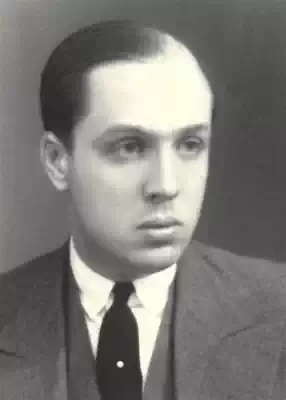
Joaquim Paço d'arcos
1908–1979
· lived 70 years
 PT
PT
PT
Joaquim Paço d'arcos was a multifaceted creator, exploring poetry, theatre, prose, cinema, and literary criticism. His poetic work, marked by a strong lyrical vein and, at times, by a more social and interventionist dimension, reflects a refined sensitivity to the nuances of human existence and the concerns of his time. Throughout his career, he demonstrated a remarkable capacity for renewal, navigating between different aesthetics and approaches, without ever losing his unique identity.
n. 1908-06-14, Lisboa · m. 1979-06-10, Lisboa
2
Views
Bio
Identification and Basic Context
Joaquim Paço d'arcos, baptismal name Joaquim Manuel de Paço d'Arcos, was born in Lisbon, Portugal, on February 20, 1892, and died in the same city on May 12, 1976. He was a poet, short story writer, novelist, playwright, essayist, literary critic, filmmaker, and translator. Son of a wealthy family with ties to Portuguese cultural and political life, his career was marked by a meticulous education and early immersion in the intellectual circles of the time. He was Portuguese and wrote in Portuguese.Childhood and Education
He grew up in an environment conducive to intellectual and artistic development, benefiting from a solid education. He attended the University of Coimbra, where he studied Law, graduating in 1914. His youth was permeated by the cultural and political effervescence in Portugal at the beginning of the 20th century, with a strong influence from Modernism and European avant-garde movements.Literary Career
Paço d'arcos began his literary activity early, revealing a precocious vocation for poetry. He actively participated in Portuguese cultural life, collaborating in various magazines and newspapers of the time, and was a prominent figure in the literary and artistic landscape. His work evolved over the decades, demonstrating a constant search for new forms of expression, transitioning through different stylistic phases, but always maintaining a mark of refinement and depth.Work, Style, and Literary Characteristics
His poetic work covers a wide range of themes, with emphasis on love, the ephemerality of time, landscape, saudade (longing), and reflections on the human condition. Paço d'arcos's style is marked by formal elegance, the musicality of verse, and careful language, often with subtle irony or melancholy. He explored various poetic forms, from free verse to more traditional structures, but always with a mark of originality. His poetic tone varies between intimate lyricism and a more distanced and reflective observation of reality. His prose, whether in short stories or novels, shares many of the characteristics of his poetry, with fluid writing and a deep psychological analysis of the characters.Work, Style, and Literary Characteristics
Cultural and Historical Context He lived and produced his work during a period of profound transformations in Portugal and the world, including two World Wars and the Estado Novo (New State). He maintained relationships with other writers and artists of his generation, actively participating in cultural life. His work subtly or explicitly reflects the tensions and debates of 20th-century Portuguese society.Work, Style, and Literary Characteristics
Personal Life Paço d'arcos's life was marked by dedication to the arts and letters. He married the actress and writer Palmira Martins. His experience as a critic, translator, and filmmaker enriched his artistic vision. He was known for his discretion and his profound sensitivity.Work, Style, and Literary Characteristics
Recognition and Reception Although perhaps not achieving the same popular projection as other poets, Joaquim Paço d'arcos enjoyed considerable prestige in literary and academic circles. His work was recognized for its quality and originality, being considered one of the important values of 20th-century Portuguese poetry.Work, Style, and Literary Characteristics
Influences and Legacy His work drew from various literary sources, but his own style and sensitivity gave him a prominent place. He influenced, directly or indirectly, later generations of poets through his formal mastery and the depth of his reflections. His contribution to Portuguese literature is undeniable, with a legacy that endures through his diverse and high-quality work.Work, Style, and Literary Characteristics
Interpretation and Critical Analysis Paço d'arcos's work has been the subject of study for its complexity and richness. His reflections on time, memory, and the human condition invite multiple readings. His ability to reconcile lyricism with a critical view of reality is one of the points frequently highlighted by critics.Work, Style, and Literary Characteristics
Curiosities and Lesser-Known Aspects In addition to his vast written work, Joaquim Paço d'arcos ventured into cinema as a director and screenwriter, making short films that demonstrated his interest in new artistic languages. His diverse career is a testament to his versatility and his passion for art in all its manifestations.Work, Style, and Literary Characteristics
Death and Memory Joaquim Paço d'arcos died in Lisbon in 1976. His memory endures through his work, which continues to be read and studied, and through his contribution to Portuguese culture.Poems
0No poems found
Comments (0)
Log in
to post a comment.
No comments yet. Be the first to comment.