
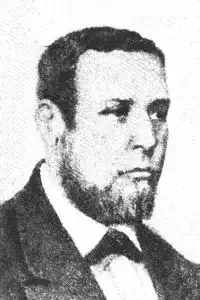
Joaquim Manuel de Macedo
1820–1882
· lived 61 years
 BR
BR
BR
Joaquim Manuel de Macedo was a Brazilian writer, journalist, and politician, a prominent figure of Romanticism in Brazil. He is best known for his novel "A Moreninha" (The Brunette), which became a landmark in national literature. His work contributed to the consolidation of a Brazilian literary identity, exploring themes such as love, society, and the customs of the time, with a style that blended sentimentalism with nationalism.
n. 1820-06-24, Itaboraí · m. 1882-05-11, Rio de Janeiro
3
Views
Bio
Identification and Basic Context
Joaquim Manuel de Macedo was a prominent Brazilian writer, journalist, and politician. He was born in Rio de Janeiro and died in the same city. He is considered one of the main representatives of Romanticism in Brazil, especially in prose.Childhood and Education
Joaquim Manuel de Macedo was born into a middle-class family. He pursued his studies at the Faculty of Law in São Paulo, where he graduated in 1843. During his education, he came into contact with the literary and political ideas of the time, which influenced his work.Literary Career
Macedo's literary career began with the publication of "A Moreninha" in 1844, a novel that achieved great success and established him as a writer. Subsequently, he wrote other novels, poems, and plays, consolidating himself as an important voice of Brazilian Romanticism.Work, Style, and Literary Characteristics
Macedo's most famous work is "A Moreninha" (1844), a young adult novel that portrays idealized love, the customs of Rio de Janeiro society, and the national setting. Other relevant works include "O Moço Velho" (The Old Young Man, 1861) and "A Luneta do Tempo" (The Time Telescope, 1869). His style is marked by sentimentalism, romantic idealism, detailed descriptions of settings, and subtle criticism of the customs of the time. He used accessible language with a strong emotional appeal, and frequently explored themes such as patriotism, family, and morality.Cultural and Historical Context
Macedo lived during the Second Reign in Brazil, a period of national state consolidation and the search for a unique cultural identity. As a novelist, he contributed to the formation of this literary identity by portraying Brazilian society and its values. He was friends with other important writers of the era, such as Gonçalves Dias, and actively participated in the intellectual and political life of Rio de Janeiro.Personal Life
Joaquim Manuel de Macedo dedicated his life to arts and politics. He was a professor, journalist, and served as a provincial deputy. His personal relationships and his experiences in Rio de Janeiro society undoubtedly influenced the creation of his characters and the settings of his works.Recognition and Reception
"A Moreninha" was an immediate success and established him during his lifetime. Macedo was recognized as one of the pillars of Brazilian Romanticism. His work is still studied today as an important testimony to 19th-century Brazilian society and literature.Influences and Legacy
His work was influenced by European Romanticism but adapted to the Brazilian reality. Macedo left a legacy as the writer who popularized the novel in Brazil, introducing themes and characters that resonated with the reading public of the time and paved the way for future generations of novelists.Interpretation and Critical Analysis
Macedo's work is often analyzed as a reflection of the bourgeois and patriarchal values of Brazilian imperial society. "A Moreninha," in particular, is seen as a novel that idealizes romantic love and the female figure, while simultaneously contributing to the construction of a national imagination.Curiosities and Lesser-Known Aspects
Besides being a writer, Macedo was also involved in politics, having served as a provincial deputy. His literary work is a faithful portrait of the customs and society of Rio de Janeiro in his time.Death and Memory
Joaquim Manuel de Macedo passed away in 1882, in Rio de Janeiro, leaving behind an important literary legacy that immortalized him as one of the great names of Brazilian Romanticism.Poems
0No poems found
Comments (0)
Log in
to post a comment.
No comments yet. Be the first to comment.