
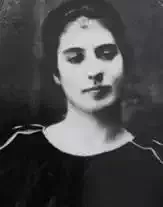
Irene Lisboa
1892–1958
· lived 65 years
 PT
PT
PT
Irene Lisboa was a Portuguese writer, pedagogue, and translator, notable for her work which is distinguished by its modernity, exploration of language, and approach to existential and social themes. Her writing, often marked by dense and poetic prose, reflects a profound sensitivity and a critical view of society and the human condition. As a pedagogue, she dedicated herself to education, leaving an important legacy in the field of didactics and teacher training.
n. 1892-12-25, Arruda dos Vinhos · m. 1958-11-25, Lisboa
4
Views
Bio
Identification and Basic Context
Irene do Céu Vieira Marques Lisboa was a Portuguese writer, poet, pedagogue, and translator. She was born on November 22, 1892, in Tôr, Loulé, and passed away on April 25, 1958, in Lisbon. She was the daughter of a doctor, which provided her with an intellectualized family environment. She spoke and wrote in Portuguese, having been a prominent figure in 20th-century Portuguese literature and education. The historical context in which she lived encompassed a period of great transformations in Portugal, including the I Republic and the Estado Novo.Childhood and Education
Irene Lisboa had a childhood marked by fragile health, which led her to live with her grandmother in Loulé for some years. Her intellectual formation was privileged, benefiting from a family environment that valued culture and education. She attended the Escola Normal Superior, where she graduated in Germanic Philology, demonstrating her interest in languages and literature from an early age. Her readings and contact with the Parisian intellectual scene, where she lived for a period, were fundamental to her training.Literary Career
Irene Lisboa's literary career began early, with the publication of her first poems in literary magazines. Her work developed in distinct phases, exploring poetry, prose, and essays. Her writing is characterized by linguistic experimentation and thematic depth. She collaborated in various important publications of the time, such as "A Sentinela" and "Presença," and also dedicated herself to translation, enriching the Portuguese literary landscape with the transposition of foreign works into Portuguese.Work, Style, and Literary Characteristics
Irene Lisboa's main works include "Folhas de Poesia" (1923), "Universo" (1929), "A Morte Alegre" (1934), and "Teia" (1949). The dominant themes in her work are life, death, time, solitude, identity, spirituality, and human relationships. Her style is marked by dense poetic prose, with innovative language and sometimes complex syntax, inviting reflection. She uses rich metaphors and imagery, creating a unique and profoundly personal universe. Her poetic voice is introspective, confessional, and, simultaneously, universal. She introduced formal and thematic innovations in Portuguese literature, approaching modernist and existentialist currents. Her relationship with tradition is one of critical dialogue, seeking new forms of expression for timeless themes.Cultural and Historical Context
Irene Lisboa lived and produced work during a period of great cultural effervescence in Portugal, marked by Modernism and social and political transformations. Her work dialogues with other writers of her generation, such as Adolfo Casais Monteiro and the "Presença" generation, although she maintains a very distinct aesthetic individuality. Her position, sometimes critical of the Estado Novo regime, was reflected in her work and pedagogical activity. The society and culture of the time influenced her writing, which addresses the complexities of the human being in their time.Personal Life
Irene Lisboa's personal life was marked by her dedication to education and writing. She had significant relationships with other intellectuals of the time, notably Adolfo Casais Monteiro. Her fragile health and the existential crises she went through contributed to the depth and introspection of her work. Alongside her literary activity, she dedicated herself intensely to pedagogy, contributing to the modernization of education in Portugal.Recognition and Reception
Irene Lisboa's recognition as a writer and pedagogue grew over time. Although during her lifetime she had a divided critical reception, with some valuing her originality and others finding her language strange, her work has been increasingly studied and appreciated. Her role in Portuguese education is widely recognized. Her entry into the literary canon is progressive, with growing academic interest in her unique and innovative work.Influences and Legacy
Irene Lisboa was influenced by authors such as Fernando Pessoa and by French literature, particularly existentialist and surrealist authors. Her legacy lies in her innovative prose, her profound approach to the human condition, and her contribution to Portuguese pedagogy. She influenced generations of writers and educators through her originality, her rigorous reflection on language, and her incessant search for meaning.Interpretation and Critical Analysis
Irene Lisboa's work has been the subject of various interpretations, focusing on its existential dimension, its linguistic experimentation, and its implicit social criticism. Philosophical and existential themes, such as the ephemerality of time, solitude, and the search for meaning, are central to critical analyses. Her works are seen as reflections of the complexity of the human soul and the difficulty of communication.Curiosities and Lesser-Known Aspects
A curiosity about Irene Lisboa is her passion for theater, which influenced her writing. Her correspondence reveals a more intimate and reflective side of her personality. Her writing habits were rigorous, dedicating time to reflection and the careful elaboration of each text. Her strong connection to Paris and French culture profoundly marked her worldview and her literary creation.Death and Memory
Irene Lisboa died in Lisbon, victim of an illness. Her early death left a void in Portuguese literature and education. Posthumous publications, such as the collection of her complete works and studies on her life and work, have contributed to the preservation of her memory and the dissemination of her literary and pedagogical legacy.Poems
0No poems found
Comments (0)
Log in
to post a comment.
No comments yet. Be the first to comment.