Identification and basic context
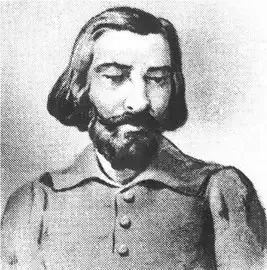
Gil Vicente was a Portuguese playwright, poet, and goldsmith, widely regarded as the creator of theater in Portugal and one of the greatest names in Portuguese-language literature. He was born in 1460 or 1470 and died in 1536 or 1537. His work is marked by a strong moralizing, satirical, and religious character, reflecting the customs and society of his time.
Childhood and education
Little is known about Gil Vicente's childhood and specific education. It is believed that he received a solid education, possibly in preparatory studies for university, given his command of the language and the knowledge demonstrated in his works. His experience as a goldsmith, a profession he practiced for part of his life, may have influenced his capacity for detailed observation and his appreciation for precision.
Literary career
Gil Vicente began his literary career late, around the age of 40, with the staging of "O Auto da Alma" in 1502, at the court of D. Manuel I. His theatrical production developed over three decades, encompassing a vast repertoire of autos (religious and moral), farces (satirical comedies), and tragicomedies. He was the main playwright for the Portuguese court, serving D. Manuel I and D. João III, and his plays were frequently presented on important occasions, such as royal and religious festivals.
Work, style, and literary characteristics
Gil Vicente's work is vast and diverse, comprising about 44 plays, including autos, farces, comedies, and tragedies. His main themes include social criticism, moralization of customs, satire of human vices, exaltation of the Christian faith, and the representation of daily life. His style is characterized by lively and popular language, the use of proverbs and sayings, the creation of stock characters (such as the New Christian, the nobleman, the cleric, the farmer), and a strong comedic and satirical vein.
Main works:
* **Religious Autos:** "Auto da Alma", "Auto da Barca do Inferno", "Auto da Punição", "Auto da Mofina Mendes".
* **Farces:** "Farsa de Inês Pereira", "Farsa do Juiz da Beira", "Farsa de um Casamento".
* **Comedies:** "O Triunfo do Inverno", "Serra da Estrela".
His poetic resources include the use of rhyme, rhythm, and an inherent musicality of oral language, adapted for the stage. The tone varies between serious and humorous, didactic and critical.
Work, style, and literary characteristics
Cultural and historical context
Gil Vicente lived in a period of great transformation in Portugal, marked by the Great Voyages of Discovery, the expansion of the empire, and profound social and religious changes. His work reflects this context, engaging with the tensions between the medieval and Renaissance worlds, between faith and new discoveries, and criticizing the hypocrisy and abuses of power by clerics and nobles. He is considered a representative of the transition to the Renaissance in Portugal.
Work, style, and literary characteristics
Personal life
It is known that Gil Vicente was a goldsmith and that he married and had children. He was also a man connected to the court and theatrical activities, demonstrating great skill in organizing shows. His personal life seems to have been dedicated both to the craft of goldsmithing and to his literary and theatrical vocation.
Work, style, and literary characteristics
Recognition and reception
Gil Vicente achieved great recognition during his lifetime, being the official playwright of the court. His plays were eagerly awaited and applauded, and his work was fundamental to the development of theater in Portugal and Brazil. His legacy endures as a milestone in Portuguese-language literature.
Work, style, and literary characteristics
Influences and legacy
Gil Vicente was influenced by the medieval tradition (morality plays, popular theater) and by new Renaissance trends. His work, in turn, influenced numerous later authors, both in Portugal and Brazil, consolidating theater as a form of artistic expression and social criticism. His creation of national theater is an unavoidable legacy.
Work, style, and literary characteristics
Interpretation and critical analysis
Gil Vicente's work is often analyzed from the perspective of social and moral criticism. His autos and farces offer a vivid and, at times, ruthless portrayal of 16th-century Portuguese society, exposing corruption, vanity, and hypocrisy. Critical analysis also highlights the genius of his language and the universality of his characters and themes.
Work, style, and literary characteristics
Curiosities and lesser-known aspects
Gil Vicente is often associated with the figure of the playwright and poet, but his experience as a goldsmith demonstrates an artistic and artisanal facet. His ability to adapt language to the audience, moving between the popular and the erudite, is one of his most notable characteristics.
Work, style, and literary characteristics
Death and memory
Gil Vicente died on an uncertain date, but it is presumed to have been between 1536 and 1537. His work was preserved and continued to be staged and studied, ensuring his immortality in Portuguese-language literature and culture.

 PT
PT