
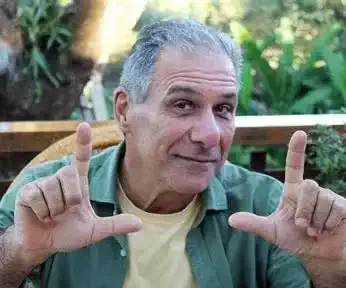
Domingos Pellegrini
b. 1949
 BR
BR
BR
Domingos Pellegrini was a Brazilian writer, journalist, and politician, whose literary work was noted for its approach to social, historical, and existential themes, often with a critical eye on Brazilian reality. With an engaging narrative style and accessible yet profound language, Pellegrini explored various literary forms, from short stories to novels and essays. His production reflects a deep interest in the human condition and the complexities of the society in which he lived.
n. 1949-07-23, Londrina
2
Views
Bio
Identification and Basic Context
Domingos Pellegrini was a prominent Brazilian writer, journalist, and politician. He was born on August 18, 1930, in Rio Claro, São Paulo, and passed away on May 30, 2013, in Brasília, Federal District. His professional and intellectual journey spanned various fields, consolidating him as a multifaceted figure.Childhood and Education
From a humble background, Domingos Pellegrini showed an early interest in reading and writing. His academic training included a Law degree, which he completed at the University of São Paulo (USP). However, his true passion was always literature and journalism, areas that shaped his career.Literary Career
Domingos Pellegrini's literary career was marked by a diverse and continuous production. He began publishing at a young age and, over decades, released novels, short stories, chronicles, and essays. His work addressed themes such as the drought in the Northeast, social inequalities, the history of Brazil, and the complexities of the human soul. The writer was also actively involved in journalism, collaborating with important media outlets.Work, Style, and Literary Characteristics
Among his best-known works are "A Saga de Carcará" (1962), "O Muro de Pedras" (1965), "O Sangue da Terra" (1986), and "Os Fuzis da Madrugada" (1999). Pellegrini's style is characterized by a fluid and engaging narrative, with memorable characters and realistic dialogues. He frequently explored the Northeastern sertão as a setting, depicting the harshness of life, the resilience of the people, and social injustices. His language, while accessible, is rich in imagery and reflections on the human condition, politics, and Brazilian history.Cultural and Historical Context
Domingos Pellegrini lived through a period of great transformations in Brazil, including authoritarian regimes and moments of democratic opening. As a journalist and writer, he maintained a critical view of Brazilian society and politics, which is reflected in his work. His connection to the sertão and to the social issues of the Northeast brought him closer to an important national debate on development and inequality.Personal Life
Married to Maria do Socorro Fonseca Pellegrini, Domingos Pellegrini dedicated his life to letters and political activism. He served as a federal deputy for São Paulo and later moved to Brasília, where he continued his professional activities. His life was marked by a passion for writing and a commitment to social causes.Recognition and Reception
Domingos Pellegrini's work received wide recognition, both in literary circles and from the general public. He received several awards and honors throughout his career. His ability to portray deep Brazil and engage with relevant social issues secured him a prominent place in national literature.Influences and Legacy
Pellegrini's influences include writers who addressed Brazil's social and historical reality, such as Graciliano Ramos and Jorge Amado. His legacy lies in his contribution to the representation of the Northeastern sertão in literature and in his denunciation of social ills, as well as his role as an engaged journalist and politician.Interpretation and Critical Analysis
Pellegrini's work is often analyzed from the perspective of social and regionalist literature. His narratives allow for reflections on themes such as drought, poverty, the struggle for land, and human resistance in the face of adversity, as well as on the complexity of Brazilian politics.Curiosities and Lesser-Known Aspects
In addition to his literary and journalistic career, Domingos Pellegrini was actively involved in politics, serving as a federal deputy, which gave him a privileged insight into the backstage of power and the issues affecting the country. His work often mirrors this experience.Death and Memory
Domingos Pellegrini passed away in Brasília, leaving behind an important literary body of work and a legacy of civic engagement. His work continues to be read and studied, keeping alive the memory of a writer who skillfully portrayed Brazilian reality with sensitivity and critical insight.Poems
0No poems found
Comments (0)
Log in
to post a comment.
No comments yet. Be the first to comment.